Beyond the Screen: The Science and Surge of Modern Monitors
From the chemistry of liquid crystals to the future of flexible displays, explore how monitor technology is reshaping our digital world
More Than Meets the Eye: Why Your Screen Matters
From the moment we wake up to check our phones to the hours we spend working, gaming, or streaming, monitors are our constant window to the digital world.
But the humble computer monitor has undergone a revolution, transforming from a simple output device into a sophisticated piece of technology that directly impacts our productivity, entertainment, and even health. The global monitor market is a testament to its importance, projected to be a $25 billion industry in 2025 and growing steadily .
This article delves into the fascinating science behind how monitors create the images we see and explores the cutting-edge trends, from ultra-high-resolution mini-LEDs to lab-grown "mini-brains" that are revolutionizing how we test and use display technology. Prepare to see your screen in a whole new light.
Did You Know?
The average person spends over 6 hours a day looking at digital screens, making display quality more important than ever for both productivity and eye health.
The Building Blocks of an Image: Display Technologies Decoded
At its heart, a monitor's job is to control light to create a picture. How it accomplishes this varies dramatically between technologies, each with its own strengths and weaknesses.
LCD Technology
The Light Gatekeeper
Liquid Crystal Display (LCD) technology is the workhorse of the display world. As the name implies, it relies on liquid crystals—rod-shaped molecules that can change their orientation when an electric current is applied 2 .
These crystals don't produce their own light; instead, they act as millions of tiny gates or shutters for a bright backlight.
LCD Panel Types:
- TN (Twisted Nematic): Fast response but poor color accuracy
- IPS (In-Plane Switching): Excellent color accuracy and viewing angles
- VA (Vertical Alignment): Deeper blacks and higher contrast
OLED Technology
The Self-Illuminating Pioneer
OLED (Organic Light-Emitting Diode) represents a fundamental shift. Instead of relying on a separate backlight, each pixel in an OLED display is made of organic compounds that emit their own light when electricity passes through them 2 .
This core difference unlocks major advantages. If a pixel needs to be black, it simply turns off, achieving perfect blacks and an infinite contrast ratio.
Key Advantages:
- Perfect blacks and infinite contrast
- Thinner and lighter displays
- Wider viewing angles
- Potential for burn-in over time
Mini-LED Technology
A Best-of-Both-Worlds Hybrid
One of the most exciting recent trends is mini-LED technology. It's not a replacement for LCD or OLED, but a dramatic enhancement to LCD. A standard LCD uses a few dozen or hundreds of LEDs for its backlight. A mini-LED display uses thousands of tiny LEDs arranged into "dimming zones" 1 .
This allows for precise control over specific areas of the screen. Bright areas can shine brilliantly while dark areas can have their mini-LEDs turned off completely.
Performance Benefits:
- Black levels that rival OLED
- Dramatically improved contrast
- Superior HDR experience
Display Technology Comparison
A Glimpse into the Future: Key Trends Shaping 2025 and Beyond
The monitor industry is evolving at a breakneck pace, driven by consumer demand and technological innovation.
Higher Refresh Rates for Smoother Motion
Once the domain of hardcore gamers, high refresh rates are going mainstream. While 60Hz was standard, displays with 144Hz, 240Hz, and even 610Hz are now available, making every on-screen movement buttery smooth 1 .
The Resolution Revolution
4K is becoming the new standard, with 5K, 6K, and even 8K displays emerging for professionals who need extreme pixel density for editing photos and video 1 .
Immersive Form Factors
Curved and ultra-wide monitors are no longer a novelty. These screens wrap around your field of vision, creating a more immersive experience for both gaming and productivity, allowing you to view multiple windows side-by-side without the bezels of a multi-monitor setup .
The AI Integration
Artificial intelligence is beginning to play a role, with AI-driven upscaling making lower-resolution content look sharper and systems that automatically optimize picture quality based on ambient lighting and content type 3 .
Monitor Market Growth Projection (2020-2027)
The Road Ahead: Where Monitor Technology is Headed
Flexible & Foldable Displays

Made possible by advanced polymers, flexible displays will redefine form factors, allowing for devices that can be rolled up or unfolded into larger screens 3 .
MicroLED Technology

Promising the perfect blacks of OLED with even higher brightness and no risk of burn-in, though manufacturing challenges remain 3 .
Bio-Technology Integration
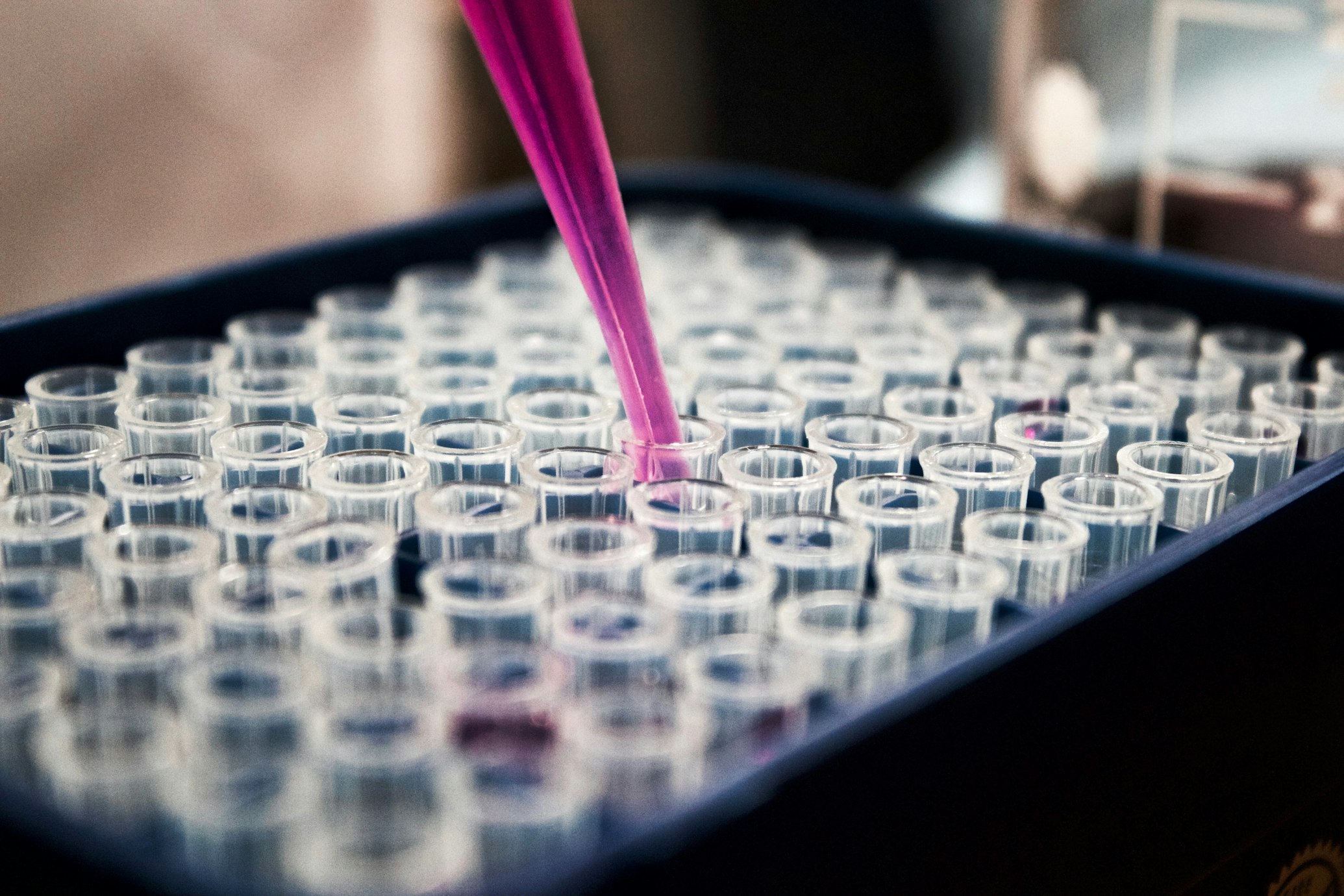
Researchers are growing 3D "mini-brains" (brain organoids) to study neural communication, which could revolutionize how we test displays for visual comfort 8 .
In-Depth Look: Testing Mini-LED's Zone Control
To understand the real-world impact of new technologies, let's examine a hypothetical but crucial experiment that compares a standard LCD monitor against a new mini-LED model.
Methodology: A Side-by-Side Visual Stress Test
1. Setup: Two 32-inch 4K monitors are placed in a controlled, dimly lit environment: Monitor A (Standard LED LCD with ~50 dimming zones) and Monitor B (Mini-LED with 1152 dimming zones) 1 .
2. Test Patterns: The monitors are put through a series of standardized test patterns and real-world content.
Test 1: Contrast
A pure black background with a small, bright white square in the center.
Test 2: HDR Performance
Playback of a 4K HDR video sequence featuring a starfield.
Test 3: Real-World Gaming
A gaming scene with a dark interior and a single, bright torch flame.
3. Measurement: Professional colorimeters and human observers are used to measure objective metrics like contrast ratio and subjective impressions of image quality.
Results and Analysis: A Clear Winner Emerges
The data from our tests reveals a dramatic difference in performance.
| Test Scene | Monitor A (Standard LCD) | Monitor B (Mini-LED) |
|---|---|---|
| Full-Screen White | 1,200:1 | 1,200:1 |
| Black Square Test | ~5,000:1 | ~100,000:1 |
| HDR Starfield | ~15,000:1 | ~500,000:1 |
| Image Quality Aspect | Monitor A (Standard LCD) | Monitor B (Mini-LED) |
|---|---|---|
| Black Level Depth | 4 | 9 |
| Highlight Brilliance | 5 | 8 |
| Overall HDR Impact | 5 | 9 |
| Perceived Sharpness | 6 | 8 |
Analysis
The results are clear. Monitor A's few dimming zones mean the entire backlight has to light up to display the small white square, causing the black background to appear as a dull, grayish "glow." This is known as "blooming." Monitor B, with its 1152 zones, can illuminate only the specific cluster of mini-LEDs behind the white square, keeping the surrounding black areas truly black. This leads to a perceived contrast ratio that is orders of magnitude higher, a more impactful HDR experience, and even an illusion of greater sharpness due to the stark difference between light and dark areas 1 .
Contrast Ratio Comparison in Different Scenes
The Scientist's Toolkit: Essential Reagents for Display Research
The development of new display technologies doesn't happen in a vacuum. It relies on precise chemistry and materials science.
Here are some key research reagent solutions used in the field.
| Reagent/Material | Function in Research | Common Grade Required |
|---|---|---|
| Indium Tin Oxide (ITO) | A transparent conductive material that forms the electrodes in LCD and OLED panels, allowing electrical signals to reach the pixels without blocking light. | High Purity (≥99.99%) |
| Liquid Crystal Mixtures | The core "light-switching" material in LCDs. Research focuses on developing mixtures with faster response times, wider temperature ranges, and better viewing angles. | Analytical Reagent (AR) Grade 6 |
| Organic Emitters (for OLED) | The carbon-based compounds that emit red, green, or blue light in an OLED display. Purity is critical for color accuracy and display longevity. | ACS Grade 6 |
| Metal-Organic Frameworks (MOFs) | Highly porous crystalline materials being researched for use in next-generation displays, including in more efficient AC units for cleanrooms and even in the displays themselves for their electrical/optical properties 4 . | Reagent Grade 6 |
| High-Purity Solvents | Used to dissolve and precisely deposit the organic layers in OLED displays. Any impurity can create a defective pixel or "dark spot." | ACS or USP Grade 6 |
Chemical Grade Importance
Note: The required grade of these chemicals is critical. ACS (American Chemical Society) grade or Reagent grade is typically the minimum for research and manufacturing, as they have tightly controlled levels of impurities. Using a lower grade, like "Laboratory Grade," could introduce contaminants that ruin an experiment or a production batch 6 .
Conclusion: The Future is Bright
From the precise chemistry of its materials to the physics of light and the software that drives it, the modern monitor is a testament to human ingenuity.
As these technologies continue to converge and evolve, our primary window to the digital world will only become more immersive, efficient, and astonishing. The journey from simple cathode ray tubes to today's sophisticated mini-LED and OLED displays has been remarkable, but the future promises even more revolutionary changes with flexible screens, microLED technology, and bio-integrated testing methods.
The next time you look at your screen, remember the complex science and innovation that makes every pixel possible, and imagine what incredible displays the future will bring.