When Is IRB Approval Required for a Study Change? A Guide for Researchers
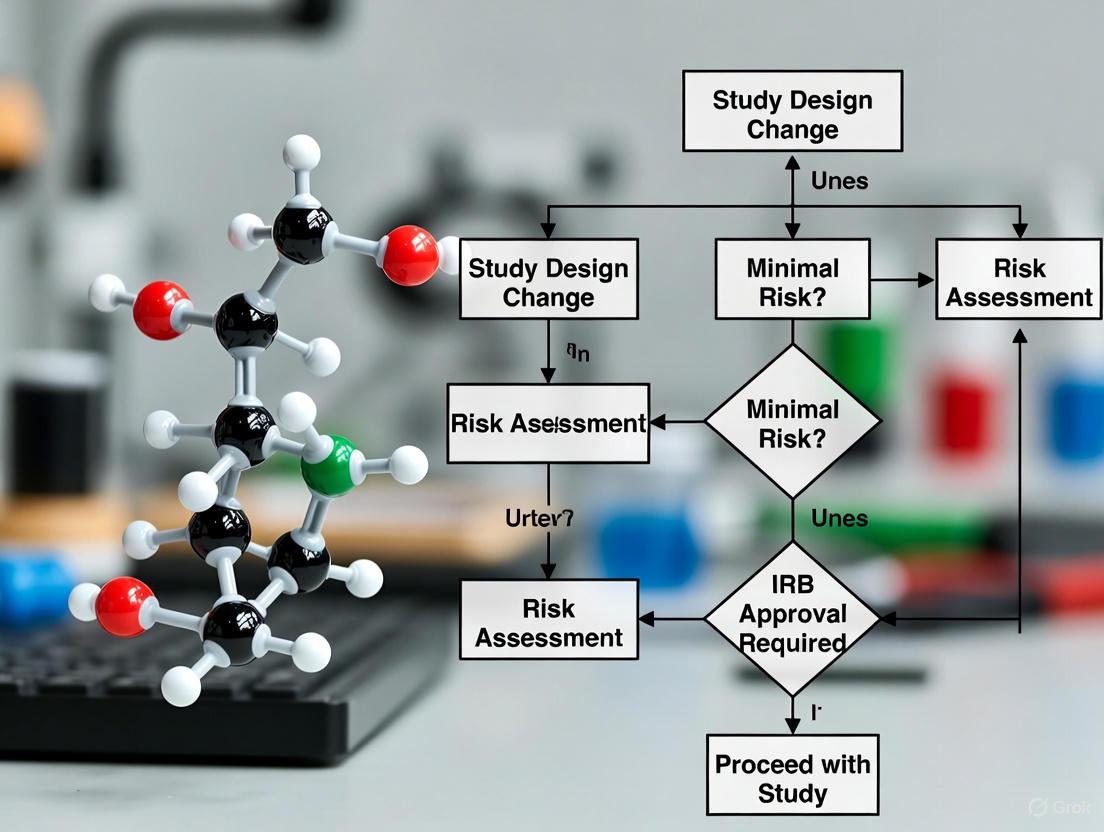
This article provides a comprehensive guide for researchers and drug development professionals on navigating Institutional Review Board (IRB) amendments.
When Is IRB Approval Required for a Study Change? A Guide for Researchers
Abstract
This article provides a comprehensive guide for researchers and drug development professionals on navigating Institutional Review Board (IRB) amendments. It covers the foundational rule that nearly all changes require prior IRB approval, outlines the practical steps for submitting modifications, addresses common compliance pitfalls, and explores emerging regulatory trends, including the single IRB (sIRB) mandate and new data security requirements effective in 2025.
The Golden Rule of IRB Amendments: What Changes Require Review?
In the conduct of clinical research, the institutional review board (IRB) serves as the primary guardian of human subject safety and ethical integrity. Central to this protective function is a fundamental regulatory principle: investigators must obtain IRB review and approval prior to implementing any modification to previously approved research [1]. This requirement encompasses the entire research ecosystem, including amendments to IRB-approved protocols, informed consent documents, recruitment materials, and other study-related procedures [1]. The imperative of prior review holds regardless of how minor a change may appear to the research team, establishing a crucial governance mechanism that ensures continuous regulatory compliance and ethical oversight throughout a study's lifecycle.
This principle finds only one narrowly-defined exception—when changes are necessary to eliminate apparent immediate hazards to research subjects [1]. Even in these critical circumstances, the implementation of protective measures does not circumvent the IRB's oversight authority; rather, the IRB must be notified after implementation, often within a specified timeframe such as 10 business days [1]. This exception is intentionally restrictive, recognizing that most modifications, including those addressing newly identified risks, do not qualify as emergency eliminations of immediate danger and therefore require the IRB's advance evaluation.
The Regulatory Framework Governing Study Changes
Foundations of IRB Authority and Ethical Oversight
The IRB's authority to approve, require modifications to, or disapprove research derives from federal regulations designed to protect human subjects. An IRB is formally defined as "an appropriately constituted group that has been formally designated to review and monitor biomedical research involving human subjects" with the purpose of assuring "that appropriate steps are taken to protect the rights and welfare of humans participating as subjects in the research" [2]. This mandate extends throughout the research lifecycle, not merely to initial study approval.
The ethical foundation for this oversight traces back to The Belmont Report, which established three fundamental principles for ethical research: respect for persons, beneficence, and justice [3]. These principles directly inform the IRB's evaluation of proposed changes to approved research. For instance, a protocol modification that alters risk profiles or participant burden engages the principle of beneficence, while changes to inclusion criteria may raise justice considerations regarding equitable distribution of research burdens and benefits [3] [4].
The Scope of Changes Requiring IRB Review
Virtually any change to study conduct falls under the purview of IRB review requirements. The scope of controlled modifications includes, but is not limited to [1]:
- Methodological revisions: Changes to study design, procedures, or interventions
- Documentation modifications: Amendments to informed consent forms, investigator brochures, or recruitment materials
- Procedural adjustments: Alterations to data collection methods, safety monitoring plans, or subject compensation
- Personnel changes: Additions or substitutions of key study personnel
- Administrative updates: Modifications to study locations, contact information, or funding sources
The comprehensive nature of this requirement ensures that the IRB maintains awareness of all study evolution, enabling proactive assessment of how modifications might impact subject safety, welfare, or rights.
Categorizing Changes: Review Pathways and Examples
When submitted for review, the IRB evaluates amendments through a triage process, classifying changes as either "minor" or "significant" to determine the appropriate review pathway. This classification directly impacts the timeline and procedure for approval.
Minor Changes: Expedited Review Pathway
Minor changes represent modifications that constitute "no more than a minor change to the previously approved research" and do not increase risk to participants or alter the risk/benefit assessment [1]. These changes typically qualify for expedited review, conducted by a designated IRB member rather than the full convened board [1] [5].
The table below illustrates common examples of minor changes eligible for expedited review:
| Category of Change | Specific Examples |
|---|---|
| Administrative Updates | Updated site contact information, spelling corrections, wordsmithing revisions [1] |
| Study Materials | Addition of new recruitment materials or subject-facing documents [1] |
| Study Infrastructure | Adding a new research location or site [1] |
| Documentation | Minor revisions to consent documents that do not affect risks or benefits [5] |
Significant Changes: Full Board Review Pathway
Significant changes reflect "more than a minor change to previously approved research" and typically increase risk to participants or otherwise alter the IRB's risk/benefit assessment [1]. These substantial modifications require full board review at a convened IRB meeting [1] [5].
The table below outlines common examples of significant changes requiring full board review:
| Category of Change | Specific Examples |
|---|---|
| Intervention Modifications | New cohort addition, new drug/intervention, dosing schedule changes [1] |
| Risk Profile Alterations | New risks identified, increased frequency/magnitude of previously described risks [1] |
| Safety Protocol Changes | Removal of previously approved safety monitoring procedures [1] |
| Benefit/Burden Adjustments | Decrease in expected benefits, increased burden/discomfort to participants [1] |
The Review and Approval Workflow
Submission Requirements and Investigator Responsibilities
Researchers bear the responsibility for providing comprehensive information when submitting modification requests. The IRB requires sufficient detail to conduct a meaningful assessment, including [1]:
- Rationale for the change: Scientific or operational justification for the proposed modification
- Protocol impact assessment: Detailed description of how the change affects current procedures
- Enrollment status: Number of subjects currently enrolled and their status in the study
- Participant communication plan: Strategy for notifying current participants about changes, including whether re-consent will be required
- Documentation revisions: Updated versions of all affected study documents
The completeness of the submission directly impacts review efficiency. As noted by Advarra experts, "The more information researchers provide in the IRB submission, the easier it is for the IRB to consider implications for the research, researcher, and current and future research participants" [1].
IRB Deliberation and Determination Outcomes
During review, the IRB evaluates proposed changes against specific criteria, with particular attention to how modifications might affect participant safety and willingness to continue in the study. The Secretary's Advisory Committee on Human Research Protections (SACHRP) recommends disclosing changes to participants when they involve [1]:
- Identification of new research-related risks
- Increases in frequency or magnitude of previously described risks
- Unanticipated problems exposing participants to new risks
- Decreases in expected benefits to participation
- Changes resulting in increased burden or discomfort
- New availability of alternative therapies
- Impacts of participation on alternative therapies
Following review, the IRB may issue several types of determinations. For full board reviews, these include Approved, Approved with Contingencies, Action Deferred, or Disapproved [5]. For expedited reviews, determinations include Approved, Approved with Contingencies, or Changes Requested [5].
Practical Applications: The Researcher's Toolkit
Essential Documentation for Amendment Submissions
Successful amendment submissions require careful preparation of specific documents and justifications. Researchers should assemble a comprehensive package that enables the IRB to conduct a thorough evaluation.
The table below outlines essential components for amendment submissions:
| Documentation Element | Purpose and Function |
|---|---|
| Revised Protocol | Highlighted version showing all proposed changes in context |
| Updated Consent Forms | Revised documents with tracked changes for participant transparency |
| Participant Notification Plan | Strategy for communicating changes to enrolled subjects |
| Revised Risk-Benefit Profile | Updated assessment of study risks and benefits |
| Scientific Justification | Evidence-based rationale supporting the proposed change |
Implementation Timelines and Considerations
Review timelines vary significantly based on the amendment's complexity and review pathway. Researchers should plan for [5]:
- Expedited reviews: Typically require 2-4 weeks for determination
- Full board reviews: Generally require 4-8 weeks, depending on meeting schedules
Upon receiving approval, researchers must implement changes exactly as approved and maintain documentation of the IRB's approval. For changes affecting currently enrolled participants, the investigator must execute the approved participant notification plan, which may include providing revised consent forms and obtaining re-consent when substantial changes affect risks, benefits, or alternatives [1].
Emerging Trends and Future Directions
The regulatory landscape for IRB review continues to evolve, with several developments impacting how study changes will be managed in the future. Notably, the expected finalization of the FDA's single IRB rule in May 2025 promises to streamline ethical review for multicenter trials [6]. This mandate will require a single IRB of record for studies conducted at multiple sites, fundamentally altering the amendment process for collaborative research.
Concurrently, the forthcoming ICH E6(R3) guidelines emphasize enhanced data integrity and traceability requirements, which will impact how protocol deviations and modifications are documented and reported [7]. These regulatory advancements underscore the increasing complexity of clinical trial oversight while reinforcing the enduring principle that prior approval remains essential for virtually all study changes.
Key Examples of Changes Requiring IRB Review
In the rigorous world of human subjects research, Institutional Review Boards (IRBs) serve as the essential guardians of ethical conduct and participant safety. A foundational principle of this oversight is that investigators must not initiate any changes to research without prior IRB review and approval, except when necessary to eliminate apparent immediate hazards to the subject [8]. This requirement is enshrined in the written procedures that IRBs must follow to comply with regulations from the Department of Health and Human Services (HHS) and the Food and Drug Administration (FDA) [8]. Adherence to this protocol is not merely a bureaucratic step; it is a critical mechanism for ensuring that the rights and welfare of human subjects are protected throughout the research lifecycle. This guide provides a detailed examination of the types of changes that necessitate IRB review, offering researchers, scientists, and drug development professionals a clear framework for maintaining compliance.
Regulatory Foundation and the Four Mandatory Procedures
IRB operations are governed by explicit federal regulations. According to recent guidance, IRBs are required to maintain written procedures for four key functions and operations [8]:
- Conducting initial and continuing review of research and reporting its findings and actions.
- Determining which projects require review more often than annually and ensuring verification that no material changes have occurred since the last IRB review.
- Ensuring prompt reporting to the IRB of proposed changes in research activity and ensuring that any changes are approved by the IRB before implementation.
- Ensuring prompt reporting of any unanticipated problems involving risks to human subjects or others, any instance of serious or continuing noncompliance, and any suspension or termination of IRB approval.
The use of the term "must" in this guidance underscores that these are legal requirements, not mere recommendations [8]. Failure to comply can result in regulatory actions, including the issuance of FDA warning letters [8].
The Single IRB Mandate: An Upcoming Change
For multi-site research, a significant regulatory evolution is on the horizon. The Office of Management and Budget has noted that the final rule for the FDA's single IRB requirement is expected in May 2025, though this date is not guaranteed [6]. Once finalized, cooperative research (multi-site studies) will generally be required to use a single sIRB, streamlining the review process. Sponsors and institutions are advised to prepare for this change to avoid operational disruptions, regulatory non-compliance, and potential legal implications [6].
Categorizing Changes: What Always Requires Prior Approval
The following table summarizes major categories of modifications that always require prior IRB review and approval before implementation. These changes can directly impact the study's risk-benefit profile, the validity of informed consent, or the overall scientific integrity of the research.
Table 1: Changes Requiring Prior IRB Review and Approval
| Category of Change | Specific Examples | Primary Rationale |
|---|---|---|
| Study Procedures & Protocols | Altering study visits, assessments, laboratory tests, or interventions [9]. Adding or removing a study arm [8]. Introducing Artificial Intelligence (AI) tools for data analysis [10] [9]. | Impacts risk-benefit assessment, scientific validity, and participant safety. AI use requires specific risk mitigation [10]. |
| Recruitment & Enrollment | Changing recruitment methods (e.g., from flyers to online ads) or materials [11]. Expanding or altering the inclusion/exclusion criteria [9]. Increasing the target enrollment number for greater than minimal risk studies [9]. | Ensures equitable subject selection and protects vulnerable populations. Prevents over-enrollment, which is a compliance issue [9]. |
| Informed Consent Process & Documents | Revising the consent form to add or clarify risks, procedures, or alternatives [11]. Updating compensation for injury language [9]. Changing the process for obtaining consent (e.g., in-person to electronic) [9]. | Ensures the "reasonable person" standard is met and that consent remains informed and voluntary. |
| Investigator & Study Team | Adding a new Principal Investigator (PI) or co-investigator. Changes in key study personnel with substantive roles [8]. | Ensures all personnel are qualified and have completed required ethics training. |
| Data Handling & Security | Changing data security levels, storage methods (e.g., moving to cloud storage), or encryption standards [9]. New data transfers or sharing agreements. Using a new "Honest Broker" for clinical data sets [9]. | Protects participant privacy and confidentiality of sensitive data. |
| Study Design & Objectives | Adding new research questions or endpoints that are not covered by the original consent. Changing from a prospective to a retrospective design. | Alters the fundamental nature of the research to which participants consented. |
A Note on Over-Enrollment
Over-enrollment, defined as exceeding the IRB-approved participant cap, is a serious compliance issue. For greater than minimal risk studies, enrollment caps are strictly enforced. Researchers who wish to increase enrollment must submit a modification before exceeding the limit. Over-enrollment is considered noncompliance and may require the submission of a Report of New Information [9].
Determining the Need for Review: A Researcher's Workflow
The following diagram illustrates the decision-making process a researcher should follow when considering a change to an approved study. It incorporates key concepts such as the distinction between administrative and substantive changes and the narrow exception for immediate hazards.
The Researcher's Toolkit for Protocol Modifications
Successfully navigating the IRB modification process requires careful preparation and specific documentation. The table below outlines essential components of a modification submission.
Table 2: Research Reagent Solutions for IRB Modifications
| Tool or Document | Function in the Modification Process |
|---|---|
| Updated IRB Protocol | The primary document detailing the proposed change in the context of the entire study. It must clearly justify the change and analyze any impact on risks and benefits. |
| Tracked-Changes Consent Documents | A clean version and a version with all changes highlighted of the informed consent form. This is crucial for the IRB to efficiently review alterations to participant information. |
| Revised Recruitment Materials | Updated flyers, advertisements, or scripts if the change affects how participants are recruited, ensuring the information presented to potential subjects is accurate. |
| Device Configuration Worksheet | For changes involving data security or new equipment, this document (a tool provided by some institutions [9]) helps demonstrate secure configuration and access control. |
| Supporting Letters/New CVs | Documentation of approval from new sites or collaborators, and updated curriculum vitae for new key study personnel to establish qualifications. |
| IRB Modification Application Form | The institution-specific form that formally requests the change, often requiring a detailed description and justification for the modification. |
In human subjects research, the protocol is a binding commitment to conduct a study in a specific, approved manner. Adhering to the requirement for prior IRB review of changes is a fundamental aspect of research ethics and regulatory compliance. It is the shared responsibility of the investigator, sponsor, and institution to ensure that any deviation from the approved protocol is properly reviewed and authorized. By understanding the key examples outlined in this guide and employing a systematic approach to submitting modifications, researchers can avoid the serious consequences of noncompliance—which include regulatory sanctions, invalidation of data, and most importantly, compromised participant safety and welfare. A proactive and collaborative relationship with the IRB is the best strategy for ensuring that necessary research adaptations can be implemented efficiently without sacrificing the ethical integrity of the study.
Within the rigorous framework of human subjects research oversight, the rule that all modifications to a study require Institutional Review Board (IRB) review and approval prior to implementation is fundamental [1] [12]. This pre-approval process ensures that any change to the research, no matter how minor, undergoes ethical scrutiny to protect the rights and welfare of participants. However, a critical exception exists within federal regulations: changes may be implemented without prior IRB review when necessary to eliminate an apparent immediate hazard to human subjects [12]. This exception creates a narrow but vital pathway for investigators to act swiftly in the face of emerging risks, balancing the imperative of regulatory compliance against the immediate imperative of participant safety. This guide examines the regulatory boundaries, practical applications, and subsequent reporting requirements of this exception, providing researchers, scientists, and drug development professionals with a framework for its ethically sound and legally compliant use.
The Regulatory Framework for Study Modifications
The Standard Pathway: Prior Approval for Modifications
Under normal circumstances, the principle of prior IRB approval for any study change is unequivocal. Investigators are responsible for ensuring that changes receive IRB review before they are put into practice, and the IRB is responsible for reviewing these changes to ensure they continually meet regulatory criteria for approval [1]. The terminology for such changes may vary—often called modifications, amendments, or revisions—but the requirement for pre-implementation review remains constant [12].
IRBs typically categorize changes as either "minor" or "significant" (also termed "major"), which determines the subsequent review pathway. This distinction is not explicitly defined in federal regulations but is based on the change's potential impact on the study's risk-benefit profile [1].
Minor Changes: These are modifications that constitute no more than a minor alteration to the previously approved research and do not increase risk to participants. Examples include updated site contact information, spelling corrections, the addition of new recruitment materials, or a minor increase or decrease in the number of participants [1] [12]. Such changes are generally eligible for expedited review procedures, where a designated IRB reviewer conducts the assessment rather than the full convened board [12].
Significant Changes: These are modifications that reflect more than a minor change and typically increase risk to participants or otherwise alter the IRB's risk-benefit assessment. Examples include adding a new drug cohort, identifying new research-related risks that might affect a subject's willingness to participate, or increasing the dose of an investigational drug [1] [12]. Such changes must be reviewed by the full convened IRB at a scheduled meeting [12].
The Exception: Addressing Immediate Hazards
The critical exception to the pre-approval rule is recognized by both the Food and Drug Administration (FDA) and the Department of Health and Human Services (HHS) regulations. It permits an investigator to deviate from the approved research protocol without first obtaining IRB approval when such a change is necessary to eliminate an apparent immediate hazard(s) to the subject [12]. The key regulatory aspects of this exception are summarized in the table below.
Table 1: Regulatory Requirements for the Immediate Hazard Exception
| Regulatory Aspect | Description |
|---|---|
| Condition for Use | The change is necessary to eliminate an apparent immediate hazard to human subjects [12]. |
| Prior Approval | Not required for this specific class of change [12]. |
| Post-Implementation Reporting | Mandatory. The investigator must promptly notify the IRB of the change after implementation [12]. |
| Reporting Timeline | Typically required within a short, specified window (e.g., within five (5) business days) [12]. |
| Subsequent IRB Review | The IRB must conduct a retrospective review of the change "at the next convened meeting" to determine if the action was consistent with the subject's continued welfare [12]. |
Defining and Applying the "Immediate Hazard" Exception
Conceptual Boundaries and Definitions
The term "apparent immediate hazard" is not explicitly defined in the regulations, requiring investigators to exercise careful judgment. Based on regulatory context and guidance, it can be understood as a situation where a new, unforeseen, and serious risk to participant safety emerges, demanding immediate action to prevent harm. The hazard must be "immediate," suggesting a temporal urgency that makes it impractical to wait for convened IRB review, which could take days or weeks. The following workflow diagram outlines the decision-making process for invoking this exception.
Diagram 1: Decision Workflow for Immediate Hazard Exception
The Researcher's Toolkit: Post-Exception Procedures and Documentation
When a researcher invokes the immediate hazard exception, specific procedural and documentation requirements are triggered. The tools and processes involved are critical for ensuring regulatory compliance and subject safety after the fact.
Table 2: Essential Toolkit for Managing the Immediate Hazard Exception
| Tool or Procedure | Function and Description |
|---|---|
| Prompt Notification to IRB | The primary mechanism for fulfilling the regulatory mandate to inform the IRB of the change after implementation. This is typically done via a specific form or reportable event system within the IRB's submission platform [13] [12]. |
| Reportable Event Form (REF) | A formal document submitted to the IRB that details the event. It should include a description of the immediate hazard, the change made to eliminate it, the date of occurrence, and its impact on subject rights, safety, or welfare [13]. |
| Corrective and Preventive Action (CAPA) Plan | An attachment to the REF that outlines the steps taken to address the immediate hazard and prevent its recurrence in the future. This demonstrates proactive safety management to the IRB [13]. |
| Investigator's Brochure (IB) Update | If the immediate hazard is related to a new risk from an investigational product, the Sponsor-Investigator is responsible for updating the IB and submitting it to the FDA and all reviewing IRBs [13]. |
| IRB Retrospective Review | The process where the convened IRB formally reviews the investigator's actions after the fact to determine if the change was consistent with the subject's continued welfare and whether it should be formally approved, modified, or rejected [12]. |
Practical Scenarios and Examples
The application of this exception becomes clearer through illustrative examples, contrasted with scenarios that do not qualify.
Scenario 1 (Qualifying): A subject in a Phase II oncology trial receives an investigational drug and experiences a severe, unexpected allergic reaction (e.g., anaphylaxis) not described in the protocol or consent form. The investigator immediately suspends further dosing for all subjects in that cohort and provides standard medical care to manage the reaction. This action—halting dosing—is taken without prior IRB approval to eliminate the immediate hazard of other subjects experiencing the same severe reaction. The investigator then reports this action to the IRB and sponsor within the required timeframe [1] [13].
Scenario 2 (Not Qualifying): An investigator wishes to add a new questionnaire to assess patient-reported outcomes because it is a validated tool that recently became available. This change, while potentially scientifically valuable, does not address an immediate hazard to subjects. Therefore, it must follow the standard pathway and receive IRB approval before being implemented.
Post-Exception Procedures: Reporting and IRB Review
Investigator Responsibilities After Implementation
Once a change is made under the immediate hazard exception, the investigator's responsibility shifts from immediate action to comprehensive documentation and reporting. The requirement is to notify the IRB of the change(s) promptly [12]. Specific institutions often define "promptly" with a strict timeline; for example, the University of Virginia mandates notification within five (5) business days [12]. Other institutions may require reporting within 10 business days [1].
The report to the IRB must be thorough. As with any reportable event, it should include a complete description of the event, the date it occurred, an explanation of how it affected the rights and welfare of the subject(s), and a detailed account of the changes made to the research [13]. Providing the rationale for the change and the plan for notifying enrolled participants is critical for the IRB's subsequent review [1].
IRB Review and Institutional Reporting
Upon receiving the report, the IRB initiates its own review process. The regulations require that the IRB review the implemented change at a convened meeting to determine if the actions taken were consistent with the subject's continued welfare [12]. This retrospective review is a crucial safeguard. The IRB may decide to formally approve the change, require modifications, or even determine that the change was not justified.
Furthermore, the IRB itself has reporting obligations. If the event that triggered the change is determined to be an unanticipated problem involving risks to subjects or others (UPIRTSO) or an instance of serious or continuing noncompliance, the IRB is responsible for prompt reporting to relevant regulatory bodies, such as the Office for Human Research Protections (OHRP) or the FDA, as well as to institutional officials [13].
The regulatory framework for human subjects research is deliberately designed to be methodical and deliberative, with prior IRB review serving as a cornerstone of ethical conduct. The exception for changes to eliminate an apparent immediate hazard is a necessary and carefully circumscribed provision within this framework. It acknowledges that the ultimate responsibility for participant safety in real-time rests with the clinical investigator. Understanding the precise definition, application, and stringent reporting requirements of this exception is essential for all drug development professionals and researchers. Its correct use enables the protection of subjects from imminent harm, while its misuse undermines the integrity of the research oversight system. Therefore, this critical exception should be invoked with the utmost seriousness, reserved exclusively for genuine emergencies, and always followed by transparent and prompt communication with the reviewing IRB.
Distinguishing Between Minor and Significant Changes
In clinical research, the ability to distinguish between minor and significant changes to a study protocol is a critical competency for researchers, scientists, and drug development professionals. This distinction forms the cornerstone of regulatory compliance and ethical oversight, ensuring that modifications to research protocols do not inadvertently increase risks to participants or compromise scientific integrity. The fundamental premise, as emphasized by regulatory bodies worldwide, is that all proposed changes must undergo formal assessment before implementation, with the classification determining the subsequent regulatory pathway [14].
This guidance is framed within the broader thesis that Institutional Review Board (IRB) approval is required for any study change that may affect participant safety, trial科学性, or data reliability. The determination of when approval is needed hinges on a rigorous risk-based assessment conducted by the sponsor or investigator before implementing any modification. As research protocols inevitably evolve in response to emerging data, operational challenges, or scientific opportunities, a systematic framework for evaluating these changes becomes indispensable to maintaining research quality and regulatory compliance.
Regulatory Frameworks and Classification Systems
Global Regulatory Perspectives on Change Classification
International regulatory authorities uniformly employ a risk-based approach to classifying protocol changes, primarily distinguishing between those that are substantial (significant) versus non-substantial (minor). This binary classification system, often termed the "二分类法管理" (two-category management) in Chinese regulations, represents the most efficient approach to oversight given current regulatory systems and resources [14].
The U.S. Food and Drug Administration (FDA) framework categorizes changes based on whether they "significantly affect subject safety, the scope of investigation, or the scientific quality of the study" [14]. Similarly, the European Medicines Agency (EMA) defines substantial amendments as those that may "significantly impact subject safety or physical/mental integrity, or change the scientific value of the trial" [14]. Japan's Pharmaceuticals and Medical Devices Agency (PMDA) employs a three-tiered system based on implementation timelines, but maintains the same underlying risk-assessment principles [14].
Table 1: International Regulatory Classification of Protocol Changes
| Regulatory Authority | Significant/Substantial Change | Minor/Non-Substantial Change |
|---|---|---|
| U.S. FDA | Significantly affects subject safety, scope, or scientific quality | Does not significantly affect safety, scope, or scientific quality |
| European EMA | May significantly impact subject safety/integrity or scientific value | No significant impact on safety, integrity, or scientific value |
| China NMPA | Substantive change (实质性变更) - affects safety,科学性, reliability | Non-substantive change (非实质性变更) - no significant impact |
| Japan PMDA | Requires 30-day/2-week pre-implementation notification | Permits post-implementation reporting (within 6 months) |
The U.S. Department of Defense Additional Requirements
Research involving the Department of Defense (DoD) carries additional compliance layers. DoD requirements apply when research is DoD-funded, involves collaboration with DoD components, uses DoD property/facilities, or intentionally includes DoD personnel as subjects [15]. The definition of "minimal risk" explicitly excludes inherent risks encountered by service members, law enforcement, or first responders during duty, which significantly impacts change assessments for DoD-related research [15].
For DoD research, certain changes trigger a Commanders Legal Review (CLAR), including foreign country research, waivers of informed consent, fetal research, large-scale genomic data collection, and classified research involving human subjects [15]. These additional requirements necessitate enhanced vigilance in change classification for DoD-affiliated studies.
Assessment Methodology for Protocol Changes
Substantive (Significant) Changes: Identification Criteria
Substantive changes, often termed "significant changes" or "substantial amendments," are characterized by their potential to adversely affect participant safety, trial科学性, or data reliability. The assessment must be study-specific, considering the protocol design, nonclinical data, and prior clinical experience [14].
Table 2: Examples of Typically Substantive Changes Requiring IRB Approval
| Protocol Area | Substantive Change Examples | Rationale for Significance |
|---|---|---|
| Study Objectives/Endpoints | Changing primary purpose, primary endpoint measurement/assessment method | Directly affects trial's scientific validity and ability to address research questions |
| Participant Population | Modifying inclusion/exclusion criteria that significantly alter population characteristics | Affects generalizability of results and risk-benefit profile for enrolled participants |
| Intervention Parameters | Increasing dosage beyond established safety data; changing administration method/timing | Potentially increases risks to participants beyond acceptable thresholds |
| Trial Design | Adding/deleting control groups; changing bias control methods (randomization, blinding) | Impacts scientific validity and introduces potential for systematic bias |
| Risk Management | Reducing safety monitoring; modifying trial stopping rules | Diminishes protections for participant safety and welfare |
| Statistical Approach | Changing primary endpoint statistical analysis | Affects interpretation and validity of study conclusions |
For early-phase trials (I-II期), the assessment emphasis rests primarily on safety implications, as dosage and regimen are often exploratory. For confirmatory trials (确证性试验), the evaluation must encompass safety,科学性, and data reliability considerations [14]. A dosage increase exceeding the established safety window from nonclinical or prior clinical studies would typically constitute a substantive change regardless of phase [14].
Non-Substantive (Minor) Changes: Identification Criteria
Non-substantive changes are modifications that, upon comprehensive assessment, demonstrate no significant impact on participant safety, trial科学性, or data reliability. These changes typically reflect administrative improvements, clarifications, or minor adjustments that do not affect the fundamental risk-benefit profile.
Examples include:
- Corrective changes: Rectifying typographical errors, updating contact information, or improving clarity without altering substantive meaning
- Procedural refinements: Streamlining documentation processes, adding non-invasive procedures with minimal risk, or optimizing data collection methods
- Logistical adjustments: Modifying visit windows within acceptable limits, updating investigator staff lists, or clarifying reporting procedures
The distinction between substantive and non-substantive is context-dependent. A change that is non-substantive in one protocol might be substantive in another based on the specific trial design, population, and intervention. For instance, minor laboratory parameter adjustments may be non-substantive in a healthy volunteer study but substantive in a hepatic impairment population [14].
Implementation Framework: Assessment and Submission Workflows
Systematic Change Assessment Methodology
A robust assessment methodology provides the foundation for accurate change classification. The sponsor-investigator must implement a structured evaluation process before implementing any protocol modification.
Protocol Change Assessment Workflow
Regulatory Submission Pathways
Following change classification, distinct regulatory pathways govern submission and implementation.
Substantive changes requiring prior approval include:
- IRB Submission: Full board review for changes affecting risk-benefit profile
- Regulatory Agency Notification: Supplemental applications to relevant agencies (FDA, EMA, NMPA, etc.)
- Implementation Delay: Changes cannot be implemented until formal approval is obtained, except when "necessary to eliminate an apparent immediate hazard" [14]
Non-substantive changes follow streamlined processes:
- Documentation: Comprehensive assessment rationale maintained in trial master file
- Implementation: Immediate execution following complete documentation
- Reporting: Inclusion in periodic safety updates or annual reports to regulatory bodies
The Final Rule revisions have reduced administrative burden by eliminating continuing review requirements for some research categories, but investigators must remain vigilant as "any change to the research or unanticipated event that occurs is still required to be reported to the IRB" [16].
The Researcher's Toolkit: Practical Implementation Tools
Change Assessment Checklist
Researchers should employ systematic checklists to standardize change evaluations:
Safety Impact Assessment
- Does the change increase physical, psychological, social, or economic risks?
- Are new populations introduced with different vulnerability factors?
- Is the risk-benefit profile materially altered?
Scientific Integrity Evaluation
- Does the change affect primary/secondary objectives or endpoints?
- Could the modification introduce systematic bias?
- Is statistical power or analysis plan affected?
Operational and Data Considerations
- Does the change impact data collection methods or quality?
- Are monitoring plans adequately maintained?
- Does the modification affect informed consent completeness?
Documentation Standards
Comprehensive documentation of the change assessment process is essential for regulatory compliance and inspection readiness. Documentation should include:
- Change Rationale: Scientific or operational justification for the modification
- Risk-Benefit Analysis: Systematic evaluation of potential impacts
- Classification Justification: Evidence supporting substantive/non-substantive determination
- Implementation Plan: Detailed procedures for executing the change
- Communication Log: Record of notifications to relevant stakeholders
Table 3: Essential Research Reagent Solutions for Change Management
| Tool/Resource | Function | Application Context |
|---|---|---|
| Protocol Deviation Classification Guide | Standardizes categorization of changes and deviations | Consistent application across multi-site trials |
| Risk Assessment Matrix | Quantifies potential impacts of proposed changes | Objective evaluation of safety and scientific consequences |
| Regulatory Decision Tree | Guides researchers through classification process | Streamlined pathway for common change scenarios |
| Documentation Template | Ensures consistent recording of assessment rationale | Inspection readiness and regulatory compliance |
| Stakeholder Communication Plan | Coordinates notifications to IRB, regulators, sites | Maintains transparency and regulatory alignment |
Special Considerations and Complex Scenarios
Emergency Changes and Immediate Hazards
Regulatory frameworks acknowledge that some changes must be implemented immediately to address emergent safety concerns. The FDA permits changes "aimed at eliminating apparent immediate hazards" to be executed immediately, with subsequent notification to the agency and IRB [14]. However, this exception is narrowly construed and applies only to genuine emergencies requiring immediate action to protect participant welfare.
Single IRB (sIRB) Considerations for Multi-Site Research
The Final Rule mandates use of single IRB (sIRB) for U.S.-based multi-site research supported by federal agencies [16]. This requirement simplifies change management for cooperative studies by centralizing review authority. However, investigators must ensure the sIRB is promptly notified of all changes, as the reviewing IRB maintains oversight responsibility across all participating sites.
Continuing Review Requirements Under the Revised Common Rule
The Final Rule eliminated continuing review requirements for certain research categories, including expedited studies and studies where analysis involves only identifiable private information or biospecimens [16]. However, the requirement for prior IRB review of substantive changes remains unaffected by this modification. Investigators must understand that elimination of continuing review does not reduce obligations to seek approval for significant modifications.
Distinguishing between minor and significant changes in clinical research requires a methodical, documented assessment process focused on safety implications, scientific integrity, and data reliability. The regulatory framework consistently emphasizes this risk-based approach across international jurisdictions, with IRB approval mandated for changes potentially affecting these core elements.
Successful implementation demands both systematic processes and judgment informed by regulatory knowledge and study-specific considerations. By integrating the assessment methodologies, classification criteria, and workflow tools presented in this guidance, researchers can navigate protocol modifications while maintaining regulatory compliance, protecting participant welfare, and preserving scientific validity.
Research that qualifies for an exemption from full Institutional Review Board (IRB) review is not automatically exempt from all oversight. A critical, often misunderstood, aspect of managing such studies is navigating the process for implementing changes. Modifications to research initially determined to be exempt represent a special case within human subjects research governance. The core principle governing this process is that the research must continuously satisfy the criteria for the exemption category under which it was originally approved [17]. When a proposed change alters the study in a way that it no longer fits within these criteria, the research may transition to a category requiring expedited or full board review [18]. This guidance document, framed within the broader thesis of when IRB approval is required for a study change, provides a detailed technical framework for researchers, scientists, and drug development professionals to correctly classify and manage modifications to exempt research. Adherence to these protocols ensures ongoing compliance with federal regulations and institutional policy, while safeguarding the rights and welfare of research participants.
The Exemption Landscape and the Modification Threshold
Foundational Principles of Exempt Research
Exempt human subjects research is a specific subset of research that is no more than minimal risk and where all procedures align with one or more of the federal exemption categories [17]. A crucial institutional policy, upheld by entities like Northwestern University, is that investigators do not make their own exemption determinations; the IRB must issue this finding [17]. Studies determined to be exempt do not undergo continuing review, which reduces administrative burden. However, the absence of continuing review places a greater responsibility on the investigator to ensure that any subsequent changes to the study protocol do not invalidate the exempt status.
The regulatory framework is designed to be flexible. As noted by WCG, some institutions or investigators may prefer IRB review for all research, and IRBs can honor requests to have research reviewed by the IRB even if it meets criteria for an exemption [19]. This highlights the role of institutional policy in shaping the implementation of federal regulations.
The Trigger for IRB Review: A Change in Scope or Risk
The fundamental question in determining if a modification to an exempt study requires IRB review is whether the change constitutes more than a minor alteration to the previously approved research. The guiding principle is that modifications do not need to be submitted "so long as the research remains minimal risk and stays within the boundaries of the exemption categories" that the IRB initially approved [17]. Conversely, a modification that pushes the study beyond these boundaries requires formal IRB review and approval before implementation.
The IRB's evaluation during a modification review focuses on several key factors, which also apply to the exempt context by analogy. These include whether the changes increase risk to participants, alter the risk/benefit assessment, or would impact a participant's willingness to continue in the study [1]. Providing a clear rationale for the change and its implications for enrolled participants is critical for the IRB's assessment [1].
A Decision Framework for Modifications to Exempt Research
The following flowchart provides a structured pathway for determining the appropriate action when a change to an exempt study is contemplated. This decision-making process is central to maintaining regulatory compliance.
Categorizing Modifications: Operational Guidance
To assist researchers in applying the decision framework, the tables below detail common types of modifications and their typical review requirements. These examples synthesize guidance from multiple institutional IRBs [17] [18].
Table 1: Modifications Typically NOT Requiring IRB Submission
| Modification Category | Specific Examples | Required Action |
|---|---|---|
| Administrative Revisions | Correcting typographical errors, updating site phone numbers, wordsmithing for clarity without altering content [17] [12]. | Document via Note-to-File. |
| Minor Procedural Adjustments | Increasing/decreasing enrollment numbers (within statistical plan), revising timelines, adding non-sensitive survey questions [17] [18]. | Document via Note-to-File. |
| Personnel Changes | Adding/removing research staff, provided their role does not alter the competence of the research team [12] [18]. | Document via Note-to-File. |
| Recruitment Materials | Adding new IRB-guided ads or revising current flyers/emails [18]. | Document via Note-to-File. |
Table 2: Modifications REQUIRING IRB Review and Approval Prior to Implementation
| Modification Category | Specific Examples | Rationale for Review |
|---|---|---|
| Changes to Risk Profile | Adding sensitive questions (e.g., illegal conduct, trauma, abuse) [17], collecting new identifiable data [17], changing data storage affecting confidentiality [17]. | Alters risk/benefit ratio, may exceed minimal risk. |
| Study Population | Adding a vulnerable population (e.g., children, prisoners, cognitively impaired) [17] [18], changing inclusion/exclusion to a more at-risk group [12]. | Protects vulnerable groups; may change exemption category. |
| Procedural Scope | Adding physiological measures [17] or data collection outside current exemption category [18], changing study purpose or aims [18]. | Research no longer fits original exemption category. |
| Governance & Funding | Change of Principal Investigator [17] [18], adding a new funding source that requires IRB approval [17]. | Affects institutional accountability and oversight. |
Experimental Protocols for Managing Modifications
Protocol 1: Documenting a Change via Note-to-File
For modifications that do not require IRB submission, creating a Note-to-File is a recognized best practice to document the change and the investigator's determination in the research record [17].
Methodology:
- Document Creation: Use a word processing program to create a new document. The institution's IRB office may provide a template [17].
- Content Requirements:
- Study Identification: Include the study title, IRB number, and principal investigator's name.
- Change Description: Provide a detailed, unambiguous description of the modification(s) implemented.
- Date of Change: Record the date the change was enacted.
- Rationale and Determination: Justify the change and explicitly state the determination that the modification does not affect the study's risk level or its qualification for the original exemption category.
- Filing: Sign and date the Note-to-File and store it securely with the essential study documents.
Protocol 2: Submitting a Modification for IRB Review
When a change requires IRB approval, a formal submission must be prepared. The IRB's review triages the modification as either minor (eligible for expedited review) or significant (requiring full board review) based on whether it reflects more than a minor change to the research and impacts the risk/benefit profile [1] [12].
Methodology:
- Pre-Submission Coordination: If the study is multi-site or sponsored, coordinate with the lead PI or sponsor before submission [18].
- Required Documents: Assemble the following for submission through the institutional IRB platform (e.g., eIRB, Huron) [18]:
- Modification Request Form: Complete the IRB's specific form (e.g., HRP-213), detailing the type and rationale for each change.
- Revised Protocol: Provide a tracked-changes version of the originally approved protocol against a clean copy.
- Updated Consent Materials: If applicable, include revised consent forms with tracked changes and a clean copy.
- Other Supporting Documents: Include any updated recruitment materials, questionnaires, or data management plans.
- IRB Review and Outcome: The IRB will issue a formal outcome document. For expedited modifications, review is typically completed within 3-5 business days, while full board reviews follow convened meeting schedules [12]. Approval must be received before implementing the change, except in emergency situations to eliminate immediate hazards [1] [12].
Table 3: Research Reagent Solutions for IRB Compliance and Study Integrity
| Item | Function in Modification Management |
|---|---|
| Tracked-Changes Document | The primary tool for clearly displaying proposed edits to protocols, consent forms, and other study documents. Essential for efficient IRB review [18]. |
| Institutional IRB Submission Portal (e.g., eIRB+, Huron) | The digital platform for submitting modification requests, receiving approvals, and storing all study-related correspondence and documents [17] [18]. |
| Note-to-File Template | A standardized document (often provided by the IRB office) used to internally record and justify minor changes that do not require formal IRB submission [17]. |
| HRP-213 (Modification Request Form) | A specific example of a required administrative form that structures the rationale and description of proposed changes for the IRB's assessment [18]. |
| Federal Regulation 45 CFR 46.110 | The regulatory authority that permits expedited review procedures for minor changes to previously approved research [18]. |
Navigating modifications to research initially determined to be exempt requires a disciplined and principled approach. The process is not one of absolute freedom from oversight but is governed by a clear, logical boundary: the study must remain within the confines of its original exemption classification. By applying the decision framework and categorization tables provided in this guide, researchers can make consistent and compliant determinations. The overarching thesis for when IRB approval is required for a study change in exempt research is unequivocal: approval is mandatory when a proposed modification alters the fundamental nature of the study, its risk profile, or its participant population in a way that steps beyond the approved exemption. Adopting the detailed protocols and tools outlined herein will empower researchers to manage their exempt studies effectively, ensuring that the flexibility of exemption does not come at the cost of participant welfare or data integrity.
Navigating the Amendment Process: A Step-by-Step Submission Guide
Documenting the Change and Its Rationale
Within the context of clinical research, determining when Institutional Review Board (IRB) approval is required for a study change is a critical compliance function. The foundational rule is that any modification to research activities or amendments involving changes to an IRB-approved protocol or document must receive IRB review and approval prior to implementation [1]. The single exception to this mandate is when a change is necessary to eliminate an apparent immediate hazard to research subjects; in such cases, the IRB must be notified after implementation, often within a specified timeframe such as 10 business days [1]. This guide details the essential process of Step 1: Documenting the Change and Its Rationale, a prerequisite for the IRB's review and a cornerstone for maintaining human subject protection and data integrity.
Comprehensive Change Categorization
The first step in proper documentation is understanding the nature of the change. IRBs generally categorize modifications as either "minor" or "significant," which determines the subsequent review pathway [1]. The following table provides a structured comparison to aid in this initial assessment.
Table: Categorizing Changes to IRB-Approved Research
| Feature | Minor Change | Significant Change |
|---|---|---|
| Definition | A change that is "no more than minor" to the previously approved research and does not increase risks or alter the risk/benefit profile [1]. | A change that is more than minor, typically increases risk to participants, or otherwise alters the IRB's risk/benefit assessment [1]. |
| IRB Review Pathway | Typically qualifies for Expedited Review (review by an individual IRB reviewer) [1]. | Requires review by a Fully Convened IRB [1]. |
| Common Examples | - Updated site contact information- Spelling corrections or wordsmithing- Addition of new recruitment materials- Adding a new research location or site [1] | - Adding a new cohort, drug, or intervention- Identifying new research-related risks- Removal of previously approved safety monitoring procedures- Updates to the Investigator’s Brochure that add new risk information [1] |
Essential Documentation Methodology
A well-documented submission is critical for the IRB to conduct an efficient and thorough review. The methodology below outlines the core components that must be addressed.
Detailed Description of the Proposed Change
Provide a precise and unambiguous description of what is being changed. This should be specific enough for the IRB to understand the exact parameters of the amendment without needing to cross-reference the original protocol constantly. For procedural changes, a clear, step-by-step description of the new methodology is required.
Rationale and Justification
The single most important scientific and ethical justification for the change. The rationale should explain why the change is being made, supported by available data. This could include:
- New Safety Data: Citation of new internal safety reports or updated information from the Investigator’s Brochure.
- Efficacy Considerations: Preliminary study data suggesting a need for dose adjustment or intervention modification.
- Operational Efficiency: Logistical reasons that improve study feasibility without compromising subject safety or data integrity.
- Participant Burden: A change designed to reduce burden or discomfort for participants, thereby potentially improving retention and compliance [1].
Impact Analysis on the Research Study
A comprehensive analysis of the change's implications is the core of the IRB's assessment. Investigators must provide sufficient detail on the following:
- Risk/Benefit Profile: A direct assessment of whether the change increases, decreases, or otherwise alters the risks to participants or the potential benefits of the research [1].
- Impact on Participants: An evaluation of how the change might affect a current participant's willingness to continue in the study [1]. The plan for notifying current participants of the change and, if necessary, obtaining their re-consent must be explicitly outlined [1].
- Data Integrity: A description of how the change will be managed from a data collection perspective, ensuring the continuity and validity of the study data.
Protocol for Participant Notification and Re-Consent
The investigator must include a clear plan for when, how, and if participant notification or re-consent is required [1]. The IRB will scrutinize this plan based on the nature of the change. Per the Secretary’s Advisory Committee on Human Research Protections (SACHRP), changes that should typically be disclosed to participants include [1]:
- Identification of new research-related risks.
- An increase in the frequency or magnitude of previously described risks.
- A decrease in the expected benefits of participation.
- A change that results in increased burden or discomfort.
- The availability of a new alternative therapy.
This diagram illustrates the logical workflow for assessing a proposed study change and determining the appropriate documentation and submission pathway.
The Scientist's Toolkit: Research Reagent Solutions
Effective documentation and management of study changes, particularly in a regulated environment, often rely on specialized digital tools. The following table details key solutions that support compliance and operational efficiency.
Table: Essential Digital Tools for Research Documentation and Compliance
| Tool / Solution | Primary Function | Relevance to Change Documentation & Compliance |
|---|---|---|
| Electronic Lab Notebook (ELN) | A software tool to document protocols, observations, notes, and data electronically, replacing paper notebooks [20]. | Provides immutable audit trails and version control for all research documentation, creating a secure, time-stamped record of what was changed, when, and by whom [21]. |
| IRB Submission Portal | An online system (often institutional) for submitting amendments, continuing reviews, and other study materials to the IRB. | The formal channel for submitting documented changes. Using it ensures the request is processed according to institutional and regulatory timelines. |
| Electronic Signatures (21 CFR Part 11 Compliant) | Digital signatures that are legally binding and compliant with FDA regulations [22]. | Essential for obtaining necessary approvals on amendment documents and revised consent forms in a manner that is recognized by regulators. |
| Centralized Document Management System (e.g., SharePoint) | A secure platform for storing and managing study documents, protocols, and SOPs [22]. | Ensures all team members and the IRB access the most current, approved version of documents, preventing errors from using outdated protocols. |
| Data Security & Encryption Tools | Software and protocols to protect sensitive subject data and research records. | Critical for maintaining participant confidentiality and complying with the data security aspects of the NIH Data Management and Sharing Policy and other regulations [21]. |
Documenting the change and its rationale with precision and thoroughness is not an administrative formality but a scientific and ethical imperative. It is the critical first step that enables the IRB to fulfill its mandate to protect the rights and welfare of human subjects. A well-prepared submission, which includes a detailed description, a robust scientific rationale, a comprehensive impact analysis, and a clear participant communication plan, facilitates a more efficient IRB review process. Ultimately, rigorous documentation upholds the integrity of the research data and ensures the continued trust of research participants and the public.
In clinical research, a study protocol serves as the foundational blueprint for trial conduct, ensuring scientific rigor and participant safety. However, the initial protocol is rarely static; evolving scientific knowledge, operational challenges, or safety data often necessitate changes. Updating core study documents is therefore an inevitable and critical step in the research lifecycle. Within the broader thesis of determining when Institutional Review Board (IRB) approval is required for a study change, this step is governed by a clear regulatory principle: nearly all modifications must receive prospective IRB review and approval before implementation [12]. The primary exception to this rule is a change made to eliminate an apparent immediate hazard to participants, and even this exception requires the investigator to notify the IRB promptly—typically within five business days—after taking the necessary action [12]. Adherence to this principle is not merely a regulatory formality but a fundamental commitment to research integrity and participant welfare, ensuring that changes do not adversely affect the risk-benefit ratio or the validity of the informed consent process.
Classifying Study Modifications: From Minor to Major Changes
The level of IRB review required for a protocol amendment is determined by the nature and potential impact of the change. IRBs generally categorize modifications as either "minor" or "major" (substantive), which dictates whether the review can be handled via an expedited procedure or must be reviewed by a fully convened IRB committee [12]. Understanding this classification is essential for researchers to anticipate the review timeline and prepare an appropriate submission. The following table synthesizes common types of modifications and their typical classification.
Table 1: Classification of Common Protocol Modifications and IRB Review Pathways
| Category of Change | Specific Examples | Level of IRB Review |
|---|---|---|
| Personnel | Changes that do not alter the overall competence of the research team. | Expedited (Minor) [12] |
| Participant Numbers | A minor increase or decrease (<25%) in sample size that does not affect the statistical plan. | Expedited (Minor) [12] |
| Low-Impact Procedures | Changes in the amount/frequency of blood draws (within approved limits); adding a clinic visit with no new procedures; adding a non-sensitive questionnaire. | Expedited (Minor) [12] |
| Documentation | Correcting typographical errors or improving clarity without altering content or intent. | Expedited (Minor) [12] |
| Risk/Benefit Profile | Knowledge of a new serious risk; increasing drug dose/strength; lengthening exposure to an experimental intervention. | Full Board (Major) [12] |
| Study Population | Expanding enrollment to include a more vulnerable population (e.g., children, pregnant women, individuals with renal impairment). | Full Board (Major) [12] |
| High-Risk Procedures | Adding procedures where the risk is greater than minimal (e.g., certain radiation exposures, genetic testing). | Full Board (Major) [12] |
| Statistical Plan | An increase of >25% in the number of participants to be "treated" that affects the statistical plan. | Full Board (Major) [12] |
The Modification Submission and Review Workflow
Navigating the IRB amendment process requires a structured approach. The following diagram and accompanying explanation outline the key stages from identifying a needed change to implementing the approved amendment.
Diagram 1: Protocol Amendment and IRB Review Workflow
The workflow for submitting a modification involves several critical steps:
Identify and Classify the Change: The process begins when the study team identifies a necessary change. The first critical decision point is determining if the change is needed to eliminate an apparent immediate hazard to subjects. If so, the change may be implemented immediately, but the IRB must be notified within five business days, and the change is subject to subsequent IRB review [12]. If not an immediate hazard, the team must assess whether the change is minor or major, as this determines the review path [12].
Prepare the Comprehensive Submission: Researchers must prepare a complete submission package. This includes the updated protocol document, revised informed consent forms that reflect all protocol changes, and any other affected study documents [23]. It is a best practice to submit the protocol amendment and the updated consent form simultaneously to avoid review delays, as the IRB expects consent forms to accurately represent the approved research activities at all times [23].
IRB Review and Decision: The submission is reviewed by the IRB via an expedited (for minor changes) or full board (for major changes) procedure. The reviewer evaluates how the modification affects the study's conduct, risk/benefit ratio, and consent process [12].
Implementation: Only after receiving written approval from the IRB can the research team implement the change. Approval is typically granted only for the current approval period [12].
Best Practices for Managing Core Document Updates
Successfully managing protocol amendments extends beyond regulatory compliance. Adopting strategic best practices can streamline the process, minimize delays, and maintain trial integrity.
Ensure Synchronization of Consent Forms and Protocol: A common operational error is submitting a protocol amendment without concurrently updating the informed consent document. Regulatory guidance emphasizes that the consent form must present a clear and accurate representation of the research [23]. ICH Good Clinical Practice (GCP) states that consent forms should be revised whenever important new information becomes available that may be relevant to a subject's consent [23]. Therefore, any protocol change that alters the research purpose, procedures, risks, or benefits must be reflected in the consent form. Submitting both documents together for review is crucial for efficiency and compliance.
Adhere to Standardized Protocol Writing Guidelines: When drafting the original protocol or any amendment, using established guidelines ensures completeness and clarity. The SPIRIT (Standard Protocol Items: Recommendations for Interventional Trials) Statement provides an evidence-based checklist of 34 minimum items to address in a trial protocol [24]. Adherence to such standards promotes transparency, reduces the need for avoidable amendments due to initial omissions, and facilitates a smoother IRB review process.
Prioritize Operational Feasibility and Clarity: When describing new or modified procedures in an amendment, provide sufficient detail for consistent execution across study sites while allowing flexibility where appropriate to prevent protocol deviations. For instance, instead of a rigid instruction that could easily be violated, use language such as: "Blood pressure measurements should be collected from the same arm during in-clinic measurements; at Follow-up, every effort should be made to take blood pressure measurements from the same arm... as is feasible" [25]. This balances the need for standardization with practical operational realities.
Maintain a Log of Changes and Version Control: Every protocol amendment should result in a new version of the document, clearly labeled with a version number and date. Maintaining a log or summary of changes helps the IRB, sponsors, and study staff quickly understand what has been modified from the previous version. This practice is critical for audit trails and ensuring that all study personnel are working from the correct, most recently approved set of documents.
The Researcher's Toolkit for Protocol Amendments
Table 2: Essential Resources for Managing Protocol Amendments
| Tool / Resource | Function / Purpose |
|---|---|
| IRB Submission Portal & Guidelines | The primary platform for submitting modifications. Institutional guidelines provide specific procedures, deadlines, and templates for amendment applications. |
| SPIRIT 2013/2025 Checklist [24] | An authoritative guideline for the minimum content that should be included in a clinical trial protocol, ensuring all necessary sections are addressed during initial drafting or amendment. |
| ICH E6 (R2) Good Clinical Practice [25] | The international ethical and scientific quality standard for designing, conducting, recording, and reporting trials. It provides the framework for why and how amendments should be managed. |
| Protocol & Consent Form Templates | Standardized templates (e.g., from institutional IRBs or the NIH/FDA) help ensure consistency and compliance with regulatory content requirements, reducing the chance of omissions. |
| Electronic Regulatory Binder (eBinder) | A secure digital system for storing all versions of approved protocols, consent forms, and IRB approval letters, ensuring an audit-ready trail of all document changes. |
Updating core study documents is a disciplined process integral to the safe and ethical conduct of clinical research. The requirement for prior IRB approval for virtually all changes is a cornerstone of human subject protection, ensuring that modifications are vetted for their impact on participant safety and scientific validity. By systematically classifying changes, following a structured submission workflow, and adhering to best practices—particularly the synchronized updating of the protocol and informed consent forms—researchers can navigate this process efficiently. A rigorous approach to amendments not only ensures regulatory compliance but also reinforces the trust of participants, the public, and the scientific community in the integrity of clinical research.
Within the framework of clinical research, Institutional Review Board (IRB) oversight is a continuous process that extends well beyond initial study approval. A fundamental principle in human subjects protection is that any change to previously approved research generally requires IRB review and approval prior to its implementation [1]. This requirement ensures that the rights and welfare of participants continue to be protected as the study evolves. The process of documenting, justifying, and submitting these proposed changes is achieved through a comprehensive amendment summary. This document serves as the critical communication link between the research team and the IRB, facilitating an efficient and thorough review of how the proposed modifications affect the study's risk-benefit profile, scientific validity, and the informed consent process. Properly preparing this summary is not merely an administrative task; it is a core component of research integrity and ethical stewardship.
Determining When an Amendment is Required
The Regulatory Imperative for Prior Review
Federal regulations mandate that investigators must obtain IRB review and approval of any modification to the research before implementing that change, unless the change is necessary to eliminate an apparent immediate hazard to research subjects [1] [12]. This pre-implementation review is a cornerstone of human subject protection. The term "modification" or "amendment" applies broadly to any change in the research activities, including but not limited to the study protocol, informed consent documents, investigator brochure, and recruitment materials [12].
The exception for immediate hazards is narrow. If a change is implemented to eliminate an apparent immediate hazard without prior IRB approval, the investigator is required to promptly notify the IRB of the change—typically within five business days. The IRB will then review the change at a convened meeting to determine if it was consistent with the subject's continued welfare [12].
Amendment Versus New Protocol
Before drafting an amendment summary, researchers must first determine if the changes are best handled as an amendment to an existing study or as a submission for a new, separate protocol. Submitting an amendment for changes that fundamentally alter the research can lead to confusion, errors, and non-compliance.
Table: Decision Matrix: Amendment vs. New Protocol
| Consideration | Favors Amendment | Favors New Protocol |
|---|---|---|
| Research Hypothesis/Purpose | The basic research question remains intact [26]. | The focus or research question has changed, even if it builds on knowledge from the existing study [26]. |
| Procedures/Methods | Procedures remain essentially the same (e.g., substituting one similar questionnaire for another) [26]. | New procedures/methods deviate substantially from the original research plan, creating a "menu" of procedures that is difficult to assess [26]. |
| Study Duration | The study is operating within its planned timeline as a longitudinal study, and changes are closely related [26]. | The protocol has been open for years and contains outdated information; portions of the research are complete, creating confusion [26]. |
| Funding | New funding supports the research as currently approved [26]. | New funding points to new research directions requiring changes to the aims and research design [26]. |
Classifying the Level of Change and Anticipating IRB Review
A critical step in preparing the amendment summary is to correctly classify the nature of the change, as this will determine the IRB's review pathway—expedited or full board review. The IRB makes the final determination, but investigators can anticipate this process based on the change's impact.
Minor Changes (Expedited Review)
Minor changes are those that the IRB judges to be "no more than minimal risk" to participants. These modifications are eligible for review by an individual IRB reviewer or designated member(s) using an expedited procedure, which is typically faster than a full board review [1] [12].
Table: Examples of Minor vs. Major Changes to Research
| Minor Changes (Expedited Review) | Major Changes (Full Board Review) |
|---|---|
| Changes in research personnel that do not alter the team's competence [12]. | Identifying new serious or life-threatening risks that affect the risk/benefit ratio [12]. |
| A minor increase or decrease (<25%) in the number of participants [12]. | Increasing the dose/strength of an investigational drug [12]. |
| Changes in remuneration amounts [12]. | Changing the targeted population to a more vulnerable group (e.g., adding children) [12]. |
| Adding a questionnaire that does not introduce sensitive subject matter [12]. | Adding procedures where the risk is greater than minimal risk [12]. |
| Correcting typographical errors or improving clarity in documents [12]. | Increasing the length of time a subject is exposed to experimental aspects [12]. |
| Adding new recruitment materials or a new research site [1]. | Adding a new drug cohort or a new intervention [1]. |
The following diagram illustrates the decision pathway an IRB follows when reviewing a submitted amendment, highlighting the key questions that determine the review level and subsequent actions.
A well-prepared amendment summary provides the IRB with all necessary information to conduct a meaningful and efficient review. It should be a self-contained document that clearly outlines what is changing, why, and the implications of those changes.
Core Descriptive Elements
- Brief Title of Amendment: A concise, descriptive title for the amendment itself.
- Protocol ID and Study Title: The identifying information for the parent study.
- List of Modified Documents: A precise list of every document being revised (e.g., protocol version 2.0, consent form version 3.0, recruitment flyer version 1.1).
- Summary of Changes: A clear, bulleted or numbered list detailing every change. This should be specific and avoid vague language.
Justification and Impact Analysis
This is the most critical section of the summary, as it provides the rationale and context for the IRB's review.
- Rationale for the Change: Explain the scientific, logistical, or safety reasons for the proposed modification. For example, a dosing change may be based on new pharmacokinetic data from an ongoing phase of the study.
- Impact on Risks and Benefits: Describe how the change affects the study's risk profile. Does it introduce new risks, increase the frequency or severity of known risks, or potentially offer new benefits? If the change is based on a newly identified risk, this must be explicitly stated [1].
- Impact on Participants: Detail how the change affects participant burden, discomfort, or time commitment. The IRB will use this information to determine if current participants need to be notified or if re-consent is required [1].
- Enrollment Status: State the number of subjects enrolled to date and how many have completed the study. This helps the IRB understand how many current participants will be affected by the change.
Informed Consent and Participant Notification Plan
If the amendment alters any information that was provided in the informed consent form, the consent document must be revised to ensure consistency, and the revised consent form should be submitted for review concurrently with the protocol amendment [23]. The amendment summary should include a clear plan for when, how, and to whom the changes will be communicated.
- Re-consent vs. Notification: The IRB will determine, based on the significance of the change, whether currently enrolled subjects must be re-consented using the new form, or simply notified of the change via a letter or phone call [1].
- Timing of Implementation: Describe whether the changes will apply only to newly enrolled subjects or also to currently enrolled subjects.
The Researcher's Toolkit: Essential Elements for Amendment Preparation
Preparing a robust amendment submission requires assembling the correct components. The table below details the key documents and elements that constitute a complete amendment package.
Table: Research Reagent Solutions for Amendment Preparation
| Item/Document | Function & Purpose |
|---|---|
| Amendment Summary Form | The central document providing the structured narrative of what, why, and how the research is changing. It ties all other modified documents together with justification. |
| Track-Changes Protocol | A version of the research protocol that clearly highlights all deletions, additions, and modifications. This allows the IRB to quickly identify the exact nature of the changes. |
| Clean Protocol | A version of the research protocol that incorporates all changes but without the track-changes markup. This represents the final, clean document for approval. |
| Track-Changes Consent Form | The revised informed consent document with all changes visible. It is crucial for demonstrating alignment between protocol changes and participant-facing information [23]. |
| Clean Consent Form | The final version of the consent form, ready for use upon IRB approval. |
| Updated Investigator's Brochure | If the amendment is prompted by new safety or product information, this document provides the supporting data for the change. |
| Revised Recruitment Materials | Any advertisements, flyers, or social media posts updated to reflect the amended study details. |
| Supporting Data or Literature | Published papers, interim analysis results, or sponsor communications that provide the scientific rationale for the proposed change. |
Preparing a comprehensive amendment summary is a deliberate process that demands scientific rigor and ethical foresight. It requires researchers to critically evaluate the scope of their proposed changes, provide a transparent and data-driven justification, and meticulously document the impact on every aspect of the study, especially the informed consent process. A well-prepared submission is more than a regulatory requirement; it is a testament to the researcher's commitment to participant safety and data integrity. By facilitating a smooth and timely IRB review, a thorough amendment summary ultimately accelerates the implementation of scientifically sound improvements while steadfastly upholding the trust of research participants and the public.
An Institutional Review Board (IRB) is an appropriately constituted group formally designated to review and monitor biomedical research involving human subjects to protect their rights and welfare [2]. The IRB review pathway a study follows determines the level of scrutiny and ongoing oversight required. Understanding these pathways is particularly crucial when modifications to approved research are necessary, as the proper channel for review and approval of changes must be followed. The fundamental purpose of IRB review is to assure that appropriate steps are taken to protect the rights and welfare of humans participating as subjects in the research [2]. This review occurs both in advance and through periodic assessment of the research.
The U.S. Food and Drug Administration (FDA) and the Department of Health and Human Services (HHS) Office for Human Research Protections (OHRP) have harmonized their guidance to help institutions and IRBs implement clear written procedures for these review pathways [27]. Compliance with these procedures is not merely suggested; for IRBs, the term "must" is used throughout the guidance because they are required to abide by federal regulations [8].
Determining When IRB Review Is Required
Definitions of Research and Human Subjects
Not all projects involving human participants or their data require IRB review. A two-part assessment determines whether submission to the IRB is mandatory [28]:
- Is the project research? For HHS, research is a "systematic investigation... designed to develop or contribute to generalizable knowledge" [29] [28]. For the FDA, a "clinical investigation" is any experiment involving a test article (e.g., drug, device, biologic) and one or more human subjects, the results of which are intended for submission to the FDA [29] [28].
- Does the project involve human subjects? For HHS, a human subject is a "living individual about whom an investigator... obtains information or biospecimens through intervention or interaction... or obtains, uses, studies, analyzes, or generates identifiable private information or identifiable biospecimens" [29] [28]. For the FDA, a human subject is "an individual who is or becomes a participant in research, either as a recipient of the test article or as a control" [29] [28].
If the answer to both questions is "yes," the project constitutes human subjects research and must be submitted for IRB review [28]. Some activities, such as certain quality improvement projects, case reports, or activities not designed to contribute to generalizable knowledge, may not meet these definitions [29].
Activities That Typically Require and Do Not Require IRB Review
The table below summarizes common activities and their typical IRB review requirements, though institutional policies may vary.
Table: IRB Review Requirements for Common Activities
| Activity | Description | IRB Review Required? |
|---|---|---|
| Clinical Investigation | Experiment using an FDA-regulated test article (drug, device, biologic) on human subjects [29]. | Yes [29] |
| Standard Medical Practice | Normal patient care is altered, added to, or randomized for research purposes [29]. | Yes [29] |
| Medical Chart Reviews | Collection of identifiable data from a series of patients for dissemination or recruitment into research [29]. | Yes [29] |
| Pilot Studies | Preliminary investigation that involves interventions/interactions and data will be used as research data [29]. | Yes [29] |
| Standard Medical Practice | Off-label use of an approved drug in course of medical practice, no systematic data collection [29]. | No [29] |
| Case Report/Series | Report on 3-5 clinical experiences from clinical care, not a clinical investigation [29]. | No [29] |
| Quality Assurance/Improvement (QA/QI) | Data-guided activities to improve care in a local setting, not funded by a research grant [29]. | No [29] |
| Research Using Publicly Available Info | Use of anonymized or de-identified information shared without conditions on use [29]. | No [29] |
Categories of IRB Review
Once a project is determined to be human subjects research, it is assigned to one of three main review pathways. The choice of pathway depends on the study's risk level and its fit within specific regulatory categories.
Exempt Review
Exempt review is a subset of human subjects research that is no more than minimal risk and fits into one or more specific federal exemption categories [17]. It is a common misconception that "exempt" means "no IRB submission is required." Investigators cannot make this determination themselves; the IRB must issue the exemption [17].
Studies determined to be exempt do not require continuing review [17]. The Northwestern University IRB, for example, has opted to implement six of the eight federal exemption categories [17]. Key categories include:
- Category 1: Research in established educational settings involving normal educational practices [17].
- Category 2: Research involving only educational tests, surveys, interviews, or observation of public behavior, provided identity is not readily ascertainable or disclosure would not pose risks [17].
- Category 3: Research involving benign behavioral interventions with adult subjects who prospectively agree [17].
- Category 4: Secondary research using identifiable private information or biospecimens, if sources are public, or the information is de-identified and subjects are not contacted [17].
Most exemptions do not apply to FDA-regulated research, except for taste and food quality evaluation studies (Category 6) [17]. Studies that are greater than minimal risk also do not qualify for exemption [17].
Expedited Review
Expedited review is conducted by the IRB chair or designated experienced reviewers, not by the full convened IRB [8]. This pathway is for research that is no more than minimal risk and fits into specific categories defined by federal regulations. Despite the name, "expedited" does not necessarily mean faster; it refers to the process of review by a subset of the IRB.
Studies reviewed via the expedited pathway still require approval before research begins and are subject to continuing review, though the frequency may be less than annual in some cases [8].
Full Board Review
Full board review occurs at a convened meeting where a quorum of IRB members is present [2] [8]. This pathway is required for:
- Research that is greater than minimal risk.
- Research that does not fit into any exempt or expedited category.
For the meeting to be valid, a quorum must be present, including at least one member whose primary concerns are non-scientific [2]. Members who have a conflicting interest in a study must abstain from deliberation and voting on that study [2].
The Critical Role of Review Pathways in Study Modifications
Understanding the initial IRB review pathway is fundamental to managing the lifecycle of a research study, especially when changes are necessary. The procedures for reporting and approving modifications are strictly governed by the study's review classification.
General Rule for Changes and the IRB's Written Procedures
A core principle of human subjects protection is that investigators may not initiate changes to research without prior IRB review and approval, except when necessary to eliminate apparent immediate hazards to subjects [8]. This requirement is one of the four key functions for which IRBs must have written procedures [8]. The process for notifying the IRB of any changes made to eliminate immediate hazards without prior approval must also be clearly defined [8].
Modification Procedures by Review Pathway
The pathway your study is on dictates how modifications are handled.
- Exempt Studies: Generally, modifications do not need to be submitted so long as the research remains minimal risk and stays within the boundaries of the original exemption categories [17]. It is a best practice to document minor changes with a "note-to-file" [17]. However, a new IRB application is required for changes that alter the study's scope or risk, such as adding procedures that could affect risks, adding procedures that don't fit the exemption, or adding vulnerable populations [17]. WCG's upcoming 2025 policy change states that "changes to research previously found to be exempt will require a new review" [19].
- Expedited and Full-Board Studies: For non-exempt studies, any proposed change to the approved research must be submitted to the IRB for review and approval before implementation [8]. This ensures the IRB can assess whether the change affects the study's risk-benefit profile, the consent process, or the eligibility of subjects.
The following diagram illustrates the decision-making pathway for determining the correct procedure for a study change.
Reporting Unanticipated Problems and Noncompliance
Beyond planned changes, the IRB review pathways also define procedures for reporting unplanned events. Investigators must promptly report to the IRB [8]:
- Unanticipated problems involving risks to subjects or others.
- Instances of serious or continuing noncompliance with HHS or FDA regulations.
- Any suspension or termination of IRB approval.
The IRB is responsible for reviewing this information and determining the appropriate action, which may include stopping or suspending a clinical protocol [30].
The Researcher's Toolkit: Essential Components for IRB Submissions
Successful navigation of IRB pathways, especially for study modifications, requires careful preparation. The table below outlines key documents and their functions for IRB submissions.
Table: Essential Components for IRB Submissions and Modifications
| Component | Function in the IRB Process |
|---|---|
| Research Protocol | The detailed plan for conducting the research. Any proposed change to this document typically requires IRB review before implementation [8]. |
| Informed Consent Documents | Forms and process for ensuring subjects understand the research and voluntarily agree to participate. IRBs scrutinize these closely for clarity and completeness [2] [30]. |
| Investigator's Brochure | A summary of all relevant data on an investigational product (e.g., preclinical data, safety info). This is essential for initial review of clinical investigations [30]. |
| IRB Written Procedures | The IRB's own documented processes for review, reporting, and oversight. Researchers should understand these to navigate interactions effectively [27] [8]. |
| Data Protection & Determination Form | Used at some institutions to formally determine if a project is "Not Human Subjects Research" and does not need IRB review [31]. |
| Modification/Amendment Form | The formal vehicle for requesting IRB approval for any change to a previously approved, non-exempt study [8]. |
| Note-to-File | An internal study document used to record minor changes to an exempt study that do not require formal IRB submission [17]. |
Navigating the correct IRB review pathway is a critical regulatory and ethical requirement that extends through the entire lifecycle of a research project. The pathway—Exempt, Expedited, or Full Board—determines the procedures for initial approval, continuing review, and, most importantly for ongoing research management, the process for implementing changes. A firm grasp of these pathways, coupled with early and strategic communication with the IRB, ensures that studies remain compliant, protects the welfare of human subjects, and facilitates the smooth progression of valuable scientific inquiry.
In the lifecycle of a clinical research study, protocols often undergo modifications to enhance scientific validity, improve participant safety, or refine procedures. When these changes occur, a critical question arises: must enrolled participants be notified and provide new consent? Managing participant notification and re-consent is a fundamental requirement rooted in the ethical principle of respect for persons and is explicitly mandated by federal regulations. Both the Common Rule (45 CFR 46.116) and FDA regulations (21 CFR 50.25) require that investigators provide subjects with any significant new findings that develop during the course of the research, particularly when those findings may relate to a subject's willingness to continue participation [32] [33]. This process ensures that a participant's consent remains informed and voluntary throughout their involvement in the study, not merely at the point of initial enrollment.
Framed within the broader thesis of when IRB approval is required for a study change, the process of re-consent is intrinsically linked. Any substantive change to the research protocol, including those that trigger the need for re-consent, must first be submitted to and approved by the Institutional Review Board (IRB) before implementation [33] [34]. The IRB plays a pivotal role in determining not only if a change is acceptable but also whether and how that change must be communicated to existing participants. Therefore, managing notification and re-consent is not an optional administrative task but a mandatory step in maintaining regulatory compliance and upholding the highest standards of human subjects protection.
When Re-consent is Required
Determining the necessity for re-consent hinges on whether the new information could reasonably influence a participant's decision to remain in the study. The following scenarios typically necessitate a re-consent process, as they directly impact the risk-benefit assessment or the nature of participation.
Substantive Changes to the Research
- Alterations to the Risk-Benefit Profile: This includes the identification of new risks, an increase in the frequency or magnitude of known risks, or a decrease in the expected benefits of the research [32] [33] [34]. For example, new safety information from an interim data analysis that reveals a previously unknown cardiac risk must be communicated to participants.
- Modifications to Study Procedures: The addition, removal, or significant modification of research procedures that add burden or discomfort to the subject require notification [32] [33]. Adding a series of MRI scans or replacing a simple blood draw with a more invasive biopsy would fall into this category.
- Changes in Alternative Therapies: If new, potentially superior alternative treatments become available outside the study, this information may relate to a participant's willingness to continue and must be disclosed [32] [34].
Participant-Specific Circumstances
- Age-Related Status Change: When a participant who was enrolled as a minor reaches the age of majority (e.g., 18 years old), they must provide their own informed consent for any ongoing interactions or interventions, including the continued use of their identifiable data or biospecimens [33] [34].
- Change in Decision-Making Capacity: For research involving adults with decisional impairment, if the condition causing the impairment is temporary and the participant regains capacity, investigators should seek the participant's direct informed consent for continued participation. If the participant declines, that decision must be respected [33].
Process Failures and Regulatory Initiations
- Improperly Obtained Original Consent: Re-consent is required if the initial consent was obtained by an unauthorized individual, using an incorrect version of the consent document with material changes, or if the investigator failed to include a research procedure or a common risk during the original consent process [33].
- IRB, Sponsor, or Regulatory Mandate: The IRB, study sponsor, or another regulatory entity may initiate a change that alters the information initially provided to participants, thereby requiring re-consent [33] [34].
Table 1: Scenarios Requiring Participant Re-consent
| Scenario Category | Specific Example | Regulatory/Ethical Rationale |
|---|---|---|
| Substantive Changes | New safety information showing increased risk of liver toxicity. | Preserves ongoing informed consent and allows for re-assessment of risks [32] [33]. |
| Procedural Changes | Addition of a new invasive procedure or a significant increase in time commitment. | Ensures participants agree to the actual scope of their involvement [32] [34]. |
| Participant Status | A 17-year-old participant turns 18 during the study period. | Respects the autonomy of newly capacitated adults [33] [34]. |
| Process Failure | Consent was obtained using an expired, unapproved consent form. | Corrects a procedural error to ensure valid informed consent was obtained [33]. |
A Structured Workflow for Determining the Communication Method
Once the need to communicate new information is established, selecting the appropriate method is crucial. A one-size-fits-all approach is inefficient and can overwhelm participants. The following workflow, based on recommendations from the Secretary’s Advisory Committee on Human Research Protections (SACHRP), provides a hierarchical and practical framework for choosing the least burdensome yet most effective communication strategy [32].
Decision Logic and Pathway Explanation
The structured workflow above visualizes the logical process for selecting a communication method, ensuring consistency and regulatory compliance.
- Path to Full Reconsent: The most formal method, Full Reconsent with a revised consent form, is reserved for complex information that significantly impacts a participant's willingness to continue. Examples include participants moving into a new cohort or phase of the study, adaptive study designs that are fundamentally changing, or when multiple changes make it impractical to use an addendum [32]. This method requires the participant to review and sign the entire new consent document.
- Path to Consent Addendum: If the new information is important and may affect the decision to continue, but does not warrant a review of the entire protocol, a Consent Form Addendum is the appropriate tool. This is a focused document that presents the new information concisely, reaffirms the participant's right to withdraw, and requires a signature. It is ideal for conveying new safety information or the addition of a new study procedure [32] [33].
- Path to Letter/Email Notification: For simple yet important information that participants should have in writing for future reference, a Letter or Email is sufficient. This method is less burdensome than an addendum and is suitable for notifying participants of a change of investigator or that they can use a commercial lab for blood draws [32].
- Path to Verbal Discussion: The least formal method, a Verbal Discussion (with documentation in the research record), is used when the information is simple and not likely to change a participant's decision to remain in the study. It can also serve as a first, urgent communication before a formal document is prepared. An example is informing a participant that a specific procedure at an upcoming visit is no longer required [32].
Experimental Protocols and Documentation for Re-consent
Executing a re-consent process requires a meticulous and documented approach to ensure regulatory compliance and a robust audit trail.
Step-by-Step Protocol
- Obtain IRB Approval: Submit the proposed changes, the revised consent form or addendum, and the plan for notifying enrolled participants to the IRB as a modification. Do not implement any changes or begin the re-consent process until IRB approval is received [33] [34].
- Revise the Informed Consent Document: Create a clear and understandable document. If using a revised full consent form, highlight the new changes. If using an addendum, structure it to include three key sections: a description of the new information, a reaffirmation of the right to withdraw, and the investigator certification (signature lines) [33].
- Contact Study Participants: Initiate contact with participants who are still active in the study and have not completed all research interventions. Provide a clear explanation of the new information and allow ample opportunity for participants to ask questions [34].
- Document the Process Meticulously:
- For signed consent: Place the signed and dated revised consent form or addendum in the study records. The participant should receive a copy.
- For verbal consent: If approved by the IRB, document the conversation in the study records, including what information was provided, by whom, and the date of the interaction [33] [34].
- Manage Participant Withdrawal: If a participant declines to provide re-consent or chooses to withdraw, respect their decision without penalty. Follow protocol-specific procedures for documenting withdrawal and managing data collected up to that point [34].
The Researcher's Toolkit for Re-consent
Table 2: Essential Materials and Documentation for the Re-consent Process
| Tool/Item | Function & Purpose | Regulatory Consideration |
|---|---|---|
| IRB-Approved Consent Addendum | A focused document for conveying specific new information without the burden of a full consent review. | Must include: new information, right to withdraw, and signature lines [33]. |
| IRB-Approved Revised Consent Form | The full, updated consent document for communicating complex or multiple changes. | New information should be highlighted for participant clarity [33] [34]. |
| Participant Contact Log | Documents all attempts to contact the participant for the purpose of re-consent. | Creates an audit trail proving due diligence in the notification process. |
| Documentation of Verbal Discussion | A standardized note-to-file template for recording the details of a verbal notification. | Essential when full reconsent is not required but communication must be documented [33]. |
| HIPAA Authorization Update | If the change involves new data collection sources or privacy considerations, an updated HIPAA authorization may be needed. | Must be reviewed and approved by the IRB alongside the consent update [35]. |
Managing participant notification and re-consent is a dynamic and critical component of responsible research conduct. It is a process that directly stems from the need for IRB approval of study changes and operationalizes the ethical commitment to ongoing informed consent. By understanding the specific scenarios that trigger this requirement, employing a structured decision-making workflow to choose the appropriate communication method, and adhering to a rigorous protocol for documentation, researchers can effectively uphold their ethical and regulatory duties. This diligence not only ensures compliance with FDA and Common Rule regulations but also fosters a relationship of trust and transparency with research participants, ultimately strengthening the integrity of the entire research endeavor.
Avoiding Common Pitfalls and Ensuring Compliance
The Serious Consequences of Implementing Changes Without Approval
Institutional Review Boards (IRBs) serve as vital checkpoints to ensure ethical practices are maintained throughout the course of a study [36]. Their formal designation includes the authority to approve, require modifications in, or disapprove research involving human subjects [2]. This group review process provides a critical layer of protection for the rights and welfare of humans participating as research subjects [2].
When research projects evolve—as they often do through new data, methodological improvements, or personnel changes—investigators must navigate a structured amendment process. Implementing changes to research protocols without prior IRB approval constitutes a serious breach of ethical standards and regulatory requirements [36]. This article examines the significant consequences of such violations and provides clarity on when IRB approval is required for study modifications, offering researchers a framework for maintaining compliance while pursuing scientific innovation.
The Regulatory Framework: Understanding the "Prior Approval" Rule
The Fundamental Requirement
FDA regulations mandate that any change in any document or procedure must have IRB review and approval before that change can be implemented [37]. This requirement applies to all research involving human subjects, including minimal risk studies and projects previously determined to be exempt [37]. The "prior approval" rule exists to ensure that modifications do not adversely affect the risk-benefit ratio for participants or compromise the scientific integrity of the study.
The Singular Exception: Immediate Hazards
The only regulatory exception to the prior approval requirement occurs when changes are immediately essential for the safety of subjects [37] [1]. Even in these critical situations, the modification must still be reported to the IRB as soon as possible after implementation for retrospective review and formal approval [37]. IRBs typically require such reporting within a specific timeframe, often within 10 business days of the change [1].
Defining Violations: Protocol Deviations vs. Non-Compliance
Understanding Protocol Deviations
The FDA's recent draft guidance defines a protocol deviation as "any change, divergence, or departure from the study design or procedures defined in the protocol" [38]. These deviations are further categorized based on their potential impact on subject safety and data integrity.
Table: Classification of Protocol Deviations
| Term | Definition | Reporting Requirements |
|---|---|---|
| Protocol Deviation | Any change, divergence, or departure from the study design or procedures defined in the protocol [38] | Must be documented; reporting to IRB depends on severity and institutional policy [39] |
| Important Protocol Deviation | A subset of protocol deviations that might significantly affect the completeness, accuracy, and/or reliability of the study data or that might significantly affect a subject's rights, safety, or well-being [38] | Should be reported to sponsors and IRBs; sponsors should describe in clinical study reports to FDA [38] |
| Minor Deviation | A deviation that does not impact participant safety, compromise the integrity of study data, and/or affect the participant's willingness to participate in the research [39] | Does not need to be reported to the IRB; recommended to maintain internal log or record [39] |
The Spectrum of Non-Compliance
Non-compliance represents a broader category of violations, defined as failure to adhere to federal, state, or local regulations governing human subject research, organizational policies, or the requirements or determinations of the IRB [39]. Non-compliance may be minor and sporadic or may rise to the level of serious or continuing non-compliance, which triggers additional reporting obligations to regulatory agencies [39].
Direct Consequences of Implementing Changes Without Approval
Regulatory and Administrative Repercussions
Implementing changes without IRB approval constitutes a serious protocol deviation that may be classified as non-compliance [39]. The consequences extend beyond simple documentation requirements and can include:
- Study Suspension or Termination: The IRB may suspend or terminate the research approval if the violations indicate that the research cannot be conducted safely or ethically [1].
- Mandatory Reporting to Federal Agencies: For serious or continuing non-compliance, the IRB must report violations to relevant federal agencies such as OHRP or FDA, as well as institutional officials and potentially funding sources [39].
- Corrective Action Plans: Investigators may be required to develop and implement comprehensive corrective action plans, which can be resource-intensive and time-consuming [38].
Impact on Human Subject Protection
The most significant consequences affect research participants whose rights, safety, and welfare may be compromised by unauthorized changes:
- Informed Consent Violations: Implementing changes without approval often bypasses the critical process of re-consenting participants when new risks, procedures, or burdens are introduced [1]. Examples include failing to obtain informed consent entirely or using invalid consent forms [39].
- Unacceptable Risk Exposure: Unapproved modifications may expose participants to unforeseen risks without appropriate safety monitoring or scientific justification [38].
- Privacy Breaches: Unauthorized changes to data handling procedures may result in improper disclosure of protected health information [38] [39].
Compromised Data Integrity
Implementing changes without approval threatens the scientific validity of research findings:
- Exclusion from Analysis: Data collected through deviated procedures may be excluded from the final analysis, reducing statistical power and wasting resources [38].
- Regulatory Scrutiny of Results: FDA may question the reliability and interpretability of study results when important protocol deviations have occurred, potentially affecting product approval decisions [38].
- Publication Challenges: Journals may refuse to publish research conducted with significant unapproved modifications, limiting the dissemination of findings [31].
The Protocol Deviation Decision Framework
The following diagram illustrates the decision pathway researchers should follow when considering changes to approved research procedures, incorporating key concepts from FDA guidance and institutional policies [38] [39]:
Essential Documentation for Protocol Modifications
The Researcher's Toolkit for Amendment Requests
Submitting comprehensive modification requests facilitates efficient IRB review. The following materials represent essential components for researchers seeking approval for protocol changes:
Table: Essential Components for IRB Modification Requests
| Component | Purpose | Best Practices |
|---|---|---|
| Protocol Amendment Request Memo | Formal written request detailing the nature and justification for each proposed change [37] | Include precise location of changes, scientific or operational rationale, and assessment of impact on risks/benefits [37] |
| Tracked Changes Documentation | Redline version of modified research documents showing all proposed edits [37] | Use the most recent IRB-approved version as the baseline; ensure all changes are clearly visible [37] |
| Clean Documentation | Final version of modified documents for approval and implementation [37] | These will receive official IRB approval stamp; must exactly match the tracked changes version minus the markup [37] |
| Updated Consent Forms | Revised consent documents when changes affect risks, procedures, or participant burden [1] | Highlight new or modified risks; ensure language is appropriate for participant population [1] |
| Participant Communication Plan | Strategy for notifying current participants of changes when required [1] | Detail method (letter, in-person), timing, and process for re-consenting if necessary [1] |
Root Cause Analysis and Preventive Measures
For recurring deviations, sponsors or investigators should conduct root-cause analyses to prevent recurrence of similar deviations [38]. This systematic approach identifies underlying process failures rather than simply addressing individual incidents. Sponsors should consider closing trial sites if, despite remediation efforts, a site is unable to maintain Good Clinical Practice standards, comply with the protocol, or implement measures to address recurring important protocol deviations [38].
The consequences of implementing changes without IRB approval extend far beyond administrative inconvenience, potentially compromising human subject protection, data integrity, and regulatory compliance. By understanding the distinction between minor deviations, important protocol deviations, and serious non-compliance, researchers can navigate the amendment process effectively while maintaining ethical standards.
Successful research teams build sufficient time for IRB review into their project timelines, engage with their IRB early when contemplating significant changes, and maintain meticulous documentation of all protocol modifications. This proactive approach not only ensures regulatory compliance but ultimately strengthens the scientific validity and ethical foundation of clinical research.
When in doubt about whether a change requires IRB approval, the most prudent course is to consult with the IRB before implementation. This collaborative relationship between researchers and review boards remains essential for advancing science while protecting the rights and welfare of research participants.
Best Practices for Crafting Clear and Concise Amendment Requests
In the dynamic environment of clinical research, protocols often require modifications to accommodate new scientific insights, safety information, or operational considerations. The fundamental regulatory requirement across research institutions mandates that any change to a previously approved study must receive Institutional Review Board (IRB) review and approval before implementation, except when necessary to eliminate apparent immediate hazards to research subjects [1] [37]. This pre-approval requirement exists to ensure continuous protection of research participants' rights, welfare, and safety while maintaining the scientific integrity of the investigation. The process of seeking approval for these changes occurs through formal amendment requests, which must communicate proposed modifications with exceptional clarity and precision to facilitate efficient IRB review and prevent unnecessary delays in research progress.
Understanding the regulatory context is essential for crafting effective amendment requests. The IRB functions as the steward of ethical research conduct, and investigators bear the responsibility for ensuring proposed changes receive proper IRB review prior to implementation [1]. The amendment process represents not merely a regulatory hurdle but a critical safeguard for human subjects and a mechanism for ensuring data credibility. This guide provides researchers with comprehensive, actionable methodologies for preparing amendment requests that successfully navigate IRB review while advancing research objectives responsibly.
Regulatory Framework: When IRB Approval Is Required
The General Rule and Exception
The foundational principle governing study modifications is straightforward: investigators must obtain IRB review and approval before initiating any changes to approved research, including modifications to protocols, informed consent documents, investigator brochures, or study personnel [40] [37]. This requirement applies uniformly regardless of the initial review level (exempt, expedited, or full board review), though the review pathway for amendments may differ.
The singular exception to this pre-approval requirement applies when a change is necessary to eliminate apparent immediate hazards to subjects [1]. In such exceptional circumstances, implementation may precede IRB review, but investigators must still notify the IRB promptly—often within 10 business days as specified by many IRB policies—and submit a formal amendment for retrospective review and approval [1] [37].
Categorizing Amendments: Distinguishing Between Major and Minor Changes
IRBs categorize amendments based on the nature and potential impact of the proposed changes, which determines the appropriate review pathway. The following table outlines the primary categories and their characteristics:
Table: Categorization of Research Protocol Amendments
| Amendment Category | Definition | Review Pathway | Examples |
|---|---|---|---|
| Major Amendment | Changes that are more than minimal risk or significantly affect the study's risk-benefit profile, safety, design, or participant population | Full Board Review [40] [37] | Increased drug dosage [40]; Additional invasive procedures [40]; New research cohort with different intervention [1]; Adding vulnerable populations [40]; Identification of new risks impacting willingness to participate [1] |
| Minor Amendment | Minimal risk adjustments that do not alter the fundamental risk-benefit ratio | Expedited Review [40] [37] | Spelling corrections or wordsmithing [1] [37]; Addition of non-invasive procedures (e.g., audio recording) [40]; Changes to principal investigator [40]; Addition of new recruitment materials [1]; Decreased blood draw volume [40] |
| Substantive Exemption Modification | Changes that alter the study's eligibility for exemption category | HRPP/IRB Review Required [40] | Change in study purpose or procedures [40]; Addition of identifiable data collection [40]; Changes to risks involved [40] |
| Non-Substantive Exemption Modification | Minor changes maintaining exemption criteria | No HRPP/IRB Review Needed [40] | Addition/removal of personnel (excluding PI) [40]; Minor recruitment material revisions [40]; Minor instrument revisions within original scope [40] |
Amendment Submission Workflow
The following diagram illustrates the general decision pathway and workflow for submitting an amendment request, synthesizing common elements from multiple institutional policies:
Diagram: IRB Amendment Submission Decision Workflow
Essential Components of an Amendment Request
Core Documentation Requirements
A complete amendment submission package typically includes several standardized components that provide the IRB with sufficient information to conduct a thorough review. The essential documents, synthesized from multiple institutional requirements [36] [40] [37], include:
Cover Letter/Memo: A formal, signed memorandum from the Principal Investigator that systematically outlines each proposed change and provides a clear scientific and ethical rationale for each modification [37]. This document should reference the specific locations of changes within supporting documents.
Revised Documents with Track Changes: All modified study documents (protocol, consent forms, investigator brochures, etc.) showing all proposed edits using the "Track Changes" or similar redlining functionality [37]. This allows reviewers to quickly identify precisely what text is being added, modified, or deleted.
Clean Copies of Revised Documents: Updated versions of all modified documents incorporating all proposed changes but without the track changes markup [37]. These clean copies represent the final documents that would be implemented upon approval.
Updated Regulatory Documents: Any new or revised regulatory documents impacted by the changes, which may include updated investigator brochures, new drug information, or revised letters of approval from other oversight entities.
The Researcher's Toolkit: Essential Components for Amendment Preparation
Table: Essential Documentation Toolkit for Amendment Requests
| Component | Function | Best Practices |
|---|---|---|
| Cover Memo Template | Provides structured justification for changes | Use a standardized template ensuring consistent presentation of rationale, references to supporting data, and clear linkage to modified documents [36] [37] |
| Document Comparison Software | Generates redlined documents showing precise modifications | Use Microsoft Word "Track Changes" or similar PDF comparison tools to create unambiguous visual representations of all edits [37] |
| Regulatory Reference Library | Maintains current versions of all approved study documents | Establish a centralized repository for all IRB-approved protocols, consents, and amendments to ensure changes are made to the most recently approved versions [37] |
| Enrollment Status Report | Provides current study participation metrics | Include up-to-date information on enrolled subjects, their study status, and how the amendment affects current versus future participants [1] |
| Participant Communication Plan | Outlines strategy for notifying current subjects of changes | Detail procedures for informing currently enrolled participants about amendments, including whether re-consent is required [1] |
Methodologies for Crafting Effective Amendment Justifications
Structured Rationale Development
The justification for proposed changes represents the core of a successful amendment request. Effective rationales employ a structured methodology that clearly establishes the scientific, safety, or operational need for each modification. This structured approach should:
Explicitly State the Change: Precisely identify what specific element is being modified, referencing the exact section, page number, and line number in the previously approved documents [37].
Explain the Rationale: Provide a clear, concise explanation for why the change is necessary, referencing any supporting data, safety reports, operational challenges, or scientific developments that prompted the modification [36].
Describe Impact Assessment: Analyze and document how the proposed change affects study participants, particularly regarding risks, benefits, safety monitoring, and procedures [1]. Specifically address whether the amendment alters the risk-benefit ratio.
Detail Participant Implications: Explain how currently enrolled participants will be affected, including whether they will be notified of the changes and if re-consent will be required [1].
Quantitative Data Presentation in Amendment Justifications
When amendments are supported by quantitative data, effective presentation of this information is crucial for IRB review. The following table outlines standardized methodologies for presenting common categories of supporting data:
Table: Methodologies for Presenting Quantitative Support Data in Amendments
| Data Type | Presentation Methodology | Statistical Considerations |
|---|---|---|
| Safety Data | Tabulated summary of adverse events by study arm with rates, severity, and relationship to study product | Include appropriate denominators; Calculate incidence rates with confidence intervals; Use standardized grading criteria (e.g., CTCAE) |
| Recruitment Metrics | Line graphs or tables showing cumulative enrollment against projected targets | Include time-scale; Calculate rates per month; Compare pre- and post-modification projections |
| Procedure Tolerance | Summary of completion rates, early discontinuations, or protocol deviations with frequencies and percentages | Provide exact counts and percentages; Calculate 95% confidence intervals for proportions; Use appropriate statistical tests for comparisons |
| Demographic Data | Tables comparing baseline characteristics between enrolled subjects and proposed new population | Present descriptive statistics (mean, median, standard deviation for continuous variables; counts and percentages for categorical variables) |
| Sample Size Recalculation | Detailed power analysis with assumptions, parameters, and justification | Specify alpha, power, effect size, and variability estimates; Reference previous study data or literature supporting assumptions |
Common Pitfalls and Optimization Strategies
Frequent Deficiencies in Amendment Requests
Analysis of common amendment rejection or deferral reasons across institutions reveals several recurrent issues that delay approval:
Incomplete Submission Packages: Failure to include all modified documents or submitting documents without proper version control [37]. This often occurs when investigators neglect to update all affected documents throughout the protocol.
Insufficient Justification: Providing vague or incomplete rationales such as "to improve recruitment" without supporting data or detailed explanation of how the change addresses the underlying issue [36].
Inadequate Participant Protection Plans: Failing to address how currently enrolled subjects will be informed of changes or whether re-consent is required, particularly when amendments introduce new risks or procedures [1].
Incorrect Categorization: Misclassifying major amendments as minor changes, particularly when modifications affect the risk-benefit profile or study design significantly [40].
Optimization Strategies for Efficient Amendment Review
Early IRB Consultation: Engage with the IRB for informal feedback on complex amendments before formal submission, particularly for changes that may be difficult to categorize or that involve significant ethical considerations [36].
Systematic Cross-Reference Checks: Implement a standardized process to verify that all references to modified procedures, timelines, or visits have been updated throughout all study documents, including the protocol, consent forms, and data collection instruments.
Structured Change Control: Maintain an internal change log documenting all protocol modifications, including minor administrative changes that may not require immediate amendment submission but should be included in cumulative annual reports.
Template Utilization: Develop and use standardized templates for common amendment types (personnel changes, administrative updates, etc.) to ensure consistency and completeness across submissions [36].
Crafting clear and concise amendment requests is both a regulatory necessity and an opportunity to demonstrate rigorous stewardship of human subject research. The most successful amendment submissions share common characteristics: they are comprehensive yet focused, methodically organized, and transparent in their rationale and implications. By employing the structured approaches outlined in this guide—including precise documentation, thorough impact assessment, and strategic communication—researchers can navigate the amendment process efficiently while maintaining the highest standards of research ethics and scientific integrity.
Managing Over-enrollment and Other Common Compliance Issues
For researchers, scientists, and drug development professionals, navigating the complexities of clinical trial compliance is fundamental to ensuring both participant safety and data integrity. A critical aspect of this compliance involves understanding precisely when a change in a study, including deviations from the approved protocol such as over-enrollment, necessitates seeking new approval from an Institutional Review Board (IRB). The IRB serves as a formally designated group tasked with reviewing and monitoring biomedical research involving human subjects to protect their rights and welfare [2]. This guide frames common compliance issues, with a particular focus on managing over-enrollment, within the essential context of determining when IRB re-approval is mandatory. A firm grasp of these principles is vital, as non-compliance can lead to serious consequences including regulatory actions, invalidation of data, and damage to institutional credibility [41] [42].
Defining the Problem: Over-enrollment and Its Implications
What Constitutes Over-enrollment?
Over-enrollment occurs when a clinical trial enrolls more participants than the number specified and approved by the IRB in the study protocol. It can also include the enrollment of participants who do not meet all the eligibility criteria defined in the protocol's inclusion and exclusion criteria [41] [42]. This is not merely an administrative error; it is a significant ethical and procedural breach.
Risks and Consequences
The implications of over-enrollment are far-reaching. From an ethical standpoint, it jeopardizes participant safety by exposing more individuals than initially risk-assessed to potential harms of the investigational product. From a scientific perspective, it can compromise data integrity and validity, potentially rendering the entire dataset unusable for regulatory submissions. Common consequences include:
- Regulatory Action: FDA inspections frequently cite protocol deviations, including enrollment violations, which can result in Form 483 observations, Warning Letters, or even clinical holds [42].
- Data Rejection: Regulatory bodies like the FDA may reject data from over-enrolled sites, wasting significant time and resources [42].
- Ethical Breaches: It violates the ethical principle of respect for persons, as the approved protocol, including its sample size, is a cornerstone of the IRB's risk-benefit analysis [41].
The Regulatory Framework: When is IRB Approval Required for a Study Change?
A foundational thesis in clinical research is that any change in a research activity that has not been approved by the IRB may not be initiated without prior IRB review and approval, except when necessary to eliminate an apparent immediate hazard to the human subject [2]. The determination of what constitutes a "change" requiring approval hinges on whether it affects the study's risk-benefit profile, scientific integrity, or the rights and welfare of participants.
The IRB's Role and Authority
An IRB is an appropriately constituted group formally designated to review and monitor biomedical research. It holds the authority to approve, require modifications in (to secure approval), or disapprove research. This group review process assures that appropriate steps are taken to protect the rights and welfare of human subjects [2]. The scope of an IRB's review can extend beyond its immediate institution; a hospital IRB may review a study conducted at an external site, provided it has appropriate knowledge of the study site and its policies authorize such reviews [2].
Distinguishing Research from Clinical Practice
A common challenge, especially for new investigators, is confusing clinical practice with clinical research. The FDA regulates clinical investigations, which it defines as "any experiment in which a drug is administered or dispensed to, or used involving, one or more human subjects" [42]. An experiment, in this context, is "any use of a drug except for the use of a marketed drug in the course of medical practice" [42]. This distinction is critical because activities deemed "research" fall under FDA oversight and require compliance with regulations, including IRB approval for changes. Using a marketed drug for an unapproved use in a structured, protocol-driven study is a clinical investigation that likely requires an IND and IRB oversight, whereas using the same drug for an individual patient based on medical judgment is the practice of medicine [42].
Key Determinations for Study Changes
The following table outlines common scenarios and whether they typically require prior IRB approval.
Table: Common Study Changes and IRB Approval Requirements
| Type of Study Change | Typically Requires Prior IRB Approval? | Rationale and Context |
|---|---|---|
| Enrolling beyond the approved sample size (Over-enrollment) | Yes | Fundamentally alters the risk-benefit assessment approved by the IRB and the statistical plan [41]. |
| Enrolling a participant who does not meet eligibility criteria | Yes | Violates the investigational plan and introduces uncontrolled variables, affecting safety and data integrity [42]. |
| Modifying inclusion/exclusion criteria | Yes | Directly changes the participant population and the risk profile of the study. |
| Changing study procedures or visits | Yes | Affects participant burden, safety monitoring, and data collection. |
| Adding new questionnaires or assessments | Yes | Impacts participant time and privacy; requires review of new data collection tools. |
| Correcting typographical errors in consent forms | No (but must be reported) | Does not substantively change the study's risks or procedures. |
| Updating contact information for study staff | No (but must be reported) | Administrative change with no impact on scientific or safety parameters. |
It is crucial to note that if a project that was initially determined as "Not Human Subjects Research" undergoes a change that now meets the federal definition, IRB review and approval is required before any human subjects research activities commence. IRB review is not available retrospectively [31].
Detection and Management Strategies for Common Compliance Issues
Proactive Monitoring and Auditing
Vigilance is the first line of defense against compliance issues like over-enrollment. Clinical research staff should implement routine monitoring and audits of key documents and processes [41]. This includes:
- Consent Form Audits: Regularly checking that all consent forms are present, properly dated, and signed after adequate time for review [41].
- Eligibility Verification: Implementing a secondary check system to confirm that every enrolled participant meets all inclusion and none of the exclusion criteria before study procedures begin.
- Recruitment Tracking: Maintaining a real-time dashboard comparing the number of screened, eligible, and enrolled participants against the IRB-approved target.
Fostering a Culture of Compliance and Communication
A team culture that prioritizes transparency and safety is essential for preventing and catching errors [41]. Strategies include:
- Open Communication with Participants: Encouraging participants to voice questions or concerns can uncover issues not apparent in documentation [41].
- Team Huddles: Holding regular, brief meetings to review enrollment status and discuss potential borderline eligibility cases.
- Clear SOPs: Establishing and training all staff on detailed Standard Operating Procedures for enrollment, data entry, and reporting adverse events.
The Protocol Violation Workflow: From Identification to Reporting
When a compliance issue like over-enrollment is identified, a structured workflow must be followed. The diagram below outlines the logical decision-making process for determining when a protocol deviation, such as over-enrollment, requires reporting to the IRB and, crucially, when it requires prior approval.
Diagram Title: Protocol Deviation and IRB Approval Workflow
Explanation of the Workflow
This workflow provides a logical pathway for researchers facing a potential protocol change or deviation:
- Identification and Assessment: The process begins by identifying a deviation (like enrolling a 101st participant when 100 were approved) and gathering all relevant facts.
- Immediate Hazard Exception: The only scenario where a change can be implemented before IRB approval is when it is necessary to eliminate an apparent immediate hazard to a participant. This is a narrow exception, and the change must still be reported to the IRB promptly afterward [2].
- Substantive Change Check: If the change is not related to an immediate hazard, the key question is whether it affects the study's risk-benefit profile, participant rights/welfare, or scientific integrity. Over-enrollment, changing eligibility criteria, or altering study procedures are clear examples of substantive changes that require prior IRB approval.
- Minor/Logistical Adjustments: Some changes, such as correcting typos or updating staff contact information, are considered minor and do not require prior approval. These should be documented internally and reported to the IRR during routine continuing review [31].
- Reporting Pathways: All deviations, whether approved prospectively or identified retrospectively, must be documented. Significant deviations are typically reported to the IRB as they occur, while minor ones may be aggregated in continuing review reports.
Essential Tools for Compliance Management
Successfully managing compliance requires a suite of procedural and documentation tools. The following table acts as a "Researcher's Toolkit" for maintaining compliance and preparing for audits.
Table: Research Reagent Solutions for Compliance Management
| Tool or Solution | Function in Compliance Management |
|---|---|
| Electronic Regulatory Binder (eBinders) | Centralized, secure repository for all essential study documents (protocol, IRB approvals, consent forms, CVs), facilitating easy monitoring and audit readiness. |
| Clinical Trial Management System (CTMS) | Tracks recruitment, enrollment, and study milestones in real-time, providing dashboards to prevent over-enrollment and manage deadlines. |
| Routine Monitoring Checklists | Standardized tools for proactively auditing consent forms, source documentation, and eligibility criteria to spot violations early [41]. |
| IRB Written Procedures & SOPs | Documented internal and IRB procedures that define the pathway for reporting deviations and seeking approval for changes, ensuring consistent practice [2]. |
| Safety Reporting SOPs | Clear procedures for identifying, documenting, and reporting adverse events within required timelines to ensure participant safety [41]. |
| FDAAA 801 Compliance Tools | Systems and checklists to ensure timely registration and results reporting on ClinicalTrials.gov, avoiding non-compliance penalties [43] [44]. |
Managing over-enrollment and other compliance issues is an active and continuous process that is integral to the ethical and scientific validity of clinical research. The central thesis remains clear: any substantive change to the IRB-approved protocol, including but not limited to enrolling more participants than authorized, requires prior IRB review and approval. There are no shortcuts. By understanding the regulatory framework, implementing robust detection and monitoring systems, adhering to a strict violation workflow, and utilizing the right tools, research teams can protect participants, ensure data integrity, and maintain the trust of the public and regulatory agencies. In an environment of increasing regulatory scrutiny and demand for transparency, a proactive and meticulous approach to compliance is not just a regulatory requirement—it is a cornerstone of quality research.
Bundling Multiple Changes for Efficient Review
For researchers, scientists, and drug development professionals, navigating institutional review board (IRB) protocols is a fundamental part of the research lifecycle. A core responsibility is the management of study modifications—planned amendments to any IRB-approved protocol, document, or procedure. The strategic bundling of these multiple changes into a single IRB submission, known as a modification, amendment, or revision, is a critical skill for maintaining operational efficiency and regulatory compliance [1] [12]. The central rule is that any modification to approved research must receive IRB review and approval prior to implementation, with the sole exception of changes made to eliminate apparent immediate hazards to subjects [45] [46]. In such emergency cases, the changes must be reported to the IRB promptly after implementation, often within 5 to 10 business days [1] [12].
This guide provides a technical framework for bundling changes effectively, ensuring that your research team can minimize review cycles, reduce administrative burden, and accelerate the implementation of critical study updates.
Understanding the IRB Review Landscape for Modifications
The Imperative of Prior Approval
The requirement for prior approval is nearly universal. Investigators are responsible for ensuring that the IRB reviews any change—ranging from minor clerical updates to significant protocol alterations—before that change is introduced into the research conduct [1] [46]. This pre-implementation review allows the IRB to assess whether the proposed modification continues to satisfy the regulatory criteria for the protection of human subjects. Research must continue to be conducted without the proposed changes until IRB approval is received, unless an immediate hazard exception applies [46].
Classification of Changes: Minor vs. Significant
The IRB categorizes modifications to determine the appropriate review pathway. This classification hinges on one key question: Is the change more than a minor alteration to the previously approved research that could increase risks or adversely affect the risk-benefit profile? [1] [12]. The distinction between "minor" and "significant" changes directly impacts the review procedure and timeline.
- Minor Modifications: These are changes that are no more than minimal risk and do not increase the risk to participants or alter the risk-benefit assessment. They are typically reviewed using expedited procedures by a single IRB reviewer, leading to a faster turnaround, often within 3-5 business days [1] [12].
- Significant Modifications: These are changes that are more than minor and may increase risk or otherwise alter the IRB's risk-benefit assessment. They require review by the fully convened IRB at a scheduled meeting, which involves a longer processing time and must adhere to submission deadlines [1] [12].
Table 1: Categorization of Common Research Modifications
| Category of Change | Specific Examples | Typical IRB Review Pathway |
|---|---|---|
| Administrative & Personnel | Updated site contact information; spelling corrections; addition of new research personnel that does not compromise team competence [1] [12]. | Expedited |
| Recruitment & Consent | Adding new recruitment materials; minor wording changes to consent forms to improve clarity [1] [45]. | Expedited |
| Procedural - Minimal Risk | Addition of a low-risk questionnaire that introduces no new sensitive subject matter; minor increase in the number of participants (<25% change) [12]. | Expedited |
| Protocol - Increased Risk | New cohort addition with a new drug/intervention; identification of new research-related risks; increased dose of an investigational drug; removal of safety monitoring procedures [1] [12]. | Full Board |
| Population - Increased Vulnerability | Changing the targeted population to include a more at-risk group (e.g., adding children, pregnant women, or individuals with renal failure) [12]. | Full Board |
| Procedural - More than Minimal Risk | Adding procedures where the risk is greater than minimal risk; blood draws exceeding expedited criteria; additional exposure to radiation [12]. | Full Board |
The Bundling Strategy: A Framework for Efficiency
Bundling multiple changes into a single modification submission is a recognized best practice for efficient IRB review [45]. However, this strategy requires careful planning to avoid unintended delays.
The Core Principle and Its Caveat
The fundamental principle is that multiple changes may be bundled into one Modification submission [45]. This approach consolidates administrative work, provides the IRB with a holistic view of the study's evolution, and can reduce the total number of reviews your study undergoes. The critical caveat is that when changes are bundled, the entire submission is typically assigned to the review pathway of the most stringent change within the bundle [45]. Therefore, bundling a minor change (eligible for expedited review) with a significant change (requiring full board review) will result in the entire package being routed to the convened IRB, which may slow down the approval of the minor change.
Decision Framework for Bundling Changes
The following diagram outlines the strategic decision-making process for bundling multiple study changes, designed to help you choose the most efficient submission path.
Submission Methodology for a Bundled Modification
Once a bundling strategy is determined, a meticulous submission process is crucial for a smooth review.
- Initiate Submission: Access your IRB's electronic system (e.g., eIRB+) and select the "New Modification" option for the approved study [45]. Note that most systems only allow one active modification per study at a time.
- Complete Modification Form: Answer all questions on the main modification form, clearly describing the rationale and scope for all changes being proposed [45].
- Update Study Materials: Revise all relevant study documents to reflect the bundled changes. This is a critical step:
- Protocol: Upload a tracked-changes version of the revised protocol, ensuring the version date is updated [45] [46].
- Informed Consent Documents: Upload a tracked-changes version of the consent form. Clearly articulate the plan for notifying currently enrolled participants of the changes, which may require a re-consent process or a consent addendum for significant new findings [1] [45] [46].
- Other Documents: Update recruitment materials, investigator's brochure, and other relevant documents, replacing outdated versions with revised ones [45].
- Provide Comprehensive Rationale: The submission should include a "Summary of Changes" that provides sufficient detail for the IRB's assessment. This includes the rationale for each change, the current enrollment status of the study, and the detailed plan for participant notification [1]. The more context provided, the easier it is for the IRB to conduct its review [1].
- Finalize and Submit: After updating the application and uploading all documents, the Principal Investigator or their proxy must formally submit the modification for review [45].
The Researcher's Toolkit for Change Management
Table 2: Essential Resources for Managing IRB Modifications
| Tool or Resource | Primary Function | Application in Change Management |
|---|---|---|
| IRB Electronic System (e.g., eIRB+) | Web-based platform for all IRB submissions and communications. | Used to initiate, complete, and track the status of modification submissions [45]. |
| Track Changes Functionality | Feature in word processors (e.g., Microsoft Word) to visually document edits. | Critical for creating revised protocols and consent documents that clearly highlight all additions, deletions, and modifications for the IRB reviewer [45] [46]. |
| Note-to-File Template | Internal document for recording study-specific events or decisions. | A best practice for documenting minor changes to studies determined to be exempt, or for internal audit trails, to justify that changes did not alter the study's exempt status or risk profile [45]. |
| Summary of Changes Document | A standalone summary providing rationale and context for modifications. | Accelerates IRB comprehension by clearly outlining what is changing, why, and the implications for participants and study conduct [1] [45]. |
Bundling multiple changes for IRB review is not merely an administrative tactic but a strategic function of effective research management. Success hinges on a deep understanding of the regulatory landscape—particularly the distinction between minor and significant changes—and a disciplined approach to submission planning and preparation. By strategically grouping changes, providing exhaustive rationale and tracked-change documents, and proactively planning for participant communication, researchers and drug development professionals can transform the modification process from a bottleneck into a streamlined, compliant, and efficient operation. This mastery ensures that scientific progress is not unduly delayed while upholding the highest standards of human subject protection.
When to Contact Your IRB Office for Guidance
For researchers, scientists, and drug development professionals, navigating the regulatory landscape of human subjects research is a critical component of study conduct. A fundamental principle underpinning this process is that investigators must not implement any changes to a research study without first obtaining IRB review and approval, except when necessary to eliminate apparent immediate hazards to research subjects [1]. This proactive engagement with the Institutional Review Board (IRB) is not merely a bureaucratic hurdle; it is a core ethical commitment to protecting the rights, safety, and welfare of the individuals who participate in research. The purpose of this guide is to provide a clear, actionable framework for determining when contact with your IRB office is necessary for proposed study changes, thereby ensuring ongoing regulatory compliance and upholding the highest standards of research integrity.
The IRB's Role in Overseeing Research Changes
An IRB is an appropriately constituted group formally designated to review and monitor biomedical research involving human subjects. Its purpose is to assure, both in advance and by periodic review, that appropriate steps are taken to protect the rights and welfare of humans participating as subjects [2]. This oversight is a continuous process that extends throughout the life of a research study.
When a change to an approved study is contemplated, the IRB is responsible for reviewing the proposed modifications to ensure the research continues to meet the criteria for approval. These criteria include minimizing risks to subjects, ensuring risks are reasonable in relation to anticipated benefits, selecting subjects equitably, and ensuring informed consent is appropriately obtained and documented [1]. The investigator's responsibility is to ensure all changes receive IRB review prior to implementation, maintaining the chain of oversight that protects both subjects and the scientific enterprise [1].
Changes Requiring IRB Review and Approval Prior to Implementation
The following table catalogs common types of study changes that require prospective IRB review and approval before being implemented in the research.
Table 1: Study Changes Requiring Prior IRB Approval
| Category of Change | Specific Examples | IRB Review Considerations |
|---|---|---|
| Protocol Amendments | - Change in dosing schedule or drug administration [1]- Addition of new research objectives or cohorts [1]- Removal of previously approved safety monitoring procedures [1] | - Alters risk/benefit assessment [1]- May be "significant" requiring full board review [1] |
| Informed Consent Process | - Changes to the consent form or process [47]- Use of updated consent templates [48]- Plan for re-consenting active participants [1] | - Ensures adequate subject protection [2]- May require full board review for substantial changes [47] |
| Study Procedures & Materials | - Addition of new research-related questionnaires or surveys [1]- Changes to data collection tools or methods [47]- Addition of new research sites or locations [1] [47] | - Even minor changes like spelling corrections require approval [1]- Addition of sites often requires a reliance agreement [49] |
| Study Team & Personnel | - Adding new key personnel [47]- Change of Principal Investigator [47] | - IRB verifies human subjects training is current for all personnel [47] |
| Recruitment Strategies | - Addition of new recruitment materials (flyers, ads) [1] [50]- Changes to recruitment methods or compensation [47] | - IRB ensures materials are not coercive and are approvable [50] |
The following decision pathway provides a visual guide for researchers to determine the necessary steps when considering a study change:
The IRB Review Process for Study Modifications
Distinguishing Between Types of Review
Once a change is submitted for review, the IRB triages it based on the nature and significance of the modification:
Expedited Review: Applies to minor changes that do not alter the risk/benefit profile of the study. This review is conducted by a single IRB member or designee rather than the full convened board [1]. Examples include updating site contact information, adding new recruitment materials, or correcting typos in study documents [1] [47].
Full Board Review: Required for significant changes that reflect more than a minor alteration to the previously approved research. These changes typically increase risk to participants or otherwise alter the IRB's risk/benefit assessment [1]. Examples include adding a new drug intervention, identifying new research-related risks that could affect subjects' willingness to participate, or changes precipitated by an unanticipated problem [1].
Submitting a Modification for IRB Review
To facilitate efficient IRB review of proposed changes, researchers should provide comprehensive information including:
- Detailed Description: A clear explanation of the exact nature of the change [47].
- Rationale: The scientific or logistical reason for the proposed modification [1].
- Enrollment Status: The number of subjects currently enrolled and how they will be affected [1].
- Participant Notification Plan: A strategy for informing current participants of changes, which may include providing a letter or obtaining re-consent [1].
- Tracked-Changes Documents: All modified documents (protocol, consent forms, etc.) with changes clearly visible [47].
The IRB will evaluate whether participants should be notified of the change and, if so, the appropriate method and circumstances for this communication [1]. Providing this information proactively in the submission helps the IRB make clear, actionable review determinations [1].
Special Scenarios and Regulatory Nuances
The Single IRB Mandate for Multi-Site Research
For federally funded, multi-site studies in the U.S., the use of a single IRB (sIRB) for all participating sites is now required. This mandate, designed to streamline the ethical review process, means that coordinating centers often rely on one central IRB rather than obtaining approval from each local site's IRB [51]. The FDA has also been moving toward finalizing its own sIRB requirement, with a final rule expected in the near future [6]. Researchers engaged in multi-site trials should work with their institutional reliance team to establish the proper agreements [49] [47].
Determining Engagement in Research
External organizations collaborating on research need to understand when their activities constitute "engagement" in human subjects research, thereby requiring their own IRB approval. The following table outlines key activities that do and do not typically require IRB approval for collaborating organizations.
Table 2: IRB Requirements for External Organizations
| Activities REQUIRING IRB Approval [49] | Activities NOT REQUIRING IRB Approval [49] |
|---|---|
| Screening individuals for eligibility as part of study recruitment | Advising on research process or protocol development |
| Actively identifying/approaching individuals for enrollment | Sharing information about research to support recruitment |
| Conducting the informed consent process | Performing commercial services normally provided |
| Delivering a study-specific intervention | Providing physical space for research activities |
| Conducting research observations & recording data | Providing previously collected data (secondary data) |
| Accessing identifiable study data or specimens | Accessing or analyzing de-identified research data |
Emergency Changes and Reporting
A critical exception to the requirement for prior IRB approval exists when a change is necessary to eliminate an apparent immediate hazard to research subjects [1]. In such urgent situations, investigators may implement the protective change immediately without prior IRB review. However, the IRB must be notified promptly after the change is implemented—many IRBs require such reporting within 10 business days [1].
The Researcher's Toolkit: Navigating IRB Interactions
Essential Documentation for Modification Submissions
Successful IRB interactions depend on thorough preparation. When submitting a modification, researchers should be prepared with:
- Summary of Changes: A clear, concise document explaining what is being changed and why [47].
- Updated Protocol: The full protocol with all changes highlighted using track changes [47].
- Revised Informed Consent Documents: Updated consent forms using the institution's approved template [48] [47].
- Updated Investigator's Brochure: For drug/device studies, if applicable [47].
- Revised Recruitment Materials: Any updated advertisements, flyers, or scripts [50].
- Certification of Training: Ensure all study personnel have current human subjects training certifications [47].
Strategic Considerations for Efficient Review
- Plan Ahead: Account for IRB review timelines in your study schedule. Check institutional IRB websites for current wait times and submission deadlines [47].
- Consolidate Changes: While it is important not to combine too many unrelated changes in a single submission, grouping related modifications can streamline the review process [47].
- Understand "Simple Amendments": Some IRBs offer expedited review for simple amendments (e.g., adding a funding source, minor personnel changes). Check if your institution has such a process [47].
- Respond Completely to Contingencies: If the IRB returns a submission with contingencies, provide a complete point-by-point response to facilitate a quicker secondary review [47].
Navigating the requirements for IRB review of study changes is a fundamental responsibility for all researchers working with human subjects. The guiding principle is clear: when in doubt, contact your IRB office. Proactive communication with the IRB not only ensures regulatory compliance but also strengthens the ethical foundation of the research enterprise. By understanding what changes require review, following established submission guidelines, and engaging with the IRB as a partner in human subjects protection, researchers can maintain the integrity of their work while safeguarding the individuals who make scientific advancement possible through their participation.
Future-Proofing Your Research: sIRB, AI, and Evolving Standards
The Upcoming FDA sIRB Mandate for Multi-Site Trials
The FDA sIRB mandate represents a fundamental shift in the regulatory oversight of multi-site clinical trials in the United States. This impending requirement, formalized through the Notice of Proposed Rulemaking (NPRM) in September 2022, will require any U.S. institution conducting cooperative research (also known as multi-site research) to rely on a single IRB (sIRB) for the review and approval of studies regulated by the FDA [52] [53]. This initiative aims to harmonize FDA regulations with the revised Common Rule, fulfilling the requirements of the 21st Century Cures Act to reduce duplication of effort and enhance the efficiency of the clinical trial ecosystem [54] [55]. For researchers and drug development professionals, understanding this transition is crucial, particularly as it intersects with existing requirements for obtaining IRB approval when implementing study changes.
The move toward centralized IRB review reflects a broader recognition that local IRB review at each participating site in multi-center studies creates significant administrative burdens, inconsistencies in review quality, and delays in initiating clinical research [54]. By transferring primary review responsibility to a single designated IRB, the FDA seeks to "modernize, simplify, and enhance" the human subject protection system while maintaining rigorous ethical standards [52].
Understanding the FDA sIRB Mandate
Current Status and Key Provisions
As of late 2024, the FDA sIRB mandate remains a proposed rule, meaning it is not yet effective or enforceable [52]. The rulemaking process has advanced through the comment period extension until December 28, 2022, with the FDA currently assessing feedback before issuing a final rule [52]. The core requirement of the proposed rule would replace the current permissible language in 21 CFR 56.114 with a mandatory requirement that "any institution in the United States participating in cooperative research to rely on review and approval by a single IRB," applying only to research conducted within the U.S. [53].
This mandate would align FDA regulations with existing sIRB policies implemented by the National Institutes of Health (NIH) in 2018 and the Common Rule's sIRB requirements effective since January 2020 [54] [55]. Once finalized, the FDA rule would extend sIRB requirements to the remainder of non-federally funded research, effectively making sIRB review the standard for virtually all multi-site human research conducted in the United States [54].
Scope and Exceptions
The proposed rule identifies specific exceptions where the sIRB requirement would not apply. These exceptions are not entirely aligned with those in the Common Rule, reflecting the FDA's unique regulatory concerns [53]:
Table: Proposed Exceptions to the FDA sIRB Mandate
| Exception Category | Description |
|---|---|
| Legal Requirement | Cooperative research for which more than single IRB review is required by law (including tribal law) |
| Specialized Products | Research involving highly specialized, FDA-regulated medical products (no specific definition provided) |
| Drug Exemptions | Cooperative research on drugs exempt from Investigational New Drug (IND) regulations |
| Device Exemptions | Research on medical devices that meets abbreviated requirements or qualifies for exempted investigations |
The FDA has also sought comments on whether an exception is necessary for studies involving a small number of sites, though this potential exception was not included in the original proposal [53].
Operational Impact and Efficiency Gains
Evidence of Streamlined Processes
The transition to sIRB review promises significant operational efficiencies for the clinical research enterprise. A compelling example comes from an NIH comparative analysis of an influenza vaccine trial, which demonstrated substantial timeline improvements with the sIRB model compared to local IRB review [54]:
Table: Efficiency Comparison: sIRB vs. Local IRB Model
| Metric | sIRB Model | Local IRB Model | Improvement |
|---|---|---|---|
| Mean Time to Approval | 81 days | 121 days | 40 days (33%) faster |
| Time to First Enrollment | 126 days | 149 days | 23 days (15%) faster |
| Compared to Historical Average | 126 days | 169 days | 43 days (25%) faster |
These efficiency gains translate directly to financial benefits, with products potentially reaching approval 40+ days faster, representing millions of dollars in value given limited patent exclusivity periods [54].
The Shift in Regulatory Dynamics
The mandate signifies a transfer of responsibility from research sites to sponsors for IRB selection and oversight [54]. Whereas institutions historically could insist on using their local IRBs for FDA-regulated research conducted at their facilities, under the new rule, sponsors will have final authority to select the sIRB of record for their multi-site trials [54]. This change particularly affects academic medical centers (AMCs) and other institutions with established local IRBs that traditionally retained oversight responsibility for research conducted within their institutions [54].
The diagram below illustrates the transition from decentralized to centralized IRB review models:
Integration with Existing IRB Change Requirements
Protocol Modifications Under FDA Regulations
The sIRB mandate operates within the broader context of FDA regulations governing changes during clinical investigations. Understanding when IRB approval is required for study modifications remains essential for research compliance. The FDA distinguishes between several categories of changes [56]:
Changes requiring prior FDA approval: Most modifications to the investigational plan that may affect scientific soundness or subject rights, safety, or welfare require supplemental application approval before implementation [56].
Changes effected with notice to FDA within 5 days: Developmental changes to the device (including manufacturing changes) that don't constitute significant change in design or basic principles of operation, and protocol changes that don't affect data validity, risk-benefit relationship, scientific soundness, or subject welfare may be implemented with subsequent notification [56].
Changes submitted in annual report: Minor changes to purpose, risk analysis, monitoring procedures, labeling, consent materials, and IRB information that don't impact key study integrity elements may be reported in annual progress reports [56].
The Interplay with sIRB Review
Under the proposed mandate, the designated sIRB would become the primary authority for reviewing and approving all study modifications, creating a streamlined pathway for implementing changes across all participating sites. This eliminates the need to seek approval from multiple local IRBs when modifying protocols, significantly reducing administrative burden and accelerating implementation of safety improvements or procedural adjustments [54].
The sIRB model particularly enhances efficiency for developmental changes in devices and protocol modifications made in response to information gathered during investigations, as these often require rapid implementation across all study sites [56].
Implementation Considerations for Research Organizations
Transition Timeline and Grandfathering Provisions
When the final rule takes effect, it will include a transition period rather than being applied retrospectively [57]. Ongoing studies would be permitted to continue under their original approval structures without switching to an sIRB model [57]. The mandate would apply prospectively to new studies initiated after the effective date and existing studies undergoing significant modifications that trigger new IRB review requirements [53].
Site and Sponsor Preparedness Strategies
Research organizations should implement several key strategies to prepare for the impending mandate:
Sponsor Selection Criteria: Establish clear standard operating procedures for selecting sIRBs of record, including decision-making authority, documentation processes, and mandatory characteristics such as AAHRPP accreditation, multisite trial experience, therapeutic area expertise, and prior experience with target AMCs [54].
Workflow Alignment: Collaborate with AMCs and other sites to establish new workflows, including early introductions between site teams and preferred sIRBs, providing sIRBs with site lists to identify existing contractual relationships, and establishing preferred communication channels [54].
Informed Consent Standardization: Address institutional "local language" requirements through centralized IRB-approved templates while accommodating necessary site-level modifications, such as local injury language, based on the sIRB's experience with multi-site templates [57].
The Evolving Role of Local IRBs
The sIRB mandate does not eliminate local IRBs but redefines their functions. Institutions will maintain their IRBs for single-site research, investigator-initiated studies, and certain oversight functions not assumed by the sIRB [54] [57]. Local HRPP offices continue to verify researcher training, coordinate institutional oversight committees, and track research status across multiple sIRBs [54]. However, for multi-site FDA-regulated research, local IRBs would not serve as the IRB of record, though reliance agreements will still be required to formalize the ceding of review authority [57].
Table: Key Implementation Resources for sIRB Readiness
| Resource Category | Function | Application in sIRB Transition |
|---|---|---|
| IRB Reliance Networks (SMART IRB, IRB Reliance Exchange) | Master reliance agreements and document exchange platforms | Streamline contractual arrangements between institutions and sIRBs |
| AAHRPP Accreditation | Independent validation of IRB quality and processes | Key selection criterion for sponsors identifying qualified sIRBs |
| Feasibility Assessment Tools | Site identification and selection based on robust data | Optimize study planning and site selection in new regulatory environment |
| Standard Operating Procedure Templates | Documentation of IRB selection and management processes | Establish consistent sponsor approaches to sIRB governance |
| Reliance Agreement Repositories | Collections of pre-negotiated institutional agreements | Accelerate contractual arrangements between sites and commercial sIRBs |
The upcoming FDA sIRB mandate represents a transformative development in the oversight of multi-site clinical trials, completing the regulatory shift toward centralized ethical review that began with the NIH policy and Common Rule revisions. For the research community, this change offers the promise of reduced administrative burden, faster approval timelines, and more consistent human subject protections across study sites. However, realizing these benefits requires careful preparation, particularly in establishing clear processes for sIRB selection, modifying existing workflows, and understanding the continuing responsibilities of local institutions. As the FDA moves toward finalizing this rule, proactive engagement with the transition process will position sponsors, CROs, and research sites to successfully navigate this new regulatory landscape while maintaining the highest standards of human subject protection.
New Data Security and Honest Broker Requirements for 2025
For researchers, scientists, and drug development professionals, the regulatory landscape underwent significant changes in 2025. The introduction of the Department of Justice (DOJ) Data Security Program (DSP) and updated institutional guidance on Honest Broker Systems create new compliance layers that directly impact when Institutional Review Board (IRB) approval is required for a study change.
Navigating these requirements is critical. The DOJ's DSP, effective in 2025, imposes national security-driven restrictions on transferring sensitive U.S. personal data to "countries of concern" [58]. Simultaneously, the evolution of Honest Broker protocols ensures the ethical de-identification of protected health information (PHI) for research [59]. Any study change that alters how data is collected, stored, shared, or de-identified in light of these new rules must be evaluated for its impact on human subject protection, potentially triggering the need for IRB review and approval before implementation. This guide provides a technical overview of these requirements and their implications for research protocol modifications.
The DOJ Data Security Program (DSP): A 2025 Primer
Established pursuant to Executive Order 14117, the DOJ's Data Security Program aims to prevent access to Americans' bulk sensitive personal data and U.S. Government-related data by foreign adversaries [58]. The rule became fully effective in 2025, with a grace period for enforcement ending on July 8, 2025 [60].
Core Provisions and Impact on Research
The DSP categorizes transactions as either "prohibited" or "restricted," with specific compliance obligations for each [58].
- Prohibited Transactions: These may not proceed without a DOJ license and primarily involve data brokerage (e.g., sale or licensing of data) with countries of concern or their "covered persons," as well as any access by these entities to bulk U.S. human `omic data (genomic, epigenomic, proteomic, transcriptomic) [58].
- Restricted Transactions: These include vendor, employment, and investment agreements. They may proceed only after implementing specific cybersecurity requirements published by the Cybersecurity and Infrastructure Security Agency (CISA) [58] [60].
Table 1: DOJ DSP Data Types and Bulk Thresholds
| Data Type | Bulk Threshold Definition |
|---|---|
| Human Genomic Data | Data from more than 100 U.S. persons [60] |
| Other Human `Omic Data (e.g., proteomic, transcriptomic) | Data from more than 1,000 U.S. persons [60] |
| Biometric Identifiers | Data from more than 1,000 U.S. persons [60] |
| Precise Geolocation Data | Data from more than 1,000 U.S. devices [60] |
| Personal Health Data | Data from more than 10,000 U.S. persons [60] |
| Personal Financial Data | Data from more than 10,000 U.S. persons [60] |
| Government-Related Data | Any quantity [60] |
Key 2025 Compliance Deadlines
Adherence to the DSP is now mandatory. Key deadlines that passed in 2025 include:
- July 8, 2025: End of the DOJ's enforcement grace period. Civil penalties can now reach the greater of $368,136 or twice the value of the transaction, and willful violations risk criminal penalties [58] [60].
- October 6, 2025: Deadline for implementing a formal Data Compliance Program and initiating annual auditing requirements for entities engaged in restricted transactions [58].
Honest Broker Systems: Updated 2025 Requirements
An Honest Broker is a neutral third party, not part of the research team, who is responsible for obtaining and de-identifying protected health information (PHI) or specimens for research purposes [59]. This system is critical for maintaining subject confidentiality and ensuring the integrity of de-identified datasets.
Certification and Workflow
Institutional requirements for certifying an Honest Broker system involve formal application and training [59].
- Certification: Individuals must submit an application to the IRB (and often a privacy officer, like at UPMC) for review and approval. The system must have a designated responsible individual [59].
- Training: All Honest Brokers must complete required training, such as the CITI program modules for Responsible Conduct of Research, Human Subjects Research, and Privacy & Information Security [59].
- Assurance: Researchers must obtain a signed assurance form from the certified Honest Broker and submit it as part of their IRB application before the broker can begin providing services [59].
The following diagram illustrates the operational workflow and approval pathway for engaging an Honest Broker in a research study.
When is IRB Approval Required for a Study Change?
Determining whether a study change necessitates IRB review is a cornerstone of compliant research management. The integration of new 2025 data security and honest broker requirements introduces specific triggers.
Changes Requiring IRB Review
The following table outlines common study changes and their status regarding IRB review, incorporating the new 2025 mandates.
Table 2: IRB Review Requirements for Common Study Changes
| Type of Study Change | IRB Review Typically Required? | Rationale and Context |
|---|---|---|
| Adding new data fields containing DSP-covered data (e.g., genomic data) | Yes | Changes the data risk profile and may require demonstration of DSP compliance (e.g., CISA cybersecurity standards) to the IRB [58] [60]. |
| Engaging a new vendor for data analysis located in a "country of concern" | Yes | Likely a "restricted transaction" under the DSP. IRB must review to ensure CISA security requirements are met and data flow is compliant [58]. |
| Altering data de-identification methods or switching Honest Broker systems | Yes | Directly impacts participant confidentiality and the integrity of the de-identification process, a core ethical safeguard [59]. |
| Sharing de-identified dataset with a collaborator in a "country of concern" | Yes, if prohibited | If the data is "human `omic" or the transaction is "data brokerage," it is likely prohibited. IRB review is required for any change in data sharing [58] [60]. |
| Retrospective analysis of existing, de-identified clinical data not originally collected for research | Maybe | If the project does not meet the federal definition of "research" or "human subjects research," IRB review may not be required. A formal determination is recommended [31]. |
| Minor correction to informed consent documentation | Yes, but expedited | Administrative changes that do not affect subject safety or rights may qualify for expedited review [2]. |
The Interplay of DSP and IRB Oversight
A study change that involves data falling under the DSP can trigger IRB review through several mechanisms:
- Informed Consent: Changes to data handling (e.g., new international transfers) may render existing consent documents inaccurate or incomplete. The IRB's fundamental purpose is to ensure the rights and welfare of subjects are protected, which includes verifying the accuracy of informed consent [2].
- Protocol Integrity: Any modification to the research design, data sources, or personnel must be approved to ensure the overall study remains scientifically valid and ethically sound [2].
- Risk-Benefit Reassessment: Introducing new data security protocols or sharing data under the DSP's restricted categories alters the risk profile for participants. The IRB is required to re-evaluate whether the benefits of the research continue to justify these risks [2].
Experimental Protocols for Compliance
Protocol 1: DSP Compliance Assessment
A methodical approach is required to determine if a research project or a proposed study change falls under the DSP.
Methodology:
- Data Inventory: Create a comprehensive map of all data flows, identifying the types and volumes of U.S. person data collected, processed, or stored [60].
- Threshold Analysis: Compare the data inventory against the DSP bulk thresholds (see Table 1) to identify "covered datasets" [60].
- Transaction Classification: For each flow of a covered dataset, classify the transaction (e.g., vendor, employee) and determine if it is "prohibited" or "restricted" [58].
- Counterparty Due Diligence: Identify all entities and individuals with access to the data (employees, vendors, investors) and determine their citizenship, primary residence, and any affiliations with "countries of concern" [60].
Protocol 2: Honest Broker Data Provision
This protocol ensures the consistent and ethical de-identification of data for research.
Methodology:
- Request Initiation: The investigator submits a formal request for data to the certified Honest Broker, specifying the required variables and inclusion/exclusion criteria [59].
- Data Abstraction: The Honest Broker, using their legitimate access to the data source, extracts the identified records. Key Note: The broker must have normal job-related access to this data [59].
- De-identification: The broker removes all 18 identifiers specified in the HIPAA Privacy Rule to create a "de-identified" dataset. This process must be documented.
- Data Transfer: The de-identified dataset is provided to the research team via a secure, institution-approved method. The Honest Broker must not be listed as a co-investigator or co-author on the study [59].
The Researcher's Toolkit: Essential Compliance Solutions
Implementing the new 2025 requirements involves leveraging a combination of procedural and technical tools.
Table 3: Essential Research Reagent Solutions for 2025 Compliance
| Tool / Solution | Function in Compliance |
|---|---|
| Data Mapping Software | Automates the inventory of data assets and flows, which is the foundational step for a DSP assessment [60]. |
| CISA Security Requirements | The specific set of organizational, system, and data-level security controls (e.g., encryption, data minimization) mandated for restricted DSP transactions [58] [60]. |
| IRB Determination Tool | A formal process (e.g., WVU's Data Protection and Determination tool) to obtain a letter confirming a project is "Not Human Subjects Research," thus not requiring full IRB review [31]. |
| CITI Training Modules | Provides the required education in Research Ethics, Human Subjects Protection, and HIPAA for personnel, including Honest Brokers [59]. |
| Privacy-Enhancing Technologies (PETs) | Technologies like differential privacy, synthetic data, and secure multi-party computation that can help meet CISA's data-level security requirements and minimize data exposure [60]. |
The 2025 updates to data security and honest broker requirements represent a significant shift, intertwining national security objectives with human subject protection ethics. For researchers and drug development professionals, the critical takeaway is that a study change is no longer just a scientific or operational decision—it is a compliance event.
Proactively integrating DSP assessments and certified Honest Broker systems into research lifecycle management is now essential. Before implementing any modification, researchers must ask: Does this change how we handle data covered by the new DOJ rule? Does it alter how we access or de-identify PHI? If the answer is yes, then obtaining IRB approval for that study change is not just a regulatory step, but a necessary safeguard for both the research institution and the individuals who participate in studies.
Augmented IRB Review for Research Involving Artificial Intelligence (AI)
The integration of Artificial Intelligence (AI) into human subjects research introduces novel ethical and regulatory challenges, prompting Institutional Review Boards (IRBs) to develop specialized review processes. IRBs at leading research institutions are implementing augmented review procedures specifically for studies involving AI systems. These processes are designed to address unique risks associated with AI, such as data re-identification potential, algorithmic bias, and system hallucinations, while maintaining compliance with federal regulations and ethical frameworks [61] [9]. The emergence of these specialized reviews represents a significant evolution in human research protections, extending traditional IRB considerations to encompass the distinctive characteristics of AI technologies. This guide examines these augmented review requirements within the broader context of when IRB approval is required for study changes, providing researchers with essential information for navigating this developing regulatory landscape.
When Modified Research Requires IRB Review
Fundamental Principles of Research Modifications
Any change to an IRB-approved research study generally requires IRB review and approval prior to implementation [1] [12] [18]. This requirement encompasses modifications to study design, procedures, personnel, recruitment materials, informed consent documents, and data management plans. The terminology for such changes may vary between institutions (modifications, amendments, or revisions), but the review requirement remains consistent [12]. The singular exception to this rule applies when changes are immediately necessary to eliminate apparent hazards to participants, and even in these circumstances, researchers must notify the IRB promptly after implementation [1] [12] [37].
Categorizing Modifications: Minor vs. Major Changes
IRBs categorize modifications based on their potential impact on participant risk and study integrity, which determines the appropriate review pathway. The table below outlines common examples of minor and major modifications:
Table 1: Categorization of Research Modifications
| Minor Modifications (Expedited Review) | Major Modifications (Full Board Review) |
|---|---|
| Changes to research personnel that don't affect team competence [12] | Identification of new risks affecting risk/benefit ratio [1] [12] |
| Minor increases/decreases in participant numbers (<25% change) [12] | Increased drug dosage or exposure to experimental aspects [12] |
| Spelling corrections, grammatical fixes, or clarity improvements [12] [18] | Extension of study length increasing participant exposure [12] |
| Adding minimal-risk questionnaires or data collection procedures [12] [18] | Expansion to include more vulnerable populations [12] [18] |
| Adding new recruitment materials following IRB guidelines [18] | Changes impacting statistical plan or adding >25% participants to be "treated" [12] |
| Adding research sites or locations [1] | Addition of procedures exceeding minimal risk [12] [18] |
| Changes to remuneration amounts [12] | Adding genetic testing or specimen banking [12] |
Modification Workflow and Documentation Requirements
The process for submitting modifications requires careful documentation to facilitate efficient IRB review. Researchers must typically submit a modification request form with detailed rationale for changes, revised protocols with tracked changes showing all modifications, and updated consent documents in both clean and marked-up versions [18] [37]. The diagram below illustrates the decision pathway for research modifications:
Augmented IRB Review for AI Research
Expanded Definition of Human Subjects Research
A fundamental shift occurring at institutions like the University of Washington involves the expanded definition of human subjects research for AI studies. Traditional interpretations of identifiable information no longer adequately capture risks associated with AI systems, particularly regarding data re-identification [9] [62] [63]. Effective September 2025, the University of Washington implemented a policy requiring IRB review for research involving AI and secondary use of de-identified data when specific criteria are met:
- The research is led by a School of Medicine Principal Investigator
- The research involves UW Medicine data or targeted enrollment of UW Medicine patients
- Re-identification of the data would cause it to fall into risk levels 3 or 4 of data security requirements (e.g., personal health information, financial data, HR records, information about illegal behavior) [63]
This expanded definition means IRB review is now required for some AI research that previously did not require review, particularly studies using de-identified data that remains at high re-identification risk [62].
Institutional AI Review Requirements
Several research institutions have developed specific requirements for AI research, incorporating specialized forms and review processes:
Table 2: Institutional AI Review Requirements
| Institution | AI-Specific Requirements | Scope/Application |
|---|---|---|
| Northeastern University | "AI Systems Used in Human Subjects Research" form capturing details about AI use, bias risks, and participant disclosure [61] | Research using AI-assisted transcription/translation, LLMs/chatbots as interventions, developing new AI algorithms, or creating AI-generated materials [61] |
| University of Washington | "Artificial Intelligence Supplement" form required with IRB application; mandatory security review for AI use outside secure UW Medicine environment [62] | School of Medicine PI research using UW Medicine data or targeting UW Medicine patients [62] |
| Penn State University | Updated protocol templates with specific questions about AI use in research objectives section [64] | All research protocols submitted with AI components [64] |
| Cornell University | Case-by-case AI approval process while formal guidance is developed; collaboration with IT Security Office [10] | All human participant research incorporating AI tools [10] |
Specialized Risk Assessment for AI Systems
The augmented IRB review process for AI research addresses risks that extend beyond conventional human subjects protections. Key risk considerations specific to AI systems include:
- Data Re-identification Risks: AI systems can potentially re-identify previously de-identified data, creating privacy concerns not present in traditional research [9] [62] [63]
- Algorithmic Bias and Fairness: AI models may perpetuate or amplify biases, potentially leading to disproportionate risks or benefits across different demographic groups [61]
- Hallucinations and Accuracy: AI systems, particularly large language models, may generate plausible but incorrect or fabricated information that could impact research outcomes or participant safety [61]
- Transparency and Explainability: The "black box" nature of some AI systems complicates assessment of research validity and informed consent [61]
- Security Vulnerabilities: AI systems may introduce novel security vulnerabilities requiring specialized protection measures [9] [62]
The Researcher's Toolkit for AI Study Modifications
Essential Documentation for AI Research Modifications
When modifying existing studies to incorporate AI systems or when proposing new AI research, researchers should prepare comprehensive documentation for IRB review:
Table 3: Essential Documentation for AI Research Submissions
| Document Type | Purpose and Requirements |
|---|---|
| AI-Specific Supplement Form | Institutional forms (e.g., Northeastern's AI Systems Form or UW's AI Supplement) detailing AI use, data sources, and risk mitigation strategies [61] [62] |
| Revised Protocol | Detailed description of AI methodology with tracked changes from previously approved version [18] [37] |
| Data Security Plan | Comprehensive plan addressing data protection, encryption, access controls, and compliance with institutional data security requirements [9] |
| Bias Mitigation Strategy | Documentation of approaches to identify and address potential algorithmic bias, including validation methods across relevant population subgroups [61] |
| Updated Consent Documents | Revised consent forms explicitly disclosing AI use, associated risks (including re-identification potential and limitations), and how AI-generated information will be used [61] [1] |
| Security Review Documentation | For some institutions (like UW), evidence of completed security review when using AI outside secure institutional environments [9] [62] |
Decision Framework for AI Research Modifications
The following diagram illustrates the decision pathway researchers should follow when considering AI modifications to approved research:
The emergence of augmented IRB review processes for AI research represents a significant evolution in human subjects protections, addressing novel risks while facilitating responsible innovation. Researchers incorporating AI systems into human subjects research must recognize that even minor modifications now trigger comprehensive review when AI components are involved. The expanded definitions of human subjects research at leading institutions indicate a regulatory trend toward enhanced oversight for studies involving complex data analytics and AI systems. As these frameworks continue to develop, researchers should maintain awareness of institutional requirements, utilize specialized AI supplement forms, and engage early with IRB staff when planning AI research or modifications. This proactive approach ensures compliance while advancing ethical AI research that maintains public trust and participant safety.
Institutional Review Boards (IRBs) serve as the cornerstone of ethical oversight in human subjects research, possessing the formal authority to approve, require modifications to, or disapprove research activities [2]. The dynamic nature of clinical research necessitates changes to approved protocols throughout a study's lifecycle. Understanding when these changes require formal IRB approval is not merely a regulatory formality but a fundamental ethical requirement to protect the rights, safety, and welfare of research participants.
The purpose of this comparative review is to analyze how different types of institutions and IRBs categorize, review, and approve common amendments to previously approved research. This analysis is framed within the critical regulatory and ethical context that investigators are expressly prohibited from implementing any changes to research without prior IRB review and approval, except when necessary to eliminate apparent immediate hazards to research subjects [1]. This prohibition underscores the non-negotiable requirement for ethical oversight, establishing the foundation for all amendment processes discussed herein.
Regulatory Framework and Definitions
The Foundation of IRB Authority
Under U.S. Food and Drug Administration (FDA) regulations, an IRB is defined as "an appropriately constituted group that has been formally designated to review and monitor biomedical research involving human subjects" [2]. This group review process serves a vital protective function, assuring that appropriate steps are taken to safeguard the rights and welfare of humans participating as research subjects. The scope of an IRB's authority extends to reviewing and approving all research modifications, ensuring that each change continues to meet the ethical and regulatory criteria for the protection of human subjects.
The Critical Distinction: When IRB Approval is Required
A fundamental principle governs all human subjects research: any modification to IRB-approved research activities, protocols, or informed consent documents requires IRB review and approval before implementation [1]. This requirement encompasses changes ranging from minor administrative updates to significant alterations in study design or risk profile.
The singular exception to this rule exists for changes that are necessary to eliminate apparent immediate hazards to research participants. In these rare circumstances, implementation may precede IRB review, but the IRB must be notified promptly—often within specified timeframes such as 10 business days—after the change is made [1]. This exception is narrowly construed and does not apply to changes aimed solely at enhancing convenience or efficiency.
Categorizing Amendments: A Comparative Analysis Across Institutions
IRBs universally categorize amendments based on the magnitude of change and its potential impact on subject safety and rights. However, the specific classification of what constitutes a "minor" versus "significant" change can vary between institutions.
Quantitative Analysis of Common Amendments
The table below synthesizes data from multiple institutional policies to illustrate how common amendments are typically categorized and processed across different IRBs.
Table 1: Comparative Categorization and Review Pathways for Common IRB Amendments
| Amendment Type | Typical Classification | Standard Review Pathway | Notification to Current Participants? | Frequency of Occurrence |
|---|---|---|---|---|
| Change in study personnel (e.g., adding a sub-investigator) | Minor | Expedited Review [36] [1] | Rarely required | Very High |
| Administrative changes (e.g., site contact info, spelling corrections) | Minor | Expedited Review [1] | Not required | Very High |
| Addition of new recruitment materials | Minor | Expedited Review [1] | Not required | High |
| Addition of new research site/location | Minor | Expedited Review [1] | Not required | Medium |
| Increase in participant enrollment number | Varies (Minor to Significant) | Expedited or Convened [36] [1] | Sometimes required | High |
| Protocol change to dosing schedule | Significant | Convened IRB [36] [1] | Almost always required | Medium |
| Identification of new research-related risks | Significant | Convened IRB [1] | Always required | Low |
| Addition of a new research cohort or intervention | Significant | Convened IRB [1] | Always required | Medium |
| Changes precipitated by an Unanticipated Problem | Significant | Convened IRB [1] | Always required | Low |
Institutional Workflows for Amendment Review
The following diagram illustrates the generalized decision-making workflow that IRBs follow when reviewing proposed amendments to approved research. This process determines the appropriate review pathway and necessary participant notifications.
Figure 1. IRB Amendment Review Workflow. This diagram outlines the generalized decision pathway Institutional Review Boards follow when evaluating proposed changes to approved research, from submission through implementation.
Detailed Methodologies for Amendment Implementation
Protocol for Submitting an Amendment Request
Successful amendment requests follow a structured submission process. Researchers must provide comprehensive documentation that enables the IRB to make an informed evaluation.
Step 1: Comprehensive Documentation: Researchers must thoroughly document all proposed changes, including a clear rationale for each modification and a detailed analysis of how the change impacts the overall study design, risk profile, and participant population [36]. This documentation provides essential context for IRB reviewers.
Step 2: Early Communication: Proactive engagement with the IRB during the planning stages of an amendment is a best practice that demonstrates commitment to ethical standards and can help identify potential issues before formal submission [36].
Step 3: Formal Submission: The amendment request must be submitted through the institution's designated platform or process. The submission should be logically organized with a clear introduction stating the amendment's purpose, followed by a detailed explanation of each change supported by evidence or data where applicable [36]. Technical jargon should be minimized to ensure clarity for all IRB members, including non-scientific representatives.
The Researcher's Toolkit for Amendment Management
Table 2: Essential Tools and Resources for Successful Amendment Management
| Tool/Resource | Primary Function | Application in Amendment Process |
|---|---|---|
| IRB Submission Portal | Electronic platform for submitting amendments and tracking review status | Centralizes communication, ensures proper version control, and provides audit trail [36] |
| Amendment Impact Assessment Template | Structured document to evaluate effects of proposed changes | Guides researchers in systematically assessing risks, benefits, and participant impact [1] |
| Informed Consent Revision Comparison | Document highlighting changes between consent form versions | Facilitates IRB review of participant-facing materials and ensures transparent communication |
| Participant Notification Plan | Protocol for informing current participants of relevant changes | Ensures ethical communication when study changes affect participants' willingness to continue [1] |
| Regulatory Reference Library | Collection of FDA, OHRP, and ICH guidelines | Provides framework for assessing regulatory compliance of proposed amendments [2] [65] |
Emerging Trends and Institutional Variations
The Move Toward Single IRB Review for Multi-Center Trials
A significant trend impacting how institutions handle amendments is the move toward single IRB (sIRB) review for multi-center studies. The FDA is expected to harmonize guidance on this approach in 2025, which will streamline the ethical review process by requiring only one IRB to oversee studies conducted at multiple sites [7] [65]. This shift aims to reduce duplication of effort, standardize review requirements, and simplify compliance for sponsors, contract research organizations (CROs), and research sites. For amendment management, this means changes that previously required approval from multiple IRBs at different institutions may soon require approval from only the designated single IRB, significantly accelerating implementation timelines for multi-center trials.
Variations in Institutional Interpretation
While all IRBs operate under the same federal regulations, institutional culture and experience can create variations in amendment review.
- Risk Tolerance Differences: Academic medical centers with extensive research programs may have more standardized processes for common amendments, while smaller community hospital IRBs may apply more conservative interpretations to changes involving risk.
- Expedited Review Scope: The specific criteria for what qualifies for expedited review may vary, particularly for amendments that fall into gray areas between clearly minor and clearly significant changes [1].
- Participant Notification Practices: Institutions may differ in their requirements for notifying current participants of study changes, with some requiring more extensive re-consenting processes than others for similar types of amendments [1].
The requirement for prior IRB approval of study changes is a consistent regulatory and ethical standard across all institutions, though the implementation and categorization of amendments may show subtle variations. The fundamental principle remains unwavering: investigator implementation of changes without IRB approval constitutes a serious protocol violation, except in emergency circumstances to eliminate immediate hazards [1].
Based on our comparative analysis, successful navigation of IRB amendment processes requires:
- Proactive Planning: Anticipate potential amendments during study design and engage with IRB staff early when changes become necessary [36].
- Thorough Documentation: Provide comprehensive rationales for all changes, including their impact on risks, benefits, and current participants [36] [1].
- Clear Communication: Use straightforward language in amendment requests that is accessible to both scientific and non-scientific IRB members [36].
- Regulatory Awareness: Stay informed about evolving regulatory landscapes, including the move toward single IRB review and updated ICH E6(R3) guidelines [7] [65].
- Ethical Prioritization: Always prioritize participant welfare and rights when considering and implementing study changes, recognizing that the IRB review process exists primarily for participant protection rather than institutional compliance [2].
As clinical research methodologies continue to evolve with increasing complexity, decentralized trials, and AI integration, the IRB amendment process will similarly adapt. However, the core requirement for ethical oversight of all study changes remains the bedrock principle ensuring the continued protection of human research participants across all institutions and study types.
Staying Compliant with Evolving Regulatory Landscapes
In the dynamic environment of clinical research, changes to approved protocols are inevitable. The Institutional Review Board (IRB) serves as the cornerstone of human subject protection, maintaining vigilant oversight through comprehensive review of all proposed study modifications. An IRB is formally designated to review and monitor biomedical research involving human subjects, possessing the authority to approve, require modifications in, or disapprove research [2]. This oversight function extends throughout a study's lifecycle, requiring that any change to approved research procedures undergoes proper IRB review before implementation, with the singular exception of changes necessary to eliminate immediate hazards to research subjects [1].
The fundamental purpose of this regulatory requirement is to ensure that the rights and welfare of human subjects remain protected despite evolving research protocols. Investigators bear the responsibility of securing IRB approval for modifications prior to implementation, while IRBs must evaluate these changes against established regulatory criteria to ensure continued subject protection [1]. This collaborative process represents a critical component of research integrity, balancing scientific advancement with ethical imperatives in an increasingly complex regulatory landscape.
Regulatory Framework Governing Study Changes
Foundational IRB Authority
The FDA explicitly defines an IRB as "an appropriately constituted group that has been formally designated to review and monitor biomedical research involving human subjects" with authority to "approve, require modifications in (to secure approval), or disapprove research" [2]. This mandate encompasses all aspects of approved studies, including any subsequent modifications. The scope of FDA regulations covers research involving products regulated by the FDA, regardless of federal funding status [2].
The group review process serves as an essential protection mechanism, with IRBs utilizing collective expertise to evaluate research protocols and related materials such as informed consent documents and investigator brochures [2]. This collaborative assessment ensures multidimensional evaluation of proposed changes, incorporating scientific, ethical, and practical perspectives to safeguard participant interests.
The Single IRB Evolution
The regulatory environment continues to evolve, with significant changes anticipated in 2025 regarding single IRB requirements for multi-site studies. The Office of Management and Budget has noted in its Unified Agenda that the single IRB final rule is expected to be issued in May 2025, though this date remains subject to change [6]. This regulatory shift aims to streamline ethical review for cooperative research while maintaining rigorous protection standards.
The implementation timeline for these regulations involves complex rulemaking processes under the Administrative Procedures Act, requiring publication in the Federal Register, public comment periods, and multi-agency review [6]. Once finalized, non-compliance with single IRB mandates could result in operational disruptions, regulatory penalties, loss of credibility, and legal implications for sponsors, institutions, and investigators [6].
Categorizing and Routing Protocol Changes
Determining Review Pathways
When reviewing study modifications, IRBs must first determine the appropriate review pathway based on the nature and significance of the proposed changes. This triage decision represents a critical regulatory determination with substantial implications for review timing and procedure.
Table: Categories of Study Modifications and Review Pathways
| Change Category | Review Pathway | Definition | Examples |
|---|---|---|---|
| Minor Changes | Expedited Review | Modifications constituting no more than minor changes to previously approved research [1] | - Updated site contact information- Spelling corrections or wordsmithing- Addition of new recruitment materials- Adding new research locations [1] |
| Significant Changes | Convened IRB Meeting | Changes reflecting more than minor alterations to approved research, increasing participant risk, or altering risk/benefit assessment [1] | - New cohort or drug/intervention addition- New risks affecting participation willingness- Removal of safety monitoring procedures- Investigator's brochure update adding new safety information [1] |
The IRB Decision Framework for Study Modifications
The following diagram illustrates the systematic decision process IRBs employ when evaluating proposed changes to approved research:
This structured approach ensures consistent evaluation of modifications, with particular attention to changes that might affect a participant's willingness to continue in the study [1]. The framework prioritizes both regulatory compliance and substantive protection of research participants.
Implementation Considerations for Researchers
Submission Requirements for Modification Requests
To facilitate efficient IRB review, researchers must provide comprehensive information when submitting modification requests. The following elements represent essential components of a complete submission:
- Rationale for Change: Detailed scientific and methodological justification for the proposed modification, including supporting data when applicable
- Enrollment Status: Current participant enrollment numbers and stage of study completion
- Participant Impact Assessment: Evaluation of how changes affect currently enrolled subjects, including alterations to risk profile or participation burden [1]
- Communication Plan: Detailed procedures for notifying current participants of changes, including circumstances requiring re-consent [1]
- Documentation Updates: Revised protocols, informed consent forms, investigator brochures, and other relevant study documents
The completeness and clarity of submitted materials directly impacts review efficiency. As noted by regulatory experts, "The more information researchers provide in the IRB submission, the easier it is for the IRB to consider implications for the research, researcher, and current and future research participants" [1].
Special Circumstances and Considerations
Certain modification scenarios require particular attention and specialized handling:
- Unanticipated Problems: Changes precipitated by or identifying unanticipated problems involving risks to subjects require additional scrutiny and possible reporting to federal oversight agencies [1]
- Participant Notification: The IRB must determine whether and how current participants should be informed of changes, especially when modifications might affect willingness to continue participation [1]
- Ongoing Study Implications: Modifications to studies with active participants require consideration of whether to provide participants with sufficient information to reassess their continued participation [1]
The Secretary's Advisory Committee on Human Research Protections (SACHRP) recommends disclosing changes to participants in specific circumstances, including newly identified research-related risks, increased frequency or magnitude of previously described risks, unanticipated problems exposing new risks, decreased expected benefits, increased burden or discomfort, new alternative therapy availability, and impacts on alternative therapies [1].
Table: Essential Resources for Navigating IRB Regulatory Requirements
| Resource Category | Specific Examples | Primary Function | Regulatory Source |
|---|---|---|---|
| FDA Guidance Documents | Institutional Review Boards Frequently Asked Questions [2] | Clarifies FDA expectations for IRB operations and review requirements | FDA Guidance Issuing Office [2] |
| Institutional Policies | IRB Written Procedures, Single IRB Master Service Agreements [49] | Defines institution-specific implementation of regulatory requirements | Local IRB Offices [49] |
| Determination Tools | Not Human Subjects Research (NHSR) Determination Form [29] | Provides formal determination of whether projects require IRB review | Stanford IRB and other institutional IRBs [29] |
| Public Registration Systems | ClinicalTrials.gov [66] | Registry for protocol registration and results reporting as required by FDA and NIH | FDA 42 CFR 11, NIH Policy [66] |
| Educational Resources | Good Clinical Practice (GCP) Training [66] | Standardized training for clinical investigators and staff on regulatory requirements | NIH Policy and Institutional Requirements [66] |
| Reliance Agreements | Single IRB Master Service Agreements with commercial IRBs [49] | Establishes formal relationships for IRB review between institutions | OHRP Guidance on Engagement [49] |
The regulatory landscape governing IRB review of study modifications continues to evolve, with significant developments including the anticipated single IRB mandate and increasing emphasis on centralized review processes. Successful navigation of this environment requires researchers to maintain proactive compliance strategies, including early and frequent communication with IRBs, thorough documentation of all modifications, and comprehensive assessment of participant impact.
The implementation of single IRB review requirements for multi-site studies represents a particular area of emerging change, with sponsors, institutions, and investigators advised to implement necessary process modifications in advance of final rule publication to avoid operational disruptions and potential non-compliance consequences [6]. As the regulatory framework advances, the fundamental imperative remains constant: ensuring that the rights and welfare of human research subjects receive paramount protection throughout the research lifecycle, regardless of procedural modifications or scientific evolution.
Conclusion
Navigating IRB amendments is a critical component of ethical and compliant research conduct. The foundational principle remains clear: obtain approval before implementing any change, with rare exceptions for immediate hazards. A methodological approach to submission, coupled with awareness of common pitfalls, streamlines the process and prevents non-compliance. Furthermore, researchers must stay informed of evolving mandates, such as the forthcoming sIRB rule and updated data security protocols, to ensure their practices remain current. Proactive engagement with the amendment process ultimately protects research participants, upholds data integrity, and maintains the public's trust in scientific inquiry.
References
- 1. IRB Review of Changes to Previously Approved Research [https://www.advarra.com/blog/irb-review-of-changes-to-previously-approved-research/]
- 2. Institutional Review Boards Frequently Asked Questions [https://www.fda.gov/regulatory-information/search-fda-guidance-documents/institutional-review-boards-frequently-asked-questions]
- 3. Ethical Guidelines and the Institutional Review Board [https://pmc.ncbi.nlm.nih.gov/articles/PMC10885741/]
- 4. Institutional Review Board (IRB) proposals [https://www.povertyactionlab.org/resource/institutional-review-board-irb-proposals]
- 5. Review Process - Human Research Protection Program [https://hrpp.umich.edu/irb-health-sciences-and-behavioral-sciences-hsbs/irb-review-process/]
- 6. FDA's Single IRB Requirement, Expected but Not ... [https://www.wcgclinical.com/insights/fdas-single-irb-requirement-expected-but-not-guaranteed-in-2025/]
- 7. 10 Clinical Trial Regulatory Changes Coming in 2025 [https://en.ennov.com/blog/clinical-blog/trial-regulatory-changes-coming-2025/]
- 8. Final Guidance Released on IRB Written Procedures [https://www.clinicalpathwaysresearch.com/blog/2025/6/3/final-guidance-released-on-irb-written-procedures]
- 9. July 1, 2025: Revised Data Security Requirements, Over- ... [https://www.washington.edu/research/announcements/hsd07012025/]
- 10. IRB Newsletter: Summer 2025 | Cornell Research Services [https://researchservices.cornell.edu/news/irb-newsletter-summer-2025]
- 11. Common Rule and Other Changes - Research Support [https://researchsupport.psu.edu/orp/irb/irb-resources-training-and-events/common-rule-and-other-changes/]
- 12. Modifications (Amendments/Revisions) to Currently Approved ... [https://hrpp.research.virginia.edu/teams/irb-hsr/researcher-guide-irb-hsr/modifications-amendmentsrevisions-currently-approved]
- 13. May 2025 IRB Connection Newsletter | Human Subjects Office [https://hso.research.uiowa.edu/get-help/newsletters/0525]
- 14. CDE文章| 《药物临床试验期间方案变更技术指导原则(试行) ... [https://finance.sina.cn/stock/med/2023-02-11/detail-imyfhpew6085730.d.html]
- 15. DOD Requirements: Guidance: Human Subjects & Institutional ... [https://research.iu.edu/compliance/human-subjects/guidance/dod-requirements.html]
- 16. What's New with the Final Rule? - Harvard CUHS [https://cuhs.harvard.edu/what%E2%80%99s-new-final-rule]
- 17. Exempt Review: Institutional Review Board (IRB) Office [https://irb.northwestern.edu/submitting-to-the-irb/types-of-reviews/exempt-review.html]
- 18. Creating Modifications to Approved Research [https://division-research.brown.edu/research-cycle/conduct-research/human-subjects-research/conducting-research-after-irb/modifications]
- 19. Notice of IRB Exemption Changes [https://www.wcgclinical.com/insights/upcoming-irb-exemption-changes-coming-jan-2/]
- 20. Electronic Lab Notebooks [https://datamanagement.hms.harvard.edu/collect-analyze/electronic-lab-notebooks]
- 21. How ELNs Help You Comply with the NIH 2025 Data Policy [https://www.lablynx.com/resources/articles/nih-data-compliance-eln/]
- 22. Intramural Electronic Lab Notebook Policy [https://oir.nih.gov/sourcebook/intramural-program-oversight/electronic-lab-notebooks/intramural-electronic-lab-notebook-policy]
- 23. Should a Protocol Amendment be Submitted in Advance of ... [https://www.wcgclinical.com/insights/should-a-protocol-amendment-be-submitted-in-advance-of-consent-form-changes/]
- 24. SPIRIT 2025 statement: Updated guideline for protocols of ... [https://pmc.ncbi.nlm.nih.gov/articles/PMC12037212/]
- 25. Best Practices in Clinical Study Protocol Writing [https://www.allucent.com/resources/blog/best-practices-clinical-study-protocol-writing]
- 26. Amending a Protocol vs. Submitting a New Protocol [https://hrpp.research.virginia.edu/teams/irb-hsr/researcher-guide-irb-hsr/amending-protocol-vs-submitting-new-protocol]
- 27. Institutional Review Board (IRB) Written Procedures [https://www.fda.gov/regulatory-information/search-fda-guidance-documents/institutional-review-board-irb-written-procedures]
- 28. Does My Project Need Review? - IRB - UC Davis [https://irb.ucdavis.edu/irb-submissions/do-i-need-irb-review/]
- 29. Do I Need IRB Review? | Human & Animal Research ... [https://irb.stanford.edu/for-researchers/do-i-need-irb-review]
- 30. How Healthcare Founders Can Navigate IRB Reviews ... - Cure. [https://wewillcure.com/insights/regulatory-and-clinical-strategy/entrepreneurship/how-healthcare-founders-can-navigate-irb-reviews-to-accelerate-clinical]
- 31. Not Research/Not Human Subjects Research FAQs [https://human.research.wvu.edu/not-human-subjects-research-nhsr-or-projects-that-do-not-require-irb-review/data-protection-and-determination-faqs?utm_source=admissions-websiteandutm_medium=webandutm_content=/academics/majors/computer-engineeringandutm_campaign=Admiss]
- 32. Do all subjects need to be reconsented with the revised ... [https://www.wcgclinical.com/insights/do-all-subjects-need-to-be-reconsented-with-the-revised-consent-form/]
- 33. Reconsent of Research Participants - Pitt HRPO [https://www.hrpo.pitt.edu/reconsent-research-participants]
- 34. Ongoing Consent & Re-Consent - One UNC Clinical Research [https://clinicalresearch.unc.edu/playbooks/my-study-lifecycle/study-conduct/ongoing-consent-and-re-consent/]
- 35. Chapter 15 - Participant Recruitment, Advertisements and ... [https://www.hrpo.pitt.edu/policies-and-procedures/chapter-15-participant-recruitment-advertisements-and-incentives]
- 36. Tips on Making Changes to Your IRB Application [https://www.solutionsirb.com/irb-amendments-tips-on-making-changes-to-your-irb-application/]
- 37. Amendments and Modifications to a Research Project [https://www.unthsc.edu/north-texas-regional-irb/amendments-and-modifications-to-a-research-project/]
- 38. Clinical Trial Protocol Deviations: A New FDA Draft ... [https://www.ropesgray.com/en/insights/alerts/2025/01/clinical-trial-protocol-deviations-a-new-fda-draft-guidance-to-ring-in-the-new-year]
- 39. Protocol Deviations, Non-compliance and Protocol Exceptions [https://hrpp.research.virginia.edu/teams/irb-hsr/researcher-guide-irb-hsr/protocol-deviations-non-compliance-and-protocol-exceptions]
- 40. Amendments: Submissions to the IRB - IU Research [https://research.iu.edu/compliance/human-subjects/submissions/amendments.html]
- 41. Ethical Violations in Clinical Research: Recognizing, ... [https://acrpnet.org/2025/08/19/ethical-violations-in-clinical-research-recognizing-responding-and-reporting]
- 42. Compliance Challenges for Clinical Research Sites [https://www.fdli.org/2025/02/compliance-challenges-for-clinical-research-sites/]
- 43. 2025 FDAAA 801 Final Rule Changes Impacting Clinical ... [https://prorelixresearch.com/2025-fdaaa-801-clinical-trial-rule-impact/]
- 44. Notices of Noncompliance and Civil Money Penalty Actions [https://www.fda.gov/science-research/fdas-role-clinicaltrialsgov-information/clinicaltrialsgov-notices-noncompliance-and-civil-money-penalty-actions]
- 45. Modifications: Institutional Review Board (IRB) Office [https://irb.northwestern.edu/submitting-to-the-irb/modifications/]
- 46. General Change Requirements [https://irb.wisc.edu/manual/investigator-manual/post-approval-responsibilities/changes-of-protocol/general-change-requirements/]
- 47. IRB Submission Guidelines [https://hrpp.usc.edu/irb/irb-submission-guidelines/]
- 48. IRB Templates - Office of Research Compliance | SIU [https://orc.siu.edu/human-subjects-research/hsc-forms-and-samples.php]
- 49. When Do External Organizations Need IRB Approval? [https://irb.stanford.edu/for-researchers/when-do-external-organizations-need-irb-approval]
- 50. Institutional Review Board Instructions, Forms, and Samples [https://ovpr.uchc.edu/services/rics/hspp/irb/irb-instructions-forms-and-samples/]
- 51. Institutional Review Board [http://orwh.od.nih.gov/toolkit/human-subjects-protections/institutional-review-board]
- 52. FDA Proposes Revised IRB Regulations, Including ... [https://www.advarra.com/news/fda-nprm/]
- 53. FDA's Proposed Rule for IRBs on Cooperative Research [https://versiticlinicaltrials.org/resources/insights/fda%E2%80%99s-proposed-rule-for-irbs-on-cooperative-research]
- 54. The FDA Power Shift and Its Impact on Clinical Research... sIRB [https://globalforum.diaglobal.org/issue/may-2024/the-fda-sirb-power-shift-its-impact-on-clinical-research-efficiency/]
- 55. Your Guide to sIRB - Advarra Mandates [https://www.advarra.com/blog/guide-sirb-mandates/]
- 56. Changes or Modifications During the Conduct of a Clinical ... [https://www.fda.gov/regulatory-information/search-fda-guidance-documents/changes-or-modifications-during-conduct-clinical-investigation-final-guidance-industry-and-cdrh]
- 57. The Upcoming sIRB and the Critical Role of Mandate Selection... Site [https://www.wcgclinical.com/insights/the-upcoming-sirb-mandate-and-the-critical-role-of-site-selection-your-questions-answered/]
- 58. DOJ Rolls Out New Data Security Program [https://www.torrestradelaw.com/posts/Protecting-America%E2%80%99s-Data-from-Adversaries%3A-DOJ-Rolls-Out-New-Data-Security-Program/414]
- 59. Honest Broker Guidance - Pitt HRPO - University of Pittsburgh [https://www.hrpo.pitt.edu/honest-broker-guidance]
- 60. DOJ Data Security Program compliance [https://www.dlapiper.com/en-us/insights/publications/2025/11/doj-data-security-program-compliance-key-considerations]
- 61. New Form: AI Systems Used in Human Subjects Research 9.8 ... [https://dhr.research.northeastern.edu/new-form-ai-systems-used-in-human-subjects-research-9-8-2025/]
- 62. New Requirements for SOM AI Research, DCTI Exceptions [https://www.washington.edu/research/announcements/for-the-record-september-2-2025-new-requirements-for-som-ai-research-dcti-exceptions/]
- 63. For the Record- August 5, 2025: SOM AI Review ... [https://www.washington.edu/research/announcements/for-the-record-august-5-2025-som-ai-review-translated-hipaa-forms-for-pregnancy-more/]
- 64. IRB Updates: New Guidance, AI Questions in Protocol [https://researchsupport.psu.edu/announcements/irb-updates-new-guidance-ai-questions-in-protocol/]
- 65. Regulatory Updates in Clinical Trials: What's New [https://realtime-eclinical.com/2025/01/14/regulatory-updates-in-clinical-trials-whats-new/]
- 66. Clinical Trial Requirements: Institutional Review Board ... [https://irb.northwestern.edu/resources-guidance/policies-guidance/clinical-trial-requirements.html]