Theological Anthropology and Human Dignity: A Foundational Framework for Bioethics in Research and Drug Development
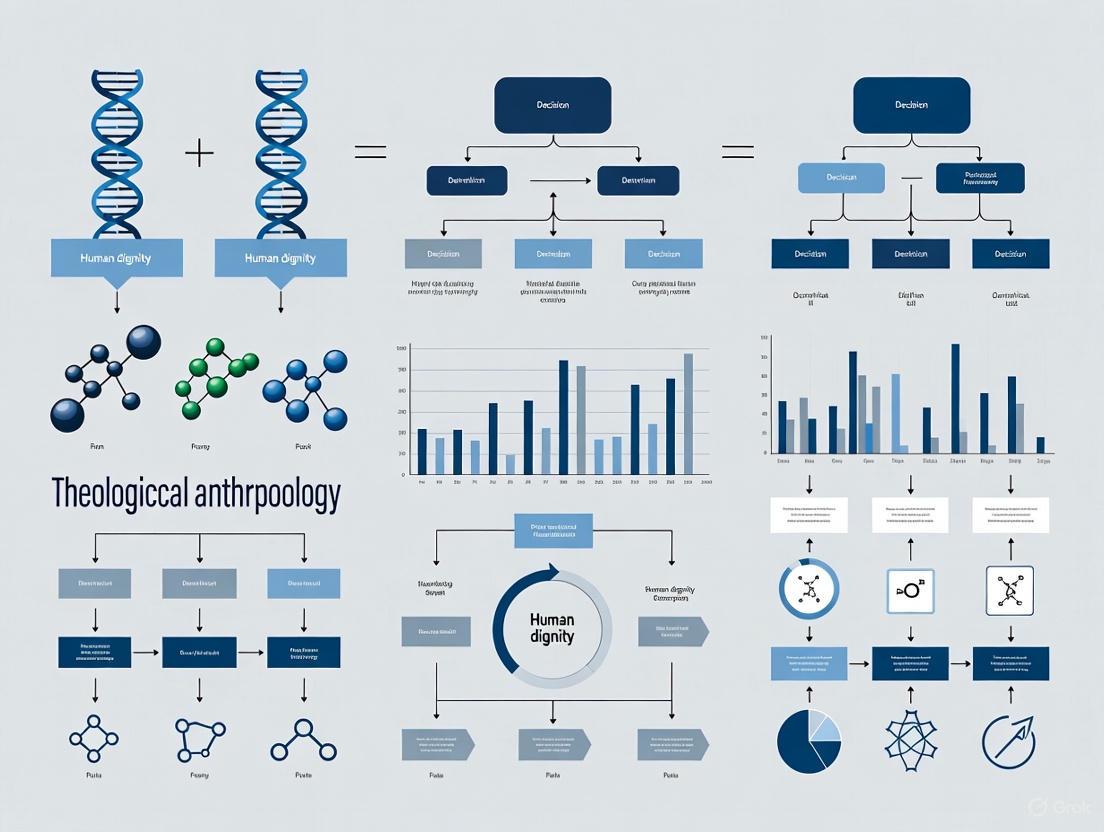
This article provides researchers, scientists, and drug development professionals with a comprehensive examination of theological anthropology—the study of humanity in relation to God—and its critical implications for the concept of...
Theological Anthropology and Human Dignity: A Foundational Framework for Bioethics in Research and Drug Development
Abstract
This article provides researchers, scientists, and drug development professionals with a comprehensive examination of theological anthropology—the study of humanity in relation to God—and its critical implications for the concept of human dignity in bioethics. It explores the metaphysical foundations of human worth, contrasting realist and nominalist frameworks, and applies these principles to practical ethical challenges in biomedical research. The content offers methodological tools for integrating a dignity-based approach into research protocols, troubleshooting common ethical dilemmas, and validating this framework against dominant secular and functionalist bioethical theories. The aim is to equip professionals with a robust, principled basis for navigating the complex moral landscape of modern medicine and biotechnology.
The Metaphysical Foundations of Human Dignity: From Imago Dei to Bioethical Principle
The rapid advancement of biomedical technologies presents complex ethical challenges that extend beyond technical considerations to fundamental questions about human nature, value, and destiny. This whitepaper articulates a framework of theological anthropology—the study of human beings in relation to the divine—as an essential foundation for bioethical decision-making in research, clinical practice, and drug development. By examining core doctrines including the imago Dei (image of God), human dignity, social nature, and mortality, we provide a structured approach to navigating bioethical dilemmas that integrates theological understanding with scientific practice. This framework offers researchers, scientists, and development professionals a robust paradigm for upholding human dignity across the spectrum of biomedical intervention.
Bioethics, as a multidisciplinary field examining ethical questions in biology, medicine, and healthcare, fundamentally concerns itself with the proper treatment of human life. Consequently, resolving bioethical problems requires a clear understanding of what human beings are—one needs to know what a thing is before knowing how it should be regarded and treated [1]. Anthropology in this context refers to a set of beliefs and assumptions about human origins, human nature, and human destiny (telos) [1].
Contemporary healthcare ethics frequently invokes the concept of human dignity as a normative cornerstone, yet beneath this apparent consensus lies significant conceptual fragmentation [2]. Dignity is variably interpreted as autonomy, capacity, recognition, or social construction with little agreement on its essential content or justification. This conceptual disarray weakens the ethical coherence of bioethical decision-making and obscures the true nature of the human person [2]. The current state of bioethics is predominantly irreligious, with purely secular conceptions of human nature vigorously competing with theological anthropologies [1].
Atheistic materialist worldviews often reduce the human person to nothing more than atoms and energy. As expressed by Francis Crick, co-discoverer of DNA's structure: "You, your joys and your sorrows, your memories and your ambitions, your sense of personal identity and free will, are in fact no more than the behavior of a vast assembly of nerve cells and their associated molecules" [1]. Such reductionist philosophies ultimately objectify the human being and create narratives of despair by eliminating transcendent meaning and purpose [1].
Against this backdrop, theological anthropology provides a coherent framework for bioethics that affirms inherent human dignity, purpose, and moral significance. This paper develops this framework through core theological doctrines and applies it to pressing biomedical challenges.
Theoretical Framework: Core Doctrines of Theological Anthropology
TheImago Dei: Foundation of Human Dignity
The concept of the imago Dei—that human beings are created in the image of God—forms the cornerstone of Christian theological anthropology and provides the most fundamental basis for human dignity in bioethics [3]. This doctrine reminds us of the inherent value and dignity of every human being, regardless of size, vulnerability, or health status [3]. The fact that we bear God's image means we were created with moral responsibility toward God with the goal of everlasting fellowship with Him.
This perspective explains why the conception, birth, dying, and death of every human person are radically different from these same events in the animal world. However biologically similar they may appear, a world of difference separates them morally [3]. This stands in stark contrast to contemporary philosophical voices such as Peter Singer, whose conflation of human and animal life simultaneously overvalues animals and undervalues human beings, particularly those with significant disabilities [3].
The ethical implications of the imago Dei are profound for controversial issues including abortion, embryonic research, euthanasia, and assisted suicide. Every human being—no matter how small, vulnerable, or sick—is worthy of care and protection by virtue of their ontological status as God's image-bearer, not because of any functional capacities they may or may not possess [3] [2].
Human Beings as Social Creatures
A significant aspect of the image of God that carries weighty bioethical implications is the understanding that God's image-bearers are inherently social creatures [3]. From the beginning, God created humanity "male and female" (Genesis 1:27) and gave them tasks—multiplying and exercising dominion (Genesis 1:28)—that are impossible to carry out as solitary individuals [3].
This social dimension means human beings are created for mutual responsibility and accountability within community. Christians are not only made to be members of the broader human community but also, and especially, recreated to be members of the redeemed community of the church [3]. This social nature informs bioethical decisions concerning family dynamics, community responsibilities, and the appropriate balance between individual autonomy and communal good.
Human Nature as Created and Sustained
The first article of the Apostles' Creed—"I believe in God, the Father Almighty, Maker of heaven and earth"—establishes the fundamental relationship between Creator and creature [1]. As Martin Luther explained in his Small Catechism, this article affirms that God has made and continues to sustain all creatures, providing body and soul, reason and senses, and all necessary support for life [1].
This creation paradigm establishes a fundamental ontological relationship: God is always the Giver, and humanity is always the receiver [1]. This relationship is defined by grace and gifting, not negotiation or achievement. As Irenaeus of Lyon expressed in the second century: "And in this respect God differs from man, that God indeed makes, but man is made . . . neither does God at any time cease to confer benefits upon, or to enrich man; nor does man ever cease from receiving the benefits, and being enriched by God" [1].
This understanding counters reductionist biological determinism by affirming that human beings are not accidental assemblages of molecules but creatures freely created by God for the purpose of participating in the loving fellowship of the Holy Trinity and serving as His visible representation on earth [1].
Mortality and the Hope of Immortality
A proper theological understanding of human mortality and the promise of immortality in Christ provides essential perspective for bioethical issues surrounding suffering, death, and end-of-life decisions [3]. While all people through general revelation understand something about death's character, Scripture clarifies crucial aspects and reveals that death has been defeated through Christ's work [3].
This framework resists the modern medical tendency to view death as the ultimate evil to be avoided at all costs, instead understanding it within the broader context of God's redemptive purposes. It also provides resources for facing suffering and mortality with hope rather than despair, and for recognizing that human dignity is not diminished by physical or cognitive decline [2].
Table 1: Contrasting Anthropological Foundations in Bioethics
| Anthropological Element | Secular/Materialist View | Theological Anthropology View |
|---|---|---|
| Human Origins | Product of blind evolutionary processes | Purposeful creation by God |
| Human Nature | Complex biological machinery; advanced animals | Embodied beings bearing God's image |
| Human Value | Contingent on capacities, functionality, or social contribution | Intrinsic and inviolable based on divine image |
| Human Sociality | Optional arrangement for mutual benefit | Essential aspect of human nature |
| Human Destiny | Extinction at death | Eternal fellowship with God |
| Basis for Ethics | Social contract, utility, or preference | God's character and moral law |
Critical Analysis of Contemporary Dignity Theories
Contemporary bioethics employs several theories of human dignity that suffer from significant philosophical limitations when compared to ontologically grounded theological anthropology.
Recognition-Based Theories
Rooted in social and political theory, recognition-based approaches (e.g., Axel Honneth, Charles Taylor) argue that human dignity arises from reciprocal acknowledgment of persons within social contexts [2].
Strengths: This perspective rightly highlights the social dimension of human life and the psychological harm caused by misrecognition or exclusion [2].
Limitations: The central weakness lies in dependence on external validation. If dignity depends on being recognized, it becomes vulnerable to being denied. This framework fails to account for the dignity of those unable to participate in reciprocal recognition—the comatose patient, the unborn child, or persons with severe cognitive impairments [2].
Capabilities Approach
Developed by Martha Nussbaum and Amartya Sen, the capabilities approach defines dignity in terms of real opportunities available to individuals to develop and exercise essential human functions [2].
Strengths: It moves beyond formal equality to focus on what people can actually do and be, emphasizing social structures' role in enabling human flourishing [2].
Limitations: This framework risks reducing dignity to functional performances, marginalizing those with limited capacities (e.g., advanced dementia, significant disabilities). Dignity becomes conditional, anchored in doing rather than being [2].
Procedural Pragmatism
Procedural approaches (e.g., Ronald Dworkin, Jürgen Habermas) treat dignity as a procedural value—a placeholder for moral consensus achieved through participatory dialogue and democratic processes [2].
Strengths: These approaches emphasize pluralism and legal frameworks' importance in securing civil respect and rights [2].
Limitations: Procedural approaches often strip dignity of substantive content, presuming moral legitimacy can be achieved without shared metaphysical anthropology. The result is a formalism incapable of resisting deeply unethical outcomes if they are legally sanctioned [2].
Ontological Foundation of Dignity
In contrast to these frameworks, theological anthropology defends an ontologically grounded understanding of dignity that recognizes the human being as a unified, rational, embodied substance possessing intrinsic worth by virtue of being [2]. This foundation provides the moral stability and universality that healthcare ethics requires, upholding the inviolability of the person beyond shifting cultural, legal, or utilitarian paradigms [2].
Diagram 1: Theoretical Foundations of Human Dignity in Bioethics
Application to Biomedical Contexts
Beginning-of-Life Issues
In reproductive technologies, genetic screening, and embryonic research, human embryos are frequently regarded as "pre-personal," lacking full dignity until they acquire certain features like neurological development, sentience, or self-awareness [2]. This severs the link between human nature and human worth, resulting in a selective ethic where lives are welcomed or discarded based on potential utility or desirability [2].
Theological anthropology, grounded in the imago Dei, affirms the dignity of human life from conception, recognizing the continuum of human development rather than establishing arbitrary points at which dignity is conferred. This has direct implications for:
- Embryonic research and the ethical constraints on the creation and destruction of human embryos
- Genetic screening and selection practices that discriminate based on genetic characteristics
- Reproductive technologies that may create, select, or discard embryonic human lives
Disability and Cognitive Impairment
In disability contexts, dignity theories based on capability or social contribution struggle to uphold equal moral worth [2]. Individuals with severe cognitive or physical impairments may not meet thresholds defined by capabilities theory, potentially leading to medical neglect or care withdrawal not based on clinical futility but perceived lack of "quality of life" [2].
The silent logic at play is utilitarian: if dignity is measured by functioning or autonomy, those lacking these are implicitly less worthy [2]. An ontological view of the human person resists this reductionism, affirming that every person, regardless of capacity or consciousness, possesses dignity by virtue of being—not by fulfilling externally imposed criteria [2].
End-of-Life Decisions
In end-of-life care debates, the term "death with dignity" is frequently employed to justify physician-assisted suicide or euthanasia [2]. Here, dignity is often reduced to autonomy—the capacity to make decisions about one's own life and death. While autonomy is a real good, its elevation to the defining criterion of dignity results in a problematic inversion: the person whose autonomy is impaired is seen as having lost dignity, thus becoming eligible for termination [2].
Theological anthropology recognizes that dignity is not diminished by suffering or dependency, nor by loss of self-determination. The final life stages often reveal human worth more radically through vulnerability, relational interdependence, and existential confrontation [2]. A dignity based on being, not doing, affirms life's sacredness even in its most fragile moments.
Table 2: Anthropological Perspectives on Key Bioethical Issues
| Bioethical Issue | Capabilities-Based Approach | Recognition-Based Approach | Theological Anthropology |
|---|---|---|---|
| Embryonic Research | Moral status increases with developmental capabilities | Status contingent on social recognition | Full dignity from conception as image-bearer |
| Severe Disability | Value dependent on functional capacities | Value dependent on community acceptance | Intrinsic value regardless of capacity |
| End-of-Life Care | Autonomy as primary value; may justify assisted suicide | Social burden may influence perceptions | Sacredness of life despite suffering or dependency |
| Infertility Treatments | Focus on expanding reproductive capabilities | Emphasis on social recognition of parenthood | Social nature of image informs ethical options |
| Resource Allocation | Often utilitarian calculation based on potential contribution | Influenced by social visibility and advocacy | Priority for vulnerable based on intrinsic worth |
Experimental and Methodological Framework
Anthropological Assessment Protocol for Bioethics Committees
Healthcare institutions and research review boards can implement structured protocols for anthropological assessment of bioethical challenges. The following methodology provides a systematic approach:
Diagram 2: Anthropological Assessment Protocol for Bioethics Committees
Research Reagent Solutions: Theological Anthropology Toolkit
Table 3: Essential Conceptual Tools for Anthropological Bioethics Analysis
| Research Tool | Function | Application Context |
|---|---|---|
| Imago Dei Framework | Identifies intrinsic human value beyond functional capacity | Protecting vulnerable human subjects (embryos, cognitively impaired, terminally ill) |
| Social Nature Assessment | Evaluates impact on human relationships and community | Considering familial and social consequences of biomedical interventions |
| Creature-Creature Distinction | Maintains proper ontological relationship between God and humanity | Addressing technological transhumanism and enhancement technologies |
| Mortality-Eternity Perspective | Contextualizes suffering and death within broader horizon of meaning | End-of-life decisions, pain management, and palliative care approaches |
| Grace-Based Ethics | Prevents reduction of ethics to legalism while maintaining moral standards | Developing institutional policies that uphold dignity without mere rule-compliance |
Theological anthropology provides an indispensable foundation for contemporary bioethics that transcends the limitations of secular frameworks. By grounding human dignity in the ontological reality of the imago Dei rather than functional capacities, social recognition, or procedural consensus, it offers a robust, universal basis for protecting human worth across the spectrum of biomedical practice.
For researchers, scientists, and drug development professionals, this framework enables navigation of complex bioethical challenges with conceptual clarity and moral confidence. It affirms the intrinsic value of all human life—from embryo to elderly, from fully able to severely impaired—while providing specific guidance for clinical decision-making, research ethics, and healthcare policy.
As biomedical technology continues to advance at an accelerating pace, the need for a coherent anthropological foundation becomes increasingly urgent. Theological anthropology meets this need with a vision of the human person that is both intellectually satisfying and morally resilient, capable of guiding the ethical application of technological power while safeguarding the inviolable dignity of every human life.
The concept of human dignity stands as a foundational pillar within theological anthropology and bioethics, yet it remains notoriously elusive and contested. In contemporary ethical, legal, and biotechnological discourse, the notion of human dignity is both omnipresent and conceptually unstable [4]. This definitional crisis stems from a fundamental metaphysical rupture: the progressive abandonment of a stable ontology of the human person [4]. This whitepaper argues that a coherent understanding of human dignity requires distinguishing between two fundamentally opposed paradigms: the intrinsic worth perspective, which recognizes dignity as an inherent, non-contingent property of all human beings, and functionalist definitions, which tie dignity to contingent attributes such as autonomy, cognitive capacity, or social utility [4]. For researchers, scientists, and drug development professionals operating at the intersection of biotechnology and human subjects, this distinction carries profound implications for ethical deliberation, research protocols, and therapeutic goals.
The current fragmentation is not merely academic; it directly impacts bioethical practice. As Dignitas Infinita highlights, there are “ambivalent ways in which the concept of human dignity is understood today,” leading to inconsistencies in the foundation and justification of moral doctrine [5]. Without a stable ontological foundation—a shared nature that precedes and grounds recognition—dignity becomes fragile and contingent [4]. This paper provides a technical analysis of these competing frameworks, empirical assessments of dignity impairments, and methodological protocols for integrating a robust, ontologically-grounded concept of dignity into biomedical research.
Theoretical Frameworks: Intrinsic vs. Functionalist Foundations
The Intrinsic Worth Paradigm
The intrinsic worth paradigm finds its most robust philosophical expression in the Aristotelian-Thomistic realist tradition. This framework conceives the human being as an individual substance of rational nature, whose dignity derives from its ontological structure—that is, from its essential capacity for truth, moral choice, and transcendence [4]. This understanding upholds the inviolability of human life from conception to natural death, regardless of functionality, consciousness, or autonomy [4].
- Theological Grounding: From a theological anthropology perspective, intrinsic dignity is rooted in the imago Dei—the creation of humans in God’s image (Gen. 1:26–27) [1] [6]. This confers a divine fingerprint that calls humans to live with purpose, value, and dignity, independent of their functional capacities [6]. As the Apostles' Creed articulates, human existence is fundamentally receptive—"God gives; we receive"—establishing dignity as a gift rather than an achievement [1].
- Kantian Influence: Philosophically, Immanuel Kant’s distinction between price and dignity is pivotal. He argued that what has a price is fungible, whereas dignity is beyond all equivalence, possessing intrinsic, non-fungible value [7]. This principle undergirds human rights frameworks, including the United Nations' Declaration of Universal Human Rights, which states that all people are "born free and equal in dignity and rights" [7].
The Functionalist Reduction
In contrast, functionalist theories tie human dignity to the actualization of specific capacities or functions. This paradigm, influenced by nominalist philosophy, denies the objective reality of universal human nature [4]. Instead, personhood becomes defined by mutable external criteria.
- Nominalist Metaphysics: Nominalism, as articulated by William of Ockham, holds that only individual things exist. Universal terms like "human nature" are merely names without shared ontological content [4]. This severs the bond between language and being, making dignity contingent on attributes like autonomy, sentience, or cognitive performance [4].
- Contemporary Manifestations: This reductionism manifests in ethical frameworks proposed by thinkers like Peter Singer and Paul Taylor, who ground moral consideration in sentience, environmental integration, or functional performance rather than rational or spiritual essence [4]. In psychology, functionalist theories of values treat them as building blocks of identity measured through empirical, often reductionist, methodologies [8]. This perspective legitimizes practices such as abortion, euthanasia, and embryo disposal by making dignity conditional and negotiable [4].
Table 1: Core Contrasts Between Intrinsic and Functionalist Paradigms
| Aspect | Intrinsic Worth Paradigm | Functionalist Paradigm |
|---|---|---|
| Metaphysical Foundation | Aristotelian-Thomistic realism [4] | Nominalism [4] |
| Source of Dignity | Ontological nature; imago Dei [4] [6] | Contingent attributes (autonomy, cognition, utility) [4] |
| Moral Scope | Universal across all human beings, regardless of capacity [4] | Graded and exclusionary based on functional criteria [4] |
| Key Theorists | Thomas Aquinas; Kant; Personalist bioethicists [4] [9] [7] | William of Ockham; Peter Singer; functionalist psychologists [4] [8] |
| Bioethical Stance | Protection of life from conception to natural death [4] [9] | Selective protection based on quality-of-life metrics [4] |
Conceptual Mapping of the Theoretical Landscape
The following diagram illustrates the logical relationships and historical influences that have shaped these two competing paradigms of human dignity:
Empirical Assessment of Dignity Impairments
Quantitative Research on Professional Perceptions
Empirical investigation into how healthcare professionals (HCPs) perceive dignity-impairing factors provides critical data for bioethical reflection. A 2024 German pilot study employed an adapted version of the Patient Dignity Inventory (aPDI) to assess how 229 HCPs rated the importance of various dignity-impairing aspects in end-of-life care [10]. The findings revealed both consensus and divergence across professional groups, highlighting the complex interplay between professional training and dignity perceptions.
The study used a 5-point Likert scale (1="not important" to 5="of utmost importance") to assess 25 items grouped into five subscales adapted from Bovero et al. [10]. The overall importance of dignity-impairing aspects was rated very high across all HCP groups, but significant interprofessional differences emerged, particularly between nursing staff, physicians, and those with multiple occupations [10].
Table 2: Healthcare Professional Ratings of Dignity-Impairing Factors in End-of-Life Care [10]
| PDI Subscale | Sample Items | Overall Mean Importance (1-5 Scale) | Variations by Profession | Impact of Bioethics Training |
|---|---|---|---|---|
| Physical Symptoms and Dependency | Not able to perform tasks of daily living; Not able to attend to bodily functions | 4.6 | Nursing staff rated higher than physicians | Participants with bioethics knowledge rated higher |
| Psychological Distress | Feeling depressed; Feeling anxious; Worried about the future | 4.4 | Moderate variation across groups | Significant positive correlation with training |
| Existential Distress | Feeling like a burden; Not feeling worthwhile or valued; Feeling no longer who one was | 4.7 | Highest among nursing staff | Strong positive correlation with training |
| Loss of Purpose and Meaning | Feeling life no longer has meaning; Feeling of not having made meaningful contribution | 4.5 | Notable professional divergence | Moderate positive correlation |
| Social Support | Not feeling supported by friends; Not being treated with respect | 4.8 | Consistent high ratings across groups | Limited correlation observed |
Research Reagent Solutions: Dignity Assessment Toolkit
For researchers investigating human dignity in clinical and research settings, the following methodological "reagents" provide essential tools for rigorous empirical assessment:
Table 3: Key Research Instruments for Dignity Assessment
| Instrument/Tool | Function | Application Context |
|---|---|---|
| Adapted Patient Dignity Inventory (aPDI) [10] | Quantitative assessment of dignity-impairing factors via 25-item Likert scale | Measuring professional perceptions of patient dignity in end-of-life care |
| Personalist Bioethics Analytical Framework [9] | Qualitative assessment based on anthropological foundation, triangular methodology, and bioethical argumentation | Evaluating consistency of bioethical publications with ontological personalism |
| Value Landscapes Methodology [8] | Multi-dimensional mapping of values characterized by proximity, intensity, contextuality, and malleability | Probing complex value configurations in policy and ethical decision-making |
| Theological Anthropology Hermeneutic [1] [6] | Interpretive framework relating human nature to creation, fall, and redemption | Contextualizing bioethical dilemmas within Christian understanding of human nature |
Experimental Protocol for Dignity Assessment Research
For researchers seeking to replicate or build upon existing dignity assessment studies, the following protocol provides a methodological framework:
Protocol Title: Quantitative Assessment of Healthcare Professional Perceptions of Patient Dignity Using the Adapted Patient Dignity Inventory (aPDI)
Background: This protocol outlines a procedure for investigating how healthcare professionals perceive and rate impairments of human dignity in clinical settings, particularly end-of-life care [10].
Materials and Instruments:
- Adapted Patient Dignity Inventory (aPDI) questionnaire [10]
- 5-point Likert scale (1="not important" to 5="of utmost importance") [10]
- Sociodemographic data collection instrument [10]
- Digital survey platform (e.g., LimeSurvey) [10]
Procedure:
- Participant Recruitment: Employ convenience sampling from relevant professional groups (physicians, nursing staff, social workers, therapeutic staff, pastoral carers, psychologists, hospice volunteers) [10].
- Data Collection: Administer the online survey containing the aPDI and sociodemographic questions. The guiding question for completion should be: "How would you assess impairments of a patient's human dignity at the end of life from your professional perspective?" [10].
- Subscale Analysis: Group the 25 inventory items according to the five subscales: Physical Symptoms and Dependency, Psychological Distress, Existential Distress, Loss of Purpose and Meaning, and Social Support [10].
- Statistical Analysis: Conduct exploratory data analysis using statistical software (e.g., SPSS). Calculate mean importance ratings for each item and subscale. Perform comparative analysis based on professional characteristics, including job profile, years of experience, and previous training in bioethics [10].
- Interpretation: Compare results across professional groups, noting where significant divergences occur. Relate findings to underlying anthropological commitments and theoretical frameworks regarding human dignity.
Validation Criteria: Include consistency checks for respondent comprehension, absence of missing data, and appropriate statistical power for subgroup analyses [10].
Applications in Bioethics and Biomedical Research
Personalist Bioethics in Research Practice
Ontologically grounded personalist bioethics (BPOF), as proposed by Elio Sgreccia, offers a robust framework for biomedical research ethics. This approach starts with a realistic anthropology rationally founded on philosophical metaphysics and develops its ethical framework on this foundation [9]. The relevance of this approach is evidenced by quantitative research on its academic influence: of 340 publications catalogued as personalist between 2015-2020, 19 were identified as specific to the BPOF, with concentrations in general principles, beginning of life issues, and clinical bioethics [9].
The three essential criteria for evaluating adherence to BPOF are:
- Anthropological Foundation: Recognition of a stable human nature [9]
- Triangular Methodology: Integration of metaphysical, ethical, and phenomenological approaches [9]
- Bioethical Argumentation: Consistent application of personalist principles to biomedical dilemmas [9]
Research indicates that publications lacking these foundations risk being ineffective in defending human dignity and generate confusion in understanding personalist bioethics [9].
Research Workflow for Dignity-Centered Ethical Analysis
The following diagram outlines a systematic workflow for integrating dignity considerations into biomedical research ethics, particularly useful for research ethics boards and institutional review committees:
The distinction between intrinsic worth and functionalist definitions of human dignity represents more than an academic debate—it constitutes a foundational issue with direct implications for biomedical research, therapeutic practice, and healthcare policy. The empirical evidence demonstrates that perceptions of dignity vary significantly across professional groups, influenced by training, role, and philosophical commitments [10]. This technical analysis underscores that without a stable ontological foundation, human dignity becomes vulnerable to reductionist interpretations that threaten the protection of the most vulnerable [4].
For the research community, adopting an intrinsically grounded concept of dignity requires deliberate effort. This includes utilizing rigorous assessment tools like the aPDI, implementing systematic ethical workflows, and adhering to personalist bioethical frameworks that recognize the profound metaphysical reality of human nature [10] [9]. Theological anthropology provides a rich resource for this project, offering a vision of the human person as created, fallen, and redeemed—a being whose dignity rests not in functional capacity but in divine image-bearing [1] [6].
As biotechnology continues to advance, demanding increasingly complex ethical decisions, the need for a coherent, robust, and practically applicable concept of human dignity becomes ever more urgent. By clearly distinguishing intrinsic worth from functionalist reductions, researchers and clinicians can better navigate these challenges, ensuring that technological progress remains tethered to an unshakeable commitment to human flourishing.
The Imago Dei (Image of God) as the Bedrock of Human Uniqueness and Inviolability
This whitepaper examines the Imago Dei (Image of God) as a foundational concept in theological anthropology and its critical implications for bioethics research and practice. It argues that a substantive, biblically-grounded understanding of the Imago Dei provides an objective basis for human uniqueness, inviolable dignity, and universal human rights. This framework stands in contrast to functional or capacity-based definitions of personhood, offering a robust ethical counterweight to prevailing utilitarian approaches in medicine and biotechnology. The discussion is situated within contemporary interdisciplinary dialogue, with specific application to challenges in drug development and clinical research involving human subjects.
Biblical and Theological Foundations of the Imago Dei
The concept of the Imago Dei originates in the creation narrative of Genesis, which states, "So God created humankind in his image, in the image of God he created them; male and female he created them" (Genesis 1:27) [11] [12]. This passage serves as the primary scriptural encapsulation of biblical anthropology, positioning the Imago Dei as a definitive heading for understanding human nature [11]. The term is rare in the Old Testament, appearing explicitly only three times (Gen 1:26–27; 5:1–3; 9:6), with the latter two references echoing the first [11].
A central theological question involves the prepositional phrase "in our image" (בְּצַלְמֵ֖נוּ, betzalmenu). The Hebrew preposition ב can be interpreted as a bet essentiae, meaning humans are created as the image of God, or as a bet normae, meaning humans are created according to the image of God [11]. This distinction underpins a significant interpretive divide:
- Functional Interpretation: Views the Imago Dei as consisting primarily in the human task to represent God by exercising royal dominion in and over creation (Gen 1:28) [11]. This aligns with ancient Near Eastern parallels where kings acted as divine representatives.
- Substantive Interpretation: Posits that humanity's "in-the-divine-image-ness" is a mode of participation in a divine reality, with the functional role (dominion) being a consequence, not the content, of this status [11].
The substantive interpretation suggests that being made in God's image is an inviolable characteristic of human nature, not contingent on any capacity, function, or relational status that can be gained or lost [13] [14]. This view finds support in the post-diluvian reaffirmation of the Imago Dei in Genesis 9:6, which grounds the prohibition of murder in the enduring image of God within each person, independent of moral standing or functional capacity [11].
The Imago Dei in Theological Anthropology and Contemporary Research
Theological anthropology is the study of the human person through the lens of divine revelation, exploring human origin, purpose, and nature in light of God's creative and redemptive action [15] [6]. Within this discipline, the Imago Dei is not a peripheral concept but is "the focal point of discussions on theological anthropology throughout the history of Christian theology" [11]. It provides the fundamental answer to the question of human identity.
The table below summarizes prominent interpretive models and their key emphases [11] [6]:
| Interpretive Model | Key Emphasis | Primary Strengths |
|---|---|---|
| Substantive/Structural | Resides in innate human capacities (e.g., reason, morality, consciousness). | Affirms inherent, universal human dignity. |
| Functional | Consists in the human role and task (e.g., stewardship and dominion over creation). | Connects theology to empirical, historical-cultural contexts. |
| Relational | Found in the capacity for relationship—with God and other persons. | Reflects the triune, relational nature of God. |
Contemporary research highlights the challenges of defining human dignity without a stable ontological foundation. The following table outlines common pitfalls identified in dignity research, which a robust Imago Dei framework seeks to avoid [16]:
| Research Challenge | Description | Proposed Imago Dei Solution |
|---|---|---|
| Narrow Focus | Focusing on a single aspect (e.g., autonomy) while ignoring others. | Provides a comprehensive, substantive basis for dignity. |
| Definitional Clarity | Lack of an inclusive, stable definition of "human." | Defines humanity ontologically by divine image-bearing. |
| Source of Dignity | Ambiguity regarding the origin of dignity and its criteria. | Locates the source in the creative act of God. |
| Potential vs. Actual Dignity | Confusion over whether potential (e.g., a fetus) warrants actual dignity. | Affirms dignity from conception, as it is a matter of being, not capacity. |
Modern scholarship often interprets Genesis 1 as depicting the world's creation as a cosmic temple, with humans serving as the "living statue of God" placed within it to mediate God's presence and rule [11]. This priestly-royal understanding synthesizes functional and relational aspects while maintaining that the identity itself is a gracious gift of the Creator.
The Imago Dei as the Foundation for Human Dignity and Rights
The Imago Dei provides a powerful foundation for human dignity and rights, asserting that every human being possesses inherent, equal, and inviolable worth [12] [14]. This stands in stark contrast to other philosophical accounts. For instance, the concept of "Dignity as a Quality" (a form of excellence admitting of degrees) is susceptible to gradation and loss, whereas the dignity conferred by the Imago Dei is intrinsic to all human persons regardless of their capacities or state [17].
This theological framework undergirds human rights by asserting that the "inviolable dignity and rights of every person...necessitates the social duty to respect such dignity" [12]. This concept of dignity in solidarity is articulated in Catholic social teaching and resonates with the African concept of Ubuntu, which emphasizes mutual care, justice, and community [12]. The logic is unassailable: if every human being bears the image of God, then to violate another human is to dishonor God whose image they bear.
The diagram below illustrates the logical relationship between the Imago Dei and its core bioethical implications:
This framework is particularly crucial in situations where legal protections for human rights are abused or ignored, as it can motivate "Christian social action and campaigning for human rights" [12]. It offers a basis for action that transcends legal positivism, filling the gap for those failed by governmental systems.
Bioethical Implications and Applications
The Imago Dei has profound implications for bioethics, providing a non-arbitrary basis for the sanctity of human life and establishing clear ethical boundaries for scientific research and medical practice [13] [14].
Critical Bioethical Challenges
- Abortion and Embryonic Research: If human personhood is "inextricably connected to the imago Dei," then human life from conception is intrinsically valuable [13]. This leads to the conclusion that "human embryos cannot be produced and destroyed for the sake of research, nor tested and discarded in the name of assisted reproduction" [13]. Operational definitions of personhood based on developed capacities are rejected as arbitrary and subject to manipulation [13].
- End-of-Life Issues (Euthanasia & Physician-Assisted Death): Appeals to "dignity" to justify euthanasia often covertly equate dignity with autonomy or the absence of suffering [14]. An Imago Dei framework decouples dignity from autonomy, rationality, or physical capability, affirming it as "an absolute characteristic that is donated graciously to all bearers of imago Dei" [14]. Consequently, an individual's worth is not diminished by illness, cognitive decline, or dependency, and killing, whether through assisted suicide or euthanasia, is seen as a direct attack on the image of God [13] [14].
- Research Ethics and Vulnerable Populations: The duty to protect the vulnerable flows directly from the Imago Dei. This requires informed consent and demands special protection for those who cannot give full consent or who are marginalized. This framework challenges researchers and clinicians to see every human subject, regardless of their condition, as a bearer of God's image, worthy of honor and respect [12] [10].
A Research Reagent Toolkit for Ethical Evaluation
For researchers and drug development professionals, the following table translates the conceptual framework of the Imago Dei into a practical "toolkit" for ethical evaluation:
| Conceptual 'Reagent' | Function in Ethical Analysis |
|---|---|
| Substantive Definition of Personhood | Serves as a primary standard to identify all entities warranting full moral and legal protection, based on their being, not function. |
| Inviolable Dignity Axiom | Acts as a control to prevent the devaluation of human life based on factors like age, cognitive capacity, or health status. |
| Duty to Protect Principle | Functions as an ethical catalyst, creating positive obligations to advocate for and design protections for vulnerable research participants. |
| Solidarity and Ubuntu Framework | Provides a buffer against individualistic autonomy, ensuring research considers communal well-being and justice. |
The Imago Dei presents a robust framework for understanding human uniqueness and inviolability, with direct and consequential applications for bioethics. By grounding human dignity in the creative act of God and the ontological reality of every human person, it provides an objective, stable, and universal basis for human rights that is not subject to the shifting consensus of cultural values or utilitarian calculus. For researchers, scientists, and drug development professionals, engaging with this concept is not merely a theological exercise but a critical step toward ensuring that scientific progress is guided by an unwavering commitment to the profound and equal worth of every human life.
The concept of human dignity serves as a cornerstone principle in contemporary bioethics, providing foundational justification for human rights, medical ethics, and research protocols involving human subjects. Within theological anthropology, dignity constitutes an indispensable pillar for developing a robust framework for bioethical decision-making, particularly in sensitive areas including embryonic research, end-of-life care, and emerging biotechnologies [2] [4]. Despite its pervasive invocation in ethical declarations and policy documents, the conceptual underpinnings of dignity remain contested and philosophically fragmented in contemporary discourse [2] [18].
This paper argues that comprehending dignity's full significance in bioethics requires tracing its historical and philosophical lineage through three foundational traditions: Classical Greek philosophy, Roman Stoicism, and Biblical thought. The convergence of these traditions—particularly the transformative synthesis of Stoic universalism with the Biblical imago Dei paradigm—produced a concept of human dignity as universal, inherent, and inviolable [19] [18]. Such historical grounding proves indispensable for countering contemporary reductionist tendencies that would tie dignity to variable attributes like autonomy, cognitive capacity, or functional ability [4].
By examining these historical trajectories, this analysis illuminates how pre-modern understandings of human worth continue to inform ongoing debates about human dignity in bioethics, particularly regarding the protection of vulnerable human life and the ethical constraints governing scientific research [2] [1]. The recovery of these foundations offers a vital corrective to purely procedural or functionalist approaches that risk eroding the very concept they seek to protect.
Classical Foundations: The Emergence of Dignity as Excellence
The Classical philosophical tradition, particularly through its Greek proponents, established crucial preliminary conceptual frameworks for understanding human worth and excellence, though its conception of dignity differed markedly from contemporary egalitarian notions.
Aristotelian Teleology and the Rational Soul
Aristotle's philosophical system approached human excellence through a teleological understanding of nature, wherein every being possesses a proper end or function (telos). For human beings, this telos consisted in actualizing the distinctively human capacity for reason (logos) [4]. In his work On the Parts of Animals, Aristotle identified the heart (kardia) as the biological and psychological center of human animation—the primordial seat of sensation, movement, and vitality [20]. This cardiocentric model positioned the heart as both biologically vital and ontologically significant, though not yet as the locus of universal human dignity in the modern sense.
The Aristotelian framework understood human excellence as the virtuous actualization of one's rational capacities, achieved through lifelong habituation and philosophical cultivation. This conception was inherently hierarchical and comparative, recognizing degrees of human excellence based on one's success in realizing this rational potential [18]. Dignity, in this context, was an achievement rather than an endowment—a quality to be attained rather than an inherent possession of all human beings simply by virtue of their humanity.
Philosophical and Cultural Barriers to Intervention
The Classical worldview's understanding of the heart as both biological center and symbolic locus of identity created profound cultural and philosophical resistance to physical intervention. For Hippocratic physicians and Galenic practitioners alike, the heart remained "untouched, untouchable, and encased within an aura of moral and ontological reverence" [20]. This perspective persisted despite growing anatomical knowledge, illustrating how metaphysical beliefs can constrain medical practice even in the presence of technical capability.
Table 1: Classical Conceptions of Human Excellence
| Philosophical Tradition | Foundation of Dignity | Nature of Dignity | Key Contributors |
|---|---|---|---|
| Aristotelian Teleology | Actualization of rational potential (logos) | Hierarchical and achievement-based | Aristotle |
| Galenic Physiology | Heart as seat of pneuma (vital spirit) | Biological and cosmological | Galen |
| Cardiocentric Model | Heart as center of animation and sensation | Ontologically inviolable | Hippocratic Corpus |
Stoic Contributions: Universal Reason and Cosmopolitan Dignity
Roman Stoicism fundamentally transformed the concept of dignity by universalizing its application and grounding it in a cosmopolitan vision of shared human rationality. This philosophical shift proved decisive for later ethical developments, including early Christian appropriations of Stoic thought.
Stoic Anthropology and Universal Reason
Stoic philosophy, particularly through figures like Seneca, Epictetus, and Marcus Aurelius, conceived the universe as permeated by a divine rational principle (logos) that structured reality according to a coherent and benevolent order [21]. Human beings participate in this cosmic order through their capacity for reason, which represents a fragment of the divine logos within each person. The Stoics equated the good life with "a life in accordance with Nature, which some Stoics, particularly in the Roman era, equate with God" [21].
This recognition of universal reason led to a crucially important ethical innovation: the assertion that all human beings, regardless of social status, nationality, or gender, possess inherent worth by virtue of their rational nature. The Roman philosopher Cicero explicitly linked this universal capacity to the concept of dignity, understanding it as "human excellence" derived from our rational nature [19] [18]. This Stoic conception marked a significant departure from the hierarchical, achievement-based model of Classical Greek thought.
Ethical Implications and Social Transformation
Stoic cosmopolitanism carried profound ethical implications, asserting that every rational being deserves fundamental respect irrespective of external circumstances or social standing. This philosophical framework provided powerful intellectual resources for criticizing social inequalities and unjust institutions. The transformative potential of Stoic thought is exemplified by figures like Epictetus, who began his life as a slave yet became a revered philosopher based on the universal dignity of reason [21].
The Stoic conception of dignity remained influential through the Middle Ages and Renaissance, with Seneca's ethical writings maintaining particular popularity [21]. However, despite its universalizing impulse, the Stoic framework ultimately grounded dignity in the actualization of rational capacity, creating potential exclusionary implications for those with impaired cognitive functioning—a vulnerability that would only be fully addressed through the Biblical imago Dei paradigm.
Table 2: Stoic Transformations of Dignity
| Stoic Concept | Description | Contribution to Dignity |
|---|---|---|
| Universal Reason | Divine logos permeating all reality | Grounds human equality in shared rational nature |
| Cosmopolitanism | World citizenship transcending local affiliations | Establishes basis for universal human community |
| Apathy (Apatheia) | Mastery over destructive emotions | Fosters dignity through moral self-possession |
Biblical Revelation: The Imago Dei as Theological Foundation
The Biblical tradition introduced a radically theocentric foundation for human dignity through the doctrine of creation, particularly the affirmation that human beings are created in the "image and likeness of God" (imago Dei). This theological innovation provided unprecedented grounding for the concept of universal, inviolable human worth.
The Imago Dei in the Creation Narratives
The foundational Biblical text for the concept of human dignity appears in Genesis 1:26-27: "Then God said, 'Let us make mankind in our image, in our likeness'... So God created mankind in his own image, in the image of God he created them; male and female he created them." This affirmation establishes several crucial dimensions of human dignity [19]:
- Equality and Universality: Unlike comparative Greco-Roman notions of dignity, the imago Dei applies universally to all human beings without distinction, establishing human equality at the most fundamental level [18].
- Divine Origin: Human worth derives not from human capacities or achievements but from divine creation and endowment, making dignity a gift rather than an achievement [1].
- Relational Significance: As "living statues" of God, human beings represent God's presence and authority within creation, establishing human dignity as inherently relational rather than merely autonomous [19].
The imago Dei paradigm fundamentally reoriented the concept of dignity from an attribute grounded in human capacity to one grounded in divine relationship and endowment.
Incarnational Transformation of Dignity
The Christian doctrine of the Incarnation—the belief that God became human in Jesus Christ—further transformed and radicalized the concept of human dignity. By affirming that divine nature united with human nature in Christ, Christian theology sacralized human nature itself, elevating human dignity to an unprecedented level [18]. This incarnational perspective informed the writings of early Christian authors like Irenaeus of Lyon, who emphasized that human beings continuously receive their existence and worth from God: "And in this respect God differs from man, that God indeed makes, but man is made... neither does God at any time cease to confer benefits upon, or to enrich man; nor does man ever cease from receiving the benefits, and being enriched by God" [1].
This understanding of dignity as gift rather than achievement proved particularly significant for establishing the inviolable worth of vulnerable human beings, including those with severe cognitive or physical impairments [2]. If dignity derives from divine gift rather than human capacity, it remains intact regardless of one's functional abilities or social utility.
Diagram 1: Theological Foundations of Human Dignity
Historical Synthesis and Conceptual Development
The conceptual evolution of dignity reached a crucial synthesis through the creative integration of Stoic universalism with Biblical revelation, particularly during the Patristic and Medieval periods. This historical convergence produced the distinctive understanding of dignity that would eventually inform modern bioethics.
Patristic Appropriation of Stoic Concepts
Early Christian theologians engaged extensively with Stoic philosophy, finding significant points of convergence despite important divergences. Figures like Augustine of Hippo demonstrated complex engagement with Stoic thought—"drawing on some ideas without changing them, rejecting others, and reshaping others" [21]. This critical appropriation is particularly evident in monastic adaptations of Epictetus's Encheiridion, which Christian writers modified to align with theological anthropology while preserving valuable Stoic insights about moral self-mastery [21].
The Apostle Paul's possible engagement with Stoic thought remains contested among scholars, though his sermon at the Areopagus in Acts 17 may contain allusions to Cleanthes's "Hymn to Zeus" [21]. What remains historically significant is the early Christian recognition that Stoic universalism and moral philosophy could be fruitfully synthesized with Biblical revelation to develop a more robust account of human dignity.
Medieval Developments and Dignity's Semantic Transformation
The Medieval period witnessed important conceptual developments that further refined the understanding of human dignity. Thomas Aquinas's synthesis of Aristotelian philosophy with Christian theology produced a sophisticated metaphysical account of the human person as an integrated unity of body and soul, possessing inherent dignity through their rational nature and creation in God's image [4]. This Aristotelian-Thomistic framework "affirms that every person, regardless of capacity or consciousness, possesses dignity by virtue of being—not by fulfilling externally imposed criteria" [2].
Table 3: Historical Synthesis of Dignity Concepts
| Historical Period | Key Conceptual Integration | Representative Figures |
|---|---|---|
| Patristic Era | Critical appropriation of Stoic universalism | Augustine, Evagrius Ponticus |
| Medieval Synthesis | Integration of Aristotelian metaphysics with imago Dei | Thomas Aquinas |
| Renaissance Humanism | Recovery of classical sources alongside Christian theology | Giovanni Pico della Mirandola |
This historical convergence fundamentally transformed the semantic content of dignity from its original meaning as comparative social status to its contemporary understanding as universal human worth. As noted in scholarly analysis, "The Greek notion of comparative dignity was transformed by contact with Christian egalitarian dignity rooted in the notions of humankind as the image of God and of God becoming human" [18].
Contemporary Bioethical Applications and Implications
The historical trajectories of dignity remain directly relevant to contemporary bioethical debates, providing essential conceptual resources for addressing emerging challenges in medical practice and biotechnology.
Ontological vs. Functionalist Approaches to Dignity
Contemporary bioethics reflects a fundamental divide between ontological and functionalist understandings of human dignity. The ontological approach, rooted in the historical synthesis examined in this study, "affirms that every person, regardless of capacity or consciousness, possesses dignity by virtue of being—not by fulfilling externally imposed criteria" [2]. This perspective maintains that human dignity is intrinsic, inalienable, and grounded in the metaphysical reality of the human person as created in God's image.
By contrast, functionalist approaches tie dignity to contingent attributes such as autonomy, cognitive capacity, or social recognition [2] [4]. These frameworks "risk reducing dignity to a list of functional performances" and "tend to marginalize those whose capacities are limited or undeveloped, such as individuals at the margins of life—the elderly with advanced dementia, the disabled, or the unborn" [2]. The historical concept of dignity as developed through the Stoic and Biblical traditions provides crucial philosophical resources for critiquing these reductionist approaches.
Dignity in Research Ethics and Clinical Practice
The historical understanding of dignity as universal and inviolable provides critical guidance for contemporary research ethics and clinical practice:
- Protection of Vulnerable Populations: An ontologically grounded concept of dignity mandates special protection for vulnerable research participants, including embryos, cognitively impaired individuals, and dying patients, whose worth is not contingent upon their functional capacities [2] [4].
- Global Research Partnerships: In international collaborative research, respect for human dignity requires addressing power imbalances and ensuring equitable relationships between researchers from different economic and cultural backgrounds [22].
- End-of-Life Care: Against utilitarian quality-of-life judgments, the historical concept of dignity affirms the inviolable worth of dying patients, challenging practices that would instrumentalize human life based on perceived social utility [2] [23].
Diagram 2: Bioethical Implications of Dignity Foundations
Research Ethics Toolkit: Conceptual Frameworks for Bioethics
Table 4: Analytical Frameworks for Dignity in Bioethics Research
| Conceptual Framework | Definition | Bioethical Application |
|---|---|---|
| Sulmasy's Dignity Taxonomy | Distinguishes attributed, intrinsic, and inflorescent dignity | Prevents conceptual confusion in ethical analysis [18] |
| Ontological Foundation | Dignity grounded in being rather than function | Protects vulnerable human life regardless of capacity [2] [4] |
| Imago Dei Paradigm | Dignity derived from creation in God's image | Establishes universal human equality [1] [19] |
| Metaphysical Anthropology | Understanding human nature as unified body-soul composite | Resists reductionist views of the person [4] |
The historical trajectories of Classical, Stoic, and Biblical thought have collectively forged a concept of human dignity that remains indispensable for contemporary bioethics. The Classical tradition established the significance of human rationality; Stoicism universalized this rational capacity within a cosmopolitan framework; and Biblical revelation grounded human dignity in the theological realities of creation in God's image and the Incarnation. Together, these traditions produced a robust understanding of dignity as universal, inherent, and inviolable.
For researchers, scientists, and drug development professionals working at the frontiers of biotechnology, this historical legacy provides essential conceptual resources for navigating complex ethical challenges. The recovery of dignity's rich philosophical and theological heritage offers a vital antidote to reductionist approaches that would tie human worth to variable functional capacities. In an age of unprecedented technological power, maintaining medicine's ethical integrity requires firm commitment to a concept of human dignity that protects the most vulnerable among us simply by virtue of their humanity. The historical synthesis examined in this study provides precisely such a foundation, affirming that every human being possesses irreducible worth that demands recognition and protection in both research and clinical practice.
The contemporary bioethical landscape is characterized by profound and seemingly intractable disagreements, particularly concerning beginning-of-life, end-of-life, and enhancement technologies. This paper argues that these disputes are symptomatic of a deeper metaphysical crisis rooted in the dominance of nominalist metaphysics and the consequent denial of a stable, objective human nature. By contrasting the Aristotelian-Thomistic realist tradition with modern nominalism, we demonstrate how the abandonment of an ontological foundation for personhood has rendered the concept of human dignity philosophically vulnerable and functionally inert in guiding biotechnological innovation. Within a framework of theological anthropology, this analysis reveals that recovering a coherent bioethical consensus requires a renewed engagement with the metaphysical question of what it means to be human, ultimately grounded in the concept of the imago Dei.
In bioethical deliberations surrounding embryonic research, artificial intelligence, end-of-life care, and transhumanism, the concept of human dignity is frequently invoked as a central normative pillar [4]. However, its application remains deeply contested, often resulting in a rhetorical stalemate. This fragility stems from a prior, more fundamental rupture: the progressive abandonment of a realist conception of human nature in favor of nominalist and constructivist paradigms [4] [24]. This shift has severed the essential link between language and being, transforming "personhood" from an ontological datum into a mutable functional or relational definition [4].
The metaphysical crisis of our time is thus one of foundations. Without a shared ontological understanding of the human person, dignity becomes unmoored from any universal standard and is made contingent upon attributes such as autonomy, sentience, or cognitive capacity [4]. This paper contends that navigating this crisis requires a deliberate philosophical return to the question of human essence. For research scientists and drug development professionals, this is not an abstract academic exercise but a prerequisite for establishing a robust, consistent, and defensible ethical framework for their work.
Historical and Philosophical Framework: Realism vs. Nominalism
The divergence between realism and nominalism provides the decisive framework for understanding the current metaphysical crisis. The table below summarizes the core distinctions between these two paradigms and their consequent bioethical positions.
Table 1: Philosophical Foundations: Realism vs. Nominalism in Bioethics
| Aspect | Aristotelian-Thomistic Realism | Nominalism |
|---|---|---|
| Metaphysical Core | Affirms objective, universal natures or essences that are intelligible and real [4]. | Denies the extra-mental reality of universals; only individual entities exist [4]. |
| Concept of 'Human' | The human is an "individual substance of rational nature," with a stable, intrinsic essence [4]. | "Human" is a name (nomen) applied to individuals based on perceived similarities, with no shared ontological content [4]. |
| Foundation for Dignity | Dignity is intrinsic and inviolable, derived from the human being's ontological structure and orientation toward truth and good [4]. | Dignity is contingent and ascribed, based on functional attributes like autonomy, cognition, or social recognition [4]. |
| Bioethical Implication | Protects all members of the human species from conception to natural death, regardless of capacity or function [4]. | Justifies differential treatment based on the presence or absence of preferred capacities, potentially excluding vulnerable populations [4]. |
The Realist Foundation: Essence and theImago Dei
Within theological anthropology, the realist position finds its fullest expression in the doctrine of the image of God (imago Dei). This concept, prominent in Genesis 1:26-27, posits that human beings are created according to a divine archetype [11]. This is not merely a functional role but an ontological status that constitutes the very being of the human person [1] [11]. Human nature is thus a received reality, endowed with a purpose (telos)—perfect fellowship with God—that defines human flourishing [1]. This objective, God-given essence provides the non-negotiable foundation for universal human dignity and equality, making it "the ontological ground of moral worth" [4].
The Nominalist Revolution: The Fragmentation of the Human
In contrast, nominalism, as advanced by William of Ockham, initiated a metaphysical shift by breaking the link between universal concepts and reality [4]. This philosophical move laid the groundwork for modernity's rejection of a shared human essence. The logical conclusion of this trajectory is a reductionist materialism that views the human person as "nothing more than the behavior of a vast assembly of nerve cells and their associated molecules" [1], a view that inherently objectifies the human being and creates "a narrative of despair" [1].
The following diagram illustrates the logical progression from metaphysical premises to bioethical outcomes, highlighting the critical role of the imago Dei in the realist framework.
Methodological Approaches: Analyzing Metaphysical Foundations in Bioethical Discourse
To operationalize this philosophical analysis for empirical research, a systematic approach to qualitative data analysis (QDA) is essential. The following section outlines methodologies for identifying and interpreting the metaphysical assumptions embedded in bioethical literature and policy documents.
Qualitative Data Analysis (QDA) Protocols
Rigorous QDA moves beyond simple thematic description to uncover the underlying conceptual frameworks that shape arguments [25] [26]. The following table details three core methods applicable to bioethical research.
Table 2: Methodologies for Analyzing Metaphysical Assumptions in Bioethics
| Method | Description & Application | Key Analytical Question |
|---|---|---|
| Thematic Analysis | Identifying, analyzing, and reporting patterns (themes) within qualitative data [26]. Applied to bioethics, this involves coding scholarly and policy texts for recurring justifications for dignity and personhood. | Does the text define personhood by a stable nature or by mutable functional capacities? [4] |
| Semantic Network Analysis | Mapping the relationships between key concepts to visualize the structure of arguments [26]. This can reveal how concepts like "dignity" are semantically linked to "autonomy" versus "human essence" or "nature." | What is the conceptual relationship between "dignity" and "human nature" in a given corpus of literature? |
| Content Analysis | A systematic coding and categorization approach for quantifying the presence of certain words, themes, or concepts [26]. This can track the historical prevalence of realist versus nominalist language in bioethics journals. | How has the frequency of essentialist language (e.g., "human nature," "essence") changed in bioethical discourse over time? |
Experimental Workflow for a Bioethical Discourse Study
The following diagram outlines a proposed research workflow for a study designed to identify and quantify the influence of nominalist assumptions in contemporary bioethics literature, integrating the methods described above.
The Scientist's Toolkit: Research Reagents for Philosophical-Anthropological Analysis
For researchers seeking to investigate these metaphysical foundations, the "reagents" are conceptual and methodological. The following table details essential tools for this interdisciplinary work.
Table 3: Essential Analytical Tools for Interdisciplinary Bioethics Research
| Tool / Concept | Function / Definition | Relevance to Bioethics Research |
|---|---|---|
| Theological Anthropology | The study of the human person in light of divine revelation, focusing on concepts like the imago Dei [1] [11]. | Provides a substantive ontological foundation for human dignity that resists reduction to biological or psychological functions [4] [1]. |
| Imago Dei (Image of God) | The core concept that humans are created according to a divine archetype, conferring inviolable status [11]. | Serves as the ultimate realist ground for universal human equality and the protection of the vulnerable, from embryo to the cognitively disabled [4] [1]. |
| Qualitative Data Analysis (QDA) Software | Applications like NVivo or Dedoose that facilitate the systematic coding and analysis of textual data [26]. | Enables rigorous empirical tracking of philosophical assumptions and rhetorical patterns in scientific and bioethical literature [26]. |
| Participant Observation | An anthropological method involving direct observation while participating in a community [25]. | Reveals the differences between formal ethical policies (what is said) and actual practices (what is done) in laboratory or clinical settings [25]. |
Practical Applications and Contemporary Challenges
The metaphysical conflict between realism and nominalism is not academic; it directly shapes policies and practices in science and medicine.
Bioethical Implications of Metaphysical Paradigms
- Vulnerable Populations: The nominalist focus on contingent attributes creates criteria for exclusion. In a functionalist framework, human beings who lack present capacity for autonomy or higher cognitive function (e.g., embryos, individuals in persistent vegetative states, those with advanced dementia) can be seen as lacking full moral status [4]. Realism, rooted in the imago Dei, protects these individuals based on their shared ontological nature, not their realized capacities [4] [1].
- Enhancement and Transhumanism: The logic of enhancement is inherently nominalist. If there is no stable human nature to respect, but only a set of capacities to be optimized, then the project of technologically re-designing the human person faces no intrinsic moral barrier [4] [24]. A realist anthropology, by contrast, would evaluate enhancements based on their conformity to, or distortion of, the human telos of flourishing [24].
- Sexual Dimorphism: Appeals to a binary sexual nature as normative for medicine and ethics are grounded in an essentialist view of human nature [24]. Nominalist and constructivist approaches view such classifications as social conventions, opening them to redefinition [24].
The erosion of bioethical consensus is not primarily a failure of ethics but of metaphysics. The dominance of nominalism has systematically dismantled the ontological foundation for human dignity, leaving only fragile, contingent, and exclusionary criteria for personhood. For researchers, scientists, and healthcare professionals, this creates an unstable environment where the ethical guidelines for pioneering work in genetics, neuroscience, and artificial intelligence are perpetually contested. The path toward a more coherent and humane bioethics lies in a deliberate recovery of a realist metaphysics of the human person. As this paper has argued, within a Christian theological framework, this is most fully articulated in the doctrine of the imago Dei, which secures human dignity as an inviolable gift rooted in the very being of God, not a conditional status subject to revocation. Reconciling the modern metaphysical crisis requires nothing less than a renewed inquiry into the being of the human person, ensuring that our technological power is guided by a wisdom that recognizes the profound and equal worth of every member of the human family.
Operationalizing Dignity: A Methodological Framework for Biomedical Research and Ethics
This article explores the dual role of the concept of human dignity in bioethics, distinguishing its function as an overarching policy principle from its application as a moral standard in direct patient care. Framed within a context of theological anthropology, we examine how a coherent metaphysical foundation for human dignity informs both regulatory frameworks and clinical practice. Through analysis of empirical research and theoretical frameworks, this technical guide provides drug development professionals and researchers with structured data, methodological approaches, and practical tools for implementing dignity-preserving approaches in scientific and healthcare contexts.
The concept of human dignity occupies a central yet complex position in contemporary bioethics, functioning simultaneously as a foundational ethical principle and a practical care standard. This dual role creates both opportunities and challenges for healthcare researchers and practitioners, particularly in drug development and clinical research settings. Roberto Andorno identifies that many misunderstandings surrounding human dignity in bioethics arise from a failure to distinguish between these two distinct functions: one as an overarching policy principle, and the other as a moral standard of patient care [27]. The policy principle represents a general concept fulfilling a foundational and guiding role within the normative framework governing biomedical issues, while the care standard reflects a more concrete, context-specific understanding of the patient as a "person" [27].
Within a theological anthropology framework, human dignity finds its foundation in the concept of imago Dei—the belief that humans are created in God's image, conferring inherent worth that is not contingent upon functional capacities [1]. This perspective stands in contrast to purely secular bioethical frameworks that often tie dignity to contingent attributes such as autonomy, sentience, or cognitive performance [4]. The theological approach maintains that human dignity derives from ontological structure rather than functional capacity, affirming the inviolability of human life regardless of functionality, consciousness, or autonomy [4].
For researchers and drug development professionals, understanding this dual role is essential for designing ethical research protocols, patient engagement strategies, and therapeutic approaches that respect the fullness of human personhood. The following sections explore both dimensions of dignity and their practical applications in biomedical research and healthcare delivery.
Theoretical Foundations: Theological Anthropology and Dignity
Metaphysical Foundations of Human Dignity
The theological anthropology underpinning a robust concept of human dignity begins with creation. As expressed in Martin Luther's explanation of the First Article of the Apostles' Creed, "I believe that God has made me and all creatures; that He has given me my body and soul, eyes, ears, and all my members, my reason and all my senses, and still takes care of them" [1]. This perspective emphasizes humans as recipients of God's creative and sustaining grace, establishing a relationship defined by gifting rather than achievement [1]. Within this framework, humans are understood as beings "freely created by God for the purpose of participating in the loving fellowship of the Holy Trinity and to be his visible representation on earth, the imago Dei" [1].
The current bioethical landscape faces a metaphysical crisis in which the concept of dignity has become increasingly fragmented and disconnected from any coherent ontological framework [4]. This fragmentation stems from a historical shift from Aristotelian-Thomistic realism, which affirms the objective existence of universal human nature, to nominalism, which denies the reality of such universals and reduces human identity to linguistic or functional conventions [4]. The consequences of this shift are particularly evident in contemporary bioethical deliberations surrounding embryonic research, end-of-life care, artificial intelligence, and transhumanism [4].
Table: Contrasting Metaphysical Frameworks for Human Dignity
| Aspect | Aristotelian-Thomistic Realism | Nominalism/Functionalist Approach |
|---|---|---|
| Foundation of Dignity | Stable human essence and ontological structure | Contingent attributes (autonomy, cognition, sentience) |
| Universal Application | All human beings regardless of capacity | Conditional based on functional criteria |
| Basis for Moral Worth | Substantial form and orientation toward truth/goodness | Social recognition or functional performance |
| Implications for Vulnerable Populations | Equal protection for all human life | Exclusion of those with diminished capacity |
| Role in Bioethics | Inviolable principle guiding all research and care | Negotiable concept subject to utilitarian calculation |
The Dual-Role Framework in Bioethics
The distinction between dignity as policy principle and care standard provides crucial conceptual clarity for addressing bioethical challenges. As a policy principle, dignity serves as a foundational concept that fulfills several key functions:
- Establishing a normative framework for biomedical policy [27]
- Providing general guidance for institutional standards and research protocols [27]
- Serving as a foundational value in international human rights documents [28]
As a moral standard of patient care, dignity reflects a more concrete understanding that:
- Addresses the patient as a unique "person" in their specific context [27]
- Informs direct caregiver-patient interactions and clinical decision-making [27]
- Is operationalized through specific, measurable care practices [28]
This dual-role framework helps resolve apparent contradictions in how dignity is applied across different bioethical contexts, from policy-making to bedside care.
Dignity as Overarching Policy Principle
Foundational Role in International Frameworks
As an overarching policy principle, human dignity serves as the cornerstone of international bioethical frameworks and regulations. The Universal Declaration of Human Rights establishes that "all humans are equal in dignity and rights," making dignity the foundation upon which human rights are based [28]. Similarly, the World Health Organization's declaration on the promotion of patients' rights in Europe explicitly states that "patients have the right to be treated with dignity" [28].
The policy function of dignity can be understood through the distinction between principles and rules developed by legal philosophers [27]. Principles provide general guidance and foundational values, while rules offer specific, actionable directives. In bioethics, dignity as a principle offers broad orientation for developing more specific regulations and guidelines governing biomedical research, drug development, and clinical practice.
Application in Research and Drug Development Policy
For researchers and drug development professionals, the dignity-as-policy principle translates into several concrete applications:
- Research Ethics Guidelines: Institutional review boards (IRBs) and research ethics committees base their evaluations on dignity as a foundational principle, ensuring that research protocols respect the inherent worth of human participants.
- Informed Consent Standards: Policies governing informed consent processes are derived from the dignity principle, recognizing the participant's capacity for autonomous decision-making as an expression of human dignity.
- Vulnerable Population Protections: Additional safeguards for vulnerable populations (children, cognitively impaired individuals, prisoners) reflect the policy principle that dignity requires special protection for those with diminished autonomy.
- Data Privacy Regulations: Policies governing the collection, storage, and use of personal health information in research are grounded in dignity-based concerns about privacy and bodily integrity.
Dignity as Moral Standard of Patient Care
Empirical Research on Dignity in Care
The understanding of dignity as a moral standard of patient care has been extensively studied through empirical research. An integrative review of 14 studies exploring perceptions of dignity among patients and nurses in hospital and community environments identified four overarching themes and 10 subthemes that impact patient dignity [28].
Table: Factors Impacting Patient Dignity in Clinical Settings
| Overarching Theme | Subthemes | Clinical Applications |
|---|---|---|
| Autonomy | Dependence/Independence | Supporting functional abilities, promoting self-determination |
| Choice | Involving patients in decision-making, offering options | |
| Healthcare Delivery Factors | Staff Attitudes | Respectful communication, empathy, compassion |
| Communication | Clear information, active listening, respectful language | |
| Privacy | Physical privacy during examinations, confidentiality | |
| Organizational Factors | Structure of Services | Care coordination, continuity of care |
| Staff Shortages | Adequate staffing levels, time for patient interaction | |
| Physical Environment | Clean, comfortable surroundings, appropriate facilities | |
| Meaning of Dignity | Respect | Recognizing inherent worth, honoring preferences |
| Person-Centered Care | Individualized care, holistic approach |
This research demonstrates that patient dignity is most effectively promoted through evidence-based interventions supported by theoretical backing, including communication training, environmental modifications, and organizational culture change [28].
Operationalizing Dignity in Clinical Practice and Research
The translation of dignity from a theoretical concept to a practical standard of care requires specific, measurable approaches. Jonathan Mann's taxonomy of dignity provides a helpful framework for developing concrete care practices [27]. In clinical research and drug development settings, these practices include:
- Communication Protocols: Implementing structured communication techniques that affirm patient worth, such as active listening, respectful address, and clear explanation of procedures.
- Environmental Modifications: Designing research and care environments that support privacy, comfort, and personal control, such as private consultation rooms and comfortable waiting areas.
- Consent Processes: Developing ongoing consent processes that recognize the participant's evolving understanding and potential changes in decision-making capacity.
- Symptom Management: Implementing aggressive symptom control in clinical trials to prevent the dignity-eroding effects of uncontrolled pain, nausea, or other distressing symptoms.
Methodological Approaches for Dignity Research
Research Designs for Studying Dignity
Investigating dignity in healthcare and research settings requires methodological approaches capable of capturing both quantitative metrics and qualitative experiences. The following research designs have proven effective in dignity-related research:
Integrative Reviews: Systematic approaches that analyze and synthesize evidence from multiple studies, as demonstrated in the review by Etor et al. [28]. This method enables researchers to identify overarching themes and patterns across diverse studies and settings.
Qualitative Ethnographic Approaches: Using non-participant observation and semi-structured interviews to understand how dignity is maintained or challenged in specific care environments [28]. This approach provides rich, contextual data about the lived experience of dignity.
Constant Comparative Analysis: An analytical technique involving descriptive and evaluative coding of qualitative data to identify emergent themes and patterns [28].
Experimental Protocols for Dignity Intervention Studies
For researchers developing and testing interventions to promote dignity, the following methodological protocol provides a rigorous approach:
Diagram: Dignity Intervention Research Workflow
Phase 1: Study Design and Planning
- Research Question Definition: Formulate specific questions addressing gaps in dignity promotion (e.g., "Does communication training for clinical researchers improve participant experiences of dignity?").
- Literature Review: Conduct comprehensive review using databases including Medline, CINAHL, Web of Science, Embase, Pubmed, Psycinfo, Scopus, Nursing and Allied Health Source, and Science Direct [28].
- Intervention Design: Develop evidence-based interventions targeting specific dignity factors identified in empirical research [28].
- Measure Selection: Choose validated instruments capturing both objective metrics and subjective experiences of dignity.
Phase 2: Implementation and Data Collection
- Participant Recruitment: Implement stratified sampling to ensure representation across diverse populations, with special attention to vulnerable groups.
- Intervention Implementation: Deploy interventions with fidelity monitoring to ensure consistent delivery across settings.
- Data Collection: Employ mixed-methods approaches combining quantitative scales with qualitative interviews to capture comprehensive dignity metrics.
Phase 3: Analysis and Dissemination
- Quantitative Analysis: Use appropriate statistical tests to determine intervention effectiveness on dignity-related outcomes.
- Qualitative Analysis: Apply constant comparative analysis to identify emergent themes and contextual factors [28].
- Results Integration: Merge quantitative and qualitative findings to develop comprehensive understanding of intervention impacts.
- Knowledge Translation: Disseminate findings through peer-reviewed publications, conference presentations, and practice guidelines.
Table: Research Reagent Solutions for Dignity Studies
| Resource Category | Specific Tools/Measures | Application in Dignity Research |
|---|---|---|
| Validated Instruments | Patient Dignity Inventory (PDI) | Quantifies dignity-related distress in clinical populations |
| Dignity Impact Scale | Measures perceived impact of healthcare interactions on dignity | |
| Human Dignity Questionnaire | Assesses core dimensions of dignity across contexts | |
| Qualitative Methods | Semi-structured interview guides | Explores lived experiences of dignity and violations |
| Ethnographic observation protocols | Documents dignity preservation in care environments | |
| Focus group facilitators' guides | Elicits group perspectives on dignity meanings | |
| Analysis Tools | Qualitative data analysis software (NVivo, Atlas.ti) | Facilitates coding and theme development from qualitative data |
| Statistical analysis packages (R, SPSS) | Enables quantitative analysis of dignity metrics | |
| Mixed methods integration frameworks | Supports merging of quantitative and qualitative findings | |
| Implementation Resources | Dignity intervention manuals | Standardizes implementation of dignity-promoting interventions |
| Staff training curricula | Builds healthcare provider capacity for dignity preservation | |
| Fidelity monitoring tools | Ensures consistent delivery of dignity interventions |
The dual role of human dignity in bioethics—as both overarching policy principle and concrete care standard—requires researchers and drug development professionals to operate with both conceptual clarity and practical skill. By grounding this understanding in a theological anthropology that recognizes the inherent worth of every human person, healthcare and research practices can more effectively respect human dignity across the continuum from policy development to direct patient interaction.
The empirical evidence demonstrates that dignity is influenced by multiple factors, including autonomy, staff attitudes, communication, privacy, organizational structures, and physical environments [28]. Each of these areas presents opportunities for intervention and improvement in both clinical care and research settings. By adopting evidence-based approaches supported by adequate theoretical frameworks, researchers and healthcare professionals can significantly enhance how human dignity is respected and promoted.
For the biomedical research community, recognizing this dual role of dignity creates an ethical imperative to design studies that not only comply with regulatory requirements (the policy principle) but also actively promote the dignity of research participants through respectful, person-centered approaches (the care standard). This integration represents both an ethical obligation and a methodological opportunity to advance both scientific knowledge and human flourishing.
The rapid advancement of biomedical technologies has created unprecedented ethical challenges that demand a robust framework centered on human dignity. This whitepaper provides an in-depth technical guide for researchers, scientists, and drug development professionals seeking to navigate complex bioethical landscapes through the application of a structured dignity framework. Grounded in the context of theological anthropology, which affirms the inherent worth of every human as bearing the imago Dei (image of God), this approach offers a consistent foundation for evaluating emerging technologies from embryonic research to clinical trials [3]. The inherent value and dignity of every human being, regardless of developmental stage, capacity, or health status, forms the cornerstone of this framework, standing in stark contrast to utilitarian approaches that might reduce human life to its functional capacities [3].
The current regulatory environment reflects a patchwork of international standards, from the UNESCO Universal Declaration on the Human Genome and Human Rights to the Oviedo Convention, all attempting to address the dignity implications of biomedical progress [29] [30]. However, researchers often face ambiguous guidance when applying these broad principles to specific experimental contexts. This whiteppaper bridges this gap by providing concrete case studies, analytical tools, and practical protocols designed to assist scientific professionals in implementing dignity-preserving approaches across the research continuum. By integrating theological anthropology with practical research methodologies, we present a comprehensive framework that honors the fundamental unity of all members of the human family while enabling ethically sound scientific progress [29].
Conceptual Foundations: Theological Anthropology and Human Dignity
Theological Basis for Human Dignity
Theological anthropology provides the foundational understanding that human beings possess inherent dignity by virtue of their creation in God's image. This imago Dei concept affirms that human value is not contingent upon capacity, functionality, or developmental stage but is inherent in human nature itself [3]. According to this view, humans are "God's offspring" (Acts 17:29), created to exist in perfect relationship with their Creator and fellow humans, with their bodies designed for "theophany" - the visible disclosure of God's glory in human terms [1]. This perspective stands in direct opposition to atheistic materialist worldviews that reduce human persons to "nothing more than atoms and energy" or "the behavior of a vast assembly of nerve cells and their associated molecules" [1].
A Christian anthropological framework recognizes humans as inherently social creatures designed for relationship and community, reflected in the creation of humans as "male and female" (Gen. 1:27) with shared tasks of multiplying and exercising dominion that cannot be accomplished as solitary individuals [3]. This relational dimension has profound implications for bioethics, emphasizing that human dignity is realized within community rather than through radical autonomy. The social character of the image of God suggests that important healthcare decisions should balance legitimate concerns about being a burden to family members with a proper willingness to receive care from others, recognizing that no human is completely autonomous or self-sufficient [3].
Philosophical Criteria for Human Dignity
Various philosophical traditions have proposed different criteria for human dignity, each with distinct implications for bioethical decision-making:
Table: Philosophical Criteria for Human Dignity
| Criterion | Theoretical Basis | Bioethical Implications |
|---|---|---|
| Moral Autonomy | Kantian deontology; Human dignity lies in moral autonomy [31] | May exclude individuals lacking rational capacity (fetuses, severely disabled) |
| Human Nature | Ontological view; Dignity is inherent in human nature itself [31] | Protects all humans regardless of capacity but raises questions about species boundaries |
| Free Will/Choice | Libertarian philosophy; The power of choice sets humans apart [31] | Emphasis on informed consent and decision-making capacity |
| Relationality | Ubuntu philosophy; "I am because we are" - identity drawn from community [32] | Decisions evaluated by value to society as a whole; collective consent models |
The criterion of free will or free choice deserves particular attention, as it forms the foundation of dignity by assigning moral value to the chooser based on choices made [31]. This capacity for moral choice distinguishes humans from other living beings whose behavior is primarily instinctual or need-driven. However, a comprehensive dignity framework must also account for those with diminished capacity for choice, including embryos, the unconscious, and cognitively impaired individuals, by recognizing their inherent (rather than actualized) capacities within a theological understanding of human nature.
Case Study 1: Human Embryonic and Embryoid Research
Ethical Challenges and Current Status
Research involving human embryos and human embryoids (embryo-like structures derived from pluripotent stem cells) presents significant ethical challenges centered on the moral status of these entities. The debate often falls back to "the vast and unsolvable debate around the moral sanctity of the human embryo," which has resulted in a lack of federal policy in many jurisdictions [33]. The current standard, known as the "14-day rule," limits research on human embryos to the first 14 days of development and has been nearly universally accepted in reproductive medicine since 1979 [33]. However, recent advances in synthetic embryology have complicated this framework, with research groups reporting "striking progress on engineered models of human embryos derived from pluripotent stem cells" [33].
Human embryoids are multicellular assemblies resembling natural embryos in terms of cell types and 3D organization, created through a "bottom-up" approach that aims to rebuild embryos from basic components [33]. These structures can be categorized as either (1) partially mimicking embryonic parts or (2) exhibiting integrated development of the embryo as a whole. The ethical considerations differ significantly between these categories, with partial embryo models clearly lacking the potential to form a full organism, while complete models (blastoids) have the potential to implant in utero [33]. To date, such complete models have only been generated at the blastocyst stage with mouse stem cells, not human stem cells [33].
Dignity Framework Application
Applying the dignity framework to embryonic and embryoid research requires careful consideration of several parameters:
Table: Dignity Framework Parameters for Embryonic Research
| Parameter | Considerations | Assessment Questions |
|---|---|---|
| Developmental Stage | Earlier stages generally accorded less moral weight in some frameworks; 14-day rule as standard | Does the research involve pre-or post-implantation stages? Is the primitive streak present? |
| Completeness | Partial vs. complete embryo models; only complete models have implantation potential | Does the model include extra-embryonic tissues necessary for full development? |
| Research Purpose | Therapeutic potential vs. basic knowledge; consideration of alternatives | Are there non-destructive alternatives? Is the research goal sufficiently important? |
| Source | IVF leftovers vs. created for research; donated vs. commercialized | Was proper consent obtained? Is there financial gain from human biological material? |
A dignity framework suggests that research on these entities should obey a "sliding scale" where "more advanced completeness and developmental stage of the considered entity [is] associated with more rigorous evaluation of societal benefits, statements of intention, and necessity of such research" [33]. This approach recognizes the increasing moral consideration owed to more complete and developed embryonic entities while acknowledging that partial models that clearly lack organismal potential may warrant less restrictive oversight.
Experimental Protocol for Ethical Embryoid Research
For researchers working with human embryoids, the following protocol ensures adherence to dignity principles:
Figure 1. Ethical Oversight Workflow for Embryoid Research
Protocol Steps:
Embryoid Characterization: Determine whether the embryoid model is partial or complete through transcriptomic, proteomic, and structural analysis. Complete models contain both embryonic (epiblast) and extra-embryonic (trophectoderm and primitive endoderm) tissues in correct geometrical organization [33].
Ethical Oversight Pathway: Based on characterization, direct research through appropriate oversight channels:
- Partial models (lacking organismal potential): Standard institutional review board (IRB) review
- Complete models (with implantation potential): Specialized ethics committee review with additional oversight measures
Additional Oversight Measures for Complete Models:
- Scientific justification documenting necessity of complete model
- Exploration of alternative methods using partial models
- Implementation of pre-specified endpoints before developmental milestones
- Independent monitoring of research progress
Documentation and Reporting:
- Maintain detailed records of embryoid sources and characterization data
- Report any unexpected developmental potential observed during research
- Adhere to prescribed culture duration limits based on model completeness
This protocol operationalizes the sliding scale approach to embryoid research ethics, providing concrete implementation guidance for researchers while respecting the dignity of human embryonic life in all its forms.
Case Study 2: Human Genetics and Genome Editing
International Frameworks and Ethical Challenges
The field of human genetics and genome editing is governed by several international frameworks designed to protect human dignity. The UNESCO Universal Declaration on the Human Genome and Human Rights (1997) establishes that the human genome "underlies the fundamental unity of all members of the human family, as well as the recognition of their inherent dignity and diversity" and that in a "symbolic sense, it is the heritage of humanity" [29]. This declaration explicitly states that "the human genome in its natural state shall not give rise to financial gains" [29], establishing a dignity-based limitation on commercialization of human genetic material.
The Oviedo Convention (1997) similarly provides a comprehensive framework for preserving human dignity across the field of bioethics, with specific provisions relating to the human genome [30]. Article 11 prohibits discrimination based on genetic characteristics, Article 12 permits genetic testing only for health purposes or scientific research linked to health purposes, and Article 13 generally prohibits modifying the human genome for non-health-related reasons [30]. These provisions collectively establish a dignity-focused approach to genetics that prioritizes therapeutic applications while preventing misuse that could undermine human equality or identity.
Dignity Framework Application
Applying the dignity framework to human genetics requires attention to several key principles:
Table: Dignity Framework Application to Genetics
| Principle | Source | Research Implications |
|---|---|---|
| Non-Discrimination | Oviedo Convention Article 11 [30] | Genetic data cannot be used to discriminate against individuals or groups |
| Therapeutic Purpose | Oviedo Convention Article 13 [30] | Genome editing limited to health-related applications; enhancement prohibited |
| Consent and Confidentiality | UNESCO Declaration Articles 5-7 [29] | Rigorous informed consent processes; protection of genetic privacy |
| Solidarity | UNESCO Declaration Article 17 [29] | Research should benefit vulnerable populations and address global health inequities |
The dignity framework emphasizes that "benefits from advances in biology, genetics and medicine, concerning the human genome, shall be made available to all, with due regard for the dignity and human rights of each individual" [29]. This principle of equitable benefit-sharing is particularly important in global health contexts, where genetic research priorities may otherwise focus exclusively on conditions affecting wealthy populations.
Experimental Protocol for Ethical Genetic Research
Figure 2. Ethical Decision Pathway for Genetic Research
Protocol Steps:
Purpose Assessment: Clearly define research purpose as therapeutic or enhancement-oriented. Therapeutic applications address disease or disability, while enhancement applications aim to improve human capacities beyond normal functioning. The dignity framework generally prohibits enhancement applications as contrary to human dignity [30].
Modification Type Determination: Differentiate between somatic and germline modifications:
- Somatic modifications affect only the individual and are not heritable
- Germline modifications affect gametes or embryos and are heritable to future generations
Oversight Level Assignment:
- Therapeutic somatic modifications: Standard oversight with informed consent
- Therapeutic germline modifications: Prohibited in most jurisdictions under dignity framework due to implications for future generations
- Enhancement applications: Strict prohibition under dignity framework
Implementation of Additional Safeguards:
- Multidisciplinary review for controversial applications
- Long-term monitoring plans for interventions with permanent effects
- Public engagement for research with broad societal implications
This protocol ensures that genetic research respects human dignity by maintaining the therapeutic boundary and preventing modifications that could undermine human equality or identity.
Case Study 3: Clinical Trials and Research Ethics
Cultural Dimensions of Dignity in Clinical Research
The application of dignity frameworks in clinical trials must account for significant cultural variations in the understanding and implementation of human dignity. Western approaches tend to emphasize individual autonomy and rights-based frameworks, while many non-Western cultures prioritize communal decision-making and relational understandings of dignity [32]. For example, the African philosophy of Ubuntu or Botho "advocates for a form of wholeness that comes through one's relationship and connectedness with other people in the society," making autonomy a socially collective concept [32]. In this framework, individual decisions give deference to others in society, and informed consent processes must adapt to these communal decision-making structures.
Asian countries often similarly employ collective models of ethics and decision-making [32]. China's ethical model promotes "a sincere respect for life or human dignity," but does so through a framework of protective medicine that connects to Traditional Chinese Medicine's holistic understanding of health [32]. These cultural differences necessitate a flexible approach to implementing dignity frameworks in global clinical trials rather than a one-size-fits-all Western model.
Dignity Framework Application
The application of dignity frameworks to clinical trials requires attention to both universal principles and culturally-specific implementations:
Table: Cultural Variations in Dignity Framework Application
| Cultural Context | Dignity Conceptualization | Informed Consent Implications |
|---|---|---|
| Western Individualism | Dignity through individual autonomy and rights [32] | Emphasis on individual decision-making; detailed written consent |
| African Ubuntu | "I am because we are"; dignity through community relationships [32] | Community consultation and leadership involvement in consent process |
| Asian Communitarianism | Protective medicine; holistic connection of nature and health [32] | Family-based decision-making; respect for traditional healing systems |
| Islamic Traditions | Dignity through submission to God's will; adherence to Sharia law [32] | Religious oversight of research protocols; gender considerations |
A dignity-based approach to clinical trials must also address global health inequities. As noted by some critics, "less than 10% of the world's biomedical research and development funds are dedicated to addressing problems that are responsible for 90% of the world's burden of disease" [34]. A true commitment to human dignity requires addressing this imbalance and ensuring that research priorities include conditions affecting vulnerable and underserved populations worldwide.
Experimental Protocol for Dignity-Preserving Clinical Trials
Protocol Steps:
Cultural Context Assessment:
- Identify relevant cultural norms regarding health, decision-making, and community structures
- Consult with local community representatives and ethics experts
- Adapt consent processes to align with cultural values while maintaining ethical standards
Vulnerability Protection:
- Implement additional safeguards for populations with limited autonomy
- Ensure fair selection of research participants to avoid exploiting vulnerable groups
- Provide meaningful access to trial benefits for host communities
Community Engagement:
- Involve community representatives in trial design and implementation
- Develop culturally appropriate recruitment and retention strategies
- Establish community advisory boards for long-term trials
Benefit Sharing:
- Ensure successful interventions become available to host communities after trial completion
- Build local research capacity through training and infrastructure development
- Address health priorities identified by communities themselves
This protocol ensures that clinical trials respect human dignity across diverse cultural contexts while maintaining ethical rigor and scientific validity.
The Scientist's Toolkit: Research Reagent Solutions
The following table details key research reagents and materials used in the featured fields, with attention to their ethical dimensions:
Table: Research Reagent Solutions with Ethical Considerations
| Reagent/Material | Function | Ethical Considerations | Dignity Framework Guidance |
|---|---|---|---|
| Human Embryonic Stem Cells (hESCs) | Pluripotent cells for differentiation studies | Source involves destruction of human embryos [32] | Use when alternatives unavailable; adhere to strict oversight; consider donor consent |
| Induced Pluripotent Stem Cells (iPSCs) | Reprogrammed somatic cells with pluripotent capacity | Avoids embryo destruction; may still form embryoids [33] | Preferred alternative to hESCs; monitor for embryonic potential |
| CRISPR-Cas9 Systems | Precise genome editing | Potential for germline modification or enhancement [30] | Restrict to somatic applications; therapeutic purposes only |
| Human Embryoids | Models of early human development | Spectrum of completeness affects moral status [33] | Use least complete model possible; sliding scale oversight |
| Primary Human Tissues | Biologically relevant experimental systems | Source consent and commercialization concerns [29] | Ensure proper informed consent; prevent financial gain from human materials |
The application of a dignity framework to embryonic research, genetics, and clinical trials provides a consistent, principled approach to navigating complex bioethical challenges. Grounded in theological anthropology that recognizes the inherent worth of every human as bearing the image of God, this framework offers substantive guidance for researchers and drug development professionals. By implementing the protocols, checklists, and analytical tools provided in this whitepaper, scientific professionals can maintain the highest ethical standards while pursuing innovative research that serves human flourishing.
The dignity framework does not represent an obstacle to scientific progress but rather provides the essential foundation for sustainable innovation that respects human value at all stages of life and in all cultural contexts. As biomedical technologies continue to advance, this framework offers the conceptual tools necessary to ensure that scientific progress remains aligned with fundamental human values and the ethical responsibilities of the research community.
Bioethics, at its core, is the multidisciplinary examination of ethical questions in biology, medicine, and healthcare. Since most bioethical problems revolve around human life, the first step is a clear anthropology—a set of beliefs and assumptions about human origins, nature, and destiny (telos). One must know what a thing is to know how it should be regarded and treated [1]. An atheistic materialist worldview reduces the human person to nothing more than atoms and energy, a purposeless assemblage of molecules, ultimately creating a narrative of despair [1]. In contrast, a theological anthropology presents a sterling vision of what it means to be human, one that replaces "blind pitiless indifference" with joy and love [1].
This anthropology begins with the recognition that every human is created imago Dei (in the image of God). The whole human being—body and soul—is designed by the living God for His manifestation on earth [1]. This confers an inviolable dignity and frames the fundamental human purpose: to live in perfect fellowship with God. Friendship with God is the heart of human flourishing [1]. Therefore, research involving human participants is not merely an interaction with biological material but an encounter with a being designed for relationship with the divine. This metaphysical reality must inform the practical design of research protocols, ensuring they honor the profound mystery of the person [1].
Core Principles: From Anthropology to Ethics
The following principles translate theological anthropology into ethical imperatives for research.
The Human Person as Gift and Recipient
The first article of the Apostles' Creed, "I believe in God, the Father Almighty, Maker of heaven and earth," directs us to a foundational relationship: God gives; we receive [1]. God’s work of creation is not a thing of the distant past; He continually sustains and provides for us. This ongoing grace frames the human person first and foremost as a recipient of divine love [1]. In research, this principle challenges a utilitarian ethic that views participants primarily as a means to an end (e.g., data points). Instead, the researcher's posture must be one of receptivity and gratitude toward the participant, whose very existence is a gift. The participant is a person to be encountered, not a resource to be utilized.
Dignity of theImago DeiAgainst Reductionism
Against atheistic anthropology, the Bible teaches that people are more than atoms and energy. Humans are God’s offspring (Acts 17:29), made to exist in communion with Him and to reflect Him [1]. The dignity of the image is inherent and non-negotiable. This stands in direct contradiction to reductionist philosophies that objectify the human being. In the context of drug development and biomedical research, this principle mandates that protocols actively resist the objectification of participants. The language used in consent forms, the procedures for handling biological samples, and the overall narrative of the research must affirm the participant's irreducible worth, which is not derived from their utility to the study but is inherent in their createdness.
An Ethos of Grace Versus Legalism
A God-centered approach to ethics is rooted in grace, not simply divine command [1]. If the theological foundations of Christian ethics are unsteady, there is a temptation to slide into religious legalism, presenting ethics as a catalog of dos and don'ts [1]. However, faithfulness to the will of God is empowered by His initiative in our hearts by the gospel [1]. For research ethics, this means that compliance with regulations (e.g., Informed Consent Forms, Institutional Review Board approvals) is a necessary but insufficient condition for ethical research. The spirit of the protocol must be one of self-giving love, mirroring the God whose essence is love (1 John 4:8) [1]. The aim is not merely to avoid exploitation but to actively promote the flourishing of the person participating in the research.
Practical Application: A Human-Centered Design for Research Protocols
The principles of Human-Centered Design (HCD) provide a robust methodological framework for operationalizing theological anthropology in research. HCD is a creative approach to problem-solving that puts people at the heart of the process, designing with people, not just for them [35]. Its mindset and tools are perfectly suited to honor the human person in research.
The HCD Mindset and Process
HCD is more than a process; it is a mindset characterized by empathy, curiosity, embracing ambiguity, and iteration [35]. The specific process, often expressed through design thinking, involves three overlapping phases [35] [36]:
- Inspiration: Immersing in the lives and experiences of the people you design for.
- Ideation: Brainstorming and prototyping a wide range of solutions.
- Implementation: Bringing the best solutions to life and iterating based on feedback.
For research, this means the protocol should not be designed in an ivory tower. The "users" of the protocol—the research participants—must be involved in the design process itself. This is an expression of co-creation, a key HCD principle that implies partnership, not hierarchy [35]. Furthermore, the language used is critical. Moving away from the dehumanizing term "user" or "subject" to relationship-centered words like "participant," "caregiver," or "patient" cultivates a mindset of empathy [35].
A Human-Centered Research Workflow
The following diagram illustrates how theological principles and the HCD process can be integrated into the lifecycle of a research protocol.
The Scientist's Toolkit: Essential Reagents for Ethical Research
This toolkit provides essential "reagents" for implementing a human-centered research protocol.
Table 1: Research Reagent Solutions for Ethical Protocol Design
| Tool/Reagent | Function & Rationale | Theological & HCD Alignment |
|---|---|---|
| Co-Creation Workshops | Structured sessions with potential participants and community members to design/refine protocols. | Honors participants as co-image-bearers with valuable insight (Imago Dei); embodies HCD's participatory design [37] [36]. |
| Iterative Prototyping | Creating low-fidelity versions of consent forms or study procedures to test and refine with a small group. | Rejects rigid legalism for a grace-filled, iterative process of improvement; embraces ambiguity and learning [35]. |
| Accessibility Color Palettes | Using colorblind-friendly palettes (e.g., blue/orange, avoiding red/green) in charts and data visuals [38] [39] [40]. | Affirms the dignity of all, including the 8% of men with CVD; demonstrates empathy and inclusion [39] [36]. |
| Patterns, Shapes & Direct Labels | Using texture, symbols, and direct data labels in graphs instead of, or in addition to, color [39] [40]. | Ensures comprehension for all, honoring the person's cognitive nature; a practice of humility that ensures clear communication [35]. |
| Empathic Consent Forms | Consent documents written in plain language, tested for readability, and structured around participant concerns. | Treats the participant as a recipient of grace and information (God gives), not a legal hurdle; a product of empathy [1] [35]. |
Quantitative Foundations for Accessible Design
Adhering to accessible design principles is a concrete way to honor the physical reality of participants. The following data summarizes the prevalence of color vision deficiency (CVD) and the required contrast ratios for accessibility, providing a quantitative basis for design choices.
Table 2: Quantitative Data for Accessible Research Design
| Aspect | Statistical Guideline | Application in Research Protocols |
|---|---|---|
| Color Vision Deficiency (CVD) Prevalence | Affects ~8% of men and 0.5% of women globally [38] [39]. | Charts in patient-reported outcome measures or informational brochures must be designed for this significant minority. |
| WCAG Color Contrast Ratio (Text) | AA Grade: 4.5:1 for normal text; 3:1 for large text.AAA Grade: 7:1 for normal text; 4.5:1 for large text [41]. | Consent form text and data visualization labels must meet at least AA standards to ensure legibility for those with visual impairments. |
| WCAG Contrast Ratio (Graphics) | AA Grade: 3:1 for non-text graphical elements (e.g., icons, chart elements) [41]. | Icons used in instructional materials or interactive elements must have sufficient contrast against their background. |
| Effective Color Palettes | Use colorblind-friendly pairs: Blue/Orange, Blue/Red, Blue/Brown. Avoid: Red/Green, Green/Brown, Blue/Purple, Pink/Gray [38] [39]. | Default color schemes for data presentation in protocols and publications should be chosen from safe combinations. |
Detailed Methodology: Implementing a Co-Creation Workshop
This protocol provides a detailed methodology for the "Co-Creation Workshop" listed in the toolkit, a key activity for the Inspiration and Ideation phases.
- Objective: To directly involve patient communities or potential participant groups in the design of a clinical trial protocol, with a specific focus on the participant information sheet, consent process, and the burden of study visits.
- Materials:
- A draft of the study protocol, simplified for a lay audience.
- Large sheets of paper, sticky notes, and markers for brainstorming.
- A prototype of the consent form, with sections clearly marked.
- Digital survey tool (e.g., Google Forms) for anonymous real-time feedback.
- Procedure:
- Recruitment: Recruit 8-12 individuals from the target patient population, ensuring diversity in age, gender, socioeconomic background, and disease stage. Provide compensation for their time and expertise.
- Session (3 hours):
- Part 1: Context & Empathy Mapping (45 min): Present the simplified protocol. In small groups, ask participants to create an "empathy map" for a person going through the trial: What would they See, Hear, Think, and Feel? This surfaces unspoken fears and motivations.
- Part 2: Consent Form "Critique" (60 min): Walk through the prototype consent form section by section. Use a "stoplight" method: Green sticky notes for clear sections, Yellow for confusing ones, Red for unacceptable or alarming parts. Gather specific suggestions for improvement.
- Part 3: Ideation & Solution Brainstorming (60 min): Focus on key challenges identified (e.g., high visit frequency). Use brainstorming techniques like "How Might We" questions to generate ideas for reducing burden, improving communication, etc.
- Analysis & Iteration: The research team transcribes and analyzes all feedback. The protocol and consent form are revised. A summary of changes is sent to participants, closing the feedback loop.
- Ethical Considerations: This process itself requires informed consent. The environment must be psychologically safe, respecting all contributions without judgment. Anonymity in feedback should be guaranteed where requested.
Designing research protocols that honor the human person requires a conscious shift from a product-centric to a person-centric approach [36]. This is not merely an ethical upgrade but a metaphysical necessity rooted in a theological anthropology that sees human beings as beloved image-bearers of God. By integrating the principles of theological anthropology—the person as gift, the imago Dei, and an ethos of grace—with the practical, iterative methodology of Human-Centered Design, researchers can move beyond a compliance-based ethical model. The result is a research practice that is not only scientifically robust but also profoundly human, reflecting the joyful, loving purpose for which humanity was created. This approach ensures that the journey of scientific discovery itself becomes a testament to human dignity.
The concepts of stewardship and dominion provide a critical framework for examining human intervention in nature within biomedical research and therapeutic development. These concepts originate from Genesis 1:26-28, where humanity is created in the divine image and entrusted with rule over creation [42] [43]. Within theological anthropology, this represents not a license for exploitation but a vocation to reflect God's character through responsible care and moral governance of the natural world [42] [44]. For researchers and scientists engaged in drug development and biomedical innovation, this framework establishes human dignity as inextricably linked to our relationship with and responsibility toward the created order.
The current ecological and bioethical crises demand a re-examination of these foundational principles. Lynn White's influential 1967 thesis blamed the ecological crisis on the Christian "axiom that nature has no reason for existence save to serve man" [44]. However, this critique stems from a misinterpretation of the Hebrew concepts of radah (dominion) and kabash (subdue), which in their proper context suggest wise and just rule rather than destructive domination [44]. Properly understood, the theological perspective integrates human dignity with environmental responsibility, recognizing that human flourishing depends on the wellbeing of the creation we are called to serve and protect.
Theological Frameworks: Dominion Versus Domination
Exegetical Analysis of Key Concepts
A precise understanding of stewardship and dominion requires examining the original biblical terminology and its contextual meaning:
Radah ( dominion): This Hebrew word appears in Genesis 1:26, granting humanity dominion over other creatures. While it can mean "subjugate" in certain contexts, when connected to humanity's creation in God's image (imago Dei), it carries the sense of "to rule, guard and serve" [44]. Ancient oriental kings were expected to devote themselves to their subjects' welfare, particularly the poorest and weakest members of society [44].
Kabash (subdue): Found in Genesis 1:28, this term is linked with "replenish the earth." Rather than implying exploitation, the most appropriate interpretation is "control carefully" [44]. The imperfect verb tense used expresses purpose, indicating that human rule is exercised on God's behalf [44].
The critical theological insight is that human dominion must reflect divine dominion. God's relationship with creation is characterized by delight in its goodness, sustaining provision, and life-giving purpose [42]. Psalm 104 celebrates how God provides for all creatures, filling them with good things, while the prophetic vision of Isaiah and Ezekiel anticipates a creation restored to harmonious flourishing [42]. Human dominion that images God must therefore be oriented toward life-giving care rather than exploitative control.
Contrasting Anthropological Frameworks
Different metaphysical frameworks generate profoundly different approaches to human intervention in nature, with significant implications for bioethics:
Table: Anthropological Frameworks and Their Bioethical Implications
| Framework | Foundational Principle | View of Human Nature | Approach to Technological Intervention |
|---|---|---|---|
| Aristotelian-Thomistic Realism | Human persons have an objective, rational nature oriented toward truth and good [4] | Humans are unified composites of body and soul with intrinsic dignity [4] | Technology must serve human flourishing without undermining natural purposes |
| Nominalism | Only individuals exist; universal terms are mental constructs [4] | Human identity reduced to functional capacities or social recognition [4] | Technological intervention limited only by autonomy and preference |
| Theological Stewardship | Humans created in God's image to represent his care for creation [42] [44] | Humans are responsible agents in cosmic relationship with Creator and creation [42] | Intervention must reflect God's characteristic care for creation |
The contemporary fragility of human dignity in bioethical discourse stems largely from the abandonment of a realist conception of human nature and the rise of nominalism [4]. Without a stable ontological foundation, dignity becomes contingent on functional attributes such as autonomy, sentience, or cognitive capacity, potentially excluding vulnerable human populations [4]. The theological perspective of stewardship resists this reductionism by grounding human dignity in the relational vocation to represent God's caring dominion.
Empirical Investigations: Measuring the Impact of Theological Beliefs
Experimental Study on Divine Control Beliefs and Climate Attitudes
Recent research has quantitatively investigated how beliefs about divine versus human control correlate with environmental attitudes. A 2024 study published in npj Climate Action employed multiple methodological approaches to examine this relationship [45].
Research Design and Methodology:
- Observational Study: Analyzed data from the 2023 Public Religion Research Institute (PRRI) survey, featuring a nationally representative sample of 5,540 U.S. adults [45].
- Experimental Study: Conducted a pre-registered survey experiment with 3,345 participants to establish causal relationships [45].
Key Independent Variable: Agreement with the statement that "God would not allow humans to destroy the Earth" (measured on a 4-point scale from "completely disagree" to "completely agree") [45].
Dependent Variables:
- Concern about climate change (4-point scale from "not a problem" to "crisis")
- Belief in anthropogenic climate causes (dichotomous measure)
- Support for climate policies (additive scale of six policies)
- Information-seeking behavior (willingness to request climate information) [45]
Table: Statistical Relationships Between Divine Control Beliefs and Climate Attitudes
| Variable Measured | Measurement Approach | Association with Divine Control Beliefs | Statistical Significance |
|---|---|---|---|
| Climate Concern | 4-point scale (not a problem to crisis) | Negative association | p < 0.001 |
| Anthropogenic Belief | Dichotomous (human-caused or not) | Negative association | p < 0.001 |
| Policy Support | Additive scale (6 policies) | Negative association | p < 0.001 |
| Information Seeking | Willingness to request NOAA information | Negative association (experimental) | p < 0.05 |
The experimental manipulation demonstrated a causal relationship between beliefs about control and environmental attitudes. Participants in the "God in control" condition perceived climate change as less severe and demonstrated reduced support for policy interventions compared to those in the "humans in control" condition [45]. These findings substantiate the theological concern that misunderstanding divine dominion can undermine environmental responsibility.
Conceptual Diagram of Theological Beliefs and Environmental Outcomes
The relationship between theological constructs and environmental attitudes can be visualized as a causal pathway model:
Research Applications: Methodologies for Investigating Theological Anthropology in Bioethics
Experimental Protocols for Theological Anthropology Research
Research investigating the relationship between theological beliefs and ethical decision-making in scientific contexts requires rigorous methodological approaches. The following protocols adapt established methods from published studies:
Protocol 1: Survey Experiment on Divine Control Beliefs
Adapted from the pre-registered experiment published in npj Climate Action [45]
Participant Recruitment: Target researchers, scientists, and drug development professionals through professional associations, research institutions, and scientific conferences. Aim for diverse representation across disciplines, religious backgrounds, and career stages.
Experimental Manipulation: Random assignment to one of three conditions:
- Divine Control Condition: Participants read a prompt emphasizing God's ultimate control over biological processes and environmental outcomes.
- Human Responsibility Condition: Participants read a prompt emphasizing human responsibility for managing biological systems and environmental challenges.
- Control Condition: Neutral prompt without theological or responsibility framing.
Measures:
- Primary Outcome: Support for various bioethical scenarios (genetic modification, environmental intervention, etc.) on 7-point Likert scales.
- Secondary Outcomes: Perceived human responsibility, moral obligation scales, information-seeking behavior.
- Covariates: Religious affiliation, worship attendance, political ideology, scientific discipline.
Analysis Plan: ANOVA with planned contrasts between conditions, mediation analysis to test theoretical pathways, moderation analysis to examine disciplinary differences.
Protocol 2: Qualitative Analysis of Ethical Framing in Scientific Publications
Sample Selection: Systematic identification of scientific literature addressing ethically complex interventions in nature (e.g., gene editing, synthetic biology, environmental engineering).
Coding Framework: Development of a structured codebook to identify:
- Implicit anthropological assumptions (human nature, human exceptionalism)
- Framing of human responsibility (stewardship, dominion, domination)
- Ethical reasoning patterns (consequentialist, deontological, virtue-based)
Analysis Approach: Thematic analysis using software-assisted coding, comparison across disciplines and time periods, identification of discourse patterns.
The Scientist's Toolkit: Research Reagents for Theological Anthropology Studies
Table: Essential Methodological Resources for Investigating Theological Anthropology in Scientific Contexts
| Research Tool | Function | Application Example | Considerations |
|---|---|---|---|
| Standardized Theological Scales | Measures specific religious beliefs quantitatively | Using "divine control" scale to predict bioethical attitudes [45] | Requires validation across diverse religious traditions |
| Experimental Vignettes | Presents ethical scenarios with systematic variation | Testing how stewardship vs. dominion framing affects support for gene editing | Must control for confounding variables; ensure ecological validity |
| Structured Interview Protocols | Elicits qualitative data on ethical reasoning | Understanding how scientists integrate theological and scientific perspectives | Interviewer training essential to minimize bias |
| Bibliometric Analysis | Tracks conceptual trends in scientific literature | Mapping emergence of "stewardship" language in environmental science publications [44] | Distinguishing rhetorical use from substantive conceptual engagement |
| Theological Text Analysis | Analyzes historical and contemporary religious texts | Examining interpretations of Genesis 1:26-28 across traditions [42] [43] [44] | Requires interdisciplinary collaboration with theological experts |
Research Workflow for Interdisciplinary Investigations
The complex relationship between theological anthropology and scientific practice requires an integrated research approach:
Implications for Biomedical Research and Ethical Practice
Applications in Drug Development and Therapeutic Innovation
The stewardship paradigm provides a robust framework for addressing ethical challenges in pharmaceutical research and development:
Environmental Impact Assessment: Extending drug development protocols to include comprehensive evaluation of environmental impacts throughout the product lifecycle, from sourcing raw materials to disposal of pharmaceutical waste.
Preclinical Research Ethics: Developing guidelines for animal research that acknowledge creature dignity while recognizing appropriate human use of animals for medical advancement, avoiding both callous exploitation and absolutist restrictions.
Resource Allocation Principles: Creating decision-making frameworks for research investment that prioritize technologies serving vulnerable populations and environmental sustainability, consistent with stewardship responsibilities.
The theological emphasis on creation's goodness (Genesis 1:31) supports scientific investigation as a means to understand and appreciate natural systems, while the dominion mandate directs technological application toward serving creation's flourishing rather than mere profit or convenience [42] [44].
Integration with Existing Ethical Frameworks
The stewardship paradigm complements established bioethical principles through theological enrichment:
Table: Integration of Stewardship Theology with Bioethical Principles
| Bioethical Principle | Standard Interpretation | Stewardship Enhancement | Practical Application |
|---|---|---|---|
| Beneficence | Obligation to act for the benefit of others | Extends concern to creation as a whole | Drug development considers environmental impact alongside patient benefit |
| Non-maleficence | Avoidance of harm to persons | Includes avoidance of harm to ecological systems | Pharmaceutical waste management protocols protect water systems |
| Justice | Fair distribution of benefits and burdens | Intergenerational and ecological justice | Research priority given to diseases disproportionately affecting the poor |
| Autonomy | Respect for individual decision-making | Balanced with responsibility to community and creation | Patient choice considered within broader environmental impact |
This integrated approach prevents the reduction of human dignity to individual autonomy, instead situating human flourishing within healthy relational contexts with God, neighbor, and creation [4].
The theological anthropology of stewardship and dominion provides conceptual resources for addressing complex bioethical challenges at the intersection of human intervention and natural systems. By recovering the ancient understanding of dominion as reflection of God's character rather than domination, researchers can develop ethically robust frameworks for technological innovation [42] [44].
Future research should investigate how these theological concepts are operationalized across different scientific disciplines, develop practical tools for integrating stewardship principles into research protocols, and foster interdisciplinary dialogue between theological ethicists and research scientists. Such collaboration promises to advance both human health and the flourishing of the creation entrusted to our care.
The Role of Grace vs. Legalism in Forming an Ethical Biomedical Ethos
The field of biomedical research operates within an increasingly complex ethical landscape, marked by rapid technological advancement and profound questions concerning human dignity. Contemporary bioethics often finds itself trapped between two inadequate frameworks: a procedural legalism that reduces ethics to compliance with regulations and checklists, and a vague appeals to conscience that lacks robust philosophical foundation. This paper argues that moving beyond this impasse requires a fundamental reorientation grounded in a theological anthropology that properly distinguishes between grace and legalism. Where legalism offers only external compliance through rules and punishments, grace provides an internal transformation of character and vision, fostering a genuine ethical ethos rather than mere adherence to protocols. Within the context of drug development and clinical research, this shift is not merely theoretical but has practical implications for how professionals understand participant dignity, navigate ethical dilemmas, and embody integrity in their work. A grace-based approach, rooted in the concept of humans as recipients of unmerited gift, re-frames the researcher-participant relationship from one of mere transaction to one of covenantal responsibility, thereby securing a more stable foundation for human dignity than contractual legalism or utilitarian calculation can provide.
Theoretical Foundations: Grace, Legalism, and Theological Anthropology
Defining the Terms: A Conceptual Framework
- Grace-Oriented Ethos: A grace-based ethical framework begins with the fundamental conviction that moral life is a response to giftedness. It is characterized by receptivity and gratitude, recognizing that the human person—including their capacity for reason, moral discernment, and compassion—is itself a gift. In a biomedical context, this translates to viewing the human person as an end in itself, whose dignity is inherent and not contingent upon cognitive capacity, autonomy, or social utility. An ethos shaped by grace emphasizes the transformation of the moral agent’s desires and intentions, fostering virtues like compassion, justice, and integrity from the inside out.
- Legalistic Ethos: Legalism, in contrast, reduces ethical obligations to external compliance with rules and regulations. While rules are necessary for any large-scale research enterprise, a purely legalistic ethos is motivated primarily by the fear of punishment or the desire to avoid sanction. It focuses on minimal, enforceable standards and can lead to a checklist mentality, where fulfilling technical requirements supersedes the underlying spirit of the ethical principles. This approach is inherently fragile, as it cannot inspire ethical action in situations where rules are ambiguous, non-existent, or in conflict.
The Anthropological Basis: Human Dignity as Received, not Achieved
The divergence between grace and legalism rests upon a deeper anthropological question: What is the foundation of human dignity?
The atheistic materialist worldview, influential in many scientific circles, reduces the human person to “nothing more than the behavior of a vast assembly of nerve cells and their associated molecules” [1]. In such a framework, dignity becomes a contingent attribute, often tied to functional capacities like autonomy, sentience, or cognitive performance [4]. This creates a slippery slope, where the dignity of vulnerable populations—such as embryos, the cognitively disabled, or the terminally ill—becomes precarious.
In contrast, a Christian theological anthropology, as articulated in resources like the Apostles’ Creed, posits that human dignity is inherent and inviolable because it is received as a gift from a loving Creator. As explained by Martin Luther, the First Article of the Creed teaches that life, body, soul, and reason are all gifts from God, who “richly and daily provides me with all that I need to support this body and life” [1]. This establishes a fundamental relational reality: “God is always the One who gives, and I am always the one who receives” [1]. The implication for bioethics is profound: if human dignity is a received gift rather than an achieved status, then it cannot be lost due to illness, disability, or lack of functional capacity. This provides a secure foundation for protecting the most vulnerable in research and clinical practice.
Table 1: Contrasting Foundations for Bioethical Decision-Making
| Feature | Grace-Based Ethos | Legalistic Ethos | Secular-Functionalist Ethos |
|---|---|---|---|
| Foundation of Dignity | Received gift from God; inherent in being | Assigned by law or regulation | Contingent on attributes (autonomy, cognition) |
| Primary Motivation | Gratitude, love, virtue | Fear of punishment, compliance | Variable (often utility or consensus) |
| View of the Human Person | An end, bearing the imago Dei | A subject of rights and duties | An object of functional assessment |
| Approach to Vulnerable Populations | Unconditional protection | Protection defined by legal statutes | Conditional protection based on capacity |
| Response to Unregulated Areas | Principled discernment based on virtue | Seek new regulations | Often utilitarian calculation |
The Metaphysical Crisis: Nominalism and the Erosion of Dignity
The modern tendency to tie dignity to function rather than nature has a philosophical history. It stems from a metaphysical crisis involving the abandonment of a realist conception of human nature in favor of nominalism [4]. Nominalism denies the objective reality of universal natures (like "humanity"), asserting that only individual things exist. This breaks the link between language and being, making the concept of "personhood" a mutable label defined by convention rather than a stable ontological datum [4].
The Aristotelian-Thomistic realist tradition, conversely, affirms that the human being is “an individual substance of rational nature,” whose dignity derives from this objective ontological structure [4]. From this perspective, dignity is not dependent on the actualization of rational powers but on the enduring presence of a rational nature. This provides a coherent basis for asserting that a human embryo, a patient in a persistent vegetative state, or an individual with advanced dementia retains their full human dignity, as their nature remains intact even if its capacities are impeded [4]. A grace-based biomedical ethos is therefore inherently aligned with a realist metaphysics, which defends the inviolability of human life against reductionist and utilitarian interpretations.
Practical Applications in Biomedical Research
Ethical Vigilance from Grace vs. Compliance from Legalism
The conduct of clinical research provides a clear arena to observe the difference between a grace-formed ethos and a legalistic one. Historical cases of ethical violations, such as the Tuskegee Syphilis Study and the Willowbrook Hepatitis Study, stand as stark reminders of the consequences when the principles of respect for persons, beneficence, and justice are abandoned [46]. Modern oversight mechanisms like Institutional Review Boards (IRBs), Good Clinical Practice (GCP) guidelines, and the Declaration of Helsinki are essential legal and procedural safeguards developed in response to these failures [46].
However, a legalistic ethos views these mechanisms as external impositions to be complied with. A researcher motivated solely by legalism might focus on perfecting informed consent documents as a bureaucratic hurdle rather than as a genuine process of ensuring participant understanding and autonomy. In contrast, a grace-based ethos, grounded in the recognition of the participant's inherent dignity, would approach informed consent as an act of respect and covenantal communication. It would inspire the researcher to go beyond the minimum requirements of the form to ensure the participant truly comprehends the risks and benefits, motivated by a deep-seated respect for the person as a gift-bearing entity.
Navigating Contemporary Ethical Challenges
A grace-based framework provides principled guidance for navigating modern ethical dilemmas in research:
- Globalization of Clinical Trials: When research is conducted in low- and middle-income countries, a legalistic approach might seek only to meet the host country's often-weaker regulatory standards. A grace-based approach, informed by the principle of justice, would proactively ensure that the research does not exploit vulnerable populations and that any benefits developed are equitably distributed [46].
- Emerging Technologies: The use of artificial intelligence and genomic data presents novel challenges to consent and privacy [46]. A legalistic ethos struggles to keep pace with such rapid change. A grace-based ethos, focused on the foundational virtues of confidentiality and non-maleficence, provides a stable moral compass for researchers developing new protocols in these uncharted territories, guiding them to prioritize participant welfare over mere technical or legal permission.
Table 2: Comparative Responses to Ethical Challenges in Research
| Ethical Challenge | Legalistic/Procedural Response | Grace-Based/Virtue-Oriented Response |
|---|---|---|
| Informed Consent | Ensure form is signed and filed; document the process. | Engage in ongoing dialogue; ensure genuine understanding; respect the participant's narrative. |
| Vulnerable Populations | Apply regulatory definitions of vulnerability. | Exercise heightened compassion and protection; see vulnerability as a call to greater responsibility. |
| Data Integrity | Avoid data manipulation to prevent sanctions or retraction. | Cultivate honesty as a personal and professional virtue; see data as a trust. |
| Conflict of Interest | Disclose conflicts as required by institutional policy. | Actively structure research to avoid conflicts; prioritize participant well-being over financial gain. |
The Researcher's Toolkit: Cultivating a Grace-Based Ethos
Fostering a grace-based ethos within a biomedical research team or organization requires intentional practices that go beyond ethics training focused solely on regulations.
Foundational Principles for Ethical Research
The following principles, while reflected in regulations, find their deepest motivation in a grace-based anthropology:
- Respect for Persons: This is the practical recognition of the participant's inherent dignity, viewing them not as a "subject" but as a co-participant in the research endeavor whose autonomy and decision-making capacity must be honored [46].
- Beneficence and Non-maleficence: The researcher's duty is to maximize potential benefits and minimize harm, a commitment that flows from a desire to do good and avoid evil, rather than simply to avoid a lawsuit [46].
- Justice: This principle demands the fair distribution of the burdens and benefits of research. It prevents the exploitation of vulnerable populations and ensures that the fruits of research are accessible to all, reflecting a commitment to the equal dignity of every person [46].
Practical Protocols for Ethical Integration
The following diagram illustrates a continuous workflow for integrating a grace-based ethos into the lifecycle of a clinical trial, ensuring ethical principles inform every stage from design to dissemination.
Table 3: Key Research Reagent Solutions for Ethical Practice
| Resource Category | Specific Tool or Document | Function in Upholding Ethical Ethos |
|---|---|---|
| Regulatory Frameworks | ICH E6(R2) Good Clinical Practice | Provides the essential, standardized rules for trial conduct, ensuring a baseline of safety and data quality. |
| Ethical Guidance | The Belmont Report, Declaration of Helsinki | Articulates the foundational ethical principles (Respect for Persons, Beneficence, Justice) that inform regulations. |
| Protocol Design Tools | SPIRIT 2013/2025 Statement [47] | Aids in creating complete and transparent trial protocols, enhancing reproducibility and ethical oversight. |
| Oversight Bodies | Institutional Review Board (IRB)/Ethics Committee | Provides independent review and approval of study protocols to safeguard participant rights and welfare. |
| Educational Resources | Ethics Training Modules (CITI Program) | Builds foundational knowledge of historical context, regulations, and principles for research staff. |
| Virtue-Cultivation Practices | Interdisciplinary Ethics Rounds, Reflective Practice | Creates space for researchers to reflect on ethical dilemmas and cultivate the virtues necessary for going beyond compliance. |
The formation of a robust ethical ethos in biomedical research cannot be secured by legalism alone. While rules, regulations, and compliance mechanisms are necessary for structure and accountability, they are insufficient to inspire the kind of moral commitment that truly safeguards human dignity. A legalistic framework risks reducing ethics to a checklist exercise, fostering an environment where the letter of the law is followed while its spirit is ignored.
A grace-based ethos, grounded in a theological anthropology that recognizes human dignity as a received gift, offers a more excellent way. It motivates researchers through gratitude and virtue, transforming their character and enabling them to see research participants not as mere data points but as persons of inviolable worth. This approach calls for a recapitulation of the person [1], resisting the reductionist, materialist view of humanity and anchoring biomedical ethics in the firm foundation of a love that gives and sustains life. For researchers, scientists, and drug development professionals, embracing this framework means building a research culture where scientific excellence and deep ethical integrity are inseparable, ensuring that the pursuit of knowledge is always guided by a reverence for the gift of life.
Navigating Ethical Dilemmas: Troubleshooting Challenges to Human Dignity in Clinical and Research Settings
In the complex arena of clinical practice and biomedical research, healthcare professionals and researchers routinely navigate situations where core ethical principles—human dignity, patient autonomy, and beneficence (the duty to do good)—come into direct conflict. These tensions are particularly acute in technologically advanced healthcare systems where capabilities often outpace clear ethical guidance. The principle of beneficence, the obligation to act for the benefit of others, is considered the cornerstone of care provision [48]. Simultaneously, autonomy acknowledges the patient's right to self-determination and control over their own body [49]. Underpinning both is the concept of human dignity, the inherent and inviolable worth of every human person [4].
These principles do not always operate in harmony. A healthcare team's beneficent desire to provide a life-saving treatment may conflict with a patient's autonomous refusal of that care. Conversely, a patient's autonomous request for a specific intervention may challenge a provider's beneficent judgment about what constitutes genuine medical good. These conflicts are not merely procedural but are symptomatic of a deeper metaphysical crisis in the understanding of personhood [4]. Within a secular bioethics framework, dignity is often tied to contingent attributes such as autonomy, sentience, or cognitive capacity, making it vulnerable to being overridden when those attributes are diminished [4]. A theological anthropology, particularly one rooted in a Christian framework, offers a robust alternative by grounding human dignity not in variable capacities but in the stable ontological reality of the human person as created in the image of God (imago Dei) [1]. This paper provides a technical guide for researchers and clinicians to analyze and resolve these conflicts through a structured, principled framework informed by this anthropological perspective.
Theoretical Foundations: Principles and Anthropology
Defining the Core Ethical Principles
A precise understanding of the competing principles is a prerequisite for resolving their conflicts.
- Beneficence: This principle extends beyond avoiding harm to include positive actions that benefit patients and promote their welfare [49]. In nursing and clinical care, it is the "core of nursing care" and implies a commitment to the patient's good, often requiring the nurse to prioritize the patient's needs over personal interests [48]. Its practical application involves weighing the benefits against the burdens of all interventions and choosing the course of action that best serves the patient's well-being [49] [50].
- Autonomy: Rooted in the philosophical concept of self-determination, autonomy affirms that every individual of adult years and sound mind has the right to determine what happens to their own body [49]. In healthcare, this principle obligates practitioners to respect the choices of patients, even when those choices contradict the practitioner's own view of what is beneficent [50]. Its practical derivatives are informed consent, truth-telling, and confidentiality [49].
- Human Dignity: While frequently invoked in contemporary ethical and legal discourse, dignity often lacks a coherent ontological foundation [4]. A theological anthropology, as articulated in resources like the Apostles' Creed, posits that dignity is not conferred by human decision or based on ability, but is inherent by virtue of our creation by God. Humans are "God’s offspring" (Acts 17:29), designed to participate in the loving fellowship of the Holy Trinity and to be his visible representation on earth [1]. This dignity is therefore intrinsic, universal, and inviolable.
The Challenge of Relational Autonomy
Detractors of a pure principle-based approach note that autonomy can be overly individualistic. Some propose a broader concept of relational autonomy, which recognizes that personal identity and decision-making are shaped by social relationships and complex determinants like gender, ethnicity, and culture [49]. This view can create tension with both beneficence and a theological view of dignity, as the "good" of the individual may be interpreted through a collective or relational lens that differs from the patient's own view or a provider's clinical judgment.
Table 1: Core Ethical Principles and Their Expressions
| Principle | Core Definition | Practical Application in Healthcare | Derivative Obligations |
|---|---|---|---|
| Beneficence | The obligation to act for the patient's benefit and promote their welfare [49] [48]. | Presenting the best course of action for the patient, weighing benefits against burdens [50]. | Positive action to help, protect rights, prevent harm [48]. |
| Autonomy | The right of a patient to self-determination and to control what happens to their own body [49]. | Respecting a patient's informed consent or refusal of treatment, even when it contradicts medical advice [50]. | Informed consent, truth-telling, confidentiality [49]. |
| Human Dignity | The inherent and inviolable worth of the human person, grounded in being created in the imago Dei [1]. | Treating every patient, regardless of condition or capacity, with reverence as a full member of the human family [4]. | Respect for persons, non-instrumentalization, protection of the vulnerable. |
A Structured Framework for Analysis and Conflict Resolution
Resolving conflicts between dignity, autonomy, and beneficence requires a systematic approach to ethical problem-solving [49]. The following workflow provides a methodological protocol for analyzing these tensions.
Experimental Protocol for Ethical Analysis
This protocol can be used by ethics committees, researchers, and clinical teams to structure their deliberation process.
Protocol Title: Integrated Ethical Analysis for Principles Conflict Resolution Objective: To provide a systematic, reproducible method for analyzing and resolving conflicts between dignity, autonomy, and beneficence in clinical and research settings. Materials: Case narrative, institutional ethics guidelines, relevant legal statutes, multidisciplinary team. Methodology:
- Case Deconstruction: Clearly articulate the medical facts, patient preferences (autonomy), proposed medical "good" (beneficence), and potential threats to patient dignity.
- Anthropological Grounding: Explicitly state the anthropological framework guiding the analysis. For a theological approach, this involves affirming the patient's inherent dignity as an image-bearer, independent of their clinical condition or decision-making capacity [1] [4].
- Principles Weighting: Analyze the conflict not as a binary choice, but as a need to assign proportional weight to each principle. Determine if human dignity acts as a "trumping" condition that sets boundaries for autonomous choice and beneficent action (e.g., a request for a non-medical, body-mutilating procedure may be denied on dignity grounds, even if autonomous and seemingly beneficent) [4].
- Stakeholder Mapping: Identify all parties with a legitimate interest in the outcome (patient, family, care team, institution) and document their respective values and positions.
- Option Generation: Brainstorm all possible courses of action, including compromises.
- Option Testing: Evaluate each option against the core principles and the chosen anthropological framework. Ask: "Does this action uphold the patient's inherent dignity? Does it respect autonomy to the greatest extent possible? Does it achieve a true and proportionate good?"
- Resolution Formulation: Select the option that best integrates the principles and provides a coherent, justifiable rationale for any principle that is overridden.
Table 2: Research Reagent Solutions for Ethical Analysis
| Reagent/Tool | Type | Function in Analysis |
|---|---|---|
| Theological Anthropology Framework [1] | Conceptual Model | Provides the ontological foundation for human dignity, defining the human person as a creature made for fellowship with God, thus establishing inviolable worth. |
| Four-Principles Approach [49] | Analytical Schema | Offers a common language (Autonomy, Beneficence, Non-maleficence, Justice) for deconstructing an ethical dilemma into its component parts. |
| Whittemore & Knafl Method [48] | Integrative Review Protocol | A 5-stage method (problem identification, literature search, evaluation, analysis, presentation) for systematically reviewing existing ethical literature on a specific case type. |
| Bowling's Quality Assessment Tool [48] | Evaluation Filter | A tool with a triple scale (yes, weak, unreported) to critically appraise the methodological quality and findings of literature used in the analysis. |
Case Studies in Conflict Resolution
End-of-Life Care and Demands for Non-Beneficial Treatment
- Conflict: A patient with a terminal diagnosis autonomously demands continued aggressive, life-prolonging treatment that the clinical team deems medically futile and burdensome (i.e., non-beneficent).
- Analysis: Respect for autonomy is a strong obligation, but it is not absolute. The principle of beneficence does not mandate providing interventions that cannot achieve their physiological goal or that inflict disproportionate suffering. A theological anthropology frames this not as "giving up" but as a transition in the nature of care. The dignity of the person calls for a shift from curative to palliative beneficence, focusing on the good of comfort, spiritual care, and preserving the unity of the person as they approach a natural death [4].
- Resolution: The ethical pathway involves compassionate communication, ensuring the patient's decision is informed, and negotiating a care plan that respects their autonomy by honoring their values (e.g., freedom from pain, spiritual presence) while redirecting medical efforts toward genuine palliative beneficence.
- Conflict: A patient's cultural or religious beliefs (an expression of autonomy) lead them to refuse a standard, life-saving treatment (e.g., blood transfusion), creating a direct conflict with the clinician's duty of beneficence.
- Analysis: This conflict tests the limits of autonomy and the definition of "good." From a purely secular view, the medical good is paramount. A theological anthropology, while affirming the goodness of preserving life, also respects the integrity of a conscience formed by religious belief, seeing it as a component of human dignity.
- Resolution: The resolution process must involve deep engagement to understand the belief, explore alternative treatments that are acceptable to the patient, and determine the patient's decision-making capacity. The dignity of the person requires that they are not coerced but are accompanied in their decision, even when that decision leads to a foreseen negative medical outcome.
Resolving the inevitable tensions between dignity, autonomy, and beneficence requires more than a mechanical application of principles. It demands a structured methodology for analysis and a robust anthropological foundation that gives meaningful content to the concept of human dignity. For researchers, scientists, and drug development professionals, this framework is essential not only for navigating clinical dilemmas but also for informing the ethical design of research protocols and the development of new technologies. A theological anthropology, which grounds human dignity in the creative love of God and the redemption of Christ, provides a stable basis for affirming the worth of every human person, especially the most vulnerable. This foundation ensures that in our pursuit of scientific progress and clinical efficacy, we never lose sight of the fundamental truth that the human person is always a subject to be honored, never an object to be used.
Within biomedical research, the protection of vulnerable populations with diminished capacity represents a critical ethical imperative. This protection must be grounded in a robust framework of theological anthropology, which affirms that human dignity is inherent and inviolable, deriving from the fundamental nature of the human person as created in the image of God (imago Dei) [1]. This perspective stands in direct contrast to functionalist or reductionist anthropologies that tie human worth to contingent attributes such as autonomy, cognitive capacity, or sentience [4]. Individuals with diminished capacity—whether due to intellectual disability, psychiatric illness, neurological impairment, or age-related cognitive decline—possess the same intrinsic dignity as any other person, yet their freedom and capability to protect themselves from research risks are often compromised [51]. This whitepaper provides researchers, scientists, and drug development professionals with a technical guide for ethically engaging these populations, ensuring that scientific progress does not come at the cost of human dignity.
The contemporary fragility of the concept of dignity in some ethical discourse often stems from a deeper metaphysical crisis—the abandonment of a realist conception of human nature [4]. Without a stable ontological foundation, dignity can become a rhetorical construct, vulnerable to technocratic reductionism and moral relativism. A theological anthropological framework, particularly one drawing from the Aristotelian-Thomistic tradition, counters this by grounding dignity in the objective, rational, and spiritual essence of the person [4]. This foundation is non-negotiable and calls for augmented protections in research, requiring specific ancillary considerations and meticulous methodological safeguards to ensure that the well-being of this community is never compromised [51].
Theological Anthropology: The Foundation for Human Dignity
A coherent and enduring conception of human dignity requires a metaphysical reorientation—a renewed engagement with the being of the person as the ontological ground of moral worth [4]. The Christian anthropological tradition provides this through its understanding of the human person as a creature whose origin, nature, and destiny (telos) are defined by relationship with God.
The Imago Dei and Creation
The first principle of a theologically-grounded bioethics is the doctrine of creation. The Apostles' Creed begins, "I believe in God, the Father Almighty, Maker of heaven and earth" [1]. This establishes that human beings are not cosmic accidents but are creatures of God, fashioned from the earth and endowed with the divine image. As Martin Luther explains in The Small Catechism, God is the active giver; humanity is the passive receiver [1]. This relationship of gift-giving defines human existence. The whole human being, in body and soul, "was designed by the living God to show Him... The body of each person was made for theophany, for God’s manifestation on earth, the visible disclosure of his glory in human terms" [1]. This confers an inalienable dignity that is not predicated on an individual's functional capacities but on their very nature as God's creation.
Realism vs. Nominalism in Anthropological Foundations
The current bioethical landscape is shaped by a historical philosophical shift from realism to nominalism [4]. Realism, in the Aristotelian-Thomistic tradition, affirms the objective existence of a universal human nature. A human being is an "individual substance of rational nature," whose dignity derives from its ontological structure—its capacity to know truth, choose the good, and be ordered toward transcendence [4]. From this view, a person with severe cognitive impairments retains their full dignity because it is grounded in their essential nature, not in the actualization of rational powers.
In contrast, nominalism, as articulated by William of Ockham, denies the extra-mental reality of universals. Universal terms like "human nature" are merely names we give to perceived similarities without shared ontological content [4]. This rupture between language and reality has profound implications, leading to a view where the concept of "person" is defined by mutable external criteria such as cognition, autonomy, or social recognition. This makes dignity fragile and contingent, potentially excluding vulnerable members of the human family [4]. A realist metaphysics provides the necessary framework for affirming the universal and equal dignity of all human beings, regardless of their cognitive or physical capacities.
Defining Vulnerable Populations and Diminished Capacity
Scope of Vulnerability
Vulnerable populations in research encompass those subgroups of the community whose freedom and capability to protect their own interests are variably abbreviated [51]. This includes, but is not limited to:
- Children, minors, and pediatric populations
- Pregnant women, fetuses, and human in vitro fertilization
- Prisoners, employees, military personnel, and students
- Terminally ill, comatose, and elderly individuals
- Physically and intellectually challenged individuals
- Those with psychiatric or behavioral health conditions
- Economically and educationally disadvantaged persons [51]
These groups may be inclined to participate in research due to their circumstances or may be unjustifiably influenced by the expectations of predicted benefits [51]. Their vulnerability often stems from an impaired ability to provide fully informed, voluntary, and comprehending consent.
The Concept of Diminished Capacity
Diminished capacity refers to a state where an individual's mental functioning is impaired to the extent that they cannot meet the cognitive or intentional demands typically required for specific decisions, such as providing informed consent for research participation. This concept finds parallels in legal contexts, where it is recognized that certain people, because of mental impairment or disease, are incapable of reaching the mental state (mens rea) required to commit a particular crime [52]. In research ethics, diminished capacity similarly affects the mens rea or "mental state" of consent, impairing the ability to form the requisite understanding and intention.
The table below summarizes key populations with diminished capacity and their associated vulnerabilities:
Table 1: Vulnerable Populations with Diminished Capacity
| Population | Nature of Diminished Capacity | Primary Vulnerabilities |
|---|---|---|
| Intellectually Challenged | Impaired cognition and comprehension affecting information processing [51] | Inability to understand research procedures, risks, and benefits; reliance on surrogates |
| Psychiatric Patients | Fluctuating competence; emotional/behavioral challenges affecting judgment [51] | Potential for coercion; therapeutic misconception; variable capacity over time |
| Pediatric Subjects | Limited cognitive and emotional development relative to adults [51] | Legal inability to consent; reliance on parental judgment; need for age-appropriate assent |
| Elderly with Dementia | Progressive cognitive decline affecting memory and reasoning | Difficulty retaining study information; vulnerability to undue influence; consent process complexities |
| Acutely Ill Patients | Temporary impairment due to medication, stress, or physiological crisis | Compromised decision-making capacity during a period of high vulnerability and dependency |
Ethical Frameworks and Safeguarding Methodologies
Cornerstones of Ethical Protection
The safeguard of vulnerable participants with diminished capacity rests on several cornerstone principles, which must be operationalized through specific methodologies:
- Comprehensive Informed Consent Process: The quality of the consent process has an impressive influence on research ethics, with direct implications for the comprehension of the proposed study [51]. The process must be adapted to the capacities of the participant.
- Authorized Substitute Decision-Makers: For individuals unable to provide independent consent, the protocol should detail the conditions for seeking surrogate consent from a Legally Authorized Representative (LAR) [51].
- Privacy and Confidentiality Protections: Establishment of updated security mechanisms for human research data protection is of paramount priority, especially for research associated with stigma [51].
- Justified Risk-Benefit Assessment: Research is validated only if reasonable direct benefits are foreseen, and non-therapeutic research is permitted only if the envisaged risks are minimal [51].
- Equitable Justice and Subject Selection: The experienced investigator must bear enhanced responsibility in the social justification for selecting participants with diminished capacity [51].
Experimental Protocols for Capacity Assessment
A critical methodological step in research involving populations with potential diminished capacity is the formal assessment of decisional capacity. The following workflow provides a structured protocol:
Table 2: Protocol for Assessing Decisional Capacity
| Stage | Procedure | Assessment Tool/Method |
|---|---|---|
| 1. Preliminary Screening | Identify potential impairment based on diagnosis or condition. | Medical record review; clinician referral; initial clinical interview. |
| 2. Functional Capacity Assessment | Evaluate the four key abilities related to consent. | MacCAT-CR (MacArthur Competence Assessment Tool for Clinical Research) or equivalent structured interview. |
| 3. Capacity Determination | Make a categorical judgment of capacity or incapacity. | Clinical judgment based on MacCAT-CR scores and qualitative observations. |
| 4. Surrogate Appointment (if needed) | Identify a legally authorized representative for participants who lack capacity. | Reference to local regulatory definitions of LAR; documentation of authority. |
| 5. Ongoing Re-assessment | Monitor for changes in capacity throughout the study. | Scheduled re-evaluation at key study milestones or upon clinical change. |
The following diagram illustrates the decision-making pathway for engaging participants with diminished capacity, from initial screening to ongoing participation:
The Scientist's Toolkit: Essential Research Reagents and Materials
Ethical research with vulnerable populations requires both methodological and procedural "reagents." The following table details these essential components:
Table 3: Research Reagent Solutions for Ethical Safeguarding
| Research Reagent | Function & Purpose | Technical Specification |
|---|---|---|
| Validated Capacity Assessment Tools (e.g., MacCAT-CR) | Objectively measures a participant's understanding, appreciation, reasoning, and choice regarding research participation. | Structured interview format; typically takes 15-20 minutes to administer; provides quantitative scores for key decisional abilities. |
| Informed Consent Monitor | An independent individual who oversees the consent process to ensure voluntariness and comprehension. | Role defined in protocol; typically requires training in human subjects protection; documents process integrity. |
| Data Safety Monitoring Board (DSMB) | Independent expert committee that reviews accumulated safety data from ongoing trials. | Charter-defined operations; regular review intervals; authority to recommend study modification or termination. |
| Age-Appropriate Assent Forms | Documents a child's agreement to participate in research in language they can understand. | Multiple versions for different developmental stages (e.g., 7-11, 12+); simple language; visual aids; non-technical terms. |
| Legally Authorized Representative (LAR) Designation Protocol | Legally defines who can provide surrogate consent when a participant lacks capacity. | Based on state/provincial law hierarchy (e.g., spouse, adult child, parent); requires documentation of authority. |
| Ethical Review Board (ERB) Vulnerability Checklist | Ensures protocol specifically addresses protections for the involved vulnerable population. | Standardized checklist for ERB review; covers consent process, risk justification, participant selection. |
Special Considerations for Key Populations
Research with Intellectually Challenged and Psychiatric Populations
Research in intellectually challenged individuals is an arduous, daunting task for investigators as cognition of the subject forms a major determinant in establishing adequate comprehension [51]. The experienced investigator must rise to the challenge of enhanced responsibility in social justification of participant selection and in assessing intellectual judgments and skills [51]. For psychiatric patients who are behaviorally or emotionally challenged and assessed to be incompetent to provide independent IC, surrogate consents are warranted [51]. A critical methodological consideration is that patients with certain medical conditions may in the future regain reasoning capability; the protocol must anticipate conditions for the participant to independently re-consent or resist further participation [51].
Research with Pregnant Women and Children
The philosophy of including pregnant women is based on the principle that information from good research leads to augmented standards of maternal and fetal healthcare [51]. Exclusion of this population could lead to unjustified deprivation of vital diagnostic, preventative, and therapeutic information. However, a viable justification must be provided if exclusion is planned [51]. Prior to inclusion, assimilation of safety and efficacy profiles from preclinical, clinical, and post-marketing experiences is crucial, and where feasible, the product should have undergone non-clinical female reproductive and developmental toxicity studies [51].
For pediatric populations, the ethical landscape is unique. Parents provide permission, but the child's assent must be sought, considering the child's developing capacity to understand [51]. Age-appropriate assent forms across pediatric to adolescent age groups should be developed, keeping them simple and comprehensible [51]. Dedicated pediatric trials are essential where the disease predominantly affects this age group [51].
Upholding the dignity of vulnerable persons with diminished capacity in biomedical research is a profound responsibility that extends beyond regulatory compliance. It requires a foundational commitment to a theological anthropology that recognizes every human life, regardless of its functional capacities, as a beloved creature made in God's image and destined for communion with Him [1] [4]. This metaphysical foundation provides the most coherent basis for affirming the inviolable dignity of the most vulnerable among us.
For the research community, this translates into concrete practices: rigorous capacity assessment, robust surrogate decision-making protocols, enhanced safety monitoring, and consent processes tailored to individual capabilities. It demands sustained vigilance from Ethical Review Boards, regulatory agencies, and independent data safety monitoring committees to develop and enforce strategies that protect these populations [51]. As technologies advance and research paradigms evolve, the principles of respect for persons, justice, and beneficence—grounded in the unchanging reality of human nature—must remain our guiding star. Defending human dignity in the postmodern age requires more than legal instruments or ethical consensus; it demands a renewed inquiry into the being of the human person and the metaphysical foundations that make dignity not only intelligible but inviolable [4].
The modern drug development paradigm, while delivering remarkable therapeutic advances, is increasingly shaped by a reductionist worldview that threatens to commodify human life. This perspective reduces human beings to mere biological machinery or economic data points, prioritizing financial returns and technological feasibility over the inherent dignity of the person. This paper argues that integrating principles from theological anthropology—particularly the concept of humans as bearers of the imago Dei (image of God)—provides an essential corrective to this trend. By framing bioethical considerations within a robust understanding of human dignity, researchers and drug development professionals can create a more humane framework for pharmaceutical innovation that respects the totality of the human person rather than fragmenting them into biological and economic components.
The current pharmaceutical landscape demonstrates troubling signs of commodification, where economic imperatives often overshadow patient-centered values. Understanding human dignity requires moving beyond physical, behavioral, or cognitive criteria alone, and recognizing what distinguishes human existence [31]. Within theological anthropology, the human person is understood not as an accidental collection of atoms but as a being freely created by God for the purpose of participating in loving fellowship and as God's visible representation on earth [1]. This foundation provides the metaphysical basis for resisting reductionist tendencies in pharmaceutical research and development.
Theological Anthropology as Foundation for Human Dignity
The Imago Dei in Bioethical Context
The concept of the imago Dei provides a powerful alternative to reductionist anthropologies that dominate contemporary scientific discourse. Against atheistic materialism that reduces human persons to "nothing more than the behavior of a vast assembly of nerve cells and their associated molecules" [1], theological anthropology presents humans as purposeful beings created for relationship with God and others. This perspective fundamentally reorients our approach to bioethics, suggesting that humans are defined not merely by their physical composition but by their relational capacity and divine calling.
The imago Dei understanding carries three crucial implications for drug development:
- Inherent value and dignity: Every human being, regardless of health status, cognitive ability, or economic potential, possesses equal and inviolable dignity by virtue of being God's image-bearer [3]. This stands in stark contrast to utilitarian approaches that might prioritize those with greater "social value" or economic potential.
- Social nature of humanity: Humans are fundamentally relational beings, created male and female for community and mutual responsibility [3]. This communal dimension counters the excessive individualism that often characterizes healthcare decision-making.
- Moral agency and wisdom: Human persons possess not merely instrumental rationality but moral discernment, with the capacity to pursue goods beyond mere survival or pleasure [31]. This recognizes the importance of patient values and preferences in treatment decisions.
Contrasting Anthropological Frameworks
Table 1: Contrasting Anthropological Foundations for Bioethics
| Anthropological Element | Reductionist/Materialist View | Theological Anthropology View |
|---|---|---|
| Human Origin | Purposeless assemblage of molecules [1] | Freely created by God as expression of selfless love [1] |
| Human Nature | "Vast assembly of nerve cells" [1] | Embodied beings bearing God's image [1] [3] |
| Human Purpose | No inherent telos; "blind pitiless indifference" [1] | To live in perfect fellowship with God and others [1] |
| Basis for Dignity | Cognitive capacity or functional abilities | Inherent in human nature as God's image-bearers [3] |
| Ethical Framework | Often utilitarian calculation | Protection of the vulnerable; "Do no harm" [53] |
Economic Reductionism in Drug Development
The Commodification of Health
The pharmaceutical industry increasingly operates according to a market-driven logic that reduces patients to consumers and health to a commodity. This economic reductionism manifests in multiple ways: excessive pricing strategies that limit access to life-saving medications, research priorities skewed toward wealthy markets rather than global health needs, and marketing practices that frame health as a product rather than a fundamental human good. The selection of drugs for development increasingly reflects not human need but profit potential, effectively commodifying human health and suffering.
Recent policy interventions such as the Inflation Reduction Act's Medicare Drug Price Negotiation Program represent attempts to counter this commodification by reasserting public interests in pharmaceutical pricing [54]. Similarly, research indicating that typical drug development costs may be lower than previously claimed ($708 million median versus $1.3 billion average when accounting for failures and opportunity costs) helps demystify the economic arguments often used to justify excessive pricing [55]. These developments suggest growing recognition that economic considerations must be balanced against fundamental commitments to human dignity and access to healthcare.
Quantitative Landscape of Pharmaceutical Economics
Table 2: Drug Development Costs and Expenditure Trends
| Economic Indicator | Findings | Source |
|---|---|---|
| Median Direct R&D Cost | $150 million per new drug | [55] |
| Mean Direct R&D Cost | $369 million per new drug | [55] |
| Median Full R&D Cost | $708 million (accounting for failures) | [55] |
| Mean Full R&D Cost | $1.3 billion (skewed by outliers) | [55] |
| 2024 US Drug Expenditure | $805.9 billion (10.2% growth from 2023) | [56] |
| 2025 Projected Growth | 9.0-11.0% overall increase expected | [56] |
| Top Expenditure Drivers | Specialty, endocrine, and cancer drugs | [56] |
Methodological Framework for Non-Reductionist Research
Integrating Dignity-Preserving Practices
Countering reductionism requires concrete methodological approaches that operationalize respect for human dignity throughout the drug development process. These practices include:
Community-Engaged Research Design: Following models like the NIH HEAL RISE Network, which used a Delphi method to reach consensus on Common Data Elements (CDEs) through iterative engagement with diverse stakeholders, including people with lived experience [57]. This approach ensures research questions and outcomes reflect patient priorities rather than merely commercial or scientific interests.
Ethical Framework Implementation: Translating complex ethical guidelines into practical tools using knowledge visualization techniques to improve understanding and application across research teams [58]. Visual representations of ethical frameworks help make abstract principles actionable in daily research practice.
Comprehensive Outcome Measurement: Moving beyond narrow biochemical markers to include patient-reported outcomes, quality of life measures, and social determinants of health that reflect the multidimensional nature of human flourishing.
Table 3: Key Research Reagent Solutions for Ethical Drug Development
| Tool/Resource | Function | Ethical Significance |
|---|---|---|
| Common Data Elements (CDEs) | Standardized questions for consistent data collection across studies [57] | Ensures research captures dimensions of health that matter to patients and communities |
| Stakeholder Engagement Platforms | Structured processes for incorporating patient and community input [57] | Recognizes the social nature of humans and value of lived experience |
| Ethical Framework Visualizations | Interactive tools making ethical principles accessible [58] | Facilitates application of dignity-preserving practices in complex research environments |
| Comprehensive Consent Processes | Dynamic, ongoing consent mechanisms rather than one-time signatures | Respects human autonomy and moral agency throughout research participation |
| Equity Assessment Tools | Structured evaluation of research impact across diverse populations | Embodies commitment to universal human dignity across all demographic groups |
Conceptual Framework for Dignity-Preserving Drug Development
Implementation Pathway for Ethical Transformation
Confronting reductionism in drug development requires more than technical adjustments; it demands a fundamental reorientation of the underlying anthropological framework that guides pharmaceutical research and development. By drawing on the rich resources of theological anthropology—particularly the concepts of the imago Dei, human relationality, and inherent dignity—researchers and drug development professionals can counter both economic and biological reductionism. This approach recognizes that human flourishing encompasses more than biochemical metrics, and that ethical drug development must serve the whole person in community rather than treating patients as mere consumers or biological systems.
The implementation of this vision requires concrete methodological changes, including community-engaged research design, comprehensive outcome measurement, and ethical framework visualization. It also necessitates structural reforms that prioritize equitable access and align economic incentives with human dignity rather than against it. Through these approaches, the pharmaceutical enterprise can resist the commodification of human life and instead advance medical science that truly serves human flourishing in all its dimensions.
The rapid convergence of advanced technologies in genetics, neuroscience, and artificial intelligence has ushered in an unprecedented era of human augmentation. Biomedical enhancement refers to the application of scientific interventions to improve physical, cognitive, emotional, or overall wellbeing beyond what is considered typical or necessary for health [59]. This domain extends beyond therapeutic applications into the realm of transhumanism, which aspires to transcend the very limits of human biology through technologies including artificial intelligence, neuroprosthetics, genetic engineering, nanomedicine, and brain-computer interfaces [60]. The ethical evaluation of these technologies demands a robust anthropological framework that acknowledges the profound metaphysical questions at stake—questions about human nature, dignity, and destiny that precede and inform moral reasoning [1]. This whitepaper provides researchers, scientists, and drug development professionals with technical insights, quantitative data, and ethical frameworks necessary to navigate this emerging landscape responsibly.
Current State of Enhancement Technologies
Cognitive Enhancement Technologies
Cognitive enhancement involves applications designed to improve mental processes such as memory, attention, and executive functions in both healthy individuals and those with cognitive impairments [59]. The field has seen remarkable advances through both invasive and non-invasive technologies.
Invasive Brain-Computer Interfaces (BCIs): Neuralink exemplifies this category with its experimental implants designed to enable direct communication between the brain and computers. While primarily targeting conditions like Alzheimer's and spinal cord injuries, this technology simultaneously opens possibilities for cognitive augmentation in healthy users [59]. Another approach, the Stentrode motor neuroprosthesis, employs a minimally invasive endovascular technique for delivery, contrasting with open-brain surgical methods. A first-in-human study with five participants with severe bilateral upper-limb paralysis reported completion of follow-up "with no serious adverse events and no vessel occlusion or device migration" [59].
Non-Invasive Neuromodulation: Transcranial magnetic stimulation (TMS) and transcranial direct current stimulation (tDCS) represent FDA-approved non-invasive approaches. TMS uses magnetic fields to stimulate nerve cells and has demonstrated potential in improving working memory and attention beyond its primary application for depression [59]. Similarly, tDCS applies mild electrical currents to modulate neural activity and has been tested for enhancing problem-solving, learning, and attention [59].
Physical and Genetic Enhancement
Gene therapy represents a transformative approach to both treating and modifying human traits, falling within the domain of physical enhancement [59]. The CRISPR-Cas9 system has emerged as a particularly powerful tool for precise DNA sequence modifications, enabling potential enhancements of traits including muscle strength, disease resistance, or cognitive capabilities [59].
Table 1: Current Clinical Research on CRISPR-Cas9 for Enhancement-Related Applications
| Research Focus | Application | Development Stage |
|---|---|---|
| Oncological Diseases | Treatment | Clinical Trials |
| Sickle Cell Disease | Prevention | Clinical Trials |
| Refractory Viral Keratitis | Therapeutic Intervention | Clinical Trials |
| Rett Syndrome | Therapeutic Approach | Clinical Trials |
| Kabuki Syndrome | Gene Therapy for Rare Disorders | Clinical Trials |
Source: Adapted from ClinicalTrials.gov snapshot analysis [59]
A controversial example of gene editing's potential emerged in 2018 when Chinese scientist He Jiankui genetically modified human embryos using CRISPR to confer HIV resistance. This case highlighted the fine boundaries between therapeutic use and enhancement, as the modified CCR5 gene has also been associated with enhanced cognitive functions in mice [59]. This incident underscores the profound ethical challenges gene therapy presents when applications extend beyond treating existing disease to preventing predictable conditions or enhancing native capabilities.
Theological Anthropology: Foundational Concepts
The Imago Dei and Human Dignity
A theological anthropology for bioethics begins with the fundamental concept of the image of God (imago Dei). This doctrine affirms the inherent value and dignity of every human being, regardless of size, vulnerability, or health status [3]. From this perspective, human life possesses significance that radically distinguishes it from animal life, however biologically similar they may appear [3]. This framework directly challenges purely materialist anthropologies that reduce human persons to "nothing more than atoms and energy" or "the behavior of a vast assembly of nerve cells and their associated molecules" [1].
The recognition of humans as God's image-bearers carries profound implications for biomedical enhancement. It establishes that every human being—"no matter how small, vulnerable, or sick—is worthy of care and protection" [3]. This foundation problematizes enhancement approaches that might commodify human life, treat persons as mere biological material, or create subclasses of humans based on their enhancement status.
Human Nature as Created and Received
A Christian theological anthropology understands human nature not as a self-created or autonomous reality, but as a gift received from the Creator. As expressed in the Apostles' Creed and its explanation by Martin Luther, the foundational relationship between God and humanity is characterized by giving and receiving: "God is always the One who gives, and I am always the one who receives" [1]. This understanding challenges transhumanist narratives that envision human nature as infinitely malleable material for self-directed redesign according to personal preference or technological capability.
This perspective also emphasizes humanity's social nature. Humans were created "male and female" (Gen. 1:27) with tasks that "are impossible to carry out as solitary individuals" [3]. This social dimension of human nature bears directly on ethical considerations of enhancement technologies, emphasizing that individual choices about augmentation exist within a network of relational responsibilities rather than being purely autonomous decisions.
Ethical Framework and Analysis
Key Ethical Challenges in Human Enhancement
The rapid development of enhancement technologies presents several categories of ethical challenges that must be addressed through both technical and anthropological lenses:
Therapy-Enhancement Distinction: While the line between therapeutic and enhancing interventions may be blurry, maintaining this distinction remains critically important for funding, regulation, and ethical analysis [61]. The question of whether interventions should target only pathology or also seek to optimize normal function goes to the heart of medical practice and resource allocation.
Equity and Access: Enhancement technologies risk exacerbating social inequality if available only to those with sufficient wealth and resources [59]. This could lead to "the formation of biological castes, where one's genetic identity becomes a new marker of privilege or disadvantage" [59], creating a "trans/post-human stratification of society" [60] with "augmented elites" holding significant advantages in health, intelligence, and physical abilities.
Human Agency and Free Will: The criterion of human dignity may be located in the "power of choice or free will," which sets humans apart from other living beings "whose behavior is solely instinctual or driven by needs" [31]. Enhancement technologies that potentially compromise this capacity through biological determinism or external control of mental states warrant particular ethical scrutiny.
Ethical Framework for Human Augmentation
An effective framework for evaluating enhancement technologies should incorporate multiple ethical principles drawn from both theological anthropology and bioethics:
Table 2: Ethical Framework for Human Augmentation
| Ethical Principle | Key Considerations | Application to Enhancement |
|---|---|---|
| Promote Freedom and Responsibility | Balance individual autonomy with social responsibility; develop fair policies | Individual choices should be limited when they cause harm to others or society [61] |
| Promote Public Beneficence | Minimize social disruption; recognize contextual complexity | Evaluate technologies for potential to create social stratification or undermine human flourishing [61] |
| Promote Responsible Stewardship | Consider voiceless stakeholders (children, elderly, future generations); create educational resources | Ensure research and development includes ethical impact assessments [61] |
| Promote Justice | Ensure equitable access; safeguard individual autonomy; respect human dignity | Prevent enhancement technologies from becoming instruments of oppression or inequality [61] |
This framework emphasizes that ethical analysis must extend beyond individual applications to consider broader social and generational impacts, recognizing that technological developments occur within existing patterns of social inequality and power dynamics.
Methodological Approaches and Experimental Protocols
Research Methodology for Ethical Technology Assessment
Responsible development of enhancement technologies requires rigorous methodological approaches that integrate ethical considerations from the earliest stages of research:
Democratic Deliberation: Ethical frameworks should be developed through processes that embrace "respectful debate of opposing views and active participation by citizens" [61]. This approach recognizes that decisions about human enhancement affect entire communities, not just technical specialists.
Precedent Analysis: Historical documents including the Belmont Report, Asilomar Convention, and various bioethics commission reports provide valuable frameworks for evaluating emerging technologies [61]. These documents offer time-tested principles for navigating the relationship between technological capability and ethical responsibility.
Anticipatory Governance: Research programs should include systematic analysis of potential social, economic, and cultural responses to technological interventions, considering distinctions between therapy and enhancement, military versus civilian applications, and temporary versus permanent interventions [61].
Technical Assessment Protocols
Technical evaluation of enhancement technologies requires specialized methodologies to ensure both efficacy and safety:
Quantitative ADME-Tox Profiling: Comprehensive assessment of Absorption, Distribution, Metabolism, Excretion, and Toxicity is essential for pharmacological enhancements. Databases such as NPASS provide valuable quantitative data on natural products and their effects [62].
Longitudinal Enhancement Monitoring: Technologies intended for long-term or permanent enhancement require extended evaluation periods to identify potential delayed effects, particularly for germline modifications that affect future generations [59].
Dual-Use Risk Assessment: Research protocols should include specific assessment of potential malicious or unintended applications of enhancement technologies, particularly those with potential military or strategic implications [60].
Visualization of Ethical Assessment Framework
The following diagram illustrates the key relationships between enhancement technologies, anthropological considerations, and ethical principles that must be balanced in the evaluation process:
Ethical Assessment Framework for Enhancement Technologies
This framework demonstrates the essential connections between technical applications, anthropological foundations that define human dignity, ethical principles derived from those foundations, and the societal implications that must be carefully managed.
Research Reagents and Technical Solutions
The following table details key research tools and technologies mentioned in the search results that are relevant to enhancement research:
Table 3: Key Research Reagents and Technologies in Enhancement Science
| Technology/Reagent | Function | Research Applications |
|---|---|---|
| CRISPR-Cas9 | Precise gene editing through DNA sequence modification | Genetic enhancement, disease resistance, trait optimization [59] |
| Brain-Computer Interfaces (BCIs) | Direct communication between brain and external devices | Cognitive enhancement, treatment of neurological disorders [59] |
| Transcranial Magnetic Stimulation (TMS) | Non-invasive neural modulation using magnetic fields | Cognitive enhancement, mood regulation, memory improvement [59] |
| Senolytic Drugs | Clearance of senescent (dysfunctional) cells | Longevity extension, age-related disease treatment [60] |
| NPASS Database | Comprehensive natural product bioactivity data | Drug discovery, enhancement compound identification [62] |
| Stentrode Neuroprosthesis | Minimally invasive endovascular BCI delivery | Motor function restoration, cognitive augmentation [59] |
These technologies represent both the tools currently enabling enhancement research and potential enhancement products themselves, blurring the line between research method and research subject.
Biomedical enhancement and transhumanist technologies present unprecedented opportunities to reshape human capacities and experiences. However, their ethical implementation requires careful attention to anthropological foundations that acknowledge the inherent dignity, social nature, and received character of human existence. A theological anthropology centered on the imago Dei provides a robust framework for evaluating these technologies in a manner that preserves human dignity while encouraging responsible innovation.
For researchers, scientists, and drug development professionals, this approach necessitates integrating ethical considerations into technical work from the earliest stages of research and development. By adopting frameworks that promote justice, equity, and responsible stewardship, the scientific community can help ensure that enhancement technologies serve human flourishing rather than undermine it. The challenge ahead lies not primarily in technical breakthroughs but in developing the wisdom to direct these powerful capabilities toward genuinely human ends.
This technical guide provides a structured framework for distinguishing the concept of human dignity from related but distinct concepts of honor, pride, and autonomy within bioethics research and theological anthropology. Against the backdrop of a deepening metaphysical crisis in postmodern ethical discourse, this paper offers conceptual clarity through comparative analysis, theological foundation, and practical methodological tools. By establishing precise definitions, ontological foundations, and analytical protocols, we equip researchers and drug development professionals with the necessary framework to navigate complex ethical dilemmas in healthcare, biotechnology, and medical research with philosophical rigor and ethical consistency.
In contemporary bioethics, the concept of "dignity" suffers from significant conceptual inflation and ambiguity, often being used interchangeably with autonomy, honor, or reduced to a rhetorical device without substantive content. This confusion is particularly problematic in healthcare and drug development contexts where precise ethical frameworks determine policy, research protocols, and clinical practice. The fragility and fragmentation of the idea of dignity stem from a deeper metaphysical crisis: the abandonment of a realist conception of human nature and the rise of nominalism, which denies universal human essences [4].
Within theological anthropology, which provides the study of humanity through the lens of divine revelation, dignity finds its proper foundation not in contingent attributes but in the ontological reality of the human person as bearing the imago Dei (image of God) [15] [6]. This paper argues that recovering a coherent and enduring conception of dignity requires more than political consensus or ethical intuition; it demands a metaphysical reorientation that recognizes the human person as the ontological ground of moral worth [4]. Such clarity is urgently needed as researchers face emerging ethical challenges in areas including embryonic research, genetic engineering, end-of-life care, and artificial intelligence.
Conceptual Foundations: Defining the Core Constructs
Dignity: Ontological Worth and inherent Value
Human dignity represents the intrinsic, unconditional, and equal worth of every human person based solely on their humanity, not on any contingent attributes, achievements, or social recognition. Within theological anthropology, dignity is grounded in the metaphysical reality of the human person as created in God's image (imago Dei) and remains inviolable regardless of cognitive capacity, functional ability, or social status [1] [6].
Dignity possesses several distinguishing characteristics:
- Ontological foundation: Rooted in the very being (esse) of the human person rather than accidental qualities [4]
- Inalienability: Cannot be lost, forfeited, or diminished through illness, disability, or immoral action
- Equality: Equal across all human persons regardless of individual differences
- Objectivity: Exists independently of social recognition or subjective acknowledgment
From a theological perspective, the Christian message provides a unique anthropological basis for bioethics oriented around God and his grace, where dignity derives from humans being "God's offspring" (Acts 17:29), made to exist in perfect love and communion with Him [1].
Contrasting Concepts: Honor, Pride, and Autonomy
The following table provides a systematic comparison of the core constructs, highlighting their distinctive features within bioethical contexts:
Table 1: Conceptual Distinctions Between Dignity, Honor, Pride, and Autonomy
| Concept | Source/Foundation | Nature | Social Dimension | Vulnerability | Role in Bioethics |
|---|---|---|---|---|---|
| Dignity | Intrinsic human nature (imago Dei) [6] | Ontological, inherent, equal | Recognized, not granted | Inviolable | Foundational principle protecting vulnerable populations |
| Honor | Social recognition, external attribution [63] | Extrinsic, hierarchical, unequal | Bestowed by community | Easily lost or damaged | Contextual factor in cultural competence |
| Pride | Personal achievements, self-image [64] | Psychological, comparative | Often competitive | Fragile, easily punctured | Potential bias in research or clinical judgment |
| Autonomy | Capacity for self-determination, rationality [4] | Functional, capacity-based | Respected by others | Diminished by incapacity | Procedural principle for informed consent |
Honor: External and Socially Bestowed Worth
Unlike dignity's intrinsic character, honor represents an extrinsic value bestowed by others based on perceived virtue, status, or behavior within a specific social hierarchy [63]. Honor cultures emphasize the need to establish and defend the virtue of oneself and one's group, making honor contingent, competitive, and easily lost through perceived disrespect or failure [63]. While dignity is universal and equal, honor is particular and unequal, distributed according to social standing and community judgment.
Pride: Comparative and Psychology-Based Valuation
Pride constitutes a subjective sense of satisfaction or achievement derived from one's attributes, accomplishments, or status [64]. Unlike dignity's stability, pride is inherently comparative and fragile—it "feeds our self-image" but "does not really nourish us" and is "easily punctured" by external criticism or failure [64]. Whereas dignity remains constant despite changing circumstances, pride fluctuates with success and failure, creating what psychology identifies as a fragile foundation for self-worth.
Autonomy: Functional Capacity for Self-Governance
Autonomy refers to the practical capacity for self-determination and rational agency, often emphasized in Western bioethics as a primary principle [4]. However, reducing dignity to autonomy creates severe ethical problems by excluding vulnerable human populations (including embryos, individuals with cognitive impairments, and those in irreversible coma) from moral consideration. Theological anthropology recognizes autonomy as a valuable but secondary aspect of human dignity, not its foundation, as human worth precedes and transcends functional capacity [4].
Visualizing Conceptual Relationships
The following diagram illustrates the conceptual relationships and key distinctions between dignity, honor, pride, and autonomy:
Diagram 1: Conceptual Relationships Between Dignity and Related Constructs
Theological Anthropology: The Metaphysical Foundation of Human Dignity
The Imago Dei as the Ontological Ground of Dignity
Theological anthropology—the study of humanity through the lens of divine revelation—provides the most coherent foundation for human dignity [15] [6]. At its core lies the doctrine of the imago Dei, which affirms that human dignity derives from humanity's creation in God's image (Genesis 1:26-27). This concept has been understood through three primary frameworks that remain essential for bioethical application:
- Structural: Humans resemble God through traits like reason, creativity, conscience, and the ability to love [6]
- Functional: Humans reflect God by acting as His representatives—caring for creation, leading with wisdom, working with purpose [6]
- Relational: Humans mirror God's nature through their capacity for relationship—with Him and with others [6]
The Aristotelian-Thomistic realist tradition affirms that human beings possess an intelligible nature—a stable "whatness"—that grounds their capacities, dignity, and purpose [4]. Rather than constructing identity from shifting social or functional attributes, this approach roots personhood in the very act of being (esse), which is received from a transcendent source and ordered toward the good [4]. This stands in stark contrast to nominalism, which denies the objective reality of universal human nature and reduces personhood to functional, procedural, or relational definitions [4].
Grace Versus Legalism in Christian Anthropology
A distinctive contribution of Christian theological anthropology is its foundation in grace rather than mere divine command. As articulated in the Apostles' Creed and explicated by Martin Luther, the Creator-creature relationship is fundamentally one of gift and reception: "God gives; we receive" [1]. This framework prevents bioethics from devolving into external behavioral reform and social activism, instead revealing "the joy of our human calling and how it is given and fulfilled in Jesus Christ" [1].
This grace-centered approach counters the modern reduction of the human person to mere atoms and energy, as expressed by Francis Crick, who claimed humans are "no more than the behavior of a vast assembly of nerve cells and their associated molecules" [1]. Against this materialist reductionism, theological anthropology presents a "sterling vision of what it means to be human" that replaces "blind pitiless indifference" with joy and love [1].
Methodological Applications: Research Protocols and Analytical Frameworks
Experimental Protocol for Cultural Logic Assessment
Cross-cultural research into dignity, face, and honor orientations requires rigorous methodological approaches. The following protocol adapts established social psychological methods for assessing perceived cultural norms:
Table 2: Research Reagent Solutions for Cultural Logic Assessment
| Research Component | Function/Application | Implementation Example |
|---|---|---|
| Cultural Logic Scale | Measures perceived prevalence of dignity, face, and honor orientations | Adapted from Smith et al. (2017) using Likert-scale items [63] |
| Cognitive Style Assessment | Evaluates analytic vs. holistic thinking patterns | Triad tasks, framed-line tests, attributional complexity measures [63] |
| Subjective Well-being Measures | Assesses life satisfaction and psychological flourishing | SWLS (Diener et al.), PANAS, depression scales [63] |
| Demographic Covariates | Controls for age, gender, education, socioeconomic status | Standard demographic questionnaire |
| Statistical Analysis Plan | Tests hypotheses about cultural patterns and outcomes | Multilevel modeling, mediation analysis, structural equation modeling |
Protocol Implementation:
- Participant Sampling: Recruit representative samples from multiple cultural contexts, ensuring sufficient power for cross-cultural comparisons [63]
- Instrument Administration: Administer the Cultural Logic Scale, asking participants to rate the extent to which they believe most persons in their nation endorse dignity, face, and honor values [63]
- Cognitive Assessment: Measure analytic versus holistic cognition using established paradigms (e.g., triad tasks that assess categorization based on rules versus thematic relationships) [63]
- Well-being Assessment: Administer standardized measures of life satisfaction and psychological distress
- Data Analysis: Test hypotheses regarding (1) cultural differentiation patterns, (2) associations between cultural logic perceptions and cognitive styles, and (3) relationships between dignity perceptions and well-being outcomes
Bioethical Decision-Making Framework
The following analytical framework provides researchers with a structured approach to identifying and resolving dignity-related ethical dilemmas in biomedical contexts:
Diagram 2: Bioethical Decision-Making Framework for Dignity-Based Analysis
Case Study Application: End-of-Life Care and Pediatric Hospice
The distinction between dignity and autonomy becomes critically important in end-of-life care contexts. Research indicates that Medicaid benefits for children with life-shortening diagnoses are often "complicated to interpret, cumbersome to access, and inconsistent between states," resulting in under-utilized benefits that impact families [65]. A dignity-based approach recognizes that these children retain their intrinsic worth regardless of their functional capacity or cognitive state.
A project by Weaver et al. aims to strengthen bioethics in Medicaid benefits for children at end of life by (1) modifying an existing pediatric hospice toolkit with bioethics content and policy clarity, (2) developing workshops on bioethics and pediatric hospice concurrent care, and (3) creating virtual trainings on implementing bioethics content into pediatric hospice policy [65]. This exemplifies how dignity-based approaches can inform practical policy interventions.
Implications for Bioethics Research and Drug Development
Protecting Vulnerable Human Populations
Clarifying the distinction between dignity and autonomy has profound implications for research ethics and drug development. When human worth is tied to functional capacity or cognitive performance, vulnerable populations—including human embryos, patients with advanced dementia, individuals with severe cognitive disabilities, and those in persistent vegetative states—become ethically expendable [4]. A dignity framework grounded in theological anthropology provides consistent protection for all human beings regardless of their functional status.
Addressing Emerging Biotechnological Challenges
The conceptual clarity provided by a robust understanding of dignity becomes increasingly critical as researchers confront emerging ethical challenges in areas including:
- Embryonic research and gene editing: Dignity provides ethical constraints based on human ontological status rather than developmental stage or capacities [4]
- Artificial intelligence and transhumanism: A dignity framework resists technocratic reductionism that would equate human persons with advanced AI systems [4]
- Predictive analytics in healthcare: Ethical overdose prediction tools must be developed with attention to disparities and community expertise to ensure they "help, rather than harm, communities most affected by the overdose crisis" [65]
Policy Development and Ethical Oversight
Research institutions and drug development organizations should implement dignity-based frameworks through:
- Ethics review protocols that specifically assess impact on human dignity beyond procedural autonomy
- Research guidelines that recognize the intrinsic worth of all human research participants, especially those with diminished autonomy
- Policy development that incorporates anthropological clarity about human nature and dignity [65]
Distinguishing dignity from honor, pride, and autonomy is not merely an academic exercise but an essential prerequisite for coherent bioethical analysis in research and healthcare. Theological anthropology provides the most robust foundation for this distinction by grounding human dignity in the ontological reality of the human person as created in God's image, rather than in contingent attributes, social recognition, or functional capacities. By adopting the analytical frameworks, methodological protocols, and conceptual clarity outlined in this technical guide, researchers and drug development professionals can navigate complex ethical challenges with greater philosophical rigor and ethical consistency, ensuring that technological progress remains anchored in respect for the inviolable worth of every human person.
Validation and Comparative Analysis: Weighing Theological Anthropology Against Secular Bioethics
Within the expanding field of bioethics, which grapples with ethical questions in biology, medicine, and healthcare, the concept of human dignity is frequently invoked as a foundational principle [1]. A dignity-based framework provides a crucial lens for examining everything from embryonic research and end-of-life care to artificial intelligence and drug development [4]. This framework is predicated on the idea that inherent human worth must guide how we treat individuals in scientific and medical contexts [66]. However, the very foundation of this approach is often contested, creating significant gaps in bioethical discourse and practice. This paper argues that a robust, metaphysically grounded understanding of human dignity is essential for addressing these gaps, particularly when informed by theological anthropology, which provides a stable conception of personhood that resists reduction to mere biological or functional attributes [1] [4].
The contemporary bioethical landscape is marked by a metaphysical crisis [4]. Without a stable ontological foundation, the concept of human dignity becomes fragile and contingent, often reduced to subjective preferences, procedural consensus, or functional attributes such as autonomy or cognitive capacity [4]. This erosion of conceptual clarity is not merely a philosophical problem; it has direct implications for how research is conducted, how drugs are developed, and how vulnerable populations are protected within healthcare systems. A dignity-based framework, when properly articulated, offers a path toward reconciling empirical research with normative analysis, ensuring that ethical guidance is both contextually informed and principled [67].
Strengths of a Dignity-Based Framework
A dignity-based framework brings several distinct strengths to bioethics, offering corrective measures to the field's current limitations.
Providing a Universal Moral Foundation
Human dignity is rooted in the conviction that all human beings possess an inherent and equal worth, simply by virtue of being human [66]. This universality is a powerful tool for advocating for the protection of the most vulnerable, including embryos, the cognitively impaired, and the terminally ill, whose moral status might be questioned under frameworks that tie worth to capacities like autonomy or sentience [4]. Unlike principles that can be conditional, inherent dignity is inalienable and can never be lost [66]. This makes it a robust shield against practices that would instrumentalize or objectify human beings.
Bridging Theological and Secular Discourse
The concept of dignity serves as a critical bridge between religious and secular perspectives in bioethics. Theological anthropology, such as that found in the Aristotelian-Thomistic tradition, grounds human dignity in the belief that humans are created in the image of God (imago Dei) and are recipients of God's continuous creative and sustaining grace [1] [4]. This provides a strong ontological foundation for personhood. As one researcher notes, the discourse between secular and religious worlds is not necessarily antithetical, and bioethical issues provide a significant arena for this dialectic to be revived [68]. The shared, though not identically grounded, commitment to human dignity can facilitate dialogue and create overlapping consensus on specific ethical norms.
Informing and Strengthening Human Rights
Human rights, including the right to health, are fundamentally grounded in protecting and promoting human dignity [66]. The preamble of the International Covenant on Economic, Social and Cultural Rights states that its recognized rights "derive from the inherent dignity of the human person" [66]. A dignity-based framework thus provides the moral underpinning for legal instruments, arguing that rights are not merely political constructs but are rooted in the objective worth of the person. This foundation challenges utilitarian calculations that might sacrifice individual well-being for collective gain and insists on the creation of systems that enable all people to live a life in dignity [66].
Offering a Holistic Anthropology
A key strength of a theologically-informed dignity framework is its resistance to reductionism. In contrast to atheistic materialism, which reduces the human person to "nothing more than atoms and energy" or "the behavior of a vast assembly of nerve cells and their associated molecules," a dignity-based approach views the person as a unified composite of body and soul [1] [4]. This holistic view is essential for a field like bioethics, which must address the human person in their physical, psychological, social, and spiritual dimensions. It affirms that dignity does not depend on the actualization of rational powers but on the enduring presence of a human nature oriented toward truth, goodness, and relationship [4].
Table 1: Core Strengths of a Dignity-Based Framework in Bioethics
| Strength | Mechanism | Bioethical Impact |
|---|---|---|
| Universal Foundation | Asserts inherent, inalienable worth in all humans [66]. | Protects vulnerable populations (e.g., embryos, cognitively disabled) from exclusion [4]. |
| Discourse Bridge | Provides common ground for theological and secular anthropologies [68]. | Facilitates policy consensus on contentious issues through "incompletely theorized agreements" [66]. |
| Rights Underpinning | Serves as the moral foundation for human rights law [66]. | Supports a right to health and demands equitable healthcare systems. |
| Holistic Anthropology | Resists materialist reductionism; views person as body-soul unity [1] [4]. | Ensures ethical analysis addresses the full human experience, not just biological functions. |
Diagram 1: Logical flow from a metaphysical foundation to core bioethical strengths.
Limitations and Challenges of a Dignity-Based Framework
Despite its strengths, the application of human dignity in bioethics is fraught with significant challenges that can limit its effectiveness and coherence.
Definitional Vagueness and Lack of Conceptual Clarity
The most frequently cited limitation of a dignity-based framework is its notorious vagueness [66]. As one survey of the field notes, "Some words are ubiquitous, important, intuitively grasped by everyone, and yet they lack clear definitions. Human dignity belongs to this group" [66]. This lack of a precise, universally accepted definition complicates efforts to reach a consensus on the normative content, scope, and practical requirements of rights like the right to health [66]. In the context of international law, this has led to what legal scholar John Tobin characterizes as "incompletely theorized agreements," where consensus is reached on a norm without agreement on the underlying justifying principles [66]. While politically useful, this ambiguity can hinder consistent interpretation and application, especially when setting priorities for resource allocation.
The Metaphysical Crisis and Nominalist Challenges
The vagueness of dignity is symptomatic of a deeper metaphysical crisis in contemporary thought [4]. The ascendancy of nominalism, which denies the objective reality of universal natures (like "human nature"), has severed the link between language and being [4]. Without a stable ontological foundation, the concept of "person" is no longer an ontological datum but is defined by mutable, external criteria such as cognition, autonomy, or social recognition [4]. This has profound implications, as it makes dignity contingent on functional performance. As a result, it becomes difficult to affirm the universal and equal dignity of all human beings, particularly those with diminished capacities. This nominalist perspective underpins ethical frameworks, such as those of Peter Singer, that tie moral worth to sentience or other contingent attributes, thereby legitimizing practices like abortion and euthanasia [4].
Methodological and Contextual Pitfalls in Research
Research into human dignity itself faces specific methodological pitfalls that can perpetuate confusion and conflict. These can be categorized into challenges related to materials and methods [16]:
- Challenges of Materials: Researchers often operate with a narrow focus, examining only a few viewpoints and failing to consider the vast historical, cultural, and religious contexts that shape understandings of dignity [16]. This can lead to misguided interpretations, where the essence and purpose of a school of thought are overlooked in favor of rigid, literalist readings of its doctrines [16].
- Challenges of Methods: A significant pitfall is the failure to adequately define the subject of inquiry—the human person [16]. The definition of a human varies dramatically among biologists, jurists, and humanities scholars, and failure to explicitly choose and justify a definition leads to heterogeneous and conflicting conclusions about dignity [16]. Furthermore, researchers may neglect the distinction between potential and actual dignity, or fail to interrogate the source and criteria for dignity, leading to fragmented and inconsistent applications [16].
Pluralism and the Challenge of Application
In 21st-century societies, individuals and groups hold a diversity of worldviews, religious values, and cultural understandings that inform their interpretations of human dignity [66]. Relying on an intuitive meaning of dignity "implies a level of social or ethical consensus that simply does not exist" [66]. This pluralism makes it difficult to use dignity as a standard to evaluate conduct or policies in a universally accepted manner. For instance, while international conventions may prohibit reproductive cloning as contrary to human dignity, they often fail to explain how it violates dignity, leaving the rationale open to conflicting interpretations [66]. This lack of fixed content can lead to dignity being used as a rhetorical device to justify a wide range of often contradictory positions.
Table 2: Key Limitations of a Dignity-Based Framework and Their Implications
| Limitation | Underlying Cause | Consequence for Bioethics |
|---|---|---|
| Definitional Vagueness | Lack of a precise, universally accepted definition; "incompletely theorized agreements" in law [66]. | Hinders consensus on normative content and priority-setting; weakens normative force. |
| Metaphysical Crisis | Rise of nominalism, denying objective human nature; reduction to functional criteria [4]. | Erodes universal protection; excludes vulnerable humans based on capacity or function. |
| Methodological Pitfalls | Narrow focus, neglected context, and lack of definitional clarity in research [16]. | Perpetuates conflicting research results and weakens the empirical basis for normative analysis. |
| Cultural & Religious Pluralism | Diverse worldviews lead to multiple interpretations of what dignity requires [66]. | Creates challenges for creating globally consistent policies and ethical guidelines. |
Diagram 2: The causal relationship between the metaphysical crisis and the key limitations of a dignity-based framework.
Methodological Innovations: Digital Bioethics and Empirical Integration
To address these limitations, particularly the methodological pitfalls, bioethics is witnessing innovative approaches that strengthen the empirical basis of dignity-based analysis.
The Digital Turn: New Methods for Bioethics
A promising development is the emergence of digital bioethics, which applies methods from computational social science to the study of bioethical issues as they are articulated online [67]. The online space acts as a digital public square where ethical issues are debated, offering a vast, real-time source of data on how values and norms around dignity take shape in society [67]. Digital methods can:
- Expand the Empirical Gaze: Move beyond traditional surveys and interviews to analyze large-scale digital discourse, tracing the evolution of public perceptions on issues like genetic engineering or end-of-life decisions [67].
- Enhance Contextual Understanding: Provide insight into how ethical issues are framed and discussed in different cultural and sub-cultural contexts online, moving beyond the confines of academic or institutional bioethics [67].
- Strengthen Normative Analysis: By providing robust empirical data on what people actually value and have reason to value, digital methods can inform and refine normative conclusions, ensuring they are grounded in the lived experience of moral agents [67].
A Proposed Workflow for Digital Bioethical Research
Integrating digital methods allows for a more rigorous, data-informed application of a dignity-based framework. The following workflow outlines a process for investigating a bioethical issue:
Table 3: Experimental Protocol for a Digital Bioethics Study
| Phase | Protocol Step | Detailed Methodology | Tool/Technique Example |
|---|---|---|---|
| 1. Scoping & Definition | Formulate Research Question & Define "Human" | Explicitly articulate the anthropological understanding (e.g., substantive vs. functional) guiding the study to mitigate definitional pitfalls [16] [4]. | Philosophical and theological analysis. |
| 2. Data Collection | Acquire Digital Datasets | Collect large-scale digital text (e.g., social media posts, forum comments, news articles) related to the bioethical issue using platform APIs or web scraping tools. | Twitter API, Reddit API, Web Scraper (e.g., Scrapy). |
| 3. Data Processing | Clean and Structure Data | Remove irrelevant content (noise), anonymize user data, and structure the data into a format suitable for computational analysis (e.g., a document-term matrix). | Natural Language Processing (NLP) libraries (e.g., NLTK, spaCy). |
| 4. Data Analysis | Identify Discursive Patterns | Use computational methods to identify key themes, sentiment, network structures, and how the concept of "dignity" is deployed by different actors in the debate. | Thematic Analysis, Sentiment Analysis, Social Network Analysis. |
| 5. Normative Integration | Interpret and Draw Conclusions | Integrate empirical findings from the digital analysis with philosophical and theological normative reasoning to refine the dignity-based framework and propose ethical guidance. | Deliberative workshops, Ethical matrix analysis. |
Diagram 3: A proposed workflow for conducting digital bioethics research, from scoping to normative integration.
The Scientist's Toolkit: Research Reagent Solutions for Ethical Analysis
Just as laboratory science requires specific reagents, conducting rigorous research in theological anthropology and dignity-based bioethics requires a set of conceptual "reagents." The following table details key resources and their functions for researchers and drug development professionals seeking to apply this framework.
Table 4: Research Reagent Solutions for Dignity-Based Bioethical Analysis
| Research Reagent | Function in Bioethical Analysis | Exemplary Source / Application |
|---|---|---|
| Theological Anthropology | Provides a metaphysical foundation for human dignity, defining the human person as a unity of body and soul with a transcendent purpose [1] [4]. | Aristotelian-Thomistic realism; Apostles' Creed as a framework for a God-centered, grace-focused anthropology [1]. |
| Digital Methodologies | Empirically traces the formation and evolution of public and professional discourses on bioethical issues in online spaces [67]. | Using computational social science tools (APIs, NLP) to analyze discussions of genetic editing on social media [67]. |
| Empirical Bioethics Toolbox | Collects quantitative and qualitative data on stakeholder values, beliefs, and practices to inform normative analysis [67]. | Employing surveys, focus groups, and deliberative methods to understand patient values in end-of-life care [67]. |
| Conceptual Clarification Protocols | Mitigates definitional vagueness by requiring explicit definitions of "human," "dignity," and its sources and criteria at the outset of research [16]. | Systematically reviewing historical, cultural, and religious contexts to avoid narrow focus and misguided interpretations [16]. |
| Normative-Integrative Methods | Provides structured processes for combining empirical findings with philosophical and theological principles to reach ethical conclusions. | Using reflective equilibrium or deliberative democracy models to bridge the "is-ought" gap [67]. |
A dignity-based framework is indispensable for addressing the profound bioethical gaps exposed by advancing science and technology. Its core strength lies in its ability to assert the inviolable worth of every human person, thus providing a universal foundation for human rights and a bulwark against utilitarian reductionism [4] [66]. However, the framework's utility is critically hampered by significant limitations, most notably its definitional vagueness, which stems from a deeper metaphysical crisis regarding the nature of the human person [4] [66].
To overcome these limitations, bioethics must pursue a two-fold path. First, it must engage in a metaphysical reorientation, recovering a robust, realist anthropology that grounds dignity in the objective being of the person, as offered by theological traditions [1] [4]. Second, it must embrace methodological innovation, such as the tools of digital bioethics, to ground normative analysis in robust empirical evidence of how ethical dilemmas and the concept of dignity are lived and understood in a digital age [67]. For researchers, scientists, and drug development professionals, this means that integrating a clear, metaphysically grounded concept of human dignity is not a philosophical abstraction but a practical necessity. It ensures that the relentless pursuit of scientific progress remains firmly anchored to the ethical imperative of protecting the human person, in all their complexity and vulnerability, at every stage of discovery and application.
Bioethics, as a multidisciplinary field examining ethical questions in biology, medicine, and healthcare, fundamentally depends on underlying anthropological assumptions—the set of beliefs about human origins, nature, and destiny [1]. Where a person stands on anthropological matters shapes their approach to controversial issues ranging from embryonic research and end-of-life care to resource allocation in healthcare systems [4] [1]. This whitepaper provides a systematic comparison of three dominant anthropological frameworks influencing contemporary bioethics: theological anthropology, secular utilitarianism, and autonomy-focused models.
Each framework offers distinct foundational principles, methodological approaches, and practical implications for biomedical research and clinical practice. Understanding these differences is essential for researchers, scientists, and drug development professionals who must navigate complex ethical landscapes while advancing human health and well-being. The analysis pays particular attention to how these models conceptualize human dignity, moral status, and ethical decision-making, with special relevance to challenges in pharmaceutical development and biomedical innovation.
Core Philosophical Frameworks and Foundations
Theological Anthropology
Theological anthropology rooted in the Aristotelian-Thomistic tradition presents a metaphysical realist conception of the human person [4]. This framework views humans as unified composites of body and soul, where the soul constitutes the substantial form—the fundamental principle of life and rationality [4]. Key principles include:
Inherent Dignity: Human dignity derives from the ontological structure of being created in the image of God (imago Dei) and constitutes an inviolable essence present from conception to natural death [4] [1]. This dignity does not depend on functional capacities but on the enduring presence of a rational nature, however impeded [4].
Relational Nature: Humans are fundamentally relational beings whose ultimate purpose (telos) is perfect fellowship with God, others, and creation [1]. This contrasts sharply with individualistic anthropologies.
Grace-Oriented Foundation: Christian ethics emphasizes that humans are recipients of God's creative and sustaining grace, establishing a relationship where "God gives; we receive" [1]. This shapes an ethos rooted in gift and gratitude rather than mere obligation.
Secular Utilitarianism
Utilitarianism constitutes a consequentialist ethical theory that evaluates actions exclusively based on their outcomes [69] [70]. Classical utilitarianism, systematized by Jeremy Bentham and John Stuart Mill, maintains that the only consequence that matters is net welfare, everyone's welfare counts equally, and welfare ought to be maximized [69] [70]. Key characteristics include:
Impartiality and Agent-Neutrality: Everyone's happiness counts equally, and the reasons any person has to promote the overall good are the same for everyone [70].
Utility Maximization: The right action produces the greatest net welfare when all affected parties are considered [69]. Utilitarianism does not intrinsically care about the distribution of welfare beyond total amount [69].
Theoretical Variations: Different forms include hedonistic utilitarianism (welfare as pleasure), preference utilitarianism (welfare as satisfaction of preferences), and ideal utilitarianism (welfare includes objective goods like knowledge and friendship) [69].
Autonomy-Focused Models
While search results provide less explicit detail on autonomy-focused models, they indicate these models emphasize self-determination and rational agency as foundational to human dignity [4]. In bioethics, this framework often reduces dignity to contingent attributes such as autonomy, sentience, or cognitive performance [4]. Key aspects include:
Procedural Foundation: Ethical decisions prioritize respect for individual choice and informed consent, often without substantive metaphysical commitments about human nature [4].
Functional Criteria: Moral status becomes contingent on the actual expression of capacities like rationality, autonomy, or consciousness rather than human nature itself [4].
Nominalist Metaphysics: This approach often reflects nominalist philosophy, denying objective universal natures and reducing personhood to mutable external criteria [4].
Table 1: Foundational Principles of Anthropological Frameworks in Bioethics
| Framework | Foundation of Human Dignity | Moral Epistemology | View of Human Nature |
|---|---|---|---|
| Theological Anthropology | Inviolable ontological status as imago Dei; inherent and inalienable | Realist metaphysics; grounded in divine creation and natural law | Unified body-soul composite with rational nature oriented toward transcendence |
| Secular Utilitarianism | Capacity for welfare/well-being; instrumental to maximizing utility | Consequentialist calculation; empirical assessment of outcomes | "Containers" for welfare; defined by sentience and preferences |
| Autonomy-Focused Models | Self-determination and rational agency; dignity as conditional | Procedural respect for choice; often nominalist metaphysics | Defined by functional capacities; reduced to autonomy and cognition |
Methodological Approaches and Decision-Making
Theological Anthropology's Methodological Framework
Theological anthropology employs a principle-based deductive method grounded in metaphysical commitments [4] [1]. This approach:
- Begins with ontological truths about human nature derived from revelation and natural law [4] [1].
- Applies these principles to ethical dilemmas through logical deduction [4].
- Maintains that certain actions (e.g., direct killing of innocents) are intrinsically wrong regardless of consequences [4].
- Emphasizes virtue formation and character development alongside rule-based guidance [1].
This framework utilizes the Apostles' Creed as a structural basis for anthropological inquiry, examining creation (human origins), redemption (human condition), and sanctification (human destiny) [1].
Utilitarian Calculation Methodology
Utilitarianism employs empirical consequentialist calculation to determine ethical courses of action [69] [70]. Key methodological elements include:
- Expected Utility Evaluation: Multiplying the value of each possible consequence by its probability and summing the products [69].
- Act vs. Rule Approaches: Act utilitarianism evaluates individual actions by their direct consequences, while rule utilitarianism evaluates actions based on whether they conform to rules that maximize welfare when generally followed [69].
- Indirect Forms: Recognizing that direct utility calculation may be self-defeating, utilitarianism may endorse rules, motives, or character traits that indirectly maximize welfare [69].
Autonomy-Focused Decision Procedures
Autonomy-focused models typically employ procedural frameworks that prioritize:
- Informed consent processes [4].
- Advance directives and treatment preferences [4].
- Non-paternalistic respect for patient values [4].
These approaches often explicitly reject metaphysical foundations, instead relying on social consensus or liberal political principles about the proper relationship between individuals and institutions [4].
Table 2: Decision-Making Methodologies Across Anthropological Frameworks
| Framework | Primary Method | Key Criteria | Approach to Uncertainty |
|---|---|---|---|
| Theological Anthropology | Principle-based deduction from human nature | Consistency with human dignity and natural law | Prudential judgment guided by virtue and tradition |
| Secular Utilitarianism | Consequentialist calculation | Maximization of net welfare | Expected utility calculation (probability × value) |
| Autonomy-Focused Models | Procedural respect and consent | Protection of self-determination | Default to patient preferences when possible |
Applications to Bioethical Challenges in Research and Medicine
Human Dignity and Moral Status
Theological anthropology grounds human dignity in ontological status rather than functional capacity, extending equal moral consideration to all human beings regardless of developmental stage, cognitive ability, or health status [4]. This framework strongly protects vulnerable human life from conception to natural death [4].
Utilitarianism determines moral status based on sentience (capacity for pleasure/suffering) or preference interests, potentially excluding humans with severe cognitive impairments while including some animals [69]. This creates significantly different ethical constraints on research involving embryos, fetuses, cognitively disabled individuals, and patients with disorders of consciousness [4] [69].
Autonomy-focused models typically tie moral status to actual expression of autonomy or cognitive capacity, creating a hierarchy of moral consideration based on developed abilities [4]. This framework faces particular difficulty in justifying protections for human beings who lack or have diminished autonomy.
Resource Allocation and Research Prioritization
Utilitarianism provides a straightforward calculus for resource allocation: resources should be directed toward interventions that produce the greatest quality-adjusted life years or similar welfare metrics per dollar spent [69]. This approach may justify neglecting rare diseases or conditions affecting small populations in favor of more common ailments [69].
Theological anthropology emphasizes the incommensurable value of each person, potentially justifying allocation of resources to conditions affecting even small populations [4] [1]. This framework would resist calculations that explicitly sacrifice some individuals for aggregate benefit.
Autonomy-focused models typically emphasize procedural fairness in allocation decisions rather than substantive outcomes, focusing on transparent processes and equal opportunity rather than specific distribution patterns.
Beginning and End-of-Life Issues
Each framework produces distinct conclusions on contentious bioethical questions:
Embryonic Research: Theological anthropology typically opposes destructive embryo research due to the full human dignity afforded from conception [4]. Utilitarianism may support such research if potential benefits outweigh embryo destruction [69]. Autonomy-focused models often emphasize the choice and consent of gamete providers.
End-of-Life Decisions: Theological anthropology opposes intentional killing but may permit withholding disproportionate treatments [4]. Utilitarianism may support euthanasia or physician-assisted suicide when suffering outweighs quality of life [69]. Autonomy-focused models strongly emphasize advance directives and patient choice.
Brain Death Determination: Theological anthropology requires certainty that death represents the separation of soul from body, raising questions about neurological criteria [71]. Other frameworks may accept brain death based on functional criteria alone.
Experimental and Research Applications
Conceptual Framework Mapping
The following diagram visualizes the logical relationships between foundational principles and practical applications across the three anthropological frameworks:
Analytical Toolkit for Anthropological Framework Assessment
Researchers evaluating bioethical issues through different anthropological frameworks require specific analytical tools. The following table details essential conceptual "reagents" for such analysis:
Table 3: Essential Analytical Framework Components for Bioethical Research
| Conceptual Tool | Function in Analysis | Framework Application |
|---|---|---|
| Moral Status Criteria | Determines which entities warrant ethical consideration | Theological: Human nature\nUtilitarian: Sentience/Preferences\nAutonomy: Rational Agency |
| Decision Procedure | Method for resolving ethical dilemmas | Theological: Deductive principles\nUtilitarian: Consequence calculation\nAutonomy: Consent procedures |
| Theory of the Good | Defines what constitutes human flourishing | Theological: Relationship with God\nUtilitarian: Welfare maximization\nAutonomy: Self-determination |
| Normative Force Source | Explains why ethical obligations bind | Theological: Divine will/natural law\nUtilitarian: Impartial reason\nAutonomy: Social contract |
Research Protocol for Framework-Based Ethical Analysis
A systematic approach to applying anthropological frameworks to bioethical issues involves these methodological steps:
Problem Formulation: Precisely define the ethical question and relevant empirical facts.
Stakeholder Identification: Identify all affected parties and their interests.
Framework Application: Apply each anthropological framework systematically:
- Theological Analysis: Evaluate action against principles of human dignity, natural law, and divine command.
- Utilitarian Calculation: Assess consequences for all affected parties' welfare.
- Autonomy Assessment: Examine respect for self-determination and consent procedures.
Comparative Analysis: Identify points of convergence and divergence between frameworks.
Resolution Procedure: Develop decision pathways for addressing conflicting recommendations.
Implications for Pharmaceutical Research and Drug Development
Research Priority Setting
Theological anthropology's emphasis on each person's incommensurable value supports research on rare diseases and orphan drugs even when utilitarian calculations might not justify investment [4] [1]. This framework also prioritizes treatments that respect human dignity throughout the research process, not merely in outcomes.
Utilitarian approaches strongly favor research directions offering the greatest health benefit per dollar invested, typically prioritizing high-burden diseases affecting large populations [69]. This framework would employ quality-adjusted life year (QALY) calculations and similar metrics to set research agendas.
Autonomy-focused models emphasize diverse treatment options and respect for participant choice in clinical trials, potentially supporting research on conditions that affect autonomous functioning.
Clinical Trial Design and Ethics
Theological anthropology imposes strict constraints on research involving vulnerable populations (embryos, cognitively impaired, children) based on their inviolable dignity [4]. This framework requires particularly strong justification and protections when involving those who cannot consent.
Utilitarianism may justify more expansive inclusion of vulnerable populations if their participation generates knowledge benefiting many others, provided risks are minimized [69]. The calculation focuses on net benefits rather than intrinsic constraints.
Autonomy-focused models emphasize informed consent procedures and may restrict vulnerable population participation more than utilitarianism but less than theological approaches.
Pharmaceutical Distribution and Access
Theological anthropology supports equitable access to essential medicines based on human dignity and need rather than ability to pay [1]. This framework would question patent systems that make life-saving drugs inaccessible to the poor.
Utilitarianism supports distribution systems that maximize health outcomes overall, which may justify tiered pricing or limited access in resource-poor settings if such approaches incentivize development of beneficial drugs [69].
Autonomy-focused models emphasize transparent information and choice within market systems but provide less guidance on just distribution when autonomy is compromised by poverty or illness.
This comparative analysis demonstrates that theological anthropology, secular utilitarianism, and autonomy-focused models offer distinct and sometimes conflicting frameworks for addressing bioethical challenges in research and medicine. Theological anthropology provides a robust foundation for human dignity grounded in metaphysical realism but faces challenges in pluralistic societies [4]. Utilitarianism offers a systematic approach to maximizing welfare but risks instrumentalizing human beings [69] [70]. Autonomy-focused models respect self-determination but provide fragile protections for the vulnerable [4].
Researchers and drug development professionals would benefit from explicitly acknowledging their anthropological commitments and understanding alternative frameworks. Such awareness enables more thoughtful ethical analysis, improved communication across value systems, and development of research approaches that respect human dignity while advancing scientific knowledge for human flourishing. Future work should explore possibilities for constructive dialogue and integration between these frameworks, particularly addressing pressing bioethical challenges in emerging biotechnologies.
In contemporary bioethical discourse, particularly within theological anthropology, the concept of human dignity faces three significant objections that threaten to undermine its normative force. These objections—from pluralism, autonomy, and vagueness—are not merely semantic disputes but reflect a deeper metaphysical crisis stemming from the abandonment of a realist conception of human nature [4]. The prevailing nominalist framework, which denies objective universal natures and reduces human personhood to functional attributes, has severed the essential connection between language and being, leaving dignity vulnerable to charges of being an empty rhetorical construct [4]. This paper argues that a recovery of Aristotelian-Thomistic realism provides the necessary philosophical foundation to address these objections systematically, offering bioethics researchers and drug development professionals a coherent framework for navigating complex moral dilemmas involving human subjects from conception to natural death. Within theological anthropology, this approach locates human dignity not in contingent attributes but in the stable ontological reality of the human person as created in the imago Dei, thus providing a robust alternative to functionalist or reductionist anthropologies that dominate contemporary biopolitics [4] [72].
Philosophical Foundations: Realism vs. Nominalism in Anthropological Discourse
The contemporary fragility of human dignity as a concept stems from a historical philosophical shift from realist metaphysics to nominalism. Understanding this foundational divide is essential for addressing the core objections to dignity-based approaches in bioethics.
Table: Key Distinctions Between Realist and Nominalist Conceptions of Human Dignity
| Philosophical Aspect | Aristotelian-Thomistic Realism | Nominalist Framework |
|---|---|---|
| Ontological Foundation | Stable, objective human essence with shared nature | Denial of universal natures; only individuals exist |
| Ground of Dignity | Intrinsic worth from rational nature and imago Dei | Contingent on attributes (autonomy, sentience, cognition) |
| Moral Status | Equal and inviolable across all human beings | Graded and conditional based on functional capacity |
| Bioethical Implications | Protection for vulnerable humans regardless of capacity | Exclusion of non-paradigm humans (embryos, severe cognitive impairment) |
| Response to Pluralism | Framework for dialogue based on shared human nature | Relativism where dignity becomes subjective preference |
The nominalist revolution, initiated most influentially by William of Ockham in the fourteenth century, fundamentally reconfigured philosophical anthropology by denying the extra-mental reality of universals [4]. According to this framework, universal terms such as "human nature" or "personhood" do not correspond to anything real outside the mind; they are merely names (nomina) we apply to perceived similarities among individuals. This rupture between language and reality initiated a philosophical trajectory wherein the concept of "person" ceased to be understood as an ontological datum and became defined by mutable external criteria such as cognition, autonomy, or social recognition [4]. The practical consequences for bioethics are profound: without a shared ontological foundation, it becomes difficult to affirm universal and equal dignity, and human beings become increasingly interpreted through functional categories—as producers, consumers, or technological agents.
In contrast, the Aristotelian-Thomistic tradition conceives the human being as an "individual substance of rational nature," whose dignity derives from its ontological structure—that is, from its capacity to know truth, choose the good, and be ordered toward transcendence [4]. This understanding upholds the inviolability of human life from conception to natural death, regardless of functionality, consciousness, or autonomy. From a Thomistic standpoint, this is grounded in the metaphysical unity of body and soul, where the soul is not merely a set of faculties but the substantial form—the very principle of life [4]. Even when the body is severely impaired, as in cases of anencephaly or irreversible coma, the soul remains present so long as there is life, because it is the soul that animates the body. Human dignity, therefore, does not depend on the actualization of rational powers, but on the enduring presence of the human soul as the bearer of a natural orientation toward truth, goodness, and communion with God.
Objection 1: Pluralism and the Charge of Metaphysical Imposition
The Pluralist Challenge
In increasingly pluralistic societies, the first major objection to dignity-based approaches in bioethics claims that any robust metaphysical foundation for human dignity represents an illegitimate imposition of a particular worldview on those who do not share its philosophical or theological commitments [4]. This objection is particularly salient in policy discussions and research ethics guidelines where stakeholders hold diverse comprehensive doctrines about the nature and value of human life. The charge is that theological anthropology, with its specific conception of human nature and dignity, cannot provide a public justification for bioethical norms that is accessible to all citizens regardless of their religious commitments or metaphysical views.
Realist Response: The Pervasiveness of Background Anthropologies
The realist response to the pluralism objection begins by noting that all bioethical frameworks, including ostensibly neutral ones, operate with implicit "background anthropologies" that decisively shape ethical reasoning and political judgments [4]. The choice is not between metaphysics and neutrality, but between explicit and reflective metaphysical frameworks versus implicit and unexamined ones. For instance, functionalist approaches that ground moral status in autonomy or cognitive capacity presuppose a nominalist anthropology that already makes substantive claims about what constitutes valuable human life—claims that are themselves controversial and not metaphysically neutral [4].
A realist metaphysical framework does not suppress diversity or freedom but provides the necessary foundation for genuine dialogue and moral coherence across differences [4]. By making anthropological commitments explicit rather than implicit, realist approaches enable more transparent and rigorous debate about the foundational assumptions underlying bioethical decisions. Furthermore, the realist conception of human dignity rooted in a universal human nature provides a basis for solidarity that transcends cultural, religious, and political differences, recognizing a shared humanity that grounds our moral obligations to one another, particularly the most vulnerable [72]. This approach aligns with the Catholic social teaching principle that authentic development must be oriented toward the common good, which presupposes a shared human nature and destiny [72].
Table: Methodological Framework for Addressing Pluralism in Bioethical Discourse
| Methodological Component | Procedure | Expected Outcome |
|---|---|---|
| Metaphysical Explicitation | Identify and articulate implicit anthropological assumptions in all competing positions | Creates transparency about foundational commitments |
| Transcendental Argumentation | Demonstrate conditions of possibility for moral discourse and universal principles | Shows necessity of some stable conception of human nature |
| Practical Convergence | Seek agreement on practical norms while acknowledging divergent foundations | Builds consensus for policies protecting human vulnerability |
| Analogical Imagination | Employ shared human experience to bridge conceptual differences | Fosters empathy and understanding across worldviews |
Objection 2: Autonomy as the Paradigm of Dignity
The Autonomy Objection
The second major objection emerges from the predominant bioethical framework that identifies human dignity with personal autonomy and rational self-determination [4]. From this perspective, dignity resides primarily in the capacity to make and execute one's own life choices without external constraint. This objection claims that a metaphysical conception of dignity that is inherent and pre-political undermines individual self-determination by imposing an "objective" good that limits the exercise of autonomous choice, particularly in end-of-life decisions, reproductive technologies, and enhancements.
Realist Response: Dignity as Foundation for Autonomy
The realist response to the autonomy objection involves both a critique of the limitations of autonomy as a foundational principle and a positive account of how dignity properly understood actually grounds and enables authentic autonomy.
From a theological anthropology perspective, the reduction of dignity to autonomy represents a profound category error that ultimately undermines the very protections for human freedom it purports to defend [4]. When dignity is contingent upon the actual exercise of autonomy, those with diminished or absent autonomy—including embryos, individuals with advanced dementia, or those in temporary or permanent altered states of consciousness—are excluded from the community of moral subjects [73]. The realist approach, by contrast, locates dignity in the ontological structure of the human person rather than in functional capacities, thus providing continuous protection throughout all stages of human development and decline.
The case of advanced dementia illustrates this point powerfully. Our culture often treats dementia as the ultimate horror, a complete loss of self, rooted in Enlightenment philosophy that equates personhood with rational thought [73]. However, Catholic anthropology offers a radically different vision—one that locates human dignity not in what we can do or remember, but in who we are: beings created in the imago Dei [73]. This dignity cannot be diminished by illness, disability, or cognitive decline. Recent neuroscience research on "embodied cognition" confirms what contemplative traditions have long known: Memory and identity reside not just in the brain but throughout the body [73]. This supports the realist view that human persons are unified substances rather than mere consciousness.
Diagram 1: Contrasting foundational relationships between dignity and autonomy in competing frameworks. The realist view shows dignity as the ontological foundation that grounds authentic autonomy, while the autonomy-based framework reduces dignity to a function of autonomy, making moral status conditional.
Furthermore, the realist tradition understands autonomy not as sheer arbitrary freedom but as the capacity for self-determination in accordance with truth and the good [4]. This teleological conception of freedom is oriented toward human flourishing and is therefore not diminished but enhanced by an objective moral order. In this framework, dignity does not limit autonomy but provides the necessary context for its proper exercise and social recognition.
Objection 3: The Charge of Vagueness
The Vagueness Objection
The third objection claims that human dignity is irredeemably vague and therefore useless as a precise bioethical or legal concept. This charge points to the existence of borderline cases where the application of dignity is uncertain, and the term seems to resist precise definition [74]. As noted in philosophical literature, a term is vague to the extent that it has borderline cases, creating intrinsic uncertainty about its proper application [74]. In bioethics, this manifests as difficulty in determining precisely what practices violate dignity or which beings possess it, leading some scholars like Ruth Macklin to dismiss dignity as a "useless concept" that can be replaced by more precise notions like autonomy or respect for persons [4].
Realist Response: Distinguishing Vagueness from Generality
The realist response to the vagueness objection begins by distinguishing between vagueness and generality. A concept can be general—applicable in a wide range of contexts—without being vague in the sense of having no clear core meaning or application [74]. From a realist perspective, human dignity does have borderline cases where its application may be unclear (higher-order vagueness), but it also has a clear core meaning grounded in the ontological reality of human nature [4]. The charge of vagueness often stems from a nominalist framework that severs language from reality; within a realist framework, dignity is grounded in the objective structure of human being, providing a stable reference point for its application.
The processive-generative model of dignity emerging from biblical scholarship offers additional resources for addressing the vagueness objection. This approach interprets dignity not as a static property but as a dynamic, relational reality that is enacted and realized through particular forms of life and community [75]. On this model, dignity is not vague but analogical—manifested in diverse but related ways across different contexts and relationships, while maintaining a core meaning rooted in the generative potential of human nature as created in God's image.
Table: Research Reagent Solutions for Conceptual Analysis in Bioethical Discourse
| Conceptual Tool | Function | Application in Dignity Discourse |
|---|---|---|
| Metaphysical Explication | Articulates implicit ontological commitments | Reveals anthropological assumptions in rival frameworks |
| Phenomenological Analysis | Examines lived experience of dignity and violation | Provides experiential grounding for conceptual refinement |
| Semantic Precision | Distinguishes between vagueness, ambiguity, and generality | Clarifies legitimate scope of dignity applications |
| Teleological Reasoning | Identifies natural ends and flourishing conditions | Grounds dignity in objective human nature and purposes |
| Analogical Imagination | Discovers relational patterns across diverse manifestations | Enriches understanding of dignity's diverse instantiations |
Diagram 2: Semantic structure of human dignity showing core meaning with clear applications across domains alongside legitimate borderline cases. The realist position acknowledges areas of uncertainty while maintaining a stable conceptual core grounded in human nature.
The appropriate response to borderline cases is not to abandon the concept but to engage in practical wisdom that recognizes the legitimate diversity of dignity's manifestations while maintaining fidelity to its core meaning. This approach is particularly relevant for addressing new bioethical challenges involving emerging technologies, where the application of dignity may require extension to novel contexts without altering its fundamental meaning [4].
Experimental Protocol: Implementing Dignity-Based Assessment in Research Ethics
Methodological Framework for Dignity Impact Assessment
The following protocol provides a concrete methodology for implementing dignity-based evaluation in research ethics committees and drug development processes, translating theoretical principles into practical assessment procedures.
Protocol Title: Dignity Impact Assessment (DIA) for Clinical Research and Drug Development
Purpose: To systematically identify, assess, and address potential impacts of research protocols on human dignity throughout the research lifecycle.
Scope: Applicable to all research involving human subjects, human biological materials, or data derived from human sources.
Materials and Equipment:
- Dignity Impact Assessment Worksheet (structured template)
- Anthropological Commitments Disclosure Form
- Vulnerability Assessment Matrix
- Dignity Safeguard Implementation Checklist
Procedure:
Step 1: Metaphysical Explicitation
- Require researchers to complete Anthropological Commitments Disclosure Form, identifying implicit assumptions about human nature, value, and flourishing underlying research design
- Document competing conceptions of dignity relevant to research population and context
- Articulate the research team's operating assumptions about what constitutes human flourishing and vulnerability
Step 2: Vulnerability Mapping
- Identify all potential research subjects through Vulnerability Assessment Matrix, categorizing by type (cognitive, institutional, economic, developmental) and degree of vulnerability
- Specifically assess potential impacts on subjects with diminished autonomy or cognitive capacity
- Evaluate whether vulnerability factors are appropriately accommodated in research design
Step 3: Dignity Impact Analysis
- Systematically assess potential impacts on dignity dimensions using Dignity Impact Assessment Worksheet:
- Bodily Integrity: Potential violations of physical wholeness or biological processes
- Relationality: Impacts on fundamental human relationships and social bonds
- Meaning and Identity: Effects on subjective sense of self-worth and life meaning
- Autonomy and Participation: Degree of meaningful consent and ongoing agency
- Species典型Typicality: Impacts on specifically human ways of flourishing
Step 4: Safeguard Implementation
- Develop specific dignity safeguards for identified impacts using Dignity Safeguard Implementation Checklist
- Establish monitoring procedures for dignity impacts throughout research lifecycle
- Create remediation protocols for unintended dignity violations
Step 5: Deliberative Integration
- Facilitate structured deliberation among stakeholders with diverse metaphysical commitments
- Identify practical convergence points while acknowledging philosophical differences
- Document areas of ongoing disagreement and their practical implications
Validation Methods:
- Inter-rater reliability testing across diverse evaluator backgrounds
- Longitudinal assessment of participant experiences of dignity preservation
- Cross-cultural validation of assessment framework
This paper has demonstrated how a recovery of Aristotelian-Thomistic realism provides systematic responses to the three major objections facing human dignity in contemporary bioethics. Against the pluralism objection, realism shows that all bioethical frameworks operate with implicit anthropological commitments, and that making these explicit enables more transparent dialogue rather than imposing a particular worldview [4]. Against the autonomy objection, realism reveals how reducing dignity to functional autonomy excludes vulnerable human beings and ultimately undermines the conditions for genuine freedom [4] [73]. Against the vagueness objection, realism distinguishes between legitimate generality and problematic vagueness, providing conceptual tools for addressing borderline cases through practical wisdom rather than conceptual abandonment [74].
For researchers, scientists, and drug development professionals, this approach offers a comprehensive framework for addressing emerging bioethical challenges in areas such as embryonic research, artificial intelligence, transhumanism, and end-of-life care [4]. By grounding human dignity in a stable ontological foundation rather than contingent functional attributes, the realist approach provides continuous moral protection for all human beings regardless of their capacities or characteristics, with particular significance for the most vulnerable members of the human family. In an age of rapid technological advancement, this robust conception of human dignity serves as an essential safeguard against technocratic reductionism and moral relativism, affirming the inviolable worth of every human person [4].
The ongoing task for theological anthropology is to develop both theoretical understanding and practical responses that honor human dignity across the spectrum of human existence [73]. This means creating frameworks, assessment tools, and ethical protocols that recognize all human beings as bearers of inherent worth—not problems to solve but persons to love, who reveal truths about vulnerability, dependence, and grace that our technological world desperately needs to remember [73].
The Aristotelian-Thomistic Realist Response to Postmodern and Nominalist Critiques
The dominant philosophical frameworks underpinning much of contemporary bioethics and scientific research are characterized by a strong nominalist and postmodern orientation. These traditions, which question the existence of universal essences and objective truths, present a significant challenge to the concept of a stable, knowable human nature. Such a concept is, however, foundational to establishing a coherent and robust framework for human dignity in fields like drug development and biomedical research. This whitepaper articulates the Aristotelian-Thomistic (A-T) realist response to these critiques, demonstrating how a recovery of classical metaphysical principles provides the necessary foundation for a theological anthropology capable of guiding ethical scientific practice. The A-T tradition, with its rigorous framework of act and potency, hylomorphism, and teleology, offers a compelling alternative that affirms the intelligibility of reality and the objectivity of human nature without resorting to scientific reductionism.
Core Philosophical Doctrines and Their Interrelations
The A-T response is not merely a negation of postmodern and nominalist claims but is built upon a coherent and interconnected system of metaphysical principles. The following diagram illustrates the logical relationships between these core doctrines and how they collectively form a response to key critiques.
Detailed Analysis of Core Doctrines
Hylomorphism (Body-Soul Unity): This doctrine posits that the human person is a single substance composed of matter (body) and form (soul) in a substantial union. The soul is the principle of life and organization, making the body a living, human body. This directly counters reductionist views of the human person as merely a complex machine or aggregate of particles, affirming the person as a psychosomatic unity. This metaphysical unity provides the ground for understanding human dignity as inherent to the human substance, not as an accidental quality.
Metaphysical Realism (Universals in re): In contrast to nominalism, which holds that universals are merely names, and exaggerated realism, which posits them as existing independently, A-T realism argues that universals exist in re (in things). Human nature is a real principle common to all individual humans, instantiated in each person. This validates the use of general concepts in science and ethics, allowing for meaningful statements about "human rights" or "human dignity" that are grounded in a shared ontological reality, not mere social convention.
Teleology (Inherent Purpose): A-T philosophy holds that natural beings have inherent ends or purposes (teloi) proper to their nature. For humans, these include goods like life, knowledge, community, and rationality. This teleology is not imposed externally but flows from what it means to be human. This provides an objective basis for discerning human flourishing and moral norms in bioethics, countering the postmodern claim that all purposes are constructed by individuals or cultures.
Act and Potency (Metaphysical Structure): This principle explains change and identity. Act is what a thing is; potency is what it can become. A human being is a person in act, with the potency to develop and change while remaining the same substance. This framework allows A-T philosophy to account for human development, learning, and healing in a way that affirms both a stable nature and dynamic growth, avoiding both static essentialism and formless flux.
Quantitative Comparison of Philosophical Frameworks
The fundamental differences between these philosophical systems can be further clarified by comparing their core tenets across key metaphysical and anthropological categories. The following table provides a structured overview of these distinctions, highlighting the unique position of the A-T tradition.
Table 1: Philosophical Framework Comparison
| Category | Aristotelian-Thomistic Realism | Nominalism | Postmodernism |
|---|---|---|---|
| Metaphysical Status of Universals | Real, existing in particular entities (in re) [76] | Only particular entities are real; universals are names | Reality is linguistically or socially constructed |
| Basis for Human Nature | Shared essence rooted in rational soul (hylomorphism) | Biological similarity or social convention | Discursive practice and power relations |
| Foundation for Knowledge | Abstraction from sense experience guided by active intellect | Empirical observation and logical construction | Contextual, perspectival, and situated |
| Teleology | Inherent purpose in nature | External or human-assigned goals | Purposes are deconstructed as power moves |
| Basis for Human Dignity | Intrinsic, based on ontological status as rational beings | Extrinsic, assigned by society or individuals | Contingent and perpetually re-negotiated |
| Implication for Bioethics | Objective norms derived from human flourishing | Utilitarian or contract-based calculations | Focus on autonomy and critique of power structures |
Methodological Application in Bioethical Research
Translating A-T philosophical principles into a viable research program requires a clear methodological framework. This involves specific protocols for analyzing bioethical problems, from initial observation to normative judgment. The workflow below outlines this process.
Experimental Protocol for A-T Anthropological Analysis
This protocol provides a detailed methodology for applying the A-T framework to a specific bioethical challenge, such as the ethical evaluation of a new neuro-enhancement drug.
Protocol Title: Hylomorphic Analysis of a Pharmacological Intervention's Impact on Human Faculties.
1. Research Question: Does pharmacological intervention X promote or inhibit the integral flourishing of the human person according to their rational nature?
2. Data Acquisition Phase: * 2.1. Empirical Profiling: Gather comprehensive data on the intervention's biological, cognitive, and affective effects. This includes pharmacokinetics, target receptor activity, and changes in cognitive performance metrics (e.g., memory, attention), emotional states, and social behavior from preclinical and clinical studies. * 2.2. Teleological Mapping: Identify the natural teleology of the affected human faculties. For example, the intellect is ordered toward truth, the will toward good, and the emotions (sensitive appetite) toward being governed by reason.
3. Analytical Phase: * 3.1. Hylomorphic Integration Assessment: Evaluate whether the intervention fosters a greater integration of the person's faculties (e.g., does it allow the intellect to better govern the imagination and passions?) or causes disintegration (e.g., enhancing cognitive speed at the cost of emotional stability or moral reasoning). * 3.2. Act-Potency Evaluation: Analyze whether the intervention actualizes a positive potentiality of the human person (e.g., restoring health, aiding in learning) or forces a development contrary to human good (e.g., inducing a state of permanent apathy or hyper-aggression).
4. Synthesis and Judgment Phase: * 4.1. Flourishing Assessment: Synthesize the findings from 3.1 and 3.2 to determine the intervention's alignment with the overarching telos of human life: rational flourishing. * 4.2. Normative Conclusion: Formulate an ethical judgment based on the flourishing assessment. An intervention that facilitates the integrated and virtuous activity of the person's powers may be deemed ethically permissible or praiseworthy, while one that causes disintegration or subverts a faculty's natural purpose would be suspect.
The Scientist's Toolkit: Key Research Reagents for A-T Philosophical Anthropology
To operationalize the A-T response in a research context, specific conceptual "reagents" are essential. The following table details these core components and their functions within the methodological framework.
Table 2: Essential Conceptual Toolkit
| Research Reagent | Function in Analysis | Example Application in Bioethics |
|---|---|---|
| Hylomorphic Principle | Serves as the foundational model for analyzing the human person as a unified substance, resisting reductionist approaches. | Prevents the reduction of a person in a persistent vegetative state to a mere "biological body" or "disembodied consciousness," informing care ethics. |
| Teleological Framework | Provides the objective standard against which actions, interventions, and states of affairs are judged as beneficial or harmful. | Evaluating whether CRISPR-Cas9 gene editing is used to restore healthy function (therapeutic) or to create a "enhancement" contrary to human good (e.g., removing empathy). |
| Distinction between Act and Potency | Allows for the analysis of development, change, and healing while maintaining a stable ontological identity. | Distinguishing between an embryo (a human person with active potentiality) and a gamete (which is only potentially a person when united with another), crucial for embryo research ethics. |
| Virtue Ethics Framework | Shifts the ethical focus from mere act-analysis to the character of the moral agent (e.g., the researcher, clinician). | Encouraging the cultivation of virtues like prudence, justice, and integrity in drug development teams, beyond simple regulatory compliance. |
| Metaphysical Realism | Validates the use of universal concepts and the pursuit of objective truth as the goal of scientific inquiry. | Grounds the concept of "human dignity" as a real, knowable property, providing a firm basis for international human subjects protection protocols. |
The Aristotelian-Thomistic realist tradition provides a sophisticated and robust philosophical framework capable of meeting the challenges posed by postmodern and nominalist critiques. By affirming a metaphysics of being grounded in act, potency, and hylomorphism, it secures the reality of a knowable human nature without falling into scientific reductionism or static essentialism. This recovered vision of the human person as a rational, psychosomatic unity, oriented toward intrinsic goods and flourishing, offers a powerful foundation for theological anthropology. For researchers, scientists, and drug development professionals, this translates into an ethical framework that is both objectively grounded and capable of addressing the complex nuances of modern biotechnology, thereby ensuring that the pursuit of scientific progress remains firmly tethered to the inviolable dignity of the human person.
The field of bioethics represents a critical multidisciplinary domain where values, principles, and moral frameworks converge to address complex questions at the intersection of medicine, biology, and technology. Within this landscape, a fundamental tension exists between predominantly secular mainstream bioethics and approaches grounded in theological anthropology. This divergence stems from fundamentally different starting points: mainstream bioethics often emerges from principles such as autonomy, beneficence, nonmaleficence, and justice [77], while theological bioethics begins with fundamental assertions about human nature, dignity, and purpose derived from religious traditions [1] [78]. The contemporary context has seen bioethics expand from its original focus on medical ethics and public health policy into broader social justice concerns [79], creating both new points of convergence and additional layers of divergence with theologically-grounded approaches.
This analysis examines the key areas of alignment and tension between these frameworks, with particular attention to how a Christian anthropological perspective influences bioethical reasoning. At the heart of this tension lies the question of human nature—where secular frameworks may view humans as "nothing more than the behavior of a vast assembly of nerve cells and their associated molecules" [1], theological anthropology understands human beings as bearing the imago Dei (image of God), conferring inherent dignity and worth regardless of functional capacity [3]. This foundational difference radiates through nearly every bioethical question, from beginning-of-life issues to end-of-life decisions, and from healthcare resource allocation to the ethics of emerging technologies.
Methodological Approaches in Bioethics Research
The study of bioethical questions employs diverse methodological approaches, reflecting the field's interdisciplinary nature. Understanding these methods is essential for contextualizing research findings and comparing insights across different philosophical frameworks.
Quantitative and Qualitative Research Protocols
Bioethics research increasingly employs mixed-methods designs that integrate quantitative and qualitative approaches to provide comprehensive insights into complex ethical questions. The convergent parallel mixed-methods design represents one robust approach, where quantitative and qualitative data are collected simultaneously during the same research phase, analyzed separately, and then integrated to identify points of convergence and divergence [80]. This design grants equal priority to both methodological strands, allowing for a more holistic understanding of the phenomenon under investigation.
In practical implementation, the quantitative component typically involves cross-sectional surveys measuring attitudes, beliefs, and self-reported practices among stakeholders (e.g., healthcare professionals, patients, or the general public). These surveys employ validated instruments with Likert-scale questions and demographic items, with statistical analysis including descriptive statistics and regression analyses to identify predictor variables [81]. The qualitative component often utilizes semi-structured interviews or focus groups, which are transcribed verbatim and analyzed using thematic analysis following the approach described by Braun & Clarke [81]. This involves familiarization with data, generating initial codes, searching for themes, reviewing themes, defining themes, and producing the report. The integration of these datasets occurs during interpretation, where researchers identify areas where quantitative and qualitative findings converge, diverge, or complement each other.
Implementation Science Frameworks
Research on implementing ethical practices in healthcare settings often employs theoretical frameworks from implementation science. The Consolidated Framework for Implementation Research (CFIR) provides a comprehensive structure for evaluating contextual factors affecting implementation [82]. This framework guides the assessment of intervention characteristics, outer and inner settings, individual characteristics, and implementation processes. Studies using this approach typically include multiple substudies reflecting diverse stakeholder perspectives—patients, relatives, and healthcare professionals—through pre-post questionnaires, semi-structured interviews, cross-sectional surveys, and analysis of project documentation [82].
Table 1: Key Methodological Approaches in Contemporary Bioethics Research
| Approach | Key Components | Data Collection Methods | Analytical Techniques |
|---|---|---|---|
| Convergent Parallel Mixed Methods | Simultaneous quantitative and qualitative data collection with integration during interpretation | Surveys, semi-structured interviews, focus groups | Descriptive and inferential statistics; thematic analysis; triangulation |
| Implementation Science | Focus on contextual factors influencing adoption of ethical practices | Multi-stakeholder surveys, interviews, project documentation analysis | CFIR-guided analysis; barrier/facilitator identification |
| Conceptual Analysis | Philosophical and theological examination of foundational concepts | Textual analysis of scholarly works, historical documents | Philosophical reasoning; theological interpretation; principle-based analysis |
Points of Conceptual Divergence
The fundamental differences between theological and mainstream bioethics create significant divergences in how specific ethical questions are approached and resolved.
Foundational Anthropological Starting Points
The most profound divergence between theological and mainstream bioethics concerns their foundational understanding of human nature. Theological bioethics begins with the concept of humans as created in the image of God (imago Dei), which confers inherent dignity that is not contingent on cognitive capacity, physical ability, or social utility [1] [3]. This perspective views human life as "a precious gift from God" that humans are called to steward and protect rather than fully control [78]. By contrast, mainstream secular bioethics often operates from materialist anthropological assumptions that reduce human beings to biological organisms without transcendent purpose or nature [1]. As articulated by Francis Crick, this view maintains that human joys, sorrows, memories, and sense of identity are "no more than the behavior of a vast assembly of nerve cells and their associated molecules" [1].
This foundational divergence radiates through numerous specific bioethical questions. On issues such as embryo research, abortion, and assisted suicide, theological bioethics emphasizes the protection of all human life regardless of its stage or capacity, while mainstream bioethics often employs quality-of-life considerations and autonomy as primary evaluative frameworks [3] [83]. The Christian emphasis on humanity's social nature—being created male and female for relationship and community—also challenges highly individualistic approaches to bioethics that prioritize autonomous choice above other considerations [3].
Scope and Focus of Bioethical Concern
Mainstream bioethics has increasingly expanded its focus toward social justice concerns, with a majority of bioethicists now endorsing the incorporation of social justice perspectives into their work [79]. This shift redirects bioethics "from a characterization of bioethics that is largely analytical, and that the field is tasked foremost with neutral weighing of several different options and implications of a given situation" toward a more activist stance aimed at directly impacting society [79]. While theological bioethics also emphasizes justice and the common good, it does so within a framework of metaphysical commitments about human nature and destiny [1] [78].
Another significant divergence concerns the role of family and community in healthcare decision-making. Theological anthropology's emphasis on humans as inherently social creatures creates a different orientation toward family involvement in healthcare compared to the strong emphasis on individual autonomy in mainstream bioethics [3] [81]. Research in Jordan found that physicians frequently share patient information with family members, particularly when family assistance is crucial or when patients have limited decision-making capacity, justified by family involvement in the treatment process [81]. This approach reflects a communitarian orientation that aligns more closely with theological than mainstream Western bioethics.
Table 2: Key Conceptual Divergences Between Theological and Mainstream Bioethics
| Conceptual Area | Theological Bioethics | Mainstream Bioethics |
|---|---|---|
| Foundational Anthropology | Humans as imago Dei with inherent dignity and purpose | Humans as biological organisms without transcendent nature |
| View of Life | Life as sacred gift to be stewarded | Life as subjective quality to be evaluated |
| Primary Ethical Framework | Duty to God and love of neighbor; natural law | Principles of autonomy, beneficence, nonmaleficence, justice |
| Community Role | Humans as inherently social; family and community as essential | Strong emphasis on individual autonomy and self-determination |
| Approach to Justice | Based on equal dignity of all persons as God's image-bearers | Often focused on equitable distribution of resources and social determinants |
Points of Convergence and Integration
Despite significant divergences, theological and mainstream bioethics share important points of convergence, particularly regarding substantive ethical commitments and methodological approaches.
Commitment to Human Dignity and Flourishing
Both theological and mainstream bioethics express substantive concern for human dignity and flourishing, albeit with different foundations. The principle of justice serves as a significant bridge between these traditions, with both emphasizing equitable access to healthcare and protection of vulnerable populations [77] [78]. Christian bioethics emphasizes that "all people are equal whether they are rich or poor, and that they have an equal right to treatment" [78], a commitment that aligns with mainstream bioethics' concern for healthcare justice and equity.
The COVID-19 pandemic revealed significant convergence in concerns about isolation and the importance of human connection at the end of life. Mainstream bioethicists joined theological voices in criticizing policies that forced patients to die alone, with Sunita Puri describing the tragedy of patients dying isolated from loved ones as a profound ethical failure [83]. This convergence reflects a shared understanding that human flourishing requires connection and companionship, not merely technical medical care.
Research Ethics and Scientific Integrity
Both traditions share a commitment to scientific integrity and research ethics, particularly regarding concerns about misinformation and political interference in science. Mainstream bioethics has raised alarms about "political interference, predatory publishing, and industry-backed misinformation" threatening scientific independence [77], while theological bioethics maintains that creation reveals truth about its Creator, making honest scientific inquiry a form of reverence.
The emphasis on virtues such as honesty and humility in scientific practice represents another point of convergence [77]. These virtues align with Christian commitments to truthfulness and proper recognition of human limitations, creating common ground for addressing challenges in research ethics and scientific practice. Both traditions recognize that without commitment to truth and integrity, scientific and medical practices risk causing harm rather than promoting human welfare.
Conceptual Relationships and Methodological Integration
The following diagram illustrates the key conceptual relationships and methodological integration between theological and mainstream bioethics:
Research Reagents and Conceptual Tools
Bioethics research employs various methodological "reagents" and conceptual tools that enable rigorous investigation of ethical questions across different frameworks.
Table 3: Essential Research Reagents and Conceptual Tools in Bioethics
| Tool Category | Specific Instrument/Approach | Function in Bioethics Research |
|---|---|---|
| Quantitative Measures | Likert-scale surveys on ethical attitudes | Measures prevalence of specific ethical viewpoints among stakeholders |
| Regression analysis | Identifies predictors of ethical positions and decision-making patterns | |
| Qualitative Approaches | Semi-structured interviews | Explores nuanced reasoning behind ethical positions |
| Focus groups | Elicits group dynamics and shared understandings of ethical issues | |
| Thematic analysis | Identifies recurring patterns and themes in qualitative data | |
| Conceptual Frameworks | Four principles approach (autonomy, beneficence, nonmaleficence, justice) [77] | Provides structured framework for ethical analysis in mainstream bioethics |
| Imago Dei theology [1] [3] | Grounds ethical analysis in theological anthropology | |
| Agape love framework [78] | Orients ethical deliberation toward self-giving love and care | |
| Implementation Tools | Consolidated Framework for Implementation Research (CFIR) [82] | Guides assessment of contextual factors affecting implementation of ethical practices |
| Standardized intervention protocols | Ensures fidelity in implementing and studying ethical interventions |
Implications for Research and Practice
The convergence and divergence between theological and mainstream bioethics have significant implications for researchers and healthcare professionals engaged in drug development, clinical practice, and policy formation.
For researchers, recognizing these different frameworks is essential for designing studies that account for diverse value perspectives. The increasing use of mixed-methods approaches allows for capturing both quantitative patterns in ethical attitudes and qualitative understanding of the reasoning behind these attitudes [80] [81]. Research on mental health literacy among university students demonstrates how mixed-methods designs can provide insights into both the prevalence of certain attitudes and the lived experience behind these attitudes [80].
For healthcare professionals and policy makers, understanding these different frameworks enables more nuanced approaches to ethical challenges in clinical practice and policy development. The integration of theological perspectives emphasizes dimensions of care that might be overlooked in purely secular frameworks, such as the importance of spiritual suffering, the significance of rituals, and the value of community in healing processes [82] [78]. At the same time, theological bioethics can benefit from engagement with empirical methods and implementation science frameworks used in mainstream bioethics to translate ethical commitments into sustainable practices [82].
The ongoing expansion of bioethics into social justice concerns [79] represents both an opportunity for convergence and a potential point of tension. Theological and mainstream bioethics can find common cause in addressing health disparities and advocating for vulnerable populations, while potentially diverging on specific approaches based on different foundational commitments about human nature and purpose.
The relationship between theological and mainstream bioethics is characterized by both significant convergence and fundamental divergence. While they share common concerns for human dignity, justice, and integrity in scientific practice, they diverge in their foundational anthropological assumptions, their understanding of the nature and value of human life, and their primary ethical frameworks. Understanding these points of alignment and tension provides researchers and healthcare professionals with a more comprehensive toolkit for addressing complex bioethical challenges in an increasingly technologically advanced healthcare environment.
Future research should continue to develop methodological approaches that can respectfully engage both theological and secular perspectives, particularly through mixed-methods designs that capture both quantitative patterns and qualitative depth. Such approaches hold promise for advancing bioethics discourse beyond simple polarization toward more nuanced and comprehensive ethical frameworks that address the profound questions raised by contemporary medicine and biotechnology.
Conclusion
Theological anthropology provides an indispensable, robust foundation for human dignity that is uniquely equipped to address the complex challenges of contemporary bioethics. By grounding the inviolable worth of every human person in the objective reality of being created in the image of God, this framework offers a coherent alternative to functionalist and reductionist models that tie moral worth to capacities like autonomy or cognition. For researchers and drug development professionals, integrating this perspective is not merely an academic exercise but a practical necessity for ensuring that scientific progress remains aligned with the profound dignity of the human persons it seeks to serve. Future work must focus on developing concrete translational tools that bridge this rich ethical tradition with the daily decisions in laboratories and clinical settings, fostering a culture of research that is both scientifically rigorous and deeply humanistic.
References
- 1. Theological Anthropology for Bioethics | Dignitas Vol. 30 ... [https://cbhd.org/dignitas-articles/theological-anthropology-for-bioethics]
- 2. Reclaiming human dignity: a critical review of contemporary ... [https://pmc.ncbi.nlm.nih.gov/articles/PMC12583326/]
- 3. A Christian Anthropology for Contemporary Bioethics [https://www.wscal.edu/resource/a-christian-anthropology-for-contemporary-bioethics/]
- 4. Human Dignity and the Metaphysical Crisis in Postmodern ... [https://pmc.ncbi.nlm.nih.gov/articles/PMC12615227/]
- 5. Pope Francis, Dignitas Infinita, and an Evolving Catholic ... [https://theologicalstudies.net/articles/pope-francis-dignitas-infinita-and-an-evolving-catholic-anthropology-doctrinal-implications/]
- 6. What is Theological Anthropology? The Study of Human ... [https://estherpress.com/what-is-theological-anthropology/]
- 7. Human dignity and humanistic values - APA Divisions [https://www.apadivisions.org/division-32/publications/newsletters/humanistic/2014/01/dignity]
- 8. The idea of a theory of values and the metaphor ... [https://www.nature.com/articles/s41599-024-02749-4]
- 9. Current academic relevance of Personalist Bioethics. ... [https://www.scielo.org.mx/article_plus.php?pid=S2594-21662025000200542&tlng=en&lng=pt]
- 10. Impairments of Human Dignity at the End of Life ... [https://pmc.ncbi.nlm.nih.gov/articles/PMC11915758/]
- 11. Image of God ( Imago ) - St Andrews Encyclopaedia of Dei Theology [https://www.saet.ac.uk/Christianity/ImageofGod]
- 12. Imago Dei and Human Rights [https://www.movement.org.uk/blog/imago-dei-and-human-rights]
- 13. Bioethical Consequences of the Imago Dei [https://www.reformedaffections.org/post/sanctity-of-life]
- 14. Dignity reevaluated: A theological examination of human ... [https://pmc.ncbi.nlm.nih.gov/articles/PMC5102172/]
- 15. What Is Theological Anthropology? - Christ and Culture [https://cfc.sebts.edu/faith-and-culture/what-is-theological-anthropology/]
- 16. The challenges of research in the field of human dignity [https://pmc.ncbi.nlm.nih.gov/articles/PMC12091076/]
- 17. Human Dignity and Bioethics:Essays Commissioned by the ... [https://bioethicsarchive.georgetown.edu/pcbe/reports/human_dignity/chapter8.html]
- 18. Christian Explorations in the Concept of Human Dignity [https://cbhd.org/dignitas-articles/christian-explorations-in-the-concept-of-human-dignity]
- 19. Concepts and Dimensions of Human Dignity in the ... [https://www.sciencedirect.com/org/science/article/pii/S2365314020000194]
- 20. The Cultural and Ethical Odyssey of Cardiac Surgery - PMC [https://pmc.ncbi.nlm.nih.gov/articles/PMC12564904/]
- 21. Stoicism and Christian Ethics [https://www.saet.ac.uk/Christianity/StoicismandChristianEthics]
- 22. Upholding human dignity among researchers in collaborative ... [https://speakingofmedicine.plos.org/2025/01/08/upholding-human-dignity-among-researchers-in-collaborative-research/]
- 23. Conversations in Bioethics [https://undpress.nd.edu/blog/2025/03/04/conversations-in-bioethics/]
- 24. Human Nature as a Normative Concept [https://link.springer.com/rwe/10.1007/978-94-024-2252-8_78]
- 25. Anthropology in health research: from qualitative methods to ... [https://pmc.ncbi.nlm.nih.gov/articles/PMC1123726/]
- 26. Rigorous and Systematic Qualitative Data Analysis in ... [https://nni.arizona.edu/publications/rigorous-and-systematic-qualitative-data-analysis-biological-anthropology]
- 27. The dual role of human dignity in bioethics [https://pubmed.ncbi.nlm.nih.gov/22173655/]
- 28. Exploring the perceptions of dignity among patients and ... [https://pmc.ncbi.nlm.nih.gov/articles/PMC8899300/]
- 29. Universal Declaration on the Human Genome and ... [https://www.ohchr.org/en/instruments-mechanisms/instruments/universal-declaration-human-genome-and-human-rights]
- 30. Convention for the Protection of Human Rights and Dignity ... [https://en.wikipedia.org/wiki/Convention_for_the_Protection_of_Human_Rights_and_Dignity_of_the_Human_Being_with_regard_to_the_Application_of_Biology_and_Medicine]
- 31. Examining the criteria of human dignity - PMC - PubMed Central [https://pmc.ncbi.nlm.nih.gov/articles/PMC10909333/]
- 32. Cultural Relativity and Acceptance of Embryonic Stem Cell ... [https://journals.library.columbia.edu/index.php/bioethics/article/view/12685]
- 33. The ethics of human-embryoids model: a call for consistency [https://pmc.ncbi.nlm.nih.gov/articles/PMC8026457/]
- 34. Empirical research in bioethical journals. A quantitative ... [https://pmc.ncbi.nlm.nih.gov/articles/PMC2565792/]
- 35. What Is Human-Centered Design? A Complete Guide [https://www.ideou.com/blogs/inspiration/what-is-human-centered-design?srsltid=AfmBOoqMKx_ZGhbexQlhNfbWGnqDS57CAmeQcWCP5ibGP5u7ndPNjeds]
- 36. Key Principles of Human-Centered Design | U of M CCAPS [https://ccaps.umn.edu/story/power-human-centered-design-why-empathy-must-organizational-change-management]
- 37. What is Human-Centered Design (HCD)? — updated 2025 [https://www.interaction-design.org/literature/topics/human-centered-design?srsltid=AfmBOorjt1xQCJG5xQP1em7JYEY1DEL5v5W_3fdyOQGH5VINT_qfarse]
- 38. 5 Tips on Designing Colorblind-Friendly Visualizations [https://www.tableau.com/blog/examining-data-viz-rules-dont-use-red-green-together]
- 39. The best charts for color blind viewers | Blog [https://www.datylon.com/blog/data-visualization-for-colorblind-readers]
- 40. Guidelines color blind friendly figures [https://www.nki.nl/about-us/responsible-research/guidelines-color-blind-friendly-figures]
- 41. Designing with accessible colors [https://codelabs.developers.google.com/color-contrast-accessibility]
- 42. "Dominion and Stewardship: Imaging God in Creation" by ... [https://canopyforum.org/2025/05/22/dominion-and-stewardship-imaging-god-in-creation/]
- 43. Dominion or domination: are humans helping the natural world? [https://magazines.hachettelearning.com/magazine/religious-studies-review/13/1/dominion-or-domination-are-humans-helping-the-natural-world/]
- 44. Dominion over nature — Is traditional Christianity really the ... [https://journal.iscast.org/archive/dominion-over-nature-is-traditional-christianity-really-the-eco-villain]
- 45. Belief in divine (versus human) control of earth affects ... [https://www.nature.com/articles/s44168-024-00163-9]
- 46. Ethical Violations in Clinical Research: Lessons from the ... [https://acrpnet.org/2025/06/16/ethical-violations-in-clinical-research-lessons-from-the-past-challenges-for-the-future]
- 47. SPIRIT 2025 statement: Updated guideline for protocols of ... [https://pmc.ncbi.nlm.nih.gov/articles/PMC12037212/]
- 48. Clarification of ethical principle of the beneficence in nursing ... [https://bmcnurs.biomedcentral.com/articles/10.1186/s12912-023-01246-4]
- 49. Principles of Clinical Ethics and Their Application to Practice [https://pmc.ncbi.nlm.nih.gov/articles/PMC7923912/]
- 50. Ethics in Health Care: Improving Patient Outcomes [https://publichealth.tulane.edu/blog/ethics-in-healthcare/]
- 51. Vulnerable population and methods for their safeguard [https://pmc.ncbi.nlm.nih.gov/articles/PMC3601707/]
- 52. diminished capacity | Wex | LII / Legal Information Institute [https://www.law.cornell.edu/wex/diminished_capacity]
- 53. Chapter 9: human Dignity and Public Discourse [https://bioethicsarchive.georgetown.edu/pcbe/reports/human_dignity/chapter9.html]
- 54. FAQs about the Inflation Reduction Act's Medicare Drug ... [https://www.kff.org/medicare/faqs-about-the-inflation-reduction-acts-medicare-drug-price-negotiation-program/]
- 55. Typical Cost of Developing a New Drug Is Skewed by Few... | RAND [https://www.rand.org/news/press/2025/01/07.html]
- 56. National trends in prescription drug expenditures and projections for... [https://pubmed.ncbi.nlm.nih.gov/40263109/]
- 57. Advancing research on strategies to reduce drug use and ... [https://harmreductionjournal.biomedcentral.com/articles/10.1186/s12954-025-01301-0]
- 58. Visualizing an Ethics Framework: A Method to Create ... [https://pmc.ncbi.nlm.nih.gov/articles/PMC6996733/]
- 59. Beyond human limits: the ethical, social, and regulatory ... [https://pmc.ncbi.nlm.nih.gov/articles/PMC12283604/]
- 60. Transhumanism and enhanced longevity risks a new age ... [https://www.gcsp.ch/publications/transhumanism-and-enhanced-longevity-risks-new-age-inequality]
- 61. Human by Design: An Ethical Framework for ... [http://technologyandsociety.org/human-by-design-an-ethical-framework-for-human-augmentation/]
- 62. NPASS database update 2026 [https://pubmed.ncbi.nlm.nih.gov/41243954/]
- 63. An exploration of the distinction between dignity, face and ... [http://www.scielo.org.mx/scielo.php?script=sci_arttext&pid=S2007-48322017000102568]
- 64. 3 Vital Differences Between Pride & Dignity [https://psychcentral.com/blog/3-vital-differences-between-pride-dignity]
- 65. Foundation Announces 2025 Bridging Bioethics Research ... [https://greenwall.org/news/foundation-announces-2025-bridging-bioethics-research-and-policymaking-grants]
- 66. The Foundations of a Human Right to Health [https://www.hhrjournal.org/2015/06/09/the-foundations-of-a-human-right-to-health-human-rights-and-bioethics-in-dialogue/]
- 67. Digital bioethics: introducing new methods for the study of ... [https://pmc.ncbi.nlm.nih.gov/articles/PMC10646908/]
- 68. From bioethics to medical anthropology to humanities and ... [https://petrieflom.law.harvard.edu/2018/05/02/from-bioethics-to-medical-anthropology-to-humanities-and-back-a-year-in-review/]
- 69. Utilitarianism and Christian Theology [https://www.saet.ac.uk/Christianity/UtilitarianismandChristianTheology]
- 70. The History of Utilitarianism [https://plato.stanford.edu/entries/utilitarianism-history/]
- 71. Integrity in the Concept and Determination of Brain Death [https://www.ncbcenter.org/braindeathsymposium]
- 72. Human Dignity and Its Role in Shaping Sustainable ... [https://www.mdpi.com/2077-1444/16/11/1446]
- 73. The theology of forgetting: How dementia deepens our ... [https://www.americamagazine.org/short-take/2025/11/06/the-theology-of-forgetting-how-dementia-deepens-our-understanding-of-human-dignity/]
- 74. Vagueness - Stanford Encyclopedia of Philosophy [https://plato.stanford.edu/entries/vagueness/]
- 75. The Stream of Human Dignity and its Relational/Generative ... [https://link.springer.com/article/10.1007/s42439-025-00108-8]
- 76. Selective Yellow – Chateau Green – White Color scheme [https://icolorpalette.com/4285f4_ea4335_fbbc05_34a853_ffffff]
- 77. Ethics Dispatch October 2025 [https://www.practicalbioethics.org/blog/ethics-dispatch-october-2025/]
- 78. Development and perspectives of theological bioethics [https://pmc.ncbi.nlm.nih.gov/articles/PMC3583400/]
- 79. Bioethics Becomes Just Another Social-Justice Political ... [https://scienceandculture.com/2025/05/bioethics-becomes-just-another-social-justice-political-movement/]
- 80. A Mixed Methods Approach to Understanding Mental Health ... [https://pmc.ncbi.nlm.nih.gov/articles/PMC11989114/]
- 81. Confidentiality and family involvement in healthcare: a mixed ... [https://bmcmedethics.biomedcentral.com/articles/10.1186/s12910-025-01213-5]
- 82. Implementation of Integrative Nursing for Patients With ... [https://www.researchprotocols.org/2025/1/e74405]
- 83. Bioethics News Stories (January–June 2025) | Dignitas Vol ... [https://cbhd.org/dignitas-articles/bioethics-news-stories-january-june-2025]