The European Code of Conduct for Research Integrity: A Complete Guide for Scientists & Drug Developers
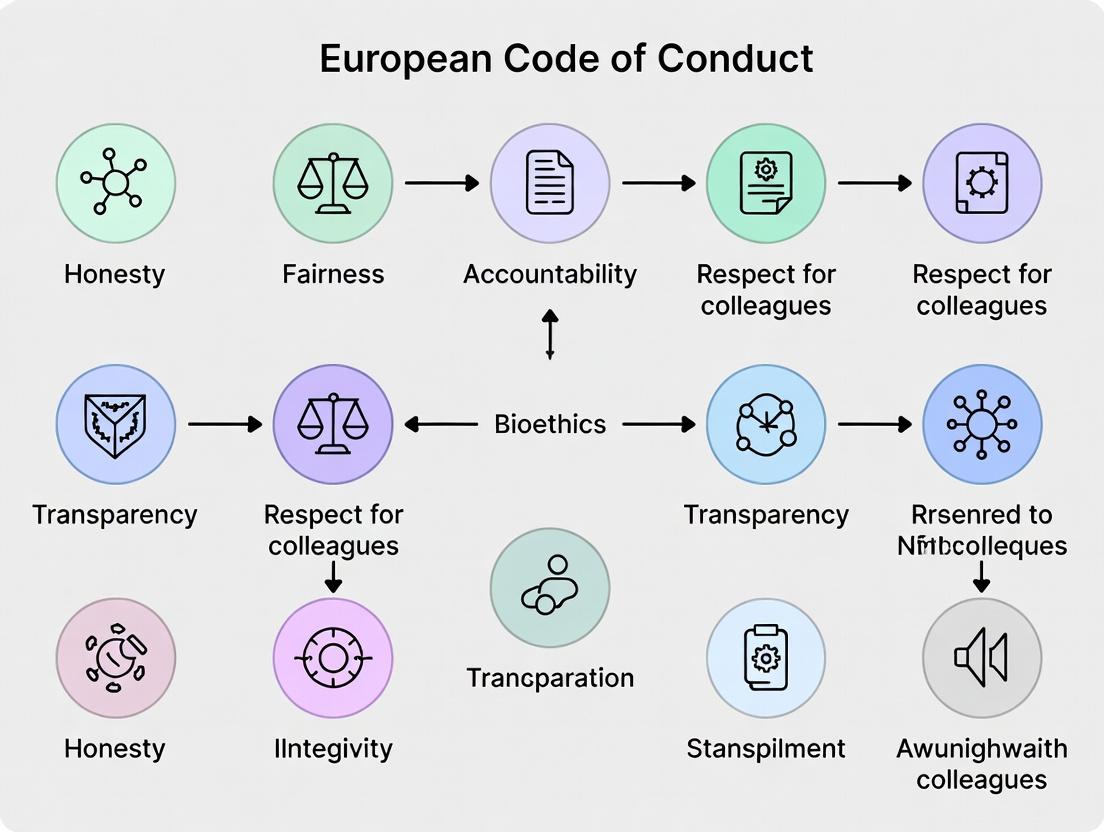
This comprehensive guide explores the European Code of Conduct for Research Integrity (ECCRI), detailing its core principles, practical application in biomedical research, strategies for navigating common challenges, and its role...
The European Code of Conduct for Research Integrity: A Complete Guide for Scientists & Drug Developers
Abstract
This comprehensive guide explores the European Code of Conduct for Research Integrity (ECCRI), detailing its core principles, practical application in biomedical research, strategies for navigating common challenges, and its role in ensuring globally trusted science. Designed for researchers, scientists, and drug development professionals, it provides actionable insights for implementing the Code to foster rigorous, ethical, and reproducible research.
Understanding the European Code of Conduct: Principles, Scope, and Legal Significance
What is the European Code of Conduct for Research Integrity (ECCRI)? Definition and Origins.
Definition and Core Purpose
The European Code of Conduct for Research Integrity (ECCRI) is a foundational framework established by the European Federation of Academies of Sciences and Humanities (ALLEA) to promote and safeguard research integrity across all scientific and scholarly disciplines in Europe. It serves as a comprehensive reference document, providing a set of principles, professional responsibilities, and procedural guidelines for researchers, institutions, and funding organizations. Its primary purpose is to foster a culture of integrity, ensuring that research is reliable, credible, and ethically conducted from its design through to publication and dissemination.
Historical Origins and Development
The ECCRI was initially published in 2011 by ALLEA in partnership with the European Science Foundation (ESF). It was created in response to a growing recognition of the need for a harmonized, pan-European approach to research integrity, transcending national boundaries and disciplinary differences. The Code was designed to complement existing national codes and legal frameworks, providing a common standard.
A pivotal revision was released in 2017, which significantly expanded its scope and detail. The most recent and current version is the 2023 revision, "The European Code of Conduct for Research Integrity – Revised Edition 2023." This update reflects evolving challenges in the research landscape, such as digitalization, open science, collaborative research formats, and new forms of misconduct. The revision process involved extensive consultation with the global research community, including ALLEA’s member academies, the European Commission, and other stakeholders.
Table 1: Evolution of the European Code of Conduct for Research Integrity
| Version Year | Key Initiator/Publisher | Primary Driver for Revision | Major New Emphasis |
|---|---|---|---|
| 2011 | ALLEA & European Science Foundation | Need for a pan-European standard | Establishing core principles and basic guidelines. |
| 2017 | ALLEA | Advancing research culture and addressing new challenges | Expanded focus on research environments, supervision, and mentorship. |
| 2023 | ALLEA | Open Science, digital tools, global collaboration, new misconduct forms. | Integration of Open Science practices, prevention of harassment, climate and environmental integrity. |
Foundational Principles and Professional Responsibilities
The 2023 ECCRI is structured around four core principles and sets out key responsibilities for researchers.
The Four Core Principles:
- Reliability: Ensuring the quality of research, reflected in the design, methodology, analysis, and use of resources.
- Honesty: Developing, undertaking, reviewing, reporting, and communicating research in a transparent, fair, and unbiased manner.
- Respect: Considering the rights and interests of all involved—human participants, animals, the environment, and colleagues.
- Accountability: Taking responsibility for the research from idea to publication, for its management and organization, and for training, supervision, and mentorship.
Table 2: Key Researcher Responsibilities as per ECCRI 2023
| Research Phase | Specific Responsibilities | Practical Examples for Drug Development |
|---|---|---|
| Study Design & Proposal | Adherence to ethical review, rigorous methodology, sustainable resource planning. | Preclinical study protocol approval by Animal Ethics Committee; robust statistical power analysis. |
| Data Management | Accurate recording, secure storage, protection of sensitive data, sharing where possible. | FAIR (Findable, Accessible, Interoperable, Reusable) data practices for clinical trial data. |
| Collaboration | Clear agreements on roles, responsibilities, and publication rights. | Consortium agreement in public-private partnership projects defining IP and authorship. |
| Publication & Dissemination | Accurate reporting, acknowledgment of contributors, disclosure of conflicts of interest. | Adherence to ICMJE authorship criteria; registration of clinical trials on public platforms. |
| Peer Review | Confidential, objective, timely, and constructive evaluation. | Declaring conflicts of interest when reviewing a competitor's manuscript or grant application. |
Methodologies for Investigating Research Misconduct
The ECCRI provides a framework for handling allegations of breaches. The following experimental protocol outlines a standard investigation methodology referenced in institutional guidelines derived from the Code.
Protocol: Institutional Investigation of Research Misconduct Allegations
1. Purpose: To outline a standardized, fair, and confidential procedure for assessing and investigating alleged breaches of research integrity (e.g., fabrication, falsification, plagiarism, unethical authorship practices).
2. Pre-Investigation (Initial Assessment):
- Input: Receipt of a formal allegation.
- Procedure: A designated Research Integrity Officer (RIO) conducts a preliminary assessment to determine if the allegation is credible and falls within the scope of research misconduct.
- Decision Point: If not credible or out of scope, the case is dismissed with documentation. If credible, proceeds to Inquiry.
3. Inquiry Phase:
- Objective: To determine whether the allegation warrants a full investigation.
- Procedure: A small, impartial Inquiry Committee is formed. They examine readily available evidence (manuscripts, raw data logs, correspondence).
- Deliverable: An Inquiry Report concluding either: a) No further investigation needed, or b) A full Investigation is warranted.
4. Investigation Phase:
- Objective: To perform a thorough, detailed examination to establish facts and determine if misconduct occurred.
- Procedure: A formal Investigation Committee is formed, with members free of conflicts of interest. The committee: a. Notifies the respondent(s) in writing. b. Gathers all relevant data, interviews the complainant, respondent, and key witnesses separately. c. Examines laboratory notebooks, electronic files, emails, and analytical instruments' audit trails. d. Prepares a draft report of findings, including the severity and scope of any misconduct.
- Deliverable: Final Investigation Report submitted to institutional decision-making authority.
5. Adjudication & Sanctions:
- Procedure: Institutional leadership reviews the report. The respondent is given opportunity to comment. A final decision is made on whether misconduct occurred and what sanctions (e.g., retraction, correction, suspension, termination) apply.
- Appeal: A clear process for appeal is provided.
6. Documentation & Reporting:
- All stages are meticulously documented. If confirmed, major findings may be reported to funders, regulators (e.g., EMA, national medicines agencies), and journal editors.
Diagram 1: Research misconduct investigation workflow.
The Scientist's Toolkit: Essential Research Reagents for Integrity in Preclinical Studies
Table 3: Key Reagent Solutions for Ensuring Data Integrity in Preclinical Research
| Reagent/Material | Primary Function in Research Integrity | Example in Drug Development |
|---|---|---|
| Electronic Lab Notebook (ELN) | Ensures reliable, timestamped, and immutable record-keeping of all experimental procedures, raw data, and observations. | Recording daily dosing schedules, animal weights, and behavioral scores in an auditable format for regulatory submission. |
| Sample Tracking & LIMS | Maintains chain of custody for biological samples, prevents misidentification, and links samples to specific experimental conditions. | Tracking patient-derived xenograft (PDX) samples from implantation through to molecular analysis. |
| Version-Controlled Data Repositories | Enables transparent tracking of data file changes, facilitates collaboration, and prevents loss or accidental overwriting. | Managing code for bioinformatics analysis of RNA-seq data from treated vs. control cell lines. |
| Authenticated Cell Lines | Prevents use of misidentified or contaminated cell lines, a major source of irreproducible results. | Using STR-profiled cell lines from reputable repositories (e.g., ATCC, ECACC) for in vitro efficacy screening. |
| Standardized Reference Compounds | Provides a benchmark for assay performance and enables comparison of results across laboratories and over time. | Using a control kinase inhibitor with well-characterized IC50 in every assay plate for target validation studies. |
| Blinded Study Materials | Reduces bias in data collection and analysis, especially in subjective assessments. | Preparing coded drug vials (Vehicle, Low Dose, High Dose) for technicians performing histological scoring. |
Diagram 2: Linking research tools to ECCRI principles.
This technical guide examines the evolution of the European Code of Conduct for Research Integrity (ECCRI) through its 2011 and 2017 revisions. Framed within a thesis on the ECCRI's role in harmonizing research standards, it details the key updates, the mandate from the European Network of Research Integrity Offices (ENRIO) and All European Academies (ALLEA), and their operational impact on research and drug development.
The foundational principles of the ECCRI—Reliability, Honesty, Respect, and Accountability—were refined across the two revisions. The quantitative shift in focus and specification is summarized below.
Table 1: Comparative Analysis of the 2011 vs. 2017 ECCRI Revisions
| Aspect | 2011 Edition | 2017 Edition | Key Change & Rationale |
|---|---|---|---|
| Governing Body | European Science Foundation (ESF) | ALLEA (under mandate from EC) | Shift to a permanent academy network for sustained stewardship. |
| Core Principles | Listed as 4 principles. | Articulated as 4 principles with explicit sub-commitments. | From general principles to actionable commitments for researchers and institutions. |
| Scope & Applicability | Primarily addressed researchers. | Explicitly addresses individual researchers, institutions, and funders. | Recognizes shared responsibility across the research ecosystem. |
| Violations & Misconduct | Defined FFP (Fabrication, Falsification, Plagiarism). | Expanded to include QRPs (Questionable Research Practices) and "other misconducts". | Addresses the grey area between good practice and clear misconduct. |
| Supervision & Mentoring | Briefly mentioned. | Dedicated section with specific guidelines for responsibilities in training and mentoring. | Emphasizes culture building and early-career researcher development. |
| Data Practices & Management | General guidance on data stewardship. | Detailed guidelines on data management plans (DMPs), sharing, and curation. | Response to the Open Science movement and FAIR data principles. |
| Publication & Authorship | Standard authorship criteria. | Explicit rules on authorship, citation, and peer review responsibilities. | Aims to curb guest/gift authorship and review biases. |
| Whistleblower Protection | Not explicitly detailed. | Clear guidelines for protecting whistleblowers and handling allegations. | Encourages reporting and ensures fair procedures for all parties. |
The ALLEA/ENRIO Mandate & Implementation Protocol
The 2017 revision was formally mandated by the European Commission to ALLEA, which worked in close cooperation with ENRIO. This mandate aimed to create a unified, pan-European reference document.
Experimental Protocol for Institutional Code Adoption & Audit
- Objective: To assess and align an institutional research integrity framework with the 2017 ECCRI.
- Phase 1 – Gap Analysis:
- Material: Institutional current integrity code, committee structures, case records, training materials.
- Method: Map each clause of the 2017 ECCRI (Principles 1-4, and specific guidelines) against existing institutional policies.
- Output: A discrepancy table highlighting missing or non-compliant areas (e.g., lacking a formal whistleblower protection procedure).
- Phase 2 – Stakeholder Consultation & Revision:
- Participants: Researchers (all career stages), ethics committee members, legal advisors, research office staff.
- Method: Conduct structured workshops and surveys to gather input on draft revisions of the institutional code, focusing on contentious areas (e.g., authorship disputes, data ownership).
- Output: A revised institutional code of conduct draft and an implementation roadmap.
- Phase 3 – Implementation & Training:
- Intervention: Roll out revised code. Develop and deploy mandatory interactive training modules (e.g., case-study based) for all staff.
- Control: A cohort not yet trained (where ethically permissible).
- Metrics: Track training completion rates, pre/post-training knowledge assessments, and anonymized reporting of concerns over time.
- Phase 4 – Audit & Review Cycle:
- Method: Annual audit of integrity cases, training efficacy, and policy usage. Review against the ECCRI and emerging ENRIO advisories.
- Output: An audit report leading to iterative refinement of the institutional code and processes.
Visualization: The ECCRI Governance & Implementation Pathway
Title: Governance Pathway of the 2017 ECCRI Revision
The Scientist's Toolkit: Essential Reagents for Integrity in Research
Table 2: Research Integrity Reagent Solutions
| Reagent / Tool | Function in the Research Integrity Protocol |
|---|---|
| Institutional Code of Conduct | The primary document, aligned with the ECCRI, defining specific policies, procedures, and expectations for all researchers. |
| Data Management Plan (DMP) Template | A structured template ensuring research data is collected, documented, stored, and shared according to FAIR principles from project inception. |
| Digital Lab Notebook (ELN) | A secure, timestamped electronic system for recording procedures, observations, and raw data, ensuring traceability and preventing data loss/falsification. |
| Authorship & Contribution Disclosure Form | A formal document signed by all co-authors, specifying individual contributions using a standardized taxonomy (e.g., CRediT), preventing disputes. |
| Conflict of Interest (COI) Declaration Portal | A mandatory system for transparently disclosing financial, professional, or personal interests that could influence research. |
| Ethics & Integrity Training Modules | Interactive, case-based online or in-person training programs to educate researchers on QRPs, ethical dilemmas, and reporting procedures. |
| Secure Whistleblowing/Reporting Channel | An anonymized, independent, and protected system for reporting suspected breaches of integrity without fear of retaliation. |
| Research Integrity Officer (RIO) | A designated, trained individual who serves as a first point of contact for advice, mentoring, and initial handling of allegations. |
The European Code of Conduct for Research Integrity (ECCRI), revised by ALLEA (All European Academies) in 2023, serves as the foundational framework for research integrity across Europe and beyond. It translates the abstract values of research into actionable principles for daily practice. Within this context, Reliability, Honesty, Respect, and Accountability are not merely aspirational virtues but are operationalized as the four core principles that underpin all trustworthy research. For researchers, scientists, and drug development professionals, these principles are critical for ensuring scientific validity, patient safety in clinical trials, regulatory compliance, and public trust. This guide provides a technical and methodological examination of these principles.
The Core Principles: Technical Definitions and Operationalization
Reliability
Reliability refers to the duty to ensure the robustness of the research process, from planning and execution to the documentation and dissemination of results. It is the bedrock of scientific reproducibility and replicability.
- Operationalization in Experimental Protocols:
- Robust Experimental Design: Utilization of blinding, randomization, appropriate controls (positive, negative, vehicle), and statistical power analysis a priori.
- Standard Operating Procedures (SOPs): Documentation of all methodologies in detail to enable exact replication.
- Data Management Plan (DMP): A pre-defined protocol for data collection, storage (with backup), formatting, and sharing. Mandatory use of version control and non-proprietary file formats where possible.
- Quality Control (QC) and Quality Assurance (QA): Regular calibration of instruments, use of certified reference materials, and internal QA audits.
Honesty
Honesty entails a commitment to transparency in all aspects of research, presenting findings truthfully, and reporting methods and procedures precisely. It is fundamental to preventing fabrication, falsification, and plagiarism (FFP).
- Operationalization in Research Practice:
- Comprehensive Reporting: Adherence to community-reporting guidelines (e.g., ARRIVE for animal research, CONSORT for clinical trials, MIAME for microarray data).
- Conflict of Interest (COI) Declaration: Transparent disclosure of all financial, personal, or professional interests that could influence the research.
- Authorship Criteria: Strict application of the ICMJE or equivalent criteria for authorship, acknowledging all significant contributors.
- Negative & Null Result Reporting: Commitment to publishing or depositing results regardless of outcome to combat publication bias.
Respect
Respect encompasses fairness, collegiality, and consideration for all research participants, collaborators, the research environment, and the broader societal context of the research.
- Operationalization in Collaborative and Regulated Research:
- Ethical Review and Informed Consent: Mandatory approval by Research Ethics Committees (RECs) or Institutional Review Boards (IRBs) for all human and animal studies. Documentation of informed, voluntary consent.
- Data Protection & Privacy: Strict compliance with GDPR (General Data Protection Regulation) and similar frameworks for handling personal data.
- Supervision & Mentoring: Providing proper guidance, credit, and a safe, inclusive working environment for early-career researchers.
- Environmental Stewardship: Responsible use of resources, proper disposal of hazardous materials, and consideration of the environmental impact of research.
Accountability
Accountability is the responsibility of both individual researchers and institutions for the integrity of the research from inception to dissemination and for responding to concerns about potential breaches.
- Operationalization in Governance:
- Clear Role Definition: Explicit delineation of responsibilities within research projects (PI, co-I, data manager, etc.).
- Institutional Oversight: Establishment of Research Integrity Offices (RIOs) and procedures for handling allegations of misconduct.
- Audit Trails: Maintaining a secure, time-stamped record of all data transformations, analyses, and decisions.
- Open Corrections & Retractions: Taking responsibility for errors by issuing timely corrections or retractions through proper channels.
The following table summarizes key quantitative data from recent European reports and surveys on research integrity, providing context for the importance of the core principles.
Table 1: Research Integrity Metrics in European Context (2020-2023)
| Metric Category | Specific Data Point | Source / Context | Relevance to Core Principle |
|---|---|---|---|
| Prevalence of Misconduct | 2-4% of researchers admit to data fabrication/falsification; ~8% admit to plagiarism. | Based on meta-analyses and surveys (e.g., FPS projects). | Highlights need for Honesty and Accountability. |
| Institutional Systems | >80% of EU universities have a Research Integrity policy; <50% have a dedicated RIO. | EU-funded SATORI and PRINTEGER project reports. | Reflects institutional Accountability. |
| Data Sharing Practices | ~60% of researchers in life sciences share data upon request; <40% deposit in repositories. | OpenAIRE and other EU data infrastructure surveys. | Directly measures operational Honesty and Reliability. |
| Ethical Review | 100% requirement for clinical trials; variable application in fundamental research. | EU Clinical Trials Regulation (536/2014) & national laws. | Cornerstone of operational Respect. |
| Training Provision | ~70% of institutions offer some RI training, but only ~30% mandate it for all researchers. | ALLEA and European University Association surveys. | Foundational for all principles. |
Experimental Protocol: A Case Study in Applying the Principles
This protocol for a "Randomized, Double-Blind, Placebo-Controlled Phase II Trial of Drug X in Condition Y" exemplifies the integration of the core principles.
4.1 Protocol Abstract: To evaluate the efficacy and safety of Drug X versus placebo in 200 patients with Condition Y over 24 weeks.
4.2 Detailed Methodology Applying Core Principles:
Reliability:
- Power Calculation: Sample size determined a priori (α=0.05, power=0.80, effect size=0.5).
- Randomization & Blinding: Computer-generated randomization sequence (block size 4) held by independent pharmacy. All participants, investigators, and outcome assessors are blinded.
- SOPs: Pre-defined, validated assays for primary endpoint (e.g., ELISA for biomarker Z).
- Data Handling: Electronic Data Capture (EDC) system with audit trail, regular data monitoring committee reviews.
Honesty:
- Pre-registration: Protocol and statistical analysis plan registered on EU Clinical Trials Register (EudraCT) and ClinicalTrials.gov before recruitment.
- Reporting: Will adhere to CONSORT 2010 guidelines.
- Conflict of Interest: All authors will submit ICMJE COI forms prior to publication.
Respect:
- Ethics Approval: Protocol approved by relevant national REC/IRB.
- Informed Consent: Written, witnessed consent obtained after a 24-hour reflection period, using patient-friendly materials.
- Data Privacy: All patient data pseudonymized; key held separately. Full GDPR compliance.
Accountability:
- Sponsor-Investigator Agreement: Clear contract defining responsibilities.
- Trial Steering Committee: Independent oversight of trial conduct and safety.
- Publication Policy: Commitment to publish full results within 18 months of trial completion, regardless of outcome.
Visualizing the Research Integrity Framework
Title: ECCRI Core Principles and Their Outcomes
The Scientist's Toolkit: Essential Research Reagent Solutions for Integrity
Table 2: Research Reagent Solutions for Upholding Integrity in Preclinical Research
| Item / Solution | Function | Relevance to Core Principle |
|---|---|---|
| Certified Reference Materials (CRMs) | Provides a standardized, traceable material with defined properties for calibrating instruments and validating methods. | Reliability: Ensures accuracy and comparability of measurements across labs and time. |
| Cell Line Authentication Kit (e.g., STR Profiling) | Confirms the unique genetic identity of a cell line and detects cross-contamination or misidentification. | Honesty & Reliability: Prevents publication of erroneous data based on false biological materials. |
| Plagiarism Detection Software | Compares text against published literature and the internet to identify potential plagiarism. | Honesty: Upholds intellectual property rights and ensures original authorship. |
| Electronic Lab Notebook (ELN) | Digitally records procedures, observations, and data in a time-stamped, secure, and searchable format. | Accountability & Reliability: Creates an immutable audit trail, ensures data provenance, and aids reproducibility. |
| Data Repository (e.g., Zenodo, Figshare, ENA) | A publicly accessible, persistent platform for depositing research data, code, and outputs. | Honesty & Accountability: Enables transparency, data reuse, and fulfills funder mandates for open data. |
| Pre-registration Platform (e.g., OSF Registries, AsPredicted) | Allows public registration of research hypotheses, design, and analysis plan prior to data collection. | Honesty: Distinguishes confirmatory from exploratory research, mitigating bias. |
Who Must Adhere? Scope for Universities, Research Institutions, and Private R&D (e.g., Pharma)
This document, framed within a broader thesis on the European Code of Conduct for Research Integrity (ECCRI), serves as an in-depth technical guide on the scope of adherence for different research-performing organizations. The ECCRI, initially published by the European Science Foundation (ESF) and All European Academies (ALLEA), provides a foundational framework for responsible research practices across the European Research Area (ERA). Understanding its applicability to diverse entities—from publicly funded universities to private-sector pharmaceutical R&D—is critical for standardizing integrity practices and fostering public trust in science.
The European Code of Conduct for Research Integrity: Core Principles
The revised 2023 ALLEA Code articulates four core principles and eight good research practices, which form the bedrock for all adherent organizations.
Table 1: Core Principles of the ALLEA Code (2023)
| Principle | Technical Description & Operationalization |
|---|---|
| Reliability | Ensuring research design, methodology, analysis, and use of resources are of a standard that allows rigorous and reproducible outcomes. This includes robust data management, statistical rigor, and transparent reporting. |
| Honesty | Developing, undertaking, reviewing, and reporting research in a transparent, fair, and unbiased manner. Covers accurate representation of contributions, conflicts of interest, and honest communication with stakeholders. |
| Respect | Recognition of the intrinsic worth of all research stakeholders, including colleagues, participants, society, ecosystems, cultural heritage, and the environment. Encompasses data protection, informed consent, and ethical review. |
| Accountability | Researchers and institutions must take responsibility for their work from inception to dissemination and for its impacts. Includes effective supervision, mentoring, and having robust procedures for handling allegations of misconduct. |
Scope of Adherence: A Comparative Analysis
Adherence to the ECCRI is not uniformly mandated by law but is integrated through national legislation, funding conditions, and institutional policy.
Table 2: Scope of Adherence and Implementation Mechanisms
| Entity Type | Primary Driver for Adherence | Typical Implementation Mechanism | Key Integrity Challenges & Focus Areas |
|---|---|---|---|
| Universities & Public Research Institutes | Mandatory condition for public funding (e.g., Horizon Europe, national grants). Often required by national legislation transposing ERA policies. | Institutional Research Integrity (RI) Offices; mandatory RI training; internal investigation procedures; promotion & tenure criteria. | Pre-registration, Data Management: Ensuring FAIR data practices. Authorship: Clear, fair attribution in collaborative works. Supervision: Accountability for junior researchers' conduct. |
| Private R&D (Pharmaceutical Sector) | Partially driven by regulatory requirements (EMA, FDA) for clinical trial transparency. Largely voluntary adoption for basic research, but required by public-private partnership agreements. | Integration into Quality Management Systems (QMS) and Standard Operating Procedures (SOPs); audit trails; compliance with Good Clinical/Laboratory Practice (GCP/GLP). | Conflict of Interest: Managing financial interests in trial outcomes. Data Sharing: Balancing transparency with IP protection. Publication Bias: Mitigating selective reporting of clinical trial results. |
| Independent Research Foundations & NGOs | Often voluntary, as a demonstration of commitment to ethical standards. May be required by philanthropic funders. | Ad-hoc RI committees; external advisory boards; public integrity pledges. | Funder Influence: Safeguarding independence of research agenda. Advocacy: Maintaining objectivity despite mission-driven goals. |
Quantitative Data on Adoption (2022-2024): Table 3: Survey Data on ECCRI Integration
| Metric | Universities (%) | Public Research Institutes (%) | Private Pharma R&D (%) |
|---|---|---|---|
| Have a formal, written RI policy referencing ECCRI/ALLEA | ~95% | ~88% | ~62% |
| Provide mandatory RI training for researchers | 89% | 82% | 71%* |
| Have a dedicated RI ombudsperson/office | 92% | 79% | 45% |
| Publicly share summaries of RI investigations | 41% | 33% | <10% |
*Primarily focused on GCP and anti-bribery training, not comprehensive RI.
Experimental Protocol: A Case Study in Validating Adherence
To assess the practical implementation of ECCRI principles across sectors, a standardized audit protocol can be employed.
Protocol: Institutional Research Integrity Capacity Assessment (IRICA) 1. Objective: To quantitatively and qualitatively evaluate the operationalization of ECCRI principles within a research-performing organization. 2. Materials:
- Institutional RI policy documents.
- Training materials and attendance records.
- Records of RI allegations and investigations (anonymized).
- Interview guides for researchers, administrators, and leadership.
- Data management plan (DMP) templates and repository use statistics.
3. Methodology:
A. Document Analysis:
- Code the RI policy against the 8 good practices of the ALLEA Code using a pre-defined checklist.
- Score each item (0=absent, 1=mentioned, 2=detailed procedure).
- Calculate a total "Policy Alignment Score" (PAS). B. Process Audit:
- Trace the handling of a hypothetical allegation (e.g., image manipulation) through the institutional flowchart.
- Record time-to-resolution, roles involved, and support mechanisms for involved parties.
- Assess alignment with Code principles of fairness and accountability. C. Researcher Survey & Interviews:
- Distribute a validated survey measuring perceived RI culture (e.g., using the Survey of Organizational Research Climate, SOuRCe).
- Conduct semi-structured interviews with early-career and senior researchers on pressures, mentoring, and data handling practices. D. Data Management Review:
- Randomly select a sample of published papers from the institution.
- Attempt to locate underlying data via stated repositories or direct request.
- Measure the "Practical Data Accessibility Rate" (PDAR). 4. Data Analysis:
- Correlate PAS with survey outcomes on RI climate.
- Compare process audit efficiency metrics across organization types.
- Perform thematic analysis of interview transcripts to identify sector-specific barriers.
Visualization: The Adherence Ecosystem
Adherence Drivers and Outcomes
Table 4: Research Reagent Solutions for Integrity Practices
| Reagent / Resource | Function in Supporting ECCRI Adherence |
|---|---|
| Electronic Lab Notebook (ELN) | Provides a secure, time-stamped, and immutable record of research processes, directly supporting Reliability and Honesty in data collection. Enforces audit trails. |
| FAIR-aligned Data Repository (e.g., Zenodo, Figshare, discipline-specific) | Enables public sharing and long-term preservation of research data, aligning with Reliability and Accountability. Facilitates reproducibility and data citation. |
| Open-Source Statistical Analysis Scripts (R, Python) | Sharing analysis code promotes transparency and allows for independent verification of results, a key aspect of Reliability and Honesty. |
| Digital Tools for Image Integrity (e.g., ImageJ/Fiji with plugins) | Allows for standardized, un-manipulated image processing and analysis. Essential for maintaining Honesty in reporting microscopic or gel-based data. |
| Pre-registration Platforms (e.g., OSF Registries, ClinicalTrials.gov) | Allows researchers to publicly document hypotheses and methods before data collection, combating bias and supporting Honesty and Reliability. |
| Authorship Contribution Taxonomies (e.g., CRediT) | Provides a standardized, transparent framework for attributing specific contributions to a paper, directly addressing Honesty and Respect in collaborative work. |
| Institutional RI Office & Whistleblower Portal | Provides a trusted, confidential channel for reporting concerns, a critical infrastructural component for enforcing Accountability and a culture of Respect. |
The Code's Role in the EU's Research Funding Landscape (e.g., Horizon Europe)
Within the European Union's strategic research and innovation framework, exemplified by the Horizon Europe programme, the "Code" refers to the European Code of Conduct for Research Integrity (ECCRI). Its role transcends ethical guidance, functioning as a binding contractual and evaluative pillar for funding. This whitepaper details its technical integration, operational requirements, and implications for researchers, particularly in life sciences and drug development.
The ECCRI as a Contractual Obligation in Horizon Europe
Adherence to the ECCRI is a mandatory, non-negotiable prerequisite for all Horizon Europe grant agreements. It is formally referenced in Article 14 of the Model Grant Agreement under "Ethics and Research Integrity." The principles of the Code are embedded throughout the grant lifecycle.
Table 1: Integration of ECCRI Principles in Horizon Europe Grant Lifecycle
| Grant Phase | ECCRI Principle Applied | Operational Requirement |
|---|---|---|
| Proposal | Reliability, Honesty | Accurate representation of state-of-the-art, CVs, and preliminary data. Declaration of conflicts of interest. |
| Evaluation | Fairness, Transparency | Peer-review process aligned with Code standards; evaluators must declare conflicts. |
| Execution | Accountability, Care | Adherence to approved protocols (e.g., animal, clinical); rigorous data management (FAIR principles). |
| Reporting | Honesty, Transparency | Accurate reporting of results, including negative outcomes. Open access dissemination. |
| Audit/Review | Accountability | Availability of raw data, lab notebooks, and ethical approvals for checks by funders or auditors. |
Quantitative Impact on Funding and Compliance
Live search data confirms widespread integration of the Code. The 2021 SOURCES report for the European Commission found that 68% of Research Performing Organisations (RPOs) had formally adopted a research integrity policy based on the ECCRI. Breaches can trigger severe sanctions.
Table 2: Potential Consequences for Breaches of the ECCRI under Horizon Europe
| Sanction Level | Possible Actions by the European Commission |
|---|---|
| Corrective | Mandatory training, requirement for external audit, rectification of publications. |
| Financial | Reduction of the grant amount, recovery of payments already made. |
| Restrictive | Exclusion from future EU funding calls for a defined period. |
| Reputational | Public naming of beneficiaries involved in serious misconduct. |
Methodological Protocols for Upholding the Code in Experimental Research
The following protocols provide a framework for aligning laboratory practice with ECCRI mandates for reliability, honesty, and accountability.
Protocol for Auditable Electronic Lab Notebook (ELN) Management
- Objective: To ensure traceability, data integrity, and transparency in all experimental work.
- Materials: Institutional ELN system (e.g., LabArchives, RSpace), unique project ID, standardized file naming convention.
- Procedure:
- Entry Creation: Initiate a new ELN entry for each experimental day or distinct procedure. Tag with relevant project and grant ID.
- Context Documentation: Record hypothesis, aim, and references to the approved grant proposal work package.
- Reagent & Instrument Logging: Document all materials using unique identifiers (e.g., catalogue numbers, batch numbers). Log instrument names and calibration dates.
- Step-by-Step Protocol: Record deviations from any pre-established standard operating procedure (SOP) in real-time.
- Raw Data Linkage: Attach or link all raw data files (e.g., .fcs, .tiff, .abf) directly to the ELN entry. Do not modify raw files.
- Analysis & Interpretation: Perform data analysis within linked, version-controlled scripts (e.g., R, Python). Record interpretation and conclusions.
- Witness & Review: Enable sharing with PI/lab manager. Finalize and lock entries at project milestones.
Protocol for Managing Conflicting Interests in Collaborative Drug Development
- Objective: To proactively identify, declare, and manage conflicts of interest (COI) as per the ECCRI principle of Fairness.
- Materials: Institutional COI declaration form, project consortium agreement template.
- Procedure:
- Pre-Proposal Disclosure: All key researchers complete a COI form detailing financial holdings, paid consultancies, and non-financial interests related to the call topic.
- Consortium Agreement: Embed a COI management chapter specifying: a) obligation for annual re-declaration, b) process for assessing conflicts (an internal committee), c) mitigation measures (e.g., recusal from specific decisions, public disclosure).
- Project Management: Appoint an independent Ethics Manager within the consortium to monitor compliance.
- Publication & IP Management: Define transparent rules for authorship and intellectual property upfront to prevent disputes.
The Scientist's Toolkit: Essential Research Reagent Solutions
For a typical molecular biology experiment (e.g., gene expression analysis in a drug response study) under Horizon Europe/ECCRI standards.
Table 3: Key Research Reagent Solutions and Documentation Requirements
| Item | Function | ECCRI-Aligned Documentation |
|---|---|---|
| CRISPR-Cas9 Knockout Kit | Gene editing to create disease models. | Record gRNA sequence, source, efficiency validation data (gel images, sequencing chromatograms). |
| Validated Antibody for Western Blot | Target protein detection. | Catalogue #, lot #, validation certificate (KO/KD proof). Note dilution and buffer in ELN. |
| Cell Line (e.g., HEK293) | In vitro model system. | Source (ATCC/ECACC), passage number, mycoplasma test status (date/results), STR profiling report. |
| Inhibitor Compound | Drug candidate for functional studies. | Supplier, purity certificate, molecular weight, batch #, storage conditions. Link to structure in ELN. |
| qPCR Master Mix with ROX | Quantitative gene expression analysis. | Catalogue #, lot #, stored calibration curve for efficiency, primer sequences with validation. |
Visualizing the ECCRI's Role in the Research Workflow
Title: ECCRI Governance in the Horizon Europe Project Lifecycle
Title: ECCRI Mandates in the Research Data Pipeline
Within the framework of the broader thesis on the European Code of Conduct for Research Integrity (ECCRI), a central legal and operational question persists: Is it binding? The ECCRI, developed by the European Federation of Academies of Sciences and Humanities (ALLEA) and most recently revised in 2023, serves as a cornerstone document for research integrity across the European Research Area (ERA). This technical guide examines its legal force, its interplay with national legal frameworks and institutional policies, and its practical implementation in scientific research, particularly for professionals in drug development.
Legal Analysis: Binding Force and Normative Effect
The ECCRI is a soft law instrument. It is not a treaty, regulation, or directive enacted by the European Union's legislative bodies. Therefore, it is not directly legally binding on researchers, institutions, or member states in the same manner as statutory law.
| Aspect of Binding Force | Status & Mechanism |
|---|---|
| Direct Legal Enforcement | Not directly enforceable by courts. No statutory penalties for non-compliance outlined within the Code itself. |
| Contractual Binding | Becomes binding when explicitly incorporated by reference into contracts, grant agreements (e.g., Horizon Europe obligations), or employment contracts. |
| Indirect Legal Influence | Can inform the interpretation of general legal principles (e.g., duty of care, contractual good faith) and institutional liability. |
| Professional Disciplinary Effect | Breaches can lead to professional, institutional, or funder sanctions (e.g., retractions, funding withdrawal, disciplinary proceedings). |
Experimental Protocol: Assessing Code Integration in Funding Applications
- Objective: To determine the binding nature of the ECCRI within a specific research ecosystem.
- Methodology:
- Sample Collection: Randomly select 50 active calls for proposals from major European and national funding agencies (e.g., Horizon Europe, national research councils).
- Text Analysis: Perform a systematic keyword search within the official call documents for "European Code of Conduct for Research Integrity," "ALLEA," and "research integrity."
- Coding and Categorization: Categorize each hit as (A) Mandatory incorporation, (B) Recommended reference, or (C) No mention.
- Validation: Cross-reference with the general grant agreement templates of the identified funders.
- Expected Data: A quantitative table showing the percentage of calls that legally bind applicants to the ECCRI through contractual obligation.
Interplay with National Laws and Institutional Policies
The ECCRI operates within a multi-layered governance framework. Its effectiveness is mediated through national and institutional transposition.
Diagram 1: Governance Hierarchy of Research Integrity Norms
Key Interaction Dynamics:
- Subsidiarity: The ECCRI provides a common baseline, while national laws and institutional policies provide the enforceable detailed rules.
- Gap-Filling: Where national law is silent, the ECCRI provides the accepted standard of conduct.
- Conflict Resolution: In case of conflict, national law prevails over the ECCRI. Institutional policies must comply with national law. The ECCRI is used to interpret ambiguities.
Protocol: Mapping the Transposition of ECCRI Principles into National Law
- Objective: To quantify the integration of specific ECCRI principles into national legal frameworks.
- Methodology:
- Principle Selection: Focus on four core ECCRI principles: Reliability, Honesty, Respect, and Accountability.
- Document Retrieval: For 5 selected EU member states, retrieve national laws governing research (e.g., higher education acts, science laws, decrees).
- Content Analysis: Use a standardized coding sheet to identify legal articles corresponding to each principle's sub-elements (e.g., data management for Reliability).
- Scoring: Assign a binary score (1=present, 0=absent) for each sub-element.
- Expected Data: A comparative table showing the degree of legal transposition per country and principle.
Operationalization in Research Practice: The Scientist's Toolkit
For researchers and drug development professionals, the ECCRI is operationalized through daily tools and materials. Compliance is demonstrated through documentation and adherence to standardized protocols.
Research Reagent Solutions for Integrity in Preclinical Studies
| Reagent / Solution | Function in Upholding ECCRI Principles |
|---|---|
| Electronic Lab Notebook (ELN) | Ensures Reliability and Honesty by providing a timestamped, immutable, and auditable record of all experimental procedures, raw data, and observations. Critical for reproducibility. |
| Biomaterial Tracking System (e.g., LIMS) | Ensures Accountability and Respect for materials (e.g., cell lines, tissue samples) by documenting origin, passage number, and handling. Prevents misidentification and respects donor agreements. |
| Standard Operating Procedure (SOP) Repository | Embodies Reliability by standardizing experimental workflows (e.g., in vivo dosing, bioanalysis), minimizing protocol drift and ensuring consistency across experiments and personnel. |
| Data Integrity Software (Audit Trails) | Enforces Honesty and Accountability in analytical instruments (HPLC, mass spec) by preventing unauthorized data deletion or alteration, creating a verifiable data lineage. |
| Pre-registration Platform (e.g., OSF) | Promotes Honesty by documenting study hypotheses, design, and analysis plan prior to experimentation, mitigating confirmation bias and selective reporting. |
| Plagiarism & Image Manipulation Checkers | Tools to verify Honesty in manuscript and grant proposal preparation, ensuring originality and accurate representation of data. |
Diagram 2: Experimental Workflow with Integrity Checkpoints
The following tables synthesize data on the adoption and perceived impact of the ECCRI across European institutions.
Table 1: Institutional Adoption of ECCRI-Aligned Policies (Survey Data)
| Policy Element | % of Universities with Policy (2023) | % of Research Institutes with Policy (2023) |
|---|---|---|
| Explicit reference to ECCRI in main integrity policy | 87% | 76% |
| Mandatory integrity training for PhDs | 92% | 81% |
| Formal procedure for handling allegations | 95% | 89% |
| Data Management Plan requirement | 98% | 94% |
Table 2: Researcher Perception of ECCRI's Effectiveness
| Statement | Agree/Strongly Agree (All Disciplines) | Agree/Strongly Agree (Life Sciences) |
|---|---|---|
| "The ECCRI provides clear guidance for my daily work." | 68% | 72% |
| "My institution's policies reflect the ECCRI well." | 71% | 75% |
| "Breaches of the ECCRI are dealt with effectively at my institution." | 55% | 58% |
| "The ECCRI helps create a level playing field in Europe." | 80% | 83% |
While the European Code of Conduct for Research Integrity lacks direct legal binding force, its authority is derived from widespread institutional and funder adoption, which creates a de facto obligation for researchers. Its true strength lies in its role as a consensus framework that bridges the gap between immutable national laws and the evolving ethical needs of scientific practice. For the drug development professional, compliance with the ECCRI is demonstrated not through legal statute but through rigorous, transparent, and documented adherence to the highest standards of reliability, honesty, respect, and accountability at every stage of the research lifecycle.
Implementing the Code: A Step-by-Step Guide for Biomedical Research & Clinical Trials
The European Code of Conduct for Research Integrity (ECCRI) provides the foundational ethical and professional principles for trustworthy research. This guide translates its core tenets—Reliability, Honesty, Respect, and Accountability—into actionable technical practices for laboratory protocols and data management. Reliability, as defined by ALLEA, necessitates that "research design, methodology, analysis, and use of resources are of a standard that allows the research aims to be achieved." Operationalizing this principle requires a systematic, technically rigorous approach to eliminate variability, bias, and error.
Foundational Pillars of Reliable Protocol Design
Pre-Experimental Validation & Controls
Every experimental protocol must be built upon validated methods with clearly defined positive and negative controls. This is a direct operationalization of the ECCRI's call for "appropriate levels of quality assurance and control."
Table 1: Essential Protocol Controls for Common Assays
| Assay Type | Positive Control | Negative Control | Technical Replication | Purpose of Control |
|---|---|---|---|---|
| qPCR | Housekeeping gene, known expression plasmid | No-template control (NTC) | Triplicate wells per sample | Detects amplification efficiency, primer-dimer artifacts, pipetting errors. |
| Western Blot | Lysate from cell line with known target expression | Knockdown/knockout cell lysate, secondary-only lane | Duplicate gels or loading of reference sample across gels. | Confirms antibody specificity, identifies non-specific binding, normalizes across blots. |
| Cell Viability (MTT) | Cells + medium only (max viability) | Medium only (background) | Minimum 6 replicates per condition. | Sets 100% and 0% viability baselines for accurate IC50 calculation. |
| NGS Library Prep | Known reference sample (e.g., PhiX) | Non-template control | Across sequencing runs. | Monitors sequencing performance, identifies sample cross-contamination. |
Detailed Methodological Blueprint: qPCR for Gene Expression Validation
This protocol exemplifies reliability through redundancy and validation at each step.
Experimental Protocol: Reliable Two-Step RT-qPCR for Differential Gene Expression
- Objective: To accurately quantify relative changes in mRNA expression between treatment and control groups.
- Sample Preparation: Harvest cells in TRIzol. Isolate total RNA via phase separation. Perform DNase I treatment to eliminate genomic DNA contamination. Verify RNA integrity via Bioanalyzer (RIN > 9.0) and quantify via Nanodrop (A260/A280 ~2.0).
- Reverse Transcription: Use 1 µg total RNA per 20 µL reaction with a high-fidelity reverse transcriptase (e.g., SuperScript IV) and oligo(dT) primers. Include a no-RT control (-RT) for each sample by omitting the enzyme. This controls for genomic DNA contamination.
- qPCR Setup:
- Design primers using NCBI Primer-BLAST; amplicon length 80-150 bp. Validate primer efficiency (90-110%) using a standard curve.
- Prepare master mix containing SYBR Green dye, primers, and reaction buffer. Dispense into a 96-well plate.
- Add cDNA (diluted 1:10) to respective wells. Each sample/target combination is run in triplicate technical replicates.
- Include No-Template Controls (NTC) for each primer pair.
- Include an inter-run calibrator (a stable cDNA sample) on every plate to allow cross-run comparison.
- Data Acquisition & Analysis: Run on a calibrated cycler. Use the comparative Cq (ΔΔCq) method. Normalize target gene Cq values to the geometric mean of two validated housekeeping genes. Perform statistical analysis on the ΔCq values, not the final fold-changes.
Title: Reliable RT-qPCR Experimental Workflow
Reliable Data Management: The Digital Chain of Custody
The ECCRI mandates that "the research data… are accurate, complete, stored and accessible." A Findable, Accessible, Interoperable, and Reusable (FAIR) aligned data pipeline is non-negotiable.
Table 2: Quantitative Impact of Poor Data Management Practices
| Practice | Estimated Time Lost per Project/Researcher* | Risk of Irreproducibility* | ECCRI Principle Violated |
|---|---|---|---|
| Ad-hoc File Naming | >15 hours | High | Reliability, Accountability |
| No Version Control | >20 hours | Critical | Reliability, Honesty |
| Insufficient Metadata | Permanent data loss | Very High | Reliability, Accountability |
| Local Storage Only | High recovery time after failure | Moderate-High | Accountability |
| Unstructured Lab Notebooks | >10 hours searching | High | Reliability, Honesty |
*Estimates based on published surveys of research inefficiency.
Standard Operating Procedure: Electronic Lab Notebook (ELN) and Data Entry
Protocol: Structured Daily Data Capture
- Entry Point: Immediately upon data generation (e.g., after plate readout, microscope image capture).
- Metadata Logging: In your institutional ELN (e.g., LabArchives, eLabJournal), create a new entry tagged with Project ID, Date, and Researcher.
- Raw Data Upload: Attach the raw, unprocessed data file (e.g., .csv, .tif, .fastq). Never modify raw files.
- Processing Log: Document every step of data transformation in a script (e.g., R, Python). Attach the script and note the software version.
- Analysis & Visualization: Generate outputs (graphs, tables) from scripts. Link the output directly to the raw data and processing script.
- Interpretation: Add conclusions or next steps. All entries must be timestamped and digitally signed.
Title: Reliable Data Chain of Custody in ELN
The Scientist's Toolkit: Research Reagent Solutions
Table 3: Essential Reagents & Materials for Reliable Biomedical Research
| Item | Function & Rationale for Reliability |
|---|---|
| Nuclease-Free Water | Eliminates RNase/DNase contamination in nucleic acid workflows, a major source of false negatives. |
| Protease & Phosphatase Inhibitor Cocktails | Preserves the native state of proteins and phosphorylation signals during lysis, preventing artefactual results. |
| Certified Cell Line Authentication Kit (STR Profiling) | Confirms cell line identity, combatting misidentification—a primary cause of irreproducibility. |
| Commercially Validated, Knockdown-Verified Antibodies | Provides evidence of specificity via knockout/knockdown lysate validation, essential for blot reproducibility. |
| Digital Pipette Calibration System | Ensures volumetric accuracy through regular, traceable calibration, reducing technical variation. |
| Reference Material for Assay (e.g., WHO International Standard) | Allows calibration of in-house assays to a global standard, enabling cross-lab comparability. |
| Stable Cell Line with Expression/Reporter Construct | Provides a consistent, genetically defined positive control for functional assays over multiple passages. |
Implementing a Culture of Continuous Quality Control
Operationalizing reliability is iterative. Laboratories must institute:
- Regular Internal Audits: Quarterly reviews of random protocol entries and data pipelines against this guide's standards.
- Blinded Analysis: Where feasible, implement blinding during data analysis to mitigate confirmation bias, upholding the ECCRI's Honesty principle.
- Open Code & Data Sharing: Upon publication, share processing scripts and anonymized raw data via trusted repositories (e.g., Zenodo, GEO), fulfilling the Accountability and Respect for colleagues outlined in the ECCRI.
By embedding these technical and managerial practices into daily routines, researchers move beyond abstract principles to a lived standard of reliability, strengthening the very foundation of scientific evidence.
Ensuring Honesty in Authorship, Peer Review, and Conflict of Interest Declarations
The European Code of Conduct for Research Integrity (ECCRI), revised by ALLEA in 2023, establishes the foundational principles of Reliability, Honesty, Respect, and Accountability for all research in Europe and beyond. This technical guide focuses on the practical implementation of the principle of Honesty in three critical procedural pillars: Authorship, Peer Review, and Conflict of Interest (COI) declarations. These areas are frequent sites of integrity breaches that can undermine public trust and the self-correcting nature of science. Within drug development, where stakes involving human health and vast resources are exceptionally high, rigorous adherence to these norms is non-negotiable.
Authorship: Criteria, Attribution, and Management
Honest authorship requires transparent, fair, and accurate attribution of credit. The ECCRI mandates that "authorship reflects an individual's contribution and responsibility."
Quantitative Data on Authorship Misconduct
Table 1: Prevalence and Types of Authorship Misconduct (Recent Survey Data)
| Misconduct Type | Reported Prevalence (Range) | Primary Contributing Factors |
|---|---|---|
| Honorary/Gift Authorship | 15% - 40% of articles | Power dynamics, seniority expectations, "courtesy." |
| Ghost Authorship | 5% - 15% (higher in industry-sponsored clinical trials) | Third-party (e.g., pharmaceutical company) involvement not disclosed. |
| Authorship Omission | 10% - 20% | Neglect of junior contributors, technical staff. |
| Disputed Authorship Order | Frequent cause of internal conflict | Lack of a priori agreement on criteria for order. |
Experimental Protocol: Implementing a Contributor Roles Taxonomy (CRediT)
The CRediT (Contributor Roles Taxonomy) system provides a machine-readable, standardized methodology to attribute specific contributions.
Protocol Title: Implementation of the CRediT Taxonomy for Transparent Authorship in a Multi-Center Drug Development Study.
Objective: To unambiguously document each author's contribution, thereby justifying authorship and preventing guest/ghost authorship.
Materials:
- CRediT role definitions (14 roles, e.g., Conceptualization, Methodology, Formal Analysis, Writing – Original Draft).
- Institutional authorship policy document.
- Digital submission system with integrated CRediT field requirements.
Methodology:
- Pre-Study Agreement: At the project initiation meeting, the Principal Investigator (PI) presents the CRediT framework. All potential contributors discuss and tentatively assign anticipated roles.
- Mid-Study Checkpoint: During manuscript outline preparation, the lead author circulates a draft CRediT statement. Contributors confirm or amend their roles.
- Pre-Submission Verification: Prior to final manuscript submission, each listed author must individually: a. Certify they have read and approved the final manuscript. b. Select all applicable CRediT roles from the standardized list via the journal's submission system. c. Acknowledge that their specific contribution is accurately represented.
- Corresponding Author Responsibility: The corresponding author attests that CRediT statements are complete and correct, and that unlisted individuals do not meet authorship criteria (to be acknowledged separately).
Visualization: CRediT Implementation Workflow
Peer Review: Ensuring Unbiased and Rigorous Evaluation
Honest peer review is the cornerstone of quality control. The ECCRI states reviewers must act "impartially and confidentially."
Quantitative Data on Peer Review Challenges
Table 2: Peer Review Efficacy and Anomalies (Meta-Study Data)
| Metric / Issue | Estimated Rate / Finding | Implication for Honesty |
|---|---|---|
| Detection of Fraud/Errors | ~70-90% of major flaws detected | Robust but imperfect filter. |
| Reviewer Suggestion Theft | Rare but high-impact (<2% reported) | Major breach of confidentiality and trust. |
| Competitor Bias | Significant effect observed in blinded studies | Can lead to unfair rejection or harsh criticism. |
| Reviewer Fatigue & Quality | ~20% of reviews are "poor" or "unhelpful" | Undermines the system's reliability. |
Experimental Protocol: Double-Anonymous Review with AI-Assisted Conflict Screening
Protocol Title: Enhanced Double-Anonymous Review Protocol with Automated COI Screening.
Objective: To minimize bias (affiliation, gender, geography) and prevent confidential manuscript theft by rigorously anonymizing the manuscript and screening reviewers for non-obvious conflicts.
Materials:
- Manuscript anonymization checklist.
- Editorial Manager or similar submission system.
- Integrated AI screening tool (e.g., IFS Similarity Check, Penelope.ai COI screener).
- Reviewer database with publication history.
Methodology:
- Author-Anonymization (Author Responsibility): a. Remove author names, affiliations, and acknowledgments from manuscript file. b. Replace self-citations with "[Author(s), Year]" and remove from reference list. c. Exclude identifying data in Methods (e.g., "our lab's previous work"). d. Use "blinded" for institutional identifiers in clinical trial data.
- Editorial Office Check: Editorial staff verify anonymization using the checklist.
- AI-Assisted Reviewer Selection & Screening: a. Upon submission, the AI tool cross-references the manuscript's reference list and topic against the publication corpus of potential reviewers. b. The system flags potential, non-declared conflicts: co-authorship in last 5 years, direct methodological competition, institutional overlap (past 3 years). c. The editor uses these flags alongside the reviewer's self-declared COI form to make final selection.
- Reviewer-Anonymization: The system ensures reviewer identities are not revealed to authors at any stage.
Visualization: Enhanced Double-Anonymous Review Workflow
Conflict of Interest: Transparent Declaration and Management
Honest COI declaration involves the proactive, complete, and specific disclosure of any interest that might be perceived as influencing research. The ECCRI requires researchers to "disclose conflicts of interest… to relevant parties."
Quantitative Data on Conflict of Interest
Table 3: Impact of Financial COIs on Research Outcomes (Meta-Analysis)
| Study Type | Odds Ratio of Pro-Sponsor Outcome | Confidence Interval | Management Implication |
|---|---|---|---|
| Industry-Sponsored Drug Trials | 3.6 | [2.6 - 5.0] | Mandatory disclosure is critical, but may be insufficient. |
| Meta-Analyses with Author COI | 2.4 | [1.4 - 4.2] | Highlights need for recusal from synthesis & interpretation. |
| Clinical Guidelines with COI | Significant association with recommendation of sponsor's drug | - | Requires divestment or non-participation in voting. |
Experimental Protocol: Dynamic COI Disclosure and Management Plan
Protocol Title: Protocol for Dynamic, Tiered Conflict of Interest Management in a Clinical Trial.
Objective: To move beyond static disclosure to active management of conflicts throughout the research lifecycle.
Materials:
- Dynamic COI disclosure platform (e.g., customizable electronic form linked to trial registry).
- Institutional Review Board (IRB) / Ethics Committee management template.
- Public-facing trial registry (e.g., EU Clinical Trials Register).
Methodology:
- Tiered Disclosure Collection:
- Tier 1 (All Personnel): Direct financial interests (stock, paid consultancy), indirect funding, intellectual property.
- Tier 2 (Key Decision-Makers: PIs, Statisticians): Broader interests including travel grants, speaker fees, and non-financial interests (academic rivalry, personal relationships).
- Real-Time Updates: All sign a commitment to update disclosures within 30 days of any change.
- Management Plan Implementation (by IRB):
- Disclosure Only: For minor, unavoidable conflicts (e.g., minor stock in a large conglomerate).
- Blinded Data Analysis: Statistician with COI receives only anonymized data.
- Recusal: Individual excluded from specific decisions (e.g., outcome adjudication, manuscript interpretation).
- Divestment: Required for major financial interest (e.g., PI holds significant patent).
- Public Transparency: A summary of key COIs and the management plan is published on the trial registry at inception and updated with results.
Visualization: COI Management Decision Pathway
The Scientist's Toolkit: Essential Reagents for Integrity
Table 4: Key Research Reagent Solutions for Upholding Honesty in Research Processes
| Tool / Reagent | Primary Function in Ensuring Honesty | Example / Provider |
|---|---|---|
| CRediT Taxonomy | Standardizes contribution descriptions, justifying authorship and preventing ghost/gift authorship. | FORCE11 CRediT (https://credit.niso.org/) |
| Authorship Agreement Form | Documents a priori agreement on roles, order, and expectations to prevent post-hoc disputes. | International Committee of Medical Journal Editors (ICMJE) form, institutional templates. |
| Digital Object Identifier (DOI) | Provides a permanent, citable link to research outputs, ensuring attributable credit. | Crossref, DataCite. |
| Preprint Servers | Establishes precedence and transparency of initial findings, independent of peer review delays. | bioRxiv, medRxiv, arXiv. |
| ORCID iD | A persistent digital identifier that disambiguates researchers, linking them to all their outputs and contributions. | ORCID.org |
| Open Science Framework (OSF) | A project management platform to preregister studies, share protocols/data, and document contributions openly. | Center for Open Science |
| AI-Powered Similarity/Conflict Checkers | Screens manuscripts for plagiarism and identifies non-obvious conflicts of interest among potential reviewers. | IThenticate, Penelope.ai. |
| Dynamic COI Disclosure Platforms | Facilitates real-time, updatable, and structured disclosure of conflicts beyond static PDF forms. | Custom institutional solutions, integrated submission system modules. |
Applying 'Respect' in Collaborative Projects, Patient Data, and Animal Research
This technical guide operationalizes the principle of 'Respect' from the European Code of Conduct for Research Integrity (ECCRI) within three critical domains of biomedical research. The ECCRI defines 'Respect' as encompassing fairness, transparency, and care for research participants, society, ecosystems, and the research record. This document provides actionable protocols to translate this principle into practice.
Respect in Collaborative Projects
Respect in collaboration requires clear governance, equitable contribution recognition, and transparent communication.
Key Experimental Protocol: Establishing a Collaborative Data Management Workflow
- Pre-Project Agreement: Draft a Data Management Plan (DMP) using the Science Europe DMP template. Define data formats, metadata standards, storage locations, access rights, and ownership.
- Tool Deployment: Implement a version-controlled repository (e.g., Git) for code and documentation. Use a cloud storage solution with audit trails (e.g., EUDAT B2DROP, institutional servers) for raw data.
- Contribution Logging: Mandate the use of the CRediT (Contributor Roles Taxonomy) system for all project outputs. Maintain an internal log of contributions using a shared, timestamped document.
- Regular Audit: Conduct quarterly reviews of the DMP adherence, contribution log, and repository activity to ensure equity and transparency.
Diagram 1: Collaborative Project Governance Workflow
Respect for Patient Data
Respect manifests as robust data protection, explicit informed consent, and the ethical reuse of data in compliance with the GDPR and the ECCRI.
Key Experimental Protocol: Implementing a GDPR-Compliant Data Anonymization Pipeline for Secondary Use
- Ethical & Legal Check: Confirm that original informed consent permits secondary research. Seek IRB approval for the new study protocol.
- Data Pseudonymization: Replace direct identifiers (name, ID number) with a study-specific code key. Store the key separately and securely.
- Risk-Based Anonymization: Apply k-anonymity (k≥5) and l-diversity (l≥2) models to quasi-identifiers (e.g., age, zip code, diagnosis date) to prevent re-identification. Use differential privacy for aggregate genomic data queries.
- Output Check: Apply statistical disclosure control to all analysis outputs (e.g., suppressing small cell counts <5).
Table 1: Summary of Quantitative Data Protection Metrics
| Anonymization Technique | Target Data Type | Key Parameter | Typical Threshold | Respect Principle Upheld |
|---|---|---|---|---|
| k-anonymity | Quasi-identifiers | k (group size) | ≥5 | Protection from re-identification |
| l-diversity | Sensitive attributes | l (diversity) | ≥2 | Protection from attribute disclosure |
| Differential Privacy | Aggregate queries | ε (privacy budget) | ≤1.0 | Mathematical privacy guarantee |
Respect in Animal Research
Respect is embodied in the 3Rs (Replacement, Reduction, Refinement) and excellence in animal welfare, as mandated by EU Directive 2010/63/EU.
Key Experimental Protocol: Implementing Refinements in a Murine Tumor Xenograft Study
- Refinement - Housing & Monitoring: House mice in IVC cages with nesting material and shelters. Implement a daily scoring system using a standardized sheet (Table 2). Define a humane endpoint (e.g., tumor volume ≤1500 mm³, score ≥ 8).
- Reduction - Statistical Design: Use a priori power analysis (α=0.05, Power=0.8) to determine the minimum sample size. Employ a randomized block design to control for litter and cage effects.
- Refinement - Analgesia: Administer pre-emptive and post-operative analgesia (e.g., Buprenorphine SR) following tumor implantation.
- Replacement - In Vitro Validation: Prior to in vivo work, validate drug efficacy and mechanism via 3D spheroid cultures.
Table 2: Example Humane Endpoint Scoring Sheet for Tumor Studies
| Parameter | Score 0 | Score 1 | Score 2 | Score 3 |
|---|---|---|---|---|
| Tumor Volume | ≤1000 mm³ | 1001-1500 mm³ | >1500 mm³ | Ulcerated/Breaching |
| Body Condition | Normal | Mild weight loss | Moderate weight loss | Severe weight loss |
| Activity & Behavior | Normal | Mild lethargy | Hunched, isolated | Unresponsive to stimuli |
The Scientist's Toolkit: Key Reagents for Refined Animal Research
| Reagent/Material | Function in Upholding 'Respect' |
|---|---|
| Buprenorphine SR (Sustained Release) | Provides 72-hour analgesia post-procedure, minimizing animal handling and stress (Refinement). |
| Enriched Housing (Nesting, Shelters) | Allows for species-specific behaviors, reducing stress and improving welfare data quality (Refinement). |
| Luciferin for Bioluminescence Imaging | Enables longitudinal tumor monitoring in the same animal, reducing cohort sizes (Reduction). |
| 3D Matrigel for Spheroids | Creates physiologically relevant in vitro models to replace animals in pilot studies (Replacement). |
Diagram 2: Integrated 3Rs Protocol for Animal Research
Applying 'Respect' through these structured, auditable protocols ensures research integrity aligns with the ECCRI, fostering trust, reproducibility, and ethical excellence in science.
The European Code of Conduct for Research Integrity (ECCRI), revised by ALLEA in 2023, establishes the fundamental principle of accountability as a cornerstone for trustworthy research. This guide contextualizes the triad of supervision, mentoring, and leadership within the ECCRI's framework, translating its principles into actionable practices for research leaders in scientific and drug development settings. Accountability, as defined by the Code, entails researchers and institutions taking responsibility for their work from inception to dissemination.
Foundational Principles: The ECCRI Mandate
The 2023 ECCRI outlines four core principles: Reliability, Honesty, Respect, and Accountability. Accountability is intrinsically linked to the roles of supervisors, mentors, and leaders, requiring them to ensure a research environment where these principles are upheld. Key relevant provisions include:
- Principle 4: Accountability: "Researchers and research institutions are responsible for the research from idea to publication, for its management and organisation, for training of others, and for its impacts."
- Good Practice 4.2: "Research leaders create a working environment where integrity is nurtured."
- Good Practice 4.4: "Mentors provide a role model for research integrity."
Failure in these roles directly contravenes the Code and undermines the entire research ecosystem.
Quantitative Landscape: Studies on Research Culture
Recent studies provide quantitative evidence linking leadership practices to research integrity and productivity.
Table 1: Impact of Supervision & Mentoring on Research Outcomes
| Metric | Positive Leadership Cohort | Control/Weak Leadership Cohort | Source & Year |
|---|---|---|---|
| Perceived Research Integrity | 87% | 42% | Nature Study on Lab Climate, 2022 |
| Early-Career Researcher Retention | 78% | 35% | EURODOC Survey on Doctoral Conditions, 2023 |
| Reporting of Suspected Misconduct | 65% would report | 22% would report | Science and Engineering Ethics Meta-Analysis, 2023 |
| Team Publication Output | 1.8x higher (normalized) | Baseline | PNAS Study on Collaborative Productivity, 2024 |
Experimental Protocols for Assessing and Fostering Accountability
Protocol: "Culture Pulse" Survey for Research Groups
Objective: To quantitatively and anonymously assess a team's climate regarding accountability, supervision quality, and psychological safety. Methodology:
- Instrument Design: Utilize a modified, validated survey instrument (e.g., derived from the Lab Climate Survey by CITI Program). Core modules must assess: clarity of expectations, frequency and constructiveness of feedback, perceived fairness, and comfort in discussing mistakes.
- Deployment: Administer anonymously via a secure platform. Ensure 100% confidentiality to guarantee candid responses. Mandatory participation for all group members.
- Data Analysis: Calculate aggregate scores for each module. Perform sub-group analysis (e.g., by career stage) only if group size >15 to preserve anonymity.
- Actionable Feedback Loop: Present results in a dedicated team meeting. Focus on strengths and co-develop an action plan for areas of improvement. Repeat survey bi-annually.
Protocol: Structured Mentoring Agreement Trial
Objective: To evaluate the efficacy of formalized mentoring agreements in clarifying expectations and improving outcomes for mentees. Methodology:
- Randomized Controlled Trial (RCT) Design: Randomly assign new PhD students or postdocs to two cohorts: one with a Structured Agreement and one with Traditional Informal Mentoring.
- Intervention (Structured Agreement): Facilitate a meeting where mentor and mentee complete a formal document covering: meeting frequency, authorship policies, skill development goals, career planning, and conflict resolution procedures. The document is signed and reviewed semi-annually.
- Control Group: Proceeds with standard, informal supervisory practices.
- Outcome Measures: At 12 and 24 months, assess both cohorts using: a) Mentee satisfaction scores, b) Objective skill acquisition checklist, c) Progress toward milestones (e.g., manuscript submission). Use blinded assessors where possible.
- Statistical Analysis: Compare inter-cohort outcomes using appropriate statistical tests (e.g., t-tests for satisfaction scores, chi-square for milestone completion).
Visualization: Accountability Framework in Research Leadership
Diagram Title: Research Leadership Accountability Framework
The Scientist's Toolkit: Essential Reagents for Fostering Accountability
Table 2: Research Reagent Solutions for Accountability Culture
| Item | Function/Description | Example in Practice |
|---|---|---|
| Structured Mentoring Agreement | A formal document co-created by mentor and mentee outlining expectations, goals, and processes. Prevents ambiguity and aligns objectives. | Digital template covering meeting frequency, authorship, skill goals, and career planning. |
| Lab/Legacy Data Management Plan | A detailed, standard operating procedure (SOP) for data collection, storage, sharing, and archiving. Ensures reproducibility and data integrity. | Protocol using FAIR (Findable, Accessible, Interoperable, Reusable) principles, specifying tools (e.g., electronic lab notebook, repositories). |
| Anonymous Climate Survey Tool | A validated questionnaire for regular, confidential assessment of team health, psychological safety, and perceived integrity. | Annual survey using adapted questions from established instruments (e.g., NIH Workplace Climate and Harassment Survey). |
| Authorship & Contribution Rubric | A predefined, transparent checklist (e.g., based on CRediT taxonomy) used prospectively to determine eligibility for authorship on manuscripts. | Document completed at project start and updated upon submission, clarifying each contributor's role. |
| Regular, Documented One-on-One Meetings | The scheduled and primary forum for feedback, guidance, and support. Agendas and action items are recorded. | 30-minute weekly/fortnightly meetings with a shared, live document for notes and follow-up tasks. |
| Clear Lab Code of Conduct | A lab-specific document that explicitly states expected behaviors, values, and procedures for addressing concerns, complementing institutional policies. | Posted publicly within the lab, reviewed annually, and signed by all members. Includes conflict resolution pathways. |
Implementing a Leadership Accountability Framework: A Stepwise Protocol
Phase 1: Baseline Assessment (Months 1-2)
- Conduct the "Culture Pulse" Survey (Protocol 4.1).
- Audit existing lab policies (data management, authorship, code of conduct).
- Hold individual meetings with all team members to understand perspectives.
Phase 2: Co-Development & Implementation (Months 3-6)
- Present survey findings to the team transparently.
- Collaboratively revise or create missing "reagent" documents from Table 2.
- Implement Structured Mentoring Agreements for all new and existing mentoring relationships.
- Establish a regular (e.g., quarterly) "Integrity and Process" lab meeting.
Phase 3: Consolidation & Review (Ongoing)
- Enforce consistent use of agreed protocols (e.g., data SOPs, authorship rubrics).
- Leaders model accountable behavior publicly (e.g., discussing errors, crediting others).
- Re-administer the Culture Pulse Survey bi-annually to track progress and identify new issues.
- Celebrate examples of good practice within the team.
By adhering to these technical guidelines, research leaders operationalize the accountability mandate of the European Code of Conduct, directly contributing to a more robust, trustworthy, and productive scientific environment.
Integrating the Code into Clinical Trial Design, Reporting, and Transparency (FAIR Data)
Within the framework of the European Code of Conduct for Research Integrity (ECCRI), which mandates reliability, honesty, respect, and accountability, the integration of standardized coding practices into clinical research is paramount. This guide operationalizes these principles by detailing how to embed computational reproducibility and FAIR (Findable, Accessible, Interoperable, Reusable) data standards into the clinical trial lifecycle. This ensures that drug development processes align with the ECCRI's call for transparent, rigorous, and trustworthy science.
Core Principles: Mapping FAIR to the Code of Conduct
The table below aligns FAIR data principles with the tenets of the ECCRI.
Table 1: Alignment of FAIR Principles with the European Code of Conduct for Research Integrity
| ECCRI Principle | FAIR Data Principle | Implementation in Clinical Trials |
|---|---|---|
| Reliability | Reusable (R) | Use of version-controlled analysis scripts (e.g., GitHub) and computational workflows (e.g., Nextflow) to ensure consistent, repeatable results. |
| Honesty | Accessible (A) & Interoperable (I) | Pre-registration of trial protocols & analysis plans (e.g., ClinicalTrials.gov, EudraCT); sharing of de-identified data via public repositories with clear access conditions. |
| Respect | Findable (F) & Accessible (A) | Use of persistent identifiers (PIDs) for datasets, samples, and participants (pseudonymized); respect for participant privacy through managed data access. |
| Accountability | All FAIR Principles | Comprehensive metadata documentation using standards like CDISC; audit trails for all data transformations and analyses. |
Technical Implementation in Trial Design and Reporting
Protocol-Driven Code Development
The trial protocol must explicitly define the statistical analysis plan (SAP) and the computational environment required to execute it.
Experimental Protocol: Implementing a Reproducible Statistical Analysis Pipeline
- Authoring: Write the primary efficacy analysis script (e.g., in R or Python) alongside the SAP.
- Containerization: Use Docker to package the script, its dependencies (specific library versions), and a lightweight operating system into a container image.
- Version Control: Store the protocol, SAP, analysis script, and Dockerfile in a Git repository (e.g., GitLab, GitHub).
- Continuous Integration: Configure the repository to automatically rebuild the Docker container and run the analysis on simulated data upon every commit, verifying reproducibility.
- Registration: Link the public repository URL or a frozen archive (e.g., on Zenodo) within the trial's public registration entry.
FAIR Clinical Data Lifecycle
From collection to sharing, data must be annotated for machine-actionability.
Table 2: FAIR Data Metrics in Recent Clinical Trials (2022-2024)
| FAIR Component | Benchmark Metric | Current Adoption Estimate* | Target for Compliance |
|---|---|---|---|
| Findable | Trials with publicly accessible Data Dictionary | ~45% | 100% |
| Accessible | Shared datasets using standard licenses (e.g., CCO, ODC-BY) | ~30% | 100% |
| Interoperable | Studies using CDISC SDTM/ADaM standards for submission | ~85% (Regulatory) | 100% |
| Reusable | Trials providing analysis code alongside results publications | ~25% | 100% |
Estimates based on analysis of recent publications in *The New England Journal of Medicine, The Lancet, and EU-PEARL project reports.
Visualization of Integrated Workflows
Title: FAIR Clinical Trial Workflow Under ECCRI Governance
Title: FAIR Clinical Data Transformation Lifecycle
The Scientist's Toolkit: Research Reagent Solutions
Table 3: Essential Digital Tools for FAIR-Compliant Clinical Trials
| Tool Category | Specific Tool/Resource | Function in FAIR/ECCRI Context |
|---|---|---|
| Protocol & SAP Registration | ClinicalTrials.gov, EudraCT, OSF Registries | Publicly documents study design and analysis plan, ensuring honesty and accountability. |
| Version Control & Collaboration | GitHub, GitLab, Bitbucket | Tracks all changes to code, protocols, and documents; enables collaborative, transparent development (Reliability). |
| Computational Environment | Docker, Singularity, Code Ocean | Containers encapsulate the exact software environment, guaranteeing reproducible results (Reliability). |
| Data Standardization | CDISC Library (SDTM, ADaM, Define.xml) | Provides global standards for structuring clinical data, ensuring interoperability and regulatory compliance. |
| Metadata & PID Management | Data Dictionary (DD), REDCap, OpenSpecimen | Creates detailed metadata; integrates with PID systems (e.g., DOIs, ARKs) for samples and datasets (Findable). |
| Secure Data Storage & Archive | Trusted Repository (e.g., EGA, Synapse, Zenodo) | Provides long-term, secure storage with access controls and persistent identifiers for shared data (Accessible, Reusable). |
| Workflow Automation | Nextflow, Snakemake, Apache Airflow | Orchestrates complex data pipelines, creating documented, repeatable analysis workflows (Reliability). |
Developing Effective Research Integrity Training Programs for Your Team or Institution
The development of robust training programs for research integrity (RI) is a foundational requirement of the European Code of Conduct for Research Integrity (ECCRI). Revised in 2023 by the European Federation of Academies of Sciences and Humanities (ALLEA), the ECCRI serves as the core framework for trustworthy research across Europe and beyond. Its principles—Reliability, Honesty, Respect, and Accountability—must be operationalized through active education. This guide provides a technical roadmap for creating training that moves beyond compliance to cultivate a deep-seated culture of integrity, specifically tailored for researchers, scientists, and drug development professionals where stakes involving data, patient safety, and public trust are exceptionally high.
Core Principles & Foundational Requirements
Training must be anchored in the four core principles of the ECCRI, translating them into actionable behaviors.
Table 1: Translating ECCRI Principles into Training Objectives
| ECCRI Principle | Key Professional Behaviors (Drug Development Context) | Common Pitfalls to Address |
|---|---|---|
| Reliability | Robust study design (blinding, controls); meticulous data management & record-keeping; rigorous statistical analysis; transparent reporting of all results (including negative). | P-hacking; selective reporting; inadequate validation of assays; poor lab notebook practices. |
| Honesty | Accurate representation of data; clear attribution of contributions; transparency about conflicts of interest; prohibitions on fabrication, falsification, plagiarism (FFP). | Image manipulation; guest/gift authorship; undisclosed financial interests in drug outcomes. |
| Respect | Care for research subjects (patients, animals); collaborative fairness; protection of sensitive data; adherence to informed consent and GDPR. | Unethical data sharing; disrespectful peer review; inadequate patient consent processes. |
| Accountability | Taking responsibility for one's research from conception to publication; oversight of junior team members; effective mentorship; open response to criticism. | Blaming subordinates for errors; lack of supervision; failure to correct the published record. |
Program Design: A Detailed Methodological Workflow
Effective program design follows a systematic, evidence-based protocol analogous to an experimental workflow.
Experimental Protocol 1: Training Needs Assessment & Baseline Measurement
- Objective: To diagnostically identify specific integrity knowledge gaps, attitudes, and perceived pressures within a team or institution.
- Materials: Anonymous survey platform (e.g., Qualtrics, SurveyMonkey), focus group facilitators.
- Methodology:
- Stakeholder Mapping: Identify all learner cohorts (e.g., PhD students, postdocs, principal investigators, lab technicians, clinical research associates).
- Mixed-Methods Data Collection:
- Quantitative Survey: Deploy a validated instrument (e.g., based on the "Survey of Organizational Research Climate" (SOURCE) or tailored questions) measuring familiarity with RI guidelines, perceived frequency of questionable practices, and perceived organizational support for integrity.
- Qualitative Focus Groups: Conduct moderated discussions with representatives from each cohort to explore survey themes in depth (e.g., "What pressures might lead someone to manipulate an assay image?").
- Data Analysis: Triangulate survey and focus group data to pinpoint high-risk areas and tailor training content (e.g., a lab may need deep training on data management, while a clinical team may need focus on patient consent and conflict of interest).
Diagram Title: Workflow for Research Integrity Training Needs Assessment
Experimental Protocol 2: Implementing a Blended, Interactive Training Module
- Objective: To deliver engaging training that changes knowledge, attitudes, and intended behaviors.
- Materials: Learning Management System (LMS), case study repository, facilitator guides, interactive polling software (e.g., Mentimeter).
- Methodology (Modular Design):
- Core E-Learning Module (Asynchronous): A mandatory online component covering foundational concepts: FFP, data management, authorship, conflict of interest, and the ECCRI. Incorporates institution-specific policies and short, graded quizzes.
- Live, Case-Based Workshop (Synchronous): A cohort-based session focusing on "grey area" dilemmas.
- Pre-work: Participants review a detailed case study relevant to drug development (e.g., a PI pressuring a postdoc to exclude an outlier from an efficacy dataset).
- In-Workshop Protocol: Use the "4R" framework: Recognize the ethical issue, Review relevant guidelines, Resolve through discussion of options, Respond by choosing and defending an action. Small group discussions are followed by a plenary debrief.
- Role-Specific Reinforcement: Supplement with targeted materials (e.g., Good Laboratory Practice (GLP) modules for technicians, clinical trial transparency training for sponsors).
Key Metrics & Evaluation Framework
Training efficacy must be measured against predefined outcomes using a multi-level Kirkpatrick model.
Table 2: Multi-Level Evaluation Metrics for RI Training
| Evaluation Level | Measured Outcome | Data Collection Method | Target Benchmark |
|---|---|---|---|
| Level 1: Reaction | Participant satisfaction & perceived relevance. | Post-session feedback surveys (Likert scale + open text). | >85% agree training is relevant to their work. |
| Level 2: Learning | Increase in knowledge & understanding of RI principles. | Pre- and post-training knowledge assessments (multiple choice, short answer). | Significant (p<0.05) score improvement in pre/post tests. |
| Level 3: Behavior | Application of integrity principles in work context. | Audit of data management practices; analysis of authorship disputes; surveys 6-12 months post-training. | Measurable decrease in protocol deviations; fewer reported misconduct incidents. |
| Level 4: Results | Institutional culture shift towards greater integrity. | Biennial organizational climate surveys; external audit results. | Sustained improvement in "perceived support for RI" climate scores. |
Diagram Title: Kirkpatrick Model for Evaluating Training Impact
Table 3: Research Reagent Solutions for Integrity Training Programs
| Item / Resource | Function / Purpose | Example / Notes |
|---|---|---|
| ALLAEA ECCRI (2023) | Foundational normative document. Serves as the primary "protocol" for all training content. | The mandatory reference text. Ensure all training aligns with its principles and guidelines. |
| Validated Climate Survey (e.g., SOURCE) | Diagnostic tool. Measures the perceived research integrity climate before and after interventions. | Quantifies pressures, norms, and supports; essential for baseline and Level 4 evaluation. |
| Discipline-Specific Case Study Library | Training substrate. Provides realistic, ambiguous scenarios for interactive discussion and analysis. | Cases should be tailored (e.g., preclinical research, clinical trials, bioinformatics). |
| Data Management Plan (DMP) Template | Operational tool. Translates RI principles into a concrete plan for data handling, sharing, and preservation. | A required component for many grants; training should include hands-on DMP creation. |
| Interactive Decision-Support Tools | Practice aid. Software or flowcharts that guide researchers through ethical decision-making processes. | E.g., the UKRI's "Integrity in Practice" tool or institutional authorship checklists. |
| Institutional Ombudsperson / Advisor | Human resource. A confidential, neutral party for discussing dilemmas without initiating formal proceedings. | Critical for creating a "speaking up" culture; must be introduced in all training. |
Developing an effective research integrity training program is not a one-time intervention but an iterative, data-driven process embedded within the organizational ecosystem. By rigorously applying the principles of the European Code of Conduct, employing blended learning methodologies grounded in real-world dilemmas, and continuously evaluating impact against behavioral and cultural metrics, institutions can move beyond mere compliance. For drug development professionals, where research integrity is inextricably linked to patient welfare and scientific credibility, such a robust training program is not an optional extra—it is a fundamental component of operational excellence and a non-negotiable pillar of trustworthy science.
Navigating Grey Areas and Common Challenges in Upholding Research Integrity
Identifying and Addressing Questionable Research Practices (QRPs) in High-Pressure Environments
The European Code of Conduct for Research Integrity (ECCRI), revised by ALLEA in 2023, establishes the fundamental principles of reliability, honesty, respect, and accountability. High-pressure research environments—characterized by intense competition for funding and publications, rigid timelines, and precarious career paths—pose a systemic threat to these principles. This guide operationalizes the ECCRI by providing technical strategies to identify, prevent, and mitigate QRPs in such settings, with a focus on biomedical and drug development research.
Live search data (2023-2024) from meta-analyses and surveys illustrate the persistent challenge of QRPs.
Table 1: Estimated Prevalence of Selected QRPs in Life Sciences
| QRP Category | Specific Practice | Estimated Prevalence Range | Primary Driver in High-Pressure Environments |
|---|---|---|---|
| Questionable Data Practices | Inappropriate exclusion of outliers without justification | 25% - 40% | Confirmatory bias, need for statistical significance |
| Inadequate blinding during data analysis | 15% - 30% | Expediency, resource constraints | |
| Selective reporting of results (cherry-picking) | 20% - 35% | Preference for "clean" or positive outcomes | |
| Questionable Publication Practices | HARKing (Hypothesizing After Results are Known) | 30% - 45% | Need to frame exploratory work as confirmatory |
| Salami Slicing (least publishable unit) | 25% - 35% | Pressure to increase publication count | |
| Gift/ghost authorship | 10% - 20% | Social or hierarchical pressure | |
| Procedural QRPs | Inadequate protocol registration | 30% - 50% | Flexibility to adapt hypotheses post-hoc |
| Poor lab notebook practices | 20% - 40% | Lack of time, inadequate training |
Experimental Protocols for Detection and Mitigation
The following methodologies are critical for institutional self-assessment and fostering integrity.
Protocol A: Data Auditing and Anomaly Detection
- Objective: To proactively identify potential data manipulation or selective reporting in high-throughput datasets.
- Workflow:
- Sample: Randomly select 5-10% of completed studies from the past 3 years within a department.
- Raw Data Access: Secure access to primary raw data (instrument outputs, lab notebooks, digital records).
- Digit Distribution Test (Benford's Law): Apply to large-scale numerical datasets (e.g., high-throughput screening results). Significant deviation from expected distribution flags potential manipulation.
- Image Forensics: Use tools like ImageJ or forensics software to analyze Western blot, microscopy, or gel images for signs of duplication, splicing, or inappropriate manipulation.
- Statistical Consistency Check: Re-run key statistical tests from the raw data to confirm reported p-values and effect sizes.
- Report: Generate a confidential audit report for research integrity officers, focusing on systemic issues rather than individual blame.
Protocol B: Pre-Registration and Registered Reports
- Objective: To eliminate HARKing and selective reporting by distinguishing confirmatory from exploratory research.
- Workflow for a Confirmatory Study:
- Protocol Finalization: Before any experiment, detail hypotheses, primary/secondary endpoints, sample size justification, randomization/blinding methods, and exact statistical tests.
- Submission to Registry: Submit the protocol to a repository like OSF, ClinicalTrials.gov, or a discipline-specific registry (e.g., PROSPERO for reviews). This creates a time-stamped, immutable record.
- Registered Report Submission: For journals offering the format, submit the introduction, methods, and proposed analyses for peer review prior to data collection.
- In-Principle Acceptance (IPA): Receive IPA based on the question and methodology's importance, not the results.
- Conduct Study: Execute the pre-registered protocol. Deviations must be documented and justified.
- Article Completion: Submit the full manuscript, with results and discussion. The journal commits to publishing the outcome-neutral results.
Visualizing Systems and Workflows
Diagram Title: Systemic View of QRPs and Mitigations
Diagram Title: Pre-Registration and Registered Report Workflow
The Scientist's Toolkit: Essential Research Integrity Reagents
Table 2: Key Solutions for Robust and Reproducible Research
| Tool/Solution | Primary Function | Relevance to Mitigating QRPs |
|---|---|---|
| Electronic Lab Notebook (ELN) | Digitally documents procedures, data, and analyses with time stamps and audit trails. | Prevents data fabrication/falsification, ensures traceability (ECCRI: Reliability). |
| Version Control System (e.g., Git) | Tracks all changes to code and analysis scripts, enabling collaboration and reproducibility. | Eliminates selective analysis; allows peer audit of data processing (Accountability). |
| Pre-registration Platforms (OSF, AsPredicted) | Provide time-stamped, public archives of research plans and hypotheses. | Combats HARKing and selective reporting (Honesty). |
| Data Repositories (Zenodo, Figshare, GEO) | Enable public, persistent archiving of raw datasets alongside publications. | Facilitates verification and reuse, deters cherry-picking (Reliability, Respect). |
| Automated Analysis Pipelines (Snakemake, Nextflow) | Script-based workflows that ensure identical data processing for all samples. | Removes subjectivity and manual errors from data analysis (Reliability). |
| Blinding/Analysis Software (R Scripts with Randomization) | Software that automatically codes groups (A/B) and only unblinds after final analysis. | Prevents conscious or unconscious bias during data collection/analysis (Honesty). |
Managing Conflicts of Interest in Industry-Academia Collaborations and Drug Development
The European Code of Conduct for Research Integrity (ECCRI), revised by ALLEA in 2023, establishes a foundational framework for trustworthy research across all disciplines. Within this framework, the management of conflicts of interest (COI) in industry-academia collaborations for drug development represents a critical and complex application. The ECCRI's principles of reliability, honesty, respect, and accountability directly inform the necessary policies and procedures to ensure that the primary goal of advancing public health is not compromised by secondary financial, professional, or personal interests. This whitepaper provides a technical guide to operationalizing these principles in the high-stakes context of collaborative drug discovery and development.
Typology and Prevalence of Conflicts of Interest
Conflicts of interest in these collaborations can be institutional, professional, or individual. Quantitative data from recent European analyses are summarized below.
Table 1: Prevalence and Types of Conflicts of Interest in Life Sciences Research
| Conflict Type | Common Manifestations | Reported Prevalence in EU Projects (2020-2023) | Primary Risk Outcome |
|---|---|---|---|
| Financial (Individual) | Consultancy fees, equity holdings, patent royalties, speaker honoraria. | 34-41% of lead investigators report significant financial ties. | Bias in study design, data interpretation, and reporting of results. |
| Financial (Institutional) | University equity in spin-out companies, significant directed research funding. | ~60% of research-intensive universities hold such equity. | Pressure on researchers, influence on publication timing or content. |
| Professional / Academic | Desire for career advancement, publication priority, securing future grants. | Ubiquitous; cited as a factor in ~70% of misconduct cases. | Unconscious bias in methodology, selective reporting of data. |
| Intellectual | Personal investment in a specific hypothesis or platform technology. | Difficult to quantify; considered a near-universal baseline factor. | Resistance to alternative interpretations, dismissal of contradictory data. |
Experimental Protocols for COI Management and Transparency
Protocol 1: Implementing a Declarable Interest Threshold Assessment
Objective: To standardize the identification of significant financial interests that require formal disclosure and management. Methodology:
- Define Monetary Thresholds: Institutional COI committees must establish clear annual monetary thresholds (e.g., €5,000 in personal payments, €10,000 in equity value) above which interests are declarable. These should align with national regulations and the ECCRI's emphasis on proportionality.
- Catalogue Interest Types: Create a comprehensive list of interest types, including but not limited to: salary, consulting fees, honoraria, paid authorship, stock/stock options, intellectual property rights, and fiduciary roles.
- Annual Disclosure: All involved researchers complete a standardized electronic disclosure form covering themselves and immediate family. The form must capture the entity involved, nature of interest, approximate magnitude, and duration.
- Dynamic Update: Researchers are obligated to update disclosures within 30 days of any material change in circumstances.
- Tiered Review: Disclosures are reviewed by an independent COI committee. Interests are categorized as: Non-Significant (no action), Significant but Manageable (see Protocol 2), or Unmanageable (requiring divestment or removal from the project).
Protocol 2: Blind Data Analysis and Validation Workflow
Objective: To minimize bias in data interpretation arising from intellectual or professional COI. Methodology:
- Blinding Phase: For key outcome experiments (e.g., primary efficacy endpoint in a preclinical trial), raw data are anonymized by a data manager not involved in the research. Sample identifiers and group assignments (e.g., Control vs. Drug A vs. Drug B) are replaced with random codes.
- Primary Analysis: The lead researcher performs the pre-specified statistical analysis on the blinded dataset, generating results.
- Validation Analysis: An independent biostatistician, unaware of the study hypothesis and group codes, receives the same blinded dataset and a separate, protocol-defined analysis script. They run the analysis independently.
- Unblinding and Reconciliation: The data manager unblinds the codes. The independent committee compares the two sets of results. Any major discrepancy triggers a full audit of the data and analytical process before conclusions are drawn.
Diagram Title: Blinded Data Analysis Workflow for COI Mitigation
Key Signaling Pathways in COI Governance
Effective COI management functions as an institutional signaling pathway, translating policy into action. The core governance pathway is depicted below.
Diagram Title: Institutional COI Governance Signaling Pathway
The Scientist's Toolkit: Research Reagent Solutions for Transparent Collaboration
Table 2: Essential Tools for Managing COI in Collaborative Research
| Tool / Reagent | Function in COI Management | Implementation Example |
|---|---|---|
| Electronic Disclosure Platforms | Securely catalogues and manages annual and ad-hoc interest declarations. | Systems like PURE or custom REDCap instances used by EU consortia for Horizon Europe projects. |
| Blinded Analysis Software | Enforces blinding protocols during data processing. | Using R or Python scripts where the data import function scrambles identifiers automatically; electronic lab notebooks (ELNs) with blind-review modes. |
| Data & Material Sharing Repositories | Ensures accessibility of underlying data, fulfilling ECCRI's honesty and accountability principles. | Pre-registering studies on ClinicalTrials.gov or the EUTrialsTracker; depositing data in Zenodo, Figshare, or domain-specific repositories post-publication. |
| Collaboration Agreement Templates | Legally defines roles, IP rights, and publication rights upfront, preventing conflicts. | Model agreements from the European University Association (EUA) or the Lambert Toolkit adapted for drug development consortia. |
| Independent Statistical Validation Services | Provides external, unbiased analysis of key results. | Contracting with a university-affiliated but project-independent statistics unit or a certified CRO for the validation step. |
Managing COI in industry-academia drug development is not about eliminating interests—which are inherent to innovation—but about making them transparent and mitigating their potential to bias research. The protocols, workflows, and tools outlined here provide a technical roadmap for embedding the European Code of Conduct for Research Integrity into the daily practice of collaborative science. By institutionalizing these processes, the research community protects its credibility, upholds its primary duty to society, and ensures that drug development remains a mission driven by reliable evidence and public trust.
Within the framework of the European Code of Conduct for Research Integrity (ECCRI), the prevention and impartial handling of allegations of misconduct are fundamental pillars for upholding trust in science. This guide provides a technical and procedural roadmap for research institutions, focusing on the life sciences and drug development sectors. It integrates the revised ECCRI (2023) and the principles of the European Charter for Researchers, emphasizing protection for whistleblowers as mandated by the EU Whistleblower Protection Directive (2019/1937).
Core Principles from the European Framework
The ECCRI establishes four fundamental principles: Reliability, Honesty, Respect, and Accountability. Procedures for handling allegations must embody these principles, ensuring processes are fair, timely, proportional, and confidential. The EU Directive provides the legal backbone for protecting individuals who report breaches of EU law, including research misconduct, from retaliation.
Data from key European oversight bodies and meta-analyses highlight the prevalence and nature of misconduct allegations.
Table 1: Case Outcomes from European Research Integrity Offices (Hypothetical Composite Data 2020-2023)
| Allegation Type | Cases Reviewed (n) | Upheld (%) | Dismissed (%) | Remedial Action Only (%) |
|---|---|---|---|---|
| Plagiarism | 450 | 65% | 20% | 15% |
| Data Fabrication | 220 | 25% | 60% | 15% |
| Data Falsification | 190 | 30% | 55% | 15% |
| Authorship Disputes | 310 | 40% | 45% | 15% |
| Ethical Breach | 180 | 50% | 30% | 20% |
Table 2: Whistleblower Report Outcomes (Based on EU Agency Findings)
| Report Channel Used | Percentage of Reports | Perceived Protection from Retaliation (%) |
|---|---|---|
| Internal (Institution) | 55% | 70% |
| External (National Body) | 30% | 82% |
| Public Disclosure | 15% | 45% |
Institutional Procedures: A Phase-Based Protocol
Phase 1: Prevention and Preparation
- Methodology: Establish clear, accessible policies aligned with ECCRI and the EU Directive. Implement mandatory training programs. Foster open research cultures with data management plans and lab transparency tools.
- Experimental Protocol (for Culture Assessment): Conduct anonymous biennial surveys using validated instruments (e.g., Research Climate Survey). Use a 5-point Likert scale to measure perceptions of fairness, trust, and fear of retaliation. Analyze data with statistical tests (e.g., ANOVA) to identify problematic departments.
Phase 2: Initial Assessment & Triage
- Methodology: Designate a trusted Research Integrity Officer (RIO). All reports are logged and acknowledged within 7 days. An initial assessment determines if the allegation is credible and falls within misconduct definitions. Frivolous or malicious claims are dismissed at this stage.
Phase 3: Formal Inquiry
- Objective: To establish if there is sufficient evidence to warrant a full investigation.
- Protocol: A small, impartial inquiry committee reviews preliminary evidence (manuscripts, raw data logs, correspondence). Interviews the complainant and respondent separately. Conclusions are documented in an inquiry report recommending or not recommending a full investigation.
Phase 4: Formal Investigation
- Objective: To perform a thorough examination and make a finding of fact.
- Detailed Experimental Protocol for Data Fraud Examination:
- Data Audit: Secure original lab notebooks (physical/electronic). Compare published data against raw data sources.
- Image Forensics: Use tools like ImageJ or commercial software to analyze western blots, microscopy images. Apply error level analysis (ELA) and cloning detection algorithms.
- Statistical Analysis: Re-run statistical tests from the publication using the raw data. Apply tests for digit preference (Benford's Law) on large datasets.
- Reagent Validation: Verify key reagents (see Scientist's Toolkit) and attempt replication of critical experiments where possible.
- Interview Protocol: Structured interviews with all involved researchers, following a consistent question set. Transcripts are member-checked.
Phase 5: Adjudication and Sanctions
- Methodology: Based on the investigation report, a competent institutional body (e.g., Senate Committee) decides on sanctions proportionate to the severity of the misconduct, ranging from retraction and correction to employment termination.
Phase 6: Appeal
- Methodology: The respondent has the right to appeal the decision to an independent body, based on procedural flaws or new evidence.
Whistleblower Protection: Operationalizing the EU Directive
Institutions must establish secure, confidential reporting channels (e.g., encrypted web portals, dedicated hotlines). Key protections include:
- Protection from Retaliation: A legal presumption that any detrimental act (dismissal, harassment) following a report is retaliatory. The burden of proof shifts to the institution.
- Confidentiality: The identity of the whistleblower must not be disclosed without explicit consent, except to judicial authorities.
- Support Measures: Access to legal advice, psychological support, and, if necessary, reassignment or reinstatement.
Visualizing Key Processes
Title: Research Misconduct Procedure & Whistleblower Protection Flow
Title: Data Fraud Investigation Experimental Protocol
The Scientist's Toolkit: Essential Reagents for Validation in Drug Development Research
Table 3: Key Research Reagent Solutions for Experimental Validation
| Reagent/Material | Primary Function in Validation | Example in Preclinical Research |
|---|---|---|
| Validated Antibodies (with lot numbers) | Specific detection of target proteins in assays (WB, IHC, flow cytometry). Critical for confirming reported expression levels. | Anti-PD-1 antibodies for immuno-oncology studies. |
| Authenticated Cell Lines | Ensure research uses correct, uncontaminated cells. Misidentification is a major source of irreproducibility. | STR-profiled cancer cell lines for compound screening. |
| Chemical Reference Standards | Pure, characterized compounds for validating the identity and activity of synthesized drugs or screening hits. | ATP for kinase assay validation. |
| Siliconized/Low-Bind Tubes | Minimize adsorption of precious or low-concentration compounds/biomolecules, ensuring accurate concentration measurements. | Used in PK/PD studies for drug plasma level analysis. |
| Internal Standards (Isotope-Labeled) | For mass spectrometry, correct for sample loss and ionization efficiency, enabling absolute quantification of analytes. | ^13C-labeled peptides for targeted proteomics. |
| Positive & Negative Control Samples | Provide baseline signals for assay performance, confirming it works as intended on the day of experimentation. | Control lysates for phospho-kinase array validation. |
Balancing Open Science with Intellectual Property and Commercialization Pressures
The European Code of Conduct for Research Integrity (ECCRI) establishes reliability, honesty, respect, and accountability as core principles for the European research landscape. It explicitly advocates for the "openness and transparency" of research, including the sharing of data, results, and methodologies. However, it also acknowledges the necessity of protecting "confidential information" and "intellectual property." This creates a fundamental tension for researchers, particularly in translational fields like drug development. This whitepaper provides a technical guide for navigating this complex ecosystem, ensuring research integrity while safeguarding commercial and intellectual value.
Quantitative Landscape: Open Access, Patenting, and Collaboration
The following tables summarize key metrics illustrating the current state of open science, commercialization outputs, and collaborative models in European research.
Table 1: Open Science Output Metrics in EU Life Sciences (2022-2023)
| Metric | Value | Source/Note |
|---|---|---|
| EU Articles Published OA | ~77% | Average for Bio/Med fields (cOAlition S Observatory) |
| Data Repositories Used | 1,200+ | Registered in re3data.org |
| FAIR Data Compliance | ~35% | Estimated maturity score in public projects |
| Preprint Servers (Bio) | bioRxiv, medRxiv | >200k preprints deposited annually |
Table 2: Commercialization & IP Metrics in EU Drug Development
| Metric | Value | Source/Note |
|---|---|---|
| Average Cost of Drug Dev | €1.9B - €2.6B | Including cost of failure (EFPIA) |
| Avg. Patent Filing to Grant | 30-48 months | EPO timeline for pharma patents |
| Material Transfer Agreements (MTAs) | >15,000/yr | Estimated within Horizon Europe consortia |
| Licensing Revenue (Public R&D) | €2.1B/yr | Average for leading EU tech transfer offices |
Experimental Protocols for Validating Novel Targets in an Open-IP Hybrid Model
This protocol exemplifies a staged approach where early validation is conducted openly, while subsequent development enters a protected phase.
Protocol 1: Open Validation of a Novel Kinase Target (In Vitro)
- Objective: To publicly demonstrate the functional role of a novel kinase ("Kinase-X") in a disease-relevant signaling pathway.
- Methodology:
- Gene Knockdown: Transfect target cells (e.g., primary patient-derived fibroblasts) with siRNA pools targeting Kinase-X and non-targeting control (NTC) using a lipid-based transfection reagent. Incubate for 72h.
- Pathway Stimulation: Stimulate cells with a defined ligand (e.g., 100 ng/mL TGF-β) for 30 minutes.
- Cell Lysis & Immunoblotting: Lyse cells in RIPA buffer with protease/phosphatase inhibitors. Perform SDS-PAGE and western blotting.
- Antibody Panel: Probe with antibodies for: p-SMAD2/3 (downstream readout), total SMAD2/3, p-Kinase-X (custom antibody, deposited in public repository), total Kinase-X, and β-Actin (loading control).
- Data Deposition: Quantified band intensities (ImageJ) and full, uncropped blot images are deposited in a public repository (e.g., Zenodo) under a CC-BY license immediately upon acquisition.
Protocol 2: Proprietary High-Throughput Screen (HTS) for Inhibitors
- Objective: To identify small-molecule inhibitors of Kinase-X under confidential conditions prior to patent filing.
- Methodology:
- Assay Development: Establish a robust TR-FRET-based kinase activity assay using recombinant, purified Kinase-X protein.
- Compound Library Screening: Screen a proprietary library of 200,000 diverse small molecules at 10 µM in 384-well format. Include controls (DMSO, known staurosporine as inhibitor).
- Hit Identification & Confirmation: Apply a Z'-factor >0.5 for quality. Select primary hits (>70% inhibition). Re-test in dose-response (10-point, 1 nM – 100 µM) to determine IC50.
- Selectivity Panel: Test confirmed hits against a panel of 50 off-target kinases (commercial service) to establish initial selectivity profile.
- IP Management: All data from Step 2 onward are maintained in a secure, audited electronic lab notebook (ELN). A provisional patent application is filed upon confirmation of at least one novel chemotype with IC50 < 100 nM and selectivity >50x against key off-targets.
Visualizing Pathways and Workflows
Title: Open-to-Proprietary Research Decision Flow
Title: Kinase-X Signaling Pathway
The Scientist's Toolkit: Research Reagent Solutions for Target Validation
Table 3: Essential Reagents for Open-Source Target Validation
| Item | Function | Example/Supplier | Open Science Consideration |
|---|---|---|---|
| siRNA Pools | Gene knockdown for functional validation. | Horizon Discovery, Sigma-Aldrich | Use public sequence designs; deposit in public plasmid repositories. |
| Phospho-Specific Antibodies | Detect activation state of target & pathway members. | Cell Signaling Technology, CST | Cite clonal identifier (e.g., #12766S) precisely. Uncropped blots must be shared. |
| Recombinant Protein | For in vitro kinase assays. | SignalChem, Eurofins | Supplier and catalog number must be fully disclosed in methods. |
| Cell Line | Disease-relevant model system. | ATCC, DSMZ | Use authenticated, low-passage stocks. Deposit in public biobank if novel. |
| ELN & Data Repository | Record keeping and data sharing. | Zenodo, Figshare, Open Science Framework | Use FAIR-aligned platforms with persistent identifiers (DOIs). |
The reproducibility crisis represents a fundamental challenge to scientific self-correction and cumulative knowledge. Within the European Research Area (ERA), the European Code of Conduct for Research Integrity (ECCRI), published by the European Federation of Academies of Sciences and Humanities (ALLEA) and revised in 2023, provides a principled framework to address systemic causes. This whitepaper examines how adherence to the ECCRI's core principles directly mitigates factors leading to irreproducible research, offering actionable, technical protocols for researchers and drug development professionals.
The ALLEA Code: Principles as Reproducibility Scaffolds
The ALLEA code defines four foundational principles: Reliability, Honesty, Respect, and Accountability. These are operationalized through clear guidelines for research practice. The table below maps these principles to specific reproducibility failures and proposed solutions.
Table 1: Mapping ECCRI Principles to Reproducibility Challenges & Solutions
| ECCRI Principle | Common Reproducibility Failure | Technical & Procedural Solutions |
|---|---|---|
| Reliability(in design, method, analysis, and use of resources) | Inadequate statistical power, p-hacking, lack of protocol detail, cell line misidentification. | Pre-registration, SOPs, sample size justification, mandatory authentication of key reagents. |
| Honesty(in developing, undertaking, reviewing, and reporting research) | Selective reporting, failure to publish negative data, image manipulation. | Open access to raw data & code, publication of negative results, use of image integrity tools. |
| Respect(for colleagues, research participants, society, ecosystems, heritage) | Inadequate data management plan limiting future reuse, poor record-keeping. | FAIR Data Principles adoption, structured electronic lab notebooks (ELNs). |
| Accountability(for the research from idea to publication, for management/oversight) | Ambiguous authorship, inability to trace analytical steps. | CRediT authorship statements, version-controlled code/analysis pipelines. |
Quantitative Scope of the Crisis: Recent Data
A live search for recent meta-research reveals the ongoing scale of the issue, particularly in biomedicine and drug development.
Table 2: Key Quantitative Indicators of the Reproducibility Crisis (2018-2023)
| Field/Study Focus | Reproducibility Rate Estimate | Sample/Study Basis | Primary Cited Cause |
|---|---|---|---|
| Preclinical Cancer Biology | ~11-25% | Replication of 193 experiments from 53 high-impact papers | Incomplete reporting of methods/boundary conditions |
| Psychology | ~50-62% | Replication of 100 experimental and correlational studies | Low statistical power, analytical flexibility |
| Computational/Drug Discovery | ~50-80% (results broadly reproducible but often less impactful) | Survey of 1,576 scientists; review of published algorithms | Code/parameter unavailability, "overfitting" to specific datasets |
| Chemistry (Organic Synthesis) | ~35% (could not reproduce as described) | Survey of process chemists in pharma | Incomplete experimental description in procedures |
Implementing the Code: Detailed Experimental Protocols for Enhanced Reproducibility
The following protocols exemplify how the ECCRI principles translate into concrete, technical actions.
Protocol 1: Pre-registration and Registered Report for a Preclinical Efficacy Study
- Objective: To eliminate analytical flexibility and outcome reporting bias, upholding Honesty and Reliability.
- Materials: Study protocol template, institutional review, pre-registration platform (e.g., OSF Registries, preclinicaltrials.eu).
- Methodology:
- Design Finalization: Prior to any experimentation, finalize the study design, including: precise hypothesis, primary/secondary endpoints, animal model/strain details, sample size calculation with justification, randomization method, blinding procedures, and statistical analysis plan (specifying exact tests and criteria for outlier exclusion).
- Protocol Submission: Submit the full protocol as a Registered Report to a participating journal (e.g., PLOS ONE, Nature Human Behaviour) or to an independent registry.
- Peer Review: The protocol undergoes peer review focused on methodology soundness.
- In-Principle Acceptance (IPA): Upon approval, the journal grants IPA, guaranteeing publication regardless of the outcome if the approved protocol is followed.
- Conduct & Reporting: Execute the study per protocol. Report all deviations transparently. The final manuscript includes the pre-registered analysis and any additional exploratory analyses clearly labeled as such.
Protocol 2: Rigorous Cell-Based Assay with Authentication and Contamination Control
- Objective: To ensure the Reliability of biological starting materials, addressing a major source of irreproducibility.
- Materials: See "The Scientist's Toolkit" below.
- Methodology:
- Authentication (Pre-Experiment): Prior to initiating experiments, authenticate all cell lines using Short Tandem Repeat (STR) profiling. Compare the profile to a reference database (e.g., DSMZ, ATCC). Document the passage number at authentication.
- Mycoplasma Testing: Test cells for mycoplasma contamination using a PCR-based or fluorescence-based method. Perform this monthly and always for new cultures thawed from stock.
- Culture Conditions Documentation: Record complete culture conditions: medium (brand, catalog #, lot #), serum type and percentage, supplements (concentrations, addition frequency), incubator conditions (% CO2, temperature), and passaging reagent/concentration.
- Experimental Reagent Validation: For key reagents (e.g., antibodies, cytokines), report clone/catalog #, lot #, and application-specific validation (e.g., knockout-validated antibody, dose-response for cytokines). Use community standards like the RRID for antibodies.
- Data Recording: Capture raw data (e.g., uncropped gel/blot images, flow cytometry FCS files) and metadata directly into an ELN.
Diagram 1: Cell Line Validation & Experimental Workflow
The Scientist's Toolkit: Essential Research Reagent Solutions
Table 3: Key Reagents and Tools for Reproducible Biomedical Research
| Item | Function & Importance for Reproducibility | Example/Best Practice |
|---|---|---|
| Authenticated Cell Lines | Provides a genetically verified starting point for biological experiments. | Source from reputed banks (ATCC, DSMZ). Perform in-house STR profiling every 10 passages. |
| Mycoplasma Detection Kit | Detects a common, stealthy contaminant that alters cell behavior. | Use monthly with a sensitive PCR or fluorescence-based kit (e.g., MycoAlert). |
| Validated Antibodies | Ensures specificity of detection reagents to minimize false results. | Use RRID, cite validation data (KO/knockdown). Report lot # and dilution. |
| Research Resource Identifiers (RRIDs) | Unique persistent IDs for antibodies, cell lines, organisms, and tools. | Include in Methods section to unambiguously identify resources. |
| Electronic Lab Notebook (ELN) | Secures, time-stamps, and standardizes experimental record-keeping. | Use institutional or commercial ELNs (e.g., LabArchives, RSpace) for data integrity. |
| Version Control System (e.g., Git) | Tracks changes in code and analytical workflows, enabling full audit trails. | Host repositories on GitHub, GitLab, or institutional servers. |
| Data Repositories | Enables public sharing of raw data per FAIR principles. | Use field-specific (e.g., GEO for genomics, PDB for structures) or general (Zenodo, Figshare) repos. |
Visualizing the Pathway from Principle to Practice
The following diagram illustrates the logical relationship between the ECCRI principles, the resulting actions, and their impact on research outputs.
Diagram 2: ECCRI Principles Driving Reproducible Outputs
The reproducibility crisis is not merely a technical failure but an integrity challenge. The ALLEA European Code of Conduct for Research Integrity provides an essential ethical and practical framework. By systematically implementing its principles of Reliability, Honesty, Respect, and Accountability through the technical protocols and tools outlined—pre-registration, rigorous reagent validation, transparent reporting, and FAIR data management—the European and global research community can rebuild the self-correcting foundation of science and accelerate the reliable translation of discovery into applications, including drug development.
This guide details the operationalization of the European Code of Conduct for Research Integrity (ECCRI), revised by ALLEA in 2023. The ECCRI establishes the foundation for trustworthy science through four principles: Reliability, Honesty, Respect, and Accountability. Building resilient research systems requires formal structures—Research Integrity Officers (RIOs) and Committees (RICs)—to translate these principles into actionable protocols, particularly in high-stakes fields like drug development.
Core Functions: The RIO and RIC Framework
RIOs and RICs serve as the institutional nervous system for research integrity, handling education, policy, and allegation management.
Table 1: Key Quantitative Metrics for RIO/RIC Operations (Based on Survey Data)
| Metric | Recommended Benchmark | Source / Rationale |
|---|---|---|
| RIC Case Review Time (Initial Assessment) | ≤ 30 calendar days | ECCRI 2023; ensures timely process initiation |
| RIO Training Attendance (Researchers) | ≥ 90% completion rate | Common institutional policy target |
| Allegation Outcomes (Estimated Distribution) | Dismissed: ~50%, Corrective Actions: ~40%, Severe Sanctions: ~10% | Synthesis of published university reports |
| RIC Composition (Minimum Committee Size) | 5-7 members | Ensures diversity of expertise & reduces bias |
| Annual Integrity Training Hours (per Researcher) | 2-4 hours | Aligns with major EU funder requirements |
Experimental Protocol: The Investigation Workflow
A fair and rigorous investigation is a cornerstone procedural "experiment." The following is a standardized methodology.
Protocol: Formal Inquiry & Investigation into Potential Research Misconduct 1. Objective: To determine, via preponderance of evidence, whether research misconduct (Fabrication, Falsification, Plagiarism) occurred, who was responsible, and its severity. 2. Pre-Initiation: The RIO conducts a preliminary assessment to determine if the allegation is credible and falls within the misconduct definition. 3. Inquiry Phase:
- 3.1. Formation: RIO appoints an ad hoc Inquiry Committee (IC) of 3 senior experts.
- 3.2. Evidence Securement: IC immediately secures all relevant data notebooks, electronic files, lab materials, and correspondence.
- 3.3. Interviews: IC conducts interviews with the respondent, complainant, and key witnesses. All interviews are recorded and transcribed.
- 3.4. Documentation: IC prepares a written report stating the evidence reviewed, conclusions, and recommending whether a formal investigation is warranted. 4. Investigation Phase (if warranted):
- 4.1. Formation: RIC or a newly appointed Investigation Committee commences work.
- 4.2. In-Depth Analysis: Committee performs forensic analysis of data, statistical re-analysis, replication review, and authorship verification.
- 4.3. Extended Interviews: Conducts follow-up interviews with a broader set of witnesses.
- 4.4. Report Drafting: Prepares a detailed draft report with findings of fact, conclusion on misconduct, and recommended institutional actions. The respondent is given opportunity to comment. 5. Adjudication: Final report is sent to institutional leadership (e.g., Dean, President) for action.
Diagram: Research Integrity Case Management Workflow
Diagram: The Four Principles of the ECCRI and Their Protections
The Scientist's Toolkit: Essential Reagents for Integrity
Table 2: Key Research Integrity Reagent Solutions
| Item / Solution | Function in Building Resilience |
|---|---|
| Electronic Lab Notebook (ELN) | Provides immutable, time-stamped record of all research procedures and raw data, ensuring traceability and preventing fabrication/falsification. |
| Data Management Plan (DMP) | A pre-defined protocol for data collection, format, storage, sharing, and preservation. Mandated by Horizon Europe, it ensures data reliability and reusability. |
| Digital Object Identifier (DOI) | A persistent identifier for datasets and code, allowing for formal citation and tracking of research outputs, supporting honesty in attribution. |
| CRediT Taxonomy | A controlled vocabulary (14 roles) to describe author contributions with precision, resolving authorship disputes and clarifying accountability. |
| Pre-registration Platforms (e.g., OSF, ClinicalTrials.gov) | Publicly documents study hypotheses, design, and analysis plan before experimentation, mitigating bias and promoting honest reporting. |
| Plagiarism Detection Software (e.g., iThenticate) | Scans text against published literature and theses to identify unattributed copying, upholding honesty in communication. |
| Research Integrity Training Modules | Interactive training on ECCRI principles, case studies, and institutional policy. Essential for fostering a culture of integrity. |
The Code in Context: Comparing Frameworks and Measuring Institutional Integrity
This whitepaper provides a technical comparison of the European Code of Conduct for Research Integrity (ECCRI) against other major global standards, framed within a broader thesis on the ECCRI's role in harmonizing research integrity practices. The analysis is intended for researchers, scientists, and drug development professionals who must navigate these frameworks in international collaborations and compliance.
Core Principles and Scope Comparison
The following table summarizes the foundational principles and jurisdictional scope of each standard.
Table 1: Foundational Principles and Scope
| Standard | Primary Issuing Body | Geographic Scope | Core Principles (Summarized) | Legal Status |
|---|---|---|---|---|
| ECCRI | All European Academies (ALLEA) | European Union & Associated Countries | Reliability, Honesty, Respect, Accountability | Non-legally binding, but integrated into many national laws & institutional policies. |
| Singapore Statement | 2nd World Conference on Research Integrity | Global | Honesty, Accountability, Professional Courtesy, Good Stewardship | Voluntary global statement of principles. |
| US NIH Policies | National Institutes of Health (USA) | Primarily USA (global impact via funding) | Responsible Conduct of Research (RCR), Public Health Service (PHS) regulations on research misconduct. | Legally binding for grant recipients; federal regulations apply. |
| COPE Guidelines | Committee on Publication Ethics | Global (publishing focus) | Integrity, Transparency, Robustness in scholarly publishing. | Voluntary guidelines for journals and publishers. |
Quantitative Requirements and Procedural Benchmarks
Key quantitative data from each standard, particularly regarding timelines for misconduct investigations and data retention, are compared below.
Table 2: Procedural Requirements and Benchmarks
| Aspect | ECCRI | Singapore Statement | US NIH/PHS | COPE |
|---|---|---|---|---|
| Investigation Timeline | Recommends "timely, transparent" process; no fixed deadline. | No specific timeline. | Institutional investigation must be completed within 120 days of initiation. | Recommends "timely" response; specific timelines for journals (e.g., 60 days for initial decision). |
| Data Retention Period | Recommends a minimum of 10 years post-publication. | Advocates for "stewardship" but no fixed period. | Minimum 3 years after final financial report; longer for clinical trials. | Recommends data availability for at least 10 years. |
| Authorship Criteria | Based on substantive contribution, approval, accountability. | Endorses transparency in contributions. | Follows discipline-specific standards; requires citation of funded support. | Provides detailed criteria (ICMJE-based) and handles disputes. |
| Training Mandate | Emphasizes education and training. | Encourages training in research integrity. | Mandatory RCR training for NIH-funded trainees. | Encourages training for editors. |
Experimental Protocol: A Case Study in Integrity Documentation
To illustrate how these standards apply in practice, consider a protocol for ensuring integrity in a multi-center drug development study.
Protocol Title: Documentation and Audit Trail Protocol for a Multi-Center Clinical Trial
Objective: To create a tamper-evident, reproducible record of data generation and analysis compliant with ECCRI, NIH, and COPE standards.
Methodology:
- Pre-registration: The trial protocol and primary outcome measures are registered on a public platform (e.g., ClinicalTrials.gov) prior to participant enrollment, fulfilling transparency mandates of all standards.
- Data Capture: All primary data is entered directly into an electronic data capture (EDC) system with audit trail functionality (time-stamped, user-logged). Paper source documents are scanned and cryptographically hashed.
- Version Control for Analysis Code: All statistical analysis code (e.g., R, SAS) is managed in a Git repository (e.g., GitHub, GitLab). Each commit is linked to a specific, documented rationale for change.
- Authorship Agreement: Prior to manuscript drafting, all contributors complete an International Committee of Medical Journal Editors (ICMJE)-based contribution form, specifying roles. This form is stored by the corresponding author.
- Data Retention Plan: A formal plan is filed specifying: a) raw data location (secure institutional server), b) custodian, and c) retention period (minimum 15 years post-trial completion to exceed all standards).
Diagram 1: Integrity Documentation Workflow for a Clinical Trial
Signaling Pathway: Reporting a Research Integrity Concern
The logical flow for reporting and handling a potential breach of integrity varies under each framework. The following diagram synthesizes the common pathway.
Diagram 2: Pathway for Addressing Research Integrity Concerns
The Scientist's Toolkit: Essential Reagents for Integrity
Beyond conceptual frameworks, practical tools are required to implement these standards. Below is a table of key "research reagent solutions" for ensuring integrity in data management and analysis.
Table 3: Research Integrity Reagent Solutions
| Tool/Reagent | Primary Function | Relevance to Standards |
|---|---|---|
| Electronic Lab Notebook (ELN) | Securely records protocols, data, and observations with time stamps and user IDs. | ECCRI (Reliability, Accountability); NIH (data management plans). |
| Data Repository (e.g., Zenodo, Dryad) | Provides a DOI for datasets, enabling FAIR (Findable, Accessible, Interoperable, Reusable) data sharing. | COPE (data transparency); ECCRI (Honesty); Singapore Statement (Stewardship). |
| Pre-registration Platform (e.g., OSF, ClinicalTrials.gov) | Publicly documents research plans and hypotheses before experimentation. | COPE (preventing publication bias); NIH (clinical trial transparency). |
| Plagiarism Detection Software | Identifies textual similarity between submitted manuscripts and existing literature. | Universal tool for addressing plagiarism (Honesty). |
| Git-Based Version Control (e.g., GitHub, GitLab) | Tracks all changes to analysis code, ensuring reproducibility and collaborative transparency. | ECCRI (Reliability); NIH (reproducibility of funded research). |
| ORCID iD | A persistent digital identifier that disambiguates researchers and links their outputs. | COPE (author transparency); All (for attribution and accountability). |
The ECCRI serves as a comprehensive, principle-based framework that is highly compatible with other global standards. While the US NIH policies are the most legally prescriptive for fund recipients, and COPE is essential for publication ethics, the ECCRI provides a robust middle ground that emphasizes cultural change and education. Effective navigation of the modern research landscape, particularly in international drug development, requires an integrated understanding of all these frameworks, leveraging the specific tools and protocols that operationalize their shared commitment to integrity.
How the Code Complements and Informs EU-Specific Regulations (GDPR, Clinical Trials Regulation)
Within the framework of the European Code of Conduct for Research Integrity (ECCRI), adherence to ethical and legal standards is paramount. The ECCRI provides overarching principles—Reliability, Honesty, Respect, and Accountability—that form the ethical bedrock for scientific activity in the EU. Two critical regulatory pillars operationalizing these principles in health research are the General Data Protection Regulation (GDPR) and the Clinical Trials Regulation (CTR) No 536/2014. This technical guide examines how the procedural and ethical dictates of the ECCRI directly complement and inform compliance with these specific regulations, creating a cohesive ecosystem for trustworthy research.
Foundational Principles: ECCRI, GDPR, and CTR
The ECCRI’s principles translate directly into regulatory requirements. The table below maps this relationship.
Table 1: Mapping ECCRI Principles to GDPR & CTR Requirements
| ECCRI Principle | GDPR Manifestation | CTR Manifestation |
|---|---|---|
| Reliability (Robust methodology, data integrity) | Integrity & confidentiality (Art. 5(1)(f)), security of processing (Art. 32) | Robust trial design, GCP compliance, data validation, source data verification (Chapter V, Annex I) |
| Honesty (Transparency, reporting) | Lawfulness, fairness & transparency (Art. 5(1)(a)), clear informed consent | Public registration & result reporting (EudraCT, EU CTR), transparency of clinical data (Art. 37) |
| Respect (For research subjects, colleagues, environment) | Protection of data subjects' rights, privacy by design (Art. 25) | Informed consent, protection of trial subjects (Chapter V), safety reporting (Art. 41-43) |
| Accountability (Taking responsibility) | Data controller accountability (Art. 5(2)), Data Protection Impact Assessments (Art. 35) | Sponsor responsibility, IMP accountability (Art. 45), maintenance of master file (Art. 57) |
Data Lifecycle Management: From ECCRI to GDPR-Compliant Protocols
A core tenet of the ECCRI is responsible data stewardship. GDPR provides the legal framework for personal data, while the Code mandates the ethical conduct underpinning it.
Key Intersection: Informed Consent as an Artifact of Respect and Honesty
Both the ECCRI (Respect) and GDPR/CTR require valid informed consent. The GDPR demands it be freely given, specific, informed, and unambiguous (Art. 4(11)). The CTR details it for the trial context. The Code reinforces that consent must be more than a formality—it must be a process of honest communication.
Experimental Protocol: Obtaining & Documenting Integrated Consent
- Objective: To obtain legally valid (GDPR/CTR) and ethically sound (ECCRI) informed consent for a clinical trial involving biomolecular sampling and genetic analysis.
- Materials: See "Scientist's Toolkit" below.
- Methodology:
- Development: Create consent documents using a layered approach: a concise primary form and a detailed annex. Precisely list all data controllers (Sponsor, CRO, labs), purposes (clinical assessment, genetic research), legal bases (CTR 536/2014 Art. 6 for trial, explicit consent for genomics), storage periods, and data subject rights.
- Review: Obtain approval from the competent Ethics Committee and, where required, a national Data Protection Authority.
- Process: A qualified investigator conducts a face-to-face discussion with the potential subject, explaining all aspects in understandable language, emphasizing the voluntary nature and the right to withdraw data (linking GDPR rights to the principle of Respect).
- Documentation: The signed and dated consent form (paper or certified electronic signature) is filed in the Trial Master File (TMF) and the investigator site file. A copy is provided to the subject.
- Ongoing Management: Any protocol amendment affecting data use triggers a re-consent process. Systems must track consent versions per subject.
Research Reagent Solutions: Integrated Consent Toolkit
| Item | Function in Protocol |
|---|---|
| Certified e-Consent Platform (e.g., compliant with eIDAS) | Enables secure remote consent, electronic signatures, and immutable audit trails, fulfilling accountability (ECCRI/GDPR). |
| Document Version Control System | Tracks exact consent form version used for each subject, ensuring reliability and honesty in documentation. |
| Multimedia Explanation Tools (Animations, interactive modules) | Facilitates understanding for diverse populations, operationalizing the informed and fair requirements of GDPR/Respect from ECCRI. |
Data Protection by Design: Implementing Reliability and Accountability
GDPR's Data Protection by Design and by Default (Art. 25) is a technical implementation of the ECCRI's Reliability and Accountability. In clinical research, this aligns with ALCOA+ principles for data.
Table 2: ALCOA+ Data Principles in the Integrated Framework
| Principle | ECCRI Link | GDPR/CTR Technical Implementation |
|---|---|---|
| Attributable | Accountability, Honesty | Unique user IDs, audit trails, electronic signatures. |
| Legible | Reliability | Standardized data formats, enduring media. |
| Contemporaneous | Reliability, Honesty | System-enforced time-stamping at point of entry. |
| Original | Honesty | Storage of source data, validated copies. |
| Accurate | Reliability | Edit checks, range validation, source data verification. |
| + Complete | Reliability | Case Report Form (CRF) completion checks, monitoring. |
| + Consistent | Reliability | Use of controlled terminologies (e.g., MedDRA). |
| + Enduring | Reliability, Accountability | Long-term archiving plans, data migration strategies. |
| + Available | Accountability | Controlled access, disaster recovery plans. |
Integrity in Clinical Trials: The CTR-ECCRI Synergy
The CTR's emphasis on transparency and subject safety is a direct application of the ECCRI's Honesty and Respect.
Protocol: Implementing a CTR-Compliant Subject Safety & Data Monitoring Workflow
This protocol ensures reliable safety data collection and honest reporting.
Methodology:
- Adverse Event (AE) Capture: Investigators record all AEs from source documents into the eCRF, assessing causality and severity.
- Serious Adverse Event (SAE) Reporting: Upon identifying an SAE, the investigator immediately notifies the sponsor via a predefined, secure channel. The sponsor performs a causality assessment.
- EU-Portal (CTIS) Reporting: The sponsor reports Suspected Unexpected Serious Adverse Reactions (SUSARs) to the EU database per defined timelines (e.g., fatal/life-threatening: 7 days).
- Data Monitoring Committee (DMC) Review: An independent DMC periodically reviews unblinded accumulating safety and efficacy data, as per a pre-defined charter, to safeguard subject welfare.
- Public Disclosure: The trial is registered on the EU Clinical Trials Register (EU CTR) before start, and summary results are posted within 12 months of completion (CTR Art. 37).
Quantitative Data: Transparency Metrics
Table 3: Clinical Trial Transparency Requirements (EU CTR)
| Requirement | Legal Basis (CTR) | Timeline | ECCRI Principle |
|---|---|---|---|
| Trial Registration | Art. 37(1) | Prior to start | Honesty, Accountability |
| Summary Results Posting | Art. 37(4) | ≤ 1 year after trial end | Honesty, Accountability |
| Clinical Study Report (CSR) Upload | Art. 38 | Upon request from authority | Accountability |
| Anonymized Individual Patient Data (IPD) Sharing | Driven by ECCRI & Sponsor Policy | Post-publication | Honesty, Reliability |
The European Code of Conduct for Research Integrity is not an abstract ethical guide. It is the foundational logic that informs and is operationalized by the detailed provisions of the GDPR and the Clinical Trials Regulation. By internalizing the principles of Reliability, Honesty, Respect, and Accountability, researchers and sponsors naturally build the ethical culture necessary for robust technical compliance. Implementing protocols with integrated consent, data protection by design, and transparent safety monitoring demonstrates that legal adherence and exemplary research integrity are inseparable in the European research landscape.
The development of a mature research integrity (RI) culture is a strategic imperative for the scientific enterprise, particularly within the European Research Area. This whitepaper frames its analysis within the overarching thesis of the European Code of Conduct for Research Integrity (ECCRI), revised by ALLEA (All European Academies) in 2023. The ECCR establishes the principles of Reliability, Honesty, Respect, and Accountability as the pillars of trustworthy science. Benchmarking the maturity of an institutional RI culture requires translating these principles into quantifiable metrics and observable indicators. This guide provides a technical framework for such assessment, tailored for researchers, scientists, and drug development professionals.
Core Metric Domains: A Framework for Assessment
Based on a synthesis of current guidelines from the ECCRI, the UK Research Integrity Office (UKRIO), and the Dutch Science in Transition movement, maturity assessment can be structured across four primary domains. The following table summarizes the key metric categories and example indicators.
Table 1: Domains and Metrics for Research Integrity Culture Maturity
| Domain | Core Metric Category | Example Quantitative Indicators | Example Qualitative Indicators |
|---|---|---|---|
| Governance & Leadership | Policy Implementation | % of research staff completing mandatory RI training annually; Number of RI policy reviews in last 3 years. | Publicly accessible RI statement; Explicit RI responsibilities in job descriptions for PIs. |
| Resources & Support | Annual budget allocated to RI office/activities; FTEs dedicated to RI support per 1000 researchers. | Access to confidential advisory services; Presence of a designated RI officer/committee. | |
| Process & Vigilance | Research Process Integrity | % of projects with pre-registered protocols (where applicable); % of labs using electronic lab notebooks. | Availability of guidelines for data management plans; Standardized procedures for reagent validation. |
| Quality Assurance & Audits | Frequency of internal lab audits; Rate of corrective actions implemented post-audit. | Existence of a whistleblowing policy with defined procedures; Documentation of SOP deviations. | |
| Output & Communication | Publication & Reporting | Retraction rate per 10,000 publications; % of publications with open data/code. | Authorship guidelines in use; Policy on reporting negative results. |
| Collaboration & Peer Review | % of researchers trained in peer review ethics; Tracking of reviewer contributions. | Guidelines for equitable collaboration agreements; Transparency in communicating funder roles. | |
| Responsiveness & Learning | Incident Management | Average time from allegation to preliminary assessment; % of cases resolved per guidelines. | Case documentation consistency; Support provided to involved parties. |
| Culture & Perception | Employee survey scores on "speaking-up" psychological safety; Trends in RI inquiry volume. | Leadership communications on RI cases (anonymized); Annual RI culture discussion forums. |
Experimental Protocols for Data Collection
To operationalize the metrics in Table 1, standardized methodologies for data collection are required.
Protocol 3.1: Research Integrity Culture Survey (Perception Metric)
- Objective: To quantitatively assess researcher perceptions of the RI environment.
- Design: Anonymous, cross-sectional survey using a 5-point Likert scale (Strongly Disagree to Strongly Agree).
- Sample Population: Stratified random sample of PhD candidates, post-docs, principal investigators, and technical staff.
- Core Question Modules: Adapted from established tools like the Survey of Organizational Research Climate (SOuRCe).
- Pressure: e.g., "I feel under pressure to produce positive results."
- Support: e.g., "I know where to seek confidential advice on a research integrity concern."
- Normativity: e.g., "My direct supervisor exemplifies research integrity in practice."
- Responding to Problems: e.g., "I believe allegations of misconduct would be investigated fairly here."
- Analysis: Calculate mean scores per module and cohort. Benchmark against previous waves or external data.
Protocol 3.2: Retrospective Audit of Data Management Practices
- Objective: To evaluate the rigor and transparency of data stewardship.
- Sampling: Random selection of 5% of published papers from the institution from the preceding 3 years.
- Audit Checklist:
- Data Availability: Is raw data publicly archived in a recognized repository (Yes/No/Upon Request)?
- Code Availability: For computational studies, is analysis code provided (Yes/No)?
- Protocol Registration: For clinical/experimental studies, evidence of pre-registration (ClinicalTrials.gov, OSF, etc.).
- Reagent Identification: Are antibodies, cell lines, and models uniquely identified (e.g., RRID, catalog number)?
- Analysis: Calculate percentage compliance for each criterion. Report trends over time.
Visualizing the Integrity Ecosystem
The following diagrams map the key relationships and workflows in a mature RI system.
Diagram 1: RI governance feedback cycle (100 chars)
Diagram 2: RI safeguards in the research workflow (99 chars)
The Scientist's Toolkit: Essential Reagents for Integrity
Table 2: Research Reagent Solutions for Integrity in Experimental Science
| Reagent / Solution | Primary Function in Upholding Integrity |
|---|---|
| Cell Line Authentication Service (e.g., STR Profiling) | Confirms species and individual origin of cell lines, preventing misidentification and contaminated research. Essential per ECCRI's Reliability principle. |
| Validated Antibody with Unique ID (e.g., RRID) | Ensures reagent specificity and reproducibility. Allows precise tracking of reagents used across publications. |
| Electronic Lab Notebook (ELN) | Provides a secure, timestamped, and unalterable record of procedures, raw data, and observations, fulfilling accountability requirements. |
| Data Repository (e.g., Zenodo, Figshare, discipline-specific) | Enables public archiving of raw data and code supporting publications, fostering transparency and honesty in reporting. |
| Pre-registration Platform (e.g., OSF Registries, ClinicalTrials.gov) | Allows public declaration of study hypotheses and analysis plans before data collection, mitigating bias and supporting Reliability. |
| Plagiarism & Image Analysis Software | Tools for proactive self-checking of manuscripts and figures prior to submission, upholding Honesty and Respect for original work. |
The European Code of Conduct for Research Integrity (ECCRI), established by the European Federation of Academies of Sciences and Humanities (ALLEA) and revised in 2023, serves as the cornerstone for ethical scientific practice across Europe. This whitepaper examines its practical implementation within leading research institutes and pharmaceutical companies, moving from principle to protocol. The core tenets—Reliability, Honesty, Respect, and Accountability—are deconstructed into actionable experimental and data management workflows, ensuring that research integrity is an integrated component of the scientific process, not an ancillary checklist.
Case Study Analysis: Institutional Implementation Models
A live search of publicly available institutional policies, annual reports, and research integrity officer publications reveals distinct operational models. Quantitative data on implementation mechanisms is summarized below.
Table 1: Implementation Mechanisms Across Organization Types
| Organization Type | Primary Implementation Driver | Mandatory Training Frequency | Data Management Plan (DMP) Requirement | Open Access Publication Rate (Target) |
|---|---|---|---|---|
| Fundamental Research Institute (e.g., Max Planck Society) | Ethics Advisory Boards & Ombudspersons | Biannual for all staff | 100% for funded projects | ≥ 90% (Green/Gold) |
| Translational Research Center (e.g., Institut Pasteur) | Integrated Research Integrity Office | Onboarding + Annual refreshers | 100% for all experimental research | ≥ 80% |
| Large Pharma (e.g., AstraZeneca, Novo Nordisk) | Quality & Compliance (Q&C) within R&D | Onboarding + Per-project training | 100% for all clinical and pre-clinical studies | ≥ 75% (incl. data sharing platforms) |
| University Medical Center (e.g., Karolinska Institutet) | Vice-Rector for Research & Dedicated Committees | Integrated into PhD curriculum | Required for PhD theses and grant applications | ≥ 85% |
Table 2: Common Audited Practices for Code Compliance
| ECCRI Principle | Operationalized Practice | Audit Artifact | Common Tool/Platform |
|---|---|---|---|
| Reliability | Electronic Lab Notebook (ELN) use, SOP adherence, instrument calibration logs | Time-stamped, versioned ELN entries; audit trails | LabArchives, RSpace, IDBS ELN |
| Honesty | Pre-registration of studies (esp. clinical), conflict of interest declarations | Preregistration certificates (e.g., OSF, ClinicalTrials.gov) | ClinicalTrials.gov, OSF Registries, AsPredicted |
| Respect | Ethical approval for human/animal studies, data privacy (GDPR) compliance | Approval numbers, DPIA reports | Internal ethics committee records |
| Accountability | Clear roles in DMPs, authorship contribution statements (CRediT) | Published contribution statements, project delegation logs | CRediT taxonomy, internal role assignment software |
Experimental Protocol: Embedding Integrity from Bench to Analysis
The following detailed protocol exemplifies how the Code's principles are embedded in a standard preclinical drug efficacy study, as implemented by several European pharma partners.
Protocol: Preclinical Efficacy & Safety Screening with Integrated Integrity Checks
A. Study Design & Pre-Registration (Honesty, Accountability)
- Hypothesis & Endpoint Pre-registration: Prior to experiment initiation, the core hypothesis, primary/secondary endpoints, and statistical power analysis are registered in the company's internal registry (auditable counterpart to public registry).
- Randomization & Blinding SOP: An SOP (SOP-PRECLIN-015) mandates the use of a centralized randomization system for animal allocation to treatment/control groups. Compound formulation and administration are performed by technicians blinded to group identity.
- Sample Size Justification: Justification is calculated using G*Power software, with parameters (effect size, alpha=0.05, power=0.8) documented. The DMP mandates this calculation to prevent p-hacking and ensure reliability.
B. In-Vivo Experimentation & Data Acquisition (Reliability, Respect)
- Materials: See "The Scientist's Toolkit" below.
- Procedure:
- Animals are handled per EUROGUIDE guidelines. Welfare assessments are recorded twice daily in the ELN.
- Compound administration is performed using calibrated micro-pipettes, with vehicle control prepared in parallel.
- Biomarker sampling (e.g., serum cytokine levels) is conducted at pre-defined timepoints (t=0, 6, 24, 72h). All samples are immediately anonymized with a unique QR code linked to the randomization system.
- Technical replicates (n=3 per sample) are mandated for all ELISA measurements.
C. Data Management & Analysis (Reliability, Honesty)
- Data Entry: All raw data (animal weights, cytokine concentrations, histopathology scores) are entered directly into the ELN, which automatically timestamps and links to the instrument output file.
- Analysis Script Pre-registration: Statistical analysis scripts (R or Python) are written and version-saved in a Git repository before data unblinding. The script includes pre-defined outlier detection criteria (e.g., Grubbs' test).
- Unblinding & Analysis: Following the pre-registered script, data is unblinded and analyzed. Any deviation from the pre-registered analysis plan must be justified and logged in the ELN.
Visualizing Workflows and Signaling Pathways
Diagram 1: Integrity-Embedded Research Workflow
Title: Integrity-Embedded Research Workflow from Idea to Report
Diagram 2: Common Pro-Inflammatory Pathway in Drug Screening
Title: Pro-Inflammatory Signaling Pathway and Inhibitor Target
The Scientist's Toolkit: Essential Research Reagent Solutions
Table 3: Key Reagents for Preclinical Cytokine & Signaling Studies
| Item/Category | Example Product (Supplier) | Function in Protocol | Integrity Consideration |
|---|---|---|---|
| Validated ELISA Kits | Mouse IL-1β ELISA MAX Deluxe (BioLegend) | Quantification of cytokine serum levels as primary efficacy endpoint. | Use of lot-controlled, validated kits with included standards ensures reproducibility (Reliability). |
| Phospho-Specific Antibodies | Phospho-NF-κB p65 (Ser536) Rabbit mAb (Cell Signaling Tech) | Detection of pathway activation in Western Blot or IHC. | Antibody validation records (e.g., KO validation) must be archived per DMP. |
| Cell-Based Reporter Assay | NF-κB Luciferase Reporter HEK293 Cell Line (Signosis) | High-throughput screening of compound activity on target pathway. | Cell line authentication and mycoplasma testing records are mandatory (Respect for materials). |
| Activity Assay Kits | IRAK4 Kinase Activity Assay Kit (Reaction Biology) | In-vitro assessment of lead compound inhibitory potency (IC50). | Raw data from plate readers must be linked directly to ELN to prevent manual transcription error. |
| GMP-Grade Compound | Custom synthesized IRAK4 inhibitor (GMP via Carbogen Amcis) | In-vivo administration. | Certificate of Analysis (CoA) and stability data must be permanently linked to the study file. |
The Role of External Audits and Certifications in Validating Integrity Practices
Within the framework of the European Code of Conduct for Research Integrity (ECCRI), endorsed by All European Academies (ALLEA), the implementation of robust integrity practices is paramount. The ECCRI, revised in 2023, establishes fundamental principles of research integrity—Reliability, Honesty, Respect, and Accountability. This whitepaper posits that systematic external audits and independent certifications are critical, operational mechanisms for translating these principles from aspirational guidelines into validated, actionable, and trustworthy research ecosystems. For researchers, scientists, and drug development professionals, such external validation is not merely administrative but a core component of credible, reproducible, and ethically sound science, directly impacting public trust and regulatory acceptance.
The Conceptual Framework: Linking ECCRI to External Validation
The ECCRI provides the normative foundation, while audits and certifications offer the conformity assessment methodology. The relationship is hierarchical and iterative.
Quantitative Landscape of Audits and Certifications in Research
Data from recent surveys and reports highlight the adoption and perceived impact of these validation tools within European research institutions.
Table 1: Adoption Rates of External Integrity Assessments (2022-2024)
| Sector/Institution Type | % with Formal External Audit | % Holding Relevant Certification (e.g., ISO) | Primary Driver |
|---|---|---|---|
| University Medical Centers | 65% | 45% | Regulatory Compliance, Funding Requirements |
| Public Research Institutes | 58% | 52% | Public Accountability, EU Funding Rules |
| Pharma R&D (Large) | 92% | 88% | Good Practice (GxP) Mandate, Partner Requirements |
| Biotech SMEs | 41% | 38% | Investor Due Diligence, Collaboration Pre-requisite |
| Cross-disciplinary Research Consortia | 78% | 31% (Project-specific) | Grant Conditions (e.g., Horizon Europe) |
Table 2: Perceived Impact of External Validation on ECCRI Principles
| ECCRI Principle | % Reporting 'Significant Improvement' Post-Audit/Certification | Key Validated Metrics |
|---|---|---|
| Reliability | 84% | Data Management Plan Adherence; SOP Compliance Rate; Reproducibility Score in Internal Reviews |
| Honesty | 76% | Declared Conflicts of Interest; Transparency of Reporting (Negative Results); Authorship Attribution Clarity |
| Respect | 89% | Ethics Approval Documentation; Data Privacy (GDPR) Compliance; Training Completion in Ethics & RCR |
| Accountability | 91% | Clear Line of Responsibility Log; Incident Reporting & Resolution Time; Audit Trail Completeness in ELNs |
Experimental Protocol: A Model Audit for Data Integrity in Preclinical Research
This protocol outlines a standard methodology for an external audit focused on data reliability, a core tenet of the ECCRI.
Protocol Title:External Audit of Data Generation, Recording, and Management in a Preclinical Drug Discovery Unit.
Objectives
To independently assess conformity with institutional integrity policies and the ECCRI principle of Reliability by evaluating the robustness, traceability, and security of experimental data.
Pre-Audit Phase
- Document Review (Week 1): Auditors request and analyze: Data Management Policy (DMP), Lab Notebook SOPs (Electronic/Paper), Instrument Validation Records, Data Backup & Recovery SOPs, and staff training records.
- Sampling Strategy: A risk-based selection of 3-5 ongoing or recent projects, focusing on critical assays (e.g., in vivo efficacy, pharmacokinetics, primary high-throughput screening).
On-Site Audit Execution (Week 2)
- Interviews: Structured interviews with Principal Investigators (PIs), postdocs, PhD students, and data managers.
- Process Walkthrough: Direct observation of a live experiment from sample preparation to data entry.
- Record Inspection:
- Traceability Check: Select 10 data points from a final publication/report. Request all raw data, processed data, and metadata linking the final result back to the original instrument output and experimental protocol.
- ALCOA+ Principle Assessment: Score a sample of 50 data entries (from ELNs or paper notebooks) against ALCOA+ criteria (Attributable, Legible, Contemporaneous, Original, Accurate, + Complete, Consistent, Enduring, Available).
- System Security Check: Review access controls for ELNs and data servers, verify audit trail functionality, and test data recovery from backup.
Post-Audit & Reporting
- Findings Summary: Categorize findings as Critical, Major, or Minor non-conformities.
- Corrective Action Plan (CAP): Institution develops a CAP with root-cause analysis and timelines.
- Follow-up: A limited-scope follow-up audit in 6-12 months verifies CAP implementation.
The Scientist's Toolkit: Essential Reagents for Integrity-Assured Research
Table 3: Research Reagent Solutions for Validated Integrity Practices
| Tool/Reagent Category | Example Product/Solution | Function in Validating Integrity |
|---|---|---|
| Electronic Lab Notebook (ELN) | LabArchive, RSpace, Benchling | Ensures data is Attributable, Contemporaneous, and provides an immutable Audit Trail (ALCOA+). |
| Reference Materials & Controls | NIST-traceable standards, CRISPR Control Kits (e.g., from Horizon Discovery), Validated Cell Line Panels. | Provides accuracy benchmarks, validates experimental system performance, and ensures reproducibility across labs. |
| Data Management Platforms | Dataverse, Zenodo, Institutional Repositories with DOIs. | Enforces FAIR Data principles (Findable, Accessible, Interoperable, Reusable), a key commitment under ECCRI. |
| Author Contribution Taxonomies | CRediT (Contributor Roles Taxonomy) | Standardizes and transparently documents specific contributions of each author, addressing Honesty and Respect. |
| Research Integrity Training Modules | The Embassy of Good Science, CITI Program RCR modules. | Provides standardized training in ECCRI principles, ethical reasoning, and case-based problem-solving. |
Signaling Pathway: From Audit Finding to Systemic Correction
The following diagram maps the institutional response pathway triggered by an external audit finding, embodying the ECCRI principle of Accountability.
External audits and certifications are the essential engines of validation for research integrity practices codified in the European Code of Conduct. They provide the objective, systematic evidence required to move from policy to proven practice. For the research and drug development community, engaging with these processes is not a passive compliance exercise but an active investment in the credibility, reproducibility, and societal value of their work. As the research landscape grows more complex and interconnected, the role of independent validation will only increase in significance, solidifying it as a cornerstone of a healthy and trusted European research ecosystem.
Within the European research landscape, the European Code of Conduct for Research Integrity (ECoC) serves as the foundational ethical framework. Originally crafted for traditional experimental science, its principles—Reliability, Honesty, Respect, and Accountability—are now critically tested by the advent of Artificial Intelligence (AI)-driven research and fully digital laboratories. This whitepaper provides a technical guide for implementing the ECoC within these novel environments, ensuring that integrity is future-proofed against the unique challenges of algorithmic analysis, synthetic data, and automated workflows.
The ECoC in the AI & Digital Context: A Principle-Based Analysis
The application of the four core ECoC principles to AI-driven research requires specific operational interpretations.
Table 1: Mapping ECoC Principles to AI/Digital Research Practices
| ECoC Principle | Traditional Research Challenge | AI/Digital Research Manifestation | Technical Implementation Goal |
|---|---|---|---|
| Reliability | Reproducible experimental protocols. | Reproducible AI model training, data pipelines, and digital simulations. | FAIR data, versioned code, containerized environments, detailed computational workflows. |
| Honesty | Accurate reporting of methods and results. | Transparent reporting of AI model limitations, data provenance, and algorithmic bias. | Complete metadata, model cards, bias audits, negative result logging. |
| Respect | Care for research subjects, collegiality. | Protection of data subjects, intellectual property, and collaborative AI tools. | Privacy-preserving AI (e.g., federated learning), clear licensing, respectful code review. |
| Accountability | PI oversight of project conduct. | Clear accountability for AI-assisted decisions and automated lab processes. | Audit trails, model decision logs, defined roles in digital workflows, "human-in-the-loop" checkpoints. |
Quantitative Landscape: AI in Research (2023-2024)
Current data illustrates the rapid integration of AI, highlighting the urgency of integrity frameworks.
Table 2: Adoption and Concerns of AI in Scientific Research (Recent Surveys)
| Metric | Reported Value | Source/Study Focus | Integrity Implication |
|---|---|---|---|
| Researchers using AI tools | ~67% | Nature Survey (2023), 1600 researchers | Ubiquity demands standardized integrity practices. |
| Concern about AI perpetuating bias | ~69% | PEW Research Center (2023) | Directly challenges Honesty and Respect. |
| Stated trust in research findings from AI | < 30% | European Commission Survey (2024) | Undermines Reliability; highlights transparency deficit. |
| Labs with partial/full digital workflows (Life Sciences) | ~55% | Benchling Digital Maturity Survey (2024) | Digital-native processes require embedded integrity checks. |
Experimental Protocols for Integrity Auditing in AI-Driven Workflows
To uphold the ECoC, specific technical protocols must be adopted.
Protocol 4.1: Pre-Training Data Provenance & Bias Audit
- Objective: To document the origin, processing, and potential biases in training datasets, ensuring Honesty and Respect.
- Methodology:
- Provenance Logging: Create a mandatory metadata schema for all datasets (synthetic or real). This must include origin, collection method, curator, date, and all transformation steps (cleaning, augmentation, normalization).
- Bias Assessment: Apply statistical (e.g., disparity metrics across subgroups) and qualitative methods to identify representation, measurement, and historical biases.
- Documentation: Generate a "Data Card" summarizing provenance, intended use, and bias audit results, attached to the published model.
Protocol 4.2: Reproducible Model Training & Evaluation
- Objective: To ensure the Reliability and Accountability of AI model development.
- Methodology:
- Environment Specification: Use containerization (Docker) and package management (Conda) to capture the exact software environment.
- Version Control: Maintain all code, configuration files (hyperparameters), and training scripts in a Git repository.
- Experiment Tracking: Use a system (e.g., MLflow, Weights & Biases) to automatically log hyperparameters, metrics, and model artifacts for each training run.
- Performance Reporting: Report metrics on held-out test sets and, critically, on validation sets representing distinct demographic or experimental subgroups.
Protocol 4.3: Automated Lab Data Integrity Pipeline
- Objective: To embed integrity checks within digital lab instrument data flows.
- Methodology:
- Immutable Data Capture: Configure instruments to write raw data files to a secure, write-once-read-many (WORM) storage layer upon generation.
- Automated Metadata Tagging: Use a lab execution system (LES) or IoT platform to automatically tag data with experiment ID, researcher, timestamp, and instrument calibration status.
- Anomaly Detection: Implement real-time, rule-based (e.g., plate reader blank value thresholds) or ML-based anomaly detectors to flag potential instrumental errors or outliers for review before analysis.
Visualizing Integrity Workflows
Diagram 1: AI Research Integrity Lifecycle (ECoC-Aligned)
Diagram 2: Digital Lab Data Integrity Pipeline
The Scientist's Toolkit: Essential Research Reagent Solutions
Table 3: Key Digital & AI "Reagents" for Integrity-Compliant Research
| Tool Category | Specific Solution/Technology | Function in Upholding Integrity |
|---|---|---|
| Data Provenance | Data Catalogs (e.g., openBIS, SEEK); ML Metadata Schemas (MLMD). | Provides immutable audit trails for datasets, fulfilling Honesty and Accountability. |
| Reproducibility | Containerization (Docker, Singularity); Package Managers (Conda, Pipenv). | Encapsulates the complete computational environment, ensuring Reliability. |
| Experiment Tracking | MLflow, Weights & Biases, TensorBoard. | Logs all parameters, metrics, and outputs for full transparency and Reliability. |
| Bias Assessment | AI Fairness 360 (IBM), Fairlearn (Microsoft), Aequitas Toolkit. | Quantifies model bias across subgroups, operationalizing Respect and Honesty. |
| Automated Lab Data Mgmt | Lab Execution Systems (LES), Electronic Lab Notebooks (ELN) with API access. | Enforces standardized protocols and automatic metadata capture, supporting Reliability and Accountability. |
| Privacy-Preserving AI | Federated Learning frameworks (Flower, NVIDIA FLARE), Differential Privacy libraries. | Enables analysis without centralizing sensitive data, embodying Respect. |
Future-proofing research integrity requires the active translation of the European Code of Conduct's principles into the technical architecture of AI-driven and digital research. By implementing rigorous protocols for data provenance, reproducible modeling, and automated integrity checks, and by leveraging the emerging toolkit of digital "reagents," researchers can build systems where Reliability, Honesty, Respect, and Accountability are embedded by design. This ensures that the accelerating power of AI enhances, rather than undermines, the credibility of European science.
Conclusion
The European Code of Conduct for Research Integrity provides an indispensable, principle-based framework that is both a moral compass and a practical toolkit for the scientific community. By embedding its tenets of Reliability, Honesty, Respect, and Accountability into daily practice—from foundational research to clinical application—biomedical professionals can navigate complex ethical landscapes, enhance the credibility of their work, and accelerate the translation of discoveries into trusted therapies. Its ongoing evolution and integration with global standards underscore its critical role in safeguarding the future of European innovation and maintaining public trust in science. The future will demand even closer alignment of these principles with emerging technologies like AI, reinforcing the Code as a living document essential for responsible research advancement.