The Belmont Report at Work: A Critical Analysis of Its Effectiveness in Protecting Human Research Subjects
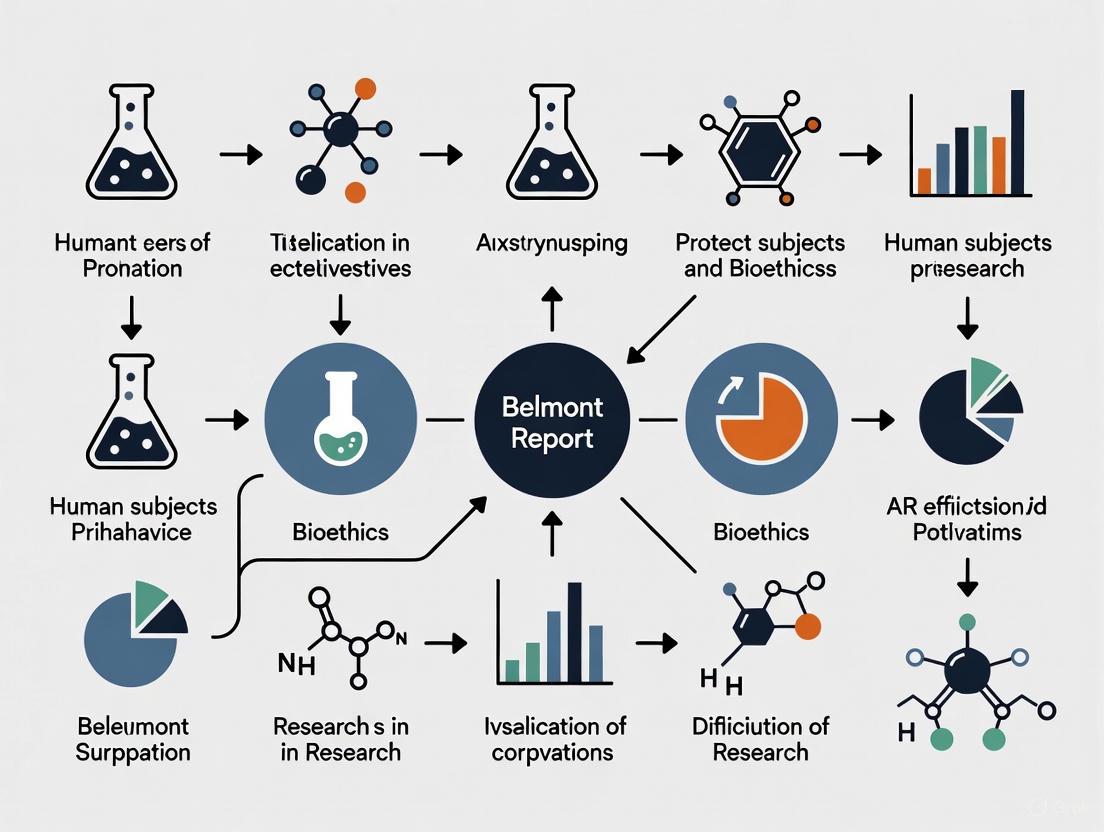
This article provides a comprehensive analysis of the effectiveness of the Belmont Report in safeguarding human subjects in biomedical and clinical research.
The Belmont Report at Work: A Critical Analysis of Its Effectiveness in Protecting Human Research Subjects
Abstract
This article provides a comprehensive analysis of the effectiveness of the Belmont Report in safeguarding human subjects in biomedical and clinical research. It explores the historical context that necessitated its creation, detailing how its three ethical principles—Respect for Persons, Beneficence, and Justice—are methodically applied in modern research protocols through informed consent, risk-benefit assessments, and equitable subject selection. The analysis extends to contemporary implementation challenges, including ethical failures in global research settings and structural power asymmetries. Finally, it validates the report's enduring relevance by examining its direct influence on federal regulations like the Common Rule and its alignment with international guidelines such as ICH-GCP, offering researchers and drug development professionals a nuanced understanding of both the strengths and limitations of this foundational ethical framework.
From Nuremberg to Belmont: The Historical Imperative for Research Ethics
Prior to the creation of the Belmont Report in 1979, the realm of human subjects research was largely an ethical frontier, marked by profound moral failures and a stark absence of uniform protective standards [1]. The evolution of protections for human research participants emerged not from abstract philosophical debate, but as a direct response to egregious historical events that exposed vulnerable populations to significant harm [1]. Understanding this pre-Belmont landscape is crucial for appreciating the magnitude of change it instituted. This analysis examines the unethical studies that served as the catalyst for reform, documenting through quantitative and historical data how these failures directly shaped the ethical principles and regulatory frameworks that now govern research, ultimately assessing the effectiveness of the Belmont Report in safeguarding human subjects.
Historical Case Studies: The Catalysts for Change
The path to modern research ethics is paved with specific, well-documented studies where the welfare of human subjects was systematically disregarded. The following cases were instrumental in revealing the critical need for formal oversight.
The Tuskegee Syphilis Study
- Objective: To study the natural progression of untreated syphilis in African American men [2].
- Methodology: Beginning in 1932, the U.S. Public Health Service enrolled 600 African American sharecroppers from Macon County, Alabama—399 with syphilis and 201 without. Researchers deliberately withheld effective treatment (penicillin) even after it became the standard of care in 1947. Subjects were deceived about the nature of their diagnosis and given placebo treatments to maintain their participation [1].
- Ethical Failures: The study violated fundamental ethical principles by intentionally denying treatment, withholding information about their condition, and exploiting a vulnerable population (poor, African American men with limited access to healthcare) [2] [1]. It continued for 40 years, only ending after public revelation in 1972.
The Lubeck BCG Vaccine Tragedy (1930)
- Objective: To administer the then-experimental Bacille Calmette-Guérin (BCG) vaccine against tuberculosis [1].
- Methodology: In Lubeck, Germany, 251 infants received three doses of the BCG vaccine orally in their first ten days of life. The vaccine was, in this instance, mistakenly prepared with a virulent strain of tuberculosis bacteria [1].
- Outcomes & Impact: The tragedy resulted in the deaths of 72 infants from tuberculosis, with 135 others suffering clinical illness but eventually recovering [1]. This disaster prompted the German government to issue the Reich Circular of 1931, one of the earliest sets of national guidelines for human experimentation, which emphasized special responsibilities when using "innovative therapy" [1].
The Nuremberg Code (1947)
- Origin: Formulated in response to the atrocities committed by Nazi physicians during World War II, who conducted brutal experiments on concentration camp prisoners without consent [1].
- Key Principles: The Code established ten foundational principles for ethical research, most importantly the requirement for voluntary consent of the human subject. It stated that the person involved "should have sufficient knowledge and comprehension of the elements of the subject matter involved as to enable him to make an understanding and enlightened decision" [1].
- Limitations: While monumental, the Nuremberg Code was a civil and military code with limited standing in international law. Its absolute requirement for voluntary consent also left no clear provision for research involving children or adults with diminished decision-making capacity [3] [1].
Post-War U.S. Research and Beecher's Revelations
- Beecher's Review: In 1966, Dr. Henry Beecher published a landmark article, "Ethics and Clinical Research," in the New England Journal of Medicine [1]. He reviewed 100 consecutive articles from a major medical journal and identified 12 with serious ethical concerns, demonstrating that ethical lapses were not isolated to foreign atrocities but were widespread in contemporary U.S. research [1].
- Common Violations: These studies often involved administering experimental treatments or procedures without informed consent and exposing subjects to significant risk without the prospect of direct benefit, frequently selecting vulnerable or institutionalized populations [1].
Quantitative Analysis: Documenting the Ethical Failures
The historical case studies reveal a pattern of ethical failings. The table below quantifies the human cost and key ethical violations in several pivotal incidents.
Table 1: Quantitative Analysis of Key Unethical Studies Pre-Belmont
| Study / Incident | Duration | Human Subjects | Documented Harm | Core Ethical Violation(s) |
|---|---|---|---|---|
| Tuskegee Syphilis Study [1] | 1932-1972 (40 years) | 600 African American men (399 with syphilis) | Deaths from untreated syphilis; numerous health complications | Denial of treatment, lack of informed consent, exploitation of vulnerable population |
| Lubeck BCG Tragedy [1] | 1930 (Several months) | 251 infants | 72 deaths; 135 cases of clinical tuberculosis | Lack of appropriate safety protocols, non-therapeutic experimental risk to children |
| Willowbrook Hepatitis Studies (Mid-20th Century) | 1950s-1960s | Children with intellectual disabilities | Deliberate infection with hepatitis | Intentional infection of a vulnerable, institutionalized population |
| Jewish Chronic Disease Hospital Study (1960s) | 1963 | 22 elderly, debilitated patients | Injection of live cancer cells without consent | Lack of informed consent, deception regarding procedure |
| San Antonio Contraceptive Study (1970s) | 1971 | 76 low-income Mexican American women | Unplanned pregnancies; side effects | Lack of informed consent (placebo group not informed they were not receiving contraception) |
The data shows a consistent pattern of selecting vulnerable populations—including racial minorities, the poor, children, and the institutionalized—and exposing them to significant risk without their knowledge or consent. These quantitative findings provided the empirical basis for the ethical principle of Justice, which would later be enshrined in the Belmont Report to demand the fair selection of subjects [4].
Table 2: Evolution of Ethical Codes Pre- and Post-Belmont
| Document / Era | Key Ethical Contributions | Major Limitations / Gaps | Impact on Research Oversight |
|---|---|---|---|
| Reich Circular (1931) [1] | Early national guidelines; emphasized "innovative therapy" responsibilities. | Limited enforcement; failed to prevent subsequent Nazi atrocities. | Demonstrated early state-level recognition of need for guidelines. |
| Nuremberg Code (1947) [1] | Established voluntary consent as absolute requirement; outlined 10 principles. | No standing in civil law; no provisions for vulnerable populations without capacity to consent. | Response to atrocities; foundational but incomplete for civil research. |
| Declaration of Helsinki (1964) [3] [1] | Distinguished therapeutic/non-therapeutic research; emphasized informed consent; introduced independent committee review. | Initial versions had vague protections for vulnerable groups. | International guide for medical professionals; influenced IRB concept. |
| Belmont Report (1979) [2] [4] | Defined three core principles (Respect for Persons, Beneficence, Justice); framework for IRB application to all research. | A framework, not a regulation itself; requires incorporation into law for enforcement. | Directly led to the U.S. Common Rule; foundation for modern IRB review. |
The Experiment: From Ethical Failure to Regulatory Framework
The "experiment" in this context was the societal and governmental response to the documented history of ethical abuse. The methodology was a deliberate process of analysis, commission, and formulation.
Experimental Protocol: The Creation of the Belmont Report
- Catalyst: The public exposure of the Tuskegee Syphilis Study in 1972 served as the primary catalyst for Congressional action [2] [1].
- Intervention: In 1974, the U.S. Congress passed the National Research Act, which created the National Commission for the Protection of Human Subjects of Biomedical and Behavioral Research [3].
- Methodology & Timeline:
- Commission Deliberation: The Commission met over several years, often at the Belmont Conference Center, to identify comprehensive ethical principles [4].
- Principle Identification: Through philosophical and ethical analysis, the Commission distilled the three core principles from the complex history of research abuses [4].
- Report Drafting & Publication: The Commission published the Belmont Report in 1978, and it was formally published in the Federal Register in 1979 [2] [4].
- Control Variable: The pre-Belmont landscape of variable and often absent ethical standards served as the control against which the new framework was measured.
- Outcome Measurement: The success of this "experiment" is measured by the subsequent codification of the Report's principles into federal regulations (the Common Rule), the universal requirement for IRB review, and the reduction of major, systemic research scandals.
The Scientist's Toolkit: Foundational Documents for Research Ethics
Table 3: Essential Research Ethics Framework Components
| Component | Function in Protecting Human Subjects |
|---|---|
| The Belmont Report | Provides the ethical foundation (Respect for Persons, Beneficence, Justice) upon which all U.S. human subject regulations are built [4]. |
| Informed Consent Document | The practical application of Respect for Persons, ensuring subjects voluntarily agree to participate based on a clear understanding of risks and benefits [4]. |
| Institutional Review Board (IRB) | An independent committee that reviews, approves, and monitors research protocols to ensure they adhere to ethical principles and federal regulations [2]. |
| Federal Regulations (Common Rule) | Codifies the principles of the Belmont Report into enforceable law (45 CFR Part 46) for all federally funded research [2] [3]. |
| Office of Research Integrity (ORI) | A federal agency that oversees institutional investigations of research misconduct (fabrication, falsification, plagiarism) and promotes research integrity [5]. |
Data Visualization: The Path from Abuse to Principles
The following diagram maps the logical and historical relationship between major unethical studies, the public and political response they triggered, and the specific ethical principles they directly influenced within the Belmont Report.
The diagram illustrates how specific historical abuses provided the undeniable evidence needed to justify the creation of each ethical principle. The Tuskegee Study's deliberate deception and denial of information directly informed the principle of Respect for Persons, which mandates informed consent. The Nazi experiments' infliction of extreme suffering underscored the need for Beneficence, which requires a careful assessment of risks and benefits. Finally, the systematic selection of marginalized populations in Tuskegee and Willowbrook led to the principle of Justice, ensuring the fair distribution of both the burdens and benefits of research.
The pre-Belmont landscape was defined by a stark power imbalance where the pursuit of scientific knowledge often overrode the rights and welfare of individual human subjects. The quantitative and historical data clearly demonstrates that the Belmont Report was a direct and necessary response to documented, systemic ethical failures. By distilling these hard-learned lessons into the three core principles of Respect for Persons, Beneficence, and Justice, the Report provided a durable and adaptable ethical framework [2] [4].
The ultimate effectiveness of the Belmont Report lies in its successful translation from theory into practice. Its principles were directly incorporated into the Federal Policy for the Protection of Human Subjects (the Common Rule) in 1981, legally mandating IRB review and informed consent for all federally funded research [2] [3]. While challenges in research ethics persist—including the need to adapt to new technologies like gene therapy and big data—the Belmont Report established the foundational language and logical structure for navigating these issues [3]. It transformed research ethics from a retrospective analysis of wrongdoing into a proactive system of oversight and accountability, creating a environment where the protection of subjects is a prerequisite to the pursuit of science.
The National Research Act of 1974 (Pub. L. 93-348) represents a foundational milestone in the history of research ethics in the United States [6]. Enacted by the 93rd United States Congress and signed into law by President Richard Nixon on July 12, 1974, this legislation was a direct response to egregious ethical violations in research, most notably the infamous Tuskegee syphilis study [6] [7]. The Act established a structured framework for the protection of human research subjects, creating the National Commission for the Protection of Human Subjects of Biomedical and Behavioral Research and mandating the development of comprehensive ethical guidelines [6]. This commission's work culminated in the Belmont Report of 1979, which articulated the three ethical principles that continue to govern human subjects research today [3] [8]. This guide examines the effectiveness of these ethical principles within the contemporary research landscape, providing researchers, scientists, and drug development professionals with a comparative analysis of their implementation and impact.
Historical Context: The Catalysts for Change
The National Research Act emerged from a period of significant ethical scrutiny regarding human subjects research. Several key factors propelled its passage:
Response to Tuskegee: The public revelation in 1972 of the Untreated Syphilis Study at Tuskegee, in which African American men were deliberately left untreated for syphilis without their informed consent, created a political and ethical firestorm that demanded legislative action [7] [9].
Congressional Investigation: A series of congressional hearings directed by Senator Edward Kennedy exposed multiple research abuses beyond Tuskegee, building momentum for comprehensive federal regulation [6] [7].
Legislative Consensus: The Act passed with overwhelming bipartisan support, with veto-proof margins in both the Senate (72-14) and House (311-10), indicating broad recognition of the urgent need for ethical reform [7].
The Act specifically tasked the newly created National Commission with identifying "the basic ethical principles which should underlie the conduct of biomedical and behavioral research involving human subjects" and developing guidelines to ensure research would be conducted according to these principles [7].
The Three Ethical Principles of the Belmont Report
The Belmont Report established three fundamental ethical principles that form the cornerstone of human subjects protection in the United States. The table below details their core requirements and research applications.
Table 1: The Ethical Principles of the Belmont Report and Their Research Applications
| Ethical Principle | Core Ethical Requirement | Research Applications |
|---|---|---|
| Respect for Persons | Recognition of personal autonomy; protection of individuals with diminished autonomy [8] [9] | Informed consent process; voluntary participation without coercion [8] |
| Beneficence | Obligation to maximize possible benefits and minimize possible harms [8] [9] | Systematic assessment of risks and benefits; favorable risk-benefit ratio [3] |
| Justice | Fair distribution of the burdens and benefits of research [8] [9] | Equitable selection of subjects; no vulnerable groups disproportionately burdened [7] |
Experimental Framework: Assessing Ethical Protocol Implementation
To evaluate the effectiveness of ethical principles in practice, researchers must understand the regulatory frameworks and review processes that implement Belmont's mandates. The following protocol outlines the key methodological components for ensuring ethical compliance in human subjects research.
Experimental Protocol: Institutional Review Board (IRB) Ethical Assessment
1. Purpose: To ensure that research involving human subjects complies with the ethical principles of Respect for Persons, Beneficence, and Justice as defined by the Belmont Report and codified in federal regulations (45 CFR 46, the "Common Rule") [7] [10].
2. Background: The National Research Act formally mandated IRB review to protect the rights and welfare of human subjects [6] [7]. IRBs serve as the primary oversight mechanism for federally conducted or funded research, operating under the framework established by the Belmont Report [2].
3. Materials/Requirements:
- Research protocol document
- Informed consent form templates
- Recruitment materials (advertisements, scripts)
- Data safety monitoring plan
- Investigator qualifications documentation
- IRB membership with at least five members of varying backgrounds [7]
4. Methodology:
- Initial Review: IRB evaluates the research protocol for scientific validity and ethical soundness [7].
- Informed Consent Assessment: Verification that consent process provides all relevant information comprehensibly to subjects, including research purpose, procedures, risks, benefits, and alternatives [8] [10].
- Risk-Benefit Analysis: Systematic assessment to ensure risks are minimized and justified by potential benefits to subjects or society [9].
- Subject Selection Equity: Review to ensure subject selection is equitable, considering purposes of research and settings in which it will be conducted [9].
- Continuing Review: Ongoing monitoring of approved research at intervals appropriate to the degree of risk, but not less than once per year [7].
5. Data Analysis:
- Documentation of protocol modifications
- Tracking of adverse events and unanticipated problems
- Audit of consent forms and process
- Evaluation of subject complaints or concerns
Visualization of the U.S. Human Subjects Protection System
The following diagram illustrates the regulatory structure and relationships established by the National Research Act and subsequent developments.
The Researcher's Toolkit: Essential Components for Ethical Research
This toolkit provides key resources and their functions for implementing ethical principles in human subjects research.
Table 2: Essential Resources for Implementing Ethical Research Practices
| Resource | Primary Function | Ethical Principle Applied |
|---|---|---|
| Informed Consent Documents | Ensure subjects voluntarily agree to participate with full comprehension of risks and benefits [8] | Respect for Persons, Beneficence |
| IRB Protocol Application | Provides systematic framework for ethical review of research design and implementation [7] | Respect for Persons, Beneficence, Justice |
| Data Safety Monitoring Plan | Protects subject welfare by identifying and minimizing risks during trial conduct [10] | Beneficence |
| Recruitment Materials Template | Ensures fair subject selection and avoids targeting vulnerable populations [9] | Justice, Respect for Persons |
| HIPAA Authorization Forms | Protects patient privacy and confidentiality of health information [10] | Respect for Persons, Beneficence |
| Vulnerable Population Supplements | Provides additional protections for children, prisoners, and decisionally impaired [7] | Justice, Respect for Persons |
Effectiveness Analysis: Quantitative Assessment of Ethical Implementation
The effectiveness of the ethical framework established by the National Research Act can be evaluated through its institutional adoption, regulatory coverage, and identified gaps in protection.
Table 3: Quantitative Assessment of the National Research Act's Ethical Framework
| Metric | Measurement | Implications for Ethical Protection |
|---|---|---|
| IRB Institutionalization | ~2,300 IRBs in operation in the U.S. as of 2023 [7] | Widespread infrastructure for ethical review |
| Regulatory Harmonization | 15 federal departments adopted the Common Rule [7] | Standardized protections across most federal agencies |
| Voluntary Compliance | 60% of research-intensive universities pursue accreditation [7] | Significant but incomplete voluntary adoption beyond mandates |
| Coverage Gap | Common Rule only mandatory for federally funded research [7] | Patchwork protection for privately funded studies |
| Privacy Protection Limitation | U.S. is the only country prohibiting IRBs from considering long-range societal implications [7] | Narrow focus on individual rather than community impacts |
Contemporary Challenges and Regulatory Gaps
Despite its enduring legacy, the ethical framework established by the National Research Act faces significant contemporary challenges that impact its effectiveness in protecting research subjects:
Jurisdictional Limitations: The Common Rule's protections only apply automatically to federally funded research, creating a patchwork system where privately funded studies may not offer equivalent subject protections [7].
Privacy and Technology Gaps: The HIPAA Privacy Rule has remained largely unchanged since 1996, while research technology has advanced dramatically. The 2018 Common Rule revisions added exemptions for secondary research that may lessen privacy protections by allowing administrative staff to determine exemptions without IRB review [10].
Structural Conflicts of Interest: Both institutional and for-profit IRBs face inherent conflicts, as institutions have financial interests in approving research, and commercial IRBs may compete to be "easier, faster, and presumably more favorable" [7].
Emerging Technology Challenges: The original framework did not anticipate ethical questions raised by gene therapy, artificial intelligence, xenotransplants, and brain-computer interfaces, creating regulatory gaps for emerging technologies [7].
The National Research Act of 1974 established an ethical infrastructure that has fundamentally shaped human subjects protection for nearly five decades. The three principles of the Belmont Report—Respect for Persons, Beneficence, and Justice—have proven remarkably durable, providing a comprehensive ethical framework that continues to guide researchers, IRBs, and regulators [2]. The institutionalization of IRB review and the harmonization of federal regulations through the Common Rule represent significant achievements in implementing these ethical mandates.
However, assessment of the framework's effectiveness reveals both strengths and limitations. While the system provides robust protections for federally funded research, significant gaps remain in regulatory coverage, privacy safeguards, and oversight quality. The rapid evolution of research methodologies and technologies continues to challenge a regulatory structure that has not kept pace with innovation. As noted by contemporary analysts, the National Research Act "needs an update" to address these 21st-century research challenges [7]. Future reforms should consider establishing a standing national bioethics commission, improving IRB quality assessment, expanding regulatory coverage to all research regardless of funding source, and enhancing privacy protections in the digital age. Despite these challenges, the ethical foundation established by the National Research Act continues to provide an indispensable compass for navigating the complex moral landscape of human subjects research.
The Belmont Report, formally published in 1979, established a foundational ethical framework for research involving human subjects in the United States [2]. Its creation was prompted by historical ethical abuses, such as the Tuskegee Syphilis Study, which revealed a critical need for formal protections for research participants [11] [2]. The report articulates three core ethical principles—Respect for Persons, Beneficence, and Justice—which form the basis for federal regulations known as the Common Rule [4] [12]. These principles guide the conduct of researchers, the oversight of Institutional Review Boards (IRBs), and the operation of Human Research Protection Programs (HRPPs) to ensure that research is conducted ethically [13] [2].
This guide objectively evaluates the effectiveness of this ethical "triad" by comparing its foundational objectives against empirical data on research outcomes and protections. It examines experimental protocols for measuring effectiveness, summarizes quantitative performance data, and analyzes the systems that implement these principles.
The Three Ethical Principles: Definitions and Applications
The three principles of the Belmont Report provide a cohesive moral framework for resolving ethical problems in human subject research.
Respect for Persons
The principle of Respect for Persons incorporates two ethical convictions: first, that individuals should be treated as autonomous agents capable of making their own informed decisions, and second, that persons with diminished autonomy (e.g., children, individuals with cognitive impairments) are entitled to special protections [4]. This principle is primarily applied through the process of informed consent, which requires that potential subjects be provided with adequate information about the research (including procedures, purposes, risks, and benefits) in an understandable format, and that their participation is voluntary and free from coercion [4] [11]. This process honors the subject's autonomy and right to self-determination.
Beneficence
The principle of Beneficence extends beyond simply "do no harm" to an affirmative obligation to secure the well-being of research participants [4]. This is expressed through two complementary rules: (1) do not harm and (2) maximize potential benefits while minimizing potential risks [4]. In practice, this requires researchers and IRBs to conduct a systematic assessment of the risks and benefits of the research. The Belmont Report outlines a method for IRBs to gather and assess all relevant information to determine if the risks to subjects are justified by the anticipated benefits, either to the individual or to society [4].
Justice
The principle of Justice requires the fair distribution of the burdens and benefits of research [4]. It demands that the selection of research subjects be scrutinized to avoid systematically selecting individuals simply because of their easy availability, compromised position, or social, racial, sexual, or economic status [4] [11]. Historically, vulnerable populations have borne the burdens of research while more privileged groups have reaped its benefits. The justice principle seeks to correct this inequity by ensuring that the types of people asked to participate in research are the same as those who stand to benefit from its results.
Table 1: Core Principles of the Belmont Report and Their Applications
| Ethical Principle | Core Meaning | Primary Application in Research |
|---|---|---|
| Respect for Persons | Recognizing autonomy and protecting those with diminished autonomy. | Informed Consent Process |
| Beneficence | Maximizing benefits and minimizing harms. | Risk-Benefit Assessment |
| Justice | Ensuring fair selection of subjects and distribution of research burdens and benefits. | Equitable Subject Selection |
The following diagram illustrates the logical relationship between the Belmont Report's ethical principles and their practical applications in the research oversight system.
Experimental Framework for Measuring Effectiveness
While the Belmont Report provides a normative ethical framework, assessing its real-world effectiveness requires empirical measurement. A key study conducted across the Department of Veterans Affairs (VA) health system developed a set of performance metrics to quantitatively evaluate the performance of HRPPs and IRBs in protecting human research subjects [13].
Methodology and Performance Metrics
From 2010 through 2021, the VA Office of Research Oversight (ORO) collected annual quality assurance data through audits of informed consent documents and regulatory audits of human research protocols at 107 VA research facilities [13]. The proposed performance metrics were designed to capture both concrete and dignitary harms to research subjects [13]:
- Metric 1 (Concrete Harm): Incidence of local adverse events determined to be serious, unanticipated, and related or probably related to the research.
- Metric 2 (Dignitary Harm - Autonomy): Incidence of research where required informed consent was not obtained.
- Metric 3 (Dignitary Harm - Privacy): Incidence of research where required HIPAA authorization was not obtained.
- Metric 4 (Systemic Failure): Incidence of non-exempt research conducted without IRB approval.
- Metric 5 (Systemic Failure): Incidence of research activities continued during a lapse in IRB continuing review.
This methodology provides a model for a comparative audit of research protection systems, using standardized metrics to gauge the operational effectiveness of the ethical principles.
The Research Protection System Workflow
The ethical principles of the Belmont Report are implemented through an integrated system of checks and balances. The following diagram maps the workflow of this protection system, from principle to outcome, showing the key entities involved.
Comparative Performance Data: Evaluating Real-World Effectiveness
The longitudinal data collected from the VA system provides a robust dataset for evaluating the performance of a research protection system grounded in the Belmont principles.
Key Findings from Longitudinal VA Study
Analysis of data from 2010 through 2021 across the 107 VA facilities revealed that incident rates for all five performance metrics were very low [13]. Furthermore, three of the five metrics showed a statistically significant trend of improvement, with reductions ranging from 70% to 100% over the study period. Importantly, none of the five performance metrics deteriorated, indicating sustained and improving effectiveness of the human research protection programs [13]. This suggests that the system of oversight, derived from the Belmont principles, can be effective and can improve over time with consistent monitoring and quality assurance efforts.
Table 2: Performance Metrics for Human Research Subject Protections (VA Data 2010-2021)
| Performance Metric | Principle Measured | Type of Harm | Trend (2010-2021) |
|---|---|---|---|
| Serious, Unanticipated, Related Adverse Events | Beneficence | Concrete (Physical/Psychological) | Statistically Significant Improvement |
| Failure to Obtain Informed Consent | Respect for Persons | Dignitary (Autonomy) | Statistically Significant Improvement |
| Failure to Obtain HIPAA Authorization | Respect for Persons | Dignitary (Privacy) | Statistically Significant Improvement |
| Research Without IRB Approval | Justice, Respect for Persons | Systemic Failure | Very Low Incidence |
| Research During Lapsed Continuing Review | Beneficence, Justice | Systemic Failure | Very Low Incidence |
Essential Components of the Research Protection System
The effective application of the Belmont principles relies on a structured ecosystem of components, protocols, and oversight bodies. The following toolkit details the key elements of this system.
Research Ethics and Oversight Toolkit
Table 3: Key Components of the Human Research Protection System
| Component / Protocol | Primary Function | Relevant Ethical Principle |
|---|---|---|
| Institutional Review Board (IRB) | Independent panel that reviews, approves, and monitors research to protect participant rights and welfare. | All Three |
| Informed Consent Document | Legally-mandated document ensuring participants voluntarily agree to research after understanding risks and benefits. | Respect for Persons |
| Protocol Risk-Benefit Analysis | Systematic assessment to minimize risks and justify them against potential benefits to participants or society. | Beneficence |
| Adverse Event Reporting System | Process for monitoring, reporting, and reviewing unanticipated problems to ensure participant safety. | Beneficence |
| Equitable Recruitment Plan | A pre-defined strategy to ensure fair selection of research subjects, avoiding exploitation of vulnerable groups. | Justice |
| Human Research Protection Program (HRPP) | Institution-wide system with ultimate responsibility for the effective implementation of all protection activities. | All Three |
| Office for Human Research Protections (OHRP) | Federal oversight body that provides guidance, enforces regulations, and oversees IRBs and HRPPs. | All Three |
Contemporary Challenges and System Vulnerabilities
Despite the framework's demonstrated effectiveness in structured environments like the VA, its integrity depends on robust institutional support and oversight, which currently faces significant challenges.
Erosion of Federal Oversight
Recent developments have raised concerns about the stability of the national oversight system. The Office for Human Research Protections (OHRP), a critical federal entity for enforcement and guidance, has reportedly lost more than half of its staff, including senior leadership and personnel with substantial expertise [14]. The concomitant disbanding of the Secretary’s Advisory Committee on Human Research Protections (SACHRP) further diminishes the system's capacity for guidance and oversight [14]. This erosion of institutional knowledge and regulatory enforcement capability poses a direct risk to the consistent application of the Belmont principles across research institutions.
Ethical Pressures in Modern Research Environments
The ethical framework is also tested by contemporary research practices. In early-phase clinical trials, for example, increasingly complex protocols with a high number of mandated procedures can create tension between scientific rigor and the principle of beneficence, potentially leading to patient coercion to ensure compliance [15]. Furthermore, ethical challenges extend beyond the protection of subjects to include the well-being of research staff, particularly in global health studies conducted in high-deprivation settings. Issues such as emotional distress, insecurity, and exploitative employment conditions for research staff represent failures in applying the principles of justice and beneficence to all individuals involved in the research enterprise [16].
The comparative analysis of performance data, notably from the VA health system, provides empirical evidence that the ethical triad of the Belmont Report—when implemented through a structured system of IRBs and HRPPs—can effectively protect human research subjects. The documented very low incidence rates of ethical failures and significant improvements over time in key metrics demonstrate the framework's potential for success [13].
However, the system's effectiveness is not automatic or guaranteed. It is contingent upon consistent institutional commitment, adequate resources, and robust federal oversight. The current weakening of the OHRP, coupled with the inherent ethical tensions in modern research, presents clear vulnerabilities [14] [15]. Upholding the principles of Respect for Persons, Beneficence, and Justice requires more than their formal adoption; it demands vigilant and sustained investment in the human and institutional structures that bring them to life. The Belmont Report's framework remains foundational, but its continued ability to protect human subjects depends on the ongoing commitment of the entire research community.
The distinction between medical practice and scientific research is a cornerstone of modern ethical frameworks governing work with human subjects. This demarcation, most famously articulated in the Belmont Report, is not merely academic; it determines the type of ethical oversight and informed consent required for activities involving people. Crafted in 1979 by the National Commission for the Protection of Human Subjects, the Belmont Report was a direct response to historical ethical failures, most notably the Tuskegee Syphilis Study [2]. Its enduring legacy is its articulation of three core ethical principles: Respect for Persons, Beneficence, and Justice [2]. This guide explores how these principles create a functional boundary between practice and research, ensuring that the well-being of individuals remains paramount across both domains.
Core Ethical Principles and Their Application
The Belmont Report's three principles provide a framework for evaluating any activity involving human subjects. Understanding their application is key to distinguishing routine practice from systematic inquiry.
- Respect for Persons: This principle acknowledges the autonomy of individuals and requires that they be protected from coercion. It manifests practically through the process of informed consent, wherein individuals should be given the opportunity to choose what shall or shall not happen to them. In research, this necessitates a detailed consent process that discloses the experimental nature of the procedure, its risks, and its alternatives [2].
- Beneficence: This principle extends beyond simply "doing good" to an obligation to maximize possible benefits and minimize possible harms. In a research context, this requires a systematic assessment of risks and benefits before a study begins and continuous monitoring throughout its conduct. This formal assessment is a key differentiator from practice, where treatments are chosen for their direct benefit to the patient based on established, proven knowledge [2].
- Justice: The principle of justice requires the equitable distribution of the burdens and benefits of research. It demands that researchers not systematically select subjects because of their easy availability, compromised position, or manipulability. This principle asks whether the populations bearing the risks of research are the same ones that will reap its rewards, ensuring that no group is unfairly exploited for the gain of another [2].
Comparative Analysis: Practice Versus Research
The following table summarizes the key distinctions between practice and research as guided by the ethical principles of the Belmont Report. These differences are foundational to determining the level of ethical oversight required.
Table 1: A Comparative Analysis of Practice and Research Based on the Belmont Report Principles
| Aspect | Practice (Standard Care) | Research (Systematic Investigation) |
|---|---|---|
| Primary Objective | To enhance the well-being of an individual patient through proven, established means. | To test a hypothesis, contribute to generalizable knowledge, or establish a theory [2]. |
| Basis for Intervention | Consensus-driven, evidence-based clinical standards and guidelines. | A formal, pre-defined experimental protocol that is not the standard of care. |
| Risk-Benefit Profile | Risks are justified by the anticipated direct benefit to the patient. | Risks may be undertaken to benefit future patients or society; direct benefit to the subject is not guaranteed. |
| Informed Consent Process | Focused on the known risks, benefits, and alternatives of a proven treatment. | Must disclose the experimental nature, lack of guaranteed benefit, and all procedures mandated by the research protocol. |
| Oversight Mechanism | Professional licensure, peer review, and medical malpractice law. | Mandated review and approval by an Institutional Review Board (IRB) to ensure ethical compliance [2]. |
| Application of Justice | Focus on fair treatment of the individual patient. | Focus on the equitable selection of subjects to ensure no group is unfairly burdened by research risks [2]. |
Methodological Frameworks and Experimental Protocols
Adherence to the Belmont Report is operationalized through structured methodologies and oversight bodies. The following workflow diagrams the ethical pathway a research project must follow, contrasting it with the path of standard practice.
Ethical Oversight and Methodological Workflow
Key Components of an Ethical Research Protocol
For a study to pass ethical scrutiny by an IRB, its protocol must detail several critical components derived from the Belmont principles. The following diagram outlines the structure of a robust experimental protocol.
The Scientist's Toolkit: Key Reagents for Ethical Research
Beyond laboratory reagents, conducting ethical research requires a set of procedural and conceptual tools. The following table details essential components for ensuring a study adheres to the ethical standards set forth by the Belmont Report and the Common Rule.
Table 2: Essential "Reagents" for an Ethically Sound Research Study
| Tool/Component | Function in Upholding Ethical Principles |
|---|---|
| Institutional Review Board (IRB) | An independent committee that reviews, approves, and monitors research protocols to ensure the rights and welfare of human subjects are protected [2]. |
| Informed Consent Document | A comprehensive written summary provided to potential subjects that explains the study's purpose, procedures, risks, benefits, and alternatives, allowing for an autonomous decision [2]. |
| Study Protocol | The formal, detailed plan for conducting the research. It provides the blueprint for the study and is the primary document reviewed by the IRB to assess scientific validity and ethical soundness. |
| Data Safety and Monitoring Plan (DSMP) | A proactive plan for ensuring subject safety and data integrity during the study. It outlines procedures for monitoring adverse events and determining if the study should be modified or stopped. |
| Federal Wide Assurance (FWA) | An institution's formal commitment to the U.S. Department of Health and Human Services that it will comply with federal regulations for the protection of human subjects (the Common Rule). |
The Belmont Report has stood the test of time, providing a resilient and adaptable framework for navigating the complex boundary between practice and research [2]. Its three principles offer a clear, principled basis for this critical distinction, ensuring that activities aimed at generating generalizable knowledge are subject to a higher level of scrutiny and protection for participants. This framework has been incorporated into the Federal Policy for Protection of Human Subjects (the Common Rule) and continues to guide international guidelines, such as the International Council for Harmonisation's Guideline for Good Clinical Practice [2]. For researchers, scientists, and drug development professionals, a deep understanding of this distinction is not a regulatory hurdle but a foundational element of rigorous and responsible science.
Principles in Practice: Applying the Belmont Framework to Modern Research
The Belmont Report, published in 1979, established a foundational ethical framework for research involving human subjects. Its principles were formulated in response to historical ethical abuses, such as the Tuskegee Syphilis Study, to ensure that the rights and welfare of research participants are rigorously protected [2]. Among its three core principles—Respect for Persons, Beneficence, and Justice—the principle of Respect for Persons is most directly operationalized through the process of informed consent [3] [2]. This principle acknowledges the autonomous nature of human beings and mandates that individuals with diminished autonomy are entitled to additional protections [3].
Within the context of clinical research and drug development, informed consent is far more than a signed form; it is a continuous, dynamic process that constitutes a primary ethical and regulatory safeguard [17]. This guide examines the core components of a valid informed consent process, compares methodologies for its effective implementation, and provides a practical toolkit for researchers to uphold this critical pillar of ethical research.
Core Components of an Ethical Informed Consent Process
For an informed consent to be considered ethically valid and regulatory-compliant, it must integrally incorporate three critical elements [17]:
- Voluntarism: The participant's decision must be made freely, without any coercion, undue influence, or intimidation. Voluntarism can be compromised by factors such as illness-related considerations, cultural or religious beliefs, and power dynamics in the caregiver relationship [17].
- Adequate Information Disclosure: Participants must receive all information necessary to make an informed decision. This includes the purpose of the research, procedures, potential risks and benefits, alternatives to participation, and the right to withdraw at any time without penalty [17].
- Decision-Making Capacity: The participant must possess the cognitive ability to understand the provided information, appreciate its consequences for their own situation, reason through the options, and communicate a clear choice [17].
The following workflow outlines the key stages and checks in the informed consent process, highlighting critical points for ensuring ethical implementation.
Comparative Analysis of Consent Capacity Assessment Protocols
A participant's capacity to provide informed consent is not a binary state but exists on a spectrum. Researchers must assess this capacity, particularly when working with vulnerable populations or those with conditions that may impair cognition. The table below summarizes key assessment criteria and methodologies derived from ethical guidelines [17].
| Assessment Criteria | Operational Definition | Vulnerable Population Considerations | Researcher Action for Support |
|---|---|---|---|
| Understanding | Ability to comprehend factual information about the research (purpose, procedures, risks, benefits) [17]. | Patients with cognitive disorders, minors, some elderly populations. | Use simplified language; present information in small, consecutive pieces; provide repeated information; use teach-back method [17]. |
| Appreciation | Ability to recognize the significance of the information for one's own personal situation and health [17]. | Patients with severe mental disorders (e.g., schizophrenia), advanced dementia. | Use real-world examples; connect consequences to patient's own life and values; assess unrealistic optimism or denial [17]. |
| Reasoning | Ability to logically compare alternatives by weighing risks and benefits and inferring consequences [17]. | Persons under extreme emotional distress, intellectual disabilities. | Engage in a structured discussion of pros and cons; ask participant to explain their reasoning process [17]. |
| Choice | Ability to communicate a clear and stable decision voluntarily [17]. | All populations, especially those with communication impairments. | Provide various means to communicate choice; ensure decision is sustained over a reasonable time period [17]. |
Practical Toolkit for the Research Professional
Research Reagent Solutions for Ethical Consent
Successfully operationalizing informed consent requires more than ethical principles; it requires practical tools. The following table details essential "reagents" for any research professional's ethical toolkit.
| Tool / Resource | Primary Function | Application in Consent Process |
|---|---|---|
| IRB/IEC-Reviewed ICD | Serves as the master document for all consent information, ensuring regulatory compliance [17]. | Provides the structured content (PIS and ICF) that forms the basis for the consent discussion [17]. |
| Capacity Assessment Script | A standardized set of questions to evaluate a participant's understanding and appreciation objectively. | Used during the interactive session to gauge comprehension beyond mere signature collection. Example: "Can you tell me in your own words what the main goal of this study is?" [17]. |
| Legally Acceptable Representative | Provides legally authorized consent for individuals who lack the capacity to do so themselves [17]. | Enables the enrollment of incompetent subjects (e.g., minors, cognitively impaired adults) while still involving the subject to the extent of their abilities [17]. |
| Impartial Witness | Verifies the integrity of the consent process when the participant/LAR is illiterate [17]. | Attends the entire consent discussion and attests that the information was accurately explained and consent was freely given [17]. |
| Multi-Format Information Aids | Supports diverse learning styles and comprehension needs. | Using diagrams, videos, or interactive digital platforms to explain complex study procedures, enhancing participant understanding [17]. |
Decision Pathway for Complex Consent Scenarios
In practice, researchers often face scenarios where the standard consent process is insufficient. The following diagram provides a structured pathway for navigating two common complex situations: working with potentially vulnerable adults and enrolling participants in emergency settings.
The enduring legacy of the Belmont Report is its successful translation of the abstract ethical principle of "Respect for Persons" into the actionable and auditable practice of informed consent [2]. For today's researchers, scientists, and drug development professionals, this is not a historical footnote but a living standard. The effectiveness of this pillar is not measured solely by regulatory compliance, but by the depth of understanding, the genuineness of voluntarism, and the ongoing protection of every participant's autonomy and well-being. By rigorously applying the structured components, assessments, and tools outlined in this guide, the research community can ensure that this critical pillar continues to foster the public trust necessary for scientific advancement.
The principle of Beneficence stands as a cornerstone of ethical research, mandating that investigators not only respect participants' decisions and protect them from harm but also make a concerted effort to secure their well-being. This principle finds its formal expression in the Belmont Report of 1979, which was crafted to address ethical failures in clinical research, most notably the Tuskegee Syphilis Study [2] [3]. The report articulates Beneficence through two complementary rules: "(1) do not harm and (2) maximize possible benefits and minimize possible harms" [4]. This systematic assessment is not merely an ethical aspiration but a foundational requirement for Research Ethics Committees (RECs) or Institutional Review Boards (IRBs), who are tasked with ensuring that the risks to which research subjects would be subjected are justified by the benefits to be gained [4] [18]. This guide objectively compares the predominant frameworks used to implement this systematic assessment, analyzing their methodologies and effectiveness in upholding the Belmont Report's mandate to protect human subjects.
Foundational Frameworks for Risk-Benefit Assessment
The Belmont Report provides the ethical foundation but does not prescribe a single methodological approach for the risk-benefit task. Consequently, two primary procedure-level frameworks have emerged to provide a structured process for ethics committees: the Component Analysis and the Net Risk Test. The table below compares their core methodologies and philosophical bases.
Table 1: Comparison of Foundational Risk-Benefit Assessment Frameworks
| Feature | Component Analysis | Net Risk Test |
|---|---|---|
| Proponent(s) | Charles Weijer and Paul Miller [18] | David Wendler and Franklin Miller [18] |
| Core Methodology | Research protocol procedures are evaluated separately; benefits of one component cannot justify the risks of another [18]. | Evaluates whether an intervention offers sufficient potential clinical benefit to compensate for its risks and burdens [18]. |
| Primary Focus | Distinction between procedures with and without therapeutic warrant [18]. | Calculation and justification of net risk (risks not offset by potential clinical benefits) [18]. |
| Key Conceptual Tool | Clinical equipoise (honest professional disagreement on preferred treatment) for therapeutic procedures [18]. | Social value of the research as a justification for net risks [18]. |
| Evaluation Sequence | 1. Distinguish therapeutic from non-therapeutic procedures.2. Apply distinct evaluative criteria to each type.3. Ensure all components are acceptable [18]. | 1. Minimize risks of all interventions.2. Assess if each intervention's potential benefits compensate for its risks.3. Ensure net risks are low and justified by social value [18]. |
Experimental Protocols for Ethical Assessment
The following section details the specific, sequential methodologies prescribed by each framework, providing a "protocol" for ethical review analogous to an experimental procedure.
Protocol A: Component Analysis
This framework requires a segmented evaluation of the research protocol [18].
- Component Identification and Classification: Deconstruct the research protocol into individual procedures. Classify each procedure as either:
- Therapeutic Procedure: Has a "therapeutic warrant," meaning a reasonable belief that the participant may directly benefit from it.
- Non-Therapeutic Procedure: Undertaken solely to answer the research question (e.g., biopsies, extra X-rays, questionnaires for healthy volunteers).
- Differential Application of Evaluative Criteria:
- For Therapeutic Procedures, assess:
- Clinical Equipoise: Exists if there is "honest professional disagreement in the community of expert practitioners as to the preferred treatment" [18].
- Competent Care: The procedure must be consistent with competent care.
- Risk-Benefit Ratio: The risks must be reasonable in relation to the potential benefits to the subject.
- For Non-Therapeutic Procedures, assess:
- Risk Minimization: Risks are minimized and consistent with sound scientific design.
- Risk-Knowledge Ratio: Risks are reasonable in relation to the knowledge to be gained.
- Vulnerable Populations: If involved, risks should be no more than a minor increase over minimal risk.
- For Therapeutic Procedures, assess:
- Overall Judgment: Determine that all components, both therapeutic and non-therapeutic, individually meet their respective criteria. The research is acceptable only if all components "pass" [18].
Protocol B: The Net Risk Test
This framework, later elaborated into a seven-step process by Rid and Wendler, focuses on the balance of net risk and social value [18].
- Ensure and Enhance Social Value: Verify the study methods are sound, ensure the study passes a minimum threshold of social value, and seek to enhance the knowledge to be gained [18].
- Risk Minimization: Scrutinize all study interventions to ensure their risks have been reduced as much as possible without compromising scientific validity [18].
- Intervention-Specific Risk-Benefit Assessment: For each intervention, evaluate whether it offers a potential for clinical benefit that compensates for its risks and burdens.
- If YES, the intervention is acceptable.
- If NO, proceed to the next step [18].
- Net Risk Assessment: For interventions with uncompensated risks, determine the net risk (the risks of harm not offset by potential clinical benefits). Judge whether this net risk is:
- Sufficiently low, and
- Justified by the social value of the knowledge the intervention will produce.
- If both conditions are met, the intervention is acceptable [18].
- Cumulative Assessment: Calculate the cumulative net risks from all interventions in the study and ensure that, taken together, they are not excessive [18].
The logical workflow for this protocol, highlighting the critical decision points, is illustrated below.
Diagram: Net Risk Test Evaluation Workflow
The Researcher's Toolkit: Key Concepts for Ethical Review
Successfully implementing the principle of beneficence requires a firm grasp of several key conceptual tools. The following table details these essential "reagents" for ethical analysis.
Table 2: Essential Conceptual Tools for Risk-Benefit Analysis
| Conceptual Tool | Function in Ethical Analysis |
|---|---|
| Therapeutic Warrant | Distinguishes procedures undertaken with a reasonable belief of direct benefit to the participant from those that are purely for research purposes. This dictates the applicable evaluative criteria [18]. |
| Clinical Equipoise | Provides an ethical foundation for randomized controlled trials (RCTs). It exists when there is genuine uncertainty within the expert medical community about the preferred treatment, ensuring subjects are not knowingly given inferior care [18]. |
| Net Risk | A quantitative and qualitative metric defined as the "risks of harm that are not, or not entirely, offset or outweighed by the potential clinical benefits for participants." This focuses the assessment on the risks that require direct justification by the study's social value [18]. |
| Social Value | Serves as the primary justification for research that poses more than minimal risk without the prospect of direct benefit. It answers the question: "Is this knowledge worth the risk?" [18]. |
| Minimal Risk | A critical benchmark defined such that the probability and magnitude of harm or discomfort anticipated are not greater than those ordinarily encountered in daily life or during routine medical examinations. It determines the level of scrutiny and protections needed, especially for vulnerable populations [18]. |
Comparative Analysis of Framework Effectiveness
A critical evaluation of both frameworks reveals distinct strengths and limitations, illustrating the practical challenges in systematizing the Belmont Report's principle of Beneficence.
Critique of Component Analysis
- Strengths: Its strength lies in its precision. By disaggregating the protocol, it prevents the ethical flaw of using the hoped-for benefits of one procedure to justify the purely research-driven risks of another. It directly incorporates the clinically relevant concept of equipoise, making it highly intuitive for therapeutic research [18].
- Limitations: The framework has been criticized for its conflation of distinct ethical tasks. It merges the process of risk-benefit analysis (gathering information) with risk-benefit evaluation (judging the information) and decision-making, which can make the procedure confusing and potentially arbitrary [18]. The binary classification of procedures as therapeutic or non-therapeutic can also be challenging and contentious in complex protocols.
Critique of the Net Risk Test
- Strengths: This approach offers a more unified and sequential framework that is applicable to all research interventions, regardless of therapeutic intent. Its explicit first step of ensuring social value correctly positions societal benefit as a foundational requirement for justifying risk. The concept of net risk provides a clear focal point for the most difficult ethical deliberations [18].
- Limitations: Like Component Analysis, it is also susceptible to the conflation of risk-benefit tasks [18]. Furthermore, the assessment of whether net risks are "sufficiently low" and "justified" by social value relies heavily on the judgment of the REC, potentially reintroducing the very arbitrariness the frameworks seek to eliminate.
The Belmont Report's enduring legacy is its establishment of Beneficence as a non-negotiable pillar of research ethics, demanding a "systematic, nonarbitrary analysis of risks and benefits" [18]. As this guide has demonstrated, the implementation of this principle has been operationalized through structured frameworks like Component Analysis and the Net Risk Test. While both provide valuable procedural guidance for researchers and reviewers, they also share a significant limitation: the conflation of key analytical steps. Current research suggests that the future of effective ethical review lies in borrowing from decision theory, which would involve clearly separating the tasks of risk-benefit analysis (information gathering), risk-benefit evaluation (judgment against criteria), risk treatment (minimization strategies), and final decision-making [18]. By adopting such a refined, multi-step methodology, the research community can more rigorously uphold the promise of the Belmont Report, ensuring that the imperative to "maximize possible benefits and minimize possible harms" is not just an ethical ideal but a standardized, transparent, and defensible practice.
The Belmont Report, published in 1979, established a foundational ethical framework for human subjects research in the United States, with the principle of Justice demanding fair distribution of research burdens and benefits [3] [19]. This principle was a direct response to historical abuses where specific populations were unjustly burdened [20]. Decades later, its effectiveness is demonstrated through its concrete application in regulatory review processes and ongoing efforts to address contemporary ethical challenges.
The Ethical Imperative: From Historical Abuse to a Foundational Principle
The principle of Justice in research was forged in the aftermath of egregious ethical failures. The Tuskegee Syphilis Study serves as a paramount example of justice violated, where African American men, a vulnerable and disadvantaged group, were burdened with the full risks of untreated syphilis without access to effective treatment, even after it became available [20]. This study highlighted a profound ethical failure: the selection of subjects was based on manipulability and compromised autonomy rather than a scientific rationale, and the potential benefits of participation were not commensurate with the immense burdens [20].
The Belmont Report's Justice principle directly confronts this history by posing a fundamental question: "Who ought to receive the benefits of research and bear its burdens?" [20] It asserts that both must be distributed fairly, ensuring that no particular group is systematically selected for research due to mere convenience, manipulability, or compromised social position [21] [20]. The report outlines several formulations for distributive justice, including equal share, individual need, individual effort, societal contribution, and merit [19] [20].
Experimental Protocols: Measuring Justice in Modern Review
The effectiveness of the Justice principle is not merely theoretical but is tested and enforced through specific experimental and regulatory protocols. The primary "experiment" is the ethical review process itself, conducted by Institutional Review Boards (IRBs). The following workflow details the key steps and assessments in this process, with a focus on upholding justice.
Table 1: Key Review Criteria in the IRB Justice Assessment
| Review Phase | Core Question | Evidence of Justice Violation | Regulatory Citation |
|---|---|---|---|
| Subject Selection & Recruitment | Is the selection equitable? | Systematic selection based on convenience, manipulability, or compromised position [21] [20]. | 45 CFR 46.111(a)(3) [22] |
| Risk-Benefit Analysis | Are risks reasonable in relation to benefits? | Benefits of participation (e.g., free meals, burial insurance) are not commensurate with immense burdens (e.g., severe health problems) [20]. | 45 CFR 46.111(a)(2) [22] |
| Vulnerability Assessment | Are additional safeguards in place? | Research on fetuses, prisoners, children, or incapacitated persons without required protections [22]. | 45 CFR 46 Subparts B, C, D [22] |
| Incentive Evaluation | Is participation truly voluntary? | Use of excessive or inappropriate rewards that blind subjects to risks or impair judgment [22]. | OHRP Guidance on Incentives [22] |
Researchers and IRB members rely on a set of key resources to implement the Justice principle effectively. These guidelines and regulations form the backbone of ethical research design and review.
Table 2: Essential Research Ethics Resources
| Tool Name | Type | Primary Function in Upholding Justice |
|---|---|---|
| The Belmont Report | Ethical Framework | Foundational document defining the principle of Justice and its applications in informed consent, risk-benefit assessment, and subject selection [3] [19]. |
| Federal Common Rule (45 CFR 46) | Regulation | Codifies Belmont principles into law; mandates IRB review and specifies requirements for equitable subject selection [2] [23]. |
| Institutional Review Board (IRB) | Oversight Body | Federally mandated committee that reviews research protocols to ensure justice and other ethical principles are upheld [22] [21]. |
| DOJ Human Subjects Protection (28 CFR 46) | Regulation | Specific regulations for research funded by the Department of Justice, emphasizing confidentiality and human subject protections [24]. |
Comparative Data: Justice in Historical vs. Contemporary Research
The most compelling data on the effectiveness of the Belmont Report is comparative, examining research practices before and after its implementation. The following table contrasts historical violations with the modern standards designed to prevent them.
Table 3: Comparative Analysis of Justice in Research Practices
| Aspect of Justice | Pre-Belmont (Historical Context) | Post-Belmont (Current Standards & Ongoing Challenges) |
|---|---|---|
| Subject Selection | Tuskegee Syphilis Study: Participants were African American sharecroppers, selected for their manipulability and low economic autonomy [20]. | IRB Mandate: Selection must not be based on convenience; population must be related to the scientific question [22] [20]. |
| Burden Distribution | Nazi Concentration Camps: Unwilling prisoners were exploited as research subjects, bearing all burdens [19]. | Equitable Distribution: Burdens and benefits must be fairly distributed; risks should not be added to already burdened groups [20]. |
| Benefit Distribution | Historical Abuses: Benefits of research often flowed to WEIRD (Western, Educated, Industrialized, Rich, Democratic) populations, while burdens fell on others [20]. | Representation Challenge: WEIRD groups still represent ~80% of participants [20]. Active efforts to include underserved communities are required [20]. |
| Vulnerable Populations | Limited Protections: Early codes like the Nuremberg Code and Declaration of Helsinki had vague frameworks for protecting vulnerable groups [3]. | Strict Regulations: Additional, codified protections for prisoners, children, fetuses, and the incapacitated (45 CFR 46 Subparts B-D) [22]. |
The Belmont Report's principle of Justice has demonstrably improved the ethical landscape of human subjects research. Its effectiveness is evidenced by the structural integration of ethical review into all federally supported research, the codification of its principles into enforceable law via the Common Rule, and the explicit protection for vulnerable populations that were previously exploited. While the creation of IRBs and federal regulations provides a robust framework, contemporary data reveals that full realization of justice remains a work in progress, requiring continued vigilance against convenience sampling and proactive inclusion of underserved communities [20]. The legacy of the Belmont Report is a living system of oversight that continues to compel researchers and institutions to rigorously answer the question, "Who ought to bear the burdens of research?"
The Institutional Review Board (IRB) as the Enforcement Mechanism
The Belmont Report's ethical principles form the cornerstone of modern human research protections. This guide examines how the Institutional Review Board (IRB) functions as the primary enforcement mechanism for these principles, objectively comparing its effectiveness across different regulatory frameworks and research scenarios.
Historical Context and the Need for Enforcement
The development of formal enforcement mechanisms for research ethics was a direct response to historical abuses. Key studies that highlighted the critical need for oversight include:
The Tuskegee Syphilis Study (1932-1972): U.S. Public Health Service researchers studied the natural progression of syphilis in African-American men without their informed consent and deliberately denied them effective treatment, even after penicillin became available [25] [26]. This study was a primary catalyst for the National Research Act of 1974, which created the National Commission responsible for the Belmont Report [27].
The Willowbrook School Study (1956-1971): Children with mental disabilities were deliberately infected with hepatitis to study the disease and develop a vaccine, with parents coerced into consent through guaranteed admission to the overcrowded school [27].
The Brooklyn Jewish Chronic Disease Hospital Study (1963): Elderly patients were injected with live cancer cells without their knowledge or consent, violating the fundamental principle of respect for persons [27].
These ethical failures demonstrated that voluntary adherence to ethical guidelines was insufficient, necessitating a formal, enforceable system of oversight—the IRB.
The Regulatory Framework for IRB Enforcement
The IRB's authority is derived from U.S. federal regulations, primarily the Common Rule (45 CFR 46) and the FDA regulations (21 CFR 50 & 56) [25] [28]. The table below compares these key regulatory sources.
Table 1: Key U.S. Regulations Governing IRBs and Human Subject Protection
| Regulatory Aspect | HHS Common Rule (45 CFR 46) | FDA Regulations (21 CFR 50 & 56) |
|---|---|---|
| Primary Scope | Research conducted or supported by HHS and other federal agencies [29]. | Clinical investigations regulated by the FDA regarding drugs, biological products, and medical devices [29]. |
| Definition of Research | "A systematic investigation… designed to develop or contribute to generalizable knowledge" [29]. | "Any experiment that involves a test article and one or more human subjects," synonymous with "research" [29]. |
| Definition of Human Subject | A living individual about whom an investigator obtains data through intervention or interaction or identifiable private information [29]. | An individual who is or becomes a participant in research, either as a recipient of the test article or as a control [29]. |
| Enforcement Authority | Department or agency heads can suspend or terminate funding [29]. | The FDA can disqualify IRBs or institutions and refuse to accept data from noncompliant studies [29]. |
IRB Enforcement in Action: Review Types and Procedures
IRBs enforce ethical standards through a tiered review system, ensuring the level of scrutiny is proportional to the research risk. The following workflow illustrates the IRB's decision-making process and enforcement actions.
Diagram 1: IRB Review and Enforcement Workflow
The enforcement mechanisms corresponding to this workflow are detailed in the table below.
Table 2: IRB Review Types and Enforcement Mechanisms
| Review Type | Enforcement Criteria | Common Examples | IRB Enforcement Powers |
|---|---|---|---|
| Exempt | Research poses minimal risk and falls into specific categories defined in 45 CFR 46.104 [28]. | Anonymous surveys, analysis of existing de-identified data [28]. | Authority to determine exemption status; research may not proceed without this determination [28]. |
| Expedited | Research poses no more than minimal risk and fits one of the federally-defined categories [28]. | Blood draws from healthy volunteers, voice recordings, minor changes to approved studies [28]. | Review by an IRB officer (not full committee); can approve, require modifications, or refer to full board [28]. |
| Full Board | Research involves more than minimal risk or does not fit exempt/expedited categories [28]. | Clinical trials with experimental drugs/devices, research with vulnerable populations, studies on sensitive topics [28]. | Review by convened committee; power to approve, require modifications, or disapprove research; mandatory continuing review at least annually [28] [30]. |
The Belmont Report as the Ethical Foundation for Enforcement
The IRB's enforcement decisions are not arbitrary but are guided by the three ethical principles outlined in the Belmont Report, which serve as the foundation for the federal regulations in 45 CFR 46 [25] [26]. The following diagram illustrates how these abstract principles are translated into enforceable regulatory requirements.
Diagram 2: From Ethical Principles to Enforceable Regulations
This translation from principle to practice empowers the IRB to make concrete, justifiable enforcement decisions. The IRB's primary concern is ensuring that proposed research meets the specific criteria outlined in 45 CFR 46.111, which are direct applications of the Belmont principles [30].
The Researcher's Toolkit: Essential Components for IRB Compliance
Successful navigation of the IRB enforcement process requires meticulous preparation. The table below details essential documents and components for a compliant submission.
Table 3: Essential Components for IRB Submission and Compliance
| Component | Function & Purpose | Key Regulatory References |
|---|---|---|
| Research Protocol | A detailed document providing the scientific rationale, objectives, methodology, and statistical analysis plan. It must justify the use of human subjects and the study design [28]. | 21 CFR 312.23 (IND Content) |
| Informed Consent Documents | Forms and processes designed to provide potential subjects with all necessary information in an understandable language, ensuring voluntary participation without coercion [28] [30]. | 45 CFR 46.116 (General Requirements) |
| Investigator's Brochure | For drug/device trials, this document summarizes the clinical and non-clinical data on the investigational product, supporting the risk-benefit assessment [31]. | 21 CFR 312.23 (IND Content) |
| Recruitment Materials | All advertisements, flyers, and social media posts used for subject recruitment must be approved by the IRB to ensure they are not coercive or misleading [28] [31]. | 45 CFR 46.111(a)(3) |
| Data Safety Monitoring Plan | A plan for monitoring data to ensure subject safety, which may include a Data Safety Monitoring Board (DSMB) for high-risk trials [28]. | 45 CFR 46.111(a)(6) |
Effectiveness of IRB Enforcement: Comparative Data and Challenges
The IRB system, while foundational, faces challenges that impact its effectiveness. The following data highlights operational aspects and points of comparison.
Table 4: IRB System Metrics and Collaborative Challenges
| Metric / Challenge | Data / Description | Implication for Enforcement |
|---|---|---|
| Growth of IRBs | The number of IRBs in the U.S. increased from 491 (1995) to 3,853 (2008) [31]. | Indicates a massive scaling up of the enforcement infrastructure in response to growing research volume. |
| Review Volume | In 2007, IRBs reviewed over a quarter-million research applications, 35% of which required full committee review [31]. | Highlights the significant administrative burden and resource requirements for effective enforcement. |
| Multi-Center Review | Cooperative research projects involving multiple institutions may require approval from several IRBs, each with its own interpretations and requirements [32]. | Creates inefficiency, delays, and potential inconsistencies in applying ethical standards (enforcement disparity). Updated Common Rule encourages reliance agreements to mitigate this [29]. |
| International Research | Research conducted outside the U.S. must comply with FDA regulations (21 CFR 312.120) and local laws, often reviewed by local Ethics Committees (ECs) or Research Ethics Committees (RECs) [25] [33]. | Ensures ethical standards are maintained globally, though it introduces complexity in harmonizing different regulatory frameworks. |
The Institutional Review Board stands as the indispensable enforcement mechanism for the ethical principles of the Belmont Report. Its authority, derived from federal regulations, is exercised through a rigorous system of initial and continuing review, with powers to approve, modify, or disapprove research. While challenges such as administrative burden and multi-center review inconsistencies exist, the IRB system provides a structured, enforceable framework that has fundamentally safeguarded the rights and welfare of human subjects for decades. For researchers, understanding this enforcement mechanism is not merely a regulatory hurdle but a fundamental component of conducting ethically sound and scientifically valid research.
Navigating Ethical Challenges and Limitations in Contemporary Research
However, the search results did provide some foundational context. For instance, one source discusses how exploitation arises from linked asymmetries of economic power in both production and market exchange, which are legitimated by law and fiscal regimes [34]. Other sources offer comprehensive guidance on Quantitative Data Analysis [35] [36] and Data Visualization best practices [37] [38], which are crucial for presenting research findings.
To locate the highly specific information you need, I suggest you:
- Search directly in academic databases like PubMed, JSTOR, or Google Scholar for articles that evaluate the Belmont Report or compare ethical frameworks in multinational research.
- Review the methodological appendices of systematic reviews on research ethics for detailed experimental protocols.
- Consult official resources from bioethics institutions, such as The Hastings Center or the Nuffield Council on Bioethics.
I hope these suggestions help you find the necessary resources for your work. If you have a more specific aspect of this topic you would like to explore, I would be glad to try another search for you.
The Belmont Report, formally known as the Ethical Principles and Guidelines for the Protection of Human Subjects of Research, was published in 1979 and established three foundational ethical principles for research involving human subjects: Respect for Persons, Beneficence, and Justice [2] [3]. Created by the National Commission for the Protection of Human Subjects of Biomedical and Behavioral Research, this framework was incorporated into the Federal Policy for Protection of Human Subjects (the "Common Rule") and continues to shape research ethics today [2] [12]. While this framework provides essential protections for research participants, its application has historically focused on subject protection rather than the ethical challenges faced by research staff themselves.
This analysis examines the effectiveness of the Belmont Report in addressing the contemporary ethical landscape, with particular focus on ethical distress and security risks experienced by research personnel. Recent evidence indicates that research staff operating in challenging environments, including global South settings characterized by high deprivation and power asymmetries, frequently encounter ethical challenges that extend beyond the Belmont framework's original scope [16]. By evaluating these gaps and proposing complementary protective measures, this guide aims to strengthen the ethical integrity of the entire research ecosystem.
Analytical Framework: Assessing Ethical Protections for Research Staff
Core Ethical Principles of the Belmont Report
The Belmont Report established three fundamental principles that continue to guide ethical review processes in clinical research [2] [3]:
- Respect for Persons: Recognition of the personal autonomy and dignity of individuals, requiring voluntary informed consent and additional protections for those with diminished autonomy.
- Beneficence: The obligation to maximize benefits and minimize potential harms to research subjects through systematic assessment of risks and benefits.
- Justice: Equitable distribution of the benefits and burdens of research, requiring fair procedures and outcomes in subject selection.
These principles were operationalized through applications including informed consent processes, comprehensive risk-benefit assessment, and equitable selection of subjects [3]. The report's principles were incorporated into federal regulations requiring Institutional Review Board (IRB) oversight to ensure that risks to subjects are minimized, selection is equitable, and informed consent is properly obtained and documented [12].
Contemporary Limitations in Staff Protection
While the Belmont framework provides essential human subject protections, significant gaps exist in addressing the ethical challenges faced by research staff. A 2025 analysis based on 57 interviews with research staff across hierarchies, world regions, and institutions identified that research environments in the Global South often pose particular challenges that can lead to insecurity, sexual harassment, emotional distress, exploitative employment conditions, and discrimination [16].
The ethical framework for protecting research staff remains underdeveloped compared to subject protections. Research indicates that moral distress - the psychological distress that occurs when one is constrained from pursuing what one believes to be the morally right action - is increasingly recognized as a significant occupational hazard for healthcare and research professionals [39]. During the COVID-19 pandemic, moral distress was reported as "a critical force contributing to intensifying rates of anxiety, depression and burnout experienced by healthcare workers" [39].
Table: Comparative Analysis of Ethical Protection Frameworks
| Protection Dimension | Human Subjects (Belmont Framework) | Research Staff (Current Gaps) |
|---|---|---|
| Regulatory Foundation | Common Rule (45 CFR 46), IRB oversight | Limited specific regulations for staff protection |
| Informed Consent | Comprehensive requirements for subjects | No parallel process for staff risk awareness |
| Risk-Benefit Assessment | Systematic review mandated | Often informal or absent for staff hazards |
| Equitable Selection | Protections against vulnerable group exploitation | Limited attention to staff power asymmetries |
| Oversight Mechanism | IRB review and approval required | No equivalent mandatory review for staff working conditions |
Empirical Data: Documenting Ethical Distress and Security Risks
Manifestations of Ethical Distress in Research Settings
Recent empirical research reveals that moral distress and ethical challenges are relationally experienced by research and healthcare staff. A 2025 qualitative study of Australian healthcare workers identified three primary themes in ethical distress experiences [39]:
- Moral ambiguity in care provision amid rapidly changing work environments
- Distress from witnessing suffering shared between healthcare workers and patients
- Distress from performing invisible work without institutional recognition
This research advances understanding of moral distress as "not solely an experience of an individual 'moral agent' but as arising within a network of caring relationships" [39]. The manifestations of this distress include anxiety, anger, frustration, sadness, guilt, and more subtle forms such as feeling "insignificant, worthless, and belittled" [39].
Structural and Security Risk Factors
Research conducted in challenging environments reveals that structural factors create significant ethical and security challenges for research staff. A perspectives article analyzing interviews with research staff identified that structural asymmetries serve as key drivers of ethical challenges [16]. These include:
- Power imbalances between Global North and South institutions
- Inadequate safety protocols for fieldwork in high-risk settings
- Exploitative employment conditions including precarious contracts
- Insufficient institutional support for emotional distress and trauma
- Limited recourse mechanisms for reporting harassment or ethical concerns
The research proposes solutions at structural, project, and individual levels to "ensure the wellbeing of research staff, improve the ethical integrity of empirical research, and increase the rigour of data" [16].
Table: Documented Security Risks and Ethical Violations for Research Staff
| Risk Category | Documented Instances | Impact on Research Staff |
|---|---|---|
| Physical Security | Fieldwork in high-risk environments without adequate protection | Physical harm, psychological trauma, restricted mobility |
| Psychological Safety | Moral distress from constrained agency, witnessing suffering | Anxiety, depression, burnout, moral residue |
| Employment Inequity | Exploitative contracts, compensation disparities | Financial precarity, powerlessness, diminished career prospects |
| Gender-Based Violence | Sexual harassment, particularly in field settings | Trauma, career interruption, institutional betrayal |
| Structural Exploitation | Power asymmetries between Global North/South institutions | Limited autonomy, unrecognized labor, epistemic injustice |
Experimental Analysis: Assessing Ethical Protection Methodologies
Research Staff Protection Assessment Protocol
Objective: To systematically evaluate the effectiveness of ethical protection mechanisms for research staff operating in high-risk environments.
Methodology:
- Structured Interviews: 57 semi-structured interviews with research staff across hierarchies, world regions, gender, and institutions [16]
- Thematic Analysis: Qualitative content analysis to identify patterns of ethical challenges and protection gaps
- Framework Development: Creation of a conceptual framework identifying ethical challenges, failures, and potential solutions
Key Metrics:
- Incidence of self-reported security incidents
- Prevalence of moral distress symptoms
- Institutional support effectiveness ratings
- Protection protocol compliance measures
This methodology enables identification of both visible and "less noticeable" forms of ethical violation that "may go unrecognized" [39].
Moral Distress Measurement Protocol
Objective: To quantify and characterize moral distress experienced by research staff during ethically challenging situations.
Methodology:
- Cross-Sectional Survey: Nationwide online survey of frontline health workers with free-text response components [39]
- Qualitative Content Analysis: Systematic coding of responses to identify moral dilemma themes
- Relational Assessment: Examination of how moral distress is collectively experienced and constituted
Parameters Measured:
- Frequency and intensity of morally distressing situations
- Manifestation patterns (anxiety, anger, frustration, sadness, guilt)
- Institutional recognition of distress experiences
- Coping mechanism effectiveness
The experimental workflow for assessing ethical distress incorporates both quantitative and qualitative approaches to capture the multidimensional nature of moral distress experiences.
Diagram: Experimental Workflow for Ethical Distress Assessment. This workflow illustrates the sequential process for identifying, analyzing, and addressing ethical distress and security risks among research staff.
Table: Essential Research Reagent Solutions for Ethical Practice
| Tool/Resource | Primary Function | Application Context |
|---|---|---|
| Structured Interview Protocols | Systematic documentation of staff ethical challenges | Identification of protection gaps across research settings |
| Moral Distress Assessment Scales | Quantification of psychological distress severity | Monitoring staff wellbeing and intervention effectiveness |
| Safety and Security Planning Templates | Risk mitigation for fieldwork in hazardous environments | Protection against physical harm and security incidents |
| Ethical Oversight Extension Frameworks | Complementary review beyond standard IRB protocols | Addressing staff-specific ethical concerns not covered by Belmont |
| Trauma-Informed Support Systems | Institutional response to moral injury and distress | Maintaining staff psychological health and research continuity |
Comparative Analysis: Protection Frameworks and Their Efficacy
The Belmont Framework Versus Contemporary Needs
The Belmont Report's principles, while foundational for subject protection, require complementary frameworks to address research staff ethical challenges effectively. Analysis reveals that the report's original focus was primarily on subject protection rather than the researcher experience [3]. Historical assessments of the report's creators themselves were "sharply divided" on its actual effect on federal regulations, with some viewing it as providing "only a general moral framework" [3].
Contemporary research environments present challenges that extend beyond the Belmont framework's original scope, particularly for staff operating in contexts of:
- High deprivation and power asymmetries [16]
- Rapidly changing work environments with moral ambiguity [39]
- Structural vulnerabilities in global research partnerships [16]
- Invisible labor without institutional recognition [39]
Implementing Complementary Protection Mechanisms
Effective protection of research staff requires addressing ethical challenges across multiple levels. Research indicates that solutions must target structural, project, and individual levels to ensure staff wellbeing, improve ethical integrity, and enhance data rigor [16]. Key interventions include:
- Structural Reforms: Addressing power asymmetries between Global North and South institutions, establishing equitable contracting practices, and creating independent monitoring mechanisms.
- Project-Level Protections: Comprehensive safety planning, ethical training specific to staff challenges, and transparent communication channels for reporting concerns.
- Individual Support: Mental health resources, moral distress recognition training, and clear protocols for security incident response.
These complementary mechanisms address the "relational experience" of moral distress that is "collectively felt, constituted, and experienced by healthcare workers" [39].
Diagram: Ethical Framework Gaps and Integration Needs. This diagram illustrates how the existing Belmont Framework effectively addresses subject protection while leaving significant gaps in staff protection that require complementary mechanisms.
The Belmont Report established an enduring ethical foundation for protecting human research subjects through its principles of Respect for Persons, Beneficence, and Justice [2] [3]. However, its framework requires complementary mechanisms to adequately address the ethical distress and security risks experienced by research staff. Contemporary evidence reveals that moral distress constitutes a "critical force contributing to intensifying rates of anxiety, depression and burnout" among research and healthcare professionals [39], while structural asymmetries in research environments create vulnerabilities to "insecurity, sexual harassment, emotional distress, exploitative employment conditions and discrimination" [16].
An integrated protection model would extend ethical oversight beyond the Belmont framework's subject-focused approach to incorporate comprehensive staff protections. This requires addressing challenges at structural, project, and individual levels while recognizing moral distress as a "relational experience, collectively felt, constituted, and experienced by healthcare workers" [39]. By implementing such complementary mechanisms, the research community can strengthen ethical practice throughout the research ecosystem, ensuring both subject welfare and staff wellbeing while enhancing the overall integrity and rigor of scientific inquiry.
The development of gene therapies represents one of the most significant medical advancements of the 21st century, offering potential cures for previously untreatable genetic disorders. Simultaneously, the exponential growth of digital genetic data sharing has accelerated research and development timelines dramatically. These technological frontiers present complex ethical challenges that test the resilience and applicability of established research ethical frameworks, particularly the Belmont Report. Published in 1979, the Belmont Report established three core ethical principles—Respect for Persons, Beneficence, and Justice—for protecting human research subjects [3]. Nearly five decades later, these principles face unprecedented tests from advanced therapies and digital biology.
The gene therapy landscape in 2025 is characterized by remarkable scientific achievement alongside significant regulatory recalibration. With 4,469 cell and gene therapies in development according to the American Society of Gene & Cell Therapy, the field is experiencing both rapid growth and thoughtful reconsideration of evidentiary standards [40]. This analysis examines how the ethical framework established by the Belmont Report functions within this complex ecosystem, exploring its application to modern challenges including accelerated approvals, digital sequence information, and platform technologies.
The Belmont Report's Foundation and Modern Relevance
Core Ethical Principles
The Belmont Report articulated three fundamental principles that continue to guide ethical review of human subjects research [41] [3]:
Respect for Persons: This principle acknowledges the autonomy of individuals and requires protecting those with diminished autonomy. It is operationalized through the process of informed consent, where potential participants must be accurately informed of the purpose, methods, risks, benefits, and alternatives to research, understand this information, and make a voluntary decision [41].
Beneficence: This principle extends beyond "do no harm" to maximizing possible benefits and minimizing potential harms. Researchers must assess the risk-benefit ratio of studies and ensure that risks are justified by the anticipated benefits [41].
Justice: This principle requires the fair distribution of both the burdens and benefits of research. The selection of subjects should be based on scientific objectives rather than vulnerability, privilege, or other unrelated factors [41].
Application to Gene Therapy and Digital Data
These principles find new expressions and challenges in modern gene therapy development and digital data sharing. The justice principle is tested when considering global access to therapies developed using digital sequence information (DSI) derived from genetic resources worldwide [42]. The beneficence principle faces complex application when evaluating accelerated approval pathways for gene therapies where long-term safety data may be limited [43]. Respect for persons requires nuanced implementation in the context of n-of-1 trials for ultra-rare diseases where traditional informed consent models may need adaptation [43].
Table: Belmont Report Principles and Modern Applications
| Ethical Principle | Original Meaning | Modern Gene Therapy Challenge |
|---|---|---|
| Respect for Persons | Recognition of personal autonomy; protection for those with diminished autonomy | Informed consent for complex, novel biological mechanisms; n-of-1 trial consent frameworks |
| Beneficence | Maximize benefits; minimize harms | Risk-benefit assessment for accelerated approvals; long-term safety monitoring of integrated vectors |
| Justice | Fair distribution of research burdens and benefits | Global access to expensive therapies; equitable benefit-sharing for digital sequence information |
Current Regulatory Landscape and Ethical Tensions
Leadership Instability and Ethical Oversight
The regulatory environment for gene therapies in 2025 has been marked by significant instability, creating challenges for consistent ethical oversight. In early 2025, the FDA's Center for Biologics Evaluation and Research (CBER) experienced a "whiplash sequence" of leadership changes when Dr. Vinay Prasad abruptly resigned and was reinstated just 12 days later [43]. This leadership turmoil exacerbated "regulatory volatility" at the very agency responsible for shepherding these advanced therapies to market, creating uncertainty about evidentiary standards and approval pathways [43].
Such instability tests the Belmont Report's principle of independent review, which requires that "an independent review panel should review the proposal and ask important questions" including whether researchers are "sufficiently free of bias" and whether "the study is doing all it can to protect research participants" [41]. The fluctuating regulatory expectations impact the consistency of this independent review, potentially affecting the beneficence principle's requirement for systematic risk-benefit assessment.
Accelerated Approval and Safety Reassessment
The case of Sarepta Therapeutics' Elevidys (a gene therapy for Duchenne muscular dystrophy) illustrates the ethical tensions in accelerated approval pathways. Initially approved in June 2023 based on surrogate endpoints (micro-dystrophin expression), the therapy received full approval for ambulatory patients in June 2024 after additional data review [43]. However, by 2025, tragic safety events emerged—multiple patient deaths including two teenage DMD patients and a clinical trial participant—leading to an unprecedented FDA intervention including commercial suspension and clinical holds [43].
This sequence of events highlights the challenge of applying the Belmont Report's beneficence principle in contexts of significant uncertainty. When "accelerated approval" precedes comprehensive safety data, the balance of risk-benefit assessment becomes increasingly complex. The principle requires that "everything should be done to minimize the risks and inconvenience to research participants to maximize the potential benefits, and to determine that the potential benefits are proportionate to, or outweigh, the risks" [41]. The Elevidys case demonstrates how this assessment can evolve as new safety information emerges, sometimes tragically.
Platform Technologies and n-of-1 Trial Innovations
In response to these challenges, regulatory agencies are developing innovative approaches that attempt to maintain ethical rigor while accommodating technological advances. The FDA's emerging "N-of-1 pathway" is reshaping gene-editing approvals for ultra-rare diseases by embracing "regulatory flexibility, advanced platform technologies, and patient-specific customization" [43]. This approach was evidenced by the six-month development and approval of a custom CRISPR gene-editing therapy for an infant with CPS1 deficiency, a rare metabolic disease [43].
Similarly, the concept of "Platform Technology Designation" allows sponsors to obtain platform-wide designation once an initial gene-editing therapy is approved, making subsequent therapies using the same core editing system faster to approve [43]. At a September 2025 public listening meeting, CBER's Office of Therapeutic Products stakeholders discussed how "platform approaches could be better leveraged to accelerate the development and approval of cell and gene therapies" through "a more flexible, risk-based regulatory framework" [44].
These innovations present both opportunities and challenges for implementing Belmont principles. While they potentially enhance justice by making treatments available for ultra-rare diseases, they also test traditional applications of scientific validity and informed consent in contexts where standardized methodologies may be limited.
Digital Data Sharing: Ethical Implications
Digital Sequence Information and Benefit Sharing
The rise of digital genetic data sharing has created unprecedented opportunities for research acceleration while raising novel ethical questions about ownership and benefit-sharing. "Digital sequence information" (DSI) refers to the digital genetic sequences uploaded to public databases, which researchers can access and utilize without physical transfer of biological materials [42]. This practice has enabled remarkable efficiencies—scientists developing COVID-19 vaccines had synthetic copies of the virus "within days of researchers publishing the sequence data online" [42].
However, DSI also creates challenges for implementing the Belmont Report's justice principle, particularly regarding fair distribution of research benefits. The historical context of "biopiracy"—where genetic resources were allegedly taken without appropriate compensation or recognition—informs current debates [42]. As noted in the search results, "Underlying the contemporary debate is the contested history of colonial powers extracting materials, often in an exploitative manner" [42].
International negotiations have struggled to establish equitable frameworks for DSI use. The 2024 agreement established the "Calí fund," a voluntary mechanism requesting businesses profiting from biodiversity to contribute 1% of profits (or 0.1% of revenue) to conservation efforts [42]. However, this compromise has been criticized by some as "digital colonialism" and "legalized robbery" [42], highlighting the ongoing tension between accessibility and equity in digital genetic data sharing.
Informed Consent in the Digital Genomics Era
The scale of modern genomic research also presents challenges for the Belmont Report's respect for persons principle. As population-scale biobanks amass data from millions of individuals—the UK Biobank includes 500,000 participants—traditional models of specific, study-by-study informed consent become increasingly impractical [40]. These databases, which combine "genomic data with electronic health records (EHRs) and lifestyle information," enable powerful research but complicate the implementation of specific informed consent for each research use [40].
The principle of respect for persons requires that individuals should "make their own decision about whether they want to participate or continue participating in research" through a process of genuine informed consent [41]. In the context of biobanking and secondary data use, maintaining this standard requires innovative approaches to consent frameworks and transparency about data use.
Diagram Title: Digital Sequence Information Flow and Benefit Sharing
Analysis of Ethical Framework Effectiveness
Assessment Against Current Challenges
The Belmont Report's principles demonstrate both remarkable resilience and notable limitations when applied to contemporary gene therapy and digital data sharing:
Strength in Foundational Guidance: The three core principles provide a durable framework for identifying ethical issues, even in contexts unimaginable in 1979. The concepts of respect for persons, beneficence, and justice continue to offer relevant lenses for analyzing emerging technologies.
Gaps in Specificity for Modern Contexts: The framework lacks specific guidance for challenges like accelerated approval pathways, platform technologies, and digital data sharing, requiring extensive interpretation and supplementation by other guidelines.
Adaptive Implementation: Regulatory bodies and researchers are adapting Belmont principles to modern contexts through mechanisms like n-of-1 pathways, platform technology designations, and digital benefit-sharing frameworks, demonstrating the principles' capacity for evolution.
Quantitative Analysis of Gene Therapy Development
Table: Cell and Gene Therapy Pipeline Analysis (2025)
| Therapy Category | Number in Development | Percentage of Total | Key Ethical Considerations |
|---|---|---|---|
| Gene Therapies | 2,190 | 49% | Long-term safety of viral vectors; informed consent for novel mechanisms |
| RNA Therapies | 1,296 | 29% | Temporary vs. permanent modifications; risk-benefit assessment |
| Cell Therapies | 983 | 22% | Manufacturing complexity; access and justice implications |
| Total | 4,469 | 100% | Risk-benefit proportionality across diverse conditions |
Source: American Society of Gene & Cell Therapy Q2 2025 Report [40]
The distribution of therapies in development highlights the diverse ethical considerations across modality types. Gene therapies, representing nearly half of the pipeline, often involve permanent modifications requiring particularly rigorous application of the beneficence principle in risk-benefit assessment.
Essential Research Tools and Methodologies
Research Reagent Solutions for Gene Therapy Development
Table: Essential Research Materials for Gene Therapy Development
| Reagent/Category | Function | Ethical Considerations |
|---|---|---|
| Lentiviral Vectors | Ex vivo gene delivery to hematopoietic stem cells | Reduced genotoxicity risk compared to gamma-retroviral vectors; requires integration site analysis [45] |
| AAV Vectors | In vivo gene delivery to various tissues | Immune response concerns; dosing limitations due to vector immunogenicity [43] |
| CRISPR-Cas9 Systems | Gene editing for precise genomic modifications | Off-target effects assessment; informed consent for novel editing approaches [45] |
| Digital Sequence Information | In silico gene identification and design | Benefit-sharing considerations; attribution of origins [42] |
| Analytical Assays | Vector copy number, integration site analysis, potency | Manufacturing quality control; safety assessment [44] |
Experimental Protocols and Methodologies
Advanced gene therapy development relies on sophisticated experimental protocols that incorporate ethical considerations throughout the research process:
Protocol 1: Lentiviral Vector Hematopoietic Stem Cell Gene Therapy
- Methodology: Patient's hematopoietic stem cells are collected via apheresis, genetically modified ex vivo using lentiviral vectors, and reinfused after conditioning chemotherapy [45].
- Ethical Integration: Comprehensive integration site analysis monitors for potential genotoxicity; long-term follow-up assesses durability and late effects [45].
- Belmont Application: Beneficence through rigorous safety monitoring; Respect for Persons through detailed informed consent about permanent genetic modification.
Protocol 2: In Vivo AAV Gene Therapy
- Methodology: Recombinant AAV vectors containing therapeutic genes are administered directly to patients via route appropriate to target tissue (intravenous, intramuscular, intracerebral) [43].
- Ethical Integration: Pre-existing immunity screening; dose escalation studies to minimize immune responses; boxed warnings for identified risks [43].
- Belmont Application: Risk-benefit assessment accounting for vector-specific safety concerns; informed consent regarding immunogenicity risks.
Protocol 3: Platform Technology Validation
- Methodology: Once a gene editing platform demonstrates safety and efficacy, subsequent therapies using the same core system undergo streamlined development [43] [44].
- Ethical Integration: Master files reference prior knowledge; reduced redundant testing while maintaining safety monitoring [44].
- Belmont Application: Scientific validity through platform validation; justice through more efficient development for rare diseases.
Diagram Title: Ethical Integration Throughout Therapy Development
The Belmont Report's ethical principles demonstrate enduring relevance but require thoughtful adaptation and supplementation to address the unique challenges presented by modern gene therapies and digital data sharing. The beneficence principle provides crucial guidance for evaluating risks and benefits in accelerated approval pathways and long-term safety monitoring. The respect for persons principle remains fundamental to informed consent processes, even as those processes evolve for complex biological therapies and platform technologies. The justice principle offers essential perspective on equitable access and benefit-sharing, though its implementation requires innovative approaches in globalized digital research environments.
Regulatory innovations like platform technology designations, n-of-1 pathways, and risk-based frameworks represent promising approaches to applying Belmont principles in contemporary contexts. Similarly, emerging mechanisms for digital sequence information benefit-sharing, while imperfect, attempt to address justice considerations in global research collaborations. As gene therapy continues its rapid advancement, maintaining the core ethical commitments articulated in the Belmont Report while flexibly adapting their implementation will be essential for responsible progress that balances scientific innovation with rigorous protection of human subjects.
The Belmont Report, formally published in 1979, established the three fundamental ethical principles—Respect for Persons, Beneficence, and Justice—that form the cornerstone for protecting human subjects in research in the United States [3] [4]. Created by the National Commission for the Protection of Human Subjects of Biomedical and Behavioral Research, its guidelines were incorporated into the Federal Policy for the Protection of Human Subjects, commonly known as the Common Rule [2] [46]. This guide provides an objective analysis of the Belmont Report's effectiveness by comparing its foundational principles against documented ethical challenges and contemporary solution frameworks. The analysis reveals that while the Report provides a robust ethical architecture, its effectiveness is highly dependent on the implementation of multi-level interventions.
Performance Analysis: Core Principles vs. Documented Challenges
The effectiveness of the Belmont Report's principles can be evaluated by comparing their specifications against real-world ethical failures and the interventions designed to address them. The following experimental data, synthesized from empirical studies and ethical analyses, provides a comparative performance overview.
Table 1: Performance Analysis of Ethical Principles vs. Documented Challenges
| Ethical Principle | Core Application & Promise | Documented Challenge/Violation | Resulting Harm |
|---|---|---|---|
| Respect for Persons | Informed consent process that is voluntary, comprehensible, and free of coercion [4] [46]. | Community consent in developing countries biasing individual participation; inadequate comprehension due to cultural or educational gaps [47]. | Participants may not undertake research voluntarily or with adequate understanding, violating self-determination [47]. |
| Beneficence | Maximizing benefits and minimizing harms through rigorous risk/benefit assessment [4] [1]. | Introduction of a U.S. standard of care in resource-poor areas, creating coercive conditions and scientific inapplicability [47]. | Potential exploitation and undue influence; research findings may not be applicable to local contexts [47]. |
| Justice | Equitable selection of subjects to avoid exploiting vulnerable populations [4] [46]. | Historical selection of vulnerable groups (prisoners, children) without justification; contemporary issues of exploitation and discrimination among research staff in the Global South [16] [1]. | Unfair distribution of risks and burdens; emotional distress, insecurity, and exploitative conditions for research staff [16] [1]. |
Experimental Protocols & Methodologies for Ethical Analysis
Methodology for Identifying Ethical Failures
A recent study employed a qualitative interview protocol to systematically identify ethical challenges not fully remedied by existing frameworks [16].
- Interview Structure: 57 semi-structured interviews were conducted with research staff across hierarchies, world regions, genders, and institutions [16].
- Data Analysis: Thematic analysis of interview transcripts was used to identify recurring ethical challenges and failures within the research environment [16].
- Outcome Measurement: Identified failures were categorized by type (e.g., insecurity, sexual harassment, emotional distress, exploitation) and by the level at which they originated (structural, country, or individual) [16].
Methodology for Assessing Cross-Cultural Consent
Studies on the application of informed consent in non-Western settings highlight the experimental protocol for assessing comprehension and voluntariness [47].
- Setting: Research conducted in resource-poor, developing countries with different cultural meanings of disease and treatment [47].
- Intervention: Compare traditional, formal consent documents against simplified forms (point form, pictures) and a collegial, communicative process [47].
- Metric of Success: Measure the increase in participant understanding of abstract concepts (e.g., randomization) and the true voluntariness of participation, free from tribal or community leader influence [47].
Detailed Intervention Workflow
The ethical principles of the Belmont Report are operationalized through a multi-level intervention workflow. The diagram below maps the relationship between ethical failures, the core principles they violate, and the corresponding structural, project, and individual-level solutions.
The Scientist's Toolkit: Essential Reagents for Ethical Research
Beyond conceptual frameworks, the effective application of the Belmont Report's principles requires practical tools and resources. The following table details key reagents and their functions in supporting ethical research practices.
Table 2: Research Reagent Solutions for Ethical Implementation
| Research Reagent | Function in Ethical Implementation |
|---|---|
| Institutional Review Board (IRB) | An independent committee that reviews and approves research protocols to ensure they meet ethical standards, minimizing harm and protecting subjects' rights [4] [1]. |
| Informed Consent Form | A document (not merely a form) that provides comprehensive information about the study in an understandable format, enabling voluntary participation [4] [47]. |
| Community Advisory Board | A group of local community representatives that provides insight into culturally appropriate consent processes and helps ensure the research is just and relevant to the host population [47]. |
| Data Safety Monitoring Board (DSMB) | An independent committee that monitors participant safety and treatment efficacy data during a clinical trial, upholding the principle of beneficence [1]. |
| Ethics Training Modules | Educational materials for researchers and staff on the application of ethical principles, cross-cultural sensitivity, and the historical context of human subjects protection [16]. |
Enduring Legacy and Regulatory Impact: The Belmont Report's Measurable Influence
The transition from the Belmont Report's ethical principles to the codified regulations of the Common Rule (45 CFR 46) represents a critical evolution in the protection of human research subjects. This guidance examines the relationship between these two foundational documents, analyzing how effectively ethical principles have been translated into enforceable regulations that govern federally funded research. The Belmont Report, formulated in 1979 by the National Commission for the Protection of Human Subjects of Biomedical and Behavioral Research, emerged as a direct response to unethical research practices, most notably the Tuskegee Syphilis Study [2] [3]. Its creation established a watershed moment in research ethics, identifying comprehensive ethical principles to guide research involving human subjects.
The Common Rule, formally known as the Federal Policy for the Protection of Human Subjects, was published in 1991 and represents the regulatory embodiment of the Belmont principles across multiple federal departments and agencies [48]. This regulatory framework operationalizes the Belmont Report's ethical guidance into specific requirements for institutional review boards (IRBs), informed consent processes, and research oversight. The Common Rule was significantly revised in 2017, with updates taking effect in 2019, to address changes in the research landscape that had developed over the preceding decades [49] [48]. This guide provides researchers, scientists, and drug development professionals with a comparative analysis of how effectively these ethical principles have been implemented in regulatory practice, examining both historical context and contemporary applications.
Historical Context: From Abuse to Ethical Framework
The development of modern research ethics frameworks cannot be understood without examining the historical context that necessitated them. Prior to the Belmont Report, several international codes attempted to address research ethics, but with significant limitations. The Nuremberg Code, established in 1947 in response to Nazi war crimes, emphasized "voluntary consent" as an essential requirement for human experimentation, representing an early application of the principle of respect for autonomy [3]. However, this code had the limitation of being drafted in reference to prisoners in concentration camps, making it difficult to apply to broader research contexts and vulnerable populations.
The Declaration of Helsinki, first adopted in 1964 by the World Medical Association, took a different approach by emphasizing the ethical principle of beneficence and entrusting research approval decisions to research ethics committees [3]. Despite several revisions, the framework for protecting socially vulnerable groups such as children or adults without decision-making capacity remained inadequately addressed in these early documents. This regulatory gap became increasingly apparent following the public revelation of the Tuskegee Syphilis Study in 1972, which demonstrated systematic ethical failures in ongoing U.S. research [2] [3].
In 1974, the U.S. Congress passed the National Research Act, which led to the creation of the National Commission for the Protection of Human Subjects of Biomedical and Behavioral Research [3]. This commission was charged with identifying comprehensive ethical guidelines that would include protections for vulnerable groups. The commission's deliberations culminated in the 1979 Belmont Report, which articulated three core ethical principles that would form the foundation for all subsequent federal regulations governing human subjects research in the United States [2] [3].
Table: Historical Evolution of Research Ethics Frameworks
| Year | Document/Event | Key Ethical Contribution | Limitations |
|---|---|---|---|
| 1947 | Nuremberg Code | Established requirement for voluntary consent | Limited application to broader research contexts; focused on extreme situations |
| 1964 | Declaration of Helsinki | Distinguished therapeutic vs. non-therapeutic research; emphasized beneficence | Inadequate protections for vulnerable populations |
| 1972 | Tuskegee Syphilis Study Revealed | Exposed systemic ethical failures in U.S. research | Demonstrated need for comprehensive federal protections |
| 1974 | National Research Act | Created National Commission for protection of human subjects | Legislative response to ethical failures |
| 1979 | Belmont Report | Articulated three core principles: Respect for Persons, Beneficence, Justice | Ethical framework without regulatory force |
| 1991 | Common Rule Published | Codified Belmont principles into federal regulations | Applied primarily to federally funded research |
The Ethical Framework: Core Principles of the Belmont Report
The Belmont Report established three fundamental ethical principles that continue to guide human subjects research: Respect for Persons, Beneficence, and Justice [2] [50] [3]. Each principle carries specific implications for research practice and has been operationalized through particular applications in the regulatory framework.
Respect for Persons
The principle of Respect for Persons incorporates at least two ethical convictions: first, that individuals should be treated as autonomous agents, and second, that persons with diminished autonomy are entitled to protection [3]. This principle acknowledges the importance of voluntary participation in research and recognizes that some populations require additional safeguards due to inherent vulnerabilities. The application of this principle manifests most prominently in the requirements for informed consent, which ensures that potential subjects freely choose to participate in research after receiving sufficient information and comprehending the research involvement [2] [3]. The principle also underpins regulations governing research with vulnerable populations who may have limited capacity for autonomous decision-making.
Beneficence
The principle of Beneficence extends beyond simply avoiding harm to encompass an obligation to maximize possible benefits and minimize potential harms [3]. This principle requires researchers to systematically assess the risks and benefits of proposed studies and ensure that the potential benefits justify the inherent risks [2]. In practice, this principle obligates researchers to design studies that maximize potential benefits while reducing risks to the extent possible. The application of beneficence requires a thorough assessment of the nature, scope, and probability of potential harms and benefits, recognizing that some benefits may accrue to society rather than directly to individual research participants.
Justice
The principle of Justice addresses the fair distribution of the burdens and benefits of research [3]. This principle requires that the selection of research subjects be scrutinized to avoid systematically recruiting populations simply because of their availability, compromised position, or manipulability [2]. The application of this principle has profound implications for the selection of subjects, ensuring that vulnerable populations are not disproportionately targeted for high-risk research while being excluded from the potential benefits of research participation. The justice principle demands that both the burdens of serving as research subjects and the benefits of resulting advancements be distributed fairly across society.
The Regulatory Framework: Common Rule Provisions and Revisions
The Common Rule (45 CFR 46) represents the regulatory codification of the Belmont Report's ethical principles, creating enforceable requirements for federally funded research. The original Common Rule was published in 1991 and established uniform human subjects protection regulations across multiple federal departments and agencies [48]. Following years of deliberation and public comment, a Revised Common Rule was issued in 2017, with most provisions taking effect in January 2019 [49] [48]. These revisions aimed to modernize regulations to reflect significant changes in the volume and landscape of human subjects research while facilitating valuable research and reducing unnecessary administrative burdens.
Key Provisions of the Revised Common Rule
The Revised Common Rule introduced several significant changes to the regulatory framework governing human subjects research:
Informed Consent Requirements: The revised rule mandates that consent forms begin with a "concise and focused presentation" of key information most likely to assist prospective subjects in understanding reasons for or against participation [51]. This represents a shift from merely providing information to facilitating comprehension, requiring consent forms to be organized in a way that does not merely present isolated facts but rather facilitates understanding of the research decision [51].
Posting of Consent Forms: For federally funded clinical trials, the revised regulations require that one IRB-approved consent form used to enroll subjects be posted on a publicly available federal website within 60 days of the conclusion of the study [49]. This transparency measure aims to allow broader learning from consent form practices and was scheduled to take effect in January 2019.
Single IRB Review: The revised rule requires that most federally funded collaborative research projects conducted at multiple domestic sites use a single IRB for review, aiming to streamline the oversight process and reduce inconsistencies in multi-site research [49] [48]. The compliance date for this provision was set for January 2020.
Continuing Review Revisions: The updated regulations eliminate the requirement for continuing review for some categories of research that have progressed to data analysis or involve only observational follow-up of clinical care [49] [48]. This change recognizes that the risk profile of research changes over time and aims to reduce unnecessary administrative burdens.
Exemption Categories: The revised rule expanded and clarified the categories of research that are exempt from IRB review, with some exemptions requiring "limited IRB review" while others may qualify for "self-determination" [48]. These changes aim to make the level of review proportional to the seriousness of potential harm.
Burden-Reducing Provisions
The Revised Common Rule incorporated three key "burden-reducing provisions" that institutions could implement:
- Usage of the revised definition of "research," which narrowed the scope of regulated activities
- The allowance for no annual continuing review of certain categories of research
- The elimination of the requirement that IRBs review grant applications or other funding proposals related to the research [48]
Table: Comparison of Key Changes in the Revised Common Rule
| Regulatory Area | Pre-2018 Requirements | 2018 Requirements (Revised Common Rule) | Implications for Researchers |
|---|---|---|---|
| Informed Consent | Focus on disclosure of required elements | Must begin with key information; facilitate comprehension | Requires restructuring consent forms for participant understanding |
| Continuing Review | Required annually for most research | No longer required for some studies in data analysis phase | Reduced administrative burden for completed interventions |
| Exempt Research | Limited categories with specific criteria | Expanded categories; some allow self-determination | More research may qualify for exemption or limited review |
| Single IRB Review | Not required; each site often used local IRB | Required for multi-site federally funded studies | Streamlined review process for collaborative research |
| Consent Form Posting | Not required | Required for clinical trials on federal website | Increased transparency and public scrutiny |
Comparative Analysis: Translation from Principles to Regulation
The relationship between the Belmont Report's ethical principles and the Common Rule's regulatory requirements reveals both successful translations and significant gaps in the protection framework. Understanding this relationship is essential for researchers seeking to implement both the letter and spirit of human subjects protections.
Effectiveness in Operationalizing Ethical Principles
The Common Rule has successfully operationalized several key Belmont principles into enforceable regulations:
Respect for Persons → Informed Consent Requirements: The principle of respect for persons is clearly reflected in the Common Rule's detailed informed consent requirements [51]. The revised regulations have strengthened this connection by emphasizing comprehension rather than mere disclosure, better honoring the ethical foundation of autonomous decision-making.
Beneficence → Risk-Benefit Assessment: The principle of beneficence is embedded in the Common Rule's requirement for IRBs to ensure that "risks to subjects are reasonable in relation to anticipated benefits" [2]. The systematic assessment of risks and benefits required by IRB review directly implements this ethical principle.
Justice → Subject Selection: The justice principle is reflected in regulations requiring equitable selection of subjects, with particular attention to vulnerable populations who might be targeted for convenience or their compromised position [3].
However, scholarly analysis suggests that the effect of the Belmont Report on federal regulations has been more complex than direct translation. Assessments by those involved in creating the report were "sharply divided" on its actual influence on policy, with some recognizing its effect while others "did not fully recognize the effect the report would have on federal regulations" [3]. Historical analysis indicates that the core principles of the Belmont Report may not have significantly affected the basic sections of federal regulations made uniform in 1981, though they were more clearly reflected in specific areas such as gene therapy clinical trials [3].
Regulatory Gaps and Limitations
Several significant gaps remain in the regulatory framework that limit the comprehensive implementation of Belmont principles:
Variable Application: The Common Rule applies primarily to government-funded research, leaving industry-sponsored research without mandatory ethical review requirements unless specifically regulated by the FDA [50]. This creates a significant gap in the consistent application of ethical principles across all research domains.
Inadequate Addressing of Contemporary Challenges: The regulations have been slow to address emerging research contexts, including artificial intelligence research using human data [50]. NIST researchers have suggested applying Belmont principles to AI research to avoid repeating past mistakes, particularly regarding inappropriate exclusion that creates biased datasets [50].
Structural Asymmetries in Global Research: Recent research highlights how ethical failures persist in global research contexts, particularly for research staff in the 'Global South' who may face "insecurity, sexual harassment, emotional distress, exploitative employment conditions and discrimination" [16]. These challenges represent justice issues that existing regulations inadequately address.
Contemporary Applications and Emerging Challenges
The principles established in the Belmont Report continue to demonstrate remarkable relevance in addressing contemporary research challenges beyond their original scope.
Application to Artificial Intelligence Research
NIST researchers have proposed applying the Belmont Report's principles to ethical AI research, suggesting that this existing framework effectively addresses many concerns in artificial intelligence development [50]. In this context:
- Respect for Persons would require subjects to provide informed consent for how their data is used to train AI systems
- Beneficence would imply that studies be designed to minimize risk to participants whose data is utilized
- Justice would require that datasets be selected fairly, with attention to avoiding inappropriate exclusion that creates demographic biases [50]
This application demonstrates the enduring relevance of the Belmont framework while highlighting regulatory gaps, as industry AI research is not bound by Common Rule requirements [50].
Addressing Ethical Challenges in Global Research
Recent research has identified significant ethical challenges for research staff working in development research, particularly in settings "characterised by high deprivation, risk and power asymmetries" [16]. These challenges include exploitation and harm to research staff that fall outside traditional ethical oversight frameworks. A novel conceptual framework based on 57 interviews with research staff identifies structural, country, and individual-level challenges leading to ethical failures [16]. This suggests the need to extend ethical principles beyond subject protection to encompass research staff wellbeing, particularly in contexts of significant power asymmetries.
Methodological Approach: Analyzing Regulatory Effectiveness
This comparative analysis employs multiple methodological approaches to evaluate the effectiveness of the transition from ethical principles to regulatory requirements.
Historical Analysis
The historical method examines primary source documents including the original Belmont Report, successive versions of the Common Rule, and archival materials related to their development [3]. This approach traces the direct and indirect influences between ethical frameworks and regulatory provisions, acknowledging that the relationship is not always linear or complete.
Comparative Framework Analysis
This method systematically compares each ethical principle with its corresponding regulatory manifestations, identifying areas of strong alignment and regulatory gaps. The analysis examines how each Belmont principle (Respect for Persons, Beneficence, Justice) has been operationalized through specific Common Rule requirements (informed consent, risk-benefit assessment, subject selection) [2] [3] [51].
Contemporary Application Assessment
This approach evaluates how well the ethical-regulatory framework addresses emerging research contexts, including artificial intelligence and global research partnerships [50] [16]. The assessment identifies both the adaptability of core principles and limitations in existing regulatory scope.
Table: Research Reagent Solutions for Ethical Analysis
| Methodological Tool | Function | Application in This Analysis |
|---|---|---|
| Historical Document Analysis | Examines primary sources to trace development and influence | Used to analyze relationship between Belmont Report and Common Rule development |
| Comparative Framework Matrix | Systematically compares principles with regulatory provisions | Maps ethical principles to specific regulatory requirements |
| Stakeholder Impact Assessment | Evaluates effects on different research participants | Assesses protections for subjects, researchers, and research staff |
| Contemporary Context Application | Applies frameworks to emerging research domains | Tests relevance for AI research and global research partnerships |
| Regulatory Gap Analysis | Identifies areas where ethics exceed regulatory requirements | Highlights limitations in current protection systems |
The relationship between the Belmont Report and the Common Rule represents both a significant achievement in research ethics and an ongoing evolutionary process. The regulatory framework has successfully embedded key ethical principles into the oversight of federally funded research, creating enforceable standards that protect human subjects. The recent revisions to the Common Rule demonstrate a continued commitment to adapting these protections to changing research contexts while reducing unnecessary burdens.
However, significant challenges remain in fully realizing the Belmont principles across all research domains. The limited application of the Common Rule to federally funded research creates inconsistent protections, while emerging research areas like artificial intelligence development operate outside mandatory ethical review frameworks. Additionally, contemporary analysis reveals that ethical failures persist, particularly for research staff working in conditions of structural asymmetry and for populations excluded from the benefits of research advancements.
The effectiveness of the Belmont Report in protecting human research subjects through the Common Rule ultimately depends on both the comprehensiveness of the regulations and the ethical commitment of the research community. Regulatory frameworks provide essential minimum standards, but the principles of Respect for Persons, Beneficence, and Justice demand ongoing attention beyond compliance to truly ethical research practice. As the research landscape continues to evolve, so too must the ethical-regulatory framework that protects those who contribute to scientific advancement.
The ethical landscape of clinical research is built upon a foundation of key historical documents and guidelines, forged in response to past ethical transgressions and the evolving needs of scientific inquiry. The Belmont Report (1979), the Declaration of Helsinki (first adopted in 1964), and the ICH Guideline for Good Clinical Practice (ICH-GCP, 1996) represent three cornerstone frameworks that continue to shape how human subjects are protected globally [52] [2]. While they share the common goal of safeguarding participants, their origins, scope, and primary functions exhibit significant synergy and divergence. Understanding this intricate relationship is crucial for evaluating the effectiveness of the Belmont Report's principles within a complex, international research environment. This guide provides an objective comparison of these three frameworks, examining their distinct roles and how they collectively contribute to the overarching mission of ethical research.
Document Origins and Primary Purposes
The following table summarizes the core characteristics, origins, and primary focuses of each ethical framework.
Table 1: Core Characteristics of the Belmont Report, Declaration of Helsinki, and ICH-GCP
| Feature | Belmont Report | Declaration of Helsinki | ICH-GCP |
|---|---|---|---|
| Year of Origin | 1979 [2] [4] | 1964 (first adoption) [53] [54] | 1996 [52] |
| Developing Body | US National Commission for the Protection of Human Subjects [3] [4] | World Medical Association (WMA) [53] [54] | International Council for Harmonisation [52] |
| Primary Scope | US-focused, foundational ethics [52] [4] | Global, physician-oriented principles [52] [53] | Global, operational trial conduct [52] |
| Core Purpose | Identify comprehensive ethical principles [3] [4] | Statement of ethical principles for medical research [53] | Hands-on guidance for compliant, ethical clinical trials [52] |
| Catalyst for Creation | Response to U.S. abuses like the Tuskegee Syphilis Study [2] | Post-WWII response to atrocities; evolution of physician ethics [54] [3] | Harmonization of technical requirements for drug registration [52] |
Comparative Analysis of Core Ethical Principles and Applications
The Belmont Report's Ethical Framework
The Belmont Report establishes three fundamental ethical principles that form the bedrock for US federal regulations and Institutional Review Board (IRB) activities [2] [4]. Its effectiveness lies in translating these broad principles into practical applications for research review.
- Respect for Persons: This principle acknowledges the autonomy of individuals and requires protecting those with diminished autonomy. It is operationally applied through the process of informed consent, which requires that subjects, to the degree they are capable, be given the opportunity to choose what shall or shall not happen to them. This process must include adequate information, comprehension, and voluntariness [4].
- Beneficence: This principle extends beyond "do no harm" to maximizing possible benefits and minimizing potential harms. In practice, this leads to a systematic assessment of risks and benefits. The Report guides IRBs to meticulously gather and assess information about all aspects of the research to ensure a favorable risk-benefit ratio [4].
- Justice: The principle of justice addresses the fair distribution of the burdens and benefits of research. It requires that the selection of subjects be scrutinized to avoid systematically selecting vulnerable populations simply because of their availability or compromised position [4].
The Declaration of Helsinki's Expansive Principles
As a globally recognized statement from the World Medical Association, the Declaration of Helsinki provides a comprehensive set of principles for medical research involving human participants [53]. It shares common ground with Belmont but places a strong emphasis on physician duty and specific procedural requirements.
Its general principles dictate that "the health and well-being of my patient will be my first consideration," and it firmly states that the well-being of the individual research subject must take precedence over all other interests [53]. Key areas where it provides specific guidance include:
- Research Ethics Committees: It mandates protocol approval by a transparent and independent research ethics committee before a study begins [53].
- Informed Consent: It elaborates in detail on the elements of informed consent, requiring that potential participants be informed of the study's aims, methods, funding sources, conflicts of interest, and their right to withdraw without reprisal [53] [54].
- Post-Trial Provisions: It introduces the concept that research participants should have access to the best proven interventions identified by the study after its completion [54].
- Use of Placebo: It contains specific guidance on the use of placebo-controlled studies, which has been a subject of ongoing debate and clarification [54].
ICH-GCP's Operational Standards
ICH-GCP is a detailed, operational guideline designed to ensure that clinical trial data is credible and that the rights and confidentiality of trial subjects are protected [52]. It is less a philosophical document and more a rulebook for conduct.
Its principles focus on practical aspects of trial management, including:
- Protocol Compliance: Ensuring the trial is conducted in strict adherence to a scientifically sound protocol [52].
- Data Integrity: Implementing processes to ensure the accuracy and verifiability of collected data [52].
- Subject Safety and Rights: Safeguarding subject safety through ongoing monitoring and oversight, including by Independent Ethics Committees (IECs) [52].
Table 2: Comparison of Key Functional Focus Areas
| Functional Area | Belmont Report | Declaration of Helsinki | ICH-GCP |
|---|---|---|---|
| Informed Consent | Foundation for process (voluntariness, information, comprehension) [4] | Detailed required elements (funding, conflicts, right to withdraw) [53] [54] | Procedural documentation and process [52] |
| Oversight Body | Institutional Review Board (IRB) [4] | Research Ethics Committee [53] | Independent Ethics Committee (IEC) [52] |
| Risk/Benefit Assessment | Systematic review to maximize benefits/minimize harms [4] | Mandates assessment; risks must be continuously monitored [53] | Integrated into safety monitoring and reporting procedures [52] |
| Subject Selection | Focus on justice and fair selection [4] | Addresses inclusion of vulnerable groups and underrepresented populations [53] | Defined eligibility criteria in protocol [52] |
Synergy in Protecting Human Subjects
The three frameworks are not mutually exclusive but function as an interlocking system of checks and balances. The Belmont Report provides the foundational ethical language—Respect for Persons, Beneficence, and Justice—that informs the development of both international principles and domestic regulations [52] [2]. The Declaration of Helsinki builds upon this by translating these principles into a global, physician-centric context, adding specific provisions like post-trial care that address real-world complexities in medical research [53] [54]. Finally, ICH-GCP operationalizes these principles into standardized, auditable procedures that promote consistency and data integrity across global clinical trials, effectively putting ethics into daily practice [52]. This relationship creates a multi-layered defense for research participants, from high-level philosophy to on-the-ground conduct.
The following diagram illustrates the logical relationship and synergistic interaction between these three pillars of research ethics.
Divergence and Contemporary Challenges
Despite their synergy, key divergences shape their effectiveness. The most significant is their scope and enforceability. The Belmont Report is the philosophical basis for U.S. regulations (the Common Rule) and is explicitly cited in institutional assurances [2] [4]. The Declaration of Helsinki is a powerful moral guide for physicians but is not, itself, a law or regulation, though it heavily influences national policies and journal requirements [54]. ICH-GCP has direct regulatory weight in the countries that have adopted it, governing drug approval processes [52].
Another area of divergence is the handling of vulnerable populations. The Belmont Report establishes the need for special protections for those with "diminished autonomy" [4]. The Declaration of Helsinki expands on this significantly, detailing considerations for individuals, groups, and communities in situations of "particular vulnerability," and stating that research with them is only justified if it is responsive to their health needs and they stand to benefit from the results [53]. This reflects an evolving understanding of vulnerability that moves beyond individual capacity to include contextual and structural factors.
For the practicing researcher, navigating these guidelines requires a suite of conceptual and practical tools. The following table details key resources for ensuring compliance with these ethical frameworks.
Table 3: Essential Research Reagent Solutions for Ethical Research
| Research Reagent | Function & Purpose | Relevant Guideline(s) |
|---|---|---|
| Informed Consent Form (ICF) Template | Standardized document ensuring all required elements (risks, benefits, alternatives, confidentiality, right to withdraw) are communicated to potential participants. | Helsinki [53], Belmont [4], ICH-GCP [52] |
| Protocol Template (ICH-GCP aligned) | Pre-formatted structure for designing a study protocol that meets international standards for scientific rigor, ethics, and operational safety. | ICH-GCP [52] |
| IRB/IEC Submission Package | A complete set of documents required for ethics committee review, including protocol, ICF, investigator brochure, and recruitment materials. | Belmont [4], Helsinki [53], ICH-GCP [52] |
| Safety Monitoring Plan | A predefined plan for the ongoing collection and review of adverse event data to ensure participant safety throughout the trial. | ICH-GCP [52], Helsinki [53] |
| Vulnerable Population Assessment Guide | A checklist or framework to help researchers identify, justify the inclusion of, and implement additional safeguards for vulnerable participants. | Belmont [4], Helsinki [53] |
The Belmont Report, the Declaration of Helsinki, and ICH-GCP collectively form a robust, multi-tiered system for protecting human research subjects. The Belmont Report's effectiveness is not isolated; it is amplified and operationalized through its synergy with the other two pillars. It provides the indispensable ethical vocabulary—Respect for Persons, Beneficence, Justice—that undergirds both international moral consensus and detailed regulatory standards [52] [4]. For the modern researcher, a nuanced understanding of all three frameworks is not optional but essential. It allows for the design and conduct of research that is not only compliant with regulations but is also deeply rooted in a commitment to ethical integrity, thereby honoring the trust placed in the scientific community by research participants worldwide.
The Belmont Report, formally published in 1979, established the three foundational ethical principles for human subjects research in the United States: Respect for Persons, Beneficence, and Justice [4]. Its creation was largely prompted by ethical scandals such as the Tuskegee Syphilis Study, where researchers withheld treatment and information from Black men with syphilis, and the Nuremberg Trials, which unveiled horrific Nazi medical experiments [55] [56]. Despite its landmark status, scholars and the report's own creators remain sharply divided on its tangible effects on federal policy and regulations [3]. This analysis examines the evidence for and against the Belmont Report's direct policy influence, from its integration into the Common Rule to its specific application in gene therapy trials.
The Scholarly Divide: Assessing the Belmont Report's Policy Impact
A clear schism exists among experts regarding the extent to which the Belmont Report directly shaped the U.S. regulatory landscape for human subjects research.
The Case for Limited Policy Influence
Some creators and analysts argue that the report's impact on core federal regulations was minimal, viewing it primarily as a general moral framework rather than a regulatory blueprint.
- Intent of the Framers: Key figures involved in drafting the report, including staff director Michael Yesley and staff philosopher Tom L. Beauchamp, indicated that the report was intended to provide only a general moral framework and was not designed to relate to individual regulations [3].
- Regulatory Precedence: The core federal regulations for the protection of human subjects (45 CFR 46) were first publicly released by the Department of Health, Education, and Welfare (DHEW) in May 1974, five years before the Belmont Report was published. One analysis concludes that the report cannot be considered to have affected the basic sections of these federal regulations, which were made uniform in 1981 [3].
- Agency-Specific Scepticism: Physician and commissioner Robert Levine assessed that the report would not lay the foundation for regulations at the Food and Drug Administration (FDA), a major regulator of clinical trials [3].
The Case for Significant Policy Influence
Conversely, other scholars and commissioners point to specific regulatory areas and the overarching structure of research oversight as evidence of the report's profound impact.
- Incorporation into the Common Rule: The ethical principles of the Belmont Report were incorporated into the Federal Policy for the Protection of Human Subjects, better known as the "Common Rule" (45 CFR part 46), which outlines the duties of Institutional Review Boards (IRBs) [2].
- Influence on Gene Therapy Oversight: Theologian and commissioner LeRoy Walters pointed out that the report's principles were reflected in regulations for gene therapy clinical trials through deliberations of the President's Commission [3].
- Foundation for IRB Review: The report provides the primary ethical basis for the Federalwide Assurances that institutions sign, and it outlines a method for IRBs to rigorously assess the justification of research risks against potential benefits [4]. It is widely cited as the foundation for the modern IRB system and its application of the three principles to research review [55] [56].
Quantitative Analysis of the Belmont Report's Regulatory Impact
Table 1: Scholarly Assessments of the Belmont Report's Policy Influence
| Area of Policy | Evidence of Influence | Evidence of Limited/No Influence |
|---|---|---|
| Core Federal Regulations (Common Rule) | Principles incorporated into 45 CFR 46 [2] | Core regulations pre-dated the report (1974) and were not fundamentally altered by it [3] |
| FDA Regulations | Not specified in search results | Assessment that it would not form the foundation for FDA regulations [3] |
| Gene Therapy Trials | Principles clearly reflected in protocol review policies [3] | — |
| IRB Framework & Review | Provides the primary ethical foundation and a methodological review framework [4] | — |
Table 2: Foundational Ethical Principles of the Belmont Report
| Ethical Principle | Core Meaning | Practical Application in Research |
|---|---|---|
| Respect for Persons | Recognition of personal dignity and autonomy; protection for those with diminished autonomy [4] | Informed consent; protection of privacy and confidentiality [56] |
| Beneficence | Obligation to protect from harm and maximize benefits while minimizing risks [4] | Risk-benefit assessment; protection from exploitation [56] |
| Justice | Fair distribution of the benefits and burdens of research [4] | Equitable selection of subjects; avoidance of targeting vulnerable populations [56] |
Experimental Protocols for Ethical Research Oversight
The Belmont Report and the regulatory framework it influenced provide structured "methodologies" for ensuring ethical conduct.
Protocol 1: Institutional Review Board (IRB) Review Process
This is the primary operational mechanism for applying Belmont principles in research oversight.
- Submission: Researchers submit a full proposal, including data collection instruments and informed consent documents, to the IRB [56].
- Review Type Determination: The IRB performs either a full board review or an expedited review, depending on the nature of the study and its risks [56].
- Ethical Analysis: The IRB systematically gathers and assesses all research aspects, using the Belmont principles to ensure:
- Respect for Persons: Voluntary, informed consent process with comprehensible language; special protections for vulnerable groups [4].
- Beneficence: Evaluation and justification of all potential risks and benefits [4].
- Justice: Scrutiny of subject selection criteria to prevent systematic selection based on vulnerability or easy availability [56] [4].
- Approval & Monitoring: Research may only commence after full IRB approval, with ongoing oversight for multi-site studies potentially requiring multiple IRB approvals [56].
Protocol 2: Ethical Framework for Gene Therapy Clinical Trials
The report's influence is noted in the specific policies developed for novel research areas like gene therapy.
- Public Review: Implementation of policies requiring public review of scientific and ethical merits of protocols that have passed initial ethical review [3].
- Principle Application: Explicit application of Belmont's ethical principles—Respect for Persons, Beneficence, and Justice—as key notes during protocol deliberation, particularly for research initially expected to involve children [3].
Visualization of the Ethical Oversight Framework
The following diagram illustrates the logical relationship between historical events, the ethical principles of the Belmont Report, and their application in the modern research oversight system.
Figure 1: The Belmont Report's ethical framework bridges historical context and modern research oversight. While its direct effect on codified regulations is debated, its principles form the foundation for IRB review.
The Scientist's Toolkit: Essential Frameworks for Ethical Research
For researchers and drug development professionals, navigating the ethical landscape requires key conceptual "reagents." The following frameworks are essential for designing and conducting ethically sound studies.
Table 3: Key Ethical Framework Solutions for Research
| Framework Solution | Primary Function | Relevance to Belmont Principles |
|---|---|---|
| Informed Consent Document | Ensures participants voluntarily agree to research after understanding its purpose, risks, benefits, and alternatives [56]. | Respect for Persons: Protects autonomy through full disclosure. |
| Institutional Review Board (IRB) | An independent committee that reviews, approves, and monitors research protocols to protect human subjects' rights and welfare [56]. | All Three Principles: Systematically applies Respect for Persons, Beneficence, and Justice. |
| Risk-Benefit Assessment | A systematic analysis to maximize potential benefits and minimize possible risks of harm for research participants [4]. | Beneficence: Fulfills the obligation to secure participant well-being. |
| Vulnerable Populations Safeguards | Extra protective procedures for groups with diminished autonomy (e.g., children, prisoners, the cognitively impaired) [56]. | Justice & Respect for Persons: Ensures fair treatment and protects those with diminished autonomy. |
| Confidentiality Protocols | Procedures (e.g., data anonymization, encryption, secure storage) to protect participant privacy and shared information [56]. | Respect for Persons & Justice: Honors privacy and ensures fair treatment. |
The scholarly debate on the Belmont Report's policy effects reveals a nuanced legacy. Evidence supports that its direct role in shaping the codified text of the foundational Common Rule was limited, as those regulations predated it. However, its enduring influence is unmistakable in structuring the ethical review conscience of the IRB system and providing a robust framework for addressing novel ethical challenges, such as those in gene therapy research. For contemporary researchers and drug development professionals, the Belmont Report remains a vital, living document. Its principles are not mere historical artifacts but active tools in the scientist's toolkit, essential for navigating the complex ethical terrain of modern clinical research and ensuring that scientific progress does not come at the cost of human dignity and rights.
In the globalized landscape of drug development and clinical research, foundational ethical principles must seamlessly integrate with modern regulatory and international frameworks. The Belmont Report, established in 1978, remains a cornerstone for the protection of human research subjects. Its three ethical principles—Respect for Persons, Beneficence, and Justice—continue to underpin contemporary U.S. federal regulations [4]. This guide examines how these principles are actively reflected in recent FDA guidance and international harmonization efforts, demonstrating the Report's enduring role in shaping ethical and effective clinical research conduct.
The Foundation: Core Ethical Principles of the Belmont Report
The Belmont Report was developed by the National Commission for the Protection of Human Subjects of Biomedical and Behavioral Research, and its principles provide the ethical foundation for the U.S. Federal Policy for the Protection of Human Subjects (the "Common Rule") [4] [3]. The table below summarizes its three core principles and their practical applications in research.
Table: Core Ethical Principles of the Belmont Report
| Ethical Principle | Core Ethical Conviction | Application in Research |
|---|---|---|
| Respect for Persons | Individuals should be treated as autonomous agents; persons with diminished autonomy are entitled to protection [4]. | Informed consent; providing adequate information, ensuring voluntary participation, and offering the right to withdraw; protecting privacy and confidentiality [4]. |
| Beneficence | Persons are treated ethically by securing their well-being [4]. | Assessment of risks and benefits; ensuring that the research maximizes possible benefits and minimizes possible harms [4]. |
| Justice | The benefits and burdens of research must be distributed fairly [4]. | Selection of subjects; ensuring the fair recruitment of participants and avoiding selection of subjects based on easy availability or compromised position [4]. |
The Modern Context: Operationalizing Ethics Through International Harmonization
The development and regulation of pharmaceuticals and medical devices are now global endeavors. To ensure that safe and effective products are available efficiently while upholding ethical standards, the FDA engages in extensive international harmonization.
Table: Key International Harmonization Bodies and Their Roles
| International Body | Primary Focus | Role and Impact | Connection to Belmont Principles |
|---|---|---|---|
| International Council for Harmonisation (ICH) [57] [58] | Harmonizing technical requirements for pharmaceutical development and registration. | Develops guidelines to streamline regulatory reviews, reduce duplicate clinical trials, and minimize unnecessary animal testing [57]. | Promotes Beneficence by minimizing harm and maximizing efficiency, and Justice by broadening global access to new medicines. |
| International Pharmaceutical Regulators Programme (IPRP) [57] [58] | Information exchange and regulatory convergence for human medicines. | Serves as a multilateral forum to address complex global regulatory issues and promote best practices [57] [58]. | Supports Beneficence through shared safety data and collaborative crisis management. |
| Pharmaceutical Inspection Co-operation Scheme (PIC/S) [57] [58] | Harmonizing Good Manufacturing Practice (GMP) standards and inspectorate quality systems. | Aims to harmonize inspection procedures worldwide and provide inspector training [57] [58]. | Embodies Beneficence by ensuring the quality and safety of manufactured products, protecting patient well-being. |
| International Medical Device Regulators Forum (IMDRF) [59] | Regulatory convergence for medical devices. | Works to align regulatory approaches for medical devices, including via the Medical Device Single Audit Program (MDSAP) [59]. | Upholds Beneficence by ensuring the safety and effectiveness of medical devices through robust, harmonized oversight. |
These collaborative efforts directly support the ethical principles of the Belmont Report. By preventing unnecessary duplication of clinical trials, harmonization minimizes the exposure of human subjects to research risks (Beneficence), while also promoting the equitable availability of medical advances across different regions (Justice) [57].
Case Study: Ethical Principles in Recent FDA-ICH Guidance on Adaptive Clinical Trials
A prime example of modern regulatory science that embodies Belmont's principles is the recent ICH draft guidance, "E20 Adaptive Designs for Clinical Trials" (September 2025) [60]. Adaptive designs allow for prospectively planned modifications to a trial based on interim data, making research more efficient and responsive [60].
Table: Mapping the E20 Adaptive Design Guidance to Belmont Report Principles
| Belmont Principle | Application in E20 Adaptive Trial Guidance |
|---|---|
| Respect for Persons | The guidance emphasizes the importance of preserving trial integrity and preventing operational bias, which is crucial for maintaining valid informed consent throughout the trial. Prospective planning of adaptations ensures participants are not subjected to arbitrary changes [60]. |
| Beneficence | Adaptive designs can minimize patient exposure to less effective or unsafe treatments by allowing for early stopping or dose adjustments. This directly aligns with the principle to "maximize possible benefits and minimize possible harms" [4] [60]. |
| Justice | By making clinical trials more efficient and potentially requiring fewer participants to reach a conclusion, adaptive designs can accelerate the development of and access to new therapies for the broader population, promoting a fair distribution of research benefits [60]. |
The following diagram illustrates the logical workflow of an adaptive clinical trial, highlighting key control points that safeguard these ethical principles.
Diagram Explanation: The diagram shows that adaptations are not arbitrary. They are prospectively planned in the protocol and statistical analysis plan (SAP), and the decision to adapt is based on an analysis by an independent Data Monitoring Committee (DMC). This rigorous process protects participants (Beneficence) and preserves the trial's scientific validity, which is fundamental to Respect for Persons.
Experimental Protocols & Essential Research Reagents
The reliable implementation of an adaptive trial requires specific methodological rigor and tools. Below is a generalized protocol and a toolkit of essential resources.
Detailed Methodology for an Adaptive Trial with a Sample Size Re-Estimation
- Protocol Development: The study protocol and Statistical Analysis Plan (SAP) must prospectively define the adaptation. This includes specifying the primary endpoint, the timing of the interim analysis, the statistical method for re-estimation, and the rules for making the adaptation.
- Blinding and Integrity: The interim data and analysis must be performed by an independent DMC to prevent operational bias and protect the trial's integrity. The trial investigators and sponsors remain blinded to the interim results.
- Interim Analysis: At the pre-specified point, the DMC performs the analysis on accumulated data. Using the pre-defined rules, they decide whether to recommend an adaptation (e.g., increasing the sample size) or to continue the trial as originally planned.
- Implementation: If an adaptation is recommended, the change is implemented according to the pre-specified plan. The protocol is formally amended, and relevant parties (e.g., ethics committees, regulators) are notified.
- Final Analysis: The trial continues to its conclusion. The final analysis must account for the adaptive design to ensure the validity of the p-values and confidence intervals.
Table: Research Reagent Solutions for Clinical Trial Research
| Research Reagent / Tool | Function in Clinical Research |
|---|---|
| Electronic Data Capture (EDC) System | A secure software platform for collecting, managing, and validating clinical trial data in real-time, ensuring data quality and integrity. |
| Interactive Response Technology (IRT) | Systems used to randomize patients and manage drug supply, which is critical for maintaining blinding and inventory in complex adaptive designs. |
| Statistical Analysis Software (e.g., R, SAS) | Advanced software capable of running complex simulations and statistical models required for the design and analysis of adaptive clinical trials. |
| Clinical Trial Protocol & SAP Template | Standardized templates that guide researchers in prospectively documenting all aspects of the trial design, which is a regulatory requirement for adaptive trials. |
The analysis confirms that the Belmont Report is far from a historical artifact. Its principles are deeply embedded in the modern regulatory ethos, from high-level international harmonization to the technical specifics of advanced clinical trial designs. The FDA's active role in forums like ICH and its adoption of guidelines like E20 on adaptive designs demonstrate a continuous effort to refine research efficiency and effectiveness without compromising ethical integrity. The Report provides a stable ethical framework that adapts to scientific and global challenges, ensuring that as the methods of research evolve, the commitment to protecting human subjects remains paramount. For today's researchers and drug development professionals, understanding this interplay between foundational ethics and contemporary regulation is not just a matter of compliance, but a cornerstone of scientifically sound and morally responsible research.
Conclusion
The Belmont Report has proven to be a remarkably resilient and effective foundation for the ethical conduct of human subjects research. Its three core principles have been successfully codified into U.S. federal regulations and have influenced international standards, providing a crucial moral compass for researchers and IRBs. However, its effectiveness is not absolute. Contemporary challenges, including exploitative practices in global research, the ethical complexities of new technologies, and the well-being of research staff, reveal limitations in its application and scope. The future of research ethics will require a continued commitment to the Belmont principles while also adapting its framework to address these emerging issues, ensuring that the protection of all individuals involved in the research enterprise remains the highest priority.
References
- 1. Why Human Subjects Research Protection Is Important [https://www.ochsnerjournal.org/content/20/1/16]
- 2. Still Timely After All These Years: How the Belmont Report ... [https://acrpnet.org/2025/08/06/still-timely-after-all-these-years-how-the-belmont-report-continues-to-shape-research-ethics]
- 3. The creation of the Belmont Report and its effect on ethical ... [https://pmc.ncbi.nlm.nih.gov/articles/PMC9700634/]
- 4. Belmont Report - Human Research Protection Program [https://irb.wisc.edu/regulatory-information/belmont-report/]
- 5. Research Misconduct in 2025: New Definitions, Cases & ... [https://www.kuali.co/post/what-is-research-misconduct-new-definitions-cases-and-how-to-prevent-it-in-2025]
- 6. National Research Act [https://en.wikipedia.org/wiki/National_Research_Act]
- 7. National Research Act at 50: An Ethics Landmark in Need ... [https://www.thehastingscenter.org/national-research-act-at-50-it-launched-ethics-oversight-but-it-needs-an-update/]
- 8. The Belmont Report - Ethical Principles [https://www.washington.edu/research/hsd/guidance/ethical-principles/belmont/]
- 9. The Belmont Report - Human Subjects Office [https://hso.research.uiowa.edu/about-human-subjects-office/regulations-and-policies/belmont-report]
- 10. Important Considerations for the Institutional Review Board ... [https://pmc.ncbi.nlm.nih.gov/articles/PMC7122251/]
- 11. The Three Principles Of The Belmont Report: Respect For ... [https://coursepivot.com/blog/which-of-the-following-are-the-three-principles-discussed-in-the-belmont-report/]
- 12. Overview of the Protection of Human Subjects [http://www.ed.gov/grants-and-programs/manage-your-grant/protection-of-human-subjects-research/overview-of-the-protection-of-human-subjects]
- 13. human Protecting participating in subjects - PMC research [https://pmc.ncbi.nlm.nih.gov/articles/PMC10579004/]
- 14. HHS’s office to protect study participants has been gutted research [https://www.statnews.com/2025/07/15/office-for-human-research-protections-clinical-studies-protection-doge-hhs-kennedy/]
- 15. Upholding the Principles of Autonomy, Beneficence, and ... [https://pmc.ncbi.nlm.nih.gov/articles/PMC3607517/]
- 16. Ethics and Equity: Addressing Violations of the Belmont ... [https://www.sciencedirect.com/science/article/pii/S2452292925000074]
- 17. Informed consent in clinical research: Revisiting few ... [https://pmc.ncbi.nlm.nih.gov/articles/PMC3601699/]
- 18. The risk-benefit task of research ethics committees: An ... [https://bmcmedethics.biomedcentral.com/articles/10.1186/1472-6939-13-6]
- 19. Belmont Report [https://en.wikipedia.org/wiki/Belmont_Report]
- 20. Investigators Bearing the Burdens of Research | 2022 | IRB ... [https://www.tc.columbia.edu/institutional-review-board/irb-blog/2022/investigators-bearing-the-burdens-of-research-/]
- 21. Ethical and Regulatory Mandates to Protect Human Research ... [https://www.hrpo.pitt.edu/policies-and-procedures/chapter-1-ethical-and-regulatory-mandates-protect-human-research]
- 22. Reviewing Research | Human Subjects Research Office [https://www.rit.edu/hsro/reviewing-research]
- 23. U. S. Department of Education Protection of Human Subjects [http://www.ed.gov/grants-and-programs/manage-your-grant/human-subject-research/u-s-department-of-education-protection-of-human-subjects]
- 24. Human Subjects and Privacy Protection [https://nij.ojp.gov/funding/human-subjects-and-privacy-protection]
- 25. A brief introduction to institutional review boards in the United ... [https://pmc.ncbi.nlm.nih.gov/articles/PMC7331443/]
- 26. IRB Background and Purpose [https://www.belmont.edu/irb/about/background.html]
- 27. Ethical Guidelines and the Institutional Review Board [https://pmc.ncbi.nlm.nih.gov/articles/PMC10885741/]
- 28. Institutional Review Board (IRB) Processes and Types [https://www.infonetica.net/articles/Institutional-Review-Boards]
- 29. Comparison of FDA and HHS Human Subject Protection ... [https://www.fda.gov/science-research/good-clinical-practice-educational-materials/comparison-fda-and-hhs-human-subject-protection-regulations]
- 30. IRBs | ORI - The Office of Research Integrity [https://ori.hhs.gov/content/chapter-3-The-Protection-of-Human-Subjects-IRBs]
- 31. Institutional Review Board vs. Independent Ethics Committee [https://qualiabio.com/resources/clue-cards/institutional-review-board-vs-independent-ethics-committee]
- 32. Working With Institutional Review Boards [https://nij.ojp.gov/topics/articles/working-institutional-review-boards]
- 33. RWE 101 - What is the Difference Between an IRB and ... [https://rwr-regs.com/rwe-101-what-is-the-difference-between-an-irb-and-a-rec/]
- 34. Exploitation, Asymmetries of Power, and Egalitarianism [https://www.lse.ac.uk/International-Inequalities/events/exploitation-asymmetries-of-power-and-egalitaria/Exploitation-Asymmetries-of-Power-and-Egalitarianism]
- 35. Quantitative Data Analysis Methods & Techniques 101 [https://gradcoach.com/quantitative-data-analysis-methods/]
- 36. Quantitative Data Analysis: A Complete Guide [https://contentsquare.com/guides/quantitative-data-analysis/]
- 37. Designing Effective Data Visualizations [https://guides.library.jhu.edu/datavisualization/design]
- 38. Data Visualization: Best Practices - Research Guides [https://research.lib.buffalo.edu/dataviz/best-practices]
- 39. The collective experience of moral distress: a qualitative ... [https://pmc.ncbi.nlm.nih.gov/articles/PMC11715628/]
- 40. Top five scientific trends shaping precision medicine in 2025 [https://sanogenetics.com/resources/blog/top-five-scientific-trends-shaping-precision-medicine-in-2025]
- 41. Guiding Principles for Ethical Research [https://www.nih.gov/health-information/nih-clinical-research-trials-you/guiding-principles-ethical-research]
- 42. In Digital Genetic Data, An Uncertainty Over Ownership [https://undark.org/2025/03/05/digital-genetic-data-ownership/]
- 43. 2025 Marks Technology, Regulatory, and Disease Area ... [https://www.healthadvances.com/insights/blog/2025-marks-technology-regulatory-and-disease-area-shifts-in-cell-and-gene-therapy]
- 44. Insights from September 18, 2025, CBER Office ... [https://friendsofcancerresearch.org/blog/stakeholder-connect-insights-from-september-18-2025-cber-office-of-therapeutic-products-public-listening-meeting/]
- 45. Successes and challenges in clinical gene therapy [https://www.nature.com/articles/s41434-023-00390-5]
- 46. Belmont Report - an overview [https://www.sciencedirect.com/topics/nursing-and-health-professions/belmont-report]
- 47. Author's Commentary on "Crossing Cultural Barriers- ... [https://onlineethics.org/node/40246]
- 48. The Common Rule Changes and Update - Key Solutions Blog [https://www.keyusa.com/blog/common-rule]
- 49. The Common Rule - IRB - UC Davis [https://irb.ucdavis.edu/project-guidance/federal-funding/]
- 50. NIST Researchers Suggest Historical Precedent for Ethical ... [https://www.nist.gov/news-events/news/2024/02/nist-researchers-suggest-historical-precedent-ethical-ai-research]
- 51. Informed Consent and the Revised Common Rule [https://bioethics.hms.harvard.edu/journal/consent-common-rule]
- 52. Comparing the Belmont Report, Helsinki Declaration, and ... [https://www.linkedin.com/pulse/comparing-belmont-report-helsinki-declaration-ich-gcp-kiprono-mutai-xfgwf]
- 53. WMA Declaration of Helsinki – Ethical Principles for ... [https://www.wma.net/policies-post/wma-declaration-of-helsinki/]
- 54. A Summary of Important Documents in the Field of Research ... [https://pmc.ncbi.nlm.nih.gov/articles/PMC2632196/]
- 55. The History of the Belmont Report | 2020 | IRB Blog [https://www.tc.columbia.edu/institutional-review-board/irb-blog/2020/the-history-of-the-belmont-report/]
- 56. Research Ethics - StatPearls - NCBI Bookshelf - NIH [https://www.ncbi.nlm.nih.gov/books/NBK459281/]
- 57. International Regulatory Harmonization [https://www.fda.gov/drugs/cder-international-program/international-regulatory-harmonization]
- 58. CDER International Program [https://www.fda.gov/drugs/guidance-compliance-regulatory-information/cder-international-program]
- 59. CDRH International Affairs [https://www.fda.gov/medical-devices/cdrh-international-affairs]
- 60. E20 Adaptive Designs for Clinical Trials; International ... [https://www.federalregister.gov/documents/2025/09/30/2025-18897/e20-adaptive-designs-for-clinical-trials-international-council-for-harmonisation-draft-guidance-for]