Opt-In vs Opt-Out Consent: A Strategic Guide for Biomedical Research and Drug Development
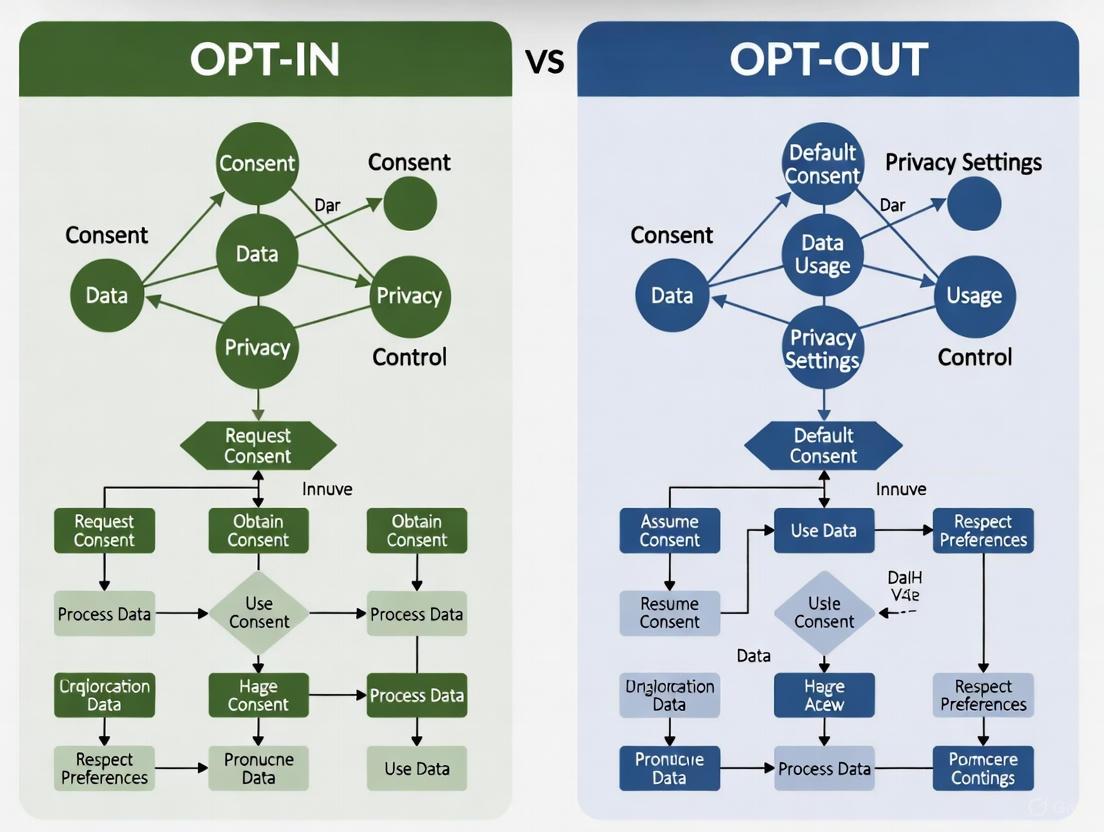
This article provides a comprehensive comparison of opt-in and opt-out consent models, tailored for researchers, scientists, and drug development professionals.
Opt-In vs Opt-Out Consent: A Strategic Guide for Biomedical Research and Drug Development
Abstract
This article provides a comprehensive comparison of opt-in and opt-out consent models, tailored for researchers, scientists, and drug development professionals. It explores the foundational principles of both models, their alignment with global regulations like GDPR and CCPA, and their direct implications for clinical trial recruitment, data collection, and biobanking. The content offers methodological guidance for implementation, addresses common challenges like consent bias and low participation rates, and evaluates the comparative impact of each model on data quality, representativeness, and long-term research viability. The goal is to empower biomedical professionals to make informed, ethical, and compliant consent strategy decisions.
Understanding Consent Models: Core Principles and the Global Regulatory Landscape for Research
In the realm of data protection and research ethics, opt-in and opt-out consent models represent two fundamentally different approaches to obtaining permission for data processing. Opt-in consent requires individuals to take an active, affirmative action to grant permission before their data can be collected or used [1]. This model prioritizes explicit user control, with data collection not occurring without deliberate user action. In contrast, opt-out consent assumes initial permission by default, allowing data collection to proceed unless users actively withdraw consent [1]. This distinction between active permission versus presumed permission forms the cornerstone of modern consent management frameworks across various domains, including healthcare research, digital marketing, and scientific studies.
The choice between these models carries significant implications for research integrity, participant engagement, and regulatory compliance. As data collection practices evolve, understanding the operational characteristics, comparative effectiveness, and ethical dimensions of these consent mechanisms becomes increasingly crucial for researchers, scientists, and drug development professionals navigating complex regulatory environments.
Core Conceptual Framework
Defining Opt-In Consent
Opt-in consent operates on the principle of explicit, prior authorization. Also known as express or explicit consent, this model requires individuals to provide unambiguous permission through deliberate action before any data processing occurs [2]. Key characteristics include:
- Active Consent Mechanism: Users must take deliberate, affirmative action such as checking an unticked box or clicking an agreement button [1] [3].
- Default Refusal: Data collection does not initiate without explicit user permission, preserving autonomy by default [1].
- Granular Control: Often implemented with specific options for different data processing purposes, allowing selective authorization [1].
- Record Keeping: Organizations must maintain detailed records of when and how consent was obtained [1].
This model is particularly crucial when processing sensitive data categories including health information, financial records, genetic data, or other special categories requiring heightened protection [1].
Defining Opt-Out Consent
Opt-out consent functions on a presumption of permission unless otherwise indicated. In this model, data collection begins automatically, and users must take action to refuse or withdraw consent [1]. Defining features include:
- Passive Consent Structure: Consent is assumed through user inaction rather than affirmative agreement [2].
- Pre-selected Options: Default settings typically favor data collection, with pre-checked boxes or activated permissions [1].
- Higher Initial Participation: Typically achieves broader initial data availability as users must actively dissent [4].
- Withdrawal Mechanisms: Clear procedures must be established for users to revoke consent after it has been presumed [1].
This approach is often considered for basic analytics, essential service features, and low-risk processing activities where uninterrupted service delivery is prioritized [1].
Visualizing Consent Model Pathways
The following diagram illustrates the fundamental operational differences between opt-in and opt-out consent models:
Consent Model Decision Pathways illustrates the fundamental operational differences between opt-in and opt-out frameworks. The opt-in pathway (yellow) requires affirmative user action before any data processing occurs, while the opt-out pathway (green) initiates data collection automatically unless the user intervenes.
Experimental Evidence and Comparative Data
Quantitative Comparison in Healthcare Research
Robust experimental evidence demonstrates significant practical differences between consent models, particularly in healthcare research settings. The table below summarizes key quantitative findings from controlled studies:
Table 1: Comparative Performance of Consent Models in Health Data Research
| Study Characteristics | Opt-In Model Performance | Opt-Out Model Performance | Research Context |
|---|---|---|---|
| Systematic Review (15 studies) | 84.0% average consent rate (60,800/72,418 participants) [4] | 96.8% consent rate (2,384/2,463 participants) [4] | Reuse of routinely recorded health data [4] |
| Randomized Controlled Trial | 21.0% consent rate [4] | 95.6% consent rate [4] | Secondary use of health data, images, and tissues [4] |
| Consent Bias Patterns | Consenting individuals more likely to be male, higher education, higher income, higher socioeconomic status [4] | Reduced consent bias compared to opt-in procedures [4] | Representation analysis across multiple studies [4] |
| Data Availability Outcome | Lower data availability due to passive non-participation [5] | Higher data availability with less bias [5] | Randomized controlled trial in tertiary hospital [5] |
The evidence consistently demonstrates that opt-out procedures yield significantly higher consent rates while reducing selection bias in research populations. This has profound implications for research quality, as opt-in approaches may systematically exclude certain demographic groups, potentially compromising the representativeness of study samples and generalizability of findings [4].
Performance Metrics in Digital Contexts
Beyond healthcare research, consent model performance shows striking differences in digital environments, particularly in marketing and user engagement contexts:
Table 2: Digital Marketing Performance Metrics by Consent Type
| Performance Metric | Opt-In List Performance | Non-Opt-In List Performance | Performance Differential |
|---|---|---|---|
| Conversion Rate | 15X higher overall [6] | Baseline | 1,359% lift [6] |
| Open Rate | 2X higher overall [6] | Baseline | 126% lift [6] |
| Click-Through Rate | 8X higher overall [6] | Baseline | 662% lift [6] |
| Campaign Send 1 | 17X higher conversion rate [6] | Baseline | 1,581% lift [6] |
| Campaign Send 2 | 7X higher conversion rate [6] | Baseline | 576% lift [6] |
The dramatic performance differentials highlight that opt-in consent correlates strongly with higher user engagement and responsiveness. This suggests that actively consenting users demonstrate greater investment in relationships with organizations, potentially translating to more meaningful participation in research contexts as well [6].
Regulatory Landscape and Compliance Frameworks
The legal validity of consent models varies significantly across jurisdictions, creating a complex compliance landscape for international research collaborations. The following diagram illustrates key regulatory relationships:
Regulatory Framework Requirements maps the relationship between major privacy regulations and their required consent mechanisms. Red indicates opt-in requirements, while yellow indicates opt-out frameworks, highlighting the divergent regulatory approaches across jurisdictions.
Key Regulatory Distinctions
- GDPR (European Union): Mandates opt-in consent characterized by being "freely given, specific, informed and unambiguous" through clear affirmative action. Pre-ticked boxes or silence do not constitute valid consent [1] [3]. The regulation does provide limited exemptions for scientific research in the public interest, implemented differently across member states [4].
- CCPA (California): Follows an opt-out model, granting consumers the right to opt-out of the sale of their personal information. Businesses must provide clear "Do Not Sell My Personal Information" links and honor opt-out requests for at least 12 months [1] [3].
- LGPD (Brazil): Requires opt-in consent that must be free, informed, and unambiguous. Consent must be obtained through active confirmation, typically via unchecked opt-in boxes [3].
- Sector-Specific Variations: Healthcare research in jurisdictions like the Netherlands may permit opt-out approaches when opt-in would lead to low or selective participation rates threatening research validity [4].
Methodological Protocols for Consent Research
Experimental Design for Consent Model Evaluation
Randomized controlled trials represent the methodological gold standard for comparing consent model efficacy. The following workflow outlines a robust experimental protocol:
Consent Model Experimental Workflow outlines a methodological protocol for comparing consent approaches. This RCT design enables direct comparison while controlling for confounding variables, providing high-quality evidence about real-world performance differences.
Essential Research Toolkit
Implementing rigorous consent model research requires specific methodological components and considerations:
Table 3: Research Reagent Solutions for Consent Model Studies
| Research Component | Functional Specification | Implementation Considerations |
|---|---|---|
| Participant Recruitment Framework | Systematic enrollment of first-time patients across multiple outpatient clinics [5] | Ensure diverse representation across clinical specialties to enhance generalizability |
| Randomization Protocol | Computer-generated allocation sequence with balanced sample sizes [5] | Conceal allocation sequence until intervention assignment to prevent selection bias |
| Opt-In Intervention | Required active consent with comprehensive information disclosure [1] [5] | Present clear value proposition and specific data usage scenarios to facilitate informed decision |
| Opt-Out Intervention | Presumed consent with transparent opt-out mechanisms [1] [5] | Ensure equally prominent information provision while enabling easy withdrawal procedures |
| Bias Assessment Metrics | Demographic analysis (gender, SES, education, ethnicity) [4] | Employ multivariate analysis to identify independent predictors of consent behavior |
| Compliance Documentation | Detailed records of consent interactions and withdrawals [1] | Implement audit trails for regulatory compliance and methodology transparency |
Implications for Research and Development
Strategic Implementation Guidelines
The comparative evidence suggests several strategic considerations for implementing consent models in research contexts:
- Maximizing Participation: For research requiring broad, representative data sets, opt-out approaches demonstrate superior efficacy in minimizing selection bias and achieving higher participation rates [4] [5].
- Building Engagement: When researching engaged populations or requiring ongoing participant investment, opt-in models yield more committed participants who demonstrate higher responsiveness to subsequent interactions [6].
- Regulatory Compliance: Researchers operating across jurisdictions must implement flexible consent frameworks capable of accommodating divergent legal requirements, particularly regarding sensitive health data [1] [4].
- Ethical Imperatives: Regardless of model selection, comprehensive information disclosure and accessible withdrawal mechanisms remain essential for maintaining ethical standards and public trust [5].
Future Research Directions
Several promising research directions emerge from current evidence gaps:
- Longitudinal Engagement: How do initial consent models impact long-term participant retention and ongoing engagement in longitudinal studies?
- Digital Platform Efficacy: What interface designs and implementation approaches optimize comprehension and decision quality across different consent models?
- Cross-Cultural Validity: How do cultural factors moderate the effectiveness and ethical acceptability of different consent approaches?
- Emergent Technologies: How should consent frameworks adapt to artificial intelligence applications, genomic research, and other technological advancements?
The evolving regulatory landscape and continuing methodological innovations ensure that consent model research will remain a dynamic and critically important field for the foreseeable future.
In the landscape of modern clinical research, a fundamental tension exists between upholding the ethical principle of individual autonomy and pursuing the pragmatic goals of efficient, generalizable research. This divide is most pronounced in the choice between opt-in and opt-out consent models for data and trial participation. The opt-in model, requiring active, affirmative consent, prioritizes individual control and autonomy. In contrast, the opt-out model, where participation is default and refusal requires action, emphasizes broader participation and research pragmatism by leveraging human inertia to achieve higher, more representative enrollment rates [7]. This guide examines the performance of these two consent approaches, providing researchers and drug development professionals with evidence to inform study design and ethical oversight.
Consent Models Explained
Opt-In Consent: This model mandates an active, affirmative action by an individual to agree to participate in research or data sharing. The default state is "no consent," placing control firmly with the potential participant. It is characterized by explicit permission, often through a checked box or signed form [7].
Opt-Out Consent: Under this model, individuals are automatically enrolled in research or data sharing and must take action to withdraw if they do not wish to participate. The default state is "consent given," shifting the burden of action to those who object. Inaction is interpreted as agreement [7].
Quantitative Comparison of Consent Models
The following tables summarize key experimental data comparing the performance of opt-in and opt-out consent models across critical research metrics.
Table 1: Consent Rate and Data Availability Comparison
| Study / Context | Consent Model | Consent Rate | Key Findings on Data Availability |
|---|---|---|---|
| Systematic Review (JMIR, 2023) [4] | Opt-Out | 96.8% (2384/2463) | Opt-out procedures consistently yield superior data availability. |
| Opt-In | 84.0% (60,800/72,418) | ||
| Comparative Study (JMIR, 2023) [4] | Opt-Out | 95.6% | Demonstrates the dramatic impact of the default setting. |
| Opt-In | 21.0% | ||
| RCT, Erasmus MC (2025) [5] | Opt-Out | Higher | Opt-out is more effective for ensuring optimal data availability. |
| Opt-In | Lower |
Table 2: Consent Bias and Representativeness Profile
| Factor | Impact in Opt-In Models | Impact in Opt-Opt Models |
|---|---|---|
| Overall Bias | More consent bias [4] | Less consent bias [4] |
| Education & Socioeconomics | Consenting individuals often have higher education, income, and socioeconomic status [4]. | Produces more representative samples of the study population [4]. |
| Health Status | Individuals with poorer health or more complex treatments are less likely to opt-in [7]. | Mitigates under-representation of less healthy populations. |
| Demographics | Can skew toward younger individuals and males [4] [7]. | Helps ensure broader demographic representation. |
Experimental Protocols and Methodologies
Randomized Controlled Trial on Consent Procedures
A 2025 randomized controlled trial conducted at Erasmus Medical Center in the Netherlands provides a direct, high-quality comparison.
- Objective: To explore which consent procedure (opt-in vs. opt-out) best supports data availability for the secondary use of health data, while upholding patient rights [5].
- Methodology: New, first-time patients from 16 outpatient clinics were randomly assigned to either an opt-in (intervention group) or an opt-out procedure (control group). The sample was recruited until a balanced size of 2,228 participants was reached. The study period ran from December 2022 to September 2023 [5].
- Outcomes Measured: The primary outcome was the consent rate for secondary data use. Secondary analyses examined biases related to gender, socioeconomic status, and country of birth [5].
Qualitative Study on Participant and Researcher Perceptions
- Objective: To investigate and compare how research participants and research staff understand the roles and responsibilities of participants in the research context [8].
- Methodology: A cross-sectional qualitative study involving 21 semi-structured interviews and two focus group discussions. Participants were purposively selected from both clinical and non-clinical trials, and research staff were also included. Data was analyzed using thematic analysis [8].
- Key Finding: The study identified a significant disconnect; the responsibilities of research participants are understood differently between participants and research staff, highlighting the importance of clear communication for mutual understanding [8].
Conceptual Workflow of Consent Model Implications
The diagram below illustrates the logical pathway from the initial philosophical choice of consent model to its ultimate impact on research integrity.
The Scientist's Toolkit: Research Reagent Solutions
When designing studies involving consent procedures, certain "reagent solutions" or tools are essential for robust implementation and analysis.
Table 3: Essential Tools for Consent Model Research and Implementation
| Tool / Solution | Function in Consent Research |
|---|---|
| Randomized Controlled Trial (RCT) Design | Provides the most rigorous method for directly comparing the effects of opt-in and opt-out models on consent rates and bias [5]. |
| PRECIS-2 Tool | A multi-axis instrument used to qualitatively rank clinical trials on a spectrum from explanatory to pragmatic, helping align consent models with trial design [9]. |
| Semi-Structured Interview Guides | Qualitative tools used to gather rich, nuanced data on stakeholder (participant, researcher) perceptions and understandings of consent and roles [8]. |
| Thematic Analysis | A methodological approach for analyzing qualitative data to identify, analyze, and report patterns (themes) across a dataset [8]. |
| NVivo Software | Qualitative data analysis software that aids in the organization, coding, and analysis of non-numerical, unstructured data from interviews and focus groups [8]. |
The choice between opt-in and opt-out consent models represents a direct trade-off between foundational ethical principles and practical research needs. The opt-in model provides strong protection for individual autonomy and control, making it the standard under strict regulatory frameworks like the GDPR. However, this comes at a cost to pragmatism, as it consistently results in lower participation rates and a heightened risk of consent bias, potentially compromising the generalizability of findings [4] [7]. Conversely, the opt-out model serves the pragmatic goals of research by achieving higher, more representative participation, which is crucial for the validity and reliability of real-world evidence. Its primary ethical challenge is the diminished emphasis on active, affirmative consent [4] [5].
For researchers and drug development professionals, there is no one-size-fits-all solution. The decision must be context-specific, weighing the need for robust, generalizable data against the ethical imperative to respect participant autonomy. Emerging strategies like adaptive consent models and broadcast notification in pragmatic trials offer promising paths forward, seeking a synergistic balance between these two compelling imperatives [10] [11].
In the evolving landscape of global data privacy, the General Data Protection Regulation (GDPR) and the California Consumer Privacy Act (CCPA) represent two foundational yet philosophically distinct approaches to consumer consent. While both regulations aim to empower individuals and enhance transparency in data processing practices, they diverge fundamentally in their core consent mechanisms. The GDPR, implemented across the European Union and European Economic Area, establishes a stringent opt-in mandate that requires organizations to obtain explicit user consent before processing personal data [12] [13]. Conversely, the CCPA, governing California residents, operates primarily on an opt-out model that permits data processing by default while providing consumers the right to withdraw consent for specific activities, particularly the sale of personal information [14] [15].
This comparative analysis examines these contrasting frameworks through a methodological lens, evaluating their operational requirements, compliance impacts, and practical implications for organizations navigating global data privacy obligations. The research contextualizes these regulatory differences within broader discussions about consent models, assessing how each approach balances business interests with individual privacy rights across different jurisdictional contexts.
Regulatory Framework Comparison
The GDPR and CCPA establish fundamentally different parameters for data processing, consumer rights, and business obligations, reflecting their distinct philosophical foundations regarding privacy protection.
Core Definitions and Jurisdictional Scope
Table 1: Foundational Framework Comparison
| Dimension | GDPR | CCPA |
|---|---|---|
| Effective Date | May 25, 2018 [16] | January 1, 2020 [16] |
| Legal Nature | Regulatory framework incorporated into national laws [12] | Statutory law enforceable in civil court [12] |
| Geographic Protection | Data subjects in EU/EEA regardless of location [14] [13] | California residents (excluding temporary visitors) [13] [15] |
| Entity Applicability | All organizations processing EU resident data (no revenue threshold) [14] [16] | For-profit businesses meeting specific criteria: $25M+ revenue, processes 100,000+ CA resident/household data, or derives 50%+ revenue from selling personal information [15] [16] |
| Personal Data Definition | Any information relating to identified/identifiable natural person [12] [13] | Information that identifies, relates to, describes, or could be linked to particular consumer/household [12] [15] |
Consent Model Experimental Protocols
Methodological analysis of the consent mechanisms reveals fundamentally different operational requirements:
GDPR Opt-In Protocol:
- Pre-Collection Consent Requirement: Organizations must obtain explicit consent before collecting or processing any personal data [13] [1]
- Affirmative Action: Consent must be given through clear, affirmative action - pre-ticked boxes or inactivity does not constitute consent [13] [1]
- Granular Options: Consent must be requested for specific processing purposes; blanket consent for multiple purposes is non-compliant [1]
- Withdrawal Mechanism: Data subjects must be able to withdraw consent as easily as it was given, at any time [12] [16]
- Documentation: Organizations must maintain detailed records of consent obtained, including what was consented to, when, and how [1]
CCPA Opt-Out Protocol:
- Default Processing Authorization: Businesses may collect and process personal information without prior consent, provided they notify consumers at collection [14] [17]
- Sale/Sharing Opt-Out: Consumers must be able to opt-out of the sale or sharing of their personal information through a clear "Do Not Sell or Share My Personal Information" link [15] [17]
- Universal Opt-Out Recognition: Businesses must recognize and honor global privacy controls (GPC) and other universal opt-out mechanisms [17]
- Twelve-Month Compliance: After receiving an opt-out request, businesses cannot request re-authorization for at least 12 months [12]
- Limited Sensitive Data Opt-In: For consumers under 16, affirmative authorization (opt-in) is required for data sale; parents must consent for children under 13 [12] [13]
Visualizing Consent Workflows
Consent Workflow Comparison illustrates the fundamentally different user journeys and organizational responsibilities under each regulatory framework.
Compliance and Enforcement Metrics
The practical implications of these divergent consent models become evident when examining their enforcement mechanisms, penalty structures, and compliance requirements.
Enforcement Experimental Data
Table 2: Compliance and Enforcement Comparison
| Parameter | GDPR | CCPA |
|---|---|---|
| Enforcement Authority | Data Protection Authorities (DPAs) in each EU member state [12] [16] | California Privacy Protection Agency (CPPA) and Attorney General [12] [15] |
| Penalty Structure | Two-tier system: Up to €20M or 4% global revenue (whichever higher) for severe violations; Up to €10M or 2% global revenue for other violations [12] [14] | $2,500 per unintentional violation; $7,500 per intentional violation [12] [14] |
| Cure Period | No formal cure period specified [12] | 30-day right to cure violations (being phased out under CPRA) [12] |
| Private Right of Action | Limited to data breaches and specific violations [14] | Limited to data breaches involving non-encrypted, non-redacted personal information [15] |
| Documented Enforcement | Cumulative fines exceeding €1.7 billion since implementation [14] | Notable settlements include Zoom ($85M) and Sephora ($1.2M) [18] |
Research Reagent Solutions for Compliance Testing
Table 3: Essential Compliance Tools and Methodologies
| Research Reagent | Function | Application Context |
|---|---|---|
| Consent Management Platforms (CMPs) | Capture, document, and manage user consent preferences across jurisdictions [1] | Essential for GDPR compliance; used for CCPA opt-out preference signaling |
| Global Privacy Control (GPC) | Universal opt-out mechanism transmitting user privacy preferences [17] | Required for CCPA compliance; emerging as standard for opt-out recognition |
| Data Mapping and Inventory Tools | Document data flows, processing purposes, and legal bases [14] | Foundational for both frameworks; required for GDPR's Record of Processing Activities |
| DSAR/CCAR Management Systems | Streamline response to Data Subject Access Requests and Consumer Rights Requests [14] | Critical for operationalizing rights under both regulations with different response timelines |
| Cookie Banner Technology | Implement appropriate consent collection (opt-in) or opt-out mechanisms based on jurisdiction [12] [13] | GDPR requires explicit opt-in for non-essential cookies; CCPA requires opt-out for cookies selling/sharing data |
Impact Analysis on Data Processing Operations
The methodological differences between opt-in and opt-out models create substantially different operational requirements and outcomes for organizations processing personal data.
Data Collection and Quality Metrics
Experimental data from compliance implementations reveals significant operational impacts:
- Consent Rates: Organizations implementing GDPR-compliant opt-in mechanisms typically report initial consent rates between 40-60% for non-essential data processing, compared to 95%+ data collection under CCPA's opt-out model [19] [1]
- Data Richness: GDPR-mandated granular consent often results in fragmented data sets where organizations have detailed consent records but potentially limited data breadth [1]
- User Engagement: Opt-in models demonstrate higher engagement quality metrics, with opt-in users showing 2-3x higher interaction rates with subsequent communications [19] [1]
- Implementation Complexity: Organizations operating globally report 30-50% higher implementation costs for GDPR-compliant systems compared to CCPA baseline requirements [14]
Compliance Verification Methodologies
Experimental Protocol for Consent Model Validation:
Jurisdictional Detection Setup: Implement reliable geolocation mechanisms to present appropriate consent framework based on user location [14]
Opt-In Validation (GDPR):
Opt-Out Validation (CCPA):
Documentation and Audit:
This comparative analysis demonstrates that the GDPR's opt-in mandate and CCPA's opt-out approach represent fundamentally different philosophical and methodological approaches to data privacy, each with distinct implications for both organizations and individuals. The opt-in model prioritizes individual control and privacy by default, resulting in higher implementation complexity but potentially greater trust and engagement quality. The opt-out model emphasizes business flexibility and operational continuity, enabling broader data collection while providing specific consumer protections against commercialization of personal information.
For researchers and practitioners operating in global contexts, these divergent frameworks necessitate sophisticated compliance strategies capable of implementing jurisdiction-appropriate consent mechanisms while maintaining operational efficiency. Future research should explore the evolving landscape of hybrid consent models, emerging technologies for consent management, and the longitudinal impacts of different consent frameworks on both business innovation and individual privacy protection.
For researchers, scientists, and drug development professionals, the legal bases for processing personal data are not merely administrative hurdles but foundational to ethical and compliant research. Consent is one of six legal bases outlined in regulations like the General Data Protection Regulation (GDPR), alongside contract, legal obligations, vital interests, public interest, and legitimate interest [20] [21]. Its application is critical in healthcare settings, particularly concerning the secondary use of routinely recorded health data for scientific research.
The core GDPR definition states that consent must be "freely given, specific, informed and unambiguous," signified by a statement or clear affirmative action [20] [21] [22]. This article compares how these legal tenets are upheld within opt-in versus opt-out consent models, analyzing their impact on data availability, consent rates, and research bias through experimental data and regulatory analysis.
Analytical Framework: Deconstructing the Legal Tenets of Consent
The following table breaks down the core requirements for valid consent under frameworks like the GDPR, which are crucial for any research involving personal data.
Table 1: Core Legal Requirements for Valid Consent
| Legal Tenet | Core Requirement | Practical Implications for Researchers |
|---|---|---|
| Freely Given | The data subject has a genuine choice and can refuse or withdraw consent without detriment [20] [22]. | Consent cannot be a precondition for a service unless necessary for its performance. There must be no imbalance of power; it is rarely valid in employer-employee or public authority contexts [20] [22]. |
| Specific | Consent must be given for distinct and specified processing purposes [21] [22]. | Researchers must obtain separate, granular consent for different research activities. "Bundled" consent for broad or multiple purposes is invalid. |
| Informed | The data subject must be aware of the controller's identity, processing purposes, and their right to withdraw [20] [21]. | Researchers must provide clear information in plain language. The request must be prominent, concise, and separate from other terms [22]. |
| Unambiguous | Consent requires a clear affirmative act [20] [21]. | Researchers must use opt-in mechanisms only. Pre-ticked boxes, silence, or inactivity do not constitute valid consent [22]. |
Experimental Comparison: Opt-In vs. Opt-Out Consent Models
The choice between opt-in (active confirmation required) and opt-out (automatic enrollment with withdrawal option) has significant consequences for research. The following workflow diagrams and experimental data illustrate these differences.
Diagram 1: The Opt-In Consent Workflow requires an active affirmative action by the individual to be included.
Diagram 2: The Opt-Out Consent Workflow automatically includes participants, who must take an active step to withdraw.
Experimental Data on Consent Rates and Bias
A systematic review and a randomized controlled trial provide robust quantitative comparisons of these models.
Table 2: Quantitative Comparison of Consent Models from Experimental Data
| Study Design | Consent Model | Consent Rate | Key Findings on Population Representativeness |
|---|---|---|---|
| Systematic Review(15 studies) [23] | Opt-In | 84.0% (60,800/72,418) | Consent bias present: Consenting individuals were more likely to be male, have a higher education level, higher income, and higher socioeconomic status. |
| Opt-Out | 96.8% (2,384/2,463) | Less consent bias compared to opt-in procedures. | |
| Randomized Controlled Trial(Erasmus MC, 2023) [5] | Opt-In | 21.0% | The study concluded the opt-out procedure was more effective for ensuring optimal data availability with less bias. |
| Opt-Out | 95.6% | Differences in consent rates were found for gender, socioeconomic status, and country of birth. |
Methodologies for Consent Model Research
Randomized Controlled Trial Protocol
The 2023 Erasmus MC study provides a robust methodology for directly comparing consent models [5].
- Objective: To explore opt-in versus opt-out as a consent procurement method for the secondary use of health data and tissues for scientific research.
- Design: Randomized Controlled Trial (RCT).
- Setting: A large tertiary hospital in the Netherlands.
- Participants: New, first-time patients were recruited from 16 outpatient clinics.
- Randomization: Patients were randomly assigned to either the opt-in (intervention group) or the opt-out procedure (control group).
- Sample Size: A balanced sample size of 2,228 participants was targeted.
- Data Collection: Patient inclusion spanned from December 2022 to September 2023.
- Primary Outcome: Consent rate for secondary data use.
- Secondary Outcomes: Analysis of bias by gender, socioeconomic status, and country of birth.
Systematic Review Protocol
The 2023 systematic review offers a methodology for synthesizing existing evidence [23].
- Objective: To provide insight into the consequences of opt-in vs. opt-out procedures on consent rate and consent bias.
- Data Sources: Searches in PubMed, Embase, CINAHL, PsycINFO, Web of Science Core Collection, and the Cochrane Library.
- Study Selection: Two reviewers independently included studies based on predefined eligibility criteria.
- Data Analysis: Included a statistical assessment of differences between consenters and nonconsenters, statistical pooling, and a descriptive summary of results.
- Eligibility: Focused on studies about the reuse of routinely recorded health data in scientific research.
The Researcher's Toolkit: Consent and Data Analysis
Table 3: Essential Reagents and Tools for Consent and Experimental Research
| Tool / Reagent | Function / Application in Research |
|---|---|
| Semi-Structured Interview Guides [24] | A qualitative research tool to explore in-depth patient perceptions, facilitators, and barriers to EHR adoption and consent preferences in different settings. |
| Statistical Analysis Software (e.g., R, Python, SAS) | Critical for performing regression analysis, t-tests, F-tests, and calculating consent rates and bias, as demonstrated in the experimental comparisons [23] [25]. |
| Electronic Data Capture (EDC) Systems | Securely manages and stores participant data and electronic consent forms, ensuring compliance with data integrity principles (e.g., ALCOA+) and regulatory standards [26]. |
| GDPR Compliance Checklist [21] [22] | A foundational tool for ensuring consent requests and data processing activities meet the legal tenets of being freely given, specific, informed, and unambiguous. |
| Certificates of Confidentiality (CoC) [27] | A critical legal document issued by the FDA (or other authorities) that protects researchers from being compelled to disclose identifiable, sensitive research data in legal proceedings. |
The experimental evidence clearly demonstrates a trade-off: opt-out models achieve significantly higher consent rates and mitigate consent bias, enhancing data availability and the representativeness of research populations [23] [5]. Conversely, opt-in models, while emphasizing active participant control, can lead to lower data availability and introduce systematic bias that compromises research validity.
For the research community, the choice between models is not merely technical but ethical. It necessitates balancing the scientific need for robust, representative data with the fundamental rights of individuals. Adhering to the core tenets of valid consent—ensuring it is freely given, specific, informed, and unambiguous—is non-negotiable, regardless of the model chosen [20] [21] [22]. Future policy should consider harmonized approaches that leverage the strengths of the opt-out model's inclusivity while embedding robust, accessible information and withdrawal mechanisms to uphold genuine patient autonomy and trust [5] [24].
Special Considerations for Sensitive Health Data and Minors in Clinical Studies
The application of opt-in and opt-out consent models presents unique challenges and heightened responsibilities in the context of clinical studies involving minors and sensitive health data. Opt-in consent requires explicit, active permission from a user before data collection or processing occurs. In contrast, opt-out consent assumes permission by default, allowing data activities to proceed unless the user takes specific action to refuse them [1] [28]. For pediatric populations, these models are complicated by the need for parental consent and child assent, and are governed by a complex framework of regulations that vary significantly by jurisdiction [29]. The handling of sensitive health information within this context demands the highest standards of data protection and ethical consideration, as the potential for harm from misuse or breach is substantial [30].
This guide compares the regulatory and practical applications of these consent frameworks for minors' health data in research, providing a structured analysis for professionals navigating this sensitive field.
Regulatory Framework Comparison
The legal landscape for consent in minors' clinical studies is a patchwork of federal and state-level laws with differing age thresholds, definitions, and consent requirements [29]. The foundational U.S. law is the Children’s Online Privacy Protection Act of 1998 (COPPA), which applies to children under 13. COPPA requires operators to post a clear privacy policy, provide direct notice to parents, and obtain verifiable parental consent before collecting, using, or disclosing children's personal information [29].
However, many states have enacted laws that extend protections to older teens. The table below summarizes the key regulations impacting clinical research involving minors.
Table 1: Key U.S. Regulations for Minors' Data in Clinical Research
| Law/Jurisdiction | Age Scope | Core Consent Requirement | Key Provisions & Considerations for Health Data |
|---|---|---|---|
| COPPA (Federal) [29] | Children under 13 | Verifiable Parental Consent (Opt-In) | - Applies to collection of personal information from children.- Mandates reasonable data security measures.- FTC enforcement is active. |
| Arkansas CTOPPA [29] | Teens under 17 | Consent from the teen (Opt-In) | - Extends COPPA-like protections to teens.- Mandates data minimization and security.- Grants privacy rights to both teens and parents. |
| New York CDPA [29] | Minors (under 18) | Consent from minor (if teen) or parent (if child) | - Consent is required unless processing is for a strictly defined "permissible purpose" (e.g., providing requested services, repairing technical errors). |
| California AADC(Currently enjoined) [29] | Minors (under 18) | N/A (Shifts from consent to proactive design) | - Requires businesses to configure default privacy settings as protective.- Mandates a Data Protection Impact Assessment (DPIA) to evaluate harm to minors.- Prohibits using minors' data in ways detrimental to their well-being. |
Beyond laws specifically focused on minors, comprehensive privacy laws in many states classify personal information from known children as sensitive data, triggering heightened requirements [29]. For instance, most state comprehensive privacy laws require consent and a formal data protection assessment before processing sensitive data, which includes children's information [29].
Globally, the EU's General Data Protection Regulation (GDPR) sets a high standard, requiring explicit opt-in consent for data processing, which is particularly stringent for sensitive categories like health data [1] [30]. In contrast, some U.S. state laws, like the California Consumer Privacy Act (CCPA), originally followed an opt-out model for certain activities like data sales, though subsequent amendments have introduced opt-in requirements for minors [1] [31].
Experimental Protocols for Consent Model Research
To objectively compare the efficacy and impact of opt-in versus opt-out models in research settings, specific experimental methodologies can be employed. The following protocols outline rigorous approaches for generating quantitative, comparable data.
Protocol 1: Consent Comprehension and Workflow Efficiency Study
This protocol is designed to measure the usability and clarity of different consent interfaces, specifically for parents navigating a consent process for their child's participation in a clinical study.
- Objective: To compare the time-on-task, error rate, and subjective comprehension between an opt-in and an opt-out consent interface design.
- Materials:
- Two functionally identical web-based consent forms simulating a real-world pediatric clinical study portal.
- Interface A (Opt-In): All data collection options (e.g., "Use de-identified data for future research," "Contact about related studies") are presented with unchecked boxes. Users must actively check boxes to consent.
- Interface B (Opt-Out): All data collection options are presented with pre-checked boxes. Users must actively uncheck boxes to refuse consent.
- Post-task questionnaire measuring perceived control, understanding, and trust (7-point Likert scale).
- Eye-tracking equipment (optional, for advanced insights).
- Participant Recruitment: Recruit 200+ parents of children under 18, ensuring a diverse demographic spread.
- Methodology:
- Randomly assign participants to either the Opt-In (Group A) or Opt-Out (Group B) interface.
- Instruct participants to complete the consent process as they would in a real scenario.
- Use platform analytics to record:
- Time-on-Task: Time from page load to final submission.
- Click Path: The number and sequence of clicks.
- Consent Rate: The percentage of participants who ultimately consent to each secondary data use option.
- Immediately after completion, administer the questionnaire to assess subjective comprehension and trust.
- Data Analysis:
- Use t-tests to compare mean time-on-task and comprehension scores between groups.
- Use chi-square tests to compare consent rates and error rates (e.g., failing to change default settings when instructed to do so in a control question).
Table 2: Key Research Reagent Solutions for Consent Workflow Studies
| Research Tool / Reagent | Primary Function | Application in Consent Research |
|---|---|---|
| User Experience (UX) Research Platform (e.g., MUiQ, UserTesting.com) | Facilitates remote, unmoderated testing and data collection. | Presents consent form variants to participants, records time-on-task, click-through rates, and other behavioral metrics [32]. |
| Post-Task Questionnaire | Captures subjective user feedback and perceptions. | Quantifies user trust, perceived control, and comprehension after interacting with the consent interface [1] [33]. |
| Eye-Tracking Software & Hardware | Measures gaze patterns and visual attention. | Provides objective data on which parts of the consent form users read or ignore, identifying potential "banner blindness" [32]. |
| A/B Testing Framework | Allows for the simultaneous deployment of two interface variants. | Enables randomized controlled trials (RCTs) to isolate the effect of the consent model (opt-in vs. opt-out) on user behavior. |
Protocol 2: Data Retention and Security Compliance Audit
This protocol outlines a systematic audit to evaluate the technical and organizational controls governing sensitive pediatric health data under different consent frameworks.
- Objective: To assess and compare data security, minimization, and retention practices in systems processing minors' health data under opt-in and opt-out legal paradigms.
- Materials:
- Data inventory and mapping software.
- Security assessment tools (vulnerability scanners, configuration review checklists).
- Access log analysis systems.
- Methodology:
- System Selection: Identify two comparable systems or modules within one system—one handling data under a strict opt-in regime (e.g., GDPR-compliant module) and another under an opt-out regime (e.g., CCPA-compliant module prior to new amendments).
- Data Flow Mapping: Trace the flow of pediatric health data from collection through storage, processing, and deletion for each system.
- Control Assessment:
- Encryption: Verify encryption status of data at rest and in transit.
- Access Controls: Review policies and logs for role-based access and anomalous access patterns.
- Data Minimization: Audit databases to ensure only data necessary for the specified purpose is collected and retained.
- Retention Policies: Check if data is purged in accordance with documented retention schedules and upon withdrawal of consent.
- Data Analysis:
Comparative Analysis and Data Visualization
Synthesizing data from experimental protocols and regulatory analysis allows for a direct, quantitative comparison of the two consent models. The following tables summarize key performance and compliance metrics.
Table 3: Quantitative Comparison of Opt-In vs. Opt-Out Models
| Comparison Metric | Opt-In Model | Opt-Out Model | Experimental Context & Notes |
|---|---|---|---|
| Participation/Consent Rate | Lower (30-50% lower initial data yield) [31] | Higher (Default acceptance often >80%) [31] | Measured as the rate of agreement to secondary data use in a simulated study. |
| User Trust & Perception | Higher (25% more likely to engage long-term) [31] | Lower (Risks user backlash and perceived manipulation) [1] [31] | Assessed via post-study questionnaires using Likert scales. |
| Data Set Quality & Engagement | Higher engagement rates; more accurate preferences [33] | Broader but less engaged user base; higher noise [1] | Derived from longitudinal studies on user interaction with consented services. |
| Regulatory Fines for Non-Compliance | Very High (e.g., GDPR: up to €20M or 4% global turnover) [1] [31] | Significant (e.g., CCPA: $2,500-$7,500 per violation) [31] | Based on historical enforcement data [31]. Fines for invalid opt-in are typically more severe. |
| Implementation Complexity | Higher (Requires clear UI, granular choices, record-keeping) [33] | Lower (Simpler initial setup) | Complexity arises from needing valid explicit consent and managing preferences. |
The workflow for selecting an appropriate consent model is governed by a logical decision tree based on regulatory requirements and data sensitivity.
The comparative analysis clearly indicates that for sensitive health data and minors in clinical studies, the opt-in consent model is the prevailing legal and ethical standard. Regulations like COPPA and GDPR mandate a verifiable, explicit opt-in approach, prioritizing the enhanced protection required for this vulnerable population and data type [29] [30]. While opt-out models may be permissible in narrower, less sensitive contexts, their application in pediatric clinical research is severely limited and carries significant compliance and reputational risk.
To operationalize this effectively, researchers and sponsors should:
- Prioritize Explicit Opt-In: Default to a granular, opt-in consent process for all data processing activities involving minors' health information.
- Implement Layered Consent: Use layered notices and dashboards that allow parents and older children to provide consent for specific purposes (e.g., primary research vs. biobanking) [1] [33].
- Ensure Verifiable Parental Consent: Utilize robust methods to verify that the person providing consent is indeed the child's parent or guardian, as required by COPPA and similar laws [29].
- Design for the User: Present information in clear, age-appropriate language and ensure that interfaces for managing consent preferences are intuitive and accessible [29].
- Maintain Rigorous Documentation: Keep detailed records of consent, including what information was presented, when consent was given, and how it was obtained, to demonstrate compliance during audits [31] [33].
By adhering to these practices, professionals in drug development and clinical research can navigate the complex regulatory environment, safeguard the welfare of minor participants, and foster a foundation of trust that is essential for ethical and successful research.
Implementing Consent Models: Strategies for Clinical Trials, Biobanking, and Real-World Evidence
Designing Opt-In Workflows for Prospective Clinical Trials and Genetic Studies
Informed consent serves as the ethical cornerstone of clinical research, operationalizing the principle of participant autonomy. Within prospective clinical trials and genetic studies, the opt-in consent model requires participants to actively provide explicit permission before their data or biological samples can be collected and used for research purposes [28] [35]. This approach stands in direct contrast to opt-out models, where participation is assumed by default unless individuals proactively withdraw consent [1] [31].
The selection between opt-in and opt-out frameworks carries profound implications for research integrity, participant engagement, and data quality. This guide provides a comprehensive comparison of these consent models, drawing upon empirical data from clinical trials and genetic studies to inform researchers, scientists, and drug development professionals in designing ethical and effective consent workflows.
Empirical Evidence: Consent Model Performance in Research Settings
Consent Rates and Participant Characteristics in Genetic Studies
The Action for Health in Diabetes (Look AHEAD) clinical trial offers compelling data on opt-in consent performance within a large-scale genetic substudy. Among 15 institutions that had completed consent procedures, the overall opt-in consent rate reached 89.6%—significantly higher than typical rates in observational cohort studies [36]. This high participation rate demonstrates that well-designed opt-in workflows can achieve robust engagement in genetic research contexts.
However, consent rates displayed notable variation across participant demographics, introducing potential selection bias into genetic analyses. The study found that consent refusal occurred more frequently among participants who were African-American, Hispanic, female, more highly educated, or not dyslipidemic [36]. These findings underscore the critical importance of considering demographic factors when designing consent protocols and interpreting genetic research results.
Table 1: Factors Associated with Consent Rates in the Look AHEAD Genetic Substudy
| Factor | Consent Association | Research Implications |
|---|---|---|
| Race/Ethnicity | Lower consent among African-American and Hispanic participants | Potential underrepresentation in genetic databases |
| Sex | Lower consent among females | Sex-specific genetic associations may be affected |
| Education | Lower consent among more highly educated | Counterintuitive pattern requiring further study |
| Clinical Features | Lower consent among those without dyslipidemia | Possible bias in disease-risk estimation |
Opt-In Versus Opt-Out: Comparative Analysis
The fundamental distinction between consent models lies in their default settings and participant action requirements. Opt-in consent mandates explicit, affirmative agreement through active mechanisms such as checking a box or signing a form before any data collection occurs [28] [31]. This approach establishes "no" as the default position, placing the burden of action on researchers to obtain permission.
Conversely, opt-out models assume consent unless participants take specific steps to refuse, creating a default position of "yes" [1]. This philosophical difference carries practical consequences for participant engagement, data quality, and ethical compliance across different research contexts and regulatory environments.
Table 2: Opt-In vs. Opt-Out Consent Model Comparison
| Characteristic | Opt-In Model | Opt-Out Model |
|---|---|---|
| Default Position | No consent until actively given | Consent assumed unless actively refused |
| Participant Action | Affirmative agreement required | Must decline to prevent participation |
| Data Quality | Higher engagement but potential selection bias | Larger sample sizes but potentially lower engagement |
| Regulatory Alignment | Required under GDPR for sensitive data [31] | Permitted under CCPA/CPRA for certain data [1] |
| Participant Trust | Higher perceived control and transparency | Possible concerns about privacy and autonomy |
| Implementation Complexity | Requires explicit consent mechanisms | Must provide clear opt-out procedures |
Methodological Considerations for Consent Workflow Design
Experimental Protocols for Consent Model Evaluation
Research into consent model effectiveness employs rigorous methodological approaches. The Look AHEAD trial implemented a structured consent procedure with trained clinic staff providing detailed information about: the purpose of sample collection; confidentiality protections; sample management procedures; withdrawal rights; storage duration; and the unavailability of individual genetic results [36]. Participants were allowed to read consent forms privately before making decisions, with all choices documented in source documents.
Systematic reviews examining informed consent in genetic and genomic studies follow comprehensive literature screening protocols. One such review employed a double-screening approach with two research team members independently applying eligibility criteria to identify relevant studies [37]. This method ensures consistency and reproducibility in evaluating consent processes across diverse cultural and regulatory contexts.
Regulatory Framework Compliance
Consent workflow design must account for varying international regulatory requirements. The General Data Protection Regulation (GDPR) in the European Union mandates opt-in consent for processing sensitive personal data, including genetic and health information [1] [31]. GDPR requires that consent be freely given, specific, informed, and unambiguous, with pre-ticked boxes explicitly invalid as consent mechanisms.
In contrast, United States regulations, particularly the California Consumer Privacy Act (CCPA), generally follow an opt-out model for certain data processing activities [1] [28]. However, even in opt-out frameworks, specific consent (opt-in) is typically required for particularly sensitive data categories, including genetic information. Research institutions must navigate this complex regulatory landscape when designing multi-site trials across jurisdictions.
Implementation Strategies for Effective Opt-In Workflows
Addressing Comprehension and Voluntary Participation
Evidence from genetic studies in diverse settings reveals that comprehension challenges frequently affect consent quality [37]. Research participants demonstrate varying levels of understanding and recall across different consent elements, influenced by factors such as educational background, cultural context, and communication methods. Effective opt-in workflows incorporate comprehension verification mechanisms without compromising the voluntary nature of participation.
Voluntary participation can be influenced by misconception therapeutic misconception, where participants confuse research with clinical care, as well as by monetary compensation, healthcare access, and established trust relationships with research teams [37]. Transparent communication about research nature, potential benefits, and limitations is essential for maintaining truly voluntary participation in opt-in frameworks.
Technological Innovations in Consent Processes
Emerging technologies, including artificial intelligence and digital platforms, offer new opportunities for enhancing opt-in consent workflows. Recent research evaluates GPT-4's ability to generate informed consent materials for genetic testing, finding that while the AI performed well on structured components like explaining purpose and benefits, it struggled with nuanced ethical and contextual content [38]. These technologies show promise for improving readability and accessibility but require careful human oversight.
Future consent management systems may leverage AI-driven platforms to provide real-time updates on consent status, manage preferences, and offer personalized consent experiences [28]. Such systems could enable more granular participant control over data sharing permissions, allowing specification of exactly which data types researchers may use for particular purposes.
Essential Research Reagent Solutions for Consent Workflows
Table 3: Research Reagent Solutions for Consent Workflow Implementation
| Tool/Resource | Function | Implementation Example |
|---|---|---|
| Consent Management Platforms (CMPs) | Automate consent capture, storage, and preference management | Geo-detection capabilities for multi-jurisdictional compliance [31] |
| Digital Consent Forms | Enable interactive consent processes with embedded educational materials | Layered information presentation with optional detailed sections |
| Comprehension Assessment Tools | Verify participant understanding of key consent elements | Brief quizzes or teach-back methods integrated into consent workflow |
| Multi-Lingual Consent Resources | Ensure accessibility across diverse participant populations | Translated materials with cultural adaptation for specific communities |
| Withdrawal Mechanism Systems | Facilitate straightforward consent withdrawal as required by regulations | Clear procedures for sample and data destruction upon participant request |
| Biobank Management Systems | Track specimen usage according to consent permissions | Linkage between consent preferences and sample access controls |
Visualizing Opt-In Workflow Design
Opt-In Workflow for Clinical Trials - This diagram illustrates the sequential process for implementing opt-in consent in clinical research, highlighting key decision points and participant interactions.
The design of opt-in workflows for prospective clinical trials and genetic studies requires careful consideration of ethical, regulatory, and practical factors. Evidence from implemented studies demonstrates that robust opt-in procedures can achieve high participation rates while maintaining ethical standards. However, researchers must remain vigilant about potential selection biases that may arise from differential consent patterns across demographic groups.
The choice between opt-in and opt-out models should be guided by regulatory requirements, research context, participant population characteristics, and analytical considerations regarding potential biases. As genetic research continues to evolve with increasing international collaboration and technological innovation, opt-in consent workflows must adapt to maintain meaningful participant autonomy while enabling scientifically valid research outcomes.
Leveraging Opt-Out Models for Retrospective Data Research and Registry Studies
The choice between opt-in and opt-out consent models presents a critical consideration for researchers conducting retrospective data and registry studies. These models represent fundamentally different approaches to participant enrollment: opt-in requires individuals to take active, affirmative steps to provide consent before their data is included, whereas opt-out assumes consent by default unless an individual actively withdraws [1] [7] [39]. This distinction carries significant implications for research participation rates, sample representativeness, data quality, and ultimately, the validity of study findings.
Within the research community, a robust debate continues regarding the appropriate balance between maximizing participant autonomy and ensuring scientific reliability. This guide provides an objective comparison of these consent models, supported by experimental data and methodological insights, to inform researchers, scientists, and drug development professionals in their study design decisions.
Quantitative Comparison: Consent Rates and Bias
Empirical evidence consistently demonstrates substantial differences in participation rates between opt-in and opt-out approaches. The tables below summarize key quantitative findings from comparative studies.
Table 1: Comparative Consent Rates Across Studies
| Study Context | Opt-In Consent Rate | Opt-Out Consent Rate | Notes | Source |
|---|---|---|---|---|
| Health Data Reuse (Systematic Review) | 84.0% (60,800/72,418) | 96.8% (2,384/2,463) | Weighted average from 13 opt-in studies and 1 opt-out study | [4] |
| Direct Comparative Study | 21.0% | 95.6% | Same population, different procedures | [4] |
| Cohort Study Tracing (RCT) | 4.0% (6/150) | 51.0% (77/150) | Successful tracing of lost participants | [40] |
| Consent for Continued Participation (RCT) | 3.0% (4/150) | 31.0% (46/150) | Consented to continue in longitudinal study | [40] |
Table 2: Demographic Biases Associated with Consent Models
| Demographic Factor | Opt-In Bias Direction | Opt-Out Bias Direction | Consistency | Source |
|---|---|---|---|---|
| Education Level | Higher education over-represented | More representative | Consistent across studies | [4] [7] |
| Socioeconomic Status | Higher income/SES over-represented | More representative | Consistent across studies | [4] [7] |
| Age | Younger participants (in some studies) | Older non-consenters | Variable by study context | [7] [41] |
| Health Status | Healthier individuals over-represented | More representative of sick | Limited evidence | [7] |
| Ethnicity | Under-representation of minorities | More representative | Hispanic veterans preferred opt-in | [4] [41] |
Experimental Evidence and Methodologies
Systematic Review on Health Data Reuse
Objective: To compare consequences of opt-in versus opt-out procedures for consent rates and representativeness in research reusing routinely recorded health data [4].
Methodology:
- Data Sources: Systematic searches across PubMed, Embase, CINAHL, PsycINFO, Web of Science Core Collection, and Cochrane Library
- Study Selection: Independent review by two reviewers using predefined eligibility criteria
- Statistical Analysis: Independent assessment of appropriate statistical methods, statistical pooling, and descriptive analysis of results
- Final Inclusion: 15 studies meeting inclusion criteria (13 opt-in, 1 opt-out, 1 both)
Key Findings: The systematic review concluded that opt-in procedures generally result in lower consent rates and produce less representative samples compared to opt-out procedures. Consent bias in opt-in studies consistently showed over-representation of males, those with higher education, higher income, and higher socioeconomic status [4].
Randomized Controlled Trial on Cohort Tracing
Objective: To compare effectiveness, cost-effectiveness, and acceptability of opt-out versus opt-in approaches to home visits for confirming addresses of lost participants in the Avon Longitudinal Study of Parents and Children (ALSPAC) [40].
Methodology:
- Design: Stratified randomized controlled trial
- Participants: 300 lost/disabled ALSPAC participants (young people and mothers) with potential new addresses found through database searching
- Intervention: Random assignment to opt-in (active consent required) or opt-out (visit scheduled unless refused) home visit groups
- Outcomes: Proportion successfully traced, proportion consenting to continue in cohort, cost per participant, acceptability measures
- Analysis: Comparison of proportions, cost calculations, acceptability assessment
Key Findings: The opt-out approach was dramatically more effective for tracing lost participants (51% vs. 4%) and securing continued participation (31% vs. 3%). Cost per participant was higher for opt-out (£71.93 vs. £8.14) due to the higher success rate requiring more home visits. No significant differences in acceptability were found between approaches [40].
Objective: To measure preferences for opt-in and opt-out enrollment models among Veterans Administration patients for the Million Veteran Program biobank [41].
Methodology:
- Design: Cross-sectional national survey
- Participants: 451 veterans receiving VA healthcare, randomly selected from Knowledge Networks panel
- Procedure: Online survey with randomized question order, comparing attitudes toward both enrollment models
- Analysis: Weighted to VA demographic benchmarks, multiple logistic regression to examine demographic factors and opinions
Key Findings: Willingness to participate was high for both models (opt-in: 80%; opt-out: 69%). While half expressed no strong preference, those who did significantly preferred opt-in. Stronger preferences for opt-in were expressed among younger patients and Hispanic patients, suggesting opt-out could impede recruitment of these demographic groups [41].
Visualizing Consent Model Workflows
The diagram below illustrates the procedural pathways and differential outcomes between opt-in and opt-out consent models in research settings.
Workflow Analysis
The visualization demonstrates how opt-in models create more decision points requiring active participant engagement, resulting in lower inclusion rates (21-84% across studies). Conversely, opt-out models minimize participant burden by leveraging default assumptions, yielding higher inclusion rates (95-97%) [4] [40]. The critical divergence occurs at the consent decision point, where human behavioral tendencies toward inertia and status quo bias significantly influence outcomes [7].
Legal and Ethical Framework Comparison
The regulatory landscape for consent models varies significantly across jurisdictions, creating important considerations for international research collaborations.
Table 3: Regulatory Approaches to Consent Models
| Regulation | Region | Primary Model | Key Requirements | Research Implications | |
|---|---|---|---|---|---|
| GDPR | European Union | Opt-In | Explicit, specific, informed consent; no pre-ticked boxes; easy withdrawal | Strict standards for health data processing; research exemptions possible with safeguards | [1] [39] |
| CCPA/CPRA | California, USA | Opt-Out | Clear "Do Not Sell" link; opt-out for data sales; opt-in for minors <16 | Enables broader data collection with consumer opt-out rights | [1] [39] |
| LGPD | Brazil | Hybrid | Opt-in for sensitive data; opt-out for other processing | Flexible approach based on data sensitivity | [39] |
| PIPEDA | Canada | Context-Dependent | Meaningful consent based on sensitivity | Flexibility but generally favors opt-in for health research | [1] |
| Dutch Code | Netherlands | Contextual | Consent generally required but exceptions for impracticality or bias | Allows opt-out when opt-in would cause selective participation | [4] |
The Researcher's Toolkit: Implementing Consent Models
Table 4: Essential Resources for Consent Model Implementation
| Tool/Resource | Function | Application Context | Considerations | |
|---|---|---|---|---|
| Electronic Health Record (EHR) Systems | Source of routinely collected clinical data | Retrospective cohort studies, registry research | Data completeness, interoperability, coding consistency | [4] [42] |
| Public Database Linkage | Address verification, demographic updates | Longitudinal cohort maintenance | Privacy compliance, data matching accuracy | [40] |
| Dynamic Consent Platforms | Digital management of ongoing consent preferences | Longitudinal studies, biobanks | Technology access barriers, maintenance requirements | [43] |
| Pseudonymization Services | Data de-identification while maintaining research utility | Secondary data use, multi-center studies | Re-identification risk, key management | [4] [43] |
| Office-Based Tracking Tools | Participant location services | Cohort retention, follow-up studies | Cost, privacy considerations, accuracy limitations | [40] |
| Consent Management Systems | Documentation and tracking of consent status | Compliance, audit trails, withdrawal management | Integration with data processing systems | [1] [43] |
The evidence consistently demonstrates that opt-out models generate significantly higher participation rates and generally improve sample representativeness compared to opt-in approaches [4] [40]. However, opt-out methods may face stronger preference among certain demographic groups and require careful attention to ethical implementation [41].
Strategic recommendations for researchers include:
- Consider opt-out models when studying broad populations where representativeness is critical
- Implement opt-in approaches when working with populations expressing strong preferences for active consent
- Provide comprehensive information about data use regardless of consent model
- Ensure straightforward withdrawal mechanisms that respect participant autonomy
- Document consent procedures transparently to address potential bias concerns
The choice between consent models involves balancing methodological rigor with ethical considerations and participant preferences. By understanding the empirical evidence and practical implications of each approach, researchers can make informed decisions that advance scientific knowledge while maintaining public trust.
Developing Tiered Consent Frameworks for Future Research Use and Biobanking
The emergence of large-scale biobanks as a vital tool in biomedical research has challenged the feasibility of traditional, study-specific informed consent, necessitating the development of innovative consent models like tiered consent. This guide objectively compares tiered consent against alternative frameworks—broad, dynamic, meta-consent, and specific consent—within the critical research context of opt-in versus opt-out philosophies. For researchers and drug development professionals, selecting an appropriate consent model is not merely an ethical compliance issue but a foundational decision that impacts participant autonomy, research feasibility, data richness, and long-term biobank utility. This analysis synthesizes current ethical frameworks, regulatory requirements, and empirical insights to provide a structured comparison, enabling scientific teams to make evidence-based decisions for their biobanking initiatives. The core tension lies in balancing the ethical imperative of participant self-determination, championed by opt-in approaches, with the practical need for scalable research infrastructures that can leverage data for future, unforeseen studies.
Comparative Analysis of Consent Models for Biobanking
The following table provides a systematic comparison of the primary consent models discussed in contemporary research literature, evaluating their key mechanisms, advantages, and limitations within a biobanking context.
Table 1: Comparison of Primary Consent Models for Biobanking Research
| Consent Model | Core Mechanism | Key Advantages | Primary Limitations | Optimal Use Context |
|---|---|---|---|---|
| Tiered Consent [44] [45] | Participants select from multiple consent levels (e.g., specific studies only, broad categories, general consent). | Maximizes individual autonomy and choice [44]; mitigates risks of value violation by allowing participant-defined boundaries [45]. | Operational complexity in managing diverse preferences [44]; can lead to participant confusion if not clearly communicated. | Large, diverse biobanks where participant values are heterogeneous and robust data management systems are in place. |
| Broad Consent [44] [45] [46] | Consent for future research use within a defined governance framework and general scope. | High research feasibility and efficiency [45]; suitable for long-term, large-scale biobanks [44]. | Lack of specificity about future studies can challenge the principle of informed consent [44] [45]; risks participant value violations. | Research where future uses are unpredictable but require strong ethical oversight and governance to compensate for breadth [45]. |
| Dynamic Consent [44] | Online platform for ongoing communication and specific consent for new studies. | Maintains high participant engagement and control [44]; enables specific, informed consent for each study. | Requires significant digital infrastructure and participant digital literacy [44]; can lead to consent fatigue from repeated requests. | Long-term studies with ongoing participant interaction, where digital access is high and resources for platform maintenance are available. |
| Meta Consent [44] | Participants specify their preferred type of consent (e.g., broad, tiered, specific) for future studies. | Respects individual autonomy over the consent process itself [44]; highly flexible and personalized. | High technological and logistical complexity to implement and manage [44]; can be challenging for participants to understand. | Tech-savvy participant cohorts and well-resourced biobanks capable of supporting complex preference-management systems. |
| Specific Consent [44] [45] | Traditional model: consent is obtained anew for each specific research study. | Highest level of information and control for each study [44]; aligns with classic ethical principles. | Impractical for biobanks due to resource burden and participant fatigue [44] [45]; can introduce bias and hinder research feasibility. | Single, discrete research studies with well-defined protocols and risks, not intended for future repository use. |
Experimental Protocols and Data Assessment
Methodologies for Evaluating Consent Models
Evaluating the efficacy and acceptability of consent models relies on rigorous empirical methodologies. The following protocols outline key experimental approaches cited in the literature.
Protocol 1: Qualitative Survey and Focus Group Analysis [46]
- Objective: To capture and analyze the perspectives of scientists and researchers on consent models in biobanking.
- Methodology: Semi-structured interviews and focus groups are conducted with a diverse sample of scientists involved in biobank-related research. Participants are recruited from academic conferences and research institutions. Interviews are transcribed verbatim and subjected to qualitative thematic analysis using established techniques like the constant comparative method to identify recurring themes, concerns, and preferences regarding consent types.
- Key Metrics: Prevalence of preference for general/broad consent; identified concerns about donor assurance and value violation; attitudes towards inclusion of exclusion clauses in consent forms.
Protocol 2: Criteria-Based Ethical Assessment [45]
- Objective: To ethically evaluate and compare consent models based on their ability to protect participants in biobank research.
- Methodology: A set of criteria is derived from the core aims of the informed consent process, focusing on protection against informational harm and violation of participant values. Each consent model (e.g., broad, tiered, dynamic) is systematically assessed against these criteria. The assessment evaluates the model's capacity for informing participants about relevant risks, ensuring understanding, and protecting autonomy over the long term.
- Key Metrics: Effectiveness in communicating governance and data safety; capacity for accommodating participant values; feasibility of long-term autonomy protection; robustness of ethical review and continuous communication mechanisms.
Quantitative Data Synthesis
While much of the data is qualitative, surveys of scientific preferences provide quantifiable insights. The table below summarizes findings from a study capturing scientists' perspectives on biobanking consent.
Table 2: Survey Data on Scientist Perspectives for Biobank Consent (n=not specified in available text) [46]
| Survey Aspect | Findings Summary | Implications for Consent Framework Design |
|---|---|---|
| Preferred Consent Model | Majority of scientists reported a preference for a general consent approach. | Highlights a disconnect between researcher priorities (feasibility) and some ethical critiques of broad consent; supports the use of broad consent as a foundational model. |
| Perceived Consensus | Scientists do not believe there is a consensus on the optimal type of consent. | Indicates an ongoing debate within the scientific community, justifying the need for continued comparison and context-specific model selection. |
| Primary Concerns | Several concerns were reported, notably that donors need assurance that nothing unethical will be done with their samples. | Underscores that any consent model, including broad consent, must be coupled with strong, transparent governance and oversight to gain both participant and researcher trust. |
| Exclusion Clauses | Scientists reported mixed opinions on incorporating exclusion clauses to limit contentious research. | Suggests that while offering granular control (as in tiered consent) is ethically sound, it may face practical resistance from researchers concerned about limiting scientific scope. |
Workflow Visualization of a Tiered Consent Framework
The following diagram illustrates the logical workflow and decision pathways for implementing a tiered consent model in a biobanking context, highlighting how participant choices direct sample and data usage.
The Scientist's Toolkit: Essential Components for Consent Framework Implementation
Table 3: Research Reagent Solutions for Implementing Consent Frameworks
| Item/Component | Function in Consent Framework Implementation |
|---|---|
| Online Consent & Communication Platform [44] | Digital infrastructure essential for implementing Dynamic Consent and Meta Consent models; facilitates information delivery, preference management, and re-contact. |
| Consent Management Platform (CMP) [1] [31] | Software to automate the storage, tracking, and management of participant consent preferences, ensuring compliance with their chosen tier and regulatory requirements. |
| Preference Storage Database | Secure, structured database to log and retrieve granular participant choices from tiered or meta-consent selections, integrating with sample management systems. |
| Universal Opt-Out Mechanism [31] [47] | A technical mechanism, such as the Global Privacy Control (GPC), to signal a user's opt-out request for data sales/targeted advertising, relevant for data sharing in research. |
| Ethical Review Board Protocol | A pre-established and robust protocol for ethics review committees to evaluate proposed studies against the scope and boundaries defined in the biobank's broad or tiered consent forms [45]. |
| Data Protection Impact Assessment (DPIA) [31] [47] | A mandated process for identifying and mitigating risks in data processing activities, crucial for high-risk research under broad consent models. |
| Multi-layered Information Sheets | Participant-facing documents designed with clear language (e.g., 8th-grade reading level) and visual aids to explain complex biobanking concepts and consent choices effectively [48]. |
For researchers, scientists, and drug development professionals, selecting an appropriate consent model is a critical step in study design that directly impacts participant engagement, data integrity, and regulatory compliance. The choice between opt-in (where participants must actively agree to participate) and opt-out (where participation is assumed unless participants actively decline) consent models presents significant trade-offs in recruitment efficiency, sample representativeness, and ethical implementation. This guide objectively compares these approaches through experimental data and methodological analysis to inform ethical participant material design.
Quantitative Comparison: Opt-In vs. Opt-Out Performance
Experimental data from healthcare and research settings reveal consistent patterns in how these consent models perform across key metrics.
Table 1: Consent Rate and Participant Demographics Comparison
| Performance Metric | Opt-In Consent | Opt-Out Consent |
|---|---|---|
| Average Consent Rate | 84% [4] | 96.8% [4] |
| Randomized Controlled Trial Results | 21% (in direct comparison) [4] | 95.6% (in direct comparison) [4] |
| Representativeness: Gender | More males consent [4] | More representative [4] |
| Representativeness: Education | Higher education levels over-represented [4] | More representative [4] |
| Representativeness: Socioeconomic Status | Higher income/SES over-represented [4] | More representative [4] |
| Data Availability for Secondary Use | Lower [5] | Higher [5] |
| Participant Engagement Level | Typically more engaged [1] [7] | Includes passive participants [24] |
Table 2: Administrative and Ethical Considerations
| Consideration | Opt-In Consent | Opt-Out Consent |
|---|---|---|
| Default Position | No consent until actively given [1] [7] | Consent assumed until actively withdrawn [1] [7] |
| Regulatory Alignment | GDPR (EU) [1] [31] [28] | CCPA/CPRA (California) [1] [31] [28] |
| Administrative Burden | Higher initial effort [7] | Lower initial effort, but requires robust opt-out management [4] [7] |
| Participant Control | High [1] [28] | Moderate [1] [49] |
| Risk of Consent Bias | Higher [4] [5] | Lower [4] [5] |
| Best Application | Sensitive data, marketing, high-risk processing [1] | Basic operations, service communications, low-risk processing [1] |
Experimental Protocols and Methodologies
Protocol 1: Randomized Controlled Trial for Health Data Reuse
A 2023 randomized controlled trial compared consent procedures for secondary use of routinely recorded health data, images, and tissues for scientific research purposes [5].
Methodology:
- Setting: Large tertiary hospital in the Netherlands
- Participants: 2,228 new, first-time patients recruited from 16 outpatient clinics
- Randomization: Participants randomly assigned to opt-in (intervention group) or opt-out (control group)
- Intervention Group (Opt-In): Patients received information and were required to actively provide consent for their data to be used for research
- Control Group (Opt-Out): Patients received information and were notified their data would be available for research unless they actively opted out
- Data Collection Period: December 2022 to September 2023
- Primary Outcome: Consent rate for data reuse
- Secondary Outcomes: Representativeness of consenting sample, demographic patterns
Key Findings: The opt-out procedure resulted in significantly higher consent rates with less demographic bias, though researchers noted the critical importance of ensuring patients were well-informed about the procedure to maintain autonomy [5].
Protocol 2: Systematic Review of Consent Procedures
A 2023 systematic review and meta-analysis examined consequences of opt-in versus opt-out procedures for reusing routinely recorded health data for scientific research [4].
Methodology:
- Search Databases: PubMed, Embase, CINAHL, PsycINFO, Web of Science Core Collection, Cochrane Library
- Search Date: August 2021
- Inclusion Criteria: Studies concerning consent procedures for reuse of individual, routinely recorded health data
- Study Selection: Two independent reviewers selected studies based on predefined eligibility criteria
- Quality Assessment: Statistical methods were assessed for appropriateness in describing differences between consenters and non-consenters
- Data Synthesis: Statistical pooling was conducted for quantitative data, with descriptive analysis of results
- Studies Included: 15 studies met inclusion criteria (13 opt-in, 1 opt-out, 1 both procedures)
Key Findings: Opt-in procedures consistently resulted in more consent bias, with consenting individuals more likely to be male, have higher education, higher income, and higher socioeconomic status [4].
Visualizing Consent Model Workflows
The following diagrams illustrate the structural workflows and participant engagement pathways for both consent models, highlighting critical decision points that impact participation rates and sample representation.
The Scientist's Toolkit: Research Reagent Solutions
When designing consent procedures for research studies, these essential components ensure ethical implementation and regulatory compliance.
Table 3: Essential Materials for Consent Procedure Implementation
| Tool/Component | Function in Consent Research | Implementation Example |
|---|---|---|
| Consent Management Platform (CMP) | Automates consent recording, preference management, and compliance documentation across jurisdictions [31] | Geo-fencing technology applies opt-in for EU users (GDPR) and opt-out for US users (CCPA) [31] |
| Privacy Impact Assessment (PIA) Framework | Systematically identifies and mitigates privacy risks in data collection and processing activities [28] | Documenting lawful bases for data processing and implementing safeguards for sensitive health data [28] |
| Granular Consent Mechanisms | Enables participants to provide consent for specific data uses rather than blanket approval [1] [33] | Separate checkboxes for different research uses (e.g., genetic analysis, future research, data sharing) [1] |
| Withdrawal Management System | Facilitates easy consent withdrawal as required by regulations like GDPR [1] [28] | User-friendly privacy dashboards with one-click opt-out and automatic data deletion protocols [33] |
| Documentation and Audit Trail | Maintains verifiable records of consent interactions for regulatory compliance [1] [33] | Timestamped records of when and how consent was obtained, including versioning of consent forms [33] |
Regulatory Landscape and Compliance Considerations
The regulatory environment for consent models varies significantly across jurisdictions, creating complex compliance requirements for multi-center trials.
The General Data Protection Regulation (GDPR) in the European Union requires explicit opt-in consent for processing personal data, mandating that consent be "freely given, specific, informed, and unambiguous" with pre-checked boxes explicitly invalid [1] [31] [28]. By contrast, the California Consumer Privacy Act (CCPA) follows an opt-out model, allowing data collection by default while requiring clear "Do Not Sell My Personal Information" options [1] [31] [28].
This regulatory divergence creates particular challenges for health research, where the GDPR classifies health data as "special category data" requiring explicit consent, though it provides limited exemptions for research conducted in the public interest [4]. The evolving global regulatory landscape necessitates careful legal analysis when designing consent procedures for international studies.
The experimental evidence demonstrates that opt-out consent models generate significantly higher participation rates (typically 95-97% versus 21-84% for opt-in) and more representative samples [4] [5]. However, opt-in models provide greater participant control and align with stricter privacy regulations like GDPR [1] [28].
The optimal choice depends on research objectives: opt-out approaches maximize data availability and representativeness for population-level studies [49], while opt-in models may be preferable for sensitive research requiring higher participant engagement [1]. Critically, both models require robust transparency mechanisms, easy withdrawal procedures, and careful documentation to maintain ethical standards and regulatory compliance [1] [33].
Electronic Consent (eConsent) Platforms and Management Systems
Electronic consent (eConsent) represents a transformative approach to obtaining informed consent in clinical research, replacing traditional paper-based processes with digital platforms that incorporate multimedia elements, interactive content, and streamlined workflows. This technological shift addresses critical challenges in clinical trials, including participant comprehension, regulatory compliance, and the operational complexities of modern decentralized and hybrid trial designs [50] [51]. Within the broader context of consent model comparisons, eConsent platforms provide the technological infrastructure to implement either opt-in or opt-out approaches, each with significant implications for research participation rates, data representativeness, and ethical considerations [4].
The evolution of eConsent has accelerated due to multiple factors, including the COVID-19 pandemic which necessitated remote consenting capabilities, and the growing complexity of clinical trials which demands more sophisticated participant engagement strategies [52] [50]. Modern eConsent solutions now serve as foundational components in decentralized clinical trial (DCT) platforms, integrating with electronic data capture (EDC) systems, electronic clinical outcome assessment (eCOA) tools, and other clinical technologies to create seamless research ecosystems [53]. As the clinical research landscape continues to evolve, understanding the capabilities, implementation considerations, and consent model implications of eConsent platforms becomes essential for researchers, sponsors, and ethics committees alike.
Opt-In Versus Opt-Out Consent Models: Experimental Evidence
The choice between opt-in (explicit consent) and opt-out (presumed consent with withdrawal option) models represents a fundamental consideration in research ethics with demonstrated impacts on participation rates and sample representativeness. A 2023 systematic review and meta-analysis published in PMC provides crucial experimental data comparing these approaches for the reuse of routinely recorded health data in scientific research [4].
Experimental Protocol and Methodology
The meta-analysis employed rigorous systematic review methodology based on PRISMA guidelines with pre-defined eligibility criteria [4]:
- Data Sources: Comprehensive searches across PubMed, Embase, CINAHL, PsycINFO, Web of Science Core Collection, and Cochrane Library
- Study Selection: Independent review by multiple researchers with predetermined inclusion criteria focusing on studies comparing consent procedures for health data reuse
- Statistical Analysis: Independent statistical pooling with assessment of appropriate methodological approaches for comparing consenters and non-consenters
- Outcome Measures: Primary outcomes included consent rates and measures of consent bias (representativeness across demographic and socioeconomic factors)
This methodology identified 15 qualifying studies, with 13 implementing opt-in procedures, 1 implementing opt-out, and 1 implementing both procedures simultaneously, enabling direct comparison [4].
Quantitative Findings: Consent Rates and Bias
Table 1: Comparative Consent Rates Between Opt-in and Opt-out Models
| Consent Model | Number of Studies | Average Consent Rate | Sample Size | Comparative Rate in Dual-Study |
|---|---|---|---|---|
| Opt-in | 13 | 84.0% | 72,418 | 21.0% |
| Opt-out | 1 | 96.8% | 2,463 | 95.6% |
The quantitative findings reveal substantially higher participation rates under opt-out frameworks. The single study implementing both procedures demonstrated a dramatic difference: 95.6% consent under opt-out versus only 21% under opt-in [4].
Table 2: Representative Bias Patterns Across Consent Models
| Demographic Factor | Opt-in Bias Direction | Opt-out Bias Direction |
|---|---|---|
| Gender | Toward males | Reduced or minimal |
| Education Level | Toward higher education | Reduced or minimal |
| Income/SES | Toward higher brackets | Reduced or minimal |
| Ethnic Representation | Toward majority groups | Improved representation |
The analysis demonstrated that opt-in procedures produced significant consent bias, with consenting individuals more likely to be male, have higher education levels, higher income, and higher socioeconomic status. Opt-out procedures resulted in more representative samples of the underlying study populations [4].
Implications for Research Validity
The experimental evidence indicates that opt-in consent models may compromise research validity through two mechanisms: reduced statistical power due to lower participation rates, and threat to external validity through systematic exclusion of specific demographic groups. Opt-out models demonstrate advantages in both dimensions, though they raise distinct ethical considerations regarding autonomy and transparency [4] [49].
Essential Capabilities of Modern eConsent Platforms
Modern eConsent platforms incorporate sophisticated technological capabilities that enable implementation of both consent models while addressing regulatory requirements and enhancing participant experience.
Core Technological Components
Table 3: Core Functional Components of eConsent Platforms
| Component | Function | Consent Model Application |
|---|---|---|
| Authentication Systems | Verify participant identity through credentials, video confirmation, or integration with national digital identity systems | Essential for remote opt-in; varies for opt-out |
| Electronic Signatures | Capture legally binding signatures (simple, advanced, or qualified) | Required for opt-in; may be waived for opt-out |
| Multimedia Content Delivery | Present study information through video, audio, interactive diagrams | Enhances understanding for both models |
| Comprehension Assessment | Test participant understanding through quizzes, teach-back methods | Primarily used in opt-in models |
| Audit Trail Generation | Automatically document all consent interactions with timestamps | Critical for regulatory compliance for both models |
| Preference Management | Capture participant choices regarding data use, contact methods, trial activities | Central to both models, especially hybrid approaches |
These components work together to create a secure, compliant, and participant-friendly consent environment regardless of the underlying consent model being implemented [54] [50] [51].
Integration Architecture
Modern eConsent platforms function not as isolated systems but as integrated components within broader clinical trial ecosystems. The integration architecture typically includes:
- EDC Systems: Automated transfer of consent status and documentation
- Randomization Systems: Prevention of medication assignment before consent completion
- Clinical Trial Management Systems (CTMS): Streamlined site management and monitoring
- ePRO/eCOA Platforms: Coordinated participant engagement throughout trial lifecycle
- Electronic Health Records (EHR): Facilitated data exchange while maintaining privacy
This integrated approach enables real-time data flow, eliminates redundant data entry, and ensures consistency across trial systems [53] [50].
Diagram 1: eConsent Platform Integration Workflow
Comparative Analysis of Leading eConsent Platforms
The eConsent market includes diverse solutions ranging from specialized point solutions to comprehensive enterprise platforms, each with distinct strengths and implementation considerations.
Enterprise-Grade Platform Capabilities
Table 4: Enterprise eConsent Platform Comparison
| Platform | Consent Model Support | Key Features | Integration Capabilities | Regulatory Compliance |
|---|---|---|---|---|
| Medidata Rave eConsent | Primarily opt-in, supports hybrid | Multimedia content, comprehension checks, remote consenting, re-consent management | Native with Medidata Rave EDC, CTMS, and ePRO | 21 CFR Part 11, ICH-GCP, GDPR |
| Veeva Vault EDC | Both models, configurable | Digital consent solution, automated workflows, centralized documentation | Vault Connections with EDC, CTMS, eTMF | 21 CFR Part 11, GDPR, HIPAA |
| Signant Health SmartSignals | Both models | Essential & Enterprise tiers, flexible re-consenting, audit-ready systems | API-based integration with major EDC systems | 21 CFR Part 11, GxP compliance |
| Castor | Both models | Integrated EDC/eConsent, medical records retrieval, direct-to-patient workflows | Full-stack platform with unified database | 21 CFR Part 11, GDPR, HIPAA |
| MILO Healthcare | Primarily opt-in | Decentralized trial focus, AI-driven recruitment, multilingual support (20+ languages) | EDC, ePRO, eCRF, telemedicine integration | 21 CFR Part 11, ICH-GCP, GDPR, HIPAA, HL7 FHIR |
Enterprise platforms typically offer comprehensive functionality and robust integration capabilities but may require more extensive implementation resources and longer deployment timelines [53] [54] [55].
Specialized and Emerging Solutions
Table 5: Specialized eConsent Platform Features
| Platform | Primary Focus | Distinguishing Features | Implementation Timeline | Ideal Use Cases |
|---|---|---|---|---|
| Florence eConsent | User experience & customization | Intuitive interface, remote consenting, highly customizable consent documents | Rapid deployment | Decentralized trials, patient-centric research |
| OpenClinica | Open architecture & flexibility | Commercial and community editions, API-driven customization, modular pricing | Variable based on configuration | Academic research, budget-conscious sponsors |
| Suvoda | Participant comprehension | Interactive content, streamlined user experience, rapid enrollment focus | 8-12 weeks | Complex protocols requiring enhanced understanding |
| Advarra | Ethical compliance & hybrid trials | Customizable workflows, ethical review integration, hybrid design support | 8-16 weeks | Regulated environments, multi-site research |
Specialized solutions often provide advantages in specific implementation scenarios, particularly for studies with unique participant engagement requirements or constrained budgets [54] [51] [55].
Implementation Framework: Research Reagent Solutions
Successful eConsent implementation requires both technological components and methodological approaches tailored to the specific consent model and research context.
Essential Research Reagents and Components
Table 6: eConsent Implementation Toolkit
| Component Category | Specific Solutions | Function in Consent Workflow |
|---|---|---|
| Authentication Methods | Identity verification APIs, national digital identity systems, video confirmation tools | Verify participant identity in remote settings |
| Multimedia Development Tools | Video creation platforms, interactive diagram software, animation tools | Enhance participant comprehension of complex trial elements |
| Comprehension Assessment Instruments | Validated questionnaires, teach-back protocols, knowledge check items | Assess and ensure understanding of key trial concepts |
| Electronic Signature Solutions | Simple e-signature, advanced cryptographic signatures, qualified digital certificates | Capture legally binding consent documentation |
| Integration Middleware | RESTful APIs, FHIR interfaces, webhook callbacks, OAuth 2.0 authentication | Connect eConsent platform with clinical trial ecosystem |
| Audit Trail Systems | Automated logging, timestamp services, immutable record storage | Document all consent interactions for regulatory compliance |
| Translation Services | Certified medical translation, cultural adaptation specialists | Ensure appropriate comprehension across diverse populations |
These "research reagents" constitute the essential technological and methodological components required for effective eConsent implementation across different consent models and research contexts [53] [50] [51].
Implementation Methodology and Best Practices
Implementation success depends on systematic approaches tailored to the specific consent model:
For Opt-in eConsent Implementation:
- Prioritize participant comprehension with layered information presentation
- Implement robust identity verification for remote participants
- Utilize multimedia elements to explain complex concepts
- Establish clear re-consent workflows for protocol amendments
- De comprehension assessment with remediation pathways
For Opt-out eConsent Implementation:
- Ensure prominent disclosure of data use practices
- Implement frictionless objection mechanisms
- Provide comprehensive information access without burden
- Establish transparent governance and oversight procedures
- Maintain detailed audit trails of all disclosures and objections
Cross-Model Implementation Considerations:
- Conduct stakeholder engagement with sites, participants, and ethics committees
- Perform usability testing with diverse participant populations
- Establish technical infrastructure for system integration
- Develop comprehensive training programs for site staff
- Implement monitoring systems for consent process metrics [53] [50] [49]
Diagram 2: eConsent Platform Implementation Methodology
The choice between eConsent platforms and implementation models should be guided by specific research requirements, participant population characteristics, and ethical considerations. Evidence indicates that consent models significantly impact participation rates and sample representativeness, with opt-out approaches demonstrating advantages for population-level research requiring broad participation, while opt-in models may remain preferable for higher-risk interventions or when ongoing participant engagement is essential [4] [49].
When selecting eConsent platforms, researchers should consider:
- Protocol Complexity: Complex protocols with multiple arms or procedures benefit from platforms with robust comprehension assessment and multimedia capabilities
- Participant Population: Diverse populations require multilingual support, cultural adaptation capabilities, and accessibility features
- Trial Design: Decentralized and hybrid trials need remote authentication, electronic signature, and integration with telehealth components
- Regulatory Environment: Global trials require compliance with multiple regulatory frameworks including FDA 21 CFR Part 11, GDPR, HIPAA, and regional requirements
- Implementation Timeline: Integrated platform solutions typically require 8-16 weeks for deployment, while point solutions may deploy more rapidly but require additional integration effort [53] [54] [50]
The evolving eConsent landscape continues to incorporate emerging technologies including artificial intelligence for personalized content delivery, blockchain for immutable audit trails, and advanced analytics for real-time consent process monitoring. As these technologies mature, they offer the potential to further enhance participant understanding, streamline research operations, and support ethical research participation across diverse populations and consent models.
Overcoming Recruitment and Bias Challenges in Research Consent
The choice between opt-in and opt-out consent models represents a critical methodological crossroads for scientific research. While both frameworks aim to balance ethical data collection with research efficacy, evidence consistently demonstrates that opt-in procedures introduce significant demographic biases that compromise sample representativeness. This comprehensive analysis synthesizes empirical findings from healthcare, public health surveillance, and survey methodology to quantify how opt-in mechanisms systematically exclude vulnerable populations, skew socioeconomic representation, and ultimately threaten the validity of research outcomes. By examining experimental data across multiple disciplines, this review provides researchers with evidence-based protocols to mitigate consent bias and advance more equitable scientific practices.
The foundational principle of informed consent in research faces practical challenges when implemented through different procedural frameworks. Opt-in consent requires individuals to take affirmative action to participate in research, typically through explicit written or digital authorization. In contrast, opt-out consent presumes participation unless individuals actively decline, positioning non-response as implicit agreement [7]. This distinction carries profound implications for research integrity, particularly in studies utilizing routinely recorded health data, epidemiological surveillance, and large-scale population surveys.
The tension between these models stems from their opposing philosophical approaches to autonomy. Opt-in prioritizes explicit individual control but inadvertently creates barriers to participation through decision paralysis, effort aversion, and default bias [7]. Opt-out reduces administrative friction but raises ethical concerns about presumed consent. Within the research community, understanding the practical consequences of this dichotomy is essential for designing methodologically sound studies that produce generalizable knowledge while respecting participant autonomy.
Quantitative Evidence: Documenting the Disparity
Consent Rate Comparisons
Empirical studies consistently reveal substantial differences in participation rates between opt-in and opt-out approaches. A systematic review and meta-analysis examining the reuse of routinely recorded health data found dramatically different consent rates between the two models [23] [4].
Table 1: Consent Rate Comparisons Across Studies
| Consent Model | Consent Rate | Study Context | Sample Size |
|---|---|---|---|
| Opt-in (average) | 84% | 13 studies on health data reuse | 72,418 participants |
| Opt-out | 96.8% | Single health data study | 2,463 participants |
| Opt-in (direct comparison) | 21% | Study implementing both models | Not specified |
| Opt-out (direct comparison) | 95.6% | Study implementing both models | Not specified |
A randomized controlled trial conducted at Erasmus Medical Center in the Netherlands provided particularly compelling evidence, with opt-out procedures resulting in significantly higher consent rates compared to opt-in approaches [5]. This participation gap demonstrates how default settings alone can determine the inclusion of substantial population segments in research datasets.
Demographic Bias in Opt-In Samples
Beyond overall participation rates, opt-in procedures introduce systematic demographic distortions that compromise sample representativeness. The same systematic review identified consistent patterns in which populations were underrepresented through opt-in mechanisms [23] [4].
Table 2: Demographic Biases in Opt-In Consent Procedures
| Demographic Factor | Direction of Bias in Opt-In | Research Consequences |
|---|---|---|
| Gender | Underrepresentation of females | Gender-based analysis limitations |
| Education | Underrepresentation of lower education levels | Socioeconomic determinants obscured |
| Income | Underrepresentation of lower income groups | Health disparity research compromised |
| Socioeconomic status | Systematic underrepresentation of lower SES | Reduced generalizability of findings |
| Health status | Underrepresentation of poorer health status | Truncated clinical understanding |
These biases create non-representative samples that threaten the external validity of research findings. Studies relying on opt-in consent may systematically exclude the most vulnerable populations, potentially leading to erroneous conclusions about intervention effectiveness, disease prevalence, and healthcare needs across the socioeconomic spectrum.
Experimental Evidence: Methodological Insights
Randomized Controlled Trial Protocol
The Erasmus Medical Center trial employed rigorous methodology to directly compare consent models while controlling for confounding variables [5]:
Research Objective: To compare the effects of opt-in versus opt-out consent procedures on consent rates and representativeness for secondary use of routinely recorded health data, images, and tissues.
Design: Randomized controlled trial conducted at a large tertiary hospital in the Netherlands.
Participant Recruitment:
- New, first-time patients recruited from 16 outpatient clinics
- Random assignment to either opt-in (intervention group) or opt-out procedure (control group)
- Final balanced sample size of 2,228 participants
Data Collection Timeline: Patient inclusion spanned from December 2022 to September 2023.
Primary Outcomes:
- Consent rate differences between groups
- Representativeness of resulting samples compared to source population
- Demographic characteristics of consenters versus non-consenters
Key Findings: The opt-out procedure produced higher consent rates with less demographic bias, though significant differences remained for gender, socioeconomic status, and country of birth.
Systematic Review Methodology
The meta-analysis examining consent procedures for health data reuse established comprehensive methodological standards for evaluating consent bias [23] [4]:
Search Strategy:
- Databases queried: PubMed, Embase, CINAHL, PsycINFO, Web of Science Core Collection, Cochrane Library
- Search performed: August 2021
- Two independent reviewers conducting selection based on predetermined eligibility criteria
Inclusion Criteria:
- Research participants: Persons of any age involved in consent procedures for reuse of routinely recorded health data
- Research topics: Scientific research reuse of routinely recorded health data
- Consent procedures: Must involve individuals or legal representatives in the consent process
Quality Assessment:
- Independent evaluation by two reviewers
- Assessment of appropriate statistical methods for comparing consenters and non-consenters
- Evaluation of representativeness analyses
Data Synthesis:
- Statistical pooling where possible
- Descriptive analysis of consent rate patterns
- Evaluation of consent bias across demographic variables
Visualizing Consent Bias Mechanisms
The following diagram illustrates the procedural pathways and demographic consequences of opt-in versus opt-out consent models:
The Researcher's Toolkit: Addressing Consent Bias
Table 3: Essential Methodological Approaches for Consent Bias Mitigation
| Methodological Approach | Implementation | Bias Reduction Mechanism |
|---|---|---|
| Hybrid Consent Models | Tiered consent with opt-out for minimal risk data, specific opt-in for sensitive information | Balances participation with autonomy |
| Strategic Reminder Systems | Multiple contact attempts through varied channels (email, phone, mail) | Reduces non-response due to oversight |
| Demographic Weighting | Post-collection statistical adjustment using population benchmarks | Corrects representation mathematically |
| Barrier Reduction | Simplified consent forms, multilingual options, digital accessibility | Addresses practical participation obstacles |
| Transparency Protocols | Explicit documentation of consent methodology in publications | Enables appropriate interpretation of findings |
The empirical evidence unequivocally demonstrates that opt-in consent procedures introduce substantial demographic biases that compromise research validity while achieving questionable gains in ethical practice. The significantly higher participation rates and improved representativeness of opt-out approaches suggest that default settings powerfully influence who becomes included in our scientific knowledge base. Rather than treating consent as a binary ethical checkbox, researchers must recognize consent procedures as methodological variables that directly impact study outcomes and societal benefit.
Moving forward, the research community should develop context-sensitive consent frameworks that prioritize both ethical engagement and methodological rigor. This includes considering hybrid models, transparent documentation of consent effects, and methodological corrections for persistent biases. By acknowledging and addressing the demographic consequences of consent mechanisms, researchers can produce more valid, generalizable knowledge while respecting participant autonomy through meaningful rather than procedural engagement.
Strategies to Improve Opt-In Rates in Underrepresented Populations
Opt-in consent models, which require an affirmative action for participation, are crucial for ethical research but present significant challenges for recruiting representative samples. This guide compares the performance of opt-in versus opt-out models, demonstrating that while opt-out models achieve near-universal participation (96.8%), opt-in models yield significantly lower rates (21%-84%) and introduce substantial consent bias where participants are less representative of target populations [4]. Evidence-based strategies detailed herein—including tailored communication, trust-building protocols, and methodological adjustments—provide a pathway to mitigate these issues, enhance participation from underrepresented groups, and improve the generalizability of research findings.
Quantitative Comparison of Consent Models
The choice between opt-in and opt-out consent procedures has profound implications for recruitment rates and sample representativeness. The data below summarize key performance differences.
Table 1: Comparative Performance of Opt-In vs. Opt-Out Consent Models
| Performance Metric | Opt-In Procedure | Opt-Out Procedure | Data Source |
|---|---|---|---|
| Average Consent Rate | 84.0% (60,800/72,418) [4] | 96.8% (2,384/2,463) [4] | Systematic Review [4] |
| Consent Rate in Direct RCT Comparison | 21.0% [4] | 95.6% [4] | Randomized Controlled Trial [4] |
| Representativeness & Consent Bias | Higher risk of bias; participants more likely to be male, higher educated, and of higher socioeconomic status [4] | Less consent bias; more representative samples [5] | Observational Studies [4] [5] |
| Data Availability for Research | Lower | Higher | Erasmus MC RCT [5] |
| Typical Legal Context | Required by strict regulations (e.g., GDPR) [7] | Permitted in some contexts (e.g., CCPA/CPRA) [7] | Regulatory Analysis [7] |
Table 2: Demographic Factors Influencing Opt-In Consent Rates
| Demographic Factor | Impact on Likelihood of Opt-In Consent |
|---|---|
| Age | Mixed trends; younger individuals may be more likely to opt-in in some studies, while older individuals are less likely to opt-out in others [7]. |
| Education Level | Individuals with higher education levels have higher opt-in rates [4]. |
| Socioeconomic Status | Higher income and socioeconomic status correlate with higher opt-in consent rates [4]. |
| Ethnicity | Minority groups often have lower opt-in rates, though this can vary by context and geography [7] [56]. |
| Health Status | Those with poorer health or more complex treatment histories often have lower opt-in rates [7]. |
Experimental Protocols for Improving Opt-In Recruitment
To counter low enrollment and bias, researchers must employ intentional, evidence-based strategies. The following protocols are proven to enhance opt-in rates from underrepresented groups.
The CAFÉ Trial Protocol: Equity-Informed Enrollment
The Cancer Financial Experience (CAFÉ) project successfully recruited a diverse cohort by embedding equity goals into its core design, achieving a 21.3% consent rate among underrepresented groups—slightly higher than the 20.1% rate in non-underrepresented groups [57].
Workflow: Equity-Informed Recruitment
- Core Strategy: Equity-informed enrichment sampling, which involves intentionally oversampling specific underrepresented groups to meet predefined enrollment goals [57].
- Key Implementation:
- Goal Setting: Establish a high enrollment target for underrepresented populations (e.g., 50% of the total sample) [57].
- Resource Allocation: Dedicate funds for translating recruitment materials and hiring bilingual team members, including interviewers from centralized survey research programs that train language-specific staff [57].
- Team Composition: Ensure diverse leadership and research staff at all levels to build trust and cultural competence [57].
Multi-Modal Outreach and Engagement Protocol
A scoping review of evidence-based recruitment strategies identified several high-yield methods for engaging underrepresented groups [58].
Workflow: Multi-Modal Outreach Strategy
- Core Strategy: Deploy a combination of recruitment channels to maximize reach and trust-building within underrepresented communities [58].
- Key Implementation:
- Participant Identification: Use electronic health records (EHRs) and health/disease registries to create a foundational participant pool [58].
- Direct Contact: Implement mass mailing of letters, a consistently successful method for initiating contact [58].
- Digital & Social Outreach: Place advertisements in newspapers and on social media platforms, and employ snowball sampling (where existing participants refer others) to leverage community networks [58].
- Location-Based Engagement: Conduct recruitment in both clinical/healthcare settings and trusted community venues [58].
Geographic-Tailoring Recruitment Protocol
An analysis of diabetic macular edema (DME) clinical trials revealed significant regional variances in the enrollment of underrepresented patients, suggesting that geography-specific strategies are needed [56].
- Core Strategy: Analyze regional enrollment disparities and focus recruitment efforts on geographic areas with the largest gaps between actual and expected enrollment [56].
- Key Implementation:
- Calculate Enrollment Ratios: For a given region, calculate the ratio of the proportion of underrepresented patients enrolled in trials versus the expected recruitment rate based on local disease prevalence and demographic data [56].
- Target Low-Ratio Geographies: Prioritize opening trial recruitment sites in regions with the lowest enrollment ratios. For example, a study found the Midwest had notably low enrollment ratios for Black (0.4) and Hispanic/Latino (0.3) populations, while the Northeast had a very low ratio for Asian patients (0.1) [56].
- Tailor Approaches: Recognize that barriers and cultural contexts differ by geography and subgroup; tailor strategies accordingly rather than applying a one-size-fits-all national approach [56].
The Scientist's Toolkit: Research Reagent Solutions
This table details essential resources and their functions for implementing effective, equitable opt-in recruitment strategies.
Table 3: Essential Resources for Equitable Opt-In Recruitment
| Resource/Solution | Function in Recruitment | Application Example |
|---|---|---|
| Electronic Health Records (EHRs) & Disease Registries | Identifies potential participants from a broad patient base that reflects real-world disease prevalence [58]. | Generating a primary list of eligible patients based on diagnosis codes for direct mailing [58]. |
| Translated & Culturally Tailored Materials | Lowers communication barriers and demonstrates cultural respect, increasing trust and comprehension [57]. | Providing consent forms and study information in a participant's native language at an appropriate health literacy level [57]. |
| Bilingual & Diverse Research Staff | Builds rapport, reduces mistrust, and ensures accurate communication during the consent process [57]. | Employing Spanish-speaking interviewers to conduct surveys with Hispanic participants [57]. |
| Social Media & Newspaper Advertising | Reaches potential participants through community-trusted and widely accessible channels [58]. | Running targeted social media ads in specific geographic areas with high densities of underrepresented groups [58]. |
| Snowball Sampling Protocol | Leverages existing participant networks to recruit others, using established trust to overcome initial hesitancy [58]. | Incentivizing enrolled participants for successfully referring eligible individuals from their community [58]. |
| Closed-Loop Analytics System | Tracks outreach outcomes and measures the impact of recruitment strategies in real-time, allowing for optimization [59]. | Determining which recruitment channel (e.g., mail vs. social media) yields the highest opt-in rate for a target subgroup [59]. |
Improving opt-in rates in underrepresented populations is a multifaceted challenge that requires moving beyond a simple choice of consent model. While the data clearly show that opt-out procedures generate higher participation rates, the ethical and legal imperative for explicit opt-in consent remains in many jurisdictions [7]. The path forward lies in implementing the detailed strategies above: setting intentional enrollment goals, allocating specific resources, leveraging diverse teams and tailored materials, and continuously refining tactics based on data. By adopting these rigorous, respectful, and resource-backed approaches, researchers can uphold the principle of informed consent while ensuring their studies are inclusive, generalizable, and scientifically robust.
Mitigating the Risks of Low Engagement in Opt-Out Models
While opt-out consent models significantly increase participation rates in research utilizing health data, they introduce critical risks related to low user engagement and consent bias that can compromise data quality and validity. This guide objectively compares the performance of opt-in versus opt-out frameworks, presenting experimental data from clinical and research settings. We analyze methodological approaches for quantifying engagement risks and provide evidence-based mitigation protocols to ensure representative sampling and ethical compliance in pharmaceutical and public health research.
Opt-out consent models, where data collection occurs unless individuals actively withdraw, demonstrate substantially higher participation rates compared to opt-in approaches [4]. However, this quantitative advantage often masks qualitative deficiencies: passive consent mechanisms can yield disengaged participants and systematically exclude vulnerable populations, potentially skewing research outcomes and reducing the real-world applicability of findings [7] [5].
For drug development professionals, this creates a critical methodological challenge. While opt-out frameworks facilitate rapid data accrual for real-world evidence generation, the resulting datasets may contain inherent biases that confound safety signals or efficacy endpoints unless properly addressed through rigorous mitigation strategies.
Quantitative Comparison: Opt-In vs. Opt-Out Performance Metrics
Consent Rate Analysis
Table 1: Comparative Consent Rates Across Consent Models
| Study Context | Consent Model | Consent Rate | Sample Size | Reference |
|---|---|---|---|---|
| Healthcare Data Reuse | Opt-Out | 96.8% | 2,463/2,463 | [4] |
| Healthcare Data Reuse | Opt-In | 84.0% | 60,800/72,418 | [4] |
| Randomized Controlled Trial | Opt-Out | 95.6% | N/A | [5] |
| Randomized Controlled Trial | Opt-In | 21.0% | N/A | [5] |
Participation Bias Profile
Table 2: Demographic Bias Patterns in Consent Models
| Demographic Factor | Opt-In Bias Direction | Opt-Out Bias Direction | Clinical Research Impact |
|---|---|---|---|
| Education Level | Higher education over-represented [4] | More representative distribution [5] | May affect health literacy correlates |
| Socioeconomic Status | Higher SES over-represented [4] [7] | Reduced but persistent SES bias [5] | Can confound social determinants of health |
| Health Status | Healthier individuals over-represented [7] | Better inclusion of chronic conditions [5] | Critical for disease progression studies |
| Age | Mixed patterns across studies [7] | Improved age representation [5] | Vital for age-stratified drug response |
Experimental Evidence: Methodologies and Findings
Randomized Controlled Trial in Clinical Settings
Protocol Design: A randomized controlled trial at Erasmus Medical Center (Netherlands) assigned 2,228 new patients from 16 outpatient clinics to either opt-in (intervention) or opt-out (control) consent procedures for secondary use of health data [5].
Methodology:
- Randomization: Computer-generated allocation sequence
- Intervention: Active consent requiring signed authorization (opt-in)
- Control: Passive consent with comprehensive information and withdrawal option (opt-out)
- Outcomes: Primary - consent rate; Secondary - representativeness across demographic variables
Key Findings: The opt-out procedure demonstrated superior consent rates with reduced demographic bias, though not completely eliminated. Differences persisted for gender, socioeconomic status, and country of birth, indicating the need for complementary mitigation strategies even under opt-out frameworks [5].
Systematic Review of Health Data Reuse
Methodology: A systematic review and meta-analysis of 15 studies investigated consequences of consent procedures for reusing routinely recorded health data [4].
Search Strategy: Comprehensive database searches (PubMed, Embase, CINAHL, PsycINFO, Web of Science, Cochrane Library) using predetermined strategy with independent review and statistical pooling.
Key Findings:
- Opt-in procedures resulted in more consent bias compared with opt-out procedures
- Consent bias in opt-in systems consistently over-represented males, higher education levels, higher income, and higher socioeconomic status
- The administrative burden of opt-in approaches may hamper research feasibility [4]
Mitigation Framework: Addressing Engagement Risks
Multi-Dimensional Engagement Strategy
Diagram 1: Engagement risk mitigation workflow for opt-out models
Technical Implementation Toolkit
Table 3: Essential Methodological Components for Risk Mitigation
| Component | Function | Implementation Example |
|---|---|---|
| Demographic Monitoring | Tracks participation patterns across subgroups | Regular analysis of consenters vs. non-consenters across age, SES, ethnicity [4] [5] |
| Bias Correction Algorithms | Statistical adjustment for underrepresented groups | Propensity score weighting, post-stratification based on population benchmarks [7] |
| Multi-Modal Communication | Ensures adequate information delivery | Combined written materials, verbal explanations, digital interfaces [7] |
| Withdrawal Mechanism Design | Facilitates genuine choice without barriers | Prominent opt-out links, telephone hotlines, simplified digital interfaces [1] [28] |
| Engagement Metrics | Quantifies depth of participant interaction | Analysis of information access rates, question-asking behavior, retention patterns [7] |
Regulatory and Ethical Considerations
The implementation of opt-out models operates within a complex regulatory landscape. The General Data Protection Regulation (GDPR) typically requires opt-in consent, though provides exemptions for research in public interest [1] [31]. In contrast, U.S. frameworks like the California Consumer Privacy Act (CCPA) generally follow an opt-out approach [1] [28].
Ethical opt-out implementation must ensure:
- Transparent Information: Comprehensive details about data usage, rights, and withdrawal procedures [1]
- Accessible Objection Mechanisms: Simplified processes for withdrawing consent without penalty [31]
- Ongoing Oversight: Continuous monitoring of participation patterns and ethical compliance [4]
Opt-out consent models present a powerful tool for accelerating health research through improved participation rates, but require sophisticated methodological safeguards against engagement risks. The experimental evidence indicates that while opt-out reduces certain demographic biases compared to opt-in approaches, it does not eliminate representation challenges. Successful implementation depends on integrated strategies combining transparent communication, robust monitoring systems, and statistical correction methods. For drug development professionals, these mitigation protocols enable utilization of opt-out efficiencies while maintaining scientific rigor and ethical compliance in real-world evidence generation.
In the globalized landscape of drug development and scientific research, cross-border data transfers have become a fundamental yet complex component of operational workflow. For researchers, scientists, and drug development professionals, navigating the intricate web of data privacy regulations is not merely a legal obligation but a critical factor in safeguarding research integrity and maintaining public trust. The choice between opt-in and opt-out consent models profoundly influences which legal transfer mechanisms are permissible, directly impacting how international collaborative research and clinical trial data can be shared across jurisdictions. This guide provides a structured, comparative analysis of the current regulatory environment, offering a practical toolkit for ensuring compliant and ethical data handling in global research operations.
The Intersection of Consent Models and Data Transfer Law
The legal foundation for any cross-border data transfer is often built upon the initial consent model governing data collection. The distinction between opt-in and opt-out consent is not merely a procedural detail; it defines the very legality of subsequent data movements.
Opt-In Consent: This model requires individuals to actively and explicitly give permission for their data to be collected and processed [1] [60]. Under stringent regulations like the General Data Protection Regulation (GDPR), this consent must be "freely given, specific, informed, and unambiguous," often through a clear affirmative action like checking an unticked box [39]. For cross-border transfers, an opt-in foundation typically necessitates equally robust and explicit legal mechanisms for the data to leave its home jurisdiction. This model is paramount when processing sensitive data categories, such as health or genomic information frequently encountered in clinical trials [1] [33].
Opt-Out Consent: This model assumes consent by default, allowing data collection and processing until an individual actively withdraws their permission [1] [39]. This approach is more common under regulations like the California Consumer Privacy Act (CCPA/CPRA), which grants consumers the right to opt-out of the "sale" or "sharing" of their personal information [1] [60]. While this model may facilitate broader data collection initially, it can restrict the use of certain streamlined transfer mechanisms for data leaving its origin, particularly under EU law which favors opt-in frameworks [39].
The table below summarizes how key global regulations align with these consent models, directly influencing permissible data transfer activities.
Table 1: Consent Models Under Major Global Privacy Regulations
| Regulation | Primary Consent Model | Key Transfer Implications for Researchers |
|---|---|---|
| GDPR (EU) [1] [39] | Opt-In | Requires explicit consent for transfer to third countries without an adequacy decision; mandates safeguards like SCCs. |
| CCPA/CPRA (California) [1] [39] | Opt-Out | Provides right to opt-out of "sale" or "sharing" of data, which can include certain cross-border transfers. |
| LGPD (Brazil) [39] [33] | Opt-In | Requires free, informed, and unambiguous consent for processing and international transfer of personal data. |
| U.S. DOJ Rule (2025) [61] [62] | N/A (Prohibitive) | Restricts/forbids bulk transfers of U.S. sensitive personal data (e.g., health, genomic) to "countries of concern." |
| China's PIPL [63] | Opt-In (for Cross-Border) | Requires separate, explicit consent for transferring personal information outside of China, with strict conditions. |
Legal Frameworks and Transfer Mechanisms: An Experimental Protocol for Compliance
Navigating cross-border data transfers requires a methodical, evidence-based approach akin to a scientific experiment. The following protocol outlines a compliant workflow, from data collection to international transfer, integrating the consent models previously discussed.
Figure 1: A protocol for compliant cross-border data transfers, illustrating the critical steps from data classification to documentation.
Experimental Protocol: Cross-Border Data Transfer Compliance
Objective: To establish a reproducible and defensible process for transferring personal data across international borders in compliance with global privacy regulations, ensuring the integrity and confidentiality of research data.
Methodology:
Data Classification and Jurisdictional Mapping:
- Procedure: Conduct a comprehensive data inventory. Identify all data types involved (e.g., clinical trial participant health records, genomic sequences, researcher profiles). Classify data as "personal," "sensitive," or "anonymous" [63] [61].
- Application: Precisely map the geographic flow of this data—identify countries of origin, transit, and processing. This identifies which jurisdictions' laws apply (e.g., GDPR for EU data, PIPL for Chinese data) [64] [61].
- Rationale: This foundational step determines the specific regulatory regimes governing the data lifecycle, enabling targeted compliance efforts.
Establishing a Lawful Basis for Processing and Transfer:
- Procedure: Prior to any transfer, secure a valid legal basis for the data processing. For sensitive health and genomic data in research, this will most often be explicit opt-in consent [1] [33].
- Application: The consent process must be granular, informing participants of the specific purposes of processing and the potential for international transfer. The consent form should name the countries involved and the risks associated with the transfer [39].
- Rationale: A robust, opt-in consent forms the strongest legal foundation under laws like GDPR and LGPD, and is a prerequisite for using consent-based transfer mechanisms [39].
Selecting and Implementing a Valid Transfer Mechanism:
- Procedure: Based on the data classification and jurisdictions involved, select an approved transfer tool. For transfers from the EU to the U.S., this could be the EU-U.S. Data Privacy Framework (DPF) for certified companies. For other routes, Standard Contractual Clauses (SCCs) are the most common mechanism [64] [65] [61].
- Application: Integrate the chosen mechanism into legal agreements with all partners and vendors. For SCCs, this means incorporating the latest EU-approved clauses into contracts without modification [63].
- Rationale: These legal instruments, mandated by regulators, provide the contractual bridge that makes an otherwise restricted transfer lawful.
Implementing Supplementary Safeguards:
- Procedure: Augment legal mechanisms with technical and organizational security measures. Apply end-to-end encryption for data in transit and at rest. Implement strict role-based access controls (RBAC) to ensure only authorized researchers can access the data [63].
- Application: For high-risk transfers, consider additional measures like data pseudonymization. These controls should be documented in a Transfer Impact Assessment (TIA) [61].
- Rationale: Technical safeguards protect data from unauthorized access post-transfer and are increasingly required by regulators to "supplement" legal tools like SCCs, especially when transferring data to countries without strong privacy laws [65].
Documentation and Record Keeping:
- Procedure: Maintain meticulous records of all steps above. This includes the data inventory, consent records, signed SCCs, TIAs, security policies, and data breach response plans [1] [61].
- Application: This documentation should be audit-ready for regulatory authorities like the Irish Data Protection Commission or the California Privacy Protection Agency.
- Rationale: Under GDPR and other regulations, the principle of "accountability" requires organizations to not only comply but to be able to demonstrate their compliance [1].
Quantitative Analysis: Comparing Transfer Mechanisms
Choosing the correct transfer mechanism is a critical decision. The table below provides a comparative analysis of the primary tools available, referencing real-world enforcement data to highlight associated risks.
Table 2: Comparative Analysis of Primary Data Transfer Mechanisms
| Mechanism | Definition & Purpose | Typical Use Case | Key Risks & Enforcement Data |
|---|---|---|---|
| Adequacy Decision [65] [61] | A formal ruling that a non-EU country ensures an "adequate" level of data protection. | Transfers from the EU to countries like Japan and the UK. | Risk: Political instability can lead to invalidation (e.g., Privacy Shield).Enforcement: Pre-2023, transfers under invalidated mechanisms led to massive fines. |
| Standard Contractual Clauses (SCCs) [64] [63] [61] | Pre-approved standard contractual terms adopted by the EU Commission for data transfers. | The most common mechanism for transfers from the EU to countries without an adequacy decision. | Risk: Require supplementary safeguards (encryption) to be valid.Enforcement: The €1.2 billion fine against Meta (2023) for unlawful transfers using SCCs without sufficient safeguards [64]. |
| Binding Corporate Rules (BCRs) [64] [61] | Internal, regulator-approved policies for data transfers within a multinational corporate group. | Large multinational corporations with complex intra-group data flows. | Risk: Time-consuming and expensive to get approved.Enforcement: Provide a strong defense if approved, but violations are subject to full GDPR penalty scales. |
| Certification (Global CBPR) [61] | A third-party validated certification system demonstrating alignment with APEC privacy principles. | Simplifying vendor management and demonstrating accountability across APEC regions. | Risk: Less recognized by EU regulators as a standalone GDPR transfer mechanism.Enforcement: Maps to ~61% of UK GDPR requirements, enhancing credibility [61]. |
| Explicit Consent [39] [61] | Obtaining specific, informed opt-in consent for a particular transfer. | One-off, low-volume transfers in specific research contexts. | Risk: Must be freely given and can be withdrawn at any time, creating operational instability.Enforcement: Seen as a less reliable basis for systematic, large-scale transfers in ongoing research. |
The Researcher's Toolkit: Essential Solutions for Compliance
Successfully managing cross-border data flows requires a suite of technical and organizational tools. The following table details essential "research reagent solutions" for building a compliant data governance framework.
Table 3: Essential Tools for Managing Cross-Border Data Transfers
| Tool / Solution | Function | Application in Research Context |
|---|---|---|
| Data Mapping & Classification Software [63] [61] | Automates the discovery and categorization of data across systems, identifying personal and sensitive information. | Creates an inventory of research datasets, classifying them by type (e.g., genomic, clinical) and jurisdiction to identify regulated flows. |
| Consent & Preference Management Platform [60] [61] | Manages the collection, storage, and lifecycle of user consents, supporting both opt-in and opt-out models. | Ensures participant consent forms are collected and managed lawfully, and that preferences for data use in international research are tracked and honored. |
| Encryption & Access Control Tools [63] | Secures data at rest and in transit, and limits system access based on user roles. | Protects sensitive participant data in collaborative research platforms and ensures only authorized scientists in a global team can access specific datasets. |
| Automated Data Flow Monitoring [63] | Provides real-time tracking of data movements across international network boundaries. | Monitors data flows from lab equipment in one country to cloud analytics platforms in another, flagging unauthorized transfers instantly. |
| Transfer Impact Assessment (TIA) Tools [61] | Automates the process of documenting and assessing the risks associated with a specific data transfer. | Systematically documents the legal basis, safeguards, and risks for transferring clinical trial data to a biostatistics partner in a third country. |
Emerging Threats and the Future Landscape
The regulatory environment is dynamic, with two developments posing significant new challenges for global research.
The U.S. DOJ's "Bulk Data Rule": Effective April 2025, this rule imposes strict restrictions and, in some cases, outright prohibitions on transfers of bulk U.S. sensitive personal data—including genomic, health, and biometric data—to "countries of concern" (China, Russia, Iran, North Korea, etc.) [65] [61] [62]. For drug development professionals, this means that common research collaborations, use of CROs, or cloud hosting services that involve moving U.S. genomic data to these jurisdictions may become illegal, requiring rigorous due diligence and potentially restructuring international partnerships.
AI Model Training as a Data Transfer: The European Data Protection Board has clarified that training AI models on personal data from the EU constitutes a regulated processing activity [61]. If that training occurs on cloud infrastructure outside the EU, it triggers cross-border data transfer rules. For researchers using machine learning on, for example, European medical images to develop diagnostic tools, this means that standard legal mechanisms like SCCs must be in place before the training data is transferred, adding a layer of compliance to AI-driven research and development [61].
In conclusion, navigating cross-border data transfers requires a meticulous, principle-based approach rooted in a clear understanding of consent models. For the scientific community, building a compliance program on the solid foundation of opt-in consent, reinforced by robust legal mechanisms and proactive technical safeguards, is the most defensible strategy. This not only mitigates the risk of unprecedented financial penalties but also upholds the ethical standards essential to earning and keeping the trust of research participants and the public.
For researchers, scientists, and drug development professionals, the choice between opt-in and opt-out consent models is more than an ethical consideration—it is a fundamental factor that determines the integrity, scope, and regulatory defensibility of research data. In the context of clinical trials and health research, opt-in consent requires participants to actively and explicitly grant permission for data use, whereas opt-out models assume consent unless the participant actively withdraws it [1] [28]. This distinction directly impacts audit readiness, a state where consent documentation can withstand rigorous regulatory scrutiny. A 2025 randomized controlled trial highlights the core tension: while opt-out procedures yield superior data availability and less bias, opt-in models inherently provide a clearer, more defensible audit trail by virtue of requiring active participant affirmation [5] [66]. This guide objectively compares these models, providing experimental data and protocols to help research organizations build robust, audit-ready consent documentation and tracking systems.
Model Comparison: Quantitative and Qualitative Analysis
Performance and Outcome Metrics
The table below summarizes key comparative data from recent studies, including a 2025 randomized controlled trial, on the performance of opt-in versus opt-out consent models in research settings [5] [66] [7].
| Performance Metric | Opt-In Model | Opt-Out Model | Implications for Audit Readiness |
|---|---|---|---|
| Average Consent Rate | 84% [7] | 96.8% [7] | Opt-Out: Higher data availability simplifies data pool justification for auditors.Opt-In: Smaller, more engaged cohorts can simplify understanding of the participant base. |
| Comparative Consent Rate (RCT) | 21% [7] | 95.6% [7] | The dramatic difference underscores the powerful effect of the default option on participation. |
| Data Representativeness & Bias | Higher risk of selection bias [5] [7] | Lower risk of selection bias [5] | Opt-In: Auditors may question generalizability if consenters are systematically different (e.g., younger, higher education [7]).Opt-Out: Results are more likely to represent the broader target population. |
| Inherent Documentation Clarity | High. Relies on affirmative action, creating a clear "yes" record. | Lower. Requires meticulous tracking to prove participants were informed and did not object. | Opt-In: Provides a direct evidence trail of explicit permission.Opt-Out: The audit trail must prove proper notification and the absence of a withdrawal request. |
| Participant Engagement Level | Typically higher, as participation is active and deliberate [1]. | Typically lower, relying on participant inertia [1]. | Opt-In: May lead to lower dropout rates and better protocol adherence, which is favorable for audit trails. |
| Regulatory Alignment | Required under GDPR for processing personal data [1] [31] [28]. | Permitted under CCPA/CPRA for data "sales" [1] [31] [28]. | Research with global participants may require a hybrid approach, increasing documentation complexity. |
Experimental Protocol: The 2025 Erasmus MC RCT
A pivotal 2025 randomized controlled trial provides a template for rigorously evaluating consent models. The methodology below can be adapted for internal validation of consent protocols [5] [66].
1. Objective: To compare the effectiveness of opt-in versus opt-out procedures as a consent procurement method for the secondary use of routinely recorded health data, images, and tissues for scientific research.
2. Design and Setting:
- Trial Design: Randomized Controlled Trial (RCT)
- Setting: Erasmus Medical Center, a large tertiary hospital in the Netherlands.
- Population: New, first-time patients recruited from 16 outpatient clinics.
- Sample Size: 2,228 participants, randomly assigned into two balanced groups.
3. Intervention and Control:
- Intervention Group (Opt-In): Patients were required to actively provide explicit permission before their data could be used for secondary research.
- Control Group (Opt-Out): Patients' data was included in the research pool by default, and they were informed of their right to withdraw consent (opt-out).
4. Key Measured Outcomes:
- Primary: Consent rate for secondary data use.
- Secondary: Analysis of bias in consent patterns related to gender, socioeconomic status, and country of birth.
5. Timeline: Patient inclusion spanned from December 2022 to September 2023, demonstrating a realistic timeframe for accruing meaningful data.
6. Findings: The opt-out procedure resulted in significantly higher consent rates with less demographic bias, confirming that the default option heavily influences participation. The authors concluded that to uphold patient autonomy within an opt-out framework, it is "pivotal that patients are well-informed about the consent procedure" [5] [66].
Best Practices for Audit-Ready Consent Management
Core Documentation and Workflow
Achieving audit readiness requires a systematic approach to the entire consent lifecycle, from initial design to long-term storage. The following workflow visualizes the critical path for creating and maintaining audit-ready consent, highlighting key differences between the opt-in and opt-out models.
Diagram Title: Audit-Ready Consent Workflow
The Researcher's Toolkit: Essential Materials for Compliance
The table below details key reagents and solutions—both physical and digital—essential for implementing the audit-ready practices and experimental protocols described.
| Item or Solution | Function in Consent Documentation & Tracking |
|---|---|
| IRB-Approved Informed Consent Form (ICF) | The legally and ethically approved foundation of the process. Using the correct, version-controlled form is the single most critical factor in preventing audit failures [67] [68]. |
| Electronic Consent (eConsent) Platform | A 21 CFR Part 11 compliant system that automates version control, provides a secure audit trail for all participant interactions, and facilitates remote consent processes [67]. |
| Consent Version Tracker Log | A digital or paper-based log (often part of a CTMS) that records the IRB approval date and version number for every ICF used, ensuring only current versions are active [67]. |
| Signature and Initials Verification Checklist | A simple tool used immediately after the consenting process to verify that every required field in the ICF has been signed, dated, and initialed by the appropriate parties [67]. |
| Teach-Back Script & Comprehension Assessment | A standardized set of open-ended questions (e.g., "Can you explain this study's main risks in your own words?") used to document participant understanding, which is a core requirement for valid consent [67]. |
| Secure Regulatory Binder & Source Documentation | The designated, secure storage system (physical or digital) where the original signed consent form is filed, alongside other essential trial documents, for the required retention period [67] [69]. |
Mitigating Common Audit Pitfalls
- Pitfall 1: Use of Outdated Consent Forms. Using a consent form that has been superseded by an IRB-approved amendment is a leading cause of audit findings [67].
- Mitigation: Implement a centralized Consent Version Tracker and require staff to verify the ICF version against a master list before every consent discussion [67].
- Pitfall 2: Insufficient Documentation of the Process. An audit cannot distinguish between a thorough consent discussion and a perfunctory one without a documented record.
- Mitigation: Beyond the signature, document the process in the source notes. Include the date, time, duration of the discussion, who was present, that questions were answered, and how understanding was assessed [67].
- Pitfall 3: Failure to Re-Consent. When a protocol is amended, existing participants must often be re-consented using the new IRB-approved ICF before undergoing any new or changed procedures [67].
- Mitigation: Maintain a re-consent tracker that automatically flags which active participants are affected by a given protocol amendment and tracks the re-consent process to completion.
- Pitfall 4 (Opt-Out Specific): Inability to Prove Proper Notification. In an opt-out model, the cornerstone of audit readiness is proving that participants were adequately informed of their rights and the data use policy.
- Mitigation: Document the method of notification (e.g., mailed letter, patient portal alert), the specific information provided, and maintain a secure, time-stamped log of all opt-out requests received [5] [7].
The choice between opt-in and opt-out consent models presents a strategic trade-off between data breadth and the clarity of the audit trail. The experimental evidence clearly shows that opt-out models maximize data availability and representativeness, while opt-in models provide stronger inherent documentation of explicit individual consent [5] [66] [7].
For research organizations, the path to unwavering audit readiness involves the following strategic actions, regardless of the primary model used:
- Prioritize Process Over Paperwork: Treat informed consent as a continuous, documented educational process, not a single signature event [67].
- Leverage Technology: Implement eConsent and compliance management platforms to automate version control, maintain immutable audit trails, and manage participant preferences at scale [67] [69].
- Validate and Train: Regularly conduct internal audits of consent documentation and invest in rigorous training for all staff involved in the consent process, ensuring they understand both the ethical weight and regulatory requirements of their role [67] [69].
By integrating these evidence-based practices into their operational framework, research professionals can navigate the complexities of consent model selection while building a foundation of documentation that is robust, transparent, and fully prepared for regulatory audit.
Opt-In vs. Opt-Out: A Data-Driven Analysis for Research Integrity and Efficiency
In the realm of data-driven research and drug development, the mechanism by which consent is obtained—opt-in versus opt-out—represents a critical strategic decision. These models sit at the intersection of ethical imperatives, regulatory compliance, and research efficacy. The opt-in model requires individuals to take an active, affirmative step to grant consent for their data to be used. In contrast, the opt-out model assumes consent by default unless an individual explicitly withdraws it [7].
This guide provides an objective comparison of these two consent procurement methods, focusing on their impact on participation rates, dataset size, and the resulting data quality. For researchers and scientists, particularly in the health sector, understanding this balance is paramount to designing studies that are both statistically powerful and ethically sound.
Quantitative Data Comparison: Opt-In vs. Opt-Out
The most direct impact of the choice between opt-in and opt-out consent is on the rate of participation and the consequent size and composition of the resulting dataset. The table below summarizes key quantitative findings from recent studies and systematic reviews.
Table 1: Comparative Participation Rates and Data Characteristics of Consent Models
| Metric | Opt-In Model | Opt-Out Model | Source / Context |
|---|---|---|---|
| Average Consent Rate | 21% - 84% | 95.6% - 96.8% | Direct comparison within the same population; systematic review of health data reuse [7] |
| Typical Participation Range | Lower participation rates (often 20-40%) | Higher participation rates (often exceeding 95%) | General industry observation [7] |
| Data Availability & Scale | Lower data availability | Higher data availability | Randomized Controlled Trial (RCT) in a hospital setting [5] |
| Representativeness (Risk of Bias) | Higher risk of consent bias; participants tend to be younger, more highly educated, and of higher socioeconomic status [7] | Less bias; more representative of the underlying population [5] | Systematic review and RCT findings [7] [5] |
| Data Quality & Engagement | May produce higher-quality data from more engaged participants [7] | May include less engaged participants, potentially diluting data quality [7] | Analysis of user behavior and data quality [7] |
The data reveals a stark trade-off. Opt-out models consistently achieve dramatically higher participation rates, leading to larger and often more representative datasets. However, this comes with a potential trade-off in the baseline engagement level of the included participants. Conversely, opt-in models yield smaller datasets that may suffer from significant consent bias but potentially comprise more actively engaged individuals.
Detailed Experimental Protocols
To critically evaluate the data presented, a clear understanding of the methodologies from which it is derived is essential. The following outlines the protocols of key experiments and analyses cited.
Randomized Controlled Trial (RCT) on Health Data Reuse
A robust RCT conducted at the Erasmus Medical Center in the Netherlands provides high-quality evidence comparing the two models [5].
- Objective: To determine which consent procedure (opt-in or opt-out) is most supportive of data availability for the secondary use of routinely recorded health data, images, and tissues for scientific research purposes.
- Design & Setting: A randomized controlled trial was performed in a large tertiary hospital. New, first-time patients were recruited from 16 outpatient clinics.
- Participant Allocation: Patients were randomly assigned to either the opt-in (intervention group) or the opt-out procedure (control group) until a balanced sample size of 2228 was reached.
- Intervention (Opt-In): Patients in this group were required to take an active, affirmative step to indicate their consent for the secondary use of their data.
- Control (Opt-Out): Patients in this group were informed that their data would be available for secondary use unless they took explicit action to withdraw consent (opt-out).
- Data Collection Period: Patient inclusion spanned from December 2022 to September 2023.
- Outcomes Measured: The primary outcome was the consent rate. Secondary analyses examined differences in consent patterns based on gender, socioeconomic status, and country of birth.
Systematic Review and Meta-Analysis on Willingness to Share Health Data
This study provides a broader overview of public attitudes and the factors influencing data sharing [70].
- Search Strategy: Researchers searched five electronic databases for studies published since January 2020.
- Eligibility Criteria: Articles were included if they quantitatively examined the public’s willingness to share health data for secondary use. The analysis included 65 articles representing 141,193 participants from 34 countries.
- Data Extraction and Analysis: The primary outcome was the proportion of participants willing to share data. Meta-analyses were performed using random-effects models to pool estimates and assess heterogeneity. Subgroup analyses were conducted based on the type of organization receiving data (e.g., research institutions, for-profit companies) and participant status (general public vs. patients).
- Quality Assessment: The methodological quality of included studies was assessed using the MMAT critical appraisal tool.
Workflow Visualization of Consent Models
The fundamental difference between opt-in and opt-out models can be visualized as two distinct workflows that place the burden of action on different parties. The following diagram illustrates the default state and required user actions for each model.
Diagram 1: Workflow of consent models showing default states and user actions.
The Scientist's Toolkit: Research Reagent Solutions
Implementing a robust consent process for research requires both methodological and technical components. The following table details key solutions and their functions in this field.
Table 2: Essential Tools and Methods for Consent Management in Research
| Research Reagent / Solution | Function in Consent Research & Implementation |
|---|---|
| Consent Management Platforms (CMPs) | Software systems that enable the collection, storage, and management of user consent. They ensure compliance, provide audit trails, and often feature customizable consent interfaces for different regulatory regimes [71]. |
| Preference Management Solutions | Tools that go beyond basic consent to capture and manage granular user preferences (e.g., consent for different data types or research purposes). They are crucial for implementing tiered or granular consent models [71]. |
| Randomized Controlled Trials (RCTs) | The gold-standard methodological approach for comparing the real-world efficacy of different consent models, such as measuring differences in participation rates and bias between opt-in and opt-out [5]. |
| Centralised Consent Management Systems | Architectural solutions, such as the proposed Standard Health Consent (SHC) platform, that provide a standardized, user-centric interface for managing health data sharing across multiple applications, ensuring regulatory alignment and improving user autonomy [72]. |
| Tiered Opt-Out Models | A refined consent mechanism that allows users to exclude specific data uses (e.g., commercial AI development) while permitting others (e.g., public health research). This addresses a key limitation of binary opt-out systems [72]. |
The choice between opt-in and opt-out consent models is a strategic decision with profound implications for research. The evidence clearly demonstrates that opt-out models produce significantly larger datasets that are more representative of the underlying population, minimizing consent bias related to demographics, health status, and socioeconomic factors [7] [5]. This makes opt-out particularly valuable for large-scale epidemiological studies and research requiring comprehensive, population-level data.
However, the opt-in model provides a higher degree of user autonomy and active engagement, aligning with strict regulatory principles like the GDPR and potentially yielding data from a more motivated participant cohort [7] [73]. The emergence of advanced solutions—such as centralized consent platforms, granular preference management, and tiered opt-outs—offers pathways to hybrid approaches. These innovations can help researchers and drug development professionals design consent processes that better balance the dual imperatives of robust data availability and unwavering respect for individual rights.
Impact on Data Quality and Participant Engagement in Longitudinal Studies
Longitudinal studies, which involve monitoring a population over an extended period of time—often years or decades—are fundamental to understanding developmental shifts, cause-and-effect relationships, and long-term trends in health and behavior [74] [75]. Unlike cross-sectional studies that provide a mere snapshot in time, longitudinal research tracks the same individuals, allowing researchers to observe changes within subjects and establish sequences of events [76]. However, the protracted nature of these studies introduces unique methodological challenges, with participant attrition (dropout) and consent bias representing significant threats to data validity and the generalizability of findings [74] [75].
The method of obtaining participant consent—a foundational ethical and legal requirement—has emerged as a critical factor influencing these challenges. Research practices are broadly divided into two consent models: opt-in and opt-out [23]. The choice between these models is not merely administrative; it has profound consequences for participant engagement and the scientific quality of the research. This guide provides an objective comparison of these models, grounded in empirical data, to inform researchers and drug development professionals in their study design decisions.
Objective Comparison of Opt-In and Opt-Out Models
A systematic review and meta-analysis directly compared the consequences of opt-in and opt-out procedures for the reuse of routinely recorded health data in scientific research [23]. The quantitative findings reveal significant disparities in consent rates and the representativeness of the resulting study sample.
Table 1: Quantitative Comparison of Consent Models from Meta-Analysis
| Metric | Opt-In Procedure | Opt-Out Procedure | Notes |
|---|---|---|---|
| Average Consent Rate | 84.0% (60,800/72,418) [23] | 96.8% (2,384/2,463) [23] | Based on 13 opt-in studies and one opt-out study. |
| Comparative Consent Rate | 21.0% [23] | 95.6% [23] | From a single study implementing both procedures. |
| Representativeness (Consent Bias) | Lower representativeness; significant consent bias [23] | Higher representativeness; less consent bias [23] | |
| Characteristics of Consenters | Consenting individuals were more likely to be male, have a higher level of education, higher income, and higher socioeconomic status [23] | The study sample was more representative of the overall study population [23] | Bias in opt-in studies skews the sample. |
Key Implications for Data Quality
The data from this meta-analysis indicates that the choice of consent model directly impacts two key aspects of data quality in longitudinal studies:
- Sample Size and Attrition: The consistently higher consent rates achieved with opt-out procedures directly counter the pervasive challenge of participant attrition in longitudinal research [75] [76]. A larger initial sample provides a buffer against the inevitable loss of participants over time, helping to maintain statistical power.
- External Validity and Consent Bias: The opt-in model was found to systematically exclude specific demographic groups, leading to consent bias [23]. This means the study sample is not representative of the target population, limiting the generalizability (external validity) of the research findings. For instance, a study on a public health intervention using opt-in consent might over-represent individuals with higher health literacy, thereby skewing the results.
Experimental Protocols and Methodologies
Understanding the evidence base requires an examination of how these findings are generated. The following section outlines the core methodologies of longitudinal research and the specific approaches used to evaluate consent models.
Core Longitudinal Study Designs
Longitudinal research is not a monolithic approach. The choice of design shapes the entire research protocol [74] [75].
Table 2: Common Longitudinal Study Designs
| Design Type | Description | Key Advantage | Common Use Cases |
|---|---|---|---|
| Panel Study | The same set of participants are measured repeatedly over time on the same variables [75]. | Allows for tracking intraindividual change with high precision [75]. | Studying psychosocial development, learning outcomes, and health trajectories. |
| Cohort Study | A group of people sharing a common experience (e.g., birth year, diagnosis) are followed over time [75]. | Does not require the exact same individuals to be assessed at every interval; efficient for large populations. | Investigating disease incidence and risk factors (e.g., the Framingham Heart Study) [74]. |
| Retrospective Study | Data is collected on events that have already occurred, often using existing records [75] [76]. | Less expensive and time-consuming than prospective studies [76]. | Analyzing early origins of diseases emerging later in life. |
Methodology for Consent Model Research
The meta-analysis by de Man et al. (2023) followed a rigorous systematic review protocol [23]:
- Data Collection: Researchers performed searches across multiple electronic databases (PubMed, Embase, CINAHL, etc.) for studies that implemented either opt-in or opt-out consent for reusing routine health data.
- Inclusion Criteria: Studies were selected based on predefined eligibility criteria, focusing on those that reported quantitative consent rates and/or compared characteristics of consenters versus non-consenters.
- Data Synthesis: Two reviewers independently assessed the studies. The team conducted statistical pooling of consent rates where possible and provided a detailed description of the evidence for consent bias. The statistical methods employed were evaluated for their appropriateness in describing differences between consenters and non-consenters.
This workflow for a systematic review on consent models can be summarized as follows:
The Scientist's Toolkit: Essential Research Reagents and Materials
Conducting robust longitudinal research, including studies on methodology itself, relies on a foundation of specific tools and resources. Below is a list of essential "research reagents" for this field.
Table 3: Essential Reagents and Resources for Longitudinal & Consent Research
| Item / Resource | Function / Purpose |
|---|---|
| Longitudinal Datasets (e.g., 1970 British Cohort Study) | Pre-collected, publicly available data from long-running studies used to investigate changes over a long period without primary data collection [76]. |
| Statistical Software (e.g., SPSS, R) | Used for complex longitudinal data analysis, including handling missing data and running mixed-effect models [74] [75]. |
| Linear Mixed Models (LMM) | A statistical technique crucial for analyzing longitudinal data as it accounts for within-individual correlations and uneven timing of measurements [74] [77]. |
| Critical Appraisal Tools (e.g., CASP Checklist) | Standardized tools to evaluate the methodological quality and risk of bias in scientific literature or study designs [74]. |
| Accessibility Evaluation Tools (e.g., Colour Contrast Analyser) | Software used to ensure participant-facing materials (consent forms, surveys) meet visual contrast standards, aiding comprehension for all [78]. |
Visualization and Diagram Specifications
Adhering to visual accessibility standards is crucial when designing diagrams and participant materials. The following specifications and diagram are based on WCAG 2.1 AA guidelines [79] [78].
Visual Accessibility Workflow
This diagram outlines the process for creating accessible visual materials for research, ensuring they are perceivable by all potential participants, which aligns with the goal of maximizing engagement and representation.
Key Color and Contrast Rules
To ensure your visuals and materials are accessible:
- Text Contrast: The visual presentation of text must have a contrast ratio of at least 4.5:1 against its background. For large-scale text (approximately 18pt or 14pt bold), the minimum ratio is 3:1 [79] [80].
- Non-Text Contrast: User interface components and graphical objects (like those in charts) must have a contrast ratio of at least 3:1 against adjacent colors [78].
- Color Dependency: Color must not be used as the only visual means of conveying information, indicating an action, or distinguishing a visual element [78]. Always supplement color coding with patterns, labels, or direct text labels.
Assessing Representativeness and Mitigating Sampling Bias in Research Cohorts
In the pursuit of robust scientific evidence, the representativeness of research cohorts is paramount. The method by which participants are enrolled—specifically through opt-in (active consent) or opt-out (passive consent) procedures—represents a critical methodological choice with profound implications for data quality and validity. In opt-in models, individuals must take affirmative action to participate, whereas opt-out models automatically include participants unless they explicitly refuse. A growing body of evidence demonstrates that these consent mechanisms significantly influence consent rates, sample composition, and ultimately, consent bias—a systematic error that occurs when those who consent differ meaningfully from those who do not [23] [4]. This guide objectively compares these models, providing researchers and drug development professionals with experimental data and methodologies to make informed design choices that mitigate sampling bias.
Comparative Analysis: Quantitative Outcomes of Consent Models
Consent Rate Performance
Consent rate, the proportion of individuals who agree to participate, is a primary efficiency metric for recruitment strategies. Systematic reviews and randomized controlled trials (RCTs) consistently demonstrate a significant performance gap between models.
Table 1: Comparative Consent Rates for Opt-In and Opt-Out Models
| Consent Model | Typical Consent Rate Range | Specific Experimental Findings | Source |
|---|---|---|---|
| Opt-In | 20% - 84% | Average weighted rate of 84% across 13 studies; one study reported 21%. | [23] [4] |
| Opt-Out | 95% - 97% | 96.8% in one study; 95.6% in a direct comparative study. | [23] [4] |
| Direct Comparison (RCT) | Opt-In: ~21%Opt-Out: ~95.6% | Randomized Controlled Trial directly comparing both methods in the same population. | [5] |
The stark difference is largely attributable to default bias and effort aversion, psychological tendencies where individuals stick with pre-set options and avoid extra steps [7]. Opt-out leverages these tendencies by making participation the path of least resistance.
Bias and Representativeness Profile
While consent rate measures quantity, representativeness measures quality. Evidence uniformly indicates that opt-in procedures produce more significant consent bias, leading to cohorts that are non-representative of the target population.
Table 2: Representative Bias Introduced by Consent Models
| Demographic Factor | Bias in Opt-In Models | Bias in Opt-Out Models |
|---|---|---|
| Gender/Sex | Consenting individuals are more likely to be male. | Less pronounced bias. |
| Socioeconomic Status | Over-representation of individuals with higher education, higher income, and higher socioeconomic status. | More representative samples across socioeconomic strata. |
| Health Status | Individuals with poorer health or more complex treatment histories are less likely to opt-in. | Better inclusion of individuals across health statuses. |
In essence, opt-out procedures yield a sample that more closely mirrors the underlying study population because the passive mechanism captures a broader, less self-selected group [23] [5] [4]. The bias in opt-in models threatens the external validity of research findings, as results may not be generalizable to the broader population, including those who are often underrepresented [7].
Experimental Evidence and Methodological Protocols
Key Study: Randomized Controlled Trial
Objective: To directly compare the efficacy of opt-in versus opt-out procedures for the secondary use of health data in a real-world hospital setting [5].
Methodology:
- Design: Randomized Controlled Trial (RCT).
- Setting: Erasmus Medical Center, a large tertiary hospital in the Netherlands.
- Participants: New, first-time patients recruited from 16 outpatient clinics.
- Randomization: Patients were randomly assigned to either the opt-in (intervention group) or the opt-out procedure (control group).
- Sample Size: A total of 2228 patients were recruited until sample size balances were reached.
- Procedure: The opt-in group was required to actively provide consent for their data to be reused. The opt-out group was informed that their data would be available for research unless they actively refused.
- Outcome Measures: Primary outcomes were consent rate and analysis of demographic differences (e.g., gender, socioeconomic status, country of birth) between consenters and non-consenters.
Findings: The RCT confirmed that the opt-out procedure resulted in significantly higher consent rates. Furthermore, the opt-in procedure led to more demographic bias, reinforcing that an opt-out approach is more effective for ensuring optimal data availability with less bias [5].
Key Study: Systematic Review & Meta-Analysis
Objective: To provide a comprehensive insight into the consequences of opt-in versus opt-out procedures on consent rate and consent bias across multiple studies [23] [4] [81].
Methodology:
- Design: Systematic Review and Meta-Analysis.
- Search Strategy: Searches were performed in PubMed, Embase, CINAHL, PsycINFO, Web of Science Core Collection, and the Cochrane Library.
- Eligibility Criteria: Studies concerned persons of any age involved in consent procedures for the reuse of routinely recorded health data for scientific research.
- Study Selection: Two reviewers independently selected studies based on predefined criteria, with discrepancies resolved by discussion or a third reviewer. The process followed PRISMA guidelines.
- Data Analysis: Statistical pooling was conducted for consent rates. Studies were also assessed for the representativeness of the individuals who gave consent.
Findings: The meta-analysis of 15 studies found that opt-in procedures (used in 13 studies) had an average weighted consent rate of 84%, while the single opt-out study had a rate of 96.8%. The one study implementing both models showed a 21% consent rate for opt-in versus 95.6% for opt-out. The review concluded that opt-in procedures result in more consent bias and less representative samples [23] [4].
Visualizing Consent Procedures and Bias Mechanisms
Demographic Bias Pathways in Opt-In Models
The Scientist's Toolkit: Reagents for Mitigating Consent Bias
Successfully implementing a consent model that minimizes bias requires specific methodological "reagents." The following toolkit outlines essential components for optimizing cohort representativeness.
Table 3: Research Reagent Solutions for Consent Bias Mitigation
| Tool/Reagent | Primary Function | Application & Best Practices |
|---|---|---|
| Informed Consent Platforms | Digital systems to uniformly present consent information and record choices. | Ensure information is accessible at multiple reading levels; use multimedia (videos, infographics) to enhance comprehension across diverse populations. |
| Quota Sampling Protocols | Pre-set targets for demographic subgroups to prevent their underrepresentation. | Use in conjunction with opt-in models to manually correct for known biases (e.g., by SES, education). Monitor quota filling closely to avoid introducing other biases. |
| Data Quality & Cleaning Scripts | Algorithms to identify and remove fraudulent or poor-quality responses. | Critical for opt-in panels to remove "professional respondents" and speeders. Implement logic and consistency checks to ensure data integrity. [82] |
| Statistical Weighting Algorithms | Post-hoc adjustment techniques to correct for demographic mismatches between the sample and population. | Calculate weights based on known population benchmarks (e.g., census data). A necessary corrective measure, especially for opt-in studies. [82] |
| Multi-Modal Recruitment Kits | Materials for recruiting participants through various channels (online, postal, in-person). | Reduces digital divide exclusion. Essential for reaching populations with low internet literacy or access, making opt-out choices more equitable. |
The experimental data presents a clear trade-off: opt-out models consistently achieve superior consent rates and better representativeness, while opt-in models, though granting more upfront individual control, introduce significant bias and yield smaller samples.
For researchers and drug development professionals, the choice hinges on the study's primary objective. If the goal is generalizable knowledge that reflects the true diversity of a population—such as in public health studies, pragmatic trials, or real-world evidence generation—an opt-out model is methodologically superior. Its ability to mitigate sampling bias strengthens the external validity of findings. However, this must be implemented with robust safeguards, ensuring patients are well-informed about their right to withdraw [5]. For research where explicit, active participant buy-in is ethically or scientifically paramount, an opt-in model remains necessary, but it must be deployed with the bias-mitigation tools outlined in this guide—such as aggressive quota sampling and statistical weighting—to uphold scientific validity.
The selection between opt-in and opt-out consent models represents a critical methodological and ethical crossroads for researchers, scientists, and drug development professionals. These models establish fundamentally different frameworks for how participant consent is obtained, directly creating a trade-off between the administrative burden on the research team and the utility and representativeness of the resulting data. The opt-in model requires individuals to take an affirmative, explicit action to agree to participate, placing the initial burden of action on the participant [31] [7]. In contrast, the opt-out model assumes consent by default, and individuals must actively decline participation if they so choose [31] [7]. This foundational difference has profound implications for recruitment efficiency, data set size, sample bias, and ultimately, the validity of research findings, especially in fields requiring large-scale data like health outcomes research or genomic studies.
The table below summarizes the primary cost-benefit trade-offs between opt-in and opt-out consent models, providing a high-level overview for researchers making a preliminary model selection.
| Feature | Opt-In Model | Opt-Out Model |
|---|---|---|
| Default State | No consent; explicit action required to participate [7] | Consent presumed; explicit action required to withdraw [7] |
| Participation Rate | Lower (often 20-40%; can reach ~84% in health contexts) [7] | Higher (often >95%; can reach ~97% in health contexts) [7] |
| Administrative Burden & Cost | Higher front-end burden for recruitment and engagement [7] | Lower initial burden; higher back-end burden for managing opt-outs [7] |
| Data Set Size | Smaller, more curated data sets [7] | Larger, more comprehensive data sets [7] |
| Risk of Consent Bias | Higher risk; participants are often older, more educated, and healthier [7] | Lower risk; sample is more representative of the underlying population [7] |
| Data Utility & Quality | Potentially higher engagement from willing participants [7] | Potential dilution from including less-engaged participants [7] |
| Regulatory Alignment | Required by strict regulations (e.g., GDPR for EU) [31] [83] | Permitted by more business-friendly laws (e.g., CCPA/CPRA in California) [31] [84] |
| Participant Autonomy | High; prioritizes individual control and explicit permission [31] [85] | Lower; prioritizes organizational efficiency and broad participation [31] |
Regulatory Framework Analysis
The legal landscape governing consent models is fragmented, requiring researchers to align their protocols with jurisdictional requirements. The following table compares key regulatory frameworks relevant to research operations.
| Jurisdiction / Law | Primary Consent Model | Key Requirements & Implications for Research |
|---|---|---|
| GDPR (EU) | Strict Opt-In | Requires explicit, affirmative action. Consent must be freely given, specific, informed, and unambiguous. Pre-ticked boxes are invalid. Grants right to withdraw easily [31] [83]. |
| CCPA/CPRA (California) | Primarily Opt-Out | Requires a clear "Do Not Sell or Share My Personal Information" link. Opt-in consent is only mandated for minors under 16 [84] [86]. |
| Colorado CPA, Connecticut CTDPA | Opt-Out with UOOM | Requires recognition of Universal Opt-Out Mechanisms (UOOM) like the Global Privacy Control (GPC), making opt-out more seamless for users [84] [86]. |
| Virginia VCDPA, Utah UCPA | Opt-Out | Feature narrower definitions of "sale" and more business-friendly exemptions, simplifying some compliance aspects [84]. |
| US State Patchwork (e.g., DE, IA, MN) | Largely Opt-Out | By 2025, over 15 US states have comprehensive laws, most based on an opt-out model with varying nuances for sensitive data [84] [86]. |
Diagram 1: Decision Framework for Consent Model Selection. This flowchart outlines the primary factors influencing the choice between opt-in and opt-out models and their consequential trade-offs.
Experimental Data & Quantitative Findings
Empirical studies consistently demonstrate a significant chasm in participation rates between the two models, which is the most direct quantitative measure of their administrative burden and effectiveness.
Participation Rate Analysis
A systematic review examining consent procedures for reusing health data found a stark contrast: opt-in procedures had an average consent rate of 84%, while opt-out procedures achieved a markedly higher rate of 96.8% [7]. When both approaches were directly compared within the same population, the gap widened further: opt-in yielded only 21% participation versus 95.6% for opt-out [7]. This "default bias"—where people tend to stick with the pre-selected option—is a powerful driver of this disparity. The administrative cost for researchers is clear: achieving a statistically significant sample size requires substantially more effort, resources, and time under an opt-in regime.
Consent Bias and Data Representativeness
The administrative burden of opt-in models does not merely affect volume; it also directly impacts data quality by introducing systematic consent bias. Research indicates that those who proactively opt-in often differ significantly from those who do not [7]. This can skew research data, threatening the external validity of the findings.
The table below summarizes documented demographic biases associated with opt-in models.
| Demographic Factor | Bias Trend in Opt-In Studies | Impact on Data Representativeness |
|---|---|---|
| Age | Consenters are often younger [7]. | Under-represents older populations. |
| Education & Income | Higher education and income levels correlate with higher opt-in rates [7]. | Under-represents lower socioeconomic groups. |
| Health Status | Those with poorer health or more complex treatment histories are less likely to opt-in [7]. | Data skews toward a healthier population, potentially underestimating disease burden or treatment side effects. |
| Ethnicity | Minority groups may have lower opt-in rates in some contexts [7]. | Reduces diversity and generalizability of findings across ethnicities. |
Implementation Protocols & Best Practices
Translating the choice of consent model into a functional research protocol requires careful planning. The following section outlines experimental workflows and practical tools.
Experimental Workflow for Consent Management
Diagram 2: Generic Workflow for Implementing Consent Models. This workflow details the key steps from protocol design to ongoing management for both opt-in and opt-out approaches.
The Researcher's Toolkit: Consent Management Solutions
Effectively managing consent and the associated administrative tasks requires a suite of methodological and technological tools. The table below details key solutions for implementing robust consent protocols.
| Tool / Solution | Function | Relevance to Consent Models |
|---|---|---|
| Consent Management Platform (CMP) | Software that automates the display of consent banners, records user preferences, and manages cookie consent [31] [83]. | Crucial for both models; ensures compliant initial consent capture and automates the blocking of non-essential trackers before consent. |
| Preference Center | A dedicated page (on a website or app) that allows users to granularly manage their communication and data-sharing preferences [85]. | Reduces administrative burden for both models by centralizing user requests and enabling easy consent withdrawal, a key GDPR requirement [85]. |
| Universal Opt-Out Mechanism (UOOM) | A browser-based signal (e.g., Global Privacy Control - GPC) that automatically communicates a user's opt-out preference to websites [84] [86]. | Increasingly mandated by state laws (CA, CO, CT). Researchers must ensure their systems can recognize and honor these signals for opt-out compliance. |
| Data Mapping & Inventory Tool | Software that documents the flow of data through an organization, identifying what is collected, why, and where it is stored [85]. | Foundational for compliance under both models. It establishes the lawful basis for processing and is mandated by several privacy laws [85]. |
| Individual Rights Request Manager | A system to automate and streamline workflows for responding to user requests (e.g., access, deletion, opt-out) [86]. | Essential for handling opt-out requests and data subject rights (DSRs) efficiently, ensuring responses within legally mandated timelines (e.g., 45 days under CPRA). |
The cost-benefit analysis between administrative burden and data utility in consent models lacks a universal solution. The opt-out model offers a clear path to reducing administrative costs and maximizing data set size and representativeness, which is invaluable for large-scale epidemiological studies or real-world evidence generation. However, this comes with ethical and legal risks, particularly regarding participant autonomy and compliance with strict regulations like the GDPR. Conversely, the opt-in model, while more administratively burdensome and prone to consent bias, provides a higher standard of participant autonomy and is the safer choice for international research or studies involving sensitive data.
For drug development professionals and researchers, the optimal path forward is not a rigid adherence to one model but the adoption of adaptive, context-aware strategies. This includes implementing granular consent options within a primarily opt-in framework to improve participation, leveraging technology like CMPs and preference centers to reduce administrative overhead, and developing robust protocols to honor universal opt-out signals. As digital health technologies and AI-driven research methods evolve, the principles of minimizing burden while maximizing data utility and respecting participant choice will remain the guiding stars for ethical and effective research design.
Building and Maintaining Participant Trust Through Ethical Consent Practices
For researchers, scientists, and drug development professionals, the choice between opt-in and opt-out consent models is a critical strategic decision that directly impacts participant trust, data integrity, and research validity. These consent frameworks represent fundamentally different approaches to participant engagement, each with distinct implications for ethical practice and scientific outcomes. Within clinical research, where trust is the foundation of successful participant engagement and reliable data collection, understanding the nuanced relationship between consent mechanisms and trust-building is paramount. This guide provides an objective comparison of these models, supported by experimental data and analysis of their effects on trustworthiness, participant representation, and compliance with global regulatory standards.
Understanding Opt-In and Opt-Out Consent Models
The distinction between opt-in and opt-out consent models represents a philosophical divergence in approach to participant autonomy and data collection.
Opt-In Consent: Requires participants to take explicit, affirmative action to grant permission before any data collection or processing occurs. This model prioritizes participant control and transparency, with the default state being "no consent" until the individual actively agrees [1] [31]. In practice, this involves mechanisms such as checking an unticked box, clicking an "I agree" button, or signing a consent document after receiving comprehensive information about the research [7].
Opt-Out Consent: Assumes initial consent by default, allowing data collection to begin automatically unless participants actively withdraw permission. This model places the burden of action on those who wish to prevent data processing, with the default state being "consent given" until explicitly revoked [1] [31]. Common implementations include pre-checked boxes, unsubscribe links in communications, or continued use of a service being interpreted as consent [7].
The table below summarizes the core characteristics of each model:
| Characteristic | Opt-In Model | Opt-Out Model |
|---|---|---|
| Default State | No consent | Consent given |
| Action Required | Participant must actively agree | Participant must actively decline |
| Control Distribution | Places control with participant | Places control with organization |
| Transparency Level | Typically higher, as choices are presented upfront | Can be lower, with withdrawal options sometimes less visible |
| Philosophical Basis | Prioritizes individual autonomy and permission | Prioritizes broader participation and convenience |
Quantitative Comparison: Consent Rates and Data Representation
Experimental data and systematic reviews reveal significant differences in how these consent models perform regarding participation rates and sample representativeness, two crucial factors for research validity.
Consent Rate Analysis
A systematic review and meta-analysis examining consent procedures for reusing routinely recorded health data provides compelling quantitative comparisons. The analysis, which included 15 studies, found substantially different consent rates between models [4]:
| Consent Model | Average Consent Rate | Study Context |
|---|---|---|
| Opt-In | 84.0% (60,800/72,418 participants) | Average across 13 studies |
| Opt-In | 21.0% | Single study comparing both models directly |
| Opt-Out | 96.8% (2,384/2,463 participants) | Single opt-out study |
| Opt-Out | 95.6% | Single study comparing both models directly |
A randomized controlled trial conducted in a large tertiary hospital further reinforced these findings, confirming that "opt-out consent yields more data availability" compared to opt-in approaches [5]. The psychological mechanisms behind these disparities include default bias (people's tendency to stick with the preset option), status quo bias (preference for the current state), and effort aversion (reluctance to take additional steps) [7].
Representation and Consent Bias
Beyond raw participation rates, the representativeness of consented populations varies significantly between models. Research indicates that opt-in procedures consistently produce more consent bias, potentially compromising research validity [4]. The table below outlines documented biases associated with each approach:
| Consent Model | Documented Biases | Impact on Research |
|---|---|---|
| Opt-In | Consenting individuals more likely to be: • Male • Higher education level • Higher income • Higher socioeconomic status [4] | Less representative study samples that may not generalize well to broader populations |
| Opt-Out | Lower demographic biases due to higher participation rates across populations [4] [5] | More representative samples that better reflect target populations |
This bias represents a serious methodological concern, as non-representative samples can compromise the external validity of research findings and limit their applicability to diverse populations [7]. This is particularly problematic in drug development and healthcare research, where understanding differential effects across demographic groups is essential.
Experimental Protocols and Methodologies
Understanding the experimental designs used to compare consent models provides critical context for interpreting results and applying findings to research practice.
Randomized Controlled Trial Methodology
A robust RCT comparing opt-in versus opt-out procedures for secondary use of health data, images, and tissues for scientific research provides a exemplary methodological framework [5]:
- Setting: Large tertiary hospital (Erasmus Medical Center) in the Netherlands
- Participant Recruitment: New, first-time patients recruited from 16 outpatient clinics
- Randomization: Patients randomly assigned to either opt-in (intervention group) or opt-out procedure (control group)
- Sample Size: 2,228 participants total, equally balanced between groups
- Study Period: December 2022 to September 2023
- Outcome Measures: Primary outcomes included consent rates and representativeness of consented populations across demographic variables (gender, socioeconomic status, country of birth)
Systematic Review Methodology
The systematic review referenced in section 2.1 employed comprehensive search strategies across multiple databases to synthesize existing evidence [4]:
- Database Searches: PubMed, Embase, CINAHL, PsycINFO, Web of Science Core Collection, and Cochrane Library
- Search Period: Through August 2021
- Study Selection: Two independent reviewers applying predefined eligibility criteria
- Quality Assessment: Evaluation of statistical methods for describing differences between consenters and non-consenters
- Data Synthesis: Statistical pooling performed where possible, with descriptive presentation of results
Figure 1: RCT Methodology for Consent Model Comparison
Ethical Frameworks and Trust Implications
Trust emerges as a critical factor in clinical research success, profoundly influencing participant engagement, data integrity, and study outcomes [10]. Consent models directly impact trust development across multiple levels of the research ecosystem.
Foundational Ethical Principles
The NIH Clinical Center outlines seven guiding principles for ethical research that provide a framework for evaluating consent models [87]:
- Social and clinical value
- Scientific validity
- Fair subject selection
- Favorable risk-benefit ratio
- Independent review
- Informed consent
- Respect for potential and enrolled subjects
These principles align closely with the three core ethical foundations outlined in the Belmont Report: respect for persons, beneficence, and justice [88]. Within this framework, opt-in models more directly fulfill the "respect for persons" principle by emphasizing autonomous authorization, while opt-out models may better serve "beneficence" in certain contexts by enabling more comprehensive research.
Trust as an Emergent Property
Trust in clinical research functions as an emergent property arising from complex interactions within the research ecosystem [10]. This emergence occurs across four distinct levels:
- Individual Trust: Established through direct researcher-participant interactions, built on transparency and respect
- Team-Level Trust: Reinforced through cohesive, cross-functional teams consistently adhering to ethical standards
- Organizational Trust: Achieved by research institutions through consistent practices and transparent communication
- System-Level Trust: A broader trust framework encompassing the entire clinical research ecosystem
Figure 2: Trust as Emergent Property in Clinical Research
Trust-Building Elements of Consent
Core elements contributing to trust cultivation in clinical research include transparency, respect, autonomy, and empowerment [10]. The following table compares how each consent model addresses these trust-building elements:
| Trust Element | Opt-In Model Implementation | Opt-Out Model Implementation |
|---|---|---|
| Transparency | High - requires upfront disclosure of data uses before consent | Variable - depends on prominence of information about opt-out rights |
| Respect | High - honors participant agency through active permission | Moderate - can be perceived as disregarding preferences if not well-implemented |
| Autonomy | High - emphasizes voluntary, informed choice | Lower - relies on participant initiative to exercise control |
| Empowerment | High - provides participants with immediate control | Lower - places burden on participants to protect their interests |
Legal and Regulatory Compliance Landscape
The global regulatory environment for consent models varies significantly, creating complex compliance requirements for multinational research programs.
International Regulatory Frameworks
| Jurisdiction | Primary Consent Model | Key Requirements | Enforcement Highlights |
|---|---|---|---|
| European Union (GDPR) | Opt-In | Explicit, affirmative consent; granular choices; easy withdrawal [1] [31] | Fines up to €20M or 4% global turnover [1] |
| United States (CCPA/CPRA) | Opt-Out | "Do Not Sell My Personal Information" link; opt-out for data sales [1] [31] | Fines $2,500-$7,500 per violation [31] |
| Brazil (LGPD) | Hybrid | Opt-in for sensitive data; opt-out for non-sensitive data [31] | ANPD's first fine in 2023 [31] |
| United Kingdom | Opt-In | UK GDPR + PECR requirements similar to EU [31] | ICO enforcement with significant fines [31] |
| Canada (PIPEDA) | Opt-In | Meaningful consent required for most personal information [1] [31] | OPC enforcement with multimillion-dollar fines [31] |
Sector-Specific Applications
In healthcare and research contexts, additional considerations shape consent model selection. The learning health system framework, which reuses routinely recorded health data to generate knowledge, must balance data accessibility with patient rights [4]. Some jurisdictions, like the Netherlands, permit opt-out approaches when opt-in would lead to low or selective participation rates that threaten research representativeness [4]. Similarly, the UK's National Data Guardian has recommended opt-out models for NHS data use, noting that opt-in systems risk creating unrepresentative datasets that fail to capture information from vulnerable, disadvantaged, or time-pressured populations [49].
Implementing ethical consent processes requires specific tools and approaches tailored to research contexts. The following table outlines essential components for effective consent management:
| Tool/Resource | Function | Implementation Considerations |
|---|---|---|
| Consent Management Platforms (CMPs) | Automate consent capture, tracking, and preference management across jurisdictions [31] | Should support granular consent, geo-detection capabilities, and integration with data systems |
| Independent Ethics Review | Provides objective evaluation of consent processes and research protocols [87] [88] | Essential for identifying potential coercive elements and ensuring favorable risk-benefit ratio |
| Adaptive Consent Models | Enable ongoing participant engagement and dynamic consent decisions [10] | Particularly valuable for longitudinal studies; allows preference updates as research evolves |
| Transparency Frameworks | Communicate data use purposes, safeguards, and participant rights [10] [49] | Should include plain language explanations, layered notices, and ongoing communication |
| Participatory Research Approaches | Engage communities in research design and governance [10] | Builds trust with marginalized populations; addresses historical mistrust |
The choice between opt-in and opt-out consent models represents a fundamental trade-off between individual autonomy and research utility. Opt-in models typically foster higher initial trust through transparent, permission-first approaches that emphasize participant control, while opt-out models generally yield more comprehensive data collection and more representative samples by overcoming participation barriers. For researchers and drug development professionals, the optimal approach depends on specific research contexts, regulatory requirements, and participant population characteristics. What remains constant across all contexts is that ethical consent practices—whether opt-in or opt-out—must be implemented with transparency, respect, and genuine commitment to participant welfare to build and maintain the trust essential to advancing scientific knowledge.
Conclusion
The choice between opt-in and opt-out consent models is a strategic decision with profound implications for the ethical foundation, regulatory compliance, and scientific validity of biomedical research. While opt-in prioritizes participant autonomy and builds trust, it often results in smaller, potentially less representative datasets. Opt-out facilitates larger datasets and operational efficiency but requires vigilant management to uphold ethical standards and mitigate bias. The future of consent in drug development lies in adaptive, participant-centric models—such as dynamic eConsent platforms and granular preference centers—that empower individuals while enabling robust research. Success will depend on a balanced approach that aligns methodological choices with study objectives, respects participant rights, and navigates the complex global regulatory environment to advance public health responsibly.
References
- 1. Opt-in vs. Opt-out: Key Business Impacts for Different ... [https://transcend.io/blog/opt-in-vs-opt-out]
- 2. What are the Different Types of Consent? [https://securiti.ai/blog/types-of-consent/]
- 3. vs Opt : What’s the Difference? | Medium In Opt Out Consent [https://securiti.medium.com/opt-in-vs-opt-out-consent-whats-the-difference-fa1e2f4ea746]
- 4. Opt-In and Opt-Out Consent Procedures for the Reuse of ... [https://pmc.ncbi.nlm.nih.gov/articles/PMC10015347/]
- 5. Opt-In versus opt-out for the secondary use of routinely ... [https://www.sciencedirect.com/science/article/pii/S0953620525000275]
- 6. Opt-In vs. Not-Opt-In Email Lists: Performance Case Study [https://emailopshop.com/a-tale-of-two-list-segments-opt-in-and-opt-out-case-study/]
- 7. Opt-in and Opt-out Models: Implications for Data Collection [https://complydog.com/blog/opt-in-opt-out]
- 8. Participant and researcher understandings of research ... [https://pmc.ncbi.nlm.nih.gov/articles/PMC12551194/]
- 9. Pragmatic Clinical Trials: The Ethics of Conducting Research ... [https://pmc.ncbi.nlm.nih.gov/articles/PMC11831573/]
- 10. Building trust in clinical research: a systems approach to ... [https://pmc.ncbi.nlm.nih.gov/articles/PMC12307415/]
- 11. Alternative Consent Models in Pragmatic Palliative Care ... [https://www.sciencedirect.com/science/article/pii/S0885392420308514]
- 12. CCPA vs GDPR. What's the Difference? [With Infographic] [https://www.cookieyes.com/blog/ccpa-vs-gdpr/]
- 13. CCPA vs GDPR: Infographic & 10 Differences You Need ... [https://www.cookiebot.com/en/ccpa-vs-gdpr/]
- 14. CCPA vs GDPR Compliance Comparison [https://secureprivacy.ai/blog/ccpa-vs-gdpr-what-businesses-need-to-know]
- 15. California Consumer Privacy Act (CCPA) [https://oag.ca.gov/privacy/ccpa]
- 16. GDPR vs CCPA: A thorough breakdown of data protection ... [https://www.thoropass.com/blog/gdpr-vs-ccpa]
- 17. CCPA Opt-Out: The Total Compliance Guide [https://secureprivacy.ai/blog/ccpa-opt-out-requirements-guide]
- 18. CCPA Vs. GDPR: Navigating User Data Protection Laws [https://matomo.org/blog/2025/03/ccpa-vs-gdpr-understanding-their-impact-on-data-analytics/]
- 19. - Opt vs Opt-Out | Navigating Data Privacy Principles in 2024 In [https://secureprivacy.ai/blog/difference-beween-opt-in-and-opt-out]
- 20. Consent - General Data Protection Regulation (GDPR ... [https://gdpr-info.eu/issues/consent/]
- 21. What are the GDPR consent requirements? [https://gdpr.eu/gdpr-consent-requirements/]
- 22. What is valid consent? | ICO [https://ico.org.uk/for-organisations/uk-gdpr-guidance-and-resources/lawful-basis/consent/what-is-valid-consent/]
- 23. Opt-In and Opt-Out Consent Procedures for the Reuse of ... [https://pubmed.ncbi.nlm.nih.gov/36853745/]
- 24. How do opt-in versus opt-out settings nudge patients toward ... [https://bmchealthservres.biomedcentral.com/articles/10.1186/s12913-024-10929-w]
- 25. A Quick Comparison of Experimental Results [https://www.chemedx.org/blog/quick-comparison-experimental-results]
- 26. 2025 FDAAA 801 Final Rule Changes Impacting Clinical ... [https://prorelixresearch.com/2025-fdaaa-801-clinical-trial-rule-impact/]
- 27. What You Should Know About FDA Final Informed Consent ... [https://www.wcgclinical.com/insights/what-you-should-know-about-fda-final-informed-consent-guidance/]
- 28. Opt-In vs Opt-Out: Understanding Consent Management [https://bigid.com/blog/opt-in-vs-opt-out-consent-2/]
- 29. Navigating Minors' Privacy and Online Safety Laws ... [https://www.alston.com/en/insights/publications/2025/11/minors-privacy-online-safety-laws]
- 30. Data privacy in healthcare: Global challenges and solutions [https://pmc.ncbi.nlm.nih.gov/articles/PMC12138216/]
- 31. Opt-In vs. Opt-Out Consent Models [https://captaincompliance.com/education/opt-in-vs-opt-out-consent-models-a-comprehensive-global-guide-to-privacy-compliance/]
- 32. An Experiment Comparing 2D and 1D Bar Graphs [https://measuringu.com/comparing-2d-1d-bar-graphs/]
- 33. Opt-In vs Opt-Out Consent: Understanding the Key ... [https://www.webtoffee.com/blog/opt-in-opt-out/]
- 34. Vital Signs: Digital Health Law Update | Spring 2025 [https://www.jonesday.com/en/insights/2025/06/vital-signs-digital-health-law-update--spring-2025]
- 35. Considering Opt In vs. Opt Out Consent Procedures ... [https://bioethicsarchive.georgetown.edu/pcsbi/blog/2012/12/06/considering-opt-in-vs-opt-out-consent-procedures-in-wgs-research/index.html]
- 36. Consent for Genetics Studies Among Clinical Trial Participants [https://pmc.ncbi.nlm.nih.gov/articles/PMC2475573/]
- 37. Informed consent in genetic and genomic studies in Sub ... [https://bmcmedethics.biomedcentral.com/articles/10.1186/s12910-025-01170-z]
- 38. Evaluating GPT-4's ability to generate informed consent ... [https://www.nature.com/articles/s44387-025-00036-4]
- 39. Opt In vs Opt Out Consent: What's the Difference? [https://securiti.ai/blog/opt-in-vs-opt-out/]
- 40. A randomised controlled trial comparing opt-in and opt-out ... [https://bmcmedresmethodol.biomedcentral.com/articles/10.1186/s12874-015-0041-y]
- 41. a national survey of Veterans Administration patients [https://www.nature.com/articles/gim201245]
- 42. Routine data registries as a basis to analyse and improve ... [https://pmc.ncbi.nlm.nih.gov/articles/PMC12532453/]
- 43. Enabling secure and self determined health data sharing ... [https://www.nature.com/articles/s41746-025-01945-z]
- 44. Evaluating models of consent in changing health research ... [https://pmc.ncbi.nlm.nih.gov/articles/PMC9135890/]
- 45. Broad consent for biobanks is best – provided it is also deep [https://bmcmedethics.biomedcentral.com/articles/10.1186/s12910-019-0414-6]
- 46. Scientists' perspectives on consent in the context of ... [https://www.nature.com/articles/ejhg2014143]
- 47. 2025 State Privacy Laws Taking Effect: Key Compliance ... [https://www.fisherphillips.com/en/news-insights/2025-state-privacy-laws-taking-effect.html]
- 48. The Requirements for Informed Consent (Series #1) [https://www.tc.columbia.edu/institutional-review-board/irb-blog/2025/informed-consent-the-requirements-for-informed-consent-series-1/]
- 49. Why an opt-out rather than an opt-in or consent? [https://understandingpatientdata.org.uk/why-opt-out-rather-than-opt-in-or-consent]
- 50. eConsent—The First Step to Enable Clinical Trial Access ... [https://www.appliedclinicaltrialsonline.com/view/econsent-the-first-step-to-enable-clinical-trial-access-to-anyone-anytime-anyplace]
- 51. Comparing eConsent Platforms for Clinical Trials [https://www.bioaccessla.com/blog/comparing-e-consent-platforms-for-clinical-trials-key-insights]
- 52. Econsent vendors and companies for clinical trials [https://www.clinicaltrialsarena.com/buyers-guide/e-consent-clinical-research/]
- 53. Decentralized Clinical Trial Platforms in 2025 - Castor EDC [https://www.castoredc.com/insight-briefs/decentralized-clinical-trial-platforms-in-2025-a-practical-guide-for-clinical-operations/]
- 54. Top 10 eConsent Platforms for clinical trials [https://www.eclevarmedtech.com/en/top-10-econsent-platforms-for-clinical-trials/]
- 55. Top Electronic Data Capture (EDC) Systems for Clinical ... [https://ccrps.org/clinical-research-blog/directory-of-electronic-data-capture-edc-systems-for-clinical-trials]
- 56. Clinical Trial Enrollment: Future Diversity Opportunities [https://retinatoday.com/articles/2025-mar/clinical-trial-enrollment-future-diversity-opportunities]
- 57. A roadmap for improving representation in clinical trials - PMC [https://pmc.ncbi.nlm.nih.gov/articles/PMC11466549/]
- 58. Strategies for Recruiting Participants Underrepresented in ... [https://www.sciencedirect.com/science/article/abs/pii/S0277953625009347]
- 59. 2025 Trends in Health Plan Consumer Engagement [https://mpulse.com/blog/2025-trends-in-health-plan-consumer-engagement/]
- 60. Opt-In vs Opt-Out: Understanding Consent Management [https://bigid.com/blog/opt-in-vs-opt-out-consent/]
- 61. From GDPR to Global CBPR: The New Era of Data ... | TrustArc Transfer [https://trustarc.com/resource/gdpr-global-cbpr-new-data-transfer-compliance/]
- 62. Navigating the DOJ's New Rule on Cross - Border ... Data Transfers [https://www.apex-legal.com/insights/navigating-the-dojs-new-rule-on-cross-border-data-transfers-what-tech-companies-need-to-know]
- 63. - Cross Monitoring: Best Practices Border Data 2025 [https://www.reform.app/blog/cross-border-data-monitoring-best-practices-2025]
- 64. - Cross : Stay Compliant Globally in Border Data Transfers 2025 [https://atlan.com/know/data-governance/cross-border-data-transfers/]
- 65. EU-U.S. Data Transfers in 2025 [https://www.coblentzlaw.com/news/eu-u-s-data-transfers-in-2025/]
- 66. Opt-In versus opt-out for the secondary use of routinely ... [https://pubmed.ncbi.nlm.nih.gov/39884922/]
- 67. Informed Consent for CRCs – Best Practices, Tools, and ... [https://ccrps.org/clinical-research-blog/informed-consent-essentials-crcs-guide-to-best-practices]
- 68. Best Practices for Writing Informed Consent Forms in ... [https://clinixir.com/blog/best-practices-for-writing-informed-consent-forms-in-clinical-research]
- 69. Regulatory Audit Readiness Checklist: Compliance in 2025 [https://ncscorpglobal.com/blog/regulatory-audit-readiness/]
- 70. Worldwide willingness to share health data high but ... [https://www.nature.com/articles/s41746-025-01868-9]
- 71. Consent Management Market | Size, Share, Growth | 2025 [https://virtuemarketresearch.com/report/consent-management-market]
- 72. A user-driven consent platform for health data sharing in ... [https://www.nature.com/articles/s41746-025-02147-3]
- 73. User Data Consent: Regional Trends in 2025 [https://peerstorage.co/user-data-consent-regional-trends-in-2025/?srsltid=AfmBOoqmB1zpYNU9mnKQ9wQFM6B3AmKbnin_2HWK8dFj0muRRN65Ze4T]
- 74. Longitudinal studies - PMC - PubMed Central - NIH [https://pmc.ncbi.nlm.nih.gov/articles/PMC4669300/]
- 75. Longitudinal Study Design: Definition & Examples [https://www.simplypsychology.org/longitudinal-study.html]
- 76. Longitudinal Study | Definition, Approaches & Examples [https://www.scribbr.com/methodology/longitudinal-study/]
- 77. Longitudinal development of category representations in ... [https://www.nature.com/articles/s41467-023-43146-w]
- 78. Making Color Usage Accessible [https://www.section508.gov/create/making-color-usage-accessible/]
- 79. Understanding Success Criterion 1.4.3: Contrast (Minimum) [https://www.w3.org/WAI/WCAG21/Understanding/contrast-minimum.html]
- 80. Use sufficient color contrast - Harvard's Digital Accessibility [https://accessibility.huit.harvard.edu/use-sufficient-color-contrast]
- 81. Opt-In and Opt-Out Consent Procedures for the Reuse of ... [https://www.jmir.org/2023/1/e42131/]
- 82. Gallup's Approach to Opt-In Sampling [https://news.gallup.com/opinion/methodology/652493/gallup-approach-opt-sampling.aspx]
- 83. Top Data Privacy Frameworks for 2025 [https://www.reform.app/blog/top-data-privacy-frameworks-for-2025]
- 84. State Opt-Out Requirements for 2025 [https://blog.clickpointsoftware.com/state-opt-out-requirements-for-2025]
- 85. Opt-In vs Opt-Out: Key Differences & Best Practices [https://redcloveradvisors.com/opt-in-vs-opt-out/]
- 86. The Current State of U.S. Consumer Privacy Laws [https://trustarc.com/resource/us-consumer-privacy-laws-2025-update/]
- 87. Guiding Principles for Ethical Research [https://www.nih.gov/health-information/nih-clinical-research-trials-you/guiding-principles-ethical-research]
- 88. Research Ethics and Informed Consent [https://researchbasics.education.uconn.edu/ethics-and-informed-consent/]