Navigating Family Dynamics in Patient-Centered Care in Asia: Cultural Foundations, Clinical Applications, and Research Implications
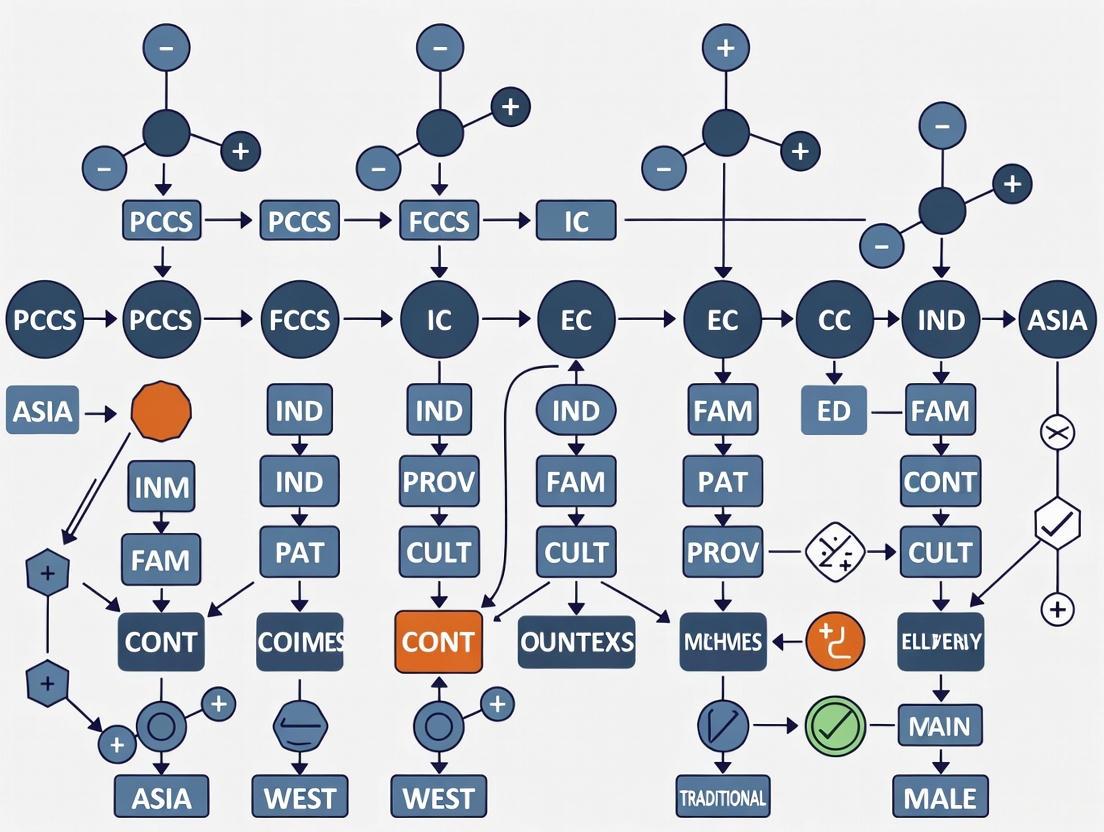
This article examines the complex interplay between family dynamics and the implementation of patient-centered care (PCC) in Asian healthcare contexts.
Navigating Family Dynamics in Patient-Centered Care in Asia: Cultural Foundations, Clinical Applications, and Research Implications
Abstract
This article examines the complex interplay between family dynamics and the implementation of patient-centered care (PCC) in Asian healthcare contexts. Targeting researchers and drug development professionals, it explores the cultural, spiritual, and familial norms that form the foundation of care expectations. The scope extends to methodological frameworks for engaging families in care co-design, strategies for overcoming practical and systemic barriers, and a critical analysis of empirical evidence on health outcomes. By synthesizing findings from recent scoping reviews, bibliometric analyses, and primary studies, this article aims to provide a comprehensive roadmap for developing culturally resonant, family-inclusive care models and clinical trials in Asian populations.
The Cultural Bedrock: Understanding Family Roles and Expectations in Asian Healthcare
Conceptualizing Family-Centered Care (FCC) in the Asian Context
Family-Centered Care (FCC) represents a paradigm shift in health service delivery, recognizing the integral role of families as partners in the planning, delivery, and evaluation of healthcare. While this model has gained significant traction in Western healthcare systems over recent decades, its application within the unique cultural landscape of Asia requires nuanced conceptualization and adaptation. The core philosophy of FCC—emphasizing dignity, respect, information sharing, participation, and collaboration between healthcare providers, patients, and families—remains universal [1] [2]. However, the operationalization of these principles must be contextualized within Asian cultural frameworks characterized by familism, collectivism, and specific familial hierarchies [3] [4].
This application note establishes a framework for conceptualizing and implementing FCC within Asian contexts, providing researchers and healthcare professionals with structured protocols, analytical tools, and evidence-based strategies to navigate the complex interplay between modern patient-centered care models and deeply rooted Asian cultural values. The guidance herein is designed to inform the development of culturally resonant, effective family-centered interventions and research protocols, particularly within the broader research agenda of navigating family dynamics in patient-centered care in Asia.
The Asian Cultural Context and FCC
The implementation of FCC in Asia is profoundly influenced by distinct socio-cultural values that shape family relationships, health beliefs, and help-seeking behaviors. Research identifies several core cultural elements that directly impact FCC dynamics, as visualized below.
A critical challenge in implementing Western-originated FCC models in Asia is the tension between individual patient autonomy and family-centered decision-making. Studies reveal that in many Asian families, healthcare decisions are often considered collective family responsibilities rather than individual patient choices [5] [4]. For instance, Chinese and South Asian immigrant parents in pediatric oncology settings expressed discomfort when healthcare providers communicated sensitive information directly to their children, preferring family-mediated communication [5]. This reflects the cultural emphasis on familial hierarchy and protection, where parents act as gatekeepers of information and decision-makers.
The concept of "guan" (to govern or care for) in Chinese culture illustrates how cultural values shape caregiving perceptions. Unlike Western interpretations of parental control as authoritarianism, "guan" embodies a holistic concept encompassing love, concern, involvement, and protection [4]. This cultural understanding reframes what might be perceived as overbearing family involvement in care as an expression of familial devotion and responsibility. Furthermore, adherence to Asian cultural values such as collectivism, humility, and filial piety has been positively correlated with authoritative parenting styles and children's perceived competence in Hong Kong studies, contradicting assumptions that these values necessarily produce negative developmental outcomes [4].
Current Research Landscape and Quantitative Analysis
Research Output and Geographic Distribution
Bibliometric analysis of FCC research in the 21st century reveals substantial growth in scientific output, increasing from only 29 publications in 2000 to 580 publications in 2022 [1]. While FCC initially gained prominence in pediatric and neonatal settings in Western countries, its application has progressively expanded to adult chronic care, geriatrics, and palliative care in Asian contexts [1]. Analysis of publishing patterns indicates that among 103 countries contributing to FCC literature, the United States dominates with 52.3% of publications, while Asian countries collectively represent a smaller but growing proportion of research output [1].
Table 1: Research Focus and Implementation Gaps in Asian FCC Studies
| Country/Region | Research Focus | Key Implementation Gaps | Cultural Considerations |
|---|---|---|---|
| China [6] | Community-based chronic disease management for older adults | Limited formal family engagement protocols; Structural and environmental barriers | Familism; Filial piety; Hierarchical doctor-patient-family relationships |
| South Korea [2] | Pediatric nursing in hospital settings | Disparity between FCC perceptions (4.07/5) and performance (3.77/5); Collaboration identified as weakest domain | High family involvement in direct care; Respect for authority |
| Thailand [7] | Pediatric nursing practices | Parent-professional collaboration perceived as least important element; Design of healthcare system as least practiced | FCC perceived as Western concept; Different expectations of parent roles |
| South Asian Migrants [8] | Chronic disease management in Western countries | Communication barriers; Cultural and linguistic appropriateness of care | Collectivism; Familial honor; Gender roles in caregiving |
Provider Perspectives and Implementation Gaps
Studies across Asian healthcare settings consistently reveal a significant gap between healthcare providers' perceptions of FCC importance and their actual implementation practices. In South Korea, pediatric nurses rated their perception of FCC importance higher (mean score=4.07) than their performance (mean score=3.77), with collaboration identified as the most challenging domain [2]. Similar perception-practice gaps were documented in Thailand, where nurses believed in FCC values but could not consistently execute them in daily practice [7].
Qualitative research with Chinese primary care providers revealed that while they acknowledged the importance of family involvement in older adults' diabetes management, their current scope of practice with patients' families remained limited and informal [6]. Providers attributed implementation barriers to structural obstacles including heavy workload, staffing shortages, lack of time, and absence of systematic FCC protocols [6] [2]. The table below synthesizes quantitative findings from FCC implementation studies across Asian contexts.
Table 2: Quantitative Findings from FCC Implementation Studies in Asian Contexts
| Study Population | Measurement Focus | Key Quantitative Findings | Citation |
|---|---|---|---|
| Thai Pediatric Nurses (N=142) | Importance vs. Practice of FCC domains | Family strengths: Highest importance & practice ratings; Parent-professional collaboration: Least important; Healthcare system design: Least practiced | [7] |
| South Korean Pediatric Nurses (N=162) | Perceptions (4.07±SD) vs. Performance (3.77±SD) | Significant perception-performance gap (p<.001); Strong positive correlation (r=.594, p<.001) between perceptions and performance | [2] |
| Chinese & South Asian Immigrant Parents (N=50) | Experiences with FCC in pediatric oncology | High overall satisfaction with care; Specific concerns: Not perceived as medical team members; Inconsistent service coordination; Few providers' disrespectful manner | [5] |
| Asian American Health Interventions (N=48 studies) | Family involvement in health interventions | Chinese populations: 54% of studies; Vietnamese populations: 21%; Spousal involvement: 35%; Parent/child involvement: 29% | [3] |
Experimental Protocols for FCC Research in Asian Contexts
Protocol 1: Mixed-Methods Assessment of FCC Implementation
Objective: To comprehensively assess the implementation gap between FCC perceptions and practices among healthcare providers in Asian healthcare settings.
Methodology Overview: This protocol employs a sequential mixed-methods design, combining quantitative surveys with qualitative interviews to obtain both breadth and depth of understanding regarding FCC implementation.
Procedure:
- Quantitative Phase - Survey Administration:
- Utilize validated FCC assessment tools (e.g., Family-Centered Care Questionnaire-Revised [FCCQ-R] used in Thai studies [7] or modified Family-Centered Care Scale from Korean research [2])
- Administer to target healthcare provider population (e.g., nurses, physicians, allied health)
- Collect demographic data including clinical experience, FCC training, and cultural background
- Analyze using descriptive statistics and comparative analyses (t-tests, ANOVA) to examine perception-practice gaps
Qualitative Phase - Focus Group Interviews:
- Conduct semi-structured interviews or focus groups with purposively selected subsample from survey participants
- Explore barriers and facilitators to FCC implementation
- Examine cultural factors influencing family-professional collaboration
- Use thematic analysis to identify emergent themes and patterns
Integration Phase:
- Compare and contrast quantitative and qualitative findings
- Identify convergent and divergent insights
- Develop comprehensive understanding of implementation challenges
Ethical Considerations: Obtain institutional review board approval; ensure informed consent; maintain confidentiality; provide debriefing resources for participants discussing challenging care experiences.
Protocol 2: Cultural Adaptation of FCC Interventions
Objective: To systematically adapt evidence-based FCC interventions for specific Asian cultural contexts while maintaining core FCC principles.
Methodology Overview: This protocol follows a cultural adaptation framework, involving iterative cycles of assessment, modification, and evaluation with stakeholder input.
Procedure:
- Pre-Adaptation Literature Review:
- Identify core components of evidence-based FCC intervention
- Document theoretical foundations and active ingredients
- Specify elements amenable to cultural adaptation
Stakeholder Engagement:
- Convene multidisciplinary adaptation committee including healthcare providers, patients, family members, cultural brokers, and community representatives
- Conduct focus groups to identify cultural considerations, potential barriers, and preferred implementation strategies
- Identify culturally resonant metaphors, examples, and communication styles
Systematic Adaptation Process:
- Review intervention materials for cultural appropriateness (language, images, scenarios)
- Modify delivery methods to align with cultural norms (e.g., family group sessions vs. individual sessions)
- Adjust role expectations for families and providers based on cultural hierarchies
- Maintain core FCC principles while adapting implementation approaches
Pilot Testing and Refinement:
- Implement adapted intervention with small sample
- Collect process and outcome data
- Further refine based on participant feedback and implementation challenges
Outcome Measures: Cultural relevance ratings; treatment acceptability; feasibility of implementation; preliminary efficacy on target outcomes; family and provider satisfaction.
Visualization of FCC Implementation Framework
The following diagram illustrates a comprehensive framework for implementing and evaluating FCC in Asian healthcare contexts, integrating cultural considerations throughout the process.
The Scientist's Toolkit: Research Reagent Solutions
Table 3: Essential Research Instruments and Tools for FCC Studies in Asian Contexts
| Research Tool/Instrument | Function/Purpose | Application Notes | Cultural Adaptation Requirements |
|---|---|---|---|
| Family-Centered Care Questionnaire-Revised (FCCQ-R) | Assesses healthcare providers' perceptions and practices of FCC across multiple domains | Used in Thai study [7]; Identifies perception-practice gaps | Requires translation/validation; May need modification of items addressing family roles |
| Modified Family-Centered Care Scale | Measures FCC perceptions and performance across collaboration, support, information sharing, and respect domains | Used in Korean pediatric nursing study [2]; 29-item instrument | Originally developed for families; Requires adaptation for healthcare provider perspective |
| Semi-Structured Interview Guides for Stakeholder Engagement | Elicits qualitative data on FCC experiences, barriers, and cultural considerations | Used in Chinese primary care provider study [6] | Should include culture-specific probes regarding family dynamics, decision-making |
| Asian Values Scale | Measures adherence to Asian cultural values (conformity, family recognition, emotional control) | Used in Hong Kong parenting study [4]; Assesses cultural orientation | Can be modified for specific ethnic subgroups; Useful for analyzing cultural mediators |
| Cultural Competence Assessment Tools | Evaluates healthcare providers' cultural knowledge, awareness, and skills in working with diverse families | Important for intervention studies [8] | Should include items specific to Asian family dynamics and communication patterns |
| Patient and Family Satisfaction Surveys | Measures experiences with care, including family inclusion and respect | Used in immigrant parent studies [5] [8] | Must assess culturally significant aspects of care (respect for elders, family privacy) |
Conceptualizing Family-Centered Care in the Asian context requires both fidelity to core FCC principles and thoughtful cultural adaptation. The evidence synthesized in this application note demonstrates that while Asian healthcare providers generally value FCC principles, significant implementation gaps persist due to structural barriers, cultural interpretations of family roles, and healthcare system constraints. Successful implementation requires moving beyond direct translation of Western models toward culturally nuanced approaches that respect Asian familial values while promoting meaningful partnerships between families and healthcare providers.
Future research should focus on developing validated assessment tools specifically for Asian contexts, testing culturally adapted FCC intervention models, and examining the longitudinal impact of FCC implementation on patient outcomes, family well-being, and healthcare system efficiency. The protocols and frameworks provided herein offer a foundation for advancing this critical area of research and practice, ultimately contributing to more culturally resonant, effective healthcare delivery across Asia's diverse populations.
Application Notes: Theoretical and Empirical Foundations
Conceptual Framework of Filial Piety
Dual Filial Piety Model (DFPM): Contemporary research has reconceptualized filial piety through a dual-dimensional framework that distinguishes between authoritarian and reciprocal motivations [9]. This model transcends traditional surface-level behavioral analysis to focus on the underlying psychological mechanisms that govern intergenerational support behaviors.
- Authoritative Filial Piety (AFP): Characterized by obedience to parental authority, fulfillment of role-based obligations, and hierarchical adherence to norms. This dimension emphasizes submission and compliance with expectations of seniority within family systems [10] [11].
- Reciprocal Filial Piety (RFP): Rooted in genuine affection, gratitude, and mutual respect, this dimension emerges from positive relationship quality and voluntary caregiving rather than perceived obligation [11].
Evolution of Filial Concepts: Research indicates filial piety is not a static cultural relic but an adaptive framework that evolves in response to socioeconomic transformations. Modern interpretations emphasize affective components (love, harmony, respect) while traditional authoritarian elements have diminished in prominence [9].
Motivational Pathways for Intergenerational Support
Cultural and Normative Motivations: In collectivist societies, filial piety represents a culturally embedded model of parent-child relations that shapes how children interpret and respond to parental expectations [10]. Traditional filial norms create a sense of ethical responsibility that motivates support behaviors.
Reciprocity-Based Motivations: The "nurturing-support" pattern characteristic of Chinese intergenerational relationships establishes a reciprocal exchange system where support flows bidirectionally across the lifespan [12]. This reciprocal dynamic is reinforced through:
- Repayment for parental investment in childrearing and education
- Lifelong emotional bonding developed through family socialization
- Intergenerational solidarity maintained through continuous exchange
Contextual Moderators: The expression of filial motivation is moderated by structural factors including socioeconomic status, geographic mobility, educational attainment, and exposure to globalized values [10] [12]. Rural-to-urban migration patterns, in particular, create spatial separations that reshape how filial obligations are enacted.
Quantitative Evidence: Health Outcomes of Intergenerational Support
Table 1: Impact of Intergenerational Support on Elder Health Outcomes
| Support Type | Physical Health | Mental Health | Cognitive Function | ADL/IADL Performance |
|---|---|---|---|---|
| Financial Support | Mixed/Non-significant association [13] | Significant improvement [14] [13] | Minimal effect [14] | Positive association [14] |
| Emotional Support | Positive association [13] | Significant improvement [14] [13] | Significant improvement [14] | Positive association [14] |
| Instrumental Support (Care) | Significant improvement [13] | Negative association [13] | Limited data | Positive association [14] |
Table 2: Comparative Effects of Filial Piety Types on Caregiver and Recipient Outcomes
| Dimension | Authoritative Filial Piety (AFP) | Reciprocal Filial Piety (RFP) |
|---|---|---|
| Caregiver Burden | Higher burden [15] | Lower burden [15] |
| Motivational Source | Obligation, duty, hierarchy [11] | Affection, gratitude, reciprocity [11] |
| Career Development | Associated with career goal discrepancies [10] | Minimal interference with career autonomy [10] |
| Relationship Quality | Potentially conflicted [11] | Warm, communicative [11] |
| Mental Health Impact | Negative correlation [9] | Positive correlation [9] |
Experimental Protocols
Protocol 1: Measuring Intergenerational Support and Health Outcomes
Objective: Quantify the relationship between intergenerational support types and multidimensional health outcomes in elderly populations.
Dataset: China Health and Retirement Longitudinal Study (CHARLS) - Nationally representative longitudinal survey of Chinese adults aged 45+ [14] [13].
Variables and Measures:
- Financial Support: Monetary transfers from children to parents, measured as annual amount [14].
- Emotional Support: Frequency of contact (in-person, phone, digital) between children and parents [14].
- Instrumental Support: Assistance with Activities of Daily Living (ADL) and Instrumental Activities of Daily Living (IADL) [14].
- Health Outcomes:
Analytical Approach:
- Regression Modeling: Ordered probit models for ordinal health outcomes
- Endogeneity Control: Instrumental variables (firstborn son/daughter status) [14]
- Selection Bias Adjustment: Heckman selection models [14]
- Moderator Analysis: Examine education, age, marital status as moderators [12]
Implementation Code Framework:
Protocol 2: Assessing Dual Filial Piety and Career Development
Objective: Examine how AFP and RFP mediate relationship between parental support and career goal discrepancies.
Participants: College students and young adults from collectivist cultural backgrounds [10].
Measures:
- Dual Filial Piety Scale (DFPS): Validated instrument measuring AFP and RFP [10] [9]
- Parental Support Scale: Perceived emotional and instrumental support from parents
- Career Decision Self-Efficacy: Confidence in career-related decision making [10]
- Career Goal Discrepancies: Differences between self-set and parent-set career goals (DBIPCG) [10]
Analytical Procedure:
- Mediation Analysis: Test whether filial piety mediates parental support → career discrepancies
- Path Analysis: Structural equation modeling with maximum likelihood estimation
- Cross-Cultural Comparison: Compare patterns across ethnic subgroups
Implementation Timeline:
- Phase 1: Instrument validation and translation (2 months)
- Phase 2: Participant recruitment and data collection (3 months)
- Phase 3: Path analysis and mediation testing (1 month)
- Phase 4: Cross-cultural comparative analysis (1 month)
Visualization of Conceptual Framework
Diagram 1: Conceptual Framework of Filial Piety and Health Outcomes
Diagram 2: Mediation Pathway Between Parental Support and Career Outcomes
Research Reagent Solutions
Table 3: Essential Measures and Instruments for Filial Piety Research
| Instrument | Construct Measured | Key Features | Application Context |
|---|---|---|---|
| Dual Filial Piety Scale (DFPS) | Authoritative and Reciprocal Filial Piety | 16-item scale measuring two dimensions; validated cross-culturally [9] | Assessment of filial motivation in intergenerational support studies |
| CHARLS Questionnaire Modules | Multidimensional intergenerational support | Comprehensive assessment of financial, emotional, and instrumental support; population-representative [14] [13] | Large-scale epidemiological studies on aging and family support |
| Career Goal Discrepancy Instrument | DBIPCG (Discrepancies between individual-set and parent-set career goals) | 15-item measure of generational differences in career expectations [10] | Studies on family influence in career development |
| CES-D Scale | Depression symptoms | 20-item self-report measure of depressive symptomatology [14] | Mental health outcomes in care recipients and caregivers |
| ADL/IADL Assessment | Functional limitations in daily activities | Performance-based and self-report measures of physical functioning [14] | Health impact studies in elderly populations |
The practice of Family Presence During Resuscitation (FPDR) has been a subject of examination for more than four decades, with evolving perspectives on its benefits and challenges for patients, family members, and clinicians [16]. In recent years, particularly following the strict visitation restrictions imposed during the COVID-19 pandemic, the value of family presence has been re-emphasized as an essential component of patient- and family-centered care in critical care settings [17] [18]. The effective implementation of FPDR is significantly influenced by cultural and religious norms and contextual features of care settings, requiring careful consideration, especially within the diverse healthcare landscapes of Asia [16].
This application note explores the current landscape of family presence during critical care, focusing specifically on perspectives from patients and relatives within Asian hospital contexts. It provides structured protocols for implementing and researching family-centered care practices, with particular attention to the unique cultural considerations relevant to Asian healthcare settings. The guidance presented herein supports the broader research agenda of navigating family dynamics in patient-centered care in Asia, offering researchers, scientists, and healthcare professionals evidence-based frameworks for advancing this crucial aspect of critical care medicine.
Quantitative Data Synthesis
Table 1: Family Member Perspectives on FPDR in Asian Contexts
| Perspective Category | Support Level | Key Findings | Regional Context |
|---|---|---|---|
| Overall Support | High | Most family members support family presence during resuscitation [16] | Multiple Asian hospital settings |
| Neutrality or Opposition | Variable | Some family members expressed neutrality or opposition, influenced by specific circumstances [16] | Multiple Asian hospital settings |
| Cultural & Spiritual Considerations | Significant Influence | Cultural and spiritual matters significantly impact perspectives on FPDR [16] | Asian cultural contexts |
| Visiting Policy Restrictions | High Prevalence | 79.5% of Japanese ICUs restricted family visiting hours, typically limited to several hours in the afternoon [17] | Japanese tertiary medical centers |
| Waiting Room Amenities | Generally Inadequate | 95.4% had waiting rooms, but only 32.6% ensured adequate privacy; basic amenities like refrigerators (0.7%) and shower rooms (2.1%) were rare [17] | Japanese ICU settings |
Table 2: Current Guidelines and Evidence for Family-Centered Care in ICU Settings
| Guideline Component | Recommendation Strength | Key Outcomes | Implementation Level |
|---|---|---|---|
| Liberalized Family Presence | Strong Recommendation | Increased family satisfaction, reduced anxiety and depression symptoms [18] | Post-COVID emphasis |
| Family Participation in Bedside Care | Conditional Recommendation | Potential improvement in family mental health through therapeutic involvement [18] | Leading-edge ICUs only |
| Mental Health Support | Conditional Recommendation | Improved family satisfaction and reduction of patient PTSD [18] | Variable implementation |
| Structured Communication | Conditional Recommendation | Enhanced family engagement and emotional well-being [19] | Limited systematic implementation |
| Clinician Support Programs | Conditional Recommendation | Addresses burnout, fatigue, anxiety, and moral distress [18] | Developing area |
Methodological Protocols for FPDR Research
Scoping Review Methodology for FPDR Evidence Mapping
Purpose: To systematically map the evidence and identify knowledge gaps regarding family presence during resuscitation in Asian hospital contexts, with focus on studies enrolling patients and their family members.
Protocol Details:
- Framework: Adherence to JBI methodology for scoping reviews
- Reporting Guidelines: Preferred Reporting Items for Systematic Reviews and Meta-Analyses Extension for Scoping Reviews (PRISMA-ScR)
- Search Strategy: Systematic search across 11 databases
- Timeframe: Search conducted up to August 2024
- Inclusion Criteria:
- Primary studies conducted in Asian hospital settings
- Publication in English or Indonesian
- Inclusion of adult patients and/or family members aged ≥18 years
- Synthesis Method: Thematic analysis of findings with development of emergent themes
Application Notes: This protocol successfully identified 23 articles meeting inclusion criteria, revealing a significant evidence gap regarding patient perspectives (only 1 focused on patients vs. 22 involving family members) [16]. Researchers focusing on Asian contexts should consider including local languages beyond English to capture a more comprehensive evidence base.
Systematic Review Methodology for Family Support Interventions
Purpose: To assess the effectiveness of nursing interventions, compared to standard care, in enhancing communication with healthcare professionals, supporting decision-making, and strengthening emotional attachment among family members of adult ICU patients.
Protocol Details:
- Framework: PRISMA 2020 guidelines
- Registration: PROSPERO (CRD42023415141)
- Search Strategy:
- Databases: PubMed, Scopus, CINAHL, SciELO, and Web of Science
- Publication Range: 2015-2025
- PIO Framework: Population = family members of adult ICU patients; Intervention = nursing intervention programs; Outcomes = communication, emotional outcomes, and involvement in care
- Study Selection:
- Controlled trial designs, quantitative or mixed studies, intervention studies, and observational studies
- Exclusion of neonatal or pediatric intensive care studies
- Quality Assessment:
- Johns Hopkins Nursing Evidence-Based Practice Model
- Cochrane Risk of Bias tool (RoB 2) for experimental studies
- Synthesis Method: Narrative synthesis without meta-analysis, structured around key interventions
Application Notes: This methodology applied to 18 included studies revealed that while family-centered interventions are feasible in ICU settings and support patient- and family-centered care principles, limitations include variability in intervention design, small sample sizes, and moderate risk of bias in some studies [19].
Conceptual Framework and Implementation Strategy
FCC Implementation Framework
FPDR Research Workflow
The Scientist's Toolkit: Research Reagent Solutions
Table 3: Essential Research Materials for FPDR Studies
| Research Tool | Function/Application | Implementation Notes |
|---|---|---|
| Structured Communication Protocols | Facilitate consistent information sharing between healthcare teams and families | Enhance family understanding and reduce psychological distress [19] |
| Family Needs Assessment Tools | Identify specific requirements and preferences of family members in critical care settings | Should address needs for security, information, proximity, and support [19] |
| Cultural Adaptation Frameworks | Modify FCC approaches to align with local cultural and religious norms | Essential for successful implementation in diverse Asian contexts [16] |
| Psychological Distress Measures | Assess anxiety, depression, and PTSD symptoms in family members | Used to evaluate intervention effectiveness; multiple validated scales available [19] [18] |
| Family Satisfaction Surveys | Quantify family perceptions of care quality and communication | Critical outcome measure for evaluating FCC interventions [18] |
| Environmental Assessment Checklists | Evaluate waiting room conditions, amenities, and privacy provisions | Important for identifying physical barriers to family presence [17] |
Application Notes for Asian Healthcare Contexts
The implementation of family presence during critical care in Asian contexts requires thoughtful consideration of several unique factors. The cultural and spiritual dimensions of care significantly influence perspectives on FPDR and must be integrated into any implementation strategy [16]. Current evidence indicates that most Asian healthcare settings continue to maintain restrictive visiting policies, with 79.5% of Japanese ICUs limiting visiting hours to several hours in the afternoon, despite guidelines advocating for more liberal approaches [17].
Research protocols should prioritize addressing the significant gap in patient-derived evidence, as current literature heavily emphasizes family member perspectives with limited inclusion of patient viewpoints [16]. Furthermore, implementation strategies must account for the inadequate infrastructure support in many Asian healthcare facilities, where family waiting rooms often lack essential amenities and sufficient privacy protections [17].
Successful implementation of family-centered care in Asian contexts requires a multifaceted approach including staff education on the benefits of FPDR, policy reform to align with international guidelines, environmental modifications to support family presence, and cultural adaptation of evidence-based practices [16] [20] [18]. Future research should focus on developing and testing culturally adapted models of family-centered care that respect local traditions while embracing the principles of patient and family engagement that have demonstrated benefits in diverse critical care settings.
Application Notes: The Interplay of Demography and Health in Asia
The demographic landscape of Asia is undergoing an unprecedented transformation, driven by the powerful and interconnected forces of low fertility, population aging, internal migration, and urbanization. These shifts are fundamentally reshaping family structures and kinship networks, which in turn present both challenges and opportunities for implementing effective patient-centered care models [21] [22] [23]. For researchers and healthcare professionals, understanding these changes is critical for designing clinical trials, public health interventions, and drug development strategies that are both equitable and effective for Asian populations.
A core challenge is the rapid erosion of traditional family support systems. In regions experiencing swift demographic transitions, such as Thailand, research shows that individuals born just five to ten years apart can have significantly smaller kinship networks. For example, a 15-year-old in Thailand in 2000 had nearly 30% fewer living cousins than a 25-year-old [23]. This rapid contraction of informal care networks creates substantial gaps in care for vulnerable populations, particularly the elderly, necessitating the accelerated development of institutional support systems to prevent inequalities from widening [23].
Concurrently, massive rural-to-urban migration, exemplified by China's urbanization rate of 66.16% in 2023, is altering patient populations and their needs [24]. Migrants often face barriers to accessing healthcare, such as China's household registration (hukou) system, which can limit their access to public services in their new urban homes [22] [24]. This underscores the urgent need for healthcare models that are mobile, flexible, and capable of serving a diverse and geographically mobile population.
Table 1: Key Demographic Pressures Reshaping Asian Family Structures and Healthcare Needs
| Demographic Pressure | Quantitative Trend | Impact on Family Structure | Implication for Patient-Centered Care |
|---|---|---|---|
| Ultra-Low Fertility [21] | South Korea's TFR: 0.75 (2024); China's TFR: 1.15 (2024) [21] | Smaller nuclear families; fewer children to provide future care | Increased pressure on formal healthcare systems as familial care potential diminishes |
| Rapid Population Aging [21] | Japan's population ≥65 years: ~30% (2023); South Korea to become "super-aged" (>30% ≥65) by 2036 [21] | More "vertical" families with multiple living generations but fewer members per generation | Greater prevalence of chronic conditions and multi-morbidity, requiring coordinated, long-term care |
| Internal Migration & Urbanization [24] | China's urbanization rate: 66.16% (2023), projected to reach ~70% in 5 years [24] | Fractured kinship networks; rise of "floating populations" and left-behind children & elderly | Need for portable health records and services that bridge rural-urban and inter-regional divides |
These demographic shifts interact with a critical evolution in the role of the "patient." The rise of the "Patient 2.0"—an active, informed healthcare consumer who participates in decision-making—demands a shift from a top-down, provider-centric model to one of co-design and collaboration [25] [26]. Successful examples, such as Singapore's inclusion of patients and caregivers in Health Technology Assessment processes, demonstrate the value of embedding patient voices directly into healthcare system design [26]. For clinical research, this means patient-reported outcomes (PROs) and cultural acceptability must be central endpoints from the earliest stages of study design and drug development.
Experimental Protocols for Research on Social Change and Health
To effectively investigate the links between social change and health outcomes, researchers require robust, culturally adapted methodologies. The following protocols provide a framework for generating actionable evidence.
Protocol 1: Evaluating Patient-Centered Integrated Care in Community Settings
This protocol is designed to assess the effectiveness of integrated care models from the patient's perspective, particularly in underserved or rural-urban migrant communities [27].
- Objective: To evaluate the perceived quality and effectiveness of integrated care services and its association with patient-reported quality of life and hope.
- Study Design: Multicentre, cross-sectional study (can be adapted for longitudinal assessment).
- Participant Recruitment:
- Setting: Primary care clinics, community health centers, or county medical alliances in regions with high internal migration or aging populations [27].
- Participants: Patients receiving chronic disease management or home medical care. A target sample of ~200 patients per study site is effective for initial analysis [28].
- Inclusion Criteria: Adults (e.g., >18 years) with a chronic condition, continuous enrollment in the integrated care program for a defined period (e.g., >6 months).
- Data Collection Instruments and Methods:
- Patient Perceptions of Integrated Care (PPIC) Scale: A 37-item instrument validated across multiple cultures to measure patients' experiences with integrated care. It assesses six domains [27]:
- Emphasis on whole-person care
- Patient engagement and communication
- Team-based care and coordination
- Office staff professionalism and helpfulness
- Access to care and information
- Activation for self-management
- Health-Related Quality of Life (QOL) Measure: Utilize the QOL-Home Care (QOL-HC) scale or the European Quality of Life-5 Dimensions-5 Levels (EQ-5D-5L) to quantify self-rated health status across mobility, self-care, usual activities, pain/discomfort, and anxiety/depression [28] [27].
- Hope Measure: The Health-Related Hope (HR-Hope) Scale can be applied to assess this key psychological metric [28].
- Demographic and Socioeconomic Questionnaire: Collect data on age, gender, education, income, migration status (e.g., hukou status), and co-morbidities.
- Patient Perceptions of Integrated Care (PPIC) Scale: A 37-item instrument validated across multiple cultures to measure patients' experiences with integrated care. It assesses six domains [27]:
- Data Analysis:
Table 2: Key Research Reagent Solutions for Health Services and Social Science Research
| Reagent / Tool | Type | Primary Function in Research |
|---|---|---|
| Patient Perceptions of Integrated Care (PPIC) Scale [27] | Validated Survey Instrument | Quantifies patient experiences across six core domains of integrated care for chronic conditions. |
| EQ-5D-5L Questionnaire [27] | Standardized Health Status Tool | Measures self-reported health-related quality of life across five dimensions and levels of severity. |
| Primary Care Assessment Tool (JPCAT-SF) [28] | Validated Survey Instrument | Assesses the quality and patient-centeredness of primary care across domains like longitudinality and comprehensiveness. |
| Health-Related Hope (HR-Hope) Scale [28] | Validated Psychometric Tool | Evaluates the level of hope in patients, a key psychological outcome for those with chronic or serious illness. |
| IPUMS International Microdata [29] | Demographic Database | Provides harmonized census data from multiple countries for analyzing migration, urbanization, and population structure. |
Protocol 2: Mapping Kinship Networks and Care Gaps
This protocol uses demographic tools to quantify changes in family support structures and identify populations at risk.
- Objective: To model the size and composition of kinship networks (e.g., children, cousins) for different birth cohorts and project future care deficits.
- Data Source: National census microdata (e.g., from IPUMS International), demographic and health surveys, or large-scale longitudinal studies [23] [29].
- Methodology:
- Kinship Network Modeling: Employ demographic microsimulation or projection tools (e.g., the SOCSIM software) to reconstruct the average number of living relatives for individuals of different ages and birth cohorts [23].
- Key Metrics: Calculate the average number of living children, siblings, cousins, and other potential caregivers for specific age groups.
- Cohort Comparison: Compare these metrics across adjacent birth cohorts (e.g., individuals born 5-10 years apart) to quantify the speed of kinship network erosion [23].
- Integration with Health Data: Overlay kinship data with health and aging statistics to identify populations where a rapidly shrinking family support system coincides with a high burden of age-related disease.
Visualization of Conceptual Framework
The following diagram illustrates the logical relationship between macro-level social changes, their impact on family and individual patients, and the necessary components of an effective, modern patient-centered care system.
Spiritual and Religious Considerations in Medical Decision-Making
Application Notes: Integrating Spirituality in Patient-Centered Care
The Role of Spirituality in Medical Decision-Making
Spiritual and religious (S/R) considerations significantly influence medical decision-making processes, particularly within family-centered care models prevalent in Asian contexts. Research indicates that spirituality and religion serve as crucial coping resources for surrogate decision-makers facing critical medical choices for incapacitated patients. A study of 46 surrogates found that 67% endorsed belief in God and personal religious practice, utilizing S/R resources to manage the substantial distress associated with medical decision-making [30].
Within serious illness contexts, patients and families frequently experience elevated spiritual needs. Studies conducted across multiple US hospitals reveal that 78% of patients consider spirituality and/or religion important to their illness experience, 79% report having at least one spiritual need, and 85% identify multiple spiritual issues during serious illness [31]. This spiritual dimension directly impacts healthcare outcomes, including quality of life, satisfaction with care, and end-of-life medical utilization patterns [31].
Family Dynamics and Spiritual Considerations in Asian Contexts
The integration of S/R considerations is particularly salient within Asian family dynamics, where familism—a value system emphasizing mutual interdependence, collaboration, and shared decision-making within families—forms the foundation of socialization, acculturation, and health experiences [3]. Research indicates that 73% of Asian Americans live with family members (compared to the US average of 65%), with proportions as high as 88% among specific Asian subpopulations [3].
Qualitative studies of Chinese and South Asian immigrant parents in pediatric oncology settings reveal that while families generally appreciate family-centered care approaches, successful implementation requires culturally nuanced communication that acknowledges hierarchical family structures and respects parental roles in medical decision-making [5]. Healthcare providers must balance the child's best interests with the family as a unit, recognizing that parents may experience discomfort when healthcare providers communicate sensitive information directly with their child [5].
Quantitative Assessment of Spiritual Coping Mechanisms
Table 1: Spiritual Coping Resources Among Surrogate Decision-Makers
| Coping Resource | Prevalence/Description | Functional Role |
|---|---|---|
| Personal Prayer | Primary coping mechanism among religious surrogates | Facilitates emotional regulation and decision-making clarity [30] |
| Trust in Divine Guidance | Commonly expressed as "trusting God to be in charge" | Reduces burden of ultimate responsibility for medical outcomes [30] |
| Supportive Relationships | From family, friends, coworkers, and faith communities | Provides emotional and practical support throughout decision process [30] |
| Spiritual Activities | Painting, coloring, silent reflection, music, recreation, reading | Non-religious spiritual practices that promote reflection and stress reduction [30] |
| Transformative Experiences | Reframing the caregiving experience as spiritually meaningful | Facilitates post-traumatic growth and finding purpose in suffering [30] |
Experimental Protocols
Protocol 1: Qualitative Assessment of S/R Coping in Surrogate Decision-Making
Objective: To understand the role of spiritual and religious resources in how surrogates cope with medical decision-making stress [30].
Methodology:
- Study Design: Semistructured qualitative interviews with thematic analysis
- Participant Recruitment: 46 surrogate decision-makers from an urban public hospital and university-affiliated tertiary referral center
- Inclusion Criteria: Legally authorized surrogates for hospitalized patients aged ≥65 years who required major medical decisions; English-speaking ability
- Data Collection: Audio-recorded interviews in private hospital locations or surrogate homes using semistructured interview guide
- Interview Content: Explicit questions about religious/spiritual beliefs and practices, including: "How did your religious or spiritual beliefs play a role in your experience when [patient] was in the hospital?" and "What religious or spiritual practices helped you in these times?" [30]
Analysis Framework:
- Thematic Analysis: Three independent investigators conducted open coding, identified relationships among codes, and developed draft themes
- Validation: Achieved 82% inter-rater agreement on code application; used constant comparison methods to ensure consistency [30]
- Saturation: Theme saturation achieved after 46 interviews [30]
Protocol 2: Systematic Assessment of Spiritual Care Guidelines
Objective: To critically evaluate inter-professional clinical practice guidelines for spiritual care of patients with chronic illnesses [32].
Methodology:
- Database Search: Comprehensive search of guideline registries including Agency for Healthcare Research and Quality, National Institute for Health and Care Excellence (NICE), Scottish Inter-University Guidelines Network (SIGN), and multiple international databases (PubMed, CINAHL, Cochrane, MEDLINE) [32]
- Search Period: 2007-2024
- Search Terms: "Chronic illness", "Spiritual care", "Inter-professional collaboration", "Clinical guideline" with synonyms and logical operators [32]
- Inclusion Criteria: Guidelines addressing spiritual care for patients with chronic illnesses adhering to monotheistic religions; inter-professional focus; English language [32]
Quality Assessment:
- Tool: AGREE II (Assessment of Guidelines, Research, and Evaluation II) instrument [32]
- Evaluation Team: Two teams of five inter-professional experts (medicine, nursing, psychology, spiritual counseling) plus two independent raters [32]
- Analysis: Descriptive statistics to quantify guideline quality; narrative synthesis of recommendations; comparison of contradictory or duplicate recommendations [32]
Outcome Measures:
- Primary: Evaluated quality of clinical guidelines across six AGREE II domains [32]
- Secondary: Titles of clinical recommendations; comparison of care approaches; religious aspects of patient care [32]
Table 2: AGREE II Assessment of Spiritual Care Guidelines
| Guideline Quality Dimension | Assessment Focus | High-Performing Guidelines |
|---|---|---|
| Scope and Purpose | Overall aim, target population, health questions | Spiritual Care Matters; Spiritual Care guideline; Religious and Spiritual Care of Patients [32] |
| Stakeholder Involvement | Inclusion of relevant professional groups | Guidelines with inter-professional development teams [32] |
| Rigor of Development | Systematic methods, evidence selection, formulation | Variability across guidelines; overall insufficient rigor [32] |
| Clarity of Presentation | Specific, unambiguous recommendations | Guidelines providing clear spiritual history protocols [32] |
| Applicability | Implementation barriers, facilitation strategies | Guidelines addressing interdisciplinary collaboration [32] |
| Editorial Independence | Conflict of interest management | Limited reporting across most guidelines [32] |
Protocol 3: Implementing Family-Centered Spiritual Care in Asian Contexts
Objective: To document methods of family involvement in health interventions for Asian American populations and develop a conceptual framework for familial engagement [3].
Methodology:
- Study Design: Scoping review of 48 studies from 1995-2021
- Databases: PubMed, Embase, Web of Science, Cochrane, clinical trial registries, Google Scholar
- Inclusion Criteria: Intervention studies, protocols, registered clinical trials, or observational studies describing impact/characteristics of interventions focused on any health issue in US-based Asian populations [3]
- Data Extraction: Two independent reviewers extracted data on participant characteristics, intervention details, outcomes, and description of family involvement; third reviewer consolidated data [3]
Analytical Framework:
- Stages of Involvement: Categorized family involvement across three stages: (1) intervention development, (2) intervention process, and (3) intervention evaluation [3]
- Impact Assessment: Documented positive impacts (encouragement, insight, accountability, comfort) and negative impacts (hindrance, backlash, stigma, obligation) of family involvement [3]
The Scientist's Toolkit: Research Reagent Solutions
Table 3: Essential Resources for Spiritual Care Research Implementation
| Research Tool | Function/Application | Implementation Context |
|---|---|---|
| AGREE II Instrument | Guideline quality assessment across 6 domains | Critical appraisal of existing spiritual care guidelines [32] |
| Semistructured Interview Guides | Qualitative data collection on S/R experiences | Exploring surrogate decision-maker spiritual coping mechanisms [30] |
| Spiritual Screening Tools | Identification of spiritual distress, suffering, disconnection | Routine spiritual assessment in clinical settings [33] |
| Spiritual AIM Assessment Tool | Quantifiable assessment of spiritual concerns | Measuring spiritual distress and intervention outcomes in palliative care [33] |
| PC-7 Assessment | Structured tool for assessing spiritual distress | Spiritual concerns assessment for patients receiving end-of-life care [33] |
| REMAP Conversation Framework | Structured communication for goals of care discussions | Addressing spiritual concerns in serious illness conversations [33] |
| AMEN Protocol | Supporting patients and families hoping for miracles | Spiritual communication strategy for clinical teams [33] |
| Familism Assessment Tools | Measuring family interdependence and decision-making | Research on Asian American family dynamics in healthcare [3] |
Implementation Framework for Asian Healthcare Contexts
The synthesis of these research protocols and findings suggests several critical considerations for implementing spiritual care within family-centered models in Asian healthcare contexts:
Culturally Adapted Spiritual Care Models
Effective implementation requires cultural tailoring that acknowledges the central role of familism in decision-making processes while respecting diverse spiritual and religious expressions. Research with Chinese and South Asian immigrant families indicates the importance of understanding how family relationships are structured to appropriately balance child and family interests in pediatric settings [5].
Interprofessional Spiritual Care Teams
The reviewed evidence supports the development of interprofessional teams that include physicians, nurses, psychologists, and spiritual counselors collaborating on patient-centered care plans [32]. This approach aligns with findings that spiritual care provided by trained chaplains addresses holistic patient needs and strengthens trust between patients and clinicians [34].
Spiritual Care Integration Pathways
The evidence-based pathway above outlines a systematic approach to spiritual care integration that begins with understanding family systems and cultural context, proceeds through screening and assessment, and culminates in evaluated spiritual interventions [32] [33]. This model emphasizes the importance of ongoing evaluation and the need for interprofessional collaboration throughout the process.
From Theory to Practice: Frameworks for Implementing Family-Engaged Care
Experience-Based Co-Design (EBCD) with Patients and Families
Experience-Based Co-Design (EBCD) with Patients and Families represents a significant methodological shift in healthcare quality improvement and intervention development. EBCD is a multi-stage participatory action research process that enables healthcare professionals and patients to collaboratively identify areas for quality improvement within healthcare settings [35]. Originally developed to increase patient involvement in service improvement initiatives, this approach utilizes qualitative and participatory methods—including observations, individual audio-recorded and filmed interviews, and co-design workshops—to comprehensively understand challenges and opportunities for enhancing healthcare delivery [35].
In the specific context of Asian healthcare environments, where family involvement in medical decision-making is crucial and deeply rooted in cultural norms such as filial piety, EBCD requires thoughtful adaptation [36]. This protocol outlines specialized application notes and methodologies for implementing EBCD within Asian family dynamics, providing researchers and drug development professionals with culturally-sensitive frameworks for patient and family engagement.
Core EBCD Methodology and Asian Context Adaptation
Standard EBCD Workflow
The traditional EBCD process follows a structured sequence designed to capture and leverage the experiences of all stakeholders. The Point of Care Foundation outlines six primary stages: (1) contextual observation and ethnographic research; (2) filmed narrative interviews with patients; (3) editing compiled footage into trigger films; (4) separate staff and patient feedback events; (5) joint co-design workshops; and (6) celebration events marking implemented changes [37]. This process is inherently flexible and has been successfully adapted across various healthcare contexts, including early-phase clinical trials in oncology [35] and medicines management at care transitions [38].
A fundamental strength of EBCD lies in its participatory ethos, which positions patients and families not merely as research subjects but as active partners in designing healthcare improvements. This approach "enables stakeholders to exchange mutual experiences of providing, receiving, and organising care, resulting in the shared identification of problems, decisions about preferred solutions, and collective ownership of research end-outputs" [37].
Cultural Considerations for Asian Healthcare Settings
Asian societies, particularly those influenced by Confucian traditions, present distinct cultural dynamics that must be addressed when implementing EBCD. Research indicates that in these contexts, "explicit conversations about end-of-life care with patients are not always the norm, and family involvement is crucial in decision-making" [36]. This family-centered orientation differs significantly from Western individual autonomy models and requires specific methodological adjustments.
A Delphi study across five Asian regions (Hong Kong, Japan, Korea, Singapore, and Taiwan) established that advance care planning in these contexts should be conceptualized as "a process that enables individuals to identify their values, to define goals and preferences for future medical treatment and care, to discuss these values, goals, and preferences with family and/or other closely related persons, and health-care providers" [36]. This definition explicitly acknowledges the role of family in the decision-making process, highlighting the need for a person-centered and family-based approach that facilitates family involvement while supporting the individual's engagement and best interests through shared decision-making [36].
Table 1: Key Cultural Adaptations of EBCD for Asian Healthcare Contexts
| Cultural Factor | Standard EBCD Approach | Recommended Asian Adaptation |
|---|---|---|
| Decision-Making | Primarily individual autonomy | Relational autonomy with family involvement |
| Communication Style | Direct, explicit discussion | Respectful, sometimes indirect communication |
| Family Role | Secondary, supportive role | Integral to decision-making process |
| Privacy Boundaries | Individual privacy emphasized | Family unit privacy considerations |
| Authority Dynamics | Patient as primary decision-maker | Family as collaborative decision-makers |
Application Notes for Asian Clinical Research Settings
Implementing EBCD in Early-Phase Clinical Trials
The application of EBCD in early-phase clinical trials presents unique opportunities and challenges. In oncology trials, particularly, EBCD can enhance person-centered care, improve communication about risks and benefits, and address coordination gaps between clinical trials and standard care [35]. This is especially relevant in Asian contexts where family members often serve as crucial intermediaries in communicating complex medical information and supporting patients through demanding treatment protocols.
Three significant challenges emerge when applying EBCD in early-phase clinical trials within Asian settings. First, the high standardization required in trial protocols may conflict with personalized care approaches [35]. Second, the inherent uncertainty in experimental treatment outcomes complicates planning EBCD activities [35]. Third, the vulnerability of patient populations in early-phase trials necessitates careful ethical consideration, particularly when family dynamics may influence participation decisions [35].
Successful implementation requires balancing these challenges through strategic approaches, including involving family members in supportive roles during informed consent processes, creating separate family feedback sessions, and training research staff in culturally-sensitive communication techniques that acknowledge hierarchical family structures while maintaining patient autonomy.
Multi-Site EBCD Implementation
Research demonstrates that EBCD can be successfully adapted for multi-site implementations across healthcare economies. The ISCOMAT study (Improving the Safety and Continuity of Medicines management at Transitions of care) illustrated this capacity by conducting EBCD across four distinct geographical areas, covering both primary and secondary care sectors [38]. This approach is particularly valuable in Asian drug development contexts, where multi-regional clinical trials (MRCTs) are increasingly common [39].
Key adaptations for multi-site EBCD in Asian regions include:
- Local Champions: Identifying onsite facilitators who understand both local culture and research protocols [38]
- Cross-Sector Engagement: Involving stakeholders across the entire patient pathway, from hospital to community care [38]
- Theory-Informed Analysis: Augmenting traditional trigger films with systematic analysis using relevant cultural and behavioral theories [38]
- Standardized Protocols with Local Adaptation: Maintaining methodological consistency while allowing for cultural customization
Table 2: EBCD Site Preparation Requirements for Asian Multi-Regional Clinical Trials
| Preparation Area | Minimum Requirements | Optimal Implementation |
|---|---|---|
| Local Team Composition | Bilingual coordinator, Clinical lead | Additional family liaison officer, Cultural mediator |
| Stakeholder Mapping | Identification of key clinical staff | Inclusion of family representatives, Community leaders |
| Documentation | Translated information sheets | Culturally-adapted consent processes, Family information materials |
| Venue Preparation | Accessible location | Neutral, welcoming space for families, Religious accommodations |
| Ethical Review | Standard ethics approval | Cultural and family dynamics assessment, Withdrawal protocols |
Experimental Protocols and Methodologies
Culturally-Adapted EBCD Workflow for Asian Settings
The following diagram illustrates a modified EBCD workflow specifically adapted for Asian family dynamics:
EBCD Protocol for Pharmaceutical Research Settings
This detailed protocol provides a structured approach for implementing EBCD in Asian pharmaceutical research environments, with particular attention to family involvement.
Phase 1: Preparatory (4-6 Weeks)
Stakeholder Mapping and Recruitment
- Identify and recruit 8-12 patient-family dyads representing the target disease population
- Recruit multidisciplinary healthcare professionals (physicians, nurses, pharmacists, trial coordinators)
- Include 2-3 family counselors or cultural mediators familiar with local dynamics
- Obtain ethical approval with specific attention to family consent processes
Cultural Context Preparation
- Conduct preliminary interviews with key informants to identify cultural considerations
- Develop interview guides that accommodate indirect communication styles
- Prepare separate discussion guides for patients, family members, and healthcare professionals
- Establish family-friendly venues for interviews and workshops
Phase 2: Data Collection (6-8 Weeks)
Experience Gathering Methods
- Conduct separate semi-structured interviews with patients and family members (60-90 minutes each)
- Facilitate healthcare professional focus groups (90-120 minutes)
- Employ observational ethnography in clinical settings (20-30 hours total)
- Utilize trigger films—short edited compilations of patient and family stories—to stimulate discussion [38]
Cultural Adaptations for Data Collection
- Implement "cultural language intermediaries" rather than literal translators
- Schedule family interviews at times accommodating multiple family members
- Provide private spaces for family discussions separate from clinical areas
- Utilize indirect questioning techniques to discuss sensitive topics respectfully
Phase 3: Analysis and Prioritization (4-5 Weeks)
Analytical Framework
- Employ thematic analysis with enhanced coding for family dynamics
- Identify emotional touchpoints—key moments shaping patient and family experiences [35]
- Conduct separate analysis of patient, family, and provider perspectives before integration
- Validate preliminary findings with cultural advisors
Priority-Setting Workshop
- Convene joint patient-family-provider workshop (half-day)
- Present trigger films and thematic analysis findings
- Facilitate structured discussion using nominal group technique
- Co-establish 3-5 priority areas for improvement
Phase 4: Co-Design (6-8 Weeks)
Iterative Solution Development
- Form mixed co-design teams (patients, families, providers) for each priority area
- Conduct 3-4 co-design workshops with prototyping activities
- Develop low-fidelity prototypes (care pathways, communication tools, educational materials)
- Test and refine prototypes through rapid cycles of feedback
Implementation Planning
- Co-develop implementation strategies with explicit family roles
- Establish evaluation metrics including family-centered outcomes
- Plan for sustainability through family engagement structures
- Designate family liaisons for ongoing quality improvement
Research Reagent Solutions
Table 3: Essential Research Materials for EBCD in Asian Family Contexts
| Research Tool | Specification | Application in Asian Family Context |
|---|---|---|
| Bilingual Interview Guides | Semi-structured protocols with culturally-appropriate probes | Facilitates discussion while respecting communication norms and hierarchy |
| Trigger Film Production Kit | Audio-visual recording equipment, editing software | Captures patient and family narratives for stimulating discussion |
| Cultural Mediation Framework | Guidelines for language and cultural intermediaries | Ensures accurate communication while preserving cultural meaning |
| Co-Design Prototyping Materials | Low-fidelity mockup tools, visual aids | Enables participation regardless of health literacy or education levels |
| Family Dynamics Assessment Tool | Validated instrument measuring family decision-making patterns | Identifies family structures and informs adaptation strategies |
| Emotional Touchpoint Mapping Canvas | Visual template for identifying key experience moments | Highlights particularly meaningful interactions for patients and families |
Integration with Drug Development Processes
Asia-Inclusive Clinical Trial Development
The progressive evolution of the global regulatory framework, particularly the ICH E17 guideline outlining principles for multiregional clinical trials (MRCTs), enables more simultaneous global drug development [39]. EBCD methodologies can enhance these initiatives by identifying culturally-specific factors affecting trial participation and adherence in Asian populations.
Ethno-bridging assessments—evaluations of ethnic sensitivity in drug exposure and response—can be complemented by EBCD approaches to understand patient and family perspectives on clinical trial participation [39]. This integrated approach is particularly valuable for identifying "factors associated with greater or lower risks for ethnic sensitivity" beyond purely pharmacological considerations [39].
Measurement and Evaluation Framework
Robust evaluation is essential for assessing the impact of EBCD in Asian healthcare contexts. The following measurement framework incorporates family-centered outcomes:
Table 4: Evaluation Metrics for EBCD in Asian Family Contexts
| Domain | Process Indicators | Outcome Measures |
|---|---|---|
| Family Engagement | Number of family participants in co-design, Family attendance rates at workshops | Family satisfaction with involvement, Perceived influence on outcomes |
| Cultural Appropriateness | Adherence to cultural protocols, Use of adapted materials | Cultural comfort measures, Respect for hierarchical structures |
| Intervention Effectiveness | Implementation fidelity, Provider adherence to co-designed protocols | Patient-reported experience measures, Family-reported experience measures |
| System Impact | Integration into standard procedures, Policy changes | Healthcare utilization metrics, Quality of life indicators for patients and families |
Experience-Based Co-Design offers a robust methodological framework for enhancing patient and family engagement in Asian healthcare contexts and clinical research environments. By adapting standard EBCD approaches to accommodate Asian family dynamics—particularly the emphasis on relational autonomy and family involvement in decision-making—researchers and drug development professionals can develop more culturally-sensitive and effective healthcare interventions.
The protocols outlined provide comprehensive guidance for implementing EBCD in ways that respect cultural norms while maintaining scientific rigor. As global drug development increasingly includes Asian populations through multiregional clinical trials, these adapted EBCD methodologies will become increasingly valuable for ensuring that developed interventions align with the values, preferences, and family contexts of diverse patient populations.
Integrating Cultural Competence into Patient-Centered Communication (PCC)
Application Notes: Context and Rationale
Integrating Cultural Competence (CC) into Patient-Centered Communication (PCC) is not merely an additive process but a fundamental reconceptualization of clinical interactions, particularly within the complex family-oriented societies of Asia. Research demonstrates that PCC has varying impacts on health outcomes within minority populations, and its efficacy is often mediated by patients' health competence [40]. In Asia, the paradigm of patient-centered care must be expanded to "family-and-community-centered care" to be effective. A scoping review of Asian hospital settings highlights that family presence and involvement are central to care, yet patient-derived evidence on their preferences remains limited, underscoring a critical area for research and protocol development [16]. Furthermore, studies from Ghana, which shares collectivist cultural similarities with many Asian nations, reveal that environmental, organizational, and individual-level factors—such as resource constraints, staff shortages, and patient agency—significantly challenge PCC implementation [41]. These findings are directly transferable to Asian contexts, where systemic pressures can similarly undermine theoretical models.
The rationale is clear: culturally competent PCC is a clinical and ethical imperative. It bridges the gap between standardized evidence-based medicine and the individualized, values-based care that leads to stronger patient satisfaction, reduced errors, and improved health outcomes [42]. The following sections provide a structured, actionable framework for researchers and clinicians to operationalize this integration.
The quantitative relationship between PCC, cultural competence, and health outcomes provides a compelling evidence base for this integration. The following tables summarize key data from recent studies.
Table 1: Impact of Patient-Centered Communication (PCC) on Minority Health Outcomes (U.S. Study, 2011-2022 Data) [40]
| PCC Dimension | Impact on General Health | Impact on Mental Health | Role of Health Competence |
|---|---|---|---|
| Communication Functions | Positive association, but not consistent across all patients | Significant relationships observed in specific years | Crucial mediator, particularly for general health |
| Overall Association | Varying impacts | Positive associations for mental well-being | Serves as a key pathway between PCC and health outcomes |
| Research Note | Direct effects are inconsistent, highlighting the need for tailored approaches | Empowering patient navigation skills is essential |
Table 2: Efficacy of Communication Skills Training on PCC and Patient Satisfaction (Egyptian Study, 2022-2024) [43]
| Outcome Measure | Pre-Training Score (Mean) | Post-Training Score (Mean) | P-value |
|---|---|---|---|
| Overall Patient-Doctor Relationship (PDRQ-9) | 4.22 ± 0.67 | 4.44 ± 1.00 | 0.001 |
| Patient-Practitioner Orientation (PPOS) - All | Not significantly different post-training | >0.05 | |
| PPOS - Subgroup (Pre-score ≤3) | ≤3 | Significant improvement | <0.001 |
| Key Predictor for Improvement | Surgical specialty and pre-training sharing scores were significant predictors of PPOS improvement. |
Experimental Protocols for Research and Validation
For researchers aiming to measure and validate integration strategies, the following protocols offer detailed methodologies.
Protocol 1: Assessing Cultural Competence in Healthcare Professionals
This protocol compares two common assessment tools, highlighting the importance of tool selection based on research goals [44].
- Objective: To quantify the level of cultural competence in healthcare students or professionals and investigate the relationship between different CC measures.
- Design: Exploratory, cross-sectional study.
- Participants: Healthcare students (e.g., Doctor of Physical Therapy programs) or practicing clinicians. A sample size of approximately 100 is typical.
- Intervention/Materials: Two primary instruments are administered:
- Intercultural Development Inventory (IDI): A 50-item cross-cultural assessment of intercultural competence that places respondents on a continuum from Denial to Adaptation. It provides a Perceived Orientation (PO) and a Developmental Orientation (DO) [44].
- Inventory for Assessing the Process of Cultural Competence (IAPCC-SV): A 20-item instrument designed for healthcare students, measuring five constructs: Cultural Awareness, Skill, Knowledge, Encounters, and Desire. Scores categorize individuals from Culturally Incompetent to Culturally Proficient [44].
- Procedure:
- Obtain ethical approval and informed consent.
- Administer both the IDI and IAPCC-SV to participants in a single session.
- Analyze data using correlation statistics (e.g., Spearman's rho) to examine the relationship between IDI and IAPCC-SV total and sub-scale scores.
- Use chi-square tests to compare the distribution of participants across competency categories for each instrument.
- Expected Outcomes & Analysis: The study may find negligible to low correlations between the two measures, indicating they assess different aspects of CC (a global worldview vs. context-specific healthcare skills). This supports the need for a multimodal assessment strategy rather than relying on a single tool [44].
Protocol 2: Evaluating a PCC Communication Skills Training Program
This protocol provides a framework for testing the effectiveness of educational interventions, adaptable to Asian family dynamics [43].
- Objective: To assess the impact of a structured communication skills training program on physicians' patient-centered attitudes and patient satisfaction.
- Design: Quasi-experimental, multi-center longitudinal study with a control group.
- Participants: Physicians (e.g., n=102) with at least six months of experience and their patients (e.g., n=257). Exclude those with formal communication training in the past year.
- Intervention/Materials:
- Training Program: A two-day "Effective Communication Skills Training" based on the PCC model. Day one covers doctor-patient relationship basics and essential skills. Day two focuses on the eight sub-dimensions of PCC, integrating patient preferences, and evaluating satisfaction [43].
- Assessment Tools:
- Procedure:
- Recruit physicians and randomize them into intervention and control groups.
- Administer the PPOS to all physicians at baseline (T1).
- Deliver the training program only to the intervention group.
- One week post-training, re-administer the PPOS to all physicians (T2).
- Collect patient satisfaction data (PDRQ-9) after consultations with physicians from both groups post-training.
- Analyze data using paired and independent t-tests, and multivariate linear regression to control for covariates like specialty and years of experience.
- Expected Outcomes: Significant improvements in patient satisfaction scores in the intervention group. PPOS scores may show significant improvement primarily among physicians with lower baseline scores [43].
The Researcher's Toolkit: Key Reagents and Instruments
Table 3: Essential Tools for Research on Cultural Competence and PCC
| Tool Name | Function/Application | Key Characteristics |
|---|---|---|
| Intercultural Development Inventory (IDI) | Assesses an individual's worldview orientation on a continuum from monocultural to intercultural mindsets. | Measures Perceived (PO) and Developmental Orientation (DO). Strong psychometric properties, requires a qualified administrator [44]. |
| IAPCC-SV (Inventory for Assessing Process of Cultural Competence) | Measures the level of cultural competence in healthcare professionals/students based on a specific model (Campion, 2006). | Yields a score categorized as Culturally Incompetent, Aware, Competent, or Proficient. Healthcare-specific [44]. |
| Patient-Practitioner Orientation Scale (PPOS) | Assesses healthcare providers' attitudes towards patient-centeredness, measuring "Sharing" of power/information and "Caring" as empathy [43]. | 18-item, six-point Likert scale. Validated in various settings; useful for pre-/post-training assessment. |
| Patient-Doctor Relationship Questionnaire (PDRQ-9) | Evaluates patient satisfaction and the quality of the doctor-patient relationship from the patient's perspective. | 9-item, nine-point Likert scale. High internal consistency (Cronbach's alpha: 0.94-0.95) [43]. |
Conceptual Pathway and Implementation Framework
The following diagram illustrates the integrated pathway through which Cultural Competence mediates the relationship between Patient-Centered Communication and ultimate health outcomes, with special consideration for family dynamics in Asian contexts.
Diagram 1: The Integrated Pathway of Culturally Competent PCC in Asian Contexts. This model shows how Cultural Competence acts as a critical mediator, transforming standard PCC into effective communication that generates proximal outcomes. These outcomes, particularly family engagement, are crucial in Asian settings for building health competence, which in turn drives improved distal health outcomes and reduces disparities. The entire process is shaped by familial and cultural dynamics.
Developing and Validating FCC Tools and Assessment Scales
Family-Centered Care (FCC) is a healthcare approach that recognizes the vital role of families as partners in the health and well-being of patients, particularly in pediatric and maternal-child health settings [45] [46]. The development and validation of robust FCC assessment tools are critical for implementing and evaluating this care model effectively, especially within the complex family dynamics present in Asian healthcare contexts. This protocol outlines comprehensive methodologies for creating, validating, and implementing FCC measurement instruments that are both psychometrically sound and culturally appropriate for Asian populations, where familial hierarchies, communication patterns, and decision-making processes may differ significantly from Western models [8] [5].
The theoretical foundation of FCC is built upon several core principles: respect for patient and family perspectives, information sharing, collaboration, and negotiation of care roles [45]. These principles must be carefully operationalized into measurable constructs when developing assessment tools. Research indicates that effective FCC implementation leads to improved patient and family experience with healthcare, reduced stress, enhanced communication, and better health outcomes for children with chronic conditions [45]. Within Asian research contexts, where family dynamics often involve multigenerational decision-making and specific communication norms, tailoring FCC assessment tools becomes particularly important for accurate measurement and effective care implementation [5].
Key FCC Assessment Tools and Their Psychometric Properties
Several validated instruments exist for measuring FCC across different healthcare settings. The table below summarizes the primary tools, their characteristics, and psychometric properties:
Table 1: Comparison of Key Family-Centered Care Assessment Tools
| Instrument Name | Item Count & Format | Target Population | Reliability & Validity | Cultural Validation |
|---|---|---|---|---|
| Family-Centered Care Assessment (FCCA) [45] | 24 items; Likert scale | Families of children with special health needs | Person alpha >0.80; Item reliability >0.90; All infit/outfit statistics 0.5-1.5 | Developed by families in partnership with professionals; tested with diverse parents |
| Person-Centered Care in Fetal Care Centers (PCC-FCC) Scale [47] | 28 items; 2-factor structure | Patients in fetal care centers | Cronbach's α = 0.969; Good content, construct, and concurrent validity | Developed with input from clinicians and former patients |
| Family Centered Care (FCC) Instrument [46] | 26 items; 5-point Likert scale | Pediatric nurses and healthcare organizations | Cronbach's alpha 0.867-0.938; 3 factors: Philosophy, Implementation, Environment | Measures organizational support for FCC implementation |
| Functional, Communicative and Critical Health Literacy (FCC-HL) [48] | 14 items; 3-factor structure | General population | Cronbach's α = 0.798; Good model fit in confirmatory factor analysis | Developed and validated in Iranian population |
The Family-Centered Care Assessment (FCCA) represents a particularly robust example of instrument development, having been created through a family-led process in collaboration with maternal and child health leaders [45]. The tool demonstrates excellent psychometric properties, with all items meeting criteria for a linear Rasch scale, item difficulties ranging between -2 and +2 logits, and strong rank-ordered associations with six indicators of quality care [45]. These properties make it a valuable reference model for developing new instruments tailored to Asian healthcare environments.
Comprehensive Protocol for FCC Tool Development
Stage 1: Item Development and Content Validation
3.1.1 Conceptual Framework Establishment Begin by conducting a comprehensive literature review to identify core FCC constructs relevant to the target Asian cultural context. For research in Asia, particular attention should be paid to cultural norms regarding family roles in healthcare decision-making, communication preferences, and family-provider dynamics [5]. Establish a multidisciplinary development team including family members, healthcare providers, and researchers to ensure diverse perspectives.
3.1.2 Item Generation Develop an initial item pool through multiple methods:
- Deductive approaches: Extract potential items from existing FCC frameworks and instruments [45] [48]
- Inductive approaches: Conduct focus groups and interviews with target stakeholders (patients, families, healthcare providers) to generate culturally relevant items [45] [48]
- Expert consultation: Engage cultural experts to review items for contextual appropriateness
For the FCCA development, researchers initially generated 98 questions, which were critically reviewed by expert pediatric providers and policymakers before refinement [45]. Similarly, the FCC-HL questionnaire development began with 21 items generated across three subscales based on Nutbeam's definition of health literacy [48].
3.1.3 Content Validity Assessment Formally evaluate content validity through:
- Expert panels: Engage 6-10 content experts to rate item relevance, clarity, and simplicity using Content Validity Ratio (CVR) and Content Validity Index (CVI) methodologies [48]
- Target population review: Conduct cognitive interviews with 15-20 representatives from the target population to assess comprehension and relevance [48]
- Quantitative assessment: Calculate impact scores for each item, retaining those with scores >1.5 [48]
The FCC-HL questionnaire development demonstrated this process effectively, with experts rating each item based on simplicity, relevance, and clarity on a four-point scale, retaining items with I-CVI values greater than 0.78 [48].
Figure 1: Item Development and Content Validation Workflow for FCC Tool Development
Stage 2: Scale Development and Psychometric Testing
3.2.1 Study Design and Sampling Implement a cross-sectional survey design with appropriate sample size determination. For instrument validation, a minimum sample of 150 participants is acceptable for exploratory factor analysis, while confirmatory factor analysis requires at least 200 participants [48]. Employ cluster sampling or other appropriate methods to ensure representative recruitment from target populations. The FCCA validation collected responses from 790 families across 49 states, providing robust data for analysis [45].
3.2.2 Data Collection and Management Administer the draft instrument to the validation sample using appropriate methods (online surveys, in-person interviews, etc.). For Asian contexts, consider language translation and cultural adaptation using forward-backward translation methods with reconciliation. Ensure ethical compliance through Institutional Review Board approval and informed consent processes [45].
3.2.3 Factor Analysis and Construct Validation
- Exploratory Factor Analysis (EFA): Split data randomly (e.g., 50/50) for EFA and Confirmatory Factor Analysis (CFA). Perform EFA using Principal Axis Factoring with varimax rotation [48]. Determine factor structure using multiple criteria: Kaiser's criteria (eigenvalue >1), scree test, and parallel analysis [48].
- Confirmatory Factor Analysis (CFA): Test the factor structure identified in EFA using structural equation modeling. Assess model fit using multiple indices: Tucker-Lewis index (TLI), comparative fit index (CFI), root mean squared error of approximation (RMSEA), and normed χ² [48].
In the FCC-HL validation, EFA revealed a three-factor 14-item structure, while CFA provided a good statistical and conceptual fit for the data [48]. Similarly, for the FCCA, factor analysis confirmed the existence of a single factor, and Rasch modeling identified a subset of 24 items with excellent psychometric properties [45].
3.2.4 Reliability Assessment Evaluate internal consistency using Cronbach's alpha, with a minimum acceptable threshold of 0.70 [46] [48]. For the FCC Instrument testing, Cronbach's alphas were 0.867 and 0.938 for personal and organizational scales respectively [46]. For the PCC-FCC Scale, excellent internal consistency was demonstrated (α=0.969) [47].
3.2.5 Additional Validity Testing
- Convergent validity: Assess correlations with theoretically related measures
- Discriminant validity: Evaluate ability to differentiate between known groups
- Criterion validity: Examine relationships with relevant outcome measures
The FCCA validation demonstrated strong rank-ordered associations and large effect sizes for six indicators of quality of care, supporting its construct validity [45].
Figure 2: Psychometric Testing Workflow for FCC Tool Validation
Asian Context Considerations for FCC Tool Development
Cultural Adaptation Framework
When developing or adapting FCC tools for Asian populations, several cultural factors require special consideration:
4.1.1 Family Decision-Making Dynamics Asian families often exhibit collective decision-making patterns that may differ from Western individual autonomy models. Research with Chinese and South Asian immigrant parents in pediatric oncology revealed discomfort with healthcare providers communicating sensitive health-related information directly with their child, preferring family-mediated communication [5]. Assessment tools must capture these preferences through appropriately framed items.
4.1.2 Communication Styles and Language Barriers Indirect communication patterns and hierarchical relationships with healthcare providers may influence FCC perceptions. Studies with South Asian migrants highlight how language barriers reduce the cultural and linguistic appropriateness of healthcare [8]. Assessment tools should evaluate both language concordance and communication style compatibility.
4.1.3 Religious and Spiritual Considerations Religious practices may significantly influence care preferences. A study of parents with migration backgrounds found that religious parents may have specific needs during admission, such as adequate privacy to practice their religion [49]. Items addressing spiritual support should be included in culturally adapted tools.
Methodological Adaptations for Asian Contexts
4.2.1 Translation and Cultural Adaptation Protocol
- Employ forward-backward translation with bilingual content experts
- Conduct cognitive interviews to ensure conceptual equivalence
- Modify examples and scenarios to reflect local contexts
- Validate with target population before full implementation
4.2.2 Sampling Considerations
- Ensure representation of diverse Asian subpopulations
- Consider educational and health literacy variations
- Account for rural-urban differences in healthcare access
- Include multigenerational family perspectives
The Scientist's Toolkit: Essential Research Reagents and Materials
Table 2: Essential Research Materials for FCC Tool Development and Validation
| Category | Specific Tools/Resources | Purpose/Function | Example from Literature |
|---|---|---|---|
| Software for Statistical Analysis | SPSS, R software, AMOS, MAXQDA | Data management, factor analysis, reliability testing, qualitative analysis | SPSS used for EFA [48]; MAXQDA for qualitative analysis [50] |
| Scale Development Frameworks | Schwab's scale development process, Delphi technique | Structured approach to instrument development | Schwab's process used for FCC-HL [48]; Delphi for PCC-FCC [47] |
| Psychometric Evaluation Tools | Rasch modeling, Cronbach's alpha, EFA/CFA | Item analysis, reliability assessment, validity testing | Rasch modeling for FCCA [45]; Cronbach's alpha across multiple studies [47] [46] [48] |
| Qualitative Data Collection Tools | Interview guides, focus group protocols, recording equipment | Initial item generation, content validation | Focus groups with diverse parents [45]; semi-structured interviews [49] |
| Ethical Review Documentation | IRB protocols, consent forms, subject protection training | Ethical compliance, participant protection | IRB-approved research protocol [45]; ethical clearance [50] |
Application Notes for Asian Research Contexts
Implementation Challenges and Solutions
Challenge: Diverse Linguistic Landscapes Asian countries often contain multiple languages and dialects, complicating tool validation. Solution: Employ robust translation methodologies with attention to regional variations. Consider creating parallel language versions where necessary.
Challenge: Variable Health System Infrastructure Healthcare systems across Asian contexts range from advanced tertiary centers to basic primary care. Solution: Develop modular assessment tools that can be adapted to different healthcare settings while maintaining core comparability.
Challenge: Cultural Norms Regarding Feedback In some Asian cultures, direct criticism or negative feedback may be discouraged. Solution: Employ neutral phrasing for items and include both positive and negatively framed questions to reduce response bias.
Data Interpretation Considerations
When applying FCC tools in Asian contexts, researchers should:
- Establish population-specific normative values rather than relying on Western benchmarks
- Consider family structure variations (nuclear vs. extended families) in score interpretation
- Account for educational and health literacy influences on responses
- Recognize that "optimal" FCC may manifest differently across cultural contexts
Research in Ghana demonstrated the importance of contextualizing FCC practices, noting that respect and dignity, culture and religion, and a multidisciplinary approach were fundamental concepts in that setting [50]. Similarly, Asian applications require similar contextual adaptation.
The development and validation of FCC assessment tools for Asian research contexts requires meticulous attention to both psychometric rigor and cultural relevance. By following the comprehensive protocols outlined above—from initial item development through sophisticated psychometric testing—researchers can create instruments that accurately capture family-centered care experiences while respecting the unique familial, cultural, and healthcare dynamics present in Asian populations. The resulting tools will enable meaningful evaluation of FCC implementation and contribute to improving patient and family experiences in healthcare settings across Asia.
Designing Virtual Care and Hospital-at-Home Models for Family Inclusion
Application Notes
Foundational Principles for Family Inclusion
The integration of family members, often termed "essential care partners" or "caregivers," is a critical success factor for virtual care and Hospital-at-Home (HaH) models, particularly within Asian contexts where family involvement in health is deeply culturally embedded. These models provide acute hospital-level care in patients' homes through a combination of remote monitoring, virtual communication, and in-person clinical support [51] [52]. Family inclusion transforms the home into a clinical micro-environment, leveraging the family's unique position to offer emotional support, perform basic monitoring, and facilitate communication with healthcare professionals [52] [53]. This is especially vital in Asian populations, where cultural norms often designate family responsibility for patient wellbeing and decision-making. Effectively designed programs formally recognize and support this role, moving beyond viewing family members as informal helpers to integrating them as essential components of the care team [54].
Navigating Cultural and Systemic Dynamics in Asia
Designing for family inclusion in Asia requires careful consideration of specific regional dynamics. Cultural Expectations and Health Literacy: In many Asian cultures, family members are expected to be deeply involved in care decisions. However, varying levels of health and digital literacy among family members can create barriers, necessitating tailored education and communication strategies [41] [55]. Programs must provide culturally tailored education and simplified, accessible technology interfaces to bridge this gap [51] [55]. Digital Infrastructure and Equity: The "digital divide" presents a significant challenge, with disparities in technology access and connectivity, particularly in rural areas [51] [56] [55]. Hybrid models that combine high-tech and low-tech solutions (e.g., phone calls alongside video consultations) are essential for ensuring equitable access [51]. Regulatory and Reimbursement Frameworks: Many Asian health systems lack clear reimbursement pathways for virtual care, which can inhibit the scalability of HaH models [52] [57]. Widespread adoption depends on the development of supportive policies and sustainable funding models that formally recognize the value of family-inclusive care [55].
Experimental Protocols & Methodologies
Experience-Based Co-Design (EBCD) for Culturally Tailored HaH Models
This protocol outlines a qualitative, participatory method for designing HaH services that are both patient- and family-centered, with a specific focus on cultural relevance for diverse Asian populations [51].
- 2.1.1 Objective: To collaboratively identify barriers and co-design solutions for family inclusion in HaH models by engaging key stakeholders, including patients, family caregivers, clinicians, and community organizations.
- 2.1.2 Materials:
- Recording equipment and transcription services.
- Multilingual consent forms and data collection instruments (e.g., interview guides, survey forms).
- Facilities and software for hosting co-design workshops (virtual or in-person).
- Editing software for creating a "touchpoint" film based on patient and caregiver interviews.
- 2.1.3 Procedure: The EBCD process is structured into five key stages [51]:
- Steering Committee Formation: Establish a multidisciplinary committee including health service providers, virtual care specialists, equity/diversity/inclusion (EDI) experts, and representatives from community organizations serving target populations (e.g., South Asian Health Institute) [51].
- Gathering Staff Experiences: Conduct semi-structured interviews with healthcare providers (e.g., physicians, nurses) to understand existing workflows, perceived barriers to family involvement, and opportunities for improvement within current services [51].
- Gathering Patient and Family Experiences: Conduct in-depth, one-on-one interviews with patients and family caregivers from the target cultural community (e.g., South Asian families). These interviews should be offered in relevant languages and explore "touchpoints"—critical moments in the care journey where family interaction is key. A short film is created from these narratives to spark discussion in the co-design workshop [51].
- Co-Design Workshop: Host a facilitated workshop with a diverse group of stakeholders (patients, family members, clinicians, community leaders). Use the touchpoint film to guide problem-solving and collaborative design of solutions. Themes often emerging include culturally tailored education materials, hybrid digital training for families, and community-driven engagement strategies [51].
- Analysis and Uptake: Thematically analyze qualitative data from interviews and workshops. Share findings back with stakeholders and the health authority for implementation planning [51].
- 2.1.4 Outcome Measures: The primary output is a set of co-designed, actionable strategies to improve family inclusion. Outcomes are measured through the successful implementation of these strategies and subsequent monitoring of family satisfaction, reported burden, and clinical outcomes.
Mixed-Methods Evaluation Using the RE-AIM Framework
This protocol provides a comprehensive method for evaluating the implementation of a family-inclusive virtual HaH model, assessing its real-world effectiveness and potential for long-term sustainability [54].
- 2.2.1 Objective: To evaluate the implementation of a virtual HaH service using the RE-AIM framework (Reach, Effectiveness, Adoption, Implementation, Maintenance), with a specific focus on factors affecting family and caregiver experiences.
- 2.2.2 Materials:
- Access to electronic medical records (EMRs) for quantitative data extraction.
- Internal finance records for cost analysis.
- Validated Patient-Reported Experience Measures (PREMS) surveys, adapted to include questions for family caregivers.
- Interview guides for semi-structured interviews with patients, family caregivers, and staff.
- 2.2.3 Procedure:
- Reach: Quantitatively assess the proportion and characteristics of the target population who participate in the service. Extract data from EMRs on patient demographics (e.g., ethnicity, language, socioeconomic status) to evaluate equity of access [54].
- Effectiveness: Evaluate the impact of the service on multiple levels.
- Clinical Outcomes: Analyze data on mortality, hospital readmissions, and emergency department revisits, comparing with traditional inpatient cohorts where possible [52] [54].
- Patient and Family Experience: Distribute PREMS surveys and conduct qualitative interviews to capture themes such as families' sense of empowerment, confidence in providing care, and the overall recovery experience at home [54].
- Adoption: Measure the uptake of the service by healthcare providers and referring clinicians. Use staff interviews to understand perceptions of the model's appropriateness for managing patients and supporting their families in the community [54].
- Implementation: Assess the fidelity, cost, and adaptations of the intervention. Analyze cost data and identify barriers (e.g., urgent rollout, resource limitations) and facilitators (e.g., staff adaptability, consultant-led structure) through qualitative interviews [54].
- Maintenance: Determine the long-term sustainability of the program. Evaluate the number of inpatient bed days saved, the extent of integration into core health services, and staff capabilities developed for future virtual care delivery [54].
- 2.2.4 Outcome Measures: A mixed-methods evaluation report detailing the service's reach, clinical effectiveness, cost-impact, stakeholder experiences, and a plan for sustained, scalable operation.
Data Synthesis and Analysis
Comparative Outcomes: HaH vs. Inpatient Care
Table 1: Comparative outcomes between Hospital-at-Home and traditional inpatient care models.
| Outcome Measure | Hospital-at-Home | Traditional Inpatient Care | Source |
|---|---|---|---|
| Median Laboratory Orders | 3 per admission | 15 per admission | [53] |
| 30-Day Readmission Rate | 7% - 10.8% | 15.6% - 23% | [52] [53] |
| Patient/Caregiver Satisfaction | Higher | Lower | [52] [53] [57] |
| Cost per Admission | 32% - 38% lower | Baseline | [53] [57] |
| Incidence of Delirium | 9% | 24% | [57] |
Resource Utilization and Efficiency Metrics
Table 2: Resource utilization and efficiency metrics from implemented HaH models.
| Resource Metric | Findings from HaH Implementation | Context |
|---|---|---|
| Bed Day Savings | 16,651 inpatient bed days saved | Over 11 months in a Queensland, Australia program [54] |
| Length of Stay | Mean stay shorter by one-third (3.2 days vs. 4.9 days) | Johns Hopkins model [57] |
| Staffing | "Whole family" approach, incorporating pediatricians and midwives to coordinate care for parents and children. | Consultant-led model in Queensland [54] |
| Technology Use | Reliance on remote monitoring (oximeters, thermometers) and web-based platforms for data upload and review. | Hybrid digital models [51] [54] |
Visualization of Workflows and Relationships
HaH Patient Journey Map
EBCD Methodology for Inclusive Design
The Scientist's Toolkit
Table 3: Essential research reagents and materials for studying and implementing family-inclusive HaH models.
| Item | Type | Primary Function in Research/Implementation |
|---|---|---|
| Remote Patient Monitoring (RPM) Kits | Hardware/Software | Enable collection of vital signs (e.g., oximetry, blood pressure) at home. Data is reviewed by clinicians and often involves family members in the monitoring process [58] [54]. |
| Semi-Structured Interview Guides | Research Tool | Facilitate in-depth, qualitative data collection from patients, family caregivers, and healthcare providers to understand lived experiences, barriers, and facilitators of family inclusion [51] [56]. |
| Validated Experience Measures (PREMS) | Assessment Tool | Quantify patient and family-reported experiences of care, providing scalable data on satisfaction, communication, and involvement in decision-making [54]. |
| Multilingual Educational Materials | Intervention Tool | Provide culturally and linguistically appropriate information to patients and families, crucial for ensuring understanding and engagement in diverse Asian populations [51] [55]. |
| Telehealth Platform with Family Access | Software/Platform | Facilitate virtual consultations and communication. Platforms that support multiple participants (e.g., a family member joining a patient's video call) are essential for inclusive care [54] [55]. |
This application note presents a structured Pathway Model for building robust therapeutic alliances with families in patient-centered care, with specific consideration of Asian research contexts. The model synthesizes evidence-based frameworks to guide clinicians in navigating complex family dynamics, enhancing communication, and improving treatment adherence. We provide detailed protocols and analytical tools for implementing this model in clinical practice and research settings, focusing on measurable outcomes and culturally competent interventions.
The therapeutic alliance represents a collaborative partnership between healthcare providers, patients, and their families, characterized by agreement on goals, consensus on interventions, and development of an effective emotional bond [59]. In the context of family therapy, this alliance extends beyond the clinician-patient dyad to encompass the entire family system, creating what is termed the "family alliance" [60]. Research demonstrates that a strong therapeutic alliance significantly improves treatment outcomes across various medical and psychological conditions, with particular relevance in culturally diverse settings where family involvement in healthcare decisions is prominent [59].
The Pathway Model presented herein addresses the critical need for structured approaches to alliance-building that account for complex family dynamics, communication patterns, and cultural factors. This is especially relevant in Asian healthcare contexts, where family hierarchies, communication norms, and decision-making processes may differ significantly from Western models [61]. By providing a standardized yet flexible framework, the Pathway Model enables clinicians to systematically strengthen clinician-family partnerships while respecting cultural values and family structures.
Theoretical Foundation: Core Components of the Family Therapeutic Alliance
The Pathway Model is grounded in Bordin's conceptualization of the therapeutic alliance, which identifies three core components: agreement on goals, agreement on interventions, and the development of an effective bond between therapist and client [59]. In family therapy contexts, this framework expands to include multiple relationships and alliances within the family system.
The SOFTA-o Framework for Observing Family Alliances
The System for Observing Family Therapy Alliances (SOFTA-o) provides a validated methodological framework for assessing therapeutic alliances in family work [60]. This system conceptualizes the alliance through four interrelated dimensions:
- Engagement in the Therapeutic Process: Family members' active participation and collaboration in therapy.
- Emotional Connection with the Therapist: The quality of the affective bond between family members and the therapist.
- Safety within the Therapeutic System: Family members' perception of emotional safety and comfort in expressing themselves.
- Shared Sense of Purpose within the Family: Family members' agreement on therapy goals and collaboration with each other.
Research indicates that these dimensions are dynamically interrelated and evolve throughout the therapeutic process, with stronger alliances correlating with better treatment outcomes across various clinical populations [60].
Family Communication Patterns Theory
The Family Communication Patterns Theory further informs the Pathway Model by delineating how family communication environments influence information processing and decision-making [61]. The theory identifies two primary dimensions:
- Conversation Orientation: The degree to which families encourage open discussion on a wide range of topics.
- Conformity Orientation: The degree to which families emphasize homogeneity in attitudes, values, and beliefs.
These communication patterns significantly influence how families engage with healthcare providers, process health information, and make collective decisions about treatment approaches [61].
The Pathway Model: Core Components and Implementation Framework
The Pathway Model operationalizes therapeutic alliance-building through a structured yet flexible process that can be adapted to diverse clinical contexts and cultural settings. The model consists of five iterative phases that guide the development and maintenance of strong clinician-family alliances.
Pathway Model Visualization
Phase 1: Assessment and Relational Mapping
Objective: Establish a comprehensive understanding of family structure, communication patterns, and existing dynamics.
Protocol:
- Genogram Construction: Create a three-generation family map identifying relationship patterns, health history, and critical family events [62].
- Communication Pattern Assessment: Evaluate conversation and conformity orientations using structured interviews or standardized instruments.
- Therapeutic Alliance Baseline Measurement: Administer Working Alliance Inventory (WAI) or SOFTA-o to establish pre-intervention alliance levels.
- Cultural Formulation: Identify cultural values, health beliefs, and family decision-making hierarchies relevant to treatment.
Asian Context Adaptation: Pay particular attention to intergenerational dynamics, hierarchical structures, and cultural norms regarding authority and expression of disagreement [61].
Phase 2: Goal Consensus and Shared Treatment Planning
Objective: Establish collaborative goal-setting and mutual agreement on treatment approaches.
Protocol:
- Individual Goal Elicitation: Conduct separate sessions with key family members to identify individual priorities and concerns.
- Family Session for Goal Integration: Facilitate structured discussion to identify shared goals and negotiate differences.
- SMART Goal Formulation: Transform identified priorities into Specific, Measurable, Achievable, Relevant, and Time-bound objectives [59].
- Treatment Roadmap Co-creation: Collaboratively develop a visual representation of the treatment plan with clear roles and responsibilities.
Asian Context Adaptation: Utilize indirect communication techniques, employ hierarchical respect while ensuring all voices are heard, and acknowledge family elders' authority in decision-making processes.
Phase 3: Intervention and Active Engagement
Objective: Implement evidence-based interventions while maintaining and strengthening the therapeutic alliance.
Protocol:
- Structured Communication Exercises: Implement active listening and reflective speaking techniques to enhance family communication [62].
- Strategic Interventions: Design specific, targeted actions to disrupt dysfunctional patterns and facilitate change within the family system [63].
- Emotion-Focused Techniques: Identify, explore, and express underlying emotions affecting communication and relationships [62].
- Ritual Prescription: Develop family rituals and activities to strengthen bonds and improve communication in relaxed settings [62].
Phase 4: Continuous Monitoring and Alliance Repair
Objective: Systematically track alliance quality and promptly address ruptures or disengagement.
Protocol:
- Session-by-Session Alliance Tracking: Implement brief alliance measures at each session to identify early signs of deterioration.
- Rupture Repair Protocol: Utilize structured approach to address alliance breaches including acknowledgment, validation, and collaborative problem-solving.
- Adaptive Strategy Implementation: Modify treatment approaches based on alliance feedback and changing family dynamics.
- Therapist Reflection and Consultation: Engage in regular supervision to address countertransference and therapeutic challenges.
Phase 5: Evaluation and Transition Planning
Objective: Assess outcomes, consolidate gains, and plan for maintained improvement.
Protocol:
- Multidimensional Outcome Assessment: Evaluate treatment effectiveness across clinical, functional, and relational domains.
- Alliance-Outcome Correlation Analysis: Examine relationship between alliance measures and treatment outcomes.
- Relapse Prevention Planning: Develop structured plan to maintain gains and address potential future challenges.
- Termination Ritual: Create meaningful closure experience that acknowledges therapeutic journey and achievements.
Measurement and Assessment Protocols
Quantitative Measures for Therapeutic Alliance Research
Table 1: Standardized Measures for Assessing Therapeutic Alliance in Family Context
| Measure | Constructs Assessed | Format | Cultural Adaptation Considerations |
|---|---|---|---|
| SOFTA-o (System for Observing Family Therapy Alliances) [60] | Engagement, Emotional Connection, Safety, Shared Purpose | Observer-rated | Communication style variations across cultures; expression of emotions |
| WAI (Working Alliance Inventory) [59] | Goals, Tasks, Bond | Self-report (therapist, patient, family versions) | Conceptualization of "goals" and hierarchical relationships |
| RFCP (Revised Family Communication Patterns) [61] | Conversation Orientation, Conformity Orientation | Self-report by family members | Cultural norms regarding open communication and conformity |
| FCS (Family Communication Scale) | Various family communication dimensions | Self-report | Direct versus indirect communication styles |
Experimental Protocol: Time-Lagged Analysis of Family Communication Dynamics
Background: This methodology allows researchers to examine temporal sequences and bidirectional influences in family interactions, providing insight into how therapeutic alliance develops and influences outcomes over time [64].
Materials and Equipment:
- Video recording system with multiple cameras for capturing family interactions
- Behavioral coding software (e.g., Noldus Observer XT or Dedoose)
- Secure data storage and processing infrastructure
- Standardized therapy room with controlled environment
Procedure:
- Participant Recruitment: Recruit family triads (e.g., both parents and identified patient) meeting study criteria.
- Standardized Conflict Discussion: Facilitate 15-minute family discussion about identified conflict topic using standardized prompt.
- Behavioral Coding: Code specific behaviors (e.g., coercive parent behavior, avoidant youth behavior) in sequential 3-minute segments.
- Time-Lagged Analysis: Use multilevel path modeling to examine how one family member's behavior in one segment predicts another's behavior in subsequent segments.
- Alliance Assessment: Administer alliance measures pre- and post-interaction to correlate with observed behaviors.
Analysis Approach:
- Conduct cross-lagged panel analysis to test bidirectional influences
- Examine moderating effects of historical family factors on interaction patterns
- Model actor and partner effects within family system
- Analyze relationship between observed behaviors and self-reported alliance measures
Table 2: Key Research Reagents and Materials for Therapeutic Alliance Studies
| Tool/Resource | Primary Function | Application Notes | Asian Context Considerations |
|---|---|---|---|
| SOFTA-o Coding Manual [60] | Standardized behavioral coding of therapeutic alliance | Requires coder training to reliability; enables quantitative analysis of therapy process | Cultural adaptation may be needed for emotional expression norms |
| Video Recording System | Capture family interactions for detailed behavioral analysis | Multiple camera angles recommended for group interactions; ensures informed consent for recording | Consider cultural acceptability of recording family interactions |
| Path Analysis Software (Mplus, R lavaan) | Statistical modeling of complex relational pathways | Enables testing of bidirectional influences and mediating mechanisms | Large sample sizes recommended for complex model testing |
| Cultural Formulation Interview | Structured assessment of cultural factors influencing care | Helps identify culturally-specific expressions of distress and help-seeking behaviors | Essential for contextualizing alliance measures across cultures |
| Back-Translation Protocols | Ensure linguistic and conceptual equivalence of measures | Forward-translation, back-translation, committee review approach | Critical for maintaining measure validity across languages |
Asian Context Applications and Cultural Adaptations
Implementing the Pathway Model in Asian healthcare environments requires specific cultural considerations and adaptations:
Modifications for Hierarchical Family Structures
- Protocol Adjustment: Incorporate structured methods to ensure all family members' perspectives are gathered while respecting hierarchical norms.
- Communication Adaptation: Utilize indirect communication styles and mediator approaches when discussing sensitive topics.
- Decision-Making Process: Acknowledge family elders' authority while gradually introducing collaborative decision-making models.
Addressing High-Conformity Orientation Families
Research indicates that conformity orientation interacts with conversation orientation in complex ways in Asian families [61]. In high-conformity families:
- Emphasize family harmony and collective wellbeing as central treatment goals
- Utilize psychoeducation about how adaptive communication serves family interests
- Gradually introduce individual perspective-taking within culturally acceptable parameters
Alliance Measurement Considerations
- Validate standardized alliance measures with local populations before implementation
- Consider cultural differences in response styles (e.g., moderation bias) when interpreting scores
- Develop culturally-informed norms for alliance quality assessment
Data Analysis and Interpretation Framework
Quantitative Analysis Strategy
Primary Analytical Approaches:
- Multilevel Modeling: Account for nested data structure (observations within sessions within families)
- Path Analysis: Test theoretical pathways between alliance components and outcomes
- Growth Curve Modeling: Examine alliance development trajectories over time
- Moderated Mediation Analysis: Investigate cultural and contextual factors influencing alliance-outcome relationships
Key Outcome Variables:
- Treatment adherence and retention rates
- Symptom reduction and functional improvement
- Family satisfaction with treatment
- Observer-rated and self-reported alliance measures
Sample Size Considerations for Pathway Analysis
Table 3: Statistical Power Guidelines for Therapeutic Alliance Studies
| Analysis Type | Minimum Sample Size | Recommended Sample | Justification |
|---|---|---|---|
| Path Analysis with Latent Variables | 100 families | 200+ families | 5-10 cases per estimated parameter |
| Multilevel Growth Modeling | 50 families with 5+ timepoints | 100+ families with 8+ timepoints | Sufficient levels for both within- and between-family effects |
| Moderated Mediation | 150 families | 300+ families | Increased power requirements for interaction effects |
| Time-Lagged Analysis | 70 families with coded interactions | 120+ families | Segment-level analysis requires sufficient base sample |
The Pathway Model provides a structured framework for building, maintaining, and repairing therapeutic alliances with families in diverse cultural contexts. By integrating evidence-based components from family systems theory, communication studies, and psychotherapy research, the model offers clinicians and researchers a comprehensive approach to enhancing family engagement in treatment.
Successful implementation requires:
- Systematic assessment of family communication patterns and existing dynamics
- Culturally-informed adaptation of alliance-building strategies
- Continuous monitoring of alliance quality throughout treatment
- Flexible application of protocols to address unique family needs and cultural contexts
Future research should focus on validating specific model components in Asian healthcare environments, developing culturally-sensitive assessment tools, and examining the economic and clinical outcomes associated with enhanced therapeutic alliances in family-centered care.
Addressing Ambivalence and Equity: Overcoming Barriers in FCC Implementation
Navigating Intergenerational Ambivalence and Conflicting Emotions
Theoretical Framework and Quantitative Foundations
Intergenerational ambivalence, defined as the simultaneous presence of positive and negative emotions within family relationships, represents a critical dimension in understanding family dynamics within patient-centered care models in Asia [65]. This psychological state originates from contradictions in motivations, emotions, and cognition, creating complex relational patterns that influence health outcomes across generations [65]. The theoretical underpinnings of ambivalence theory suggest that parent-child ties are particularly susceptible to ambivalence due to conflicting societal norms that simultaneously encourage independence and closeness [65].
Table 1: Developmental Trajectory of Intergenerational Ambivalence Indicators
| Developmental Period | Age Range | Ambivalence Level | Key Influencing Factors | Impact on Depressive Symptoms |
|---|---|---|---|---|
| Adolescence | 13-17 years | High | Puberty, autonomy striving, cognitive maturation | Strong association emerging |
| Emerging Adulthood | 18-25 years | Moderate | Role exploration, partial dependence | Variable impact patterns |
| Young Adulthood | 26-29 years | Lower | Adult role attainment, independence | Differential maternal/paternal effects |
| Midlife (12-year follow-up) | 25-41 years | Decreasing | Established independence, life stability | Long-term psychological vulnerability |
Research demonstrates that ambivalence follows measurable developmental patterns. A longitudinal study tracking participants over 12 years revealed that offspring's reports of intergenerational ambivalence decrease over time as they achieve developmental milestones and independence [65]. Quantitative findings indicate that greater ambivalence toward mothers predicts increased depressive symptoms over time, whereas greater ambivalence toward fathers predicts decreased depressive symptoms, suggesting parent-specific dynamics in emotional impact [65].
The individuation theory provides a complementary framework for understanding developmental changes in ambivalence, suggesting that as adolescents age and develop separate identities, they navigate the complex process of letting go of childhood dependencies while establishing more mature, less dependent relationships [65]. Successful navigation of this process leads to positive outcomes including ego development, decision-making responsibility, higher self-esteem, and lower depressive symptoms [65].
Cultural Context and Asian Healthcare Landscape
Within Asia's evolving healthcare sector, projected to reach $5 trillion by 2030, patient-centered care models are increasingly emphasizing the importance of understanding family dynamics [25]. The emergence of "Patient 2.0" reflects a shift toward patients as active participants in their care, who bring complex family relationships and intergenerational dynamics into clinical encounters [25]. This is particularly relevant in societies where cultural norms emphasize familial interdependence while globalizing influences promote individual autonomy.
The Asian context presents unique challenges for addressing intergenerational ambivalence in healthcare settings. Cultural attitudes toward health, privacy, and technology vary significantly across the region, requiring sensitive approaches to questioning that acknowledge hierarchical family structures and communication patterns [25]. For instance, indirect questioning strategies may be necessary when discussing family conflicts or emotional challenges, reframing direct questions about chronic pain or mental health into more culturally accessible inquiries about "discomfort" or "physical challenges" [25].
Table 2: Cultural Considerations in Intergenerational Ambivalence Research Protocols
| Cultural Dimension | Research Consideration | Adaptation Strategy |
|---|---|---|
| Privacy Norms | Resistance to disclosing family conflicts | Indirect questioning frameworks |
| Medical Authority | Deference to clinician judgment | Collaborative framing of patient expertise |
| Family Hierarchies | Power dynamics in decision-making | Multi-generational interview approaches |
| Stigma | Concealment of relational difficulties | Normalization through vignettes |
| Autonomy Norms | Variation by gender, age, education | Stratified analysis by demographics |
Formalized processes for incorporating patient and family perspectives remain underdeveloped in many Asian health systems, constrained by cultural norms where autonomy may be influenced by gender factors and deference to medical authority [26]. A World Health Organization policy brief covering 34 countries in South Asia, East Asia and the Pacific found inadequate research investments and low prioritization for patient-centered primary healthcare policies, with limited engagement with health sector actors identified as key barriers [26].
Assessment Methodologies and Experimental Protocols
Qualitative Assessment Framework
A systematic review of qualitative studies on addiction-affected families provides a robust methodological framework for investigating intergenerational ambivalence in challenging family circumstances [66]. The thematic analysis protocol identified five central themes in complex family dynamics:
- Initial Shock: Characterized by family disorientation and searching for explanatory models
- Family in the Fog: Manifesting as social isolation, stigma, and labeling
- Sequence of Disorders: Including emotional decline, negative behavioral experiences, mental disturbance, physical degeneration, and family burden
- Internal Family Chaos: Comprising relationship instability, shadow people, erosive confrontation, emerging new roles, system collapse, and financial deterioration
- Self-Protection: Involving information seeking, support mobilization, and development of coping strategies [66]
This protocol employs semi-structured individual and group interviews conducted in appropriate languages, with careful attention to building rapport with participants experiencing familial stress [66] [67]. The methodology emphasizes creating safe psychological space for discussing contradictory emotions and relational challenges.
Mixed-Methods Research Protocol
A comprehensive approach to investigating intergenerational ambivalence requires mixed methodologies that capture both quantitative dimensions and qualitative experiences:
Phase 1: Standardized Assessment
- Administer validated ambivalence measures assessing simultaneous positive and negative relationship quality
- Collect demographic and developmental history data
- Implement cultural orientation scales relevant to Asian contexts
Phase 2: Qualitative Exploration
- Conduct semi-structured interviews exploring contradictions in relational expectations
- Employ narrative techniques capturing emotional complexity
- Facilitate family-level discussions observing interaction patterns
Phase 3: Data Integration
- Analyze concordance and discordance between quantitative and qualitative findings
- Identify patterns of ambivalence management across developmental stages
- Develop typologies of intergenerational relationship dynamics
The integration of hybrid methodologies moves beyond single-method approaches, combining surveys with in-person or phone interviews to yield richer, more contextual data, particularly for sensitive topics or populations with limited digital literacy [25]. Supplementing traditional panels with alternative data sources such as social media listening, online community forums, and behavioral data from healthcare apps provides a more complete view of family dynamics and emotional experiences [25].
Intervention Protocols and Clinical Applications
Ambivalence Management Strategies
Research with aging mothers of adult daughters with mental illness has identified four primary strategies for managing intergenerational ambivalence:
- Excusing Behaviors: Re-framing problematic behaviors through explanatory narratives that reduce personal attribution
- Reducing Expectations: Adjusting expectations to accommodate limitations while maintaining relationship connection
- Adjusting Help-Giving: Modifying support provision to balance care needs with autonomy respect
- Confronting: Directly addressing relational tensions and contradictions [68]
These strategies represent adaptive mechanisms for navigating the sociological ambivalence that arises from conflicting normative expectations of intergenerational solidarity and independence [68]. In Asian healthcare contexts, practitioners can help family members identify their predominant ambivalence management strategies and assess the extent to which these approaches are adaptive within their specific cultural context.
Patient-Centered Care Integration Protocol
The demonstrated association between patient-centered care and improved quality of life and hope among patients receiving home medical care in Japan provides a framework for integrating ambivalence awareness into clinical practice [28]. The intervention protocol includes:
Assessment Phase (Weeks 1-2)
- Map family relationship networks and identify key intergenerational ties
- Assess ambivalence levels using standardized measures
- Evaluate current management strategies and their effectiveness
Intervention Development (Weeks 3-6)
- Co-design family communication frameworks with patients and relatives
- Develop culturally-appropriate emotional expression protocols
- Establish boundaries that balance autonomy and connection needs
Implementation Phase (Weeks 7-12)
- Facilitate structured family meetings with trained moderators
- Implement agreed-upon communication and support protocols
- Monitor emotional adjustment and relationship quality
Evaluation Phase (Week 13+)
- Assess changes in ambivalence measures and mental health indicators
- Modify approaches based on family feedback
- Establish maintenance strategies for continued relationship navigation
The Japanese study demonstrated that higher quality patient-centered care, measured using the Japanese version of the Primary Care Assessment Tool-Short Form (JPCAT-SF), was significantly associated with enhanced quality of life and hope among home medical care patients [28]. Specifically, a higher JPCAT-SF total score was associated with increased QOL-Home Care scores (adjusted mean difference per 10-point increase: 0.28, 95% CI 0.16 to 0.40) and higher Health-Related Hope scores (adjusted mean difference per 10-point increase: 4.8, 95% CI 2.9 to 6.7) [28].
Technological Innovation and Future Research Directions
Artificial intelligence and digital health technologies present promising avenues for addressing intergenerational ambivalence within Asian patient-centered care models. The region is witnessing rapid adoption of AI-powered healthcare solutions, with over half of regional care providers planning to invest in GenAI solutions within the next two years [69]. These technologies offer potential for:
- Pattern Recognition: Identifying subtle patterns in family communication and emotional expression
- Intervention Personalization: Tailoring support strategies to specific cultural and developmental contexts
- Access Expansion: Extending support services to underserved populations through digital platforms
IDC predicts that by 2027, driven by the demand for enhanced care collaboration, expanded clinician and consumer access, and enhanced digital literacy, 80% of patients in Asia/Pacific excluding Japan will utilize Hybrid Care [69]. This transition creates opportunities for integrating ambivalence-sensitive approaches into digital health infrastructures.
The systems mapping approach applied to parental opioid use disorder offers a methodological innovation for visualizing complex intergenerational dynamics [70]. This approach utilizes causal loop diagrams to display interconnected relationships between family dynamics, social determinants of health, and health outcomes, identifying leverage points for intervention within complex family systems [70].
Research Reagent Solutions and Methodological Tools
Table 3: Essential Research Resources for Intergenerational Ambivalence Studies
| Research Tool | Primary Application | Implementation Considerations |
|---|---|---|
| Semi-Structured Interview Protocols | Qualitative data collection on relationship experiences | Requires cultural adaptation and translator availability |
| Ambivalence Quantification Scales | Standardized measurement of contradictory emotions | Validation needed for specific cultural contexts |
| Systems Mapping Frameworks | Visualization of complex family dynamics | Training required in causal loop diagram methodology |
| Mobile Ethnography Tools | Capture of real-time family interactions | Privacy protections and ethical approvals critical |
| Cross-Cultural Validation Protocols | Instrument adaptation across Asian subgroups | Sequential translation-back translation processes |
| Hybrid Data Collection Platforms | Integration of quantitative and qualitative data | Mobile-first design essential for Asian contexts |
The proven association between patient-centered care dimensions and beneficial outcomes highlights specific assessment tools with empirical support [28]. The Japanese Primary Care Assessment Tool-Short Form (JPCAT-SF) demonstrates particular utility with domains encompassing first contact, longitudinality, coordination, comprehensiveness (services available and provided), and community orientation [28]. Each domain shows significant associations with quality of life and hope outcomes, providing a structured approach to evaluating care quality in contexts of intergenerational complexity.
Future research directions should include development of culturally-specific assessment instruments, longitudinal studies tracking ambivalence across the lifespan, intervention trials testing strategies for managing relational contradictions, and implementation research examining effective integration of ambivalence-sensitive approaches into Asian healthcare systems. The growing emphasis on patient-centered care models in the region's evolving healthcare landscape presents unprecedented opportunities for advancing both theoretical understanding and practical applications in this domain.
Application Note
This application note addresses a critical challenge in modern healthcare: the digital divide in virtual care access, examined through the lens of family-centric care models prevalent across Asia. As telehealth becomes a permanent fixture in global healthcare delivery [71], significant disparities in technology access and digital literacy prevent equitable participation for vulnerable populations, particularly older adults in Asian societies where family members often serve as essential health information intermediaries and care coordinators [72]. This document provides researchers and implementation scientists with structured quantitative data, validated experimental protocols, and practical frameworks to design and evaluate digital health interventions that account for these complex socio-technical barriers, ultimately supporting the development of more equitable virtual care delivery models within Asian family systems.
Quantitative Landscape of Digital Access and Telehealth Utilization
Understanding the current state of digital access and telehealth adoption provides a crucial baseline for developing targeted interventions. The following tables summarize key quantitative findings from recent research, highlighting disparities across geographic and demographic lines.
Table 1: Telehealth Adoption Metrics Across Demographics and Regions
| Category | Metric | Value | Source/Context |
|---|---|---|---|
| U.S. Provider Adoption | Providers using telehealth (2025) | 70-80% | [71] |
| U.S. Patient Utilization | Adults using telehealth (past 12 months, 2025) | 40-50% | [71] |
| Global Provider Adoption | High-income countries (e.g., Australia, Germany, UK) | 60-85% | [71] |
| Middle-income countries (e.g., Brazil, India, South Africa) | 30-50% | [71] | |
| Visit Modalities | Telehealth as proportion of outpatient visits (U.S.) | ~25% | Primarily mental health & chronic disease follow-ups [71] |
| Technology Access | Medicare beneficiaries without a smartphone & data plan | >40% | Barrier to mobile health apps & telemedicine [73] |
| Broadband Access | Americans lacking fixed broadband (FCC estimate, 2019) | 14.5 million | [73] |
| U.S. households without broadband subscription (Urban/Rural) | 13.9% / 19.2% | U.S. Census data [73] |
Table 2: Digital Divide Determinants and Patient Experience Data
| Determinant Category | Specific Factor | Impact / Qualitative Finding |
|---|---|---|
| Infrastructure & Access | Lack of reliable broadband/cell service | Precludes video visit use; exacerbates rural disparities [73] [74] |
| Device ownership | Lack of smartphone or computer prevents video visits [74] | |
| Digital Literacy & Skills | Navigating platforms & portals | Barrier for older adults despite device access [74] |
| Patient confidence with video technology | 67% of older patients cited lack of confidence as a key barrier [74] | |
| Socio-Cultural & Linguistic | High readability levels of health tools | Limits comprehension for those with lower literacy [73] |
| Language & cultural barriers | Tools primarily in English limit accessibility [73] | |
| Patient Preferences | Desire for in-person technical support | 83% of interested older patients wanted "at-the-elbow" support [74] |
| Preference for phone over video visits | Often due to technology challenges and low confidence [74] |
Experimental Protocols for Assessing Digital Divide Barriers
To effectively investigate the multifaceted nature of the digital divide, researchers require robust methodologies. The following protocols provide detailed frameworks for qualitative and systems-level research.
Protocol 1: Qualitative Assessment of Patient and Family Barriers
Objective: To identify perceived barriers and facilitators to telehealth access and use among older patients and their family members in an Asian context, focusing on the role of intergenerational support [72].
Methodology Overview: A qualitative descriptive design employing semi-structured interviews and focus groups, facilitating in-depth exploration of participant experiences and perspectives [41] [74].
Detailed Procedure:
- Participant Recruitment and Sampling:
- Target Population: Recruit (1) patients aged 60 years and older, and (2) adult family members involved in care coordination. Participant sampling should purposively target populations with known access disparities, including those from rural areas, lower socioeconomic status, and diverse ethnic/linguistic backgrounds [74] [72].
- Sample Size: Aim for ~20-30 participants total, or until thematic saturation is achieved [74]. A sample of 9 patients and 4 clinical staff was sufficient to identify key themes in a prior study [74].
- Setting: Recruit through hospital clinics, community health centers, and senior centers in both urban and rural locations to capture a range of experiences [41].
Data Collection:
- Interview Guides: Develop separate semi-structured guides for patients and family members. Key topics should include:
- Technology access (device ownership, internet connectivity) and use patterns [74].
- Experience with and preferences for different visit types (in-person, video, telephone) [74].
- Perceived confidence and skills in using telehealth platforms [74].
- Role of family members in facilitating virtual care (scheduling, technical setup, communication) [72].
- Cultural norms and expectations regarding caregiving and technology use [72].
- Suggestions for improving telehealth services and support [74].
- Process: Conduct interviews via phone or video conference, lasting approximately 30 minutes. Obtain verbal informed consent. Audio-record and professionally transcribe all sessions [74].
- Interview Guides: Develop separate semi-structured guides for patients and family members. Key topics should include:
Data Analysis:
- Coding: Employ an inductive coding approach. Three researchers should independently review transcripts to generate initial codes [74].
- Thematic Synthesis: Use affinity diagramming or constant comparative analysis to group codes into themes and sub-themes. The analysis should involve multiple "data sweeps" to refine themes [74]. Compare perspectives between patient and family member groups to identify areas of alignment and tension.
Anticipated Outcomes: Identification of key barriers (e.g., low digital confidence, privacy concerns, lack of culturally tailored materials) and facilitators (e.g., family support, desire for convenience) to telehealth adoption. Findings will inform the development of tailored interventions to bridge the digital literacy gap.
Protocol 2: Systems Evaluation of Digital Health Equity
Objective: To apply a structured framework for assessing equity considerations throughout the planning, implementation, and monitoring of digital health tools within health systems serving Asian populations [75].
Methodology Overview: Application of the Digital Health Care Equity Framework (DHEF), which provides a systematic approach for health systems, developers, and policymakers to embed equity into the digital health lifecycle [75].
Detailed Procedure:
- Planning Phase Assessment:
- Stakeholder Engagement: Convene a diverse panel including patients, family caregivers, community leaders, frontline clinicians, and public health officials. Use this panel to solicit input on tool design and implementation plans [75].
- Equity Scoping: Document how the proposed digital tool will address the needs of vulnerable subgroups, including older adults, those with low literacy, non-native language speakers, and individuals with disabilities [75].
Acquisition and Implementation Phase:
- Technology Evaluation: Establish criteria to assess procured technologies for inclusivity and accessibility (e.g., availability in multiple languages, compatibility with screen readers, simplicity of user interface) [75] [76].
- Barrier Identification: Proactively identify and plan to mitigate local barriers to use, such as limited broadband access or low digital literacy. Strategies may include providing alternative access methods (e.g., phone-based sign-ups), creating low-bandwidth versions of apps, and establishing technical support hotlines [75].
Monitoring and Equity Assessment Phase:
- Data Collection: Implement a system for stratified data collection on tool usage and patient outcomes. Key metrics should include adoption rates, completion rates, and clinical outcomes, disaggregated by age, geographic location, language preference, and payer type [71] [73].
- Impact Evaluation: Regularly analyze stratified data to identify emerging disparities. Use these findings to iteratively adapt and improve the digital health tool and its support systems [75].
Anticipated Outcomes: A comprehensive equity assessment report detailing potential and actual disparities in digital health tool use. The process yields actionable recommendations for creating more inclusive digital health solutions and reducing the reinforcing of existing health inequities.
Visualization of Workflows and Relationships
Visual diagrams help clarify the complex relationships and workflows involved in addressing the digital divide. The following graphs were generated using Graphviz DOT language.
Digital Health Equity Framework Workflow
Intergenerational Support in Digital Health Access
The Scientist's Toolkit: Research Reagent Solutions
This section catalogues essential methodological tools and components for conducting rigorous research on the digital divide in virtual care, with particular utility for studies within Asian family systems.
Table 3: Essential Research Reagents and Methodological Components
| Item / Solution | Function in Research | Application Notes |
|---|---|---|
| Semi-Structured Interview Guides | To collect qualitative data on patient and family experiences, barriers, and facilitators. | Ensure questions are translated, culturally adapted, and piloted. Should probe intergenerational dynamics explicitly [74] [72]. |
| Digital Health Equity Framework (DHEF) | To provide a structured approach for assessing equity in digital health tools [75]. | Use to evaluate digital health interventions at all lifecycle stages: planning, acquisition, implementation, and monitoring [75]. |
| Digital Literacy Assessment Scales | To quantitatively measure participants' confidence and competency with digital health technologies. | Can be administered pre- and post-intervention to measure the impact of training programs [76]. |
| Stratified Analytics Dashboard | To monitor telehealth usage and outcomes data disaggregated by key demographic variables. | Critical for identifying disparities. Track metrics like video vs. telephone visit completion rates by age, location, and language [71] [73]. |
| Affinity Diagramming Protocol | A visual mapping technique to synthesize qualitative data and identify themes from interview transcripts [74]. | Involves multiple researchers in coding and theme development to ensure reliability and reduce bias during data analysis [74]. |
| Community Advisory Board (CAB) | A panel of diverse stakeholders to provide input throughout the research process. | Includes patients, family caregivers, community leaders, and clinicians. Essential for ensuring cultural relevance and practical feasibility of interventions [75]. |
Mitigating Language Barriers and Ensuring Culturally Tailored Education
Quantitative Evidence: Documented Impacts and Interventions
The following tables synthesize key quantitative and qualitative findings on the prevalence of language barriers and the efficacy of culturally tailored interventions, with a specific focus on Asian and migrant populations.
Table 1: Documented Impacts of Language Barriers on Health Outcomes and Care Experiences
| Impact Category | Specific Finding | Population / Context | Source |
|---|---|---|---|
| Clinical Outcomes | 10% higher sepsis mortality rate compared to English speakers | Amharic speakers in Washington state, USA | [77] |
| Care Access & Utilization | 33% uninsured rate (vs. 7% for English-proficient) | US Adults with Limited English Proficiency (LEP) | [78] |
| 39% use a neighborhood clinic or health center as their usual source of care | US Adults with LEP | [78] | |
| Communication Barriers | 64.3% of nurses cited language differences as a top patient-related barrier | Multicultural nursing workforce in Saudi Arabia | [79] |
| 30% had difficulty understanding a provider's instructions in the past 3 years | US Adults with LEP | [78] | |
| Patient-Provider Interaction | 63% report provider involved them in decision-making "most/every time" (vs. 82% for English-proficient) | US Adults with LEP | [78] |
| 54% feel "very comfortable" asking questions (vs. 66% for English-proficient) | US Adults with LEP | [78] |
Table 2: Evidence for Interventions and Facilitators in Culturally Tailored Care
| Intervention Strategy | Key Evidence / Facilitator | Context / Population | Source |
|---|---|---|---|
| Language-Concordant Care | 40% of LEP adults with ≥50% language-concordant visits reported language barriers (vs. 60% with fewer such visits) | US Adults with LEP | [78] |
| 61% of LEP adults with ≥50% language-concordant visits felt "very comfortable" asking questions (vs. 43%) | US Adults with LEP | [78] | |
| Provider Training & Institutional Support | 63.7% of nurses identified dedicated PE training as a key facilitator | Nurses in Saudi Arabia | [79] |
| 63.6% of nurses cited the availability of clear policies and procedures as a key facilitator | Nurses in Saudi Arabia | [79] | |
| Culturally Tailored Materials & Community Engagement | Co-designed solutions included culturally tailored education and community-driven engagement strategies | South Asian patients and caregivers in British Columbia, Canada | [51] |
| Involving community members in material creation enhances relevance and effectiveness | Asian Communities (General) | [80] |
Experimental & Co-Design Protocols for Research and Implementation
This section outlines detailed, actionable protocols derived from empirical studies for developing and evaluating strategies to mitigate language barriers and enhance cultural tailoring.
Protocol: Experience-Based Co-Design (EBCD) for Virtual Care Models
This methodology is adapted from a study conducted within a South Asian population to inform the design of a virtual hospital-at-home program [51]. It is particularly suited for research aimed at developing services with and for specific cultural communities.
- 1. Objective: To collaboratively identify barriers and co-design equity-focused solutions for healthcare services with patients, caregivers, clinicians, and community organizations.
- 2. Applications: Designing or improving virtual care, patient education programs, and inpatient care protocols within specific cultural contexts.
- 3. Workflow Diagram:
- 4. Detailed Experimental Procedures:
- Stage 1: Steering Committee Setup
- Action: Establish a multidisciplinary steering committee that includes, at a minimum, researchers, healthcare providers, hospital administrators, and crucially, leaders from relevant community organizations (e.g., Progressive Intercultural Community Services society) and health equity teams [51].
- Output: A governance structure and agreed-upon project charter.
- Stage 2: Gathering Staff Experiences
- Action: Conduct qualitative, semi-structured interviews (approx. 30 minutes) with healthcare providers (e.g., physicians, nurses) [51].
- Interview Focus: Explore experiences with current services, perceived barriers for diverse populations, advantages/disadvantages of current models, and suggestions for improvement.
- Output: Thematic analysis of provider-side barriers and opportunities.
- Stage 3: Gathering Patient and Caregiver Experiences
- Action: Conduct in-depth, one-on-one, semi-structured interviews (30-60 minutes) with patients and caregivers from the target community (e.g., South Asian) [51]. Interviews should be offered in multiple languages, with technical and translation support available.
- Film Creation: Synthesize key patient "touchpoints" and emotional experiences into a short film (approx. 10-15 minutes) to be used as a discussion trigger in the co-design workshop [51].
- Output: Rich qualitative data on patient-facing barriers and a compelling touchpoint film.
- Stage 4: Co-Design Workshop
- Action: Host a facilitated workshop with a diverse group of participants, including patients, caregivers, clinicians, and steering committee members. The workshop begins by screening the touchpoint film [51].
- Activities: Guided discussions and problem-solving sessions focused on key themes identified from prior stages (e.g., patient-centered care, technology, training, community engagement).
- Output: A portfolio of co-designed, equity-focused solutions and service improvement ideas.
- Stage 5: Analysis, Sharing Back, and Uptake
- Action: Conduct a formal thematic analysis of all qualitative data and workshop outputs. Hold follow-up meetings with the steering committee and health system planners to share findings and plan implementation.
- Output: A final set of recommendations and a strategic implementation plan for the co-designed solutions.
- Stage 1: Steering Committee Setup
Protocol: Assessing Patient-Centered Communication (PCC) and Health Competence
This protocol is based on a large-scale analysis of communication impacts on minority health outcomes in the U.S., providing a quantitative framework for evaluating communication quality [40].
- 1. Objective: To quantitatively investigate the relationships between Patient-Centered Communication (PCC), health competence, and health outcomes within minority populations.
- 2. Applications: Large-scale health services research, evaluating the effectiveness of communication training programs, and identifying drivers of health disparities.
- 3. Workflow Diagram:
- 4. Detailed Experimental Procedures:
- Data Source: Secondary data from the Health Information National Trends Survey (HINTS), a nationally representative, cross-sectional survey of U.S. adults [40].
- Sample Selection: Filter data for participants from minority racial and ethnic backgrounds across multiple survey iterations (e.g., HINTS 4 Cycle 1 - 2011, HINTS 5 Cycle 1 - 2017, HINTS 5 Cycle 4 - 2020, HINTS 6 Cycle 1 - 2022) to ensure a robust sample size [40].
- Key Variable Measurement:
- Independent Variable - PCC: Construct a composite variable or use individual items measuring different PCC functions (e.g., whether providers explained things clearly, listened carefully, showed respect, spent enough time, involved patients in decisions) [40].
- Mediating Variable - Health Competence: Measure using survey items related to patients' confidence in managing their own health and navigating the healthcare system [40].
- Dependent Variables - Health Outcomes: Use self-reported items for general health (e.g., "In general, would you say your health is...") and mental health (e.g., frequency of feeling anxious or depressed) [40].
- Statistical Analysis:
- Perform descriptive statistics and chi-square tests to characterize the sample.
- Use multiple linear regression models to test the direct effects of PCC on health outcomes (H1) and health competence (H2), and of health competence on health outcomes (H3).
- Employ mediation analysis (e.g., Baron & Kenny steps, bootstrapping) to test the hypothesis that health competence mediates the relationship between PCC and health outcomes (H4) [40].
The Scientist's Toolkit: Research Reagent Solutions
Table 3: Essential Tools and Resources for Research in Language and Cultural Barriers
| Tool / Resource | Function in Research | Exemplar Application / Note |
|---|---|---|
| Validated Patient-Reported Outcome Measures (PROMs) | To quantitatively assess patient experiences, self-reported health, and perceptions of care quality. | The HINTS survey provides validated modules for measuring Patient-Centered Communication and self-reported health status [40]. |
| Structured Interview & Focus Group Guides | To gather rich, qualitative data on experiences, beliefs, and needs from patients, families, and providers. | Guides should be developed in consultation with cultural experts and translated/back-translated for linguistic accuracy [51] [49]. |
| Professional Translation & Interpretation Services | To ensure equitable participation of non-native speakers in research and the linguistic accuracy of materials. | Crucial for conducting interviews in the participant's preferred language and for creating translated consent forms and data collection tools [51] [78]. |
| Digital Recorders and Qualitative Data Analysis Software | To accurately capture interviews and focus groups, and to facilitate systematic coding and thematic analysis. | Software like NVivo or Dedoose can manage large volumes of qualitative data in multiple languages. |
| Community Advisory Boards | To provide ongoing cultural and contextual expertise, ensure research relevance, and aid in participant recruitment. | Composed of community leaders and members who reflect the target population's demographics [51] [80]. |
Addressing Workforce Strain and Clinician Burnout in Family-Engaged Models
The dual challenge of workforce strain, characterized by critical staff shortages, and clinician burnout, a state of emotional exhaustion and depersonalization, presents a significant threat to global healthcare systems [81]. Within patient-centered care models, particularly in Asian contexts, these challenges are acutely felt. The family-engaged model of care, which views a patient's family as essential partners in the healthcare team, offers a promising framework for addressing this crisis [1]. However, integrating families into care processes can also introduce new complexities and potential stressors for clinicians. This application note explores the evidence linking workforce strain to burnout, details protocols for implementing sustainable family-engaged models that mitigate clinician burden, and provides specific methodological tools for researching these interventions within Asian healthcare settings, where family dynamics are deeply influenced by cultural values of familism and mutual interdependence [3].
The following tables synthesize current data on healthcare workforce engagement and the prevalence of burnout and "quiet quitting" across different roles, highlighting the scale of the challenge.
Table 1: Healthcare Workforce Engagement and Shortfall Statistics
| Metric | Figure | Population / Context | Source / Year |
|---|---|---|---|
| Workers "Not Engaged" (Quiet Quitters) | 50% | U.S. Employees | 2025 Key Statistics [82] |
| Quiet Quitters among Healthcare Professionals | 57.9% | Healthcare Professionals (ResearchGate Study) | 2025 Statistics [82] |
| Quiet Quitters among Nurses | 67.4% | Nurses (ResearchGate Study) | 2025 Statistics [82] |
| Quiet Quitters among Physicians | 53.8% | Physicians (ResearchGate Study) | 2025 Statistics [82] |
| Projected U.S. Healthcare Worker Shortage | Up to 3.2 million | By 2026 | American Hospital Association [82] |
Table 2: Burnout Prevalence and Associated Outcomes
| Factor | Prevalence / Statistic | Population / Context | Source / Year |
|---|---|---|---|
| High Risk of Burnout | 77.7% | Emergency Medicine Physicians | 2024 Study [83] |
| Burnout Reporting | 53% | Primary Care Clinicians & Staff | 2013-14 Survey [84] |
| Intent to Leave | 30% of clinicians, 41% of staff | Primary Care (3-year turnover) | 2016 Data [84] |
| Nurse Burnout/Depression | 31% Burnout, 39.9% Depression | Outpatient Nurses | 2025 Study [81] |
| Burnout-Emotional Exhaustion Correlation | Strong negative correlation (r = -0.634, p<0.01) | Psychological Health in Physicians | 2024 Study [83] |
Experimental Protocols for Intervention and Assessment
Protocol: Assessing Burnout and Workload in a Family-Engaged Unit
This protocol provides a framework for quantitatively measuring the impact of family-engaged models on clinician well-being and workload.
I. Objective To evaluate the effects of a structured family-engaged care intervention on levels of burnout, workload perception, and job satisfaction among nurses and physicians in a hospital unit, with a specific focus on a culturally Asian patient population.
II. Background Chronic understaffing and high job demands are directly linked to poorer mental health outcomes among clinicians, including burnout, anxiety, and depression [81]. This protocol is designed to test whether a co-designed family engagement model can alleviate these strains by leveraging family support for basic patient care and communication, while also identifying and mitigating any new stressors introduced by the model.
III. Methodology
- A. Study Design: A prospective, mixed-methods cohort study comparing pre- and post-intervention metrics, with a potential controlled design comparing an intervention unit to a usual-care control unit.
- B. Participant Recruitment:
- Clinicians: Recruit a minimum of 100 participating nurses and physicians from the selected unit(s) who provide informed consent.
- Patients/Families: Recruit patient-family dyads from the unit, with inclusion criteria prioritizing patients from Asian cultural backgrounds to align with the research thesis. The study by Shin et al. (2022) underscores the importance of tailoring involvement methods to specific family structures and cultural contexts [3].
- C. Intervention - Co-Design and Implementation:
- Formative Phase: Conduct focus groups with clinicians, patients, and family members to identify areas where family involvement is desired and feasible (e.g., feeding, ambulation, emotional support, providing patient history).
- Development: Create structured guides and visual aids for family-assisted tasks. Integrate principles from studies on culturally competent care, ensuring materials are available in relevant languages and address specific needs, such as providing privacy for religious practices [49].
- Training: Conduct separate and joint training sessions for clinicians and families to establish clear roles, responsibilities, and communication channels.
- D. Data Collection (Pre- and Post-Intervention):
- Quantitative Surveys:
- Burnout: Maslach Burnout Inventory (MBI) to measure emotional exhaustion, depersonalization, and personal accomplishment [83].
- Mental Health: Hospital Anxiety and Depression Scale (HADS) [81].
- Workload Perception: NASA-Task Load Index (NASA-TLX).
- Job Satisfaction: A validated single-item or multi-item scale.
- Qualitative Data:
- Semi-structured Interviews: Conduct with a subset of clinicians to explore experiences, challenges, and perceived benefits of the model.
- Structured Observations: Document the nature and frequency of family-clinician interactions.
- Quantitative Surveys:
IV. Data Analysis
- Use STATA or R for statistical analysis.
- Employ paired t-tests or Wilcoxon signed-rank tests to compare pre- and post-intervention scores on the MBI, HADS, NASA-TLX, and job satisfaction scales.
- Perform thematic analysis on qualitative interview transcripts to identify emergent themes related to workload and burnout.
Protocol: Qualitative Exploration of Clinician Experience with Family Dynamics
This protocol outlines a method for deeply understanding the subjective experiences of clinicians navigating family dynamics, which is critical for developing effective interventions.
I. Objective To explore the perceptions and experiences of physicians and nurses regarding the impact of family interactions, particularly within Asian cultural contexts, on their professional fatigue, job satisfaction, and sense of efficacy.
II. Methodology
- A. Study Design: A qualitative descriptive design using semi-structured, face-to-face or virtual interviews, as successfully employed in studies of migrant patient families [49].
- B. Participant Recruitment: Purposive sampling of 15-20 clinicians (a mix of physicians and nurses) with experience caring for patients from diverse Asian backgrounds.
- C. Data Collection:
- Develop an interview guide focusing on:
- Positive and challenging experiences with family involvement.
- Perceived impact of family interactions on daily workload and emotional energy.
- Experiences with cultural or language barriers.
- Suggestions for improving collaboration with families.
- Conduct and audio-record interviews until thematic saturation is reached.
- Develop an interview guide focusing on:
- D. Data Analysis:
- Thematic analysis following the approach by Young et al. (2025) [85].
- Transcribe interviews verbatim.
- Three researchers independently code transcripts, then consolidate central themes through an iterative process of refinement.
- Use a collaborative approach to resolve coding disagreements and establish final themes.
Signaling Pathways and Workflow Visualizations
The following diagrams map the logical relationships between interventions, mediating factors, and outcomes related to workforce strain and family-engaged care.
Family Engagement Impact Pathway
Research Implementation Workflow
The Scientist's Toolkit: Research Reagent Solutions
Table 3: Essential Instruments and Tools for Research in Clinician Well-being and Family-Engaged Care
| Research Tool / Reagent | Type | Primary Function | Application Context |
|---|---|---|---|
| Maslach Burnout Inventory (MBI) | Validated Survey | Measures 3 burnout domains: Emotional Exhaustion, Depersonalization, Personal Accomplishment. | Gold standard for quantifying clinician burnout in intervention studies [83]. |
| Hospital Anxiety & Depression Scale (HADS) | Validated Survey | Screens for states of anxiety and depression in outpatient settings. | Assessing mental health outcomes in healthcare professionals [81]. |
| WHO Quality of Life-BREF (WHOQOL-BREF) | Validated Survey | Assesses quality of life across physical, psychological, social, and environmental domains. | Evaluating the broader well-being of clinicians alongside burnout metrics [83]. |
| Semi-Structured Interview Guide | Qualitative Instrument | Gathers in-depth, narrative data on personal experiences and perceptions. | Exploring clinician experiences with family dynamics and institutional support [49] [85]. |
| Quiet Quitting Scale (QQS) | Validated Survey | Measures occupational detachment and lack of motivation. | Quantifying disengagement behaviors as an antecedent to turnover [85]. |
| Thesaurus File for Keyword Analysis | Data Analysis Tool | Standardizes terminology (e.g., "family-centered" vs. "family-centred") in literature reviews. | Essential for conducting accurate bibliometric and scoping reviews of FCC literature [1]. |
Reducing Physician-Induced Demand Through Improved Communication and Trust
Application Notes
Within Asian healthcare systems, characterized by high patient volumes and significant power imbalances, physician-induced demand (PID) presents a substantial challenge to sustainable, patient-centered care. These notes outline the critical role of communication and trust in mitigating PID by aligning clinical decisions with genuine patient need rather than external pressures. The protocols herein are framed within the context of Asian family dynamics, where collective decision-making and specific cultural norms profoundly influence the physician-patient relationship.
Empirical evidence from China demonstrates that public trust in physicians is not uniform across populations. Table 1 summarizes key patient-related factors affecting trust, which serves as a fundamental barrier to PID. Populations with lower trust may be more susceptible to perceptions of unnecessary care, and building trust with these groups is a primary strategy for reducing such perceptions [86].
Table 1: Patient-Related Factors Associated with Trust in Physicians in China (Based on CFPS 2018 Data) [86]
| Factor Category | Specific Factor | Association with Trust in Physicians |
|---|---|---|
| Socio-demographic | Higher Educational Attainment | Increased Likelihood of Trusting Physicians |
| Medical Insurance Coverage | Increased Likelihood of Trusting Physicians | |
| Older Age (≥30 years), Male Gender, Urban Residence | Decreased Likelihood of Trusting Physicians | |
| Health Status & Behaviors | Diagnosis of Chronic Disease | Lower Level of Trust |
| Current Smoker | Lower Level of Trust | |
| Clinical Experience | Higher Perceived Quality of Physician Services | Improves Trust |
The mechanism by which communication reduces patient hostility and suspicion is clarified by mediation analysis. A study conducted during the COVID-19 pandemic in China confirmed that doctor-patient communication reduces patients' negative stereotypes of healthcare professionals, which are a known precursor to conflict and violence. This relationship is significantly mediated by trust, with interpersonal trust (emotional and cognitive bonds) playing a far more substantial role than institutional trust (belief in the system's credibility). Table 2 details the statistical findings of this mediation analysis [87].
Table 2: Mediation Analysis of Trust in the Communication-Stereotype Relationship [87]
| Variable | Relationship | Standardized Coefficient (β) | 95% Confidence Interval |
|---|---|---|---|
| Doctor-Patient Communication | → Patients' Negative Stereotypes | Direct Effect | - |
| Doctor-Patient Communication | → Interpersonal Trust → Stereotypes | β = -0.25 | -0.312 – -0.209 |
| Doctor-Patient Communication | → Institutional Trust → Stereotypes | β = -0.02 | -0.042 – -0.007 |
A critical insight for navigating Asian family dynamics is the observed mismatch between physician and patient priorities. From the physician's perspective, the relationship is often viewed pragmatically, emphasizing competence, reliability, and devotion. Patients, however, consistently value the "softer" interpersonal aspects such as empathy, caring, and appreciation. Bridging this perceptual gap is essential for building the trust necessary to counter perceptions of PID [88].
Furthermore, implementing Family-Centered Care (FCC) principles, even in challenging environments like COVID-19 isolation rooms in Indonesia, has proven beneficial. Key strategies that support communication and trust include [49] [89]:
- Improving Psychological Well-being: Actively calming both children and parents to reduce anxiety and build rapport.
- Encouraging Family Involvement: Collaborating with parents as partners in care through clear health education and understandable language.
- Making Arrangements for Communication: Employing communication aids (e.g., nurse call systems, CCTV) to overcome physical barriers and maintain connection.
The following diagram illustrates the logical pathway from improved communication to the reduction of physician-induced demand, highlighting the central role of trust and the influence of family dynamics.
Experimental Protocols
Protocol 1: Quantitative Assessment of Trust and Communication Factors
This protocol is adapted from a large-scale, nationally representative survey to identify demographic and experiential factors influencing trust [86].
1. Objective: To quantify the relationship between patient demographics, clinical experiences, and the level of trust in physicians, providing a baseline for interventions.
2. Methodology:
- Design: Cross-sectional survey analysis.
- Data Source: Utilize or adapt questionnaires from established longitudinal studies (e.g., China Family Panel Studies - CFPS).
- Primary Variable Measurement:
- Dependent Variable: Public trust in physicians, measured on an 11-point Likert scale (0 = "Not at all" to 10 = "Completely") [86].
- Independent Variables: Include socio-demographic factors (age, gender, education, insurance), health status (chronic disease), health behaviors (smoking), and clinical experience (perceived service quality).
- Statistical Analysis: Employ an ordered probit model (or linear regression for scaled outcomes) to identify factors causing heterogeneity in trust levels. The model's goodness-of-fit should be reported.
3. Reagent & Research Solutions:
Table 3: Key Research Reagent Solutions for Quantitative Assessment
| Item | Function/Description |
|---|---|
| Validated Survey Instrument (e.g., CFPS Questionnaire) | A standardized tool to ensure reliable and comparable measurement of core constructs like trust, service quality, and demographic information [86]. |
| Statistical Software (e.g., R, Stata, SPSS) | Platform for conducting advanced statistical analyses, including ordered probit models and mediation analysis, to uncover significant relationships and effects [86] [87]. |
| Data Anonymization Protocol | A set of procedures to remove or encrypt personal identifiers from survey data, ensuring participant confidentiality and meeting ethical standards for human subjects research. |
Protocol 2: Mediation Analysis of Communication on Stereotypes via Trust
This protocol provides a method to deconstruct the psychological pathway through which communication improves outcomes, based on a published cross-sectional study [87].
1. Objective: To test the hypothesis that the effect of doctor-patient communication on reducing patients' negative stereotypes is mediated by interpersonal and institutional trust.
2. Methodology:
- Design: Cross-sectional survey with mediation analysis.
- Sample: Recruit a convenience or stratified sample of patients from multiple hospital sites.
- Variable Measurement:
- Doctor-Patient Communication: Use a multi-dimensional scale (e.g., the 25-item SEGUE Framework) rated on a 5-point Likert scale [87].
- Trust: Measure both interpersonal trust (emotional and cognitive bonds) and institutional trust (belief in the healthcare system) using validated sub-scales.
- Negative Stereotypes: Assess using a dedicated scale measuring fixed, generalized negative perceptions of healthcare professionals.
- Statistical Analysis: Perform mediation analysis using the bootstrap method (e.g., 5000 samples) to generate 95% confidence intervals for the indirect effects (paths via interpersonal and institutional trust). Standardized coefficients (β) should be reported for effect size comparison.
The workflow for this experimental protocol is outlined below.
Protocol 3: Qualitative Exploration of Family-Centered Communication Barriers
This protocol is designed to uncover the nuanced experiences and needs of patients and families within specific cultural contexts [49] [89].
1. Objective: To explore the specific barriers and facilitators to effective, trust-building communication from the perspective of patients and family members in Asian hospital settings.
2. Methodology:
- Design: Qualitative descriptive design using semi-structured interviews.
- Sample: Purposive sampling of key stakeholders (e.g., parents of hospitalized children, adult patients, migrant families) to ensure diverse perspectives. Aim for data saturation.
- Data Collection: Conduct face-to-face or virtual interviews using a flexible interview guide. Key topics should include experiences with information sharing, decision-making participation, and emotional support.
- Data Analysis: Employ thematic analysis. This involves transcribing interviews, generating initial codes, searching for themes, reviewing and defining themes, and producing a report. Member checking and peer review enhance trustworthiness.
4. Reagent & Research Solutions:
Table 4: Key Research Reagent Solutions for Qualitative Assessment
| Item | Function/Description |
|---|---|
| Semi-Structured Interview Guide | A flexible protocol with open-ended questions and probes that allows researchers to explore participants' lived experiences in depth while ensuring key topics are covered. |
| Digital Voice Recorder & Transcription Software | Essential tools for accurately capturing interview data and converting it into text for detailed, systematic qualitative analysis. |
| Qualitative Data Analysis Software (e.g., NVivo) | Facilitates the organization, coding, and thematic analysis of large volumes of textual data, helping to identify consistent patterns and themes. |
Evidence and Outcomes: Measuring the Impact of Family-Centered Approaches
Assessing Impact on Patient Health Competence and Self-Efficacy
Application Notes
Within Asia's collectivist societies, family dynamics profoundly influence individual health behaviors and treatment adherence. Patient health competence—the knowledge and skills to manage health—and self-efficacy—the confidence in one's capability to execute behaviors—are critical mediators of health outcomes. These constructs are not developed in isolation but are shaped by complex family interactions, decision-making hierarchies, and cultural health beliefs [90] [3]. In many Asian cultures, a family-centric model often supersedes Western individualistic approaches to patient care, requiring tailored assessment and intervention strategies [91]. This framework positions the family as an integral unit of intervention, where measuring impact on patient competence and self-efficacy requires culturally validated instruments and protocols.
The table below summarizes core constructs, their operational definitions, and selected quantitative findings from relevant studies in Asian and Asian-American contexts.
Table 1: Key Constructs and Empirical Findings in Family-Centered Care
| Construct | Operational Definition | Relevant Population | Key Quantitative Findings |
|---|---|---|---|
| Family Self-Efficacy | A family member's confidence in their ability to perform specific caregiving tasks [92]. | Family caregivers of post-stroke patients in Indonesia [92]. | Mean self-efficacy score: 51.47 (SD=11.67) on a scale with a maximum of 80. Correlation with family skills: r=0.497, p=0.00 [92]. |
| Patient Health Behavior | Observable actions taken by a patient to manage their health, such as adherence to exercise regimens [92] [93]. | Post-stroke patients and cardiometabolic patients in Greece [92] [93]. | Family knowledge and self-efficacy together significantly predicted family skill in performing range-of-motion exercises (p=0.00) [92]. Patients with higher self-efficacy showed significantly better adherence to the Mediterranean diet and physical activity [93]. |
| Cultural & Familial Influence | The extent to which cultural values and family structures impact health decision-making and adherence [90] [3]. | Multi-ethnic Asian patients with chronic diseases and Asian American populations [90] [3]. | In a Singaporean study, therapy-related factors (e.g., side effects) and patient-related factors (e.g., cultural beliefs, forgetfulness) were the most pronounced dimensions affecting medication adherence [90]. |
Selection and Application of Assessment Instruments
Choosing a valid and reliable instrument is paramount. A recent systematic review identified 34 instruments measuring EBP attitudes, behaviors, or self-efficacy in healthcare professionals, though many are applicable to patient populations [94]. When researching self-efficacy in specific disease contexts, clinicians should seek condition-specific tools. For example, a separate systematic review has evaluated the clinimetric properties of self-efficacy instruments for individuals with coronary artery disease [95]. For use in Asia, instruments must undergo rigorous cross-cultural validation, including translation and back-translation, and assessment of measurement invariance to ensure conceptual equivalence across linguistic groups [95].
Experimental Protocols
Protocol 1: Assessing Self-Efficacy and Health Competence in a Family Dyad
Objective: To quantitatively evaluate the relationship between family caregiver self-efficacy and patient health competence and adherence in a chronic disease population.
Background: The protocol is adapted from a study on post-stroke family care, which found significant correlations between family knowledge, self-efficacy, and practical care skills [92].
Materials:
- Integrated Assessment of Adherence to Treatment Questionnaire (IAATQ-CMD) or similar [93].
- Disease-specific self-efficacy scale (e.g., a cardiac self-efficacy scale for CAD patients) [95].
- Family Self-Efficacy and Knowledge Questionnaires, tailored to the specific health behavior (e.g., medication administration, range-of-motion exercises) [92].
- Direct Observation Checklist for family-performed care tasks [92].
Methodology:
- Participant Recruitment: Recruit patient-family caregiver dyads from clinical settings. Patients should have a physician-confirmed chronic condition (e.g., stroke, coronary artery disease, diabetes). Obtain informed consent from both parties.
- Baseline Data Collection: Collect anthropometric, demographic, and clinical data from patient medical records.
- Survey Administration: In a quiet, private setting, administer the following to the family caregiver:
- Demographic questionnaire.
- Knowledge questionnaire about the patient's condition and care.
- Self-efficacy questionnaire assessing confidence in performing care tasks.
- Skills Assessment: The family caregiver is asked to demonstrate a key care task (e.g., preparing medication, assisting with prescribed exercises). A trained researcher observes and scores the performance using a standardized checklist.
- Patient Outcome Assessment: Administer the self-efficacy and health behavior adherence scales to the patient.
- Data Analysis: Use Spearman's or Pearson's correlation analysis to examine the relationship between family self-efficacy/knowledge and patient adherence/competence. Multiple regression analysis can be used to control for confounding variables like socioeconomic status.
Visualization of Research Workflow: The following diagram outlines the sequential steps and decision points in the experimental protocol.
Protocol 2: Qualitative Exploration of Familial and Cultural Barriers to Adherence
Objective: To use in-depth interviews to identify family dynamics and cultural beliefs that influence patient self-efficacy and medication adherence in a multi-ethnic Asian setting.
Background: This protocol is modeled on a qualitative study in Singapore that mapped patient-reported factors onto the WHO Framework of Medication Adherence [90].
Materials:
- Semi-structured interview guide.
- Audio recording equipment.
- Transcription service.
Methodology:
- Participant Selection: Purposively recruit patients with chronic diseases from a hospital or clinic, ensuring diversity in ethnicity, age, and gender. Recruitment continues until thematic saturation is achieved.
- Interview Guide Development: Develop a guide with open-ended questions exploring:
- Experiences with and reasons for medication non-adherence.
- The role of family members in health decisions and daily management.
- Cultural beliefs about medicines (e.g., perceptions of Western medicine as "harmful" or fears about polypharmacy).
- Language and communication issues with healthcare teams.
- Data Collection: Conduct in-depth interviews in the participant's preferred language. Interviews should be audio-recorded, transcribed verbatim, and, if necessary, translated into a common language for analysis.
- Data Analysis: Employ a hybrid thematic analysis approach:
- Inductive Coding: Perform open, line-by-line coding to identify emergent themes from the data.
- Deductive Mapping: Map the identified themes onto an established framework, such as the five dimensions of the WHO Framework of Medication Adherence (social/economic, therapy-related, condition-related, patient-related, and healthcare system/team-related) [90].
- Triangulation: Hold iterative team meetings to review and refine categories, resolving any discrepancies through discussion.
Conceptual Framework and Signaling Pathways
The relationship between family dynamics, cultural context, and patient outcomes can be conceptualized as a complex system. The following diagram illustrates the proposed pathways through which family involvement influences patient health competence and self-efficacy, leading to improved health outcomes.
Diagram Title: Family-Cultural Dynamics in Patient Health Competence
The Scientist's Toolkit: Research Reagent Solutions
Table 2: Essential Materials and Tools for Research in Family-Centered Care
| Item Name | Type/Format | Primary Function in Research |
|---|---|---|
| Validated Self-Efficacy Scales [94] [95] | Questionnaire | To quantitatively measure an individual's confidence in their ability to perform specific health-related tasks or manage their condition. |
| COSMIN Risk of Bias Checklist [94] [95] | Methodological Guideline | To systematically assess the methodological quality of studies on measurement properties of patient-reported outcome measures. |
| Semi-Structured Interview Guide [90] | Protocol | To ensure consistent qualitative data collection while allowing flexibility to explore participants' unique perspectives and experiences in depth. |
| WHO Framework of Medication Adherence [90] | Analytical Framework | To provide a comprehensive, multi-dimensional structure for categorizing and analyzing the complex factors that influence adherence behavior. |
| Direct Observation Checklist [92] | Assessment Tool | To objectively score and quantify the practical skills of a caregiver or patient in performing a specific health behavior (e.g., exercise, medication preparation). |
Evaluating Improvements in Mental and General Health Outcomes
Application Note: Quantifying the Impact of Patient-Centered Care in a Chinese Hospital Setting
Background and Rationale
Patient-centered care (PCC) has emerged as a critical framework for improving health outcomes, particularly in mental health. The World Health Organization advocates for PCC in healthcare, emphasizing the importance of considering patients' perspectives and psychological needs during treatment [96]. Within Asian contexts, where family dynamics significantly influence healthcare decisions, implementing PCC requires careful consideration of cultural norms and family involvement in care processes.
This application note presents a quantitative evaluation of PCC implementation in a Chinese hospital setting, examining its effects on both mental health outcomes and healthcare system efficiency. The study provides evidence for researchers and healthcare professionals seeking to implement and measure PCC interventions in similar cultural contexts.
A cross-sectional survey of 5,222 inpatients in Jiayuguan, China, demonstrated significant improvements in health outcomes following PCC implementation [96]. The study utilized a translated 6-item PCC scale to assess patient perceptions of care quality, with results showing statistically significant benefits across multiple dimensions.
Table 1: Impact of Patient-Centered Care on Health Outcomes (N=5,222)
| Outcome Measure | Odds Ratio | P-value | Effect Description |
|---|---|---|---|
| Self-reported physical health | 4.154 | <0.001 | Patients receiving PCC had >4x higher odds of reporting better physical health |
| Self-reported mental health | 5.642 | <0.001 | Patients receiving PCC had >5x higher odds of reporting better mental health |
| Subjective necessity of hospitalization | 6.160 | <0.001 | PCC increased perception of appropriate hospitalization by >6x |
| Reduction in: Advising to buy medicines outside | 0.415 | <0.001 | PCC reduced this practice by 58.5% |
| Reduction in: Paying at outpatient clinic | 0.349 | <0.001 | PCC reduced this practice by 65.1% |
| Reduction in: Unnecessary or repeated prescriptions | 0.320 | <0.001 | PCC reduced unnecessary tests by 68.0% |
| Reduction in: Requiring discharge and readmitting | 0.389 | <0.001 | PCC reduced this practice by 61.1% |
Interpretation and Significance
The findings demonstrate that PCC not only improves self-reported mental and physical health but also reduces physician-induced demand, representing a dual benefit for patients and healthcare systems [96]. These results are particularly relevant in Asian hospital settings where family members often participate in care decisions and where concerns about healthcare costs and unnecessary procedures persist.
The reduction in physician-induced demand behaviors suggests that improved patient-provider communication and increased patient involvement in care decisions can create more efficient and ethical healthcare delivery. This has significant implications for healthcare sustainability in rapidly aging populations across Asia.
Experimental Protocol: Implementing and Evaluating Patient-Centered Care for Mental Health
Study Design and Setting
Protocol Title: Implementation and Evaluation of Patient-Centered Care for Mental Health Outcomes in Hospitalized Patients with Heart Failure in Intensive Care Units.
Design: Multidisciplinary, multi-component intervention with pre- and post-implementation assessment [97].
Setting: Intensive Care Units in tertiary hospitals, with adaptation for Asian cultural context emphasizing family involvement.
Participants: Adults (≥18 years) with heart failure admitted to ICU, with inclusion of family members in care planning where appropriate.
Intervention Components
The PCC intervention comprises three integrated areas:
Comprehensive Nursing Framework
- Relationship building through dedicated time and active listening
- Therapeutic communication techniques
- Environmental modifications to reduce stress
- Family participation in care discussions
Multidisciplinary Disease Management
- Regular collaborative rounds involving physicians, nurses, mental health specialists, and family representatives
- Integrated mental healthcare assessment
- Combined physical and mental health treatment planning
Targeted Motivational Interventions
- Motivational interviewing techniques
- Relaxation protocols (including music therapy)
- Active therapeutic cooperation strategies
Data Collection Methods and Metrics
Primary Outcome Measures:
- Mental health status using validated scales (anxiety, depression, PTSD)
- Patient and family satisfaction with care
- Length of ICU stay
- Treatment adherence metrics
Secondary Outcome Measures:
- Physiological indices (heart rate, blood pressure, respiratory rate)
- Family engagement and satisfaction
- Healthcare provider satisfaction and burnout metrics
Data Collection Timeline:
- Baseline assessment within 24 hours of ICU admission
- Weekly assessments during ICU stay
- Post-discharge follow-up at 30, 90, and 180 days
Analytical Approach
- Multiple logistic regression to assess PCC effects on binary outcomes
- Linear mixed models for repeated continuous measures
- Adjustment for covariates: age, gender, education, income, household registration type
- Subgroup analysis by family involvement level
Visualization of Patient-Centered Care Implementation Framework
Diagram 1: Patient-Centered Care Implementation Framework. This visualization illustrates the core components of PCC implementation, emphasizing family involvement and resulting health outcomes.
The Scientist's Toolkit: Research Reagent Solutions for Mental Health Outcomes Research
Table 2: Essential Research Materials and Assessment Tools
| Tool/Resource | Function/Application | Specifications | Cultural Adaptation Notes |
|---|---|---|---|
| 6-item PCC Scale [96] | Measures patient perceptions of care quality | 5-point Likert scale; assesses communication, respect, involvement | Validated in Chinese; requires translation/validation for other Asian languages |
| Mental Health Assessment Battery | Comprehensive mental health status evaluation | Includes measures for anxiety, depression, PTSD | Must consider culturally-specific symptom expression in Asian populations |
| Family Engagement Metric | Quantifies family involvement in care | Observational checklist and self-report measures | Critical for Asian contexts with strong family involvement traditions |
| Physician-Induced Demand Assessment [96] | Measures healthcare efficiency and ethical practice | 4-item scale assessing specific behaviors | Context-specific behaviors may vary across healthcare systems |
| Digital Health Platforms [98] | Remote monitoring and intervention delivery | Web-based platforms, mobile applications | Must address "digital gray divide" in older populations |
| Cultural Values Assessment | Measures culturally-influenced health beliefs | Assesses collectivism, family hierarchy, help-seeking attitudes | Essential for adapting interventions to specific Asian cultural contexts |
Methodology for Asian Family Dynamics Integration in Patient-Centered Care
Cultural Context Protocol Modifications
For research conducted within Asian family dynamics, the following protocol adaptations are recommended:
Family Involvement Framework:
- Structured family conference scheduling within 72 hours of ICU admission
- Designated family liaison from healthcare team
- Culturally-appropriate communication protocols respecting family hierarchy
- Documentation of family preferences and concerns in medical records
Assessment Modifications:
- Integration of family satisfaction metrics alongside patient outcomes
- Measures of family-caregiver mental health burden
- Assessment of family-provider communication quality
- Evaluation of decision-making concordance within families
Implementation Workflow for Asian Healthcare Settings
Diagram 2: Patient-Centered Care Workflow for Asian Healthcare Settings. This diagram outlines the sequential process for implementing PCC with integrated family involvement.
Analytical Considerations for Family Dynamics
- Multi-level modeling to account for family cluster effects
- Analysis of dyadic relationships (patient-primary family caregiver)
- Longitudinal assessment of family adaptation to illness
- Qualitative components to capture nuanced family interactions
The protocols and applications presented herein provide a robust framework for evaluating mental and general health outcomes within patient-centered care models, with specific adaptations for Asian family dynamics. The quantitative evidence demonstrates significant benefits for both patient outcomes and healthcare system efficiency, supporting broader implementation of PCC approaches in diverse cultural contexts.
Family-Centered Care (FCC) is a model of care provision that sees a patient’s loved ones as essential partners to the health care team [1]. This approach positively influences the psychological safety of patients and their loved ones and is increasingly recognized as a critical component of quality healthcare across diverse medical specialties and settings [1]. While its roots are deep in pediatrics, the application of FCC has expanded to geriatrics and palliative care, especially in adult populations [1]. This expansion is particularly relevant in Asia, where cultural norms often emphasize family roles in decision-making and care provision. This paper provides a comparative analysis of FCC applications, protocols, and methodologies across these three domains, framed within the context of navigating family dynamics in patient-centered care in Asia.
Core Domains of Family-Centered Care Across Specialties
The implementation of FCC is guided by several core domains. The emphasis and application of these domains vary significantly between pediatrics, geriatrics, and palliative care.
Table 1: Core Domains of Family-Centered Care Across Specialties
| FCC Domain | Pediatrics Emphasis | Geriatrics Emphasis | Palliative Care Emphasis |
|---|---|---|---|
| Collaboration & Partnership | Partnership between clinicians, child, and parents; family as constant in child's life [99]. | Partnership with patient and family, respecting patient autonomy amidst family involvement. | Collaboration in symptom management, advance care planning, and shared decision-making [100]. |
| Information Sharing & Communication | Developmentally appropriate communication with child; comprehensive, unbiased information to family [99]. | Clear communication with patient and family, considering sensory or cognitive impairments. | Discussions about prognosis, treatment goals, and quality of life; facilitating family meetings [100]. |
| Family Support & Empowerment | Recognizing and addressing familial grief, stress, and psychosocial needs; sibling support [99]. | Supporting family caregivers to prevent burnout; recognizing caregiver burden. | Provision of psychosocial and spiritual support; grief and bereavement support for family [100] [99]. |
| Care Planning & Decision-Making | Facilitating shared decision-making with parents as surrogate decision-makers for the child. | Navigating complex decision-making, potentially involving surrogate decision-makers or advance directives. | Eliciting patient values and goals; facilitating advance care planning and end-of-life decisions [100]. |
| Policies & Procedures | Implementing flexible visitation, family presence during procedures, and family-activated rapid response. | Developing policies that support family inclusion in care planning and transitions of care. | Integrating palliative care early in the disease trajectory; policies for family support services [100]. |
Application Notes and Experimental Protocols
The following section outlines specific methodological approaches for implementing and studying Family-Centered Care in clinical and research settings.
Application Note 1: Implementing an FCC Model in Pediatric Palliative Care
Background: Children with serious illnesses experience a high burden of distressing symptoms, and their families require significant support [99]. Integrating FCC is a standard of care.
Protocol: EPEC-Pediatrics Curriculum Adaptation and Implementation This protocol is adapted from the Education in Palliative and End-of-Life Care (EPEC)-Pediatrics, the most comprehensive PPC curriculum worldwide [99].
- Objective: To train interdisciplinary clinicians in primary pediatric palliative care competencies with a focus on FCC.
- Materials: The 24-module EPEC-Pediatrics curriculum, including PowerPoint/Keynote presentations, teaching guides, and professional video vignettes [99].
- Procedure:
- Needs Assessment: Identify target audience (e.g., pediatric hematology/oncology providers, all clinicians caring for seriously ill children).
- Curriculum Customization: Select relevant modules from the core curriculum (see Table 2). Key modules for FCC include:
- M1: What is Pediatric Palliative Care and Why Does it Matter
- M2: Child Development
- M3: Family Centered Care
- M4: Grief and Bereavement
- Training Delivery:
- Level 1 (End-User): Conduct 1-5 day conferences with interactive lectures, case examples, and role-play. Participants learn FCC principles but are not expected to teach them.
- Level 2 (Train-the-Trainer): Participants complete 19 online modules followed by a 1.5-3 day in-person conference. They learn to teach the curriculum and become "EPEC-Pediatrics Trainers," expected to disseminate knowledge.
- Level 3 (Master Facilitator): Select Trainers participate in a Professional Development Workshop to master adult learning techniques and become "Master Facilitators" capable of teaching future Trainers [99].
- Evaluation: Use pre- and post-assessments to measure improvements in PPC knowledge, attitudes, and skills. Track subsequent teaching activities and perceived improvements in patient care at participants' home institutions.
Table 2: Select EPEC-Pediatrics Curriculum Modules [99]
| Module Number | Module Title | Key FCC-Related Objectives |
|---|---|---|
| M1 | What is Pediatric Palliative Care (PPC) and Why Does it Matter | Define PPC; identify opportunities for intervention; utilize subspecialty teams. |
| M2 | Child Development | Understand how children of different developmental stages comprehend illness and death. |
| M3 | Family Centered Care | Define FCC; learn four key principles of FCC; describe strategies for delivering effective FCC. |
| M4 | Grief and Bereavement | Assess grief in children and families; use interventions to support grieving families. |
The following workflow diagram illustrates the process of adapting and implementing this curriculum.
Application Note 2: Integrating FCC in Geriatric Oncology (HCC) Care
Background: Elderly patients with complex conditions like Hepatocellular Carcinoma (HCC) face unique challenges, including comorbidities and uncertain disease courses [100] [101]. FCC is vital for supporting both the patient and their family.
Protocol: A Model for Integrated Palliative and FCC for Geriatric HCC Patients This protocol proposes a model for integrating palliative care—a discipline inherently practicing FCC—into the standard care for older adults with HCC [100].
- Objective: To provide tailored FCC support for elderly HCC patients and their families, focusing on symptom management, advance care planning, and coping throughout the disease trajectory.
- Materials: Multidisciplinary team (hepatologist, oncologist, palliative care specialist, social worker, pharmacist), validated assessment tools (e.g., MELD score, geriatric assessment tools), and advance directive documents.
- Procedure:
- Staging and Comorbidity Assessment: At diagnosis, establish HCC stage (e.g., using BCLC staging) and perform a comprehensive geriatric assessment to evaluate comorbidities, functional status, frailty, polypharmacy, and cognitive function [100] [101].
- Structured Family Meeting: Convene a meeting with the patient, designated family members, and key clinicians early after diagnosis.
- Discuss the diagnosis, prognosis, and treatment options tailored to the geriatric patient (e.g., noting that local ablation may offer comparable survival to surgery in early-stage HCC for elderly patients [101]).
- Elicit patient and family understanding, concerns, and values.
- Identify a primary family spokesperson and decision-making preferences.
- Symptom Management: Proactively assess and manage symptoms of both cancer (pain, fatigue, anorexia) and end-stage liver disease (encephalopathy, drowsiness, pruritus). Collaborate with a pharmacist for safe pharmacotherapy considering age- and liver-related pharmacokinetic changes [100] [102].
- Advance Care Planning: Facilitate ongoing discussions about goals of care, definition of quality of life, and completion of advance directives (e.g., MOLST/POLST forms). Revisit these plans as the disease progresses or after major clinical events [100].
- Care Coordination: Coordinate services across specialties (hepatology, oncology, interventional radiology, palliative care). Address geriatric syndromes like fall risk and frailty. Provide psychosocial support to address potential caregiver burden and stigma associated with liver disease [100].
Application Note 3: Evaluating FCC Interventions in Palliative Care Research
Background: Research on FCC interventions requires robust methodologies to measure impact on patient and family outcomes.
Protocol: A Double-Blinded, Randomized Controlled Trial for an FCC-Informed Intervention This protocol is inspired by a study comparing a traditional Chinese medicine formula to mesalazine for ulcerative colitis, demonstrating a rigorous design applicable for testing FCC interventions [103].
- Objective: To evaluate the efficacy and safety of a structured FCC intervention compared to standard care in a specific patient population (e.g., in palliative care).
- Materials: Approved study protocol, randomized patient allocation system, validated outcome measures (e.g., quality of life scales, family satisfaction surveys, symptom assessment tools), and data collection forms.
- Procedure:
- Ethics and Registration: Obtain institutional review board (IRB) approval and register the trial on a public clinical trials registry.
- Patient Selection:
- Inclusion Criteria: Define the target population (e.g., patients with advanced cancer in palliative care and their primary family caregivers). Use specific diagnostic and severity criteria (e.g., a defined score on a palliative performance scale).
- Exclusion Criteria: Specify conditions that would interfere with participation (e.g., inability to give informed consent, lack of family involvement).
- Randomization and Blinding: Use a computer-generated sequence to randomly assign participant dyads (patient and caregiver) to either the intervention (FCC) group or the control (standard care) group. Employ double-blinding where possible; if the nature of the intervention prevents blinding participants and clinicians, use blinded outcome assessors and data analysts [103].
- Interventions:
- Intervention Group: Receives the structured FCC protocol, which may include: dedicated family support sessions, structured family meetings with the care team, co-development of care plans, and access to educational resources.
- Control Group: Receives standard palliative care without the additional structured FCC components.
- Outcome Measures:
- Primary Endpoint: Define a primary outcome (e.g., improvement in patient quality of life score or reduction in caregiver burden at 8 weeks).
- Secondary Endpoints: Include other relevant outcomes (e.g., patient symptom scores, family satisfaction with care, rates of completion of advance directives, healthcare utilization).
- Data Analysis: Perform statistical analysis based on intention-to-treat principle. Use appropriate tests (e.g., Chi-square for categorical data, t-tests for continuous data) to compare outcomes between groups. A p-value of <0.05 is typically considered statistically significant.
The logical relationship of this research design is summarized below.
The Scientist's Toolkit: Research Reagent Solutions
This toolkit details key resources and materials required for implementing and studying Family-Centered Care.
Table 3: Essential Research Reagents and Materials for FCC Studies
| Item/Tool Name | Function/Application in FCC Research | Example/Notes |
|---|---|---|
| EPEC-Pediatrics Curriculum | A comprehensive, ready-to-use curriculum for training healthcare professionals in primary pediatric palliative care and FCC [99]. | Contains 24 modules, teaching guides, and video vignettes. Used in Protocol 3.1. |
| Validated Patient-Reported Outcome Measures (PROMs) | Quantify patient outcomes such as quality of life, symptom burden, and satisfaction with care. | Examples include: QUAL-EC (Quality of Life at the End of Life), POS (Palliative care Outcome Scale). |
| Validated Family/Caregiver-Reported Outcome Measures | Quantify caregiver outcomes such as burden, anxiety, depression, and satisfaction with FCC. | Examples include: Zarit Burden Interview, Hospital Anxiety and Depression Scale (HADS), FAMCARE scale (family satisfaction with care). |
| Structured Family Meeting Guide | A standardized protocol to ensure consistent, comprehensive communication with patients and families during care planning [100]. | Guides discussions on prognosis, goals of care, treatment options, and advance care planning. |
| Advance Directive Documents | Legal documents that facilitate the "Advance Care Planning" domain of FCC, recording patient preferences for future care [100]. | Examples: Physician Orders for Life-Sustaining Treatment (POLST), Living Wills. Specific forms vary by country and region. |
| Pharmacokinetic Reference Materials | Guide safe and effective medication management for symptoms in complex patients (e.g., with liver impairment), a key aspect of symptom support for families [102]. | Resources detailing drug metabolism, dosing adjustments in hepatic/renal failure, and drug interactions (e.g., for morphine, midazolam). |
Family-Centered Care is a dynamic and essential model that adapts to the unique needs of patients and families across the lifespan and within different medical specialties. The protocols and tools outlined here provide a framework for its rigorous implementation and study, particularly within the Asian context where family dynamics are a central component of the healthcare landscape. Future research should focus on culturally adapting these protocols, measuring their impact with robust methodologies, and developing evidence-based guidelines that further integrate FCC into the fabric of patient-centered healthcare systems worldwide.
The Role of FCC in Enhancing Patient Safety and Psychological Safety
In the evolving landscape of global healthcare, Family-Centered Care (FCC) has emerged as a transformative model that realigns care delivery around collaborative partnerships among healthcare providers, patients, and their families. Within the specific context of Asian healthcare systems, which are often characterized by strong familial bonds and collectivistic cultural values, implementing FCC presents unique opportunities and challenges for improving both patient safety and psychological safety. This approach moves beyond mere consultation to authentic collaboration, positioning families as essential partners in the care process. Evidence increasingly demonstrates that when healthcare systems embrace FCC principles, they create environments conducive to reducing medical errors, enhancing treatment adherence, and fostering psychological well-being for both patients and their families [26] [104]. This application note delineates structured protocols and evidence-based frameworks for implementing FCC within Asian healthcare contexts, with particular emphasis on navigating complex family dynamics while advancing patient safety and psychological safety outcomes.
Conceptual Framework: Linking FCC to Safety Outcomes
Family-Centered Care operates on four core principles: Respect & Dignity, Information Sharing, Participation, and Collaboration [104]. These interconnected components form the foundation for enhancing both physical safety and psychological security within healthcare settings. The mechanism through which FCC influences safety outcomes involves multiple pathways:
Enhanced Monitoring: Family members who are actively engaged in care processes serve as additional observers, potentially identifying early warning signs of clinical deterioration or safety concerns that might be missed by busy healthcare staff.
Improved Information Flow: When information is shared transparently with patients and families, it creates a richer knowledge base for clinical decision-making, reducing the likelihood of diagnostic errors or medication mistakes.
Cultural Mediation: In Asian contexts, family members often serve as cultural interpreters, ensuring that treatment plans align with patient values and preferences, thereby increasing adherence and reducing safety risks associated with non-compliance.
Psychological Buffer: The active presence and participation of family members can significantly reduce patient anxiety and stress, creating psychological safety that enables patients to speak up about concerns and actively participate in their own safety.
The diagram below illustrates the conceptual pathway through which FCC core principles activate mechanisms that ultimately enhance both patient safety and psychological safety, particularly within Asian family dynamics:
Conceptual Pathway of FCC Enhancing Safety in Asian Contexts
Quantitative Evidence: FCC Outcomes in Asian Healthcare Settings
Recent empirical investigations provide compelling data on the measurable benefits of FCC implementation, particularly within Asian healthcare contexts. A 2025 multicenter cross-sectional study conducted across Japan quantitatively demonstrated the significant association between patient-centered care and improved patient outcomes.
| Assessment Domain | Adjusted Mean Difference in QOL-HC Score per 10-point JPCAT-SF Increase | 95% Confidence Interval | Adjusted Mean Difference in HR-Hope Score per 10-point JPCAT-SF Increase | 95% Confidence Interval |
|---|---|---|---|---|
| Total JPCAT-SF Score | 0.28 | 0.16 to 0.40 | 4.8 | 2.9 to 6.7 |
| First Contact | 0.16 | 0.08 to 0.23 | 2.7 | 1.3 to 4.1 |
| Longitudinality | 0.20 | 0.11 to 0.29 | 2.5 | 0.8 to 4.2 |
| Coordination | NS | NS | 1.2 | 0.2 to 2.3 |
| Comprehensiveness (Services Available) | 0.12 | 0.03 to 0.20 | 1.8 | 0.5 to 3.2 |
| Comprehensiveness (Services Provided) | 0.08 | 0.01 to 0.15 | 1.3 | 0.4 to 2.3 |
| Community Orientation | 0.11 | 0.02 to 0.20 | 1.8 | 0.5 to 3.1 |
Note: JPCAT-SF = Japanese version of Primary Care Assessment Tool-Short Form; QOL-HC = Quality of Life-Home Care scale; HR-Hope = Health-Related Hope scale; NS = Not Significant
This comprehensive study of 200 patients receiving home medical care demonstrated that higher quality patient-centered care was consistently associated with enhanced both quality of life and hope levels, with the longitudinality of care (ongoing relationship between patient and provider) showing particularly strong effects on quality of life, and first contact (accessibility and utilization) demonstrating the strongest effect on hope [28].
Complementing these findings, research from China's county medical alliances in Henan province revealed that integrated, patient-centered care approaches yielded an average effectiveness score of 67.72 (SD = 14.443) as measured by the Patient Perceptions of Integrated Care scale [27]. The study further identified that respondents with higher health needs tended to perceive greater benefit from integrated services, while those with higher socioeconomic status provided more critical evaluations, highlighting the complex interplay between service delivery and patient demographics in Asian contexts [27].
FCC Implementation Protocols for Asian Healthcare Settings
Protocol 1: Family-Integrated Care for Neonatal and Pediatric Critical Units
Background: The transition to FCC in neonatal and pediatric intensive care represents a paradigm shift from family-as-visitors to family-as-partners, particularly significant in Asian contexts where familial hierarchies may traditionally defer to medical authority without question [104].
Implementation Workflow:
FCC Implementation Workflow for Critical Care Settings
Procedure Details:
Pre-Implementation Needs Assessment:
- Administer the Family-Centered Care Survey to healthcare staff to assess baseline attitudes, perceptions, and potential resistance points.
- Conduct focus groups with families who have previously experienced ICU admissions to identify specific cultural barriers and facilitators.
- Map existing workflows to identify points where family integration could be most beneficial and least disruptive.
Culturally Adapted Staff Training:
- Develop training modules that specifically address Asian family dynamics, including:
- Communication approaches that honor hierarchical family structures while promoting patient safety
- Strategies for identifying the appropriate family decision-maker without undermining collective family input
- Techniques for mediating disagreements among family members about treatment decisions
- Incorporate simulation-based training using scenarios reflective of local cultural contexts [105] [104].
- Develop training modules that specifically address Asian family dynamics, including:
Structured Family Integration:
- Implement designated family spokesperson protocols to streamline communication while respecting family preferences for information flow.
- Establish family participation care plans that explicitly outline roles families can assume in daily care activities (e.g., feeding, hygiene, comfort measures).
- Create family resource centers within units that provide educational materials, rest areas, and technology for communication with extended family members.
Evaluation Metrics:
- Patient Safety Indicators: Medication error rates, unplanned extubations, healthcare-associated infections.
- Psychological Safety Measures: Family satisfaction surveys, staff perceptions of family integration, patient anxiety scores (when applicable).
- Process Measures: Adherence to family-centered rounds, family participation in care activities, documentation of family preferences.
Protocol 2: Family Engagement for Chronic Disease Management in Community Settings
Background: The management of chronic conditions in Asian communities often involves complex family dynamics, where multiple generations may participate in care decisions and implementation. This protocol addresses the need for systematic family engagement beyond acute care settings [28] [27].
Implementation Framework:
Family Inclusion in Care Planning:
- Conduct family group conferences during initial treatment planning, with specific attention to:
- Identifying family strengths and resources that can support treatment adherence
- Discussing family concerns about diagnosis and prognosis in culturally sensitive manner
- Establishing shared goals that align with patient preferences and family capabilities
- Develop family-friendly educational materials that account for varying health literacy levels and language preferences.
- Conduct family group conferences during initial treatment planning, with specific attention to:
Ongoing Care Coordination:
- Implement family-inclusive discharge planning with specific protocols for:
- Medication management education for both patients and designated family caregivers
- Identification of potential safety risks in home environment
- Clear emergency contact protocols and escalation pathways
- Establish regular family check-in sessions (in-person or virtual) to assess evolving needs and concerns.
- Implement family-inclusive discharge planning with specific protocols for:
Crisis Prevention and Management:
- Develop family safety plans for predictable health crises specific to the patient's condition.
- Provide training to family members on recognition of clinical deterioration signs and appropriate response protocols.
- Create family support networks that connect families facing similar health challenges for mutual support and knowledge sharing.
Adaptation for Asian Context: Special consideration should be given to:
- Filial piety dynamics and their impact on caregiving expectations and responsibilities
- Traditional health beliefs and practices that may complement or conflict with biomedical approaches
- Family honor considerations that may affect disclosure of medical information and decision-making processes
Research Reagent Solutions: FCC Assessment Toolkit
Implementation and evaluation of FCC initiatives requires validated assessment tools appropriate for Asian healthcare contexts. The following table outlines essential measurement instruments and their applications:
Table 2: Essential Assessment Tools for FCC Research and Implementation
| Tool Name | Primary Application | Key Domains Assessed | Cultural Adaptation Considerations |
|---|---|---|---|
| Japanese Primary Care Assessment Tool-Short Form (JPCAT-SF) [28] | Measuring patient perceptions of primary care quality | First contact, longitudinality, coordination, comprehensiveness, community orientation | Validated in Japanese; requires translation and validation for other Asian languages |
| Patient Perceptions of Integrated Care (PPIC) Scale [27] | Evaluating integrated care effectiveness from patient perspective | Care coordination, treatment goal communication, self-management support, customer service | Chinese version available; 37 items across 6 domains; demonstrates strong psychometric properties (Cronbach's α = 0.901) |
| Health-Related Hope (HR-Hope) Scale [28] | Assessing hope as psychological outcome measure | Positive future orientation, personal agency, relational support | Complement to QOL measures; sensitive to psychosocial interventions |
| Quality of Life-Home Care (QOL-HC) Scale [28] | Evaluating quality of life in home care patients | Physical, psychological, social, and environmental wellbeing | Specific to home care context; appropriate for chronic disease management evaluation |
| EQ-5D-5 L Quality of Life Measure [27] | Generic health status assessment | Mobility, self-care, usual activities, pain/discomfort, anxiety/depression | Widely validated across cultures; enables cross-population comparisons |
Navigating Asian Family Dynamics in FCC Implementation
The successful implementation of FCC in Asian contexts requires thoughtful navigation of specific cultural dynamics that distinguish these environments from Western healthcare settings:
Addressing Hierarchical Decision-Making
Many Asian cultures maintain traditional hierarchical family structures where elder family members or male figures may assume primary decision-making authority [26]. This can create tension with patient autonomy principles while simultaneously offering opportunities for enhanced treatment adherence through family support.
Strategies:
- Identify and respectfully engage with family decision-makers while maintaining patient confidentiality appropriate to cultural context.
- Develop family group decision-making protocols that honor hierarchical structures while ensuring patient preferences are acknowledged.
- Implement graduated autonomy approaches that gradually increase patient involvement in decisions when culturally appropriate.
Managing Information Flow Within Families
Cultural norms regarding truth-telling and disclosure vary significantly across Asian contexts, with some families preferring to shield patients from distressing diagnoses or prognoses [26].
Strategies:
- Establish clear protocols for information sharing preferences during initial family assessments.
- Develop culturally sensitive communication frameworks that balance honesty with compassion.
- Create family information conferences that allow for gradual disclosure aligned with family readiness.
Leveraging Collectivistic Values for Enhanced Safety
The collectivistic orientation prevalent in many Asian cultures represents a significant asset for FCC implementation, as family members often demonstrate strong motivation to participate actively in care processes [26] [27].
Strategies:
- Designate specific family safety roles that leverage natural family protective instincts.
- Develop family care teams with clearly defined responsibilities that distribute caregiving burden.
- Create family recognition programs that acknowledge and reward effective family participation in safety processes.
The integration of Family-Centered Care principles within Asian healthcare systems represents a promising pathway for advancing both patient safety and psychological safety. The empirical evidence demonstrates measurable benefits across clinical outcomes, patient and family experiences, and psychological wellbeing. Successful implementation requires culturally nuanced approaches that respect Asian family dynamics while progressively transforming care paradigms from provider-driven to collaboratively family-partnered models. The protocols and assessment strategies outlined in this application note provide actionable frameworks for researchers and healthcare organizations committed to realizing the full potential of FCC in Asian contexts. Future research should focus on longitudinal studies of FCC sustainability, economic evaluations of FCC implementation, and refinement of culturally-specific FCC models for diverse Asian populations.
Within the broader research on navigating family dynamics in patient-centered care in Asia, a fundamental challenge persists: a critical scarcity of patient-derived evidence. The common practice of aggregating diverse Asian subgroups into a single racialized category in health research obscures substantial health disparities, creates inaccurate narratives of overrepresentation, and hampers the development of effective, culturally competent care models [106]. This application note addresses this gap by synthesizing existing quantitative evidence on patient preferences and workforce diversity, while providing detailed protocols for generating more representative patient-derived data that effectively captures the intricate role of family dynamics in Asian healthcare settings.
Quantitative Evidence of Existing Gaps
Table 1: Factors Associated with Preference for Patient-Provider Ethnic Concordance Among Asian Americans [107]
| Factor Category | Specific Factor | Effect on Preference for Concordance (Odds Ratio) |
|---|---|---|
| Immigration & Acculturation | Early stages of immigration | 1.52 - 1.64x higher odds |
| Limited English proficiency | 1.52 - 1.64x higher odds | |
| Lower acculturation levels | 1.52 - 1.64x higher odds | |
| Adverse Healthcare Experiences | Prior communication problems in healthcare | 3.74x higher odds |
| Perceived discrimination | Significant association (specific OR not provided) | |
| Population Baseline | Overall preference for ethnic concordance | 52.4% |
Disparities in Health Workforce Representation
Table 2: Asian American Subgroup Representation in US Healthcare Professions (2007-2022) [106]
| Profession | Most Represented Subgroups (Mean % of Asian American Workforce) | Most Represented Subgroups (Representation Quotient, RQ) | Most Underrepresented Subgroups (Representation Quotient, RQ) |
|---|---|---|---|
| Physicians | Indian (40.6%), Chinese (18.9%) | Pakistani (RQ: 8.9), Indian (RQ: 7.8) | Cambodian (RQ: 0.2), Hmong (RQ: 0.2) |
| Registered Nurses | Filipinx (>50%) | Filipinx (RQ: 5.6) | Information Not Specified |
| Nursing Assistants | Filipinx (>50%) | Filipinx (RQ: 2.9) | Information Not Specified |
| Home Health Aides | Bangladeshi, Chinese | Bangladeshi (RQ: 4.1), Chinese (RQ: 2.7) | Information Not Specified |
Proposed Experimental Protocols
Protocol 1: Qualitative Investigation of Family Dynamics in Care
This protocol is designed to capture the nuanced experiences and needs of patients and families from diverse Asian backgrounds.
1. Research Design:
- Approach: Qualitative descriptive design using semi-structured, face-to-face interviews [49].
- Core Principle: Centering the patient and family voice to understand intersectional social identities and their impact on healthcare experiences [108].
2. Participant Recruitment & Sampling:
- Target Participants: Patients and/or family members with direct experience in healthcare systems.
- Sampling Method: Purposeful sampling to ensure representation across key variables (e.g., ethnicity, language proficiency, generational status, health condition).
- Inclusion Consideration: While including participants proficient in major languages is simpler, the protocol must make specific provisions to include individuals with language barriers, who are often most marginalized yet whose experiences are critical [49].
3. Data Collection:
- Interview Framework: Develop a semi-structured interview guide with open-ended questions exploring:
- Implementation: Conduct interviews in the participant's preferred language by bilingual, culturally matched research staff. Audio-record, transcribe, and, if necessary, translate transcripts for analysis.
4. Data Analysis:
- Method: Thematic analysis [49].
- Process: Systematically code transcripts to identify recurring patterns, themes, and salient concepts related to family dynamics, barriers, and facilitators to patient-centered care.
Protocol 2: Quantitative Assessment of Discrimination and Health Outcomes
This protocol provides a method for quantifying the prevalence of discrimination and its association with health outcomes in Asian populations.
1. Research Design:
- Approach: Cross-sectional or longitudinal survey study using established instruments.
- Data Source: Leverage existing national surveys (e.g., AAMC Consumer Survey) or implement a new, disaggregated data collection initiative [108].
2. Measures and Instruments:
- Independent Variable: Healthcare Discrimination. Assess using a multi-item scale measuring unfair treatment due to race, gender, culture, language, age, health insurance, and sexual orientation [108].
- Dependent Variable: Health Outcomes. Measure using:
- Self-rated health: 5-point scale dichotomized into "Excellent/Very good/Good" vs. "Fair/Poor" [107].
- Health and functioning outcomes: Use validated instruments relevant to the specific study focus (e.g., psychosocial functioning, well-being) [108].
- Chronic disease burden: Total count from a checklist of conditions (e.g., diabetes, cancer, heart disease) [107].
- Crucial Covariates: Collect disaggregated ethnicity data and key demographic variables (age, gender, education, income, English proficiency, birthplace, length of US residence) [107] [106].
3. Data Analysis:
- Prevalence Calculation: Establish rates for each type of discriminatory experience [108].
- Regression Modeling: Use multiple regression models to assess the association between discriminatory experiences and health outcomes, controlling for demographic influences [108].
- Representation Analysis: Calculate Representation Quotients (RQs) for workforce studies: RQ = (Proportion of subgroup in profession) / (Proportion of subgroup in reference population) [106].
Protocol 3: Family-Centered Empowerment Intervention
This protocol outlines an experimental approach to testing the efficacy of a family-centered empowerment program (FCEP), a model highly relevant within Asian cultural contexts that emphasize familial interdependence.
1. Research Design:
- Approach: Single-blind Randomized Controlled Trial (RCT) with pre-test/post-test measurements [109].
- Ethical Compliance: Obtain IRB approval; register trial in a public registry (e.g., Iranian Registry of Clinical Trials) [109].
2. Participants and Randomization:
- Participants: Patients with a specific chronic condition (e.g., Type 2 Diabetes) and their involved family members [109].
- Inclusion/Exclusion: Define clear criteria (e.g., age, diagnosis, language ability, cognitive status).
- Randomization: Use block randomization with sequentially numbered, opaque, sealed envelopes (SNOSE) to assign participants to Intervention (FCEP) or Control (Usual Care) groups [109].
3. Intervention - Family-Centered Empowerment Program (FCEP):
- Philosophy: Strengthen the entire family unit to improve health and well-being collectively [109].
- Key Components executed over multiple sessions:
- Knowledge Building: Educate patients and families on disease, complications, and self-management.
- Self-Efficacy Development: Use techniques like goal-setting to promote perceived control.
- Skill Building: Practice self-management skills (e.g., blood glucose monitoring, meal planning).
- Social Support Enhancement: Foster constructive communication and supportive structures within the family.
4. Outcome Measures and Assessment:
- Primary Outcomes:
- Illness Acceptance: Measured by scales like the Acceptance of Illness Scale.
- Self-Management: Measured by questionnaires like the Diabetes Self-Management Questionnaire (DSMQ) [109].
- Data Collection Points: Baseline, immediately post-intervention, and at a defined follow-up (e.g., 6 weeks post-intervention) [109].
The Scientist's Toolkit
Table 3: Essential Reagents and Tools for Research on Asian Patient-Centered Care
| Tool / Reagent | Function / Application | Exemplar Use Case / Note |
|---|---|---|
| Validated Survey Instruments | Quantify patient experiences, preferences, and outcomes. | Use AAMC Consumer Survey questions on discrimination [108]; DSMQ for self-management [109]. |
| Culturally & Linguistically Translated Questionnaires | Ensure data collection is accessible and valid across language subgroups. | Provide surveys in target languages (e.g., Chinese, Hindi, Korean, Vietnamese, Tagalog) [107]. |
| Bilingual & Bicultural Research Staff | Build trust, facilitate recruitment, conduct interviews in native languages, and ensure cultural nuance in data interpretation. | Critical for engaging with non-English speaking participants and hard-to-reach communities [107]. |
| Representation Quotient (RQ) Metric | Quantify equity in workforce representation by comparing subgroup proportion in a profession to its proportion in the general population [106]. | RQ > 1 indicates over-representation; RQ < 1 indicates under-representation. |
| Family-Centered Empowerment Program (FCEP) Framework | Structured, multi-session intervention to engage patients and families as active partners in managing chronic illness. | A proven model to improve illness acceptance and self-management behaviors [109]. |
| Data Disaggregation Framework | A methodological standard to collect, analyze, and report data by specific Asian ethnic subgroups rather than a monolithic "Asian" category. | Fundamental to uncovering hidden disparities and inequities in access, experience, and outcomes [106]. |
Conclusion
The integration of family dynamics into patient-centered care is not merely an adjunct but a fundamental component for achieving health equity and efficacy in Asia. The evidence confirms that culturally attuned, family-engaged models significantly improve health competence, mental well-being, and treatment adherence while reducing undesirable outcomes like physician-induced demand. For researchers and drug development professionals, these findings underscore the necessity of incorporating family systems into clinical trial design, patient recruitment strategies, and endpoint measurements to ensure interventions are viable and effective in real-world Asian contexts. Future efforts must prioritize filling the patient-perspective evidence gap, developing standardized metrics for family engagement, and creating policies that support intergenerational solidarity amidst rapid social-demographic change. Embracing these principles is crucial for advancing both biomedical science and equitable healthcare delivery across the region.
References
- 1. Research areas and trends in family-centered care in the ... [https://www.frontiersin.org/journals/medicine/articles/10.3389/fmed.2024.1401577/full]
- 2. The perceptions and performance of family-centered care ... [https://www.e-chnr.org/journal/view.php?number=1809]
- 3. Family Involvement in Asian American Health Interventions [https://pmc.ncbi.nlm.nih.gov/articles/PMC10576478/]
- 4. Effects of Asian cultural values on parenting style and ... [https://www.frontiersin.org/journals/psychology/articles/10.3389/fpsyg.2022.905093/full]
- 5. Family-centred Care: A Qualitative Study of Chinese and ... [https://pubmed.ncbi.nlm.nih.gov/22066491/]
- 6. Primary care providers' perceptions and experiences of family ... [https://bmcgeriatr.biomedcentral.com/articles/10.1186/s12877-021-02380-x]
- 7. Thai nurses' perceptions and practices of family-centered ... [https://www.sciencedirect.com/science/article/pii/S2352013219303114]
- 8. Patient-Centered Care Experiences of First-Generation, ... [https://pmc.ncbi.nlm.nih.gov/articles/PMC9899934/]
- 9. Evolution of the Conceptualization of Filial Piety in ... [https://www.frontiersin.org/journals/psychology/articles/10.3389/fpsyg.2021.570547/full]
- 10. Authoritative Filial Piety Rather than ... - PubMed Central [https://pmc.ncbi.nlm.nih.gov/articles/PMC12383020/]
- 11. Filial Piety & Its Impact on Asian American Mental Health [https://www.sagetherapy.com/post/filial-piety-its-impact-on-asian-american-mental-health]
- 12. Impact of intergenerational support on older adults' care ... [https://pmc.ncbi.nlm.nih.gov/articles/PMC11579706/]
- 13. A study of intergenerational support and the health ... [https://www.sciencedirect.com/science/article/pii/S2405844024157404]
- 14. Filial piety matters: A study of intergenerational supports and ... [https://pmc.ncbi.nlm.nih.gov/articles/PMC9039868/]
- 15. The relationship between filial piety and caregiver burden ... [https://www.sciencedirect.com/science/article/pii/S019745722100344X]
- 16. Patients' and Family Members' Perspectives on ... [https://www.sciencedirect.com/science/article/pii/S0099176725003204]
- 17. Family presence policy and waiting room conditions in ... [https://pubmed.ncbi.nlm.nih.gov/40616094/]
- 18. A Fresh Approach to Family-Centered Care for Adult ICUs [https://news.unchealthcare.org/2025/02/a-fresh-approach-to-family-centered-care-for-adult-icus/]
- 19. Family Support Strategies During Intensive Care Unit [https://pmc.ncbi.nlm.nih.gov/articles/PMC12415862/]
- 20. Society of Critical Care Medicine Guidelines on Family ... [https://pubmed.ncbi.nlm.nih.gov/39982184/]
- 21. Demographic change in East Asia: cultural legacies ... [https://link.springer.com/article/10.1007/s42379-025-00198-3]
- 22. Asia in Transition: Demographic Challenges, Social ... [https://moderndiplomacy.eu/2025/05/12/asia-in-transition-demographic-challenges-social-transformation-and-the-urgency-of-a-new-social-contract/]
- 23. Rapid demographic changes reshape family structures [https://www.mpg.de/25010799/0702-defo-rapid-demographic-changes-reshape-family-structures-154642-x]
- 24. China's New Action Plan to Boost Urbanization [https://www.china-briefing.com/news/urbanization-in-china-action-plan-migration/]
- 25. Trends & Research 2025: Asia's Ever-Evolving Healthcare ... [https://gmo-research.ai/en/resources/articles/2025-articles-healthcare-trend-and-research]
- 26. Health in developing economies must be built with patients [https://www.weforum.org/stories/2025/11/health-developing-economies-patient-centred/]
- 27. Patient-centered evaluation of integrated care and health equity [https://equityhealthj.biomedcentral.com/articles/10.1186/s12939-025-02468-5]
- 28. Patient-centred care and quality of life and hope among ... [https://pubmed.ncbi.nlm.nih.gov/39762091/]
- 29. Internal migration does not shape rural and urban ... [https://www.niussp.org/migration-and-foreigners/internal-migration-does-not-shape-rural-and-urban-population-structure/]
- 30. Spiritual and Religious Coping of Medical Decision Makers for ... [https://pmc.ncbi.nlm.nih.gov/articles/PMC7141557/]
- 31. Do Spirituality and Medicine Go Together? | Bioethics [https://bioethics.hms.harvard.edu/journal/spirituality-medicine]
- 32. Critical appraise of inter-professional clinical practice ... [https://pmc.ncbi.nlm.nih.gov/articles/PMC12541944/]
- 33. Spiritual Care - Tools and Resources - CAPC [https://www.capc.org/toolkits/spiritual-care/]
- 34. New grant will help researchers explore the use of spiritual ... [https://www.sph.umn.edu/news/new-grant-will-help-researchers-explore-the-use-of-spiritual-care-in-the-veterans-health-administration/]
- 35. Reflections on the opportunities and challenges of applying... [https://pmc.ncbi.nlm.nih.gov/articles/PMC11211206/]
- 36. A Delphi study in five Asian sectors - PMC [https://pmc.ncbi.nlm.nih.gov/articles/PMC11673296/]
- 37. - Experience - Based in Health Services... | Preprints.org Co Design [https://www.preprints.org/manuscript/202510.2327]
- 38. Experience‐based co‐design—Adapting the method for a ... [https://pmc.ncbi.nlm.nih.gov/articles/PMC7321746/]
- 39. Asia‐Inclusive Clinical Research and Development ... [https://pmc.ncbi.nlm.nih.gov/articles/PMC10083990/]
- 40. Patient-centered communication and its impact on minority ... [https://www.nature.com/articles/s41598-025-97536-9]
- 41. Challenges in accessing patient-centered care and patient ... [https://pmc.ncbi.nlm.nih.gov/articles/PMC11621904/]
- 42. 13 strategies to improve patient care quality in 2025 [https://www.sermo.com/resources/13-solutions-for-improving-patient-care-and-outcomes-in-2025/]
- 43. The impact of communication skills training on patient ... [https://pmc.ncbi.nlm.nih.gov/articles/PMC12166861/]
- 44. Assessing cultural competence: a comparison of two ... [https://www.sciencedirect.com/science/article/abs/pii/S0031940622000992]
- 45. Psychometric Evaluation of a Consumer-Developed Family ... [https://pmc.ncbi.nlm.nih.gov/articles/PMC4521090/]
- 46. Psychometric Testing of Family Centered Care (FCC ... [https://www.sciencedirect.com/science/article/abs/pii/S0882596321000853]
- 47. Development and Validation of a Scale to Measure Person ... [https://policylab.chop.edu/article/development-and-validation-scale-measure-person-centered-care-fetal-care-centers]
- 48. Developing and Validating the Functional, Communicative ... [https://pmc.ncbi.nlm.nih.gov/articles/PMC7066379/]
- 49. Patient- and family-centered care for hospitalized children ... [https://www.sciencedirect.com/science/article/pii/S0882596325001174]
- 50. Experiences and contextual practices of family-centered care ... [https://bmchealthservres.biomedcentral.com/articles/10.1186/s12913-022-08425-0]
- 51. Designing for Patient-Centered Care and Equity in Virtual ... [https://pmc.ncbi.nlm.nih.gov/articles/PMC12588588/]
- 52. Hospital at Home: An Evolving Model for Comprehensive ... [https://pmc.ncbi.nlm.nih.gov/articles/PMC10229033/]
- 53. Hospital at home: emergence of a high-value model of care ... [https://pmc.ncbi.nlm.nih.gov/articles/PMC10023005/]
- 54. Implementation of a Virtual Hospital in the Home Service ... [https://www.jmir.org/2025/1/e73749]
- 55. Virtual care worldwide: Navigating challenges, seizing ... [https://ihf-fih.org/news-insights/virtual-care-worldwide-navigating-challenges-seizing-opportunities/]
- 56. Insights Into the Current and Future State of AI Adoption ... [https://www.jmir.org/2025/1/e71591]
- 57. "Hospital at Home" Programs Improve Outcomes, Lower ... [https://www.commonwealthfund.org/publications/newsletter-article/hospital-home-programs-improve-outcomes-lower-costs-face-resistance]
- 58. Breaking Barriers Amid the Pandemic - PubMed Central - NIH [https://pmc.ncbi.nlm.nih.gov/articles/PMC8606793/]
- 59. Therapeutic Alliance [https://www.physio-pedia.com/Therapeutic_Alliance]
- 60. The family alliance as a facilitator of therapeutic change in ... [https://pmc.ncbi.nlm.nih.gov/articles/PMC11659085/]
- 61. The role of family communication patterns in intergenerational ... [https://bmcpsychology.biomedcentral.com/articles/10.1186/s40359-023-01331-y]
- 62. Techniques in Family Therapy to Improve Communication [https://hybridcounseling.com/techniques-in-family-therapy-to-improve-communication/]
- 63. Successful Use of Haleys Strategic Model of Family Therapy [https://www.psychotherapy.net/blog/title/successful-use-of-haley-s-strategic-model-of-family-therapy]
- 64. A path modeling approach to understanding family conflict [https://pmc.ncbi.nlm.nih.gov/articles/PMC4048350/]
- 65. Intergenerational Ambivalence in Adolescence and Early ... [https://pmc.ncbi.nlm.nih.gov/articles/PMC4844786/]
- 66. Challenges in addiction-affected families: a systematic ... [https://pmc.ncbi.nlm.nih.gov/articles/PMC10273571/]
- 67. Intergenerational ambivalence among families with a ... [https://www.sciencedirect.com/science/article/pii/S2666623524000333]
- 68. Aging Mothers Whose Adult Daughters are Mentally Ill [https://pmc.ncbi.nlm.nih.gov/articles/PMC3115753/]
- 69. AI-Powered Healthcare in Asia Pacific: What's Next for ... [https://blogs.idc.com/2025/07/11/ai-powered-healthcare-in-asia-pacific-whats-next-for-2025-and-beyond/]
- 70. Dynamics of Parental Opioid Use and Children's Health ... [https://www.frontiersin.org/journals/psychology/articles/10.3389/fpsyg.2021.687641/full]
- 71. Telehealth in : Where We Are and What's Next [https://www.linkedin.com/pulse/telehealth-2025-where-we-whats-next-innovation-direct-group-idg-tnlhe]
- 72. Understanding intergenerational dynamics and social ... [https://systematicreviewsjournal.biomedcentral.com/articles/10.1186/s13643-025-02833-z]
- 73. AHLA - Digital Health Equity: Narrowing the Digital by... Divide [https://www.americanhealthlaw.org/content-library/journal-health-law/article/9db38c74-ca4e-4e9c-810d-063fdad6b7b4/digital-health-equity]
- 74. Telehealth and the Digital : Identifying Potential Divide Gaps in... Care [https://pmc.ncbi.nlm.nih.gov/articles/PMC9361960/]
- 75. Bridging the Digital in Health Divide : A New Framework for Equity Care [https://publichealth.jhu.edu/2025/bridging-the-digital-divide-in-health-care-a-new-framework-for-equity]
- 76. Bridging the Digital in Healthcare Divide [https://healthmanagement.org/c/it/news/bridging-the-digital-divide-in-healthcare]
- 77. How breaking the language barrier improves health and ... [https://www.wsha.org/weekly-newsletter/weekly-report-fri-jan-10-2025-thu-jan-16-2025/how-breaking-the-language-barrier-improves-health-and-saves-lives/]
- 78. Language Barriers in Health Care: Findings from the ... [https://www.kff.org/racial-equity-and-health-policy/language-barriers-in-health-care-findings-from-the-kff-survey-on-racism-discrimination-and-health/]
- 79. Barriers and Facilitators to Patient Education Among ... [https://pmc.ncbi.nlm.nih.gov/articles/PMC12566719/]
- 80. Culturally Relevant Patient Education for Asian Communities [https://www.pasasianhealth.org/post/culturally-relevant-patient-education-for-asian-communities]
- 81. Staff shortages linked to burnout, depression, and anxiety ... [https://pmc.ncbi.nlm.nih.gov/articles/PMC12379308/]
- 82. 41 Quiet Quitting Statistics for 2025: Healthcare & ... [https://www.aag.health/post/quiet-quitting-statistics-healthcare-workforce-trends]
- 83. Understanding the Relationship Between Burnout, Quality ... [https://pmc.ncbi.nlm.nih.gov/articles/PMC12145412/]
- 84. Burnout and Health Care Workforce Turnover [https://www.annfammed.org/content/17/1/36/tab-figures-data]
- 85. Perspectives on Quiet Quitting in Family Medicine ... [https://journals.stfm.org/familymedicine/2025/september/young-0003/]
- 86. Public trust in physicians: empirical analysis of patient-related ... [https://bmcprimcare.biomedcentral.com/articles/10.1186/s12875-022-01832-6]
- 87. Association among Doctor-Patient Communication, Trust ... [https://pmc.ncbi.nlm.nih.gov/articles/PMC11919081/]
- 88. The patient–physician relationship: an account of ... [https://www.springermedizin.de/the-patient-physician-relationship-an-account-of-the-physician-s/18133376]
- 89. Understanding the Implementation of Family-Centered Care in ... [https://apinj.jmir.org/2025/1/e74403]
- 90. Factors influencing medication adherence in multi-ethnic ... [https://pmc.ncbi.nlm.nih.gov/articles/PMC10034334/]
- 91. Culturally-Competent Treatments for Asian Americans [https://pmc.ncbi.nlm.nih.gov/articles/PMC3208524/]
- 92. Correlation Between Knowledge and Self-Efficacy with ... [https://pmc.ncbi.nlm.nih.gov/articles/PMC9926976/]
- 93. Exploring the Role of Self-Efficacy in Maintaining Healthy ... [https://pmc.ncbi.nlm.nih.gov/articles/PMC11204498/]
- 94. Instruments measuring evidence-based practice behavior ... [https://pmc.ncbi.nlm.nih.gov/articles/PMC10500884/]
- 95. Self-efficacy measurement instruments for individuals with ... [https://journals.plos.org/plosone/article?id=10.1371/journal.pone.0299041]
- 96. More patient-centered care, better healthcare [https://pmc.ncbi.nlm.nih.gov/articles/PMC10620693/]
- 97. Patient-centered care for mental health in patients with ... [https://www.sciencedirect.com/science/article/abs/pii/S0897189724000521]
- 98. Quantitative Research on Digitalized Treatment Options for ... [https://mental.jmir.org/2025/1/e70321]
- 99. Development of a Pediatric Palliative Care Curriculum and ... [https://pmc.ncbi.nlm.nih.gov/articles/PMC6754756/]
- 100. Palliative Care for People with Hepatocellular Carcinoma and ... [https://pmc.ncbi.nlm.nih.gov/articles/PMC6350928/]
- 101. The efficacy of treatment for hepatocellular carcinoma in ... [https://pmc.ncbi.nlm.nih.gov/articles/PMC10565541/]
- 102. Pharmacokinetic considerations and recommendations in ... [https://pubmed.ncbi.nlm.nih.gov/27081769/]
- 103. Efficacy and safety of Fufangkushen colon-coated capsule ... [https://www.sciencedirect.com/science/article/abs/pii/S0378874111006301]
- 104. Family-centered care in neonatal and pediatric critical care units [https://bmcpediatr.biomedcentral.com/articles/10.1186/s12887-025-05620-w]
- 105. Envisioning Patient Safety in the Year 2025: Eight Perspectives [https://www.ncbi.nlm.nih.gov/books/NBK43618/]
- 106. Asian American Diversity and Representation in the Health ... [https://pmc.ncbi.nlm.nih.gov/articles/PMC11581573/]
- 107. Preference for patient–provider ethnic concordance in ... [https://pmc.ncbi.nlm.nih.gov/articles/PMC6470060/]
- 108. Centering Asian American Women's Health: Prevalence of ... [https://link.springer.com/article/10.1007/s40615-022-01267-w]
- 109. Effects of family-centered empowerment program on illness ... [https://www.nature.com/articles/s41598-025-05833-0]