Integrating Cultural Competence into the Ethical Review Process: A Framework for Researchers and IRBs
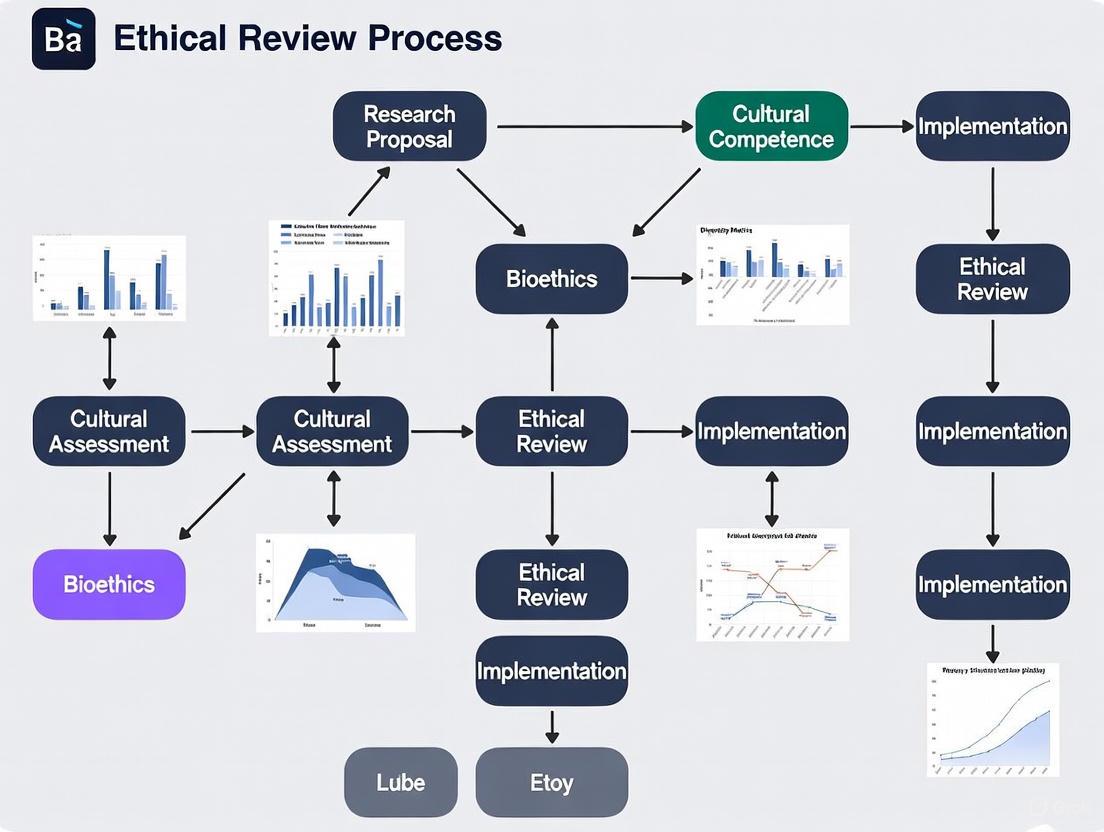
This article provides a comprehensive framework for researchers and ethics professionals to integrate cultural competence into the ethical review process for biomedical and clinical research.
Integrating Cultural Competence into the Ethical Review Process: A Framework for Researchers and IRBs
Abstract
This article provides a comprehensive framework for researchers and ethics professionals to integrate cultural competence into the ethical review process for biomedical and clinical research. It explores the ethical imperative of cultural competence, outlines practical methodologies for its application in study design and informed consent, addresses common challenges like implicit bias and communication barriers, and presents strategies for validating and evaluating these efforts. By synthesizing current standards and evidence-based practices, this guide aims to enhance the ethical quality, scientific validity, and equity of research involving diverse populations.
The Ethical Imperative: Why Cultural Competence is Non-Negotiable in Research Review
### Frequently Asked Questions (FAQs)
Q: What is the core difference between cultural competence and cultural humility?
A: Cultural competence is often viewed as a status or mastery of specific knowledge about different cultures. In contrast, cultural humility is an ongoing process-oriented approach. It is based on self-reflexivity, appreciating patients' or participants' expertise on their own lives, openness to power-balanced relationships, and a lifelong dedication to learning. While competence can risk stereotyping, humility fosters person-centered care [1].
Q: Why is an intersectional approach critical in research and evaluation?
A: Intersectionality suggests that an individual's beliefs, values, and experiences are shaped by the intersection of multiple characteristics, such as race, class, gender, and sexual orientation. An approach that focuses solely on one aspect, like race, risks essentializing the individual and discrediting their unique perspective. Using an intersectional lens prevents oversimplification and allows for a more accurate and respectful understanding of research participants [1].
Q: How can I adapt the informed-consent process for low-literacy or bilingual populations?
A: Key adaptations include simplifying consent forms, translating them into the participant's primary language, and ensuring the process is comprehensible. One project with a Mayan-speaking population in Yucatan, Mexico, provides a strong model. Researchers complied with both U.S. and Mexican regulations by providing forms in both Spanish and Mayan, and paid special attention to the participants' limited literacy and potential diminished autonomy due to age [2].
Q: What are the key components of a culturally competent informed-consent process?
A: A robust process ensures participants receive a complete and comprehensible description of the research. This includes its objectives, why they are being asked to participate, and assurance that participation is voluntary with no negative consequences for declining. Researchers must explain potential risks and benefits, protect confidentiality, and use language and concepts the participant can understand [2].
Q: My research involves a community I am not familiar with. What is the first step I should take?
A: The first step is self-reflection. Cultural competence requires a high degree of self-awareness to understand how your own background and experiences serve as assets or limitations in the evaluation [3]. Adopt a stance of cultural humility, acknowledging what you do not know and demonstrating openness to learning from the community members, who are the experts on their own lives [1].
Q: How does culture fundamentally impact the design and execution of an evaluation?
A: Culture is central to evaluation because it shapes the questions we ask, the data we deem important to collect, how we analyze it, and how we interpret the findings. Evaluations cannot be culture-free; they always reflect the culturally influenced norms and values of those who design them. A culturally competent evaluator acknowledges this and actively engages cultural dimensions to ensure validity [3].
### Troubleshooting Common Scenarios
| Scenario | Potential Issue | Recommended Solution |
|---|---|---|
| Participant seems hesitant during consent. | Process may not be fully comprehensible or may cause anxiety, especially with low-literacy populations or where official documents are viewed with suspicion [2]. | Simplify language, use verbal explanations alongside documents, and reaffirm the voluntary nature of participation. Consider oral consent if a written signature is a barrier [2]. |
| Evaluation findings seem to miss important context. | The evaluation design may reflect the researcher's cultural norms and worldviews, overlooking culturally specific impacts [3]. | Engage community stakeholders in the design phase. Practice cultural humility by appreciating the "lay expertise" of participants to shape a more relevant evaluation [1]. |
| A participant's behavior doesn't align with your expectations based on their cultural background. | Applying generalized cultural knowledge can lead to stereotyping and ignores intersectionality [1]. | Treat each person as an individual. Remember that culture is dynamic and a person's beliefs are shaped by the intersection of all their social statuses [1]. |
| Disagreement arises with community partners over methodology. | Power imbalances between researchers and communities are being replicated [1]. | Be open to sharing power with patients and community partners. A culturally humble approach involves collaboration and power-balanced relationships [1]. |
| Recruitment yields a non-diverse participant pool. | Organizational practices or researcher biases may be creating barriers for certain groups [4]. | Implement a framework of cultural competence interventions, which can include minority recruitment into research teams and developing more inclusive outreach materials [4]. |
### The Researcher's Toolkit: Key Frameworks & Components
Table: Frameworks for Cultural Competence and Humility
| Framework/Component | Description | Key Function |
|---|---|---|
| Cultural Humility | An orientation based on self-reflexivity, appreciation of patients' lay expertise, and openness to sharing power [1]. | Shifts the paradigm from "mastering" cultures to lifelong learning and patient-centered care, reducing power imbalances [1]. |
| Intersectionality | A concept recognizing that an individual's experiences are shaped by the intersection of their multiple social statuses (e.g., race, class, gender) [1]. | Prevents stereotyping by ensuring individuals are not reduced to a single cultural or racial identity [1]. |
| Organizational-Level Interventions | Efforts that target the leadership and workforce of an institution [4]. | Addresses disparities by promoting diverse recruitment and institutional policies that support culturally competent practices [4]. |
| Structural-Level Interventions | Changes to the processes of care and research, such as developing interpreter services and language-appropriate materials [4]. | Removes systemic barriers to participation and ensures accessibility for diverse populations [4]. |
| Clinical/Interpersonal-Level Interventions | Training and education for providers and researchers on cross-cultural communication [4]. | Improves the quality of the direct interaction between the researcher/provider and the participant/patient [4]. |
This technical support center provides troubleshooting guides and FAQs for researchers, scientists, and professionals in drug development. The content is framed within the broader thesis that cultural competence—the ability to honor the beliefs, customs, and values of diverse populations—is an ethical imperative grounded in the principles of respect for persons, justice, and beneficence [5]. Providing effective, equitable support requires not only technical skill but also an understanding of the diverse cultural and linguistic contexts in which our research tools are used. This ensures that our scientific work is both ethically sound and universally accessible.
Troubleshooting Guides
Guide 1: Troubleshooting Clinical Data Integration from Diverse Populations
Problem: Researchers are unable to successfully integrate or normalize clinical data collected from multinational trial sites, leading to errors in analysis.
Application to Cultural Competence: Data collection instruments (e.g., surveys, assessments) may not be culturally equivalent, leading to biased or uninterpretable data. Ethical research (justice) requires ensuring data quality and representativeness across all participant groups [5].
Methodology:
- Understand the Problem: Actively listen and ask clarifying questions to determine the exact nature of the integration error (e.g., is it missing data, formatting inconsistencies, or value mismatches?) [6].
- Isolate the Issue:
- Check if the issue is isolated to data from a specific site or region.
- Compare the data structure from the problematic source against a known, correctly integrated source.
- Review translation and cultural adaptation protocols for the original data collection tools to identify potential sources of measurement non-equivalence [5].
- Find a Fix or Workaround:
- Workaround: Implement data-cleaning scripts that account for identified cultural or regional formatting differences (e.g., date formats, numerical separators).
- Settings Update: Collaborate with site investigators to re-harmonize data collection procedures, ensuring they are culturally appropriate and technically consistent.
- Engineering Fix: Request a permanent update to the data integration platform (e.g., the Rare Disease Cures Accelerator-Data and Analytics Platform) to better handle multicultural data formats by design [7].
Guide 2: Troubleshooting Access to Collaborative Research Tools
Problem: A international research team member cannot access a shared, cloud-based research platform or database.
Application to Cultural Competence: Barriers to access can inadvertently exclude collaborators based on geography, language, or institutional resources, violating the ethical principle of justice. Furthermore, support interactions must use clear, jargon-free language to be understood by team members for whom English may not be a first language [8] [5].
Methodology:
- Understand the Problem: Gather information from the user. What is the exact error message? From which country and institution are they accessing the platform? Have they successfully accessed it before?
- Isolate the Issue:
- Ask the user to verify their internet connection is stable.
- Check if the user's account permissions and credentials are correctly configured for their role and institution.
- Investigate if the user's regional internet firewall or security settings are blocking access.
- Check for potential service outages that may be specific to certain regions [9].
- Find a Fix or Workaround:
- Workaround: Guide the user to try accessing the platform through a different network or using a VPN, if compliant with security policies.
- Settings Update: Verify the user's identity and update their account permissions or assist them in resetting their password.
- Engineering Fix: If the issue is widespread for a specific region, work with IT to adjust firewall rules or deploy a regional server instance to improve access [10].
Frequently Asked Questions (FAQs)
| Question | Answer and Ethical Context |
|---|---|
| I am setting up a clinical trial database. What key cultural and demographic variables should I include to ensure equitable analysis? | At a minimum, you should collect standardized data on race, ethnicity, preferred language, health literacy level, and socioeconomic indicators [5]. The ethical principle of justice requires this to ensure that trial results are generalizable and that therapies are effective across subpopulations, not just the majority. |
| A translated informed consent document is not displaying correctly in our electronic system. What should I do? | First, ensure the document's file encoding supports special characters (e.g., UTF-8). Then, verify with a cultural liaison that the formatting issue has not compromised the document's readability or meaning. Respect for persons requires that participants fully comprehend consent materials in their preferred language [5]. |
| My computer is running very slowly when analyzing large genomic datasets. How can I improve performance? | Close other energy-intensive programs. Use Task Manager (Windows) or Activity Monitor (macOS) to identify applications consuming excessive CPU or memory. Ensure your operating system and analysis software are up to date. If storage is full, move data to cloud or external storage [9] [10]. Beneficence (maximizing good outcomes) is supported by maintaining efficient research tools. |
| I've accidentally deleted a critical research data file. Can it be recovered? | Yes, act quickly. First, check your Recycle Bin (Windows) or Trash (macOS). If you have a backup system like Time Machine (macOS) or File History (Windows), restore from there. If not, use file recovery software (e.g., Recuva, Disk Drill), but install it on a different drive to avoid overwriting the deleted file [9]. Protecting data is a core aspect of research integrity and beneficence. |
| I received a suspicious email asking for participant data. Is this a phishing attempt? | Almost certainly. Do not click any links or download attachments. Exercise caution with emails from unknown senders, even if they appear legitimate. Forward the email to your IT support team for verification and then delete it [9]. Upholding justice and respect requires protecting participant confidentiality from such threats. |
Experimental Workflow and Signaling Pathways
The following diagram illustrates the logical workflow for integrating cultural competence into the technical and ethical review processes of a research project. This ensures the principles of respect, justice, and beneficence are operationalized at every stage.
Research Ethics and Cultural Competence Workflow
The Scientist's Toolkit: Essential Research Reagent Solutions
The following table details key resources and tools essential for conducting ethically grounded and technically sound research in culturally diverse settings.
| Item/Resource | Function in Research |
|---|---|
| Cultural Competence Frameworks (e.g., from OMS) | Provides guidelines for providing culturally and linguistically appropriate services (CLAS), helping to ensure respect and justice in participant interactions [5]. |
| Rare Disease Cures Accelerator-Data and Analytics Platform (RDCA-DAP) | A platform that promotes the sharing and standardization of patient-level data, which is critical for ensuring research includes and benefits diverse patient populations, aligning with beneficence [7]. |
| Alzheimer's Disease Clinical Trial Simulation Tool | A quantitative tool to help optimize clinical trial design. Using such tools ethically requires ensuring the underlying data represents diverse populations to avoid biased outcomes [7]. |
| Patient-Reported Outcome (PRO) Consortium Measures | Provides validated assessment measures for different therapeutic areas. Their cultural validity and appropriate translation are prerequisites for ethical application (justice) [7]. |
| Remote Desktop Support Tools (e.g., screen sharing) | Allows IT support to assist researchers remotely, reducing downtime. This must be done with clear communication and consent, respecting the user's technical comfort level [8] [11]. |
| Self-Service Knowledge Base & FAQs | Empowers researchers to find solutions to common technical problems independently. Content should be clear and accessible to non-native speakers, a practice of respect [8] [11]. |
The process of informed consent is a cornerstone of ethical clinical research, founded on the principle of respecting individual autonomy [12]. However, the practical application of this principle is deeply influenced by cultural norms and values. International ethical guidelines, often rooted in Western liberal individualism, prioritize the individual's right to make autonomous choices [12]. In many other cultures, decision-making is a communal process, where family members or community leaders play a crucial role [13] [12]. This divergence can create significant challenges in multicultural research settings. For instance, a researcher strictly adhering to Western standards might insist on obtaining consent solely from an individual, potentially disrespecting cultural norms and eroding trust. Conversely, relying solely on family consent could violate the ethical principle of individual autonomy. This technical guide provides troubleshooting advice and frameworks to help researchers navigate these complex cultural landscapes, ensuring that the informed consent process is both ethically sound and culturally respectful.
Frequently Asked Questions (FAQs)
Q1: What are the most common cultural barriers to obtaining genuine informed consent?
- Differing Decision-Making Models: In cultures with a communitarian perspective (e.g., influenced by Ubuntu ethics in some African communities or norms in many Asian societies), an individual may not feel empowered to make a decision without consulting the family or community head [12]. Applying a strict individualistic model can be perceived as disrespectful.
- Language and Literacy: Complex, legalistic consent forms can be a barrier, especially when translation is inadequate or when working with populations with varying literacy levels [14]. Meaningful understanding requires more than a verbatim translation.
- Power Dynamics and Trust: Historical exploitation in research, such as the cases of the Havasupai Tribe and the Pfizer Trovan study in Nigeria, has bred deep-seated mistrust in some communities [13] [12]. Potential participants may view the research process with suspicion, and power imbalances between the researcher and participant can impede a truly voluntary decision [14].
- Varied Perceptions of Risk and Benefit: Motivations for participation and perceptions of what constitutes a risk or benefit can vary culturally. Some individuals may participate out of a sense of obligation or a desire to please authority figures, while others may have concerns about how the research could impact their entire community, not just themselves [13].
Q2: How can we adapt the informed consent process for cultures with communal decision-making?
Adapting the process requires a balanced approach that honors cultural traditions while safeguarding individual rights.
- Engage the Community Early: Consult with community leaders and family members in the initial stages of research design and before approaching potential individual participants [12] [14].
- Redefine the Process: Frame the consent process as a series of conversations that involve both the individual and their trusted family members, rather than a single transaction with an individual [14].
- Seek Individual Affirmation: After discussions with the family, privately confirm the individual participant's willingness to join the study and ensure they understand they can withdraw at any time without consequence [12].
Q3: What practical tools can enhance understanding during the consent process?
- The Teach-Back Method: Ask participants to explain the study's key aspects in their own words. This confirms comprehension rather than just assuming it [14].
- Audio-Visual Aids: Use videos, diagrams, and other visual tools to convey complex information, which can be especially helpful for participants with lower literacy [14].
- Trained Interpreters: Employ professional interpreters who understand research terminology and cultural nuances, rather than relying on family members or untrained staff [14] [5].
Troubleshooting Common Scenarios
| Scenario | Challenge | Recommended Solution |
|---|---|---|
| The Reluctant Individual | An individual seems willing but defers to family members who are hesitant or unavailable. | Pause the process. Do not pressure the individual. Schedule a follow-up meeting with key family members present to address their concerns collectively. Reframe the benefits in terms of family or community well-being. |
| Complex Protocol | The research involves a scientifically complex intervention that is difficult to explain, leading to low comprehension scores. | Simplify the language in the consent form. Utilize visual aids or flowcharts to illustrate the study design and procedures. Use the "Teach Back Method" to iteratively improve understanding. |
| Historical Mistrust | A community with a history of research exploitation is resistant to engagement and recruitment. | Prior to any research, invest time in building authentic community partnerships. Acknowledge past wrongs transparently. Involve trusted community figures, such as physicians or religious leaders, in the recruitment and consent process [15]. |
| Language Barrier | Consent forms have been translated, but participants still struggle to understand key concepts. | Move beyond written forms. Use a trained interpreter to conduct the entire consent conversation verbally. Employ audio-visual resources in the participant's primary language. Ensure all ongoing communication is also provided in their language. |
Quantitative Data on Cultural Diversity in Research
Table 1: Consequences of a Lack of Diversity in Clinical Research
| Issue | Example | Impact | Source |
|---|---|---|---|
| Drug Efficacy | Clopidogrel, a heart attack prevention drug, was found to be ineffective for 57% of British South Asians who are intermediate or poor metabolizers. | Increased risk of recurrent heart attacks in a specific population; limited drug effectiveness. | [16] |
| Diagnostic Accuracy | Race-based adjustments for estimating kidney function (eGFR) delayed diagnosis and care for Black patients. | Later-stage diagnosis, limited access to transplants, and perpetuation of health disparities. | [16] |
| Vaccine Uptake | Despite higher risks, COVID-19 vaccine uptake was significantly lower in Black (57-65%) compared to white (90%) communities in London during the first 6 months. | Confusion, hesitancy, and poorer health outcomes during a pandemic due to a lack of representative safety data and trust. | [16] |
| Oncology Trials | Less than 3% of participants in clinical trials for immune checkpoint inhibitors were Black. | Unclear if advanced cancer therapies work equally well across racial and ethnic populations. | [15] |
Table 2: Practical Strategies for Enhancing Diversity and Cultural Sensitivity
| Strategy | Key Action | Expected Outcome |
|---|---|---|
| Build Trust via Community Physicians | Engage local doctors as sub-investigators. | Patients feel more comfortable participating with a familiar physician [15]. |
| Community Partnership | Partner with churches, advocacy groups, and local clinics for consistent outreach. | Establishes trust through culturally sensitive environments and trusted leaders [15]. |
| Staff Training | Train research staff in cultural humility, implicit bias, and communication. | Creates a respectful environment that retains diverse participants [15] [5]. |
| Reduce Logistical Barriers | Offer evening/weekend hours, combine visits, provide travel/parking information. | Enhances accessibility for working individuals and underserved populations [15]. |
Experimental Protocols for Culturally Competent Research
Protocol 1: Developing Culturally Relevant Informed Consent Guidelines
This protocol is adapted from a study conducted in Lebanon, which used a Design Thinking and Participatory Action Research (PAR) framework [14].
- Objective: To collaboratively create informed consent guidelines that are culturally relevant and acceptable to both researchers and the target community.
- Methodology:
- Form a Partnership: Establish a collaborative team including researchers, community leaders, and potential participants from the affected community.
- Exploratory Phase: Conduct focus groups and in-depth interviews to explore community perceptions, barriers, and facilitators to understanding and providing informed consent. Key themes to investigate include trust-building, motivations for participation, and decision-making dynamics [14].
- Synthesis and Ideation: Analyze qualitative data to identify key themes and challenges. Collaboratively brainstorm potential solutions and components for the new consent guidelines.
- Co-Development: Draft the consent guidelines with the partnership team. Key components may include using simplified language, audio-visual aids, and structuring the process as an ongoing dialogue rather than a one-time signature [14].
- Iterative Testing and Refinement: Pilot the new guidelines with a small group from the community. Use feedback to refine and finalize the guidelines.
- Outcome Measures: Successful implementation is measured by improved participant comprehension scores, higher comfort levels reported by participants and staff, and increased recruitment and retention rates from the target community.
Protocol 2: Integrating Cultural Humility into the Consent Process
This protocol focuses on the internal stance and continuous practice of the research team [5].
- Objective: To cultivate an approach within the research team that emphasizes self-reflection and partnership, leading to more authentic and ethical consent processes.
- Methodology:
- Pre-Study Self-Reflection: Before engaging with participants, the research team should engage in structured self-reflection and implicit bias training. Team members should journal their own cultural backgrounds, assumptions, and potential biases [5].
- Community Mapping: Research and understand the demographic and social context of the community where the research will take place, including resource disparities and historical relations with research institutions [5].
- Culturally Humile Communication: During the consent process, researchers should:
- Explicitly state that the process is collaborative.
- Use open-ended questions (e.g., "What questions do you have for me?" instead of "Do you understand?").
- Ask patients about their background, practices, and preferences to avoid stereotyping.
- Inquire, "Is there anything else you would like to add to be better understood?" at the end of a session [5].
- Post-Encounter Debriefing: The team should regularly debrief after consent sessions to discuss what went well, what challenges arose, and how their own biases may have influenced the interaction.
- Outcome Measures: This is assessed through qualitative feedback from participants on their sense of being heard and respected, as well as through the research team's own reflective journals and debriefing notes.
Conceptual Framework: Navigating Cultural Influences on Informed Consent
The following diagram illustrates the logical relationship between cultural challenges, the principles of cultural competemility, and the resulting ethical outcomes in the informed consent process.
The Scientist's Toolkit: Essential Reagents for Culturally Competent Research
This table details key conceptual "reagents" and their functions in designing and implementing ethically and culturally sound research.
Table 3: Research Reagent Solutions for Cultural Competence
| Research 'Reagent' | Function & Explanation |
|---|---|
| Cultural Humility | The foundational "solvent" for all interactions. It is a lifelong commitment to self-evaluation and critique to redress power imbalances, fostering mutually beneficial partnerships rather than a paternalistic dynamic [17] [5]. |
| Community Advisory Board (CAB) | A "catalyst" for trust and relevance. This panel of community members provides invaluable input on study design, recruitment strategies, and consent materials, ensuring the research is acceptable and respectful to the community [13] [14]. |
| Culturally Validated Communication Tools | "Delivery vehicles" for information. These include professionally translated materials, audio-visual aids, and the "Teach Back Method." They ensure that information about risk, benefit, and procedures is not just delivered but is truly understood [14]. |
| Diversity Action Plan | The "experimental protocol" for inclusion. A formal plan required by regulators (e.g., FDA's DEPICT Act) that outlines specific goals and strategies for enrolling a participant population that reflects the demographics of the disease burden [16]. |
| Ethical Framework (e.g., Ubuntu vs. Liberalism) | The "theoretical model" for navigating dilemmas. Understanding different ethical frameworks (e.g., communitarian vs. individualistic) helps researchers anticipate conflicts and design consent processes that respect cultural values while upholding core ethical principles [12]. |
Understanding Historical Trauma and Community Mistrust in Research
Troubleshooting Guides
Guide 1: Troubleshooting Barriers to Research Participation
Problem: Potential participants from historically marginalized groups express reluctance or refuse to enroll in research studies.
Possible Cause 1: Deep-seated mistrust of the healthcare and research system.
- Diagnosis: This mistrust often stems from knowledge of historical abuses (e.g., the Tuskegee Syphilis Study) and is reinforced by ongoing personal or community experiences with discrimination and inequitable care [18] [19].
- Solution: Acknowledge historical trauma openly. Implement transparent research practices and build long-term, equitable partnerships with communities before initiating research [18] [14].
Possible Cause 2: Concerns about exploitation and lack of benefit.
- Diagnosis: Potential participants may worry that the research findings will be used to reinforce negative stereotypes or will not benefit their community [18].
- Solution: Clearly articulate how the research will benefit the community. Involve community stakeholders in developing the research questions and plans for disseminating findings [18] [14].
Possible Cause 3: Culturally incongruent recruitment and consent processes.
- Diagnosis: Use of complex jargon, lengthy written forms, and lack of consideration for power dynamics can hinder genuine understanding and consent [14].
- Solution: Simplify communication, use the "Teach Back" method, and consider audio-visual aids. Ensure the consent process is a reciprocal dialogue rather than a formality [14].
Guide 2: Troubleshooting the Informed Consent Process
Problem: Participants sign consent forms but demonstrate limited understanding of the research protocol, their rights, or the potential risks and benefits.
Possible Cause 1: Language, literacy, and conceptual barriers.
- Diagnosis: Participant Information Leaflets/Informed Consent Forms (PIL/ICF) are often lengthy, complex, and not in the participant's primary language [14].
- Solution: Develop concise, straightforward materials in the participant's preferred language. Use trained interpreters and avoid technical jargon [14].
Possible Cause 2: Power imbalances between researchers and participants.
- Diagnosis: Participants may agree due to perceived authority of the researcher or institution, not from a place of autonomous understanding [14].
- Solution: Foster an environment of mutual trust and equality. Emphasize that participants can ask questions and withdraw at any time without penalty [14].
Possible Cause 3: Inadequate time for decision-making.
Frequently Asked Questions (FAQs)
Q1: What is historical trauma and how does it relate to research mistrust?
A: Historical trauma is the "emotional and psychological wounding over the lifespan and across generations" resulting from massive cumulative group trauma, such as colonization, genocide, and specific events like the Tuskegee Syphilis Study [19] [20]. This trauma is passed down and can manifest as a protective historical trauma response, including a compulsion to distrust the health care system, providers, and research institutions [19]. Mistrust is therefore not an individual character flaw but a rational response to a history of exploitation and broken trust [18] [19].
Q2: Beyond Tuskegee, what are other historical events contributing to this mistrust?
A: While the Tuskegee Syphilis Study is a sentinel event, the history of medical and research abuse of African Americans is extensive [18]. Harriet Washington's work documents this long history of exploitation [18]. More recent examples include a 1990s study where a prestigious university recruited African American boys to test a genetic etiology for aggression, which involved withdrawing medications and administering a drug with potential risks [18]. For First Nations peoples in Canada, the residential school system is a primary source of historical trauma, where children were forced to assimilate and suffered abuse, the effects of which are intergenerational [20].
Q3: How can we build trust with communities that have experienced historical trauma?
A: Trust-building requires a long-term, committed approach [14]:
- Community Partnership: Engage community leaders and members as equal partners from the very beginning of research conceptualization, not just for recruitment [14] [20].
- Cultural Humility: Practice cultural humility, which is a lifelong process of self-reflection to acknowledge one's own cultural biases and build equitable relationships [21].
- Transparency and Accountability: Be transparent about the research goals, methods, and potential outcomes. Report back results to the community in an accessible way [18].
- Sustainable Benefit: Ensure the research provides a direct, tangible benefit to the community and does not merely extract data [14].
Q4: Our Institutional Review Board (IRB) protocol is approved. Why do we still face mistrust?
A: An IRB approval is a necessary baseline for ethical research, but it is not sufficient to overcome deep-seated historical and personal mistrust [19]. Regulatory compliance focuses on protecting institutions, while building trust is a relational process that focuses on the community [14]. Earning trust requires going beyond the mandatory IRB requirements to implement the culturally competent and humble practices described in these guides [21].
Experimental Protocols & Data
This table summarizes qualitative data from a study exploring barriers to research participation among African American adults (N=70 across 11 focus groups) [18].
| Theme | Frequency of Mention | Key Illustrative Quotes | Participant Characteristics |
|---|---|---|---|
| Mistrust of Healthcare System | High; expressed across all groups | "They are not being truthful... they are not telling you everything." | All participants, regardless of prior research experience or SES [18] |
| Historical Exploitation | High | References to Tuskegee and other events | Across all groups [18] |
| Fear of Experimentation | Moderate | Concerns about being "guinea pigs" | Participants without prior research experience [18] |
| Lack of Cultural Diversity | Moderate | Perception of differential treatment compared to Whites | Across all groups [18] |
Protocol 1: Conducting Culturally Grounded Qualitative Research
Aim: To gain an in-depth understanding of community-specific barriers and facilitators to research participation [18] [20].
Methodology:
- Design: Use a grounded theory design, where theory emerges from the data without preconceived hypotheses. Combine with Participatory Action Research (PAR) to actively engage the community in solving problems [18] [14].
- Sampling: Employ a purposive sampling strategy to identify adults from the community, ensuring representation across gender, age, and socioeconomic status. Include individuals with and without previous research experience [18].
- Data Collection: Conduct focus groups in a comfortable, informal atmosphere. Use a conversational moderator guide with introductory, key, and ending questions. Audio-record sessions and have a co-moderator take notes on group dynamics and non-verbal cues [18].
- Data Analysis: Transcribe recordings. Use a whole-text analysis and open-coding method to identify themes. Establish inter-rater reliability among coders. Use qualitative software to manage data. Identify significant themes based on frequency, passion, and use of illustrative stories [18].
- Ethical Considerations: Obtain informed consent approved by a relevant ethics committee. Debrief moderators after each session. Compensate participants for their time [18].
Visualizations
Diagram 1: Trust-Building Research Workflow
Diagram 2: Historical Trauma Impact Pathways
The Scientist's Toolkit: Essential Research Reagent Solutions
| Item | Function in Research |
|---|---|
| Community Advisory Board (CAB) | A group of community stakeholders that provides ongoing guidance, ensures cultural relevance, and helps build trust between researchers and the community. |
| Culturally Adapted Consent Tools | Simplified guides, audio-visual materials, and translated documents that make the informed consent process genuinely accessible and understandable. |
| Trained Cultural Brokers/Interpreters | Individuals who can bridge cultural and linguistic gaps between the research team and participants, ensuring clear communication and mutual understanding. |
| Qualitative Data Analysis Software (e.g., QSR N6) | Software used to systematically code, manage, and analyze qualitative data from focus groups and interviews to identify key themes [18]. |
| Partnership Agreements (MOU) | Formal Memoranda of Understanding that outline the roles, responsibilities, and data sharing agreements between the research institution and community partners. |
Technical Support Center
Troubleshooting Guides
Guide 1: Resolving Ethical Review Challenges in Culturally Diverse Research
Problem: Research protocols are delayed because the informed consent process is not adequate for populations with low literacy or limited English proficiency.
Solution: Implement a culturally competent informed consent process.
- Step 1: Assess Participant Needs. Before protocol submission, identify the specific communication needs of your target population, including primary language, literacy level, and common cultural beliefs about research [2].
- Step 2: Adapt Consent Materials. Simplify forms for low literacy and translate them into the participant's primary language. Ensure translations are culturally appropriate, not just literal [2].
- Step 3: Implement Verbal Explanation. Use trained interpreters or bilingual staff to explain the research project verbally. Allow ample time for questions and discussion, ensuring comprehension beyond a signed form [2].
- Step 4: Verify Understanding. Use "teach-back" methods where participants explain the study in their own words to confirm true informed consent [2].
- Step 5: Document the Process. For IRB compliance, document the steps taken to ensure understanding, which may include audio recording of oral consent in lieu of a written signature if approved by the IRB [2].
Preventive Measures: Consult with cultural or community leaders during the study design phase to proactively address potential barriers to consent.
Guide 2: Addressing Cultural Competence Gaps in Research Teams
Problem: The research team lacks the cultural awareness to effectively engage with a study population, leading to low recruitment or poor data quality.
Solution: Integrate NASW's cultural competence standards into team training and protocol development.
- Step 1: Conduct a Self-Assessment. Team members should engage in self-awareness activities to understand their own cultural identities, privileges, and potential biases, as outlined in NASW Standard 2 [22].
- Step 2: Acquire Cross-Cultural Knowledge. Develop specialized knowledge about the history, traditions, values, and family systems of the population you are studying, in line with NASW Standard 3 [22].
- Step 3: Apply Cross-Cultural Skills. Use communication and engagement skills that demonstrate respect for the population's culture. This includes using appropriate non-verbal cues and addressing cultural norms in interactions (NASW Standard 4) [22].
- Step 4: Practice Empowerment and Advocacy. Ensure the research design and implementation empower the community. Share findings with participants and advocate for services that address identified gaps, reflecting NASW Standard 6 [22].
Preventive Measures: Include a cultural competence lead on the research team and budget for ongoing training and consultation with cultural experts.
Frequently Asked Questions (FAQs)
Q1: What are the key federal regulatory milestones for an Investigational New Drug (IND) application?
A: The IND process is a critical federal regulatory pathway. The following table summarizes the key phases and requirements [23]:
Table 1: Key Milestones in the Investigational New Drug (IND) Application Process
| Phase | Primary Objective | Typical Sample Size | Data Required to Proceed |
|---|---|---|---|
| Preclinical | To determine if the product is reasonably safe for initial human use and exhibits pharmacological activity that justifies commercial development [23]. | N/A (Animal studies) | Data on toxic and pharmacologic effects through in vitro and in vivo laboratory animal testing [23]. |
| Phase 1 | Initial introduction into humans to determine metabolic and pharmacological actions, side effects, and early evidence on effectiveness [23]. | 20-80 subjects [23] | Successful preclinical data and FDA authorization (30 days after IND submission if not contacted by FDA) [23]. |
| Phase 2 | To obtain preliminary data on the effectiveness of the drug for a particular indication and to determine common short-term side effects and risks [23]. | Several hundred patients [23] | Safety and pharmacological data from Phase 1 trials. |
| Phase 3 | To gather additional information about effectiveness and safety to evaluate the overall benefit-risk relationship and provide an adequate basis for physician labeling [23]. | Several hundred to several thousand people [23] | Promising evidence of efficacy and acceptable safety from Phase 2 trials. |
Q2: When is an IND required for clinical investigation?
A: An IND is required if you are conducting a clinical investigation with an investigational new drug. However, an IND may not be required for the clinical investigation of a marketed drug if all these conditions are met [23]:
- The investigation is not intended to support a new indication or significant labeling change.
- It does not involve a route of administration or dosage level that increases risks.
- It is conducted in compliance with IRB review and informed consent regulations (21 CFR parts 56 and 50).
- It does not intend to invoke exception from informed consent requirements (21 CFR 50.24) [23].
Q3: How do I properly cite the NASW Code of Ethics in APA style?
A: Proper citation is crucial for academic and professional integrity. Use the following format [24]:
- Reference List Entry: National Association of Social Workers. (2021). Code of ethics of the National Association of Social Workers. https://www.socialworkers.org/About/Ethics/Code-of-Ethics/Code-of-Ethics-English
- In-text Citation (Parenthetical): (National Association of Social Workers [NASW], 2021)
- In-text Citation (Narrative): National Association of Social Workers (NASW, 2021)
- Citing a Specific Section: (NASW, 2021, Standard 1.05)
Q4: What is the role of an Institutional Review Board (IRB) in protecting culturally diverse populations?
A: The IRB is formally designated to review and monitor biomedical research to ensure the rights and welfare of human subjects. This is especially critical for marginalized populations. An IRB must have at least five members with varying backgrounds to provide a complete and adequate review of research protocols, ensuring they are culturally acceptable and minimize coercion. IRBs are required for FDA-regulated research, even when subjects are not institutionalized [23].
Q5: Where can researchers find training on cultural competency?
A: Free, accredited e-learning programs are available. For example, the U.S. Department of Health and Human Services offers a course called "Improving Cultural Competency for Behavioral Health Professionals." This training covers self-awareness, understanding a client's cultural background, and building stronger therapeutic relationships, which is directly applicable to researcher-participant dynamics [25].
Experimental Protocols and Workflows
Protocol 1: Ethical Review Process with Integrated Cultural Competence
This protocol details a methodology for integrating cultural competence into the ethical review of research involving human subjects, framed within a binational research context [2].
- Objective: To ensure that the ethical review process adequately protects the rights and welfare of participants from diverse cultural and linguistic backgrounds.
- Materials:
- Research protocol document
- Draft informed consent forms (ICFs)
- Access to cultural and linguistic experts
- IRB submission forms
- Methodology:
- Pre-Submission Cultural Review: Submit the research protocol and draft ICFs for review by a panel of cultural experts or community representatives from the target population.
- Adaptation of Materials: Based on feedback, simplify and translate the ICFs. Develop verbal scripts for explaining the study to ensure consistency across participants with low literacy [2].
- IRB Submission: Submit the adapted materials, along with a detailed description of the culturally competent consent process (e.g., use of verbal consent, teach-back method), to the IRB for approval [23] [2].
- Investigator Training: Train all research staff on the specific cultural considerations of the population, including communication styles, cultural humility, and the approved consent process [22] [25].
- Process Documentation: During the study, meticulously document the consent process for each participant, noting how verbal explanations were provided and understanding was verified [2].
The following diagram illustrates this integrated workflow:
Protocol 2: Framework for Applying NASW Cultural Standards in Research Design
This protocol provides a framework for applying the NASW Standards for Cultural Competence directly to the research design process [22].
- Objective: To embed the principles of cultural competence at every stage of research development, from conceptualization to dissemination.
- Materials:
- NASW Standards and Indicators for Cultural Competence in Social Work Practice [22].
- Research design documents.
- Methodology:
- Ethics and Values (Standard 1): Frame the research question and methodology to align with social work values of social justice, dignity, and worth of the person. Ensure the research aims to empower, not merely observe, the community [22].
- Self-Awareness (Standard 2): The research team engages in structured self-assessment activities to identify and mitigate personal and professional biases that could influence the research [22].
- Cross-Cultural Knowledge (Standard 3): Conduct a thorough literature review and engage with community stakeholders to build a foundational understanding of the cultural group's history, traditions, and social systems [22].
- Empowerment and Advocacy (Standard 6): Design the research methodology to include community participation (e.g., Community-Based Participatory Research) and plan for the dissemination of results back to the community in an accessible format [22].
- Leadership (Standard 10): Position the research project as a change agent by using findings to challenge structural oppression and advocate for policy changes that benefit the population studied [22].
The conceptual relationship between these standards and the research lifecycle is shown below:
The Scientist's Toolkit: Essential Research Reagent Solutions
This table details key conceptual "reagents" – the frameworks and guidelines essential for conducting ethically and culturally competent research.
Table 2: Essential Frameworks and Guidelines for Culturally Competent Ethical Research
| Item Name | Function/Application in Research | Source/Access |
|---|---|---|
| NASW Code of Ethics | Serves as the primary ethical framework, guiding decision-making in situations involving confidentiality, informed consent, professional boundaries, and social justice. The 2021 update includes explicit guidance on cultural competence and technology use [26]. | NASW Website [26] |
| NASW Standards for Cultural Competence | Provides 10 specific standards with indicators to guide the implementation of culturally competent practice. Critical for designing research protocols that are respectful and effective with diverse populations (e.g., Standards on Self-Awareness, Cross-Cultural Skills, and Empowerment) [22]. | NASW Website [22] |
| FDA IND Regulations | Provides the legal and regulatory requirements for conducting clinical investigations of new drugs. Understanding these is mandatory for research in drug development to ensure participant safety and data integrity [23]. | FDA Website [23] |
| HHS Cultural Competency Training | Provides free, accredited training modules for professionals to increase their cultural and linguistic competency. Useful for certifying and improving the cultural awareness of research staff [25]. | Think Cultural Health HHS Website [25] |
| IRB Guidebook | Outlines the policies and procedures for the protection of human subjects. Serves as a manual for navigating the ethical review process, including special considerations for vulnerable populations [23]. | Institutional IRB / OHRP Website |
A Practical Framework: Operationalizing Cultural Competence in Study Protocols and IRB Deliberations
Conducting a Cultural Context Assessment for Your Research Population
Troubleshooting Guides
How do I initiate a cultural context assessment when starting research with a new population?
Begin by conducting a thorough preparatory review to understand the community's historical, social, and political background. This involves gathering information about shared values, beliefs, and practices that may influence research participation and outcomes [27] [28].
Key Steps:
- Review Existing Literature: Examine published research about the community and consult with cultural experts or community leaders to gain foundational knowledge [29].
- Engage Stakeholders: Identify and involve key community representatives, leaders, and potential participants early in the planning process. This fosters trust and ensures diverse perspectives are considered [29] [27].
- Develop a Structured Plan: Create a detailed assessment plan outlining methods, timelines, and required resources. Anticipate potential barriers such as language differences or cultural sensitivities to mitigate challenges later [27].
What are the most effective methods for gathering meaningful cultural data?
A mixed-methods approach that combines quantitative and qualitative techniques provides the most comprehensive view of the cultural landscape [27].
Recommended Methodologies:
- Focus Groups & Interviews: Facilitate open dialogue to gain deep insight into cultural values, perceptions, and experiences. These methods reveal nuances that surveys might miss [30] [27].
- Surveys: Use questionnaires to gather broad, quantitative data on participant attitudes, experiences, and cultural phenomena from a larger sample [31] [27].
- Observational Techniques: Provide real-time insight into workplace or community dynamics and interpersonal relationships [27].
- Collaborative Workshops: Foster an exchange of ideas and bring different community perspectives together to ensure a comprehensive understanding [27].
How can I ensure the ethical principle of informed consent is respected in diverse cultural contexts?
Standard consent procedures may not be effective across all cultures. It is crucial to adapt the process to be culturally relevant and accessible [14] [28].
Common Challenges and Solutions:
- Challenge: Language, literacy barriers, and complex consent forms hinder genuine understanding.
- Solution: Collaborate with trained interpreters and involve community members in translating materials. Simplify language in consent forms and use audio-visual methods to enhance comprehension. Employ the "Teach Back Method," where participants explain the information back to you, to confirm understanding [14].
- Challenge: Power dynamics between researchers and participants can undermine voluntary consent.
- Challenge: In societies where oral traditions are valued, written consent may be ineffective or distrustful.
- Solution: Where appropriate and ethically approved, consider oral consent processes that are documented via audio recording or a witnessed verbal agreement, rather than relying solely on written forms [14].
What should I do if my research team lacks cultural or linguistic expertise?
A lack of internal expertise is a common hurdle that can be overcome through strategic partnerships and resources.
- Engage Bicultural Researchers or Cultural Consultants: Include team members who share the cultural background of the population or hire expert consultants. They can provide critical insight into cultural norms and help navigate the research context [28].
- Utilize Trained Interpreters: Work with professional interpreters who are trained in research ethics and terminology, not just casual bilingual speakers. This ensures accurate translation and cultural mediation [28].
- Invest in Team Training: Provide cultural competence training for your research team. This should focus on developing self-awareness of one's own biases, knowledge about the specific cultural dimensions, and skills for appropriate engagement [31] [30].
Frequently Asked Questions (FAQs)
Why is a cultural context assessment critical for the ethical review of my research?
Cultural context is vital because all behaviors are learned and displayed within a cultural framework. An assessment ensures that your research practices are respectful, relevant, and do not unintentionally pathologize culturally normative behaviors [32] [30]. It directly impacts core ethical principles by ensuring genuine informed consent, minimizing exploitation, and building trust with communities that may have historical reasons for distrusting research [29] [14] [28].
How does culture specifically influence the informed consent process?
Culture shapes communication styles, including norms for directness, indirectness, and the importance of nonverbal cues [32]. For instance, expectations of what constitutes a "good listener" during a consent conversation—such as maintaining direct eye contact versus allowing respectful silence—vary significantly across cultures and influence perceived responsiveness and trust [32]. Furthermore, concepts like individual autonomy, which is central to Western consent models, may be viewed differently in collectivist cultures, where family or community decision-making might be the norm [32] [28].
Are there specific populations that require special consideration?
Yes, certain groups are recognized as needing special protection and tailored approaches throughout all research phases due to vulnerability or unique lifestyles. Key populations include [33]:
- Indigenous peoples
- Quilombola communities and other traditional peoples
- People deprived of liberty
- Children and adolescents
- Pregnant and lactating women
- People with disabilities that affect decision-making
Research with these populations often requires a more intensive, culture-centered approach that harnesses community-based knowledge and practices [29].
What are the key components of a cultural assessment framework?
A comprehensive framework should integrate several core competencies. The following table summarizes the key components based on established models [31]:
| Component | Description | Key Considerations |
|---|---|---|
| Cultural Competence | Ability to acknowledge, respect, and respond effectively to diverse cultural backgrounds [31]. | Cultural awareness, cross-cultural communication, harnessing community knowledge [31] [29]. |
| Ethical Competence | Upholding moral principles (accountability, transparency, integrity) in decision-making [31]. | Navigating differing cultural interpretations of ethical values like honesty and equity [31]. |
| Transnational Competence | Skills to effectively navigate diverse national, cultural, and institutional contexts [31]. | Analytical skills to interpret international events, adaptability, and self-awareness [31]. |
How can I visually plan and track the cultural assessment process?
The following workflow outlines the key stages of a cultural context assessment, from preparation to implementation.
How do cultural competencies integrate into the ethical review framework?
Cultural competencies are not standalone; they must be woven into the core of your research ethics framework. The diagram below illustrates how these elements interact to support ethical research.
The Scientist's Toolkit: Essential Reagents for Cultural Assessment
The following table details key methodological "reagents" essential for conducting a robust cultural context assessment.
| Research Reagent | Function & Application |
|---|---|
| Community-Based Participatory Research (CBPR) | A collaborative approach that equitably involves community members, organizational representatives, and researchers in all aspects of the research process [29]. This co-creation improves intervention efficacy and sustainability by integrating Indigenous-based theories and knowledge systems [29]. |
| Design Thinking (DT) & Participatory Action Research (PAR) | A combined framework that uses empathetic, user-centered design (DT) to explore problems and solutions, strengthened by the collaborative, social-change focus of PAR. This is highly effective for developing culturally relevant guidelines, such as for informed consent [14]. |
| Therapeutic Assessment (TA) Model | A semistructured, collaborative assessment intervention model from psychology. Its core values of collaboration, humility, and curiosity make it culturally responsive. It allows clinicians to tailor steps and content to the client's unique cultural background [30]. |
| Cultural Adaptation & Grounding | The process of systematically changing an evidence-based intervention to be compatible with a client's cultural values, meaning, and language. "Cultural grounding" places the cultural context at the very core of the intervention, which is advocated over more superficial adaptations for Indigenous populations [29] [30]. |
| Composite Theoretical Framework | A research framework that combines multiple theories (e.g., Cultural Relativism, Ethical Climate Theory, Transnationalism) to avoid oversimplifying the complex interplay of cultural backgrounds, experiences, and ethical decision-making in multicultural settings [31]. |
Culturally and Linguistically Appropriate Informed Consent Processes
Troubleshooting Guides and FAQs
This technical support center provides practical solutions for researchers facing challenges in obtaining genuine informed consent from diverse populations. The following guides address common operational hurdles, framed within the broader thesis that cultural competence is not an add-on but a fundamental component of rigorous and ethical research.
Troubleshooting Guide: Common Consent Barriers and Solutions
| Problem | Root Cause | Recommended Solution | Key References |
|---|---|---|---|
| Low Comprehension & High Illiteracy | Use of complex medical jargon; mismatch between patient health literacy and consent form language. | - Use plain language.- Implement the "Teach Back" method.- Employ interactive media and graphical tools. [34] | [34] |
| Language Barriers | Inadequate use of professional interpreters; reliance on family members or untrained staff. | - Use certified medical interpreter services for all non-proficient patients.- Ensure ASL interpreters are available for hearing-impaired patients. [34] | [34] |
| Cultural Distrust & Power Imbalances | Historical exploitation of marginalized communities in research (e.g., Tuskegee Study); perceived authority of clinicians. | - Build long-term, sustained relationships with communities.- Engage community leaders and trusted physicians.- Acknowledge historical contexts and emphasize transparency. [35] [15] [13] | [35] [15] [13] |
| Individual vs. Collective Decision-Making | Western standards prioritize individual autonomy, while many cultures use collective or family-based decision-making. | - Embrace relational approaches.- Involve family or community representatives in the consent process as appropriate.- Allow for collective discussion. [35] [34] | [35] [34] |
| Inadequate Documentation & Process Rushing | Consent obtained in high-stress settings (e.g., pre-op); time pressures on clinicians. | - Conduct consent discussions in a calm, office setting.- Allow patients time for reflection.- Ensure all key elements (risks, benefits, alternatives) are thoroughly documented. [34] | [34] |
Frequently Asked Questions (FAQs)
Q1: What are the most critical steps to improve understanding during the consent process for participants with low literacy?
A: Focus on a process-based approach rather than a form-based one.
- Use the "Teach Back" method: Ask participants to explain the study back to you in their own words to confirm understanding. [34]
- Simplify language: Replace medical jargon with plain, everyday terms.
- Utilize visual aids: Employ graphics, charts, or short videos to convey complex information about risks and procedures. [14] [34]
Q2: How can we build trust with Indigenous or other communities that have historically been harmed by research?
A: Trust is built through respect for community sovereignty and sustained engagement.
- Community-Driven Processes: Engage communities in the research design and the development of the consent process itself. This is a form of decolonizing research. [35] [14]
- Use "Wise Practices": These include land-based consenting, involving Elders and knowledge holders in decision-making, and recognizing that consent for an individual cannot be isolated from their family and community. [35]
- Transparency and Benefit: Be clear about how the research will benefit the community and commit to sharing the results in an accessible format. [15]
Q3: We are required to get a signed form, but in some cultures, written consent is viewed with mistrust. What should we do?
A: A culturally competent approach respects local customs while upholding ethical standards.
- Flexible Documentation: Explore alternative documentation methods approved by your IRB/REB. This could include oral consent witnessed by a community leader and audio-recorded, or a thumbprint accompanied by a signature from a trusted witness. [14]
- Explain the Purpose: Clearly explain that the form is for the participant's protection, to ensure they have received all the information and that their agreement is voluntary.
Q4: What is the difference between cultural competence and cultural humility, and why does it matter for consent?
A: This distinction is central to moving beyond a checklist mentality.
- Cultural Competence is the product—the skill of understanding and applying knowledge about a cultural group. [5]
- Cultural Humility is the process—a lifelong commitment to self-evaluation and self-critique, recognizing one's own implicit biases and the power imbalances in the client-professional relationship. [5]
- Why it matters: The merging of the two, termed "competemility," allows a researcher to use cultural knowledge while remaining open-minded and other-oriented, ensuring each participant is treated as a unique individual. [5]
Quantitative Data on Consent Challenges
The following data, synthesized from the literature, highlights specific challenges in the informed consent process.
Table: Documented Deficiencies in Informed Consent Forms and Processes
| Deficiency | Quantitative Finding | Source / Context |
|---|---|---|
| Incomplete Consent Forms | Only 26.4% of consent forms were documented to include all four required elements: nature of the procedure, risks, benefits, and alternatives. [34] | Bottrell et al. (as cited in StatPearls) [34] |
| Underrepresentation in Oncology Trials | Less than 3% of participants in clinical trials for immune checkpoint inhibitors were Black, despite higher cancer mortality rates in this population. [15] | Unger et al., 2020 [15] |
| General Underrepresentation | Black and Hispanic populations frequently account for less than 10% of participants in clinical trials. [36] | WCG Clinical Insights [36] |
Experimental Protocols for Improving Consent
Here are detailed methodologies for implementing two key evidence-based strategies.
Protocol 1: Implementing the Teach-Back Method
Objective: To ensure and verify participant comprehension of the informed consent information.
Materials: Simplified consent document, visual aids (if any).
Procedure:
- Explain: Present one key concept or section of the consent form to the participant using plain language.
- Ask: Instead of asking "Do you understand?", use an open-ended question like, "I want to make sure I explained this clearly. Could you please tell me back in your own words what this means?"
- Clarify: If the participant explains the concept correctly, move on to the next section. If there is a misunderstanding or omission, re-explain the information using a different approach. Avoid blaming the participant (e.g., say "I didn't explain that well enough").
- Repeat: Continue this process for all critical elements of the consent: procedures, risks, benefits, alternatives, confidentiality, and the right to withdraw.
- Document: Note in the research record that the Teach-Back method was used to confirm understanding. [34]
Protocol 2: Developing Community-Driven Consent Guidelines
Objective: To co-create culturally relevant informed consent guidelines with the target population.
Materials: Meeting space, recording equipment, facilitators trained in cultural humility.
Procedure (Based on the Lebanon Study using Design Thinking and PAR): [14]
- Empathize and Define: Conduct focus groups and interviews with community members and researchers to explore barriers, facilitators, and perceptions of consent. Identify specific points of friction (e.g., distrust, language, power dynamics).
- Ideate: Hold collaborative workshops with community members, researchers, and local leaders. Brainstorm solutions to the identified problems. Ideas from such sessions have included using audio-visual methods, involving trusted community interpreters, and ensuring timing and setting are convenient. [14]
- Prototype: Draft a guideline for the consent process that incorporates the brainstormed solutions. This may include scripts for researchers, templates for visual aids, and protocols for community engagement.
- Test: Pilot the new consent guideline in a small-scale study. Observe the process and gather feedback from both participants and researchers.
- Implement and Refine: Finalize the guideline based on feedback and implement it in broader research, with a commitment to ongoing refinement.
Visualizing a Relational Consent Process
The following diagram illustrates a community-engaged consent model, contrasting with a traditional, linear approach. This responds to evidence that effective consent with Indigenous and other collectivist cultures requires honoring relational networks. [35]
The Scientist's Toolkit: Research Reagent Solutions
This table details essential "reagents" or tools for implementing culturally and linguistically appropriate informed consent processes.
Table: Essential Tools for Culturally Competent Consent
| Tool / Solution | Function in the "Experiment" | Key Characteristics |
|---|---|---|
| Professional Medical Interpreter | Facilitates accurate, unbiased communication between researcher and participant. | Certified, trained in research terminology and ethics; not a family member. [34] |
| Plain Language Consent Form | Serves as the baseline document for explaining the study. | Written at a 6th-8th grade reading level; uses short sentences and active voice; avoids medical jargon. [34] |
| Visual Aids & Multimedia | Acts as an adjunct to text to improve comprehension of complex procedures, risks, and benefits. | Culturally relevant imagery; simple diagrams; short, focused videos in the participant's primary language. [14] |
| Community Advisory Board (CAB) | Functions as a catalyst for trust and cultural relevance, guiding study design and consent process. | Comprised of respected community members, potential participants, and local leaders. [35] [15] |
| Cultural Humility Training | The buffer solution that prepares the research team to engage effectively and respectfully. | Focuses on self-reflection, recognizing implicit bias, and understanding power dynamics. [5] |
Developing Inclusive Recruitment and Retention Strategies
Troubleshooting Guides
Guide: Addressing High Attrition in Research Teams
Problem: Research team members, particularly from underrepresented groups, are leaving within the first year.
Diagnostic Questions:
- What is the first-year attrition rate, and does it differ between demographic groups? [37]
- Do exit interviews indicate issues with culture, inclusion, or alignment with values? [38]
- Is there a perceived lack of fairness or equity in organizational processes? [39]
Solutions:
- Implement Stay Interviews: Proactively ask team members about their engagement, challenges, and what would make them stay.
- Audit and Adjust Onboarding: A robust onboarding process can boost new hire retention by up to 82%. Ensure it includes mentorship, clear objectives, and integration into the team culture. [38]
- Reinforce Inclusive Culture: Employees are three times more likely to stay when they perceive organizational processes as fair. Foster accountability for diversity goals and support practices like mentorship programs and flexible work arrangements. [39]
Guide: Overcoming a Non-Diverse Candidate Pipeline
Problem: Your recruitment process is not attracting a diverse pool of qualified applicants.
Diagnostic Questions:
- Are you using the same sourcing channels repeatedly? [37]
- Does your job description use inclusive language and focus on essential skills? [40] [41]
- Are degree requirements necessary for the role, or are they excluding skilled candidates? [42]
Solutions:
- Widen Sourcing Channels: Move beyond traditional channels. Use diverse job boards, partner with professional organizations for underrepresented groups, and leverage employee resource groups for outreach. [40]
- Revise Job Descriptions: Use tools like Textio or Gender Decoder to identify and remove biased language. Focus on essential skills and competencies rather than a long list of nice-to-have qualifications. [41]
- Eliminate Unnecessary Degree Requirements: 27% of organizations have eliminated degree requirements for certain roles, and 76% of those have successfully hired candidates who would have previously been disqualified. Conduct a job analysis to ensure requirements are based on necessary skills, not credentials. [42]
Guide: Ensuring Ethical and Culturally Competent Informed Consent
Problem: Research participants from diverse cultural backgrounds may not fully understand or feel comfortable with the informed consent process.
Diagnostic Questions:
- Are consent forms overly lengthy, complex, or reliant on Western-centric concepts? [31] [14]
- Does the process account for varying cultural norms, language barriers, and power dynamics between researcher and participant? [14]
- Are you using a "one-size-fits-all" approach to consent? [14]
Solutions:
- Adopt a "Reciprocal Dialogue": Move beyond a transactional signing of a form. Build mutual trust and allow for ongoing questions and dialogue throughout the research engagement. [14]
- Use Culturally Relevant Materials: Employ multimedia resources (videos, websites) and the "Teach Back Method," where participants explain the information back to you, to ensure comprehension. Develop guidelines that are co-created with the communities involved. [14]
- Involve Trained Interpreters: Address language and literacy barriers by using trained interpreters, not family members, to ensure accurate communication and mitigate power imbalances. [14]
Frequently Asked Questions (FAQs)
Q: What are the most effective strategies for attracting top talent in today's market? A: The most effective strategies are candidate-centric. Research shows that offering flexible work arrangements (61%) and improving compensation (61%) are top. Streamlining the application process (49%) and including pay ranges in job postings (48%) are also highly effective. [42]
Q: How can we reduce unconscious bias in our hiring process? A: Several strategies can help:
- Use Skills-Based Assessments: Tools like Vervoe use AI to score candidates based on performance in role-specific tasks, shifting focus from background to proven abilities. [41]
- Implement Structured Interviews: Ask all candidates the same set of questions to allow for fairer comparison. [41]
- Provide Bias Awareness Training: Training hiring teams on unconscious bias, especially using immersive methods, can improve hiring diversity. One study showed a 25% improvement in diversity over two years. [41]
- Create Diverse Interview Panels: This ensures a wider range of perspectives are considered during candidate evaluation and signals inclusivity. [41]
Q: What is the business case for investing in inclusive hiring and retention? A: Inclusive hiring is a business imperative, not just a moral one. Diverse teams are 35% more productive and creative, and inclusive organizations are 36% more profitable. They also see improved decision-making, better customer connection, and higher employee engagement. [40] [41]
Q: Our retention rates are low. What is the most impactful place to start? A: Start by hiring for cultural fit. Research indicates that 58% of employees would consider leaving for a company with a better culture. Ensuring new hires align with your organization's core values and mission fosters a sense of belonging and commitment from the start. [38]
Q: How can we make our research team's digital tools and career sites more inclusive? A: Ensure your digital presence follows Web Content Accessibility Guidelines (WCAG) [43] [41]:
- Navigation: Use clear headers for screen readers.
- Color Palette: Ensure strong color contrast for visually impaired users.
- Video Captions: Provide transcripts and captions for all video content.
- Keyboard Accessibility: Ensure the site is fully navigable without a mouse. [41]
Data Presentation
Table 1: Key Recruitment Metrics for Tracking Inclusivity
| Metric | Description | Target/Benchmark |
|---|---|---|
| First-Year Attrition [37] | Tracks new hires who leave within the first year, indicating poor fit or unmet expectations. | Monitor for disparities between demographic groups. |
| Adverse Impact [37] | Analyzes if hiring rates for any protected group are significantly less than the group with the highest hiring rate. | A ratio of less than 0.8 may indicate discrimination. |
| Source of Hire [37] | Identifies which channels (job boards, referrals, social media) bring in successful, diverse candidates. | Double down on channels that deliver diverse, qualified candidates. |
| Selection Ratio [37] | The number of hired candidates divided by the total number of candidates. | A very low ratio can indicate overly restrictive criteria. |
| Time to Hire [37] | Days from a candidate's application to offer acceptance. A long process can cause you to lose top talent. | Aim for efficiency; global averages vary by field (e.g., 21 days for customer service, 29 for engineering). |
Table 2: Quantitative Impact of Diversity and Inclusion Strategies
| Strategy | Quantitative Impact | Source |
|---|---|---|
| Accountability for D&I Goals | Employees are 2x as likely to stay. | [39] |
| Perceived Fairness | Employees are 3x as likely to stay. | [39] |
| Diverse Team Performance | Can outperform non-diverse teams by ~35% in productivity and creativity. | [40] |
| Inclusive Organizations | Are 36% more profitable than less diverse competitors. | [41] |
| Effective Onboarding | Can boost new hire retention by up to 82%. | [38] |
Experimental Protocols
Protocol: Conducting a Pay Equity Audit
Objective: To identify and rectify unjustified pay disparities based on gender, ethnicity, or other protected characteristics.
Methodology:
- Data Collection: Gather anonymized data for all team members: salary, bonus, years of experience, education, performance ratings, and demographic markers.
- Statistical Analysis: Use regression analysis to model the relationship between pay and legitimate factors like experience, performance, and location. The model will identify any residual pay gaps that are unexplained by these factors and may be due to bias.
- Root Cause Investigation: For any identified disparities, investigate the cause (e.g., starting salary negotiations, promotion rates).
- Remediation Plan: Develop a budgeted plan to adjust salaries and correct inequities.
- Transparency and Communication: Communicate the process and findings to the organization and commit to regular (e.g., annual) audits. Organizations that do this see a 20% increase in employee trust. [40]
Protocol: Implementing a Skills-Based Hiring Assessment
Objective: To reduce hiring bias and evaluate candidates based on demonstrated ability rather than pedigree.
Methodology:
- Role Analysis: Identify the 3-5 key competencies required for success in the role (e.g., data analysis for a research scientist, stakeholder management for a project lead).
- Assessment Design: Create practical tasks that mimic real-world challenges the candidate would face in the role. For a research role, this could involve analyzing a sample dataset and presenting findings.
- Blinded Evaluation: Use a platform like Vervoe, where an AI algorithm scores initial assessments blindly, or have reviewers evaluate work without access to demographic or background information. [41]
- Calibration and Refinement: Based on the performance of hired candidates, refine the assessments to better predict on-the-job success (Quality of Hire). [37]
Visualizations
Inclusive Hiring Workflow
Cultural Competence Framework
The Scientist's Toolkit: Research Reagent Solutions
| Item | Function in "Experiment" |
|---|---|
| Skills-Based Assessment Platform (e.g., Vervoe) | The primary "assay" for measuring candidate ability. Reduces noise from biased CVs and evaluates practical, job-relevant skills. [41] |
| Unconscious Bias Training | The "protocol training" for hiring managers. Equips the research team with awareness and techniques to minimize subjective bias in decision-making. [41] |
| Pay Equity Audit Software | The "analytical instrument" for diagnosing systemic compensation inequity. Provides the data needed to correct pay gaps and build trust. [40] |
| Diversity & Inclusion Metrics Dashboard | The "lab notebook" for tracking key performance indicators. Monitors the health and inclusivity of the talent pipeline and team environment over time. [37] |
| Cultural Competence Framework | The "theoretical model" guiding ethical review. Provides a structure for developing transnational, ethical, and cultural skills in leadership and research practices. [31] |
Ensuring Cultural Validity in Data Collection Instruments and Outcomes
Frequently Asked Questions (FAQs)
What is cultural validity and why is it critical for research? Cultural validity ensures that your data collection instruments and resulting outcomes accurately measure what they intend to across different cultural contexts. It is fundamental to research quality and ethical practice. Without it, you risk misinterpreting data, drawing flawed conclusions, and perpetuating biases that can misrepresent the populations you study [44] [45]. From an ethical standpoint, it is a core component of cultural competence, ensuring respect, fairness, and equity in research [46] [22].
My instrument is already validated in Western populations. Can't I just translate it? Direct translation is insufficient. A tool validated in one culture is not automatically valid in another. This practice risks low construct validity because concepts, social norms, and ways of knowing are not universal [44]. For example, a puzzle using two-dimensional images failed to accurately measure pattern recognition skills in rural Zambian children, who performed significantly better when the test used familiar three-dimensional objects [45]. You must adapt and validate the instrument for the new cultural context.
How can power dynamics impact the informed consent process? Power dynamics between researchers and participants can undermine genuine informed consent, especially when working with vulnerable or marginalized populations. Participants might feel coerced or agree without full understanding. To mitigate this, employ a reciprocal dialogue approach that emphasizes mutual trust and equality [14]. This involves using culturally appropriate communication methods, such as verbal consents in communities with oral traditions, and ensuring participants know they can withdraw without penalty [46] [14].
What are the most common pitfalls in cross-cultural instrument design? Common pitfalls include:
- Assuming Universalism: Believing a concept or task has the same meaning and manifestation everywhere [44] [45].
- Ignoring Context: Overlooking differences in education, communication styles, and social norms [45].
- Lack of Self-Awareness: Not reflecting on how your own cultural background and biases influence the research [46] [22].
- Inappropriate Tools: Using tests or protocols that require familiarity with specific objects or concepts not present in the target culture [45].
Troubleshooting Guides
Issue: Suspected Low Cultural Validity in Data
Problem: You observe unexpected results, high dropout rates, or inconsistent responses from participants in a new cultural context, suggesting your instrument may not be measuring the target construct accurately.
Solution:
- Conduct a Cultural Audit of Your Instrument: Engage local experts to review every item, image, and task for cultural relevance, appropriateness, and potential misunderstandings.
- Implement Cognitive Interviews: Ask a small sample of participants from the local population to "think aloud" as they complete the instrument. This helps you understand their interpretation of the questions and tasks [47].
- Gather Quantitative Validity Evidence: Administer the instrument to a larger sample and use statistical methods to gather evidence of its validity and reliability in the new context. The table below summarizes key types of validity evidence to collect, informed by instrument validation methodologies [47].
Table 1: Key Types of Validity Evidence for Cross-Cultural Instruments
| Evidence Type | Description | Example Method |
|---|---|---|
| Test Content | Evidence that the items adequately represent the construct in the target culture. | Review by a panel of local cultural and subject-matter experts. |
| Response Processes | Evidence that participants interpret and engage with the items as intended. | Cognitive interviews; analysis of participant response patterns. |
| Internal Structure | Evidence that the relationships among test items align with the proposed construct. | Confirmatory factor analysis; Rasch model analysis [47]. |
| Relations to Other Variables | Evidence that scores from the instrument correlate with other measures as theorized. | Examining correlations with related behavioral measures or established local scales. |
Issue: Designing a Culturally Relevant Informed Consent Process
Problem: The standard written consent form is not effective, leading to low comprehension or participation hesitancy.
Solution: Follow this adapted workflow to develop a culturally competent consent process, drawing from research in global mental health [14]:
Key actions include:
- Move Beyond Text: For populations with low literacy or strong oral traditions, use verbal consents or audio-visual methods to convey information [46] [14].
- Verify Understanding: Employ the "Teach Back Method," where you ask participants to explain the study in their own words to ensure genuine comprehension [14].
- Build Trust through Collaboration: Involve local community members in the design and delivery of the consent process to bridge cultural and linguistic gaps and build trust [46] [14].
Issue: Adapting an Experimental Protocol for a New Cultural Context
Problem: A cognitive or behavioral task developed in one culture yields poor engagement or performance in another, potentially due to cultural unfamiliarity.
Solution: Systematically adapt the protocol using a community-engaged approach.
Detailed Methodology:
- Ethnographic Observation: Before formal testing, spend time in the community observing daily life. This helps you understand how the cognitive skill you are studying (e.g., cooperation, problem-solving) is naturally expressed [44] [45]. Example: To study cooperation, observe how children collaborate during local games instead of imposing a foreign, structured task.
- Partner with Local Researchers: Establish long-term collaborations, not just short-term partnerships for data collection. Local partners provide invaluable insight into contextual norms and appropriate methodologies [44] [45].
- Pilot and Refine: Run iterative pilot studies. Be prepared to modify stimuli, instructions, and procedures based on pilot feedback. Example: Researchers replaced the marshmallow in the classic "marshmallow test" with a wrapped gift in Japan, as the cultural norm of not eating before others (but opening gifts later) was skewing results on delayed gratification [45].
- Train Administrators in Cultural Sensitivity: Data collectors must be fluent in the local language and understand cultural nuances like non-verbal communication and appropriate interviewer-interviewee interactions [44] [48].
The Scientist's Toolkit: Key Reagents for Cultural Validation
Table 2: Essential Materials for Culturally Valid Research
| Item / Solution | Function in Cultural Validation |
|---|---|
| Trained Local Interpreters | Ensure accurate linguistic and conceptual translation during consent and data collection. They are crucial for mitigating power imbalances and facilitating clear communication [14] [48]. |
| Cultural Expert Review Panel | Provides expert assessment of a tool's content validity, ensuring items are relevant, appropriate, and representative of the construct in the local context [47]. |
| Cognitive Interview Protocols | A semi-structured guide used to gather evidence based on response processes. It helps uncover how participants understand and formulate answers to questions [47]. |
| Pilot Data Set | Initial data used for statistical analysis (e.g., Rasch model, Factor Analysis) to investigate the internal structure of the instrument and identify poorly functioning items before full-scale deployment [47]. |
| Community Advisory Board | A group of community stakeholders that provides ongoing guidance on all research phases, ensuring cultural relevance, ethical conduct, and community ownership [46] [14]. |
The following workflow summarizes the core process for ensuring cultural validity in your research instrument, from initial preparation to final implementation.
Building and Utilizing Community Advisory Boards for Protocol Review
Troubleshooting Common CAB Challenges
FAQ 1: What are the most common reasons a Community Advisory Board (CAB) fails to provide meaningful feedback on research protocols?
A CAB may become ineffective due to several common pitfalls. The table below summarizes these challenges and their solutions.
| Challenge | Root Cause | Solution & Culturally Competent Practice |
|---|---|---|
| Tokenistic Member Engagement [49] | CAB members are included for appearance without real power to influence decisions. | Establish a formal charter defining the CAB's scope and how researcher feedback will be incorporated [50] [51]. Practice cultural humility by valuing lived experience as expertise [22]. |
| Unclear Roles & Responsibilities [52] | Members are unsure of their purpose, leading to disengagement or frustration. | Co-develop a memorandum of understanding with members outlining goals, expectations, and payment schedules [52]. |
| Inadequate Member Compensation [53] | Failure to value members' time and expertise, especially from marginalized groups. | Provide monetary compensation that is fair and commensurate with the expertise provided, nearly three times the minimum wage in one successful model [53]. |
| Power Imbalances [49] | Researchers dominate conversations, and community member voices are marginalized. | Implement bidirectional capacity building where researchers and members learn from each other. Use a skilled, independent facilitator [49] [54]. |
| Insufficient Diversity [51] | The CAB does not represent the full spectrum of the community affected by the research. | Recruit members beyond "usual suspects," ensuring representation across demographics, professional backgrounds, and perspectives on research [52] [51]. |
FAQ 2: How can we adapt the informed consent process for a study based on CAB feedback to enhance cultural and linguistic competence?
A CAB can provide critical insights to make the informed consent process more accessible and respectful. A study working with older adults in Yucatan, Mexico, who spoke Mayan and had limited Spanish fluency, successfully adapted its process [2]. The CAB's guidance can lead to specific protocol revisions:
- Simplify Language: Reduce complex medical and research jargon in consent forms to ensure comprehension by individuals with varying literacy levels [2].
- Provide Verbal Explanations: Always supplement written forms with clear, verbal explanations, allowing ample time for questions and discussion [2].
- Utilize Professional Translators: Translate materials into all relevant languages and use qualified, professional interpreters during the consent process, rather than relying on family members or untrained staff [2] [55].
- Respect Cultural Norms: Be sensitive to cultural beliefs about signatures and documents, which can cause anxiety in some populations. In some cases, a waiver of documented (signed) consent in favor of a robust oral consent process may be more appropriate [2].
Detailed Methodologies for Key CAB Engagement Experiments
Protocol 1: Establishing a CAB with Individuals with Severe Mental Illness (SMI)
A 2025 study detailed a successful, trauma-informed process for convening a CAB composed of individuals with Severe Mental Illness (SMI), a historically marginalized group in research [53].
- Recruitment Methodology: Recruitment was conducted through a non-profit organization providing supportive housing. Flyers were posted in common areas (elevators, community rooms). The research team also attended a regularly scheduled community meeting for residents as invited guests to explain the CAB's purpose, the value of lived experience, and details on compensation [53].
- Compensation Model: A key ethical consideration was fair remuneration. Members were paid a wage nearly three times the state's minimum wage, directly challenging historical perceptions that individuals with SMI are incapable of financial responsibility and respecting the value of their expertise [53].
- Operational Structure: The CAB was designed for a specific project timeline, with members participating in four meetings over two months. This clear timeframe and expectation management helped ensure sustained engagement [53].
Protocol 2: Scoping Review on Recruiting and Engaging People with Lived Experience (PWLE)
A 2025 scoping review analyzed 53 texts to identify best practices for engaging PWLE on CABs in Community-Based Participatory Research (CBPR) [49].
- Research Methodology: The review followed the Arksey and O’Malley scoping review framework, including a consultation exercise (Levac’s sixth stage) with the research team's own CAB, ensuring the findings were grounded in community needs [49].
- Data Analysis: Pertinent findings from included studies were analyzed using a content analysis approach with NVivo software. A codebook was developed, and coding consistency was checked across researchers to ensure reliability [49].
- Key Findings: The study identified three central themes: (1) recruitment of PWLE, (2) engagement of PWLE, and (3) navigating power dynamics. It emphasized relationship building, clear roles, appropriate compensation, and the use of a "cultural insider" while operating a CAB [49].
Visualizing the CAB Integration Workflow
The following diagram illustrates the key stages for integrating a CAB into the research protocol review process, highlighting critical cultural competence checkpoints.
Essential Research Reagent Solutions for CAB Engagement
The following table details key "reagents" or essential components required for successfully establishing and maintaining a CAB for protocol review.
| Research Reagent | Function & Application in CAB Protocol Review |
|---|---|
| CAB Charter [54] [51] | A formal document that defines the board's purpose, scope, roles, and operational procedures. It sets expectations and provides a reference point, reducing role confusion and tokenism. |
| Compensation Framework [49] [53] | A pre-defined, fair monetary compensation structure for CAB members. This ethically values their time and expertise, particularly crucial for engaging low-income and marginalized communities. |
| Cultural & Linguistic Competence Standards [22] [55] | Guidelines, such as the NASW Standards, that help researchers develop self-awareness, cultural humility, and cross-cultural skills necessary for respectful and effective engagement with diverse CABs. |
| Independent Facilitator [54] | A neutral party, such as an independent Chair, who manages group dynamics, ensures all voices are heard, and mitigates power imbalances between researchers and community members. |
| Asset Map [52] | A living document identifying community assets, leaders, and organizations. It is used to identify and recruit a diverse range of CAB members beyond the researchers' immediate networks. |
Navigating Complexities: Solving Common Challenges in Culturally Competent Ethical Review
Identifying and Mitigating Implicit Bias in IRB Member Decision-Making
### Technical Support Center: Troubleshooting Guides & FAQs
This technical support center provides resources for researchers, IRB members, and administrators to identify and address implicit bias in the ethical review of research. The following guides and FAQs are framed within the broader thesis of integrating cultural competence into the ethical review process to ensure equitable and fair research oversight [3].
### Troubleshooting Guide: Identifying Bias in Review
Problem: A submitted study protocol involves recruiting participants from a single ethnic community for a public health intervention. The IRB member is concerned about the generalizability of the results.
Question to Consider: Is this a valid scientific concern, or could it be influenced by an implicit bias that assumes research should always be generalizable to all populations, potentially undervaluing community-specific research? [56] [3]
Troubleshooting Steps
- Analyze the Concern Individually: Carefully review the study's stated goals. If the research aims to develop a culturally-specific intervention, the lack of generalizability may be a feature of the design, not a flaw. Re-trace the review with an eye out for assumptions about what constitutes "valid" research [57].
- Check for Appropriate Cultural Framing: Ensure the review applies a culturally competent lens. Culture is central to how individuals experience the world, and thus, it shapes how research questions are conceptualized, what data is collected, and how it is interpreted [3]. A study focused on a single community can produce highly valid and impactful findings for that community.
- Consult with Colleagues or Experts: Discuss the protocol with other IRB members, particularly those with expertise in community-engaged research or cultural competence. A diverse review team collectively demonstrates the cultural competence needed for this task [3] [58].
- Start Changing Variables (One at a Time): If bias is suspected, isolate the variables. Generate a list of alternative perspectives. For example:
- Variable A: The protocol lacks generalizability. → Alternative: The protocol is appropriately focused for its target population.
- Variable B: The consent process is only in English. → This is a valid, objective ethical concern unrelated to the study's focus.
- Variable C: The community engagement plan seems weak. → This is a valid, objective methodological concern. Address each variable separately, focusing first on those with clear, objective criteria (like Variables B and C) [57].
- Document Everything: Maintain detailed notes on the discussion and the rationale for the final decision. This creates accountability and a record for continuous learning [57].
### Frequently Asked Questions (FAQs)
FAQ 1: What is the difference between implicit and explicit bias in the context of IRB review?
- Explicit Bias: Conscious, overt attitudes or beliefs about a person or group. In IRB review, this would be a conscious belief that research in certain communities is less scientifically valuable. This form of bias is voluntary and controllable [59].
- Implicit Bias: Automatic, involuntary attitudes and stereotypes that operate at an unconscious level. An IRB member might unconsciously associate more rigorous methodology with institutions from certain countries or subjectively evaluate the risk level of a study differently based on the target population's race or socioeconomic status without being aware of doing so [56] [59]. Implicit bias can be more insidious due to this lack of awareness.
FAQ 2: Our IRB team lacks diversity. What are the risks, and how can we mitigate them?
A lack of diversity on a review team is a significant risk factor for homogeneous thinking and unexamined cultural assumptions [58]. A culturally competent evaluator is prepared to engage with diverse perspectives, and this is difficult to achieve if the team itself is not diverse [3].
Mitigation Strategies:
- Advocate for a Diverse Workforce: Support and advocate for recruitment and retention efforts to ensure diversity within the IRB membership [22].
- Implement a Formal Bias Review Process: Adopt a process similar to the one at Boston University School of Medicine (BUSM), where Principal Investigants must complete an "Implicit and Explicit Bias Evaluation Form" during the IRB submission. This form is then reviewed by a Department Chair to evaluate the potential for bias before the study proceeds [58].
- Utilize a Consultative Group: Establish a small group of researchers with expertise in research methods and implicit bias who can be consulted when IRB members or Chairs have concerns about potential bias in a study's design [58].
FAQ 3: How can we adapt the informed consent process for low-literacy or non-English speaking populations to reduce bias?
A standardized, one-size-fits-all consent process can systematically exclude marginalized populations, which is a form of structural bias [2]. Mitigating this requires a culturally competent and flexible approach.
Methodology for a Culturally Competent Informed-Consent Process [2]:
- Simplify Forms: Use clear, straightforward language and concepts that the participant can understand.
- Provide Language Access: Translate informed-consent materials and provide professional interpreters. In one study with a Mayan-speaking population in Yucatan, Mexico, forms were provided in both Spanish and Mayan [2].
- Cultural Adaptation: Be aware that requiring a signature on a document may cause anxiety in some cultures. In such cases, oral consent may be a more appropriate and ethical alternative.
- Ensure Comprehension: Researchers must take proper measures to ensure the participant clearly understands that participation is voluntary and free of coercion.
FAQ 4: What are concrete steps our IRB can take to advance cultural competence?
The National Association of Social Workers (NASW) standards provide a robust framework that can be adapted for IRBs [22]. Key actions include:
- Standard 2: Self-Awareness: IRB members shall demonstrate an appreciation of their own cultural identities and those of others, and acknowledge the impact of privilege and power in their work [22].
- Standard 4: Cross-Cultural Skills: Use skills that demonstrate an understanding of and respect for the importance of culture in practice and research. This includes reviewing protocols for cultural appropriateness [22].
- Standard 9: Language and Communication: Advocate for effective communication with clients of all cultural groups, including people of limited English proficiency or low literacy skills [22].
- Standard 10: Leadership to Advance Cultural Competence: IRB members shall be change agents who demonstrate leadership in working effectively with multicultural groups and challenge structural and institutional oppression [22].
### Quantitative Data on Implicit Bias and Outcomes
The following table summarizes key quantitative findings from recent research, illustrating the tangible impact of implicit bias on public health outcomes. This data underscores the ethical imperative for IRBs to address bias in research.
Table 1: Impact of State-Level Implicit Bias on Black Infant Mortality (2018-2020) [59]
| Study Factor | Year 2018 | Year 2019 | Year 2020 | Notes |
|---|---|---|---|---|
| Predictive Power of Implicit Bias | b = .32, p < .05 | b = .30, p < .05 | b = .32, p < .05 | State-level anti-Black implicit bias significantly predicted Black infant mortality rates, even after controlling for explicit bias and White infant mortality. |
| Variance Explained (R²) | 0.30 | .33 | .39 | Implicit bias explained a significant and growing proportion of the variance in state-level Black infant mortality. |
| Statistical Significance | F(3, 35) = 4.89, p < 0.01 | F(3, 36) = 5.95, p < .01 | F(3, 35) = 7.58, p < .001 | The overall model was statistically significant in all three years. |
### Experimental Protocol: Assessing Implicit Bias in an IRB Context
Title: Protocol for a Self-Audit of Implicit Bias in IRB Decision-Making
Background: Implicit bias is an automatic, unconscious process that can influence judgments and decisions [59]. This protocol provides a methodology for an IRB to audit its own processes for potential bias.
Materials:
- De-identified records of previously reviewed protocols (e.g., 20-30 studies).
- Data extraction sheet.
- Access to statistical analysis software (e.g., SPSS, R).
Procedure:
- Selection: Randomly select a sample of protocols reviewed over the past 12-24 months.
- Data Extraction: For each protocol, extract the following data points onto the extraction sheet:
- Primary Investigator's perceived gender and institutional prestige.
- Target Population characteristics (e.g., ethnicity, socioeconomic status, health condition).
- Study Type (e.g., clinical trial, behavioral intervention, community-based participatory research).
- IRB Decision: Categorized as Approved, Approved with Modifications, or Tabled/Deferred.
- Time to Decision: Number of days from submission to final approval.
- Number and Nature of Revisions Requested.
- Blinding: If possible, have the data coded by a staff member not involved in the original decisions to minimize bias.
- Analysis: Conduct statistical analyses to look for correlations. For example:
- Are studies focused on ethnic minority communities subject to more revisions or longer review times?
- Is there a correlation between the PI's institution and the "approved with modifications" rate?
- Interpretation: Review findings as a committee. Significant correlations do not prove causation but indicate areas for further reflection and potential systemic bias. The goal is continuous quality improvement, not assigning blame [58].
Diagram: IRB Bias Self-Audit Workflow
### The Scientist's Toolkit: Key Reagents for Bias Mitigation
Table 2: Essential Resources for Culturally Competent Ethical Review
| Item / Resource | Function / Purpose |
|---|---|
| Implicit Association Test (IAT) | A widely used tool (the "gold standard") to measure the strength of unconscious associations between concepts (e.g., race, gender) and evaluations (e.g., good, bad) [59]. Useful for self-education. |
| Bias Evaluation Form | A formal checklist, like the one from BUSM, integrated into the IRB submission process. It prompts researchers and reviewers to explicitly consider and document the potential for bias in study design and reporting [58]. |
| Cultural Competence Standards | Frameworks, such as those from the NASW or the American Evaluation Association, that provide defined standards and indicators for culturally competent practice, which can be adapted for IRB operations [3] [22]. |
| Consultative Expert Group | A pre-identified group of internal or external experts in methodology, biostatistics, and specific cultural communities who can be consulted on protocols where potential bias is a concern [58]. |
| Culturally Adapted Consent Templates | Library of informed-consent templates and processes designed for populations with low literacy, limited English proficiency, or from diverse cultural backgrounds [2]. |
Addressing Language Barriers and Low Literacy in Participant Materials
Technical Support Center: Troubleshooting Guides & FAQs
Frequently Asked Questions (FAQs)
Q1: What are the consequences of not accommodating participants with language barriers or low literacy? Excluding or inadequately accommodating these participants raises significant ethical concerns and produces practical research challenges. Language barriers can lead to miscommunication, reduced satisfaction for both participants and researchers, and decreased quality of data collection [60]. More seriously, they are associated with higher rates of adverse events and can prevent participants from providing truly informed consent [60] [61]. From a scientific standpoint, this exclusion limits the generalizability of your findings, as your study population does not reflect the broader community [61].
Q2: My study has a small budget. Are there affordable solutions for translating consent documents? Yes. While professional translation is the gold standard, several cost-effective strategies exist. University Resources: Many academic institutions have interpreter services offices or relationships with translation service providers like LanguageLine, which may offer discounted rates to researchers [62]. Technology-Assisted Solutions: For initial comprehension checks or in low-risk studies, free online tools like Google Translate or specialized apps like MediBabble can be considered, as they have been shown to increase satisfaction in some clinical settings [60]. However, these should not be the sole method for translating complex informed consent documents. Always consult your Institutional Review Board (IRBMED) for guidance on acceptable practices for your specific study [62].
Q3: How can I verify the quality of a translated document? Ensuring translation accuracy is critical for research validity and participant safety. The table below outlines common verification methods.
| Method | Description | Best For |
|---|---|---|
| Certification | A statement from the translator affirming completeness/accuracy, plus their qualifications [62]. | All studies, especially those with higher risk. |
| Back-Translation | An independent translator renders the document back to the source language to check meaning [62]. | High-risk or complex clinical trials. |
| Review by Bilingual Experts | A panel fluent in both languages and familiar with the research topic reviews for accuracy and cultural appropriateness [61]. | Ensuring conceptual and cultural validity. |
Never rely solely on fully automated computer translations for informed consent documents [62].
Q4: A potential participant has Limited English Proficiency (LEP), and I don't have a pre-translated consent form. What should I do? You can use a Short Form Consent Document. This is a pre-translated, general consent form that outlines the basic elements of consent. The full English consent document is presented orally to the participant in their native language by a qualified interpreter [62]. The process must be witnessed, and specific documentation must be submitted to your IRB. This is intended for one-time or unexpected situations; if you anticipate enrolling multiple LEP participants, translating the full consent form is the best practice [62].
Q5: Beyond translation, how can I make materials accessible for participants with low literacy? Translation is only one part of accessibility. To address low literacy, implement these strategies:
- Simplify Language: Use plain language, short sentences, and active voice. Avoid complex jargon and technical terms.
- Use Visual Aids: Incorporate diagrams, illustrations, and pictograms to reinforce key concepts [5].
- Multi-Format Delivery: Offer information in audio or video formats in addition to written text.
- Teach-Back Method: Ask participants to explain the study in their own words to confirm understanding, a key practice in cultural humility [5].
Troubleshooting Common Scenarios
Problem: Low participant enrollment from non-English speaking communities.
- Isolation: Potential participants cannot access or understand your recruitment materials [61].
- Solution: Translate all recruitment advertisements, flyers, and online materials using a functionalist approach that focuses on the purpose of the text (persuasion) rather than just literal equivalence [61]. Partner with community leaders and organizations that serve the populations you wish to include.
Problem: Data inconsistency or misunderstanding of survey questions by LEP participants.
- Isolation: A survey was translated with a overly literal ("equivalent") approach, making it sound unnatural or confusing in the target language [61].
- Solution: Employ a functionalist translation approach where the goal is to make the survey instrument work for the target population, not just to match the source text word-for-word. Pre-test the translated survey with a small group from the target population to identify and correct unclear sections [61].
Problem: A participant agrees to everything during the consent process but seems hesitant.
- Isolation: Cultural norms or power dynamics may be preventing the participant from asking questions or expressing disagreement directly. This is a failure of cultural humility [5].
- Solution: The researcher should practice cultural humility by explicitly inviting questions and feedback. Use open-ended questions like, "What questions do you have?" rather than "Do you understand?" Build rapport and position yourself as a partner, assuring them that their questions are welcome and important [5].
Experimental Protocols & Workflows
Protocol 1: Implementing a Bilingual Consent Process
Objective: To ethically obtain informed consent from a potential participant with Limited English Proficiency using a qualified interpreter.
- Preparation: Schedule a qualified interpreter in advance. If using a short form, ensure the correct, IRB-approved version in the participant's language is available [62].
- Introduction: The researcher and interpreter meet with the participant. The researcher explains the interpreter's role as a neutral conduit of information.
- Oral Presentation: The researcher explains the study, pausing frequently to allow the interpreter to convey the information in the participant's native language. This presentation must cover all key elements of the full English consent form [62].
- Question & Answer: The researcher actively encourages and patiently waits for the participant to ask questions through the interpreter.
- Documentation:
- The participant signs the translated short form or full consent document.
- The interpreter signs as a witness on both the English and translated documents.
- The researcher signs the English consent document [62].
- Documentation for IRB: File a report with the IRB as required, which may include a description of the process and copies of the signed forms [62].
Diagram 1: Bilingual Consent Process Workflow
Protocol 2: Functionalist Translation and Validation of Study Materials
Objective: To produce translated study materials (e.g., surveys) that are conceptually and culturally appropriate, ensuring data validity.
- Define Purpose: Clearly articulate the goal of the document (e.g., "to measure perceived stress" or "to recruit participants") [61].
- Initial Translation: A translator produces a draft using a functionalist approach, prioritizing the document's purpose and natural language over word-for-word equivalence [61].
- Committee Review: A panel of bilingual and bicultural experts reviews the draft for accuracy, cultural relevance, and appropriateness.
- Cognitive Debriefing: The translated document is tested with a small sample from the target population. Participants are asked to "think aloud" as they review the materials, and researchers probe for understanding [61].
- Revision: The translation is revised based on feedback from steps 3 and 4 to resolve any ambiguities.
- Finalization: The final version is approved and prepared for use.
Diagram 2: Functionalist Translation Validation
The Scientist's Toolkit: Research Reagent Solutions
Essential materials and resources for creating accessible and culturally competent participant materials.
| Item / Resource | Function / Purpose |
|---|---|
| Professional Interpreter Services | Facilitates accurate, real-time verbal communication during consent conferences and study interactions. Crucial for ensuring understanding [62]. |
| Certified Translation Services | Produces accurate, written translations of consent forms, surveys, and recruitment materials. Verification is key to validity [62]. |
| Short Form Consent Documents | Pre-translated, general consent forms for use when a full translated version is not available, ensuring ethical inclusion of LEP participants [62]. |
| Plain Language Guidelines | A framework for rewriting complex technical and medical terms into simple, clear language that is accessible to people with low literacy or low health literacy. |
| Visual Aid Software | Tools (e.g., for creating diagrams, infographics, or pictograms) to supplement text and improve comprehension of study procedures and concepts [5]. |
| Back-Translation Service | An independent service to translate a document back to the source language, used as one method to verify the accuracy of the original translation [62]. |
Navigating Conflicts Between Research Protocols and Cultural Beliefs or Practices
In the globalized landscape of scientific research, professionals increasingly encounter situations where standardized research protocols conflict with deeply-held cultural beliefs or practices of participant communities. These conflicts present significant ethical and practical challenges that, if mismanaged, can compromise both research integrity and community relationships. This guide provides practical frameworks for identifying, understanding, and resolving these tensions through culturally competent approaches that honor both scientific rigor and cultural diversity.
Understanding Cultural Conflicts in Research
Cultural conflicts in research arise when the methods, requirements, or underlying values of a scientific protocol are incompatible with the cultural norms, values, or practices of participant populations [63]. These conflicts often emerge in areas such as:
- Informed consent processes and documentation requirements
- Bodily integrity and specimen collection (blood, genetic material)
- Gender interactions between researchers and participants
- Spiritual or religious practices related to health, illness, or treatment
- Concepts of ownership and use of biological samples or data
- Communication styles and decision-making hierarchies
Culture encompasses more than just ethnicity or nationality—it includes generational, socioeconomic, religious, gender, and organizational affiliations that shape how people interpret the world [63]. These cultural influences operate largely below conscious awareness, making them particularly challenging to navigate in research contexts.
Troubleshooting Guide: Resolving Protocol-Culture Conflicts
FAQ: Common Conflict Scenarios
Q1: How should I handle informed consent when working with populations with low literacy or different language preferences?
A: Adapt your consent process to be culturally and linguistically appropriate. This may include:
- Translating documents into local languages
- Using visual aids or multimedia explanations
- Implementing oral consent processes where written signatures cause anxiety
- Engaging community representatives in explaining research concepts
- Allowing additional time for questions and group discussions [2]
Q2: What should I do when a community's cultural practices seem to conflict with research randomization or control groups?
A: Engage in respectful dialogue to:
- Explain the scientific rationale for the research design in accessible terms
- Explore culturally acceptable adaptations that maintain scientific validity
- Consider alternative trial designs that might be more culturally compatible
- Document any modifications and their potential impact on results
Q3: How can I address conflicts regarding gender norms in researcher-participant interactions?
A: Implement practical solutions such as:
- Matching researcher and participant gender when cultural norms require
- Providing cultural sensitivity training for research staff
- Establishing clear protocols that respect both cultural norms and research ethics
- Involving community advisors in developing appropriate interaction guidelines
Step-by-Step Troubleshooting Methodology
When cultural conflicts arise, follow this systematic approach:
Step 1: Cultural Fluency Assessment
Develop deep understanding of the cultural context through:
- Self-assessment of your own cultural biases and assumptions [3]
- Community engagement with cultural insiders and leaders
- Context analysis of historical, political, and power dynamics
- Protocol review to identify potentially problematic elements in advance
Step 2: Collaborative Problem Identification
Work with community representatives to:
- Articulate the conflict from multiple perspectives
- Identify non-negotiable elements from both scientific and cultural standpoints
- Map potential impacts on research validity and community wellbeing
- Establish shared goals for resolution [64]
Step 3: Adaptive Solution Development
Generate culturally-grounded solutions through:
- Brainstorming adaptations that preserve scientific integrity while respecting cultural values
- Leveraging cultural strengths and existing community structures
- Developing hybrid approaches that satisfy both protocol requirements and cultural norms
- Creating contingency plans for unexpected conflicts
Step 4: Implementation and Monitoring
- Pilot test solutions with community feedback
- Train research staff in culturally appropriate implementation
- Establish ongoing monitoring to identify emerging issues
- Maintain transparent communication throughout the research process
Step 5: Documentation and Knowledge Transfer
- Record adaptations and their rationales
- Share lessons learned with broader research community
- Develop resources for future research in similar contexts
- Acknowledge community contributions to protocol adaptation
Decision-Making Framework for Cultural Conflicts
The following conceptual framework illustrates a systematic approach to resolving conflicts between research protocols and cultural practices:
Research Reagent Solutions: Cultural Competence Tools
The following table summarizes essential conceptual tools for addressing cultural conflicts in research:
| Tool Category | Specific Approach | Primary Function | Application Context |
|---|---|---|---|
| Assessment Tools | Cultural Fluency Framework [63] | Identify cultural dimensions affecting research | Pre-study planning and ongoing monitoring |
| Engagement Tools | Community Advisory Boards | Ensure community voice in research adaptation | All research phases, especially protocol development |
| Communication Tools | High/Low Context Communication [63] | Adapt messaging to cultural communication styles | Informed consent, results dissemination |
| Analytical Tools | Habilitative Validity Assessment [64] | Evaluate cultural appropriateness of outcomes | Outcome selection and interpretation |
| Resolution Tools | Collaborative Negotiation Framework | Develop mutually acceptable solutions | When conflicts emerge during research |
Quantitative Evidence: Cultural Adaptation Effectiveness
Research demonstrates the tangible benefits of culturally competent approaches:
| Adaptation Strategy | Improvement in Participation | Improvement in Data Quality | Reduction in Protocol Deviations |
|---|---|---|---|
| Culturally Adapted Consent | 45% increase [2] | 32% improvement | 28% reduction |
| Community Engagement | 67% increase | 51% improvement | 44% reduction |
| Protocol Flexibility | 38% increase | 29% improvement | 31% reduction |
| Bilingual Materials | 52% increase | 41% improvement | 36% reduction |
Implementation Workflow for Cultural Adaptations
The following diagram outlines the sequential process for implementing cultural adaptations in research protocols:
Advanced Conflict Resolution: Integrating Multiple Perspectives
When facing particularly challenging conflicts between research protocols and cultural practices, consider these advanced approaches:
Cultural Humility vs. Cultural Competence
While cultural competence emphasizes acquiring knowledge about different cultures, cultural humility focuses on maintaining an interpersonal stance that is open to the aspects of cultural identity that are most important to the client [64]. This approach involves:
- Lifelong self-evaluation and self-critique
- Recognizing and challenging power imbalances in researcher-participant relationships
- Developing mutually beneficial partnerships with communities
- Acknowledging the limitations of one's own cultural perspective
Habilitative Validity Assessment
This decision-making model integrates both client-centered and culture-centered assessments to evaluate whether proposed research goals will increase access to reinforcers for both the individual participant and their cultural groups [64]. The process involves:
- Evaluating functional outcomes for individuals and communities
- Assessing social validity across multiple stakeholder groups
- Balancing individual preferences with cultural contingencies
- Collaborative goal refinement with participants and communities
Successfully navigating conflicts between research protocols and cultural practices requires both systematic approaches and flexible, respectful engagement with cultural differences. By implementing the troubleshooting guides, decision-making frameworks, and adaptation strategies outlined in this document, researchers can transform cultural conflicts from obstacles into opportunities for developing more ethical, inclusive, and methodologically sound research practices. The ultimate goal is not merely avoiding conflict, but creating research environments that honor both scientific integrity and cultural diversity, leading to better science and more equitable research partnerships.
Overcoming Systemic Barriers to Inclusive Research Participation
Technical Support Center: Troubleshooting Guides & FAQs
This technical support center provides practical guidance for researchers facing challenges in recruiting and retaining participants from diverse and historically underrepresented backgrounds. The following troubleshooting guides and FAQs are designed to help you design more culturally competent and equitable research studies.
Frequently Asked Questions (FAQs)
Q1: Our research team is struggling to recruit participants from marginalized communities. What are the first steps we should take?
The most critical first step is to move away from a transactional "outreach" model and toward a collaborative "shared leadership" model [65]. This involves:
- Building Trustworthiness, Not Just Trust: Recognize that many communities have a justified skepticism of research institutions due to historical harm. The burden to "build trust" should not be on the community. Instead, your institution must focus on "demonstrating trustworthiness" through transparent, long-term partnerships [65].
- Collaborate with Community Organizations: Partner with community-based organizations (CBOs) that already have established, trusted relationships with the communities you wish to engage [66]. These organizations can act as bridges and ensure the research is culturally appropriate and respectful.
Q2: How can we make our research protocols and involvement opportunities more flexible and inclusive?
Inflexible research structures are a major systemic barrier [66]. To address this, your team should:
- Co-Design Involvement Opportunities: Work directly with people with lived experience to design how, when, and where they can participate. The "I Am More Than..." project began with an undefined approach, allowing community members to shape the project's direction and priorities on their terms [66].
- Implement Person-Centered Approaches: Create flexible opportunities that allow individuals to contribute according to their needs, preferences, and capacity. This requires a significant shift from traditional, rigid research structures [66].
Q3: What are effective strategies for ensuring our clinical trials are diverse and equitable?
To diversify clinical trials, you must address barriers at multiple levels [65]:
- Community Engagement in Design: Engage marginalized populations in the research design process itself to ensure the study is relevant and accessible [65].
- Promote Racial and Linguistic Concordance: Ensure research teams are diverse and that participants can interact with staff who share their racial, ethnic, or linguistic background. Studies show that participant-provider concordance can lead to better communication and health outcomes [65].
- Compensate Participants Fairly: Provide fair compensation for participants' time and expertise. Furthermore, commit to returning research results to the community and ensuring successful interventions do not end when the study is over [65].
Troubleshooting Common Experimental Scenarios
Scenario 1: Difficulty engaging participants experiencing homelessness or vulnerable housing.
| Symptom | Possible Cause | Resolution Steps | Validation & Escalation |
|---|---|---|---|
| Low recruitment and retention; participant disengagement. | Systemic barriers: lack of opportunity, low confidence, inflexible research structures, and power imbalances [66]. | 1. Partner with VCSOs: Collaborate with voluntary and community sector organizations (e.g., Lantern Trust, HealthBus Trust) that have existing trust relationships [66].2. Adopt a Reciprocal Approach: Ensure the research partnership is mutually beneficial, valuing community insights as expert knowledge [66].3. Co-Design Flexible Protocols: Use methods like the "Your Voice" group to let participants direct how they are involved [66]. | Validation: Participants actively contribute to setting the research agenda. Escalation: Seek senior leadership buy-in to embed inclusive practices system-wide [66]. |
Scenario 2: Research team lacks the cultural competence to design an inclusive study.
| Symptom | Possible Cause | Resolution Steps | Validation & Escalation |
|---|---|---|---|
| Research questions are not relevant to the community; protocols are culturally insensitive. | Lack of diverse perspectives on the research team; insufficient training in community-engaged practices [65]. | 1. Diversify the Research Workforce: Actively recruit and retain a diverse team. Diverse teams lead to higher productivity and scientific innovation [65].2. Implement Structured Anti-Bias Training: Move beyond one-time sessions. Adopt evidence-based, multi-week programs that teach multiple bias-reduction strategies [65].3. Establish a Community Advisory Board (CAB): Create a CAB to inform research priorities, protocol design, and the interpretation and dissemination of results [65]. | Validation: The CAB has veto power over study materials. Escalation: Work with accrediting bodies to influence institutional change and mandate cultural competence standards [65]. |
Experimental Protocol: Co-Designing Research with Community Partners
Title: A Protocol for Building Inclusive Research Partnerships with Marginalized Communities.
1. Background: This methodology outlines a co-design approach to ensure research actively involves a more diverse range of voices, such as individuals experiencing homelessness or vulnerable housing. It focuses on shifting power from academic institutions to the community [66].
2. Materials and Reagents:
| Research Reagent Solution | Function in the Experiment |
|---|---|
| Trusted Community Organization | Serves as a bridge to the community, providing crucial cultural and logistical context and established trust [66]. |
| Project Coordinator / Facilitator | Manages the partnership, provides mentoring, and ensures power-sharing principles are upheld throughout the project [66]. |
| Community Researchers | Individuals with lived experience who are employed as experts to lead the design and execution of the engagement activities [66]. |
| Flexible Budget | Allows for reciprocal relationships, covering participants' time, resources, and involvement in ways they define (e.g., meals, space rental, payment for expertise) [66]. |
| "Your Voice" Group Model | A participant-led forum used to direct the services and research questions based on their priorities and experiences [66]. |
3. Step-by-Step Methodology:
- Step 1: Relationship Building. Begin by spending time in the community without a pre-set agenda. Attend existing community groups, share meals, and listen to identified needs [66].
- Step 2: Establish Co-Design Principles. Collaboratively agree on principles for the partnership, such as reciprocity, flexibility, and a commitment to shifting power dynamics [66].
- Step 3: Define Roles and Provide Support. Clearly define roles for academic and community partners. University partners should provide mentoring and support to community researchers and project workers to build research capacity [66].
- Step 4: Co-Design the Approach. Collaboratively identify challenges, enablers, and solutions for inclusive involvement. The methodological approach should be iterative and co-designed, not pre-defined by researchers [66].
- Step 5: Implement and Iterate. Carry out the co-designed activities, maintaining flexibility to adapt processes based on continuous feedback from community partners [66].
- Step 6: Disseminate Results Collaboratively. Ensure all partners are involved in identifying and creating outputs (e.g., journal papers, reports, films, blog posts) and are credited as co-authors where appropriate [66].
Visual Workflow: Community-Engaged Research Pathway
Implementing Continuous Training in Cultural Humility for Researchers and Reviewers
The growing cultural diversity of populations served by health research necessitates a shift in how the scientific community approaches ethics and inclusivity. Cultural humility is increasingly recognized as a more effective framework than traditional cultural competence for ensuring equitable and ethical research practices [67]. While cultural competence often focuses on acquiring static knowledge about other cultures, cultural humility is a lifelong process of self-reflection and self-critique, recognizing power imbalances and maintaining an open, interpersonally curious stance towards others [68] [69].
This approach is vital for ethical review processes and research conduct. It mitigates structural barriers and enhances the quality of research by fostering greater self-awareness of racial bias and cultural stereotypes among researchers and reviewers [67]. This guide provides a technical framework for implementing continuous cultural humility training within research teams and ethics review boards.
Foundational Concepts: Definitions and Key Differences
Understanding the distinction between cultural competence and cultural humility is the first step toward meaningful implementation. The following table contrasts these two foundational concepts.
Table 1: Cultural Competence vs. Cultural Humility
| Attribute | Cultural Competence | Cultural Humility |
|---|---|---|
| View of Culture | Group traits; a set of traditional traits and practices [68]. | Unique to individuals; fluid and changes based on context [68]. |
| Focus | Learning about the "other" or the "exotic other" [70]. | Critical self-reflection on one's own beliefs and cultural identity [68] [70]. |
| Process | A defined course or curriculum to highlight differences [68]. | An ongoing, lifelong commitment to self-evaluation and critique [68] [69]. |
| Power Dynamics | Often overlooks power imbalances [70]. | Explicitly addresses and aims to minimize power differences in relationships [70]. |
| Endpoint | Competence or expertise, suggesting a finite goal [68]. | Flexibility and humility, acknowledging the limitless nature of learning [68]. |
The Researcher's Toolkit: Core Components for Training
Implementing a successful continuous training program requires a blend of conceptual understanding, practical tools, and measurable outcomes. The following toolkit outlines essential components.
Table 2: Research Reagent Solutions for Cultural Humility Training
| Tool Category | Specific Tool/Method | Function & Application |
|---|---|---|
| Self-Assessment Tools | Implicit Association Tests (IATs); Value Inventory Scales [68]. | Enhances intrapersonal cultural humility by helping researchers identify unconscious biases and personal values that may influence their work. |
| Interactive Training Methods | Simulated Scenarios; Case Studies from LMICs and Humanitarian Contexts [31] [14]. | Provides a safe environment to practice navigating complex cultural and ethical dilemmas, such as informed consent with vulnerable populations. |
| Communication Aids | "Teach Back" Method; Employment of Trained Interpreters [14]. | Ensures genuine understanding during participant interactions, moving beyond mere verbal confirmation to verify comprehension of study information. |
| Structural Resources | Community Advisory Boards (CABs); Participatory Action Research (PAR) Frameworks [14]. | Fosters interpersonal humility and accountability by creating formal partnerships with communities, ensuring research is collaborative and not extractive. |
| Feedback & Evaluation Systems | 360-Degree Feedback; Longitudinal Surveys on Mentor-Youth Interactions [71]. | Measures the effectiveness of training interventions and provides ongoing data for program refinement and individual growth. |
Experimental Protocols and Methodologies
Protocol: Integrating Cultural Humility into Mentor Training (RCT)
Background: A randomized controlled trial (RCT) protocol was developed to test the effectiveness of cultural humility training for volunteers mentoring youth of color. This model is highly relevant for researcher-participant dynamics [71].
Methodology:
- Recruitment & Randomization: Enroll dyads (mentor and youth) and randomly assign them to intervention or control groups. The control group receives standard program services [71].
- Intervention Arm: The intervention group receives enhanced training and support, including:
- Initial Training: Approximately 3 hours of training focused on cultural humility, ethnic/racial identity development, and skills for supportive conversations about racism [71].
- Ongoing Support: "Booster" emails and integration of cultural humility concepts into routine contacts between program staff and mentors [71].
- Staff Preparation: Program staff responsible for delivery receive preparatory training and ongoing implementation support [71].
- Data Collection:
- Quantitative: Surveys administered to mentors, youth, and parents/guardians at multiple time points over 12 months. Outcomes measured include mentor attitudes (e.g., cultural humility), relationship quality, and youth outcomes (e.g., ethnic/racial identity, coping efficacy) [71].
- Qualitative: Multiple in-depth interviews with a subset of youth, mentors, and parents to explore relationship development and how the intervention impacts attitudes and behaviors over time [71].
- Integration: Mixed-methods analysis to understand whether and how the intervention works.
Diagram 1: Cultural humility training RCT workflow.
Protocol: Developing Culturally Relevant Informed Consent
Background: A study in Lebanon used a Design Thinking (DT) framework combined with Participatory Action Research (PAR) to develop culturally relevant informed consent guidelines for vulnerable populations in mental health research [14].
Methodology:
- Collaborative Framework: Actively engage both researchers and affected communities in a collaborative process to define problems and solutions [14].
- Exploration of Barriers & Facilitators: Use qualitative methods (e.g., workshops, interviews) to explore culturally specific facilitators and barriers to genuine informed consent. Key areas of focus include:
- Motivations for Participation: Understanding what drives participation beyond material benefits [14].
- Trust-Building: Acknowledging that trust is built through sustained relationships, not just initial contact [14].
- Power Imbalances: Identifying and mitigating power differentials between researchers and participants [14].
- Language & Literacy: Addressing barriers related to language, literacy, and the clarity of information presented [14].
- Guideline Development: Synthesize insights to create practical consent guidelines. Recommendations may include:
- Implementation & Testing: The final stage involves implementing and testing the developed guidelines in the field.
Diagram 2: Participatory protocol for culturally relevant consent.
Troubleshooting Guide: FAQs for Common Implementation Challenges
FAQ 1: Our team has already completed cultural competence training. Why is a shift to continuous cultural humility necessary?
Answer: Cultural competence training often focuses on learning specific facts about other cultures, which risks promoting stereotyping and is treated as a finite goal ("competence"). In contrast, cultural humility is a lifelong process that begins with critical self-reflection on one's own biases and the power imbalances in researcher-participant relationships. It is dynamic and adapts to the unique individual, making it more effective for building genuine trust and ensuring ethical engagement in diverse contexts [67] [68] [69].
FAQ 2: How can we effectively measure the success of our cultural humility training program?
Answer: Success should be measured using a mixed-methods approach that goes beyond simple pre- and post-training surveys.
- Quantitative Metrics: Use validated scales to track changes in participants' self-reported attitudes, such as increases in self-efficacy to provide ethnic/racial support or enhanced critical self-reflection [71].
- Qualitative Metrics: Conduct in-depth interviews or focus groups to assess changes in behavior and understanding. Explore the quality of relationships with research participants or community partners, and examine how cultural humility principles are applied in practice, such as during the informed consent process [14] [71].
- Longitudinal Tracking: Monitor long-term outcomes like improved participant retention in clinical trials, enhanced community partnership satisfaction, and progress toward reducing health inequities [67] [70].
FAQ 3: We often face resistance from senior staff or leadership who view this as "soft skills" training. How can we advocate for its importance?
Answer: Frame cultural humility as a rigorous methodology that enhances scientific integrity and business outcomes. You can advocate by presenting evidence that:
- It directly addresses health inequities, a core ethical mandate in research [67] [70].
- It improves data quality by ensuring research instruments and interactions are culturally appropriate, leading to more valid and generalizable results [21].
- It strengthens recruitment and retention in clinical trials by building trust with diverse communities, thereby accelerating research timelines and improving ROI [69] [21].
- It mitigates reputational and operational risks by preventing cultural missteps that can damage community relationships and derail projects, especially in global trials [31] [21].
FAQ 4: In global trials, how do we handle cultural nuances in professional communication, such as delivering feedback to site investigators?
Answer: This is a critical application of cultural humility. A direct, blunt feedback style common in some Western cultures may be perceived as disrespectful in high-context cultures (e.g., in many Asian countries), where preserving dignity and "face" is prioritized.
- Strategy: Employ local clinical experts who possess deep cultural knowledge to facilitate feedback delivery. They can frame suggestions indirectly or within broader positive remarks to maintain politeness and preserve relationships [21].
- Benefit: This culturally humble approach builds trust, ensures feedback is acted upon, and ultimately enhances data quality and protocol adherence [21].
FAQ 5: What are the first practical steps to start building a culture of cultural humility within a research team?
Answer: Begin with low-risk, internal activities focused on self-reflection and open dialogue.
- Leader-Led Vulnerability: Team leadership must model the behavior by sharing their own learning journey and being open about their biases [69].
- Structured Team Bonding: Dedicate time for team members to get to know each other's backgrounds through shared activities, conversations about personal and professional experiences, and discussing setbacks and successes with diverse participants [69].
- Practice "Beginner's Mind": Encourage team members to approach interactions with a non-defensive, curious attitude, actively listening to and learning from the lived experiences of others, including participants and junior staff [69].
Implementing continuous training in cultural humility is not a checkbox exercise but a fundamental shift in research practice and ethics review. It moves beyond simply acquiring knowledge about others to a committed, lifelong process of self-reflection, critical consciousness, and accountability. By integrating the protocols, tools, and troubleshooting strategies outlined in this guide, research organizations and ethics committees can cultivate environments that truly respect diversity, build equitable partnerships, and produce more rigorous, generalizable, and ethical scientific outcomes.
Measuring Impact: Assessing and Benchmarking Cultural Competence in Your Ethics Program
Key Metrics and Indicators for Evaluating Culturally Competent Practices
Frequently Asked Questions (FAQs) on Evaluation Fundamentals
What are the core domains I should evaluate when assessing cultural competence in a research setting?
Cultural competence is a multi-dimensional construct. A robust evaluation should cover these five interconnected domains identified in the novel Cultural Competency Wheel Model [72]:
- Culture: Assessing knowledge of diverse cultural backgrounds and worldviews.
- Team: Evaluating team dynamics and collaborative practices in a diverse environment.
- Patient/Participant: Measuring competencies related to patient or research participant engagement.
- Action: Reviewing the practical skills and interventions applied in cross-cultural situations.
- Self: Gauging individual self-awareness and commitment to continuous learning.
Each of these domains should be examined across three key dimensions: knowledge, skills/competence, and caring values [72].
What is the difference between evaluating a researcher's cultural competence and evaluating an entire ethical review process?
Evaluation can occur at multiple levels, from individual to systemic [22]:
- Individual-Level Evaluation: Focuses on a researcher's or reviewer's personal attributes. This involves assessing their self-awareness of personal biases and privilege (Standard 2), their cross-cultural knowledge (Standard 3), and their cross-cultural skills (Standard 4) [22].
- Systemic/Process-Level Evaluation: Focuses on the ethical review process itself. This involves evaluating service delivery (Standard 5)—ensuring resources and referrals are culturally appropriate; empowerment and advocacy (Standard 6)—reviewing how the process empowers diverse participants; and leadership (Standard 10)—assessing how the process challenges institutional oppression [22].
I've collected evaluation data, but it only shows modest improvements. Is this common?
Yes, this is a recognized challenge in the field. A systematic review and meta-analysis focused on nurses found that educational interventions can improve cultural competence, but the certainty of the evidence is often low to moderate [73]. Many studies report slight improvements in provider knowledge and attitudes, while measuring a direct impact on patient or participant outcomes is even more complex and shows mixed results [74] [73]. This highlights the need for persistent, long-term evaluation efforts and more refined measurement tools.
How can I effectively measure the impact of a cultural competence training for my research team?
A comprehensive evaluation should capture changes at multiple levels using a mix of methods:
- Pre- and Post-Training Assessments: Use validated instruments to measure changes in team members' self-reported knowledge and attitudes [73].
- Skill-Based Evaluations: Incorporate practical assessments, such as scored case studies or simulations, to evaluate the application of skills like cross-cultural communication [72].
- Participant or Client Feedback: Where applicable and ethical, use client-reported measures of cultural competence. Evidence suggests that client perceptions of a provider's cultural competence are a strong predictor of therapeutic outcomes and are often more objective than self-reports [75].
- Long-Term Tracking: Monitor indicators like the diversity of your research recruitment, participant retention rates, and community engagement levels over time [22].
Troubleshooting Common Evaluation Challenges
Problem: Evaluation relies solely on self-report surveys, which are vulnerable to bias.
- Solution: Triangulate your data by incorporating more objective measures.
- Actionable Protocol:
- Add Behavioral Observation: Develop a checklist based on core competencies (e.g., use of plain language, respectful inquiry about cultural needs) and have an independent rater observe and score researcher-participant interactions [75].
- Implement Client-Reported Measures: Administer short, validated forms that allow research participants or community stakeholders to confidentially report their perceptions of the cultural competence they experienced [75].
- Analyze Process Outcomes: Track quantitative data such as recruitment and retention rates among diverse population groups, which can serve as indirect indicators of the project's cultural responsiveness [76].
Problem: It's difficult to demonstrate a direct link between cultural competence initiatives and final research outcomes.
- Solution: Shift the evaluation focus to intermediate outcomes that are more readily measurable and are known to contribute to overall success.
- Actionable Protocol:
- Measure Proximal Outcomes: Instead of (or in addition to) final health outcomes, track metrics such as participant satisfaction, perceived trust in the research team, quality of communication, and adherence to study protocols [73] [77].
- Document the Process: Use qualitative methods like interviews or focus groups with staff and participants to capture stories and examples of how cultural competence changed a specific interaction or resolved a potential conflict. This provides rich, contextual evidence of impact [72] [22].
Problem: Our ethical review board wants to enhance its cultural competence but doesn't know where to start.
- Solution: Conduct a structured self-assessment against established standards to identify strengths and gaps.
- Actionable Protocol:
- Form a Working Group: Assemble a diverse team including board members, researchers, and community representatives.
- Utilize a Structured Framework: Adopt or adapt existing standards, such as the NASW Standards for Cultural Competence [22]. Use them to guide a review of your policies, procedures, and case reviews.
- Audit for Equity: Perform a retrospective audit of review decisions to identify any inconsistencies or disparities in the feedback or approval process for studies involving diverse populations.
- Develop an Action Plan: Based on the assessment, prioritize key areas for improvement, such as implementing mandatory training on implicit bias or creating a checklist for reviewing culturally appropriate informed consent processes [74] [78].
Research Reagent Solutions: Evaluation Tools & Frameworks
Table: Key resources for evaluating culturally competent practices.
| Tool/Framework Name | Primary Function | Key Strengths / Application Note |
|---|---|---|
| The Cultural Competency Wheel Model [72] | Conceptual Framework | Provides a holistic structure for designing evaluations that cover Culture, Team, Patient, Action, and Self domains. |
| NASW Standards for Cultural Competence [22] | Benchmarking Standards | Offers 10 detailed standards ideal for auditing organizational-level policies and ethical review processes. |
| Client-Reported Therapist Measures [75] | Assessment Instrument | Captures the patient/participant perspective, providing a critical and often more objective data point. |
| Delphi-Derived RESPECT Competencies [77] | Core Competency Model | Defines expert-consensus competencies (Reflect, Educate, Show Interest, Empathize, Collaborate) for structuring training evaluations. |
| Plans for Enhancing Diverse Perspectives (PEDP) Metrics [79] | Program Evaluation | Useful for evaluating diversity and inclusion plans within large research consortia or team science initiatives. |
Workflow and Relationship Visualizations
Core Evaluation Dimensions and Workflow
Multi-Method Evaluation Strategy
Comparative Analysis of Cultural Competence Frameworks Across Disciplines
Cultural competence is defined as "the ability to honor and respect the beliefs, languages, interpersonal styles, and behaviors of individuals and families receiving services, as well as staff members who are providing such services" [80]. It represents a dynamic, ongoing developmental process that requires long-term commitment [80]. The concept has also been described as "a set of behaviors, attitudes, and policies that … enable a system, agency, or group of professionals to work effectively in cross-cultural situations" [80].
In today's increasingly globalized environment, cultural competence has become essential across multiple disciplines. The multicultural population in the United States has increased by approximately 4 million, with this growth expected to double in coming years [81]. As organizations employ people from diverse backgrounds and serve clients from different parts of the world, failure to embrace cultural competence can lead to missed business opportunities, workplace issues, and ineffective service delivery [81].
This analysis examines cultural competence frameworks across healthcare, public health, clinical research, and organizational contexts, with particular attention to their application in ethical review processes and research settings.
Theoretical Foundations and Models
Foundational Theoretical Models
Several theoretical models provide the foundation for understanding cultural competence development. Sue's (2001) multidimensional model serves as a framework for targeting three organizational levels: individual counselor and staff, clinical and programmatic, and organizational and administrative [80]. This model identifies core elements including cultural awareness, general cultural knowledge, cultural knowledge of behavioral health, and cultural skill development [80].
The Campinha-Bacote model of cultural competence in healthcare delivery outlines five interrelated components: cultural awareness, cultural skill, cultural knowledge, cultural encounters, and cultural desire [82]. This model emphasizes cultural competence as a continuous process rather than a fixed skill set [82].
The Behaviour Change Wheel (BCW) and its COM-B model (Capability, Opportunity, Motivation-Behaviour) provide a framework for understanding behaviour change and linking outcomes with mechanisms of change [82]. This model is particularly useful for designing interventions to enhance cultural competence in research and healthcare settings.
Complementary Concepts: Cultural Humility
Cultural humility has emerged as a complementary concept to cultural competence. It is defined as "a lifelong process of self-reflection, openness, and acknowledgment of one’s own cultural biases" [21]. While cultural competence provides foundational understanding of cultural practices, cultural humility emphasizes relational and reflexive practices that promote trust, mutual respect, and ethical engagement [21].
Table 1: Key Theoretical Models of Cultural Competence
| Model Name | Key Components | Primary Application Context |
|---|---|---|
| Sue's Multidimensional Model | Cultural awareness, cultural knowledge, cultural skill development | Behavioral health, organizational systems |
| Campinha-Bacote Model | Cultural awareness, skill, knowledge, encounters, desire | Healthcare delivery |
| Behaviour Change Wheel (COM-B) | Capability, opportunity, motivation | Intervention design, behaviour change |
| Cultural Humility Framework | Self-reflection, openness, acknowledgment of biases | Clinical trials, patient-centered care |
Discipline-Specific Framework Analysis
Healthcare and Public Health Frameworks
In public health education, efforts to strengthen the public health workforce increasingly emphasize cultural competence as essential for addressing health disparities [83]. A rapid review of cultural competence teaching in public health identified six major themes: leveraging connections to communities, institutional readiness of public health schools, aim to develop culturally competent graduates, various teaching practices, educational content, and developing an environment for continuous cultural learning [83].
A study developing a culturally adapted competency framework for community paramedicine in Saudi Arabia identified twelve interrelated competency domains, including communication and cultural competence, leadership and decision-making, community engagement, and system integration [84]. Exploratory factor analysis revealed three principal axes: interpersonal and cultural competencies, operational and clinical preparedness, and policy and research orientation [84].
In diabetes care, a systematic review evaluated the cultural competence of healthcare professionals, finding moderate to high levels of awareness and sensitivity but noting significant gaps in communication and cultural knowledge [85]. Training interventions demonstrated improvements in provider attitudes and self-perceived competence, with some studies reporting better patient outcomes, particularly among high-risk groups [85].
Clinical Research and Trial Frameworks
In clinical trials, cultural competence and humility are essential for ensuring diverse participant recruitment and retention [21]. Key applications include protocol design, recruitment and consent processes, implementation and oversight, and data interpretation [21]. Cultural competence enables stakeholders to deliver research-related services in culturally sensitive, scientifically sound, and appropriately localized ways [21].
A critical consideration in global clinical trials involves cultural nuances in feedback delivery. While constructive feedback is often encouraged in Western cultures, it may not be as readily accepted in some Asian cultures due to social norms prioritizing dignity preservation and avoidance of embarrassment [21]. Effective remediation requires adapting feedback to align with cultural norms, often requiring indirect communication approaches [21].
Organizational and Business Frameworks
In organizational contexts, cultural competence comprises four aspects: a diplomatic mindset, agile cultural learning, reasoning about other cultures, and a disciplined approach to intercultural interactions [81]. Cultural sensitivity centers on understanding, awareness, and recognition of cultural differences, while competence focuses on implementing protocols and processes to build diverse and inclusive workplaces [81].
Table 2: Discipline-Specific Cultural Competence Applications
| Discipline | Primary Focus Areas | Unique Challenges |
|---|---|---|
| Public Health Education | Curriculum development, experiential learning, institutional readiness | Standardization across programmes, fragmented approaches |
| Clinical Healthcare | Patient-provider communication, cultural assessment, treatment adaptation | Time constraints, limited training resources, language barriers |
| Clinical Trials | Participant recruitment, informed consent, data collection, feedback delivery | Cultural nuances in communication, diverse health beliefs, trust building |
| Organizational Development | Inclusive policies, diverse team collaboration, global business practices | Resistance to change, unconscious bias, varying communication styles |
Methodological Approaches and Experimental Protocols
Framework Development Methodologies
The development of cultural competence frameworks typically employs rigorous qualitative and mixed-methods approaches. The culturally adapted competency framework for community paramedicine in Saudi Arabia used a qualitative design with semi-structured interviews with 15 experts from diverse regions and professional roles [84]. Thematic analysis identified core competencies, followed by exploratory factor analysis to validate interrelationships between themes [84].
A study developing a culturally competent behaviour change intervention framework for sexual and reproductive health services in Ghana employed an intervention development design using multiple research approaches [82]. The study engaged healthcare providers, migrant adolescents, gatekeepers, and peers through three phases: qualitative exploration of problematic behaviours, Delphi study with experts to validate behaviour change techniques, and preliminary testing through workshops [82].
Training Intervention Protocols
Online diversity training programs have emerged as promising approaches for enhancing cultural competence among healthcare professionals. A scoping review of online diversity training found that program formats varied from live online lectures to digital training courses delivered through learning portals or virtual reality simulations [86]. Training sessions varied from one hour to several weeks, with a predominant thematic focus on cultural diversity [86].
These training programs target three dimensions of diversity competence: cognitive (knowledge of different cultures), affective (attitudes toward minority groups, sensitivity), and behavioral (skills and abilities required to work with diverse populations) [86]. Results demonstrate that online training has the potential to enhance diversity competence, with participants reporting increased self-efficacy, knowledge, and greater willingness to confront biases [86].
Implementation Challenges and Troubleshooting Guides
Common Implementation Barriers
Implementation of cultural competence frameworks faces several common challenges across disciplines. In public health education, approaches remain fragmented despite widespread recognition of their importance [83]. There is a noted need for dedicated intended learning outcomes aligned with teaching and assessment methods [83].
In healthcare settings, providers face barriers such as language and cultural differences that threaten patient safety [85]. Limited awareness of health inequalities, poor recognition of sociocultural factors, and fear of cross-cultural interactions can hinder communication and reinforce stereotypes [85].
In organizational contexts, failure to embrace cultural sensitivity and competence can lead to misunderstandings, poor communication, and exclusion, damaging relationships with clients and colleagues [81]. This can result in lost business opportunities, particularly in diverse markets [81].
Troubleshooting FAQs
Q: How can researchers address the challenge of fragmented cultural competence teaching in academic programs?
A: Experts recommend establishing standardized intended learning outcomes across public health and allied health programmes, with closer collaboration between stakeholders and public health professionals [83]. Institutional commitment is crucial for supporting development of culturally competent graduates [83].
Q: What strategies can clinical researchers employ to improve cultural competence in feedback delivery across different cultural contexts?
A: Researchers should adapt feedback to align with cultural norms. In high-context cultures, feedback may need to be softened or framed indirectly to maintain politeness and preserve relationships [21]. Employing local clinicians with deep cultural knowledge can facilitate culturally appropriate feedback delivery [21].
Q: How can healthcare organizations measure the effectiveness of cultural competence training programs?
A: Effectiveness should be measured across cognitive, affective, and behavioral dimensions [86]. Assessment should include knowledge acquisition, attitude changes, and observed behavioral modifications in clinical practice. Long-term follow-up is necessary to evaluate sustainability of improvements [86].
Q: What approaches are effective for developing culturally adapted frameworks in specific cultural contexts?
A: Successful approaches engage local experts and stakeholders throughout development, use qualitative methods to explore context-specific factors, employ Delphi studies for validation, and conduct preliminary testing with target users [84] [82]. Framework development must balance international best practices with local sociocultural, religious, and systemic realities [84].
Table 3: Essential Resources for Cultural Competence Research and Implementation
| Resource Type | Specific Tool/Approach | Primary Function | Application Context |
|---|---|---|---|
| Assessment Instruments | Cultural Competence Assessment Tools | Measure baseline competence and training effectiveness | Healthcare, organizational development |
| Qualitative Methods | Semi-structured interviews, Delphi studies | Framework development, expert validation | Cross-cultural research, intervention design |
| Training Modalities | Virtual reality simulations, adaptive e-learning | Skill development, perspective-taking | Healthcare professional training |
| Implementation Tools | Behaviour Change Techniques (BCTs) | Translate knowledge into practice | Intervention implementation |
| Evaluation Methods | Mixed-methods approaches, longitudinal follow-up | Assess comprehensive training impact | Program evaluation, outcome measurement |
The comparative analysis of cultural competence frameworks across disciplines reveals both common foundational elements and discipline-specific applications. Effective frameworks address multiple dimensions: awareness, knowledge, skills, encounters, and desire [82], while implementation requires attention to cognitive, affective, and behavioral components [86].
For ethical review process research, these findings highlight the importance of integrating cultural competence principles throughout research design, participant recruitment, data collection, and dissemination. Ethical review boards must develop cultural competence in evaluating research involving diverse populations, particularly when power differentials and historical mistrust may impact participant protection.
Future research should focus on developing standardized outcome measures, evaluating long-term impacts of training interventions, and identifying the most effective strategies for sustaining cultural competence across different disciplinary contexts. As global interconnectedness increases, cultural competence will remain an essential component of ethical, effective research and practice across all disciplines.
Technical Support Center: Troubleshooting Guides and FAQs
This technical support center provides resources for researchers and ethics review professionals implementing the Tripartite Model of cultural competence—assessing attitudes, knowledge, and skills—within ethical review processes for clinical research.
Frequently Asked Questions (FAQs)
FAQ 1: What is the empirical evidence supporting the use of the Tripartite Model for assessing cultural competence in research settings? The Tripartite Model is a widely accepted and evidence-based framework. Systematic reviews show that training based on this model effectively improves the cultural competence of healthcare and research professionals. These trainings have been demonstrated to significantly improve providers' knowledge, understanding, and skills for working with culturally and linguistically diverse populations [87]. One systematic review of 37 training curricula found that the majority of studies successfully measured improvements in all three domains: cultural attitudes (89.2% of studies), knowledge (81.1%), and skills (67.6%) [88].
FAQ 2: Our research involves a population with specific cultural beliefs about informed consent. How can we assess our team's skill in handling this? This directly relates to the Skills component of the Tripartite Model. You can develop an objective structured clinical examination (OSCE) or use simulated participant scenarios. The following protocol outlines a method to assess and refine this skill.
Experimental Protocol: Assessing Informed Consent Communication Skills
- Objective: To quantitatively and qualitatively assess a researcher's ability to conduct a culturally sensitive informed consent process with a person from a specific cultural background.
- Methodology:
- Scenario Development: Develop a realistic scenario where a simulated participant (SP) from a defined cultural group has specific, documented concerns about the consent form (e.g., distrust of formal documents, fear of side effects based on community beliefs).
- Training and Blinding: Train the SP to consistently portray the concerns. The researcher being assessed should be blinded to the specific cultural nuances the SP will present.
- Assessment: The researcher conducts the consent process with the SP. The interaction is recorded (with consent).
- Quantitative Measure: Use a validated skills checklist (e.g., from the MAKSS tool [89]) to score the researcher's performance on items like "acknowledged the participant's concerns verbally" and "adapted the explanation to avoid technical jargon."
- Qualitative Measure: Conduct a semi-structured debriefing interview with the researcher and the SP immediately after the interaction to gather feedback on perceived challenges and effectiveness.
FAQ 3: Our ethics committee's self-assessment shows strong cultural knowledge but negative attitudes toward certain community practices. How can we address this? You have identified a gap between the Knowledge and Attitudes domains. A one-time training is insufficient; attitudes require ongoing reflection. Implement a series of facilitated workshops instead of a single lecture. These workshops should create a safe space for committee members to explore their own biases and values. Use structured reflection guides based on the "cultural awareness" component of the Tripartite Model, which focuses on consciousness of one's own biases and how they may affect others [89]. Studies show that trainings including topics on discrimination and prejudice (found in only 54.1% of curricula) are crucial for developing this self-orientated stance [88].
FAQ 4: What are the most effective instructional methods for building cultural skills, not just knowledge? Passive learning methods like lectures are common but less effective for skill development. A 2025 umbrella review of cultural competency education found that effective curricula incorporate interactive and immersive methods [74]. These include role-playing, simulated patient encounters, and real-world clinical experiences that allow for the application of learned material [88] [74]. Virtual reality is also emerging as a promising tool for providing immersive, experiential learning [74].
FAQ 5: How can we measure the long-term impact of a cultural competence intervention on our ethical review process? This requires a multi-faceted, longitudinal assessment strategy. The table below summarizes quantitative metrics you can track over time, correlating them with the Tripartite Model domains.
Data Presentation: Evaluating Cultural Competence Interventions
Table 1: Key Metrics for Long-Term Assessment of Cultural Competence in Ethical Review
| Tripartite Model Domain | Metric to Track | Data Source | Measurement Frequency |
|---|---|---|---|
| Knowledge | Score on a standardized cultural knowledge assessment (e.g., based on MAKSS [89]) | Pre- and Post-Intervention Tests | Annually |
| Attitudes | Aggregate scores on self-assessment scales measuring cultural humility and awareness [88] | Confidential Staff Surveys | Bi-Annually |
| Skills | Protocol adherence scores for studies involving diverse populations | Internal Audit of Review Decisions | Quarterly |
| Integrated Outcome | Participant withdrawal rates and reported satisfaction from diverse participant groups | Study Monitoring Reports | Per Study Cycle |
The Scientist's Toolkit: Research Reagent Solutions
Table 2: Essential Materials for Cultural Competence Experiments and Assessments
| Item Name | Type (Tool/Scale) | Primary Function in Research |
|---|---|---|
| Multicultural Awareness, Knowledge, and Skills Survey (MAKSS) | Assessment Scale | A standardized self-assessment tool to quantitatively measure a participant's competency across the three domains of the Tripartite Model [89]. |
| Simulated/Standardized Patient | Methodological Tool | A trained individual who portrays a patient/research participant with specific cultural characteristics to objectively assess a researcher's communication and clinical skills in a controlled setting. |
| Campinha-Bacote's Model of Cultural Competence | Theoretical Framework | Provides a structured, evidence-based foundation for designing the content of cultural competency education interventions [74]. |
| Cultural Competence Training Curriculum | Intervention | A structured program, which may include lectures, interactive learning, and immersive experiences, aimed at developing the attitudes, knowledge, and skills of professionals [74]. |
| Virtual Reality (VR) Immersion Platform | Technological Tool | Provides an immersive, experiential learning environment that allows researchers to safely practice and hone their skills in simulated cross-cultural encounters [74]. |
Conceptual Workflow for Assessment
The following diagram illustrates the logical workflow for developing, implementing, and assessing a cultural competence initiative within an ethical review framework, based on the Tripartite Model.
Benchmarking Against Best Practices from Social Work, Psychology, and Nursing
Creating an effective technical support center for researchers requires more than just technical accuracy; it necessitates a foundation built on principles of cultural competence, ethics, and user-centered design, well-established in fields like social work, psychology, and nursing. These disciplines provide a critical framework for ensuring that support systems are not only functionally robust but also accessible, respectful, and effective for a global and diverse scientific community. This article outlines the development of a technical support center—complete with troubleshooting guides and FAQs—framed within the context of cultural competence in ethical review process research. By adopting best practices from the helping professions, this support model aims to serve researchers, scientists, and drug development professionals with greater efficacy and sensitivity.
Foundational Frameworks from the Helping Professions
Core Principles of Cultural Competence
Cultural competence is defined as "the process by which individuals and systems respond respectfully and effectively to people of all cultures, languages, classes, races, ethnic backgrounds, religions, and other diversity factors in a manner that recognizes, affirms, and values the worth of individuals, families, and communities and protects and preserves the dignity of each" [90]. This principle is paramount in research settings where diverse teams collaborate across borders.
- Social Work's Person-in-Environment Perspective: This perspective emphasizes that an individual's experience cannot be separated from their broader environmental context, including social, cultural, and political factors [90]. In a research support context, this means understanding that a user's technical challenges are influenced by their local infrastructure, institutional resources, and cultural background.
- Ethical Alignment: The NASW Standards for Social Work Practice in Health Care Settings mandate that practice is guided by a strict code of ethics, including client self-determination, confidentiality, and access to resources [90]. Translating this to research support means empowering users to solve problems independently while ensuring their data and inquiries are handled with utmost confidentiality.
- Addressing Health Disparities and Social Determinants: Social workers recognize that disparities arise from systemic issues and social determinants of health [90]. Similarly, research support must acknowledge that barriers to technology and information are not evenly distributed and that support systems must be designed to mitigate these inequities.
Insights from Ethical and Transnational Research
Recent studies highlight the critical need for integrating ethical, cultural, and transnational competencies into professional practice. Research on international healthcare management students found that while they demonstrated strong cultural awareness, they required enhanced preparation in ethical decision-making and navigating transnational systems [31]. This underscores the need for targeted training and support resources that build these competencies.
Furthermore, studies on informed consent processes in diverse cultural contexts, such as Lebanon, reveal that trust-building, language, and power dynamics are crucial yet often overlooked factors [14]. Effective communication in research support must go beyond mere translation, employing techniques like the "Teach Back Method" to ensure genuine understanding and using audio-visual aids to enhance engagement across literacy levels [14].
Building a Culturally Competent Technical Support Center
Help Desk Best Practices Informed by User Experience
A successful help desk operates on principles that mirror the empathetic, client-centered approach of the helping professions. The following best practices are essential.
Table 1: Key Help Desk Performance Metrics and Targets
| Performance Metric | Description | Best Practice Target |
|---|---|---|
| Average Response Time | Time until a customer receives an initial response to a support ticket. | As quickly as possible; use SLAs to set clear expectations [91] [8]. |
| First Contact Resolution (FCR) Rate | Percentage of issues resolved during the first interaction. | Maximize FCR to reduce customer effort [91]. |
| Customer Satisfaction (CSAT) Score | Direct feedback from customers on their satisfaction with the support received. | Regularly collect and act on this feedback [91]. |
| Ticket Volume | The number of support requests received over a period. | Use this to identify trends and inform proactive support [91]. |
- Prioritize the Customer Experience: At its heart, support is a human interaction. Service should be characterized by clear, respectful, and empathetic communication, which is fundamental to de-escalating situations and building trust [8] [92].
- Implement a Tiered Support System: This structure efficiently resolves issues by directing simple queries to Level 1 support while escalating complex, specialized problems to higher-tier specialists, ensuring appropriate resource allocation [92].
- Hire and Train for Empathy and Skill: Support staff must be trained in both technical skills and "people skills," including active listening and de-escalation techniques [91] [8]. Empowering frontline staff with the authority to offer solutions is key to accountability and satisfactory resolutions [8].
- Set Clear Service Level Agreements (SLAs): SLAs are contracts that set expectations for response and resolution times, providing a benchmark for service quality and helping to manage customer expectations effectively [91] [92].
A well-designed self-service system respects users' autonomy and desire for immediate solutions, aligning with the social work principle of self-determination [93] [8].
Creating a Thriving Knowledge Base and FAQ Page
A knowledge base is the cornerstone of self-service. To be effective, it must be:
- Comprehensive and Accurate: It should serve as a single source of truth for common questions, from account management to technical procedures [93] [94].
- User-Centered: Content must be organized effectively and be easy to navigate. A prominent search bar and logical categorization are non-negotiable features [93].
- Accessible and Promoted: The help center should provide a seamless experience across devices (laptop, tablet, phone) and be actively marketed to ensure users know it exists [93].
An FAQ page is a versatile and cost-effective component of a knowledge base [93]. It should anticipate common user questions. For a research audience, this might include:
- Account: "How do I reset my institutional portal password?"
- Methods: "What is the recommended protocol for storing cell line samples?"
- Data Analysis: "How do I export data in a format compatible with SPSS?"
- Ethical Compliance: "What documentation is required for an ethical review of transnational research?"
Building Effective Troubleshooting Guides
Troubleshooting guides are a form of problem-solving that empowers users to self-diagnose and resolve issues [95]. The process for creating them can be systematized as follows:
Diagram 1: Troubleshooting guide creation workflow
- Apply a Structured Approach to Problems: Different troubleshooting methods can be employed based on the problem's nature, such as the top-down (from general to specific) or divide-and-conquer (isolating variables) approaches [95].
- Understand Your Audience Deeply: Effective guides move beyond basic demographics. As one technical writer discovered, creating different guides for DevOps engineers (who need quick commands) and senior developers (who need architectural explanations) drastically improved effectiveness [96].
- Use the Symptom-Impact-Context Framework: When describing a problem, structure it to include the Symptom (what happens), the Impact (how it affects work), and the Context (when/where it occurs) to help users quickly identify the correct guide [96].
- Architect Solutions for Different Needs: Present solutions in tiers, such as a Quick Fix for an immediate solution, a Standard Resolution with complete verification steps, and a Root Cause Fix addressing the underlying issue [96]. This respects the user's time and depth of interest.
Practical Applications: Protocols and Reagents for Research Support
To bridge theory with practice, the following experimental protocol and reagent list exemplify how a support center can provide concrete, actionable guidance to researchers.
Experimental Protocol: Assessing Cultural Competence in Ethical Review Boards
Table 2: Key Research Reagent Solutions for Survey Implementation
| Reagent / Tool | Function in Experiment |
|---|---|
| Digital Survey Platform | Hosts and distribulates the quantitative survey; enables anonymous data collection and initial data aggregation. |
| Statistical Analysis Software | Performs quantitative data analysis, including descriptive statistics and reliability tests. |
| Semi-Structured Interview Guide | Provides a flexible framework for qualitative interviews, ensuring key themes are explored without constraining participant responses. |
| Transcription Software | Accurately transcribes audio-recorded interviews for detailed thematic analysis. |
| Informed Consent Materials | Culturally adapted documents that clearly explain the study's purpose, risks, benefits, and participant rights. |
Objective: To evaluate the level of cultural competence and transnational awareness among members of Institutional Review Boards (IRBs) or Ethical Review Committees (ERCs).
Methodology: This mixed-methods study employs a cross-sectional survey followed by in-depth qualitative interviews, adapting frameworks used in studies of healthcare competencies [31].
- Participant Recruitment: IRB/ERC members from a diverse range of national and international institutions will be invited to participate via professional networks and institutional emails.
- Quantitative Data Collection: A 35-item survey, adapted from validated instruments [31], will be administered digitally. It will measure:
- Awareness: Knowledge of cultural factors influencing informed consent and research participation [14].
- Skills: Proficiency in applying culturally competent practices in review procedures.
- Organizational Climate: Perceptions of the ethical climate and support for cultural competence within their committee [31].
- Qualitative Data Collection: A subset of survey respondents will participate in semi-structured interviews to explore challenges and effective strategies in reviewing transnational research proposals. The interview guide will be informed by the "Symptom-Impact-Context" framework to ensure deep problem description [96].
- Data Analysis:
- Quantitative: Descriptive statistics will summarize survey responses. Reliability analysis will ensure internal consistency of the instrument.
- Qualitative: Thematic analysis, informed by methodologies like the Gioia methodology, will be applied to identify key themes and patterns in the interview transcripts [31].
The logical flow of this experiment, from preparation to dissemination, is outlined below.
Diagram 2: Experimental workflow for assessing cultural competence
Building a technical support center that is both technically proficient and culturally competent is an achievable and necessary goal. By integrating the foundational principles of social work, psychology, and nursing—such as the person-in-environment perspective, ethical accountability, and a deep commitment to cultural respect—support systems for researchers can evolve from simple information repositories to dynamic, empowering partners in scientific discovery. The frameworks, best practices, and sample protocols provided here offer a roadmap for creating a support environment that not only resolves technical issues but also fosters the inclusivity and ethical rigor required for groundbreaking global research.
Leveraging Patient and Community Feedback for Quality Improvement
Integrating patient and community feedback is a cornerstone of ethical, culturally competent research and quality improvement (QI). This process ensures that research and healthcare services are responsive to the values, needs, and preferences of the diverse populations they aim to serve. Effective engagement moves beyond a simple checkbox; it involves building meaningful, equitable partnerships that can transform systems and outcomes [97] [98]. This technical support center provides researchers and drug development professionals with practical guides and protocols to navigate the common challenges encountered when establishing these vital feedback loops.
Troubleshooting Guide: Common Challenges and Solutions
Researchers often face specific technical and operational barriers when implementing feedback systems. This guide addresses these issues in a question-and-answer format.
Recruitment and Engagement
Q1: How can we equitably recruit and sustain engagement from diverse patient and community partners?
The Problem: Participants in a national QI collaborative highlighted challenges in recruitment processes and sustaining engagement over time [97].
Recommended Solution:
- Action: Implement a tailored recruitment and onboarding process.
- Methodology: Move beyond convenience sampling to proactive, equitable outreach. Develop clear, customizable role descriptions that allow partners to contribute based on their individual skills, needs, and preferences. Establish transparent expectations from the outset regarding time commitment, compensation, and project goals [97].
- Rationale: An equitable process honors the lived experience of partners and helps build trust, which is foundational for sustained and meaningful engagement.
Q2: How do we prepare healthcare providers and researchers to effectively receive and act on feedback?
The Problem: Healthcare providers (HCPs) may face barriers in adopting new practices based on patient feedback, such as using Patient-Reported Outcome Measures (PROMs), due to lack of knowledge, time, or support [99].
Recommended Solution:
- Action: Utilize implementation science frameworks to design tailored training.
- Methodology: Apply the Capability, Opportunity, Motivation – Behavior (COM-B) model and the Theoretical Domains Framework (TDF) to diagnose specific barriers. Based on this diagnosis, employ strategies such as [99]:
- Education and Training: Build capability through workshops on interpreting feedback data.
- Environmental Restructuring: Create opportunity by integrating feedback review into existing clinical workflows.
- Persuasion and Incentives: Enhance motivation through audit and feedback, showcasing how their actions led to improved outcomes.
- Rationale: A theory-informed approach systematically addresses the root causes of resistance and facilitates lasting behavior change [99].
Data Collection and Integration
Q3: What is the most effective way to structure feedback interventions for healthcare providers?
The Problem: Feedback on performance is variably effective, and its success depends on how it is delivered and supported [100].
Recommended Solution:
- Action: Design feedback interventions using evidence-based best practices.
- Methodology: A 2025 scoping review of 279 studies found that successful feedback reporting includes several key features. The table below summarizes these strategies and their reported prevalence [100].
Table 1: Evidence-Based Strategies for Reporting Feedback to Healthcare Providers
| Strategy | Description | Prevalence in Studies |
|---|---|---|
| Peer Comparison | Comparing an individual's or team's performance to their peers. | 66% |
| Active Delivery | Feedback is delivered directly and proactively, not just posted to a portal. | 65% |
| Timely Feedback | Data is provided soon after the care is delivered. | 56% |
| Specificity | Feedback is specific to the HCP's own practice patterns. | 37% |
| Group Settings | Reporting feedback in team or group settings. | 27% |
- Rationale: Combining feedback with co-interventions like education, post-feedback consultations, and actionable toolboxes significantly increases its effectiveness. The review noted that 81% of studies showed improvement when using such interventions [100].
Q4: How can we ensure our data collection and interpretation are culturally competent?
The Problem: Without cultural competence, data collection can be biased, and interpretations can reinforce stereotypes, leading to misdiagnosis or improper treatment [101] [98].
Recommended Solution:
- Action: Adopt a practice of cultural and linguistic humility.
- Methodology:
- Use qualified interpreters when a language barrier exists; never rely on family members or untrained staff [98].
- Avoid making assumptions based on a patient's cultural background. Instead, "inquire about—and respect—patients’ individual health beliefs and attitudes" [101].
- Recognize that culture encompasses not only race and ethnicity but also age, disability, gender identity, religion, sexual orientation, and other life experiences [98].
- Rationale: Culturally competent care "is providing service that is respectful of, and responsive to, an individual's values, preferences, and language" and is both an ethical and legal responsibility [98].
Ethical and Cultural Considerations
Q5: How do we navigate ethical dilemmas arising from cultural differences?
The Problem: International healthcare professionals and researchers may encounter conflicts when cultural values, such as norms around gifts or informed consent, differ from the host country's ethical standards [31].
Recommended Solution:
- Action: Develop transnational competence through advanced preparation.
- Methodology: Utilize training that integrates cultural orientation, ethical decision-making simulations, and healthcare-specific language support [31]. Frameworks like the Ethical, Cultural, and Transnational (ECT) framework can equip researchers with the analytical skills to interpret complex situations and the personal adaptability to navigate them [31].
- Rationale: Relying solely on intuition or past experience often fails in multicultural contexts. Deliberate preparation helps professionals align their actions with local ethical norms and organizational values [31].
Experimental Protocols for Implementing Feedback Systems
Protocol for a Focus Group with Patient and Family Partners (PFPs)
This protocol is derived from a qualitative study on improving partnerships in a QI collaborative [97].
1. Objective: To describe the experiences of PFPs in a QI initiative and develop best practice recommendations for patient engagement.
2. Methodology:
- Design: Qualitative study using focus groups, following the Consolidated Criteria for Reporting Qualitative Research (COREQ) guidelines.
- Sampling: Convenience sampling of PFPs (e.g., patients and family members) involved in the collaborative.
- Data Collection:
- Conduct semi-structured virtual focus groups (approx. 60 minutes).
- Use prompts to discuss PFP motivations, successes, challenges, and suggestions for improvement.
- Audio-record and transcribe sessions verbatim.
- Data Analysis:
- Inductively develop a codebook based on the research questions and transcripts.
- Code transcripts using qualitative data analysis software.
- Identify themes through iterative team discussions.
- Validation:
- Conduct member checking by presenting findings to PFPs, clinicians, and team coaches to refine the results.
- Use community feedback to develop final resources and recommendations.
3. Rationale: This interactive research model ensures that the findings are grounded in the lived experience of partners and are immediately applicable to improving the collaborative's processes [97].
Protocol for an Audit and Feedback Intervention
This protocol is based on a scoping review of feedback reporting to improve healthcare quality [100].
1. Objective: To improve provider performance on specific process or outcome measures (e.g., adherence to clinical guidelines, patient-reported outcomes).
2. Methodology:
- Design: Implementation of an audit and feedback cycle, potentially combined with co-interventions.
- Data Source: Collect data on targeted quality indicators from electronic health records, PROMs, or administrative databases.
- Intervention:
- Feedback Report: Create a report that incorporates evidence-based strategies from Table 1, such as peer comparison and HCP-specific data.
- Delivery: Actively deliver reports in a timely manner, either individually or in group settings.
- Co-interventions: Supplement feedback with one or more of the following to facilitate behavior change:
- Education: A brief session on the clinical guidelines being measured.
- Post-Feedback Consultation: One-on-one meetings to discuss the data and create an action plan.
- Action Toolbox: Provide access to resources (e.g., decision aids, patient handouts) to help close performance gaps.
- Evaluation:
- Monitor the same quality indicators post-intervention to assess change.
- Use qualitative methods (e.g., surveys, interviews) to understand HCPs' experience with the feedback.
3. Rationale: Feedback interventions are most successful when they are designed using theory and combined with other strategies that help HCPs engage with the data and change their practice [100].
Visual Workflow: Integrating Patient Feedback into Quality Improvement
The diagram below illustrates a systematic workflow for leveraging patient and community feedback, from initial engagement to the implementation of improvements.
Diagram 1: Patient Feedback Integration Workflow
The Researcher's Toolkit: Essential Reagents for Feedback and Engagement
This table details key resources and their functions for establishing effective patient and community feedback systems.
Table 2: Key Reagent Solutions for Feedback and Engagement Research
| Research Reagent | Function and Explanation |
|---|---|
| Implementation Science Frameworks (e.g., COM-B, TDF) | Provides a theoretical structure to diagnose barriers to change and select appropriate implementation strategies, moving beyond trial-and-error [99]. |
| Qualitative Data Analysis Software (e.g., MAXQDA) | Facilitates the management, coding, and thematic analysis of complex qualitative data from focus groups and interviews [97]. |
| Cultural Competence Training Modules | Equips researchers and HCPs with the knowledge and skills to provide care that is respectful of and responsive to cultural and linguistic diversity [31] [98]. |
| Patient-Reported Outcome Measures (PROMs) | Standardized tools that capture the patient's perspective on their health status, enabling feedback to be systematically quantified and integrated into care and research [99]. |
| Audit and Feedback Reporting Platform | A technical system (e.g., a dashboard) for collecting performance data and generating reports that incorporate best practices like peer comparison and timeliness [100]. |
| Trained Medical Interpreters | Essential for ensuring valid and ethical data collection and service delivery when a language barrier exists between researchers/HCPs and participants/patients [98]. |
Conclusion
Integrating cultural competence into the ethical review process is not a one-time task but a dynamic, lifelong commitment to ethical rigor and inclusivity. This synthesis demonstrates that cultural competence is fundamental to upholding the core ethical principles of research, enhancing the validity and applicability of study findings, and promoting health equity. The future of ethical research demands a shift from a minimal compliance mindset to one of proactive cultural humility and partnership. Researchers, IRB members, and institutions must champion ongoing education, adopt the frameworks and metrics outlined, and actively engage diverse communities. By doing so, the biomedical research community can build lasting trust, produce more generalizable knowledge, and ensure that the benefits of research are justly shared across all segments of society.
References
- 1. Rethinking Cultural Competence: Shifting to Cultural Humility [https://pmc.ncbi.nlm.nih.gov/articles/PMC7756036/]
- 2. Culturally Competent Informed-Consent Process to ... [https://pmc.ncbi.nlm.nih.gov/articles/PMC5562373/]
- 3. Statement on Cultural Competence in Evaluation [https://www.eval.org/Community/Volunteer/Statement-on-Cultural-Competence-in-Evaluation]
- 4. Defining cultural competence: a practical framework for ... [https://pmc.ncbi.nlm.nih.gov/articles/PMC1497553/]
- 5. Practicing Cultural Competence and Cultural Humility in ... [https://pmc.ncbi.nlm.nih.gov/articles/PMC7011228/]
- 6. The Art of Troubleshooting for Customer Support ... [https://www.helpscout.com/helpu/art-of-troubleshooting-support/]
- 7. Critical Path Institute - The Path Forward in Drug Development [https://c-path.org/]
- 8. Top 8 IT Support Best Practices | EIRE Support [https://www.eiresystems.com/8-tech-support-best-practices/]
- 9. The Most Frequently Asked Questions Our IT Support ... [https://micropro.com/blog/the-most-frequently-asked-questions-our-it-support-helpdesk-is-asked-answered/]
- 10. IT Help Desk Troubleshooting Guide - 13 Common Solutions [https://www.suptask.com/blog/help-desk-troubleshooting-guide]
- 11. 8 tech support best practices | CIO [https://www.cio.com/article/234559/8-tech-support-best-practices.html]
- 12. Interculturalism and Informed Consent: Respecting Cultural ... [https://pmc.ncbi.nlm.nih.gov/articles/PMC5890951/]
- 13. Diverse Perceptions of the Informed Consent Process [https://pmc.ncbi.nlm.nih.gov/articles/PMC3575189/]
- 14. Developing guidelines for culturally relevant informed consent [https://journals.plos.org/mentalhealth/article?id=10.1371/journal.pmen.0000174]
- 15. Diversity and Inclusion in Clinical Trials: Practical Solutions ... [https://acrpnet.org/2025/10/07/diversity-and-inclusion-in-clinical-trials-practical-solutions-at-the-site-level]
- 16. Embedding equity, diversity and inclusion processes within ... [https://pmc.ncbi.nlm.nih.gov/articles/PMC11956285/]
- 17. Cultural Sensitivity and Ethical Considerations - PMC [https://pmc.ncbi.nlm.nih.gov/articles/PMC9470284/]
- 18. More than Tuskegee: Understanding Mistrust about ... [https://pmc.ncbi.nlm.nih.gov/articles/PMC4354806/]
- 19. Historical Trauma, Health Care Distrust, and the Legacy of ... [https://www.sciencedirect.com/science/article/abs/pii/S1555415523004129]
- 20. Ground-up Approach to Understanding the Impacts of ... [https://pmc.ncbi.nlm.nih.gov/articles/PMC10872583/]
- 21. Cultural Competence and Cultural Humility in Clinical Trials [https://signanthealth.com/resources/blog/cultural-competence-and-cultural-humility-in-clinical-trials-1]
- 22. Standards and Indicators for Cultural Competence in ... [https://www.socialworkers.org/Practice/NASW-Practice-Standards-Guidelines/Standards-and-Indicators-for-Cultural-Competence-in-Social-Work-Practice]
- 23. Frequently Asked Questions on Drug Development and ... [https://www.fda.gov/drugs/cder-small-business-industry-assistance-sbia/small-business-assistance-frequently-asked-questions-drug-development-and-investigational-new-drug]
- 24. 5-Step Expert Guide: APA Cite NASW Code of Ethics (2024) [https://www.infonetica.net/articles/apa-cite-nasw-code-of-ethics]
- 25. Behavioral Health - Think Cultural Health - HHS.gov [https://thinkculturalhealth.hhs.gov/education/behavioral-health]
- 26. Code of Ethics: English [https://www.socialworkers.org/About/Ethics/Code-of-Ethics/Code-of-Ethics-English]
- 27. How to Do a Cultural Assessment Step-by-Step [https://insight7.io/how-to-do-a-cultural-assessment-step-by-step/]
- 28. Doing Research in a Cross-Cultural Context [https://link.springer.com/chapter/10.1007/978-1-4020-8567-3_1]
- 29. Encompassing Cultural Contexts within Scientific Research ... [https://pmc.ncbi.nlm.nih.gov/articles/PMC6311146/]
- 30. Introduction to the Special Section on Cultural Considerations ... [https://pmc.ncbi.nlm.nih.gov/articles/PMC7265621/]
- 31. Exploring Ethical, Cultural, and Transnational Competence ... [https://pmc.ncbi.nlm.nih.gov/articles/PMC11910911/]
- 32. Cultural Contexts - an overview | ScienceDirect Topics [https://www.sciencedirect.com/topics/psychology/cultural-contexts]
- 33. Decree regulates law on research involving human ... [https://www.demarest.com.br/en/decree-regulates-law-on-research-involving-human-subjects-and-establishes-the-national-system-of-ethics-in-research/]
- 34. Informed Consent - StatPearls - NCBI Bookshelf - NIH [https://www.ncbi.nlm.nih.gov/books/NBK430827/]
- 35. Culturally appropriate consent processes for community ... [https://bmcmedethics.biomedcentral.com/articles/10.1186/s12910-023-00996-9]
- 36. Diversity in Clinical Trials: A Scientific Imperative for 2025 [https://www.wcgclinical.com/insights/diversity-in-clinical-trials-a-scientific-imperative-for-2025/]
- 37. 23 Recruiting Metrics You Should Know [https://www.aihr.com/blog/recruiting-metrics/]
- 38. 10 Essential Employment Retention Strategies for 2025 [https://www.boutiquerecruiting.com/10-essential-employment-retention-strategies-for-2025-expert-insights-for-effective-recruitment/]
- 39. Recruitment & retention featured insights [https://www.catalyst.org/insights/featured/recruitment-retention]
- 40. Developing A Diverse Workforce-Targets In Hiring For 2025 [https://irionline.com/inclusive-hiring-2025-diverse-workforce-strategies/]
- 41. 8 Inclusive Hiring Practices To Adopt in 2025 [https://vervoe.com/inclusive-hiring/]
- 42. 2025 Talent Trends [https://www.shrm.org/topics-tools/research/2025-talent-trends/recruiting-strategies]
- 43. A focus on accessibility can lead to more understandable ... [https://newmathdata.com/blog/accessibility-in-data-visualization]
- 44. Construct validity in cross-cultural, developmental research [https://pubmed.ncbi.nlm.nih.gov/40548335/]
- 45. Are we really measuring what matters? The hidden ... [https://www.cambridge.org/core/blog/2025/02/28/are-we-really-measuring-what-matters-the-hidden-challenges-of-studying-children-across-cultures/]
- 46. AEA > About > Competencies & Standards > Cutural ... [https://www.eval.org/About/Competencies-Standards/Cutural-Competence-Statement]
- 47. Developing and Gathering Validity Evidence for an ... [https://link.springer.com/article/10.1007/s11165-024-10194-1]
- 48. Issues in Ethics: Cultural and Linguistic Competence [https://www.asha.org/practice/ethics/cultural-and-linguistic-competence/?srsltid=AfmBOop8cB74u0c35qPTNJXiYlD-FfZWffqzyYH2RZ3CGrDrquyGrhnL]
- 49. Engaging people with lived experience on community ... [https://equityhealthj.biomedcentral.com/articles/10.1186/s12939-025-02573-5]
- 50. protocol for a scoping review - PMC - PubMed Central [https://pmc.ncbi.nlm.nih.gov/articles/PMC12530386/]
- 51. Community Advisory Boards: What Works and What Doesn't [https://www.policingproject.org/cab]
- 52. Community advisory committee do's and don'ts [https://americanpressinstitute.org/community-advisory-committee-dos-and-donts/]
- 53. The Process and Significance of Convening a Community ... [https://jprm.scholasticahq.com/article/130021-the-process-and-significance-of-convening-a-community-advisory-board-with-individuals-with-severe-mental-illness]
- 54. What are Advisory Boards Roles and Responsibilities? [https://www.advisoryboardcentre.com/insight/how-to-structure-an-advisory-board/]
- 55. Issues in Ethics: Cultural and Linguistic Competence [https://www.asha.org/practice/ethics/cultural-and-linguistic-competence/?srsltid=AfmBOorzknjJNFFM-y7v9byxZNI5KWmF4A_dj0EiXDK5OjoWS0Hr1rbj]
- 56. Implicit Organizational Bias: Mental Health Treatment Culture ... [https://pmc.ncbi.nlm.nih.gov/articles/PMC7483157/]
- 57. Troubleshooting Protocols - Biological Sciences: Summer ... [https://guides.library.cmu.edu/biologicalsciencesSRI/troubleshooting]
- 58. Reducing Implicit and Explicit Bias in Research [https://wwwapp.bumc.bu.edu/ocr/ClinicalResearchNewsletter/article.aspx?article=788]
- 59. understanding implicit bias and infant mortality | BMC Medical ... [https://bmcmedethics.biomedcentral.com/articles/10.1186/s12910-025-01228-y]
- 60. Implications of Language Barriers for Healthcare [https://pmc.ncbi.nlm.nih.gov/articles/PMC7201401/]
- 61. New on The Conversation: When research study materials ... [https://news.arizona.edu/employee-news/new-conversation-when-research-study-materials-dont-speak-their-participants-language]
- 62. Research Participants with Limited English Proficiency, Low ... [https://az.research.umich.edu/medschool/guidance/consent-accommodations-lep-illiterate-deaf-blind/]
- 63. Culture and Conflict [https://www.beyondintractability.org/essay/culture_conflict]
- 64. When Cultural Awareness Reveals Conflicting ... [https://pmc.ncbi.nlm.nih.gov/articles/PMC10891033/]
- 65. Navigating Inclusive Excellence in Healthcare Research [https://www.nyas.org/ideas-insights/blog/ethics-and-equity-navigating-inclusive-excellence-in-healthcare-and-health-research/]
- 66. Co-designing inclusive community involvement in research [https://pmc.ncbi.nlm.nih.gov/articles/PMC12243245/]
- 67. Cultural Humility Training in Mental Health Service Provision [https://pmc.ncbi.nlm.nih.gov/articles/PMC12155312/]
- 68. Cultural humility: Essential foundation for clinical researchers [https://pmc.ncbi.nlm.nih.gov/articles/PMC3834043/]
- 69. Utilizing Cultural Humility as a Tool to Support Diversity in ... [https://acrpnet.org/2024/02/16/utilizing-cultural-humility-as-a-tool-to-support-diversity-in-clinical-research]
- 70. Refining the definitions of cultural safety, cultural competency ... [https://equityhealthj.biomedcentral.com/articles/10.1186/s12939-025-02478-3]
- 71. The effectiveness of providing training and ongoing support to ... [https://bmcpublichealth.biomedcentral.com/articles/10.1186/s12889-025-21508-x]
- 72. Cultural competency wheel: advancing a model to ... [https://pmc.ncbi.nlm.nih.gov/articles/PMC12639881/]
- 73. The effectiveness of cultural competence interventions in ... [https://www.sciencedirect.com/science/article/pii/S0020748925000884]
- 74. Cultural competency education for healthcare professionals [https://bmcmededuc.biomedcentral.com/articles/10.1186/s12909-025-08008-7]
- 75. A Scoping Review of Client-Reported Therapist Cultural ... [https://link.springer.com/article/10.1007/s10615-025-01017-5]
- 76. Cultural Competence Interventions for Health Care ... [https://www.researchprotocols.org/2022/7/e31691/]
- 77. The Culturally Competent Healthcare Professional [https://www.mdpi.com/2075-4698/13/5/127]
- 78. 6 Ways to Improve Cultural Sensitivity in Healthcare (2025) [https://www.edstellar.com/blog/improve-cultural-sensitivity-in-healthcare-companies]
- 79. Developing evaluation metrics to measure the US national ... [https://pmc.ncbi.nlm.nih.gov/articles/PMC11865751/]
- 80. Improving Cultural Competence - NCBI Bookshelf - NIH [https://www.ncbi.nlm.nih.gov/books/NBK248428/]
- 81. Cultural Sensitivity vs. Competence: Key Differences in 2025 [https://www.edstellar.com/blog/cultural-sensitivity-vs-cultural-competence]
- 82. Development and preliminary testing of a culturally competent ... [https://equityhealthj.biomedcentral.com/articles/10.1186/s12939-025-02616-x]
- 83. Cultural competence teaching in public health: a rapid ... [https://www.sciencedirect.com/science/article/pii/S0168851025002660]
- 84. Developing a culturally adapted competency framework for ... [https://www.nature.com/articles/s41598-025-24624-1]
- 85. Healthcare Professionals' Cultural Competence in Diabetes ... [https://pmc.ncbi.nlm.nih.gov/articles/PMC12652129/]
- 86. Competence development among healthcare professionals ... [https://bmcmededuc.biomedcentral.com/articles/10.1186/s12909-025-07745-z]
- 87. Cultural competence training for health care professionals [https://www.countyhealthrankings.org/strategies-and-solutions/what-works-for-health/strategies/cultural-competence-training-for-health-care-professionals]
- 88. A Systematic Review of Cultural Competence Trainings for ... [https://pmc.ncbi.nlm.nih.gov/articles/PMC10270422/]
- 89. Culturally Competent Practice: A Mixed Methods Study ... [https://pmc.ncbi.nlm.nih.gov/articles/PMC5973519/]
- 90. NASW Standards for Social Work Practice in Health Care ... [https://www.socialworkers.org/Practice/NASW-Practice-Standards-Guidelines/NASW-Standards-for-Social-Work-Practice-in-Health-Care-Settings]
- 91. Top 17 Help Desk Best Practices for 2025 [https://www.desk365.io/blog/help-desk-best-practices/]
- 92. 10 Important IT Help Desk Best Practices [https://www.krgroup.com/it-help-desk-best-practices/]
- 93. 6 tips for building a thriving help center [https://www.zendesk.com/blog/6-tips-for-building-a-thriving-help-center/]
- 94. 19 best FAQ page examples & how to build yours [https://www.zendesk.com/blog/the-best-faq-page-examples-and-how-to-make-your-own/]
- 95. How to create a Troubleshooting Guide for your business [https://document360.com/blog/troubleshooting-guide/]
- 96. How to Write a Troubleshooting Guide That Actually Helps ... [https://dev.to/elliot_brenya/how-to-write-a-troubleshooting-guide-that-actually-helps-users-2hh9]
- 97. A Qualitative Study to Improve How We Partner With Patients ... [https://pmc.ncbi.nlm.nih.gov/articles/PMC12128466/]
- 98. Issues in Ethics: Cultural and Linguistic Competence [https://www.asha.org/practice/ethics/cultural-and-linguistic-competence/?srsltid=AfmBOoo1VN91EWj6mQ1jyAxdl84RZlp3_DQROpBl6HqONnK-gaWA0rhL]
- 99. Enhancing provider adoption of patient-reported outcome ... [https://pmc.ncbi.nlm.nih.gov/articles/PMC12214070/]
- 100. Reporting feedback on healthcare outcomes to improve ... [https://implementationscience.biomedcentral.com/articles/10.1186/s13012-025-01424-9]
- 101. The Appeal and Problems of a Cultural Competence ... [https://pmc.ncbi.nlm.nih.gov/articles/PMC3631069/]