Ethical Reasoning in Do-Not-Resuscitate Orders: A Research and Clinical Practice Framework
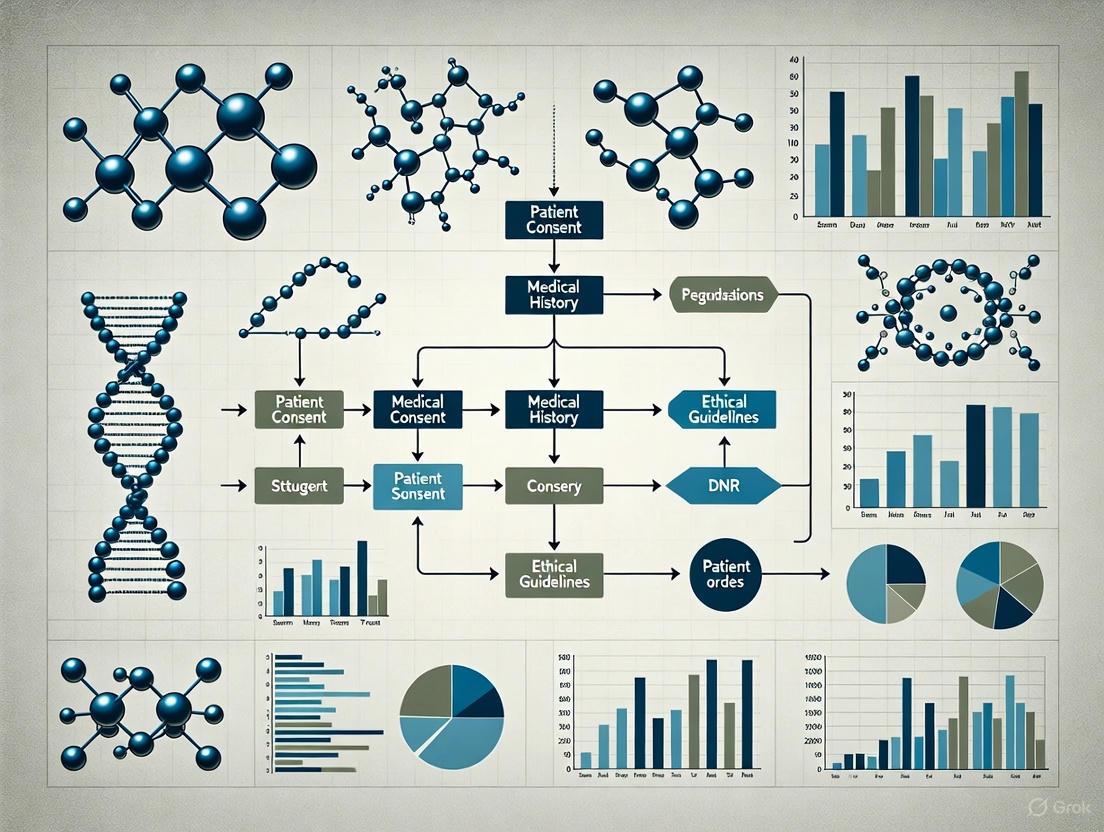
This article provides a comprehensive analysis of the ethical reasoning underpinning Do-Not-Resuscitate (DNR) orders, tailored for researchers, scientists, and drug development professionals.
Ethical Reasoning in Do-Not-Resuscitate Orders: A Research and Clinical Practice Framework
Abstract
This article provides a comprehensive analysis of the ethical reasoning underpinning Do-Not-Resuscitate (DNR) orders, tailored for researchers, scientists, and drug development professionals. It explores the foundational ethical principles of patient autonomy, beneficence, and non-maleficence that guide DNR decision-making. The scope extends to methodological applications in clinical and research settings, including protocols for perioperative care and advance care planning. It identifies and troubleshoots persistent systemic failures, such as delayed discussions and inadequate communication, supported by recent empirical data. Finally, the article examines validation strategies and comparative analyses of DNR policies across different healthcare systems, proposing future directions for ethical research and policy development in end-of-life care.
The Ethical Bedrock of DNR Orders: Principles, History, and Self-Determination
The development of Do Not Resuscitate (DNR) orders represents a significant paradigm shift in medical ethics and clinical practice, emerging as a necessary counterpoint to the universal application of cardiopulmonary resuscitation (CPR). This evolution reflects an ongoing tension between technological capability and ethical reasoning, between the imperative to preserve life and the obligation to honor patient autonomy and avoid non-beneficial interventions. The historical trajectory from universal CPR to selective DNR policies encapsulates a broader transformation in medical philosophy—from physician paternalism to patient-centered care, and from a default presumption of life extension at all costs to a more nuanced understanding of medical benefit and quality of life.
The historical context of this evolution is crucial for understanding current ethical dilemmas. In the 1960s, CPR was initially performed by anesthesiologists on adults and children who suffered from witnessed cardiac arrest following reversible illnesses and injuries [1]. Based on the success of this intervention in specific clinical contexts, CPR rapidly became the standard of care for all etiologies of cardiopulmonary arrest, with universal presumptive consent to resuscitation evolving as the default approach [1]. This universal application occurred despite limited evidence supporting its efficacy across diverse patient populations and clinical scenarios. The subsequent recognition of CPR's limitations, particularly for patients with terminal conditions or poor prognoses, created the ethical and clinical space for the development of DNR orders as a formal medical practice.
The Rise of Universal CPR and Its Limitations
Historical Expansion of CPR
The transformation of CPR from a selective intervention to a universal standard occurred with remarkable speed throughout the 1960s and early 1970s. Closed-chest cardiac massage, combined with mouth-to-mouth ventilation, created a technique that could be deployed outside operating rooms and by non-specialists [2]. This technical accessibility, combined with cultural and media representations that emphasized its life-saving potential, propelled CPR into a routine medical response. The practice aligned with medicine's fundamental commitment to preserving life and quickly became embedded in hospital protocols, emergency response systems, and public consciousness.
The institutionalization of CPR was so complete that it transformed not only medical practice but also legal and ethical expectations. The absence of a DNR order came to imply consent for resuscitation, creating a default pathway that required active intervention to avoid. This presumption of consent represented a significant departure from traditional medical decision-making, where invasive procedures typically required affirmative consent. The universal CPR approach reflected a technological optimism characteristic of mid-20th century medicine, embodying the belief that medical advancement could and should overcome natural biological limits.
Emerging Recognition of Limitations
By the early 1970s, evidence began accumulating that challenged the universal application of CPR. Clinical experience demonstrated that survival outcomes varied dramatically based on patient factors, with particularly poor outcomes for elderly patients, those with multiple comorbidities, and those with terminal illnesses [1] [3]. The physical realities of CPR also became increasingly apparent—the procedure often caused significant trauma including broken ribs, sternal fractures, and internal organ damage [3] [4]. Furthermore, even "successful" resuscitations sometimes resulted in severe neurological impairment due to anoxic brain injury, creating situations where prolonged suffering replaced dignified death [3].
The ethical limitations of universal CPR became increasingly apparent as physicians encountered situations where resuscitation appeared to contradict patient well-being. In 1974, the American Heart Association (AHA) formally recognized these concerns, recommending that physicians document in the chart when CPR is not indicated after obtaining patient or surrogate consent [1]. This recommendation acknowledged that technological capability did not necessarily translate to clinical benefit, and that medical interventions required thoughtful consideration of individual circumstances and outcomes. The stage was set for a more nuanced approach to end-of-life decision-making.
The Emergence and Formalization of DNR Orders
Initial Institutional Responses
The first formalized DNR policies emerged in individual hospitals in the early 1970s, with the Massachusetts General Hospital often credited as an early pioneer [5]. These initial policies were typically developed at the institutional level, creating a patchwork of approaches that varied significantly in their criteria, documentation requirements, and decision-making processes. Early DNR policies frequently emphasized medical futility as a primary criterion, focusing on situations where CPR was deemed unlikely to succeed based on clinical indicators and statistical probabilities.
The legal and ethical foundation for DNR orders strengthened throughout the 1980s and 1990s, influenced by both case law and statutory developments. The Patient Self-Determination Act of 1991 represented a crucial milestone, requiring hospitals to respect the adult patient's right to make an advanced care directive and clarify wishes for end-of-life care [1]. This legislation embedded DNR discussions within the broader framework of patient autonomy and advance care planning, shifting the ethical emphasis from physician-determined futility to patient-directed choice. The terminology itself evolved, with many institutions adopting "Do Not Attempt Resuscitation" (DNAR) to emphasize the probabilistic nature of resuscitation outcomes [1].
Evolution of Ethical Frameworks and Terminology
The conceptual foundation for DNR orders has undergone significant refinement since their inception. Table 1 outlines the key terminology evolution in resuscitation directives.
Table 1: Evolution of DNR Terminology and Concepts
| Term | Time Period | Key Emphasis | Ethical Principle |
|---|---|---|---|
| DNR (Do Not Resuscitate) | 1970s-1990s | Outcome-focused; avoiding non-beneficial intervention | Beneficence/Non-maleficence |
| DNAR (Do Not Attempt Resuscitation) | 1990s-Present | Acknowledgment of procedural uncertainty | Medical realism/Transparency |
| AND (Allow Natural Death) | 2000s-Present | Positive framing of natural dying process | Dignity/Compassion |
| POLST/MOLST | 2000s-Present | Portable medical orders across settings | Continuity/Patient-centered care |
The ethical framework supporting DNR orders has similarly evolved from a primary emphasis on medical futility toward a more robust integration of patient autonomy and quality-of-life considerations. The earliest DNR policies often positioned the physician as the primary decision-maker based on clinical prognosis, while contemporary approaches typically emphasize shared decision-making that integrates medical expertise with patient values and preferences [1]. This shift reflects broader changes in medical ethics and the doctor-patient relationship, recognizing that determinations of "benefit" incorporate both clinical outcomes and personal values.
Quantitative Analysis of CPR Outcomes and DNR Practices
Survival Statistics and Prognostic Factors
The evidence base regarding CPR outcomes has expanded considerably since the procedure's inception, providing crucial data for informed decision-making. Table 2 summarizes key survival statistics based on setting and patient characteristics, derived from contemporary research [1] [4].
Table 2: CPR Survival Statistics and Outcomes
| Setting/Patient Characteristic | Survival to Discharge | Favorable Neurological Outcome | Key Factors Influencing Outcomes |
|---|---|---|---|
| In-Hospital Arrest (Adults) | 8-39% | 7-14% of survivors | Witnessed arrest, initial rhythm, time to CPR |
| In-Hospital Arrest (Children) | ~27% | Up to 33% of survivors | Underlying etiology, respiratory vs. cardiac arrest |
| Out-of-Hospital Arrest (Adults) | 7-14% | Not specified | Bystander CPR, use of AED, time to advanced care |
| Out-of-Hospital Arrest (Children) | 3-9% | Not specified | Etiology (higher for trauma, lower for SIDS) |
| Nursing Home Residents | ~5-7% | Significantly reduced | Functional status, burden of chronic illness |
| Metastatic Cancer | ~5% | Substantially reduced | Performance status, specific cancer type |
These quantitative outcomes demonstrate the profound variability in CPR effectiveness across different clinical scenarios. The statistics reveal that while CPR can be life-saving for selected populations, its overall efficacy is more limited than often portrayed in popular media. The data regarding neurological outcomes are particularly significant for ethical discussions, as they highlight the risk of surviving with significant disability—a consideration that many patients weigh heavily when considering their resuscitation preferences [3] [4].
Contemporary DNR Practices and Variations
Recent research reveals significant variations in DNR implementation across healthcare settings and geographic regions. A 2025 retrospective study conducted in a Saudi Arabian ICU found that among 77 patients with DNR orders, only 24.7% were issued within 48 hours of ICU admission, while 62.3% followed a successful cardiopulmonary resuscitation attempt [6]. Perhaps most strikingly, family involvement in the DNR decision was documented in only 22.1% of cases, highlighting significant gaps in communication and shared decision-making [6]. These findings suggest that DNR orders are often used reactively rather than proactively in some settings, potentially undermining their ethical foundation.
Variation is also evident in prehospital settings. A 2024 review of Emergency Medical Services (EMS) protocols across the United States found that while 86% of EMS systems had specific DNR protocols, there was tremendous variability in acceptable documentation [2]. The study found that 76.0% of protocols recognized portable medical orders (such as POLST forms), while only 26.6% accepted verbal DNRs from non-healthcare providers [2]. This heterogeneity creates challenges for ensuring goal-concordant care across different settings and highlights the ongoing tension between standardization and flexibility in DNR implementation.
Ethical Frameworks and Current Debates
Core Ethical Principles in DNR Decision-Making
The ethical landscape surrounding DNR orders involves balancing multiple, sometimes competing, principles:
Respect for Autonomy: This principle emphasizes the patient's right to make decisions about their own medical care, including the refusal of life-sustaining treatment [1]. The legal foundation for this principle in the United States was significantly strengthened by the Patient Self-Determination Act of 1991 [1]. autonomy respects the patient's values, beliefs, and assessment of what constitutes a life worth living, even when these differ from medical recommendations or statistical probabilities.
Beneficence and Non-maleficence: These complementary principles require physicians to act in the patient's best interest while avoiding unnecessary harm [1]. In the context of DNR decisions, beneficence involves careful consideration of whether CPR aligns with the patient's overall goals and values, not merely whether it can technically be performed. Non-maleficence recognizes that CPR itself can cause significant injury and that prolonging life may sometimes prolong suffering when recovery is not possible.
Distributive Justice: This principle concerns the fair allocation of limited healthcare resources. While rarely explicitly cited in individual DNR decisions, the reality of finite healthcare resources forms an important background ethical consideration, particularly in systems with constrained capacity [7]. The appropriate role of cost considerations in DNR decisions remains ethically contested.
Persistent Ethical Challenges and Evolving Concepts
Several complex ethical challenges persist in DNR practice:
Medical Futility: The concept of futility remains contentious, with ongoing debate about how to define and apply this concept in clinical practice [1]. While most agree that physicians are not obligated to provide interventions with no realistic chance of medical benefit, determining what constitutes "futility" in specific clinical scenarios often involves value judgments beyond pure statistical prognostication.
Therapeutic Misconception: Patients and families may overestimate the effectiveness of CPR based on media portrayals, creating challenges for informed decision-making [3] [4]. Addressing these misconceptions requires transparent communication about realistic outcomes, including not only survival statistics but also potential functional outcomes for survivors.
DNR and Other Care Limitations: Research indicates that DNR orders may sometimes lead to unintended limitations in other aspects of care, a phenomenon sometimes called "the DNR domino effect" [4]. Studies have documented that patients with DNR orders are less likely to receive various medically appropriate interventions, suggesting that clinicians may misinterpret DNR status as indicating broader treatment limitations [4].
The following diagram illustrates the key ethical reasoning framework guiding DNR decision-making:
Methodological Approaches in DNR Research
Research Designs and Data Collection Methods
DNR research employs diverse methodological approaches to address different research questions:
Retrospective Cohort Studies: These designs analyze existing medical records to identify patterns in DNR utilization, timing, and outcomes [6]. The 2025 Saudi Arabian ICU study exemplifies this approach, extracting data from electronic medical records to describe DNR practices in a specific clinical setting [6]. Key variables in such studies typically include patient demographics, clinical characteristics, timing of DNR orders relative to admission and clinical events, documentation of decision-making processes, and patient outcomes.
Cross-Sectional Surveys: Survey methodology effectively captures attitudes, knowledge, and perceived barriers among healthcare professionals [8]. The 2023 survey of physicians in Saudi Arabia and other Arab Gulf countries utilized this approach, assessing physicians' familiarity with DNR concepts, their experiences with DNR discussions, and their perceptions of implementation barriers [8]. Such surveys typically employ structured questionnaires with both categorical and Likert-scale response options, allowing for quantitative analysis of attitudes and knowledge gaps.
Systematic Protocol Reviews: These methodologies systematically analyze existing policies and protocols to identify variations in approach and implementation [2]. The 2024 review of EMS protocols across the United States employed a structured review process to categorize variations in acceptable DNR documentation, analyzing both statewide and major city protocols [2]. This approach typically involves creating standardized data extraction tools to systematically capture key elements of policies across different jurisdictions.
Intervention Studies and Quality Improvement
Intervention research examines approaches to improving DNR communication and implementation:
Structured Communication Tools: Studies have evaluated the impact of structured communication tools, such as the Physician Orders for Life-Sustaining Treatment (POLST) paradigm, on ensuring goal-concordant care across settings [3] [2]. These tools typically standardize the documentation of patient preferences regarding life-sustaining treatments, creating portable medical orders that travel with patients across care settings.
Educational and System-Level Interventions: Research has assessed the effectiveness of educational interventions for healthcare professionals and system-level changes to improve DNR processes. A Danish study with pre- and post-measurements implemented a practical instruction brochure and end-of-life presentation, finding significant improvements in correct DNR documentation at hospital discharge (from 32% to 53%) and reduced perceived challenges among staff [9]. Such studies typically employ audit and feedback methodologies to track process measures before and after implementation.
Table 3: Key Methodological Approaches in DNR Research
| Research Approach | Primary Questions Addressed | Data Collection Methods | Analytical Techniques |
|---|---|---|---|
| Retrospective Cohort Study | Patterns of DNR use, timing, outcomes | Medical record abstraction | Descriptive statistics, regression analysis |
| Cross-Sectional Survey | Knowledge, attitudes, perceived barriers | Structured questionnaires | Frequency distributions, chi-square tests |
| Protocol Review | Variation in policies and procedures | Systematic document review | Content analysis, comparative tables |
| Intervention Study | Effectiveness of quality improvement initiatives | Pre-post audits, surveys | Comparative statistics, qualitative analysis |
Special Considerations and Future Directions
Context-Specific DNR Challenges
DNR implementation presents unique challenges in specific clinical contexts:
Perioperative Settings: The perioperative period presents particular challenges for DNR orders, as many anesthetic and surgical interventions could technically be classified as "resuscitation" [5]. Professional guidelines from organizations like the American Society of Anesthesiologists typically recommend preoperative "required reconsideration" of DNR orders, with options including full suspension of DNR during the perioperative period, limited attempts with regard to specific procedures, or limitations guided by the patient's goals and values [5]. This approach acknowledges that intraoperative arrests often have reversible causes (such as anesthesia-related complications or hemorrhage) with potentially better outcomes than arrests in other settings.
Cross-Cultural and Religious Considerations: DNR practices are influenced by cultural and religious factors that vary significantly across different societies [8] [5]. In Saudi Arabia, for instance, DNR decisions are guided by specific fatwas (religious rulings) that outline conditions under which DNR is permissible, typically requiring agreement from three physicians that the patient's condition is irreversible or terminal [8]. Understanding these contextual factors is essential for developing culturally sensitive approaches to end-of-life decision-making that respect diverse value systems while maintaining ethical integrity.
Emerging Innovations and Research Frontiers
Several emerging areas represent promising directions for future research and practice improvement:
Standardization and Portability: Efforts to standardize DNR documentation across care settings continue to evolve, with portable medical orders like POLST forms representing an important innovation [3] [2]. Future directions may include electronic registries that ensure immediate access to DNR directives across care settings, though these approaches raise important questions about privacy, security, and accessibility.
Clinician Education and Training: Research consistently identifies gaps in clinician knowledge and comfort with DNR discussions [8]. Developing more effective educational approaches, including communication skills training and ethical decision-making frameworks, represents an important priority for improving end-of-life care.
Global Health Perspectives: As DNR concepts spread to diverse healthcare systems, understanding how these policies adapt to different cultural, religious, and resource contexts represents an important area for comparative research [8] [5]. Examining how different societies balance ethical principles of autonomy, beneficence, and justice in end-of-life decision-making can enrich the global discourse on DNR policies.
The following diagram illustrates the experimental workflow commonly used in DNR intervention studies:
The historical evolution from universal CPR to selective DNR orders represents a maturation in medical ethics and practice—a recognition that technological capability must be guided by ethical reasoning, clinical evidence, and patient values. This evolution reflects a broader transformation in healthcare from a paternalistic model to one that respects patient autonomy while acknowledging medicine's limitations. The development of DNR policies has created space for more nuanced approaches to end-of-life care that honor the diversity of patient values and preferences while acknowledging clinical realities.
Ongoing challenges in DNR implementation—including variations in practice, communication barriers, and unintended consequences—highlight the complexity of translating ethical principles into consistent clinical practice. Future progress will require continued research, education, and system-level improvements that support high-quality communication, shared decision-making, and goal-concordant care across diverse clinical settings and cultural contexts. The ethical reasoning underpinning DNR decisions continues to evolve, balancing respect for patient autonomy with professional integrity and the appropriate use of medical technology near the end of life.
Do-not-resuscitate (DNR) orders represent critical medical directives that instruct healthcare providers not to perform cardiopulmonary resuscitation (CPR) when a patient experiences cardiac or respiratory arrest. These decisions sit at the intersection of clinical medicine, patient values, and ethical principles, creating a complex landscape for researchers and clinicians alike. The four core principles of biomedical ethics—autonomy, beneficence, non-maleficence, and justice—provide a robust framework for analyzing DNR decisions across diverse clinical scenarios and research settings. In the context of a broader thesis on ethical reasoning, understanding how these principles interact and sometimes conflict in DNR decision-making is essential for developing evidence-based policies and clinical protocols.
Recent global events, including the COVID-19 pandemic, have highlighted the ongoing ethical challenges surrounding resuscitation decisions, particularly in resource-limited settings where societal benefits may sometimes conflict with individual patient autonomy [10]. This technical guide examines each ethical principle in depth, provides quantitative analysis of current DNR practices, outlines research methodologies for studying DNR outcomes, and offers visual frameworks for understanding the complex ethical decision-making processes involved in resuscitation medicine.
The Four Ethical Principles: Theoretical Foundations and Clinical Applications
Autonomy: The Principle of Self-Determination
Autonomy recognizes the right of patients to make informed decisions about their own medical care based on their personal values, beliefs, and preferences. This principle is operationalized through the process of informed consent and advance care planning (ACP). In the context of DNR orders, autonomy manifests when patients voluntarily express their wishes regarding end-of-life care through advance directives (ADs), which may include living wills, healthcare proxies, and specific DNR instructions [11].
The ethical force of autonomy derives from the recognition that competent individuals have the constitutional right to refuse medical treatment regardless of their medical condition [12]. This principle was illustrated in a case involving a 39-year-old man with chronic lung disease who refused ventilator treatment despite medical recommendations; here, respecting patient autonomy required honoring his DNR request even when the medical team believed treatment would be beneficial [12]. Autonomy also extends to the appointment of healthcare surrogates who can make decisions consistent with the patient's known wishes when the patient loses decision-making capacity.
The process of advance care planning (ACP) has gained significant attention as a mechanism for preserving autonomy. ACP involves ongoing communication between patients, families, and healthcare providers to clarify treatment preferences and values. Research demonstrates that ACP increases patient and family satisfaction while reducing stress and anxiety by ensuring that care aligns with patient values [13]. In Japan, promotion of ACP has been associated with positive shifts toward respecting individual dignity at the end of life, though implementation challenges remain [13].
Beneficence: The Duty to Do Good
Beneficence requires healthcare providers to act in the best interest of their patients, defending interventions that provide the greatest clinical benefit. This principle obligates physicians to recommend treatments that maximize positive outcomes while minimizing burdens. In DNR decisions, beneficence involves careful consideration of whether CPR would actually benefit the patient, given their overall prognosis, quality of life, and treatment goals [11].
The application of beneficence becomes particularly complex when patients or surrogates request interventions that healthcare providers believe are medically inappropriate or futile. In such cases, the principle of beneficence may sometimes conflict with autonomy. When patients lack decision-making capacity and have not completed advance directives, physicians must rely on beneficence to guide treatment decisions in consultation with family members or healthcare proxies [11]. The physician's responsibility in these situations is to advocate for approaches that deliver the best possible care for the patient, which may sometimes involve recommending against CPR when it would only prolong the dying process without meaningful benefit.
Beneficence also encompasses considering the broader psychological and emotional wellbeing of patients and families. This includes providing truthful information about prognosis and treatment options in a sensitive manner, managing symptoms effectively, and offering emotional support throughout the decision-making process [11].
Non-maleficence: The Duty to Avoid Harm
Non-maleficence, embodied by the maxim "first, do no harm," requires healthcare providers to refrain from causing unnecessary harm to patients. This principle acknowledges that while many medical interventions involve some degree of harm or risk, the benefits must outweigh the potential burdens [11]. In resuscitation medicine, CPR itself can cause significant harm, including rib fractures, internal organ damage, brain injury from anoxia, and prolonged suffering if successful in patients with terminal conditions [14].
The ethical justification for DNR orders often rests strongly on non-maleficence, particularly when CPR would be medically futile or would merely prolong the dying process without restoring acceptable quality of life. Quantitative data show that the survival rate for out-of-hospital cardiac arrest (OHCA) remains low, at approximately 10.5% for survival to hospital discharge, raising important questions about the potential harms of routine resuscitation attempts [15]. Among frail or terminally ill hospitalized patients, the odds of surviving CPR are especially dismal, making the procedure potentially more harmful than beneficial [14].
The tension between non-maleficence and other ethical principles becomes particularly evident in discussions about "slow codes" or "show codes"—half-hearted resuscitation attempts that are not expected to be effective but are performed under pressure from families or institutional policies. While traditionally condemned as deceptive practice, some bioethicists now argue that in certain circumstances, these limited resuscitation attempts may represent an ethical compromise that balances truth-telling with avoiding unnecessary brutality at the end of life [14].
Justice in healthcare ethics refers to the fair distribution of medical resources and the equitable treatment of patients regardless of personal characteristics or social circumstances. This principle requires impartiality in the delivery of health services and becomes particularly salient when resources are limited [11]. In resuscitation medicine, justice considerations arise in determining whether expensive and specialized care like CPR should be provided to all patients equally or whether allocation decisions should consider factors like likelihood of survival, quality of life outcomes, and opportunity costs for other patients.
The COVID-19 pandemic brought justice considerations in DNR decisions into sharp focus, as healthcare systems worldwide faced scarce resources including ICU beds, ventilators, and personal protective equipment. Some institutions implemented unilateral DNR policies for certain patient groups, particularly those with poor prognoses, to conserve resources for patients with better chances of survival [10]. These policies raised difficult questions about whether age or general medical condition should be used as criteria for resuscitation decisions during public health emergencies.
Justice also requires examining potential disparities in DNR practices across different patient populations. Research must ensure that factors like race, ethnicity, socioeconomic status, disability, or age do not improperly influence DNR decisions. Healthcare providers have an ethical obligation to advocate for fair and appropriate treatment of all patients at the end of life, which can be advanced through education, transparent policies, and ongoing monitoring of decision-making patterns [11].
Quantitative Analysis of DNR Practices and Outcomes
Table 1: Comparative Analysis of Out-of-Hospital Cardiac Arrest (OHCA) Cases with DNAR Orders (2019 vs. 2023)
| Parameter | 2019 Cohort (n=396) | 2023 Cohort (n=513) | P-value | Clinical Significance |
|---|---|---|---|---|
| Patients with DNAR orders | 45 (11.4%) | 27 (5.3%) | 0.000 | Significant decrease |
| Mean age (years) | 74.9 ± 17.7 | 75.9 ± 15.1 | 0.986 | No significant difference |
| Site of occurrence: Home | 260 (65.7%) | 360 (70.2%) | 0.449 | No significant difference |
| Site of occurrence: Facilities | 73 (18.4%) | 86 (16.8%) | 0.449 | No significant difference |
| Emergency caller: Family | 234 (59.1%) | 344 (67.1%) | 0.000 | Significant increase |
| Witnessed cardiac arrest | 154 (38.9%) | 238 (46.4%) | 0.016 | Significant increase |
| Bystander CPR | 200 (50.5%) | 234 (45.6%) | 0.114 | No significant difference |
| Ambulance treatment procedures | 7.4% | 8.9% | 1.000 | No significant difference |
| Non-transport cases | 2.2% | 33.3% | 0.001 | Significant increase |
Table 2: Documentation of DNR Orders at Transitions of Care (Pre- and Post-Intervention)
| Documentation Metric | Pre-Intervention (2020) | Post-Intervention (2023) | P-value | Clinical Significance |
|---|---|---|---|---|
| Correct documentation in nursing reports at hospital discharge | 32% | 53% | 0.003 | Significant improvement |
| Units without perceived challenges in DNR knowledge | 10% | 48% | <0.001 | Significant improvement |
| Inappropriate resuscitation attempts in nursing homes | 0 | 0 | N/A | No change |
| Inappropriate resuscitation attempts in hospitals | 5 | 5 | N/A | No change |
| Units working with models for DNR awareness | Not reported | >80% | N/A | Substantial implementation |
Recent research provides quantitative insights into DNR practices and their outcomes. A prospective study from Japan comparing out-of-hospital cardiac arrest cases in 2019 and 2023 revealed a significant decrease in DNAR orders, from 11.4% to 5.3%, suggesting potential shifts in end-of-life decision-making patterns during the COVID-19 pandemic [13]. This change occurred alongside a 25.9% increase in total OHCA cases, highlighting the growing significance of resuscitation decision-making in aging populations.
Quality improvement initiatives focused on DNR documentation demonstrate that structured interventions can significantly enhance communication at care transitions. A Danish study implementing practical instruction brochures and end-of-life presentations across hospital departments and nursing homes showed marked improvement in correct DNR documentation in nursing reports at hospital discharge, from 32% to 53% [9]. Importantly, the percentage of participating units that did not perceive challenges in ensuring knowledge of DNR orders increased from 10% to 48%, indicating enhanced institutional confidence in managing resuscitation preferences [9].
Experimental Protocols and Research Methodologies
Protocol 1: Prospective Analysis of DNR Orders in OHCA
Objective: To examine changes in DNR order prevalence and management in out-of-hospital cardiac arrest cases over time.
Methodology:
- Study Design: Prospective observational study examining all OHCA cases handled by emergency medical services over defined periods (e.g., May 30, 2023, to February 15, 2024) with comparison to historical data [13].
- Data Collection: Emergency response teams collect standardized data including patient age, occurrence site, emergency caller, underlying conditions, home healthcare status, DNAR order details, ambulance outcomes, and 1-month outcomes using Utstein Style reporting.
- DNAR Verification: Paramedics confirm DNAR orders by consulting relatives and facility staff, with explicit documentation of order presence or absence.
- Statistical Analysis: Quantitative analysis using unpaired t-tests for means, Mann-Whitney U test for medians, and Fisher's exact test for qualitative data, with two-sided significance level set at 5%.
Ethical Considerations: Study protocols should address appropriate handling of sensitive patient information and ensure that research activities do not interfere with emergency care delivery.
Protocol 2: Intervention Study for Improving DNR Documentation
Objective: To assess the effectiveness of educational and systems-level interventions in improving DNR order documentation and communication at care transitions.
Methodology:
- Study Design: Intervention initiative with pre- and post-measurements (e.g., 2020 and 2023) involving hospital departments and nursing homes [9].
- Intervention Components:
- Practical instruction brochure detailing DNR documentation protocols
- End-of-life presentation addressing communication strategies
- Implementation support for systems ensuring DNR awareness
- Outcome Measures:
- Audits of resuscitation attempts and DNR documentation at care transitions
- Electronic surveys on perceived challenges among participating units
- Assessment of documentation completeness in transfer records
- Analysis: Paired analyses of sites participating in both pre- and post-measurements, with statistical testing of changes in primary outcomes.
Implementation Considerations: Successful interventions require engagement from multiple stakeholders, including physicians, nurses, nursing home staff, and administrative leadership.
Visualization of Ethical Decision-Making Frameworks
Diagram 1: DNR Ethical Decision Framework
Diagram 2: DNR Research Methodology
Table 3: Essential Research Resources for DNR Ethics Studies
| Resource Category | Specific Tools/Measures | Research Application | Key Considerations |
|---|---|---|---|
| Data Collection Instruments | Utstein Style templates | Standardized reporting of cardiac arrest outcomes | Enables comparison across studies and populations |
| Advance directive documentation audits | Assessment of ACP implementation | Must address variability in documentation practices | |
| Healthcare provider surveys | Understanding decision-making perspectives | Should include moral distress assessment | |
| Patient/family interview guides | Qualitative exploration of values and preferences | Requires sensitive approach to emotional topics | |
| Analytical Frameworks | Ethical principle assessment matrix | Systematic evaluation of ethical dimensions | Helps identify and resolve principle conflicts |
| Statistical analysis packages (SPSS, R) | Quantitative analysis of DNR prevalence and outcomes | Must account for confounding variables | |
| Qualitative analysis software (NVivo) | Thematic analysis of interview data | Useful for identifying patterns in decision-making | |
| Reference Guidelines | Resuscitation council guidelines (ERC, AHA) | Evidence-based resuscitation standards | Provide foundation for policy analysis |
| Institutional ethics committee protocols | Framework for research ethics approval | Essential for study design and implementation | |
| Implementation Tools | DNR documentation checklists | Standardizing communication at care transitions | Improves reliability of order implementation |
| Educational intervention materials | Training healthcare providers in ACP conversations | Enhances quality of patient-clinician communication |
The four core ethical principles—autonomy, beneficence, non-maleficence, and justice—provide a comprehensive framework for analyzing DNR decisions in both clinical practice and research settings. These principles frequently interact in complex ways, sometimes complementing and sometimes conflicting with each other, requiring careful balancing in specific clinical scenarios. Recent research demonstrates ongoing evolution in DNR practices, with documented improvements in documentation at care transitions through targeted interventions, while also revealing persistent challenges in ensuring that resuscitation preferences are consistently respected across healthcare settings.
Future research directions should include developing more robust ethical frameworks for crisis standards of care during public health emergencies, examining disparities in DNR decision-making across diverse patient populations, and designing effective interventions to improve advance care planning communication. Additionally, there is a need for further investigation into the ethical dimensions of novel resuscitation technologies and their impact on traditional concepts of medical futility. As demographic shifts continue to increase the prevalence of end-of-life care decisions globally, the integration of these ethical principles into clinical practice, institutional policies, and research methodologies remains essential for ensuring that resuscitation practices align with patient values while promoting equitable and compassionate care.
Cardiopulmonary resuscitation (CPR) has evolved from a specialized medical procedure to a default standard of care with significant legal implications. The transformation of CPR into a mandatory response absent specific contraindications represents a complex interplay of medical, legal, and ethical developments. The American Heart Association's 2025 Guidelines for CPR and Emergency Cardiovascular Care continue to reinforce this standard, providing updated recommendations for healthcare professionals and lay rescuers alike [15]. This institutional endorsement solidifies CPR's position as the foundational response to cardiac arrest across diverse settings.
The legal imperative for CPR stems from its unique status as a treatment that must be provided within seconds of cardiac arrest, leaving no time for deliberation. This immediacy has created a default position where CPR is initiated unless a formal do-not-resuscitate (DNR) order exists. The ethical complexity of this default position becomes apparent in clinical practice, where DNR decisions generate significant moral dilemmas for healthcare teams [16]. Understanding how CPR attained this default status requires examining its historical development, survival statistics, and the legal frameworks that have shaped contemporary resuscitation science.
Historical and Legal Foundations of CPR as Default Care
The development of CPR into a default standard represents a relatively recent phenomenon in medical history. While early forms of resuscitation were documented as early as 1530, modern CPR as currently practiced was only refined and systematized in 1956 [17]. The rapid adoption of this technique across medical institutions created a new paradigm for responding to cardiac arrest, establishing CPR as the expected intervention unless specifically contraindicated.
The legal framework supporting CPR as default care emerged from several key factors. The time-sensitive nature of cardiac arrest necessitated a standardized approach that could be implemented immediately without case-by-case deliberation. Swedish regulations exemplify this imperative, requiring that CPR must start within 60 seconds if no DNR decision is formally documented [18]. This temporal urgency fundamentally shaped the legal landscape, establishing CPR as the automatic response in the absence of specific advance directives to the contrary.
The transformation of CPR into a legal standard also reflects broader societal values prioritizing the preservation of life. Court decisions and institutional policies have consistently reinforced the requirement for healthcare providers to initiate CPR unless valid DNR orders exist. This legal foundation has created a system where the decision not to resuscitate requires explicit justification, while resuscitation represents the default position. The 2025 AHA Guidelines continue this tradition, providing comprehensive guidance for lay rescuers and healthcare professionals in the treatment of neonates, pediatrics, and adults, thereby reinforcing CPR's status as a universal standard of care [15].
Ethical Frameworks in DNR Decision-Making
Core Ethical Principles and Applications
The default status of CPR has generated complex ethical challenges in DNR decision-making, particularly when medical judgment suggests resuscitation would be futile. Healthcare professionals regularly navigate tensions between respecting patient autonomy and acting according to principles of beneficence and non-maleficence. The four-principle approach to medical ethics provides a framework for analyzing these dilemmas [17].
Table: Ethical Principles in DNR Decision-Making
| Ethical Principle | Definition | Application to DNR Decisions |
|---|---|---|
| Autonomy | Respect for patient self-determination | Requirement for informed consent and patient involvement in DNR discussions |
| Beneficence | Obligation to act in patient's best interest | Weighing potential benefits of CPR against burdens and likely outcomes |
| Non-maleficence | Duty to avoid harm | Preventing futile CPR that may prolong suffering or cause injury |
| Justice | Fair distribution of resources | Considering allocation of limited healthcare resources during pandemics |
These principles frequently conflict in clinical practice. For instance, a physician's duty to avoid harm (non-maleficence) may conflict with a patient's autonomous request for resuscitation when medical evidence suggests it would be futile. Similarly, the principle of justice became particularly salient during the COVID-19 pandemic, when scarce resource allocation prompted some institutions to consider unilateral DNR policies for certain patient groups to preserve resources for those with better prognoses [17].
The complex ethical landscape of DNR decisions requires what researchers term "ethical competence" among healthcare providers. This concept encompasses three key dimensions: being (character and virtues), doing (ethical action), and knowing (ethical knowledge) [18]. Ethical competence enables physicians and nurses to navigate the multidimensional challenges inherent in DNR decisions, particularly in specialties like oncology and hematology where such decisions are frequent.
Studies of healthcare professionals in Sweden reveal that DNR decisions in cancer care generate significant ethical dilemmas, including team disagreements about appropriate resuscitation status, conflicts between patient autonomy and medical prognosis, and situations where patients and families hold differing perspectives about DNR orders [18]. These dilemmas are compounded by documentation inconsistencies and uncertain communication protocols. Providers describe employing situation-based ethical reasoning that incorporates both deontological (duty-based) and utilitarian (consequence-based) approaches, suggesting that rigid application of ethical rules is often insufficient for these complex clinical scenarios [16].
Quantitative Analysis of CPR Outcomes
The medical justification for CPR as a default intervention rests largely on its potential to save lives in specific clinical circumstances. However, comprehensive outcome data reveals significant limitations in resuscitation effectiveness across settings. Recent statistics from the American Heart Association indicate that survival rates remain discouragingly low despite advances in resuscitation science [15].
Table: CPR Survival Outcomes Across Settings and Populations
| Population/Setting | Survival to Discharge | Key Influencing Factors |
|---|---|---|
| Out-of-Hospital Cardiac Arrest (OHCA) | 10.5% | Early defibrillation, bystander CPR, initial rhythm |
| In-Hospital Cardiac Arrest (Adults) | 23.6% | Location (ICU vs ward), underlying etiology, comorbidities |
| In-Hospital Cardiac Arrest (Children) | 45.2% | Age, respiratory vs cardiac etiology, time to CPR |
| Cancer Patients (All) | 6.7% | Cancer type (localized: 9.1%; metastatic: 5.6%) |
| Cancer Patients (Ward vs ICU) | Ward: 10.1%; ICU: 2.2% | Illness severity, presence of multiorgan failure |
| Dialysis Patients | 14% (3% at 6 months) | Comorbidity burden, functional status |
These statistics demonstrate that while CPR can be life-saving in specific circumstances, its effectiveness is highly dependent on clinical context. The poor outcomes for certain patient populations, such as those with metastatic cancer or multiple comorbidities, raise ethical questions about the default application of CPR when the likelihood of meaningful survival is minimal [19].
Quality of Life Outcomes After CPR
Beyond survival rates, functional and neurological outcomes provide crucial context for understanding the full impact of CPR. Data from the National Registry of Cardiopulmonary Resuscitation reveals concerning declines in functional status among survivors [19].
Prior to in-hospital cardiac arrest, 68% of patients were classified with good neurological performance, but this declined to 59% at discharge. Similarly, overall functional performance showed significant deterioration, with only 37% of survivors maintaining good functional status after CPR compared to 49% beforehand. These findings highlight that survival alone does not capture the complete picture of CPR outcomes, with many survivors experiencing significant declines in quality of life and functional independence [19].
DNR Policies in Practice: Institutional and Crisis Frameworks
Standards for DNR Decision-Making
The implementation of DNR policies varies significantly across healthcare systems, though most share common elements. Swedish regulations, for example, stipulate that DNR decisions should be made by the responsible physician in cooperation with the healthcare team, with patient consent when possible and notification of significant others [16]. This collaborative approach aims to balance medical expertise with patient values, though studies indicate these guidelines are not always consistently followed [18].
The documentation and communication of DNR orders present persistent challenges in clinical practice. Inadequate documentation can lead to inappropriate resuscitation attempts when healthcare team members are unaware of existing DNR orders. Conversely, poor communication with patients and families about DNR decisions fails to respect patient autonomy and may lead to care misaligned with patient values [16]. Some researchers have noted a preference for the term "allow natural death" among some healthcare providers, suggesting that language itself may influence how these decisions are perceived and discussed [16].
Extraordinary Circumstances: Pandemic DNR Policies
The COVID-19 pandemic created unprecedented ethical challenges for resuscitation policy, forcing healthcare institutions to confront difficult questions about resource allocation and provider safety. During the pandemic, some hospitals implemented unilateral DNR policies for certain patient groups, particularly the elderly or those with specific comorbidities associated with poor prognosis [17]. These policies represented a significant departure from standard ethical frameworks that prioritize individual patient autonomy.
The ethical justification for these crisis standards cited multiple factors: the high risk of SARS-CoV-2 transmission to healthcare workers during aerosol-generating resuscitation procedures, limited supplies of personal protective equipment, and overwhelming demand for limited critical care resources [17]. Some institutions in New Jersey and New York implemented "DNR-B" status for COVID-19 patients, meaning they would receive full treatment for all conditions except that no code blue would be called in the event of cardiac arrest. These crisis policies highlight how the default status of CPR can be reconsidered under extraordinary circumstances when societal benefits may outweigh individual autonomy.
Experimental Models and Data Collection Frameworks
Resuscitation research employs specific methodological approaches to evaluate interventions and outcomes. The field relies heavily on registry data from large-scale collections like the National Registry of Cardiopulmonary Resuscitation, which has captured data on over 14,720 resuscitation attempts from 207 U.S. hospitals [19]. These registries enable researchers to analyze patterns across diverse settings and identify factors associated with survival.
Meta-analytic approaches also contribute significantly to resuscitation science, with one comprehensive analysis pooling data from 49 publications encompassing 9,838 patients to identify predictors of survival [19]. These systematic reviews have identified specific factors associated with failure to survive to discharge after in-hospital CPR, including sepsis, renal insufficiency (creatinine >1.5 mg/dl), functional dependency, hypotension on admission, metastatic cancer, and dementia. The methodological rigor of these analyses provides crucial evidence to inform prognostic discussions and DNR decision-making.
Table: Essential Methodological Components in Resuscitation Research
| Research Component | Function | Application Example |
|---|---|---|
| Registry Data Systems | Standardized collection of resuscitation variables across multiple sites | National Registry of Cardiopulmonary Resuscitation capturing 14,720 events [19] |
| Meta-analytic Protocols | Systematic aggregation of outcomes data across multiple studies | Analysis of 49 publications encompassing 9,838 patients [19] |
| Neurological Function Scales | Standardized assessment of functional outcomes after CPR | Five-point scale (1=good performance to 5=brain death) [19] |
| Utilitarian Ethical Frameworks | Consequence-based analysis of resuscitation policies | Weighing benefits of CPR against resource use during pandemics [17] |
| Deontological Ethical Frameworks | Duty-based analysis of resuscitation decisions | Emphasizing patient autonomy and informed consent in DNR discussions [16] |
Visualizing the Ethical Decision-Making Framework for DNR Orders
The complex process of DNR decision-making involves multiple considerations and stakeholders. The following diagram maps the ethical framework and procedural pathway that healthcare providers navigate when considering resuscitation status.
Decision Pathway for DNR Orders
This visualization captures the complex interplay between medical factors, patient preferences, and ethical principles that inform DNR decisions. The framework highlights how the default position of "full code" status persists unless a specific decision is made to implement a DNR order based on this deliberative process.
The establishment of CPR as the default standard of care represents a significant legal and medical imperative with profound ethical implications. The 2025 AHA Guidelines reinforce this standard while acknowledging the need for nuanced application in specific clinical contexts [15]. The tension between the default presumption toward resuscitation and the ethical recognition that CPR may not always benefit patients continues to generate moral dilemmas for healthcare providers.
Moving forward, resuscitation policy must balance respect for patient autonomy with evidence-based practice and ethical resource allocation. The development of ethical competence among healthcare providers remains crucial for navigating these challenging decisions [18]. Furthermore, the COVID-19 pandemic experience has demonstrated that crisis situations may necessitate temporary modifications to standard DNR protocols, though such changes require transparent justification and careful implementation [17]. As resuscitation science continues to evolve, so too must the ethical frameworks that guide its application, ensuring that the legal imperative to resuscitate does not overshadow the equally important imperative to provide compassionate, appropriate care at the end of life.
Demographic and Socioeconomic Disparities in Advance Care Planning
Advance care planning (ACP) is a critical process that enables individuals to articulate their preferences for future medical care, thereby ensuring that treatment received at the end of life aligns with their values and wishes. This process often involves discussions with healthcare providers and family members, as well as the completion of legal documents such as advance directives (AD), which may include a living will and the designation of a healthcare proxy via a Durable Power of Attorney for Health Care (DPAHC) [20]. Despite its importance, a significant portion of the U.S. adult population does not actively engage in making end-of-life care decisions [20].
This technical guide examines the demographic and socioeconomic disparities in ACP engagement, framing the issue within the broader context of ethical reasoning and justice in healthcare. Evidence consistently demonstrates that racial and ethnic minorities, particularly non-Hispanic Black and Hispanic older adults, are significantly less likely to possess any form of advance directive compared to their non-Hispanic White counterparts [20]. These disparities exacerbate existing health inequalities during end-of-life care, as older racial and ethnic minorities have reported lower quality of life in their final months and are less likely to utilize hospice services [20].
Understanding and addressing these disparities is not merely a clinical imperative but an ethical one, grounded in principles of health equity and social justice. This guide provides researchers and healthcare professionals with a comprehensive analysis of the current evidence, methodological approaches for studying ACP disparities, and ethical frameworks for developing targeted interventions.
Key Quantitative Findings on Disparities
Research using nationally representative data reveals significant disparities in ACP engagement across racial, ethnic, and socioeconomic groups. A recent decomposition analysis using the 2020 Health and Retirement Study, which included 8,416 White, Black, or Hispanic adults aged 65 or older, quantified these disparities with striking clarity [20] [21].
Racial and Ethnic Disparities in ACP Documentation
The disparities in ACP between White and Hispanic populations are nearly twice as large as those between White and Black populations [20] [21]. The decomposition analyses revealed that the 37 factors examined collectively explained approximately 65% of the White-Hispanic ACP gaps, and 37.5% and 57.1% of the Black-White gaps in ACP discussions and AD completion, respectively [20] [21].
Table 1: Racial and Ethnic Disparities in Advance Care Planning Documentation
| Population Group | ACP Discussion Rates | Advance Directive Completion | Key Contributing Factors |
|---|---|---|---|
| White Older Adults | Highest rates | Highest rates | Higher education, better healthcare access |
| Black Older Adults | Intermediate rates | Lower rates | Education, perceptions of respect in healthcare |
| Hispanic Older Adults | Lowest rates | Lowest rates | Education, immigration status, living arrangements |
Historical data from ICU settings further illuminates these disparities. A study of 3,138 patients who died in ICUs across 15 hospitals found that nonwhite patients (including Black, Hispanic, Asian, and other racial/ethnic groups) were substantially less likely to have living wills (OR, 0.41; 95% CI, 0.32-0.54) compared to white patients [22]. Another earlier study of 90,821 consecutive admissions to 30 hospitals found that only 9% of African American patients had do-not-resuscitate (DNR) orders compared to 18% of white patients, a disparity that persisted even after adjusting for severity of illness and other covariates [23].
Socioeconomic Determinants of ACP Engagement
Socioeconomic status (SES) factors, particularly educational attainment, emerge as powerful determinants of ACP engagement across all racial and ethnic groups. Education was identified as the most important contributor across all four tested ACP gaps in the decomposition analysis [20] [21]. Other significant SES factors included insurance status and income level.
Table 2: Socioeconomic Factors Contributing to ACP Disparities
| Factor Category | Specific Factors | Relative Contribution to Disparities | Population Most Affected |
|---|---|---|---|
| Socioeconomic Status | Educational attainment | Most significant contributor across all gaps | All minority groups |
| Health insurance coverage | Substantial contributor | Hispanic and Black older adults | |
| Income and wealth | Moderate contributor | Hispanic and Black older adults | |
| Healthcare Access | Regular doctor visits | Significant contributor | Hispanic older adults |
| Health insurance type | Substantial contributor | Hispanic older adults | |
| Demographic Factors | Immigration status | Major contributor to White-Hispanic gaps | Hispanic older adults |
| Living arrangements | Significant contributor | Hispanic older adults | |
| Psychological Factors | Perceptions of respect in healthcare | Accounts for 10% of White-Black ACP discussion gap | Black older adults |
The role of socioeconomic status in ACP disparities presents a complex picture. While one study found that racial/ethnic differences in end-of-life care in the ICU were not influenced by socioeconomic status [22], the more recent decomposition analysis demonstrated that demographic, SES, and healthcare service and access factors played substantial roles in these disparities, while health factors did not emerge as significant contributors [20].
Methodological Approaches and Experimental Protocols
Decomposition Analysis in ACP Research
The decomposition method, specifically Gelbach's decomposition approach, provides a robust statistical framework for quantifying the relative significance of various factors in explaining racial and ethnic disparities in ACP. This method allows researchers to partition observed gaps in outcomes into components explained by different groups of factors [20] [21].
Diagram 1: Decomposition Analysis Workflow
The Health and Retirement Study (HRS) serves as a premier source for nationally representative data on ACP behaviors among older Americans. The HRS employs a longitudinal survey design with biennial interviews, collecting comprehensive information on health, socioeconomic status, cognitive functioning, and healthcare utilization [20].
Sample Inclusion Criteria:
- Adults aged 65 years or older
- Self-identified as non-Hispanic White, non-Hispanic Black, or Hispanic
- Complete data on ACP outcomes and key explanatory variables
- Participation in the 2020 wave of the HRS [20]
Key Variables and Measurement:
- ACP discussions: Assessed through self-report of whether respondents had discussed their treatment preferences if they became seriously ill
- Advance directive completion: Documented through self-report of having a living will or durable power of attorney for healthcare
- Explanatory factors: 37 variables across demographic, socioeconomic, healthcare access, health status, and psychological domains [20]
Statistical Analysis Protocol
The decomposition analysis follows a systematic protocol to ensure robust and interpretable results:
Descriptive Analysis: Calculate prevalence rates of ACP outcomes by racial/ethnic groups and distributions of explanatory variables.
Gap Measurement: Quantify unadjusted differences in ACP outcomes between White-Black and White-Hispanic groups.
Sequential Decomposition: Apply Gelbach's decomposition method to estimate how much of the racial/ethnic gaps are explained by adding groups of factors sequentially.
Factor Contribution Assessment: Compute the percentage contribution of each explanatory factor to the overall explained portion of the disparities.
Sensitivity Analyses: Conduct robustness checks using alternative model specifications and variable categorizations [20].
Ethical Frameworks and Health Equity Implications
Theoretical Foundations for Health Equity in ACP
The documented disparities in ACP engagement raise fundamental questions of justice and fairness in healthcare. Several ethical frameworks provide guidance for addressing these inequities:
Justice as Fairness: Drawing on John Rawls' theory, this approach justifies universal access to healthcare as a necessary condition for equality of opportunity. A more recent Rawlsian approach emphasizes equality of opportunity for health itself, rather than merely for healthcare access [24].
Relational Ethics: This perspective emphasizes solidarity and the public good, viewing individuals as interdependent and socially, politically, and economically situated. Rather than privileging independent autonomy, this approach holds competing ethical issues in tension toward the interdependent aim of the public's health while recognizing that persons are not all equally situated in relation to opportunities for health [25].
Twin Aim Theory of Social Justice: Faden and Powers offer a "non-ideal theory of justice" intended to provide practical guidance on which inequalities matter most when just background conditions are not in place. Their work sketches normative ethical guidance for policymakers addressing systematic patterns of injustice [25].
The "Health Equity Curse" in ACP
Public health practitioners often face ethical tensions when promoting health equity in systems that do not prioritize it—a phenomenon described as the "health equity curse" [25]. In the context of ACP, this manifests in several specific ethical tensions:
Biomedical versus Social Determinants of Health Agenda: Healthcare systems often prioritize individual biomedical interventions over addressing the social determinants that create ACP disparities [25].
Systems-Driven Agendas versus Situational Care: Standardized ACP protocols may fail to account for the unique cultural, social, and historical contexts that shape ACP engagement among different population groups [25].
Stigma and Discrimination versus Respect for Persons: Historical mistreatment and ongoing discrimination in healthcare systems create legitimate distrust that directly impacts willingness to engage in ACP [20] [25].
Trust and Autonomy versus Surveillance and Social Control: Efforts to increase ACP documentation must balance respect for autonomy with concerns about potential misuse of information or differential application based on racial or socioeconomic status [25].
Table 3: Essential Research Tools for Studying ACP Disparities
| Resource Category | Specific Tool/Resource | Application in ACP Disparities Research |
|---|---|---|
| Data Sources | Health and Retirement Study (HRS) | Nationally representative longitudinal data on ACP behaviors and determinants |
| Medicare Current Beneficiary Survey | Healthcare utilization and ACP in Medicare population | |
| National Health and Aging Trends Study | Detailed information on disability and care preferences | |
| Statistical Methods | Gelbach Decomposition Analysis | Quantifying relative contribution of factors to disparities |
| Logistic Regression Models | Estimating adjusted associations between predictors and ACP | |
| Interaction Analysis | Examining effect modification by race/ethnicity | |
| Measurement Tools | ACP Engagement Survey Measure | Standardized assessment of ACP behaviors and processes |
| Cultural Adaptations of ACP Tools | Culturally tailored ACP assessments for diverse populations | |
| Intervention Protocols | SHARING Choices Intervention | Structured ACP facilitation for primary care settings |
| Respecting Choices Program | Evidence-based ACP facilitation model |
The evidence clearly demonstrates significant demographic and socioeconomic disparities in advance care planning, with racial/ethnic minorities and those with lower educational attainment being least likely to engage in ACP discussions or complete advance directives. These disparities are not merely statistical artifacts but represent serious ethical challenges that undermine the principles of justice and equity in healthcare.
Future research should prioritize several key areas:
- Intervention Development: Creating targeted interventions for less educated older Black and Hispanic individuals, addressing negative healthcare experiences for Black older adults, and accounting for household dynamics for Hispanic older adults [20].
- Implementation Science: Studying how to effectively integrate equity-focused ACP interventions into diverse healthcare settings, particularly primary care where long-term patient relationships provide ideal opportunities for these conversations [26].
- Measurement Advancement: Developing more nuanced measures of ACP engagement that capture cultural variations in communication styles and decision-making preferences.
- Structural Intervention Evaluation: Assessing the impact of policy-level changes on reducing ACP disparities, including reforms to documentation requirements, reimbursement structures, and healthcare professional education.
Addressing demographic and socioeconomic disparities in ACP requires both technical solutions and moral commitment. By applying rigorous research methods within explicit ethical frameworks, healthcare researchers and professionals can contribute to building a more equitable system of end-of-life care that respects the dignity and preferences of all individuals, regardless of race, ethnicity, or socioeconomic status.
The Role of Advance Directives and Healthcare Proxies in Supporting Autonomy
Advance directives and healthcare proxies serve as foundational instruments in upholding the ethical principle of patient autonomy in clinical practice, particularly when individuals lose the capacity to make or communicate their own healthcare decisions. These legal documents ensure that an individual's values and preferences guide medical care even during incapacity, forming a critical bridge between patient self-determination and clinical reality. Within the broader context of ethical reasoning surrounding do-not-resuscitate (DNR) orders, these instruments provide both a conceptual framework and practical mechanism for translating patient values into specific care decisions, especially at the end of life. The Patient Self Determination Act of 1990 formally mandated that healthcare institutions inform patients of their rights concerning advance directives, establishing their significance within the U.S. healthcare system [27].
The ethical justification for advance directives rests primarily on the concept of precedent autonomy—the right of competent individuals to make decisions that will bind others to act in accordance with those decisions at a future time when they may have lost decision-making capacity [27]. This practice enables patients to maintain control over their treatment trajectory and provides healthcare surrogates and providers with clear guidance for delivering care aligned with patients' values, particularly in nuanced end-of-life situations through substituted judgment [27].
Conceptual Framework and Definitions
Core Components of Advance Care Planning
Advance care planning encompasses multiple legal and clinical tools designed to preserve patient autonomy. The most common instruments include:
Living Will: A written legal document that specifies an individual's preferences regarding medical treatments, particularly end-of-life care, to be implemented if the person loses decision-making capacity and has a qualifying condition (typically terminal illness or permanent unconsciousness) [27] [28] [29]. These documents often address preferences regarding cardiopulmonary resuscitation (CPR), mechanical ventilation, artificial nutrition and hydration, dialysis, and use of antibiotics [27] [28].
Healthcare Power of Attorney (HPOA): Also known as healthcare proxy, healthcare agent, or healthcare surrogate, this document appoints a specific individual to make medical decisions on behalf of the person (the principal) if they become incapacitated [27] [30] [29]. Unlike living wills, HPOA applies to all medical decisions during incapacity, not just end-of-life scenarios, allowing the appointed agent to respond to changing clinical circumstances [29].
Physician Orders for Life-Sustaining Treatment (POLST): A medically ordered form that translates a patient's treatment preferences into actionable medical orders, typically for patients with serious illnesses [27] [28]. These forms are designed to travel across healthcare settings and are immediately actionable by emergency medical personnel, unlike traditional advance directives [27].
Table 1: Comparison of Primary Advance Directive Types
| Document Type | Primary Function | Scope of Authority | Activation Timing |
|---|---|---|---|
| Living Will | Documents treatment preferences | Narrow; typically end-of-life decisions | When patient lacks capacity AND has qualifying condition (e.g., terminal illness) |
| Healthcare Power of Attorney | Appoints decision-maker | Broad; all medical decisions during incapacity | When patient lacks capacity for any healthcare decision |
| POLST Form | Converts preferences to medical orders | Specific life-sustaining treatments | Immediately; does not require determination of capacity |
Decision-Making Capacity and Activation Triggers
For advance directives to become active, a patient must lack decision-making capacity, which is determined by healthcare providers assessing four key abilities: understanding relevant information, appreciating how that information applies to their situation, reasoning about treatment options, and expressing a choice [27]. Capacity is decision-specific and can fluctuate based on time, disease progression, and decision complexity [27].
The following diagram illustrates the clinical decision pathway for determining when and how advance directives should be activated:
Quantitative Evidence and Research Data
Impact on Clinical Decision-Making
Robust experimental evidence demonstrates the significant influence advance directives exert on physicians' decision-making processes. A randomized trial using clinical vignettes found that both written advance directives and proxy opinions substantially increased the odds of forgoing medical interventions compared to control conditions with no directives [31].
Table 2: Impact of Advance Directives on Physicians' Decisions to Forgo Medical Interventions
| Condition | Odds Ratio | P-value | Comparative Effectiveness |
|---|---|---|---|
| Control (No directive) | Reference | - | Baseline |
| Written Advance Directive | 7.3 | <0.001 | Significant increase |
| Proxy Opinion Alone | 7.9 | <0.001 | Slightly more effective than written directive alone |
| Combined Directive & Proxy | 35.7 | <0.001 | Most effective approach |
| Handwritten Directive | 13.3 | <0.001 | Format less important than content |
| Formalized Directive | 13.8 | <0.001 | Similar impact to handwritten |
| Proxy: Physician | 11.3 | <0.001 | Moderately more effective than family |
| Proxy: Family Member | 7.8 | <0.001 | Still highly effective |
The same study revealed that the format of the advance directive (handwritten versus formalized) had minimal impact on its influence, and the effect of proxy opinion was only slightly stronger when provided by a physician rather than a family member [31]. Most notably, the combination of both a written directive and proxy designation produced the most substantial effect on decision-making [31].
DNR Implementation Patterns
Recent studies examining DNR order practices reveal significant variations in implementation across healthcare systems, highlighting challenges in consistent application of patient autonomy principles.
Table 3: DNR Practice Patterns in Intensive Care Settings
| Parameter | Saudi Arabian ICU Study [6] | Japanese OHCA Study [13] |
|---|---|---|
| Study Design | Retrospective descriptive study | Prospective survey comparison |
| Timeframe | Jan-Mar 2025 | 2023 vs. 2019 data |
| Sample Size | 77 DNR patients | 513 OHCA patients (2023) |
| DNR Rate | 45.8% of ICU fatalities | 5.3% of OHCA cases (down from 11.4% in 2019) |
| Timing of DNR Orders | 24.7% early (within 48h of admission) | N/A |
| Post-CPR DNR Decisions | 62.3% issued after successful CPR | N/A |
| Family Involvement | 22.1% with family involvement | N/A |
| Key Findings | Reactive rather than proactive approach; limited family engagement | Decreasing DNAR declarations despite aging population |
The Saudi Arabian ICU study particularly highlights concerning patterns in DNR implementation, with most orders being delayed until after resuscitation attempts and made without adequate family involvement, suggesting systemic barriers to proactive end-of-life planning [6]. Conversely, the Japanese out-of-hospital cardiac arrest (OHCA) study documented a significant decrease in DNAR declarations between 2019 and 2023, potentially reflecting increased emphasis on advance care planning during the COVID-19 pandemic [13].
Methodological Approaches in Advance Directive Research
Experimental Designs and Protocols
Research examining the efficacy and impact of advance directives employs diverse methodological approaches:
Vignette-Based Randomized Trials: This experimental design presents healthcare providers with standardized clinical scenarios with randomly varied elements related to advance directives. The Swiss study mailed three clinical vignettes describing difficult decisions involving incapacitated patients to all generalists and internists in French-speaking Switzerland (N=1962) [31]. Each vignette tested different elements: written advance directive versus proxy, handwritten versus formalized directive, and family member versus physician as proxy. Each vignette had 3-4 versions randomly allocated to respondents, including control versions with no directive [31]. Logistic regression analysis then predicted the decision to forgo medical intervention based on these variables [31].
Retspective Descriptive Studies: The Saudi Arabian ICU study employed retrospective data collection from electronic medical records of patients discharged from a large Ministry of Health ICU between January and March 2025 [6]. Inclusion criteria specified adults (≥16 years) with ICU stays ≥24 hours and completed DNR forms. Data extraction included demographic variables, diagnostic categories, APACHE IV scores, timing of DNR orders relative to admission and CPR events, and documentation of family involvement [6]. Statistical analysis utilized chi-square tests for categorical variable comparisons with p<0.05 considered significant [6].
Prospective Cohort Surveys: The Japanese OHCA study prospectively examined all OHCA cases handled by the Sagamihara City Fire Department between May 2023 and February 2024, comparing results with a similar 2019 survey [13]. Data collection included patient age, location of event, underlying conditions, DNAR order details, ambulance treatments, transport decisions, and 1-month outcomes using Utstein Style reporting [13]. Statistical analysis employed unpaired t-tests for means, Mann-Whitney U tests for medians, and Fisher's exact tests for qualitative data [13].
Research Reagents and Tools
Table 4: Essential Methodological Tools in Advance Directive Research
| Research Tool | Function | Application Example |
|---|---|---|
| Clinical Vignettes | Standardized patient scenarios with systematically varied elements | Testing impact of different advance directive types on physician decision-making [31] |
| APACHE IV Scoring | Quantifies illness severity using worst physiological values in first 24h of ICU stay | Controlling for case mix in ICU outcomes research [6] |
| Utstein Style Template | Standardized reporting for cardiac arrest cases | Comparing OHCA outcomes across time periods and populations [13] |
| Futile Care Perception Scale | Quantifies healthcare provider perceptions of medically futile interventions | Assessing correlates of futile care provision in end-of-life settings [32] |
| Cerebral Performance Category (CPC) | Ordinal scale (1-5) measuring neurological outcomes after cardiac arrest | Evaluating functional outcomes in resuscitation research [13] |
Ethical Challenges and Implementation Barriers
Despite their ethical foundation and legal recognition, advance directives face significant implementation challenges that can undermine their effectiveness in supporting patient autonomy.
Cross-Cultural and Regional Variations
The application and acceptance of advance directives vary considerably across cultural and healthcare systems. In many Asian cultures, family-oriented decisions typically prevail over patient-oriented autonomy, creating tension between individual preferences and familial authority [33]. In Saudi Arabia, for instance, family consent is not legally required for DNR orders as they are considered purely medical decisions, though family involvement is recommended [6]. Islamic perspectives present additional complexity, emphasizing life as a sacred gift from God while recognizing circumstances where advanced treatments may be limited if experienced physicians determine death is unavoidable [33].
Clinical and Systemic Barriers
Multiple clinical and systemic factors impede consistent implementation of advance directives:
Timing Challenges: Advance directives are often completed too late in the disease trajectory. Research indicates that AD completed in the last three months of life are associated with higher likelihood of aggressive care preferences compared to those prepared more than a year before death [34]. Medical crises or recent hospital admissions, while obvious triggers for discussion, represent suboptimal timing due to the potentially reversible nature of acute conditions that may impair decision-making capacity [34].
Documentation Limitations: Living wills inherently suffer from an inability to anticipate all possible future medical circumstances, and highly specific directions may not apply to unforeseen clinical situations [29]. When advance directives are overly precise, they leave no room for medical interpretation, while overly general directives provide insufficient guidance for specific clinical scenarios [34].
Emergency Setting Constraints: In emergency departments, time pressures and the immediate need for life-saving interventions often make advance directives impractical obstacles, leading to default aggressive treatments without adequate consideration of patient preferences [34].
Futile Care Demands: Healthcare providers frequently face requests for medically futile interventions from patients or families, creating ethical tension between respect for autonomy and professional integrity. Studies show nearly 50% of ICU patients who die receive futile care, consuming significant resources [32]. A study of Iranian care providers found moderate perception of futile care and its reasons, with a significant correlation between understanding of futile care and education level [32].
Advance directives and healthcare proxies serve as critical instruments for preserving patient autonomy beyond the point of decision-making capacity, providing both ethical framework and practical mechanism for ensuring care consistency with patient values. Substantial evidence confirms their significant impact on clinical decision-making, particularly when written directives and designated proxies are combined. Nevertheless, persistent challenges in timing, implementation, cross-cultural adaptation, and consistency of application highlight the need for continued refinement of both the instruments themselves and the systems that support their implementation. Future directions should focus on standardized education for healthcare providers, system-level interventions to facilitate earlier advance care planning discussions, and technological solutions to ensure immediate accessibility of advance directives across care settings. Within the broader context of ethical reasoning surrounding DNR orders, these documents provide indispensable scaffolding for the translation of abstract autonomy into concrete clinical practice.
Implementing Ethical DNR Protocols: From Policy to Bedside Practice
The Policy of Required Reconsideration for Perioperative Patients
The policy of Required Reconsideration represents a structured process for revisiting and reconfirming critical care decisions, including Do-Not-Resuscitate (DNR) orders, during the dynamic perioperative period. This policy acknowledges that surgical patients experience profound physiological changes that may alter the appropriateness of pre-existing care limitations. Within ethical frameworks of patient autonomy and beneficence, Required Reconsideration ensures that decisions about resuscitation status reflect the patient's current clinical situation and values rather than being automatically continued or suspended during surgery.
This process is particularly crucial as patients transition between care environments (e.g., from ward to operating room to recovery), where communication gaps may lead to misunderstandings about goals of care. The policy establishes a standardized protocol for proactively addressing code status before surgery, during intraoperative care, and throughout recovery, with documentation ensuring all team members understand the plan. For researchers investigating ethical reasoning in DNR orders, the structured nature of Required Reconsideration provides a valuable framework for analyzing how temporal, clinical, and communicative factors influence life-sustaining treatment decisions during high-risk periods.
Clinical Context and Current Guidelines
Integration with Enhanced Recovery Protocols
Contemporary perioperative care emphasizes enhanced recovery after surgery (ERAS) protocols and rapid treatment pathways, which align philosophically with Required Reconsideration policies. Both approaches prioritize proactive assessment and structured communication to optimize outcomes. The 2025 Chinese Practice Guidelines for Perioperative Fluid Therapy in Adult Patients emphasize standardized, evidence-based approaches to perioperative management that maintain physiological stability [35]. These guidelines establish principles for responding to dynamic clinical changes through structured assessment and intervention protocols - the same conceptual foundation underpinning Required Reconsideration policies.
The integration of Required Reconsideration within time-sensitive surgical pathways (including day surgery settings) demands particular attention. As noted in the Chinese Expert Consensus on Day-Case Lung Cancer Surgery (2024), efficient pathways require "strict patient selection criteria" and "comprehensive preoperative evaluation" [36]. Within these accelerated pathways, Required Reconsideration protocols must be both thorough and efficient, ensuring ethical deliberation without causing detrimental surgical delays.
Special Population Considerations
Geriatric Patients
The 2025 ASA Practice Consultation on Perioperative Anesthesia Care for Older Adults highlights the increased vulnerability of geriatric surgical patients, who present with higher rates of frailty, cognitive impairment, and comorbidities [37]. These factors necessitate careful reconsideration of resuscitation orders, as older adults experience higher postoperative complication rates including delirium, cognitive decline, and prolonged recovery periods. The ASA Consultation recommends:
- Preoperative screening for frailty and cognitive impairment
- Multidisciplinary care teams including geriatric specialists
- Judicious medication management to avoid delirium-inducing agents
- Consideration of dexmedetomidine for delirium reduction despite cardiovascular side effects
For Required Reconsideration in older adults, these recommendations emphasize the need to consider how age-related physiological changes and increased complication risks might influence the outcomes of intraoperative resuscitation attempts.
Oncology Patients
Cancer patients present unique considerations for Required Reconsideration, particularly as perioperative treatment paradigms evolve. The 2025 CSCO Melanoma Guidelines highlight how neoadjuvant therapies are transforming surgical care, with immune and targeted treatments creating new considerations for surgical timing and patient selection [38]. For patients receiving novel oncologic therapies, Required Reconsideration must account for:
- Potential interactions between novel agents and resuscitation medications
- Altered surgical risks based on treatment response
- Timing of surgery within overall treatment trajectory
- Quality of life considerations within the context of evolving cancer therapies
Ethical Foundations and Decision-Making Models
Shared Decision-Making Framework
The ethical foundation of Required Reconsideration aligns closely with the Shared Decision-Making (SDM) model, which balances clinician expertise with patient values and preferences. As explored in thoracic oncology contexts, SDM "can effectively solve the problem of patient compliance in the diagnosis and treatment process of thoracic tumors, balance the status of doctors and patients, and gradually receive attention and application in clinical practice of thoracic surgery" [39]. This model directly supports the Reconsideration process through several mechanisms:
First, SDM creates a collaborative partnership where clinicians share medical expertise about surgical risks and potential outcomes of resuscitation attempts, while patients contribute their values, goals, and quality of life considerations. Second, SDM acknowledges the dynamic nature of patient preferences, particularly important when illness progression or treatment experiences may alter perspectives on life-sustaining treatments. Third, this approach distributes ethical responsibility for decisions between clinicians and patients/families, which is particularly valuable in emotionally and morally complex situations surrounding perioperative resuscitation [39].
Research in thoracic oncology demonstrates that most patients desire collaborative decision-making, with one study finding "71.85% of patients believed that cooperation should be used to make decisions regarding examination plans; 57.14% for treatment plans; and 70.17% for recovery plans" [39]. This preference for collaboration underscores the ethical importance of the Reconsideration process rather than unilateral decision-making by either patients or clinicians.
Ethical Challenges in Specific Contexts
Live Donor Transplantation
Live donor liver transplantation (LDLT) presents distinctive ethical considerations regarding Required Reconsideration, as these procedures involve two patients (donor and recipient) with potentially conflicting interests. The fundamental ethical principles of LDLT include "ensuring that donor morbidity and mortality are kept to a minimum" and that "recipient outcomes are no worse than those of full-size deceased donor liver transplantation" [40]. The Required Reconsideration process in this context must balance:
- Donor safety against recipient benefit
- Voluntary informed consent amidst potential family pressure
- Surgical innovation against established standards of care
- Cultural and religious factors influencing medical decisions
The LDLT context demonstrates how Required Reconsideration extends beyond code status to include reconsideration of the fundamental decision to proceed with surgery itself, particularly when new intraoperative findings or events alter the risk-benefit calculation [40].
Table 1: Ethical Principles in Required Reconsideration Contexts
| Ethical Principle | Application to Required Reconsideration | Special Considerations in LDLT |
|---|---|---|
| Autonomy | Respecting patient values while ensuring decisions reflect current clinical reality | Ensuring donor autonomy free from coercion |
| Beneficence | Balancing potential benefits of surgery against burdens of resuscitation attempts | Weighing donor risk against recipient benefit |
| Non-maleficence | Avoiding futile or harmful interventions during cardiac arrest | Protecting healthy donor from irreversible harm |
| Justice | Consistent application regardless of social factors | Fair selection criteria for living donation |
Implementation Protocols and Assessment Tools
Structured Assessment Framework
Implementation of Required Reconsideration requires standardized protocols to ensure consistent application across diverse clinical scenarios. The process should include the following key components:
Preoperative Assessment Protocol:
- Identify existing advance directives and DNR orders during preoperative evaluation
- Assess decision-making capacity and identify appropriate surrogates if needed
- Contextualize code status within surgical risk, discussing how anesthesia and surgical stress might alter the relevance of pre-existing directives
- Document the reconsideration discussion including participants, options discussed, and final plan
- Communicate the plan to all members of the surgical team
Intraoperative Protocol:
- Verify code status confirmation during surgical timeout procedures
- Establish parameters for intraoperative escalation decisions short of full resuscitation (e.g., vasopressor use, temporary pacing)
- Define triggers for intraoperative reconsideration based on surgical findings or physiological changes
Postoperative Transition Protocol:
- Plan for postoperative care intensity matching patient goals and clinical status
- Schedule reassessment points as recovery progresses and clinical trajectory clarifies
- Communicate plan to postoperative care teams including criteria for reinstating pre-operative code status
Assessment Tools and Documentation
Structured assessment tools enhance the consistency and documentation of Required Reconsideration discussions. The following instruments can be adapted for perioperative use:
Table 2: Required Reconsideration Assessment Framework
| Assessment Domain | Preoperative Evaluation | Intraoperative Considerations | Postoperative Transitions |
|---|---|---|---|
| Patient Preferences | Understanding of prognosis and goals; Stability of preferences over time | N/A (unless patient awake) | Consistency with preoperative values; Impact of recovery experience on perspectives |
| Clinical Factors | Surgical risk profile; Comorbidity burden; Functional status | Unexpected findings; Physiological instability | Complication development; Recovery trajectory |
| Contextual Features | Family dynamics; Cultural/religious factors; Institutional policies | Resource availability; Team expertise | Care environment limitations; Rehabilitation potential |
| Documentation | Advance care planning documents; Surrogate identification | Anesthesia record notation; Timeout verification | Transfer documentation; Reassessment plan |
Research Reagents and Methodological Tools
Core Research Reagent Solutions
Investigation of Required Reconsideration policies requires both quantitative and qualitative methodological approaches. The following table outlines essential research tools for studying this domain:
Table 3: Research Reagent Solutions for Studying Required Reconsideration Policies
| Research Reagent | Function/Application | Implementation Examples |
|---|---|---|
| Decisional Conflict Scale (DCS) | Measures uncertainty in making health decisions; evaluates quality of Required Reconsideration discussions | Pre-post assessment of patients/families participating in Reconsideration discussions |
| Hospital Anxiety and Depression Scale (HADS) | Assesses psychological impact of participating in life-sustaining treatment decisions | Correlation between decision timing/process and psychological distress |
| Shared Decision Making Questionnaire (SDM-Q) | 9-item instrument measuring patient perception of shared decision-making quality | Evaluation of communication quality during Required Reconsideration discussions |
| Advanced Dementia Competence Assessment Tool (ADCAT) | Evaluates consistency of care with goals for cognitively impaired patients | Adaptation for assessing surgical decision alignment in patients with cognitive impairment |
| Ethical Decision-Making Climate Questionnaire (EDMCQ) | Assesses organizational environment supporting ethical practice | Evaluation of institutional factors influencing Required Reconsideration implementation |
Analytical Frameworks for Policy Evaluation
Research into Required Reconsideration policies benefits from structured analytical frameworks that account for the multidimensional nature of these decisions. The following diagram illustrates a recommended research workflow for evaluating policy implementation:
Research Workflow for Policy Evaluation
Signaling Pathways in Ethical Decision-Making
Conceptual Framework for Required Reconsideration
The Required Reconsideration process operates through interconnected clinical, communicative, and ethical pathways. Understanding these conceptual "signaling pathways" helps elucidate how policy implementation influences patient outcomes and ethical practice:
Conceptual Pathways of Policy Implementation
Integration with Clinical Workflows
Successful implementation of Required Reconsideration requires embedding within existing clinical structures. The policy interacts with multiple hospital systems including electronic health records, scheduling processes, and quality assurance mechanisms. Integration points include:
- Preoperative assessment clinics where initial reconsideration discussions occur
- Anesthesia preoperative evaluation documenting discussion outcomes
- Surgical timeout procedures verifying team awareness of code status
- ICU handoff protocols communicating postoperative limitations
- Discharge planning processes facilitating continuity with outpatient goals
The 2023-2025 National Health Commission of China's Action Plan for Improving Nursing Services emphasizes "continuity of care services" and strengthening communication between healthcare settings [41], creating natural alignment points for Required Reconsideration policy implementation.
The Policy of Required Reconsideration for Perioperative Patients represents a systematic approach to maintaining ethical integrity during physiological transitions surrounding surgery. By establishing structured processes for revisiting code status decisions, this policy honors patient autonomy while acknowledging the unique context of surgical care. Current clinical guidelines supporting standardized perioperative care create natural implementation opportunities for Required Reconsideration protocols.
Future research should focus on quantifying the impact of Required Reconsideration on patient-centered outcomes, including goal-concordant care, family satisfaction, and clinician moral distress. Additional investigation is needed to develop special population adaptations, particularly for patients with communication barriers, cognitive impairment, or from diverse cultural backgrounds. As perioperative medicine continues to evolve toward more standardized pathways and novel surgical approaches, the ethical foundation provided by Required Reconsideration policies will remain essential for balancing technical capability with humanistic care.
The management of Do-Not-Resuscitate (DNR) orders during the perioperative period represents a significant ethical challenge at the intersection of patient autonomy and medical practice. For researchers and clinicians, this domain requires balancing respect for patient self-determination with the unique physiological realities of anesthesia and surgery. Historically, the prevailing practice involved the automatic suspension of pre-existing DNR orders upon a patient's entry into the operating room, a policy that effectively forced patients to choose between desired surgical care and their established end-of-life preferences [42] [43]. This approach was widely criticized as coercive and violative of patient rights.
In response, the American Society of Anesthesiologists (ASA) established formal ethical guidelines, most recently reaffirmed in 2023, which firmly oppose automatic suspension policies [44]. These guidelines advocate instead for a process of "required reconsideration" [42] [45] [43]. This mandatory preoperative dialogue involves the patient (or their designated surrogate), the surgeon, and the anesthesiologist. Its purpose is to reconcile the patient's goals and values with the specific contingencies of the planned procedure and anesthetic, ensuring that care plans are not simply suspended but thoughtfully adapted to the perioperative context [44] [46]. This framework provides three distinct pathways for managing intraoperative resuscitation, which form the core of this analysis.
The Three Pathways for Intraoperative DNR Management
The ASA guidelines outline three primary management strategies that can be established during the required reconsideration discussion. These pathways range from full intervention to a values-based approach, offering flexibility to align with individual patient preferences [44].
Table 1: The Three Primary Pathways for Intraoperative DNR Management
| Pathway Name | Core Principle | Key Features | Ideal Use Case |
|---|---|---|---|
| Full Attempt at Resuscitation | Temporary suspension of DNR | Patient consents to any necessary resuscitation procedures during anesthesia and immediate recovery. | Patients who prioritize overcoming a reversible, procedure-related event to achieve surgical benefit. |
| Procedure-Specific Limitation | Patient-defined procedural boundaries | Patient/surrogate refuses specific procedures (e.g., chest compressions, defibrillation). Anesthesiologist must clarify essential vs. non-essential interventions. | Patients with clear preferences about specific interventions but who are willing to accept others. |
| Goal-Directed Limitation | Care aligned with patient goals and values | Anesthesiologist uses clinical judgment and knowledge of patient's values to determine appropriate interventions during an adverse event. | Patients who wish to avoid certain outcomes (e.g., permanent neurologic impairment) rather than specific procedures. |
In this pathway, the patient or surrogate requests the full suspension of pre-existing directives limiting treatment for the duration of the anesthetic and the immediate postoperative period [44]. This choice constitutes informed consent for the use of any and all resuscitation procedures deemed appropriate to manage clinical events during this time window. The ethical rationale for this pathway rests on the principle of beneficence, as the patient is accepting all potential interventions to ensure the success of the surgery and anesthesia. This approach is often selected in recognition of the fact that intraoperative arrests are typically witnessed immediately, and their causes (e.g., anesthetic complications) are often rapidly reversible, leading to significantly higher survival rates compared to arrests in other hospital settings [46] [43]. Postoperatively, a clear plan must document when the patient's original DNR order will be reinstated, such as upon leaving the post-anesthesia care unit or after recovery from the acute effects of the surgery [44].
This approach involves a middle-ground where the patient or surrogate elects to continue refusing certain, specific resuscitation procedures. The ASA guidelines provide examples such as chest compressions, defibrillation, or tracheal intubation [44]. A critical responsibility of the anesthesiologist in this pathway is to provide clear education on which procedures are (1) essential to the success of the anesthesia and the proposed operation, and (2) which are not essential and may therefore be legitimately refused [44]. For instance, a patient might refuse defibrillation but permit administration of vasoactive drugs. This pathway emphasizes a high degree of patient autonomy and procedural specificity. However, it can be challenging to implement because the administration of anesthesia often blurs the line between routine care (e.g., giving a vasopressor for hypotension) and resuscitation, making a strict procedural list difficult to adhere to in a dynamic clinical environment [42] [46].
The third pathway represents a more nuanced, goal-directed model. Here, the patient or surrogate grants the anesthesiologist and surgical team the latitude to use clinical judgment in determining which resuscitation procedures are appropriate, guided by the patient's stated goals and values rather than a pre-defined list of procedures [44]. For example, a patient may desire full resuscitation for adverse events believed to be quickly and easily reversible but wish to refrain from treatment for conditions likely to result in permanent sequelae, such as severe neurologic impairment or unwanted dependence on life-sustaining technology [44]. This approach requires a deep and nuanced understanding of the patient's values, which must be thoroughly documented in the medical record after discussion. While this method is often considered the ideal for promoting patient-centered care, it also demands significant time, communication skill, and a strong trust relationship between the patient and the care team, which can be difficult to establish in the preoperative setting [47].
The following diagram illustrates the logical workflow and decision-making process for implementing these three pathways, from the initial identification of a patient with a DNR order to the finalization of the perioperative plan.
Quantitative Data and Clinical Context
A critical component of the required reconsideration discussion is providing patients and surrogates with realistic, evidence-based data on outcomes. This information allows for truly informed decision-making. Research indicates that the context of a cardiac arrest in the operating room is fundamentally different from arrests in other hospital settings.
Table 2: Comparative Outcomes of In-Hospital Cardiopulmonary Resuscitation (CPR)
| Arrest Context | Example Initial Rhythm | Reported Survival Rate | Key Contributing Factors |
|---|---|---|---|
| Perioperative Setting | Asystole | 30.5% [46] | Witnessed event, immediate availability of skilled personnel, continuous monitoring. |
| General In-Hospital Setting | Asystole | 10% [46] | Often unwitnessed, delay to CPR, underlying terminal illness. |
| Perioperative Setting | Pulseless Electrical Activity (PEA) | 26.4% [46] | Common causes include hemorrhage (poor outcome) and cardiac causes [46]. |
| General In-Hospital Setting | Pulseless Electrical Activity (PEA) | 10% [46] | Higher prevalence of non-reversible causes. |
| Perioperative Setting | Ventricular Fibrillation/Tachycardia (VF/VT) | 41.9% [46] | Often related to anesthesia or surgical stimulus; highly reversible with defibrillation. |
| Arrest Attributable to Anesthesia | Mixed | ~92% [43] | Directly reversible causes (e.g., medication side effects, airway issues). |
These statistics underscore why a blanket application of a DNR order from a medical floor may not be appropriate for the OR. The higher success rates justify the policy of required reconsideration and often influence patient and surrogate decisions. Furthermore, it is estimated that approximately 15% of patients with DNR orders will undergo surgery, often for palliative purposes such as relieving an obstruction, stabilizing a fracture, or inserting a feeding tube to improve quality of life [42] [45].
Research Reagents and Methodological Toolkit
For researchers investigating the implementation, outcomes, and ethical dimensions of perioperative DNR guidelines, a multidisciplinary approach is necessary. The following table outlines key methodological tools and resources essential for rigorous study in this field.
Table 3: Essential Research Toolkit for Studying Perioperative DNR Guidelines
| Research Tool / Resource | Category | Function & Application in DNR Research |
|---|---|---|
| ASA Ethical Guidelines [44] | Formal Policy Document | Primary source for standardized pathway definitions; serves as a benchmark for measuring institutional compliance and care quality. |
| National Surgical Quality Improvement Program (NSQIP) Database [45] | Clinical Outcomes Registry | Provides large-scale data for analyzing postoperative complications and mortality in patients with DNR orders versus those without. |
| In-Hospital Resuscitation Registries [46] | Specialized Clinical Database | Enables comparative analysis of CPR survival rates across different hospital locations (OR, ward, ICU), crucial for patient counseling. |
| Structured Preoperative Interview | Qualitative Research Instrument | A protocol for conducting and recording the "required reconsideration" discussion; can be used to assess intervention fidelity and communication quality. |
| Validated Surveys on Clinician Attitudes [45] | Psychometric Tool | Measures knowledge, perceptions, and moral discomfort among anesthesiologists, surgeons, and nurses regarding intraoperative DNR orders. |
| Institutional Policy Review Framework | Health Services Research Audit | A systematic method for reviewing and classifying hospital DNR policies regarding automatic suspension versus required reconsideration. |
Experimental Protocol for Policy Implementation Research
A critical area of study involves assessing the real-world impact of implementing the ASA guidelines. The following protocol outlines a robust methodology for such research.
Objective: To evaluate the effect of a structured, multi-disciplinary intervention on the adherence to ASA ethical guidelines for perioperative DNR orders and on patient-centered outcomes.
Methodology:
- Design: A prospective, controlled cohort study or a stepped-wedge cluster randomized trial across multiple hospital surgical units.
- Intervention Arm:
- Development of a Standardized "Required Reconsideration" Checklist: This tool would mandate documentation of the discussion with the patient/surrogate, covering the three ASA pathways, procedure-specific details, and postoperative reinstatement of the DNR order [44] [46].
- Inter-professional Education: Conduct mandatory training sessions for anesthesiologists, surgeons, and OR nurses on the ASA guidelines, focusing on the ethical rationale and practical communication skills for conducting values-based discussions [47] [45].
- Structured Documentation Template: Implement a standardized section in the electronic health record for recording the outcome of the reconsideration discussion, including the selected pathway and the patient's goals [44].
- Control Arm: Usual care, which may or may not include a consistent approach to preoperative DNR discussions.
- Primary Outcomes:
- Documentation Rate: The proportion of patients with a pre-existing DNR order who have a documented "required reconsideration" discussion in their medical record.
- Pathway Selection Distribution: The frequency with which each of the three ASA pathways (Full Resuscitation, Procedure-Specific, Goal-Directed) is selected.
- Secondary Outcomes:
- Clinician Satisfaction: Measured via validated surveys assessing comfort and moral distress [45].
- Patient/Surrogate Understanding: Assessed through post-discussion surveys evaluating their comprehension of the plan and their perception of being heard.
- Incidence of Intraoperative Arrests and Management Consistency: Review of cases where intraoperative arrests occur to determine if management was consistent with the pre-established plan.
Discussion and Ethical Analysis
Persistent Implementation Challenges
Despite being established for nearly three decades, the widespread and consistent application of the ASA's required reconsideration policy faces significant headwinds. Research indicates that implementation is hindered by time constraints in busy preoperative clinics, the absence of longitudinal relationships between anesthesiologists and patients, and the inherent difficulty of translating abstract goals into concrete, actionable clinical plans during an acute event [47]. Furthermore, divergent professional socialization between surgeons and anesthesiologists can lead to communication breakdowns and conflicting approaches to the same patient [45]. While some anesthesiologists may be reluctant to honor DNR orders for fear of litigation or because they view arrest as an iatrogenic complication that must be reversed, surgeons may focus on procedural success and mortality metrics [42] [46]. These professional cultural differences must be actively managed through structured communication and shared institutional policies.
Ethical Conflicts and Resolution Frameworks
The ASA guidelines acknowledge that ethical conflicts may arise and provide a structured approach for resolution [44]:
- Conscientious Objection: If an anesthesiologist finds the patient's or surgeon's limitations on intervention to be irreconcilable with their personal moral views, they should withdraw from the patient's care in a nonjudgmental fashion, ensuring a timely alternative for care is provided.
- Conflict with Standards of Care: If the anesthesiologist believes the limitations conflict with generally accepted standards of care, ethical practice, or institutional policies, they are obligated to voice these concerns and present the situation to the appropriate institutional body, such as a hospital ethics committee.
- Time-Sensitive Scenarios: In emergent situations where these resolution processes are not feasible within the necessary time frame, care should proceed with reasonable adherence to the patient's directives, with the clinical team being especially mindful of the patient's documented goals and values [44].
The ASA's three-pathway framework for managing intraoperative DNR orders provides a robust, ethically sound structure for upholding patient autonomy while acknowledging the unique realities of the operating room. The policy of required reconsideration successfully replaces the outdated and coercive practice of automatic suspension with a process that promotes shared decision-making. For researchers and clinicians, the ongoing challenge lies not in the clarity of the guidelines themselves, but in their consistent and effective implementation.
Future efforts must focus on developing and validating standardized communication tools and structured documentation templates that can be integrated into electronic health records to facilitate these complex discussions [47]. Furthermore, expanding inter-professional education that includes both surgeons and anesthesiologists is critical for building a shared mental model and overcoming specialty-specific biases [45]. Finally, health services research should continue to investigate the system-level barriers to implementation and develop targeted interventions to ensure that every patient undergoing surgery with a pre-existing DNR order receives care that is not only technically excellent but also profoundly respectful of their personal values and goals for care.
Advance care planning (ACP) enables individuals to articulate their healthcare preferences for future treatment during periods of decisional incapacity. Within this framework, several documentation standards have emerged, primarily advance directives, Physician Orders for Life-Sustaining Treatment (POLST), and Medical Orders for Life-Sustaining Treatment (MOLST) paradigms. These instruments represent critical tools for honoring patient autonomy, yet they differ significantly in scope, function, and implementation. For researchers and drug development professionals, understanding these documentation standards is essential when designing clinical trials that involve seriously ill populations, where treatment limitations and end-of-life considerations may significantly impact study outcomes, retention, and adverse event reporting. This technical guide examines the integration of these frameworks within the broader context of ethical reasoning surrounding do-not-resuscitate (DNR) orders, providing a foundation for ethically sound research methodologies.
Defining the Documentation Spectrum
Advance Directives: Foundational Patient Directives
Advance directives are legal documents that allow individuals to specify their healthcare wishes and/or appoint a surrogate decision-maker should they lose decision-making capacity. They are typically completed by patients without requiring a clinician's signature and are considered static documents that provide general guidance rather than specific medical orders. The two primary components include the living will (outlining treatment preferences) and the durable power of attorney for health care (designating a healthcare proxy). Their limitations in clinical practice often stem from vague language, lack of portability across care settings, and accessibility challenges during emergencies [48].
POLST/MOLST Paradigm: Portable Medical Orders
The POLST (Portable Medical Orders) paradigm, known in some states as MOLST, was developed to address the limitations of traditional advance directives for seriously ill or frail patients. Unlike advance directives, POLST is:
- A medical order form signed by a healthcare provider
- Disease-specific and designed for patients with serious illness or frailty
- Portable across healthcare settings
- Action-oriented with specific directives for resuscitation, medical interventions, and antibiotics [49] [50] [51]
POLST forms translate patient preferences into immediately actionable medical orders, addressing specific interventions such as cardiopulmonary resuscitation (CPR), level of medical intervention, and use of antibiotics [51]. In 2019, the National POLST organization released a model form to encourage standardization across state programs, though significant variation persists [50].
Table 1: Core Characteristics of Advance Directives vs. POLST/MOLST
| Characteristic | Advance Directives | POLST/MOLST |
|---|---|---|
| Target Population | All competent adults | Seriously ill or frail patients |
| Legal Nature | Patient directive | Medical orders |
| Completing Party | Patient | Healthcare provider and patient |
| Specificity | General goals and preferences | Specific treatment orders |
| Clinical Application | Guides future decision-making | Directs immediate treatment |
| Portability | Limited; may not travel with patient | High; designed to follow patient |
| Timing of Effect | Upon future incapacity | Immediately upon completion |
Quantitative Outcomes and Evidence Base
Research on POLST Implementation and Outcomes
An integrative review of POLST science analyzed 94 studies, with 38 meeting moderate-quality design standards and 15 including POLST versus non-POLST comparison groups. The review categorized outcomes using the international ACP Outcomes Framework, revealing significant associations between POLST use and positive outcomes across several domains [49] [52].
Table 2: POLST Outcomes by ACP Domain (Based on 15 Comparative Studies)
| ACP Outcome Domain | Significant Outcomes | Total Outcomes Measured | Significance Rate | Key Findings |
|---|---|---|---|---|
| Quality of Care | 15 | 19 | 79% | High concordance between treatment and documentation |
| Action | 9 | 12 | 75% | Improved communication and documentation |
| Healthcare Utilization | 16 | 35 | 46% | Mixed impact on treatment intensity and hospital use |
| Health Status | 0 | 4 | 0% | No significant effect on quality of life or depression |
| Process | 0 | 0 | N/A | No studies measuring readiness or engagement |
The most robust findings emerged in the Quality of Care domain, where POLST use was significantly associated with concordance between treatment and documentation (14 of 18 studies, 78%) and preferences concordant with documentation (1 of 1 study, 100%) [49]. This evidence suggests that POLST effectively ensures that treatment aligns with both documented orders and patient preferences, a critical consideration for clinical researchers studying interventions in seriously ill populations.
Methodological Considerations in POLST Research
The integrative review employed Whittemore and Knafl's methodology for integrative reviews, including: (1) problem identification, (2) literature search, (3) data evaluation, (4) data analysis, and (5) presentation [49]. The search strategy utilized National POLST's list of program names with queries in PubMed and CINAHL databases, identifying research through December 2020 with updates in August 2021 and May 2022 [49].
A key limitation noted in the current evidence base is the predominance of nonrandomized studies, highlighting the need for prospective mixed methods studies and high-quality pragmatic trials that assess both person and health system-level outcomes [49]. For clinical trialists, this evidence gap presents opportunities to incorporate robust ACP outcome measures into interventional studies with seriously ill populations.
Ethical Framework and DNR Integration
DNR orders represent specific medical directives to withhold cardiopulmonary resuscitation in the event of cardiac or respiratory arrest. Ethically, these decisions balance the principles of patient autonomy and beneficence/maleficence [53]. The ethical consensus maintains no distinction between withdrawing and withholding care, though psychological and social differences persist [53]. These distinctions become particularly salient in research contexts where protocol-directed treatments may conflict with pre-existing DNR orders.
Unilateral DNR orders—implemented without patient or surrogate consent when treatments are deemed medically inappropriate—represent particularly challenging ethical territory. While Texas has established a legal process for resolving futility disputes (including ethics committee review and transfer periods), most states, including Louisiana, lack specific statutory guidance for these situations [53]. This legal variability has significant implications for multi-site clinical trials operating across different jurisdictions.
Goals of Care Framework for DNR Integration
Research conducted at the University of Iowa Hospitals and Clinics demonstrated that situating DNR discussions within a broader goals of care framework improves alignment between patient values and treatment decisions [54]. Through structured literature review and patient surveys, researchers identified six practical goals of care:
- Curative - seeking to reverse illness
- Prolongative - aiming to extend life
- Improving function - focusing on physical abilities
- Improving comfort - emphasizing symptom relief
- Achieving life goals - supporting personal milestones
- Supporting family - assisting loved ones [54]
This framework was successfully integrated into electronic medical records, with code status displayed alongside goals of care documentation, creating a systematic approach to aligning resuscitation decisions with overarching treatment objectives [54]. For clinical researchers, incorporating similar frameworks into trial protocols can enhance ethical rigor when studying populations with life-limiting illnesses.
Implementation Challenges and Innovative Solutions
Barriers to Documentation Implementation
Multiple implementation challenges affect advance care planning documentation across settings:
Completion Barriers: Physician barriers include lack of time, discomfort with topics, and reimbursement issues. Patient barriers encompass lack of knowledge, fear of burdening family, and cultural factors affecting acceptance [48]. Studies show Black patients are less likely to complete advance directives and more likely to prefer aggressive care, while Hispanic and Asian patients may rely more on family decision-making traditions [48].
Implementation Barriers: Vague terminology (e.g., "terminal," "no heroics"), proxy decision-maker issues, and accessibility problems limit practical implementation [48]. Approximately 61% of studies on psychiatric advance directives identified application problems, with professionals often not following directives due to acceptability concerns or perceived legal limitations [55].
Moral Distress in Execution: Critical care nurses executing DNR orders experience significant moral distress, particularly when orders conflict with personal beliefs or when communication is inadequate [56]. This distress manifests as poor teamwork, depression, and absenteeism, highlighting the human factors in implementing life-sustaining treatment orders [56].
Digital Integration Solutions
Digital advance directives and POLST forms offer promising solutions to accessibility challenges. For psychiatric advance directives (PADs), digital integration within electronic health records with Fast Healthcare Interoperability Resources (FHIR) standards can address critical limitations [55]. Digital solutions enable:
- Completion support through guided workflows
- Cross-facility accessibility during emergencies
- Version control to ensure current documents
- System interoperability across healthcare organizations [55]
Similar digital infrastructure could enhance POLST portability and accessibility, ensuring that orders are available at the point of care regardless of setting. For multi-site clinical trials, standardized digital ACP documentation could improve consistency in applying patient preferences across research sites.
Research Reagents and Methodological Tools
Table 3: Essential Research Reagents for ACP Documentation Studies
| Research Tool | Function/Application | Implementation Considerations |
|---|---|---|
| ACP Outcomes Framework | Categorizes outcomes into Process, Action, Quality of Care, Health Status, and Healthcare Utilization domains | Provides standardized metrics for comparing intervention effectiveness [49] |
| POLST Program Database | Inventory of state-specific POLST programs and forms | Essential for multi-site studies; accounts for interstate variation in forms and procedures [49] [50] |
| Goals of Care Assessment Tool | Structured instrument for documenting patient goals | Aligns treatment decisions with patient values; improves DNR order integration [54] |
| Moral Distress Thermometer | Measures moral distress among clinicians implementing orders | Captures human factors in ACP execution; important for implementation studies [56] |
| FHIR-Compatible Digital Platform | Enables standardized digital ACP documentation | Supports interoperability; crucial for multi-site trials and health services research [55] |
Integration of POLST, MOLST, and advance directives represents a critical dimension of ethical research with seriously ill populations. The evidence demonstrates that standardized portable medical orders significantly improve care concordance with documented preferences—a crucial consideration for clinical trial integrity when studying interventions in patients with life-limiting conditions. Future research should focus on prospective mixed methods studies and high-quality pragmatic trials that assess both person-centered and system-level outcomes [49]. For drug development professionals and clinical researchers, incorporating standardized ACP documentation protocols and outcome measures can enhance both the ethical rigor and scientific validity of studies involving seriously ill populations, ensuring that patient preferences remain central throughout the research process.
Structured Communication Tools for Eliciting Patient Values and Goals
Within the domain of clinical care, particularly concerning do-not-resuscitate (DNR) orders, the process of eliciting patient values and goals is not merely a procedural step but a cornerstone of ethical reasoning. DNR orders represent some of the most ethically complex decisions in healthcare, directing medical teams to forgo cardiopulmonary resuscitation (CPR) in the event of cardiac or respiratory arrest [6]. The ethical weight of these decisions demands a transition from a paternalistic model to a shared decision-making paradigm, ensuring that patient autonomy and personal values are respected [57] [58]. However, significant challenges persist, including inconsistent implementation, delayed discussions, and poor communication of DNR orders, which can lead to inappropriate resuscitation attempts and patient and family distress [9] [6]. This whitepaper examines the critical role of structured communication tools in navigating these challenges, providing a technical guide for researchers and clinicians dedicated to improving the ethical foundation of end-of-life care.
Quantitative Landscape of DNR Communication and Outcomes
A quantitative analysis of current DNR practices reveals critical gaps and variations that underscore the need for improved communication protocols. The following tables summarize key findings from recent international studies.
Table 1: Documented Challenges in DNR Practice from Recent Studies
| Study Location/Setting | Key Finding | Quantitative Measure | Implication for Communication |
|---|---|---|---|
| Tertiary ICU, Saudi Arabia [6] | Late DNR orders | 75.3% (58/77) of DNR orders issued >48 hours after ICU admission | Highlights need for protocols to trigger earlier goals-of-care discussions. |
| Tertiary ICU, Saudi Arabia [6] | DNR post-successful CPR | 62.3% (48/77) of DNR orders issued only after a CPR event | Indicates a reactive, rather than proactive, communicative approach. |
| Tertiary ICU, Saudi Arabia [6] | Lack of family involvement | Family involved/informed in only 22.1% (17/77) of DNR cases | Reveals a significant gap in family-centered communication and shared decision-making. |
| Hospital & Nursing Homes, Denmark [9] | Documentation at care transitions | Correct DNR documentation at hospital discharge increased from 32% to 53% post-intervention | Demonstrates that structured interventions can significantly improve communication clarity. |
| In-Hospital Cardiac Arrest, China [59] | Overall DNR prevalence | 46.4% (535/1154) of IHCA patients had DNR orders | Suggests cultural and systemic factors influence the penetration of DNR concepts. |
Table 2: Impact of a Structured DNR Communication Intervention [9]
| Metric | Pre-Intervention | Post-Intervention | P-value |
|---|---|---|---|
| Units without perceived challenges in DNR awareness | 10% | 48% | < 0.001 |
| Correct DNR documentation in nursing reports at discharge | 32% | 53% | 0.003 |
| Inappropriate resuscitation attempts in nursing homes | 0 | 0 | N/A |
| Inappropriate resuscitation attempts in hospitals | 5 | 5 | N/A |
Furthermore, research indicates that the presence of a DNR order can be an independent risk factor for mortality, with one matched cohort study showing significantly higher 28-day mortality in DNR patients (33.9% vs. 18.4%, p < 0.001) [60]. This may reflect illness severity not captured by other metrics, but it also raises questions about how the perception of a DNR status might influence the intensity of care provided by treating teams [60].
Core Structured Communication Frameworks and Protocols
Structured communication tools provide a reproducible methodology for conducting value-based conversations, ensuring consistency, comprehensiveness, and patient-centeredness.
The Perspective-Display Sequence
Analysis of recorded clinical interactions has identified the perspective-display sequence as an effective framework for code status discussions [57]. This structured three-turn process is designed to elicit and incorporate the patient's perspective directly into a treatment recommendation.
Experimental Protocol for a Perspective-Display Conversation [57]:
Turn 1: Elicit the Patient's Perspective.
- Methodology: The clinician begins with a neutral, open-ended question to understand the patient's pre-existing views and knowledge. This is done before presenting prognostic information to avoid anchoring bias and to obtain an authentic perspective.
- Scripted Example: "What are your thoughts about what you would want us to do if your heart were to stop beating while you are in the hospital?" or "They talked about your code status last night. What are your thoughts on that?"
- Rationale: This approach avoids using value-laden terms like "allow natural death" initially, which can imply a correct answer and compromise the neutrality of the inquiry [57].
Turn 2: Patient Shares Their Perspective.
- Methodology: The clinician practices active listening without interruption. A common patient response is a value statement like, "I'd rather live than die" or "I want everything done."
- Data Collection: The patient's response is recorded as a direct quotation or summarized value statement in the medical record.
Turn 3: Integrate Perspective into a Recommendation.
- Methodology: The clinician employs an "incomplete syllogism" to guide the patient from their general values to a situation-specific decision.
- Protocol:
- Affirm the patient's value: "That's what most people say."
- Provide specific, honest prognosis: Use quantitative data ("chance of surviving is around 3-4%") and qualitative descriptions ("if you did survive, it would almost certainly be in a nursing home with tubes") [57].
- Elicit the deduced conclusion: "Given that, what are your thoughts now?"
- Formulate a aligned recommendation: "If you feel strongly about avoiding that quality of life, I would recommend we make you DNR."
A Multi-Faceted Intervention to Improve DNR Awareness
A Danish study implemented and tested a structured intervention aimed at improving DNR awareness and documentation during transitions of care [9]. The protocol provides a reproducible model for systemic improvement.
Table 3: Reagents and Tools for DNR Communication Research
| Tool / Reagent | Function/Description | Application in Research |
|---|---|---|
| Structured Communication Brochure | A practical instruction guide for documenting and communicating DNR orders. | Served as a standardized intervention tool in a pre-post study to improve inter-departmental DNR awareness [9]. |
| End-of-Life Presentation | An educational module on DNR policies and communication strategies. | Used to train staff across multiple hospital departments and nursing homes, ensuring a standardized knowledge base [9]. |
| DNR Audit Tool | A standardized checklist for reviewing patient records. | Enabled quantitative pre- and post-measurement of correct DNR documentation at care transitions [9]. |
| Electronic Survey on Perceived Challenges | A digital questionnaire for healthcare units. | Measured the perceived challenges in DNR awareness among staff before and after the intervention [9]. |
| Attitude Towards DNR Questionnaire | A validated 11-item, 5-point Likert scale instrument. | Used in cross-sectional studies to quantify and compare attitudes of healthcare providers and the general population towards DNR orders [58]. |
Detailed Experimental Methodology [9]:
- Study Design: Intervention initiative with pre- and post-measurements.
- Setting: Involvement of multiple hospital departments and nursing homes.
- Pre-Measurement Phase:
- Audits: Conduct baseline audits of resuscitation attempts and DNR order documentation at transitions of care (e.g., hospital discharge).
- Survey: Administer an electronic survey to participating units to assess perceived challenges in ensuring all staff are aware of patients' DNR status.
- Intervention Phase:
- Component 1: Practical Instruction Brochure. This tool provides standardized guidance on how and where to document DNR orders and the process for communicating them during patient transfers.
- Component 2: End-of-Life Presentation. An educational session delivered to staff to reinforce policies and communication skills.
- Post-Measurement Phase: Repeat the audits and survey from the pre-measurement phase using the same tools and methodologies.
- Data Analysis: Employ paired statistical analyses (e.g., Chi-square test) to compare pre- and post-intervention results on documentation accuracy and survey responses.
The Scientist's Toolkit: Research Reagents and Materials
For researchers designing studies to evaluate or improve communication around patient values, the following tools, as derived from the cited literature, are essential.
Discussion and Future Directions
The structured tools and protocols outlined herein provide a robust methodology for aligning DNR orders with patient values, a non-negotiable tenet of ethical reasoning in end-of-life care. The quantitative data demonstrates that structured approaches can significantly improve documentation and clinician confidence [9]. The perspective-display sequence offers a concrete, conversation-level protocol to operationalize shared decision-making, countering paternalism while ensuring patients are fully informed [57].
Future research must focus on refining these tools and exploring their application across diverse cultural and clinical contexts. Studies from Saudi Arabia, China, and Jordan highlight how cultural norms and institutional policies profoundly influence DNR practices and family involvement [6] [61] [59]. Developing and validating culturally adapted versions of these communication protocols is a critical next step. Furthermore, integrating these structured conversations into electronic health records with standardized fields and clinical decision support alerts could ensure they are initiated proactively rather than reactively. Ultimately, the goal is to systematize the elicitation of patient values, ensuring that every DNR decision is not just a medical order but a reflection of a patient's goals, thereby fulfilling the core ethical principles of autonomy and beneficence.
Within the context of ethical reasoning for Do-Not-Resuscitate (DNR) orders research, effective interprofessional collaboration has emerged as a critical determinant of patient-centered outcomes. DNR orders represent one of the most ethically complex decisions in healthcare, particularly in intensive care and palliative settings [6]. The integration of nursing, palliative care, and case management perspectives creates a collaborative framework that aligns clinical practice with ethical principles while respecting patient autonomy and dignity.
This technical guide examines the structural, educational, and communicative mechanisms that support effective interprofessional approaches. Team-based healthcare is a model where at least two healthcare providers collaboratively coordinate care with patients and families to achieve shared objectives through clear role definition, effective communication, and mutual trust [62]. Within this model, nurses serve as pivotal connectors, often acting as intermediaries between physicians, therapists, social workers, and other professionals by collecting vital data, tracking patient progress, and coordinating care plans [62].
Table 1: Core Principles of Interprofessional Collaboration in DNR Decision-Making
| Principle | Operational Definition | Ethical Foundation |
|---|---|---|
| Shared Decision-Making | Collaborative process involving patient/surrogate and all relevant healthcare professionals | Respect for autonomy, beneficence |
| Role Clarity | Clearly defined responsibilities within the interprofessional team | Justice, efficiency |
| Transparent Communication | Open dialogue about prognosis, treatment options, and patient preferences | Non-maleficence, trust |
| Timely Intervention | Early discussion of goals of care and code status | Beneficence, prevention of harm |
Theoretical Framework and Ethical Foundations
The ethical landscape surrounding DNR orders necessitates a sophisticated interprofessional approach that balances competing moral principles. Palliative care presents a complex ethical landscape comprising significant challenges including managing informed consent, upholding patient autonomy, and making difficult end-of-life decisions [63]. Nurses and other team members must navigate these issues while balancing moral principles including justice (ensuring equitable treatment), non-maleficence (preventing harm), and beneficence (acting in the patient's best interest) [63].
Ethical Dimensions of DNR Implementation
Current research reveals substantial ethical challenges in DNR practices, including documentation inconsistencies and inadequate family involvement. A recent descriptive study of DNR practices in a tertiary ICU found that only 22.1% of cases documented family involvement in the DNR decision-making process [6]. Furthermore, 62.3% of DNR orders were issued only after a cardiac arrest and successful CPR, highlighting a reactive rather than proactive approach to end-of-life planning [6].
The problem of unilateral DNR orders (UDNR) presents particularly complex ethical challenges. UDNR orders—those made without patient or surrogate consent—are often documented using standard DNR order templates, rendering them indistinguishable from consent-based DNR orders [64]. This documentation practice is ethically problematic because it obscures the unilateral nature of the decision and fails to capture critical information about the patient's or surrogate's underlying preferences and their response to the UDNR decision [64].
Diagram 1: Ethical Decision-Making Framework for DNR Orders
Current Evidence and Research Data
Empirical studies reveal significant opportunities for improving interprofessional approaches to DNR decision-making. Research indicates that nursing workload factors significantly impact ethical practice, with high workload associated with adverse outcomes for both nurses and patients, including less reporting of adverse events, workarounds, and increased patient length of stay [65]. These systemic factors can directly impact the quality of DNR discussions and implementation.
Quantitative Findings on DNR Practices
Recent studies provide compelling data on current DNR practices and their outcomes. The following table summarizes key quantitative findings from recent research:
Table 2: Empirical Data on DNR Practices and Outcomes
| Metric | Findings | Source | Implications |
|---|---|---|---|
| DNR Prevalence | 45.8% of ICU fatalities had DNR orders (77/168 patients) | [6] | Moderate adoption of DNR in end-of-life care |
| Timing of DNR Orders | Only 24.7% issued within 48 hours of ICU admission | [6] | Predominantly reactive rather than proactive approach |
| Family Involvement | Documented in only 22.1% of DNR cases | [6] | Significant gap in shared decision-making |
| Nurse CPR Decisions | 61.5% would call CODE BLUE for terminal patient without DNR | [66] | Disconnect between clinical reality and defensive practice |
| Oral Health Integration | Major gap in palliative care; requires clearer guidelines | [67] [68] | Symptom management oversight affects quality of life |
Defensive Practice in CPR Implementation
A multisite cross-sectional survey of 531 nurses revealed that most nurses would commence CPR in patients with clear signs of death in the absence of a DNR order [66]. Specifically, when presented with a scenario of an 84-year-old male with cancer found unresponsive, cold, cyanosed, pulseless, and stiff without a DNR order, 61.5% (n=324) would call a CODE BLUE and 24.1% (n=127) would perform limited CPR, while only 14.4% (n=76) would confirm death [66]. The major reasons cited for initiating CPR included: "In the absence of a DNR order, there is no option but to begin CPR," "I am required by hospital policy to do so," "I am required by law to do so," and "It is what I was trained to do" [66].
Methodological Approaches
Interprofessional Education Models
The Interprofessional Education Exchange (IPEX) Death and Dying workshop represents an innovative approach to building collaborative competencies [69]. This full-day, case-based workshop was developed using the Analysis, Design, Development, Implementation, Evaluation (ADDIE) model and emphasized experiential and collaborative learning [69]. The workshop brought together palliative medicine fellows, geriatric medicine fellows, advanced nurse practitioner students, and psychology residents to foster interdisciplinary collaboration and improve participants' comfort with palliative care competencies.
The workshop structure was organized into three key phases—pre-death, peri-death, and post-death—each designed to guide learners through the continuum of care for dying patients [69]. Sessions included:
- Pre-death session: Focused on anticipatory guidance, psychological experiences, and physical symptoms preceding death, using timeline activities and care setting matrices
- Peri-death session: Organized learners in discipline-specific groups to create presentations or role-plays demonstrating their respective roles during a patient's death
- Post-death session: Addressed family grief and bereavement support through didactic sessions and reflective activities like drafting bereavement cards
Evaluation data from 25 participants across two cohorts showed improved comfort in providing anticipatory guidance, addressing spiritual distress, and supporting grief and bereavement [69]. Participants also reported enhanced interprofessional collaboration and professional growth, particularly in communication and understanding each other's roles and responsibilities in caring for the actively dying [69].
Ethnographic Study Design
A focused ethnographic approach was used to investigate interprofessional collaboration in palliative care, specifically examining the potential role of an Advanced Practice Nurse (APN) [70]. The study design involved participant observation of interprofessional team meetings and semi-structured interviews with team members [70].
The methodology included:
- Participant observation: Three interprofessional meetings (involving 10 professionals) and three interprofessional team visits to patients' bedside were observed
- Thematic analysis: Interview transcripts were analyzed resulting in 15 themes grouped into four macro-themes: interprofessional collaboration, the interprofessional meeting, nurse's role, and developments
- Data collection goals: Understanding how meetings were conducted, analyzing decision-making processes, observing professional interactions, and describing the actual nursing role within the team
This methodological approach allowed researchers to identify both organizational barriers (role definition and team meeting management) and professional development needs (development of nursing culture, expanded nursing role) that could be addressed through the introduction of an APN within the team [70].
Diagram 2: Methodological Approaches for Interprofessional DNR Research
Practical Implementation Framework
Structured Communication Protocols
Effective interprofessional collaboration requires systematic communication frameworks that facilitate clear information exchange across disciplines. The SBAR (Situation, Background, Assessment, Recommendation) communication method provides a structured approach to sharing critical patient information, reducing errors during care transitions [62]. Additional frameworks such as SACCIA (Sufficiency, Accuracy, Clarity, Contextualization, Interpersonal Adaptation) ensure messaging is sufficient, accurate, clear, context-aware, and adaptive to team dynamics and environmental factors [62].
Implementation of these communication protocols should include:
- Regular interdisciplinary bedside rounds: Enable real-time communication with physicians, therapists, and social workers directly at the patient's bedside
- Structured team briefings: Scheduled meetings focused on role clarification and treatment plan alignment
- Shared documentation platforms: Electronic health record systems that support collaborative documentation and information sharing
Advanced Practice Nurse Integration
Research indicates that the introduction of an Advanced Practice Nurse (APN) can significantly enhance interprofessional collaboration in palliative care settings [70]. The APN role addresses specific gaps in team functioning identified through ethnographic observation, including:
- Meeting facilitation: Assuming responsibility for opening and conducting interprofessional meetings, ensuring all perspectives are heard
- Decision-making coordination: Synthesizing diverse viewpoints into coherent care plans
- Information management: Ensuring accurate and comprehensive data sharing between team members
- Role clarification: Defining professional boundaries while promoting collaborative practice
The implementation of the APN role requires professional development interventions focused on building advanced skills in evidence-based clinical practice, leadership, collaboration, consultation, and ethical decision-making [70].
Comprehensive Oral Health Integration
Oral health represents a frequently overlooked aspect of palliative care that benefits from interprofessional management [67] [68]. Studies show that oral health in end-of-life care is an area marked by responsibility and ethical considerations, often falling between professional boundaries [67]. The mouth is frequently not included as part of the daily basic care routine until the patient is near end of life, and patients often do not spontaneously report symptoms from the mouth [67].
An interprofessional approach to oral health includes:
- Standardized oral health screening: Implementing validated assessment tools like the Revised Oral Assessment Guide (ROAG) or Oral Health Assessment Tool (OHAT)
- Clear responsibility demarcation: Establishing explicit protocols for oral care responsibilities among nursing staff, palliative care specialists, and dental professionals
- Educational interventions: Providing continuing education updates on oral health and oral care for all team members
- Teledentistry integration: Exploring remote dental consultations to improve access to specialized oral care
Table 3: Research Reagent Solutions for Interprofessional Palliative Care Research
| Research Tool | Application in DNR Research | Implementation Considerations |
|---|---|---|
| Ethical Issues Scale (EIS) | Quantifies ethical challenges in palliative care settings | Requires cultural validation; measures patient care dimensions |
| Nursing Quality of Life Scale (NQOLS) | Assesses impact of ethical dilemmas on nursing staff | Correlates with moral distress and burnout metrics |
| Patient Rights Questionnaire (PRQ) | Evaluates awareness and adherence to patient rights | Measures informed consent processes in DNR discussions |
| ROAG/OHAT Assessment Tools | Standardized oral health evaluation in palliative patients | Requires training for non-dental healthcare providers |
| SBAR Communication Framework | Structured interprofessional communication | Reduces errors in care transitions and hand-offs |
Interprofessional approaches involving nursing, palliative care, and case management are essential for ethical DNR decision-making that respects patient autonomy while providing medically appropriate care. The evidence suggests that current DNR practices often suffer from delayed implementation, inadequate family involvement, and reactive rather than proactive approaches [6]. These challenges can be addressed through structured interprofessional collaboration that leverages the unique contributions of each discipline while fostering shared responsibility for patient-centered outcomes.
Future directions for research and practice should include the development and validation of standardized UDNR documentation protocols that distinguish unilateral decisions from consent-based DNR orders [64], implementation of interprofessional education models that build collaborative competencies across disciplines [69], and further investigation into the systemic and cultural factors that influence DNR decision-making processes across diverse clinical settings [66]. Through continued refinement of these interprofessional approaches, healthcare systems can ensure that DNR decisions reflect both clinical appropriateness and respect for patient values and preferences.
Identifying and Overcoming Systemic Barriers to Ethical DNR Implementation
Within the broader thesis on ethical reasoning for do-not-resuscitate (DNR) orders, communication failures represent a critical pathway through which patient autonomy and beneficence principles are systematically compromised. The technological imperative in critical care settings often prioritizes intervention over communication, resulting in delayed DNR discussions and excessive reliance on surrogate decision-makers [71]. These communication failures consistently undermine the core ethical purposes of DNR orders: supporting patient self-determination and preventing non-beneficial interventions [71]. When DNR discussions occur too late for patient participation or without adequate information exchange, they become procedural formalities rather than meaningful ethical deliberations. This whitepaper analyzes the structural causes, consequences, and evidence-based solutions for these communication failures, providing researchers with methodological frameworks for investigating and addressing these critical ethical breaches in resuscitation decision-making.
Quantitative Evidence: Documenting Systemic Communication Failures
Temporal Patterns in DNR Discussions
Recent studies consistently demonstrate problematic timing patterns in DNR discussions that effectively exclude patients from decision-making processes. The evidence reveals that discussions frequently occur too late in the clinical trajectory for competent patient participation.
Table 1: Documented Timing of DNR Discussions and Surrogate Reliance
| Study Context | Sample Size | DNR Discussions with Patients | Surrogate-Only Decisions | Median Time to DNR Order | Citation |
|---|---|---|---|---|---|
| Tertiary ICU (2025) | 77 DNR patients | 22.1% family involvement | 77.9% no family involvement | 75.3% late (>48 hours) | [6] |
| Urban Public Hospital | 668 older patients | 28.6% patient-only decisions | 58.2% surrogate-only decisions | Surrogate decisions: 1.97x longer OR | [72] |
| COVID-19 Patients | 259 DNR/DNI patients | Not specified | Not specified | Early pandemic: 6 days from order to death | [73] |
Consequences of Delayed Communication
The timing and quality of DNR communication directly impact patient outcomes and resource utilization. Quantitative analyses reveal several concerning patterns:
Mortality Correlation: Patients with DNR orders on ICU admission demonstrate significantly higher 28-day mortality (33.9% vs 18.4%) and one-year mortality (60.7% vs 40.2%) compared to full-code patients, even after matching for severity indicators [60]. This suggests either unmeasured severity factors or potential care limitation effects beyond resuscitation status.
Late DNR and Mortality: Patients with DNR orders written on hospital day 6 or later experience twice the odds of in-hospital death (OR 2.20, 95% CI 1.45-3.36) compared to those with earlier orders, indicating delayed palliative care integration [72].
COVID-19 Specific Findings: During the early pandemic phase, DNR orders for COVID-19 patients occurred farther from death (6 days pre-death vs 2 days in later pandemic phase), reflecting prognostic uncertainty and potential resource influence [73].
Methodological Framework: Research Protocols for Investigating DNR Communication
Retrospective Cohort Analysis
The predominant methodology for investigating DNR communication patterns involves retrospective analysis of electronic health records (EHR) with rigorous attention to temporal variables and decision-maker identification.
Protocol Implementation:
- Data Extraction: Identify patients with DNR orders during specified periods, typically 3-12 months for adequate power [6] [72].
- Variable Specification: Document precise timing of DNR order entry, identified decision-makers (patient, surrogate, or shared), clinical predictors (diagnosis, severity scores), and outcomes (mortality, length of stay) [6] [60].
- Statistical Analysis: Employ multivariable models (logistic regression for mortality outcomes, negative binomial models for time-to-DNR analysis) controlling for demographic and clinical confounders [60] [72].
- Matching Approaches: For mortality analyses, match DNR and full-code patients using propensity scores based on probability of death, age, and ICU type to isolate the DNR effect [60].
Qualitative Analysis of DNR Discussions
For investigating the quality rather than merely the timing of DNR discussions, structured qualitative methods provide essential insights.
Protocol Implementation:
- Audio Recording: Record actual DNR discussions between clinicians, patients, and surrogates with appropriate consent [71].
- Content Analysis: Systematically code discussions for key elements: prognosis disclosure, CPR success rates, risks/benefits, alternatives to CPR, and elicitation of patient values [71].
- Quality Assessment: Evaluate discussions against informed consent standards, noting particularly the frequency of quantitative survival estimates and specific complication risks [71].
Diagram 1: Systemic DNR Communication Failures and Consequences. This pathway analysis illustrates how delayed discussions, surrogate over-reliance, and inadequate information collectively undermine ethical DNR implementation.
Structural Analysis: Systemic Drivers of Communication Failure
Cultural and Educational Barriers
The persistence of DNR communication failures reflects deeply embedded structural factors within healthcare systems:
Technological Imperative: Medical culture often values intervention over communication, particularly in procedure-oriented specialties and academic centers where DNR rates are lower and orders written later [71]. This procedural bias systematically devalues the time-intensive communication processes required for ethical DNR deliberation.
Inadequate Training: Medical education frequently lacks comprehensive communication training for end-of-life discussions, resulting in clinicians who feel unprepared to lead values-based conversations about prognosis and limitations [71] [33]. Residents typically discuss CPR as a depersonalized procedural checklist rather than exploring patient values and goals [71].
Documentation Inconsistencies: The reliance on EHR documentation for DNR discussions creates systematic gaps, as informal conversations or nuanced understandings frequently go unrecorded, creating discordance between actual and documented decision-making processes [6].
Ethical Consequences of Communication Failures
The documented communication patterns produce direct ethical consequences that undermine the fundamental purposes of DNR orders:
Autonomy Compromised: When 76% of patients are incapacitated at the time of DNR discussions and only 22% participate in their resuscitation decisions, patient self-determination becomes theoretically impossible [6] [71].
Non-beneficial Interventions: The reactive pattern where 62% of DNR orders follow successful CPR indicates systematic failure to anticipate decline, resulting in potentially harmful interventions against patient interests [6].
Therapeutic Misconception: Inadequate information exchange creates false expectations, with most patients overestimating CPR survival rates (believing >50% survival vs. actual 10-15%) [71]. This informational asymmetry prevents truly informed consent.
Table 2: Essential Research Resources for DNR Communication Studies
| Research Tool | Application in DNR Research | Key Features | Implementation Considerations |
|---|---|---|---|
| Electronic Health Record (EHR) Data Extraction | Retrospective analysis of DNR timing, decision-makers, and outcomes | Structured data on order entry timing, documentation of decision-makers, clinical outcomes | Requires careful operational definitions for "decision-maker" and "timing"; potential documentation gaps |
| APACHE IV / SAPS / SOFA Scores | Severity adjustment for mortality analyses | Standardized physiologic assessments for risk stratification | Essential for comparing DNR and full-code populations; should be calculated from worst values in first 24 hours |
| Content Analysis Protocols | Qualitative assessment of DNR discussion quality | Systematic coding for prognostic information, alternatives, value exploration | Requires audio recording with consent; coder training for reliability |
| Propensity Score Matching | Addressing confounding in observational studies | Creates comparable groups based on probability of receiving DNR | Matches on age, ICU type, probability of death; allows estimation of DNR effect independent of severity |
| Multivariable Regression Models | Identifying predictors of outcomes | Controls for multiple confounders simultaneously | Negative binomial models for time-to-DNR analysis; Cox regression for survival outcomes |
The evidence consistently demonstrates that current DNR communication practices routinely fail to meet ethical standards for patient-centered care. The triad of delayed discussions, surrogate over-reliance, and inadequate information exchange systematically compromises patient autonomy and promotes non-beneficial interventions. Future research must move beyond merely documenting these failures to developing and testing systematic interventions that address the root cultural, educational, and structural drivers. Priority investigations should include: (1) implementation trials of early palliative care integration in ICUs, (2) communication training programs with competency assessment, and (3) system-level interventions that create accountability for timely goals-of-care discussions. Only through methodologically rigorous investigation of both the problems and potential solutions can researchers contribute to DNR practices that truly honor the ethical principles of patient self-determination and beneficence.
Do-not-resuscitate (DNR) orders represent one of the most ethically and clinically complex decisions in modern healthcare, particularly within high-acuity environments like the Intensive Care Unit (ICU) and during transitions of care [6]. These decisions intersect with critical issues of patient autonomy, medical beneficence, resource allocation, and ethical reasoning. Within the context of a broader thesis on ethical reasoning surrounding DNR orders, this technical guide examines the specific challenges that emerge in particular clinical settings, with a focus on quantitative findings, methodological approaches for studying these phenomena, and the underlying ethical frameworks that guide decision-making.
The implementation of DNR orders varies significantly across countries, institutions, and individual healthcare providers, influenced by a complex interplay of legal frameworks, cultural values, religious beliefs, and institutional policies [6]. In clinical practice, DNR decisions are often delayed, inconsistently applied, or poorly communicated, leading to confusion among healthcare teams and distress for patients and families [6]. This whitepaper synthesizes current research to provide researchers, scientists, and drug development professionals with a comprehensive understanding of these challenges, with particular emphasis on quantitative data analysis, experimental methodologies, and ethical reasoning models relevant to DNR decision-making.
Quantitative Analysis of DNR Practices in ICU Settings
Current State of DNR Implementation
Recent studies from tertiary care centers reveal significant patterns and challenges in DNR implementation within ICU settings. A descriptive study conducted at a large Ministry of Health ICU in central Saudi Arabia between January and March 2025 provides compelling quantitative insights into current DNR practices [6].
Table 1: DNR Practice Patterns in a Tertiary ICU (2025)
| Metric | Value | Significance |
|---|---|---|
| Percentage of fatalities with DNR orders | 45.8% (77/168) | Aligns with lower-moderate range in literature [6] |
| Average age of DNR patients | 51 ± 22 years | Relatively young compared to similar studies [6] |
| Male predominance | 62.3% | Reflects ICU admission demographics [6] |
| DNR orders within 48 hours of admission | 24.7% (19/77) | Indicates delayed end-of-life discussions [6] |
| DNR orders following successful CPR | 62.3% (48/77) | Highlights reactive rather than proactive approach [6] |
| Family involvement in DNR decisions | 22.1% (17/77) | Raises ethical concerns about communication practices [6] |
The most common diagnoses among patients with DNR orders were sepsis/septic shock (28.6%), malignancies (14.3%), and ischemic stroke (13%) [6]. All secondary outcomes—late DNR issuance, post-CPR DNR decisions, and limited family involvement—were statistically significant (p < 0.05), indicating systemic patterns rather than random occurrences in clinical practice [6].
Resource Utilization by DNR Patients
A retrospective cohort study of 7,104 patients admitted to the ICU at King Abdullah Medical City in Makkah, Saudi Arabia, between January 2016 and June 2023 provides crucial data on resource utilization by patients with Do Not Attempt Cardiopulmonary Resuscitation (DNACPR) orders [74]. This large-scale analysis reveals substantial consumption of critical care resources by DNACPR patients, which has important implications for ICU resource allocation and care strategies for terminally ill patients.
Table 2: Resource Utilization Comparison: DNACPR vs. Non-DNACPR Patients
| Resource Category | DNACPR Patients (n=988) | Non-DNACPR Patients (n=6,116) | Adjusted Odds Ratio (AOR) | P-value |
|---|---|---|---|---|
| Mechanical ventilation | 88.9% | 41.4% | 7.8 (95% CI: 6.1-9.9) | < 0.001 |
| Continuous renal replacement therapy | 28.6% | 6.7% | 4.4 (95% CI: 3.6-5.4) | < 0.001 |
| Mortality rate | 76.7% | 7.7% | N/A | < 0.0001 |
| Mean ICU length of stay (days) | 20.4 | 8.0 | N/A | < 0.001 |
The study further found that all radiological imaging was significantly utilized by DNACPR versus non-DNACPR patients (P < 0.001), and blood product transfusions were also significantly consumed by DNACPR patients (P < 0.001) [74]. These findings persisted in subgroup analysis of only emergent admissions, confirming the pattern of higher resource utilization among DNACPR patients across different admission contexts.
Ethical Frameworks and Reasoning in DNR Decisions
Models of Ethical Competence
Healthcare professionals facing DNR decisions in oncology and hematology care require sophisticated ethical competence to navigate the resulting dilemmas [75]. Ethical competence can be defined as a capacity to handle a task that involves an ethical dilemma in an adequate, ethically responsible manner [75]. One prominent model of ethical competence for healthcare staff includes three main aspects: being, doing, and knowing [75].
Ethical Competence Framework for DNR Decisions
The "being" aspect relates to virtue ethics and concerns the development of appropriate character traits in healthcare professionals, such as empathy, moral sensitivity, and professional virtues [75]. The "doing" component focuses on action ethics—how healthcare providers should act in ethically challenging situations, drawing on utilitarian (consequence-based) and deontological (duty-based) approaches [75]. The "knowing" element encompasses knowledge of ethical theories, relevant clinical guidelines, and legal frameworks that inform DNR decisions [75]. This ethical competence can be developed through experience, communication, education, and a supportive organizational environment [75].
Applied Ethical Reasoning in Clinical Practice
A qualitative study of physicians and nurses in oncology and hematology care revealed that healthcare professionals apply situation-based ethical reasoning in relation to DNR decisions, drawing on both deontological and utilitarian ethical traditions [76]. Care ethics, which emphasizes relationships and interdependence, also emerged as significant in DNR contexts [76].
Participants in the study described the importance of securing a peaceful and "natural" death with dignity for dying patients, with some expressing a preference for the term "allow natural death" rather than the traditional "do not resuscitate" [76]. This terminology shift reflects an evolving understanding of end-of-life care that focuses on comfort and dignity rather than merely the withholding of interventions.
Universal rules or guidelines for DNR decisions were seen as problematic by many healthcare professionals, who emphasized the need for situation-specific considerations [76]. This tension between standardized protocols and individualized care represents a central challenge in DNR ethics. Additionally, the study found differences in perspective between professional groups, with nurses more frequently emphasizing the importance of discussing DNR situations, while some physicians described DNR decisions as over-investigated and not a major issue in their daily work [76].
Methodological Approaches for DNR Research
Experimental Designs and Protocols
Research on DNR practices employs diverse methodological approaches, each with distinct strengths and limitations for investigating different aspects of DNR decision-making and implementation.
Table 3: Key Methodological Approaches in DNR Research
| Methodology | Key Features | Data Collection Methods | Example Application |
|---|---|---|---|
| Retrospective Cohort Design | • Analysis of existing data• Identifies patterns and associations• Large sample sizes possible | • Electronic health records• Critical care databases• Chart reviews | Comparing resource utilization between DNACPR and non-DNACPR patients [74] |
| Qualitative Descriptive Design | • Explores experiences and perceptions• Rich, contextual data• Identifies emerging themes | • Free-text comments in questionnaires• Individual interviews• Focus groups | Investigating ethical reasoning of physicians and nurses [76] |
| Randomized Controlled Trials | • Intervention studies• Establish causality• Control for confounding variables | • Checklists and decision aids• Pre-post assessments• Knowledge measurements | Testing resident training programs for DNR discussions [77] |
The Scientist's Toolkit: Research Reagents and Materials
Table 4: Essential Methodological Tools for DNR Research
| Research Tool | Function | Application in DNR Studies |
|---|---|---|
| Acute Physiologic Assessment and Chronic Health Evaluation (APACHE) | Measures disease severity and predicts mortality risk | Risk adjustment in comparative studies of DNR patients [6] |
| Palliative Performance Scale (PPS) | Assesses functional status and prognosis in palliative care patients | Identifying patients eligible for hospice care in DNR studies [61] |
| Study-Specific Surveys with Free-Text Components | Captures quantitative and qualitative data simultaneously | Investigating healthcare professional views on DNR processes [76] |
| Critical Care Database Registries | Provides structured, retrospective data on ICU patients | Large-scale analysis of DNR patterns and outcomes [74] |
| Checklists and Decision Aids | Standardizes communication and decision processes | Intervention studies improving DNR discussion quality [77] |
Interventional Approaches and Outcomes
Educational and System Interventions
Emerging research demonstrates the potential of targeted interventions to improve DNR processes and outcomes. A study conducted at six teaching hospitals in Switzerland found that residents randomized to receive additional teaching, along with checklists and decision aids, had significantly higher rates of obtaining DNR status in their patients (50% vs. 37%) compared to those without extra training [77].
Patients counseled by these trained residents showed greater confidence in their code status decisions and scored higher on assessments of their knowledge about resuscitation [77]. This suggests that structured educational interventions for healthcare providers can directly improve patient understanding and decision-making quality regarding DNR orders.
System-level interventions also show promise. The implementation of an early warning system called COncern (Communicating Narrative Concerns Entered by RNs), which integrates nursing assessments with a machine learning algorithm to update estimated patient risk for deterioration, resulted in much lower risk of death, ICU transfer, or sepsis for flagged patients [77]. Such systems may facilitate earlier discussions about goals of care and resuscitation preferences before crises develop.
Workflow Analysis of DNR Decision-Making
The process of DNR decision-making involves multiple steps and stakeholders, with potential challenges emerging at each stage of the process. The following diagram maps this workflow and identifies critical failure points.
DNR Decision Workflow with Critical Challenge Points
Discussion and Research Implications
Synthesis of Findings
The evidence presented reveals consistent challenges in DNR implementation across ICU settings, characterized by delayed decisions, reactive approaches following CPR, limited family involvement, and continued aggressive resource utilization even after DNR designation [6] [74]. These patterns persist despite ethical guidelines and institutional policies aimed at promoting timely, patient-centered end-of-life care.
The significant resource consumption by DNACPR patients—including high rates of mechanical ventilation, continuous renal replacement therapy, radiological imaging, and blood product transfusions—highlights a critical disconnect between DNR designation and overall care goals [74]. This suggests that in practice, many institutions implement a narrow DNACPR approach (focused solely on withholding CPR) rather than comprehensively transitioning to comfort-focused care, leading to potential misallocation of critical care resources.
Theoretical and Practical Implications
From a theoretical perspective, these findings underscore the limitations of principle-based ethical approaches alone in guiding DNR decisions. The emphasis on situation-specific reasoning identified in qualitative studies [76] suggests the need for ethical frameworks that better integrate the virtue ethics ("being"), action ethics ("doing"), and knowledge ethics ("knowing") components of ethical competence [75].
For researchers, these findings highlight several priority areas for future investigation. These include developing and testing interventions to promote earlier DNR discussions, improving the alignment between DNR status and overall care goals, enhancing family engagement processes, and understanding cultural and institutional barriers to optimal DNR implementation. The successful educational intervention in Switzerland [77] provides a promising model for future multi-center trials.
For drug development professionals and clinical researchers, these findings emphasize the importance of considering DNR status and end-of-life care pathways when designing clinical trials and interpreting outcomes in critically ill populations. The high resource utilization and distinct care patterns of DNR patients may significantly impact trial results and cost-effectiveness analyses in critical care research.
DNR decision-making in ICU settings presents complex challenges that span clinical, ethical, and resource allocation domains. The quantitative evidence reveals systematic patterns of delayed decisions, reactive approaches, and limited family involvement that contradict best-practice guidelines for end-of-life care. Simultaneously, the significant resource utilization by patients with DNR orders indicates a disconnect between resuscitation status and overall care goals that has important implications for healthcare systems and clinical trial design.
Addressing these challenges requires multidisciplinary approaches that integrate ethical reasoning competencies with system-level interventions, educational initiatives, and improved communication frameworks. Future research should focus on developing and testing strategies to promote earlier, more proactive DNR discussions; better alignment between DNR status and comprehensive care goals; enhanced family engagement; and cultural and institutional change to support patient-centered end-of-life care in critical settings.
For the research community, these findings highlight the importance of considering DNR processes and outcomes as critical variables in healthcare quality assessment, resource utilization studies, and clinical trial design involving critically ill populations. By advancing our understanding of these challenges and developing evidence-based solutions, researchers can contribute to more ethical, effective, and patient-centered care at the end of life.
Despite its defined scope, the Do-Not-Resuscitate (DNR) order is frequently misinterpreted by healthcare providers, leading to unintended reductions in therapeutic care. This whitepaper synthesizes current research to delineate the quantitative evidence supporting this phenomenon, analyzes the underlying causes, and proposes structured methodologies for investigating and addressing this critical ethical and clinical issue. Designed for researchers and ethicists, this document provides a framework for quantifying misinterpretation and evaluating interventions aimed at preserving care quality following DNR designation.
A Do-Not-Resuscitate (DNR) order is a medical directive stipulating that cardiopulmonary resuscitation (CPR) should not be initiated in the event of cardiac or respiratory arrest [78]. It is not intended to limit any other medical treatments. However, a pervasive fallacy exists wherein providers erroneously equate the DNR status with a broader "do not treat" mandate, leading to detrimental changes in overall patient care [79] [80].
This misconception represents a significant patient safety and ethical challenge. It undermines patient autonomy, as care deviations following a DNR order may not reflect documented patient wishes [81]. Furthermore, it can lead to self-fulfilling prophecies where withheld interventions contribute to poorer outcomes, which are then misattributed to the patient's underlying disease or the DNR order itself [80]. This whitepaper examines the evidence for this fallacy, its prevalence, and the methodologies for its study, providing a foundation for ethical reasoning and systemic intervention in DNR order research.
Quantitative Evidence of the Fallacy
Empirical studies consistently demonstrate that the DNR fallacy influences clinical practice. The following table synthesizes key quantitative findings from recent research.
Table 1: Documented Provider Perceptions and Care Changes Associated with DNR Orders
| Study / Context | Key Finding | Population Affected | Quantitative Measure |
|---|---|---|---|
| Perceived Care Reduction (General) | 43% of ICU and surgical providers believe routine care decreases after a DNR order is initiated [79]. | ICU & Surgical Patients | 43% of providers |
| Specialty Disparity | Significantly more surgical staff report decreased care aggressiveness compared to ICU staff (63% vs 25%) [79]. | Surgical Patients | 38 percentage point difference |
| Treatment Withholding | Approximately one-third of surgeons would not offer life-prolonging treatments (e.g., cardioversion) to patients with a DNR order [79]. | Surgical Patients | ~33% of providers |
| Escalation Reluctance | In hypothetical scenarios, physicians became less likely to escalate care (e.g., IV fluids, oxygen, vasopressors) as interventions became more invasive for DNR patients [78]. | Internal Medicine Patients | Escalation refusal rose from 15% to 50% across scenarios |
| Post-Code DNR Issuance | In a tertiary ICU, 62.3% of DNR orders were issued reactively only after a successful CPR, suggesting delayed goals-of-care conversations [6]. | ICU Patients | 62.3% of DNR orders |
Table 2: Underlying Factors Contributing to DNR Misinterpretation
| Factor Category | Specific Factor | Evidence |
|---|---|---|
| Educational Gaps | Lack of formal training in palliative/end-of-life care and DNR policy specifics [78] [81]. | Junior physicians report little formal education on end-of-life issues [81]. |
| Cognitive Bias | "Implicit Veto": Unconscious mental shortcut where DNR status vetoes other care considerations [80]. | Analysis shows providers view DNR as "do not offer treatment" for unrelated interventions [80]. |
| Prognostic Misconceptions | Overestimation of CPR success rates influences code status preferences and assumptions about patient prognosis [82]. | Healthcare professionals' personal DNR preferences are linked to more accurate, lower survival estimates [82]. |
| Documentation & Communication | Vague language in advance directives and poor inter-provider communication about DNR scope [81]. | Only half of providers are confident that medical team members understand what a DNR order entails [79]. |
Experimental Protocols for Investigating DNR Misconceptions
Research in this domain primarily employs survey-based methodologies and retrospective data analysis to quantify the problem and its impact.
Protocol 1: Survey-Based Assessment of Provider Attitudes
This protocol is adapted from studies that have successfully identified disparities in provider perceptions [78] [79].
1. Objective: To quantify the prevalence of the "do not treat" fallacy among different healthcare provider groups (e.g., physicians vs. nurses, surgeons vs. intensivists).
2. Study Design: Anonymous, cross-sectional survey.
3. Participant Recruitment:
- Target Population: Healthcare providers involved in direct patient care (e.g., attending physicians, residents, nurses, paramedics).
- Sampling: Stratified random sampling by professional role and specialty to ensure representative analysis.
- Setting: Large, multi-specialty urban hospitals or national professional societies [82].
4. Survey Instrument Development:
- Vignette-Based Questions: Present identical clinical scenarios of a deteriorating patient, randomizing only the patient's code status (DNR vs. Full Code) between versions [78] [82].
- Outcome Measures: Inquire about management decisions (e.g., "Would you initiate IV antibiotics?" "Would you consult surgery?"). Use Likert scales to measure comfort and agreement levels.
- Direct Perception Questions: Include questions such as, "Does initiating a DNR order change the aggressiveness of routine care on your unit?" with yes/no options [79].
- Demographic Data: Collect profession, specialty, years of experience, and prior training in palliative care.
5. Data Analysis:
- Compare response patterns between the DNR and Full Code vignette groups using Chi-square tests for categorical data and t-tests for continuous data.
- Perform multivariate logistic regression to identify independent predictors (e.g., profession, specialty) of the tendency to withhold care for DNR patients.
Protocol 2: Retrospective Cohort Analysis of Clinical Outcomes
This protocol uses existing clinical data to correlate DNR status with process measures and outcomes [6].
1. Objective: To determine if the presence of an early DNR order is associated with measurable differences in the process of care and patient outcomes, after adjusting for clinical prognosis.
2. Study Design: Retrospective observational cohort study.
3. Data Source & Population:
- Source: Electronic Health Records (EHR) from a tertiary care ICU or hospital system.
- Inclusion: All adult patients (e.g., ≥16 years) discharged (alive or deceased) from the ICU within a specified timeframe [6].
- Cohorts: Patients with a DNR order within 48 hours of admission vs. Full Code patients. A third cohort of patients with late DNR orders (>48 hours) can be included for additional comparison.
4. Variables & Data Extraction:
- Primary Exposure: DNR order timing (early, late, none).
- Covariates: Age, sex, primary diagnosis, severity-of-illness scores (e.g., APACHE IV), and comorbidities [6].
- Outcome Measures:
- Process Measures: Number of specialist consultations, administration of evidence-based interventions (e.g., antibiotics for sepsis), orders for diagnostic tests.
- Clinical Outcomes: ICU and hospital mortality, length of stay.
5. Statistical Analysis:
- Use multivariable regression models to adjust for covariates, particularly severity-of-illness scores, to isolate the effect of DNR status on the outcomes.
- Report adjusted odds ratios for mortality and adjusted mean differences for process measures and length of stay.
The Scientist's Toolkit: Research Reagents & Materials
This section details the essential components for conducting rigorous research on DNR misconceptions.
Table 3: Key Research Reagents and Methodological Solutions
| Item / Solution | Function in Research | Specific Application Example |
|---|---|---|
| Validated Survey Instruments | To reliably measure provider attitudes, perceptions, and knowledge in a quantifiable manner. | Surveys incorporating validated trust/communication and active treatment factors [79]. |
| Clinical Vignettes | To serve as standardized, controlled experimental stimuli for testing provider decision-making. | Creating A/B versions of a case where only the patient's code status is changed [78] [82]. |
| Electronic Health Record (EHR) Data Abstraction Tools | To enable efficient, structured, and reliable extraction of clinical variables from patient records. | Using a standardized data collection form to extract DNR timing, APACHE scores, and interventions [6]. |
| Statistical Analysis Software (e.g., STATA, R) | To perform complex multivariate analyses that control for confounding variables. | Running logistic regression models to isolate the effect of DNR status on mortality [6] [82]. |
| Palliative Care / Ethics Consultation Expertise | To ensure the ethical design of studies and the clinical validity of research questions and materials. | Involving a palliative care specialist in survey vignette development to ensure clinical realism [82]. |
Conceptual Framework and Workflow Visualization
The following diagrams model the logical relationships behind the DNR fallacy and the experimental workflow for its investigation.
Diagram 1: Conceptual model of the DNR fallacy, illustrating contributing factors and behavioral outcomes.
Diagram 2: Experimental workflow for DNR misconception research, showing parallel paths for survey-based and retrospective studies.
The body of evidence confirms that the "DNR does not mean do not treat" fallacy is a measurable and impactful phenomenon in clinical practice. It is driven by a combination of systemic educational gaps, cognitive biases, and communication failures. For researchers and ethicists, this area presents critical avenues for further investigation, including the development and validation of standardized metrics for "care intensity" separate from resuscitation, the design and testing of targeted educational interventions [78], and the exploration of how institutional policies and structured order sets can mitigate implicit bias [78] [81]. Addressing this fallacy is fundamental to upholding ethical principles, ensuring patient safety, and aligning care with patient-defined goals.
Cultural and Religious Considerations in DNR Decision-Making
Do-Not-Resuscitate (DNR) orders represent one of the most ethically complex decisions in modern medicine, instructing healthcare providers to forgo cardiopulmonary resuscitation (CPR) in the event of cardiac or respiratory arrest [83]. While fundamentally medical decisions, DNR orders are profoundly influenced by cultural and religious factors that shape patient and family perspectives on death, autonomy, and appropriate end-of-life care [84] [85]. Understanding these dimensions is crucial for healthcare providers, researchers, and policymakers working to align DNR practices with patient values and ethical principles.
The process of DNR decision-making intersects with core bioethical principles including autonomy, beneficence, non-maleficence, and justice [86]. However, the application of these principles varies significantly across cultural and religious contexts, creating challenges for standardized protocols and necessitating culturally competent approaches. This technical guide examines current research on these variations, providing evidence-based frameworks for navigating this complex landscape.
Cultural Dimensions of DNR Decision-Making
Cross-Cultural Variations in Autonomy and Family Dynamics
Cultural norms significantly influence preferences regarding patient autonomy, family involvement, and communication about end-of-life decisions [84]. Research demonstrates fundamental differences between individualistic and collectivistic cultures in their approaches to DNR decisions.
Table 1: Cross-Cultural Comparison of DNR-Related Attitudes and Preferences
| Aspect | U.S. (Individualistic) | Taiwan (Collectivistic) |
|---|---|---|
| Importance of Advance Directives | Reference group | 2.5 times higher perceived importance (aOR 2.5; 95% CI 1.27–5.12) [84] |
| Openness to End-of-Life Discussions | Reference group | 7.75 times more open (aOR 7.75; 95% CI 2.03–29.50) [84] |
| Willingness to Delegate Decisions to Family | Reference group | 1.73 times more likely (aOR = 1.73; 95% CI 1.08–2.78) [84] |
| Confidence in Family Alignment with Personal Wishes | Reference group | 72% less confident (aOR = 0.28; 95% CI 0.16–0.47) [84] |
| Primary Decision-Maker | Patient-centered | Family-led, influenced by filial piety [84] |
A 2025 cross-sectional survey comparing American and Taiwanese adults revealed that despite greater willingness to delegate decision-making to family members, Taiwanese participants expressed significantly less confidence that their family's decisions would align with their personal preferences [84]. This paradox highlights the complex interplay between cultural values of filial piety and individual autonomy in collectivistic societies.
Communication Patterns and Truth-Telling Norms
Cultural background profoundly influences communication preferences regarding end-of-life discussions. In many Asian cultures, including Taiwan, family members often shield patients from terminal prognoses, believing this protects them from emotional distress [84] [87]. This contrasts with Western approaches that typically emphasize patient autonomy and direct truth-telling [84].
In Bangladesh, research shows that family members frequently serve as primary decision-makers, with their emotional preparedness significantly impacting the quality of end-of-life decisions [87]. Similar patterns are observed in Arab cultures, where family-centric decision-making often supersedes patient autonomy [83].
Religious Influences on DNR Perspectives
Major Religious Traditions and DNR Positions
Religious beliefs provide frameworks for understanding suffering, death, and the appropriate use of medical technology, directly influencing DNR decisions [83] [85].
Table 2: Religious Factors in DNR Decision-Making
| Religious Factor | Impact on DNR Decisions | Research Context |
|---|---|---|
| Religious Affiliation | Significant predictor of DNR opposition (p = 0.003) [85] | Israeli study of Jewish and Muslim caregivers |
| Strength of Faith | Associated with preference for life-sustaining measures [85] | Multivariable analysis of spiritual backgrounds |
| Religious Identification | Two-thirds of religiously identified opposed DNR versus secular [85] | Assessment of family caregivers for non-communicative patients |
| Islam | 64.3% of Muslim healthcare providers supported DNR legalization [83] | Study of Palestinian ICU physicians and nurses |
| False Perceptions | Religious concerns about DNR as "termination of life" rather than natural death acceptance [83] | Need for education initiatives in religious communities |
A study of family caregivers in Israel found that religious affiliation was the only statistically significant variable (p = 0.003) predicting opposition to DNR orders in multivariate analysis [85]. Specifically, two-thirds of religiously identified participants opposed DNR compared to secular individuals, highlighting how spiritual values can shape medical decisions independent of other demographic factors.
Theological Distinctions Between Stopping Treatment and Hastening Death
Many religious traditions make careful distinctions between allowing natural death and actively hastening it. Catholic teaching, as articulated by Pope John Paul II in Evangelium Vitae, emphasizes that while euthanasia is morally prohibited, forgoing "excessive medical treatments" that impose disproportionate burdens is acceptable [88]. This distinction aligns with the ethical foundation for DNR orders when resuscitation would be "futile or of no benefit to the patient" [86].
Similarly, research in Muslim populations indicates that while there may be initial resistance to DNR orders due to beliefs about divine determination of lifespan, education about the medical reality of CPR success rates can facilitate acceptance [83]. In Palestine, 64.3% of Muslim physicians and nurses supported legalizing DNR orders despite religious concerns, suggesting that theological understanding is evolving [83].
Clinical Realities and Cultural Barriers
Discrepancies Between Guidelines and Practice
Significant gaps exist between ethical guidelines for DNR decision-making and actual clinical practice across healthcare settings [86]. A 2025 Swedish study of patients aged ≥80 years found that only 35% had valid DNAR decisions despite high levels of frailty (91% with CFS ≥5) and comorbidity (50% with severe burden) [86]. This demonstrates systematic underutilization of treatment limitations even when clinically indicated.
The same study revealed critical deficiencies in patient and family involvement. Less than one-third (29%) of patients with DNAR orders had been informed by a physician, and for those without DNAR orders, there was no documentation regarding their resuscitation preferences [86]. These deficiencies represent significant breaches of ethical guidelines emphasizing patient autonomy and shared decision-making.
Timing and Context of DNR Decisions
The timing and context of DNR decisions reflect cultural and institutional patterns that may not align with patient-centered care. A retrospective study from Saudi Arabia found that only 24.7% of DNR orders were issued within 48 hours of ICU admission, while 62.3% followed successful cardiopulmonary resuscitation [6]. This reactive rather than proactive approach demonstrates how cultural reluctance to address end-of-life issues proactively can lead to potentially non-beneficial interventions.
Family involvement in DNR decisions was documented in only 22.1% of cases in the Saudi study, despite recommendations for family-centered care [6]. In Palestine, physicians historically implemented DNR orders using a paternalistic model without patient or family consent [83]. These patterns highlight how cultural norms can override autonomy principles in medical decision-making.
Research Methodologies for Studying Cultural and Religious Dimensions
Quantitative Assessment Approaches
Multivariate Logistic Regression: Cross-cultural comparisons employ multivariate logistic regression to quantify differences between groups while controlling for covariates such as age, gender, and education [84]. This method allows researchers to isolate the effect of cultural factors on DNR attitudes and preferences.
Cross-Sectional Surveys: Structured questionnaires administered to participants from different cultural backgrounds enable quantitative comparison of beliefs, experiences, and preferences regarding advance directives and end-of-life care [84] [87]. These instruments must undergo rigorous translation and cultural adaptation processes to ensure validity across populations.
Medical Record Review: Systematic review of electronic medical records using standardized data collection forms can document treatment limitations, patient and family involvement, and decision-making processes across care settings [86]. Parameters typically include demographic data, clinical characteristics, documentation of DNR discussions, and decision timelines.
Qualitative and Mixed-Methods Approaches
In-Depth Interviews: Qualitative studies using semi-structured interviews allow exploration of physicians' personal end-of-life preferences and their perceptions of socio-cultural influences [89]. Thematic analysis of interview transcripts identifies recurring patterns and nuanced understandings that may not emerge in quantitative data.
Spiritual Assessment Tools: Structured spiritual history assessments like the FICA questionnaire (Faith, Importance, Community, and Addressing) systematically evaluate how spiritual beliefs influence medical decision-making [85]. This tool examines:
- Faith/Belief: Core religious identities and spiritual beliefs
- Importance: Influence of faith on daily life and medical decisions
- Community: Religious community support systems
- Address: How spiritual issues should be addressed in care
Visualization of Cultural and Religious Influence Pathways
Diagram Title: Cultural and Religious Influence Pathways on DNR Decisions
The Scientist's Toolkit: Research Instruments and Methods
Table 3: Essential Research Instruments for Studying Cultural and Religious Dimensions of DNR Decisions
| Instrument/Method | Primary Application | Key Characteristics | Validation Context |
|---|---|---|---|
| FICA Spiritual History | Spiritual assessment | Assesses Faith, Importance, Community, Addressing | Validated in geriatric and end-of-life populations [85] |
| Multivariate Logistic Regression | Quantitative analysis | Controls covariates, isolates cultural/religious effects | Cross-cultural comparisons (U.S./Taiwan) [84] |
| Clinical Frailty Scale (CFS) | Patient assessment | Categorizes frailty level (1-9), predicts outcomes | Swedish elderly population study [86] |
| Age-combined Charlson Comorbidity Index (ACCI) | Patient assessment | Weighted index of age and conditions predicting survival | Used for CPR survival prediction in elderly [86] |
| Structured Cross-Cultural Surveys | Attitude measurement | Adapted translations, culturally appropriate items | U.S./Taiwan advance directive comparisons [84] |
| Electronic Medical Record Review | Practice documentation | Systematic data extraction using standardized forms | Swedish healthcare settings study [86] |
Implications for Clinical Practice and Research
Recommendations for Culturally Competent Care
Effective DNR decision-making requires culturally competent approaches that acknowledge diverse perspectives while upholding ethical principles. Healthcare providers should:
- Assess Spiritual Background: Incorporate spiritual history taking using structured tools like FICA to understand values that may influence medical decisions [85].
- Adapt Communication Styles: Tailor truth-telling and decision-making processes to cultural norms while exploring opportunities to honor patient preferences [84] [87].
- Address Family Dynamics: Recognize varying family roles across cultures while working to identify and respect patient values [84] [83].
- Provide Religious Context: Collaborate with spiritual care providers to address concerns within religious frameworks and correct misconceptions about DNR orders [83] [85].
Future Research Directions
Research gaps persist in understanding how cultural and religious factors influence DNR decision-making across contexts. Priority areas include:
- Longitudinal Studies: Tracking how attitudes evolve with acculturation and religious education
- Intervention Research: Testing approaches to improve cross-cultural communication about end-of-life care
- Healthcare System Studies: Examining how organizational structures and policies facilitate or impede culturally sensitive DNR processes
- Global Comparative Work: Expanding beyond current Western/Eastern binaries to include diverse cultural and religious perspectives
Cultural and religious considerations fundamentally shape DNR decision-making processes and outcomes. Evidence demonstrates significant variations in autonomy preferences, family roles, truth-telling norms, and theological perspectives that directly impact end-of-life care. Research methodologies including quantitative surveys, spiritual assessments, and medical record reviews provide robust tools for investigating these complex dimensions. Culturally competent care requires acknowledging these influences while upholding ethical principles, with ongoing research needed to address persistent gaps in understanding and practice.
Training Gaps and Strategies for Improving Clinician Competence and Comfort
The implementation of Do-Not-Resuscitate (DNR) orders represents one of the most ethically complex areas of clinical practice, requiring clinicians to balance medical futility, patient autonomy, and professional integrity. Current healthcare systems reveal significant gaps in clinician training that compromise the ethical application of DNR protocols and end-of-life care. Research demonstrates that DNR orders are frequently applied inconsistently, often as reactive measures rather than as part of a proactive, patient-centered care plan [6]. This technical guide examines the existing training deficiencies and presents evidence-based strategies to enhance clinician competence and comfort within a framework of ethical reasoning, providing researchers and healthcare professionals with structured methodologies for improving educational interventions.
Studies from intensive care settings indicate that 62.3% of DNR orders are issued only after a successful cardiopulmonary resuscitation (CPR) attempt, highlighting a reactive rather than proactive approach to end-of-life decision making [6]. Furthermore, family involvement in DNR decisions remains critically low, documented in only 22.1% of cases in some settings [6]. These patterns underscore systemic issues in communication training and ethical decision-making processes that require addressed through targeted educational strategies.
Identifying Training Gaps: Quantitative and Qualitative Evidence
Comprehensive audits of current practices reveal consistent patterns in knowledge, attitude, and implementation deficits across healthcare settings. The data demonstrate significant correlations between specific training deficiencies and suboptimal clinical outcomes in DNR order management.
Table 1: Documented Training Gaps in DNR Order Management
| Training Gap Domain | Quantitative Evidence | Clinical Context | Impact on Care Quality |
|---|---|---|---|
| Proactive DNR Decision-Making | 75.3% of DNR orders issued late (after 48h of ICU admission) [6] | Tertiary ICU setting | Reactive rather than anticipatory approach to end-of-life care |
| Family Communication Skills | Only 22.1% of cases documented family involvement in DNR decisions [6] | Large Ministry of Health ICU | Compromised patient-centered care and ethical decision-making |
| Futile Care Perception | Mean perception score of 103.20±32.89 on futile care assessment [32] | Multi-professional healthcare providers | Inappropriate resource utilization and moral distress |
| Policy and Law Understanding | 61.5% of nurses would call CODE BLUE despite clear signs of death without DNR [66] | Hospital in-patient settings | Defensive practice rather than clinically appropriate decisions |
| Interprofessional Collaboration | Only 24.7% of DNR orders involved early interdisciplinary input [6] | ICU environment | Fragmented approach to end-of-life decision making |
The evidence indicates that knowledge deficits alone do not fully explain these gaps. Australian research reveals that when presented with a scenario of an 84-year-old male with cancer and clear signs of death but no DNR order, 61.5% of nurses (n=324) would inappropriately call a CODE BLUE, while only 14.4% (n=76) would correctly confirm death [66]. This suggests that normative beliefs and defensive practices often override clinical judgment, with participants citing reasons such as "in the absence of a DNR order, there is no option but to begin CPR" and "I am required by hospital policy to do so" despite evidence-based guidelines to the contrary [66].
Qualitative analysis identifies that futile care perception significantly correlates with provision of non-beneficial interventions (P-value = 0.000, r = 0.465) [32]. This relationship underscores the importance of targeted educational interventions to address both cognitive understanding and attitudinal components of DNR decision-making.
Experimental Protocols and Educational Methodologies
Mixed-Methods Training Evaluation Protocol
Research into effective DNR training methodologies requires rigorous mixed-methods approaches that quantify outcomes while capturing experiential dimensions.
Objective: To evaluate the effectiveness of a comprehensive DNR communication training program in improving clinician competence and comfort with ethical decision-making.
Population: Healthcare professionals (physicians, nurses, advanced practice providers) and trainees (medical students, nursing students) involved in end-of-life care decisions.
Setting: Multi-center study across academic medical centers, community hospitals, and long-term care facilities.
Quantitative Phase:
- Pre- and post-intervention surveys using validated instruments including:
- Chart audits for documentation quality metrics:
Qualitative Phase:
- Semi-structured interviews with 20-30 participants using purposive sampling [90]
- Focus groups exploring perceived barriers and facilitators to DNR discussions
- Thematic analysis using NVivo software with iterative coding [90]
Intervention Protocol:
- 4-hour workshop with core components:
- Didactic session on ethical frameworks and legal requirements
- Communication skills training using the VALUE (Value, Acknowledge, Listen, Understand, Elicit) mnemonic
- Structured family meeting simulation with standardized patients
- Interprofessional role-playing scenarios
- Booster sessions at 3 and 6 months post-initial training
- Electronic just-in-time resources for clinical reference
Outcome Measures:
- Primary: Change in knowledge scores and documentation quality
- Secondary: Changes in perceived comfort, reduction in moral distress, and participant satisfaction
Statistical Analysis:
- Descriptive statistics for demographic variables
- Paired t-tests for pre-post continuous variables
- Chi-square tests for categorical variables
- Multivariate regression to identify predictors of improved outcomes
Simulation-Based Interventional Protocol
High-fidelity simulation provides a robust methodology for assessing and improving DNR-related competencies in a controlled environment.
Objective: To evaluate the impact of interprofessional simulation on DNR communication skills and collaborative decision-making.
Study Design: Pre-post interventional study with two cohorts [91].
Participants: Interprofessional teams including physicians, nurses, social workers, and chaplains (n=20-30 per cohort).
Simulation Scenarios:
- Family meeting for goals-of-care discussion with deteriorating patient
- Emergency department scenario involving sudden clinical deterioration without documented code status
- ICU scenario addressing medical futility and transition to comfort care
Implementation Framework:
- Pre-briefing session establishing psychological safety
- 25-30 minute simulated family conference [91]
- Structured debriefing using promoted feedback model
- Video-assisted reflection on communication techniques
Evaluation Methods:
- Independent rating using validated communication assessment tools
- Team performance metrics using modified Emergency Team Dynamics scale
- Participant self-efficacy ratings pre- and post-simulation
Experimental Controls:
- Standardized patient scenarios to ensure consistency
- Blinded raters for objective performance assessment
- Control group with standard education for comparison
Visualization of DNR Training Implementation Framework
The following diagram illustrates the interconnected components of an effective DNR training program, highlighting the relationship between foundational knowledge, skill development, and system-level support structures necessary for sustainable practice change.
This framework demonstrates how foundational knowledge in ethical principles, legal requirements, and clinical evidence must inform skill development in communication and collaboration, which in turn requires systematic implementation support through documentation tools, mentorship, and quality improvement processes to achieve sustainable outcomes in clinician competence and patient-centered care.
The Scientist's Toolkit: Research Reagent Solutions
Table 2: Essential Research Instruments for DNR Training Studies
| Research Tool | Application in DNR Research | Psychometric Properties | Implementation Context |
|---|---|---|---|
| Futile Care Perception Questionnaire | Measures provider understanding of non-beneficial interventions [32] | Mean score 103.20±32.99, correlation with provision of futile care (r=0.465) [32] | Pre-post intervention assessment in ICU and hospital settings |
| Palliative Care Knowledge Test | Assesses foundational knowledge in end-of-life care principles [90] | Mean score 3.34±0.69, lowest in pain management (2.82±0.49) [90] | Baseline competency evaluation for training prioritization |
| Standardized Patient Scenarios | Simulation-based assessment of communication skills [91] | High fidelity reproduction of clinical encounters; enables objective skill measurement | Family meeting training and evaluation in controlled environments |
| Clinical Documentation Audit Tool | Quantifies quality of DNR documentation and timing [6] [9] | Enables tracking of early vs. late DNR orders (24.7% early vs. 75.3% late) [6] | Retrospective chart review for system-level impact assessment |
| Moral Distress Scale | Evaluates psychological impact of ethical dilemmas in DNR decisions | Identifies contributors to defensive practice and burnout | Assessment of intervention effectiveness on clinician wellbeing |
Evidence-Based Strategies for Improvement
Enhanced Educational Interventions
Effective DNR training requires moving beyond traditional didactic approaches to incorporate experiential learning methodologies. Research indicates that simulation-based training with interprofessional education elements significantly improves communication competencies and collaboration [91]. These interventions should incorporate rigorous pre-session preparation, virtual or in-person simulation sessions with standardized patients, and structured debriefing processes to reinforce learning objectives.
Training programs must specifically address the documented knowledge gaps in pain management and symptom control, which demonstrate the lowest proficiency scores (mean=2.82±0.49) despite being critical components of end-of-life care discussions [90]. Educational content should be tailored to different learner levels, with evidence showing that early-career clinicians (medical students and residents) represent the most common trainees in existing programs [91].
System-Level Implementation Strategies
Individual training must be supported by organizational systems that facilitate ethical DNR decision-making. Research demonstrates that practical interventions, such as structured documentation tools and communication frameworks, can significantly improve processes of care. An initiative focusing on DNR awareness during care transitions increased correct documentation in nursing reports from 32% to 53% (p=0.003) [9].
The implementation of portable medical orders, such as Physician Orders for Life-Sustaining Treatment (POLST) forms, provides clarity across care settings and is recognized in 76% of EMS DNR protocols [2]. These tools transform patient preferences into immediately actionable medical orders, reducing ambiguity during care transitions. Healthcare systems should establish clear policies supporting the recognition of these documents across all care settings, including emergency medical services.
Cultural and Ethical Competence Development
Addressing deeply ingrained practice patterns requires interventions that target organizational culture and ethical reasoning capacities. Studies indicate that involving ethics committees or ombudsmen can provide guidance on challenging cases and mediate disputes between staff and families [92]. These resources help clinicians navigate the ethical complexities of futility determinations and support adherence to ethical principles when medical interventions no longer align with patient goals or offer reasonable benefit.
Cultural sensitivity training emerges as a critical component, particularly in diverse healthcare settings. Research in Papua New Guinea demonstrated that cultural factors significantly influence palliative care delivery, with recommendations for tailored approaches that respect local beliefs and practices [90]. This cultural competence extends to understanding varied perspectives on death, dying, and appropriate medical intervention at the end of life.
Bridging the training gaps in DNR order management requires a multifaceted approach addressing individual competencies, interprofessional collaboration, and system-level support structures. The evidence presented demonstrates that effective strategies incorporate simulation-based learning, structured communication tools, ethical framework application, and cultural sensitivity training. Future research should focus on longitudinal assessments of skill retention and the impact of training interventions on patient-centered outcomes and clinician moral distress. By implementing these evidence-based approaches, healthcare organizations can foster greater clinician competence and comfort with DNR decisions, ultimately enhancing the ethical delivery of care at the end of life.
Assessing DNR Practices and Policy Efficacy Through Data and Comparison
Do Not Resuscitate (DNR) orders represent one of the most ethically complex decisions in critical care medicine, situated at the intersection of patient autonomy, clinical judgment, and resource allocation. For researchers and drug development professionals investigating end-of-life care outcomes, systematic auditing of DNR practices provides crucial methodological frameworks for evaluating care quality and ethical adherence. The audit process itself constitutes a fundamental research tool, generating standardized data on how resuscitation decisions are documented, communicated, and implemented across clinical settings. Within a broader thesis on ethical reasoning for DNR orders, audit methodologies offer empirical grounding for normative frameworks, revealing significant variations in practice that may influence patient outcomes and research validity. This technical guide establishes comprehensive protocols for auditing three critical domains of DNR practice: timeliness of decision-making, adequacy of family involvement, and appropriateness of clinical context—each representing essential variables for researchers studying ethical decision-making in end-of-life care.
Current Evidence Base: Quantitative Findings on DNR Practices
Recent studies provide concerning evidence regarding current DNR practices, highlighting systemic issues that undermine ethical decision-making. The table below summarizes key quantitative findings from recent audit studies:
Table 1: Documented DNR Practice Deficiencies in Recent Studies
| Audit Domain | Study Population | Key Finding | Magnitude | Citation |
|---|---|---|---|---|
| Timeliness | Tertiary ICU patients (n=77) | DNR orders issued within 48 hours of admission | 24.7% | [93] [6] |
| Clinical Context | Tertiary ICU patients (n=77) | DNR orders issued after successful CPR | 62.3% | [93] [6] |
| Family Involvement | Tertiary ICU patients (n=77) | Family involvement in DNR decision documented | 22.1% | [93] [6] |
| Documentation at Care Transitions | Nursing home/hospital patients (pre-intervention) | Correct DNR documentation in nursing reports at hospital discharge | 32% | [9] |
| Care Consistency | EMS protocols (n=54) | Protocols permitting advance directives as DNR documentation | 50.0% | [94] |
These documented deficiencies demonstrate significant departures from established ethical standards for DNR orders. The reactive nature of DNR decision-making (often occurring after CPR) and minimal family involvement represent particular ethical challenges for researchers evaluating goal-concordant care.
Core Audit Domains: Operational Definitions and Methodologies
Timeliness of DNR Orders
Operational Definition: Timeliness measures the interval between clinical recognition that resuscitation would be medically futile and the formal documentation of a DNR order. Evidence-based benchmarks define "early" DNR orders as those occurring within 48 hours of admission or qualifying clinical event.
Audit Methodology:
- Population Identification: Include all patients with DNR orders during the audit period, excluding those with pre-existing DNR orders at admission.
- Data Extraction: Calculate time intervals from admission timestamp to DNR order documentation timestamp in electronic health records.
- Categorization: Classify as "early" (≤48 hours) or "late" (>48 hours), with additional subcategorization of late orders (3-7 days, 8-30 days, >30 days).
- Statistical Analysis: Report proportions with 95% confidence intervals; analyze associations with patient demographics, diagnosis, and mortality outcomes.
The high prevalence of delayed DNR orders (75.3% occurring after 48 hours) suggests systematic barriers to timely end-of-life decision-making that may compromise patient-centered outcomes in clinical research [93] [6].
Family Involvement and Communication
Operational Definition: Family involvement encompasses both informed consent processes (where required by jurisdiction) and broader communication about DNR decisions, including documentation of discussions with family members or designated surrogates.
Audit Methodology:
- Data Source Review: Implement standardized screening of multiple documentation sources: progress notes, consultation notes, social work notes, and ethics committee records.
- Content Quality Assessment: Apply a structured coding system to evaluate discussion quality: (1) No documentation; (2) Minimal documentation (notation only); (3) Basic documentation (participants identified); (4) Comprehensive documentation (discussion content summarized).
- Correlational Analysis: Examine relationships between documentation quality measures and patient outcomes, including hospice referrals, palliative care consultations, and family satisfaction scores.
The finding that family involvement was documented in only 22.1% of cases indicates a critical ethical gap in current DNR practices, potentially compromising the validity of research dependent on patient preference data [93] [6].
Clinical Context and Appropriateness
Operational Definition: Clinical context auditing evaluates whether DNR decisions align with evidence-based criteria for medical futility and appropriate indications, including whether orders are implemented proactively or reactively after failed interventions.
Audit Methodology:
- Clinical Indicator Development: Establish diagnosis-specific criteria for appropriate DNR orders based on published mortality predictors and professional guidelines.
- Process Evaluation: Document the sequence of clinical events preceding DNR orders, particularly noting orders placed within 24 hours after CPR or other life-sustaining interventions.
- Multivariable Analysis: Adjust for clinical confounders (age, comorbidities, illness severity) when examining associations between DNR timing and outcomes.
The observation that 62.3% of DNR orders followed successful CPR demonstrates a concerning pattern of reactive rather than proactive decision-making, raising questions about whether patients received non-beneficial invasive treatments contrary to ethical principles [93] [6].
Experimental Protocols and Audit Methodologies
Retrospective Chart Review Protocol
The most established methodology for DNR auditing involves structured retrospective chart review, which provides comprehensive data with minimal Hawthorne effect:
Table 2: Retrospective Chart Review Protocol for DNR Audits
| Protocol Component | Implementation Specifications | Quality Control Measures |
|---|---|---|
| Case Identification | Query EHR for DNR orders during audit period; include random sample of non-DNR patients for comparison | Double-data entry for 10% of sample; inter-rater reliability >0.8 |
| Data Abstraction | Use standardized electronic data collection forms with predefined response options | Regular abstraction team meetings to resolve coding questions |
| Variable Definitions | Operationally define all audit variables a priori; document all coding decisions | Pilot test abstraction instrument with sample of 20 records |
| Statistical Analysis | Pre-specified analysis plan including descriptive statistics and multivariable models | Sensitivity analyses for missing data; bootstrap validation |
This protocol successfully identified critical gaps in DNR documentation at transitions of care, with one study finding only 32% of nursing reports contained correct DNR documentation at hospital discharge prior to intervention [9].
Pre-Intervention/Post-Intervention Assessment
For researchers evaluating quality improvement interventions, pre-/post-assessment designs provide robust evidence of effectiveness:
- Baseline Audit: Conduct comprehensive audit using retrospective methods described above.
- Intervention Implementation: Examples include:
- Practical instruction brochures for DNR documentation
- Standardized end-of-life communication presentations
- Electronic health record modifications to highlight DNR status
- Post-Intervention Audit: Repeat audit using identical methodology after predetermined implementation period.
- Statistical Comparison: Use appropriate tests (chi-square, t-tests, regression with interaction terms) to assess significant practice changes.
This methodology demonstrated significant improvements in DNR documentation, with correct documentation in nursing reports increasing from 32% to 53% (p=0.003) following a structured intervention [9].
Qualitative Assessment Methods
Mixed-method audits incorporating qualitative components provide crucial context for quantitative findings:
- Semi-structured Interviews: Conduct with family caregivers and healthcare providers using interview guides focused on DNR decision-making experiences.
- Thematic Analysis: Apply systematic coding approaches to identify recurring themes and patterns in transcribed interviews.
- Integration with Quantitative Data: Triangulate findings to identify discordances between documented practices and participant experiences.
This approach revealed that family caregivers grapple with feelings of guilt, uncertainty, and the weight of decision-making, while nurses navigate ethical dilemmas and seek to support families through the process [95].
Data Visualization: DNR Audit Workflow and Analysis Framework
DNR Audit Methodology Framework
This workflow illustrates the systematic approach to DNR auditing, emphasizing the interconnectedness of study design, data collection, and analysis methods in producing meaningful outcomes for quality improvement and ethical evaluation.
Table 3: Research Reagent Solutions for DNR Audit Studies
| Tool Category | Specific Instrument | Application in DNR Research | Implementation Considerations |
|---|---|---|---|
| Data Abstraction | Structured EHR query algorithms | Identification of DNR orders across care settings | Requires mapping to institutional documentation formats |
| Process Measures | Time-stamp analysis protocols | Quantifying intervals from admission to DNR order | Must account for transfer patterns between units |
| Communication Assessment | Coded communication evaluation framework | Standardized assessment of family involvement quality | Inter-rater reliability essential for validity |
| Outcome Metrics | Goal-concordance assessment tool | Evaluating alignment between documented preferences and care received | May require surrogate respondent for deceased patients |
| Statistical Analysis | Multivariable regression models | Adjusting for case-mix differences in comparative audits | Careful selection of confounders to avoid overadjustment |
Ethical Dimensions and Research Implications
Within the broader thesis on ethical reasoning for DNR orders, audit data reveal critical tensions between various ethical principles. The documented lack of family involvement (only 22.1% of cases) represents a fundamental challenge to the ethical principle of respect for autonomy, which requires that patients or their surrogates participate in decisions about their care [93] [6]. Similarly, the reactive pattern of DNR orders frequently following CPR (62.3% of cases) raises beneficence and non-maleficence concerns, as patients may receive invasive, non-beneficial treatments contrary to their interests [93] [6].
For drug development professionals and clinical researchers, these findings have methodological implications. DNR status may serve as a marker for illness severity and care limitations that potentially confound treatment outcomes. Research protocols should therefore include standardized documentation of DNR status and timing to enable appropriate risk adjustment in analyses. Furthermore, the variability in DNR implementation across settings [94] suggests that multi-site studies should account for institutional policies that may influence outcomes.
The "required reconsideration" model for preoperative DNR discussions offers a promising ethical framework for ensuring that DNR orders are context-appropriate rather than automatically suspended during surgical procedures [45]. This approach emphasizes patient-specific discussions rather than blanket policies, aligning with the ethical principle of respect for personhood.
Systematic auditing of DNR practices provides essential methodology for researchers investigating ethical dimensions of end-of-life care. The standardized protocols and frameworks presented in this technical guide enable rigorous evaluation of three critical domains: timeliness, family involvement, and clinical context. As the evidence base grows, future DNR audit methodology should incorporate more sophisticated risk-adjustment approaches, validated goal-concordance measures, and standardized tools for assessing communication quality. For the research community, advancing these methodological approaches will strengthen both ethical practice and scientific validity in studies involving patients at risk for cardiopulmonary arrest.
Within the broader thesis on ethical reasoning for Do-Not-Resuscitate (DNR) orders research, the systematic measurement of documentation and communication interventions represents a critical frontier. The ethical principles of patient autonomy, beneficence, and justice cannot be realized without reliable systems to ensure patient preferences are accurately documented, effectively communicated, and consistently honored across care transitions. Research reveals alarming deficits in current systems: one study found that 63% of patients with end-stage disease had no code status documentation readily available upon emergency department arrival, and of those expressing DNR wishes during research interviews, half lacked supporting documentation in their records [96]. Another audit in an ICU setting found that family involvement in DNR decisions was documented in only 22.1% of cases [6]. This evidence base confirms that without rigorous measurement of intervention effectiveness, patient preferences remain vulnerable to systemic communication failures, potentially leading to non-beneficial or unwanted resuscitative attempts.
Core Metrics and Outcome Measures for DNR Intervention Studies
Quantitative Metrics for Documentation and Communication
Intervention studies must employ validated, reproducible metrics to assess improvement in DNR processes. The table below summarizes key outcome measures derived from recent research.
Table 1: Core Outcome Measures for DNR Documentation and Communication Interventions
| Metric Category | Specific Outcome Measure | Measurement Method | Example from Literature |
|---|---|---|---|
| Documentation Availability | Percentage with code status documents retrievable within specific timeframes (e.g., 5, 15 minutes) [96]. | Timed search of EHR and accompanying paper records using standardized algorithm. | 63% of end-stage patients had no code status available within 15 minutes of ED arrival [96]. |
| Documentation Accuracy | Concordance between documented code status and current patient/SDM expressed wishes [96]. | Structured patient/SDM interview compared to retrieved documentation. | 10 of 32 interviewed patients had DNR wishes that were not documented [96]. |
| Decision Timing | Proportion of "early" DNR orders (e.g., within 48 hours of ICU admission) [6]. | Retrospective chart review comparing DNR order time with admission time. | Only 24.7% of DNR orders were issued within 48 hours of ICU admission [6]. |
| Communication Quality | Patient knowledge regarding resuscitation outcomes (standardized mean difference) [97]. | Surveys assessing understanding of CPR survival rates, outcomes. | Communication interventions associated with better patient knowledge (SMD, 0.55; 95% CI, 0.39-0.71) [97]. |
| Stakeholder Involvement | Rate of family involvement in DNR decision-making process [6]. | Documentation audit for evidence of family discussion or consent. | Family was involved or informed in only 22.1% of DNR cases [6]. |
| Care Transition Integrity | Correct documentation of DNR orders at transitions of care (e.g., hospital to nursing home) [9]. | Audit of transfer forms, discharge summaries, and nursing reports. | Correct documentation in nursing reports at hospital discharge increased from 32% to 53% post-intervention [9]. |
Experimental Protocols for Intervention Research
Protocol: Pre-Post Intervention Study with Audit
This design measures the effect of a specific intervention, such as a new communication tool or documentation protocol, within a clinical setting.
- Objective: To evaluate the impact of a structured intervention on the rate and quality of DNR documentation and communication.
- Methodology:
- Pre-Intervention Measurement (Baseline): Conduct a retrospective audit of patient records prior to intervention implementation. Key data points include DNR order prevalence, timing relative to admission/ diagnosis, documentation location in EHR, and evidence of family/SDM involvement [6] [96].
- Intervention: Implement the targeted intervention. Examples from the literature include:
- Practical Instruction Brochure & Presentation: As used in a Danish study to improve awareness at care transitions [9].
- Structured Communication Tools: Such as video decision aids, which a meta-analysis found significantly decreased patient preference for life-sustaining treatment (RR, 0.56) compared to other interventions [97].
- EHR Modifications: Such as a "one-click" access icon for "Life Care Plans," which facilitated retrieval times under five minutes [96].
- Post-Intervention Measurement: Repeat the audit using identical methodology on a new cohort of patients after the intervention has been implemented.
- Analysis: Compare pre- and post-intervention metrics using statistical tests (e.g., chi-square for proportions, t-tests for continuous data) to determine significance [9].
Protocol: Randomized Controlled Trial (RCT) of Communication Strategies
RCTs represent the gold standard for establishing a causal link between a communication intervention and patient-centered outcomes.
- Objective: To determine the effect of a specific communication intervention on patient decisions and knowledge regarding resuscitation.
- Methodology:
- Recruitment: Enroll eligible patients (e.g., those with advanced chronic illness, cancer, or advanced age) and obtain informed consent [97].
- Randomization: Assign participants to either an intervention group (e.g., receives a video decision aid or structured communication using a perspective-display sequence [57]) or a control group (e.g., receives usual care or a non-video informational session).
- Outcome Assessment: Measure primary and secondary outcomes post-intervention. These often include:
- Analysis: Pool data using fixed-effects models, reporting risk ratios (RRs) for dichotomous outcomes and standardized mean differences (SMDs) for continuous outcomes. A pre-planned subgroup analysis (e.g., video vs. no video) is recommended [97].
Visualization of Research Workflows
DNR Intervention Study Design and Measurement Workflow
The diagram below outlines the key stages of a DNR intervention study, connecting intervention types with corresponding measurement approaches.
DNR Documentation Retrieval and Validation Protocol
This workflow visualizes a specific protocol for auditing the availability and accuracy of DNR documentation, a key methodological component.
For researchers designing intervention studies in DNR documentation and communication, specific tools and resources are essential for rigorous implementation.
Table 2: Essential Research Reagents and Tools for DNR Intervention Studies
| Tool / Resource | Category | Function in Research | Example Implementation |
|---|---|---|---|
| Electronic Health Record (EHR) with "One-Click" Access | Technology Platform | Enables rapid retrieval and standardized documentation of code status; critical for measuring availability and timing. | A "Life Care Plans" icon in the EHR provided immediate access to scanned DNR forms, reducing retrieval time to <5 minutes [96]. |
| Validated DNR/Goals of Care Discussion Form | Data Collection Instrument | Standardizes the documentation of patient wishes, discussion details, and surrogate involvement; ensures data completeness. | Use of a standardized "Patient’s Goals of Care Discussion Form" to capture scope of treatment, patient values, and expectations [96]. |
| Video Decision Aids | Intervention Modality | Provides consistent, comprehensible information about CPR outcomes; reduces clinician variability in explanations. | Videos showing realistic outcomes of CPR were associated with a stronger decrease in preference for life-sustaining treatment (RR 0.56) [97]. |
| Structured Communication Framework (e.g., Perspective-Display Sequence) | Intervention Protocol | Guides clinician-patient dialogue in a reproducible manner, fostering shared decision-making. | A three-turn sequence: 1) Elicit patient perspective, 2) Patient shares, 3) Physician gives tailored recommendation [57]. |
| Palliative Care Consultation Service | System-Level Intervention | Provides expert facilitation for complex goals-of-care discussions, influencing DNR designation rates and timing. | Palliative care consultation services were identified as a key intervention type that improved DNR designation rates among cancer patients [98]. |
Abstract This whitepaper provides a systematic analysis of Do-Not-Resuscitate (DNR) policies from a cross-cultural and international perspective, contextualized within the framework of ethical reasoning. By synthesizing contemporary research from diverse global healthcare systems, including East Asia, the Middle East, North America, and Europe, we examine the interplay between cultural norms, legal frameworks, and clinical outcomes. The analysis presents quantitative data on DNR prevalence and practices, details methodological protocols for comparative research, and explores the ethical implications of variable policy implementations. The objective is to furnish researchers, scientists, and bioethicists with a consolidated evidence base and methodological toolkit for advancing scholarship in end-of-life care ethics and policy.
1. Introduction Do-Not-Resuscitate orders represent a critical junction of clinical practice, patient autonomy, and ethical reasoning. The formulation, communication, and execution of DNR policies are not uniform; they are profoundly shaped by cultural values, religious beliefs, and legal statutes unique to each society. Understanding these differences is paramount for developing ethically sound, patient-centered care models that respect diverse worldviews. This technical guide leverages recent empirical studies to dissect the international landscape of DNR decision-making, offering a structured comparison of policies, their operationalization, and their outcomes across distinct cultural contexts.
2. Quantitative Cross-Cultural Comparison of DNR Practices Data on DNR order prevalence, timing, and family involvement reveal significant global disparities. The following table synthesizes key quantitative findings from recent international studies, providing a basis for comparative analysis.
Table 1: International Comparison of DNR Order Characteristics
| Country/Region | DNR Prevalence | Key Associated Factors | Timing of DNR Order | Family Involvement Rate |
|---|---|---|---|---|
| Saudi Arabia (ICU Setting) | 45.8% of ICU fatalities [6] | Sepsis/Septic shock (28.6%), Malignancies (14.3%), Ischemic stroke (13%) [6] | 75.3% late (>48 hrs post-ICU admission) [6] | 22.1% [6] |
| Mainland China (IHCA Patients) | 46.4% of in-hospital cardiac arrest patients [59] | Older age, cancer, neurological dysfunction, acute stroke [59] | Data Not Specified | Data Not Specified |
| United Arab Emirates (Hospital-wide) | 2.7% of all acute admissions (788 of 28,866 patients) [99] | Sepsis (54.3%), Cancer comorbidity [99] | Data Not Specified | Policy mandates family notification but not consent [99] |
| United States (ICU Cohort) | 6.5% had DNR orders on ICU day 1 [60] | Used as a matching variable in comparative mortality studies [60] | Data Not Specified | Data Not Specified |
| Greece (Pilot Study) | 51.6% of patients with severe prognosis preferred DNR status [100] | End-stage malignancy strongly associated with DNR preference (OR: 8.8) [100] | Data Not Specified | Discussions held with patients/families [100] |
Table 2: Comparative Analysis of Beliefs and Attitudes Toward Advance Care Planning
| Attitudinal Factor | Taiwanese Adults (aOR) | American Adults (Reference Group) | Notes |
|---|---|---|---|
| Value importance of Advance Directives | 2.5x more likely [84] | Baseline | Adjusted Odds Ratio (aOR) |
| Openness to End-of-Life Discussions | 7.75x more open [84] | Baseline | Adjusted Odds Ratio (aOR) |
| Willingness to Delegate Decisions to Family | 1.7x more likely [84] | Baseline | Adjusted Odds Ratio (aOR) |
| Confidence in Family's Decision Alignment | 0.28x as confident (Less Confident) [84] | Baseline | Highlights a "delegation-alignment paradox" [84] |
3. Experimental and Methodological Protocols To ensure the reproducibility of comparative DNR research, this section outlines standardized methodological approaches derived from the analyzed studies.
3.1. Core Study Designs
- Retrospective Cohort Analysis: This design is optimal for establishing prevalence and describing real-world practices.
- Protocol: Identify a defined cohort of hospital in-patients (e.g., all ICU discharges or all patients experiencing in-hospital cardiac arrest) over a specific period [6] [59] [99]. Data on DNR status, patient demographics, clinical characteristics, and outcomes are extracted from electronic medical records. Multivariate logistic regression is used to identify factors independently associated with DNR establishment [59].
- Cross-Sectional Survey for Attitudes and Beliefs: This design is used to quantify cultural attitudes not captured in medical records.
- Protocol: Develop structured questionnaires to assess beliefs, preferences, and experiences regarding DNR and advance care planning. Administer the survey to representative samples from different cultural groups (e.g., American vs. Taiwanese adults) [84]. Use multivariate logistic regression to quantify differences between groups while controlling for covariates like age, gender, and education.
- Matched Cohort Mortality Studies: This design investigates the clinical impact of DNR status.
- Protocol: From a large ICU database, identify patients with a DNR order on day 1 of admission. Match these patients 1:2 with full-code patients based on age, type of ICU, and probability of death to create a comparable control group [60]. The primary outcome can be mortality at 28 days or one year, analyzed using Cox proportional hazards regression.
3.2. Key Variable Definitions Standardizing variable definitions is critical for valid cross-study comparison.
- DNR Order: A formal physician order in the medical record stating that cardiopulmonary resuscitation should not be initiated in the event of cardiac or respiratory arrest [6] [60].
- Early vs. Late DNR Order: "Early" is commonly defined as an order written within the first 48 hours of ICU admission. Orders written after this period are considered "Late" [6].
- Family Involvement: A binary (yes/no) variable indicating whether the medical record documents that the patient's family was informed of or participated in the DNR decision-making process [6].
4. Visualization of DNR Decision-Making Constructs The following diagrams model the key relationships and workflows identified in the cross-cultural analysis of DNR policies.
4.1. Conceptual Framework of Cultural Influence on DNR Attitudes This diagram maps the logical relationship between cultural values, expressed attitudes, and the resulting ethical tension, as identified in the U.S.-Taiwan comparison [84].
Cultural Influence on DNR Attitudes
4.2. DNR Order Decision-Making Workflow This diagram outlines a generalized clinical workflow for DNR order issuance, integrating common elements from the reviewed studies and highlighting potential intervention points for policy improvement.
DNR Order Decision-Making Workflow
5. The Scientist's Toolkit: Research Reagent Solutions For researchers designing studies in this field, the following table details essential methodological components and their functions.
Table 3: Essential Methodological Components for DNR Policy Research
| Research Component | Function & Utility | Exemplar Application |
|---|---|---|
| Electronic Health Record (EHR) Data Extraction | Provides large-scale, real-world data on DNR prevalence, timing, and patient outcomes for retrospective analysis. | Used to identify 788 DNR patients from 28,866 admissions for demographic and outcome analysis [99]. |
| Multivariate Logistic Regression | Statistical model to identify factors independently associated with an outcome (e.g., signing a DNR), while controlling for confounding variables. | Identified that female gender, older age, and cancer were independent factors for higher DNR rates in China [59]. |
| Matched Cohort Design | Minimizes selection bias by creating a control group (e.g., full-code) with similar baseline characteristics to the intervention group (e.g., DNR). | Used to match 1,239 DNR patients with 2,402 full-code patients by age, ICU type, and mortality probability to study mortality risk [60]. |
| Cross-Cultural Attitude Survey | A standardized questionnaire tool to quantitatively compare beliefs, preferences, and experiences across different cultural groups. | Administered to American and Taiwanese adults to compare beliefs on advance directives and family delegation [84]. |
| Standardized DNR Policy Framework | A structured document (e.g., POLST) used as an intervention or framework to standardize and study advance care planning discussions. | The POLST form was culturally adapted for Greece to assess patient readiness for end-of-life care discussions [100]. |
6. Discussion and Ethical Synthesis The data and methodologies presented illuminate a complex global landscape where DNR practices are not merely clinical decisions but are deeply embedded in cultural and ethical contexts.
The stark contrast in family involvement rates between Saudi Arabia (22.1%) [6] and the high value placed on family delegation in Taiwan [84] underscores a fundamental divergence in the operationalization of autonomy. The Taiwanese model, while valuing family decision-making, also reveals a critical "delegation-alignment paradox," where individuals delegate authority but lack confidence that their wishes will be followed [84]. This paradox highlights an ethical challenge for collectivist societies: balancing the cultural imperative of familial harmony with the ethical principle of respecting patient wishes.
The reactive nature of DNR decision-making, evidenced by high rates of late orders and post-CPR DNR issuance in Saudi Arabia [6], points to a systemic ethical issue. When DNR is discussed only after the failure of aggressive interventions, it may undermine the principle of non-maleficence by subjecting patients to non-beneficial and potentially harmful treatments. Proactive policies, such as the one implemented in the UAE that mandates early discussion in critically ill patients [99], represent a shift towards a more beneficent and ethically defensible model.
From a policy perspective, the economic implications are non-trivial. The UAE study demonstrated that a structured DNR policy reduced the incidence of in-hospital cardiac arrest by 76%, preventing unnecessary and costly post-resuscitation ICU care [99]. This aligns with the ethical principle of justice, allowing for a more equitable allocation of finite healthcare resources.
7. Conclusion This comparative analysis demonstrates that DNR policies are a critical nexus of clinical ethics, culture, and healthcare systems management. The quantitative data, methodological frameworks, and visual models provided herein establish that effective and ethical DNR policy requires more than a standardized form; it demands a nuanced understanding of cultural attitudes toward autonomy, death, and familial roles. Future research and policy development must focus on bridging the identified gaps, such as the delegation-alignment paradox in collectivist cultures and the systemic delays in DNR discussions. The ultimate goal is to foster DNR practices that are not only clinically appropriate and legally sound but also culturally competent and ethically robust, ensuring dignity and respect at the end of life across all societies.
Correlating DNR Status with Patient Outcomes and Healthcare Resource Utilization
Do-not-resuscitate (DNR) orders, while specifically limiting cardiopulmonary resuscitation, are increasingly recognized as independent predictors of patient mortality and healthcare resource utilization. This whitepaper synthesizes current evidence from observational studies to elucidate the complex relationship between DNR status and clinical outcomes. Data consistently demonstrate that DNR status associates with significantly higher mortality across diverse patient populations and clinical settings, even after adjusting for illness severity and comorbidities. This relationship persists across various research methodologies and presents substantial implications for comparative effectiveness research and ethical clinical decision-making. The analysis reveals that DNR status may reflect both unmeasured patient frailty and potential variations in care intensity, necessitating sophisticated methodological approaches to account for these confounding factors in outcomes research.
Initially conceived as a singular directive to withhold cardiopulmonary resuscitation (CPR) in the event of cardiac arrest, the Do-Not-Resuscitate (DNR) order has evolved into a complex medical intervention with profound implications for patient outcomes and resource allocation [101]. In strictest terms, DNR signifies only that clinicians should not attempt CPR once death has occurred, with survival to discharge after inpatient CPR rarely exceeding 10% in elderly populations [101]. However, in contemporary practice, DNR often serves as the first in a series of potential care limitations that may include refusal of tracheostomy, do-not-intubate (DNI) orders, decisions against artificial nutrition, or declining vasopressors and chemotherapy [101].
The ethical framework surrounding DNR orders emphasizes patient autonomy and informed decision-making, particularly following legislation like South Korea's Life-Sustaining Treatment Decision Act, which provides a formal process for advance care planning [102]. Despite these frameworks, significant challenges persist in accurately documenting and communicating the precise scope of care limitations, leading to potential variability in how DNR orders are interpreted and implemented across healthcare settings [103]. This variability complicates both clinical care and research efforts to understand the true relationship between DNR status and patient outcomes.
Quantitative Analysis of DNR Status and Patient Outcomes
Mortality Outcomes
Multiple studies demonstrate significantly increased mortality among patients with DNR status compared to full-code patients, even after controlling for severity of illness and other clinical factors.
Table 1: Mortality Outcomes by DNR Status
| Study Population | DNR Group Mortality | Control Group Mortality | Adjusted Analysis | Timeframe | Citation |
|---|---|---|---|---|---|
| Mixed ICU Patients (N=3,641) | 33.9% | 18.4% | Yes (matched cohorts) | 28-day | [60] |
| Mixed ICU Patients (N=3,641) | 60.7% | 40.2% | Yes (matched cohorts) | 1-year | [60] |
| Shock Patients in ED (N=2,001) | 17.8% | 6.5% | Unadjusted | In-hospital | [104] |
| Shock Patients in ED (N=2,001) | 32.0% | 12.0% | Unadjusted | 30-day | [104] |
| Medical ICU Patients (N=577) | 36.6% (DNR/POLST group) | Lower (exact % not specified) | Unadjusted | In-hospital | [102] |
A substantial retrospective cohort study of 19,007 ICU patients demonstrated that those with DNR orders on the first day of ICU admission had significantly higher 28-day mortality (33.9% vs. 18.4%, p<0.001) and one-year mortality (60.7% vs. 40.2%, p<0.001) compared to matched full-code patients, establishing DNR status as an independent mortality risk factor [60]. This mortality association persists across diverse clinical contexts, including patients with shock in emergency department settings, where DNR status was associated with significantly higher in-hospital (17.8% vs. 6.5%, p<0.001) and 30-day mortality (32% vs. 12%, p<0.001) [104].
Resource Utilization and Interventions
The relationship between DNR status and healthcare resource utilization reveals complex patterns that challenge assumptions about uniformly limited care.
Table 2: Resource Utilization by DNR Status
| Resource Metric | DNR Group Utilization | Non-DNR Group Utilization | Statistical Significance | Citation |
|---|---|---|---|---|
| ICU Admission (Shock Patients) | 64.2% | 58.8% | p=0.148 | [104] |
| Vasopressor Use (Shock Patients) | 29.8% | 25.5% | p=0.082 | [104] |
| ICU Length of Stay (Shock Patients) | 41.0 hours | 45.4 hours | p=0.834 | [104] |
| Arterial Line Placement (Medical ICU) | 94.8% | 79.0% | Significant (exact p-value not provided) | [102] |
| Invasive Mechanical Ventilation | Varied by hospital DNR rate | Consistent across hospitals | Significant association | [103] |
Contrary to expectations, recent research indicates that patients with DNR/POLST orders often receive more invasive treatments than those without such directives. One study of medical ICU patients found the DNR/POLST group received significantly more arterial lines (94.8% vs. 79.0%), central lines, renal replacement therapy, and invasive mechanical ventilation [102]. This paradoxical finding challenges conventional assumptions that DNR status universally correlates with less aggressive care.
Significant hospital-level variation exists in how DNR orders associate with specific interventions. Patients with DNR orders at high-DNR-rate hospitals were less likely to receive mechanical ventilation for acute respiratory failure or hemodialysis for acute renal failure compared to DNR patients at low-DNR-rate hospitals, suggesting substantial institutional variation in interpreting the scope of DNR orders [103].
Methodological Considerations in DNR Research
Experimental Designs and Protocols
Research investigating DNR outcomes employs specific methodological approaches to address confounding and selection bias:
Retrospective Cohort Design using Administrative Data: The predominant approach involves analysis of large administrative datasets and electronic health records. One protocol analyzed 19,007 ICU patients from the Multi Parameter Intelligent Monitoring of Intensive Care II (MIMIC-II) database, employing rigorous matching techniques to control for confounding [60]. Patients with DNR status on ICU day 1 were matched 1:2 with full-code patients based on age (±3 years), ICU type (medical/surgical), and predicted probability of death at 28 days (caliper width 0.05).
Severity Adjustment Methods: Studies consistently incorporate validated severity-of-illness scores to control for case mix differences. Common measures include:
- Acute Physiology and Chronic Health Evaluation (APACHE II): Assesses physiological derangement and chronic health conditions [102]
- Sequential Organ Failure Assessment (SOFA): Quantifies organ dysfunction across multiple systems [60]
- Elixhauser Comorbidity Index: Captures burden of comorbid conditions using administrative data [60]
- Clinical Frailty Scale: Measures baseline functional status and frailty [102]
Temporal Distinction in DNR Timing: Methodologically sophisticated studies distinguish between "early DNR" (orders within first 24 hours of admission) and "late DNR" (orders after 24 hours), as these may represent clinically distinct populations with different prognostic implications [101] [103]. Early DNR more likely represents patient preferences and significant baseline comorbidities, while late DNR often indicates treatment failure or clinical deterioration [101].
Statistical Analysis Approaches
Advanced statistical methods are required to address confounding in DNR research:
Multivariable Regression Models: Logistic regression models for mortality outcomes typically adjust for gender, age, living situation, reason for hospitalization, comorbidities, SOFA score, Elixhauser score, and life-sustaining treatments (renal replacement therapy, ventilation, vasopressors) [60].
Propensity Score Matching: Some studies employ propensity score matching to create comparable groups based on the probability of having a DNR order, incorporating variables such as unit type, demographics, marital status, comorbidities, reason for hospitalization, and SAPS score [60].
Hierarchical Modeling: To account for hospital-level variation, hierarchical logistic regression models include hospital random intercepts and random DNR slope coefficients, allowing the association between DNR status and resource utilization to vary across institutions [103].
Standardized Mortality Ratios: Some analyses calculate standardized mortality ratios (SMR) within DNR cohorts, adjusting for age, gender, ICU type, metastatic cancer, and mechanical ventilation use to determine whether mortality exceeds expected levels [60].
Research Reagent Solutions and Methodological Tools
Table 3: Essential Methodological Tools for DNR Research
| Tool Category | Specific Instrument | Application in DNR Research | Key Characteristics |
|---|---|---|---|
| Database Systems | Healthcare Cost and Utilization Project (HCUP) State Inpatient Databases | Population-level analysis of DNR prevalence and outcomes | Includes validated DNR field for orders within first 24 hours of hospitalization [103] |
| ICU Databases | Multi Parameter Intelligent Monitoring of Intensive Care (MIMIC) | Detailed clinical data for risk-adjusted outcomes | Contains code status, physiological data, and interventions for ICU patients [60] |
| Severity Metrics | APACHE II (Acute Physiology and Chronic Health Evaluation) | Quantifies illness severity at ICU admission | Uses 12 physiological variables, age, and chronic health conditions [102] |
| Severity Metrics | SOFA (Sequential Organ Failure Assessment) | Tracks organ dysfunction progression | Assesses respiratory, coagulation, liver, cardiovascular, CNS, and renal function [60] |
| Comorbidity Indices | Elixhauser Comorbidity Index | Controls for comorbid conditions in administrative data | Captures 31 comorbidities associated with mortality and resource use [60] |
| Frailty Assessment | Clinical Frailty Scale | Measures baseline functional status | 9-point scale evaluating pre-illness function and frailty [102] |
Ethical Framework and Clinical Implications
The relationship between DNR status and patient outcomes exists within a complex ethical landscape that profoundly influences both clinical care and research interpretation. A critical ethical concern involves the "DNR paradox" - while DNR orders technically only prohibit CPR, evidence suggests they may influence clinician attitudes and decision-making about other aspects of care [101]. Survey studies indicate both patients and physicians may broadly interpret DNR orders to suggest limitations beyond CPR, including mechanical ventilation, hemodialysis, and invasive procedures [103].
Hospital culture and institutional norms significantly impact how DNR orders associate with care patterns. Patients with DNR orders at low-DNR-rate hospitals experience different intervention patterns compared to those at high-DNR-rate hospitals, suggesting variable interpretation of DNR orders across institutions [103]. This variation raises ethical concerns about consistent application of patient preferences and potential disparities in care quality based on institutional practices rather than patient wishes.
Documentation inadequacies in electronic medical records present substantial ethical and practical challenges. Current systems often provide minimal granularity for documenting limitations of care beyond basic code status, potentially leading to ambiguous interpretation of patient preferences [101]. Improved codification of specific care limitations in discrete data fields would enhance both clinical care and research accuracy.
The correlation between DNR status and patient outcomes represents a complex interplay of patient preferences, clinical decision-making, institutional practices, and methodological challenges in observational research. The consistent association between DNR status and increased mortality across diverse clinical settings and populations underscores the importance of sophisticated methodological approaches to account for confounding in outcomes research. Future investigations should prioritize distinguishing between early and late DNR decisions, improving documentation specificity in electronic health records, and accounting for hospital-level variation in DNR interpretation. Furthermore, research must address the ethical imperative to ensure that DNR status reflects patient values rather than institutional practices, guaranteeing that care limitations are appropriately implemented without unintended consequences for other aspects of medical treatment.
Evaluating the Impact of Institutional Policies and Financial Incentives on DNR Practices
This whitepaper examines the complex interplay between institutional policies, financial incentives, and Do-Not-Resuscitate (DNR) practices within healthcare systems. Through analysis of current literature and empirical data, we identify significant ethical tensions and practical challenges arising from this intersection. Findings reveal that institutional financial incentives, while designed to improve healthcare quality, may inadvertently influence DNR decision-making processes, particularly in critical care settings. This evaluation employs multi-disciplinary perspectives from health economics, medical ethics, and clinical practice to provide researchers and drug development professionals with a comprehensive framework for understanding these dynamics. The analysis underscores the necessity for ethically-grounded policies that prioritize patient autonomy and distributive justice while acknowledging the institutional contexts in which end-of-life decisions occur.
Do-Not-Resuscitate orders represent one of the most ethically significant decisions in modern healthcare, directing healthcare providers to forgo cardiopulmonary resuscitation (CPR) when a patient experiences cardiac or respiratory arrest. These decisions occur within complex institutional environments increasingly shaped by financial incentive structures and quality metrics that potentially influence end-of-life care pathways [105]. Understanding this interplay is crucial for researchers examining ethical reasoning in DNR decisions, particularly as healthcare systems worldwide implement performance-based reimbursement models.
The clinical context for DNR decisions is characterized by pronounced outcome disparities. In-hospital cardiac arrest occurs in 1-1.5 per 1000 admissions, with only approximately 23.6% of patients surviving to discharge [106]. Neurological outcomes are even more concerning, with favorable outcomes reported in as low as 5% of patients receiving CPR for longer than 15 minutes [106]. Within Intensive Care Units (ICUs), cardiac arrest occurs in approximately 2% of admissions with a mortality rate of approximately 70% [106]. These statistics form the clinical backdrop against which institutional policies and financial incentives operate.
This technical guide examines how institutional frameworks and economic considerations intersect with ethical DNR decision-making, providing researchers with methodological approaches for investigating this complex relationship within diverse healthcare contexts.
Theoretical Framework: Institutional Financial Incentives in Healthcare
Conceptual Foundations
Institutional financial incentives (FIs) represent payment models that reward healthcare providers for meeting pre-defined targets for quality indicators or efficacy parameters to increase the quality or efficacy of care [105]. These "supply-side" incentives are structured at the organizational level (hospitals, clinics, or healthcare systems) rather than targeting individual practitioners. According to recent normative analyses, these incentive programs are becoming increasingly widespread and impactful across healthcare systems [105].
The theoretical justification for institutional FIs stems from economic and behavioral theories suggesting that financial structures can shape healthcare provision patterns. These incentives typically include additional monetary rewards or preferential reimbursement systems based on changes in pre-defined quality measures, sometimes accompanied by penalties for not attaining targets [105].
Ethical Principles and Normative Considerations
A systematic review of normative considerations identifies two primary categories of ethical concerns regarding institutional financial incentives:
Macro and meso-level considerations: Normative principles at societal and institutional levels include effectiveness, utility, solidarity, and distributive justice [105]. These principles address how benefits and burdens of incentive programs are distributed across populations and whether they promote or undermine social solidarity in healthcare.
Micro-level considerations: Ethical concerns at departmental or individual levels encompass procedural justice, professional values, conflicts of interest, and proportionality [105]. These principles examine how incentive programs affect frontline decision-making and professional autonomy.
The tensions inherent in each normative principle are closely linked to contextual elements such as institutional characteristics, incentive design, and performance measures [105]. For instance, the type of performance measure used (process or outcome measure, relative or absolute improvement) significantly impacts procedural justice within DNR decision-making contexts.
Current DNR Practices: Empirical Data and Patterns
DNR Implementation in Clinical Settings
Recent empirical studies reveal significant variations in DNR practices across healthcare settings and geographic regions. A descriptive study conducted in a tertiary ICU in Saudi Arabia found that of 889 ICU discharges, 168 patients died, and 77 (45.8%) had a documented DNR order [6]. This rate aligns with the lower to moderate range reported in literature, which varies widely depending on cultural, institutional, and legal factors.
Table 1: DNR Practice Patterns in ICU Settings
| Practice Characteristic | Findings | Data Source |
|---|---|---|
| DNR prevalence | 45.8% of ICU fatalities had DNR orders | Saudi ICU Study (n=77) [6] |
| Timing of DNR orders | Only 24.7% issued within 48 hours of ICU admission | Saudi ICU Study [6] |
| Context of DNR issuance | 62.3% followed successful CPR | Saudi ICU Study [6] |
| Family involvement | Only 22.1% had documented family involvement | Saudi ICU Study [6] |
| Cancer patient DNR rates | More than 60% of advanced cancer patients signed DNR orders | Oncology Study [33] |
Special Populations: Oncology Context
DNR practices demonstrate distinct patterns in oncology settings, where the survival and discharge rate from hospital after CPR is notably low [33]. The quality of life at discharge for cancer patients who survive CPR is often reduced, with a significant percentage surviving only a short time after discharge [33]. One study showed that more than 60% of cancer patients with advanced stages or the final stage of disease signed a DNR order [33], reflecting the recognition of poor prognosis in these populations.
The ethical challenges in oncology DNR decisions include:
- Lack of official DNR directives
- Receipt of non-standard care
- Variable participation of patients in decision-making
- Tensions between patient autonomy and disease prognosis
- Determining the appropriate timing for DNR orders [33]
Intersecting Pathways: How Financial Incentives Influence DNR Practices
Conceptual Model of Influence
The relationship between institutional financial incentives and DNR practices operates through multiple mediating pathways. These pathways represent mechanisms through which economic structures can influence clinical decision-making at the end of life.
The conceptual model above illustrates four primary pathways through which institutional financial incentives potentially influence DNR practices:
Quality Metric Optimization: Institutions may adjust DNR timing and frequency to optimize performance on quality metrics tied to reimbursement, potentially leading to earlier DNR discussions in patients with poor prognoses [105].
Resource Allocation Pressures: Financial incentives create implicit or explicit pressures to allocate resources efficiently, potentially influencing how aggressively healthcare providers pursue DNR discussions with patients consuming significant resources [105].
Professional Values and Conflicts: Financial incentives may create conflicts between physicians' professional ethical commitments and institutional financial priorities, particularly when DNR decisions align with economic efficiency [105].
Documentation and Coding Practices: Incentive structures may influence how DNR decisions are documented and coded, potentially affecting the transparency and ethical integrity of the process [105].
Normative Tensions in Practice
The implementation of financial incentives generates specific normative tensions in DNR decision-making contexts:
Distributive Justice vs. Utility: Tension arises between fair distribution of healthcare resources (distributive justice) and maximizing overall health outcomes (utility) when DNR decisions align with economic efficiencies [105].
Professional Autonomy vs. Institutional Interests: Physicians may experience conflict between their professional judgment regarding appropriate DNR timing and institutional priorities shaped by financial incentives [105].
Procedural Justice Variations: The type of performance measures used (process vs. outcome measures) creates different procedural justice implications in how DNR decisions are made and implemented [105].
Methodological Approaches for Research
Experimental and Study Designs
Research examining the relationship between financial incentives and DNR practices requires methodological sophistication to address confounding variables and ethical sensitivities. The following table outlines key methodological approaches with their respective applications and limitations.
Table 2: Research Methodologies for Studying Financial Incentives and DNR Practices
| Methodology | Application | Data Collection Methods | Limitations |
|---|---|---|---|
| Systematic Reviews of Reasons | Identifying and mapping normative considerations | Database searches, inductive content analysis | Limited to published literature, may miss contextual factors [105] |
| Retrospective Cohort Studies | Examining DNR patterns in relation to incentive programs | Medical record review, documentation analysis | Potential documentation inconsistencies, confounding variables [6] |
| Behavioral Experiments | Testing physician responses to incentive structures | Linked administrative, survey, and experimental data | Artificiality of experimental conditions may not reflect real-world complexity [107] |
| Qualitative Approaches | Understanding stakeholder perspectives and experiences | Interviews, focus groups, content analysis | Limited generalizability, potential for researcher bias [33] |
Implementation Science Framework
For researchers investigating how financial incentives affect DNR practices, an implementation science framework provides structured methodology for examining contextual factors:
Contextual Analysis: Map the institutional, cultural, and policy contexts shaping DNR decision-making, including specific financial incentive structures [105].
Stakeholder Mapping: Identify all relevant stakeholders in DNR decisions (patients, families, clinicians, administrators) and their respective interests and influences [33].
Process Evaluation: Examine how DNR decisions are actually made versus how policies prescribe they should be made, with attention to how financial incentives influence this process [6].
Outcome Assessment: Measure both intended and unintended consequences of financial incentives on DNR practices, including ethical outcomes such as respect for autonomy and distributive justice [105].
Research Reagent Solutions
Table 3: Essential Research Tools for Studying DNR and Financial Incentives
| Research Tool | Function | Application Context |
|---|---|---|
| PRISMA Guidelines | Systematic review reporting standards | Ensuring comprehensive literature review methodology [105] |
| NVivo Software | Qualitative data analysis | Coding and categorizing normative arguments and themes [105] |
| APACHE IV Scoring | Patient acuity and prognosis measurement | Risk adjustment in analyses of DNR timing and outcomes [6] |
| Standardized DNR Documentation Protocols | Consistent data collection across sites | Enabling multi-site comparisons of DNR practices [6] |
| Normative Analysis Framework | Structured ethical evaluation | Assessing ethical implications of financial incentives [105] |
Ethical Analysis and Practice Recommendations
Resolving Ethical Tensions
The integration of financial incentives within DNR decision-making requires careful ethical navigation. Based on normative analysis of institutional financial incentives, we propose the following framework for maintaining ethical integrity:
Proportionality Assessment: Ensure that any influence of financial considerations on DNR practices is proportional to the actual clinical benefits and consistent with patient values [105].
Distributive Justice Safeguards: Implement monitoring systems to detect and correct for potential disparities in DNR practices across different patient populations that may result from financial incentives [105].
Procedural Justice Mechanisms: Establish clear, transparent procedures for DNR decision-making that include multiple stakeholders and independent review where appropriate [105].
Institutional Policy Guidelines
Based on empirical findings and ethical analysis, we recommend the following institutional policy guidelines:
Timely DNR Discussions: Policies should promote early, proactive DNR discussions rather than reactive approaches after clinical deterioration. Current evidence shows only 24.7% of DNR orders are issued within 48 hours of ICU admission, with the majority (75.3%) considered late [6].
Family and Patient Involvement: Institutions should implement structured approaches to ensure appropriate involvement of patients and families in DNR decisions, addressing the current documented involvement rate of only 22.1% [6].
Anesthesia Care Integration: For patients with DNR orders undergoing procedures requiring anesthesia, institutions should adopt the American Society of Anesthesiologists' approach offering three alternatives: full attempted resuscitation, procedure-specific limitations, or goals-defined limited attempts [44].
Contextual Implementation: Policies should recognize that "policies automatically suspending DNR orders or other directives that limit treatment prior to procedures involving anesthetic care may not sufficiently address a patient's rights to self-determination in a responsible and ethical manner" [44].
This evaluation demonstrates that institutional policies and financial incentives significantly impact DNR practices through multiple pathways, creating complex ethical challenges that require thoughtful navigation. The empirical evidence reveals substantial opportunities for improving DNR practices, particularly regarding timing, consistency, and stakeholder involvement.
Future research should prioritize longitudinal studies examining how specific financial incentive structures affect DNR decision-making across different patient populations and clinical contexts. Additionally, methodological innovation is needed to better capture the nuanced ways economic factors influence end-of-life care decisions. For drug development professionals and researchers, these findings highlight the importance of considering the institutional economic contexts in which end-of-life decisions about experimental therapies occur.
Ultimately, maintaining ethical integrity in DNR practices requires both well-designed policies that mitigate potential negative influences of financial incentives and ongoing critical reflection on how economic structures shape end-of-life care. By applying the frameworks and methodologies outlined in this technical guide, researchers can contribute to more ethically informed healthcare systems that respect patient autonomy while acknowledging the institutional realities of modern healthcare delivery.
Conclusion
The ethical reasoning surrounding DNR orders is a critical, yet often imperfectly implemented, component of modern healthcare. A synthesis of the evidence reveals that upholding patient autonomy requires moving beyond mere policy existence to fostering a culture of proactive, skilled, and repeated communication. Future directions must focus on standardizing ethical frameworks, embedding communication training into medical education, and developing robust systems for auditing and validating DNR practices. For biomedical and clinical researchers, this underscores the need to investigate patient-centered outcomes, develop novel decision-support tools, and design interventions that effectively bridge the gap between ethical theory and clinical reality, ensuring that end-of-life care aligns with patient values and goals.
References
- 1. Do Not Resuscitate (DNAR) Orders | UW Department of Bioethics... [https://depts.washington.edu/bhdept/ethics-medicine/bioethics-topics/articles/do-not-resuscitate-dnar-orders]
- 2. Do not resuscitate (DNR) emergency medical services ... [https://www.sciencedirect.com/science/article/abs/pii/S0735675725004966]
- 3. Advanced Illness: CPR and DNR [https://www.caregiver.org/resource/advanced-illness-cpr-dnr/]
- 4. Do not resuscitate - Wikipedia [https://en.wikipedia.org/wiki/Do_not_resuscitate]
- 5. Do not resuscitate, but only anaesthetise! - PMC [https://pmc.ncbi.nlm.nih.gov/articles/PMC12275209/]
- 6. Do Not Resuscitate practices in ICU. Descriptive study [https://www.medrxiv.org/content/10.1101/2025.05.31.25328712v1.full-text]
- 7. Reviving the conversation around CPR / DNR [https://pubmed.ncbi.nlm.nih.gov/20077345/]
- 8. Do-not-resuscitate (DNR) Orders' Awareness and Perception ... [https://pmc.ncbi.nlm.nih.gov/articles/PMC10591250/]
- 9. Improving Awareness and Communication of Do Not ... [https://www.sciencedirect.com/science/article/pii/S1553725025001473]
- 10. DNR and COVID-19: The Ethical Dilemma and Suggested ... [https://www.frontiersin.org/journals/public-health/articles/10.3389/fpubh.2021.560405/full]
- 11. Ethical considerations at the end-of-life care - PMC [https://pmc.ncbi.nlm.nih.gov/articles/PMC7958189/]
- 12. Legal Implications and Ethical Considerations of “Do Not ... [https://flbog.sip.ufl.edu/risk-rx-article/legal-implications-and-ethical-considerations-of-do-not-resuscitate/]
- 13. Changes in the rate of do-not-attempt-resuscitation orders ... [https://pmc.ncbi.nlm.nih.gov/articles/PMC12237578/]
- 14. Doctors sometimes fake CPR — and they should - STAT News [https://www.statnews.com/2025/08/07/slow-code-fake-cpr-ethics-research/]
- 15. 2025 American Heart Association Guidelines for ... [https://professional.heart.org/en/science-news/2025-aha-guidelines-for-cpr-and-ecc]
- 16. The ethics of DNR-decisions in oncology and hematology care [https://pmc.ncbi.nlm.nih.gov/articles/PMC7395367/]
- 17. DNR and COVID-19: The Ethical Dilemma and Suggested ... [https://pmc.ncbi.nlm.nih.gov/articles/PMC8149588/]
- 18. Ethical competence in DNR decisions –a qualitative study of ... [https://bmcmedethics.biomedcentral.com/articles/10.1186/s12910-018-0300-7]
- 19. CPR Survival in the Hospital Setting [https://www.mypcnow.org/fast-fact/cpr-survival-in-the-hospital-setting/]
- 20. Explaining Racial and Ethnic Disparities in Advance Care ... [https://www.sciencedirect.com/science/article/abs/pii/S0885392425000739]
- 21. Explaining Racial and Ethnic Disparities in Advance Care ... [https://pubmed.ncbi.nlm.nih.gov/39988018/]
- 22. The Influence of Race/Ethnicity and Socioeconomic Status ... [https://pmc.ncbi.nlm.nih.gov/articles/PMC3198381/]
- 23. Racial Variation in the Use of Do-Not-Resuscitate Orders [https://pmc.ncbi.nlm.nih.gov/articles/PMC1496433/]
- 24. The ethics and politics of addressing health inequalities [https://pmc.ncbi.nlm.nih.gov/articles/PMC8002784/]
- 25. “The health equity curse”: ethical tensions in promoting health ... [https://bmcpublichealth.biomedcentral.com/articles/10.1186/s12889-021-11594-y]
- 26. New Study Reveals Mixed Results in Advance Care Planning ... [https://publichealth.jhu.edu/2024/new-study-reveals-mixed-results-in-advance-care-planning-for-older-adults]
- 27. Advance Directives - StatPearls - NCBI Bookshelf - NIH [https://www.ncbi.nlm.nih.gov/books/NBK459133/]
- 28. Living wills and advance directives for medical decisions [https://www.mayoclinic.org/healthy-lifestyle/consumer-health/in-depth/living-wills/art-20046303]
- 29. Advance Directives - Fundamentals [https://www.merckmanuals.com/home/fundamentals/legal-and-ethical-issues/advance-directives]
- 30. The Role of a Health Care Proxy - Advanced Directive [https://www.cancercare.org/publications/259-the_role_of_a_health_care_proxy]
- 31. Impact of Advance Directives and a Health Care Proxy on ... [https://www.sciencedirect.com/science/article/pii/S0885392413002418]
- 32. Perception of futile care and the reasons behind providing it ... [https://pmc.ncbi.nlm.nih.gov/articles/PMC12487491/]
- 33. Ethical issues of do not resuscitate in cancer patients [https://www.jnursrcp.com/article_184032.html]
- 34. Advance care planning and advance directives [https://pmc.ncbi.nlm.nih.gov/articles/PMC8847241/]
- 35. 中国成人患者围手术期液体治疗临床实践指南(2025年版 ... [https://xwhosp.91health.net/Html/News/Articles/10013971.html?WebVisitShield=MKTbSPXy47jDbA0GGkn2]
- 36. 肺癌手术日间化管理中国专家共识(2024年版) [https://pmc.ncbi.nlm.nih.gov/articles/PMC11258644/]
- 37. ASA 2025 年咨询:老年人围手术期麻醉护理 [https://www.nysora.com/zh-CN/%E6%95%99%E8%82%B2%E6%96%B0%E9%97%BB/asas-2025-%E5%92%A8%E8%AF%A2%E8%80%81%E5%B9%B4%E4%BA%BA%E5%9B%B4%E6%89%8B%E6%9C%AF%E6%9C%9F%E9%BA%BB%E9%86%89%E6%8A%A4%E7%90%86/]
- 38. CSCO 2025丨毛丽丽教授:《黑色素瘤诊疗指南》围手术期 ... [http://bjgobroadhospital.com/article/1703267480371232]
- 39. Application Progress of Shared Decision Making Model in ... [https://pmc.ncbi.nlm.nih.gov/articles/PMC10918248/]
- 40. 活体肝移植中的患者和供体选择 [https://dmr.amegroups.org/article/view/6639/10379]
- 41. 关于印发进一步改善护理服务行动计划(2023—2025年)的通知 [https://www.nhc.gov.cn/yzygj/c100068/202306/8fe28be0f8e241cb8444b4f242706495.shtml]
- 42. Ethics review: Perioperative do-not-resuscitate orders [https://pmc.ncbi.nlm.nih.gov/articles/PMC1751011/]
- 43. Perioperative Advance Directives: Do Not Resuscitate in ... [https://pmc.ncbi.nlm.nih.gov/articles/PMC6729135/]
- 44. Statement on Ethical Guidelines for the Anesthesia Care ... [https://www.asahq.org/standards-and-practice-parameters/statement-on-ethical-guidelines-for-the-anesthesia-care-of-patients-with-do-not-resuscitate-orders]
- 45. Required Reconsideration for the Implementation of Do ... [https://bioethics.hms.harvard.edu/journal/dnr-reconsideration]
- 46. Do Not Resuscitate Orders in an Operating Room Setting [https://www.mypcnow.org/fast-fact/do-not-resuscitate-orders-in-an-operating-room-setting/]
- 47. Reviewing Ethical Guidelines for the Care of Patients with ... [https://pubmed.ncbi.nlm.nih.gov/39136474/]
- 48. Implementing Advance Directives in Office Practice [https://www.aafp.org/pubs/afp/issues/2012/0301/p461.html]
- 49. An Integrative Review of the State of POLST Science [https://pmc.ncbi.nlm.nih.gov/articles/PMC10996838/]
- 50. National POLST Form: Portable Medical Order [https://polst.org/national-form/]
- 51. POLST: Portable medical orders for seriously ill or frail ... [https://polst.org/]
- 52. An Integrative Review of the State of POLST Science [https://www.sciencedirect.com/science/article/pii/S1525861024000537]
- 53. Bioethics in Practice: Unilateral Do-Not-Resuscitate Orders [https://pmc.ncbi.nlm.nih.gov/articles/PMC4896650/]
- 54. Developing a Policy for Do Not Resuscitate Orders Within ... [https://www.sciencedirect.com/science/article/abs/pii/S155372501137002X]
- 55. Integration of Psychiatric Advance Directives Into the ... [https://pmc.ncbi.nlm.nih.gov/articles/PMC11962321/]
- 56. Moral distress among critical care nurses when excecuting ... [https://pmc.ncbi.nlm.nih.gov/articles/PMC10399545/]
- 57. Communication Strategies in a Code Status Conversation [https://pmc.ncbi.nlm.nih.gov/articles/PMC8043313/]
- 58. The Attitude of Healthcare Providers and the General ... [https://brieflands.com/journals/semj/articles/137476]
- 59. Prevalence and related factors of do-not-resuscitate orders ... [https://www.sciencedirect.com/science/article/abs/pii/S0147956321002417]
- 60. Quantifying the Mortality Impact of Do-Not-Resuscitate ... [https://pmc.ncbi.nlm.nih.gov/articles/PMC5679223/]
- 61. Going Beyond the Do-Not-Resuscitate Order: Comparing ... [https://pmc.ncbi.nlm.nih.gov/articles/PMC12362038/]
- 62. The Nurse's Role in Team-Based Healthcare [https://www.indwes.edu/articles/2025/08/nurse-role-in-team-based-healthcare]
- 63. Ethical issues in palliative care: nursing and quality of life [https://bmcnurs.biomedcentral.com/articles/10.1186/s12912-024-02530-7]
- 64. Addressing Inadequate Documentation of Unilateral Do-Not ... [https://pmc.ncbi.nlm.nih.gov/articles/PMC12331373/]
- 65. The integration of care ethics and nursing workload [https://pmc.ncbi.nlm.nih.gov/articles/PMC10084060/]
- 66. a cross-sectional survey of nurse's decision-making ... [https://bmcmedethics.biomedcentral.com/articles/10.1186/s12910-025-01224-2]
- 67. Oral health plays second fiddle in palliative care [https://pmc.ncbi.nlm.nih.gov/articles/PMC8579523/]
- 68. The perceptions of palliative care medical practitioners ... [https://pmc.ncbi.nlm.nih.gov/articles/PMC10958743/]
- 69. A Collaborative Workshop Approach - PMC - PubMed Central [https://pmc.ncbi.nlm.nih.gov/articles/PMC12040550/]
- 70. Interprofessional Collaboration in Palliative Care—The ... [https://www.sciencedirect.com/science/article/abs/pii/S0749208124001037]
- 71. Hospital Do-Not-Resuscitate Orders: Why They Have ... [https://pmc.ncbi.nlm.nih.gov/articles/PMC3138592/]
- 72. Timing of Do-Not-Resuscitate Orders for Hospitalized Older ... [https://pmc.ncbi.nlm.nih.gov/articles/PMC3167071/]
- 73. Prevalence, Predictors and Outcomes of Documented DNR ... [https://www.sciencedirect.com/science/article/pii/S0885392422002305]
- 74. Outcome and critical care resources utilised by do not ... [https://pmc.ncbi.nlm.nih.gov/articles/PMC12482453/]
- 75. Ethical competence in DNR decisions –a qualitative study of ... [https://pmc.ncbi.nlm.nih.gov/articles/PMC6007064/]
- 76. The ethics of DNR-decisions in oncology and hematology care [https://bmcmedethics.biomedcentral.com/articles/10.1186/s12910-020-00508-z]
- 77. The Latest In Critical Care: July 9, 2025 [https://www.pulmccm.org/p/the-latest-in-critical-care-july]
- 78. DO-NOT-RESUSCITATE DOES NOT MEAN DO-NOT-CARE [https://pmc.ncbi.nlm.nih.gov/articles/PMC7548630/]
- 79. Perceptions of care following initiation of do-not-resuscitate ... [https://www.sciencedirect.com/science/article/pii/S088394412200034X]
- 80. Study Shows Do-Not-Resuscitate Orders Can Lead to Worse ... [http://www.adrc.wisc.edu/dementia-matters/study-shows-do-not-resuscitate-orders-can-lead-worse-care-increase-death-rates]
- 81. Do Not Resuscitate - StatPearls - NCBI Bookshelf - NIH [https://www.ncbi.nlm.nih.gov/books/NBK470163/]
- 82. Misconceptions and do-not-resuscitate preferences of ... [https://pmc.ncbi.nlm.nih.gov/articles/PMC10875294/]
- 83. Intensive Care Unit Physician's Attitudes on Do Not ... [https://jpalliativecare.com/intensive-care-unit-physicians-attitudes-on-do-not-resuscitate-order-in-palestine/]
- 84. Cultural interplay in end-of-life care decisions: comparing ... [https://pmc.ncbi.nlm.nih.gov/articles/PMC11998129/]
- 85. Spiritual background and its association with the medical ... [https://www.sciencedirect.com/science/article/abs/pii/S0167494313001386]
- 86. Treatment limitations and participation in elderly patients – the ... [https://bmcgeriatr.biomedcentral.com/articles/10.1186/s12877-025-06552-x]
- 87. Choices and challenges in end-of-life care and decision-making [https://bmcpalliatcare.biomedcentral.com/articles/10.1186/s12904-025-01926-9]
- 88. Exploring “Do Not Resuscitate” (DNR) Decisions with Hope [https://www.equip.org/articles/exploring-do-not-resuscitate-dnr-decisions-with-hope/]
- 89. What do physicians want at the end? An international ... [https://pubmed.ncbi.nlm.nih.gov/40620336/]
- 90. Exploring nurses' knowledge, attitudes, and competence in ... [https://pmc.ncbi.nlm.nih.gov/articles/PMC12395661/]
- 91. A Scoping Review of Family Meeting Training in Oncology ... [https://pmc.ncbi.nlm.nih.gov/articles/PMC12523897/]
- 92. Nursing Home CPR Protocols for 2025 and Beyond [https://cprcare.com/blog/nursing-home-cpr-protocols-balancing-dnr-orders-with-emergency-response]
- 93. Do Not Resuscitate practices in ICU. Descriptive study [https://www.medrxiv.org/content/10.1101/2025.05.31.25328712v1]
- 94. Do not resuscitate (DNR) emergency medical services ... [https://pubmed.ncbi.nlm.nih.gov/40714438/]
- 95. Exploring the Perceptions of Families and Nurses After ... [https://pubmed.ncbi.nlm.nih.gov/39284158]
- 96. Code Status Documentation Availability and Accuracy Among ... [https://pmc.ncbi.nlm.nih.gov/articles/PMC8203022/]
- 97. Association of Communication Interventions to Discuss ... [https://pmc.ncbi.nlm.nih.gov/articles/PMC6563579/]
- 98. The effects of the interventions on the DNR designation ... [https://www.cambridge.org/core/journals/palliative-and-supportive-care/article/effects-of-the-interventions-on-the-dnr-designation-among-cancer-patients-a-systematic-review/AE3BF109D269F14EDE3C40793BA34F4A]
- 99. Do-not-attempt resuscitation policy reduced in-hospital ... [https://pmc.ncbi.nlm.nih.gov/articles/PMC10898264/]
- 100. Cross-Cultural Adaptation of the Physician Orders for Life- ... [https://www.medrxiv.org/content/10.1101/2024.08.14.24311981v1]
- 101. The meaning of do-not-resuscitate and its relationship to ... [https://apm.amegroups.org/article/view/11784/html]
- 102. Characteristics and outcomes of patients with do-not ... [https://bmcpalliatcare.biomedcentral.com/articles/10.1186/s12904-024-01375-w]
- 103. Hospital Variation in Utilization of Life‐Sustaining Treatments ... [https://pmc.ncbi.nlm.nih.gov/articles/PMC5980340/]
- 104. Do-not-resuscitate status in patients with shock in the ... [https://pubmed.ncbi.nlm.nih.gov/40973366/]
- 105. Institutional financial incentives in healthcare: a review of ... [https://pmc.ncbi.nlm.nih.gov/articles/PMC12247344/]
- 106. Do-not-attempt-cardiopulmonary resuscitation decisions in ... [https://pmc.ncbi.nlm.nih.gov/articles/PMC12507786/]
- 107. A new look at physicians' responses to financial incentives [https://www.sciencedirect.com/science/article/pii/S0167629624000079]