Ensuring Ethical Research: A Comprehensive Guide to the Informed Consent Process for Non-English Speakers
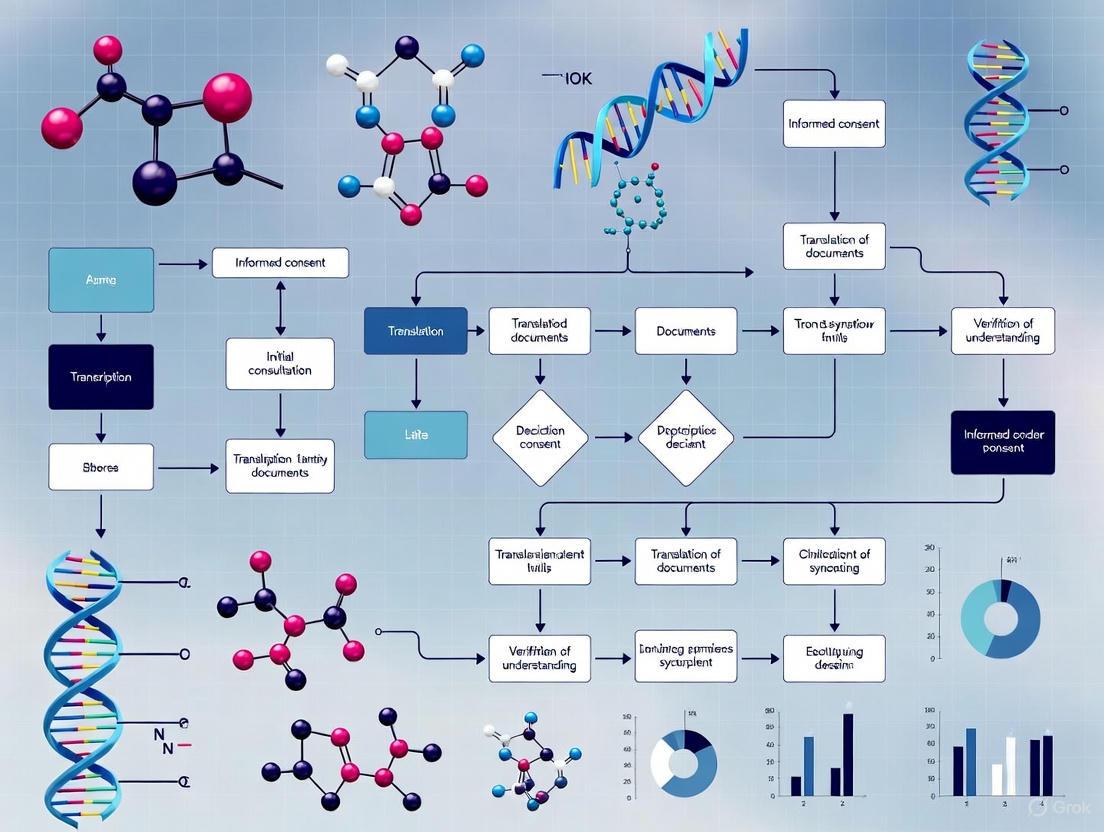
This guide provides researchers, scientists, and drug development professionals with a complete framework for obtaining legally and ethically valid informed consent from non-English speaking participants.
Ensuring Ethical Research: A Comprehensive Guide to the Informed Consent Process for Non-English Speakers
Abstract
This guide provides researchers, scientists, and drug development professionals with a complete framework for obtaining legally and ethically valid informed consent from non-English speaking participants. Covering foundational regulations from the FDA, HHS, and ACA, it details practical methodologies for translation and interpretation, strategies for troubleshooting common challenges, and processes for validation and documentation to ensure IRB approval and study integrity.
The Legal and Ethical Imperative: Understanding Regulations and Patient Rights
This technical support center provides guidance for researchers and drug development professionals on navigating the core regulatory requirements for obtaining informed consent from non-English speaking participants.
Key Regulatory Requirements at a Glance
The following table summarizes the primary regulatory bodies and their key requirements for providing meaningful access and obtaining informed consent from individuals with Limited English Proficiency (LEP).
| Regulatory Body / Framework | Key Requirement | Applicable Regulation / Authority | Key Compliance Considerations for Researchers |
|---|---|---|---|
| HHS/ACA Section 1557 | Provide "meaningful access" to LEP individuals [1] [2]. | Affordable Care Act Section 1557; Title VI of the Civil Rights Act of 1964 [2] [3]. | - Provide free, accurate, and timely language assistance [2].- Use qualified interpreters/translators [2].- Post Notices of Availability in top 15 state languages [1]. |
| HHS Common Rule | Seek informed consent in language understandable to the subject [4]. | 45 CFR Part 46 [4]. | - Translate consent forms and conduct discussions in a language understandable to the participant [4].- Justify to the IRB if excluding non-English speakers [4]. |
| FDA | Obtain legally effective informed consent [5]. | 21 CFR Part 50 [5]. | - Consent process must ensure participant understanding, not just a signature [5].- Use a qualified interpreter when necessary [5].- IRB must review all consent materials [5]. |
Frequently Asked Questions (FAQs)
Q1: What are the specific requirements for a "qualified interpreter" under Section 1557?
A qualified interpreter must [2] [3]:
- Demonstrate proficiency in spoken/written English and the target language.
- Interpret effectively, accurately, and impartially, using necessary specialized vocabulary.
- Adhere to strict confidentiality and ethics principles, including client confidentiality.
You must not rely on untrained staff, accompanying adults, or minor children to interpret, except in specific, limited emergency situations [3].
Q2: Can we use machine translation apps for consent forms and study materials?
Yes, but with critical limitations. The Office for Civil Rights (OCR) guidance states that machine translations must be reviewed by a qualified human translator in situations where [2]:
- Accuracy is essential.
- The text contains complex, non-literal, or technical language.
- The underlying information is critical to the individual's rights, benefits, or meaningful access.
Using raw, unverified machine translation for informed consent documents poses significant compliance and safety risks [2].
Q3: Our study is minimal risk and only involves an anonymous online survey. Do we need to translate the entire consent form?
This depends on your IRB's risk assessment and the four-factor analysis for LEP obligations. You may qualify for an Alteration or Waiver of Consent or a Waiver of Documentation of Consent. The IRB may grant this if it finds that the research meets specific criteria, including that the research involves no more than minimal risk and could not practicably be carried out without the waiver [4]. However, you must still provide a short, initial information sheet in a language the participant understands, explaining the study and their rights. You must seek and obtain formal approval from your IRB for any such waiver [4].
Q4: What is the difference between a "Notice of Nondiscrimination" and a "Notice of Availability" under Section 1557?
These are two distinct but related required notices [1] [2]:
- Notice of Nondiscrimination: Informs individuals of their rights not to be discriminated against on the basis of race, color, national origin, sex, age, or disability. The compliance deadline was November 2, 2024 [2].
- Notice of Availability: Specifically informs individuals of the availability of free language assistance services and auxiliary aids (for individuals with disabilities). The compliance deadline is July 5, 2025 [1] [2].
Q5: What are the key differences between the FDA and HHS regulations on informed consent?
While largely aligned, some differences exist. The FDA emphasizes that informed consent is an ongoing process of communication, not a single event or just a signed form [5]. Both agencies require that consent information be understandable to the subject. The FDA provides specific guidance on the eight basic elements and six additional elements that must be included in consent [5], and it has issued detailed guidance on effectively presenting key information at the start of the consent form to facilitate understanding [6]. Institutions working on both HHS-funded and FDA-regulated research must comply with the stricter standard.
The Scientist's Toolkit: Research Reagent Solutions
Essential materials and resources for ensuring compliant informed consent processes with non-English speaking populations.
| Item / Solution | Function in the Consent Process | Key Considerations |
|---|---|---|
| Qualified Interpreter Services | Facilitates real-time, accurate oral communication during the consent discussion and throughout study participation. | - Can be remote (VRI) or in-person [2].- Must be provided free of charge to the participant [3].- Document service use in the participant's record. |
| Certified Translation Services | Provides accurate written translation of the full consent form, HIPAA authorization, and other participant-facing materials. | - Translations must be performed by a qualified translator [2].- Maintain a library of IRB-approved consent forms in frequently encountered languages. |
| IRB-Approved Short Consent Forms | Serves as a written summary for an oral consent process presented in the participant's language. | - Used when the full consent form has been orally presented [5].- Must be approved by the IRB and signed by the participant and a witness [5]. |
| Multilingual Video & Graphic Aids | Enhances comprehension of complex study procedures (e.g., randomization, placebo control) beyond text. | - The FDA encourages using illustrations and other innovative methods to improve understanding [6].- All materials must be reviewed and approved by the IRB. |
| Electronic Consent (eConsent) Platforms | Delivers consent information in a structured, interactive format, potentially in multiple languages. | - Platforms must comply with FDA 21 CFR Part 11 on electronic records and signatures [5].- Must be accessible and provide an opportunity for participants to ask questions [5]. |
Experimental Protocol: Workflow for compliant LEP Consent Process
The following diagram outlines a standardized workflow for obtaining informed consent from a potential participant with Limited English Proficiency (LEP), integrating requirements from FDA, HHS, and Section 1557.
Quality Control: Interpreter and Translation Qualification
Ensuring the quality and compliance of language services is critical for valid informed consent. The following diagram details the verification process for interpreters and translators.
For researchers, scientists, and drug development professionals, obtaining truly informed consent is a fundamental ethical and regulatory requirement. This process becomes significantly more complex when potential participants are non-English speakers. "Understandable language" in this context is not merely a translated document; it is a mandate for the combined application of plain language principles and deep cultural competence. This ensures that participants, regardless of their primary language, can fully comprehend the research, its risks, and its benefits, thereby upholding the integrity of the informed consent process. Federal regulations, including the Plain Writing Act of 2010, legally require that public-facing content, including consent forms, be clear and easy to understand [7].
FAQs and Troubleshooting Guides
Q1: What are the most common barriers to including non-English speakers in research, and how can we overcome them?
A: A recent study identified several key barriers, along with practical solutions [8]:
| Barrier | Recommended Solution |
|---|---|
| Lack of training for research staff | Develop and provide training resources on inclusive research practices. |
| Difficulty securing interpreter services | Institutional investment in and increased access to interpretation services. |
| Budget constraints for language services | Secure guidance on properly budgeting for translation in grant proposals. |
| English-speaking-only team members | Hire diverse staff or partner with bilingual community members. |
| Uncertainty in finding professional translation | Create a network or institutional directory of vetted services. |
A critical finding is that approximately 42% of studies that included non-English speakers did so only reactively (after the study began) rather than proactively planning for inclusion [8]. This suggests language needs are often an afterthought. Transformational change requires multilevel investment from researchers, institutions, and funders [8].
Q2: Our English-language consent form is written scientifically. Can't we just translate it verbatim?
A: No. A direct, verbatim translation of a complex scientific document will likely fail to achieve understanding. The process must be more nuanced [9]:
- First, simplify: Apply plain language principles to the original English document to reduce its reading level. The FDA recommends informed consent documents be written in plain language appropriate to the subject population, generally at an 8th-grade reading level [10].
- Then, translate: A professionally translated document starts from this simplified version.
- Finally, review: Have a cultural or community reviewer check the translated document for conceptual accuracy and cultural appropriateness, not just linguistic correctness. Communication should be clear rather than elegant [9].
Q3: What are the core "Key Information Elements" that must be presented clearly in an informed consent document?
A: The revised 2018 Common Rule requires consent documents to begin with a "concise and focused" presentation of key information. The following elements are identified as essential for helping potential participants make a decision [10]:
| Key Information Element | Description |
|---|---|
| Voluntary Participation | A clear statement that the project is research and that participation is voluntary. |
| Research Summary | A summary of the research, including its purpose, expected duration, and a list of procedures. |
| Foreseeable Risks | A description of any reasonable, foreseeable risks or discomforts. |
| Expected Benefits | A description of any reasonable, expected benefits to the participant or others. |
| Alternatives | A disclosure of appropriate alternative procedures or courses of treatment, if any. |
Experimental Protocols for Ensuring Understanding
Protocol 1: Developing and Testing a Culturally Competent Consent Process
Objective: To create an informed consent process for a specific non-English-speaking community that ensures comprehensive understanding and voluntary participation.
Materials:
- Research Reagent Solutions:
- Plain Language Guide: A resource on writing clear, easy-to-understand content (e.g., from PlainLanguage.gov) [7].
- Professional Translation Services: A vendor specializing in medical/research translation.
- Cultural Liaison: A trusted individual from the participant community.
- Audio-Recording Device: To document the consent conversation (with permission).
- Readability Analyzer: Software tool to assess the reading level of the consent document.
Methodology:
- Drafting: Write the initial consent document using the "Key Information Elements" as a framework. Use second-person ("you") language and avoid jargon [10].
- Plain Language Review: Apply plain language principles, focusing on structure, clarity, and design [7]. Use the readability analyzer to confirm an ~8th-grade reading level.
- Translation & Back-Translation: Engage a professional translator to convert the simplified English document into the target language. A second, independent translator should then blindly translate it back into English to check for conceptual inconsistencies.
- Cultural Review: The cultural liaison reviews the translated document for cultural appropriateness, ensuring examples and phrasing are resonant and not offensive.
- Pilot Testing: Conduct a mock consent process with a small group from the community. Use the "Teach-Back" method, where participants explain the study in their own words.
- Iterative Revision: Refine the document and process based on pilot feedback.
- Implementation: The final consent process should involve the bilingual consent form, a live interpreter if needed, and ample time for questions. Willing participation is paramount [10].
The following workflow diagrams this multi-step protocol:
Protocol 2: Quantifying the Burden on Non-Native English Speaking Researchers
Objective: To understand and measure the additional effort required for non-native English-speaking researchers to perform core tasks, informing institutional support structures.
Materials:
- Research Reagent Solutions:
- Standardized Reading Materials: A set of representative scientific papers.
- Writing Prompt: A standardized dataset and instructions for drafting a research abstract.
- Submission Tracking System: A database to track manuscript submissions, rejections, and revision cycles.
- Time-Tracking Software: To record time-on-task for reading and writing.
- Survey Platform: To anonymously collect self-reported data from researchers.
Methodology:
- Task Assignment: Recruit native and non-native English-speaking researcher cohorts. Assign the standardized reading and writing tasks.
- Data Collection:
- Use time-tracking software to measure time spent on tasks.
- Analyze manuscript submission records for rates of rejection and rounds of revision.
- Administer surveys to collect self-reported data on effort and confidence.
- Data Analysis: Statistically compare the average time, rejection rates, and revision counts between the two cohorts.
The data below summarizes documented disparities in research effort and outcomes, which can be used as a benchmark for your own internal audits [11]:
| Research Task | Performance Gap for Non-Native Speakers |
|---|---|
| Reading Papers | Takes 91% more time [11] |
| Writing Papers | Takes 51% more time [11] |
| Manuscript Rejection | Face 2.6 times more rejections [11] |
| Manuscript Revisions | Require 12.5 times more revisions [11] |
The relationships between the researcher's native language, the tasks they perform, and the resulting outcomes can be visualized as a causal loop diagram:
Beyond standard lab equipment, conducting ethically sound research with non-English speakers requires a specific set of "research reagent solutions" focused on communication and inclusion.
| Resource | Function & Importance |
|---|---|
| Plain Language Guidelines | Guides for rewriting complex information into clear, straightforward text. This is the foundational step before translation [7]. |
| Professional Interpretation Services | Provides real-time, accurate verbal translation during the consent process, ensuring interactive understanding. |
| Certified Translation Services | Ensures written documents (consent forms, surveys) are accurately and professionally translated from a simplified source document. |
| Cultural Liaison / Community Partner | Provides insight into cultural norms and ensures the consent materials and process are culturally appropriate and trustworthy. |
| Readability Assessment Tool | Software or formulas (e.g., Flesch-Kincaid) that objectively measure the reading grade level of a consent document, ensuring it meets the ~8th-grade target [10]. |
| Accessibility Symbols | Standardized icons (e.g., for large print, audio description) that can be included on materials to signal available accessibility features for participants with disabilities [12] [13]. |
Identifying Limited English Proficient (LEP) Populations in Your Study
Frequently Asked Questions
What is the regulatory basis for providing language services in research? Title VI of the Civil Rights Act of 1964 prohibits discrimination based on national origin, which has been interpreted to include individuals with Limited English Proficiency (LEP). Furthermore, Section 1557 of the Affordable Care Act re-enforced these requirements for healthcare providers and programs receiving federal funds [14] [15].
We have a bilingual staff member. Can they serve as the interpreter for the consent process? While a bilingual staff member can be used, it is crucial to verify their competency as a medical interpreter. The use of friends or family members is discouraged, as impartial, professionally trained interpreters are preferred to ensure accuracy and avoid conflicts of interest [16]. The individual should have experience with clinical research terminology, which differs from general clinical practice [16].
What should we do if a potential non-English speaking subject arrives for enrollment unexpectedly? Federal guidance expresses a strong preference for using a translated long-form consent document [16]. For truly unexpected situations, regulations provide for the use of a short-form consent document. However, investigators should carefully consider the ethical and legal ramifications of enrolling subjects when a language barrier exists, as the consent may not be truly informed or legally effective if the subject does not clearly understand the information [16].
How do we document consent when using a translated consent form? A common approach is to have the participant sign the translated long-form consent document. The principal investigator and a witness then typically sign both the English version and the translated version. Some IRBs may also modify consent templates to include a signature line for the interpreter [16].
Understanding the LEP Population
To effectively identify and recruit LEP populations, it is helpful to understand their demographics. In the United States, 8% of people ages five or older (approximately 25.7 million individuals) have LEP [17]. The table below summarizes key characteristics of the U.S. LEP population.
Table 1: Demographic Profile of the U.S. LEP Population
| Characteristic | Detail | Percentage of LEP Population |
|---|---|---|
| Top Languages | Spanish | 63% [17] |
| Chinese | 7% [17] | |
| Vietnamese | 3% [17] | |
| Arabic | 2% [17] | |
| Tagalog | 2% [17] | |
| Racial/Ethnic Identity | Hispanic | 62% [17] |
| Asian | 22% [17] | |
| White | 11% [17] | |
| Black | 4% [17] | |
| Citizenship Status | Noncitizens | 56% have LEP [17] |
| Naturalized Citizens | 37% have LEP [17] | |
| U.S.-born Citizens | 2% have LEP [17] | |
| Geographic Concentration | California | 25% of all U.S. LEP individuals [17] |
| Texas | 14% of all U.S. LEP individuals [17] | |
| Florida & New York | 9% each of all U.S. LEP individuals [17] | |
| Health Insurance | Nonelderly Uninsured Rate | 29% (vs. 9% for English-proficient) [17] |
Experimental Protocol: Identifying and Enrolling LEP Participants
This protocol provides a step-by-step methodology for prospectively identifying and enrolling participants with LEP in a clinical study, ensuring regulatory compliance and ethical rigor.
1. Pre-Study Planning and Community Engagement
- IRB Consultation: Engage with your Institutional Review Board (IRB) early to understand specific policies and requirements for enrolling non-English speaking participants [16].
- Anticipate Need: If the study subject population is likely to include non-English speaking people, or if the IRB anticipates consent interviews in another language, the IRB should require a translated consent document [16].
- Resource Preparation: Secure funds for professional translation of the informed consent form and all other participant-facing materials. Contract with qualified medical interpretation services (in-person or virtual) for all study visits [15] [16].
2. Subject Identification and Screening
- Primary Language Screening: Incorporate a primary language spoken question into the initial screening process. Electronic medical records (EMRs) often contain this field, though it may be an imperfect proxy for LEP status [14] [18].
- LEP Assessment: For individuals who do not list English as their primary language, directly but respectfully assess their need for language assistance. A simple question like, "In what language would you prefer to discuss this research study?" is an effective and respectful method to identify LEP.
3. Informed Consent Process
- Use Translated Materials: The translated long-form consent document must be presented to the participant [16].
- Employ Qualified Interpreter: A certified medical interpreter, rather than a friend or family member, should be present throughout the entire consent conversation to facilitate communication and answer questions from the participant [16].
- Document the Process: Follow your organization's defined process for documenting consent with translated materials. This typically involves the participant signing the translated consent form, while the principal investigator and a witness sign both the English and translated versions [16].
4. Ongoing Participation
- Continuous Language Support: Ensure that a qualified interpreter is available for every subsequent study visit and for any communication where new information is provided or consent is re-affirmed. This is essential for maintaining participant understanding and safety throughout the study [16].
The workflow for this protocol is summarized in the diagram below.
The Scientist's Toolkit: Research Reagent Solutions
Table 2: Essential Materials for LEP-Inclusive Clinical Research
| Item | Function in the Experiment/Study |
|---|---|
| Professional Translation Services | Accurately translates the informed consent document, recruitment materials, and participant questionnaires into the target language, ensuring linguistic and cultural appropriateness. |
| Certified Medical Interpreter | A professionally trained individual who facilitates oral communication between the research team and the LEP participant during the consent process and all study visits, ensuring comprehension. |
| Short-Form Consent Document | A regulatory-approved document, used only in unexpected enrollment situations, that states the required elements of consent have been presented orally in a language understandable to the subject [16]. |
| Cultural Competency Training | Prepares the research team to work effectively with participants from diverse cultural and linguistic backgrounds, improving communication and building trust. |
| Data Collection Fields for LEP Status | Systematic inclusion of primary language and LEP status in EMRs and research databases is critical for tracking enrollment and addressing healthcare disparities for LEP individuals [14] [18]. |
The right of a research participant to withdraw from a study at any time is a cornerstone of ethical research practice, directly stemming from the principle of respect for persons and individual autonomy [19]. This right protects volunteers from coercion and undue influence, ensuring that participation is truly voluntary. The process of withdrawal, however, can present unique practical and ethical challenges, particularly when research involves vulnerable populations or complex, long-term study designs like biobanks [20]. This guide provides a foundational overview and troubleshooting resource for researchers, scientists, and drug development professionals to navigate these challenges and uphold the highest ethical standards in the informed consent process.
The Ethical Bedrock: Key Principles and the Evolution of Withdrawal
The right to withdraw has evolved significantly since its initial formulation. Understanding this history is key to appreciating its current application.
Table 1: Evolution of the Right to Withdraw in Key Ethical Documents
| Document / Guideline | Year | Stipulation on Withdrawal | Key Advancement |
|---|---|---|---|
| The Nuremberg Code | 1948 | Subject may end experiment if continuation seems "impossible" due to physical or mental state [20] | Established the foundational right to terminate an experiment. |
| Declaration of Helsinki | 2013 | Right to "withdraw consent to participate at any time without reprisal" [20] | Introduced the "without reprisal" clause and the "at any time" condition. |
| CIOMS Guidelines | 2002 | Participant is "free to withdraw from research at any time without penalty or loss of benefits" [20] | Explicitly clarified that withdrawal must not affect benefits to which the subject is otherwise entitled. |
| US Federal Common Rule (45 CFR 46.116) | 1991+ | Subject may discontinue "at any time without penalty or loss of benefits" [21] | Codified the right into U.S. regulations governing most human subjects research. |
These principles are operationalized through several core ethical concepts [19]:
- Respect for Persons (Autonomy): Recognizing the personal dignity and autonomy of individuals, and requiring voluntary, informed consent.
- Beneficence and Non-maleficence: Maximizing benefits and minimizing potential harms or risks to research participants.
- Justice: Ensuring the fair distribution of the benefits and burdens of research.
Troubleshooting Guide: Common Challenges & Solutions
This section addresses specific issues researchers might encounter regarding participant withdrawal, framed in a question-and-answer format.
FAQ 1: What should I do if a participant wants to withdraw, but our study protocol requires an exit procedure for safety reasons?
Answer: You must honor the participant's decision to withdraw immediately. However, you can ethically request (not require) that the participant complete a safety monitoring visit. The consent form should clearly state this possibility and explain that the purpose is for the participant's welfare [21]. For example, a phase I drug trial might need a final blood draw to monitor drug clearance. The key is to avoid framing this request as a barrier to withdrawal; the participant's right to refuse the exit procedure is absolute.
FAQ 2: How do we handle a withdrawal request in a biobanking study where data has already been shared or used in analyses?
Answer: Biobanking presents unique challenges. A one-size-fits-all approach to withdrawal is often impractical once data has been widely disseminated or anonymized [20]. The solution is granular consent.
- During Consent: Clearly explain the specific withdrawal options available. These may include:
- Withdrawing from future data collection.
- Having stored samples destroyed.
- Having identifying data removed from the database.
- Acknowledging that it may be impossible to retrieve or destroy anonymized data that has already been shared with collaborators or included in published analyses.
- Documentation: Ensure the consent form precisely documents these limitations and the participant's choices.
FAQ 3: A participant with limited English proficiency wishes to withdraw. How can we ensure this is processed correctly and respectfully?
Answer: The process for withdrawal must be as accessible as the process for consent.
- Use Qualified Interpreters: Do not rely on family members. Use a professional medical interpreter to communicate the participant's decision [22].
- Translated Short-Form Documents: For unanticipated non-English speakers, an IRB-approved short-form consent document (which includes withdrawal information) in the participant's language can be used with an interpreter [22].
- Clear Communication: The interpreter must clearly convey that the participant can withdraw without any penalty or effect on their medical care. The researcher must assess the participant's comprehension of this right [22].
FAQ 4: What is the difference between persuasion, undue influence, and coercion in the context of retaining participants?
Answer: Understanding these distinctions is critical for ethical conduct.
- Persuasion: Providing the participant with new reasons or merits to continue participation. This may be acceptable in some therapeutic contexts but is controversial in research [21].
- Undue Influence: Occurs through an excessive, unwanted, or improper offer (e.g., a large financial incentive) that overpowers a participant's judgment, making it difficult for them to refuse. This is particularly a concern with vulnerable populations [21] [19].
- Coercion: Involves an overt threat of harm (e.g., "if you withdraw, your doctor will drop you as a patient") such that the participant has no choice but to comply. Coercion is never ethical [21].
FAQ 5: Our consent form includes the required statement on withdrawal. Is this sufficient for ethical compliance?
Answer: No. While including the regulatory text is necessary, it is not sufficient. A study found that 26% of consent forms explicitly requested subjects to engage in further behavior (e.g., an extra test or visit) before withdrawing, and only 13% of those mentioned safety as the reason [21]. Ethical compliance requires:
- Clarity: The language in the consent form must be clear and not create hidden barriers.
- Process: The entire research team must be trained to honor withdrawal requests promptly and without question.
- Ongoing Consent: Participants should be reminded of their right to withdraw during follow-up visits [19].
Experimental Protocol: Implementing an Ethical Withdrawal Process
Objective: To establish a standard operating procedure (SOP) for managing participant withdrawal requests that ensures compliance with ethical principles and federal regulations.
Methodology:
- Initial Request & Documentation:
- The first research team member receiving a withdrawal request must immediately document the date, time, and method of request (e.g., verbal, email).
- The participant's decision must be acknowledged promptly and respectfully, without questioning their reasons.
Termination of Procedures:
- All research interventions and data collection specific to that participant must cease immediately upon receipt of the request.
- The participant's clinical care team (if separate) should be notified to ensure continuity of non-research-related care.
Data Management Post-Withdrawal:
- The participant's wishes regarding the use of data and specimens collected prior to withdrawal must be determined and strictly followed. Options typically include:
- Continued use of existing de-identified data.
- Destruction of all stored samples and identifiable data.
- This preference must be clearly documented in the research record.
- The participant's wishes regarding the use of data and specimens collected prior to withdrawal must be determined and strictly followed. Options typically include:
Follow-Up Communication:
- If the study protocol includes clinically relevant follow-up (e.g., safety monitoring), this should be presented as a recommendation for the participant's benefit, not a requirement for withdrawal [21].
- All communication must reinforce that withdrawal is without penalty and will not affect the subject's relationship with the institution or access to clinical care [21].
Visualization of the Participant Withdrawal Workflow
The following diagram illustrates the logical workflow for processing a participant's withdrawal request, ensuring their autonomy is respected at every stage.
Upholding ethical standards requires specific tools and documents. The following table details key resources for managing the informed consent and withdrawal process, especially for non-English speaking populations.
Table 2: Research Reagent Solutions for Ethical Consent & Withdrawal
| Item / Resource | Function & Purpose |
|---|---|
| IRB-Approved Consent Form Template | The foundational document that must clearly state the right to withdraw "at any time without penalty or loss of benefits," using simple language at an 8th-grade reading level [22]. |
| Certified Translation Services | Provides accurate, culturally competent translations of consent documents for studies anticipating non-English speaking participants, required for greater-than-minimal-risk studies [22]. |
| Short Form Consent Documents | Pre-translated, generic consent forms for the occasional, unanticipated enrollment of a non-English speaking subject, used with an oral presentation of the full English consent [22]. |
| Qualified Medical Interpreter | A trained professional who facilitates accurate communication during the consent and withdrawal process, ensuring understanding and cultural appropriateness without relying on family members [22]. |
| Withdrawal SOP | A standard operating procedure that provides clear, step-by-step instructions for the research team on how to process a withdrawal request ethically and efficiently. |
| Data Management Plan | A pre-established protocol that outlines how participant data and samples will be handled upon withdrawal, including options for destruction or continued use of de-identified data [20]. |
Quantitative Insights: Withdrawal Provisions in Practice
Empirical data helps contextualize how withdrawal is handled in actual research practice. A content analysis of 114 consent forms revealed the following:
Table 3: Analysis of Withdrawal Provisions in Consent Forms (n=114) [21]
| Category | Frequency | Percentage | Notes |
|---|---|---|---|
| Included required statement on withdrawal | 114 | 100% | Adhered to CFR §50.25(a)(8) |
| Included statement on no effect on clinical care | 114 | 100% | Adhered to CFR §50.25(b)(4) |
| Required additional behavior before withdrawal | 30 | 26% | e.g., additional test or visit |
| Mentioned safety as reason for additional step | 4 | 13% | Of the 30 that required extra steps |
| Provided info on health consequences of withdrawal | 0 | 0% | A noted gap in information |
From Policy to Practice: Implementing Compliant Translation and Consent Procedures
When to Use a Fully Translated Consent Form vs. a Short Form Process
Including individuals with Limited English Proficiency (LEP) in research is not only an ethical imperative but also a regulatory requirement. The informed consent process must be conducted in a language understandable to the participant. This guide outlines the critical decision points for researchers when choosing between a fully translated consent form and a short form consent process.
The table below summarizes the core differences between these two approaches:
| Feature | Fully Translated Consent Form | Short Form Consent Process |
|---|---|---|
| Definition | A complete, study-specific consent document translated into the participant's language [23]. | A brief, non-study-specific document in the participant's language, used with a verbal translation of the full English consent form [24] [25]. |
| Primary Use Case | Planned enrollment of participants who speak a specific non-English language [24] [26]. | Unanticipated enrollment of a participant whose language was not anticipated, and for which no translated consent form exists [24] [25]. |
| IRB Approval | Required before use [24] [23]. | Required for the process before use; pre-translated short form templates often available without separate approval [25] [27]. |
| Participant Materials | Translated full consent document [23]. | Short form document + copy of the English consent document (as a written summary) [24] [27]. |
| Duration of Use | No limit; for ongoing enrollment of speakers of that language [24]. | Limited (e.g., up to 3-5 participants per language before a full translation is required) [24] [23]. |
| Personnel Required | Standard consent process. | A qualified interpreter and an impartial witness fluent in both languages [24] [27]. |
Decision Framework and Protocols
Decision Workflow
The following diagram illustrates the decision-making process for selecting the appropriate consent method.
Protocol for Using a Fully Translated Consent Form
A fully translated "long form" consent document is the gold standard for working with LEP populations. Follow this protocol for its development and use.
1. Pre-Submission Preparation:
- Translation: Have the English IRB-approved consent form translated by a qualified professional [28].
- Certificate of Accuracy: Obtain a certificate of translation accuracy from the translator or service [28].
- Back-Translation: For complex or higher-risk studies, the IRB may require back-translation, where a second, independent translator converts the document back to English to verify accuracy [28].
2. IRB Submission:
- Submit the translated document, the certificate of accuracy, and the translator's credentials to the IRB for review and approval via a modification form [24] [27].
3. Consent Process:
- Conduct the consent process using the IRB-approved translated document.
- The participant signs the translated consent form. The signature requirements are the same as for the English form; the principal investigator or designee must also sign the consent form that was used in the process [29].
Protocol for the Short Form Consent Process
The short form process is a contingency for unplanned scenarios. It is documentation-intensive and requires specific personnel.
1. Pre-Consent Preparation:
- Obtain Short Form: Secure the short form document in the participant's language from your institution's IRB [25].
- Secure Personnel: Arrange for a qualified interpreter and an impartial witness. The witness must be over 18, fluent in English and the participant's language, and independent of the research team. The interpreter may serve as the witness if they can sign the documents [24] [27].
2. Conducting the Consent Discussion:
- The researcher completes the subject and study information fields on the short form [24].
- The interpreter verbally translates the entire, IRB-approved English consent document to the participant. The interpreter also facilitates any questions and answers [24].
- The witness observes the entire oral presentation [24].
3. Documenting Consent:
- The participant (or LAR) signs and dates the short form [24].
- The researcher obtaining consent signs and dates the English consent document [24].
- The witness signs and dates both the short form and the English consent document [24] [27].
- The interpreter signs the short form to affirm the accuracy of their translation [24].
4. Post-Consent Obligations:
- Provide the participant with copies of the signed short form and the English consent document [24].
- For studies lasting more than 60 days, or for FDA-regulated studies, you must provide the participant with a fully translated version of the consent document promptly after the IRB approves it [24] [27].
This table lists key resources required for implementing compliant consent processes with LEP participants.
| Resource | Function | Examples & Notes |
|---|---|---|
| Professional Translation Service | Accurately translates the full consent document and other participant materials. | Ensure the service provides a "Certificate of Translation Accuracy" [28]. |
| Certified Medical Interpreter | Provides real-time, accurate verbal translation during the short form consent process. | Use hospital interpreter services (e.g., GLOBO) whenever possible; avoid using family members unless declined by the participant [25] [27]. |
| Short Form Templates | Pre-translated, generic consent summaries for use in the short form process. | Many IRBs provide these in multiple languages (e.g., University of Iowa, UW-Madison, Stanford) [24] [23] [27]. |
| Impartial Witness | Observes the entire short form consent process and attests to its validity. | Must be bilingual, independent of the research team, and able to sign documents [24] [23]. |
| Certificate of Translation Accuracy | A certified document attesting that the translation is a true and accurate representation of the original. | Required by most IRBs when submitting a translated consent form for approval [28]. |
| Electronic Consent (eConsent) Platform | Digital systems for managing and obtaining consent. | Can improve documentation of interpreter use and delivery of language-concordant materials [30]. |
Frequently Asked Questions (FAQs)
Q1: Our study is minimal risk. Can we just have a bilingual family member interpret the English consent form without using the formal short form process?
No. Federal regulations and institutional policy require a systematic approach to ensure understanding. For a documented consent process (i.e., where a signature is required), the use of a short form with a witness is the prescribed method for unplanned enrollments, regardless of risk level [23]. Using an informal process without proper documentation puts the participant, the data, and the institution at risk.
Q2: Who is responsible for the informed consent, even when using an interpreter or short form?
The clinical investigator (Principal Investigator) is ultimately responsible for obtaining informed consent, even if delegated to a study team member [28]. This responsibility cannot be transferred.
Q3: What happens if we need to use the short form process for more than three participants who speak the same language?
Most institutional policies impose a limit (often 3-5 participants per language) after which the research team must stop using the short form and obtain IRB approval for a fully translated consent document for any further enrollment in that language [24] [23]. This ensures the institution is not relying on a temporary solution for an ongoing need.
Q4: For an FDA-regulated study, what are our obligations after using a short form?
The FDA requires that a fully translated consent form in the participant's language be provided to the participant or their LAR promptly after the short form is used [27]. This is critically important for studies involving ongoing interventions or long-term follow-up, as it provides the participant with an ongoing, understandable source of information. Re-consent with the translated document is generally required [27].
This guide details the complete workflow for translating informed consent forms and securing the necessary Institutional Review Board (IRB) approvals, ensuring ethical and compliant enrollment of non-English speakers in clinical research.
Research Reagent Solutions
Table 1: Essential Resources for Consent Form Translation and IRB Review
| Resource Category | Specific Examples & Functions |
|---|---|
| Translation Services | Professional translation vendors (supporting 260+ languages); In-house translators for specific languages (e.g., Spanish); Certified medical translators for complex terminology [31]. |
| IRB Short Form Templates | Pre-translated, generic short-form consent documents in over 50 languages; used for the initial consent process when a full translation is not immediately available [29] [31]. |
| Digital Consent Platforms | HIPAA-compliant systems for managing digital intake and consent forms; features include automatic version tracking, audit trails, and secure storage [32]. |
| Interpretation Services | Qualified interpreters (remote or in-person) to facilitate the oral consent discussion between the researcher and the participant [31]. |
Workflow Diagram
The flowchart below outlines the two primary pathways for obtaining informed consent from non-English speaking participants, depending on whether the need for translation was anticipated.
Frequently Asked Questions (FAQs)
What is the difference between the "Short Form" and a fully translated consent form?
The Short Form is a pre-translated, generic document that states the required elements of informed consent were presented orally. It does not contain any study-specific information and is used with an interpreter for the initial consent conference when a full translation is not available [29] [31].
A Fully Translated Consent Form is a complete, word-for-word translation of the study-specific, IRB-approved English consent form. It provides the participant with a comprehensive reference document in their own language for the entire duration of their participation [31].
When is it permissible to use the Short Form process?
The Short Form process is designed for situations where researchers unexpectedly encounter a potential participant who does not speak English and there is insufficient time to have the full consent form translated before the consent discussion must occur [31]. If you are targeting a non-English speaking population, you must translate the full consent form upfront.
Who signs which documents during the Short Form process?
- The Participant: Signs the translated Short Form [29].
- The Interpreter/Witness: Signs both the Short Form and the English consent form. The interpreter signs attesting that the information was accurately presented, and the witness signs attesting to the adequacy of the consent process [29].
- The Person Obtaining Consent: Signs the English consent form [29].
Are we required to re-consent the participant after the full form is translated?
No. Providing the participant with the fully translated, IRB-approved consent form after the initial Short Form process does not require a new signature or a formal re-consent process. The form should be given to the participant for their future reference via email, patient portal, or at their next visit [31].
What if our study sponsor did not budget for translation costs?
Some institutions have established bridge funding for this purpose. Investigators are typically required to first seek coverage from the study sponsor (e.g., checking the clinical trial agreement). If funds are unavailable, they can then apply for limited institutional bridge funding to cover the cost of translation [31].
Do we need to translate other participant materials?
The Principal Investigator should consider whether other participant-facing materials (e.g., study drug diaries, questionnaires) need translation to support meaningful participation. Alternatives, such as administering a questionnaire via an interpreter, may be proposed to the IRB for approval [31].
The short form consent process is a regulatory-approved method for enrolling individuals with limited English proficiency (LEP) into research when a fully translated, study-specific consent form is not immediately available [31] [33]. It is intended for unanticipated situations where researchers encounter a potential participant who does not speak English and there is insufficient time to obtain a translated consent document beforehand, often in clinic settings [31]. This process ensures that all participants, regardless of primary language, can provide truly informed consent while upholding ethical principles of access and justice in research [33].
Troubleshooting Guide: Common Scenarios and Solutions
| Scenario | Problem | Immediate Solution | Long-Term Compliance Action |
|---|---|---|---|
| Unexpected Enrollment | An eligible non-English speaking participant presents for enrollment, but no translated consent form exists [31]. | Use the IRB-approved short form in the participant's language with an interpreter [31]. | Obtain a full translation of the consent form post-enrollment; submit to IRB within 30 days [31]. |
| Interpreter as Witness | The interpreter is also asked to act as the witness [27]. | A witness must be impartial. If the interpreter is also a study staff member, they cannot be the witness. Find another impartial adult to serve as witness [27]. | Document the roles clearly in the consent documentation. The Person Obtaining Consent, interpreter, and witness should be distinct individuals where possible [27]. |
| Post-Consent Translation | The study team is unsure of the timeline and process for providing the fully translated consent form [31]. | Research procedures may begin immediately after the short form process. There is no need to delay the study [31]. | Translate the full consent form as soon as possible. Submit to IRB for review within 30 days of short form consent. Provide to participant after IRB approval via email, patient portal, or in person [31]. |
| Funding for Translation | The study budget did not anticipate the cost of translation services [31]. | First, attempt to cover costs with existing study funds (e.g., industry sponsor budgets, grant re-budgeting) [31]. | If existing funds are insufficient, request bridge funding from the institution (if available). Follow institutional procedures to request and obtain approval [31]. |
★ Key Experimental Protocol: Executing the Short Form Process
Detailed Methodology for Short Form Consent
The following workflow diagrams the essential steps for the short form consent process, from initial assessment to post-consent follow-up.
Required Signatures and Documentation
The table below details the specific signature requirements for the short form consent process, a common source of protocol deviations.
| Document | Signed By | Key Notes |
|---|---|---|
| Short Form (Translated) | Participant or Legally Authorized Representative (LAR) [27]. | If two parent signatures are required, each parent/LAR should sign a separate short form [27]. |
| Witness [27]. | Must be an impartial adult who observes the entire consent process [27]. | |
| Summary Form (English) | Person Obtaining Consent (POC) [27]. | The POC documents the participant's choices and completes the LAR's Description of Authority, if applicable [27]. |
| Witness [27]. | The same witness also signs the English summary form [27]. | |
| HIPAA Authorization | No signature [27]. | When using the short form process, neither the participant nor LAR signs the HIPAA authorization [27]. |
| Resource | Function | Key Considerations |
|---|---|---|
| Translated Short Form | A pre-translated, generic consent document containing the basic elements of informed consent but no study-specific details [31] [27]. | Fred Hutch IRB provides short forms in over 50 languages [31]. Must be IRB-approved for use. |
| Interpreter Services | A fluent speaker who communicates the study-specific information from the English consent form to the participant during the consent conference [31] [27]. | Use a hospital interpreter when possible. Family members may be used if the participant declines a professional interpreter [27]. |
| Impartial Witness | An independent adult who observes the entire consent process and attests that the information was accurately explained and consent was freely given [27] [34]. | Cannot be the POC or interpreter if they are study staff. Should have no conflict of interest [27] [34]. |
| English Summary Form | The full, study-specific English consent form, modified to include a witness signature line [27]. | Serves as the script for the interpreter during the oral consent conference [27]. |
| Translation Services | Professional service for creating a translated version of the full, study-specific consent form after the short form process [31]. | Required for FDA-regulated studies (IND/IDE). Must be submitted for IRB approval post-enrollment [31] [27]. |
▷ Frequently Asked Questions (FAQs)
Q1: Is a re-consent discussion required after we provide the participant with the fully translated consent form? No. A re-consent process and a new signature are not required. The fully translated consent form should be provided to the participant as an ongoing reference document, which can be done via patient portal, email, mail, or in-person at the next visit [31].
Q2: Can study procedures begin before the full consent form is translated? Yes. Research activities may begin immediately following the valid short form consent process. The translation of the full consent form occurs in the background and is provided to the participant after the fact [31].
Q3: What is the difference between a "Short Form" and a "Summary Form"? The Short Form is a pre-translated, generic consent document given to the participant. The Summary Form is the full, study-specific English consent form used by the interpreter during the consent discussion and signed by the Person Obtaining Consent and the witness [27].
Q4: Who qualifies as an impartial witness? An impartial witness is an adult (18+) who is independent of the trial and free from coercion. This can include patient advocates or interpreters, but not staff involved in the research. A study staff member acting as an interpreter cannot also act as the witness [27].
Q5: Does this new translation requirement apply to all studies? The requirement to translate the full consent form after using a short form is driven by updated FDA guidance and state laws. It is now standard for FDA-regulated studies. The IRB may grant rare exceptions for studies involving only a single interaction, but it is generally required for ongoing research [31] [27].
Q6: What if we already have a fully translated consent form in a specific language? You must not use the short form process for that language. Future participants speaking that language should be consented directly using the fully translated consent form [31].
Integrating Qualified Medical Interpreters Throughout the Research Workflow
Technical Support Center: FAQs and Troubleshooting
Frequently Asked Questions (FAQs)
Q1: What defines a "qualified" medical interpreter for research? A qualified medical interpreter is not simply a bilingual person. They are professionals who have been evaluated as competent in two or more languages and have received specialized training [35]. Key qualifications include:
- Formal Training: Over 120 hours of training in medical terminology, ethical decision-making, and interpreting best practices is a recognized standard [35].
- Healthcare Knowledge: Understanding of healthcare vocabulary, anatomy, procedures, and diagnoses (e.g., knowing the difference between a heart attack and cardiac arrest) [35].
- Legal and Ethical Adherence: Strict adherence to principles of confidentiality, impartiality, and accuracy, along with knowledge of regulations like HIPAA [35].
- Cultural Sensitivity: Ability to mediate potential misunderstandings arising from cultural differences [35].
Q2: When is a fully translated consent form required versus a short form? The requirement depends on the frequency of enrolling participants who speak the same non-English language [36].
- Translated Consent Form: Required if you are targeting a non-English speaking group, conducting research in a foreign country, or anticipate that more than an occasional participant speaking the same non-English language will enroll [36].
- Short Form Consent Document: Can be used when the majority of participants are English speakers, but there may be an occasional person who does not understand the English consent form. It must be used in conjunction with an oral presentation of the full English consent via an interpreter [36].
Q3: What are the signature requirements when using a short form consent? The signature process ensures all parties sign the document they understand [36]:
- The non-English speaking participant signs the short form.
- The witness/interpreter (fluent in both languages and ideally unaffiliated with the study) signs both the short form and the English consent.
- The consent designee from the research team signs the English consent form.
Q4: How much time should I allocate for interpreter-assisted consent sessions? Plan for the session to take significantly longer than an English-language consent. A time-motion study found that the act of "Interpreting for Patients" itself has a wide range of duration. Furthermore, interpreters spend considerable time on related activities. The table below summarizes quantitative data on interpreter time allocation [37].
Quantitative Data on Medical Interpreter Time Allocation [37] Table: Time spent by medical interpreters on various activities (based on a time-motion study of Spanish interpreters).
| Activity | Total Time (Minutes) | Percentage of Total Time | Average Duration per Activity (Minutes) |
|---|---|---|---|
| Value-Added Activities | 67% | ||
| Interpreting for Patients | 968.37 | 32.97% | 8.72 |
| Travel | 327.35 | 11.15% | 4.55 |
| Meetings | 206.50 | 7.03% | 20.65 |
| Inputting Data for Database | 145.22 | 4.94% | 2.79 |
| Consult with Providers | 75.83 | 2.58% | 1.65 |
| Non-Value-Added Activities | 33% | ||
| Waiting (Unscheduled) | 518.10 | 17.64% | 12.95 |
| Waiting for Test Results | 180.32 | 6.14% | 7.51 |
| Interruptions | 150.57 | 5.13% | 2.92 |
Q5: My research team cannot find an interpreter for a rare language. What should we do? For rare languages, Video Remote Interpretation (VRI) is the recommended solution. VRI provides access to a broader network of interpreters in multiple languages, including American Sign Language (ASL), and is ideal for urgent needs and remote locations [35]. Ensure you have a stable internet connection and a private setting for the VRI session.
Troubleshooting Common Scenarios
Scenario 1: A potential participant arrives, and we do not have a pre-scheduled interpreter available.
- Solution: Utilize an on-demand VRI service to connect with a qualified interpreter within minutes [35]. For in-person emergencies, contact your institution's Language Access Services department for urgent dispatch.
Scenario 2: A family member of the participant offers to interpret instead.
- Solution: Politely decline the offer. Using unqualified interpreters, including family members or bilingual staff, risks patient safety, confidentiality, and accurate translation of complex medical and research terms, potentially invalidating the consent process [35]. Explain that a neutral, professionally trained interpreter is required to ensure everyone fully understands the information.
Scenario 3: The interpreter informs you that a concept in the consent form does not directly translate into the participant's language.
- Solution: This is a key reason for using qualified interpreters. Work with the interpreter to find a way to explain the concept accurately. The interpreter can mediate the conversation, alerting you to the cultural misunderstanding and helping to convey the meaning without compromising the core information [35]. This may require a short, collaborative pause to rephrase the English explanation.
Experimental Protocol: Obtaining Informed Consent with an Interpreter
This protocol details the methodology for integrating a qualified medical interpreter into the informed consent process for a non-English speaking research participant.
1. Pre-Session Preparation (Before the participant arrives)
- Identify Need: Determine the participant's language needs during screening.
- Secure Interpreter: Schedule a qualified medical interpreter proficient in the required language. For in-person sessions, book a private room.
- Brief the Interpreter: Provide the interpreter with the JHM IRB-approved English consent form in advance. Briefly explain the study's purpose and any complex terminology [36].
2. Session Initiation and Introductions
- Introduce Everyone: The researcher should introduce themselves, the participant, and the interpreter. Clearly state the interpreter's role as a neutral, confidential communication facilitator.
- Set Ground Rules: The researcher should direct the interpreter to interpret everything that is said, exactly as it is said, without adding, omitting, or simplifying. The researcher should speak directly to the participant (e.g., "What are your questions?"), not to the interpreter (e.g., "Ask her if she has questions") [35].
3. Oral Presentation and Interpretation of Consent
- Deliver Content: The researcher should present the entire content of the English consent form to the participant, speaking in short, manageable segments to allow for accurate interpretation.
- Interpretation: The interpreter will convey the information in the participant's language.
- Check Understanding: The researcher should periodically check the participant's understanding using open-ended questions.
4. Question and Answer Period
- Facilitate Dialogue: Encourage the participant to ask questions. All questions and answers must be fully interpreted to ensure clarity for all parties.
- Cultural Mediation: The interpreter may intervene to alert the researcher of a potential cultural misunderstanding that is impeding communication [35].
5. Documentation and Signatures
- Provide Documents: Provide the participant with the short form consent document in their language and the full IRB-approved English consent form [36].
- Obtain Signatures:
- The participant signs the short form.
- The witness/interpreter signs both the short form and the English consent form.
- The researcher (consent designee) signs the English consent form [36].
- Provide Copies: Give the participant copies of all signed documents.
Workflow Visualization
The following diagram illustrates the logical workflow and key decision points for integrating an interpreter into the research consent process.
The Scientist's Toolkit: Research Reagent Solutions
This table details essential resources for ensuring effective communication in research involving participants with Limited English Proficiency (LEP).
Table: Essential resources for LEP research compliance and communication.
| Item / Solution | Function |
|---|---|
| Qualified Medical Interpreter | A professionally trained interpreter who ensures accurate, complete, and confidential interpretation of the research study and consent process, adhering to a strict code of ethics [35]. |
| Video Remote Interpretation (VRI) | A technology solution that provides on-demand access to qualified interpreters via video call for rare languages or when an in-person interpreter is not available [35]. |
| Translated Consent Documents | A version of the IRB-approved consent form fully translated into the participant's primary language. Required when enrolling more than an occasional LEP participant [36]. |
| Short Form Consent Document | A written document, in the participant's language, stating that the elements of informed consent have been presented orally. Used for occasional LEP participants [36]. |
| Certificate of Translation | A document certifying the accuracy of a translated consent form or study document, which must be submitted to the IRB for approval [36]. |
| Cultural Competency Consultation | Services (e.g., through centers like Centro SOL) that assist researchers in planning and conducting culturally competent research, including material translation and participant recruitment [36]. |
Technical Support & Troubleshooting Guides
FAQ: Addressing Common Translation Challenges
Q1: What is the core ethical reason for translating vital study documents?
The foundational ethical reason is to ensure that the consent process is truly informed. A signature on a form is meaningless if the participant does not understand the content. Translation, when done correctly, ensures that all participants, regardless of language, receive the same quality of information about the study's purpose, procedures, risks, and benefits, thereby upholding the ethical principle of respect for persons and enabling autonomous decision-making [38].
Q2: When is a full translation of the consent form required versus when can a "short form" process be used?
A fully translated consent form is required when you are intentionally targeting or anticipate enrolling more than an occasional number of participants who speak the same non-English language [39] [36]. The "short form" process is a contingency for unexpected situations. It can be used when a researcher unexpectedly encounters a potential participant and there is insufficient time to translate the full consent form beforehand. This process involves an interpreter orally presenting the full English consent form, while the participant signs a short-form document in their language attesting that the elements of consent have been presented [39] [36].
Q3: We used a professional translator, but our back-translation has several discrepancies. What should we do?
Discrepancies in back-translation do not automatically indicate an error in the forward translation. Language is complex, and many concepts can be expressed in multiple valid ways. The crucial step is reconciliation. A team including the original translator and a subject-matter expert should review each discrepancy. The goal is to determine if the forward translation accurately conveys the meaning of the original text, even if the words are different. Some differences are acceptable variations, while others that alter core meaning must be corrected [40].
Q4: Our translated questionnaire uses technically accurate terms, but participants seem confused. What is the likely issue?
The issue is likely a lack of localization and readability assessment. Technical terms that are accurate in a textbook may not be understood by the general public. You must adapt the content for the target audience's cultural context and education level [41] [42]. The solution is to subject the translated questionnaire to cognitive debriefing—testing it with individuals from the target population to identify confusing terms and ensure the questions are interpreted as intended [42].
Q5: What are the consequences of using unqualified interpreters, such as family members, during the consent process?
Using unqualified interpreters, like family members, is strongly discouraged and is typically only permitted in emergencies [39]. The consequences can be severe:
- Breach of Confidentiality: Family members are not bound by confidentiality agreements.
- Miscommunication: They may lack the vocabulary to accurately convey complex medical and research concepts.
- Coercion or Undue Influence: Their personal relationship with the participant may lead them to soften risks, exaggerate benefits, or influence the decision based on their own interests. This practice can compromise the validity of the consent and the ethical integrity of the research [39] [38].
Quantitative Data & Regulatory Summaries
Table 1: Common Translation Errors and Their Frequencies
Analysis of professionally translated informed consent materials reveals several common types of problems, as summarized below based on empirical research [40]:
| Error Type | Description | Example / Impact |
|---|---|---|
| Nonequivalent Registers | Using language that is more complex or formal than the original text, reducing comprehension. | Translating a simple English phrase into a complex, academic Spanish term [40]. |
| Errors of Omission | Accidentally leaving out key words or concepts present in the source document. | Omitting the word "possible" when describing risks, making a potential risk sound certain [40]. |
| Mistranslations Altering Meaning | Using a target language word that does not correctly correspond to the source word's meaning. | Using a Spanish term that implies an "illicit drug" (droga) instead of a "pharmaceutical" (fármaco/medicina) [40]. |
Table 2: International Regulatory Requirements for Translated Documents
Different regions have specific requirements for documents provided to research participants. The following table summarizes key mandates [43] [44]:
| Region / Country | Regulatory Body | Key Requirements for Translated Documents |
|---|---|---|
| United States | FDA / HHS | Information must be "in language understandable to the subject" [43]. If consent discussion is in Spanish, the signed form should be in Spanish [38]. |
| European Union | European Medicines Agency (EMA) | EU Clinical Trial Regulation (CTR) requires all trial-related documents to be translated into the language(s) of the participants [43]. |
| India | Indian Drugs and Cosmetics Acts / G-ICMR | Informed Consent Forms (ICFs) should be in English and/or the vernacular language. Language must be "scientifically accurate, simple, and sensitive" [43]. |
Experimental Protocols & Methodologies
Detailed Methodology: Multi-Step Translation with Quality Assurance
A rigorous, multi-step translation process is essential to produce high-quality, accurate documents. The following protocol, derived from empirical research, is recommended for vital documents like consent forms and questionnaires [40].
Objective: To translate English-language research documents into a target language while preserving original meaning, ensuring cultural appropriateness, and maximizing readability.
Workflow Diagram: The following flowchart illustrates the multi-step translation and quality assurance methodology.
Step-by-Step Protocol:
- Preparation of Source Document: Begin with a final, IRB-approved English source document written in clear, plain language to simplify translation [41] [43].
- Initial Forward Translation: Two native speakers of the target language, who are also fluent in English and possess relevant research knowledge, produce independent translations (T1 and T2) [40] [42].
- Reconciliation: The two translators, ideally with a third party, compare T1 and T2 against the original. They resolve discrepancies through discussion to create a single, reconciled version (V1) [40].
- Back-Translation: A new translator, fluent in both languages but blinded to the original English document, translates V1 back into English (BT). This translator should not have seen the original text [40] [43].
- Comparison and Reconciliation: A review team (e.g., study PI and a linguist) compares the back-translation (BT) with the original source document. They identify and categorize discrepancies as "acceptable" (different words, same meaning) or "problematic" (altered meaning). Problematic discrepancies are referred back to the forward translation team for correction in V1, resulting in a final version (V2) [40].
- Final Review and Approval: Final review by native-speaking members of the research team for cultural and conceptual accuracy. The final translated document (V2) is then submitted for IRB approval [39] [36].
Detailed Methodology: Linguistic Validation of Questionnaires and Patient Diaries
For validated questionnaires and patient-reported outcome (PRO) tools like patient diaries, a more rigorous process called linguistic validation is required to ensure the tool measures the same construct across languages [38] [42].
Objective: To ensure that a translated questionnaire or diary is conceptually equivalent to the original and is comprehensible and culturally relevant to the target population.
Workflow Diagram: The linguistic validation process for patient diaries and questionnaires involves multiple checks with the target population.
Step-by-Step Protocol:
- Concept Elicitation: Clearly define the concepts being measured by each item in the tool to guide accurate translation [42].
- Translation: Conduct the multi-step translation process outlined in the previous protocol (forward translation, reconciliation, back-translation) [40].
- Cognitive Debriefing: The most critical step. The translated tool is administered to a small sample (typically 5-8 individuals) from the target population. Participants are asked to "think aloud" as they complete the questionnaire, explaining their understanding of each instruction, question, and response option. This identifies terms or phrases that are confusing, culturally inappropriate, or interpreted differently than intended [42].
- Finalization: Based on feedback from the cognitive debriefing, the translation is revised. A final proofread is conducted to catch any typographical or grammatical errors [42].
- Documentation: A full report of the linguistic validation process is created and submitted to the IRB or ethics committee as evidence of the tool's validity [43].
The Scientist's Toolkit: Essential Reagents & Solutions
Table 3: Key Research Reagent Solutions for Document Translation
This table details the essential "materials" and resources required for a successful translation project in clinical research.
| Item / Solution | Function & Purpose | Key Specifications & Notes |
|---|---|---|
| Professional Medical Translators | To perform accurate initial translation of documents. | Must be native in target language, fluent in English, AND have subject-matter expertise (life sciences/clinical research). "Textbook" knowledge is insufficient [40] [42]. |
| Certified Interpreters | To facilitate real-time, oral communication during consent discussions and interviews. | Must be a qualified professional. Family members or untrained bilingual staff should not be used due to risks of miscommunication and breach of confidentiality [39] [38]. |
| Translation Memory (TM) Software | A database that stores previously translated text segments. | Ensures terminology consistency across all documents and study updates, improving efficiency and reducing costs [43] [42]. |
| Style Guide & Glossary | A document defining approved terminology, tone, and style for translations. | Critical for maintaining consistency, especially in multi-country trials. Includes preferred translations for complex terms (e.g., "randomization," "placebo") [43] [42]. |
| Back-Translation Service | A quality control step to verify the accuracy of the forward translation. | Should be performed by an independent translator blinded to the original source document [40] [43]. |
| IRB-Approved Short Form | A contingency document for consenting non-English speakers when a full translation is not available. | Must be pre-approved by the IRB. Over 50 languages are often available through institutional IRB offices [39] [36]. |
Overcoming Common Challenges: Ensuring Comprehension and Compliance
Best Practices for Selecting and Working with Qualified Medical Translators
How do you define a "qualified" medical translator or interpreter?
A qualified medical translator or interpreter possesses specific credentials and skills that ensure accurate and effective communication in a medical context. Key qualifications include:
- Professional Certification: Seek interpreters who hold certifications from recognized bodies like the National Board of Certification for Medical Interpreters (NBCMI), which offers the Certified Medical Interpreter (CMI) credential. This rigorous certification involves comprehensive written and oral exams testing medical knowledge, ethics, and linguistic skills [45].
- Subject Matter Expertise: The individual should have proven expertise in medical terminology. External translation agencies often employ linguists who specialize in specific medical fields like cardiology or pediatrics [46].
- Language Proficiency: They must demonstrate full fluency in both the source and target languages, not just conversational skill. The NBCMI oral exam, for example, tests for mastery of linguistic knowledge in both English and the target language [45].
The terms "translation" and "interpretation" are not interchangeable. Translation applies to written text, while Interpretation applies to spoken communication [46].
What is the best process for selecting a qualified translator or interpreter for a research study?
Selecting a qualified professional involves a structured process that prioritizes accuracy and compliance.
| Selection Aspect | Considerations & Best Practices |
|---|---|
| Determine Service Type | Decide whether you need translation (for written documents like consent forms) or interpretation (for spoken communication during consent discussions) [46]. |
| Vet Credentials | Verify professional certifications (e.g., CMI) and check their standing in public registries, like the one maintained by the NBCMI [45]. |
| Assess Medical & Research Expertise | Choose linguists with experience in clinical research and the specific therapeutic area of your study. For regulatory documents, ensure they understand ICH-GCP guidelines and local regulatory requirements [47] [48]. |
| Evaluate Quality Assurance Processes | Prefer providers that use multiple linguists on a project—including a translator, an editor, and a proofreader—and utilize tools like Translation Memory and Style Guides to ensure consistency [46] [48]. |
| Confirm Data Security | Ensure the vendor or individual has robust data security policies, especially when handling sensitive clinical trial data. Look for certifications like ISO 17100 for translation services and ISO 27001 for information security management [47] [48]. |
What are the best practices for working with an interpreter during the informed consent process?
Effective collaboration is crucial for ensuring that the informed consent process is truly informed and voluntary for non-English speakers.
- Prepare in Advance: Identify the need for an interpreter and schedule one before the appointment. Allot extra time for the consent discussion to proceed without rushing [49].
- Facilitate a Direct Conversation: During the session, speak directly to the patient, not the interpreter. Use first-person language (e.g., "What are your concerns?") instead of saying "Ask her what her concerns are." Position the interpreter slightly behind or next to the patient to facilitate natural eye contact and engagement [49] [50].
- Optimize Your Communication:
- Use short sentences and pause often to allow for complete interpretation [49] [50].
- Employ "living room" language—clear, simple terms—and avoid complex medical jargon, idioms, or culturally specific references that may not translate well [50].
- Assume everything you say will be interpreted, so avoid side conversations [50].
- Verify Understanding: Use the teach-back method. Ask the patient to explain the study procedures, risks, and benefits in their own words to confirm comprehension [51] [50].
- Respect Cultural Nuances: A qualified interpreter can help navigate cultural differences that may affect a patient's decision-making, such as a preference for collective family input [51] [50].
What are common challenges and how can they be troubleshooted?
| Challenge | Troubleshooting Strategy |
|---|---|
| Ensuring Comprehension | Combine simple language (4th-6th grade reading level) with the teach-back method. Do not rely solely on a signed form as proof of understanding [46] [51]. |
| Managing Urgent Requests | A centralized request system helps manage budgets and avoids duplicate work. For urgent, small tasks, pre-verified internal bilingual staff can be used, but their competency must be tested first [46]. |
| Handling Rare Languages or Dialects | Partner with a specialized external language service provider (LSP). They maintain extensive global networks of linguists in hundreds of languages and dialects, which is difficult for a single institution to replicate [46] [47]. |
| Maintaining Terminology Consistency | Require the use of a project-specific glossary and Style Guide. This ensures consistent translation of key terms across all study documents, from consent forms to clinical study reports [46] [47]. |
This table details key resources needed to implement a robust language access program in clinical research.
| Resource Solution | Function & Application |
|---|---|
| External Translation Agency | Provides scalable, expert linguists for a wide range of languages and specialized therapeutic areas; typically offers rigorous quality assurance (multiple linguists per project) [46] [47]. |
| Certified Medical Interpreter (CMI) | A credentialed professional for spoken communication; ensures adherence to ethical standards and accurate interpretation during patient-facing interactions like the informed consent process [45]. |
| Translation Memory (TM) | A software database that stores previously translated text; ensures consistency and reduces costs for repetitive content (e.g., standard boilerplate text in consent forms) across multiple studies [46]. |
| Project Glossary & Style Guide | Critical tools for quality assurance. The glossary ensures uniform translation of key terms, while the style guide defines rules for formatting, tone, and treatment of acronyms [46]. |
| ISO 17100 Certification | An international quality standard for translation services; provides assurance that the vendor follows documented processes for managing translation quality [48]. |
Frequently Asked Questions (FAQs)
Can I use a patient's family member or bilingual staff as an interpreter for consent?
It is strongly discouraged. Family members may lack medical knowledge, inadvertently filter information, or introduce bias, compromising the validity of informed consent. They are also not bound by a professional code of ethics or confidentiality standards. Always use a trained, qualified medical interpreter [49].
What is the difference between a "certified" and "qualified" interpreter?
A "certified" interpreter has passed a rigorous, standardized exam from an authoritative organization like the NBCMI [45]. A "qualified" interpreter may have demonstrated proficiency through other means, such as experience, training, or testing within an institution, but may not hold a nationally recognized credential. For high-stakes contexts like research informed consent, certified interpreters are preferred.
How can we ensure translated consent forms are understood by participants with low literacy?
Apply health literacy principles. Create source documents at a 4th to 6th-grade reading level before translation. Use clear visuals and ample white space. During the consent conference, the interpreter can help communicate these concepts clearly, and the researcher should employ the teach-back method to verify understanding [46] [51].
Within the context of human subjects research, the informed consent process is a fundamental ethical and legal requirement. Its purpose is to ensure that all potential participants understand the research they are agreeing to join. The U.S. Common Rule and other international regulations mandate that information must be presented in a language understandable to the participant [52]. For non-English speakers and individuals with diverse literacy levels, complex technical jargon and lengthy, dense documents create a significant barrier to true comprehension. This can undermine the very principle of autonomy that informed consent is designed to protect, a principle established legally through a series of cases concerning bodily integrity [52]. Therefore, achieving readability is not merely a stylistic choice; it is an ethical imperative for ensuring that consent is truly informed and voluntarily given.
Core Principles for Simplifying Technical Jargon
Simplifying complex information involves a strategic shift from expert-focused language to participant-centered communication. The following principles are essential.
Use Plain and Clear Language
- What it is: Clear language means communication is easy to understand, straightforward, and free of unnecessary complexity [53].
- How to apply: Use short sentences and common, everyday words. For instance, instead of "We will procure a blood sample," say, "We will take a small amount of blood." Replace terms like "benzodiazepines" with "medicines used to help you feel calm."
Structure Content Logically
- What it is: Presenting information in a logical, intuitive sequence using headings, subheadings, and bullet points [53] [54].
- How to apply: Break the consent form into clear sections with descriptive headings like "What is the purpose of this study?", "What will happen to me?", and "What are the risks?". Use numbered lists for procedures and bullet points for key information.
Define or Replace Jargon
- What it is: Replacing industry-specific terms with words that are familiar to the general public [53].
- How to apply: Create a glossary for unavoidable technical terms. In the body of the document, provide simple explanations. For example, instead of "This study is a randomized, double-blind, placebo-controlled trial," you could write, "In this study, you will be assigned by chance, like flipping a coin, to receive either the study medicine or a placebo (a pill without medicine). Neither you nor the study doctor will know which one you are receiving."
Leverage Analogies and Real-Life Examples
- What it is: Bridging the gap between unfamiliar concepts and a participant's existing knowledge by using comparisons [55].
- How to apply: To explain a genetic test, you might say, "Your DNA is like an instruction manual for your body. This test will help us read a specific page in that manual to look for information about your health."
Quantitative Readability Standards for Informed Consent Documents
Adhering to specific, measurable standards helps ensure documents are accessible. The following table summarizes key quantitative benchmarks derived from readability best practices and accessibility guidelines [53] [56] [57].
Table 1: Readability and Accessibility Standards for Consent Documents
| Metric | Target Benchmark | Application Example |
|---|---|---|
| Reading Grade Level | 6th-8th grade level | Use a readability formula (e.g., Flesch-Kincaid) to assess and revise text. |
| Sentence Length | 15-20 words on average | Break long sentences into shorter, single-idea sentences. |
| Text Contrast Ratio | At least 4.5:1 for normal text (WCAG AA) | Ensure black (#202124) text on a white (#FFFFFF) background for best readability [56] [57]. |
| Large Text Contrast Ratio | At least 3:1 (WCAG AA) | For headings 18pt+ or 14pt+ and bold, ensure sufficient contrast against the background [56]. |
Troubleshooting Guides for Common Comprehension Barriers
These guides are structured using a Symptom-Impact-Context framework to help researchers quickly identify and address breakdowns in participant understanding [58].
Problem: Participant cannot describe the study's main purpose in their own words.
- Impact: The foundational principle of understanding the research is compromised.
- Context: Often occurs when the "Purpose" section is filled with scientific jargon or is too abstract.
- Solution Architecture [58]:
- Quick Fix (5 minutes): Rewrite the study purpose in a single, short sentence starting with "We are doing this study to find out...".
- Standard Resolution (15 minutes): Use the "What, Why, How" method:
- What are we studying? (e.g., "a new medicine for high blood pressure")
- Why is it important? (e.g., "to see if it works better than the current medicine")
- How will we do it? (e.g., "by comparing two groups of people").
- Root Cause Fix (30+ minutes): Develop a simple visual flowchart of the study's aim using the DOT language specifications provided in Section 6 of this document.
Problem: Participant confuses study procedures with standard medical care.
- Impact: Participant may have a "therapeutic misconception," believing that every procedure is designed to directly benefit them personally.
- Context: A common ethical challenge in clinical research.
- Solution Architecture:
- Quick Fix (5 minutes): Add a bolded header titled "Procedures for Research Only" before listing study-specific tests.
- Standard Resolution (15 minutes): Create a two-column table. Label one column "Your Regular Care" and the other "Additional Study Procedures". This provides a clear, visual distinction.
- Root Cause Fix (30+ minutes): Implement a dedicated section in the consent form that explicitly states, "Not everything we do in this study is designed to help you directly. Some procedures are done only to learn more about the disease and the study medicine."
Problem: Participant does not recall the described risks.
- Impact: Participant cannot make a truly informed decision about their participation based on a personal risk-benefit assessment.
- Context: Long, unstructured lists of risks are difficult to remember.
- Solution Architecture [58]:
- Quick Fix (5 minutes): Group risks into categories like "Very Common," "Less Common," and "Rare."
- Standard Resolution (15 minutes): Use a "Symptom-Impact" table for the most likely risks (see Table 2 below).
- Root Cause Fix (30+ minutes): Develop a one-page summary sheet for the participant to take home, highlighting the most important risks and who to contact with concerns.
Table 2: Example Risk Presentation for a Medication Study
| Potential Side Effect | What You Might Feel | What to Do |
|---|---|---|
| Very Common: Headache | A dull, aching pain in your head. | Rest and drink water. Tell the study team at your next visit. |
| Less Common: Nausea | Feeling sick to your stomach. | This often goes away. If it persists, call the study nurse. |
| Serious: Allergic Reaction | Rash, itching, or trouble breathing. | This is serious. Get medical help right away. |
Frequently Asked Questions (FAQs) for Participant Clarity
Q: Will being in this study help me?
- A: We cannot promise that you will get better from being in this study. The goal is to help us learn new information that may help you and other people in the future [52].
Q: What happens if I get sick or hurt because of the study?
- A: We will provide medical treatment if you get injured as a direct result of being in this study. However, the costs of that treatment may not be covered by the study. You should ask the study coordinator to explain the specific plans for this study.
Q: Do I have to do this? What happens if I say no?
- A: No, you do not have to do this. Taking part in this study is completely your choice. If you decide not to be in the study, it will not affect the regular medical care you receive.
Q: Can I quit the study after I start?
- A: Yes, you can stop at any time, for any reason. It is your choice, and you do not have to explain why. Just tell the study doctor you want to stop.
Q: I don't understand some of the words in this document. Can you explain them?
- A: Yes, absolutely. Please ask about anything that is not clear. It is very important to us that you understand every part of this study. We have a list of simple definitions for technical words that we can go over together.
Visual Workflows for Enhanced Comprehension
Visual aids are powerful tools for explaining complex processes. Below are diagrams generated using DOT language that adhere to the specified color and contrast guidelines.
Study Participant Journey
Research Team Ethics Workflow
Research Reagent Solutions for Ethical Communication
This toolkit outlines essential resources for developing and maintaining ethically sound informed consent processes.
Table 3: Essential Toolkit for Ethical Participant Communication
| Tool or Resource | Primary Function | Application in Informed Consent |
|---|---|---|
| Readability Software (e.g., Acrolinx) | Analyzes text for complexity and suggests simplifications [53]. | Ensures consent forms meet target grade-level reading scores and use consistent, plain language. |
| Color Contrast Checker (e.g., WebAIM) | Tests visual contrast between text and background colors [59] [56]. | Guarantees that documents meet WCAG standards, making them accessible to those with low vision or color blindness. |
| Structured Feedback System | Systematically collects and analyzes participant questions [58]. | Identifies persistent points of confusion in consent forms, guiding targeted revisions. |
| Multimedia Aids (Videos, Icons) | Provides information in non-textual formats. | Supports understanding for low-literacy participants and reinforces key concepts like risks and procedures. |
| Certified Translation Services | Provides accurate translation by professional, human translators. | Creates legally and ethically sound consent materials for non-English speaking populations. |
For researchers and drug development professionals, obtaining valid informed consent is a fundamental ethical and regulatory requirement. When potential research participants do not speak English, the process of translating consent documents and conducting consent interviews introduces significant complexity and risk. Machine Translation (MT) offers a seemingly fast and cost-effective solution, but its use without proper safeguards can invalidate consent and jeopardize both participant safety and research integrity. This guide outlines the critical risks and provides legally sound protocols for integrating machine translation with mandatory human oversight.
Troubleshooting Guides & FAQs
Frequently Asked Questions
Q1: Under what conditions is a fully translated consent form absolutely required?
A1: A fully translated consent document is required when you are targeting a non-English speaking group, conducting research in a foreign country, or anticipate enrolling more than an occasional participant who speaks the same non-English language [36]. For the occasional non-English speaker, a "short form" consent process may be used, but it still requires a fluent interpreter and witness [36].
Q2: Can I use a free online translation tool to create the initial draft of a consent form?
A2: While you can use MT for an initial draft, it is not permitted to rely on unedited machine translation for the final consent document in research involving non-English speakers. The translated version submitted to the IRB must be performed or reviewed by a qualified human translator and accompanied by a Certificate of Translation [36] [60].
Q3: What are the most common errors machine translation makes with legal and medical terms?
A3: Common critical errors include [61] [62]:
- Terminology Mistranslation: "Warrant" translated as "court order," "trial" as "test," or "due date" as "date to give birth."
- Pronoun Confusion: Ambiguity in phrases like "su" in Spanish (your/his/her/their), which can obscure who owns property or is responsible for an action.
- Context Ignorance: The word "address" might be incorrectly forced to mean a mailing address due to a glossary rule, even when the context is "to address an issue."
- Gender Bias: AI may default to male pronouns for gender-neutral terms, potentially distorting details in contexts like domestic violence cases [61].
Q4: What specific human oversight measures are required by law or regulation?
A4: While specific laws may vary, robust human oversight frameworks, such as those in the EU AI Act for high-risk systems, require that natural persons are enabled to [63]:
- Understand the AI system's capacities and limitations.
- Correctly interpret the system's output.
- Decide not to use the system or to override its output.
- Interrupt the system's operation through a 'stop' button or similar procedure. In the context of informed consent, this translates to mandatory review by a certified translator or a fluent interpreter [64] [36].
Troubleshooting Common Scenarios
Scenario 1: A potential participant who speaks an unexpected language arrives for a scheduled consent appointment.
- Problem: No pre-translated materials are available for this language.
- Solution: Do not use unedited machine translation for the full consent process. Instead, utilize an approved "short form" consent document in the participant's language, combined with an oral presentation of the full English consent form using a qualified, fluent interpreter. A witness who understands both languages must be present to sign both documents [36].
Scenario 2: During the consent interview using an interpreter, the participant seems confused by a translated technical term.
- Problem: Risk of misunderstanding key study information.
- Solution: The interpreter and research staff should pause the process immediately. Clarify the concept using plain language and ensure the participant's comprehension before proceeding. This is a critical function of human-in-the-loop oversight that AI cannot perform [61] [60].
Scenario 3: A translated consent form, drafted with machine translation assistance, is ready for IRB submission.
- Problem: Ensuring the translation's accuracy and legal validity.
- Solution: Before submission, the document must undergo verification by a qualified human translator. Submit the final version to the IRB along with the official English form and a completed Certificate of Translation attesting to its accuracy [36].
Risk Assessment & Protocol Requirements
The following table summarizes the level of human oversight required for different translation tasks within the informed consent process, based on the potential risk to the participant and the study.
| Translation Task | Risk Level | Human Oversight Requirement | Recommended Protocol |
|---|---|---|---|
| Initial understanding of a participant's casual question | Low | Optional | Use MT with a disclaimer that it is not official. Verify understanding with a human interpreter for confirmation. |
| Translating recruitment flyers or advertisements | Medium | Required before use | Use MT for draft; mandatory review by a bilingual team member or translator before IRB submission and public use [36]. |
| Drafting full consent forms & study questionnaires | High | Required before use | Use custom, domain-trained MT if available [64]. Mandatory full review & certification by a qualified medical translator [36] [60]. |
| Real-time interpretation during the consent interview | Critical | Mandatory & Continuous | Free, online MT tools are prohibited. Use only a qualified human interpreter. A witness is required if using a short form [36]. |
Experimental Protocol: Implementing a Hybrid Human-AI Translation Workflow
This detailed protocol is designed for research teams that wish to use machine translation efficiently while ensuring legal and ethical compliance for translating informed consent documents.
1. Pre-Translation: System Selection and Training
- Action: Avoid generic, free online translators. If possible, invest in a customized machine translation engine (e.g., using platforms like Microsoft Azure's Translator).
- Methodology: Train the custom engine on a court-specific, high-quality bilingual corpus [64]. This corpus should include previously approved consent forms, study protocols, and medical glossaries relevant to your field. This "court-specific" approach, as used by the Orange County Superior Court, significantly improves initial accuracy for specialized terminology [64].
2. Translation and Drafting
- Action: Use the customized MT system to generate a first draft of the consent document.
- Methodology: Input the final, IRB-approved English source document. To improve output quality, pre-edit the source text by avoiding ambiguous pronouns (e.g., "his," "her") and writing in short, clear, active sentences [61].
3. Post-Translation: Human Review and Certification (The Essential Step)
- Action: The MT output must undergo rigorous human review.
- Methodology: The draft is reviewed by an ATA-certified translator or a translator certified by a recognized national body, fluent in both languages and experienced in medical/scientific translation [64] [60]. The reviewer checks for:
- Terminological Accuracy: Correct translation of medical and legal terms.
- Conceptual Fidelity: The meaning of complex concepts (like randomization or placebo) is preserved.
- Cultural and Contextual Appropriateness: The text is understandable and appropriate for the target population.
- Linguistic Fluency: The translation reads naturally.
4. Quality Control and Documentation
- Action: Implement a tracking system for errors and updates.
- Methodology: Maintain a log of errors found during human review and feed these corrections back into the custom MT system for continuous improvement [64]. Upon final approval, the human translator provides a signed Certificate of Translation, which is submitted to the IRB along with the translated document [36].
5. Implementation and Transparency
- Action: Use the final, certified document with participants.
- Methodology: When providing the translated document, include a disclaimer stating it was produced with the aid of machine translation and certified by a human expert for accuracy [64]. This maintains transparency with the participant.
The Scientist's Toolkit: Research Reagent Solutions
The following table details key resources and their functions for ensuring linguistically and ethically sound informed consent processes.
| Item | Function in the Experiment/Process |
|---|---|
| Certified Medical Translator | Provides the essential human oversight; ensures the translated consent form is accurate, legally valid, and culturally appropriate. This is a required "reagent" for regulatory compliance [36] [60]. |
| Custom Machine Translation Engine | A specialized tool trained on medical and research terminology to produce a higher-quality initial draft than general-purpose MT, reducing the burden on human reviewers [64]. |
| Certificate of Translation | The formal documentation required by IRBs that attests to the accuracy of the translated consent document, serving as proof of human review [36]. |
| Qualified Interpreter | A fluent individual who facilitates the oral consent process, ensuring real-time, accurate communication between the researcher and the participant [36]. |
| Short Form Consent Document | A pre-translated document used for unexpected enrollment of non-English speakers; states that the elements of consent have been presented orally [36]. |
| Institutional Review Board (IRB) | The regulatory body that must review and approve all English and non-English consent materials and protocols before a study can begin [36]. |
Decision Workflow for Consent Translation
The diagram below outlines the logical decision process for determining the required level of human oversight when translating informed consent materials.
Addressing Cultural Nuances and Concepts Without Direct Translations
Frequently Asked Questions (FAQs)
Q1: What are the regulatory requirements for obtaining informed consent from a non-English speaking participant? According to Department of Health and Human Services (DHHS) and FDA regulations, you must provide two key things unless the requirement for written consent has been waived for the study:
- A written consent document in a language understandable to the participant.
- An interpreter fluent in both English and the participant's spoken language to aid in the consent process [36].
Q2: When is a fully translated consent form required versus a short form? The choice depends on the frequency of enrolling participants who speak the same non-English language [36].
- Full Translation Required: When you are targeting a non-English speaking group, conducting research in a foreign country, or anticipate enrolling more than a few participants who speak the same non-English language [36].
- Short Form Permissible: When the majority of study participants are English speakers, and there may be an occasional person who does not understand the English consent form. This ensures equal access [36].
Q3: What is a short form consent document and how is it used? A short form is a written document, in the participant’s language, that states that all required elements of informed consent have been presented orally. It is used in conjunction with an oral presentation of the full English IRB-approved consent form, delivered with the help of a fluent interpreter [36]. The witness/interpreter must be fluent in both languages and should not be affiliated with the study [36].
Q4: What other study documents might need translation? If you expect to enroll more than an occasional non-English speaker, the IRB may require that all study-related documents are understandable to the participant population. This can include [36]:
- Recruitment materials (flyers, scripts, etc.)
- Surveys or questionnaires
- Focus group or interview guides
Q5: A participant has agreed to consent via a short form, but the official IRB-approved version in their language is not available. What should I do? You must not proceed until you have an IRB-approved short form in the participant's language. The Johns Hopkins Medicine IRB, for example, provides pre-approved short form translations in several languages. If you need a language not already approved, you must have the English short form translated and submit it to the IRB for approval before use [36].
Troubleshooting Guides
Problem: Selecting the Correct Informed Consent Pathway
This workflow helps researchers determine the appropriate consent process for non-English speaking participants.
Problem: Executing the Short Form Consent Process
This guide details the steps and roles for correctly obtaining consent using a short form.
| Requirement | Full Translated Consent Form | Short Form Consent Document |
|---|---|---|
| When to Use | When targeting a non-English group, researching in a foreign country, or enrolling more than a few participants of the same non-English language [36]. | For the occasional non-English speaker when most participants are English speakers [36]. |
| Document Provided to Participant | The fully translated consent document [36]. | The short form (in their language) AND the IRB-approved English full consent form [36]. |
| Interpreter Required | Yes [36]. | Yes, for oral presentation of the English consent form [36]. |
| Witness Required | Not typically specified for full translations. | Yes. Must be fluent in both languages and unaffiliated with the study (can be the interpreter) [36]. |
| Participant Signature | On the translated consent form. | On the short form consent document [36]. |
| Key Personnel Signature | Consent designee signs the translated form. | Witness/Interpreter signs both the short form and English consent form. Consent designee signs the English consent form [36]. |
| IRB Approval Required | Yes, for the translated document [36]. | Yes, for the use of the short form process and the translated short form document [36]. |
Research Reagent Solutions: Essential Materials for Inclusive Consent
| Item | Function |
|---|---|
| IRB-Approved Translated Consent Forms | Provides the official, legally-defensible consent document in the participant's native language, ensuring regulatory compliance [36]. |
| IRB-Approved Short Form Documents | Enables the lawful enrollment of occasional non-English speakers for whom a full translated consent form is not available, ensuring equity in access to research [36]. |
| Certified Medical Interpreter | Accurately conveys the complex information and nuances of the research study and consent form between the research team and the participant, ensuring true understanding [36]. |
| Certificate of Translation | A document certifying that the translated consent materials are accurate and complete, required for IRB approval of non-English documents [36]. |
| Witness (Unaffiliated) | An individual who observes the entire consent process, attests that the information was accurately presented and that consent was voluntary, and signs the consent documents, adding a layer of protection [36]. |
Frequently Asked Questions (FAQs)
Q1: What are the most common errors in translated informed consent documents that our staff should be aware of? A1: Staff should be trained to identify three primary types of errors in translated materials [40]:
- Nonequivalent Registers: The translation uses more complicated language or a different level of formality than the original English document.
- Errors of Omission: Key words, concepts, or information are left out, reducing the clarity of the information.
- Mistranslations: Changes that alter the substantive meaning of the information, potentially misinforming the participant.
Q2: Who is qualified to serve as an interpreter during the consent process? A2: Family members of the participant should not serve as interpreters except in exceptional circumstances, such as emergencies [39]. The interpreter must be sufficiently fluent in both languages and should ideally be a member of a qualified professional interpretive service to ensure accurate communication of medical and research terminology [39].
Q3: What should we do if we unexpectedly need to enroll a non-English speaking participant and our consent form is not translated? A3: With prior IRB approval, you can use a Short Form Consent Process [39]. This involves:
- Using a pre-translated short form document that attests the required consent elements were presented orally.
- Conducting the consent discussion with a qualified interpreter present.
- Obtaining signatures from the participant (on the short form), a witness (on both the short form and English consent form), and the person obtaining consent (on the English form).
- New Requirement (as of 2025): You must then obtain a full translation of the English consent form, submit it for IRB approval within 30 days, and provide it to the participant as soon as possible [39].
Q4: Our team recognizes the importance of including participants with Limited English Proficiency (LEP), but we face practical barriers. What are the most common ones? A4: A 2025 national survey of health researchers identified the top barriers, summarized below [65]:
| Barrier | Percentage of Researchers Reporting |
|---|---|
| Insufficient funding for language services | Most frequently cited barrier |
| Time constraints in the consent process | 48.6% identified as a top barrier |
| Lack of free institutional interpretation services | 74.7% reported no access |
| Lack of free institutional translation services | 83.6% reported no access |
Q5: Can we use technology like AI or online tools for translation and interpretation? A5: While online tools like Google Translate have been used in hospital settings to improve satisfaction [66], their use for critical research documents like consent forms requires caution. The Penn IRB recommends that any technology used to translate or transcribe consents must be vetted for data security and validity before IRB review [67]. AI tools may introduce unknown risks, and their use should be thoroughly described in the protocol and consent form [67].
Troubleshooting Common Scenarios
Scenario 1: Discrepancies are Found in a Professionally Translated Consent Document
Problem: A team member notices a potential mistranslation in a consent form that was professionally translated.
Resolution Protocol:
- Immediate Action: quarantine the document and do not use it for participant enrollment.
- Internal Review: Consult with bilingual team members who possess not just "textbook" language knowledge, but also an appreciation of sociocultural factors, to assess the error [40].
- Engage Experts: Return the document to the translation service with a detailed explanation of the specific concern. For high-stakes documents, employ a rigorous, multi-step process involving both forward and back translation to verify accuracy [40].
- IRB Notification: Submit the corrected and re-verified translation to the IRB for review and approval before resuming use.
Scenario 2: A Potential Participant Arrives for a Screening Visit, and No Interpreter is Available
Problem: Your study does not routinely target non-English-speaking populations, but a participant with LEP arrives for an appointment.
Resolution Protocol:
- Preparation: Ensure your team is trained on the availability of qualified remote interpreter services (via phone or video conference) for such situations [39].
- Reschedule or Proceed: If the visit can be rescheduled with a qualified interpreter present, this is the preferred option. If it must proceed, immediately engage a professional remote interpreter service.
- Documentation: Clearly document in the research record the unplanned nature of the event and the use of a remote interpreter. If consent is discussed, you must follow the approved short-form process if a translated consent form is not available [39].
- Future Planning: Use this incident to review your recruitment materials to ensure they are not inadvertently attracting a multilingual population for which you are unprepared.
Essential Research Reagent Solutions: Language Access Toolkit
The following table details key resources and materials essential for implementing effective language access protocols in clinical research.
| Item / Solution | Function & Purpose |
|---|---|
| Professional Translation Services | Translates written study materials (consent forms, questionnaires, diaries) from English to the target language. Essential for ensuring conceptual accuracy, not just word-for-word translation [40]. |
| Qualified Medical Interpreters | Facilitates real-time verbal communication between the research team and the participant during the consent process and study visits. Crucial for ensuring understanding and building trust [39]. |
| Institutional Translation & Interpretation Offices (e.g., ITIS) | A centralized institutional resource (like Fred Hutch's ITIS) to coordinate and manage translation requests and ensure quality control and consistency across studies [39]. |
| Translated Short Form Consents | Pre-translated documents used in the short-form consent process for unexpected enrollment of non-English speakers. Serves as a bridge until a full, study-specific consent form can be translated [39]. |
| Multimedia & Transcreated Materials | Audio-visual materials that are not just translated but culturally adapted ("transcreated") to enhance understanding and acceptability of clinical trial information for minority populations [68]. |
| DEI Toolkits & Recruitment Platforms | Technology platforms (e.g., TrialX's DEI Toolkit) that provide end-to-end multilingual solutions, such as creating study websites and pre-screeners in multiple languages and helping match participants to sites based on language [68]. |
Staff Training and Compliance Workflow
The diagram below outlines the logical workflow for training staff and handling language access in participant interactions, integrating key decision points and institutional policies.
Quality Assurance and Documentation: Certifying Accuracy for IRB Approval
For any research involving human subjects who do not speak English, providing a Certificate of Translation Accuracy is a mandatory requirement for Institutional Review Board (IRB) approval. This document verifies that all research materials—including informed consent forms, recruitment materials, and surveys—have been accurately translated and are appropriate for the target population. It serves as a critical safeguard in the informed consent process, ensuring that non-English speakers can make truly informed decisions about their participation in research.
Frequently Asked Questions (FAQs)
What is a Certificate of Translation Accuracy and when is it required?
A Certificate of Translation Accuracy is a formal document that certifies that translated research materials are a complete and accurate rendering of the original English version. It is required by the IRB for any research study that will enroll subjects with limited English proficiency (LEP) [69] [28]. The core purpose is to protect participant rights and welfare by ensuring they receive comprehensible information in a language they understand, which is a foundational element of valid informed consent [70] [71].
What must be included in the Certificate?
The certificate itself must be signed by the translator and contain a specific statement of competence and accuracy. While a universal template does not exist, the following elements are considered essential [69] [72]:
- Statement of Competence: A declaration that the translator is competent in both the source and target languages.
- Statement of Accuracy: A declaration that the translation is complete and accurate.
- Translator's Signature: The original or digital signature of the translator.
- Translator's Contact Information: The printed name, date, and address or email of the translator.
The recommended wording is: "I, [translator name], certify that I am competent to translate from [foreign language] to English and that the foregoing is a complete and accurate translation of the attached document" [72].
Who is qualified to perform the translation?
IRB policies typically accept translations from individuals deemed qualified to perform the task. This can include [69]:
- Professional translation services that specialize in scientific or clinical documents [73] [74].
- An investigator listed on the research team, provided they have the necessary language skills.
- Other qualified individuals who can describe their qualifications, skills, or experience in translation.
For informed consent forms, it is often recommended to use professionals with a background in healthcare (e.g., a Registered Nurse or Master of Public Health) who can translate complex concepts into plain language that patients can understand, rather than a highly specialized surgeon who might use technical jargon [28].
What is the best timing for submitting translated documents to the IRB?
To avoid unnecessary work and repeated translations, a strategic approach to timing is recommended:
- Obtain IRB approval for the English versions first. Submit your consent forms and other materials in English for initial review and approval [69] [74].
- Submit translated documents via a modification. Once the English version is approved, submit the translated documents along with the Certificate of Translation Accuracy through a research amendment or modification request [69].
This sequential process ensures that any revisions requested by the IRB are made only to the English master document before translation begins.
What are the common reasons for IRB rejection of translated materials?
IRB submissions can be delayed or rejected for several common reasons related to translations:
- Missing or Incomplete Certificate: Submitting translated documents without a Certificate of Translation Accuracy, or using a single certificate for multiple documents instead of a separate certificate for each [72].
- Inaccurate or Non-Literal Translation: Providing a summarized or paraphrased translation instead of a full, word-for-word rendering of the original text, including all stamps, seals, and handwritten notes [72].
- Ignoring Cultural and Conceptual Equivalence: A translation can be linguistically perfect but fail because it uses concepts, phrases, or social contexts that are unfamiliar or inappropriate for the target population. This is a major barrier to true comprehension [70] [75].
- Overly Complex Language: Using complex medical or legal jargon that is not adapted to the patient's level of understanding, defeating the purpose of a comprehensible informed consent process [70] [28].
Troubleshooting Common Scenarios
The IRB has requested "Back-Translation." What does this mean?
Back-translation is a quality control process sometimes required for high-risk studies. It involves an independent translator, who has not seen the original English document, translating the foreign-language version back into English. A project manager then compares this back-translated version to the original English to check for discrepancies and missing information [74] [28]. While resource-intensive, it provides a high level of validation for translation accuracy.
How can I ensure translations are culturally appropriate and not just linguistically accurate?
Linguistic accuracy is not enough. To ensure true comprehension, you must achieve cultural and normative equivalence [70] [75]. This means the translation must convey the same intended message using concepts and terms that are native and culturally relevant to the target audience.
Best Practices:
- Use an Iterative Process: Instead of a simple one-step translation, use a committee approach like the TRAPD (Translation, Review, Adjudication, Pretesting, and Documentation) method, which involves multiple experts to validate the translation [75].
- Incorporate Local Expertise: Involve local researchers, community engagement officers, or community advisory boards in the review process. They can identify concepts that are difficult to translate or culturally inappropriate [70].
- Pretest the Materials: Conduct cognitive interviews or focus groups with individuals from the target population to ensure the translated materials are easily understood [75].
Experimental Protocols and Workflows
Standard Protocol for Preparing Translated Documents for IRB Submission
The following workflow outlines the key steps for a successful submission involving translated materials.
Translation Methodology Comparison
For projects with varying resources, different translation methodologies can be employed. The table below summarizes three common approaches.
| Methodology | Description | Team Composition | Best For |
|---|---|---|---|
| Full Committee (TRAPD) [75] | A rigorous process involving multiple independent translations, committee review, adjudication, and pretesting. | Two+ translators, reviewers, adjudicator. | High-resource projects, clinical trials with significant risk, federally funded studies. |
| Single Translator with Review [75] [74] | A single qualified translator creates the version, which is then reviewed by a second language expert. | One translator, one reviewer. | Projects with moderate budgets and timelines. |
| Back-Translation [74] [28] | The translated document is independently translated back into English to compare with the original for accuracy. | Forward translator, back translator, comparator. | High-risk or complex clinical trials, when specifically requested by the IRB. |
This table details key resources and their functions in the translation and IRB submission process.
| Resource / Solution | Function in the Research Process |
|---|---|
| Professional Translation Service [73] [28] | Provides certified translations, often with subject-matter expertise and quality assurance checks, ensuring regulatory compliance. |
| Certificate of Translation Accuracy Template [69] [72] | The formal document required by the IRB that certifies the translator's competence and the accuracy of the translation. |
| Institutional Review Board (IRB) Guidelines [69] [71] | The official source for institutional policies on translated documents, certification requirements, and submission procedures. |
| Cultural & Community Consultants [70] [75] | Individuals or groups that help ensure translated materials are culturally appropriate and conceptually equivalent for the target population. |
| Translation Memory Tools [73] | Software that stores previously translated text, ensuring consistency in terminology across all study documents and over time. |
| Plain Language Summary | A simplified explanation of the research study, often helpful as a communication aid alongside the formal consent form [76]. |
Utilizing Back Translation as a Quality Control Measure for High-Risk Studies
FAQs and Troubleshooting Guides
What is back translation and why is it critical for high-risk studies?
Back translation is a rigorous quality control method involving three key steps: translating a completed translation back into the original language, comparing this back-translated version with the original text, and reconciling any meaningful differences [77]. This process provides a direct way to verify translation accuracy, which is paramount in high-risk fields like clinical research. It ensures that critical information, especially in informed consent forms, is conveyed precisely, protecting patient safety and meeting stringent regulatory requirements [78] [79] [80].
When is back translation legally or ethically required for informed consent documents?
Regulatory bodies often mandate back translation when research involves participants who do not speak the study's primary language [36]. This is particularly crucial when:
- You are targeting a specific non-English speaking group for enrollment.
- You anticipate that more than an occasional participant will require a translated consent form.
- The study involves sensitive, high-risk content where miscommunication could have serious consequences for patient safety or data integrity [77] [79].
What are the most common pitfalls in the back translation process and how can I avoid them?
The table below summarizes common challenges and their solutions.
| Pitfall | Description | Solution |
|---|---|---|
| Overly Literal Focus | Favors word-for-word translation, potentially creating awkward or unnatural text in the target language that participants may find difficult to understand [78]. | Prioritize conceptual meaning. Use a functionalist approach that focuses on the message's effect on the end-reader [78]. |
| Ignoring Cultural Nuance | The process may miss issues with idioms, tone, and culturally specific references, leading to participant misunderstanding [81]. | Complement back translation with a review by an in-country cultural expert or use transcreation for creative or marketing-heavy content [80]. |
| Inadequate Translator Skills | Using translators who are not subject-matter experts or are not truly proficient in both languages [81]. | Employ accredited translators with expertise in your field (e.g., clinical research, pharmacology). Never use automated tools like Google Translate for this process [77] [79]. |
| Poor Reconciliation | Failing to properly analyze and resolve discrepancies between the original and the back-translated text [77]. | Ensure reconciliation is performed by a third expert linguist or a committee that includes the original translator, the back translator, and a subject-matter expert [78]. |
My back translation revealed discrepancies. What should I do next?
Discrepancies are a normal part of the quality assurance process and do not automatically mean the initial translation is wrong. Follow these steps:
- Analyze the Discrepancy: Determine if it represents a true difference in meaning, concept, or function [77]. Superficial differences in word order or grammar may not be critical.
- Convene the Team: Bring together the original translator, the back translator, and often a third reviewer or subject-matter expert for the reconciliation meeting [78] [80].
- Decide on the Best Wording: Discuss the intent of the original text and determine the best wording in the target language to convey that intent accurately and clearly.
- Document the Decision: Keep a clear record of all discrepancies, the rationale for the final decision, and the changes made. This provides a transparent audit trail for regulators [77].
Are there alternatives to back translation?
Yes, back translation is resource-intensive. For content that is less high-risk, or as a complementary check, consider these alternatives:
- Bilingual Review: A single bilingual expert compares the translation directly against the source text for accuracy and fluency. This is faster and less expensive [77].
- In-Country or Cultural Expert Review: A native-speaking expert reviews the translation for natural flow, cultural appropriateness, and technical terminology without necessarily checking against the source text [77] [80].
- Committee-Based Translation: Using a panel of translators to develop, review, and approve the translation, which can be more effective than back translation for ensuring conceptual accuracy [78].
Experimental Protocol: Implementing a Back Translation Workflow
This detailed protocol is designed for translating informed consent forms and other critical study documents.
Objective: To ensure the conceptual accuracy, cultural appropriateness, and regulatory compliance of translated research documents.
Materials and Reagents:
- Source Document: The final, IRB-approved original document (e.g., English consent form).
- Qualified Translators: At least two independent, accredited translators with expertise in clinical research and the required languages.
- Reconciliation Lead: A third linguist or subject-matter expert to lead the discrepancy resolution.
- Certificate of Translation: A formal document attesting to the process and accuracy, often required by IRBs [36].
Step-by-Step Methodology
Phase 1: Project Initiation
- Finalize Source Text: Ensure the original document has received all necessary approvals (e.g., from the IRB) before translation begins. Any subsequent changes will require a revised translation [36].
- Select Linguists: Hire two independent translators.
- Translator A: Creates the initial translation (Source Language → Target Language). This translator should have native proficiency in the target language and expertise in the required medical/technical terminology [81].
- Translator B: Performs the back translation (Target Language → Source Language). This translator should have native proficiency in the source language and must be "blind," meaning they cannot see the original source document [77] [80].
Phase 2: Forward and Back Translation
- Initial Translation: Translator A produces the first version of the target language document (TT1). Best practice is for this step to include a separate review for style, grammar, and typographical errors by a second linguist [77].
- Back Translation: Provide Translator B with only the TT1 document. Instruct them to produce a literal back translation (BT) into the source language without referring to the original. This literal approach helps surface potential meaning shifts [77] [80].
Phase 3: Comparison and Reconciliation
- Comparison: A project manager or the reconciliation lead compares the original source document (ST) and the back translation (BT), looking for discrepancies in meaning, concept, or function.
- Reconciliation Meeting: Convene Translator A, Translator B, and the reconciliation lead. Discuss each identified discrepancy.
- Translator A explains the rationale for their initial translation.
- Translator B explains their choice of words in the back translation.
- The group decides on the final, most accurate wording for the target text.
- Finalize Translation: Translator A implements all agreed-upon changes to create the final target language document (TT2).
- Documentation: Create a reconciliation report listing all discrepancies and the resolutions. This, along with a Certificate of Translation, should be submitted to the IRB with the final translated document [77] [36].
Workflow Diagram
The Scientist's Toolkit: Research Reagent Solutions
The table below details the essential "materials" required for a successful back translation project in clinical research.
| Item | Function & Specification |
|---|---|
| Accredited Medical Translator | Creates the initial translation. Requires native fluency in the target language and proven expertise in clinical/medical terminology. Ensures the document is accurate and understandable to the participant population [81]. |
| Blind Back Translator | Provides an unbiased re-translation. Requires native fluency in the source language and must work without seeing the original document. Their literal approach helps flag potential meaning shifts [77] [80]. |
| Reconciliation Lead / Expert Panel | Acts as a final arbiter for discrepancies. Should be a senior linguist or subject-matter expert (e.g., a clinician) who can make final decisions on nuanced meaning to ensure scientific and conceptual accuracy [78]. |
| Certificate of Translation | A formal document attesting that the translation is an accurate and complete representation of the original. This is often a mandatory requirement for IRB submission to approve the use of the translated consent form [36]. |
| Style Guide & Glossary | Ensures consistency. A project-specific guide that standardizes the translation of key terms (e.g., "randomized controlled trial," "adverse event") and defines tone, which is crucial for multi-phase or multi-site studies [81]. |
Frequently Asked Questions (FAQs)
1. What are the primary regulatory requirements for obtaining consent from non-English speakers? Unless a waiver is granted, federal regulations require that participants who do not speak English are provided with a written consent document in a language understandable to them and an interpreter fluent in both English and the participant's language to aid in the consent process [36]. The consent form must be presented in a language understandable to the subject [40].
2. When is a fully translated consent form required versus a short form? A fully translated consent document is required when you are targeting a non-English-speaking group, conducting research in a foreign country, or anticipate enrolling more than an occasional number of participants who speak the same non-English language [36]. A short form—a document in the participant's language stating that the required elements of consent have been presented orally—may be used for the occasional participant when the majority of subjects are English speakers [36].
3. What are the most common errors in translating consent forms? Common translation errors fall into three main categories [40]:
- Nonequivalent Registers: Using language that is more complex or technical than the original text.
- Errors of Omission: Leaving out key words or concepts, which reduces the clarity of the information.
- Mistranslations: Changes that alter the substantive meaning of the original information.
4. How can I check and improve the readability of a consent form? The recommended reading level for consent forms is no higher than 8th grade [82]. To achieve this [82] [83]:
- Use Tools: Utilize readability statistics in word processors (like Microsoft Word) to check the grade level.
- Apply Drafting Tips: Use short sentences and paragraphs, active verbs, second-person ("you"), and familiar words with three syllables or fewer.
- Test the Form: Read the form out loud to colleagues and test it on a target audience.
5. Does the IRB need to approve translated consent materials? Yes. Investigators must submit the translated version of the full consent document, along with a Certificate of Translation, for JHM IRB approval. It is often advised to have the translation completed after the English version has received IRB approval to avoid re-translation due to revisions [36]. All study-related documents, such as recruitment flyers and surveys, must also be translated and submitted for approval if more than an occasional non-English speaker will be enrolled [36].
Troubleshooting Common Issues
Problem: Low comprehension of study information among non-English speaking participants.
- Solution: Ensure translation quality goes beyond a simple word-for-word conversion. Work with translators who possess not only "textbook" knowledge of both languages but also an appreciation of sociocultural factors that affect how people interpret meaning. Translators with a basic understanding of research are more likely to accurately convey essential concepts [40]. Implement a rigorous multi-step translation process involving forward translation, back-translation, and review by a panel of native speakers from different dialects [40].
Problem: Inconsistent or poor documentation of interpreter use and language-concordant consent delivery.
- Solution: Consider transitioning from paper to electronic consent (eConsent) systems. One study showed that eConsent implementation improved overall documentation of language-concordant interpreter-mediated consents from 56.9% to 83.9%. The structured workflow of eConsent systems can also ensure that patients whose preferred language has a translated template receive the correct written consent form [30].
Problem: The consent form is too technical and difficult to read.
- Solution: Adhere to lay language guidelines. Use a glossary of lay terms for medical terminology [83]. Actively replace jargon with simple explanations. For example, use "study doctor" instead of "principal investigator," "research study" instead of "trial," and describe "randomized" as "like the flip of a coin" [82].
Experimental Protocols & Data
Protocol 1: Multi-Step Process for High-Quality Translation of Consent Materials
This protocol, derived from a NIH-funded study, outlines a rigorous method for translating consent documents [40].
- Initial Forward Translation: Two native speakers of the target language (preferably of different dialects) independently translate the materials from English. The second reviewer checks the first translation against the original for potential issues.
- Back Translation: A different native speaker, blinded to the original English documents, translates the consolidated version from Step 1 back into English.
- Comparison & Analysis: A team compares the back-translated version with the original English using a "compare documents" feature. Discrepancies are categorized as acceptable (e.g., syntactical differences) or problematic (e.g., changes in meaning).
- Revision: The team reviews problematic discrepancies and consults with additional native speakers to revise the forward translation for accuracy and cultural appropriateness.
- Professional Benchmarking (Optional): Compare your team's translation against those from professional translation firms to identify any residual issues.
Protocol 2: Assessing Readability and Comprehension
A standard protocol for ensuring consent forms are understandable [82].
- Readability Check: Use the built-in readability statistics in your word processor (e.g., Flesch-Kincaid in Microsoft Word) to ensure the document is at or below an 8th-grade reading level.
- Read-Aloud Test: Read the consent form out loud to colleagues or staff to identify awkward phrasing or complex sentences.
- Target Audience Testing: Test the form on individuals who represent the intended study population to assess clarity and comprehension.
The following tables summarize key quantitative findings from the search results.
Table 1: Impact of eConsent Implementation on Documentation
| Metric | Pre-Implementation (Paper) | Post-Implementation (eConsent) |
|---|---|---|
| Documentation of language-concordant interpreter use | 56.9% | 83.9% [30] |
| Receipt of language-concordant written consent (for languages with templates) | Not Specified | 94.1% [30] |
Table 2: Common Translation Error Types Identified in Professional Translations
| Error Type | Description | Example |
|---|---|---|
| Nonequivalent Registers | Introduction of more complicated language or tone that changes the readability [40]. | Translating "drugs" to the more technical "fármacos" instead of the simpler, more understandable "medicinas" [40]. |
| Errors of Omission | Removing words or concepts, reducing clarity [40]. | Omitting key adjectives or qualifiers that specify a risk or a procedure. |
| Mistranslations | Changing the substantive meaning of the original information [40]. | Using a word with an incorrect connotation (e.g., using "droga" [illicit drug] instead of "medicina" for a prescription drug) [40]. |
Workflow Visualizations
Decision Workflow: English vs. Translated Consent Documentation
High-Quality Translation Protocol
Table 3: Key Resources for Consent Documentation with Non-English Speakers
| Resource | Function | Key Considerations |
|---|---|---|
| Professional Medical Interpreter | Facilitates accurate oral communication during the consent process [36]. | Required by federal mandate; use interpreters fluent in both languages and unaffiliated with the study if acting as a witness [36]. |
| Certified Translation Service | Produces a high-quality written translation of the consent document. | Select services that specialize in medical/scientific translation and whose translators understand sociocultural factors [40]. |
| Readability Assessment Tool | Quantifies the reading grade level of a consent document. | Use built-in tools in word processors (e.g., Microsoft Word) to ensure an 8th-grade level or lower [82]. |
| Glossary of Lay Terminology | Provides simpler, non-technical alternatives for complex medical and research terms [83]. | Essential for drafting understandable English documents before translation. Available from various online sources [82]. |
| Electronic Consent (eConsent) Platform | A digital system for presenting and documenting informed consent. | Can significantly improve documentation of language-concordant processes and delivery of translated materials [30]. |
Linguistic Validation for Patient-Reported Outcome (PRO) Measures and Questionnaires
Frequently Asked Questions (FAQs)
General Principles
What is linguistic validation and why is it critical for PROs in global clinical trials? Linguistic validation is a structured, multi-step process to ensure translated PRO measures are conceptually equivalent, culturally appropriate, and understood by the target patient population. It moves beyond simple translation to confirm that the meaning and intensity of items and response options are preserved. This process is vital because it ensures data collected from different language groups is reliable, valid, and comparable, which is a fundamental expectation of regulatory bodies like the FDA and EMA for supporting product labeling claims and trial endpoints [84] [85].
How does linguistic validation fit into the broader context of informed consent for non-English speakers? Ethical research requires that participants fully understand what their involvement entails. Just as the Institutional Review Board (IRB) guidelines often mandate translated consent forms and interpreters for non-English speakers, PRO measures used during the trial must also be comprehensible [36]. Providing a validated PRO questionnaire in the participant's native language is an extension of the informed consent principle, ensuring they can accurately report their experiences and health status. Without it, patient data may be invalid, undermining both the scientific integrity of the study and the ethical commitment to the participant [86] [87].
Methodology and Process
What is the standard methodology for the linguistic validation of a PRO measure? The standard methodology, as outlined by groups like ISPOR and the ISOQOL Translation and Cultural Adaptation Special Interest Group, involves a rigorous multi-step process [84] [88]. The following workflow details the key stages:
What are the key differences between linguistic validation and simple back-translation? While both are used in clinical research, they serve different purposes and are suited to different types of documents. The table below compares their core attributes:
| Feature | Linguistic Validation | Back-Translation |
|---|---|---|
| Primary Goal | Ensure conceptual and cultural equivalence for patient comprehension [86]. | Verify translational accuracy and provide an audit trail [86]. |
| Key Differentiating Step | Cognitive Debriefing with target patient population [84] [85]. | Reconciliation of source text and back-translated version [86]. |
| Regulatory Stance | Expected or required for PROs/COAs by FDA and EMA [86] [85]. | Commonly used for informed consent forms (ICFs), patient instructions [86]. |
| Process Complexity | Multi-step, iterative process involving multiple experts and patients [84]. | Simpler, linear process (Forward → Back → Review) [86]. |
Troubleshooting Common Scenarios
Our clinical team assumes all site clinicians are fluent in English. Do we still need to translate ClinRO measures? Yes, translation and cultural adaptation of Clinician-Reported Outcome (ClinRO) measures is a critical best practice. The ISOQOL TCA-SIG specifically recommends a process for ClinROs that closely mirrors the PRO process, including clinician review. Relying on the varying English proficiency of clinicians introduces significant risk of inconsistent interpretation and application of the measure, which can compromise data quality and the demonstration of treatment benefit [88].
A translated PRO performed well in cognitive debriefing, but psychometric analysis shows a statistically significant score difference versus the original. What should we do? This scenario underscores the critical link between linguistic and psychometric validation. A Welsh translation of the Beck Depression Inventory-II (BDI-II) demonstrated high correlations with the original but a significantly lower mean score in a student sample, indicating potential bias [89]. Your protocol should include:
- Conduct Item-Level Analysis: Identify specific items contributing to the score difference [89].
- Re-convene Experts: Review the problematic items with translators and in-country clinicians to identify subtle conceptual non-equivalence [89].
- Refine the Translation: Modify the translated items based on quantitative findings and qualitative re-evaluation.
- Re-test: Perform additional cognitive debriefing and subsequent psychometric analysis on a new sample to confirm the bias has been resolved [89].
How do we handle translations when the same language is spoken in multiple countries (e.g., Spanish in Spain, Mexico, and Argentina)? You must account for regional variations. The ISPOR Task Force recommends creating a single "global" version that is mutually intelligible or developing country-specific variants. The decision should be based on:
- The sensitivity of the PRO content to local colloquialisms.
- Regulatory requirements in the target countries.
- The feasibility of administering different versions. A robust approach involves recruiting cognitive debriefing participants from each target country to ensure the chosen version is appropriate for all [90].
The Scientist's Toolkit: Research Reagent Solutions
The following table details key resources and their functions in the linguistic validation process.
| Tool / Resource | Function & Purpose |
|---|---|
| Concept Elaboration Guide | A document created by a survey research analyst that breaks down each item in the source PRO, explaining ambiguous wording, concepts, and intent to guide translators [85]. |
| Certified Translation Provider | A language service provider (LSP) certified under standards like ISO 17100, ensuring the use of qualified linguists with subject matter expertise and defined QA processes [86]. |
| ISPOR Good Practice Guidelines | The international standard for the translation and cultural adaptation process for PRO measures, providing a definitive methodological framework [84] [86]. |
| Translatability Assessment | A preliminary review of the source PRO to identify potential translation difficulties before starting the full validation process, allowing for preemptive wording changes [91]. |
| Cognitive Debriefing Interview Guide | A structured script used by trained interviewers to test the translated PRO with patients, probing their understanding of instructions, items, and response options [84] [85]. |
Troubleshooting Guides
Guide 1: Resolving Missing or Improper Informed Consent Documentation
Problem: Upon review for an upcoming inspection, you discover that informed consent forms (ICFs) for a clinical trial are missing signatures, missing dates, or are incomplete. This irregularity jeopardizes data integrity and raises questions about the validity of the consent process [92].
Solution: Follow this structured process to contain the issue, correct the documentation, and implement preventive measures.
Step 1: Immediate Reporting and Assessment
- Report to the IRB: Promptly report the non-compliance event to your Institutional Review Board (IRB) within the required timeframe (e.g., 5 days for some IRBs). Use the IRB's specific reporting form if available [92].
- Notify the Sponsor: Work closely with the study sponsor to inform them of the issue and coordinate the response.
- Create a "Memo to File": Document the types and frequency of the missing data. This memo should be readily available for inspection by the IRB, sponsor, or regulatory agencies [92].
Step 2: Corrective Actions
- Retraining: Immediately retrain all involved staff on the proper process and documentation of informed consent, emphasizing the importance of complete and accurate forms [92].
- Re-consent Subjects: For cases with missing signatures or forms, the IRB may require you to contact the subject, explain the documentation problem, and ask them to re-sign a correct consent form [92].
Step 3: Preventive Actions
- Implement or Update SOPs: Establish a Standard Operating Procedure (SOP) that details the strategy for ongoing auditing and monitoring of consent data [92].
- Conduct Regular Audits: Schedule periodic internal audits of consent forms to catch issues early, creating a continuous audit cycle for quality improvement [93].
This workflow outlines the key stages for resolving critical documentation issues.
Guide 2: Addressing an Incomplete Audit Trail in an Electronic System
Problem: Your electronic system (e.g., Interactive Response Technology - IRT) has gaps in its audit trail, or the team is not conducting regular reviews of these trails, leading to data integrity risks ahead of a regulatory inspection [94].
Solution: Strengthen your control over electronic system audit trails.
Step 1: Gap Assessment
- Conduct a gap assessment of your systems against current regulatory guidance, such as the European Medicines Agency's (EMA) 2023 guidance on computer systems and electronic records. Identify areas of weakness and strength in your audit trail configuration and review processes [94].
Step 2: Define and Implement Procedures
Step 3: Training and Mock Inspection
- Train team members on the importance of audit trails, how to review them, and how to speak to their role in maintaining data integrity.
- Conduct a mock inspection to test the team's readiness to explain and demonstrate audit trail controls under pressure [94].
Frequently Asked Questions (FAQs)
Q1: What are the core properties of "audit-proof" archiving for documents? Audit-proof archiving requires that documents remain [95]:
- The Original: The document must be preserved in its original, unchanged state. Any adjustments must be made in separate, new documents.
- Unlosable: Documents cannot be lost during transfer or within the archive.
- Unchangeable: Documents must be protected against forgery and manipulation, often using technical measures like checksums (hash values).
- Immediately Available: Documents must be indexed and stored for quick retrieval at any time.
- Machine-Evaluable: Documents must be readable with commercially available software.
Q2: What should I do if I realize an audit procedure was not performed or is not adequately documented after the fact? If you discover this after the documentation completion date, you must determine and demonstrate that sufficient procedures were performed and appropriate conclusions were reached. An oral explanation alone is not sufficient. You must have persuasive other evidence. If you can demonstrate this but the documentation is inadequate, you can prepare additional documentation, clearly labeling when and why it was created. If you cannot demonstrate that the work was done, you must follow formal procedures for addressing omitted procedures [96].
Q3: Our research involves non-English speakers. How can we ensure the informed consent documentation trail is complete? Beyond translating the ICF, the complete trail includes:
- Documentation of Translation Process: Records showing the certified translation of the ICF and any other patient-facing materials.
- Documentation of Interpreter Use: The name and credentials of the interpreter used during the consent process should be recorded.
- Verification of Understanding: The researcher's notes on how the subject's understanding was verified in their native language. This is a key part of the process, not just the form.
Q4: What are the most common types of evidence an auditor will examine? Auditors rely on a mix of evidence types to support their conclusions [97] [98]. The main categories are:
- Physical Examination: Direct inspection of assets or documents.
- Documentary Evidence: Review of records, emails, and logs (both internal and external).
- Analytical Procedures: Analysis of financial and non-financial data for unusual trends.
- Testimonial Evidence: Information obtained through discussions and interviews.
- Confirmations: Written or oral responses from independent third parties.
Data Presentation: Audit of Consent Form Completion
The following table summarizes quantitative data from an audit cycle of surgical consent form completion, demonstrating how auditing can identify deficiencies and measure improvement [93].
Table 1: Consent Form Completion Rates Before and After Intervention
| Documentation Element | Initial Audit (2013) | Re-Audit (2014) |
|---|---|---|
| Patient Demographics | 100% | 100% |
| Procedure Name & Laterality | 100% | 100% |
| Benefits of Procedure Documented | 91% | 100% |
| Additional Procedures Documented | 0% | 7.5% |
| Clinician's Role Stated | 95% | 97.5% |
| Consent Form Filed in Notes | 100% | 94.8% |
| Patient Offered a Copy of Form | 15% | 13.5% |
| Confirmation of Consent Sought (if delayed) | 46% | 13% |
Data adapted from: An audit cycle of consent form completion: A useful tool... (2016) [93].
Experimental Protocol: The Audit Cycle Methodology
This detailed protocol is based on a published audit of consent form completion [93].
Objective: To assess and improve the quality of informed consent documentation against national standards. Standards: Good Surgical Practice (2008) and General Medical Council guidelines.
Methodology:
- Baseline Audit:
- Sample Selection: Randomly select a set of patient records (e.g., 37 sets) containing consent forms.
- Data Collection: Create a checklist based on the standards. For each form, record the presence or absence of required elements: patient demographics, procedure details, benefits, risks, additional procedures, anaesthetic type, clinician and patient signatures/dates, and whether a copy was offered.
- Analysis: Analyze the data to calculate completion rates for each element (see Table 1).
Intervention:
- Disseminate Results: Share the audit findings with the entire department to highlight deficiencies.
- Structured Training: Institute a formal, consultant-delivered training program for all new junior doctors rotating into the department. The session should cover the principles of proper consent and clarify expectations for documentation.
Re-audit:
- After a set period (e.g., 1 year), repeat the data collection process on a new randomly selected set of patient records (e.g., 39 sets).
- Compare the results to the baseline audit to measure the effectiveness of the intervention.
The audit cycle is a continuous quality improvement process.
The Scientist's Toolkit: Essential Reagents for Audit-Proof Documentation
Table 2: Key Solutions for Maintaining a Compliant Documentation Trail
| Research Reagent Solution | Function in the Documentation Process |
|---|---|
| Document Management System (DMS) | A centralized platform for storing, version-controlling, and securing documents. Essential for ensuring documents are "unlosable" and "immediately available" [95]. |
| Electronic Signature Solution | Provides a secure and legally binding method for obtaining signatures on electronic documents like ICFs, creating a clear record of who signed and when. |
| Translation Service Provider (Certified) | Provides certified translation of informed consent forms and other study materials, creating a verifiable record of accuracy for non-English speaking participants. |
| Audit Trail Software | Technology that automatically logs all user actions within a system. Critical for making electronic records "unchangeable" and providing a traceable history [94] [95]. |
| Standard Operating Procedures (SOPs) | Documents that provide step-by-step instructions for routine processes, such as obtaining consent or managing documents. They ensure consistency and compliance [92]. |
| Electronic Data Capture (EDC) System | Securely captures and manages clinical trial data directly from sites, often including integrated audit trail capabilities. |
Conclusion
A robust informed consent process for non-English speakers is a fundamental ethical and legal requirement, not an administrative obstacle. By integrating a thorough understanding of regulations, methodical application of translation and interpretation services, proactive troubleshooting, and rigorous validation, researchers can ensure meaningful access for LEP participants. This not only protects participant rights and ensures regulatory compliance but also enhances the scientific validity of research by promoting diverse and representative study populations. The future of ethical clinical research demands that language access be treated as a core component of study design from the outset, leveraging technology and expert human oversight to build trust and inclusivity in the global research landscape.
References
- 1. Affordable Care Act Section 1557: New Language ... [https://www.morganlewis.com/blogs/healthlawscan/2025/01/affordable-care-act-section-1557-new-language-accessibility-requirements]
- 2. OCR Shores Up Access to Healthcare with ... [https://www.hklaw.com/en/insights/publications/2024/12/ocr-shores-up-access-to-healthcare-with-nondiscrimination-protections]
- 3. Section 1557 Individuals with LEP [https://www.ada.org/resources/practice/legal-and-regulatory/individuals-with-lep]
- 4. Consent Process - IRB - UC Davis [https://irb.ucdavis.edu/project-guidance/consent-process/]
- 5. What Researchers Need to Know About the Latest FDA ... [https://www.vibrenthealth.com/what-researchers-need-to-know-about-the-latest-fda-informed-consent-guidance/]
- 6. Clinical Research: FDA Issues Draft Guidance on Informed ... [https://www.foley.com/insights/publications/2024/03/clinical-research-fda-guidance-informed-consent/]
- 7. Plain Language Guide Series - Digital.gov [https://digital.gov/guides/plain-language]
- 8. Study Highlights Barriers to Including Non-English ... [https://www.medschool.pitt.edu/news/study-highlights-barriers-including-non-english-speakers-research]
- 9. Scientific Writing Tips for Non-Native English Speakers [https://annaclemens.com/blog/non-native-english-speaker-write-scientific-paper/]
- 10. Informed Consent Guidelines & Templates [https://hrpp.umich.edu/irb-health-sciences-and-behavioral-sciences-hsbs/informed-consent-guidelines-templates/]
- 11. Overcoming Hurdles and Barriers of Non-native English ... [https://thinkaheadsheffield.wordpress.com/2023/12/13/overcoming-hurdles-and-barriers-of-non-native-english-speaking-researchers/]
- 12. Disability Access Symbols | Office of Accessible Education [https://oae.stanford.edu/students/disability-access-symbols]
- 13. Universal Access Symbols - Accessibility [https://www.torontomu.ca/accessibility/guides-resources/challenging-ableism/universal-symbols/]
- 14. The Impact of Limited English Proficiency on Healthcare ... [https://pmc.ncbi.nlm.nih.gov/articles/PMC10855368/]
- 15. Improving Care for Individuals with Limited English Proficiency [https://ldi.upenn.edu/our-work/research-updates/improving-care-for-individuals-with-limited-english-proficiency/]
- 16. Non-English Speaking Research Subjects: What's in the ... [https://www.advarra.com/blog/non-english-speaking-research-subjects-whats-regs/]
- 17. Overview of Health Coverage and Care for Individuals with ... [https://www.kff.org/racial-equity-and-health-policy/overview-of-health-coverage-and-care-for-individuals-with-limited-english-proficiency/]
- 18. The Impact of Limited English Proficiency on Healthcare ... [https://healthpolicy.ucla.edu/our-work/publications/impact-limited-english-proficiency-healthcare-access-and-outcomes-us-scoping-review]
- 19. Principles of research ethics [https://www.citystgeorges.ac.uk/research/support/integrity-and-ethics/ethics/principles]
- 20. The evolution of withdrawal - Life Sciences, Society and Policy [https://lsspjournal.biomedcentral.com/articles/10.1186/s40504-014-0016-5]
- 21. The Ethics of Withdrawal from Study Participation - PMC [https://pmc.ncbi.nlm.nih.gov/articles/PMC9527709/]
- 22. Guidance: Consenting Subjects Who Do Not Read, Speak or ... [https://research.lehigh.edu/policies-guidance-forms/guidance-consenting-subjects-who-do-not-read-speak-or-understand-english]
- 23. Informed Consent Processes for Participants with LEP [https://irb.wisc.edu/manual/investigator-manual/conducting-human-participant-research/research-with-special-populations/enrolling-participants-with-limited-english-proficiency/informed-consent-processes-for-participants-with-lep/]
- 24. Short Form Consent Document and Process [https://hso.research.uiowa.edu/get-help/educational-tools/short-form-consent-document-and-process]
- 25. Short Form Consent Process | Human Subjects Office [https://hso.research.uiowa.edu/get-started/tips/consent-process/short-form-consent-process]
- 26. Non-English Speaking Participants - Stanford IRB [https://irb.stanford.edu/for-researchers/consent-process/non-english]
- 27. Short Form Consent Process - Stanford IRB [https://irb.stanford.edu/for-researchers/consent-process/short-form-consent-process]
- 28. Informed Consent Form (ICF) Translation [https://www.languagescientific.com/6-things-to-know-about-translating-informed-consent-forms-2/]
- 29. What are the signature requirements for translated ... [https://www.wcgclinical.com/insights/what-are-the-signature-requirements-for-translated-informed-consent-documents/]
- 30. The Impact of Using Electronic Consents on ... [https://www.sciencedirect.com/science/article/pii/S1553725024000758]
- 31. New Short Form Translation Requirement - Fred Hutch ExtraNet [https://extranet.fredhutch.org/u/irb/informed-consent/non-english-speaking-participants/new-short-form-translation-requirement.html]
- 32. Common Consent Form Mistakes and Fixes [https://www.prospyrmed.com/blog/post/common-consent-form-mistakes-and-fixes]
- 33. Research Equity and Enrolling Non-English Speakers [https://www.advarra.com/blog/research-equity-and-enrolling-non-english-speakers/]
- 34. : Requirements, and Mistakes to Avoid Witness Signatures [https://www.docupilot.com/blog/witness-signature]
- 35. What Makes an Interpreter Medically Qualified? [https://www.martti.io/articles/what-makes-an-interpreter-medically-qualified]
- 36. Obtaining and Documenting Informed Consent of Subjects ... [https://www.hopkinsmedicine.org/institutional-review-board/guidelines-policies/guidelines/nonenglish-consent]
- 37. Quantifying Medical Interpreter Activity: A Time-Motion study [https://pmc.ncbi.nlm.nih.gov/articles/PMC8389778/]
- 38. Gaining Informed Consent Through Translation [https://wolfestonegroup.com/insights/blogs/gaining-informed-consent-through-translation]
- 39. - Non Speaking Participants English [https://extranet.fredhutch.org/u/irb/informed-consent/non-english-speaking-participants.html]
- 40. Developing informed for consent - materials -speaking... non English [https://pmc.ncbi.nlm.nih.gov/articles/PMC6218315/]
- 41. How to Write and Translate Clinical Trial Documentation [https://www.kontekst.com/how-to-clinical-trial-documentation/]
- 42. Best Practices check-list for translating clinical trial protocols [https://www.languagescientific.com/clinical-trial-protocol-translation-best-practices/]
- 43. ICF Translation: Importance, Requirements & Best Practices [https://www.milestoneloc.com/icf-translation/]
- 44. Enhancing Informed Consent Forms for Medical Devices [https://pmc.ncbi.nlm.nih.gov/articles/PMC12311233/]
- 45. National Board of Certification for Medical Interpreters [https://www.certifiedmedicalinterpreters.org/]
- 46. Healthcare Translation Best Practices [https://www.languageline.com/blog/best-practices-for-healthcare-translations]
- 47. Drug Development Process Documentation Translations [https://lifesciences.csoftintl.com/drug-development-process-documentation-translations/]
- 48. Clinical and Medical Translations [https://www.iconplc.com/solutions/language-services/clinical-and-medical-translations]
- 49. Working with medical interpreters [https://www.wolterskluwer.com/en/expert-insights/working-with-medical-interpreters]
- 50. Interpreter Best Practices: Healthcare Professional's Guide [https://www.helloglobo.com/blog/best-practices-working-with-an-interpreter-healthcare]
- 51. Informed Consent - StatPearls - NCBI Bookshelf - NIH [https://www.ncbi.nlm.nih.gov/books/NBK430827/]
- 52. A Modern History of Informed Consent and the Role of Key ... [https://pmc.ncbi.nlm.nih.gov/articles/PMC7993430/]
- 53. How To Improve Readability With Simplified Writing [https://www.acrolinx.com/blog/how-clear-language-improves-readability-in-technical-documentation/]
- 54. A Guide to Simplifying Technical Jargon in Reports [https://www.projecttimes.com/articles/streamlining-project-communication-a-guide-to-simplifying-technical-jargon-in-reports/]
- 55. A Guide to Simplifying Technical Jargon for Customer ... [https://www.linkedin.com/pulse/decoding-tech-talk-guide-simplifying-technical-jargon-ricky-lawson]
- 56. Color Contrast Checker [https://www.acquia.com/products/acquia-web-governance/tools/color-contrast-checker]
- 57. Accessibility Bytes No. 2: Color Contrast [https://www.section508.gov/blog/accessibility-bytes/color-contrast/]
- 58. How to Write a Troubleshooting Guide That Actually Helps ... [https://dev.to/elliot_brenya/how-to-write-a-troubleshooting-guide-that-actually-helps-users-2hh9]
- 59. Contrast Checker [https://webaim.org/resources/contrastchecker/]
- 60. The most common pitfalls of machine translation [https://www.caretotranslate.com/news/the-most-common-pitfalls-of-machine-translation---and-how-to-use-it-safely-in-health-care]
- 61. AI, Machine Translation, and Access to Justice [https://justiceinnovation.law.stanford.edu/ai-machine-translation-and-access-to-justice/]
- 62. The 5 risks of machine translation [https://www.textmaster.com/blog/dangers-machine-translation/]
- 63. Article 14: Human Oversight | EU Artificial Intelligence Act [https://artificialintelligenceact.eu/article/14/]
- 64. Navigating AI in court translation: Insights for court leaders [https://www.ncsc.org/resources-courts/navigating-ai-court-translation-insights-court-leaders]
- 65. Strategies to reduce language barriers in clinical research [https://www.sciencedirect.com/science/article/pii/S2352552525000817]
- 66. Implications of Language Barriers for Healthcare [https://pmc.ncbi.nlm.nih.gov/articles/PMC7201401/]
- 67. Informed Consent Development | Penn Medicine Clinical ... [https://www.med.upenn.edu/clinicalresearch/informed-consent-development.html]
- 68. Language Barriers in Clinical Trials Participation [https://trialx.com/language-barriers-in-clinical-trials-participation-can-innovation-bridge-the-gaps-improve-diversity/]
- 69. Certificate of Translation Form | Office for the Protection of Research Subjects (OPRS) [https://oprs.research.illinois.edu/forms/certificate-translation-form]
- 70. Understanding the language barriers to translating ... [https://pmc.ncbi.nlm.nih.gov/articles/PMC11002372/]
- 71. Institutional Review Boards Frequently Asked Questions [https://www.fda.gov/regulatory-information/search-fda-guidance-documents/institutional-review-boards-frequently-asked-questions]
- 72. USCIS Translation Rules 2025: Key Updates You Must Know [https://resident.com/resource-guide/2025/09/26/uscis-translation-requirements-2025-update-what-you-need-to-know]
- 73. Ensuring Accuracy in Scientific Translations: Best Practices ... [https://f-g.com/en-uk/news/ensuring-accuracy-in-scientific-translations-best-practices-and-techniques/]
- 74. Translation of Documents and the Consent Process [https://ovpr.uchc.edu/services/rics/hspp/resources/translation-documents/]
- 75. Development of a Practical Translation Approach for ... [https://www.surveypractice.org/article/127842-development-of-a-practical-translation-approach-for-survey-research-projects]
- 76. Translating “medicalese”: The case of informed consent forms [https://journal.emwa.org/translation/translating-medicalese-the-case-of-informed-consent-forms/]
- 77. The Back Translation method: what is it and why use it? [https://www.pactranz.com/back-translation/]
- 78. Translation Quality Assessment in Health Research [https://pmc.ncbi.nlm.nih.gov/articles/PMC6800023/]
- 79. Back Translation 101: What is it and Why Use it? [https://www.motionpoint.com/blog/back-translation-101-what-is-it-and-why-use-it/]
- 80. What Is Back Translation? Methods & Examples [https://www.daytranslations.com/blog/back-translation/]
- 81. Translation Problems: 9 Common Challenges and How to ... [https://globallink.transperfect.com/blog/9-common-translation-problems-that-you-should-know-about]
- 82. How to Prepare a Readable Consent Form [https://www.hopkinsmedicine.org/institutional-review-board/guidelines-policies/guidelines/informed-consent-ii]
- 83. Drafting the Informed Consent Form - UCI Office of Research [https://research.uci.edu/human-research-protections/subject-enrollment/informed-consent/drafting-the-informed-consent-form/]
- 84. Linguistic Validation (LV) in Life Sciences: Overview and ... [https://www.vistatec.com/linguistic-validation-in-life-sciences/]
- 85. What is linguistic validation? [https://www.rws.com/industries/life-sciences/blog/what-is-linguistic-validation/]
- 86. How to Meet FDA Translation Guidelines: Linguistic Validation ... [https://www.sesen.com/resources/blog-insights/fda-translation-guidelines-linguistic-validation-vs-back-translation/]
- 87. Linguistic Validation Explained [https://winandwinnow.com/site/linguistic-validation-explained/]
- 88. Good practices for the translation, cultural adaptation, and ... [https://jpro.springeropen.com/articles/10.1186/s41687-020-00248-z]
- 89. Enhancing rigour in the validation of patient reported outcome ... [https://pmc.ncbi.nlm.nih.gov/articles/PMC3418176/]
- 90. The ISPOR Patient-Reported Outcomes Translation and ... [https://www.sciencedirect.com/science/article/pii/S109830151060784X]
- 91. Assessing Patient-Centered Outcomes in a multicultural ... [https://www.mapi-trust.org/news-events/news/assessing-patient-centere]
- 92. How to resolve irregularities in the documentation of ... [https://www.wcgclinical.com/insights/how-to-resolve-irregularities-in-the-documentation-of-informed-consent/]
- 93. An audit cycle of consent form completion: A useful tool to ... [https://pmc.ncbi.nlm.nih.gov/articles/PMC4878248/]
- 94. Five Ways to Get Ready for Regulatory Inspections [https://www.iqvia.com/blogs/2025/07/five-ways-to-get-ready-for-regulatory-inspections]
- 95. Audit proof / revision security - Definition & Explanation [https://easy-software.com/en/glossary/audit-proof/]
- 96. AS 1215: Audit Documentation [https://pcaobus.org/oversight/standards/auditing-standards/details/AS1215]
- 97. What is Audit Documentation ? Main Types [https://www.centraleyes.com/glossary/audit-documentation/]
- 98. What Are the Types of Audit Evidence? [https://www.zengrc.com/blog/what-are-the-types-of-audit-evidence/]