Beyond the Basics: Navigating Belmont Report Challenges in Modern Genetic Research
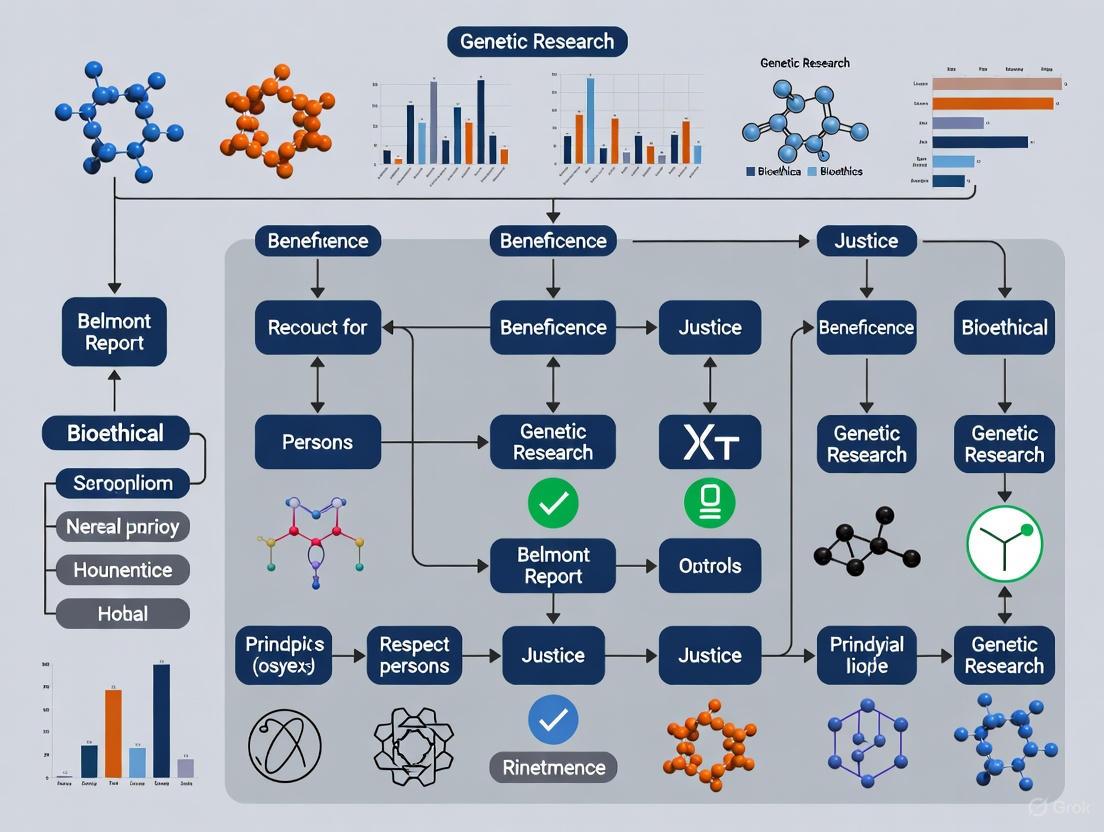
This article explores the complex challenges of applying the foundational ethical principles of the Belmont Report—Respect for Persons, Beneficence, and Justice—to the rapidly evolving field of genetic research.
Beyond the Basics: Navigating Belmont Report Challenges in Modern Genetic Research
Abstract
This article explores the complex challenges of applying the foundational ethical principles of the Belmont Report—Respect for Persons, Beneficence, and Justice—to the rapidly evolving field of genetic research. Aimed at researchers, scientists, and drug development professionals, it provides a critical analysis of contemporary issues, from obtaining informed consent for complex genomic data and ensuring equitable access to expensive therapies like CRISPR-based treatments, to protecting vulnerable populations and managing the long-term societal implications of human germline editing. The article synthesizes historical context with current ethical frameworks and offers practical methodological guidance for integrating these principles into study design, protocol review, and daily research practices, ultimately arguing for a renewed and adaptive commitment to research ethics in the genomic age.
The Belmont Report's Legacy and Its Genetic Research Frontier
The Belmont Report, formally titled the "Belmont Report: Ethical Principles and Guidelines for the Protection of Human Subjects of Research," was published in 1979 [1] [2]. Its creation was prompted by a growing recognition of ethical abuses in research, most notably the Tuskegee Syphilis Study, where participants were denied treatment and information, and the Nuremberg Trials, which uncovered horrific medical experiments conducted by Nazi scientists [1] [2]. In response, the U.S. Congress passed the National Research Act of 1974, which led to the formation of the National Commission for the Protection of Human Subjects of Biomedical and Behavioral Research—the body responsible for drafting the Belmont Report [3] [2]. This report was designed to provide a foundational ethical framework to guide all research involving human subjects and has since been incorporated into the U.S. Federal Policy for the Protection of Human Subjects, also known as the Common Rule [1] [4].
The Three Ethical Principles
The Belmont Report establishes three fundamental ethical principles that are the cornerstone for regulations governing human subjects research: Respect for Persons, Beneficence, and Justice [1] [4]. The following sections break down each principle and its application.
Respect for Persons
This principle acknowledges the personal dignity and autonomy of individuals and requires that people with diminished autonomy are entitled to protection [4]. It is implemented primarily through the process of informed consent.
Table 1: Applications and Challenges of "Respect for Persons" in Genetic Research
| Application / Concept | Description | Challenges in Genetic Research |
|---|---|---|
| Voluntary Consent | Subjects must agree to participate voluntarily, free from coercion or undue influence [4]. | The urgent, high-stakes environment of a Neonatal Intensive Care Unit (NICU) can make it difficult for parents to process complex information, potentially compromising voluntariness [5]. |
| Adequate Information | Researchers must provide all pertinent information about the study, including procedures, purposes, risks, benefits, and alternatives [4]. | The complexity and uncertainty of genomic findings (e.g., Variants of Unknown Significance) can make providing "adequate" information a significant challenge [5]. |
| Comprehension | The information must be presented in a manner that is understandable to the subject [4]. | Communicating complex genetic concepts to individuals with varying levels of health literacy requires specialized skills and resources [5]. |
| Assessment of Capacity | An individual's ability to understand information and make a choice should be assessed, particularly for vulnerable populations [4]. | In psychiatric genomics research, cognitive impairment, rather than the severity of psychosis, is the greatest threat to decisional capacity. A blanket exclusion of individuals with severe treatment-resistant schizophrenia (TRS) is inappropriate; capacity should be assessed individually [6]. |
Beneficence
This principle entails an obligation to maximize possible benefits and minimize possible harms [4]. It requires a systematic analysis of the risks and benefits associated with research.
Table 2: Analyzing "Beneficence" in Genetic Testing
| Component | Description | Considerations in Genetic Research |
|---|---|---|
| Assessment of Risks & Benefits | The research must be justified by a favorable risk-benefit ratio. The anticipated benefits should outweigh the foreseeable risks [4]. | The utility of a genetic test is complex. A positive result may not lead to a change in clinical management but can have significant personal utility (e.g., providing an explanation for an illness, ending a "diagnostic odyssey") [5]. |
| Do No Harm | Researchers have an obligation to not inflict harm on subjects [4]. | Potential harms in genetics include psychological distress from results, stigma, and the discovery of incidental findings (e.g., a genetic risk for an adult-onset condition in a newborn) [5]. |
| Maximizing Benefits | The research design should seek to gather knowledge that can be of benefit to the subject and/or society [4]. | There is an ethical imperative to include underserved populations in research to ensure that the benefits of genetic medicine are distributed widely and that treatments are developed for all affected groups [6] [5]. |
Justice
The principle of justice requires the fair distribution of the burdens and benefits of research [4]. It forbids vulnerable populations from being selected for research simply because of their availability or compromised position.
Table 3: Upholding "Justice" in Genomic Studies
| Application / Concept | Description | Challenges & Solutions |
|---|---|---|
| Fair Subject Selection | The selection of subjects should be based on scientific objectives, not on the easy availability or manipulability of populations [4]. | Historical Mistrust: Systemic racism and historical injustices have led to lower consent rates for genetic testing among some racial and ethnic groups [5].Solution: Build trust through community engagement and transparent practices. |
| Avoiding Exploitation | Populations that are expected to benefit from the research should not be unjustly excluded from participation [4] [6]. | Health Disparities: "Blanket exclusion" of vulnerable groups, such as individuals with severe mental illness, from research is a form of injustice that limits the development of treatments for their conditions and contributes to health disparities [6]. |
| Equitable Access | The benefits of research should be made available to all who might need them. | Access to Testing: Access to advanced genetic tests like genome sequencing is often greater at urban, academic medical centers, creating inequity for patients in community or rural hospitals [5].Genomic Databases: Inequitable representation in genomic databases can lead to less accurate test results for individuals from underrepresented ancestry groups, exacerbating health disparities [5]. |
The Ethicist's Toolkit: Key Concepts for Modern Research
Engaging with the Belmont Report's principles requires practical tools. The following table outlines key conceptual "reagents" for ethical research design.
Table 4: Essential Conceptual Tools for Ethical Genetic Research
| Tool / Concept | Function & Explanation |
|---|---|
| Community Engagement | A process to involve communities in shaping research goals and protocols, moving participants from "subjects" to "partners." This helps address the Belmont Report's individualist focus and mitigate its protectionist stance [7]. |
| Decision-Making Capacity (DMC) Assessment | A structured evaluation (e.g., using tools like the MacCAT-CR) to determine an individual's capacity to understand and consent to research, rather than making assumptions based on their diagnosis [6]. |
| Trio Sequencing | Sequencing the proband and both biological parents. This improves the accuracy of identifying de novo genetic variants and can help reduce inequities in variant interpretation that arise from underrepresentation in genomic databases [5]. |
| Personal Utility | A framework for recognizing the non-clinical value of a genetic test, such as providing answers, informing life planning, or connecting with a support group, even when no medical treatment is available [5]. |
Visualizing the Application of the Belmont Report
The following diagram illustrates how the three principles of the Belmont Report interact to guide the ethical conduct of research, from study design to participant interaction.
Frequently Asked Questions (FAQs) on Belmont in Modern Research
Q1: The Belmont Report is from 1979. Is it still relevant to cutting-edge genetic research like genomics? A: Yes, absolutely. The report's ethical principles are foundational and have been incorporated into the Common Rule, the federal regulation governing human subjects research [1]. Furthermore, its framework is actively referred to in modern ethical discussions, such as those surrounding the International Council for Harmonisation's Guideline for Good Clinical Practice E6(R3) and debates on including vulnerable populations in psychiatric genomics [1] [6]. Its principles provide a durable structure for navigating novel ethical dilemmas.
Q2: How can we apply "Respect for Persons" to a potential subject with severe schizophrenia who may have impaired decisional capacity? A: "Respect for Persons" requires a nuanced approach, not blanket exclusion. Evidence shows that cognitive impairment, not psychosis severity, is the primary barrier to decisional capacity [6]. Researchers should:
- Individually assess capacity using validated tools.
- Remediate understanding by explaining concepts in multiple ways.
- Respect the autonomy of those who demonstrate capacity, in line with the U.N. Convention on the Rights of Persons with Disabilities [6].
Q3: The principle of "Justice" requires fair subject selection. How does genetic research risk violating this principle? A: Injustice can manifest in several ways:
- Inequitable Access: Patients in community or rural NICUs often have less access to genetic testing than those in large academic centers, creating a care disparity [5].
- Database Bias: Genomic databases are overrepresented with data from individuals of European ancestry. This can lead to less accurate test results and misclassifications for people from other ancestral backgrounds, exacerbating health disparities [5].
- Exclusion as Injustice: Systematically excluding complex populations (e.g., the severely mentally ill) from research prevents the development of treatments for their conditions, which is itself an injustice [6].
Q4: How can the "Beneficence" principle help us weigh the value of a genetic test that doesn't lead to a direct treatment? A: The principle of beneficence urges us to look beyond a simple "change in management" metric. A genetic test can provide significant personal utility even without a cure [5]. Benefits can include:
- Ending a long and stressful "diagnostic odyssey."
- Providing a clear prognosis and explanation for a family.
- Informing reproductive planning.
- Allowing families to connect with support communities. These profound psychosocial benefits must be weighed against the risks when conducting a ethical analysis.
Q5: How can research ethics move beyond the protectionist stance of the Belmont Report? A: Modern ethics is shifting toward more collaborative models. This involves moving from seeing people as "subjects" to engaging them as "partners" [7]. Lessons can be drawn from international law, such as the UN Declaration on the Rights of Indigenous Peoples (UNDRIP), which emphasizes self-determination and the collective right to participation [7]. This means researchers should work with communities to shape research goals and protocols, ensuring the research is relevant and conducted in a mutually respectful manner.
Gene therapy represents a revolutionary approach in medicine, with the potential to treat or even cure diseases by addressing their genetic roots [8]. This field, which involves replacing a broken gene with new copies or infusing healthy versions of defective genes, has progressed from theoretical concept to clinical reality over approximately thirty years [8]. However, this rapid scientific advancement occurs within a complex ethical framework primarily guided by the Belmont Report, a foundational document published in 1979 that established key ethical principles for research involving human subjects [1].
The Belmont Report's three core principles—Respect for Persons, Beneficence, and Justice—were formulated in response to historical ethical violations in research, most notably the Tuskegee Syphilis Study [1]. These principles have been incorporated into the Federal Policy for the Protection of Human Subjects (the "Common Rule") and continue to guide oversight structures like Institutional Review Boards (IRBs) [1]. As gene therapy technologies evolve, including emerging approaches like germline therapy that could affect future generations [8], researchers face novel challenges in applying these established ethical principles to their work.
This article explores how the Belmont framework provides essential guidance for navigating the technical and ethical complexities of modern gene therapy research, from clinical trial design to manufacturing and global regulatory compliance.
The Belmont Report's Ethical Framework and Gene Therapy
The Belmont Report established three fundamental ethical principles for human subjects research that remain directly relevant to gene therapy development [1]. These principles provide a framework for evaluating the unique ethical challenges posed by genetic interventions.
Core Ethical Principles
Respect for Persons: This principle emphasizes recognizing participants' autonomy and protecting those with diminished autonomy [9]. It requires that individuals be treated as autonomous agents and that those with diminished autonomy receive additional protection. In practice, this principle is operationalized through the informed consent process, which must be particularly thorough in gene therapy research given the novel and potentially permanent nature of these interventions. The principle acknowledges that "respect for persons can still be demonstrated through the consent process by clearly informing participants" about what information will or will not be returned to them [9].
Beneficence: This principle entails an obligation to maximize possible benefits and minimize possible harms to research participants [9]. Beyond "do no harm," it requires actively securing participants' well-being. For gene therapy, this requires careful assessment of potential risks—including unknown long-term effects—against the potential benefits of treating serious genetic conditions. The principle recognizes that "research has the potential to uncover information that could be beneficial to participants in their health management, life planning, or psychological well-being" [9].
Justice: This principle addresses the fair distribution of research benefits and burdens [9]. It requires that the selection of research subjects be scrutinized to avoid systematically selecting some populations (such as disadvantaged groups) simply for administrative convenience, while equally sharing the benefits of research. The application of justice is particularly relevant in gene therapy given the high costs of these treatments and concerns about equitable access. As noted in ethical discussions, "challenges in ensuring fairness with regard to the return of individual results have been noted and may argue against the practice or, alternatively, for the establishment of guidelines and infrastructure to enable greater consistency" [9].
Table: Application of Belmont Principles to Gene Therapy Research
| Ethical Principle | Application in Gene Therapy | Common Challenges |
|---|---|---|
| Respect for Persons | Comprehensive informed consent processes for complex genetic interventions; respect for participant autonomy regarding genetic information | Ensuring true understanding of novel technologies; managing incidental findings |
| Beneficence | Careful risk-benefit analysis of permanent genetic modifications; long-term safety monitoring | Unknown long-term effects; balancing potential cure against serious risks |
| Justice | Equitable access to expensive therapies; fair participant selection in clinical trials | High costs limiting availability; avoiding exploitation of vulnerable populations |
Technical and Regulatory Challenges in Gene Therapy
Manufacturing and Quality Control Challenges
Gene therapy development faces significant technical hurdles, particularly in manufacturing and quality control. These challenges directly implicate the ethical principle of Beneficence, as product quality directly impacts patient safety.
A primary challenge involves managing capsid impurities in viral vector production [10]. During manufacturing of recombinant adeno-associated virus (rAAV) vectors—commonly used for gene delivery—several types of impurities can occur:
- Empty capsids containing no genetic material
- Partially full capsids with incomplete genetic payloads
- Overfilled capsids with too many gene copies [10]
These impurities "closely resemble the desired, active product" but are "incapable of delivering the desired gene therapy" [10]. This presents both technical and ethical concerns, as administering a product with high impurity levels could compromise therapeutic efficacy while still exposing patients to potential risks.
Table: Troubleshooting Common Gene Therapy Manufacturing Issues
| Problem | Potential Causes | Solutions | Belmont Principle Implications |
|---|---|---|---|
| Capsid Impurities | Fluctuating ratios of AAV capsid building blocks; variable post-translational modifications [10] | Optimize upstream manufacturing; improve downstream purification; use HPLC for quantification [10] | Beneficence: Ensuring product quality and consistency maximizes potential benefits and minimizes risks |
| Product Potency Variability | Inconsistent transduction efficiency; variable post-translational modifications [10] | Implement robust peptide mapping using LC-MS/MS; develop phenotypic potency assays [10] | Respect for Persons: Providing consistently effective treatment respects participant contribution and autonomy |
| Residual Process Impurities | Incomplete removal of excipients like polyethylenimine, iodixanol, poloxamer [10] | Enhance purification processes; partner with specialized analytical labs for detection [10] | Beneficence: Removing harmful impurities directly reduces potential harms to participants |
Regulatory and Global Compliance Challenges
Gene therapy researchers must navigate an increasingly complex global regulatory landscape with significant disparities between regions. These challenges directly impact the ethical principle of Justice, as regulatory heterogeneity can affect which populations access these therapies and when.
The European Union currently classifies most genome-edited organisms as genetically modified organisms (GMOs), though proposals are being evaluated to categorize certain edited products differently [11]. In contrast, many countries in Asia, Africa, and Latin America have implemented more flexible regulatory frameworks [11]. For example:
- China has implemented regulations shortening approval times for products from new breeding techniques to 1-2 years, with requirements for risk assessment and mandatory labeling [11]
- India excludes certain genome-edited products without foreign DNA from GMO classification, exempting them from extensive biosafety assessments [11]
- Argentina, Brazil, Chile and other Latin American countries employ case-by-case assessments, classifying products as conventional if they lack new genetic combinations and could occur naturally [11]
This regulatory heterogeneity "creates barriers to the adoption of genome editing technologies, affecting the competitiveness and international trade of agricultural products" [11] and similarly impacts therapeutic development. These disparities can lead to "high costs, delays in commercialization, and difficulties in product traceability" [11], ultimately affecting which populations can access beneficial therapies.
The diagram below illustrates the complex ethical and technical workflow in gene therapy development:
Ethical Dilemmas in Returning Individual Research Results
Gene therapy research generates extensive genetic information, creating ethical challenges regarding whether and how to return individual research results to participants. This issue directly engages all three Belmont principles and has been brought to the forefront by "rapid technological advances (e.g., genome sequencing) that have enabled the generation of genetic information on an unprecedented scale" [9].
Applying Ethical Frameworks to Return of Results
The ethical principle of Respect for Persons/Autonomy suggests that "sharing results with interested participants demonstrates respect for these persons in several ways. It respects their integral role in research and the generation of the data" [9]. Some argue that "it would be disrespectful to treat research volunteers as conduits for generating scientific data without giving due consideration to their interest in receiving information about themselves derived from their participation in research" [9].
However, the principle of Beneficence/Non-Maleficence creates tension in this area. Research may uncover information that "could be beneficial to participants in their health management, life planning, or psychological well-being" [9], supporting an obligation to return results. Conversely, "returning results could cause undue distress and may even prompt unwarranted medical intervention, so that, with a few exceptions involving immediate and severe threats to life and health, the risks of return outweigh the potential benefits" [9].
The principle of Justice raises concerns about fairness in returning results, as "there is a very real possibility that research participants in studies with larger budgets are more likely to receive results than those in studies with less room for such expenditures" [9]. This creates potential inequities in who benefits from participation in gene therapy research.
Table: Ethical Considerations for Returning Individual Research Results
| Ethical Consideration | Arguments For Returning Results | Arguments Against Returning Results |
|---|---|---|
| Respect for Persons | Honors participant contribution; enables autonomous decision-making with personal information [9] | Respect demonstrated through clear consent process setting expectations about no return of results [9] |
| Beneficence | Provides opportunity for improved health management; psychological benefit of information [9] | Risk of psychological distress; potential for unnecessary medical interventions [9] |
| Justice | Provides benefit to all participants regardless of study budget; acknowledges participant contribution [9] | Potential inequities if some studies can afford return and others cannot; variable access to follow-up care [9] |
The Scientist's Toolkit: Essential Research Reagents and Methods
Gene therapy research requires specialized reagents and methodologies to address both technical challenges and ethical obligations. The table below outlines key solutions mentioned in the search results.
Table: Essential Research Reagent Solutions for Gene Therapy Development
| Reagent/Method | Function/Purpose | Ethical Consideration |
|---|---|---|
| HPLC with AAV Full/Empty Analytical Columns | Separates full, empty, and improperly filled capsids for robust quantification; higher throughput than ultracentrifugation [10] | Beneficence: Ensures product quality and consistency to maximize benefit and minimize risk |
| LC-MS/MS (Liquid Chromatography with Tandem Mass Spectrometry) | Peptide mapping to characterize protein sequences and post-translational modifications; ensures AAV consistency [10] | Respect for Persons: Maintains product consistency honoring participant contribution and trust |
| Monarch Spin PCR & DNA Cleanup Kit | Removes contaminants like salts, EDTA, or PEG that can interfere with ligation or electroporation [12] | Beneficence: Reduces technical failures that could compromise research benefits |
| High-Fidelity DNA Polymerase | Minimizes mutations during PCR amplification; maintains sequence integrity [12] | Beneficence: Ensures accuracy of genetic constructs to deliver intended therapeutic effect |
| recA- Bacterial Strains | Reduces plasmid recombination during cloning; maintains genetic construct integrity [12] | Beneficence: Preserves therapeutic construct stability to ensure consistent dosing |
Gene therapy research continues to advance rapidly, with scientific innovations consistently challenging existing regulatory frameworks [13]. The European Union's ATMP Regulation, established in 2007, is already being stretched by "new frontiers enabled by the scientific and technological advances of the past few decades, particularly in the areas of innovative gene therapeutics (e.g., CRISPR/Cas9–RNA complexes), manufacturing technologies, and delivery systems" [13].
Throughout these technological changes, the Belmont Report's ethical principles remain remarkably relevant. As noted in recent commentary, "Once you know the history behind it, it’s easy to appreciate how the Belmont framework remains relevant in navigating today’s complex clinical research landscape" [1]. The principles of Respect for Persons, Beneficence, and Justice provide a stable foundation for evaluating new ethical dilemmas arising from genetic technologies that could not have been imagined when the report was drafted in 1978.
The future of gene therapy ethics will likely involve continued efforts toward international harmonization [14], development of more sophisticated regulatory approaches such as regulatory sandboxes [13], and ongoing dialogue among researchers, regulators, ethicists, and patients. By maintaining the Belmont principles as a guiding framework while adapting to new technologies, the gene therapy research community can continue to advance the field while protecting the rights and welfare of research participants.
The Belmont Report, a foundational document for ethical research involving human subjects in the United States, established three core principles: Respect for Persons, Beneficence, and Justice [3]. These principles were formulated to guide a wide range of biomedical and behavioral research. However, the rapid advancement of genetic research has created unique ethical friction when these traditional frameworks are applied. The nature of genetic information—its predictive power, familial implications, and stability—poses distinct challenges that strain the direct application of Belmont's guidelines [15]. This article explores these friction points through a practical, troubleshooting lens for researchers navigating the ethical complexities of modern genomics.
FAQ: Applying Core Ethical Principles to Genetic Research
How is "Respect for Persons" challenged in genetic research involving vulnerable populations?
The Friction: The principle of Respect for Persons requires protecting the autonomy of individuals and providing extra protections for those with diminished autonomy [3]. In genetics, obtaining truly informed consent is complicated because the full implications of genetic data may be unknown at the time of consent, and findings can have direct relevance for family members who did not consent to the research [15] [16].
Troubleshooting Guide:
- Problem: Difficulty obtaining meaningful assent/consent from individuals with neurodevelopmental disorders (NDDs) due to their condition.
- Solution: Partner with communities of persons with NDDs to tailor information and consent procedures. Implement a dynamic consent process that allows participants to update their preferences as research evolves [16].
- Problem: Balancing the desire for information with the "right not to know" among participants and their relatives.
- Solution: Clearly define and communicate policies on the return of individual research results and incidental findings during the initial consent process. Allow participants to choose what types of information they wish to receive [16].
What unique "Beneficence" and "Non-maleficence" risks arise in genetic studies?
The Friction: Beneficence entails maximizing benefits and minimizing harms [3]. Genetic information carries significant risks of psychosocial harm, stigmatization, and discrimination from third parties like insurers or employers, which are less common in other research fields [15] [17]. The potential for germline editing, where changes are heritable, introduces long-term, population-level risks that are difficult to quantify [18] [19].
Troubleshooting Guide:
- Problem: Protecting participants from insurance or employment discrimination based on their genetic data.
- Solution: Implement robust data anonymization and security protocols. Be transparent with participants about the current legal protections against genetic discrimination (e.g., GINA) and their limitations [15].
- Problem: Managing the psychological impact of learning about genetic predispositions, especially for conditions with no current treatment.
- Solution: Provide access to genetic counseling services throughout the research process to help participants understand and cope with results [16].
How does genetic research test the principle of "Justice"?
The Friction: The principle of Justice addresses the fair distribution of the benefits and burdens of research [3]. There is a strong concern that advanced genetic technologies, such as genome editing, may only be accessible to the wealthy, potentially exacerbating existing health disparities [19]. Furthermore, genetic findings about a specific population could lead to the stigmatization of entire groups [15].
Troubleshooting Guide:
- Problem: Ensuring equitable access to the benefits of genetic research and therapies.
- Solution: Actively promote diverse participant inclusion in research cohorts to ensure genetic databases are representative. Advocate for policies that promote broad and equitable access to resulting therapies [19].
- Problem: Avoiding the exploitation of vulnerable communities in genetic research.
- Solution: Engage in community-based participatory research practices. Ensure that research partnerships with specific populations are collaborative and that the research addresses priorities and provides benefits that are meaningful to the community [15].
Technical Support: Navigating Ethical Review for Genetic Protocols
For researchers designing genetic studies, addressing these ethical frictions is a critical step in securing Institutional Review Board (IRB) and Institutional Biosafety Committee (IBC) approval. The following workflow outlines key ethical checkpoints in the experimental lifecycle.
Diagram 1: Ethical Review Workflow for Genetic Research
Essential Research Reagent Solutions for Ethical Governance
The following table details key non-laboratory "reagents" required for the ethical conduct of genetic research.
| Research Reagent | Function in Ethical Governance |
|---|---|
| Dynamic Consent Frameworks | Adaptive consent processes that allow participants ongoing control over their data and sample usage, addressing evolving research goals [16]. |
| Genetic Counseling Resources | Professional support to help participants understand complex genetic information, mitigating psychosocial risks [16]. |
| Data Anonymization Protocols | Technical and procedural methods to protect participant privacy by de-identifying genetic and phenotypic data [15]. |
| Federated Data Systems | Systems that allow analysis across multiple databases without centralizing data, balancing research utility with privacy protection [16]. |
| Ethics Checklist for NDD Research | A tailored tool to help researchers anticipate and address ethical issues in studies involving vulnerable populations [16]. |
The ethical challenges posed by genetic research are not insurmountable, but they require a proactive and nuanced approach. The friction between traditional ethical frameworks like the Belmont Report and the realities of genomic science highlights the need for continuous dialogue, adaptive policies, and specialized resources. By integrating the troubleshooting guides and ethical checkpoints outlined here, researchers can better navigate this complex landscape, ensuring that scientific progress proceeds with the necessary respect, beneficence, and justice for all participants.
Technical Support Center: Genetic Research Ethics
Frequently Asked Questions (FAQs)
Q1: How does the Belmont Report's principle of Respect for Persons apply to genomic data that can be stored and reused indefinitely?
A: The principle of Respect for Persons requires that individuals are treated as autonomous agents and that they must be provided with sufficient information to make a voluntary, informed decision [3] [20]. In genomics, this is challenged by data that can be stored and used indefinitely, may have uncertain risks, and can change in relevance over time [21]. The consent process must therefore inform participants of these long-term implications, including:
- How their genomic data will be stored and shared [21].
- That the data may be reinterpreted in the future [21].
- Whether they will receive any individual results from current or future studies [21].
- What will happen to their data if they decide to stop participating or after they are deceased [21].
Q2: What are the specific psychosocial risks associated with genetic research that we must minimize according to the principle of Beneficence?
A: Beneficence requires minimizing risks of harm and maximizing potential benefits [20]. In genetic research, the physical risks are often minimal, but the psychosocial risks can be significant and must be addressed in the protocol [22]. These risks include:
- The impact of knowing one has a disease-related gene, which could alter life plans, reproductive decisions, employability, or insurability [22].
- The effects of a breach of confidentiality of genetic test results [22].
- The responsibility to provide counseling when returning genetic results, as the communication of genetic information carries the duty to interpret the results for the individual [22].
Q3: How can we ensure the equitable selection of subjects (the principle of Justice) when a genetic study requires contacting relatives of an initial participant?
A: The principle of Justice requires the fair distribution of the burdens and benefits of research [20]. To uphold this when recruiting family members:
- The proband (index case) must first be asked for permission to contact their relatives [22]. If the proband declines, researchers may not proceed with contacting them [22].
- If permission is granted, contact should be made in a way that respects the relatives' autonomy and minimizes coercion. Acceptable options include [22]:
- Option A: The proband distributes study information to relatives.
- Option B: The proband provides contact details for relatives, and researchers send them information with a way to opt-out before any follow-up call.
- Option C: The proband is consulted on which method (A or B) their relatives would prefer.
Q4: Under what conditions can stored genetic samples be used in a new research study that was not described in the original consent form?
A: Using stored DNA for new studies is strictly regulated to protect participant autonomy [22]:
- Anonymous samples: May be studied for new purposes if the IRB approves, provided the samples are truly anonymous (with no code to re-identify them) and are not from subjects who opted out of future use [22].
- Identifiable samples: Generally require new informed consent from participants. An IRB may grant a waiver of consent for the new study, but this waiver is not permitted if the subject previously refused future use of their genetic material, even if it is de-identified [22].
Q5: How should the consent process handle a genetic analysis that is a non-essential component of a larger clinical study?
A: Participants must be given a clear choice. The consent form should explicitly state that the genetic testing is optional and that participants may opt-out of the genetic component while still being allowed to participate in the main parent study [22]. The principal investigator is then responsible for tracking these preferences to ensure the DNA of those who opted out is not used [22].
Troubleshooting Guides
Problem: A research participant is distressed after learning their genetic test results.
- Application of Belmont Principle: Beneficence [20].
- Root Cause: Inadequate pre-test counseling and risk assessment; lack of a clear plan for returning results and providing psychological support.
- Solution:
- Pre-Test Protocol: Develop and implement a comprehensive pre-test counseling process that explicitly discusses the potential psychosocial impact of receiving results [22]. The consent form must clearly state if and how results will be returned [22].
- Immediate Action: Provide immediate access to genetic counseling and psychological support services [22].
- System Fix: Justify and detail the procedures for returning results in the IRB application. Ensure results are only returned in a CLIA-approved setting and that counseling is an integral part of the process [22].
Problem: Difficulty recruiting a diverse participant population for a large-scale genomic study.
- Application of Belmont Principle: Justice [20].
- Root Cause: Selection of subjects is not equitable; recruitment strategies may inadvertently focus on populations of convenience, exploiting vulnerable groups or failing to include representative groups.
- Solution:
- Isolate the Issue: Review and analyze current recruitment channels and participant demographics.
- Find a Fix:
- Workaround: Partner with community health centers and organizations that serve diverse populations to build trust and broaden recruitment reach.
- Permanent Fix: Proactively design the research plan and selection criteria to ensure the participant pool is equitable and fairly shares the burdens of research. Avoid the unjustifiable exclusion of specific groups [20].
Problem: A participant wants to withdraw from a study but is concerned about their previously contributed genomic data.
- Application of Belmont Principle: Respect for Persons [20].
- Root Cause: The initial consent process did not sufficiently clarify the participant's rights regarding withdrawal and the handling of their data upon withdrawal.
- Solution:
- Gather Information: Revisit the specific language in the approved consent form regarding data handling upon withdrawal.
- Reproduce the Issue: Confirm the participant's wishes—do they want their identifiable data destroyed, or are they primarily withdrawing from future data collection?
- Find a Fix: Honor the participant's autonomous decision to withdraw. Clearly explain the options available, which may include the destruction of identifiable data. However, note that it may be impossible to remove their de-identified data from analyses already performed [21]. This limitation must be communicated during the initial consent process.
Experimental Protocol: Ethical Consent for Genomic Studies
Methodology for Implementing Belmont Principles in a Genomic Research Consent Process
1. Pre-Consent Preparation:
- IRB Review: Secure approval from the Institutional Review Board before any participant contact [20].
- Counseling Framework: Establish a partnership with certified genetic counselors to be integrated into the consent and results-return process [21] [22].
2. The Informed Consent Dialogue:
- Respect for Persons:
- Explain the study's purpose, procedures, and the fact that participation is voluntary and can be withdrawn without penalty [20].
- Use easy-to-understand language in the second person (e.g., "You have the right to...") [20].
- Specifically discuss the unique aspects of genomics: long-term storage, potential for re-identification, implications for family members, and uncertain risks [21].
- Beneficence:
- Clearly outline the potential psychosocial risks, including impacts on identity, family dynamics, and insurability [22].
- Detail the measures in place to protect confidentiality and manage these risks, such as data encryption and certificates of confidentiality.
- Explain the plan for returning individual research results, if any, and the availability of counseling [22].
- Justice:
- Explain why the participant population was chosen and how the benefits and burdens of the research are shared.
- If the study involves contacting relatives, explain the process and the safeguards for their privacy and autonomy [22].
3. Documentation and Follow-through:
- Obtain and document informed consent using an IRB-approved form [20].
- Track participant preferences regarding future use of samples and data withdrawal requests meticulously [22].
- Conduct annual continuing reviews of the protocol for the IRB as long as data collection continues [20].
Pathway Diagram: Ethical Framework for Genomic Consent
Research Reagent Solutions: Essential Materials for Ethical Genomic Research
Table: Key Components for an Ethically Sound Genomic Research Protocol
| Item / Solution | Function in the Research Protocol |
|---|---|
| Certified Genetic Counselor | Provides expert pre- and post-test counseling to participants to ensure comprehension of risks and implications, upholding the principle of Beneficence [21] [22]. |
| IRB-Approved Consent Form | The legal and ethical document that ensures participants are provided all necessary information in an understandable way to make an autonomous decision, fulfilling Respect for Persons [20]. |
| CLIA-Approved Laboratory | A certified lab environment that is legally permitted to return clinically relevant genetic test results to participants, a key consideration in the Assessment of Risks and Benefits [22]. |
| Data Encryption & Security Protocols | Technical safeguards that protect participant privacy and confidentiality, minimizing the risk of breaches and their associated psychosocial harms [22]. |
| De-identification Protocol | A standard operating procedure for removing personal identifiers from data and samples, enabling future research use while protecting participant identity [22]. |
Frequently Asked Questions (FAQs): Core Ethical Challenges
FAQ 1.1: What are the primary ethical concerns when obtaining informed consent for genomic research involving vulnerable populations?
The primary ethical concerns revolve around ensuring autonomous decision-making in the face of challenges that can compromise comprehension, voluntariness, and capacity. Key issues include:
- Comprehension Barriers: Genomic concepts are complex. Vulnerable populations, such as those with lower educational attainment or from different cultural backgrounds, may struggle with terms like "genome-wide association study (GWAS)" or "broad data sharing," raising concerns about the validity of consent [23] [24]. One study assessing consent form readability found that participants would need a level of education higher than what they had achieved to fully comprehend the document [24].
- Therapeutic Misconception: Research participants, particularly those from communities with limited access to healthcare, often conflate research with clinical care. They may participate with the expectation of direct medical benefit, a phenomenon observed in genetic research in low-income settings [24].
- Voluntariness and Coercion: For individuals with diminished capacity or those within close-knit family structures, voluntariness may be compromised by subtle or overt coercion from family members or clinicians who strongly recommend participation [23].
- Group Harms and Stigmatization: Genetic information can have implications for an entire family, community, or ethnic group. A key risk is the potential for stigmatization, as seen in past controversies where DNA from indigenous communities was used for research beyond the original consent [23] [25].
FAQ 1.2: How can researchers adapt the informed consent process for participants with varying levels of decision-making capacity?
Adapting the consent process requires a flexible, multi-faceted approach:
- For Adults with Diminished Capacity: The process should involve a legally authorized representative while also seeking assent from the individual to the extent of their capacity. The level of required decision-making capacity should be commensurate with the level of risk involved in the research [23].
- For Children: The process requires parental or guardian permission coupled with the child's assent. The age and maturity of the child should guide the depth of the discussion. For longitudinal studies, protocols should be in place for re-consenting children as they reach adulthood [14].
- Universal Design: Employ interactive methods like the teach-back technique, where the researcher asks the participant to explain the study in their own words, allowing for the correction of misunderstandings. Using simplified visual aids and culturally tailored communication strategies is also recommended [23] [26].
FAQ 1.3: What are the specific challenges in multinational genetic studies involving vulnerable populations, and how can they be addressed?
Multinational studies face a complex web of ethical and regulatory frameworks, which can be particularly challenging for vulnerable groups.
- Challenge: Regulatory Heterogeneity. There is no single international ethical standard for genetic research outside of drug trials. One analysis found over 1000 laws, regulations, and guidelines across 133 countries, leading to discrepancies in requirements for ethics committee approval, data transfer, and consent documentation [14].
- Challenge: Cultural and Social Context. A one-size-fits-all approach is ineffective. Perceptions of genetic research, trust in the research process, and understanding of key concepts vary significantly across cultures [26] [24].
- Solution: Harmonization and Community Engagement. Researchers should advocate for harmonized international standards through organizations like the Global Alliance for Genomics and Health (GA4GH) [14]. More critically, they must engage with communities from the very beginning of study design to ensure procedures align with local values and build trust [26] [25].
Troubleshooting Guides: Common Scenarios and Solutions
Scenario 2.1: Low Comprehension and High Therapeutic Misconception During Consent
- Presenting Problem: Potential participants in a genetic study on chronic kidney disease in a low-resource setting fail to understand key concepts in the consent form. They view their participation primarily as a way to gain access to healthcare and receive a diagnosis.
- Investigation & Analysis:
- Assess the readability of the consent form using a tool like the SMOG index or its equivalent in the local language. One study used the SOL (Spanish SMOG) scale and found the required comprehension level exceeded the average education of participants [24].
- Conduct qualitative interviews or surveys with a sample of participants to gauge understanding of terms like "research," "genetic data," and "no direct benefit."
- Resolution:
- Revise consent materials to a lower reading level and use pictograms or infographics to explain the study aims and procedures [24].
- Implement enhanced consent processes. Instead of merely reading the form, engage in a structured dialogue. Explicitly state, multiple times, that the study is for research and may not provide any direct medical benefit to the participant.
- Train research coordinators to proactively identify and correct therapeutic misconception during the consent conversation [27].
Scenario 2.2: Fluctuating Consent and Participant Withdrawal in a Longitudinal Genetic Biobank
- Presenting Problem: In a long-term study, a small but significant number of participants, particularly from minority backgrounds, withdraw their consent for the genetic component of the research at a follow-up visit, despite initially agreeing.
- Investigation & Analysis:
- Analyze demographic and site-specific factors associated with withdrawal. Research has shown that self-identified African American participants had the highest rate of declining biobanking at follow-up visits, and the recruitment site was a significant factor in consent retention [27].
- Investigate whether the initial consent process adequately addressed potential future concerns, such as data sharing policies and the possibility of return of results.
- Resolution:
- Standardize consent training across all sites. Ensure all clinical research coordinators receive centralized, professional training on the complexities of genetic research to provide consistent information [27].
- Adopt dynamic consent models. Dynamic consent uses digital platforms to maintain ongoing communication with participants, allowing them to change their preferences over time and re-engage with the study's aims, which has been shown to improve stability of participant preferences [28].
- Build trust through continuous engagement. Familiarity with the study team over time can alleviate mistrust. Employ diverse recruitment teams and maintain transparent communication about study findings and data use [27].
Quantitative Data on Consent and Participation
Table 1: Factors Influencing Consent Rates in Genetic Biobanking
This table synthesizes quantitative findings from a study of 1628 individuals recruited for a genetic biobank, highlighting factors associated with consent and withdrawal [27].
| Factor | Association with Initial Consent | Association with Consent Withdrawal at Follow-up | Key Finding |
|---|---|---|---|
| Overall Consent Rate | 95.5% consented | N/A | Vast majority willing to participate initially |
| Recruitment Site | Significant variation between sites | Significant variation between sites | Site-specific factors (e.g., coordinator skill) are major drivers |
| Self-Reported Ancestry | Statistically significant difference | Difference not statistically significant | African American groups had lowest initial consent (7% decline rate) and highest withdrawal |
| Educational Level | No significant association | Not reported | Education is a poor predictor of genetic literacy and consent stability |
| Family History of Disease | No significant association | Not reported | Suggests potential lack of understanding about genetic research aims |
Experimental Protocols for Ethical Research
Protocol 4.1: Community-Engaged Approach for Genetic Research in Indigenous and Vulnerable Populations
Objective: To establish a collaborative and ethical framework for initiating genetic research with indigenous or other vulnerable communities, ensuring respect for cultural values, building trust, and achieving valid collective and individual consent.
Materials:
- Research team including cultural liaisons or community members.
- Materials for community meetings (e.g., presentation tools, culturally appropriate food).
- Draft consent documents and research protocols.
Methodology:
- Pre-Engagement and Partnership Building (Months 1-6): Prior to designing the study, identify and meet with formal community leaders, elders, and existing community advisory boards. The goal is to introduce yourself, listen to community priorities, and explore if and how genetic research might align with them [25].
- Collaborative Study Design (Months 7-9): Work with community representatives to co-design the study protocol, including research questions, data management plans, and consent procedures. This includes deciding on acceptable terms for future data use and the return of individual and aggregate results [26] [25].
- Development of Culturally Tailored Consent Materials (Month 10): Translate the co-designed protocol into consent forms and information sheets. Use accessible language and visual aids. Pre-test these materials with community members to ensure comprehension and cultural acceptability [24].
- Consent Process (Month 11+): Conduct the consent process. This should involve:
- Collective Discussion: Holding community-wide or group meetings to discuss the research, its potential benefits and risks to the community, and to seek collective approval [25].
- Individual Consent: Obtaining written informed consent from each individual participant, ensuring they understand they can withdraw at any time without penalty [24].
Protocol 4.2: Assessing Comprehension in the Informed Consent Process
Objective: To empirically evaluate and improve participant understanding of key study elements during the informed consent process for a genetic study.
Materials:
- Standardized consent form.
- A short, validated questionnaire or interview guide focusing on core concepts.
- Audio recorder (for qualitative interviews).
Methodology:
- Draft Consent and Develop Assessment Tool: Create a consent form and a brief tool (5-10 questions) assessing understanding of the study's purpose, procedures, risks, benefits, voluntary nature, and data sharing plans [24].
- Pilot Testing: Recruit a small sample of individuals representative of the target population. After going through the standard consent process, administer the comprehension assessment tool.
- Data Analysis: Quantify the comprehension scores. For qualitative interviews, transcribe and code the responses to identify common misunderstandings and knowledge gaps [24].
- Iterative Refinement: Revise the consent form and process based on the findings from the pilot test. This may involve simplifying language, adding visual aids, or training consent administrators to spend more time on poorly understood concepts.
- Implementation: Use the refined consent process for the main study. Periodically re-assess comprehension to ensure quality is maintained.
Ethical Decision-Making Workflows
Diagram 1: This workflow outlines the key steps for engaging vulnerable populations, emphasizing the parallel paths of guardian/community permission and individual assent, culminating in an interactive dialogue to ensure understanding.
Diagram 2: This chart illustrates a systematic approach for handling the return of genetic research results (RoR), a key ethical challenge. It emphasizes confirming the finding's validity and actionability, respecting participant consent preferences, and ensuring proper support.
Table 2: Research Reagent Solutions for Ethical Governance
This table details key resources and tools, beyond wet-lab reagents, that are essential for conducting ethical genetic research with vulnerable populations.
| Tool / Resource | Function / Purpose | Example / Note |
|---|---|---|
| Dynamic Consent Platforms | Digital frameworks that facilitate ongoing communication with participants, allowing them to manage their consent preferences and receive study updates over time. | Addresses the challenge of fluctuating consent in long-term studies and empowers participants [28]. |
| Genetic Counselor Expertise | Professionals skilled in explaining complex genetic information and facilitating the consent process, ensuring participant comprehension. | Particularly valuable in nongenetics clinics where genomic testing is ordered [23]. |
| Culturally Tailored Communication Aids | Visual aids, infographics, and simplified documents translated and adapted to the local cultural context. | Improves comprehension and validity of consent. An infographic was used to depict research aims in a Nicaraguan study [24]. |
| Community Advisory Board (CAB) | A group of community representatives who provide ongoing guidance and oversight throughout the research project. | Critical for building trust, ensuring cultural sensitivity, and addressing community-level concerns and risks [26] [25]. |
| Data Repository with Controlled Access | A managed database (e.g., dbGaP, AnVIL) that provides security and governance for sensitive genomic and health data, limiting access to authorized researchers. | Mitigates privacy risks and fulfills data sharing requirements responsibly [14] [29]. |
Operationalizing Belmont's Principles in Genomic Study Design and Conduct
Designing Robust Informed Consent Processes for Whole-Genome Sequencing and Biobanking
The advent of whole-genome sequencing (WGS) and large-scale biobanking represents a paradigm shift in biomedical research, creating significant challenges for applying the foundational ethical principles outlined in the Belmont Report (1979). These technologies generate vast amounts of personal, familial, and predictive information, stretching traditional informed consent models to their limits [21] [23]. The core ethical principles of Respect for Persons, Beneficence, and Justice must be reinterpreted for a context where data is stored indefinitely, shared globally, and reinterpreted over time, and where risks remain uncertain and evolving [21] [30]. This technical support guide provides researchers, scientists, and drug development professionals with practical frameworks for designing consent processes that are both ethically robust and pragmatically feasible within the complex landscape of modern genetic research.
Foundational Ethics: The Belmont Report in a Genomic Context
The Belmont Report established three core principles for ethical research. Their application to genomics is non-trivial and requires careful consideration.
- Respect for Persons in genomics extends beyond individual autonomy to acknowledge the familial nature of genetic data. A person's decision to participate in WGS can reveal information about their relatives, who have not consented to the research [21] [23]. This principle also demands special attention to participants' potential therapeutic misestimation—the over-optimistic belief that research participation will directly benefit their health [31].
- Beneficence obligates researchers to maximize benefits and minimize harms. In WGS and biobanking, this involves a nuanced assessment of potential psychosocial harms (e.g., anxiety, stigma, familial discord) and the management of incidental findings (results unrelated to the primary research question) [31] [23]. The obligation to "do no harm" also extends to protecting participants' privacy against the very real, if uncertain, risk of re-identification [21].
- Justice requires a fair distribution of the benefits and burdens of research. The historical exploitation of vulnerable populations, as in the Tuskegee Syphilis Study and the Havasupai Tribe case, looms large over genomics [30]. A just approach requires ensuring that marginalized communities are not disproportionately subjected to research risks and that they share in the resulting benefits, for instance, through community engagement and consultation [30] [32].
Frequently Asked Questions (FAQs) for Researchers
FAQ 1: What are the minimum comprehension requirements for valid consent to biobanking?
A Delphi consensus study of biobanking experts established that prospective participants must understand 15 key concepts to provide valid consent. The table below summarizes the core of this "adequate comprehension." [33]
Table 1: Core Comprehension Requirements for Biobanking Consent
| Topic Area | Minimum Understanding Required |
|---|---|
| Purpose of Storage | Understand that their biospecimen will be stored for a long period for use in many future, currently unspecified, research studies. [33] |
| Nature of Research | Know that the research will involve genetic/DNA analysis (not just general medical research). [33] |
| Potential Commercial Use | Be aware that for-profit companies could have access to their sample and that research could lead to commercial products from which they will not financially benefit. [33] |
| Data Sharing | Understand that their genetic and health data will be shared with other researchers, possibly in other countries, and in open-access databases. [33] |
| Return of Results | Know that they will likely not receive any individual research results or personal health information. [33] |
FAQ 2: What logistical constraints affect consent for WGS in mainstream clinics, and how can we address them?
Observational studies of NHS Genomic Medicine Service clinics reveal several key constraints [31] [34]:
- Time Pressure: The mean duration of a consent conversation for paediatric WGS was just under 14 minutes, with appointments in non-genetics specialities averaging only 10 minutes [34]. This is insufficient to cover all complex topics.
- Hybrid Consent Complexity: The blending of clinical diagnostic consent with research recruitment (e.g., for a national research library) can blur the lines for participants, who may assume clinical testing is conditional on research participation [31].
- Variable Clinician Expertise: As genomics is "mainstreamed," consent conversations are increasingly led by non-genetic specialists (e.g., paediatricians, neurologists) who may have less comfort and training with genomic complexities [34].
Solutions: Implement a "time pause," allowing participants to review materials at home; use digital consent platforms to streamline administration; clearly separate clinical and research consent discussions; and provide dedicated training and support for mainstreaming clinicians [31] [34].
FAQ 3: How do we handle consent for future, unspecified research?
This is a central tension in biobanking. The traditional model of project-specific consent is impractical. Alternative models recognized in policy and practice include [32]:
- Broad Consent: Participants consent to a wide range of future research uses, typically within an ethically governed framework (e.g., a specific biobank or research institution). This is recognized as a legitimate option by the revised U.S. Common Rule [32].
- Tiered Consent: Participants choose from a menu of options regarding the types of future research they will permit (e.g., cancer research only, no research on psychiatric conditions, no commercial research) [32].
- Dynamic Consent: A technology-enabled approach where participants can maintain an ongoing relationship with the biobank, receiving updates and re-consenting to new research projects as they arise through a digital platform [32].
Troubleshooting Common Consent Process Failures
Table 2: Troubleshooting Guide for Common Consent Challenges
| Problem | Underlying Issue | Recommended Solution |
|---|---|---|
| Poor Participant Comprehension | Information overload; use of complex jargon; insufficient time for discussion [31] [23]. | Use a "teach-back" method to assess understanding; employ layered consent forms with essential information first; develop multimedia (video) explanations [23] [32]. |
| Blurring of Clinical Care and Research | Using hybrid clinical-research consent forms can lead participants to believe clinical care is dependent on research participation (the "therapeutic misconception") [31]. | Separate the conversations and forms for clinical diagnostics and research. Verbally emphasize that declining research will not affect clinical care [31]. |
| Inadequate Addressing of Uncertainties | Failing to explain the potential for variants of uncertain significance (VUS), unsolicited findings, and the possibility that most participants will not receive a diagnosis [31] [34]. | Explicitly discuss and provide written information on all possible outcomes of WGS, including uninformative results and uncertainties. "Temper expectations" about diagnostic yield [31] [34]. |
| Failure to Elicit Participant Values | The consent process becomes a one-way information transfer rather than a dialogue. HCPs often fail to ask open-ended questions about participants' concerns and values [34]. | Train consent practitioners to ask values-based questions, e.g., "How would you feel about learning a risk for a condition we cannot prevent?" or "What are your hopes and concerns about this test?" [34]. |
Table 3: Research Reagent Solutions for Genomic Consent
| Tool or Resource | Function | Example/Source |
|---|---|---|
| Sample Consent Language | Provides vetted, standardized phrasing for complex consent topics like data sharing, future use, and return of results. | NHGRI Informed Consent Resource [21]; Policy statements from ACMG and ASHG [35]. |
| Digital Consent Platforms | Facilitates the consent process using multimedia, interactive comprehension checks, and dynamic presentation of information based on user responses. Improves understanding and administrative efficiency [32]. | Electronic consent (e-consent) systems integrated with clinical trial or biobank management software. |
| Machine Readable Consent Standards | Allows consent permissions to be codified in a standard format that computational tools can process, enabling large-scale data analysis across multiple biobanks while automatically respecting participant restrictions [32]. | Global Alliance for Genomic Health (GA4GH) Machine Readable Consent Guidance (MRC) [32]. |
| Genetic Counselor Expertise | A skill set critical for facilitating comprehension of complex genomic concepts, assessing psychosocial readiness, and supporting autonomous decision-making, especially in non-genetics clinics [21] [23]. | Involve genetic counselors directly in consent processes or as advisors in designing consent protocols and training other HCPs [21] [23]. |
Experimental Protocol: Implementing and Evaluating a Dynamic Consent Process
Aim: To implement and assess the efficacy of a dynamic consent platform for a longitudinal biobanking study involving WGS.
Background: Dynamic consent uses digital tools to facilitate ongoing communication between researchers and participants, allowing participants to view study updates and modify their consent preferences over time. This protocol evaluates its feasibility and impact on participant understanding and trust [32].
Methodology:
- Platform Development: Develop a secure, web-based portal. Key features must include: user-friendly dashboards, layered information (simple summaries with optional deep dives), a preference manager for setting granular data use permissions, and a communication channel for study updates.
- Participant Recruitment: Recruit a cohort of participants being enrolled in the biobank. Randomize participants into two groups: one using the dynamic consent platform (intervention) and one using a standard, paper-based broad consent process (control).
- Implementation:
- Intervention Group: Participants will create an account on the dynamic consent platform. They will work through interactive learning modules about biobanking and WGS, followed by a quiz to confirm comprehension. They will then set their initial data sharing and future contact preferences through the platform.
- Control Group: Participants will undergo a traditional face-to-face consent discussion and sign a broad consent form.
- Data Collection and Evaluation: Administer validated surveys to both groups at baseline, 3 months, and 12 months to measure:
- Objective Understanding: A knowledge quiz on key concepts of biobanking and genomics.
- Subjective Understanding and Trust: Likert-scale questions on perceived understanding, trust in the research institution, and sense of control.
- Engagement Metrics: For the intervention group, track platform logins, preference changes, and use of communication features.
- Analysis: Compare knowledge scores and trust metrics between the intervention and control groups over time using statistical tests (e.g., repeated-measures ANOVA). Qualitatively analyze feedback from participants and researchers on the usability and perceived value of the dynamic consent platform.
Process Visualization: Workflow for a Dynamic Genomic Consent Process
The diagram below outlines a participant-centric workflow for a dynamic consent process, integrating digital tools and ongoing engagement to uphold the principles of the Belmont Report in a genomic context.
Core Ethical Framework: Connecting the Belmont Report to Genomic Research
FAQ: How do the ethical principles from the Belmont Report apply to my gene editing research?
The Belmont Report, a foundational document for ethical research in the United States, establishes three core principles for protecting human subjects. These principles provide a vital framework for navigating the risks and benefits of genomic research, particularly when evaluating on-target and off-target effects of gene editing technologies like CRISPR/Cas9 [3].
- Respect for Persons: This principle is primarily applied through the process of informed consent. For genomic research, this means that potential participants must be clearly informed about the possibility of both on-target and off-target effects. They should understand that while the goal is a specific genetic change, unintended modifications could occur, the long-term consequences of which may be unknown [3].
- Beneficence: This principle translates to the obligation to maximize anticipated benefits and minimize possible harms. In the context of gene editing, this requires a rigorous risk-benefit analysis. Researchers must systematically assess the potential for off-target effects, employ strategies to reduce them, and have plans to monitor for long-term outcomes. The health and safety of the research participant is paramount [3].
- Justice: This principle demands the fair distribution of the benefits and burdens of research. This raises important questions for genomic therapies: will these potentially curative treatments be available only to the wealthy? Furthermore, it requires careful consideration in subject selection to ensure that vulnerable populations are not disproportionately exposed to the risks of experimental gene therapies without a fair opportunity to benefit from the results [3].
Risk-Benefit Analysis Framework for Genomic Tests and Therapies
FAQ: How can I formally evaluate the risks and benefits of a genomic test or therapy?
A formal, quantitative risk-benefit framework is essential for assessing the health-related utility of genomic applications, especially when direct evidence from clinical trials is lacking [36]. This approach is crucial for regulatory approval and clinical adoption.
Core Components of the Framework:
- Decision-Analytic Modeling: This technique uses a structured model to synthesize data from various sources and project the incidence of clinical events under different scenarios (e.g., with vs. without the genomic test or therapy) [36].
- Health Outcome Measures: The utility of a genomic intervention is measured by its improvement in health outcomes, including:
- Clinical event rates (e.g., reduction in thrombotic events or bleeding incidents).
- Life expectancy.
- Quality-Adjusted Life-Years (QALYs), which combine both quantity and quality of life into a single summary measure [36].
- Risk-Benefit Policy Matrix: Results are displayed in a matrix that facilitates interpretation and implementation by clearly showing the balance between the magnitude of clinical benefit and the level of certainty about that benefit [36].
Application Example: Warfarin Pharmacogenomics A model can compare "genotype-guided warfarin dosing" versus "usual clinical care." It would simulate outcomes for a cohort of patients, projecting the rates of serious bleeding events (a risk) and thromboembolic events (a benefit) under each strategy. The net impact on QALYs would provide a quantitative estimate of the test's clinical utility [36].
Table: Stakeholder Perspectives on Risk-Benefit Analysis for Genetic Tests [37]
| Stakeholder Perspective | Key Consideration for Risk-Benefit Analysis |
|---|---|
| Researchers | Support for modeling as a tool to structure discussion of clinical utility; desire for an iterative and transparent process. |
| Clinicians | Need for a parsimonious (simple and clear) presentation of model results to inform clinical decision-making. |
| Patients & Participants | Concern that small or hypothetical harms should not cause patients to forgo real benefit. |
| Regulators & Policymakers | Need a systematic approach to evaluate risk-benefit tradeoffs and the uncertainty surrounding them. |
Troubleshooting Off-Target Effects in Gene Editing
FAQ: What are the primary methods to detect and characterize off-target effects?
The gold standard for off-target detection has shifted from purely computational prediction to include unbiased, genome-wide experimental assays [38]. The table below summarizes key methods.
Table: Methods for Detecting CRISPR/Cas9 Off-Target Effects [39] [38]
| Method | Characteristics | Key Advantages | Key Limitations |
|---|---|---|---|
| In Silico Prediction (e.g., Cas-OFFinder, CCTop) | Computational tools that nominate potential off-target sites based on sequence similarity to the sgRNA. | Convenient, fast, and inexpensive for initial screening. | Biased toward sgRNA-dependent effects; does not account for cellular context (e.g., chromatin state); results require experimental validation [39]. |
| GUIDE-seq [39] [38] | A cell-based method that integrates double-stranded oligodeoxynucleotides (dsODNs) into DSBs for sequencing-based detection. | Highly sensitive; captures off-targets in a living cellular context; low false-positive rate. | Limited by transfection efficiency of the dsODN tag [39]. |
| CIRCLE-seq [39] [38] | A cell-free method that circularizes sheared genomic DNA, which is then incubated with Cas9/sgRNA; cleaved fragments are linearized and sequenced. | Extremely sensitive; can detect low-frequency off-targets; does not require living cells. | Performed in vitro, so it may not reflect intracellular chromatin accessibility, potentially leading to higher false positives [39] [38]. |
| Whole Genome Sequencing (WGS) [39] [40] | Sequences the entire genome of edited cells and compares it to unedited controls. | Comprehensive and hypothesis-free; can detect off-targets regardless of mechanism. | Very expensive; requires high sequencing coverage; data analysis is complex; may miss low-frequency events in a heterogeneous cell population [39] [40]. |
The following diagram illustrates a recommended workflow for off-target analysis, integrating both prediction and experimental validation:
FAQ: What practical steps can I take to minimize off-target effects in my experiments?
Even before detection, your experimental design is the first line of defense against off-target effects.
- Optimal gRNA Selection: Use design tools (e.g., CRISPOR, Cas-OFFinder) to select gRNAs with minimal sequence similarity to other genomic sites, especially in the critical "seed region" [38] [41].
- High-Fidelity Cas Enzymes: Replace the standard Cas9 nuclease with engineered high-fidelity variants such as eSpCas9, SpCas9-HF1, or HiFi Cas9. These mutants have altered chemical contacts that make them less tolerant of mismatches between the gRNA and DNA [38] [41].
- The "Two gRNA" Nickase Approach: Use two gRNAs targeting adjacent sites along with a Cas9 nickase (which cuts only one DNA strand). A double-strand break is only created where two nicks are generated in close proximity, dramatically increasing specificity [41].
- Ephemeral Delivery: Deliver the gene editing machinery as a pre-assembled Ribonucleoprotein (RNP) complex instead of as DNA plasmids. RNP complexes are active for a shorter duration within the cell, creating a "hit-and-run" effect that reduces the time window for off-target cleavage [38].
The Scientist's Toolkit: Essential Reagents & Materials
Table: Key Research Reagent Solutions for Off-Target Analysis
| Item | Function/Benefit |
|---|---|
| High-Fidelity Cas9 Variants (e.g., eSpCas9, HiFi Cas9) | Engineered proteins with reduced tolerance for gRNA:DNA mismatches, leading to higher editing precision [38] [41]. |
| Ribonucleoprotein (RNP) Complexes | The complex formed by mixing Cas9 protein with sgRNA. Direct delivery of RNPs reduces off-target effects by shortening the editing system's activity window [38]. |
| dsODN Tag (for GUIDE-seq) | A short, double-stranded oligodeoxynucleotide that is integrated into DNA double-strand breaks in vivo, allowing for genome-wide mapping of cleavage sites [39] [38]. |
| Specialized NGS Library Prep Kits | Kits optimized for preparing sequencing libraries from complex samples, crucial for methods like CIRCLE-seq and WGS to detect off-target events [39] [42]. |
Experimental Protocols for Key Assays
Protocol 1: GUIDE-seq (Genome-wide, Unbiased Identification of DSBs Enabled by Sequencing) [39] [38]
- Transfection: Co-transfect your target cells with the following:
- Plasmid encoding Cas9 and sgRNA (or Cas9-sgRNA RNP complex).
- GUIDE-seq dsODN tag (a short, double-stranded DNA oligo).
- Genomic DNA Extraction: Harvest cells 72 hours post-transfection. Purify genomic DNA using a standard kit, ensuring high molecular weight and purity.
- Library Preparation & Sequencing: Prepare a next-generation sequencing (NGS) library using the following workflow:
- Data Analysis: Use dedicated GUIDE-seq analysis software to map the sequenced reads and identify genomic locations where the dsODN tag was integrated, which correspond to Cas9 cleavage sites.
Protocol 2: CIRCLE-seq (Circularization for In Vitro Reporting of Cleavage Effects by Sequencing) [39]
- Genomic DNA Preparation: Extract and purify genomic DNA from your cell type of interest.
- DNA Circularization: Shear the gDNA and then circularize the fragments using a DNA ligase.
- In Vitro Cleavage: Incubate the circularized DNA library with the pre-assembled Cas9-sgRNA RNP complex.
- Library Preparation: Linearize the DNA fragments that were cleaved by Cas9 and prepare them for NGS. This step enriches for cleaved fragments.
- Sequencing & Analysis: Sequence the library and bioinformatically map the reads to the reference genome to identify off-target cleavage sites. This method is highly sensitive as the circularization step removes background of linear DNA.
Frequently Asked Questions (FAQs)
FAQ 1: What does the principle of Justice from the Belmont Report require in the context of genomic therapy research? The principle of Justice requires the fair distribution of the benefits and burdens of research. This means that the selection of research subjects must be scrutinized to avoid systematically recruiting groups based on their availability, compromised position, or manipulability, rather than on the scientific purposes of the study. In genomic therapy research, this translates to ensuring that underrepresented populations are not excluded from the benefits of participating in cutting-edge clinical trials for conditions that disproportionately affect them [1].
FAQ 2: A common ethical challenge is the incongruity between knowledge production and dissemination. What does this mean? This refers to a significant disparity where the populations who participate in and contribute to the generation of knowledge (e.g., in early research phases) are not the same ones who can access the resulting therapies. This is often due to high treatment costs and inadequate infrastructure in regions with high disease burden. For instance, despite sickle cell disease (SCD) chiefly affecting individuals of African descent, the high cost of newly approved CRISPR-based therapies may prevent access for these populations, meaning they do not benefit from the research [43].
FAQ 3: What are the key barriers to equitable access to genomic therapies in low-resource settings? Barriers exist across multiple phases of therapy development and delivery [43]:
- Regulatory: Over 90% of National Medicines Regulatory Authorities in Africa have little to no capacity to evaluate advanced medicinal products [43].
- Manufacturing: Lack of specialized facilities, expertise, and legislation governing the importation of cell and gene therapies [43].
- Clinical Delivery: Inadequate public health infrastructure and a shortage of specialized clinical centers and healthcare workforce. For example, there are only three specialized bone marrow transplant centers serving all of sub-Saharan Africa [43].
- Financial: The extremely high cost of novel genome therapies presents a significant barrier to access, even within wealthy countries [43].
FAQ 4: How can researchers design genomic studies to promote equitable subject selection? Researchers can implement several proactive strategies [44]:
- Recruit Underrepresented Populations: Actively recruit participants from diverse racial, ethnic, and socioeconomic backgrounds to ensure study populations reflect the real-world disease burden.
- Empower Non-Genetics Providers: Educate a broader range of healthcare professionals about genomic medicine to increase referral and recruitment channels in diverse community settings.
- Develop Innovative Infrastructure: Implement genomic medicine programs, such as rapid whole-genome sequencing, in diverse clinical settings, including neonatal intensive care units, to ensure equitable access to diagnostic and therapeutic opportunities.
FAQ 5: What global initiatives address access barriers for genetic diseases like Sickle Cell Disease? Global bodies have recognized the crisis. The World Health Assembly and the United Nations General Assembly passed resolutions in 2006 and 2008, respectively, recognizing SCD as a pressing public health concern. Furthermore, the WHO's newly established Science Division has begun to address equitable access to genome therapies globally [43].
The following tables summarize key quantitative data on global access barriers and the utility of genomic sequencing.
| Barrier Category | Specific Challenge | Quantitative or Contextual Data |
|---|---|---|
| Regulatory Capacity | Capacity to evaluate gene therapies | Only 7% of African National Medicines Regulatory Authorities have moderately developed capabilities; only 15% have legal authority for full regulatory oversight. |
| Clinical Infrastructure | Specialized treatment centers in Sub-Saharan Africa | Only 3 bone marrow transplant centers serve the entire region. |
| Healthcare Workforce | "Brain drain" of skilled health workers | Approximately 500 nurses depart Ghana for developed countries each month. |
| Disease Burden | Global burden of Sickle Cell Disease (SCD) | ~1,000 African children are born with SCD daily; more than half die before age five. SCD also affects Hispanics, South Asians, and Southern Europeans. |
| Study Focus | Key Finding | Quantitative Data |
|---|---|---|
| Diagnostic Yield | Whole-genome sequencing reveals genetic conditions in ill children. | One study found genetic conditions are frequent in intensively ill children. |
| Medical Management | Impact of exome sequencing on medical management for infants. | A 2017 study found use of exome sequencing for infants in ICUs ascertained severe disorders and affected medical management. |
| Clinical Utility | Effect of whole-genome sequencing on clinical management. | A 2021 randomized trial found that whole-genome sequencing affected the clinical management of acutely ill infants with suspected genetic disease. |
Experimental Protocols
Protocol 1: Implementing a Framework for Equitable Subject Selection
Objective: To integrate the ethical principle of Justice into the recruitment and enrollment strategy for a genomic therapy clinical trial.
Methodology:
- Disease Burden Analysis: Prior to trial design, conduct an epidemiological review to identify all populations disproportionately affected by the target genetic condition. This includes analysis by race, ethnicity, geographic region, and socioeconomic status [43] [44].
- Site Selection: Deliberately choose clinical trial sites in diverse geographic locations, including community hospitals and clinics that serve underrepresented and medically underserved populations, not just large academic centers in high-income countries [44].
- Community Engagement: Partner with community leaders, patient advocacy groups, and cultural brokers from the identified burden-sharing populations. Use these partnerships to co-design informed consent documents and recruitment materials that are culturally and linguistically appropriate [43].
- Inclusion/Exclusion Criteria Scrutiny: Critically evaluate all inclusion and exclusion criteria for unnecessary barriers to participation. For example, consider whether comorbidities related to poverty or limited prior healthcare should be exclusionary, or if they can be managed within the trial protocol [1].
- Monitoring: Continuously monitor enrollment demographics against the disease burden data collected in Step 1. If disparities are identified, implement corrective actions, such as additional targeted outreach or addressing logistical barriers (e.g., providing transportation vouchers) [44].
Protocol 2: Strategy for Enhancing Global Regulatory Readiness
Objective: To assess and build capacity within a National Medicines Regulatory Authority to evaluate a genome therapy application.
Methodology:
- Gap Analysis: Conduct a baseline assessment of the regulatory body's existing legal mandate, guidelines, and technical expertise against international standards for advanced therapy medicinal products (e.g., those from the FDA and EMA) [43].
- Stakeholder Workshop: Convene a workshop with key stakeholders, including regulators, ministry of health officials, local clinical experts, and ethicists, to prioritize the identified gaps and develop a strategic plan [43].
- Guideline Development: Draft nationally relevant, context-specific regulatory guidelines for genome therapies. This should address requirements for manufacturing, quality control, pre-clinical assessment, clinical trial oversight, and post-marketing surveillance [43].
- Targeted Training: Establish a ongoing training program for regulatory professionals on the scientific and ethical nuances of evaluating cell and gene therapies. This could involve collaborations with international agencies and regulatory bodies with established pathways [43].
- Pilot Submission: Facilitate a mock or pilot regulatory submission for a hypothetical or real genome therapy product to test the new guidelines and processes in a low-stakes environment, allowing for system refinement [43].
Visualized Workflows and Pathways
Ethical Framework for Genomic Therapy
Equitable Implementation Pathway
The Scientist's Toolkit: Research Reagent Solutions
Table 3: Essential Materials for Implementing Equitable Genomic Medicine
| Item / Solution | Function in Implementation |
|---|---|
| Community Advisory Board | A group of community representatives that provides input on research design, consent processes, and recruitment strategies to ensure cultural appropriateness and build trust [44]. |
| Regulatory Gap Analysis Tool | A structured assessment (e.g., checklist, framework) to evaluate a country's existing regulatory capacity against international standards for approving advanced therapies [43]. |
| Rapid Whole-Genome Sequencing (rWGS) | A genomic technology that can quickly diagnose critically ill infants in NICUs, demonstrating utility and building evidence for its integration into standard care across diverse settings [44]. |
| Health Equity Monitoring Dashboard | A data visualization tool that tracks patient recruitment demographics against disease prevalence data in real-time, allowing researchers to identify and address enrollment disparities [44]. |
| Culturally Adapted Consent Forms | Informed consent documents that have been translated and adapted with community input to ensure comprehension and respect for persons from diverse linguistic and educational backgrounds [43]. |
| Public-Private Partnership Models | Collaborative financing and implementation frameworks that bring together governments, industry, and non-profits to address the high costs and infrastructure needs for delivering genomic therapies [43]. |
Foundational Ethical Principles
Q: How do the principles of the Belmont Report apply to genetic research involving participants with diminished capacity to consent?
A: The Belmont Report establishes three core ethical principles—Respect for Persons, Beneficence, and Justice—that directly inform the inclusion of participants with diminished consent capacity in genetic research [3] [30]. Applying these principles requires special considerations in a genomic context:
- Respect for Persons involves two ethical convictions: treating individuals as autonomous agents and protecting persons with diminished autonomy [3] [45]. For genetic research, this means implementing a dual process of obtaining permission from a Legally Authorized Representative (LAR) while also seeking the assent of the potential participant whenever possible [46]. This principle acknowledges that the capacity to consent can fluctuate and should be assessed situationally [45].
- Beneficence obligates researchers to maximize benefits and minimize harms [3]. In genetics, this extends beyond physical risk to include potential psychosocial harm, genetic discrimination, and implications for family members [47] [30]. The collection and reuse of genetic data require robust governance to ensure privacy and confidentiality, as loss of privacy is a top concern for participants [47].
- Justice requires the equitable distribution of the burdens and benefits of research [3]. This principle demands fair selection of subjects and guards against systematically selecting individuals with diminished capacity simply for their easy availability [30] [45]. It also calls for ensuring that the benefits of genetic research, such as insights into diseases that disproportionately affect these populations, are made accessible to them [48].
Assessment and Determination of Consent Capacity
Q: What are the standard procedures for assessing a potential participant's capacity to consent?
A: Assessing capacity is a formal process to determine an individual's ability to understand, appreciate, and weigh the risks and benefits of a study. The IRB often requires a documented procedure, especially for research involving greater than minimal risk [46].
Assessment Standards and Tools Capacity is not a single global ability but is assessed against several standards. The following table outlines the key standards and when they apply.
Table 1: Standards for Assessing Consent Capacity
| Standard of Capacity | Description | Typical Application |
|---|---|---|
| Ability to Communicate a Choice | The participant can indicate a "yes" or "no" decision. | Applicable to all risk levels [46]. |
| Ability to Understand Relevant Information | The person can articulate what the research procedures involve and what the consent information includes. | Applicable to all risk levels [46]. |
| Ability to Appreciate the Situation & Consequences | The person can recognize how the research will affect them personally. | Critical for research involving more than minimal risk [46]. |
| Ability to Reason & Manipulate Information Rationally | The person can use logic to compare alternatives and their consequences, with decisions consistent with their own values. | Essential for the most unfavorable risk/benefit levels [46]. |
Common assessment tools include the Mini-Mental State Examination (MMSE), though the instrument must be appropriate for the specific study population [46]. The assessment should be conducted by a researcher or staff member with the requisite expertise [46].
The following workflow outlines the typical process for determining who can provide consent.
Diagram 1: Consent Capacity Assessment Workflow
Consent Procedures and Risk-Based Safeguards
Q: What specific consent procedures are required based on the level of research risk?
A: The regulatory safeguards for research involving adults who lack capacity are primarily based on the level of risk, mirroring the framework used for pediatric research [46] [45]. The following table summarizes the risk categories and corresponding requirements.
Table 2: Risk-Based Safeguards for Participants Lacking Consent Capacity
| Category of Research Risk | Key Justification & Criteria for Approval | Required Consent & Assent |
|---|---|---|
| Minimal Risk | The probability and magnitude of harm or discomfort are not greater than those ordinarily encountered in daily life [46]. | Permission from LAR and assent from participant [46]. |
| Greater than Minimal Risk, but Presents Direct Benefit | The risk is justified by the anticipated benefit to the participant. The benefit-risk profile is at least as favorable as alternative approaches [46]. | Permission from LAR and assent from participant [46]. |
| Greater than Minimal Risk, No Direct Benefit (but yields generalizable knowledge) | Risk is only a minor increase over minimal risk. The research mimics the participant's normal care. The study will yield vital knowledge about the participant's condition [46]. | Permission from LAR and assent from participant [46]. |
| Not Otherwise Approvable | Presents an opportunity to understand or alleviate a serious problem affecting the health of participants with similar conditions. Research must adhere to sound ethical principles [46]. | Permission from LAR and assent from participant [46]. |
The Role of the Legally Authorized Representative (LAR) An LAR is a person authorized by state law to make healthcare decisions on behalf of another. The hierarchy for identifying an LALR typically follows this order [46]:
- Court-appointed legal guardian
- Healthcare agent appointed via advance directive
- Spouse
- Adult child
- Parent
- Adult sibling
The LAR should be someone who can act in the participant's best interests and make decisions consistent with the participant's known religious, ethical, and political views [46].
The Assent Process Assent is the affirmative agreement from a participant who lacks the legal capacity to consent. It is a crucial mechanism for respecting the individual's autonomy. The process can involve verbal agreement or non-verbal communication like a head nod or thumbs-up [45]. Documentation of the assent process is a best practice and can be achieved by having the research staff member sign a statement on the consent form detailing the discussion [45].
Special Considerations for Genetic and Genomic Research
Q: What additional ethical challenges arise in genetic research with this population, and how should they be addressed?
A: Genetic research presents unique challenges that necessitate extra vigilance when participants have diminished capacity [47].
- Genetic Exceptionalism: Genetic information is often considered uniquely sensitive due to its immutability, identifiability, and potential to predict future health risks, justifying special protection (genetic exceptionalism) [47]. It can reveal information about personality, behavior, and psychiatric disorders, significantly impacting an individual's self-perception and future life [47].
- Implications for Family Members: Genetic data does not only concern the individual; it has implications for biological relatives. This raises complex questions about a family's right to know or their right not to know certain information [47].
- Consent for Data Reuse: A major challenge is the secondary use of genetic data and samples. Traditional specific consent is often impractical. Current ethical thinking leans towards broad consent as the most practical and trustworthy model, where participants consent to future research uses of certain types, governed by a robust oversight body like an IRB or data access committee [47] [28].
- Governance and Trust: Ethical genetic research requires trustworthy governance structures that ensure data privacy, manage incidental findings, and define policies for returning research results [28]. This is critical for building and maintaining public trust [47] [48].
The following diagram illustrates the key ethical considerations and governance structures specific to genetic research.
Diagram 2: Ethical & Governance Considerations in Genetic Research
The Researcher's Toolkit: Essential Materials and Reagents
Q: What are key reagents and materials needed for implementing these ethical protocols?
A: Beyond laboratory reagents, conducting ethical research requires a toolkit of validated instruments and documentation templates.
Table 3: Research Reagent Solutions for Ethical Protocol Implementation
| Item / Tool | Function / Purpose | Example / Specification |
|---|---|---|
| Capacity Assessment Tool | Provides a standardized, quantifiable measure of a potential participant's cognitive ability to provide informed consent. | Mini-Mental State Examination (MMSE) [46]. |
| Informed Consent Document (ICD) Template | The primary document ensuring participants or their LARs are fully informed about the study's purpose, procedures, risks, and benefits. | IRB-approved template with language at an accessible reading level [46]. |
| Assent Documentation Form | Captures the agreement of a participant who cannot legally provide consent but can express willingness to participate. | A separate assent form or a dedicated signature section on the main ICD [45]. |
| LAR Identification Checklist | Guides the research team in correctly identifying the legally authorized representative according to state law hierarchy. | A checklist based on the Code of Virginia's hierarchy, for example [46]. |
| Enhanced Comprehension Aids | Multimedia tools to improve understanding of the research for participants with cognitive impairments or low literacy. | Videos, diagrams, and pictorial guides used during the consent discussion [46]. |
The Role of IRBs and Researchers in Upholding Ethical Standards in Genetic Trials
Genetic research, with its unique potential for revealing intimate, familial, and predictive health information, operates within a complex ethical landscape. This landscape is framed by foundational principles, primarily those outlined in the Belmont Report, which are applied through the practical oversight of Institutional Review Boards (IRBs) and the daily conduct of researchers. The Belmont Report's three core principles—Respect for Persons, Beneficence, and Justice—provide the ethical foundation for protecting human subjects in the United States [3]. However, applying these principles to genetic research presents distinct challenges, including questions of identifiability, the appropriateness of broad data sharing, and the necessity of reconsenting participants for future research uses [49] [15]. This guide addresses these challenges through a practical, troubleshooting format designed to assist researchers, scientists, and drug development professionals in navigating the ethical oversight process for genetic trials.
Frequently Asked Questions: Applying Ethical Principles to Genetic Research
How is "Respect for Persons" applied in genetic research, and what are the common consent challenges?
The principle of Respect for Persons requires acknowledging participants' personal autonomy and protecting individuals with diminished autonomy. This is operationalized primarily through the informed consent process [3].
- Troubleshooting Common Consent Challenges:
- Challenge: Comprehensive Consent for Future Use. It is difficult, if not impossible, to describe every future research question when collecting genetic samples [49].
- Solution: Consider implementing broad consent or dynamic consent models. Broad consent allows participants to permit a range of future studies under a defined governance framework, while dynamic consent uses digital tools to maintain ongoing engagement and seek permission for new research avenues [28].
- Challenge: Consent Comprehension. Participants may not fully understand the complex, technical nature of genetic research.
- Solution: Utilize interactive digital interfaces and rigorous comprehension assessment during the consent process. Empirical research shows that moving from merely "informed" to truly "engaged" consent improves understanding and ethical practice [28].
- Challenge: Reconsent. Uncertainty exists about when investigators must re-contact participants for new consent when repurposing samples or data for secondary analyses [49].
- Solution: The original consent form should be as specific as possible about future data uses. Survey data from both genetic researchers and IRB professionals indicates that reconsent is generally required when the new research use is significantly outside the scope of the original consent, particularly if the new use involves a different disease area or increased risk [49].
- Challenge: Comprehensive Consent for Future Use. It is difficult, if not impossible, to describe every future research question when collecting genetic samples [49].
How do we fulfill the principle of "Beneficence" when the risks in genetic research are often privacy-related?
Beneficence entails minimizing potential harms and maximizing benefits [3]. In genetic research, the primary risk is often not physical but a breach of privacy and confidentiality, which could lead to psychosocial harms, stigmatization, or discrimination [49] [15].
- Troubleshooting Risk Mitigation:
- Challenge: Irreducible Identifiability. A person's DNA is a unique identifier, making complete de-identification difficult [49] [15].
- Solution: Employ state-of-the-art de-identification plans and robust data security protocols. Consider applying for a Certificate of Confidentiality to protect data from compelled disclosure [50]. Acknowledge the limitations of de-identification in the consent process.
- Challenge: Managing Incidental Findings. Genetic analysis may reveal information about a participant's health that is unrelated to the study's aims but potentially significant (e.g., a high risk for a serious disease).
- Solution: Develop and document a clear plan for the return of results and management of incidental findings before the study begins. This plan should be reviewed and approved by the IRB [28].
- Challenge: Perceptions of Harm. There is a divergence of opinion between IRB professionals and genetic researchers on the likelihood of harm from re-identification. Surveys show that fewer researchers expect harms from re-identification compared to IRB professionals [49].
- Solution: Engage in early and open dialogue with your IRB about data protection measures and the realistic probability of harm, using empirical evidence to inform the risk-benefit assessment.
- Challenge: Irreducible Identifiability. A person's DNA is a unique identifier, making complete de-identification difficult [49] [15].
What does "Justice" require in the selection of subjects for genetic trials?
The principle of Justice demands the fair distribution of the benefits and burdens of research [3]. This requires equitable selection of research participants to avoid exploiting vulnerable populations while also ensuring that diverse communities can benefit from scientific advances.
- Troubleshooting Equitable Recruitment:
- Challenge: Historical Mistrust. Historical atrocities, such as the Tuskegee Syphilis Study, and systemic racism have led to medical mistrust among Black, Indigenous, and People of Color (BIPOC) communities, creating a barrier to participation [51].
- Challenge: Underrepresentation. The underrepresentation of minority communities in research impedes our understanding of health disparities and the generalizability of research results [51].
- Solution: Implement equitable recruitment strategies that proactively engage diverse populations. IRBs are required to ensure that participant selection is equitable, and they will scrutinize recruitment plans to ensure they do not systematically select populations based on convenience or their compromised position [51].
How do IRBs and researchers navigate the NIH's expectation for broad genomic data sharing?
The National Institutes of Health (NIH) has a policy requiring that de-identified data from genome-wide association studies (GWAS) be shared in controlled-access databases like dbGaP to enhance research efficiency [50].
- Troubleshooting Data Sharing Compliance:
- Challenge: Balancing Sharing with Privacy. The imperative for data sharing conflicts with the duty to protect participant privacy.
- Solution: IRBs must ensure that data submission plans are consistent with the original informed consent and that de-identification protocols meet NIH standards. Researchers should be prepared to discuss these protections in their IRB applications [50].
- Challenge: Unclear Guidance. A survey of IRB professionals found that a significant portion did not find the NIH's GWAS data-sharing policy to be clear or were unfamiliar with it [50].
- Solution: Researchers should proactively provide the specific NIH guidance related to their study to the IRB. Collaboration between IRB professionals and researchers to develop shared standards and best practices for data sharing is encouraged [50].
- Challenge: Balancing Sharing with Privacy. The imperative for data sharing conflicts with the duty to protect participant privacy.
Quantitative Data: Perspectives on Ethical Issues in Genetic Research
The following tables summarize empirical data from national surveys of genetic researchers and IRB professionals, highlighting areas of divergence and common ground on key ethical issues [49].
Table 1: Perceived Likelihood of Harm from Participation in Genetic Research
| Question | Genetic Researchers (ASHG) | IRB Professionals (PRIM&R) | P-value |
|---|---|---|---|
| How likely is it that people will be harmed by participating in a genetic study? | Minority considered it likely | Minority considered it likely | Not Significant |
| How likely is it that individuals could be identified from their coded genetic data? | Fewer expected this (OR: 0.64, 95% CI: 0.46–0.89) | More expected this | < 0.05 |
| If identified, how likely is it that they would be harmed? | Fewer expected harm (OR: 0.59, 95% CI: 0.42–0.82) | More expected harm | < 0.05 |
Source: Adapted from Genet Med. 2012;14(2):236–242 [49]. OR: Odds Ratio; CI: Confidence Interval
Table 2: Attitudes Toward Requiring Reconsent for New Research Use of Samples/Data
| Scenario | Genetic Researchers (ASHG) Agreeing | IRB Professionals (PRIM&R) Agreeing | P-value |
|---|---|---|---|
| Use of coded samples by a new investigator | Fewer favored reconsent | More favored reconsent | < 0.05 |
| Use of coded samples for a different disease | Majority favored reconsent | Majority favored reconsent | Not Significant |
| Use of de-identified/sample-linked data in a repository | Fewer favored reconsent | More favored reconsent | < 0.05 |
Source: Adapted from Genet Med. 2012;14(2):236–242 [49]
Experimental Protocols & Workflows
Ethical Protocol Development and IRB Submission Workflow
The following diagram outlines a systematic workflow for developing a genetic research protocol that integrates ethical considerations from the outset, facilitating a smoother IRB review process.
Data Sharing and Governance Decision Pathway
This pathway visualizes the key decision points and governance requirements a researcher must navigate when planning to share genetic data in accordance with ethical principles and NIH policy.
Table 3: Key Research Reagent Solutions for Ethical Governance
| Tool Category | Specific Tool or Document | Function in Ethical Research |
|---|---|---|
| Consent Models | Broad Consent Form | Allows for a range of future studies under a pre-defined ethical governance framework, addressing the challenge of unknown future uses [28]. |
| Dynamic Consent Platform | Digital tools that enable ongoing engagement with participants and allow for tiered choices regarding future research uses and return of results [28]. | |
| Data Protection | De-Identification Protocol | A detailed plan for removing direct identifiers from genetic and phenotypic data to protect participant privacy before data sharing [50]. |
| Certificate of Confidentiality | A federal certificate that helps resist compelled disclosure of identifying research data in legal proceedings [50]. | |
| Governance & Review | IRB Application Template | A standardized template for protocol description that ensures all ethical considerations (risks, benefits, recruitment, consent) are addressed systematically. |
| Data Use Agreement (DUA) | A binding contract that defines the terms, security requirements, and permitted uses for researchers accessing shared data, enforcing the governance structure [28]. | |
| Ethical Analysis | Ethical Risk Assessment Checklist | A tool for proactively identifying potential privacy, psychosocial, and group-related harms specific to a genetic research study [15]. |
Solving Real-World Ethical Dilemmas in Cutting-Edge Genetic Research
Clinical trials represent the cornerstone of medical progress, yet a significant number do not reach their planned completion. Premature trial termination is an event in which a clinical study is stopped before its scheduled end date, a phenomenon with profound ethical implications for researchers, participants, and the scientific community. Recent evidence indicates that approximately one-third of clinical trials stop early, most often due to recruitment failure [52]. When trials halt prematurely—whether for scientific, administrative, or financial reasons—they raise complex challenges that intersect directly with the foundational ethical principles outlined in the Belmont Report: respect for persons, beneficence, and justice [53] [54].
The ethical landscape becomes particularly complex when termination decisions conflict with these principles. As Knopf et al. (2025) argue in a recent Pediatrics commentary, when thousands of federal grants funding clinical trials were terminated, it threatened to "reverse substantial progress in understanding and treating the health challenges of marginalized populations" [53]. This paper explores these ethical challenges through the lens of the Belmont framework, providing practical guidance for researchers navigating these difficult scenarios, with special attention to the unique context of genetic research.
Foundational Ethical Principles
The Belmont Report Framework
The Belmont Report, published in 1979, established three core principles for ethical research involving human subjects [3] [54]. These principles provide a critical framework for analyzing the ethics of trial termination:
Respect for Persons: This principle acknowledges the autonomy of research participants and requires protecting those with diminished autonomy. It is operationalized through informed consent, where subjects should understand the research and voluntarily agree to participate [54]. When trials terminate abruptly, this understanding is compromised, violating the initial agreement made between researchers and participants [53].
Beneficence: This principle requires researchers to maximize benefits and minimize harms to participants. It entails ensuring that research is justified by favorable risk-benefit ratio and that risks are minimized through proper study design [54] [55]. Early termination can disrupt this careful balance, potentially depriving participants of anticipated benefits or exposing them to risks without corresponding scientific gain.
Justice: This principle addresses the equitable distribution of both the burdens and benefits of research. It requires that the selection of research subjects be fair and that vulnerable populations not be disproportionately burdened [54]. Recent terminations have disproportionately affected marginalized populations, including children and adolescents with serious health challenges and studies focused on Black, Latinx, and sexual and gender minority populations [53].
Application to Genetic Research
In genetic research, these principles take on additional dimensions. The Belmont Report's influence is "clearly reflected" in policies regarding gene therapy clinical trials [3]. Genetic information carries unique ethical weight due to its predictive nature, implications for family members, and potential for discrimination [56].
Respect for Persons in genetic research requires special attention to autonomy and informed consent, particularly regarding future use of genetic samples and data [56]. Participants must understand how their genetic information might be used if a trial terminates early, including questions of data retention, future research applications, and return of results.
Justice considerations are paramount, as genetic research on vulnerable populations without fair distribution of benefits echoes troubling historical precedents. The report notes the legacy of "unjust prior research studies" specifically mentioning Tuskegee as a cautionary example [54].
The following table summarizes how premature trial termination challenges each Belmont principle in the genetic research context:
Table 1: Ethical Challenges of Trial Termination in Genetic Research
| Belmont Principle | Ethical Challenge in Termination | Genetic Research Specifics |
|---|---|---|
| Respect for Persons | Violation of informed consent; disruption of autonomy | Future use of genetic data/samples; family implications |
| Beneficence | Loss of potential therapeutic benefit; wasted risk exposure | Incomplete genetic risk information; unclear clinical utility |
| Justice | Disproportionate impact on vulnerable populations | Historical mistrust in genetic studies; representation biases |
Quantitative Landscape of Trial Termination
Understanding the frequency and reasons for trial termination provides crucial context for ethical analysis. A meta-epidemiological study of 198 clinical trials found that 69 (34.8%) terminated early, with recruitment failure being the most common cause (35.2% of early terminations) [52].
Several factors predict higher risk of early termination. Trials with multicentre designs are nearly twice as likely to stop early compared to single-centre trials (Risk Ratio: 1.89) [52]. Certain aspects of the ethics review process also show predictive value—each additional comment from a research ethics committee increases termination risk slightly (RR: 1.02 per comment), with specific comments regarding privacy and confidentiality (RR: 1.21) and participant information sheets (RR: 1.05) showing particular significance [52].
Table 2: Predictors of Early Trial Termination
| Predictor Category | Specific Factor | Association with Termination |
|---|---|---|
| Trial Design | Multicentre vs. Single Centre | Risk Ratio: 1.89 (1.24-3.14) |
| Ethics Review | Number of REC Comments | RR: 1.02 per comment (1.00-1.05) |
| Ethics Review | Comments on Privacy/Confidentiality | RR: 1.21 (1.05-1.41) |
| Ethics Review | Comments on Participant Information Sheets | RR: 1.05 (1.02-1.08) |
| Sponsorship | Investigator vs. Commercial Sponsorship | Increased risk of recruitment failure |
Ethical Scenarios for Trial Termination
Justified Termination Scenarios
Not all early terminations are ethically problematic. The ethical framework for clinical research recognizes three scenarios where early termination may be not only justified but ethically required [57]:
Safety Concerns: Termination is ethically mandatory when "risks to human subjects unexpectedly outweigh the benefits because of unexpected severe adverse events" [57]. This directly aligns with the Belmont principle of beneficence.
Demonstrated Benefit: When a study hypothesis is "unexpectedly proven early within predesignated criteria," continuing to expose subjects in inferior treatment arms to risks may be unjustifiable [57]. Examples include the SPRINT blood pressure trial, which was stopped early due to clear benefit in the intensive treatment group [57].
Futility: When a study hypothesis is "unexpectedly shown to be unprovable within the constraints of the trial," there is no potential benefit to balance against subject risks [57]. An example is the Verastem VX-6063 phase 2 clinical trial, halted for futility [57].
The following diagram illustrates the ethical decision-making pathway for considering trial termination:
Problematic Termination Scenarios
In contrast to the ethically justified scenarios above, other termination circumstances raise serious ethical concerns:
Administrative or Political Decisions: Recent termination of approximately 4,700 NIH grants connected to more than 200 ongoing clinical trials represents what researchers term a "violation of trust" and "inherent breach of the agreement between researchers and participants" when not for scientific or safety reasons [53].
Recruitment Failure: The most common reason for trial termination (35.2% of early stops) often reflects inadequate planning or resource allocation [52]. This becomes an ethical issue when participants have assumed risks with the expectation their contributions would advance scientific knowledge.
Resource Constraints: Financial limitations unrelated to trial performance raise justice concerns, particularly when affecting studies focused on marginalized populations who already face research disparities [53].
Consequences of Premature Termination
Impact on Research Participants
When trials stop prematurely, the effects on participants are both immediate and lasting:
Therapeutic Disruption: Participants may experience "disruptions to or the termination of benefits that research participation provides," including access to investigational treatments that may have been providing benefit [53].
Trust Erosion: Trust between researchers and participants "is an essential part of any study and can take a long time to develop, particularly with participants who have been historically excluded from research or marginalized in our society" [53]. Abrupt terminations can irreparably damage this trust.
Compromised Autonomy: Participants provide informed consent based on an understanding of the research purpose and procedures. When trials terminate early for non-scientific reasons, this violates the principle of respect for persons by fundamentally altering the agreement without participant input [53].
Impact on Scientific Integrity and Society
The scientific and societal consequences extend far beyond individual trials:
Compromised Data Integrity: Early termination can "result in contamination of the study design," requiring withdrawal of participants and rendering data unusable [53]. This represents a waste of scientific resources and participant contributions.
Knowledge Gaps: Stopping trials prematurely "makes it harder to know whether treatments work, reducing the value of contributions from participants who agreed to take part to advance public health" [53].
Systemic Distrust: The "long-term impact may be lower trust in research, less willingness to participate, and slower scientific progress" [53], creating cycles of exclusion that further health disparities.
Technical Support Center
Troubleshooting Guides
Recruitment Challenges
- Problem: Inability to recruit sufficient participants, potentially leading to early termination for futility.
- Ethical Considerations: Justice concerns regarding representative sampling; beneficence concerns regarding resource allocation.
- Preventive Protocols:
- Implement community-engaged recruitment strategies during study design phase
- Use feasibility assessments with realistic enrollment timelines
- Develop multi-site collaborations for rare conditions, especially in genetic research
- Create participant registries with advance consent for contact about future studies
Data Monitoring Committee Dilemmas
- Problem: DMC identifies potential early stopping conditions, but uncertainty exists about whether benefits are robust.
- Ethical Considerations: Balance between beneficence (protecting current participants) and justice (producing reliable knowledge for future patients).
- Decision Protocol:
- Pre-specify conservative stopping boundaries in statistical analysis plan
- Consider magnitude of effect and precision of estimates, not just statistical significance
- Evaluate consistency across participant subgroups and secondary endpoints
- Assess potential for overestimating treatment effects with early stopping
Funding Discontinuation
- Problem: Unexpected loss of funding requiring early trial termination.
- Ethical Considerations: Respect for persons requires honoring commitments to participants; justice demands equitable distribution of research burdens.
- Contingency Protocol:
- Include funding contingency plans in initial ethics review submissions
- Develop participant communication plan for financial disruptions
- Seek bridge funding mechanisms for high-value studies
- Plan for appropriate data preservation and analysis with available resources
Frequently Asked Questions
Q: What are our ethical obligations to participants when a trial must terminate early for non-scientific reasons?
A: Researchers maintain ethical obligations even when trials terminate prematurely. These include: (1) transparent communication with participants about the reasons for termination; (2) arranging for continued care or appropriate transition to standard care; (3) honoring any commitments made in the informed consent process; and (4) maximizing what can be learned from participant contributions to date [53].
Q: How can we prevent premature termination due to recruitment failures in genetic studies of rare conditions?
A: Strategic approaches include: (1) utilizing international registries and collaborative networks; (2) implementing adaptive trial designs that allow for sample size adjustments; (3) employing patient-centered recruitment strategies developed with advocacy groups; and (4) using novel statistical methods for small samples [52] [58].
Q: What are the ethical considerations when considering early termination for benefit?
A: While stopping a trial early for benefit seems straightforward, ethical challenges include: (1) potential overestimation of treatment effects; (2) inadequate assessment of long-term outcomes and rare adverse events; (3) limited data on secondary endpoints; and (4) potential compromise of scientific validity for future treatment decisions [57] [59].
Q: How do we handle biological specimens and genetic data already collected when a trial terminates prematurely?
A: This situation requires careful attention to the original informed consent. Options include: (1) destroying samples if consent was study-specific; (2) seeking new consent for future use or transfer to biobanks; (3) maintaining samples with ongoing privacy protections; or (4) using samples to complete planned analyses if scientifically valid [56].
Research Reagent Solutions
Table 3: Essential Research Materials for Ethical Trial Management
| Research Reagent/Tool | Function in Trial Management | Ethical Application |
|---|---|---|
| Data Safety Monitoring Board (DSMB) | Independent monitoring of accumulating trial data for safety and efficacy | Protects participant safety (beneficence) through objective oversight |
| Institutional Review Board (IRB) | Initial and continuing review of research protocols and consent processes | Ensures respect for persons through informed consent oversight |
| Participant Tracking System | Manages participant enrollment, follow-up, and retention | Supports justice through equitable recruitment and retention strategies |
| Trial Master File | Central repository for all trial documentation | Maintains research integrity and transparency for all stakeholders |
| Interim Statistical Analysis Plan | Pre-specified guidelines for early stopping decisions | Prevents biased termination decisions and protects scientific validity |
Best Practices for Ethical Trial Management
Proactive Ethical Planning
Researchers should integrate ethical termination planning from a study's inception rather than as an afterthought. Key strategies include:
Comprehensive Informed Consent: Disclose potential scenarios that could lead to early termination during the initial consent process, including funding uncertainties or administrative decisions [53] [56].
Data Preservation Protocols: Establish clear plans for data management and preservation if early termination occurs, maximizing the value of participant contributions [53].
Stakeholder Engagement: Involve patient communities, advocacy groups, and other stakeholders in trial design, particularly for genetic research involving vulnerable populations [58].
Termination Decision Framework
The following diagram outlines an ethical framework for making termination decisions:
Premature clinical trial termination presents complex ethical challenges that require careful navigation of the Belmont principles. While some terminations are ethically justified—even mandatory—others violate fundamental commitments to research participants and scientific integrity. The growing frequency of early stopping, particularly for non-scientific reasons, demands improved ethical frameworks and proactive planning.
Researchers must recognize that ethical obligations extend beyond trial initiation to encompass all possible conclusions, including premature endings. By integrating ethical considerations into trial design, implementing robust monitoring systems, and developing comprehensive communication plans, the research community can better honor its commitments to participants, science, and society.
As Nelson et al. emphasize, "Trust between researchers and research participants is an essential part of any study" [53]. Preserving this trust requires that we approach trial termination with the same ethical rigor we apply to trial initiation, ensuring that regardless of a study's duration, our respect for persons, commitment to beneficence, and pursuit of justice remain unwavering.
Managing Incidental Findings and Genetic Data of Unknown Significance
Advanced genomic sequencing technologies have revolutionized research and drug development by generating comprehensive genetic data. However, this power introduces a significant ethical and practical challenge: the management of incidental findings (IFs) and genetic data of unknown significance. These findings, discovered in the course of research but beyond the primary aims of the study, possess potential health or reproductive importance for participants [60].
For researchers and drug development professionals, handling these findings requires navigating the complex intersection of scientific discovery, clinical relevance, and the ethical obligations outlined in the Belmont Report—specifically the principles of Respect for Persons, Beneficence, and Justice. This technical support center provides structured guidance, protocols, and FAQs to help your team manage these challenges effectively and ethically.
Ethical Framework & the Belmont Report
The application of the Belmont Report's principles to genomic research creates unique obligations for researchers.
- Respect for Persons: This principle mandates recognizing the autonomy of research participants and protecting those with diminished autonomy. In practice, this requires a robust informed consent process where participants are explicitly told about the potential for discovering IFs and are allowed to choose their preference for receiving such information [60]. This honors their autonomy and avoids a paternalistic approach.
- Beneficence: This principle translates to an obligation to maximize possible benefits and minimize potential harms. Researchers therefore have an ancillary duty to carefully consider which IFs to return. The balance is struck by prioritizing the disclosure of findings that are clinically valid, actionable, and of clear health or reproductive importance, thereby providing a potential benefit that outweighs the possible psychological or social harms of learning this information [60].
- Justice: The principle of justice requires the fair distribution of the benefits and burdens of research. This implies that the offer to receive IFs should be made equitably to all eligible participants, not selectively. Furthermore, the prejudicial nature of genetic information—its potential to lead to stigmatization or discrimination—means protocols must include stringent safeguards to protect participant confidentiality and prevent these injustices [60].
Troubleshooting Guides & FAQs
FAQ 1: What defines an incidental finding in genetic research?
Answer: An incidental finding (IF) is a result concerning an individual research participant that has potential health or reproductive importance but is discovered in the course of research and is beyond the specific aims of the study [60]. They are sometimes called "unsolicited findings." In clinical genomic testing, the term "secondary findings" is also used to describe unexpected but actionable results [61].
FAQ 2: What is our ethical duty regarding the return of incidental findings?
Answer: Current ethical guidelines acknowledge a duty to disclose significant incidental findings to research participants [60]. This duty is derived from the Belmont principle of Beneficence. However, this duty is not absolute; it is conditional on the findings meeting certain criteria of validity, significance, and actionability [60] [61]. The process for managing this duty must be planned prospectively and reviewed by an Ethics Committee.
FAQ 3: A participant's data shows a variant of uncertain significance (VUS). Should we report this?
Answer: No. In general, variants of uncertain significance (VUS) should not be reported as incidental findings. A VUS is a genetic alteration for which the association with disease risk is currently unknown. Reporting VUSs can cause unnecessary anxiety and confusion, as there is no clear clinical action to take. The focus for return should be on variants with well-established evidence of pathogenicity and clinical actionability [62].
FAQ 4: How do we handle incidental findings when the research participant is deceased?
Answer: This is a complex scenario. Research suggests that offering actionable findings to a deceased participant's biologically at-risk family members can be ethically justified, as the information has direct health implications for them. However, this must be handled with extreme care, considering family dynamics, privacy, and the original consent agreement. Specific methodologies for this process have been developed through empirical bioethics research [63].
FAQ 5: Our study is multinational. How do we harmonize our approach to incidental findings?
Answer: The regulatory and ethical landscape for genetic research is highly heterogeneous across countries, which poses a significant challenge [14]. Your protocol should first identify and comply with all local rules in each country regarding data processing and clinical research. The study's overarching policy on IFs should be based on international standards (e.g., CIOMS guidelines) but must be flexible enough to be implemented within each local regulatory framework [14].
Experimental Protocols & Workflows
Protocol 1: A Four-Step Framework for Managing Incidental Findings
The following workflow provides a structured approach for planning and handling IFs throughout the research lifecycle [60].
Step 1: Plan for IFs
During the study design phase, develop a formal plan for how potential IFs will be handled. This plan should include procedures for analytical validation of findings, interpretation, and evaluation of their clinical implications. This plan must be submitted for review by the Research Ethics Committee (REC) or IRB [60].
Step 2: Discuss IFs in the Informed Consent Process
The possibility of discovering IFs must be explicitly discussed with potential participants during the informed consent process. This conversation should cover the types of findings that might be discovered, the potential benefits and risks (psychological, social, financial) of learning this information, and the process for disclosure. Crucially, participants should be allowed to express their preference on whether they wish to receive such findings [60].
Step 3: Verify and Identify IFs
When a potential IF is identified, it must be rigorously verified. This involves a categorical stratification to determine its clinical significance. Consultation with clinical geneticists or other relevant experts is essential for accurate interpretation [60]. The following table summarizes a three-category stratification system for prioritizing findings.
Table 1: Categorical Stratification of Incidental Findings
| Category | Description | Clinical Meaning | Disclosure Action |
|---|---|---|---|
| Category 1: High Penetrance, Actionable | Findings associated with a well-defined, significantly elevated risk of a serious health condition for which preventive or therapeutic interventions exist. | High clinical validity and utility. | Disclose; strong net benefit for participant [60]. |
| Category 2: Important but Uncertain | Findings of potential health or reproductive importance, but where the evidence is less certain, penetrance is reduced, or clinical action is unclear. | Moderate/Uncertain clinical utility. | Judgment Required; case-by-case evaluation and expert consultation needed [60]. |
| Category 3: No Clinical Action | Variants of Uncertain Significance (VUS), findings associated with conditions not considered actionable, or findings with no known health implication. | Low/No clinical utility. | Do Not Disclose; risk of harm outweighs benefit [60] [62]. |
Step 4: Disclose IFs
For findings in Category 1 (and some in Category 2), arrange for the disclosure of the finding to the participant. This process should be done in a supportive environment, ideally with the involvement of a genetic counselor or clinical geneticist who can explain the result, its implications, and the recommended next steps [60] [62].
Protocol 2: Stepwise Framework for Evaluating Genomic IFs in the Lab
For laboratories conducting genomic sequencing, implementing a standardized, stepwise framework ensures consistent and transparent evaluation of IFs. The following workflow is adapted from a framework used in clinical genome sequencing, which facilitated the return of actionable IFs in 5.1% of 720 individuals (3.1% excluding G6PD deficiency) [61].
This evidence-based framework introduces stopping points, ensuring only findings that pass all thresholds are returned [61]. The evaluation criteria are detailed below.
Table 2: Evaluation Criteria for the Stepwise Framework
| Step | Key Question | Data Sources & Tools | Decision Threshold |
|---|---|---|---|
| 1. Gene-Disease Validity | Is there definitive evidence that variants in this gene cause a human disease? | Clinical Genome Resource (ClinGen), Gene Curation Coalition (GenCC) [61] | Definitive or Strong evidence required to proceed. |
| 2. Variant Pathogenicity | Is the specific variant identified known to be or predicted to be disease-causing? | ClinVar, ACMG/AMP Standards & Guidelines [61] | Pathogenic or Likely Pathogenic classification required to proceed. |
| 3. Actionability | Is there a medically available intervention to prevent, delay, or treat the disease? | ClinGen Actionability Curations, NCCN Guidelines, Cochrane Reviews [61] | Intervention with demonstrated efficacy must be available. |
| 4. Penetrance & Onset | Is the variant highly penetrant? Does the associated condition manifest in adulthood? | GeneReviews, published literature [61] | High penetrance and/or adult onset are generally required for return in a research context. |
The Scientist's Toolkit: Research Reagent Solutions
Table 3: Essential Resources for Interpreting Incidental Findings
| Tool / Resource | Type | Primary Function in IF Management |
|---|---|---|
| ACMG SF v3.2 List [61] | Curated Gene List | Provides a minimum list of genes (e.g., 81 genes) where secondary findings should be reported in clinical sequencing; a key starting point for research labs. |
| ClinGen [61] | Expert-Curated Database | Defines the clinical validity of gene-disease relationships and the actionability of those conditions, providing critical evidence for decision-making. |
| ClinVar [61] | Public Archive | Centralizes data on the pathogenicity of genetic variants and their relationship to human health, supporting variant interpretation. |
| GeneReviews [61] | Clinical Synopsis | Provides expert-authored, peer-reviewed disease descriptions that detail management guidelines and genetic counseling issues. |
| Informed Consent Document | Research Document | The foundational legal and ethical tool for managing participant expectations and documenting their choices regarding the return of IFs [60]. |
Data Presentation: Frequency of Actionable Findings
Understanding the expected frequency of actionable IFs is crucial for resource planning and setting participant expectations. The following table summarizes real-world data from genomic sequencing studies.
Table 4: Reported Frequencies of Actionable Incidental Findings
| Study / Context | Cohort Size | Frequency of Actionable IFs | Notes |
|---|---|---|---|
| Clinical Genome Sequencing (cGS) [61] | 720 individuals | 5.1% (3.1% excluding G6PD) | Demonstrates application of a standardized framework in a clinical lab setting. |
| Gene Panel Testing for Cancer Predisposition [61] | 2,500 individuals | ~4.0% | Highlights that actionable findings are not uncommon in targeted gene panels. |
The Belmont Report, a cornerstone of research ethics, established three core principles for the protection of human subjects: Respect for Persons, Beneficence, and Justice [3]. While these principles provide a robust framework for ethical research, their application to modern genetic research presents novel and complex challenges. The recent approval of CRISPR-based gene therapies like Casgevy for sickle cell disease, priced at approximately $2.2 million per patient, brings the principle of Justice—equitable selection of subjects and distribution of research benefits and burdens—sharply into focus [64]. This technical support center is designed to help researchers, scientists, and drug development professionals navigate the consequent technical and ethical dilemmas, ensuring that their groundbreaking work not only advances science but also adheres to and advances the ethical commitments outlined in the Belmont Report.
Technical Support Center: Ethical Troubleshooting Guides
This section provides practical, ethical troubleshooting guidance for common challenges in genetic research and therapy development, framed through the lens of the Belmont principles.
Troubleshooting Guide for the Principle of Justice
The principle of Justice requires the fair distribution of the benefits and burdens of research. The high cost of therapies directly challenges this principle.
| PROBLEM | ETHICAL & TECHNICAL CAUSE | SOLUTIONS & MITIGATION STRATEGIES |
|---|---|---|
| Limited Global Patient Access | Therapy priced at $2.2 million per dose [64]; Disparities in national regulatory capacity for advanced therapies [43]. | Develop differential pricing models for different markets; Advocate for public and philanthropic subsidies; Invest in building international regulatory capacity [43] [64]. |
| Constrained Local Manufacturing | Lack of specialized facilities and legislation governing importation of raw materials in many countries [43]. | Partner with local authorities to develop technology transfer initiatives; Create public-private partnerships to build regional manufacturing hubs [43]. |
| Inadequate Local Delivery Infrastructure | Shortage of specialized clinical centers; "Brain drain" of skilled health workers [43]. | Plan for workforce training and retention programs early in development; Design therapies with simplified administration protocols where feasible [43]. |
Troubleshooting Guide for the Principle of Respect for Persons
Respect for Persons entails recognizing the autonomous decision-making capabilities of individuals and protecting those with diminished autonomy, primarily through the process of informed consent.
| PROBLEM | ETHICAL & TECHNICAL CAUSE | SOLUTIONS & MITIGATION STRATEGIES |
|---|---|---|
| Complexity of Pediatric Consent | Difficulty for a child to understand long-term implications of genome therapy; Parents act as proxy decision-makers [43]. | Develop age-appropriate assent forms; Use interactive media to explain concepts; Ensure parents are given comprehensive, understandable information [43]. |
| Privacy Risks of Genetic Data | DNA is a unique, stable identifier with predictive, familial implications; Risk of insurance or employment discrimination [15]. | Implement robust data encryption and de-identification protocols; Obtain specific consent for future data uses; Inform participants of privacy protections and risks [15]. |
| Ensuring Comprehensive Understanding | Complex nature of germline edits or novel techniques like maternal spindle transfer [17]. | Use genetic counselors in the consent process; Utilize validated teach-back methods to confirm understanding; Clearly explain man-made heritable changes [17]. |
Troubleshooting Guide for the Principle of Beneficence
The principle of Beneficence involves maximizing benefits and minimizing possible harms, encapsulated in a systematic assessment of risks and benefits.
| PROBLEM | ETHICAL & TECHNICAL CAUSE | SOLUTIONS & MITIGATION STRATEGIES |
|---|---|---|
| Assessment of Long-Term Risks | Unknown long-term effects of new technologies like CRISPR-Cas9 and germline editing [17]. | Implement long-term registries and follow-up studies; Conduct extensive non-clinical assessment; Practice transparency about unknowns in consent forms [43] [17]. |
| Resource Allocation in Burdened Health Systems | Competition between funding for high-cost curative therapies and basic health needs in low-resource countries [43]. | Conduct robust health technology assessments that consider opportunity costs; Develop ethical frameworks for priority-setting in partnership with local health authorities [43]. |
| Psychological and Group Harms | Potential for societal stigmatization or discrimination based on genetic data; Concerns about group-related harms [15]. | Provide psychological support for participants; Engage community representatives in protocol design; Develop clear policies against genetic discrimination [15]. |
Frequently Asked Questions (FAQs)
Q1: The therapy I helped develop is ethically sound but has a multi-million dollar price tag. How does this align with the Belmont Report's principle of Justice?
This is a central tension in modern translational research. The Belmont Report's principle of Justice demands "fairness in distribution" of the benefits of research. A price that puts a therapy out of reach for most patients, particularly those from populations that may have borne the burden of the research, challenges this principle [3] [64]. While recouping R&D costs is a reality, strategies like those in the troubleshooting guide above (e.g., tiered pricing, transparency in R&D costs, advocacy for public subsidy) are ethical imperatives to move toward greater justice.
Q2: What makes genetic information so special that it requires extra ethical consideration during consent and data handling?
Genetic information has several unique properties: it is highly predictive of future health risks; it is stable and permanent throughout a person's life; it reveals information not just about the individual but about their blood relatives; and it can have cultural or group-level significance [15]. These features elevate the risks of privacy breaches, discrimination, and psychosocial harm, thereby requiring enhanced protections under the principles of Respect for Persons and Beneficence.
Q3: How can we obtain meaningful informed consent for a child for a gene therapy when the long-term effects are unknown?
This process requires extra vigilance. The consent process must be a collaboration with parents or guardians, who need to be given all available information about potential risks and benefits, including the unknowns, in a comprehensible manner [43]. The child's assent should be sought to the extent of their capacity. Furthermore, the justification for including children in such research must be exceptionally strong, typically requiring that the research offers a prospect of direct benefit to the child that is not available outside the research context.
Q4: Are there successful models for making high-cost therapies accessible in low- and middle-income countries?
While challenges remain, some initiatives provide a roadmap. These often involve a combination of differential pricing, where the drug is sold at a lower, cost-recovering price in lower-income countries; voluntary licensing to generic manufacturers; and international partnerships and donor funding [43]. Learning from the rollout of HIV/AIDS treatments and new vaccines, proactive planning for global access is crucial from the earliest stages of development, not an afterthought.
The Scientist's Toolkit: Research Reagent Solutions
This table details key materials and their functions in the context of genetic research and therapy development.
| ITEM | FUNCTION | ETHICAL CONSIDERATIONS |
|---|---|---|
| CRISPR-Cas9 System | A gene-editing tool that allows researchers to precisely alter DNA sequences within cells [17]. | Raises profound ethical questions, especially when used for germline editing which introduces heritable changes passed to future generations [17]. |
| Biological Samples (e.g., DNA, Blood, Tissue) | Sourced from patients and research participants; essential for genetic analysis and therapy development (e.g., creating exa-cel) [15] [43]. | Procurement and use require rigorous informed consent. Questions of ownership and commercial profit arise, especially when publicly funded research or patient philanthropy contributes [15] [65]. |
| Pronuclear/Maternal Spindle Transfer Tools | Techniques used to create an embryo using biological material from three people to prevent inheritance of mitochondrial diseases [17]. | These techniques generate serious ethical debates concerning genetic modification and the definition of parenthood [17]. |
| Cell and Gene Therapy Manufacturing Materials | High-quality raw materials, potentially involving human and animal-derived components, required to produce therapies like exa-cel [43]. | Sourcing and importation can be hampered by a lack of specific national regulations, potentially compromising quality and safety and delaying patient access [43]. |
Experimental Protocol: An Ethical Framework for Therapy Development
This protocol outlines a workflow for integrating Belmont Report principles throughout the research and development lifecycle.
Workflow Description
- Project Conception: Before any research begins, integrate ethical considerations into the project's foundational goals.
- R&D Phase: Apply the principle of Justice by proactively planning for affordable and globally accessible outcomes. This includes considering how to share benefits with the communities involved in research [64].
- Regulatory Phase: Uphold Respect for Persons by ensuring protocols for fully informed consent and robust data privacy are central to regulatory submissions, especially for vulnerable populations [15] [43].
- Manufacturing Phase: Exercise Beneficence by not only ensuring product safety and quality but also by addressing the broader societal impact of manufacturing choices and costs on healthcare systems [43].
- Delivery Phase: Implement the therapy within a framework that continues to uphold all three principles, ensuring fair selection of patients and maintaining long-term monitoring for safety.
The advent of transformative but high-cost genetic therapies represents a critical test for the enduring relevance of the Belmont Report. Navigating this new landscape requires more than technical excellence; it demands a conscious and concerted effort to re-interpret and apply the principles of Respect for Persons, Beneficence, and Justice to the complex realities of modern science and global health inequity. By utilizing the troubleshooting guides, FAQs, and ethical frameworks provided in this support center, researchers and developers can better align their work with the foundational goal of ethical research: to serve the needs and interests of all humanity, not just the privileged few. Making future gene therapies accessible at affordable prices is not just an economic challenge—it is an urgent ethical imperative [64].
For researchers and drug development professionals, the field of human genome editing presents a dual challenge: navigating rapid technological advances while adhering to foundational ethical principles. The distinction between somatic and germline editing forms the critical ethical and regulatory boundary in this field. Somatic interventions target non-reproductive cells in an existing patient, with effects confined to that individual. In contrast, germline editing modifies reproductive cells or embryos, producing heritable changes that can be passed to future generations [66] [67]. This distinction underpins nearly every law and guideline globally, with somatic therapies entering clinical practice while germline interventions face widespread restrictions due to profound safety concerns and ethical implications [67].
The ethical framework for this research is historically grounded in the Belmont Report (1979), which established three core principles for human subjects research: Respect for Persons, Beneficence, and Justice [3]. Applying these principles to modern genetic research creates complex challenges, particularly regarding consent for future generations and the just distribution of emerging technologies. This technical support center addresses these challenges through practical guidance, troubleshooting ethical dilemmas, and situating current debates within the historical context of eugenics.
Foundational Principles & Regulatory Framework
Core Bioethical Principles in Genetic Research
Genetic engineering and therapy raise core bioethical duties that define how interventions promote welfare, avoid harm, and respect individual rights. These principles provide a framework for evaluating the moral permissibility of interventions [66].
- Beneficence: Ensures that editing techniques enhance health outcomes and prevent genetic disease.
- Non-Maleficence: Requires minimizing off-target effects and mosaicism risks to avoid unintended genetic damage.
- Autonomy: Secures informed decision-making by patients or research participants for both somatic and germline procedures.
- Justice: Demands fair distribution of emerging technologies across socioeconomic and geographic groups [66].
The Belmont Report's Enduring Framework
The Belmont Report continues to provide the foundational framework for research ethics in the United States. Its principles have evolved but remain central to discussions of human subjects protection [3].
- Respect for Persons: Acknowledges the autonomy of individuals and requires protecting those with diminished autonomy. This principle manifests through the requirement for informed consent.
- Beneficence: Obligates researchers to maximize possible benefits and minimize possible harms, extending beyond individual cases to systematic analysis of risks and benefits.
- Justice: Requires fair distribution of the burdens and benefits of research, preventing the exploitation of vulnerable populations [3].
The following table illustrates how these Belmont principles apply specifically to the challenges of modern genome editing research:
Table: Applying Belmont Report Principles to Genome Editing Research
| Belmont Principle | Application to Somatic Editing | Application to Germline Editing | Key Challenges |
|---|---|---|---|
| Respect for Persons | Informed consent from competent adult patients [3] | Consent from future generations is impossible [66] [67] | Communicating complex risks; navigating proxy consent |
| Beneficence | Risk/benefit analysis for the individual patient [3] | Assessing multi-generational risks and benefits to the gene pool [66] | Unpredictable long-term effects; off-target mutations [67] |
| Justice | Ensuring equitable access to expensive therapies [66] [67] | Global inequities in who can shape the human gene pool [66] | High costs creating genetic "overclass"; global disparities [68] |
Troubleshooting Common Ethical & Technical Challenges
FAQ: Ethical Dilemmas in Research Design
Q1: How do we apply the principle of "Respect for Persons" and obtain meaningful informed consent for first-in-human gene editing trials, given the significant unknowns?
A: The consent process must be a continuing dialogue, not a single event. Participants need a clear distinction between research and treatment, a proportionate account of benefits and risks (including theoretical long-term risks), an explanation of alternatives, and a detailed plan for long-term follow-up. An unequivocal statement of voluntariness is essential. In pediatric settings, parental permission must be supplemented with age-appropriate assent [67].
Q2: Our research involves in vitro embryo editing. How does the "Beneficence" principle apply when the research subject (the embryo) will not directly benefit?
A: This highlights the fundamental distinction between germline editing for research versus reproduction. For research under the 14-day limit, the principle of Beneficence shifts to focus on societal benefits—the knowledge gained for understanding disease or developing future somatic therapies. The risk/benefit assessment must justify the research based on these broader scientific goals while minimizing harm to the embryos, consistent with established ethical oversight for non-therapeutic research [67].
Q3: How can we address "Justice" concerns when developing gene therapies that may cost over £1 million per patient?
A:
- Explore Innovative Financing: Advocate for and design outcome-linked payment models and installment plans to reduce upfront burdens on healthcare systems [67].
- Prioritize Inclusive Research: Ensure clinical trials include diverse populations to prevent uneven performance or undetected safety signals across genetic subgroups [67].
- Engage Payers Early: Involve insurers and national health services during development to understand evidence requirements for coverage and commissioning [66].
Q4: How can we distinguish legitimate therapeutic goals from ethically problematic "eugenics" in our research program?
A: The critical distinction lies in choice versus coercion, and therapy versus enhancement.
- Historical Lesson: Eugenics became immoral when governments or institutions used coercion to eliminate traits deemed "unfit" [68] [69].
- Modern Application: Research aimed at allowing individuals to freely avoid serious monogenic diseases (e.g., Tay-Sachs, sickle cell) aligns with therapeutic goals. Research aimed at enhancing traits beyond normal health or imposing arbitrary standards of perfection raises ethical red flags [68] [67].
- Guidance: Focus on curing disease, not on enhancing traits or conforming to social preferences. Professional and legal frameworks overwhelmingly reject enhancement due to weak clinical justification and high misuse risk [67].
Technical Troubleshooting: Navigating the Somatic-Germline Divide
Q1: Our team is developing an in vivo CRISPR therapy. What are the critical technical hurdles to ensure the editing remains somatic and does not inadvertently affect germline cells?
A:
- Delivery System Specificity: The choice of delivery vector (e.g., AAV serotypes, lipid nanoparticles) is paramount. You must select and validate vectors with high tropism for your target somatic tissue and minimal presence in the gonads.
- Biodistribution Studies: Conduct comprehensive preclinical biodistribution studies in relevant animal models to quantify the presence of the vector and editing components in reproductive tissues.
- Sensitive Assays: Develop highly sensitive PCR-based assays to detect even low levels of off-target editing in germ cells. The absence of detectable editing in gonadal tissue should be a key safety endpoint before clinical translation.
Q2: What are the key regulatory considerations for designing a clinical trial for a new somatic cell gene therapy in the US and EU?
A: Somatic therapies are regulated as Advanced Therapy Medicinal Products (ATMPs) in the EU and through the IND/BLA pathways of the FDA in the US [67].
- FDA Pathway: You will need an Investigational New Drug (IND) application for clinical trials, followed by a Biologics License Application (BLA) for market approval. The FDA provides detailed guidance for genome editing products, emphasizing long-term follow-up (10-15 years) for delayed adverse events [67].
- EU Pathway: EMA centralizes the review of ATMPs. Clinical trials are coordinated under the Clinical Trials Regulation but may also require national assessments for Genetically Modified Organisms (GMOs), creating a parallel process that must be managed [67].
- Common Requirement: Both regions require robust analytical and clinical data to demonstrate safety, potency, and purity, with a particular focus on minimizing off-target effects.
The Scientist's Toolkit: Research Governance & Reagent Solutions
Navigating the ethical and regulatory landscape requires a toolkit of frameworks and materials. The following table details key governance structures and their applications.
Table: Essential Governance Frameworks and Research Reagents
| Tool Category | Specific Item / Reagent | Primary Function / Application | Key Considerations |
|---|---|---|---|
| Governance Frameworks | Belmont Report Principles [3] | Foundational ethical guidance for human subjects research | Mandated for US federally funded research; informs international norms |
| WHO Governance Framework [70] | Global recommendations on human genome editing | Establishes registries, reporting lines; advises clinical heritable editing is currently irresponsible | |
| IVDR (EU) [71] | Regulatory standards for in vitro diagnostic devices | Critical for companion diagnostics; requires rigorous clinical evidence | |
| Editing Platforms | CRISPR-Cas9 [66] [67] | RNA-guided nuclease for inducing double-strand breaks | Simpler programming than ZFNs/TALENs; standard tool but has off-target concerns |
| Base Editors [67] | Catalytically impaired Cas fused to deaminase for precise base changes | Enables precise base transitions without double-strand breaks; reduces indels | |
| Prime Editors [67] | Cas9 nickase fused to reverse transcriptase for small insertions/deletions | Most precise editor; can write small changes in situ; challenges with delivery due to large construct size | |
| Delivery Systems | Lipid Nanoparticles (LNPs) [67] | For in vivo delivery of editing components | Effective for hepatic targets; enables tissue-selective delivery |
| Adeno-Associated Viruses (AAVs) [67] | For in vivo delivery to tissues like retina | Proven in ocular programmes; requires careful serotype selection for tropism | |
| Ex Vivo Manipulation [67] | Editing cells (e.g., HSCs) outside the body | Gold standard for hematologic therapies (e.g., Casgevy); allows full QC pre-infusion |
Experimental Protocol: An Ethical Pathway for Research Evaluation
This workflow provides a step-by-step methodology for evaluating proposed genome editing research, ensuring alignment with ethical principles and regulatory requirements.
Diagram: Ethical Review Pathway for Genomic Research
Protocol Steps:
Define Intervention Scope: The first critical step is categorizing the research as involving somatic or germline interventions. This determination directs the research down fundamentally different ethical and regulatory pathways [66] [67].
Somatic Pathway: If the target is non-reproductive cells, proceed to apply the Belmont principles directly.
- Respect for Persons: Design a robust, ongoing informed consent process suitable for the specific condition and patient population [67].
- Beneficence: Conduct a systematic risk/benefit analysis, with particular attention to off-target effects and long-term safety monitoring plans [66] [67].
- Justice: Develop a strategy to address equitable access and consider global distribution of potential benefits [66].
Germline Pathway: If the research involves embryos or gametes, recognize that this triggers the highest level of scrutiny.
- Most countries maintain outright bans on clinical (reproductive) use of germline editing [67] [70].
- Basic research may be permitted under license (e.g., from the UK's HFEA) and is strictly bound by the 14-day rule for embryo culture [67].
- The ethical barrier of intergenerational consent—the impossibility of obtaining consent from future generations—underlies many legal bans [67].
Engage with Regulatory Bodies: Early and continuous engagement with regulators is essential.
Implement Continuous Monitoring: Post-approval obligations are extensive. Plan for 10-15 years of long-term follow-up to capture delayed adverse events. Participate in data reporting to relevant registries as recommended by bodies like the WHO [67] [70].
The global regulatory landscape for human genome editing is fragmented, reflecting diverse cultural and ethical viewpoints. The following table summarizes the legal approaches in key regions, providing crucial context for international research planning.
Table: Comparative Global Regulation of Human Genome Editing (as of 2025)
| Country/Region | Somatic Editing | Germline Editing (Research) | Germline Editing (Reproductive) | Key Governing Bodies |
|---|---|---|---|---|
| United Kingdom | Permitted, regulated as ATMPs (MHRA) [67] | Permitted under HFEA license (14-day rule) [67] | Criminal prohibition [67] | MHRA, HFEA, NICE |
| European Union | Regulated as ATMPs (EMA) [67] | Varies by member state; forbidden in some (e.g., Germany) [67] | Forbidden [67] | EMA, National GMO Agencies |
| United States | Regulated by FDA (IND/BLA) [67] | No federal funding (Dickey-Wicker); private research ambiguous [67] | FDA blocked from considering applications [67] | FDA, NIH |
| China | Regulated therapy | Tightly bound basic research permitted | Criminal penalties post-2018 scandal [67] | National Health Commission |
| Canada | Regulated therapy | Criminalized by Assisted Human Reproduction Act [67] | Criminalized [67] | Health Canada |
Data Privacy, Security, and the Risk of Genetic Discrimination in the Age of Big Data
Genomic research in the "Big Data" era presents novel challenges in applying the foundational ethical principles outlined in the Belmont Report: Respect for Persons, Beneficence, and Justice [4]. The scale and sensitivity of genetic information necessitate a re-examination of these principles to ensure robust privacy protection, data security, and the prevention of genetic discrimination. This technical support center provides researchers, scientists, and drug development professionals with practical guidance to navigate these challenges within their experimental workflows.
Core Ethical Principles and Their Modern Challenges
The table below summarizes the key challenges in applying the Belmont Report's principles to contemporary genetic research.
Table 1: Challenges in Applying the Belmont Report to Genetic Research
| Belmont Principle | Core Ethical Conviction | Modern Genomic Research Challenges |
|---|---|---|
| Respect for Persons | Acknowledgement of autonomy; protection of those with diminished autonomy [4]. | - Informed Consent: Complexity of data sharing and future uses [72] [73].- Privacy: Genomic data is inherently identifiable, complicating de-identification [73] [74].- Group Harm: Data can reveal information about family members and identifiable populations [72] [73]. |
| Beneficence | Maximizing benefits and minimizing harms [4]. | - Data Security: High risk of breaches and cyber threats targeting genomic databases [75] [74].- Misinterpretation: Incorrect test interpretation can lead to misdiagnosis and unnecessary treatments [76]. |
| Justice | Equitable distribution of research risks and benefits [4]. | - Genetic Discrimination: Potential misuse by insurers, employers, or law enforcement [72] [73].- Vulnerable Populations: Identifiable ethnic or rare disease groups may face stigmatization [73]. |
Troubleshooting Guides for Common Research Scenarios
Guide: Ensuring Data Security for NIH-Controlled Access Data
Problem: A researcher needs to download and analyze controlled-access human genomic data from an NIH repository but is unsure how to meet the updated security requirements effective January 25, 2025.
Solution:
- Assess Your IT Environment: The system storing and analyzing the data must comply with security controls outlined in NIST SP 800-171 [75] [77]. This applies to institutional systems, third-party IT systems, and Cloud Service Providers.
- Choose a Compliant Platform: Utilize a pre-compliant infrastructure to simplify the process. Examples include:
- Submit Attestation: For new or renewal data access requests on or after January 25, 2025, the Principal Investigator must submit an attestation that their systems meet the NIH's security best practices [75] [77].
- Budget for Compliance: Factor in the potential costs of using compliant systems and security management at the proposal development stage [77].
Guide: Mitigating Genetic Test Misinterpretation
Problem: A non-genetics healthcare professional or researcher has interpreted a genetic test report and may have misunderstood the clinical significance of a variant.
Solution:
- Identify the Type of Error: An observational study found that 83% of genetics professionals were aware of at least one case of genetic test misinterpretation [76]. The table below categorizes common errors.
Table 2: Common Genetic Test Interpretation Errors and Consequences
| Error Type | Description | Reported Clinical Consequences |
|---|---|---|
| Major Error | - Omitting critical information.- Overstating a negative result.- Overinterpreting a Variant of Uncertain Significance (VUS) [76] [78]. | - Unnecessary follow-up tests and interventions.- Improper alteration of clinical management [76]. |
| Minor Error | - Failing to disclose secondary findings [78]. | - Increased psychosocial stress for patients and families [76]. |
| VUS Misinterpretation | Interpreting a VUS as either pathogenic or benign [76]. | - Misdiagnosis and unnecessary treatments [76]. |
- Consult a Genetics Professional: A randomized controlled trial found that major errors in genome sequencing result disclosures occurred in 7.5% of disclosures by non-genetics professionals compared to 0% by genetic counselors [78]. Always involve a certified genetic counselor or medical geneticist for result interpretation.
- Verify Reagent Sequences: A computational analysis found over 700 studies with errors in the DNA or RNA sequences of experimental reagents, which can compromise data reliability [79]. Always verify the sequences of reagents like primers and probes before use.
Guide: Implementing Privacy by Design in GWAS
Problem: A research team is planning a genome-wide association study (GWAS) and is concerned about complying with data protection laws like the GDPR when sharing genomic data across institutions.
Solution:
- Recognize Data Sensitivity: Treat all genomic data as personal data, as it is unique and identifiable, even when pseudonymized [74].
- Adopt Privacy-Enhancing Technologies (PETs): To fulfill the "privacy by design" requirement of laws like the GDPR, consider:
- Secure Data Sharing: For broad data sharing, use controlled-access databases as mandated by the NIH Genomic Data Sharing Policy. Access to individual-level data should be provided only to researchers who submit a request and agree to usage terms [73].
Frequently Asked Questions (FAQs)
Q1: What are the most critical steps to protect participant privacy in genomic research? A1: Key steps include obtaining meaningful informed consent that explains data sharing scope [73], implementing robust data de-identification protocols, utilizing controlled-access databases for data sharing [73], and applying privacy-enhancing technologies like federated learning for multi-center studies [74].
Q2: How can I prevent genetic discrimination arising from my research? A2: Researchers should inform participants about existing legal protections like the Genetic Information Nondiscrimination Act (GINA), which prohibits health insurers and employers from discriminating based on genetic information [73]. Additionally, obtaining a Certificate of Confidentiality from the NIH can help resist compelled disclosure of identifiable information in legal proceedings [73].
Q3: Our study involves genetic data from an identifiable population. What special considerations apply? A3: Research with identifiable populations (e.g., specific ethnic groups, geographically isolated communities) requires heightened ethical consideration. There is a diminished ability to protect group privacy, and findings could potentially lead to group stigmatization or discrimination. Community engagement and consultation are crucial in these contexts [73].
Q4: What is the single most common error in genetic test interpretation, and how can I avoid it? A4: The most frequent challenge is the misinterpretation of Variants of Unknown Significance (VUS). A survey found that VUS were the most common type of variant involved in misinterpretation events [76]. To avoid this, never use a VUS for clinical decision-making and always rely on a clinical laboratory geneticist or genetic counselor for variant interpretation.
Q5: Are there updated technical standards for securing human genomic data? A5: Yes. The NIH has updated its security best practices, requiring that systems handling controlled-access human genomic data comply with the security controls in NIST SP 800-171, effective January 25, 2025 [75] [77].
The Scientist's Toolkit: Essential Research Reagent Solutions
Table 3: Key Research Reagents and Solutions for Genomic Studies
| Item | Function/Explanation | Considerations for Data Privacy & Security |
|---|---|---|
| Controlled-Access Data Repositories (e.g., dbGaP, AnVIL) | NIH databases that provide managed access to individual-level genomic and phenotypic data [73]. | Primary method for sharing human data; requires data use agreements and security attestations [75]. |
| Privacy-Enhancing Technologies (PETs) | A suite of tools (e.g., federated learning) that enable data analysis without centralizing raw, sensitive data [74]. | Helps achieve GDPR compliance and implements "privacy by design" in multi-center studies [74]. |
| NIST SP 800-171 Compliant Cloud | A cloud computing environment certified to meet specific security controls for protecting controlled unclassified information [75] [77]. | Mandatory for storing and analyzing NIH controlled-access genomic data from January 2025 [77]. |
| Verified Reagent Sequences | Nucleic acid reagents (primers, probes) with sequences confirmed to be correct. | Prevents errors in genetic sequence reporting, which can mar hundreds of studies and lead to unreliable results [79]. |
Experimental and Ethical Workflow Diagrams
The following diagram illustrates the integrated workflow for applying Belmont Report principles and meeting technical security requirements in a genomic research project.
Diagram 1: Integrated Genomic Research Workflow
This second diagram outlines the specific pathway for researchers to achieve compliance with the NIH's updated genomic data security requirements.
Diagram 2: NIH Data Security Compliance Pathway
Belmont in Context: Comparative Frameworks and Enduring Relevance
A foundational challenge in contemporary genetic research is the application of ethical frameworks designed in a different scientific era to today's complex genomic landscape. The Belmont Report (1979) established three core principles—Respect for Persons, Beneficence, and Justice—that have guided human subjects research in the United States for decades [3]. However, the rapid advancement of genetic technologies has revealed significant limitations in applying Belmont's principles to modern research contexts, including genomics, biobanking, and international collaborative studies [80].
The unique characteristics of genetic information—it is personal, permanent, predictive, prejudicial, and pedigree-sensitive—create ethical challenges that extend beyond the scope of traditional biomedical research [60]. These challenges are particularly evident when dealing with incidental findings (IFs), defined as "a finding concerning an individual research participant that has potential health or reproductive importance and is discovered in the course of conducting research but is beyond the aims of the study" [60]. The emergence of such findings raises critical questions about researcher obligations, participant autonomy, and the very definition of benefit and harm in the genomic age [81].
This article examines how the Declaration of Helsinki and CIOMS Guidelines provide crucial guidance for addressing these gaps, offering researchers a more nuanced ethical toolkit for navigating the complex terrain of genetic research.
Comparative Framework Analysis
Table 1: Core Principles and Applications Across Ethical Frameworks
| Framework Aspect | Belmont Report (1979) | Declaration of Helsinki | CIOMS Guidelines (2016) |
|---|---|---|---|
| Primary Ethical Principles | Respect for Persons, Beneficence, Justice [3] | Built on Nuremberg Code; emphasizes beneficence and oversight by research ethics committee [3] [82] | Incorporates principles from Belmont and Helsinki; emphasizes social value and fairness [82] |
| Scope & Focus | Protection of human subjects in biomedical and behavioral research [3] | Clinical research combined with professional care; non-therapeutic clinical research [3] | Health-related research with special attention to low-resource settings and applications [82] [83] |
| Approach to Incidental Findings | Not explicitly addressed; implied through beneficence principle [80] | Not explicitly addressed in historical versions | Recommends a prior plan for managing unsolicited findings [60] |
| International Perspective | U.S. federal regulations (Common Rule) [3] [80] | International (World Medical Association) [82] | International; specifically addresses collaborative research and resource disparities [82] [84] |
| Adaptation to New Technologies | Limited guidance on genomics, biobanking, and data sharing [80] | Updated periodically to address evolving research contexts | Specifically addresses genetics, biorepositories, and data use [82] [83] |
Troubleshooting Common Ethical Challenges in Genetic Research
How should I handle incidental findings in genomic studies?
Problem: Your whole-genome sequencing study reveals a genetic variant associated with a serious, actionable health condition that was not part of your primary research aim.
Solution: Implement a comprehensive incidental findings management plan.
Step-by-Step Protocol:
- Plan for IFs during study design: Develop a verified procedure to identify, interpret, and evaluate the implications of IFs, considering genotype-phenotype correlations [60].
- Discuss IFs during informed consent: Clearly explain the possibility of IFs and allow participants to choose their preference for receiving such information [60].
- Verify and categorize findings: Consult genetic experts to determine clinical significance. Use a three-category stratification system:
- Findings of potential health or reproductive importance that must be disclosed
- Findings where investigator should exercise judgment on disclosure
- Findings that do not require special disclosure [60]
- Establish return of results procedures: Ensure valid interpretation and appropriate counseling support for participants receiving significant findings [60].
Figure 1: Incidental Findings Management Workflow
What are my ethical obligations to international collaborators and participants in global genetic studies?
Problem: Your genetic research collaboration involves collecting samples from participants in low-resource settings, raising concerns about benefit sharing and ethical reciprocity.
Solution: Apply CIOMS guidelines for international research ethics with special attention to collaborative fairness.
Step-by-Step Protocol:
- Ensure social and scientific value: Research must be responsive to the health needs of the population or community where it is conducted [82].
- Implement fair benefit-sharing: Provide equitable allocation of genetic research benefits among contributors and users of genetic materials. Benefits extend beyond direct payment and may include:
- Capacity building
- Access to resulting healthcare products
- Contribution to local health infrastructure [84]
- Engage community stakeholders: Involve local researchers, communities, and health authorities in study design and governance [84] [85].
- Address power imbalances: Establish transparent agreements regarding data ownership, intellectual property, and future research use [84].
How do I obtain meaningful informed consent for biobanking and future genetic research?
Problem: Your study involves storing genetic samples for unspecified future research, making traditional informed consent inadequate.
Solution: Develop a tiered consent process that respects autonomy while enabling valuable research.
Step-by-Step Protocol:
- Disclose key information: Clearly explain the nature of genetic data, including its permanence, predictive potential, and implications for family members [60].
- Offer choices regarding future use: Provide options for:
- Permission for specific study only
- Broad consent for future genetic research
- Consent with categories or areas of research
- Reconsent for future studies [80]
- Discuss data sharing plans: Inform participants about potential data sharing with other researchers, including international collaborators [80].
- Address incidental findings preferences: Allow participants to decide whether and what types of incidental findings they wish to receive [60] [81].
The Scientist's Toolkit: Essential Frameworks for Ethical Genetic Research
Table 2: Key Conceptual Tools for Addressing Ethical Challenges in Genetic Research
| Tool/Framework | Primary Function | Application Context |
|---|---|---|
| Three-Tier Incidental Findings Categorization [60] | Stratifies findings by clinical importance and disclosure necessity | Genomic sequencing studies |
| Benefit-Sharing Framework [84] | Ensures equitable distribution of research benefits and burdens | International collaborative research |
| Tiered Consent Models [80] | Enables participant choice regarding future research use | Biobanking and longitudinal studies |
| Community Engagement Standards [85] | Ensures research addresses community priorities and needs | Research with vulnerable populations |
| Ancillary Care Considerations [80] | Guides decisions about researcher obligations beyond core protocol | Studies in low-resource settings |
Frequently Asked Questions
Q: Does the Belmont Report require me to return individual genetic research results to participants?
A: The Belmont Report does not explicitly address return of individual genetic results. Its principle of beneficence has been interpreted both for and against such disclosure. CIOMS guidelines more directly recommend planning for unsolicited findings, while recent ethical analyses suggest a conditional obligation to return findings that are analytically valid, clinically actionable, and desired by the participant [60] [81] [80].
Q: How do I balance the Belmont principle of "Respect for Persons" with the collective nature of genomic data?
A: Genetic information is inherently familial and collective, creating tension with individual autonomy. Contemporary interpretations of "Respect for Persons" increasingly recognize this complexity, suggesting approaches that include:
- Considering the interests of family members while respecting individual confidentiality
- Developing consent processes that acknowledge the familial implications of genetic data
- Implementing governance models that address both individual and collective dimensions [60] [80]
Q: What specific guidance do CIOMS guidelines provide for genetic research?
A: The 2016 CIOMS guidelines specifically address issues in genetics and genomics, including:
- Special protections for biological samples and health-related data
- Guidance on research with human genetic data
- Considerations for international collaboration and benefit-sharing
- Ethical requirements for biobanking and future research use [82] [83]
Q: How have international declarations addressed the valuation of the human genome?
A: UNESCO declarations have evolved in their conceptualization of the human genome:
- 1997: Framed the genome as "common heritage of humanity" with universal valuation
- 2003: Shifted toward contextual valuation of genetic data with emphasis on individual protections
- 2015: Recognized both fundamental/universal values and contested/negotiated valuations in different social contexts [86]
Figure 2: Evolution of Belmont Principles in Genetic Research Context
The application of ethical frameworks to genetic research requires integration of the foundational principles from the Belmont Report with the more specific guidance provided by the Declaration of Helsinki and CIOMS Guidelines. While Belmont establishes essential principles for respecting persons, maximizing benefits, and promoting justice, the other frameworks provide crucial guidance for addressing the distinctive challenges of genetic research, including incidental findings, biobanking, and international collaboration.
Researchers working in genetics should view these frameworks as complementary rather than competing. The Belmont principles provide the ethical foundation, while CIOMS and Helsinki offer specific implementation guidance for complex genetic research contexts. Together, they form a robust ethical toolkit that enables researchers to navigate the challenging terrain of genomic science while protecting participant welfare and promoting equitable distribution of research benefits.
Casgevy (exagamglogene autotemcel) represents a landmark advancement as the first FDA-approved CRISPR/Cas9-based gene therapy for sickle cell disease (SCD) and transfusion-dependent beta thalassemia (TDT) [87]. This autologous treatment involves modifying a patient's own hematopoietic stem cells to increase fetal hemoglobin (HbF) production, which prevents red blood cell sickling [88] [89]. The table below summarizes key efficacy and safety data from clinical trials supporting its approval.
Table 1: Casgevy Clinical Trial Efficacy and Safety Profile
| Parameter | Sickle Cell Disease (SCD) Results | Transfusion-Dependent Beta Thalassemia (TDT) Results |
|---|---|---|
| Primary Efficacy Outcome | Freedom from severe vaso-occlusive crises (VOCs) for at least 12 consecutive months [87]. | Transfusion independence [90]. |
| Efficacy Rate | 93.5% (29 of 31 evaluable patients) achieved the primary outcome [87]. | 91% achieved transfusion independence [91]. |
| Key Mechanism | CRISPR/Cas9 knockout of the BCL11A gene enhancer to increase fetal hemoglobin (HbF) [89] [92]. | Same as SCD: BCL11A gene enhancer knockout to increase HbF [91]. |
| Common Side Effects | Low levels of platelets and white blood cells, mouth sores, nausea, musculoskeletal pain, abdominal pain, vomiting, febrile neutropenia, headache, and itching [87]. | Similar to SCD profile, primarily related to the conditioning chemotherapy [91]. |
Technical & Methodological Framework
Mechanism of Action and Workflow
Casgevy employs an ex vivo gene editing strategy. The therapeutic effect is achieved not by correcting the single-point mutation in the β-globin gene (HBB) that causes SCD, but by targeting the BCL11A gene, a transcriptional repressor of fetal hemoglobin [89] [92]. Knocking out a specific enhancer of BCL11A in red blood cell precursors leads to the reactivation of HbF production. As HbF does not sickle, its presence in red blood cells effectively counteracts the pathological effects of hemoglobin S [92].
The following diagram illustrates the multi-step process for administering Casgevy, from cell collection to patient monitoring.
Essential Research Reagents & Materials
Successful development and implementation of CRISPR-based therapies like Casgevy rely on a suite of critical reagents and technologies.
Table 2: Key Research Reagent Solutions for CRISPR-Based Therapies
| Reagent/Material | Function in Development/Production |
|---|---|
| CRISPR/Cas9 System | The core editing machinery. Includes the Cas9 nuclease (or high-fidelity variants) and a single-guide RNA (sgRNA) designed to target the BCL11A erythroid-specific enhancer [93] [92]. |
| Hematopoietic Stem Cells (HSCs) | The primary target cell for ex vivo editing. Sourced from patient bone marrow, mobilized peripheral blood, or cord blood [92]. |
| Delivery Vectors | For introducing CRISPR components into HSCs ex vivo. Electroporation is a common non-viral physical method used for hard-to-transfect cells like HSCs [93]. |
| Cell Culture Media & Cytokines | Specialized media and growth factors (e.g., SCF, TPO, FLT-3 ligand) are essential for maintaining HSC viability and promoting proliferation during the ex vivo editing and expansion process [92]. |
| Myeloablative Conditioning Agents | Drugs like busulfan are used clinically to clear bone marrow niche space, enabling the engraftment of the newly infused edited HSCs [88] [87]. |
Ethical Analysis Through the Lens of the Belmont Report
The Belmont Report's three core principles provide a robust framework for analyzing the ethical dimensions of Casgevy.
Respect for Persons (Autonomy)
This principle emphasizes the importance of informed consent. For a complex, novel therapy like Casgevy, ensuring genuine understanding is challenging. Patients must comprehend not only the rigorous treatment process but also the novel nature of CRISPR technology, including potential unknown long-term risks and the possibility of off-target effects [94] [93]. Furthermore, the principle of autonomy is challenged by the significant financial and geographic barriers that may limit equitable access, effectively denying some patients the ability to choose this therapy [91].
Beneficence and Non-Maleficence
This principle entails maximizing benefits and minimizing harms. Casgevy demonstrates strong beneficence, with clinical trials showing profound therapeutic benefit, including freedom from painful crises and functional cures [88] [87]. However, non-maleficence requires careful consideration of significant short-term risks, including those from the requisite myeloablative conditioning (e.g., infertility, infection) and potential long-term theoretical risks like off-target genomic edits and oncogenesis [87] [93]. The ethical balance hinges on whether these potential harms are justifiable against the backdrop of a severe, progressive disease.
Justice
The principle of justice demands the equitable distribution of the benefits and burdens of research. Casgevy raises serious justice concerns:
- Cost and Access: With a list price of $2.2 million, there is a high risk that existing health disparities will be exacerbated [91]. The resource-intensive nature of the therapy limits its availability to specialized centers, creating geographic barriers [91].
- Allocation of Scarce Resources: Initial manufacturing capacity is limited. This necessitates ethical allocation frameworks to decide which patients receive treatment first, avoiding ad-hoc or inequitable distribution [91].
- Global Health Equity: SCD disproportionately affects populations in sub-Saharan Africa and other low-resource regions, where access to a multi-million dollar therapy is currently impossible, highlighting a profound global justice challenge [91].
Frequently Asked Questions (FAQs): Technical & Ethical Troubleshooting
Q1: What is the most critical step for ensuring high editing efficiency in CD34+ hematopoietic stem cells? A: The delivery method is paramount. Electroporation is widely used and effective for delivering CRISPR ribonucleoprotein (RNP) complexes into sensitive HSCs. Optimization of electroporation parameters and the use of enhanced culture media with supportive cytokines are essential to maintain high cell viability and editing efficiency without compromising the long-term engraftment potential of these stem cells [93] [92].
Q2: How can we monitor and mitigate the risk of off-target effects in pre-clinical studies? A: A multi-faceted approach is required:
- In silico Prediction: Use multiple computational tools to identify potential off-target sites with sequence similarity to your sgRNA.
- Unbiased Cell-Based Assays: Employ methods like GUIDE-seq or CAST-Seq to empirically identify off-target cleavage events in relevant cell types.
- Mitigation Strategies: Utilize high-fidelity Cas9 variants (e.g., HiFi Cas9) and perform careful sgRNA design to minimize off-target activity while maintaining robust on-target editing [93].
Q3: Our edited HSCs show excellent correction rates in vitro, but poor engraftment in mouse models. What could be the issue? A: Poor engraftment often points to cellular stress or damage during the ex vivo process. Troubleshoot by:
- Reviewing Culture Conditions: Ensure the use of optimized, serum-free media and a precise cytokine cocktail. Minimize the total time in culture.
- Optimizing Editing Conditions: Titrate the amount of CRISPR RNP to use the lowest effective dose, reducing cellular toxicity.
- Assessing Cell Fitness: Use viability assays and functional stem cell potency assays (e.g., long-term culture initiating cell assays) to quality-check the cells pre-transplant [92].
Q4: From an ethical standpoint, how can a healthcare institution justly allocate a scarce, expensive therapy like Casgevy? A: A transparent, pre-defined ethical framework is crucial. One proposed model includes a multi-tiered prioritization:
- Disease-Based Proportionality: Allocate slots based on the prevalence of SCD and TDT in the eligible population.
- Medical Urgency: Prioritize the "sickest first"—those with impending organ failure who may soon become ineligible.
- Lack of Alternatives: Prioritize patients without a matched sibling donor for allogeneic transplant.
- Final Tie-Breaker: If patients are medically equivalent after the above steps, use a random method like a lottery to ensure fairness [91].
FAQs: The Common Rule and Genomic Research
FAQ 1: What are the core ethical principles guiding human subjects research in genomics? The foundation for ethical human subjects research in the United States is established by the Belmont Report. It outlines three basic ethical principles: Respect for Persons (recognizing autonomy and requiring informed consent), Beneficence (minimizing harm and maximizing benefits), and Justice (ensuring fair distribution of research burdens and benefits) [3] [30]. These principles are operationally applied through the Federal Policy for the Protection of Human Subjects, known as the Common Rule (45 CFR 46) [95] [3].
FAQ 2: How does the Common Rule define and regulate "coded" genetic research? The Common Rule imposes specific requirements for genetic research where DNA samples or genetic information are coded (linked to identifiers via a code). Key requirements include [95] [96]:
- Informed Consent: Researchers must obtain informed consent for the specific project or for genetic research generally.
- IRB Approval: The Institutional Review Board (IRB) must approve the research after being informed of the risks associated with the coding.
- Data Security: The code must be kept securely and separately from the samples and genetic information, and must not be accessible to the investigator unless approved by the IRB. Data must be stored in secure, password-protected electronic files with limited access.
- Data Use Agreements: The investigator must be a party to a data use agreement if a limited data set is used.
FAQ 3: What is the distinction between "anonymous" and "coded" genetic research? The regulatory landscape distinguishes between different types of research based on identifiability:
- Anonymous Research: The samples or data are completely unlinked to any identifiers. Researchers must obtain an IRB determination that the research is anonymous and provide assurances that specific criteria are met, such as appropriate subject consent [96].
- Coded Research: The samples or data are linked to identifiers via a code. This type of research must meet the additional requirements for coded genetic research listed above [95] [96].
- Exempt Research: Some research may be exempt from review under specific categories outlined in 45 CFR 46.101(b), but researchers must obtain an IRB determination of this exemption [96].
FAQ 4: Can I use stored genetic samples for a new research study not covered by the original consent? Using stored DNA for new studies is possible only under certain conditions [22]:
- The samples are anonymous (with no code linking them to an identity) and were not collected from subjects who opted out of future use.
- The IRB approves an exemption for the study of these anonymous samples. If samples are identifiable, you generally must obtain new informed consent from subjects or seek a waiver of consent and authorization from the IRB. The IRB typically cannot waive these requirements if a subject previously refused future use of their DNA [22].
FAQ 5: What are the specific risks in genetic research that protocols must address? Beyond physical risks (which are often minimal, such as from a blood draw), genetic research involves significant psychosocial risks [22]. These include:
- The psychological impact of learning one has a disease-related gene, which can affect life plans, reproductive decisions, and family dynamics.
- Concerns about employability and insurability.
- Risks associated with breaches of confidentiality of genetic results. Research protocols must describe measures to manage these risks, including robust confidentiality protections and, where appropriate, providing genetic counseling [22].
Troubleshooting Guides: Common Scenarios
Scenario 1: Designing a Consent Form for a Genomic Study
Issue: A researcher is unsure what to include in a consent form for a genomic study that may involve future, unspecified research.
Solution:
- For De-identified Samples: The consent form can request permission for future use of genetic material after identifiers are removed. You must track and honor participants' decisions. If a participant refuses future use, you cannot use their sample in future studies, even if de-identified, unless you re-contact them for new consent [22].
- For Identifiable Samples: You may not request blanket consent for future use of identifiable material. Options include re-contacting subjects for new consent for each study or seeking an IRB waiver of consent for the new research (which is not permitted if the subject previously refused future use) [22].
- Justifying Future Use: If future use of de-identified samples is essential to the research, you can state that participation is contingent on agreement to this future use [22].
Scenario 2: Incorporating a Genetic Component into a Non-Genetic Study
Issue: A researcher running a clinical trial for a new drug wants to add an optional genetic analysis to understand metabolic differences.
Solution:
- The consent form must clearly separate the genetic component from the main study [22].
- Participants must be given an explicit opportunity to "opt-out" of the genetic testing while still participating in the parent clinical study.
- The Principal Investigator is responsible for tracking these preferences to ensure the DNA of participants who opted out is not used or analyzed [22].
Scenario 3: Recruiting Family Members of a Research Participant
Issue: A researcher has a participant (proband) with a genetic variant and wants to recruit their relatives for a family study.
Solution: You must first obtain permission from the proband to contact their relatives. If permission is granted, here are acceptable recruitment methods [22]:
Table: Options for Recruiting Family Members in Genetic Research
| Option | Procedure | Key Feature |
|---|---|---|
| Option A: Proband-Mediated Distribution | Provide the proband with study information packets to distribute to relatives. | Researcher has no initial contact information for relatives. |
| Option B: Researcher-Mediated Contact | Proband provides relatives' contact details. Researcher sends study information directly. | Allows direct mailing from researcher; often includes an opt-out postcard. |
| Option C: Collaborative Decision | Present both Option A and B to the proband to choose the method they feel their relatives would prefer. | Maximizes respect for proband's judgment about family dynamics. |
Scenario 4: Returning Individual Genetic Results to Participants
Issue: A researcher is deciding whether and how to return individual genetic research results to participants.
Solution:
- Justify the Decision: The research protocol and consent form must clearly state whether or not individual results will be returned and provide the rationale for this decision [22].
- Subject Preference: If results are to be returned, the consent process should include an option for the subject to decide whether they want to receive the results.
- CLIA Compliance: Results may be returned to participants only if the genetic test is performed in a CLIA-approved laboratory [22].
- Minimize Harm: The protocol must describe procedures to minimize the potential harm of receiving results, including the provision of genetic counseling to interpret results and provide support [22].
Scenario 5: Managing Data Security for Coded Genomic Information
Issue: A research team is setting up a database for coded genomic and health information and wants to ensure compliance.
Solution: Implement a multi-layered data security and governance plan that addresses the following regulatory requirements [95] [96]:
Regulatory Framework and Essential Toolkit
Table: Core Regulatory and Ethical Framework for Genomic Research
| Component | Source / Document | Primary Function in Genomic Research |
|---|---|---|
| Ethical Foundation | The Belmont Report [3] [30] | Establishes the three guiding principles: Respect for Persons, Beneficence, and Justice. |
| Operational Regulation | The Common Rule (45 CFR 46) [95] [3] | Codifies the protection of human subjects into federal regulation, governing IRB operations and informed consent. |
| Genetic Information Protection | Genetic Information Nondiscrimination Act (GINA) [97] | Prohibits discrimination based on genetic information by health insurers and employers. |
| Privacy Rule | HIPAA Privacy Rule [22] | Protects the privacy of individually identifiable health information; consent forms must include authorization or request a waiver. |
| International Framework | GA4GH Framework [98] | Provides a principled, practical framework for responsible international sharing of genomic and health-related data. |
The Researcher's Toolkit: Key Reagent Solutions
Table: Essential Non-Biological Materials for Managing Genomic Research Compliance
| Item | Function in Genomic Research Compliance |
|---|---|
| IRB-Approved Protocol | The foundational document authorizing the research. It must detail the study design, risks, benefits, and consent process [95] [22]. |
| Informed Consent Document | Legally and ethically required form that ensures participants understand the research and voluntarily agree to participate. It must address genetic-specific issues like future use and return of results [95] [22]. |
| Data Use Agreement (DUA) | A contract required when using a "limited data set." It legally binds the recipient to use the data only for specified purposes and to protect it appropriately [95] [96]. |
| Secure Data Storage System | Password-protected, encrypted electronic systems with access limited to necessary personnel. Must store genetic data and codes separately from direct identifiers [95] [96]. |
| Certificate of Confidentiality | Issued by the NIH to help researchers resist compelled disclosure of identifying information about research subjects. |
| CLIA-Certified Laboratory | A lab certified under the Clinical Laboratory Improvement Amendments (CLIA). Essential if individual genetic research results will be returned to participants [22]. |
Timeless or Dated? Evaluating the Belmont Report's Continued Relevance in 2025 and Beyond
Technical Support Center: Troubleshooting Belmont Principles in Genetic Research
This guide provides practical solutions for researchers navigating the application of the Belmont Report's ethical framework to modern genetic and genomic studies.
Troubleshooting Guide: Common Ethical Challenges & Solutions
| Ethical Challenge | Root Cause | Solution & Best Practice | Relevant Regulation/Guidance |
|---|---|---|---|
| Inadequate Informed Consent [99] [14] | Complexity of genomic research (e.g., data sharing, future uses) overwhelms traditional consent forms. | Implement a tiered or dynamic consent process [99]. Use simplified language and visual aids to explain data lifecycles. Allow participants choices for specific data uses. | WHO Ethical Principles (2024) [48]; CIOMS guidelines [14] |
| Unjust Participant Selection [100] [4] | Convenience sampling from vulnerable or easily accessible populations. | Develop explicit inclusion/exclusion criteria based solely on scientific rationale. Proactively ensure diverse, representative cohorts that stand to benefit from research. | Belmont Report: Justice Principle [100] [4]; ASHG Code of Ethics [101] |
| Risk/Benefit Analysis Failure [102] [4] | Unique risks of genomic research (e.g., privacy breaches, group stigma, incidental findings) are underestimated. | Conduct a holistic risk assessment beyond physical harm. Include privacy, psychological, and social risks. Implement robust data encryption and anonymization [99]. | Belmont Report: Beneficence Principle [102] [4]; NIST guidelines [99] |
| Regulatory Heterogeneity [14] | Inconsistent international laws on data transfer, consent, and ethics review stall multinational studies. | Engage local ethics and legal experts early. Use harmonized frameworks like those from GA4GH for data sharing [14]. | EU GDPR [14]; GA4GH Framework [14] |
Frequently Asked Questions (FAQs)
Q1: The Belmont Report was written before the human genome was sequenced. Is its principle of "Respect for Persons" sufficient for the era of genomic data?
A: The principle remains foundational but requires expanded application. The core requirement for informed consent is timeless, but the content of that consent must evolve [1]. For genomic data, which is inherently identifiable and predictive, respect for persons now entails:
- Ongoing Communication: Moving beyond one-time consent to dynamic, ongoing dialogues about data use, as recommended by contemporary ethical analyses [99].
- Privacy and Control: Acknowledging that respecting an individual includes protecting the privacy of their genetic data and giving them control over how it is shared for secondary research [48] [14].
Q2: How can we perform a valid "Beneficence" risk/benefit assessment for a genetic study where the primary benefit is knowledge generation, and the risks are to privacy?
A: This is a key modern challenge. The assessment must be reframed:
- Maximize Benefits: Actively share data and findings with the scientific community to accelerate discovery, a practice encouraged by global alliances like GA4GH [14].
- Minimize Harms: Implement state-of-the-art technical and governance safeguards to de-identify data and prevent re-identification. This involves using encryption, controlled-access data platforms, and clear data security policies [99] [14]. The beneficence analysis must weigh the societal benefit of knowledge against the probability and magnitude of potential privacy harms.
Q3: The "Justice" principle warns against selecting subjects due to easy availability. How does this apply to global genomic research?
A: Justice has two critical implications today:
- Avoiding Exploitation: Populations should not be enrolled in research merely because they are easy to recruit or have less restrictive regulations. The research question must be relevant to that population [100] [4].
- Promoting Equity: There is a strong ethical imperative to include diverse populations in genomic research to ensure the benefits of precision medicine are distributed fairly and do not accrue only to well-studied, predominantly European-ancestry groups [48] [103]. The NIH's ELSI Research Program specifically prioritizes research with underrepresented communities to address these justice issues [103].
Experimental Protocol: Applying an Updated Ethical Framework
This protocol outlines a methodology for conducting an ethical genomic study in 2025, integrating Belmont's principles with contemporary requirements.
Methodology for a Multinational Genomic Association Study
Objective: To identify genetic modifiers of a rare hematological disease across diverse populations while adhering to a modern ethical framework [14].
Workflow Overview:
Key Materials & Reagents:
| Item | Function | Ethical Consideration |
|---|---|---|
| Tiered Consent Forms | To document specific participant choices for primary and secondary data use. | Respect for Persons / Autonomy [99] [14] |
| Data Encryption Software | To secure genetic data during transfer and storage. | Beneficence / Minimizing Harm [99] |
| Data Use Agreement (DUA) | A legal contract governing access and use of shared data. | Justice / Ensuring responsible downstream use [14] |
| Ethics Committee (EC) Approval Documents | Formal approval from all relevant institutional and national review boards. | Regulatory Compliance & Beneficence [14] |
Procedure Details:
Study Design & Regulatory Scoping:
- Develop the core scientific protocol.
- Engage experts in regulatory and ethical law from all participating countries to map the local requirements for ethics review, data transfer, and biospecimen management [14].
Ethics Review & Approval:
- Submit the study protocol, informed consent documents, and data security plan to a central ethics committee (if applicable) and the requisite local committees in each country.
- Address any concerns regarding participant risk, cultural appropriateness of materials, and data governance [14].
Participant Enrollment & Informed Consent:
- Implement the tiered consent process, clearly explaining the scope of the primary research, possibilities for future secondary research, data sharing practices, and potential return of results.
- For participants with diminished autonomy (e.g., children), obtain consent from legally authorized representatives and, where appropriate, the assent of the participant themselves [102] [14].
Data Collection & Processing:
- Collect biological samples and associated clinical data.
- Anonymize or pseudonymize data immediately upon generation. Apply strong encryption to all digital genetic data before any transfer [99].
Data Sharing & Analysis:
- Transfer encrypted data to a central, controlled-access repository, such as those used by the INHERENT network or aligned with GA4GH standards [14].
- Require all researchers accessing the data to sign a DUA and use it only for the approved research purposes.
Dissemination & Transparency:
| Resource | Function | Relevance to Belmont |
|---|---|---|
| GA4GH Framework [14] | Provides technical and policy standards for responsible genomic data sharing. | Justice: Promotes equitable access to data. Beneficence: Ensures data is shared securely. |
| WHO Genomic Ethics Principles [48] | Offers global guidance on ethical data collection and sharing, emphasizing equity. | Justice: Focuses on fair distribution of benefits, especially in LMICs. |
| ELSI Research Program [103] | Funds research on Ethical, Legal, and Social Implications of genomics. | All Principles: Studies the application and evolution of ethical principles in real-world contexts. |
| Dynamic Consent Platforms | Digital tools enabling ongoing participant engagement and choice. | Respect for Persons: Facilitates continuous autonomy and informed choice [99]. |
| ASHG Code of Ethics [101] | Guidelines for professional conduct in human genetics, including privacy and transparency. | Beneficence & Justice: Guides researcher behavior to protect participants and the public. |
The Belmont Report, formulated in 1979, established three core ethical principles—Respect for Persons, Beneficence, and Justice—for protecting human research subjects [3]. While this document created a foundational ethical framework, the rapid advancement of global genomic research has presented new challenges that its authors could not have fully anticipated [30]. Contemporary issues such as international data sharing, biobanking, return of incidental findings, and research with indigenous communities test the boundaries and applicability of these principles in a globally connected research environment [104] [105] [106]. This technical support center provides guidance for navigating these complex ethical landscapes while maintaining compliance with both the spirit of the Belmont Report and evolving international regulations.
International organizations and individual countries have developed diverse policies to manage the ethical challenges of genomic research. The table below summarizes key international frameworks and their primary focuses.
Table: International Genomic Research Policy Frameworks
| Policy/Framework | Originating Body | Key Ethical Focus Areas |
|---|---|---|
| WHO Principles on Human Genomic Data (2024) | World Health Organization (WHO) | Informed consent, privacy, equity, international collaboration, capacity building in LMICs [48] |
| GA4GH Policy on Clinically Actionable Genomic Research Results | Global Alliance for Genomics and Health (GA4GH) | Returning clinically actionable results, community engagement, resource allocation [106] |
| Declaration of Helsinki | World Medical Association (WMA) | Ethical principles for medical research involving human subjects, distinction between therapeutic and non-therapeutic research [3] |
| U.S. Common Rule & Supplemental Policies | U.S. Federal Government | Human subjects protection, informed consent, privacy (HIPAA), genetic non-discrimination (GINA) [107] |
Different nations have implemented these principles according to their legal traditions and research infrastructures. High-income countries like the United States, United Kingdom, and Japan typically have robust, well-established legal frameworks including HIPAA, GINA, and various data protection acts [107]. In contrast, middle- and low-income countries such as China, India, and Kenya are actively developing their regulatory approaches, often through biosecurity laws, biological diversity acts, and data protection legislation [107].
Frequently Asked Questions: Ethical Troubleshooting
How do I handle informed consent for future genomic research uses when I cannot specify all potential applications?
Challenge: Genomic research often involves storing data or samples for future, unspecified studies, making truly specific informed consent difficult [104].
Solution: Implement a tiered consent process that allows participants to choose their level of involvement.
Figure: Tiered Consent Model for Genomic Data
Protocol Implementation:
- Design a multi-option consent form with clear descriptions of each tier
- Explain data sharing implications for each option, including potential future uses and privacy risks
- Submit the tiered consent document to your Research Ethics Committee (REC) or Institutional Review Board (IRB) for approval
- Document participant selections meticulously in your research records
- Implement a system for re-contact when proposed new studies fall outside the original consent scope
What are my obligations regarding incidental findings in genomic research?
Challenge: Whole genome analysis may reveal unexpected health information not related to the study's primary focus [104].
Solution: Develop a pre-approved protocol for managing incidental findings, established before study initiation.
Table: Framework for Managing Incidental Findings
| Finding Category | Clinical Actionability | Disclosure Policy | Required Infrastructure |
|---|---|---|---|
| Valid and actionable | High (established treatment/prevention) | Offer to return | Genetic counseling access, clinical confirmation pathway |
| Valid but not actionable | Low (no established intervention) | Do not offer to return | Resources for explaining policy to participants |
| Uncertain significance | Unknown | Do not return | System for periodic review as evidence evolves |
Protocol Implementation:
- Establish a multidisciplinary oversight committee including researchers, clinicians, ethicists, and patient representatives
- Define actionable findings based on established clinical guidelines (e.g., ACMG SF v3.1)
- Secure funding for confirmation testing and genetic counseling before study initiation [106]
- Clearly describe your return-of-results policy in the informed consent process
- Develop a secure participant notification system that protects privacy
How should I address requests from relatives for a participant's genomic research results after the participant's death?
Challenge: Genetic relatives may have health interests in a deceased participant's genomic data, creating tension between participant privacy and family benefit [105].
Solution: Apply a risk-benefit framework that respects the participant's known wishes while considering potential health benefits to relatives.
Protocol Implementation:
- Anticipate this scenario during study design and address it in the initial consent form
- Document the participant's preferences regarding posthumous data sharing
- For unresolved cases, evaluate:
- Specificity of the genetic risk (well-established gene-disease association)
- Actionability of the information for relatives (prevention/treatment availability)
- Strength of evidence supporting the finding (clinical validity and utility)
- Consult with an ethics committee before making any disclosure
- If disclosure occurs, provide appropriate genetic counseling resources to help relatives understand the results and implications
How can I ensure ethical research with indigenous or other vulnerable populations?
Challenge: Historical exploitation and cultural differences have created legitimate distrust toward genomic research among many indigenous communities [30].
Solution: Implement community-engaged research practices that prioritize partnership and respect cultural values.
Protocol Implementation:
- Engage community representatives early in study design—before funding applications [106]
- Respect cultural norms regarding biological samples and genetic information
- Develop culturally appropriate consent materials and processes, which may include oral consent, group consent, or other culturally validated methods
- Address ownership and control of data and samples explicitly through a formal agreement
- Ensure equitable benefit-sharing that addresses community priorities, not just researcher interests
- Plan for long-term relationship building beyond a single research project
What are the specific requirements for depositing genomic data in international repositories?
Challenge: Funders and journals increasingly require data sharing, but this must be balanced with privacy protections and ethical obligations to participants [108].
Solution: Implement a structured data preparation and submission protocol.
Protocol Implementation:
- Determine the appropriate repository based on your data type (e.g., GEO for functional genomics data, dbGaP for genotype-phenotype data)
- Complete ethical compliance checks:
- Verify that participant consent allows data sharing
- Apply appropriate de-identification techniques
- Consider controlled access versus open access options based on consent terms and privacy risks
- Prepare data according to repository specifications:
- Submit raw data, processed data, and comprehensive metadata
- Use required formats and standards (e.g., MIAME for microarray data)
- Manage the submission timeline:
- Submit data before manuscript review
- Obtain accession numbers for your manuscript
- Use the repository's private link feature for peer review
- Release data upon publication as required by most journals
The Scientist's Toolkit: Research Reagent Solutions
Table: Essential Resources for Ethical Genomic Research
| Resource Type | Specific Examples | Primary Function | Access Information |
|---|---|---|---|
| Ethical Guidelines | Belmont Report, Declaration of Helsinki, WHO Genomic Data Principles [3] [48] | Foundational ethical frameworks | Publicly available online |
| Data Sharing Platforms | GEO (Gene Expression Omnibus), SRA (Sequence Read Archive) [108] | Public repository for mandated data sharing | NIH-supported public repositories |
| Policy Frameworks | GA4GH Clinically Actionable Results Policy [106] | Guidance on returning significant findings | GA4GH website |
| Legal Compliance Tools | HIPAA guidelines, GINA regulations [107] | Privacy and non-discrimination compliance | U.S. government websites |
| Community Engagement Resources | GA4GH Engagement Framework [106] | Guidelines for stakeholder involvement | GA4GH website |
| Ethics Review | Institutional Review Board (IRB)/Research Ethics Committee (REC) | Protocol approval and oversight | Local research institution |
Key Implementation Workflow
The diagram below outlines the core workflow for designing an ethically compliant genomic research study in the current international policy environment.
Navigating the complex international landscape of ethical genomic research requires researchers to integrate the enduring principles of the Belmont Report with evolving global policies and cultural contexts. By implementing the structured approaches outlined in this guide—including tiered consent, community engagement, pre-approved protocols for incidental findings, and ethical data sharing practices—researchers can advance genomic science while respecting participant autonomy, promoting beneficence, and ensuring justice across global communities.
Conclusion
The application of the Belmont Report to genetic research is not a simple checklist but a dynamic and ongoing process requiring vigilant adaptation. The core principles of Respect for Persons, Beneficence, and Justice remain profoundly relevant, yet they are stress-tested by the unique nature of genomic information, the high stakes of gene-editing technologies, and persistent issues of equity and access. The key takeaway is that ethical rigor must evolve in lockstep with scientific innovation. Future success in biomedical and clinical research hinges on strengthening regulatory guidance for emerging technologies, developing more nuanced consent models for complex data, implementing concrete policies to ensure the just distribution of genomic advances, and fostering sustained public dialogue. By recommitting to these foundational ethics, the research community can harness the power of genetics responsibly, maintaining public trust and ensuring that scientific progress truly benefits all of humanity.
References
- 1. Still Timely After All These Years: How the Belmont Report ... [https://acrpnet.org/2025/08/06/still-timely-after-all-these-years-how-the-belmont-report-continues-to-shape-research-ethics]
- 2. The History of the Belmont Report | 2020 | IRB Blog [https://www.tc.columbia.edu/institutional-review-board/irb-blog/2020/the-history-of-the-belmont-report/]
- 3. The creation of the Belmont Report and its effect on ethical ... [https://pmc.ncbi.nlm.nih.gov/articles/PMC9700634/]
- 4. Belmont Report - Human Research Protection Program [https://irb.wisc.edu/regulatory-information/belmont-report/]
- 5. Ethical and Legal Issues Surrounding Genetic Testing in ... [https://pmc.ncbi.nlm.nih.gov/articles/PMC10998684/]
- 6. Obstacles, Opportunities, and Ethical Considerations for ... [https://pmc.ncbi.nlm.nih.gov/articles/PMC12496010/]
- 7. Blog - Rethinking the Belmont Report? [https://bioethicstoday.org/blog/rethinking-the-belmont-report/]
- 8. FAQ: Gene Therapy | Ohio State Health & Discovery [https://health.osu.edu/discovery-and-innovation/research-advances/gene-therapy-at-ohio-state/faq-what-is-gene-therapy]
- 9. Principles for the Return of Individual Research Results - NCBI [https://www.ncbi.nlm.nih.gov/books/NBK525079/]
- 10. Troubleshooting the Development of New Gene Therapies [https://www.technologynetworks.com/drug-discovery/articles/troubleshooting-the-development-of-new-gene-therapies-335180]
- 11. Regulatory challenges and global trade implications of ... [https://pmc.ncbi.nlm.nih.gov/articles/PMC12222225/]
- 12. Troubleshooting Guide for Cloning [https://www.neb.com/en-us/tools-and-resources/troubleshooting-guides/troubleshooting-guide-for-cloning?srsltid=AfmBOooomUjQKZ_8FQltcqWCseEbiBGDPWCQbTFBJSlV-S6n2wEZVuut]
- 13. gene therapy: bringing the EU regulation into the future [https://www.sciencedirect.com/science/article/pii/S1359644625001370]
- 14. Ethical and regulatory requirements for conducting ... [https://pmc.ncbi.nlm.nih.gov/articles/PMC12323221/]
- 15. Ethical and Social Issues in Incorporating Genetic Research ... [https://www.ncbi.nlm.nih.gov/books/NBK110038/]
- 16. Ethical issues in genomics research on neurodevelopmental ... [https://humgenomics.biomedcentral.com/articles/10.1186/s40246-021-00317-4]
- 17. Ethical Controversies in Genetics - Special Subjects [https://www.merckmanuals.com/professional/special-subjects/general-principles-of-medical-genetics/ethical-controversies-in-genetics]
- 18. Ethical considerations of gene editing and genetic selection [https://pmc.ncbi.nlm.nih.gov/articles/PMC7260159/]
- 19. What are the Ethical Concerns of Genome Editing? [https://www.genome.gov/about-genomics/policy-issues/Genome-Editing/ethical-concerns]
- 20. Research Ethics and Informed Consent [https://researchbasics.education.uconn.edu/ethics-and-informed-consent/]
- 21. Informed Consent [https://www.genome.gov/about-genomics/policy-issues/Informed-Consent]
- 22. Clinical Genetics Research [https://www.hopkinsmedicine.org/institutional-review-board/guidelines-policies/guidelines/clinical-genetics-research]
- 23. Informed Consent in the Genomics Era - PMC [https://pmc.ncbi.nlm.nih.gov/articles/PMC7397836/]
- 24. Ethical considerations for genetic research in low-income ... [https://www.nature.com/articles/s41431-023-01505-7]
- 25. For Vulnerable Populations, the Thorny Ethics of Genetic ... [https://undark.org/2019/09/30/vulnerable-populations-ethics-genetic-data-collection/]
- 26. Navigating ethical, cultural, and practical considerations [https://pmc.ncbi.nlm.nih.gov/articles/PMC12050461/]
- 27. Pitfalls and Challenges of Consenting to Genetic Research ... [https://pmc.ncbi.nlm.nih.gov/articles/PMC6224793/]
- 28. Ethical Challenges in Obtaining Informed Consent for ... [https://elsihub.org/collection/ethical-challenges-obtaining-informed-consent-geneticgenomic-research]
- 29. Data Sharing Policies and Expectations [https://www.genome.gov/about-nhgri/Policies-Guidance/Data-Sharing-Policies-and-Expectations]
- 30. Genomics, Rights, and Justice: The Belmont Report [https://sites.lib.jmu.edu/elsi-biotech/genomics-justice/historical-context-and-economic-issues/]
- 31. Informed consent for whole genome sequencing in ... [https://www.nature.com/articles/s41431-023-01520-8]
- 32. The Role of Participant Consent in Biobanking and EHR ... [https://nashbio.com/blog/ehr/the-role-of-participant-consent-in-biobanking-and-ehr-data-sharing/]
- 33. Informed consent for biobanking: consensus-based ... [https://pmc.ncbi.nlm.nih.gov/articles/PMC4336635/]
- 34. What does a consent conversation for whole genome ... [https://www.nature.com/articles/s41431-024-01749-x]
- 35. Informed Consent - Genetics Policy Hub [https://geneticspolicy.nccrcg.org/policy-area/informed-consent/]
- 36. A Formal Risk-Benefit Framework for Genomic Tests [https://pmc.ncbi.nlm.nih.gov/articles/PMC3312796/]
- 37. Stakeholder perspectives on a risk-benefit framework for ... [https://pubmed.ncbi.nlm.nih.gov/20407215/]
- 38. The precision paradox: Off-target effects in gene editing [https://www.drugdiscoverynews.com/the-precision-paradox-off-target-effects-in-gene-editing-16835]
- 39. Off-target effects in CRISPR/Cas9 gene editing - PMC [https://pmc.ncbi.nlm.nih.gov/articles/PMC10034092/]
- 40. CRISPR Off-Target Effects Analysis [https://www.creative-biogene.com/crispr-cas9/faqs/frequently-asked-questions-crispr-off-target-effects-analysis.html]
- 41. CRISPR 101: Off-Target Effects [https://blog.addgene.org/crispr-101-off-target-effects]
- 42. How to Troubleshoot Sequencing Preparation Errors (NGS ... [https://www.cd-genomics.com/resource-sequencing-preparation-troubleshooting.html]
- 43. Navigating equity in global access to genome therapy ... [https://pmc.ncbi.nlm.nih.gov/articles/PMC11024294/]
- 44. Role of genomic medicine and implementing equitable ... [https://www.nature.com/articles/s41372-023-01630-7]
- 45. Research with Adults Lacking Capacity to Consent [https://www.wcgclinical.com/insights/navigating-ethical-challenges-research-with-adults-lacking-capacity-to-consent/]
- 46. Participants with Diminished Capacity to Consent [https://hrpp.research.virginia.edu/teams/irb-sbs/researcher-guide-irb-sbs/participants-diminished-capacity-consent]
- 47. The reuse of genetic information in research and ... [https://pmc.ncbi.nlm.nih.gov/articles/PMC10689789/]
- 48. WHO releases new principles for ethical human genomic ... [https://www.who.int/news/item/20-11-2024-who-releases-new-principles-for-ethical-human-genomic-data-collection-and-sharing]
- 49. Genetics researchers' and iRB professionals' attitudes ... [https://pmc.ncbi.nlm.nih.gov/articles/PMC3448270/]
- 50. Broad Data Sharing in Genetic Research [https://www.thehastingscenter.org/irb_article/broad-data-sharing-in-genetic-research-views-of-institutional-review-board-professionals/]
- 51. The Role of IRBs in Research Oversight: Information for ... [https://www.wcgclinical.com/insights/the-role-of-irbs-in-research-oversight-information-for-potential-participants-in-clinical-research/]
- 52. Identifying predictors of early trial termination: a meta- ... [https://www.sciencedirect.com/science/article/pii/S0895435625001659]
- 53. Researchers highlight ethical implications of clinical trial ... [https://www.news-medical.net/news/20251022/Researchers-highlight-ethical-implications-of-clinical-trial-terminations.aspx]
- 54. sciencedirect.com/topics/medicine-and-dentistry/ belmont - report [https://www.sciencedirect.com/topics/medicine-and-dentistry/belmont-report]
- 55. Ethical issues in clinical research - PMC - PubMed Central - NIH [https://pmc.ncbi.nlm.nih.gov/articles/PMC3601715/]
- 56. Social, Legal, and Ethical Implications of Genetic Testing - NCBI [https://www.ncbi.nlm.nih.gov/books/NBK236044/]
- 57. Considerations for Stopping a Clinical Trial Early - PMC [https://pmc.ncbi.nlm.nih.gov/articles/PMC5024796/]
- 58. 罕见病临床研究数据采集与管理难点和数智化应对策略 [https://ywlxbx.whuznhmedj.com/journal/475.html]
- 59. Stopping a Trial Early for Treatment Benefit: Pros & Cons [https://www.appliedclinicaltrialsonline.com/view/stopping-trial-early-treatment-benefit-pros-cons]
- 60. A Framework to Ethically Approach Incidental Findings in ... [https://pmc.ncbi.nlm.nih.gov/articles/PMC7745305/]
- 61. A framework for the evaluation and reporting of incidental ... [https://www.nature.com/articles/s41431-024-01575-1]
- 62. Genetic Testing for Inherited Conditions 2025-09-20 updated ... [https://guidelines.carelonmedicalbenefitsmanagement.com/genetic-testing-for-inherited-conditions-2025-09-20-updated-2025-10-01/]
- 63. Disclosing Genomic Incidental Findings in a Cancer Biobank [https://consortium.umn.edu/grant/disclosing-genomic-incidental-findings-cancer-biobank-elsi-experiment]
- 64. Affordable Pricing of CRISPR Treatments is a Pressing ... [https://pubmed.ncbi.nlm.nih.gov/39392045/]
- 65. Zolgensma Creation Story Reveals Truths About Drug Pricing [https://www.propublica.org/article/zolgensma-sma-novartis-drug-prices-gene-therapy-avexis]
- 66. Ethical Issues in Genetic Engineering and Therapy [https://www.thevesey.co.uk/blog/ethical-issues-in-genetic-engineering-and-therapy]
- 67. Human gene editing law risk and clinical promise in 2025 [https://pharma-journal.com/human-gene-editing-law-risk-clinical-2025/]
- 68. What is immoral about eugenics? - PMC [https://pmc.ncbi.nlm.nih.gov/articles/PMC1129063/]
- 69. Eugenics and Scientific Racism [https://www.genome.gov/about-genomics/fact-sheets/Eugenics-and-Scientific-Racism]
- 70. The impact of the three major human genome editing ... [https://pmc.ncbi.nlm.nih.gov/articles/PMC12401782/]
- 71. Mastering IVDR in 2025: Challenges and Strategies Across ... [https://www.ul.com/resources/mastering-ivdr-2025-challenges-and-strategies-across-full-compliance-spectrum]
- 72. Emerging, challenges and modernization path of gene privacy ... [https://pmc.ncbi.nlm.nih.gov/articles/PMC12584249/]
- 73. Privacy in Genomics [https://www.genome.gov/about-genomics/policy-issues/Privacy]
- 74. Legal aspects of privacy-enhancing technologies in genome ... [https://genomebiology.biomedcentral.com/articles/10.1186/s13059-024-03296-6]
- 75. Navigating the NIH's updated genomic data secu... [https://pluto.bio/resources/Learning%20Series/navigating-the-nihs-updated-genomic-data-security-best-practices]
- 76. Pitfalls and challenges in genetic test interpretation [https://pmc.ncbi.nlm.nih.gov/articles/PMC8489659/]
- 77. NIH Security Best Practices for Users of Controlled-Access Data [https://ora.stanford.edu/data-use-agreements/nih-security-best-practices-users-controlled-access-data]
- 78. Errors in genome sequencing result disclosures [https://www.sciencedirect.com/science/article/pii/S1098360024001321]
- 79. Errors in genetic sequences mar hundreds of studies [https://www.nature.com/articles/d41586-021-02136-y]
- 80. A Belmont Reboot: Building a Normative Foundation for ... [https://pmc.ncbi.nlm.nih.gov/articles/PMC6587582/]
- 81. A Framework for Analyzing the Ethics of Disclosing Genetic ... [https://pmc.ncbi.nlm.nih.gov/articles/PMC4142504/]
- 82. Ethics in clinical research: Contributions of the new version ... [https://www.sciencedirect.com/science/article/abs/pii/S2387020618300408]
- 83. Biomedical Research Ethics: Updating International ... [https://cioms.ch/publications/product/biomedical-research-ethics-updating-international-guidelines-a-consultation/]
- 84. Rethinking benefit sharing in collaborative human genetic ... [https://pmc.ncbi.nlm.nih.gov/articles/PMC9597086/]
- 85. Ethical challenges in autism genomics: Recommendations ... [https://www.sciencedirect.com/science/article/abs/pii/S1769721223001167]
- 86. The interplay of ethics and genetic technologies in ... [https://www.nature.com/articles/s41431-024-01549-3]
- 87. FDA Approves First Gene Therapies to Treat Patients with ... [https://www.fda.gov/news-events/press-announcements/fda-approves-first-gene-therapies-treat-patients-sickle-cell-disease]
- 88. Could CASGEVY ® Be Right for Your Sickle Cell Disease? [https://www.casgevy.com/sickle-cell-disease]
- 89. Sickle Cell Gene Therapy Using CRISPR [https://www.synthego.com/crispr-sickle-cell-disease/]
- 90. CRISPR Clinical Trials: A 2025 Update [https://innovativegenomics.org/news/crispr-clinical-trials-2025/]
- 91. An ethical allocation scheme for scarce gene therapies in ... [https://pmc.ncbi.nlm.nih.gov/articles/PMC12447412/]
- 92. CRISPR/Cas9 gene editing for curing sickle cell disease [https://pmc.ncbi.nlm.nih.gov/articles/PMC8049447/]
- 93. Challenges and Opportunities in the Application of CRISPR ... [https://pmc.ncbi.nlm.nih.gov/articles/PMC12503735/]
- 94. The Challenge of CRISPR-Cas Toward Bioethics - PMC [https://pmc.ncbi.nlm.nih.gov/articles/PMC8195329/]
- 95. Non-exempt Genetic Research - Research and Innovation [https://research.uoregon.edu/manage/integrity-compliance/human-subjects-research/non-exempt-genetic-research]
- 96. OAR 333-025-0120 – Anonymous, Coded, or Exempt Genetic ... [https://oregon.public.law/rules/oar_333-025-0120]
- 97. Policy Issues in Genomics [https://www.genome.gov/about-genomics/policy-issues]
- 98. Framework for responsible sharing of genomic and health- ... [https://www.ga4gh.org/framework/]
- 99. The 2025 Guide to Ethical Standards in Personalized ... [https://www.laboratoriosrubio.com/en/ethical-personalized-medicine/]
- 100. - BELMONT .pptxegoldsghhdghhg | PPTX REPORT 2025 [https://www.slideshare.net/slideshow/belmont-report-2025-pptxegoldsghhdghhg/283529628]
- 101. Code of Ethics [https://www.ashg.org/about/code-of-ethics/]
- 102. sciencedirect.com/topics/nursing-and-health-professions/ belmont - report [https://www.sciencedirect.com/topics/nursing-and-health-professions/belmont-report]
- 103. Ethical, Legal and Social Implications Research Program [https://www.genome.gov/Funded-Programs-Projects/ELSI-Research-Program-ethical-legal-social-implications]
- 104. Ethics of genomic research - PMC [https://pmc.ncbi.nlm.nih.gov/articles/PMC3601693/]
- 105. International Policies on Sharing Genomic Research ... [https://pmc.ncbi.nlm.nih.gov/articles/PMC4617202/]
- 106. An international framework for returning clinically ... [https://www.ga4gh.org/news_item/an-international-framework-for-returning-clinically-actionable-genomic-results-to-research-participants/]
- 107. A scoping review of human genetic resources management ... [https://bmcmedethics.biomedcentral.com/articles/10.1186/s12910-025-01192-7]
- 108. Frequently Asked Questions - GEO - NCBI - NIH [https://www.ncbi.nlm.nih.gov/geo/info/faq.html]