Belmont Report vs Nuremberg Code: A Researcher's Guide to Evolving Ethics in Clinical Trials
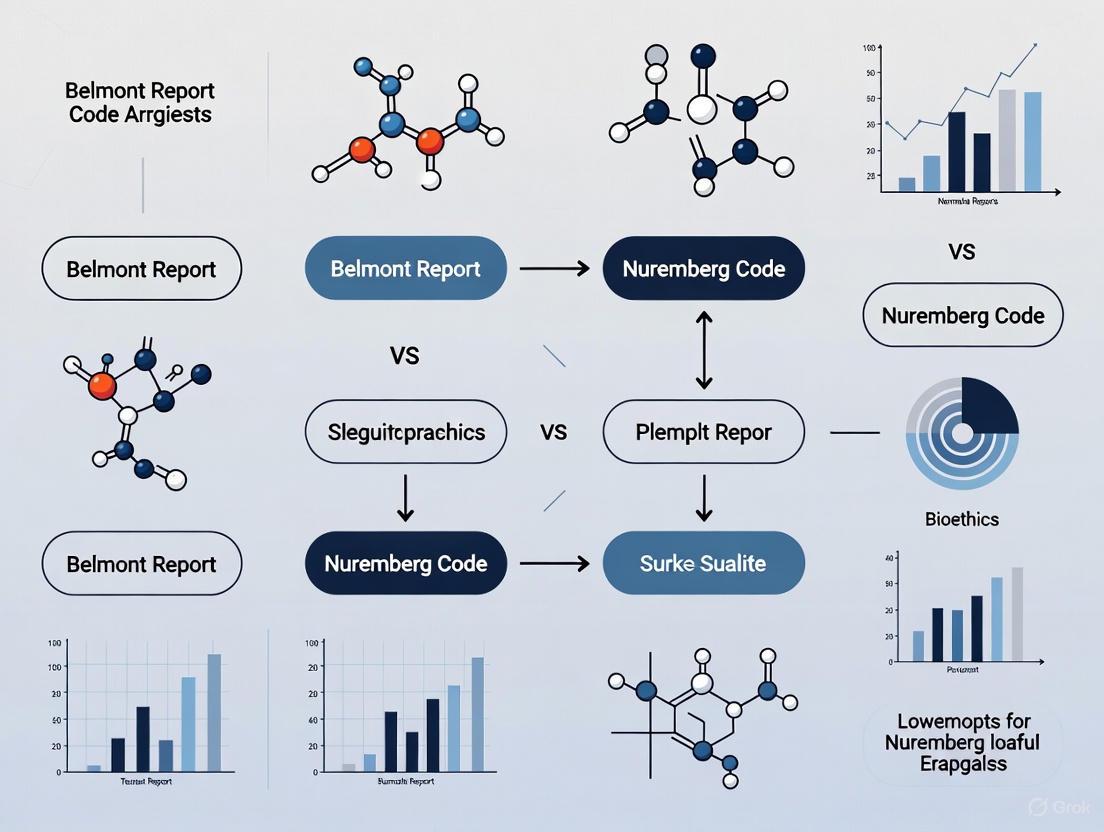
This article provides a comprehensive comparative analysis of the Nuremberg Code and the Belmont Report, two foundational documents in research ethics.
Belmont Report vs Nuremberg Code: A Researcher's Guide to Evolving Ethics in Clinical Trials
Abstract
This article provides a comprehensive comparative analysis of the Nuremberg Code and the Belmont Report, two foundational documents in research ethics. Tailored for researchers, scientists, and drug development professionals, it explores the historical contexts that shaped these guidelines, breaks down their core ethical principles, and details their direct application in modern research design and regulatory compliance. The analysis extends to troubleshooting common ethical challenges and validating how these frameworks converge and diverge to form the bedrock of contemporary human subject protections, including their influence on the Common Rule and FDA regulations.
From Nuremberg to Belmont: The Historical Context That Shaped Modern Research Ethics
The Doctors' Trial (1946-1947) represents a foundational moment in the history of research ethics, establishing the Nuremberg Code as the first major international document to articulate comprehensive principles for ethical human subjects research. This trial, officially titled United States v. Karl Brandt et al., involved the prosecution of 23 German physicians and administrators for war crimes and crimes against humanity for their roles in conducting torturous medical experiments on concentration camp prisoners without their consent [1] [2]. The legacy of the Nuremberg Code extends far beyond the courtroom in which it was created, serving as the ethical bedrock for subsequent guidelines, including the Declaration of Helsinki and the Belmont Report, and framing a continuing dialogue about the protection of human autonomy, safety, and dignity in scientific inquiry [1] [3]. For contemporary researchers, scientists, and drug development professionals, understanding this legacy is crucial for appreciating the evolution of the regulatory frameworks that govern their work today, including the distinctions between the Nuremberg Code's direct response to atrocity and the Belmont Report's philosophical principles underlying U.S. federal regulations [4] [5].
Historical Context and the Doctors' Trial
The Path to Nuremberg
While the Nazi atrocities during World War II were unprecedented in scale, the concern for ethical human experimentation predated the war. In 1931, the German Reich government issued the "Reich Circular," a detailed set of guidelines for human experimentation in response to a public outcry over the Lübeck disaster, in which 72 infants died from tuberculosis after being vaccinated with BCG [3]. These guidelines emphasized the necessity of consent, the minimization of risk, and the exclusion of children and vulnerable populations from experimental procedures unless absolutely necessary [3]. However, these regulations were utterly disregarded during the Nazi regime. During the war, both Nazi Germany and Imperial Japan conducted extensive and brutal human experimentation. Notably, the activities of Unit 731 in Japan involved biological warfare experiments on Chinese citizens, the details of which were shielded from public view for decades by post-war agreements [1] [3].
The Trial and Its Core Revelations
The Doctors' Trial began on December 9, 1946, before an American military tribunal in Nuremberg, Germany [2]. The 23 defendants were accused of committing war crimes and crimes against humanity by performing gruesome medical experiments on thousands of concentration camp prisoners without their consent [2] [6]. Testimony during the trial revealed that subjects were forced to participate in experiments that involved high-altitude simulation, freezing temperatures, mustard gas, sulfanilamide wound testing, seawater consumption, sterilization, and infectious disease inoculation [2] [3]. The vast majority of these subjects died or were permanently crippled as a direct result of their participation [2]. The defense argued that no international law or informal statement differentiated between legal and illegal human experimentation, attempting to justify their actions as standard for the time [3].
The Nuremberg Code: A Detailed Analysis
The Ten Principles
In its judgment on August 19, 1947, the tribunal rejected the defendants' arguments and convicted 16 of the 23 physicians. The verdict included a section entitled "Permissible Medical Experiments," which outlined ten principles that have become known as the Nuremberg Code [3] [6]. This code was heavily influenced by a memorandum submitted to the prosecution by Dr. Leo Alexander, which outlined six points for legitimate research [3]. The code's principles were a direct repudiation of the practices exposed during the trial.
Table: The Ten Points of the Nuremberg Code [1] [7]
| Point | Principle | Core Ethical Concept |
|---|---|---|
| 1 | The voluntary consent of the human subject is absolutely essential. | Respect for Persons, Autonomy |
| 2 | The experiment should yield fruitful results for the good of society, unprocurable by other means. | Beneficence, Social Value |
| 3 | The experiment should be based on animal experimentation and knowledge of the natural history of the disease. | Beneficence, Scientific Validity |
| 4 | The experiment should avoid all unnecessary physical and mental suffering and injury. | Beneficence, Non-maleficence |
| 5 | No experiment should be conducted where death or disabling injury is expected. | Non-maleficence |
| 6 | The degree of risk should never exceed the humanitarian importance of the problem. | Beneficence, Risk-Benefit Analysis |
| 7 | Proper preparations and facilities must be provided to protect the subject. | Beneficence, Responsibility |
| 8 | The experiment must be conducted by scientifically qualified persons. | Responsibility, Scientific Validity |
| 9 | The human subject must be at liberty to bring the experiment to an end. | Respect for Persons, Autonomy |
| 10 | The scientist must be prepared to terminate the experiment if likely injury, disability, or death occurs. | Beneficence, Non-maleficence |
Foundational Concepts and Limitations
The Nuremberg Code's most significant contribution was its absolute requirement for voluntary consent [8] [2] [5]. It states that the person involved "should have sufficient knowledge and comprehension of the elements of the subject matter involved as to enable him to make an understanding and enlightened decision" [7]. This established the foundational concept of informed consent in research ethics. Furthermore, the Code introduced a systematic approach to risk-benefit analysis, requiring that risks be justified by the potential benefits of the research and that unnecessary risk be eliminated [6].
However, a key limitation of the Code was its failure to address research involving populations incapable of providing voluntary consent, such as children, adults with diminished cognitive capacity, or the mentally ill [4] [3]. Its genesis as a response to the exploitation of a specific vulnerable population (prisoners) in a context of extreme coercion also limited its direct applicability to all research settings. Moreover, as a product of a military tribunal, the Nuremberg Code did not carry the force of law in any civil legal system [3].
The Code's Evolution and Influence on Subsequent Guidelines
The principles of the Nuremberg Code, while monumental, required further refinement to be practical for a wider range of research contexts. This led to the development of subsequent ethical guidelines.
The Declaration of Helsinki
Adopted in 1964 by the World Medical Association (WMA), the Declaration of Helsinki was designed to guide physicians in biomedical research [1] [5]. It reaffirmed the Nuremberg Code's principles but expanded them significantly. Key distinctions included:
- Distinction between Therapeutic and Non-Therapeutic Research: It formally differentiated research combined with professional care from non-therapeutic research [1] [4].
- Proxy Consent: It allowed for legal guardians to provide consent for subjects who are incompetent, such as children or adults with cognitive impairments, thereby addressing a major gap in the Nuremberg Code [4] [3].
- Independent Committee Review: It introduced the requirement for research protocols to be "transmitted to a specially appointed independent committee for consideration, comment, and guidance," a direct precursor to the modern Institutional Review Board (IRB) [1] [6].
The Belmont Report and the U.S. Regulatory Framework
The Belmont Report, issued in 1979 in the United States, was a direct response to domestic ethical failures, most notably the Tuskegee Syphilis Study (1932-1972), in which African American men with syphilis were deliberately denied effective treatment and left untreated to study the natural progression of the disease [2] [7] [6]. Unlike the Nuremberg Code, which is a list of directives, the Belmont Report organizes its guidance around three broad ethical principles.
Table: Core Ethical Principles of the Belmont Report [8] [2] [5]
| Principle | Definition | Application in Research |
|---|---|---|
| Respect for Persons | Recognition of the autonomy of individuals and the requirement to protect those with diminished autonomy. | Informed Consent (comprehension, voluntariness, disclosure) |
| Beneficence | The obligation to maximize possible benefits and minimize possible harms. | Systematic Assessment of Risks and Benefits |
| Justice | The requirement for fair distribution of the benefits and burdens of research. | Equitable Selection of Subjects |
The Belmont Report directly led to the U.S. Common Rule (45 CFR Part 46), the federal policy for the protection of human subjects, and regulations from the Food and Drug Administration (FDA) [2] [4]. It provides the philosophical justification for the modern IRB system. The Report's principle of Justice, which demands a fair selection of subjects to avoid exploiting vulnerable populations, was a specific lesson learned from the exploitation of prisoners in Nazi Germany and African American men in Tuskegee [2] [9].
Comparative Analysis: Nuremberg Code vs. Belmont Report
For researchers and drug development professionals, understanding the nuanced differences between these foundational documents is critical for interpreting modern regulatory environments.
Table: Nuremberg Code vs. Belmont Report - A Comparative Analysis [1] [2] [4]
| Feature | Nuremberg Code (1947) | Belmont Report (1979) |
|---|---|---|
| Historical Context | Response to Nazi medical atrocities during WWII. | Response to U.S. research abuses (e.g., Tuskegee Syphilis Study). |
| Primary Focus | Prevention of harm and exploitation; absolute necessity of voluntary consent. | Underlying ethical principles and their application to resolve ethical problems. |
| Structure | Ten direct, specific directives. | Three overarching principles (Respect for Persons, Beneficence, Justice) with applications. |
| Consent | Requires voluntary, competent, informed, and understanding consent from every subject. No exceptions. | Requires informed consent, but allows for proxy consent for populations with diminished autonomy (e.g., children). |
| Scope | Focused on biomedical experimentation. | Applies to both biomedical and behavioral research. |
| Regulatory Impact | Influential moral guide, but no direct legal force in civil law. | Directly formed the basis for U.S. federal regulations (Common Rule, FDA regulations). |
| View on Vulnerability | Implicit in its focus on prisoners of war and concentration camp inmates. | Explicitly addresses vulnerability and the principle of justice in subject selection. |
The following diagram illustrates the historical and conceptual relationship between these key documents and their role in shaping modern research oversight.
Historical Evolution of Research Ethics Guidelines
The Modern Research Toolkit: Core Ethical Concepts as "Reagents"
Just as a scientist relies on specific reagents to conduct an experiment, the modern research professional must be equipped with core ethical concepts derived from the Nuremberg Code and Belmont Report to ensure their work is conducted responsibly.
Table: Essential "Reagents" for the Ethical Researcher
| Ethical Reagent | Origin Document(s) | Function in the Research Protocol |
|---|---|---|
| Informed Consent | Nuremberg Code, Belmont Report | The process of ensuring a subject's voluntary participation based on a comprehensive understanding of the research's risks, benefits, and alternatives. |
| Risk-Benefit Analysis | Nuremberg Code, Belmont Report | A systematic assessment to justify that the risks to subjects are reasonable in relation to the anticipated benefits. |
| Independent Review (IRB) | Declaration of Helsinki, Belmont Report | An independent committee review to approve, monitor, and review research involving human subjects to protect their rights and welfare. |
| Respect for Autonomy | Belmont Report (Respect for Persons) | The practice of recognizing the personal dignity and self-determination of research subjects. |
| Principle of Justice | Belmont Report | The conscious effort to ensure the equitable selection of subjects to avoid unfairly burdening any specific population. |
| Scientific Validity | Nuremberg Code, Declaration of Helsinki | The requirement that research is methodologically sound, thereby making the risks taken by subjects justifiable. |
The Doctors' Trial and the resulting Nuremberg Code marked a paradigm shift in the conduct of science, establishing that the pursuit of knowledge is bounded by inviolable ethical constraints centered on human dignity. While the Belmont Report provided a more nuanced and principled framework that directly undergirds modern U.S. regulations, it stands on the shoulders of the Nuremberg Code [4] [7]. The Code's uncompromising emphasis on voluntary consent and the primacy of the subject's well-being remains a powerful, universal message. For today's researchers, scientists, and drug developers, this legacy is not merely historical but is embedded in the daily operations of IRBs, informed consent documents, and protocol reviews. It serves as a perpetual reminder that the human subject is not a means to an end, but a partner in the ethical advancement of science and medicine.
The United States Public Health Service (USPHS) Study of Untreated Syphilis in the Negro Male, conducted from 1932 to 1972, stands as a seminal failure in research ethics. This article details how the public revelation of this study directly catalyzed the creation of the National Research Act of 1974. We examine the Act's legislative response, which established the National Commission for the Protection of Human Subjects and mandated the creation of Institutional Review Boards (IRBs). Furthermore, this analysis frames these events within a broader ethical discourse, contrasting the foundational principles of the Nuremberg Code with the subsequent, more detailed framework of the Belmont Report. The objective is to provide researchers and drug development professionals with a comprehensive understanding of how this domestic scandal irrevocably shaped the modern system of ethical oversight in human subjects research.
The U.S. Public Health Service (USPHS) Untreated Syphilis Study at Tuskegee was a 40-year longitudinal research project that aimed to observe the natural progression of untreated syphilis in 399 African American men from Macon County, Alabama [10] [11]. A control group of 201 uninfected men was also enrolled [10]. The study was characterized by egregious ethical violations, including a lack of informed consent, deception of participants who were told they were being treated for "bad blood," and the deliberate withholding of effective treatment even after penicillin became the standard of care in 1947 [10] [11] [12]. The study continued until 1972, when whistleblower Peter Buxtun leaked information to journalist Jean Heller, leading to public outrage and its termination [11] [12].
Table 1: Quantitative Overview of the Tuskegee Syphilis Study
| Aspect | Detail |
|---|---|
| Official Title | The Tuskegee Study of Untreated Syphilis in the Negro Male [11] |
| Duration | 1932 - 1972 [10] |
| Lead Organization | U.S. Public Health Service (USPHS) [10] |
| Participant Cohort | 399 men with latent syphilis, 201 uninfected controls (all African American) [10] |
| Documented Harm | 28 deaths directly from syphilis; 100 from related complications; 40 wives infected; 19 children with congenital syphilis [11] |
| Key Ethical Failure | Lack of informed consent; withholding of penicillin treatment after it was available [10] |
Experimental Protocol and Methodological Failures
The methodology of the Tuskegee Study was fundamentally flawed from an ethical standpoint, though it was presented as a scientific endeavor to document the natural history of syphilis.
Original Study Design and Participant Recruitment
The study began in 1932 as a prospective study intended to complement a retrospective Norwegian study on untreated syphilis in white males [11]. Researchers enrolled 600 impoverished African American sharecroppers, leveraging their economic vulnerability and lack of access to healthcare. Participants were incentivized with promises of free medical care, meals, and burial insurance—provisions they would not otherwise receive [11] [12]. Crucially, they were never informed of their syphilis diagnosis; instead, they were told they were being treated for "bad blood," a local colloquialism for various ailments including anemia and fatigue [11].
Withholding of Treatment and Active Deception
The study's most profound ethical breach was the persistent denial of effective treatment.
- Initial Period (1930s): Even when the study began, some treatments for syphilis existed, such as arsenic-based compounds (e.g., Salvarsan), though they were moderately toxic and only somewhat effective [11]. Participants were largely given placebos, such as aspirin and mineral supplements [12].
- Post-Penicillin Era (Post-1947): After penicillin was established as a safe and effective cure for syphilis, researchers actively prevented participants from receiving it. The USPHS intervened to stop men who were diagnosed with syphilis at military induction centers during World War II from getting treatment [11]. Furthermore, when public health "rapid treatment centers" were established in Macon County, study researchers prevented their subjects from participating [11]. This was a deliberate protocol to continue observing the disease's progression until autopsy.
Table 2: Key Research "Reagents" and Methodological Elements in the Tuskegee Study
| Element | Function in the Study Context |
|---|---|
| Diagnostic Lumbar Puncture | Presented to participants as a "special free treatment," but was actually a diagnostic procedure to study neurological involvement [11]. |
| Placebos (Aspirin, Mineral Supplements) | Used to maintain the illusion of treatment, thereby ensuring participant compliance and continued observation without altering the disease course [12]. |
| "Bad Blood" Diagnosis | A deliberate misdirection to obtain participant buy-in without disclosing the socially stigmatizing and medically serious diagnosis of syphilis [11]. |
| Burial Assistance | A key incentive for participation and for securing consent for autopsies, which were the ultimate source of data for the researchers [11] [12]. |
The following diagram illustrates the deceptive workflow and critical decision points that allowed the study to continue for four decades.
The Path to Legislative Action
The termination of the Tuskegee Study in 1972 triggered immediate political and public recoil, creating an imperative for legislative action to restore trust and prevent recurrence.
Congressional Hearings and Public Outcry
Following the press exposure, Congress, led by Senator Edward Kennedy, held hearings in 1973 that exposed the full details of the study and other research abuses [13] [14]. These hearings served as a public forum to articulate the profound ethical failures and built political momentum for comprehensive federal regulation. The public and political response was unequivocal: the existing, patchwork system of ethical self-governance in research was insufficient.
The National Research Act of 1974
In direct response to the Tuskegee scandal, the 93rd United States Congress passed the National Research Act, which was signed into law by President Richard Nixon on July 12, 1974 [13] [14]. The Act had three primary components designed to systematize the protection of human subjects:
- Establishment of a National Commission: The Act created the National Commission for the Protection of Human Subjects of Biomedical and Behavioral Research [13] [15]. This multidisciplinary body of experts was tasked with identifying the basic ethical principles governing human subjects research and developing guidelines to ensure research is conducted in accordance with those principles.
- Mandate for Institutional Review Boards (IRBs): The Act required that any institution applying for federal grants for biomedical or behavioral research involving human subjects must establish an Institutional Review Board (IRB) to review and approve the research protocols [13] [15]. This formalized and expanded a model of local ethical review.
- Federal Research Regulations: The Act directed the Department of Health, Education, and Welfare (DHEW, now Health and Human Services, HHS) to promulgate regulations governing human subjects research [14] [2].
The causal pathway from scandal to legislation is mapped below.
The Belmont Report vs. The Nuremberg Code: An Analytical Framework
The National Commission, established by the National Research Act, produced the Belmont Report in 1979 [15] [2]. This document, while influenced by the earlier Nuremberg Code (1947), represents a distinct and evolved framework for ethical research. For researchers, understanding the differences is critical to applying ethical principles in complex, real-world scenarios.
The Nuremberg Code was a direct response to the non-consensual and brutal human experimentation by Nazi physicians [1] [8]. Its ten points are a rigid set of rules, with the absolute requirement of voluntary consent as its first and central principle [1]. It is primarily focused on the protection of the individual subject's autonomy within an experimental setting.
The Belmont Report, informed by the Tuskegee scandal—a long-term, government-run study on a vulnerable population—builds upon Nuremberg but provides a more flexible, principlist approach. It articulates three core ethical principles:
- Respect for Persons: This encompasses the Nuremberg idea of autonomy but broadens it to recognize that individuals are autonomous agents and that those with diminished autonomy (e.g., due to illness, vulnerability, or circumstance) are entitled to protection. This principle leads to the requirement for informed consent.
- Beneficence: This principle goes beyond "do no harm" to an affirmative obligation to maximize possible benefits and minimize potential harms. This requires a systematic assessment of risks and benefits.
- Justice: This principle addresses the fair distribution of the burdens and benefits of research. The Tuskegee Study was a profound failure of justice, as the burdens of research were placed exclusively upon a disadvantaged group of African American men who were unlikely to receive the benefits of scientific advances. This principle requires attention to the selection of subjects [15] [2].
Table 3: Comparative Analysis: Nuremberg Code vs. Belmont Report
| Feature | Nuremberg Code (1947) | Belmont Report (1979) |
|---|---|---|
| Historical Context | Reaction to Nazi medical war crimes [1] | Reaction to domestic U.S. scandal (Tuskegee) and other ethical lapses [15] |
| Primary Focus | Protection of the individual subject's autonomy and body from direct experimental harm [1] | Broader ethical principles applicable to both research and practice, addressing individual and societal concerns [2] |
| Core Principles | 1. Voluntary Consent (absolute)2. Fruitful results for the good of society3. Based on prior animal experimentation4. Avoid unnecessary suffering5. No expectation of death/disability... etc. [1] | 1. Respect for Persons (Autonomy & Protection)2. Beneficence (Risk/Benefit Assessment)3. Justice (Fair Subject Selection) [2] |
| Nature of Guidance | A set of 10 specific rules or directives [1] | A framework of 3 overarching principles to guide the formulation of detailed rules [2] |
| Application | Primarily to experimental/interventional research [1] | To both research and the boundary between research and practice [2] |
| On Informed Consent | "The voluntary consent of the human subject is absolutely essential." [1] | An application of "Respect for Persons," requiring information, comprehension, and voluntariness [2]. |
| On Risk/Benefit | Implied in directives to avoid unnecessary risk and ensure benefits outweigh risks [1] | An explicit, systematic assessment required as an application of "Beneficence" [2]. |
| On Subject Selection | Not explicitly addressed beyond consent. | An explicit application of "Justice," requiring fair procedures and outcomes to avoid exploiting vulnerable populations [2]. |
Legacy and Modern Research Oversight
The regulatory path initiated by the National Research Act culminated in the 1991 adoption of the Federal Policy for the Protection of Human Subjects, known as the Common Rule [2]. This regulation, followed by agencies such as the FDA, codifies the principles of the Belmont Report into enforceable law, requiring IRB review, informed consent, and special protections for vulnerable populations.
The legacy of Tuskegee is thus embedded in the very fabric of modern clinical research. Every protocol reviewed by an IRB, every informed consent document signed by a patient, and every ethical consideration for the just recruitment of subjects is a direct consequence of the systemic failure the study represented and the national response it provoked. For today's researchers and drug development professionals, this history is not merely academic; it is the foundational narrative justifying the rigorous ethical standards they are obligated to uphold.
The ethical conduct of research involving human subjects is governed by foundational documents developed in response to historical ethical failures. The Nuremberg Code (1947) and the Belmont Report (1979) represent two cornerstones of modern research ethics, each with distinct philosophical approaches to protecting human dignity [16] [17]. The Nuremberg Code emerged from the horrors of Nazi medical experiments tried at the Nuremberg Military Tribunal, establishing for the first time a comprehensive set of directives for human experimentation [18] [19]. In contrast, the Belmont Report was commissioned by the United States Congress in response to domestic ethical violations, most notably the Tuskegee Syphilis Study, and identified comprehensive ethical principles for research with human subjects [16] [4]. This whitepaper examines the core philosophical frameworks of these two seminal documents, focusing particularly on the Nuremberg Code's absolute requirement for voluntary consent versus the Belmont Report's more nuanced three-principle approach encompassing Respect for Persons, Beneficence, and Justice.
The historical contexts in which these documents were created significantly shaped their philosophical orientations. The Nuremberg Code was articulated by American judges sitting in judgment of Nazi doctors accused of conducting murderous and torturous human experiments in concentration camps [16] [4]. This origin explains its strong emphasis on individual rights and absolute protection against coercion. The Belmont Report, developed by the National Commission for the Protection of Human Subjects of Biomedical and Behavioral Research, responded to ethical breaches in research settings where participation was theoretically voluntary but often inadequately informed [16] [4]. This paper will analyze how these different origins produced complementary yet distinct frameworks that continue to guide ethical review processes in contemporary research environments, particularly for drug development professionals and clinical researchers navigating complex regulatory landscapes.
The Nuremberg Code: Absolute Voluntary Consent as Ethical Foundation
Historical Context and Creation
The Nuremberg Code was formulated in 1947 as part of the verdict in the United States v Karl Brandt et al. case, commonly known as the Doctors' Trial [18] [19]. American judges presiding over the case of Nazi physicians accused of conducting murderous and torturous human experiments in concentration camps faced the task of establishing standards by which to judge these activities [16] [4]. The Code was created against the backdrop of horrific medical experiments conducted on concentration camp prisoners without their consent and often with fatal consequences [20] [19]. Tribunal judges, aided by medical expert witnesses including Dr. Leo Alexander and Dr. Andrew Ivy, articulated ten principles defining permissible medical experimentation [19]. Though originally intended as a standard for judging the Nazi physicians, the Code would later become significant beyond its original context as a foundational document for human research ethics globally [19].
The Code's creation responded specifically to evidence that Nazi physicians had completely disregarded the autonomy and wellbeing of their subjects, treating them as mere means to scientific ends [20]. The judges determined that a comprehensive framework was necessary to prevent recurrence of such atrocities in future research. Interestingly, the Code had precursors in earlier German regulations from the Weimar era (1919-1933), which had established guidelines distinguishing between therapeutic and non-therapeutic research and emphasizing informed consent, though these were negated when the Nazis came to power [19]. The Nuremberg Code thus represented both a rejection of Nazi medical practices and a restoration and strengthening of earlier ethical principles that had been abandoned.
Core Philosophical Framework
The Nuremberg Code's philosophical foundation rests squarely on the principle of absolute voluntary consent as the non-negotiable centerpiece of ethical research [18] [21]. The first principle of the Code begins unequivocally: "The voluntary consent of the human subject is absolutely essential" [18] [21]. This consent must be given by an individual with legal capacity, situated to exercise free power of choice without any element of force, fraud, deceit, duress, or other ulterior form of constraint [18]. The Code further requires that prospective subjects have "sufficient knowledge and comprehension of the elements of the subject matter involved as to enable him to make an understanding and enlightened decision" [18].
Beyond its consent requirements, the Code establishes several other key principles that support its human protection framework. It mandates that experiments should yield fruitful results for the good of society unprocurable by other methods [18] [21]. It requires that research be based on prior animal studies and knowledge of the natural history of the disease [18]. The Code directs that researchers avoid all unnecessary physical and mental suffering [18] [21] and prohibits experiments where death or disabling injury is expected [18]. It establishes that risk should never exceed humanitarian importance [18] [21], requires proper facilities and protections [18], mandates scientifically qualified researchers [18], and guarantees the subject's freedom to withdraw and the researcher's obligation to terminate the experiment if risks emerge [18] [21].
Table: The Ten Principles of the Nuremberg Code
| Principle Number | Core Requirement | Key Components |
|---|---|---|
| 1 | Voluntary Consent | Legal capacity, free power of choice, sufficient knowledge and comprehension |
| 2 | Fruitful Results for Society | Unprocurable by other methods, not random or unnecessary |
| 3 | Animal Experimentation & Natural History | Anticipated results justify experiment |
| 4 | Avoid Unnecessary Suffering | Minimize all physical and mental suffering and injury |
| 5 | No Expectation of Death/Disabling Injury | Except where researchers also serve as subjects |
| 6 | Risk Proportional to Importance | Risk should not exceed humanitarian importance |
| 7 | Proper Preparations & Facilities | Protect against remote possibilities of injury |
| 8 | Scientifically Qualified Personnel | Highest degree of skill and care required |
| 9 | Subject's Right to Terminate | At liberty to end participation |
| 10 | Researcher's Duty to Terminate | Must stop if likely injury, disability, or death |
Applications and Limitations in Modern Research
The Nuremberg Code's absolute consent requirement presents both ethical clarity and practical challenges in contemporary research settings [20]. In drug development, particularly during clinical trials, the Code's emphasis on comprehensive information disclosure has shaped informed consent processes, requiring researchers to provide detailed information about nature, duration, purpose, methods, inconveniences, hazards, and potential effects on health [18] [20]. However, the Code's stringent voluntariness standards have required interpretation in contexts involving populations with diminished autonomy or decision-making capacity [4].
A significant limitation of the Nuremberg Code in modern research environments is its lack of specific provisions for vulnerable populations who may not have legal capacity to provide consent [4] [20]. The Code does not address how to ethically involve children, adults with cognitive impairments, or other vulnerable groups in research [4]. Additionally, the Code's sole focus on the researcher-subject relationship without mentioning oversight mechanisms represents another limitation addressed by later ethical frameworks [20]. Despite these limitations, the Code's fundamental principle—that no person should be used as a mere means for scientific ends—continues to resonate powerfully through all subsequent research ethics guidance [20].
The Belmont Report: A Three-Principle Framework for Ethical Research
Historical Context and Creation
The Belmont Report emerged from a different historical context than the Nuremberg Code, responding to ethical violations in United States research rather than international war crimes [16] [4]. The catalyst for its creation was public exposure of the Tuskegee Syphilis Study in 1972, in which African American men with syphilis were deliberately left untreated for decades without their knowledge to study the natural progression of the disease [16] [17]. This scandal, along with other ethical controversies such as the Willowbrook hepatitis studies and Henry Beecher's 1966 paper exposing unethical studies in leading U.S. institutions, prompted Congressional action [1].
In 1974, Congress passed the National Research Act, which created the National Commission for the Protection of Human Subjects of Biomedical and Behavioral Research [16] [4]. This Commission was charged with identifying the basic ethical principles that should underlie the conduct of biomedical and behavioral research involving human participants and developing guidelines to ensure such research is conducted in accordance with those principles [16]. After nearly four years of deliberation, including an intensive four-day discussion period at the Smithsonian Institution's Belmont Conference Center in 1976, the Commission produced the Belmont Report in 1979 [16]. The report was intended to provide "an analytical framework to guide the resolution of the ethical problems arising from research with human subjects" [16].
Core Philosophical Framework
The Belmont Report organizes its ethical framework around three core principles: Respect for Persons, Beneficence, and Justice [16] [8]. Each principle carries specific obligations and together they provide a more comprehensive and nuanced approach to research ethics than the Nuremberg Code's primary focus on consent.
Respect for Persons incorporates at least two ethical convictions: that individuals should be treated as autonomous agents, and that persons with diminished autonomy are entitled to protection [16]. This principle acknowledges that autonomy is not absolute and recognizes the need for additional protections for vulnerable populations. The application of Respect for Persons leads to requirements for informed consent, which the Report breaks down into three elements: information, comprehension, and voluntariness [16]. This represents a more developed conceptualization of consent than the Nuremberg Code's treatment, specifically addressing how to ensure genuine understanding and freedom from coercion.
Beneficence extends beyond the simple injunction to "do no harm" to include maximizing possible benefits and minimizing possible harms [16]. This principle obligates researchers to not only protect participants from harm but also to secure their well-being. The Report acknowledges that benefits and risks must be carefully assessed and systematically analyzed, recognizing that the calculation is often complex and uncertain [16]. The application of Beneficence leads to the requirement for a careful assessment of risks and benefits in research, considering all possible types of harm (physical, psychological, social, economic) and benefit (to participants and to society) [16].
Justice addresses the fair distribution of the benefits and burdens of research [16]. This principle requires that researchers not systematically select participants based on convenience, malleability, or compromised position, but rather for reasons directly related to the problem being studied [16]. The application of Justice leads to requirements for fair procedures and outcomes in the selection of research subjects, preventing exploitation of vulnerable populations and ensuring that no group bears disproportionate research risks without corresponding benefits [16].
Table: The Three Ethical Principles of the Belmont Report
| Ethical Principle | Core Meaning | Application | Vulnerable Populations Considerations |
|---|---|---|---|
| Respect for Persons | Recognition of personal dignity and autonomy; respect for individual choices | Informed Consent (Information, Comprehension, Voluntariness) | Additional protections for those with diminished autonomy (children, prisoners, cognitively impaired) |
| Beneficence | Obligation to maximize benefits and minimize harms; do no harm | Systematic Assessment of Risks and Benefits | Consideration of special vulnerabilities in risk/benefit analysis |
| Justice | Fairness in distribution of research benefits and burdens | Equitable Selection of Subjects | Protection from bearing disproportionate burden of research risks |
Applications in Modern Regulatory Frameworks
The Belmont Report's three-principle framework has profoundly influenced United States research regulations and institutional oversight mechanisms [4]. The Report's principles were incorporated into federal regulations promulgated by the Department of Health and Human Services (45 CFR Part 46) and the Food and Drug Administration [4] [8]. These regulations, known as the "Common Rule," provide the foundation for human subjects protection in the U.S. and establish the Institutional Review Board (IRB) system [1] [20].
The Report's framework has proven particularly valuable for addressing complex ethical questions in emerging research areas, including gene therapy trials, genomic research, and studies involving vulnerable populations [4]. The principle of Justice, for example, provides guidance for ethically including rather than excluding populations such as children, pregnant women, and prisoners from research, while ensuring appropriate protections [16] [4]. Similarly, the Beneficence principle's requirement for systematic risk-benefit assessment has informed regulatory approaches to innovative therapies where potential benefits must be weighed against unknown risks [4].
The Belmont Report's influence extends beyond biomedical research to behavioral and social science research, though some scholars have questioned whether its principles adequately address the specific ethical concerns of these fields [4]. Nevertheless, the three-principle framework continues to provide the foundational ethical language and conceptual structure for IRB deliberations, research protocol development, and ethics education across diverse research contexts.
Comparative Analysis: Key Philosophical Distinctions
Consent: Absolute Requirement vs. Contextual Application
The most significant philosophical distinction between the Nuremberg Code and the Belmont Report lies in their treatment of informed consent. The Nuremberg Code establishes absolute voluntary consent as the non-negotiable foundation of ethical research, stating it is "absolutely essential" and emphasizing the legal capacity of the individual to provide consent [18] [20]. This approach leaves little room for exceptions or adaptations for vulnerable populations. In contrast, the Belmont Report's Respect for Persons principle acknowledges that autonomy exists on a spectrum and that some persons with diminished autonomy require additional protections rather than blanket exclusion [16]. This philosophical difference has profound implications for research involving children, adults with cognitive impairments, and other vulnerable groups.
The Nuremberg Code's consent model focuses primarily on the individual's legal capacity and freedom from coercion, while the Belmont Report expands this conceptualization to include three distinct elements: information, comprehension, and voluntariness [16]. This more nuanced approach recognizes that simply providing information does not constitute valid consent if the subject does not comprehend it or if voluntariness is compromised by subtle influences [16]. The Belmont framework thus addresses limitations in the Code's approach by acknowledging that true consent requires not just the absence of overt coercion but also the presence of genuine understanding and freedom from undue influence, particularly when researcher-participant relationships involve power imbalances.
Scope of Ethical Considerations
The Nuremberg Code focuses predominantly on the researcher-subject relationship and the experimental process itself, with eight of its ten principles addressing methodological and risk considerations [18] [21]. While these aspects remain important, the Code gives limited attention to broader social and distributive justice concerns in research. The Belmont Report significantly expands the ethical landscape by introducing Justice as a distinct ethical principle, requiring researchers and institutions to consider fair subject selection and the equitable distribution of research benefits and burdens across society [16]. This represents a crucial philosophical advancement, addressing concerns about the exploitation of vulnerable populations that were not adequately covered in the Nuremberg Code.
Similarly, the Belmont Report's Beneficence principle provides a more comprehensive framework for considering researcher obligations than the Nuremberg Code's risk provisions [16]. While both documents address risk minimization, the Belmont Report explicitly incorporates the positive obligation to maximize possible benefits and secure well-being, moving beyond merely avoiding harm [16]. This broader conceptualization of researcher responsibility acknowledges that ethical research must consider not only what makes research permissible but also what makes it ethically commendable.
Approach to Vulnerability and Protection
The documents differ fundamentally in their approach to vulnerable populations. The Nuremberg Code implicitly assumes a research subject with full legal capacity and autonomy, without providing guidance for situations where these conditions are not met [4] [20]. The Belmont Report explicitly recognizes that not all persons are capable of self-determination and that those with diminished autonomy (whether due to age, illness, disability, or circumstance) are entitled to special protections [16]. This philosophical distinction enables the development of ethical frameworks for research with children, cognitively impaired adults, and other vulnerable groups through mechanisms such as permission from guardians and assent from participants.
The Nuremberg Code emerged from atrocities committed against captive populations, yet it does not specifically address the ethical complexities of research with prisoners or other institutionalized groups [20] [19]. The Belmont Report's Justice principle directly responds to this limitation by prohibiting the systematic selection of subjects simply because of their easy availability, compromised position, or manipulability [16]. This approach acknowledges that vulnerability can arise from social, economic, and institutional contexts, not just individual characteristics, and requires researchers to consider whether participant selection is related to the research questions rather than convenience.
Implementation in Contemporary Research Environments
Regulatory Frameworks and Oversight Mechanisms
The Nuremberg Code and Belmont Report have influenced distinct but complementary regulatory approaches to human subjects protection. The Nuremberg Code's emphasis on investigator responsibility established the ethical foundation for direct researcher accountability in obtaining valid consent [18] [20]. However, it did not create specific oversight structures. The Belmont Report's principles facilitated the development of the comprehensive Institutional Review Board (IRB) system now central to research regulation in the United States [16] [20]. IRBs operationalize the Report's three principles through protocol review, focusing particularly on informed consent processes (Respect for Persons), risk-benefit analysis (Beneficence), and subject selection (Justice) [16].
Contemporary research regulation represents a synthesis of both documents' philosophical approaches. The Common Rule (45 CFR 46), which governs most U.S. human subjects research, incorporates the Belmont Report's three-principle framework while maintaining the Nuremberg Code's emphasis on voluntary consent as a foundational requirement [1] [20]. Recent revisions to the Common Rule in 2017 continued to reflect Nuremberg's consent principles while adapting them to modern research contexts, such as biobanking and genomic research [20]. Internationally, the Declaration of Helsinki (originally adopted in 1964 and regularly revised) serves as a bridge between these documents, incorporating both the Nuremberg Code's consent requirements and the Belmont Report's attention to researcher obligations and vulnerable populations [1].
Practical Applications in Drug Development
For drug development professionals, both ethical frameworks inform critical aspects of clinical trial design and conduct. The Nuremberg Code's requirements for scientific validity and favorable risk-benefit ratio directly influence preclinical requirements and early-phase trial design [18] [21]. Regulatory agencies typically require extensive animal data before permitting human trials, reflecting the Code's principle that human experiments should be "based on the results of animal experimentation" [18] [1]. Similarly, the Code's requirement that risks be justified by the humanitarian importance of the problem shapes how research priorities are established and which investigational drugs proceed to human testing [18].
The Belmont Report's ethical framework addresses aspects of clinical trials that the Nuremberg Code does not fully cover. The Justice principle informs guidelines for inclusion and exclusion criteria, ensuring that subject selection is appropriate to the research questions and does not unfairly burden or exclude particular groups [16] [4]. This has led to requirements for including women, children, and elderly participants in clinical trials when scientifically appropriate. The Beneficence principle's requirement for systematic risk-benefit assessment underlies the Data and Safety Monitoring Board (DSMB) system for ongoing review of trial safety data [16]. The Respect for Persons principle shapes the detailed informed consent requirements for clinical trials, including the development of consent forms that address information, comprehension, and voluntariness [16].
Table: Essential Research Ethics Documents and Their Primary Contributions
| Document | Year | Primary Ethical Focus | Key Innovation | Modern Application |
|---|---|---|---|---|
| Nuremberg Code | 1947 | Absolute voluntary consent | First comprehensive code for human experimentation | Foundation for informed consent requirements internationally |
| Declaration of Helsinki | 1964 (with revisions) | Physician-investigator obligations | Distinction between therapeutic and non-therapeutic research | International standard for clinical trial ethics |
| Belmont Report | 1979 | Three principles: Respect, Beneficence, Justice | Framework for resolving ethical problems in research | Basis for U.S. federal regulations and IRB review system |
| Common Rule (U.S.) | 1991 (revised 2017) | Implementation of ethical principles through procedures | Uniform federal regulations across departments | Primary governance for human subjects research in U.S. |
For researchers and drug development professionals navigating the complex ethical landscape of human subjects research, several key resources and approaches facilitate compliance with both Nuremberg and Belmont principles:
Comprehensive Informed Consent Protocols: Developing consent processes that address both Nuremberg's voluntariness requirements and Belmont's emphasis on comprehension through appropriate reading levels, cultural sensitivity, and confirmation of understanding [16] [20].
Systematic Risk-Benefit Assessment Frameworks: Implementing structured approaches to identifying, quantifying, and minimizing risks while maximizing benefits throughout the research lifecycle, as required by both documents but specifically articulated in Belmont's Beneficence principle [16].
Vulnerability Assessment Tools: Employing checklists and protocols to identify potentially vulnerable participants and implement appropriate additional safeguards in accordance with Belmont's Respect for Persons and Justice principles [16].
IRB Engagement Strategies: Developing effective approaches to navigating IRB review processes, which operationalize Belmont's principles through protocol review while maintaining Nuremberg's emphasis on scientific validity and researcher responsibility [16] [20].
Ethical Framework Decision Tools: Utilizing structured ethical analysis frameworks based on the three Belmont principles to resolve complex ethical dilemmas that may arise during research conduct [16].
These tools, used in combination, help researchers honor the foundational ethical commitments of both the Nuremberg Code and Belmont Report while conducting scientifically valid and socially valuable research.
The Nuremberg Code's absolute consent requirement and the Belmont Report's three-principle framework represent distinct but complementary approaches to research ethics. The Nuremberg Code emerged from specific historical atrocities to establish the non-negotiable necessity of voluntary consent, while the Belmont Report provided a more nuanced framework for addressing the complex ethical dilemmas that arise in diverse research contexts [16] [18] [20]. For contemporary researchers and drug development professionals, both documents remain essential touchstones for ethical practice.
The Nuremberg Code's enduring contribution lies in its powerful affirmation that research participants are not mere means to scientific ends but autonomous beings whose rights must be protected [20] [19]. Its absolute language continues to serve as a moral compass when ethical boundaries are tested. The Belmont Report's significance rests in its comprehensive framework for identifying, analyzing, and resolving ethical problems in research [16] [4]. Its three principles have proven remarkably adaptable to new research contexts undreamed of in 1979, from gene therapy to digital phenotyping.
Together, these documents remind us that ethical research requires both unwavering commitment to fundamental principles and thoughtful adaptation to novel challenges. As research methodologies continue to evolve, the core philosophies of the Nuremberg Code and Belmont Report will remain essential foundations for ensuring that scientific progress never comes at the cost of human dignity and rights. For the research community, they represent not historical artifacts but living documents whose philosophical insights continue to guide the ethical conduct of science in the service of humanity.
The Nuremberg Code and the Belmont Report are two of the most influential documents in the history of research ethics. Both were created in response to ethical failures in human subjects research, yet they embody fundamentally different structural approaches to achieving ethical outcomes. The Nuremberg Code, formulated in 1947, presents a ten-point code of specific rules following the Nuremberg trials of Nazi physicians [22] [2]. In contrast, the Belmont Report, published in 1979, establishes a principles-based framework built upon three overarching ethical principles [4] [23]. This structural distinction—a precise enumeration of rules versus a flexible framework of guiding principles—has profound implications for their application, adaptability, and enduring relevance in modern clinical research. Understanding these differing structures is essential for researchers, regulators, and ethicists navigating the complex landscape of human subjects protection today.
Historical Context and Genesis
The Nuremberg Code: A Direct Judicial Response to Atrocity
The Nuremberg Code emerged directly from the 1947 "Doctors' Trial" of Nazi physicians who conducted brutal experiments on concentration camp prisoners without consent [18] [2]. American judges presiding over the case articulated ten points defining "permissible medical experiments" in their verdict [22]. This document was thus created judicially as a direct response to specific, egregious wrongs observed during the trial. The Code's structure reflects this origin—it provides explicit, rule-based boundaries meant to prevent the exact types of abuses uncovered in the camps. Notably, the Code itself never carried formal legal authority beyond the case, but it established foundational ethical standards that would influence subsequent regulations worldwide [22] [2].
The Belmont Report: A Deliberative Response to Domestic Scandals
The Belmont Report has a markedly different origin. It was created by the National Commission for the Protection of Human Subjects of Biomedical and Behavioral Research, a body established by the U.S. Congress through the National Research Act of 1974 [4] [2]. This commission was formed largely in response to the Tuskegee Syphilis Study scandal, where researchers studied the progression of syphilis in African American men for decades without informing them of their diagnosis or providing treatment even after penicillin became available [2]. Unlike the Nuremberg Code's judicial, reactive creation, the Belmont Report was the product of a congressionally mandated, deliberative process aimed at identifying comprehensive ethical principles to guide all research with human subjects [4] [24]. This philosophical, forward-looking approach resulted in a flexible framework rather than a rigid set of rules.
Table: Historical Context of the Nuremberg Code and Belmont Report
| Aspect | Nuremberg Code | Belmont Report |
|---|---|---|
| Primary Catalyzing Event | Nazi medical experiments during WWII | Tuskegee Syphilis Study (1932-1972) |
| Year of Creation | 1947 | 1978 (published 1979) |
| Creating Body | U.S. war crimes tribunal judges at Nuremberg | National Commission for the Protection of Human Subjects |
| Legal Foundation | Part of judicial verdict in U.S. v. Karl Brandt et al. | Mandated by U.S. National Research Act of 1974 |
| Primary Purpose | Define "permissible medical experiments" in response to specific atrocities | Identify basic ethical principles to guide all research involving human subjects |
Structural Analysis: Ten-Point Code Versus Principles-Based Framework
The Nuremberg Code's Ten-Point Structure
The Nuremberg Code employs a rule-based, enumerated structure consisting of ten specific directives. The first and most famous principle establishes that "the voluntary consent of the human subject is absolutely essential" [18]. This absolute requirement reflects the specific ethical failure observed in the concentration camps, where prisoners were forced to participate. Subsequent points address research design (principles 2-3), risk management (principles 4-8), and participant rights during experimentation (principles 9-10) [18] [22]. The Code's structure is linear, specific, and categorical, with each point addressing a discrete aspect of ethical research conduct. This approach provides clear, unambiguous directives but offers limited flexibility for novel ethical challenges or diverse research contexts.
The Belmont Report's Principles-Based Framework
The Belmont Report organizes its guidance around three overarching ethical principles: Respect for Persons, Beneficence, and Justice [23]. Each principle is explained conceptually before the report outlines their practical application. Respect for Persons incorporates two ethical convictions: that individuals should be treated as autonomous agents, and that persons with diminished autonomy are entitled to protection [23]. Beneficence extends beyond "do no harm" to include maximizing possible benefits and minimizing potential harms [23] [2]. Justice addresses the fair distribution of research burdens and benefits [23]. The report then systematically applies these principles to informed consent, risk/benefit assessment, and subject selection [2]. This structure is conceptual, hierarchical, and flexible, providing a framework for ethical analysis rather than a checklist of requirements.
Table: Structural Comparison of the Two Documents
| Structural Element | Nuremberg Code | Belmont Report |
|---|---|---|
| Primary Structure | Ten enumerated points | Three ethical principles with applications |
| Regulatory Approach | Rule-based | Principles-based |
| Flexibility | Limited flexibility due to specific requirements | High flexibility through interpretive principles |
| Primary Focus | Individual research subject's rights | Broader ethical landscape including societal implications |
| Implementation Guidance | Directives focused on researcher responsibilities | Framework requiring interpretation and application to specific contexts |
Methodological Applications and Experimental Protocols
Application to Informed Consent Processes
The methodological application of these differing structures is particularly evident in informed consent protocols. The Nuremberg Code's ten-point structure provides specific consent requirements in its first principle, mandating that subjects must have "sufficient knowledge and comprehension of the elements of the subject matter" and that consent must be voluntary without "any element of force, fraud, deceit, duress, [or] over-reaching" [18]. This establishes a clear, non-negotiable standard but offers limited guidance for subjects with diminished autonomy.
In contrast, the Belmont Report's principles-based framework approaches consent through the lens of Respect for Persons, which acknowledges the need for different levels of protection based on autonomy [23]. This approach recognizes that while most individuals require protection through robust consent processes, "other persons require little protection beyond making sure they undertake activities freely and with awareness of possible adverse consequence" [23]. The methodological application thus becomes context-dependent and scalable, requiring researchers to assess autonomy levels and adjust consent processes accordingly.
Risk-Benefit Assessment Methodologies
The methodological differences extend to risk-benefit assessments in research protocols. The Nuremberg Code addresses risk through several discrete points, including that "the degree of risk to be taken should never exceed that determined by the humanitarian importance of the problem to be solved" [18]. This establishes a proportionality standard but provides limited methodological guidance for its assessment.
The Belmont Report's Beneficence principle offers a more systematic methodology for risk-benefit assessment, requiring researchers to systematically gather and assess "information about all aspects of the research, and consider alternatives systematically and in a non-arbitrary way" [23]. This principles-based approach makes "the assessment process more rigorous, and the communication between the IRB and the investigator less ambiguous and more factual and precise" [23]. The methodology thus becomes more transparent and replicable while remaining adaptable to different research contexts.
Contemporary Relevance and Regulatory Implementation
Current Regulatory Frameworks and Harmonization
The principles-based framework of the Belmont Report has demonstrated greater adaptability to evolving research paradigms, forming the ethical foundation for the U.S. Common Rule (45 CFR Part 46) and FDA regulations [2] [24]. Its three principles are explicitly referenced in Federalwide Assurances by major research institutions, including the University of Wisconsin-Madison [23]. Contemporary regulatory challenges, particularly in multiregional clinical trials (MRCTs), continue to rely on the Belmont framework's flexibility while addressing new complexities such as ensuring representativeness of enrolled participants and accounting for differences in standard of care across regions [25].
The ten-point structure of the Nuremberg Code remains influential in establishing foundational ethical norms, particularly regarding voluntary consent and risk proportionality [22]. However, its specific, enumerated format has proven less adaptable to regulatory codification than the Belmont Report's principles. Current efforts toward global regulatory harmonization, including through the International Council for Harmonisation (ICH) guidelines, increasingly favor principles-based approaches that can accommodate diverse national regulations while maintaining core ethical standards [26] [25].
Application to Emerging Research Challenges
The principles-based framework excels in addressing contemporary ethical challenges that were unimaginable when either document was created. For gene therapy trials, pediatric research, and orphan drug development, the Belmont Report's principles provide guidance where specific rules may be inadequate [26] [4]. The framework's adaptability is evidenced by its incorporation into the recently updated ICH E6(R3) Guideline for Good Clinical Practice, demonstrating its enduring relevance for global clinical research [24].
The Nuremberg Code's ten-point structure remains rhetorically powerful in public discourse, as evidenced by its invocation during the COVID-19 pandemic by vaccine skeptics [22]. However, regulatory bodies and ethicists noted that approved COVID-19 vaccines did not violate the Code, as clinical trials adhered to ethical standards including voluntary participation and the right to withdraw [22]. This illustrates how the Code's specific provisions continue to serve as touchstones for public ethical deliberation, even as regulatory systems rely more heavily on principles-based approaches for practical governance.
Table: Application to Modern Research Contexts
| Research Context | Nuremberg Code Application | Belmont Report Application |
|---|---|---|
| Gene Therapy Trials | Limited guidance beyond general risk provisions | Directly addressed through Beneficence principle and specific applications [4] |
| Pediatric Research | Problematic due to absolute consent requirement | Accommodated through Respect for Persons, accounting for diminished autonomy [23] |
| Multiregional Trials | No specific guidance for regional variations | Justice principle informs participant selection and benefit distribution across populations [25] |
| Vulnerable Populations | Limited to general provisions about voluntary consent | Explicit consideration through additional protections for vulnerable groups [2] |
| Emerging Technologies | Limited applicability to novel contexts | Flexible framework adaptable to new technologies through principle-based analysis |
The Scientist's Toolkit: Essential Research Ethics Reagents
Table: Key Conceptual "Reagents" in Research Ethics Analysis
| Ethical Tool | Function | Primary Document Source |
|---|---|---|
| Voluntary Consent | Ensures research participation is freely chosen without coercion | Nuremberg Code (Point 1) [18] |
| Risk-Benefit Assessment | Systematically evaluates and justifies research risks against potential benefits | Belmont Report (Beneficence Application) [23] |
| Equitable Selection | Ensures fair distribution of research burdens and benefits across populations | Belmont Report (Justice Application) [23] [2] |
| Risk Proportionality | Determines whether research risks are justified by humanitarian importance | Nuremberg Code (Point 6) [18] |
| Independent Review | Provides oversight through institutional review boards/ethics committees | Derived from both documents; codified in Common Rule [2] [24] |
| Qualified Investigators | Ensures research is conducted by properly trained personnel | Nuremberg Code (Point 8) [18] |
| Withdrawal Right | Protects participant autonomy during research participation | Nuremberg Code (Point 9) [18] |
The Nuremberg Code's ten-point structure and the Belmont Report's principles-based framework represent complementary rather than competing approaches to research ethics. The specificity and clarity of the Nuremberg Code's enumerated provisions continue to provide important boundaries for research conduct, particularly regarding voluntary consent and risk management. Meanwhile, the flexibility and comprehensiveness of the Belmont Report's principles-based framework have proven more adaptable to regulatory implementation and novel ethical challenges. In contemporary practice, most ethical oversight systems incorporate elements of both approaches—establishing clear, rule-based boundaries for egregious violations while employing principles-based reasoning for complex ethical dilemmas. This hybrid approach acknowledges that while specific rules are necessary for enforcement and clarity, guiding principles are essential for navigating the increasingly complex landscape of global clinical research.
Operationalizing Ethics: Applying Core Principles in Clinical Research and Drug Development
The doctrine of informed consent represents a cornerstone of ethical human subjects research, serving as the primary mechanism for ensuring respect for participant autonomy and welfare. Its conceptualization and implementation have evolved significantly from a simple requirement for permission to a comprehensive, ongoing process embedded throughout the research lifecycle. This evolution marks a critical shift from the absolute requirement established in the Nuremberg Code to the nuanced process-oriented framework articulated in the Belmont Report, reflecting deeper understanding of what constitutes truly ethical research participation [4] [27]. Within the context of drug development and clinical research, this progression carries profound implications for protocol design, participant engagement, and regulatory compliance.
The transformation from document-focused consent to process-oriented consent represents more than a semantic difference—it constitutes a fundamental rethinking of the researcher-participant relationship. Where earlier models emphasized legal protection and regulatory compliance, contemporary frameworks recognize informed consent as a dynamic educational partnership that begins before signature collection and continues throughout study participation [28]. This whitepaper examines the theoretical foundations, practical applications, and implementation methodologies that underpin this critical ethical imperative, providing researchers, scientists, and drug development professionals with actionable guidance for upholding the highest standards of participant protection in accordance with both ethical principles and regulatory requirements.
Theoretical Foundations: Nuremberg Code vs. Belmont Report
The Nuremberg Code: Absolute Requirement of Voluntary Consent
Developed in response to the egregious human experimentation uncovered during the Nuremberg Trials after World War II, the Nuremberg Code established the first international ethical standards for human subjects research [18] [27]. Its primary contribution to research ethics was the unequivocal declaration that "the voluntary consent of the human subject is absolutely essential" [18]. This principle established the non-negotiable requirement that individuals must freely agree to participate in research without any element of force, fraud, deceit, duress, or coercion.
The Code elaborates specific conditions for valid consent, requiring that the participant must have legal capacity to give consent, sufficient knowledge and comprehension of the research elements, and the ability to exercise free power of choice [18]. It emphasizes the researcher's "personal duty and responsibility" to ascertain the quality of consent—a responsibility that cannot be delegated to others [18]. While groundbreaking in its protection of autonomy, the Nuremberg Code's approach to consent as a singular event preceding research participation and its focus on fully autonomous individuals presented limitations for research involving vulnerable populations or circumstances where comprehension might evolve over time [4].
The Belmont Report: Ethical Principles and Process-oriented Framework
The Belmont Report, published in 1979 by the National Commission for the Protection of Human Subjects of Biomedical and Behavioral Research, emerged from a different historical context—primarily in response to ethical abuses in domestic research such as the Tuskegee Syphilis Study [24] [27]. It established three core ethical principles for research involving human subjects: Respect for Persons, Beneficence, and Justice [29].
The principle of Respect for Persons incorporates two ethical convictions: that individuals should be treated as autonomous agents, and that persons with diminished autonomy are entitled to protection [29]. This principle finds its application in the consent process, which the Report conceptualizes as involving three elements: information, comprehension, and voluntariness [27]. This tripartite framework represents a significant evolution from the Nuremberg Code's conception by explicitly recognizing that merely providing information is insufficient without ensuring understanding and maintaining freedom from coercion throughout the research relationship.
Table: Comparative Foundations of Informed Consent in Nuremberg Code and Belmont Report
| Aspect | Nuremberg Code | Belmont Report |
|---|---|---|
| Historical Context | Nazi medical experiments during WWII [18] [27] | Tuskegee Syphilis Study, domestic ethical abuses [24] [27] |
| Primary Emphasis | Voluntary consent as absolute essential requirement [18] | Respect for Persons through process of consent [29] |
| Consent Conceptualization | Singular event preceding research | Ongoing process throughout research participation |
| Key Elements | Legal capacity, free power of choice, sufficient knowledge [18] | Information, comprehension, voluntariness [27] |
| Researcher Responsibility | Ascertain quality of consent [18] | Ensure understanding, maintain voluntariness [29] |
| Vulnerable Populations | Limited consideration | Explicit protections through Respect for Persons [29] |
Core Components of a Valid Informed Consent Process
Information: Essential Elements for Meaningful Decision-Making
The information component of informed consent requires that prospective subjects be provided with all material facts that might influence their decision to participate in research. Current FDA guidance emphasizes that this information must be sufficient to enable a reasonably prudent person to make an informed decision about whether to participate [28]. Essential information elements include the nature, duration, and purpose of the research; procedures and their identification as experimental; reasonably foreseeable risks and discomforts; reasonably expected benefits; appropriate alternative procedures or courses of treatment; and confidentiality protections [28].
Recent FDA guidance updates have clarified specific aspects of information disclosure, including that "where relevant, participants should also be made aware of the possibility of unintended disclosures of private information and be provided with an explanation of measures to protect a subject's privacy and data and limitations to those measures" [28]. This reflects evolving understanding of privacy risks in an era of electronic data and genomic information. Additionally, the guidance has softened requirements for describing risks and benefits of alternative treatments in the consent document itself, instead recommending that these alternatives be disclosed as part of the consent discussion while allowing IRBs to make qualitative decisions about what must be included in the written form [28].
Comprehension: Ensuring Understanding of Research Participation
The element of comprehension addresses the challenge of communicating complex scientific information in a manner accessible to prospective subjects with varying levels of health literacy and educational backgrounds. The Belmont Report explicitly acknowledges that "the manner and context in which information is conveyed is as important as the information itself" [29]. This necessitates careful attention to reading level, language barriers, cultural context, and technical complexity when developing consent materials and conducting consent discussions.
Effective strategies for enhancing comprehension include: using clear, non-technical language appropriate to the subject population; incorporating teach-back methods where subjects explain key concepts in their own words; employing visual aids, diagrams, and pictorial representations of complex procedures; allowing for sufficient time between initial disclosure and decision; encouraging questions and providing clear answers; and involving neutral third parties or patient advocates in the consent process when appropriate. The FDA's final guidance on informed consent explicitly notes that "other visual aids, in addition to pictures and diagrams, may be used to improve understanding of the research during the consent process" [28].
Voluntariness: Freedom from Undue Influence and Coercion
Voluntariness requires that a subject's decision to participate in research is made freely without undue influence, coercion, or manipulation. This element protects the right of individuals to make decisions according to their own values and preferences. Threats of penalty or intimidation constitute obvious violations of voluntariness, but more subtle forms of undue influence can occur through excessive financial incentives, authoritative relationships, or manipulation of information.
Current regulatory interpretations clarify that reasonable payment for participation—including reimbursement for travel expenses and associated costs—is generally not considered to raise issues of coercion or undue influence [28]. However, payment should not be so substantial that it becomes the primary motivation for participation, thereby undermining careful consideration of risks. The FDA guidance states that "payment for participation should be just and fair" and emphasizes that "any payments should not be considered a benefit to justify the risks of the research when IRBs evaluate whether the risk to patients is justified" [28]. Special considerations apply to populations with limited autonomy or economic alternatives, where even modest incentives might exert undue influence.
Implementing the Consent Process: Methodologies and Protocols
Comprehensive Consent Workflow Protocol
The transition from conceptual framework to practical implementation requires systematic approaches to consent process design. The following workflow represents a comprehensive methodology for ensuring valid, process-oriented informed consent:
Diagram Title: Comprehensive Informed Consent Process Workflow
This protocol emphasizes the continuous nature of informed consent as reinforced by recent FDA guidance, which states that "the informed consent process, which involves not only signing the consent form, but also providing subjects with adequate information to make an informed decision about study participation, starts with the recruitment of subjects and continues throughout the study" [28]. Each stage incorporates specific methodologies to ensure robust implementation of all three core elements of valid consent.
Documentation and Regulatory Compliance Methodologies
Proper documentation of the consent process serves both ethical and regulatory functions, providing evidence that valid consent was obtained and creating a reference document for participants. FDA regulations specify requirements for consent documentation, while also acknowledging circumstances where alternatives to traditional signed consent forms may be appropriate [28].
Table: Essential Documentation Elements for Informed Consent
| Documentation Element | Regulatory Reference | Implementation Requirement |
|---|---|---|
| Signed Consent Form | 21 CFR 50.27 | Required unless specifically waived by IRB [28] |
| Alternative Documentation Methods | FDA Guidance 2023 | Permitted when traditional signing not feasible (e.g., photographic image of signed form in strict isolation) [28] |
| Short Form Process | 21 CFR 50.27(b)(2) | Requires witness and written summary of verbal discussion; may not expedite process [28] |
| Consent Form Updates | FDA Guidance 2023 | Typographical errors or telephone number changes do not require formal IRB review but must be submitted [28] |
| Translation Requirements | 21 CFR 50.20 | Non-English speaking subjects must receive consent information in language understandable to them [28] |
Recent FDA guidance has expanded on requirements for documenting the consent process in multicenter trials, noting that "if local review of a consent form results in significant changes, those changes should be shared with all the investigators or IRBs" [28]. This ensures consistency in information provided to participants across study sites while allowing for necessary local adaptations.
Special Population Considerations and Protocols
The application of general consent principles requires modification when working with populations having special vulnerabilities or limitations in decision-making capacity. The Belmont Report's principle of Respect for Persons specifically acknowledges that persons with diminished autonomy are entitled to protection, creating an ethical imperative for additional safeguards [29].
For children, the consent process involves both parental permission and child assent when appropriate. The FDA final guidance notes that for "mature minors and emancipated minors... depending on the laws of the local jurisdiction where the study is being conducted, a minor may no longer meet the definition of a child and may be able to consent for themselves without parental or guardian permission" [28]. This requires investigators to be knowledgeable about state-specific statutes governing minor consent.
For prisoners, additional protections include requirements that "the approved research involves no more than a minimal risk to prisoners" and special IRB membership requirements including a prisoner or prisoner representative [30]. For wards of the state, the FDA "recommends an advocate be appointed for all research conducted with wards" regardless of risk level [28].
Successful implementation of process-oriented informed consent requires familiarity with both foundational ethical principles and current regulatory requirements. Researchers should maintain access to several key resources:
- The Belmont Report: Foundational ethical framework establishing the three principles of Respect for Persons, Beneficence, and Justice [29]
- FDA Regulations (21 CFR Parts 50 and 56): Govern informed consent and IRB requirements for FDA-regulated clinical investigations [28] [30]
- Common Rule (45 CFR Part 46): Federal policy for protection of human subjects, followed by multiple federal departments and agencies [30] [27]
- ICH E6(R3) Good Clinical Practice: International ethical and scientific quality standard for designing, conducting, recording, and reporting trials [24]
- State-Specific Statutes: Additional protections, particularly regarding minor consent, privacy, and vulnerable populations [30]
Assessment and Implementation Tools
Table: Essential Tools for Valid Consent Implementation
| Tool Category | Specific Instrument | Application in Consent Process |
|---|---|---|
| Readability Assessment | Flesch-Kincaid Grade Level | Ensure consent forms meet ≤8th grade reading level recommendation |
| Comprehension Evaluation | Teach-back Method | Verify understanding by having subjects explain key concepts |
| Decision Support | ICAN Discussion Aid | Structure conversations about participation decisions |
| Capacity Assessment | MacCAT-CR | Evaluate decision-making capacity when impairment suspected |
| Process Documentation | Consent Process Checklist | Ensure all required elements addressed in consent discussion |
| Cultural Adaptation | TRAPD Model (Translation, Review, Adjudication, Pretest, Documentation) | Adapt consent materials for diverse cultural and linguistic groups |
Recent regulatory guidance emphasizes that "the IRB should inquire who will conduct the consent discussion and what procedures will be followed" [28]. This underscores the importance of formalizing approaches to consent conversations rather than relying on ad hoc interactions. The FDA further notes that "if other than a face-to-face discussion is proposed, such as by telephone, the IRB should consider whether the procedures will impact effective communication" [28], particularly for complex trials where risks might be difficult to comprehend without visual aids or in-person discussion.
The evolution of informed consent from absolute requirement to ongoing process represents significant progress in human subjects protections, acknowledging the complexity of truly informed decision-making in modern clinical research. This transformation, guided by the ethical framework established in the Belmont Report, demands more of researchers and sponsors than mere regulatory compliance—it requires a fundamental commitment to respectful partnership with research participants.
For drug development professionals and clinical researchers, successful implementation necessitates integrating the three core elements of information, comprehension, and voluntariness throughout the research lifecycle. This includes thoughtful attention to communication strategies, documentation practices, and special population protections. As noted in the Belmont Report, these principles can sometimes conflict, requiring careful balancing by researchers and IRBs to ensure appropriate protection without unduly impeding valuable research [29].
The continuing relevance of the Belmont framework is evident in its incorporation into contemporary regulatory guidance, including recent FDA updates that emphasize the ongoing nature of consent and the importance of communicating significant new findings that might affect participants' willingness to continue in a study [28] [24]. By embracing both the ethical foundations and practical implementations of process-oriented consent, the research community upholds its commitment to protecting the rights and welfare of those who make medical advancement possible through their participation.
The principle of beneficence forms a critical ethical foundation for human subjects research, creating a mandatory framework for systematically evaluating risks and benefits during protocol design. This principle extends beyond simple kindness into a formal obligation to maximize potential benefits while minimizing possible harms [31]. Within the historical context of research ethics, beneficence emerged as a necessary complement to the Nuremberg Code's emphasis on autonomy and voluntary consent [4] [2]. The subsequent Belmont Report explicitly identified beneficence as one of three core principles, providing a more comprehensive ethical framework that addresses both individual rights and researcher responsibilities [23] [2]. For contemporary researchers, scientists, and drug development professionals, understanding how to operationalize beneficence through systematic risk-benefit assessment remains fundamental to designing ethically sound and scientifically valid research protocols.
The evolution from the Nuremberg Code to the Belmont Report represents a significant shift in ethical thinking. While the Nuremberg Code focused predominantly on voluntary consent as the primary protection for human subjects [18], the Belmont Report recognized that consent alone was insufficient without concurrent obligations to secure participant well-being and distribute research burdens fairly [4] [23]. This transformation established beneficence as an independent ethical requirement, necessitating methodological rigor in assessing and justifying research risks in relation to anticipated benefits [31] [2].
Theoretical Foundation: Beneficence in the Ethical Framework
From Nuremberg to Belmont: The Evolution of Beneficence
The Nuremberg Code, developed in response to Nazi medical atrocities, established the absolute requirement of voluntary consent but contained only implicit elements of beneficence within its provisions [18] [2]. The Code directed that experiments "should yield fruitful results for the good of society," avoid "all unnecessary physical and mental suffering," and not be conducted "where there is an a priori reason to believe that death or disabling injury will occur" [18]. These directives established initial boundaries but lacked a systematic framework for risk-benefit assessment.
The Belmont Report, commissioned in response to ethical abuses in U.S. research such as the Tuskegee Syphilis Study, explicitly elevated beneficence to a primary ethical principle alongside respect for persons and justice [31] [2]. The Report articulated two complementary expressions of beneficence: (1) do not harm, and (2) maximize possible benefits and minimize possible harms [23]. This formulation acknowledged that simply avoiding harm was insufficient; researchers must actively promote participant well-being through careful protocol design [31].
Table: Comparative Ethical Foundations: Nuremberg Code vs. Belmont Report
| Aspect | Nuremberg Code (1947) | Belmont Report (1979) |
|---|---|---|
| Primary Ethical Focus | Voluntary consent and individual autonomy | Three principles: Respect for persons, beneficence, and justice |
| Treatment of Beneficence | Implicit in directives to avoid unnecessary suffering and ensure scientific validity | Explicitly identified as a core ethical principle |
| Risk-Benefit Framework | General requirements to minimize risk and ensure benefits outweigh risks | Systematic assessment requiring maximization of benefits and minimization of harms |
| Scope of Application | Focused on competent adult subjects | Comprehensive framework including vulnerable populations |
| Regulatory Influence | Inspired international ethics codes | Directly influenced U.S. Federal Regulations (Common Rule) and FDA regulations |
The Dual Mandate of Beneficence
The principle of beneficence embodies a dual mandate for researchers. First, it incorporates the Hippocratic principle of nonmaleficence ("do no harm") by requiring protection of participants from unnecessary risk [31]. Second, it imposes an affirmative duty to promote well-being by designing research that maximizes potential benefits [23]. This dual obligation requires researchers to not only assess whether a study's potential benefits justify its risks but also to consider whether the research design optimizes the benefit-risk ratio through methodological choices [31].
In practical application, beneficence requires that "if there are any risks resulting from participation in the research, then there must be benefits, either to the subject, or to humanity or society in general" [23]. This balance must be explicitly justified in the research protocol and reviewed by an Institutional Review Board (IRB) to ensure that the relationship between risks and benefits is both favorable and clearly communicated to potential participants during the informed consent process [31].
Operationalizing Beneficence: A Methodological Framework
Systematic Risk-Benefit Assessment Protocol
Implementing the principle of beneficence requires a structured approach to identifying, analyzing, and mitigating risks while maximizing benefits. The following methodological framework provides a systematic process for integrating beneficence into protocol design:
Risk Identification and Categorization: The initial phase requires comprehensive identification of all potential research-related harms. These typically fall into four categories: (1) Physical risks including pain, discomfort, or potential injury; (2) Psychological risks such as anxiety, stress, or emotional trauma; (3) Social risks involving stigmatization, privacy breaches, or social standing impacts; and (4) Economic risks including financial costs or opportunity costs for participants [31]. This identification process should be systematic and literature-based, drawing from previous similar studies and preclinical data.
Risk Characterization and Quantification: Each identified risk must be characterized by its probability, magnitude, duration, and reversibility. This quantification enables meaningful comparison and prioritization. For interventional trials, this includes careful consideration of "all inconveniences and hazards reasonably to be expected" based on preclinical data and previous studies [18]. The characterization should distinguish between minor temporary discomforts and serious permanent injuries, with special attention to potentially irreversible harms.
Benefit Identification and Categorization: Research benefits similarly require systematic identification and categorization: (1) Direct benefits to participants including therapeutic effects; (2) Collateral benefits such as additional health monitoring or education; (3) Societal benefits through knowledge advancement; and (4) Scientific benefits contributing to future research [31]. The Belmont Report emphasizes that research should "maximize possible benefits and minimize possible harms," requiring honest assessment without overstating potential benefits [23].
Methodologies for Risk-Benefit Analysis
The core analysis requires direct comparison of quantified risks and benefits using established methodologies:
Table: Risk-Benefit Assessment Methodologies for Protocol Design
| Methodology | Application | Key Procedures | Regulatory Reference |
|---|---|---|---|
| Comparative Analysis | Weighing risks against potential benefits | Systematic comparison using predetermined thresholds for acceptable risk levels | Belmont Report: "balance of risks and benefits" [23] |
| Minimization Algorithm | Implementing the "least risky alternative" | Identifying methodological approaches that achieve scientific objectives with reduced risk | Nuremberg Code: "avoid all unnecessary physical and mental suffering" [18] |
| Vulnerability Adjustment | Accounting for participant population characteristics | Enhanced protections for vulnerable groups; risk threshold adjustment based on capacity | Belmont Report: "persons with diminished autonomy are entitled to protection" [23] |
| Systematic Assessment | Comprehensive review by independent committee | IRB evaluation of risk-benefit ratio using standardized assessment tools | FDA Regulations (21 CFR Part 56) [30] |
Comparative Analysis Framework: The fundamental question is whether the "degree of risk to be taken never exceeds that determined by the humanitarian importance of the problem to be solved by the experiment" [18]. This requires methodological rigor in comparing quantified risks against anticipated benefits, considering both the likelihood and magnitude of each. Researchers must document how they will "maximize possible benefits and minimize possible harms" through specific design choices [23].
Minimization Algorithm Application: The principle of beneficence requires that researchers select the "least risky alternative" among valid methodological approaches. This includes consideration of whether the "anticipated results will justify the performance of the experiment" based on "the results of animal experimentation and a knowledge of the natural history of the disease" [18]. The minimization algorithm involves iterative protocol refinement to reduce risks while maintaining scientific validity.
Vulnerability Adjustment: The risk-benefit analysis must account for participant characteristics, recognizing that "persons with diminished autonomy are entitled to protection" [23]. This may require more favorable risk-benefit ratios for vulnerable populations or additional safeguards to justify risks. The Nuremberg Code's emphasis on individual capacity to exercise "free power of choice" establishes the foundation for these adjustments [18].
Practical Implementation in Protocol Design
Integration with Modern Protocol Standards
Contemporary protocol guidelines explicitly incorporate beneficence through specific design requirements. The updated SPIRIT 2025 statement, which provides evidence-based recommendations for clinical trial protocols, includes multiple items requiring systematic risk-benefit assessment [32]. These include structured documentation of "plans to communicate trial results to participants" and explicit description of "specific objectives related to benefits and harms" [32]. Modern protocols must also address data sharing policies and dissemination plans that maximize societal benefits while minimizing privacy risks [32].
The SPIRIT 2025 guidelines emphasize complete protocol transparency to enable proper risk-benefit assessment by IRBs, participants, and other stakeholders [32]. This includes detailed description of "assessment of harms and description of interventions and comparators" [32], directly supporting the beneficence requirement for thorough risk assessment. The guidelines also now include patient and public involvement in trial design, which can enhance both risk identification and benefit optimization [32].
Table: Research Reagent Solutions for Ethical Protocol Design
| Tool/Resource | Primary Function | Application in Risk-Benefit Analysis |
|---|---|---|
| IRB Submission Framework | Standardized protocol review system | Facilitates systematic assessment of risks and benefits by independent committee [31] |
| Informed Consent Templates | Structured disclosure format | Ensures comprehensive communication of risks and benefits to potential participants [31] |
| SPIRIT 2025 Checklist | Protocol completeness guide | 34-item checklist ensuring comprehensive addressing of risks and benefits [32] |
| Good Clinical Practice (GCP) | International quality standard | Provides framework for ongoing safety monitoring and risk mitigation [30] |
| Data Monitoring Committees | Independent trial oversight | External assessment of emerging risk-benefit profile during trial conduct [32] |
Systematic Risk Documentation Tools: Proper implementation of beneficence requires structured tools for documenting and tracking risks throughout the research lifecycle. The NIH Human Research Protection Program emphasizes that "if there are any risks resulting from participation in the research, then there must be benefits" clearly documented in the protocol [23]. Modern protocols should include detailed risk matrices that categorize risks by likelihood and severity, with explicit mitigation strategies for each significant risk.
Benefit Maximization Methodologies: Actively maximizing benefits requires specific methodological approaches. These include: (1) Endpoint selection that captures meaningful clinical benefits beyond statistical significance; (2) Trial design optimization to ensure scientific validity without unnecessary participant burden; (3) Access provisions that extend potential benefits to underserved populations; and (4) Knowledge translation plans that maximize societal benefits through results dissemination [32]. The Belmont Report's requirement to "maximize possible benefits" obligates researchers to consider these design elements systematically [23].
The principle of beneficence requires ongoing attention throughout the research lifecycle, not merely during initial protocol design. Researchers must establish monitoring systems to detect emerging risks and unexpected benefits, with predefined thresholds for modifying or terminating the study based on evolving risk-benefit considerations [31]. This continuous assessment represents the practical implementation of the Belmont Report's directive that "the scientist in charge must be prepared to terminate the experiment at any stage" if continuation is likely to result in harm [18].
For contemporary researchers and drug development professionals, systematic risk-benefit analysis represents both an ethical imperative and a methodological necessity. By embedding beneficence throughout protocol design through structured assessment frameworks, researchers honor the historical evolution of research ethics while advancing scientific knowledge responsibly. The integration of systematic risk-benefit analysis into modern protocol standards ensures that the principle of beneficence continues to protect research participants while enabling ethically sound scientific progress.
The transition from the Nuremberg Code to the Belmont Report represents a critical evolution in research ethics, particularly in governing the selection of human subjects. The Nuremberg Code, established in 1947 in response to the atrocities of the Nazi regime, positioned voluntary consent as its absolute and central tenet [1]. This framework, while foundational, was primarily designed to prevent coercion and focused on the individual's autonomous decision, often in response to unique, extreme circumstances [4].
The Belmont Report, published in 1979, marked a significant expansion of this ethical landscape. It established three comprehensive principles: Respect for Persons, Beneficence, and Justice [4] [24]. The principle of Justice specifically raises the question of distributive justice—who ought to receive the benefits of research and bear its burdens? [4] This principle requires a systematic approach to ensure the fair distribution of both the potential benefits of research participation and its inherent burdens and risks [33]. It demands that researchers move beyond mere voluntariness to actively construct recruitment strategies that prevent the systematic selection of subjects based on favoritism, convenience, or the exploitation of vulnerable populations [1] [33]. This guide provides a technical framework for applying this principle of justice to modern recruitment strategies within clinical and biomedical research.
Theoretical Framework: Contrasting Nuremberg and Belmont
Table 1: Core Ethical Focus of the Nuremberg Code vs. The Belmont Report
| Feature | The Nuremberg Code (1947) | The Belmont Report (1979) |
|---|---|---|
| Primary Ethical Focus | Voluntary consent of the individual subject [4] | Three principles: Respect for Persons, Beneficence, and Justice [24] |
| View of the Subject | An autonomous, consenting individual [1] | An individual within social and institutional contexts [4] |
| Scope of Justice | Primarily focused on non-coercion and the individual act of consent [4] | Focused on fair distribution of benefits and burdens across societal groups [4] |
| Implied Recruitment Duty | Ensure the subject can consent voluntarily [1] | Actively ensure selection of subjects is equitable [33] |
The Nuremberg Code's emphasis is almost entirely on the individual's voluntary participation, a direct response to the non-consensual experiments of the Nazi regime [4]. Its first principle declares voluntary consent to be "absolutely essential," and the remaining points largely elaborate on the conditions necessary for such consent to be meaningful [1]. While it implies a just selection process by forbidding experiments that "deviate from moral principles of the great civilized nations," its primary lens is individual autonomy [4].
The Belmont Report, in contrast, explicitly names Justice as a separate, co-equal principle. It articulates a societal obligation, stating that the selection of research subjects must be scrutinized to determine whether some classes are being systematically selected simply because of their easy availability, compromised position, or manipulability, rather than for reasons directly related to the problem being studied [4]. This shifts the ethical obligation from merely obtaining individual consent to designing a just system of recruitment from the outset.
Applying the Principle of Justice to Recruitment Strategy
The application of the principle of Justice in recruitment requires a multi-faceted approach that influences every stage of study planning, from the initial protocol design to the final enrollment.
Foundational Considerations for Equitable Selection
To gain Institutional Review Board (IRB) approval, a study must demonstrate that the selection of subjects is equitable. IRBs examine several factors to make this determination [33]:
- The purpose of the research and the appropriateness of the targeted population for the problem under study.
- The setting of the research to ensure it does not unjustly target already-burdened populations.
- Vulnerability to coercion or undue influence, particularly from participants' economic or educational background.
- Inclusion and exclusion criteria, ensuring they are scientifically justified and do not unjustly exclude protected classes.
- Compensation structures to verify they are not coercive.
Technical Protocol for Designing Equitable Recruitment
Table 2: Methodological Framework for Just Recruitment
| Protocol Step | Actionable Methodology | Justice Consideration |
|---|---|---|
| 1. Population & Vulnerability Assessment | - Map the disease prevalence and burden across demographic groups.- Identify populations that may bear a disproportionate burden of the disease under study. | Ensures the population that stands to benefit from the research is the one recruited to bear its burdens [33]. |
| 2. Scientific Justification of Criteria | - Document the clinical/scientific rationale for every inclusion and exclusion criterion.- Avoid criteria that systematically exclude groups without a valid research reason (e.g., excluding based on language alone). | Prevents the unjust exclusion of groups from the opportunity to participate and benefit [33]. |
| 3. Multi-Channel Recruitment Strategy | - Utilize diverse recruitment venues (e.g., community health centers, academic hospitals, online platforms).- Ensure recruitment materials are accessible and available in relevant languages. | Prevents the systematic selection of subjects merely due to their "easy availability" in a single, potentially biased setting [4]. |
| 4. Compensation Structure Review | - Set compensation at a level that reimburses time and expense without becoming an undue inducement.- Structure payment schedules to allow for withdrawal without full penalty. | Protects economically disadvantaged individuals from being coerced into participation by financial need [33]. |
| 5. Monitoring & Reporting | - Continuously track enrollment demographics against the target population.- Report recruitment demographics to the IRB and adjust strategies if enrollment is skewed. | Provides transparency and accountability, allowing for corrective action to maintain equitable selection throughout the trial [33]. |
Special Considerations for Vulnerable Populations
Research involving individuals with limited or fluctuating decision-making capacity is vital for generating knowledge that can benefit them. The principle of justice requires that these populations are not unjustly excluded from research opportunities. However, they must be targeted with additional protections [33]. Recruitment should focus on these groups when they are necessary to the research question and are among the populations likely to benefit from the outcomes. Furthermore, the recruitment process must be designed with additional safeguards, such as the use of Legally Authorized Representatives (LARs) for consent and ensuring the research setting minimizes stress and coercion [1] [33].
Essential Toolkit for the Research Team
The following checklist and workflow diagram provide practical tools for implementing the strategies discussed.
Research Reagent Solutions: Ethical Recruitment Toolkit
Table 3: Key Resources for Implementing Just Recruitment
| Tool or Resource | Function in Ensuring Justice |
|---|---|
| Inclusion/Exclusion Justification Document | A living document that provides the scientific or clinical rationale for each criterion, defending against arbitrary exclusion. |
| Community Advisory Board (CAB) | A group of community stakeholders that provides input on recruitment materials and strategies to ensure cultural appropriateness and fairness. |
| Demographic Enrollment Dashboard | A real-time tracking tool that visualizes enrolled participant demographics against the target disease population demographics. |
| Multi-Language Consent & Recruitment Materials | Translated and culturally adapted documents that ensure non-English speakers have an equitable opportunity to participate. |
| IRB Protocol & Recruitment Materials | The formal submission to the IRB detailing all planned recruitment procedures, materials, and compensation for ethics review [33]. |
Ethical Recruitment Workflow
The diagram below visualizes the decision pathway for designing and implementing a recruitment strategy grounded in the Belmont Report's Principle of Justice.
The transition from broad moral principles to specific, enforceable regulations marks a critical evolution in the protection of human research subjects. While foundational documents like the Nuremberg Code and the Belmont Report established the essential ethical framework, they lacked the binding force of law. This gap was filled by the creation of detailed federal regulations that translate ethical imperatives into standardized procedures. The two most significant regulatory structures in the United States are the Federal Policy for the Protection of Human Subjects (known as the Common Rule, primarily codified at 45 CFR Part 46) and the Food and Drug Administration (FDA) regulations (21 CFR Parts 50 and 56). These regulations operationalize ethical principles for institutions, investigators, and oversight bodies, creating a systematic defense of human rights and welfare in research [1] [34].
This technical guide examines the bridge from the Belmont Report's principles to the specific requirements of the Common Rule and FDA regulations, providing researchers, scientists, and drug development professionals with a clear understanding of the current regulatory landscape governing human subjects research.
Historical and Ethical Foundations
The modern system of human research protections is built upon a response to historical ethical failures and the subsequent development of guiding principles.
The Nuremberg Code (1947)
Developed in response to the atrocities committed by Nazi physicians, the Nuremberg Code established ten foundational principles for ethical research. Its most significant contribution was the absolute requirement for voluntary, informed consent. Other key points included the necessity of beneficial results for society, the justification of research on a solid foundation of prior knowledge, and the avoidance of unnecessary physical and mental suffering [1] [34]. The Code asserted that the "voluntary consent of the human subject is absolutely essential," placing the burden of responsibility for obtaining consent squarely on the investigator [1].
The Belmont Report (1979)
The Belmont Report was created in the United States in response to ethical violations in research such as the Tuskegee Syphilis Study. It distilled the essential ethical principles identified in prior documents into three core tenets [34]:
- Respect for Persons: This principle acknowledges the autonomy of individuals and requires protecting those with diminished autonomy. It is operationalized through the process of informed consent.
- Beneficence: This extends beyond "do no harm" to an obligation to maximize potential benefits and minimize possible harms. This principle requires a systematic assessment of risks and benefits.
- Justice: This principle requires the fair distribution of the burdens and benefits of research. It demands that vulnerable populations not be disproportionately targeted for research burdens nor systematically excluded from sharing in its benefits [34].
The Belmont Report directly bridges the gap between abstract ethics and regulatory practice, as it became the explicit ethical foundation for the Common Rule [35] [34].
The Common Rule (45 CFR Part 46)
The Common Rule (45 CFR Part 46) is the foundational set of regulations for U.S. federal departments and agencies that conduct, support, or regulate human subjects research [35].
Scope and Applicability
The Common Rule applies to all research involving human subjects conducted, supported, or otherwise subject to regulation by any federal department or agency that has adopted the policy. This includes research conducted by federal employees and research performed outside the United States [35]. The regulation outlines specific categories of research that may be exempt from its provisions, as well as those eligible for expedited review [35].
Key Definitions
Table: Key Definitions under the Common Rule (45 CFR § 46.102)
| Term | Definition |
|---|---|
| Human Subject | A living individual about whom an investigator obtains (1) data through intervention or interaction, or (2) identifiable private information or identifiable biospecimens [35]. |
| Research | A systematic investigation designed to develop or contribute to generalizable knowledge [35]. |
| Clinical Trial | A research study where human subjects are prospectively assigned to interventions to evaluate effects on health outcomes [35]. |
| Minimal Risk | The probability and magnitude of harm/discomfort are not greater than those ordinarily encountered in daily life or during routine physical/psychological examinations [35]. |
Structure and Additional Protections
The Common Rule is organized into subparts, each addressing specific populations:
- Subpart A: The Basic HHS Policy for Protection of Human Research Subjects (the core of the Common Rule) [36].
- Subpart B: Additional Protections for Pregnant Women, Human Fetuses, and Neonates [36].
- Subpart C: Additional Protections Pertaining to Biomedical and Behavioral Research Involving Prisoners [36].
- Subpart D: Additional Protections for Children Involved as Subjects in Research [36].
FDA Regulations (21 CFR Parts 50 & 56)
The FDA's regulations for human subject protection are codified in 21 CFR Parts 50 (Informed Consent) and 56 (Institutional Review Boards). These regulations govern clinical investigations for products regulated by the FDA, including drugs, biological products, medical devices, and food additives [37] [38].
21 CFR Part 50 - Protection of Human Subjects
Part 50 focuses specifically on the standards for obtaining and documenting informed consent from human subjects. Its scope encompasses all clinical investigations that support applications for research or marketing permits for FDA-regulated products [37].
21 CFR Part 56 - Institutional Review Boards
Part 56 establishes the standards for the composition, operation, and responsibility of IRBs that review FDA-regulated clinical investigations. Its purpose is to "assure the protection of the rights and welfare of human subjects" [38]. An IRB is defined as any board, committee, or group formally designated by an institution to review biomedical research to approve its initiation and conduct periodic review [38].
Key Definitions and Scope
Table: Key Definitions under FDA Regulations (21 CFR § 50.3 & 56.102)
| Term | FDA Definition |
|---|---|
| Clinical Investigation | Any experiment that involves a test article and one or more human subjects that is subject to FDA requirements or where results are intended for an FDA submission [37] [38]. |
| Human Subject | An individual who is or becomes a participant in research, either as a recipient of the test article or as a control [37]. |
| Minimal Risk | The probability and magnitude of harm or discomfort are not greater than those ordinarily encountered in daily life or during routine physical/psychological examinations or tests [38]. |
| Institutional Review Board (IRB) | A group formally designated by an institution to review and approve biomedical research to protect the rights and welfare of human subjects [38]. |
| Legally Authorized Representative | An individual or body authorized under applicable law to consent on behalf of a prospective subject [37]. |
Comparative Analysis: Common Rule vs. FDA Regulations
While the Common Rule and FDA regulations are harmonized in many respects, key differences remain that researchers must navigate.
Scope and Applicability
- Common Rule (45 CFR 46): Applies to research conducted or supported by any federal agency that has adopted the policy [35].
- FDA Regulations (21 CFR 50/56): Apply specifically to clinical investigations regulated by the FDA under the Federal Food, Drug, and Cosmetic Act, regardless of funding source [37] [38].
Core Requirements and Protections
Table: Comparison of Core Regulatory Requirements
| Feature | Common Rule (45 CFR 46) | FDA Regulations (21 CFR 50 & 56) |
|---|---|---|
| Primary Focus | Broad oversight of human subjects research | Regulation of clinical trials for product approval |
| Informed Consent | Required with specific elements; may use broad consent for biospecimens [35] | Required with specific elements; detailed requirements for documenting consent [37] |
| IRB Review | Mandatory for non-exempt research; specific membership requirements [35] | Mandatory for regulated clinical investigations; specific membership and function requirements [38] |
| Continuing Review | Not required for some research after 2018 revisions [35] | Generally required at least annually [39] |
| Exemptions | Includes several categories of exempt research [35] | Fewer exemptions; emergency use provisions [38] |
| Vulnerable Populations | Additional subparts for prisoners, children, pregnant women [36] | Additional protections for children (Subpart D) [40] |
Recent Harmonization Efforts
The 21st Century Cures Act (2016) has driven efforts to harmonize FDA regulations with the revised Common Rule. In 2022, the FDA issued a proposed rule to modernize and align its regulations with the 2018 revisions to the Common Rule, including areas like informed consent, IRB continuing review, and the definition of "minimal risk" [39]. These changes aim to reduce regulatory burden while maintaining robust human subject protections.
Implementation Framework: The IRB Review Process
The following workflow diagram illustrates the IRB review process as mandated by both the Common Rule and FDA regulations, highlighting key decision points and outcomes.
The Researcher's Toolkit: Essential Regulatory Compliance Components
Successful navigation of human research regulations requires specific documentation and procedures. The following table outlines key components of a compliant research program.
Table: Essential Components for Regulatory Compliance
| Component | Function | Regulatory Citation |
|---|---|---|
| IRB Approval | Formal institutional certification that research has been reviewed and meets ethical standards | 21 CFR 56.103 [38] |
| Informed Consent Document | Comprehensive form providing all required elements of information to potential subjects | 21 CFR 50.25 [37] |
| Research Protocol | Detailed study plan describing objectives, methodology, and statistical considerations | Common Rule Requirement [1] |
| Investigator Brochure | (For FDA-regulated studies) Compilation of clinical and nonclinical data on the investigational product | 21 CFR 312.23 |
| Regulatory Binder | Centralized document repository for all study-related regulatory and compliance documents | Standard Industry Practice |
| FDA Form 1572 | (For drug studies) Investigator's agreement to abide by regulatory requirements | 21 CFR 312.53 |
The journey from the ethical principles of the Nuremberg Code and Belmont Report to the codified regulations of the Common Rule and FDA guidelines represents a sophisticated evolution in the protection of human research subjects. While these regulatory frameworks originated from different governmental needs—the Common Rule from broad federal policy and the FDA regulations from product safety and efficacy—they have converged to create a robust, multi-layered system of protections.
For today's researcher, understanding both the distinct requirements and the harmonized elements of these regulations is essential for designing and conducting ethically sound and legally compliant research. The ongoing efforts to align these frameworks, as evidenced by the FDA's recent proposed rule, promise to further streamline processes while maintaining the fundamental commitment to respect for persons, beneficence, and justice that underpins all ethical research with human subjects.
Navigating Ethical Gray Areas: Balancing Principles with Practical Research Challenges
The evolution of ethical standards in human subjects research represents a direct response to historical atrocities and a growing recognition of the need to protect those with diminished autonomy. The Nuremberg Code, established in 1947 as a result of the Nazi doctors' trial, marked a pivotal moment by establishing ten principles for ethical research, most notably the requirement for voluntary consent as an absolute essential [18] [41]. This foundational document emerged from the horrors of non-consensual experimentation on concentration camp prisoners, establishing that "the voluntary consent of the human subject is absolutely essential" [18]. However, the Code's stringent focus on autonomous individuals who could provide informed consent created significant limitations for research involving populations with inherently diminished autonomy, such as children, prisoners, and those with cognitive disabilities.
The Belmont Report, published in 1979 by the National Commission for the Protection of Human Subjects of Biomedical and Behavioral Research, addressed these limitations by establishing a more nuanced ethical framework [4] [42]. Developed partly in response to the Tuskegee Syphilis Study, the Belmont Report articulated three core principles—Respect for Persons, Beneficence, and Justice—and their applications to informed consent, assessment of risks and benefits, and selection of subjects [4] [24]. This framework acknowledged that not all persons are capable of self-determination and that those with diminished autonomy are entitled to additional protections [42]. The transition from Nuremberg's emphasis on individual consent to Belmont's broader ethical principles represents a critical evolution in research ethics, particularly for vulnerable populations who require both protection from exploitation and equitable access to research benefits.
Defining and Conceptualizing Vulnerability in Research
Vulnerability in research ethics refers to a compromised capacity to protect one's own interests and provide autonomous, informed consent. The Belmont Report introduced this concept formally, defining vulnerable people as those in a "dependent state and with a frequently compromised capacity to free consent" [43]. Contemporary research ethics recognizes two primary approaches to conceptualizing vulnerability:
Category/Group-Based Approach: This traditional method identifies specific populations typically considered vulnerable, including children, prisoners, pregnant women, the economically disadvantaged, the very sick, and those with physical or mental disabilities [43]. This approach offers pragmatic simplicity for research ethics committees but risks being over-inclusive or under-inclusive.
Analytical Approach: More recent trends support a shift toward this nuanced framework that identifies sources of vulnerability rather than simply labeling groups [43]. This approach includes:
- Consent-based accounts: Vulnerability stems from compromised capacity to provide free and informed consent due to conditions such as undue influence or reduced autonomy.
- Harm-based accounts: Focus on higher probability of incurring harm during research.
- Justice-based accounts: Point to unequal conditions and opportunities as sources of vulnerability.
Current systematic reviews of research ethics policy documents reveal that most guidelines tend to identify and define vulnerable groups rather than providing a general definition of vulnerability, with a particular tendency to define vulnerability in relation to informed consent capabilities [43]. This operationalization directly connects to the Belmont Report's principle of Respect for Persons, which divides into two requirements: acknowledging autonomy and protecting those with diminished autonomy [42].
Ethical Frameworks: Nuremberg Code vs. Belmont Report
Table 1: Comparison of Nuremberg Code and Belmont Report Ethical Frameworks
| Aspect | Nuremberg Code (1947) | Belmont Report (1979) |
|---|---|---|
| Historical Context | Nazi medical experiments during WWII [41] | Tuskegee Syphilis Study, other US ethical violations [4] [41] |
| Core Ethical Principles | Voluntary consent; fruitfulness for society; prior animal testing; avoidance of unnecessary suffering [18] | Respect for Persons, Beneficence, Justice [4] [42] |
| View on Vulnerability | Implicit in requirement for legal capacity to consent [18] | Explicit recognition of those with "diminished autonomy" requiring protection [42] |
| Consent Model | Absolute requirement for voluntary consent from competent individuals [18] [4] | Respect for Persons: autonomy acknowledgment and protection for those with diminished autonomy [42] |
| Primary Application | Biomedical research, especially therapeutic experiments [4] | All research involving human subjects [4] |
| Regulatory Influence | Foundation for modern research ethics [18] | Incorporated into US Federal Policy (Common Rule) and IRB duties [24] |
The Nuremberg Code's foundational principle establishes that "the voluntary consent of the human subject is absolutely essential" [18]. This requires that individuals have "legal capacity to give consent" and be "situated as to be able to exercise free power of choice, without the intervention of any element of force, fraud, deceit, duress, over-reaching, or other ulterior form of constraint or coercion" [18]. While comprehensive for autonomous adults, this framework creates significant challenges for research with populations having inherent limitations in decision-making capacity.
The Belmont Report's three principles offer a more flexible framework for protecting vulnerable populations while allowing their ethical inclusion in research. The principle of Respect for Persons incorporates both the requirement to acknowledge autonomy and to protect those with diminished autonomy [42]. Beneficence establishes an obligation to maximize possible benefits and minimize possible harms, while Justice requires fair distribution of both the burdens and benefits of research [42]. This tripartite framework enables more nuanced ethical analysis than the Nuremberg Code's primary focus on autonomous consent, particularly for populations where full autonomy is not possible but research participation may be ethically justifiable with appropriate safeguards.
Population-Specific Ethical Considerations and Protections
Prisoners
Prisoners are classified as a vulnerable population because they are considered to have diminished autonomy due to their incarceration, which compromises their ability to make truly voluntary decisions [44]. The institutional constraints of prison life create potential for coercion and undue influence, as prisoners may perceive research participation as a means to obtain privileges, early release, or improved living conditions.
Table 2: Additional Protections for Prisoner Research (Based on 45 CFR 46 Subpart C)
| Requirement | Ethical Rationale | Implementation Considerations |
|---|---|---|
| Limited Research Categories | Restricts research to studies of incarceration, criminal behavior, prison institutions, or conditions affecting prisoners [44] | Ensures research relevance to prisoner population while minimizing exploitation |
| Minimal Risk Standard | Requires most studies to present no more than minimal risk and inconvenience [44] | Protects against disproportionate burden on vulnerable population |
| Parole Board Non-Interference | Parole boards cannot consider research participation in decisions [44] | Removes potential coercive influence on decision to participate |
| Fair Subject Selection | Procedures must be fair and immune from arbitrary intervention [44] | Prevents exploitation of particular prisoners or groups |
| Adequate Follow-up Care | Provision for care after participation, considering sentence lengths [44] | Addresses healthcare needs that extend beyond incarceration period |
Federal regulations specifically governing research with prisoners require that the Institutional Review Board (IRB) include at least one member who is a prisoner or prisoner representative with appropriate background and experience [44]. The regulations also specify that any advantages of participation must not be "of such magnitude that [the prisoner's] ability to weigh the risks of the research against the value of such advantages in the limited choice environment of the prison is impaired" [44].
Children and Those with Cognitive Disabilities
For children and individuals with cognitive disabilities that affect decision-making capacity, the ethical framework shifts from the Nuremberg Code's requirement of direct consent to the Belmont Report's concept of protection for those with diminished autonomy. This population requires additional safeguards because they may lack the cognitive or emotional maturity to fully understand research risks and benefits or to make independent decisions about participation.
Key ethical considerations include:
- Proxy Consent: Permission from parents or legal guardians is required, but should be supplemented with the child's assent when developmentally appropriate [4].
- Risk-Benefit Analysis: Research should not present greater than minimal risk unless potential benefits to the subject justify the increased risk [45].
- Therapeutic Misconception: Clarifying that research participation may not provide direct therapeutic benefit, especially in non-therapeutic research.
- Developmental Appropriateness: Information about the research must be presented in language understandable to the subject population [44].
The evolution from Nuremberg to Belmont is particularly evident in research with children. While the Nuremberg Code's consent requirements would effectively exclude most pediatric research, the Belmont framework allows for ethical inclusion through proxy consent and additional protections, enabling important research on childhood conditions while respecting the developing autonomy of the child.
Other Vulnerable Populations
Additional populations recognized as vulnerable in research ethics include:
- Economically disadvantaged persons: Potential vulnerability due to undue influence from financial compensation [43].
- The very sick: May be vulnerable due to desperation for potential treatments ("therapeutic misconception") [43].
- Racial and ethnic minorities: Historical abuses like the Tuskegee Syphilis Study have created legacy distrust requiring special attention to consent and community engagement [41].
Practical Implementation and Methodological Strategies
Ethical Decision-Making Framework
The following diagram illustrates the ethical decision-making process for research involving vulnerable populations, integrating Nuremberg and Belmont principles:
Research Ethics Toolkit: Essential Procedural Safeguards
Table 3: Research Ethics Toolkit: Essential Protections for Vulnerable Populations
| Safeguard | Function | Vulnerable Population Application |
|---|---|---|
| Independent Ethics Review | Protocol review by unbiased panel with vulnerable population expertise [44] [45] | Required for all research with vulnerable groups; IRB must include prisoner representative for prison research [44] |
| Comprehensive Consent Process | Ensure understanding and voluntary participation through tailored consent materials [44] [45] | Language appropriate to population; clear explanation that participation doesn't affect parole (prisoners); assent process (children) |
| Risk-Benefit Assessment | Systematic evaluation of potential harms and benefits [45] [42] | Must be commensurate with risks accepted by non-vulnerable volunteers; special justification for greater than minimal risk |
| Fair Subject Selection | Prevent exploitation and ensure equitable selection [44] [45] | Scientific goals should drive recruitment, not vulnerability; procedures immune from arbitrary intervention |
| Data Safety Monitoring Board | Ongoing review of study data for safety concerns [45] | Particularly critical for populations with communication challenges or limited ability to withdraw |
| Community Engagement | Involve representatives from vulnerable communities in research planning [41] | Builds trust, improves study design, and ensures cultural appropriateness, especially with historically exploited groups |
Research Workflow with Integrated Ethical Safeguards
The ethical framework for research with vulnerable populations has evolved significantly from the Nuremberg Code's emphasis on individual autonomy to the Belmont Report's more nuanced approach that balances protection with appropriate inclusion. This evolution recognizes that while special protections are necessary to prevent exploitation, categorical exclusion of vulnerable populations from research can perpetuate injustice by limiting access to the benefits of research participation [43]. The contemporary challenge lies in implementing the Belmont principles of Respect for Persons, Beneficence, and Justice in ways that are both ethically rigorous and practically feasible.
Future directions in vulnerable population research ethics include greater use of the analytical approach to vulnerability, which focuses on identifying specific sources of vulnerability in research contexts rather than applying broad categorical labels [43]. This approach allows for more tailored safeguards that address actual rather than presumed vulnerabilities. Additionally, there is growing emphasis on community-engaged research approaches that involve vulnerable populations in research planning and implementation, ensuring that studies address community priorities and are designed in culturally appropriate ways [41]. By integrating these approaches with the foundational principles established in both the Nuremberg Code and Belmont Report, researchers can advance scientific knowledge while faithfully upholding their ethical obligations to protect and respect all research participants, regardless of their vulnerability status.
The ethical conduct of research involving children represents one of the most challenging domains in biomedical ethics, requiring careful balancing of competing moral principles. This analysis is situated within a broader thesis examining the critical distinctions between the two foundational documents that govern human subjects research: the Nuremberg Code and the Belmont Report. The Nuremberg Code, emerging from the aftermath of the Doctors' Trial in 1947, established the absolute requirement of voluntary consent as its first and most essential principle, reflecting its origins in addressing the grave atrocities committed against non-consenting individuals [18] [46]. In contrast, the 1979 Belmont Report provided a more nuanced framework through three core principles: Respect for Persons, Beneficence, and Justice [4] [23]. This evolution from a consent-centric model to a multi-principled approach created both ethical guidance and potential points of tension, particularly in pediatric research where children's limited autonomy and developmental vulnerabilities necessitate specialized ethical considerations.
The fundamental conflict in pediatric research arises from the competing demands of Beneficence (the obligation to maximize benefits and minimize harms) and Respect for Persons (which includes acknowledging autonomy and protecting those with diminished autonomy) [23]. Unlike research with autonomous adults, pediatric research must navigate the complex terrain of proxy decision-making, developmental appropriateness, and asymmetrical risk-benefit calculations. This paper analyzes these tensions through contemporary case studies and provides frameworks for their resolution, contextualized within the historical evolution from the Nuremberg Code's rigid consent requirements to the Belmont Report's more flexible, multi-principled approach that specifically accommodates vulnerable populations including children [4].
Historical Context: From Nuremberg to Belmont
The evolution of ethical guidelines from the Nuremberg Code to the Belmont Report represents a critical shift in addressing the specific needs of vulnerable populations, particularly children. The Nuremberg Code, developed in 1947 as a direct response to the atrocities revealed during the Doctors' Trial, established voluntary consent as its foundational, non-negotiable principle [18] [46]. This document, which originated from a six-point blueprint contributed by Dr. Leo Alexander and was expanded to ten points by the tribunal judges, emphasized that the human subject "should have sufficient knowledge and comprehension of the elements of the subject matter involved as to enable him to make an understanding and enlightened decision" [18] [46]. While groundbreaking in its protection of autonomous individuals, this framework presented significant limitations for pediatric research, as children inherently lack the legal capacity and developmental maturity to provide such consent.
The Declaration of Helsinki, adopted in 1964 and subsequently revised, began to address this limitation by distinguishing between clinical research combined with professional care and non-therapeutic research, thereby creating an opening for proxy consent [4]. However, it was the Belmont Report in 1979 that fully established a comprehensive ethical framework specifically designed to accommodate populations with diminished autonomy, including children [4] [23]. By expanding beyond the Nuremberg Code's primary emphasis on autonomy (reconceptualized as "Respect for Persons") and adding the principles of Beneficence and Justice, the Belmont Report created a multi-principled approach that could better address the complex ethical landscape of pediatric research [23].
Table: Historical Evolution of Key Ethical Documents
| Document | Year | Key Principles | Approach to Pediatric Research |
|---|---|---|---|
| Nuremberg Code | 1947 | Voluntary consent, minimization of harm and risk, social benefit | No specific provisions; emphasis on individual consent makes pediatric application difficult |
| Declaration of Helsinki | 1964 (first version) | Distinction between therapeutic and non-therapeutic research, proxy consent | Limited provisions for proxy consent but framework remains primarily autonomy-based |
| Belmont Report | 1979 | Respect for persons, beneficence, justice | Explicit recognition of those with diminished autonomy; multi-principled framework enables pediatric considerations |
The following diagram illustrates this historical evolution and the resulting ethical framework for decision-making in pediatric research:
Ethical Framework Analysis
Core Principles and Their Tensions
The Belmont Report's three principles create a comprehensive framework for ethical analysis, but their application in pediatric contexts reveals inherent tensions. Respect for Persons incorporates two ethical convictions: first, that individuals should be treated as autonomous agents, and second, that persons with diminished autonomy are entitled to protection [23]. In pediatric research, this principle manifests through the dual requirements of parental permission and child assent, with the recognition that a child's developing autonomy warrants increasing respect as they mature [47]. The principle of Beneficence extends beyond simply "do no harm" to encompass maximizing possible benefits and minimizing possible harms [23]. For children, this requires careful assessment of whether research risks are justified by potential benefits, either to the individual child or to the broader population of children with similar conditions.
The tension between these principles emerges most prominently when the potential benefits of research (Beneficence) conflict with a child's present autonomy or developing capacity for self-determination (Respect for Persons). Unlike the Nuremberg Code's absolute requirement for voluntary consent, the Belmont framework acknowledges that diminished autonomy creates both an obligation to protect and a justification for involvement in research that offers no direct benefit when risks are minimal and knowledge gained could benefit others [4] [23]. This nuanced approach enables pediatric research while establishing safeguards appropriate to children's developmental stages and vulnerabilities.
Comparative Analysis: Nuremberg Code vs. Belmont Report
The transition from the Nuremberg Code to the Belmont Report represents a fundamental shift in ethical orientation, particularly significant for pediatric research. The Nuremberg Code's emphasis on voluntary consent as "absolutely essential" makes no accommodation for those who cannot provide such consent, thereby creating significant barriers to pediatric research [18]. In contrast, the Belmont Report's multi-principled approach recognizes that ethical research with vulnerable populations requires balancing competing considerations, not merely enforcing absolute prohibitions [23].
Table: Principle-Based Comparison: Nuremberg Code vs. Belmont Report
| Ethical Dimension | Nuremberg Code | Belmont Report | Implications for Pediatric Research |
|---|---|---|---|
| Primary Emphasis | Individual autonomy and voluntary consent | Balance of respect for persons, beneficence, and justice | Enables research with those lacking full autonomy while providing safeguards |
| Consent Model | Absolute requirement of competent, voluntary, informed consent | Respect for persons through informed consent OR protection of those with diminished autonomy | Permits proxy consent with appropriate protections and developmentally appropriate assent |
| Risk-Benefit Framework | Risk must be justified by humanitarian importance; no a priori reason to believe death/disability will occur | Systematic assessment of risks and benefits; maximize benefits/minimize harms | Allows for careful calibration of risks in relation to potential benefits to child or group |
| Vulnerable Populations | No specific provisions | Explicit attention to those with diminished autonomy and justice in subject selection | Creates ethical foundation for including children in research with appropriate protections |
This comparative analysis reveals how the Belmont Report's framework specifically addresses the limitations of the Nuremberg Code for pediatric research, while maintaining robust ethical safeguards. The recognition that vulnerable populations require additional protections rather than blanket exclusion represents a significant ethical advancement with profound implications for child health research [4] [23].
Case Studies in Principle Conflict
Case Study 1: Premature Clinical Trial Termination
Recent events involving the termination of thousands of National Institutes of Health (NIH) grants connected to over 200 ongoing clinical trials present a compelling case study in the conflict between beneficence and respect for persons [48] [49]. These studies planned to involve more than 689,000 participants, approximately 20% of whom were infants, children, and adolescents dealing with serious health challenges including HIV, substance use, and depression [48]. The abrupt termination of these trials for political and funding reasons rather than scientific or safety concerns creates significant ethical tensions.
From a beneficence perspective, these terminations fail to maximize potential benefits and may actually inflict harm. Participants who had been receiving interventions or monitoring lost these benefits abruptly, and the scientific value of their contributions was diminished when studies were unable to reach completion [48] [49]. As researchers noted, "In some cases, the disruption to funding has resulted in contamination of the study design and participants have had to be withdrawn and their data will not be usable" [49]. This represents a significant failure of beneficence, as the potential benefits that justified the research risks failed to materialize.
From a respect for persons perspective, these terminations violate the trust and agreement established through the informed consent process. Participants were not informed that their studies might be defunded for political reasons, challenging the notion of true informed consent [48]. As Amelia Knopf and colleagues argue, "Trust between researchers and research participants is an essential part of any study... Stopping a clinical trial in the middle of data collection—not for safety or scientific reasons, but for political reasons—is a violation of that trust" [48]. This case illustrates how external factors can create conflicts between principles that researchers must navigate while honoring their ethical obligations to vulnerable pediatric participants.
Case Study 2: Adolescent HIV Prevention Research
Research on HIV prevention among adolescents, particularly those from marginalized communities, presents another complex scenario where beneficence and respect for persons may conflict. Such research often focuses on sexual and gender minority youth and those from Black and Latinx communities, populations that experience health disparities and have been historically underrepresented in research [48] [49]. The beneficence justification for this research is strong: these populations face significant HIV risk, and developing effective prevention strategies offers substantial potential benefit to both individual participants and their communities.
However, respect for persons considerations creates complex challenges. Many states have laws allowing minors to independently consent to HIV testing and prevention services, which would suggest that adolescent autonomy should be respected in research participation decisions [47]. Yet, researchers must also consider potential vulnerabilities, including "concerns or barriers around their ability to consent and confidentiality of sensitive information that they share in these trials" [48]. This creates tension between respecting adolescents' developing autonomy and protecting them from potential harms.
The ethical framework for resolving this tension involves careful attention to developmentally appropriate consent and assent procedures. The Society for Research in Child Development (SRCD) guidelines note that "while a child's assent is not legally binding, a minor's objection to participation in research should be ethically binding unless the intervention holds out a prospect of direct benefit that is important to the health or well-being of the child and is available only in the context of research" [47]. For adolescent health research, guidelines may permit waiving parent/guardian permission "for studies in jurisdictions that grant adolescents independent access to related health services" or "when it does not provide reasonable protections for a prospective child participant" [47]. This balanced approach respects developing autonomy while maintaining appropriate protections.
Resolution Framework and Protocols
Ethical Decision-Making Protocol
Resolving conflicts between beneficence and respect for persons in pediatric research requires a systematic approach that honors both principles while recognizing the developmental particularities of children. The following protocol provides a structured methodology for ethical analysis and decision-making:
Developmental Assessment: Evaluate the specific population's developmental capacities, including cognitive ability to understand the research, emotional maturity to assent or dissent, and social context that may influence vulnerability [47]. This assessment should inform all subsequent ethical considerations.
Risk-Benefit Analysis with Pediatric Specificity: Conduct a systematic assessment of risks and potential benefits, considering:
- Potential for direct therapeutic benefit to the child
- Knowledge gained that may benefit children with similar conditions
- Risks particular to the child's developmental stage
- Assessment of whether risks are justified by benefits [23] [47]
Consent Process Design: Implement a multi-layered consent process that includes:
- Parental Permission: Informed consent from parents or guardians, with adequate information about risks, benefits, and alternatives [47]
- Child Assent: Developmentally appropriate information and seeking the child's affirmative agreement to participate, with special weight given to objections [47]
- Re-consent Procedures: For longitudinal studies, implement developmentally appropriate modifications in consent information and reconsent procedures as children mature [47]
Ongoing Monitoring and Exit Protocols: Establish clear protocols for continued ethical review, monitoring participant welfare, and ethical study termination that includes appropriate debriefing and transition to standard care when applicable [48].
The following diagram illustrates this ethical decision-making pathway:
Conducting ethically sound pediatric research requires specialized tools and frameworks. The following table details essential components of an ethical research toolkit:
Table: Research Reagent Solutions: Ethical Tools for Pediatric Research
| Tool Category | Specific Resource | Function and Application |
|---|---|---|
| Ethical Frameworks | Belmont Report Principles | Provides foundational ethical principles (Respect for Persons, Beneficence, Justice) for study design and review [23] |
| Ethical Frameworks | Nuremberg Code | Historical foundation emphasizing voluntary consent; provides cautionary background and minimum standards [18] |
| Guidance Documents | SRCD Ethical Standards | Domain-specific guidelines for developmental scientists including competence requirements and assent procedures [47] |
| Guidance Documents | FDA Pediatric Drug Development Guidance | Regulatory framework for pediatric drug studies under PREA and BPCA [50] |
| Procedural Tools | Developmentally Appropriate Assent Protocols | Tools for creating age-appropriate information and assent processes that respect developing autonomy [47] |
| Procedural Tools | Risk-Benefit Assessment Framework | Structured approach to evaluating and justifying research risks in relation to potential benefits [23] |
| Procedural Tools | Ethical Termination Protocol | Plan for ethically closing studies that respects participant contributions and welfare [48] |
The ethical landscape of pediatric research requires careful navigation of the inherent tensions between beneficence and respect for persons, contextualized within the historical evolution from the Nuremberg Code's consent-centric model to the Belmont Report's multi-principled framework. Through analysis of contemporary case studies and the application of structured resolution protocols, researchers can honor both ethical obligations while advancing scientifically valid and socially valuable research with pediatric populations.
The key to successful ethical navigation lies in recognizing that these principles are complementary rather than oppositional. Respect for persons requires not only honoring developing autonomy through appropriate assent procedures but also protecting vulnerable children through careful attention to risks and benefits—a core aspect of beneficence. Similarly, true beneficence requires respect for the child's developing personhood and family context. By implementing the systematic framework outlined in this analysis—including developmental assessment, nuanced risk-benefit analysis, layered consent processes, and ethical monitoring protocols—researchers can successfully resolve conflicts between these principles while maintaining the highest standards of ethical rigor.
This balanced approach ensures that pediatric research can continue to address critical health challenges facing children while honoring the ethical foundations established by both the Nuremberg Code and the Belmont Report. As pediatric research evolves to include novel methodologies and technologies, this principle-based framework provides a stable foundation for ethical decision-making that respects both scientific imperatives and the special status of children in research.
Therapeutic misconception represents one of the most persistent and ethically significant challenges in clinical research. This phenomenon occurs when research participants fail to appreciate the distinction between the purposes and procedures of clinical research and those of ordinary medical care, incorrectly assuming that every aspect of the research project is designed for their direct therapeutic benefit [4]. This conceptual blurring undermines the validity of informed consent, as participants may enter studies without understanding that the primary purpose is to generate generalizable knowledge rather than to provide individualized therapy [45].
The ethical foundations for addressing therapeutic misconception are deeply rooted in two seminal documents: the Nuremberg Code of 1947 and the Belmont Report of 1979. While both frameworks aim to protect human subjects, they emerge from distinct historical contexts and emphasize different ethical priorities. The Nuremberg Code, developed in response to the atrocities perpetrated by Nazi physicians, establishes absolute requirements for voluntary consent and focuses primarily on the principle of respect for persons [18]. In contrast, the Belmont Report, drafted specifically to address ethical shortcomings in U.S. research, including the Tuskegee Syphilis Study, expands the ethical framework to include three fundamental principles: respect for persons, beneficence, and justice [30] [2]. This progression from the Nuremberg Code's emphasis on autonomy to the Belmont Report's more balanced multidimensional approach provides the essential ethical foundation for contemporary strategies to address therapeutic misconception in consent discussions.
Historical Foundations: Nuremberg Code and Belmont Report
The Nuremberg Code: Foundation of Voluntary Consent
Developed in 1947 during the Nuremberg Trials of Nazi doctors who performed unethical experimentation during World War II, the Nuremberg Code represents the first major international document to provide explicit guidelines for research ethics [30] [18]. The Code's primary emphasis is on the absolute necessity of voluntary consent, stating that "the voluntary consent of the human subject is absolutely essential" [18]. This foundational principle requires that individuals have legal capacity to give consent, be free from coercion, and possess sufficient knowledge to make an understanding decision [30] [18]. The Code positions the voluntary consent requirement as an application of the principle of respect for autonomy, though it does not explicitly name this principle [4].
The Nuremberg Code emerged from the specific context of addressing horrific abuses in concentration camps, where prisoners were subjected to non-consensual and often fatal experiments [41]. This origin explains its strong emphasis on autonomy and its limitation in fully addressing the participation of socially vulnerable groups, such as children or adults with diminished decision-making capacity [4]. Despite this limitation, the Code established the ethical imperative that consent must be voluntary, informed, and comprehending – principles that remain central to addressing therapeutic misconception today.
The Belmont Report: Expanding the Ethical Framework
The Belmont Report emerged from the work of the National Commission for the Protection of Human Subjects of Biomedical and Behavioral Research, created in 1974 as part of the National Research Act [4] [2]. This commission was established largely in response to the Tuskegee Syphilis Study, in which African American men with syphilis were denied treatment without their knowledge for 40 years [41] [2]. The Belmont Report, published in 1979, identified three comprehensive ethical principles to guide research involving human subjects, significantly expanding beyond the Nuremberg Code's primary focus on autonomy.
Table: Core Ethical Principles in the Belmont Report
| Ethical Principle | Definition | Application in Research |
|---|---|---|
| Respect for Persons | Recognition of the autonomy of individuals and protection for those with diminished autonomy | Informed consent process; comprehension of information; voluntariness of participation |
| Beneficence | Obligation to maximize possible benefits and minimize possible harms | Systematic assessment of risks and benefits; favorable risk-benefit ratio |
| Justice | Fair distribution of the burdens and benefits of research | Fair procedures and outcomes in subject selection; avoidance of exploiting vulnerable populations |
The Belmont Report's distinction between practice (interventions designed solely to enhance the well-being of an individual) and research (activities designed to test hypotheses and develop generalizable knowledge) provides the crucial theoretical foundation for addressing therapeutic misconception [4] [2]. This distinction helps clarify for both researchers and participants that the primary goal of clinical research is to contribute to generalizable knowledge, while therapy aims to directly benefit the individual patient.
Analyzing Key Differences Between Ethical Frameworks
The evolution from the Nuremberg Code to the Belmont Report represents a significant expansion of ethical principles governing human subjects research. While both documents aim to protect participants, they differ fundamentally in scope, emphasis, and practical application. Understanding these differences is essential for effectively addressing therapeutic misconception in contemporary research settings.
Table: Comparative Analysis of Nuremberg Code and Belmont Report
| Feature | Nuremberg Code (1947) | Belmont Report (1979) |
|---|---|---|
| Historical Context | Response to Nazi medical experiments [18] | Response to Tuskegee Syphilis Study and domestic ethical violations [2] |
| Primary Ethical Focus | Voluntary consent and autonomy [4] [18] | Three principles: respect for persons, beneficence, and justice [30] [2] |
| View on Vulnerable Populations | Limited consideration of those with diminished autonomy [4] | Explicit protections for vulnerable populations [2] |
| Scope of Application | Focused on biomedical experiments [18] | Applies to both biomedical and behavioral research [2] |
| Oversight Mechanism | Individual investigator responsibility [18] | Institutional Review Boards (IRBs) and systematic review [30] [2] |
| Therapeutic Misconception Addressed | Implicitly through consent requirements | Explicitly through practice-research distinction |
The Nuremberg Code's emphasis is almost exclusively on the principle of respect for persons as manifested through voluntary consent, with other principles like beneficence and justice being implicitly present but not explicitly developed [4]. In contrast, the Belmont Report's three-principle framework provides a more comprehensive ethical structure that better addresses the complex social and institutional contexts of modern research [2]. This expansion is particularly relevant for addressing therapeutic misconception, as the principle of justice helps ensure that vulnerable populations are not exploited for research purposes, while beneficence requires a careful balancing of risks and benefits that may differ from those in clinical care.
Methodological Approaches to Addressing Therapeutic Misconception
Structured Consent Discussion Protocols
Effective addressing of therapeutic misconception requires implementing structured methodologies during the consent process. Research indicates that standard consent forms alone are insufficient to dispel misconceptions about the nature of research [45]. The Seven Guiding Principles for Ethical Research outlined by NIH Clinical Center researchers provide a framework for developing comprehensive consent protocols, emphasizing social and clinical value, scientific validity, and favorable risk-benefit ratio as essential components that must be communicated to potential participants [45].
A multi-phase consent discussion protocol should be implemented:
Pre-Consent Assessment Phase: Researchers should assess potential participants' baseline understanding of the differences between clinical care and research. This can be accomplished through brief structured interviews or questionnaires that evaluate comprehension of key concepts such as randomization, protocol standardization, and research-specific procedures [45].
Structured Information Disclosure Phase: This phase requires explicitly discussing the differences between research and clinical care, emphasizing that research procedures are designed to answer scientific questions rather than to provide direct therapeutic benefit to each participant. Key elements include explaining protocol-driven interventions, the potential for randomization to control groups, and the investigational nature of the interventions [45].
Comprehension Verification Phase: Researchers should employ teach-back methods or structured questionnaires to verify participants' understanding of the research nature of the study, the procedures that are not for their direct benefit, and the alternatives to participation [45].
Educational and Communication Tools
Developing specialized educational materials that specifically target common misconceptions represents another methodological approach. These materials should:
- Use plain language and visual aids to explain research concepts
- Explicitly contrast clinical care goals with research objectives
- Provide concrete examples of procedures that serve research purposes rather than direct therapeutic benefit
- Explain concepts like randomization, placebo controls, and blinding in accessible terms [45]
Research teams should also receive specialized training in recognizing and addressing therapeutic misconception during consent discussions. This training should include:
- Techniques for explaining the distinction between research and treatment
- Communication strategies for discussing uncertainty and investigational interventions
- Methods for assessing participant comprehension without coercion
- Approaches for discussing alternative treatments outside the research context [45]
Essential Tools for Ethical Research Conduct
Table: Research Reagent Solutions for Ethical Research Practice
| Tool or Resource | Function | Application in Addressing Therapeutic Misconception |
|---|---|---|
| Informed Consent Documentation Systems | Standardized platforms for recording and tracking consent processes | Ensures consistent delivery of key information about research nature; documents participant comprehension |
| Comprehension Assessment Tools | Structured questionnaires and teach-back protocols | Verifies participant understanding of research-purpose procedures versus therapeutic interventions |
| Institutional Review Board (IRB) Protocols | Independent ethical review of research designs | Evaluates adequacy of plans to minimize and address therapeutic misconception; ensures favorable risk-benefit ratio |
| Good Clinical Practice (GCP) Guidelines | International quality standards for research conduct | Provides framework for ethical trial design and implementation, including appropriate consent processes |
| Participant Educational Materials | Plain language summaries and visual aids | Enhances comprehension of research nature and distinguishes research procedures from clinical care |
These essential tools function as the practical instruments that translate ethical principles into daily research practice. Their consistent application helps maintain the integrity of the consent process and provides structural safeguards against therapeutic misconception.
Contemporary Challenges and Regulatory Applications
Emerging Ethical Challenges in Modern Research Contexts
Despite established ethical frameworks and methodological approaches, therapeutic misconception persists as a significant challenge in contemporary research environments. Several emerging trends present new ethical considerations:
Globalization of Clinical Trials: Research conducted in low- and middle-income countries raises concerns about informed consent, standard of care, and potential exploitation, particularly when there are significant disparities in healthcare access and health literacy between research and clinical care contexts [41].
Abrupt Study Termination: Recent terminations of thousands of federal grants connected to clinical trials highlight how external factors can disrupt the researcher-participant relationship. When studies end abruptly for non-scientific reasons, it represents a violation of the ethical principles outlined in the Belmont Report, particularly respect for persons and beneficence [48] [49]. Participants who have entered studies with therapeutic misconceptions may experience particular distress when studies terminate unexpectedly.
Digital Health Technologies and Artificial Intelligence: The use of AI, genomic data, and digital health tools in research creates new challenges around consent, data privacy, and algorithmic fairness. These technologies may introduce additional layers of complexity that exacerbate therapeutic misconception, as participants may struggle to distinguish between clinical care applications and research uses of these technologies [41].
Regulatory Frameworks and Oversight Mechanisms
Current regulatory frameworks incorporate principles from both the Nuremberg Code and Belmont Report to address therapeutic misconception:
The Common Rule (45 CFR Part 46): This federal regulation, based largely on the Belmont Report, requires that informed consent must begin with a concise and focused presentation of key information that would assist a prospective subject in understanding the reasons why one might or might not want to participate [30]. This provision directly addresses therapeutic misconception by emphasizing the need to clearly explain the research context.
FDA Regulations (21 CFR Parts 50 and 56): These regulations govern clinical investigations of products regulated by the FDA, including specific requirements for informed consent and IRB review [30]. The FDA's emphasis on risk-benefit assessment and appropriate subject selection operationalizes the Belmont Report's principles of beneficence and justice in the context of product development.
Institutional Review Boards (IRBs): IRBs serve as the primary oversight mechanism for ensuring that research protocols include adequate safeguards against therapeutic misconception. IRBs are mandated to review the consent process and materials to ensure that participants receive accurate information about the research nature of the study and the procedures that are not for their direct benefit [30] [2].
Addressing therapeutic misconception requires a multifaceted approach grounded in the complementary ethical frameworks of the Nuremberg Code and Belmont Report. While the Nuremberg Code establishes the non-negotiable requirement of voluntary consent, the Belmont Report expands this foundation through its three-principle framework that more comprehensively addresses the complexities of contemporary research [4] [2]. The distinction between practice and research articulated in the Belmont Report provides the essential conceptual foundation for differentiating clinical research from medical care in consent discussions.
Effective strategies for addressing therapeutic misconception include implementing structured consent protocols that explicitly discuss the research-care distinction, developing targeted educational materials that address common misconceptions, providing specialized training for research staff, and maintaining vigilant oversight through IRB review. These approaches operationalize the ethical principles articulated in both the Nuremberg Code and Belmont Report, translating historical wisdom into contemporary practice.
As clinical research continues to evolve with new technologies and global contexts, the enduring principles articulated in these foundational documents remain essential for maintaining ethical integrity. By understanding both the historical context and ethical nuances that distinguish these frameworks, researchers can more effectively conduct consent discussions that respect participant autonomy, minimize therapeutic misconception, and uphold the highest standards of ethical research practice.
The Institutional Review Board (IRB) serves as the critical operational mechanism through which abstract ethical principles are translated into practical safeguards for human research subjects. In the context of research oversight, IRBs perform the essential function of interpreting historical ethical frameworks—particularly the Nuremberg Code and the Belmont Report—and enforcing their principles during protocol review. This interpretive role requires IRBs to balance foundational ethical mandates with contemporary research complexities, ensuring that participant protection evolves without stifling scientific progress. The following technical guide examines how IRBs navigate the distinctions between these foundational documents while implementing practical protections for human subjects in research.
Historical Foundations: From Nuremberg to Belmont
The Nuremberg Code: A Direct Response to Atrocities
Developed in 1947 during the Nuremberg Trials of Nazi physicians, the Nuremberg Code established the first major international document outlining standards for research ethics [3] [2]. This code emerged as a direct response to the horrific medical experiments conducted on concentration camp prisoners without their consent [6]. The Code's ten principles fundamentally reshaped ethical considerations for human subjects research, with its first and most famous principle stating that "the voluntary consent of the human subject is absolutely essential" [2] [6].
Table 1: Core Principles of the Nuremberg Code
| Principle Number | Core Ethical Concept | Direct Quotation from Code |
|---|---|---|
| 1 | Voluntary Consent | "The voluntary consent of the human subject is absolutely essential." |
| 2 | Social Value | "The experiment should yield fruitful results for the good of society." |
| 3 | Prior Animal Testing | "The research should be based on previous knowledge (animal experiments, etc.)." |
| 4 | Avoid Unnecessary Suffering | "The research should be conducted to avoid all unnecessary physical and mental suffering and injury." |
| 5 | No Death or Disability | "No experiment should be conducted where there is reason to believe that death or disabling injury may occur." |
| 6 | Risk-Benefit Proportionality | "The degree of risk should never exceed the humanitarian importance of the problem." |
| 10 | Investigator Responsibility | "The scientist must be prepared to terminate the experiment at any stage if there is probable cause to believe it may result in injury, disability, or death." |
Despite its profound ethical importance, the Nuremberg Code had significant limitations in its practical application. As a military code without standing in civil international or U.S. law, it lacked enforcement mechanisms [3]. The Code also failed to address research with populations unable to provide consent, such as children or cognitively impaired individuals, due to its absolute requirement for voluntary consent [3]. These limitations would eventually lead to the development of more nuanced ethical frameworks.
The Belmont Report: Operationalizing Ethical Principles
The Belmont Report, issued in 1979 by the National Commission for the Protection of Human Subjects of Biomedical and Behavioral Research, emerged in response to ongoing ethical abuses in research, most notably the Tuskegee Syphilis Study [51] [2]. Unlike the Nuremberg Code, which presented specific rules, the Belmont Report organized ethical principles into a framework that could be applied to various research scenarios through three core principles: Respect for Persons, Beneficence, and Justice [51] [2].
Table 2: The Belmont Report's Ethical Framework
| Ethical Principle | Core Meaning | Practical Applications |
|---|---|---|
| Respect for Persons | Recognizing the autonomy of individuals and protecting those with diminished autonomy | Informed consent process; protection of vulnerable populations |
| Beneficence | Obligation to maximize benefits and minimize potential harms | Systematic assessment of risks and benefits; favorable risk-benefit ratio |
| Justice | Fair distribution of research burdens and benefits | Equitable selection of subjects; avoidance of vulnerable population exploitation |
The Belmont Report's significance lies in its translation of abstract ethical concepts into actionable applications that could be implemented through IRB review processes [2]. This framework directly informed subsequent federal regulations, including the Common Rule (45 CFR Part 46) and FDA regulations (21 CFR Parts 50 and 56), creating the regulatory foundation for modern IRB operations [2] [52].
Comparative Analysis: Nuremberg Code vs. Belmont Report
Understanding the distinctions between these foundational documents is essential for comprehending how IRBs interpret and apply ethical frameworks during protocol review.
Table 3: Nuremberg Code vs. Belmont Report - Key Differences
| Aspect | Nuremberg Code | Belmont Report |
|---|---|---|
| Historical Context | Response to Nazi medical experiments (1947) | Response to Tuskegee Syphilis Study and other domestic abuses (1979) |
| Legal Status | Military code without civil law standing | Foundation for U.S. federal regulations (Common Rule) |
| Primary Focus | Absolute requirement for voluntary consent | Three-principled framework: Respect for Persons, Beneficence, Justice |
| Consent Approach | Rigid requirement for fully informed, voluntary consent | nuanced approach with provisions for vulnerable populations |
| Scope | Focused on therapeutic research | Applies to both therapeutic and non-therapeutic research |
| Vulnerable Populations | Does not address populations unable to consent | Specifically provides guidance for protected populations |
| Enforcement Mechanism | No established enforcement process | Implemented through IRB review requirements |
The Nuremberg Code established the non-negotiable requirement of voluntary consent, while the Belmont Report provided a more flexible framework that acknowledged circumstances where full autonomy might be constrained or limited [3] [2]. This distinction is crucial for IRBs when reviewing protocols involving children, cognitively impaired individuals, or other vulnerable populations where proxy consent or additional safeguards may be appropriate.
IRB Mechanisms for Interpreting Ethical Frameworks
Protocol Review Process
IRBs operationalize ethical principles through a meticulous protocol review process that evaluates research proposals against both historical frameworks and current regulations. This process includes several key components:
Initial Review: IRBs conduct comprehensive reviews of research protocols to ensure scientific validity and ethical integrity [53]. This includes evaluating study designs, assessing risk-benefit ratios, and reviewing informed consent procedures [53]. The review categorizes studies based on risk level, determining whether they qualify for exempt, expedited, or full board review [53].
Informed Consent Scrutiny: IRBs meticulously review consent procedures to ensure they are free from coercion and that participants clearly understand risks and benefits [53]. This directly implements the Nuremberg Code's consent principle through the Belmont Report's "Respect for Persons" application [3] [2].
Vulnerable Population Safeguards: IRBs apply additional protections for vulnerable groups (children, prisoners, cognitively impaired individuals) [51] [2], addressing the Nuremberg Code's limitation regarding those unable to provide consent through the Belmont Report's justice principle [3] [2].
Ethical Framework Integration
The following diagram illustrates how IRBs integrate multiple ethical frameworks and regulations into their protocol review decisions:
Continuing Review and Monitoring
The IRB's ethical interpretation continues beyond initial approval through ongoing oversight mechanisms [53]. These include:
Periodic Review: IRBs typically conduct continuing reviews, often quarterly, to assess study progress and ensure ongoing compliance with ethical standards [53].
Amendment Review: All protocol modifications must undergo IRB review to ensure changes don't introduce new ethical concerns [53].
Adverse Event Monitoring: IRBs must be promptly notified of any adverse events or unanticipated problems and take appropriate action, which may include suspending or terminating studies [53]. This directly implements the Nuremberg Code's tenth principle regarding investigator responsibility to terminate problematic studies [3].
Quantitative Assessment of IRB Operations
Current data reveals the scale and focus of IRB oversight activities in protecting human subjects:
Table 4: IRB Oversight Quantitative Data (2020-2021)
| Oversight Metric | Data | Source |
|---|---|---|
| U.S.-based IRBs under FDA/OHRP oversight | ~2,300 IRBs operated by ~1,800 organizations | [54] |
| Annual FDA IRB inspections (FY 2010-2021 average) | 133 inspections per year | [54] |
| Annual OHRP routine IRB inspections | 3-4 inspections per year | [54] |
| Independent IRB share of investigational drug research (2012) | 25% of research | [54] |
| Independent IRB share of investigational drug research (2021) | 48% of research | [54] |
The increasing market share of independent IRBs highlights a significant shift in research oversight, with nearly half of all investigational drug research now reviewed by independent rather than institutional boards [54]. This trend underscores the importance of consistent ethical interpretation across different IRB models.
The Researcher's Toolkit: IRB Protocol Review Essentials
Researchers preparing protocols for IRB review should be familiar with these essential components that facilitate ethical framework interpretation:
Table 5: Essential Components for IRB Protocol Review
| Component | Function in Ethical Review | Associated Ethical Principle |
|---|---|---|
| Detailed Study Protocol | Enables assessment of scientific validity and risk-benefit ratio | Beneficence (Belmont); Social Value (Nuremberg) |
| Informed Consent Document | Ensures adequate disclosure and voluntary participation | Respect for Persons (Belmont); Voluntary Consent (Nuremberg) |
| Recruitment Materials | Allows review for coercion or undue influence | Respect for Persons (Belmont); Voluntary Consent (Nuremberg) |
| Vulnerable Population Safeguards | Protects those with diminished autonomy | Justice (Belmont) |
| Data Safety Monitoring Plan | Provides ongoing risk assessment and management | Beneficence (Belmont); Risk Prevention (Nuremberg) |
| Conflict of Interest Disclosures | Identifies potential compromises to researcher objectivity | All principles - ensures integrity of oversight |
Contemporary Challenges and Evolving Interpretations
IRBs face ongoing challenges in applying historical ethical frameworks to modern research contexts:
Digital Health Research: IRBs must now address ethical implications of social media research, electronic health data privacy, and emerging technologies [53]. This requires interpreting traditional principles like informed consent in contexts where data collection may be continuous and consent boundaries blurred [55].
Centralized Review Systems: The move toward single IRB review for multi-site studies (sIRB mandate) creates new challenges for ensuring local context consideration while maintaining efficiency [52]. This tests the Belmont Report's justice principle in ensuring equitable application across diverse populations and settings.
Measuring Effectiveness: Federal oversight agencies have not yet determined best approaches for assessing IRB effectiveness in protecting human subjects [54]. Current efforts focus on developing validated measures through stakeholder convening and expert consultation [54].
The Institutional Review Board serves as the dynamic interface between foundational ethical frameworks and contemporary research practice. By interpreting the absolute requirements of the Nuremberg Code through the more flexible structure of the Belmont Report, IRBs balance ethical imperatives with practical research needs. This interpretive role requires continuous adaptation as research methodologies evolve, particularly in digital health and data-intensive research [53] [55]. The ongoing challenge for IRBs remains faithfully implementing the core ethical principles established in response to historical abuses while facilitating ethically sound research that advances human health and scientific knowledge.
Side-by-Side Analysis: Validating the Complementary Roles of the Code and the Report
This whitepaper provides a direct technical comparison between two foundational documents in research ethics: the Nuremberg Code and the Belmont Report. Aimed at researchers, scientists, and drug development professionals, this guide delineates the evolution from the Code's ten specific mandates—formulated in response to the egregious misconduct of the Nazi era—to the Belmont Report's three overarching ethical principles that form the bedrock of modern U.S. federal regulations. The analysis synthesizes the historical context, core tenets, and practical applications of each document, highlighting the Belmont Report's critical role in translating broad ethical imperatives into a workable framework for Institutional Review Board (IRB) review and protocol design. Structured tables and diagrams offer a clear comparative analysis for professionals navigating the ethical landscape of human subjects research.
The mid-20th century marked a pivotal turning point for the ethical conduct of scientific research involving human subjects. The development of the Nuremberg Code in 1947 and the Belmont Report in 1979 was driven by specific, profound ethical failures, leading to the codification of principles intended to prevent future abuses [1] [17] [27]. Understanding this historical context is not merely an academic exercise; it is essential for comprehending the intent, scope, and application of these landmark documents.
The Nuremberg Code emerged directly from the post-World War II "Doctors' Trial," where 23 Nazi physicians and administrators were prosecuted for war crimes and crimes against humanity for their roles in conducting brutal and non-consensual medical experiments on concentration camp prisoners [1] [22] [27]. The Code, articulated as a ten-point statement by the Nuremberg Military Tribunal, was a direct repudiation of these acts, establishing for the first time on an international stage that voluntary consent is an absolute essential precondition for human experimentation [18] [22]. While revolutionary, the Code was not formally adopted as law by any nation and was criticized by some for its perceived origins in earlier German guidelines [56]. Its primary focus was on constraining the actions of the individual investigator in the context of specific experimental interventions.
Subsequent scandals, such as the Tuskegee Syphilis Study conducted by the U.S. Public Health Service, demonstrated that ethical breaches were not confined to wartime enemies. In this study, hundreds of African American men with syphilis were deliberately denied effective treatment and left uninformed about their condition for decades to study the natural progression of the disease [17] [27]. Public outrage over Tuskegee and other studies led to the U.S. National Research Act of 1974, which created the National Commission for the Protection of Human Subjects of Biomedical and Behavioral Research [4] [27]. This commission was tasked with identifying the basic ethical principles that should underpin all human subjects research. Its final product, the Belmont Report, published in 1979, moved beyond a set of rules to articulate a comprehensive ethical framework built on three principles: Respect for Persons, Beneficence, and Justice [23] [27]. This framework directly informed the U.S. Common Rule (45 CFR 46), the federal regulation governing research today [4] [23].
Foundational Documents: Core Principles and Direct Comparison
This section provides a point-by-point analysis of the Nuremberg Code and the Belmont Report, breaking down their respective structures and core tenets for direct comparison.
The Nuremberg Code: A Ten-Point Response to Atrocity
The Nuremberg Code is a concise, directive document focused exclusively on the responsibilities of the researcher toward the individual subject. Its ten points establish a foundational logic for ethical experimentation.
Table 1: The Ten Points of the Nuremberg Code [18] [22]
| Point | Principle | Core Requirement |
|---|---|---|
| 1 | Voluntary Consent | The voluntary consent of the human subject is absolutely essential. This requires the subject be legally capable of consenting, free from coercion, and sufficiently informed to make an understanding decision. |
| 2 | Social Value | The experiment should yield fruitful results for the good of society, unprocurable by other means. |
| 3 | Prior Justification | The experiment should be based on prior knowledge (e.g., animal studies) that justifies the performance of the experiment. |
| 4 | Avoid Unnecessary Harm | The experiment should avoid all unnecessary physical and mental suffering and injury. |
| 5 | Prohibition of Risky Research | No experiment should be conducted if there is an a priori reason to believe death or disabling injury will occur, except where the experimenting physicians also serve as subjects. |
| 6 | Risk-Benefit Assessment | The degree of risk should never exceed the humanitarian importance of the problem to be solved. |
| 7 | Proper Preparations | Adequate preparations and facilities must be provided to protect the subject against even remote possibilities of injury. |
| 8 | Scientific Qualification | The experiment must be conducted only by scientifically qualified persons. |
| 9 | Subject's Freedom to Withdraw | The human subject must be at liberty to bring the experiment to an end. |
| 10 | Investigator's Preparedness to Terminate | The scientist must be prepared to terminate the experiment at any stage if continuation is likely to result in injury, disability, or death. |
The Belmont Report: A Three-Principle Ethical Framework
The Belmont Report structures its ethical analysis around three broad principles and then translates these principles into practical applications for conducting research.
Table 2: The Three Ethical Principles of the Belmont Report [23] [27]
| Principle | Core Ethical Conviction | Key Implications |
|---|---|---|
| Respect for Persons | Individuals should be treated as autonomous agents; persons with diminished autonomy are entitled to protection. | 1. Acknowledgement of autonomy and the requirement to respect individual decisions.2. Protection of individuals with diminished autonomy (e.g., children, cognitively impaired).3. The practice of Informed Consent, ensuring voluntariness, adequate information, and comprehension. |
| Beneficence | Persons are treated ethically by not only protecting them from harm but by making efforts to secure their well-being. | 1. The obligation to "do no harm" (non-maleficence).2. The obligation to maximize possible benefits and minimize possible harms.3. The systematic Assessment of Risks and Benefits to ensure risks are justified. |
| Justice | The benefits and burdens of research must be distributed fairly. | 1. The requirement for fair procedures and outcomes in the Selection of Subjects.2. Avoidance of systematically selecting subjects based on easy availability, compromised position, or social, racial, sexual, or cultural biases. |
Direct Comparative Analysis: Nuremberg Code vs. Belmont Report
The following table provides a side-by-side comparison of the two documents, highlighting their philosophical and practical differences.
Table 3: Direct Comparison of the Nuremberg Code and the Belmont Report [1] [4] [23]
| Feature | Nuremberg Code | Belmont Report |
|---|---|---|
| Historical Origin | Nazi Doctors' Trial (1947) [1] [22] | Tuskegee Syphilis Study; National Research Act (1979) [17] [27] |
| Primary Focus | Specific rules for the individual researcher-experimenter relationship. | Broad ethical principles for a systemic research oversight framework. |
| Core Ethical Anchor | Voluntary Informed Consent (Point #1) [18] | Three co-equal principles: Respect for Persons, Beneficence, Justice [23]. |
| View on Consent | Absolute, central, and non-delegable duty of the researcher [18]. | A key application of "Respect for Persons," which also includes protections for those with diminished autonomy [23]. |
| Risk-Benefit Analysis | Implied in points 2, 4, 5, 6; focuses on the individual experiment [18]. | Explicitly defined as "Beneficence" and systematically applied through IRB review [23] [27]. |
| Principle of Justice | Not explicitly addressed. | Explicitly defined, mandating fair subject selection and burden/benefit distribution [23]. |
| Regulatory Impact | Never formally adopted as law; highly influential but not legally binding [22] [56]. | Directly led to U.S. federal regulations (Common Rule, 45 CFR 46) and FDA regulations [4] [23] [27]. |
| Scope of Application | Primarily focused on biomedical/experimental research [1]. | Intended to apply to all biomedical and behavioral research involving human subjects [23] [27]. |
| Oversight Mechanism | Places responsibility solely on the individual investigator. | Establishes a system of external review and accountability via Institutional Review Boards (IRBs) [27]. |
The following workflow diagram illustrates how these foundational documents inform the modern system of ethical review and research conduct.
Diagram 1: Evolution from Foundational Ethics to Modern Research Practice
The Scientist's Toolkit: Applying Principles to Practice
For the research professional, ethical principles are operationalized through specific components of study design and oversight. The following toolkit outlines key elements derived from the Belmont Report's framework.
Table 4: Essential Components for an Ethical Research Protocol [23] [27]
| Component | Function & Purpose | Key Considerations |
|---|---|---|
| Informed Consent Document | To operationalize Respect for Persons by providing comprehensive information in an understandable format, ensuring voluntary participation. | Must include: research purpose, procedures, risks, benefits, alternatives, confidentiality terms, contact information, and a clear statement that participation is voluntary and consent can be withdrawn at any time without penalty [23]. |
| Institutional Review Board (IRB) | To provide independent, external review of the research protocol, ensuring adherence to all three ethical principles before and during the study. | Assesses the scientific validity, risk-benefit ratio, informed consent process, and equitable selection of subjects. Its approval is mandatory for federally funded research [27]. |
| Risk-Benefit Analysis Worksheet | To systematically apply the principle of Beneficence by identifying, quantifying, and justifying all potential risks and benefits. | Requires a detailed, written assessment that distinguishes between therapeutic and non-therapeutic procedures, and demonstrates that risks are minimized and are reasonable in relation to anticipated benefits [23] [27]. |
| Subject Selection Justification | To uphold the principle of Justice by detailing the rationale for the chosen recruitment strategy and inclusion/exclusion criteria. | Must demonstrate that vulnerable populations (e.g., prisoners, children, economically disadvantaged) are not selected for convenience alone and that the burdens of research are not unfairly imposed on any single group [23]. |
| Data Safety and Monitoring Plan (DSMP) | To ensure ongoing Beneficence and Respect for Persons by outlining procedures for data integrity and subject safety throughout the trial. | Specifies protocols for adverse event reporting, interim data analysis, and criteria for early trial termination if risks outweigh benefits [23]. |
The journey from the Nuremberg Code to the Belmont Report represents a critical evolution in the ethics of human subjects research. The Nuremberg Code provided an essential, forceful response to horrific abuses, establishing the non-negotiable primacy of voluntary consent. The Belmont Report built upon this foundation, creating a more nuanced, principled, and systematic framework that addresses not only the researcher-subject relationship but also the broader social and distributive implications of research. For today's researcher, scientist, and drug development professional, a thorough understanding of both documents is not optional. The Nuremberg Code's direct mandates inform the ethical conscience of the individual investigator, while the Belmont Report's three principles provide the structural and regulatory backbone—via the Common Rule and IRB system—that ensures ethical rigor across the entire research enterprise. Mastery of this framework, as detailed in this whitepaper, is fundamental to designing and conducting research that is scientifically valid, ethically sound, and socially responsible.
The evolution of ethical standards in human subjects research represents a critical journey from rigid, albeit necessary, rules to nuanced, principled frameworks. This whitepaper examines the deliberate progression from the Nuremberg Code's absolute, albeit simplistic, standard of voluntary consent to the Belmont Report's sophisticated three-principle framework designed to navigate complex real-world research scenarios. Through comparative analysis of foundational documents and historical context, we demonstrate how the Belmont Report's principles of Respect for Persons, Beneficence, and Justice provide a more adaptable and comprehensive ethical structure for contemporary researchers, scientists, and drug development professionals. The analysis includes visual mappings of ethical frameworks, comparative tables of regulatory elements, and practical methodological applications for implementing these principles in modern research settings.
The aftermath of World War II unveiled horrific human experimentation practices, necessitating the first international standard for ethical research. The Nuremberg Code, formulated in 1947 during the trial of Nazi physicians, established the non-negotiable requirement for voluntary consent in human subjects research [1]. This foundational document consisted of ten points, with the first principle emphatically stating that "the voluntary consent of the human subject is absolutely essential" [18]. While revolutionary for its time, the Code's absolute standards proved difficult to implement across the diverse scenarios encountered in legitimate medical research.
Subsequent ethical documents, including the Declaration of Helsinki (1964) and Henry Beecher's landmark 1966 paper exposing ethical violations in U.S. research, further highlighted limitations in the Nuremberg Code's applicability [1]. Beecher's work, in particular, revealed that ethical transgressions were not confined to wartime atrocities but occurred in mainstream academic research, demonstrating the need for more nuanced guidance [1]. The culmination of this ethical evolution arrived in 1979 with the Belmont Report, which established three comprehensive principles to guide researchers beyond rigid rules [23] [29]. This whitepaper analyzes how the Belmont Report successfully refined the Nuremberg Code's foundational but inflexible standards to address the complex realities of modern biomedical and behavioral research.
Analytical Framework: Foundational Documents Compared
The Nuremberg Code - Absolute Standards in Historical Context
The Nuremberg Code emerged as a direct response to the atrocities perpetrated by Nazi physicians, who subjected prisoners to torturous experiments under the guise of scientific research [1]. The Code's ten principles established unprecedented protections for research subjects, with its first and most famous principle declaring that "the voluntary consent of the human subject is absolutely essential" [18]. This consent must be given without any element of "force, fraud, deceit, duress, over-reaching, or other ulterior form of constraint or coercion," with sufficient knowledge and comprehension of the experiment's nature, duration, purpose, methods, risks, and potential effects on health [18].
The Code's other nine principles established additional foundational requirements, including that experiments should yield fruitful results for the good of society unprocurable by other means; be based on prior animal experimentation and knowledge of the natural history of the disease; avoid all unnecessary physical and mental suffering; not be conducted where death or disabling injury is anticipated; have risks justified by the humanitarian importance of the problem; employ proper preparations and adequate facilities; be conducted only by scientifically qualified persons; allow subjects to terminate participation; and require investigators to terminate experiments if continuation is likely to result in injury, disability, or death [18].
Table: Core Principles of the Nuremberg Code
| Principle Number | Ethical Focus | Key Requirement |
|---|---|---|
| 1 | Voluntary Consent | Absolute requirement for informed, voluntary consent |
| 2 | Social Value | Must yield fruitful results for society's benefit |
| 3 | Scientific Basis | Rationale based on prior knowledge and animal studies |
| 4 | Avoid Suffering | Avoidance of all unnecessary physical/mental suffering |
| 5 | Risk Assessment | No a priori reason to believe death/disability will occur |
| 6 | Risk-Benefit Ratio | Risk never exceeds humanitarian importance |
| 7 | Facilities | Proper preparations and adequate facilities provided |
| 8 | Qualifications | Scientifically qualified personnel only |
| 9 | Subject Withdrawal | Subject may bring experiment to an end |
| 10 | Investigator Termination | Investigator must terminate if risks materialize |
The Belmont Report - A Principled Approach for Complex Realities
The Belmont Report, formally titled "Ethical Principles and Guidelines for the Protection of Human Subjects of Research," was published in 1979 by the National Commission for the Protection of Human Subjects of Biomedical and Behavioral Research [23]. Created in response to identified ethical shortcomings in U.S. research (including the Tuskegee Syphilis Study), the Report established three fundamental ethical principles that provide a more flexible framework for resolving ethical problems in research involving human subjects [8].
The Report's three core principles are:
Respect for Persons: Incorporates two ethical convictions: individuals should be treated as autonomous agents, and persons with diminished autonomy are entitled to protection [23]. This principle divides into two moral requirements: acknowledging autonomy and protecting those with diminished autonomy.
Beneficence: Extends beyond simply "do no harm" to an obligation to maximize possible benefits and minimize possible harms [23] [29]. This principle requires that researchers systematically assess the risks and benefits of their research and ensure that risks are justified by potential benefits.
Justice: Addresses the fair distribution of research burdens and benefits, requiring that subjects are selected fairly and that the risks and benefits of research are distributed equitably [23]. This principle specifically prohibits systematically selecting subjects because of their easy availability, compromised position, or social, racial, sexual, or cultural biases.
Table: Core Ethical Principles of the Belmont Report
| Ethical Principle | Core Meaning | Practical Applications |
|---|---|---|
| Respect for Persons | Recognizing personal autonomy and protecting those with diminished autonomy | Informed consent process; respect for privacy; additional protections for vulnerable populations |
| Beneficence | Obligation to maximize benefits and minimize harms | Systematic assessment of risks and benefits; only approving research where risks are justified |
| Justice | Fairness in distribution of research burdens and benefits | Equitable selection of subjects; avoidance of vulnerable populations unless justified |
Critical Evolution: From Rigid Rules to Ethical Principles
The Consent Paradigm: Absolute Standard to Contextual Application
The Nuremberg Code established an absolute standard for voluntary consent without exceptions, requiring that the human subject "should have legal capacity to give consent; should be situated as to be able to exercise free power of choice... and should have sufficient knowledge and comprehension of the elements of the subject matter involved" [18]. While revolutionary in its protection of autonomous decision-making, this rigid standard created practical challenges for research involving populations with diminished autonomy, such as children, individuals with cognitive impairments, or those in emergency medical situations.
The Belmont Report refined this standard through its principle of Respect for Persons, which acknowledges that not all individuals possess the same capacity for autonomy [23]. The Report states: "Respect for persons incorporates at least two ethical convictions: first, that individuals should be treated as autonomous agents, and second, that persons with diminished autonomy are entitled to protection" [23]. This nuanced approach allows for third-party authorization (e.g., parental permission for children) while still respecting the individual through assent processes where appropriate [29]. The Report thus transforms consent from a one-time event to an ongoing process appropriate to the subject's capabilities.
Beyond Consent: Expanding the Ethical Framework
While the Nuremberg Code focused predominantly on consent and risk-benefit considerations, the Belmont Report explicitly added the principle of Justice to the ethical framework [23]. This principle addresses the equitable selection of subjects, requiring researchers to examine whether "some classes (e.g., welfare patients, particular racial and ethnic minorities, or persons confined to institutions) are being systematically selected simply because of their easy availability, their compromised position, or their manipulability, rather than for reasons directly related to the problem being studied" [23].
This expansion directly responded to historical abuses where vulnerable populations bore disproportionate research burdens without sharing in the benefits, most notoriously in the Tuskegee Syphilis Study [8]. The Justice principle obligates researchers and Institutional Review Boards (IRBs) to ensure that research risks and benefits are distributed fairly across society, preventing the exploitation of vulnerable or convenient populations.
From Investigator Duty to Systematic Review
The Nuremberg Code placed primary responsibility for ethical conduct on the individual investigator, stating that "the duty and responsibility for ascertaining the quality of the consent rests upon each individual who initiates, directs or engages in the experiment" and "is a personal duty and responsibility which may not be delegated to another with impunity" [18]. While emphasizing investigator accountability, this approach lacked systematic oversight mechanisms.
The Belmont Report facilitated the development of the modern IRB system by providing a framework for systematic ethical review [23]. The Report outlines a method "that those doing the review gather and assess information about all aspects of the research, and consider alternatives systematically and in a non-arbitrary way" [23]. This shift from purely individual responsibility to institutional oversight represents a critical evolution in ensuring consistent ethical review across diverse research settings.
Practical Implementation: Methodological Applications
Ethical Decision-Making Protocol for Research Design
Researchers and drug development professionals can implement the Belmont Framework through the following methodological protocol:
Respect for Persons Assessment: Document the capacity of the proposed subject population for autonomous decision-making. For populations with diminished autonomy (e.g., children, cognitively impaired individuals), describe additional safeguards, including appropriate permission procedures from legally authorized representatives and assent processes tailored to participants' understanding.
Beneficence Analysis: Conduct a systematic risks-and-benefits assessment categorizing risks as physical, psychological, social, or economic. Justify all risks by the anticipated benefits to subjects or to society through the knowledge gained. The research design must minimize risks through appropriate procedures, including data monitoring and safety stopping rules.
Justice Evaluation: Justify subject selection in terms of the scientific objectives and the potential populations that might benefit from the research. Avoid vulnerable populations unless their inclusion is necessary for scientific reasons and the research addresses conditions or needs particularly relevant to those populations.
Informed Consent Documentation Standards
The evolution from Nuremberg to Belmont has resulted in more comprehensive consent requirements that address both the informational and procedural aspects of consent:
Table: Evolution of Informed Consent Elements
| Consent Element | Nuremberg Code | Belmont Report | Application in Modern Research |
|---|---|---|---|
| Nature & Purpose | Explicitly required [18] | Required as part of respect for persons [23] | Detailed description of research procedures and goals |
| Risks & Benefits | "Inconveniences & hazards" required [18] | Required for beneficence assessment [23] | Comprehensive listing of all foreseeable risks and potential benefits |
| Voluntariness | "Free power of choice" without coercion [18] | Fundamental to respect for persons [23] | Clear statement of right to withdraw without penalty |
| Alternative Procedures | Not explicitly addressed | Required when research includes therapy [23] | Description of standard treatments available outside research |
| Protections for Vulnerable | Not systematically addressed | Required protection for those with diminished autonomy [23] | Additional safeguards for prisoners, children, cognitively impaired |
Visualization of Ethical Framework Evolution
The following diagram illustrates the conceptual relationship between the Nuremberg Code and the Belmont Report, highlighting how the former's foundational principle was expanded into a comprehensive three-principle framework:
Ethical Framework Evolution from Nuremberg to Belmont
For researchers navigating the complex landscape of human subjects protections, the following key resources constitute the essential "toolkit" for ethical research design and implementation:
Table: Essential Research Ethics Resources
| Resource Type | Key Function | Research Application |
|---|---|---|
| Belmont Report | Foundational ethical principles | Primary ethical framework for IRB reviews and research design |
| Federal Common Rule (45 CFR 46) | Regulatory requirements | Legal standards for human subjects research conducted or funded by HHS |
| Declaration of Helsinki | International research standards | Ethical guidance for clinical trials, particularly internationally |
| CIOMS Guidelines | International ethical guidelines | Detailed guidance for applying ethical principles in global health research |
| Institutional Review Board (IRB) | Local ethical review | Protocol-specific risk-benefit analysis and ongoing oversight |
The evolution from the Nuremberg Code's absolute consent standard to the Belmont Report's principled framework represents significant maturation in research ethics. While the Nuremberg Code established the non-negotiable requirement for voluntary consent in response to horrific abuses, its rigid standards proved inadequate for the complex realities of diverse research populations and settings. The Belmont Report's three principles—Respect for Persons, Beneficence, and Justice—provide a more sophisticated, adaptable, and comprehensive framework for ensuring ethical conduct in human subjects research.
For contemporary researchers, scientists, and drug development professionals, understanding this evolution is not merely historical interest but practical necessity. The Belmont Framework enables researchers to navigate ethical challenges that the Nuremberg Code could not anticipate, including research with vulnerable populations, equitable subject selection, and systematic risk-benefit analysis. This principled approach continues to guide the ethical implementation of research in an era of increasing scientific complexity while maintaining fundamental respect for the rights and welfare of human subjects.
This whitepaper examines the fundamental distinction in the scope of protection afforded by two cornerstone research ethics frameworks: the Nuremberg Code and the Belmont Report. The analysis demonstrates that the Nuremberg Code's emphasis on the autonomous, competent individual stands in sharp contrast to the Belmont Report's explicit consideration of persons with diminished autonomy, who are entitled to additional protections. This shift reflects the evolving understanding of research ethics in response to different historical contexts and ethical failures. For today's researchers and drug development professionals, understanding this distinction is critical for designing ethically sound studies that adequately protect all potential participants, particularly those from vulnerable populations.
The evolution of ethical guidelines for human subjects research has been profoundly shaped by historical events and the specific ethical failures they exposed. The Nuremberg Code and the Belmont Report, while both foundational, emerged from distinct contexts that directly informed their scope and focus.
The Nuremberg Code was formulated in 1947 in direct response to the atrocities committed by Nazi physicians, who conducted brutal and non-consensual experiments on concentration camp prisoners [19] [2]. This origin story destined the Code to be primarily concerned with protecting individuals from overt force and coercion. Its central, unwavering principle is the absolute necessity of voluntary consent from the research subject [18].
In contrast, the Belmont Report, published in 1979, was a product of American bioethical deliberation catalyzed by domestic ethical scandals, most notably the Tuskegee Syphilis Study [2] [57]. In this U.S. Public Health Service study, researchers deliberately withheld effective treatment from African American men with syphilis and denied them information, thereby exploiting a socially and economically disadvantaged group for decades [2]. This tragedy, along with others, highlighted that ethical violations could occur not only through forceful coercion but also through the systematic exploitation of vulnerable populations who could not provide meaningful consent or protect their own interests. This key insight led the Belmont Report to expand its ethical vision beyond the competent adult.
The Nuremberg Code: A Framework for Autonomous Agents
The Nuremberg Code, established by the court in U.S. v Brandt, is a ten-point statement that delimits permissible medical experimentation on human subjects [18] [19]. Its principles were designed to ensure that research is conducted ethically and yields fruitful results for society.
Core Principles and Focus
The Code's first and most famous principle establishes that "the voluntary consent of the human subject is absolutely essential" [18]. This requirement is exhaustive in its description, specifying that the individual must have the legal capacity to give consent, be free from any form of coercion, and have sufficient knowledge to make an "understanding and enlightened decision" [18] [21]. This framing implicitly conceptualizes the ideal research subject as a competent, autonomous adult, capable of exercising free power of choice.
While other principles in the Code address beneficence and research integrity (e.g., minimizing risk and suffering, ensuring scientific validity), the requirement for voluntary consent from a capable individual is the bedrock upon which all other provisions stand [18]. The Code does not contemplate circumstances where a subject might lack the capacity to consent or how such situations should be ethically managed. Its primary goal was to create a bulwark against the kind of forcible exploitation seen in the Nazi camps, establishing a binary standard: consent is either voluntarily given by a competent person, or the experiment is impermissible.
The Belmont Report: Expanding the Ethical Horizon
The Belmont Report was created by the National Commission for the Protection of Human Subjects of Biomedical and Behavioral Research as a direct response to the ethical shortcomings revealed by the Tuskegee Syphilis Study and other controversies [4] [2]. Its purpose was to identify the basic ethical principles that should underlie the conduct of research involving human subjects.
The Three Ethical Principles
The Belmont Report organizes its framework around three fundamental ethical principles:
- Respect for Persons: This principle incorporates two ethical convictions: first, that individuals should be treated as autonomous agents, and second, that persons with diminished autonomy are entitled to protection [23]. This dual formulation marks a critical departure from the Nuremberg Code. It explicitly acknowledges that autonomy exists on a spectrum and that some individuals or groups require special safeguards.
- Beneficence: This principle extends beyond the idea of "do no harm" to an affirmative obligation to maximize possible benefits and minimize possible harms [23] [2]. Researchers are tasked with conducting a systematic assessment of risks and benefits.
- Justice: This principle requires the fair distribution of the burdens and benefits of research [23]. It addresses the ethical problem of systematically selecting vulnerable or disadvantaged groups for research that primarily benefits other, more privileged groups—a core ethical failure of the Tuskegee study.
Explicit Inclusion of Vulnerable Populations
The Belmont Report’s principle of Respect for Persons logically leads to the requirement for additional protections for vulnerable populations. The report states that the "extent of protection afforded should depend upon the risk of harm and the likelihood of benefit" and that the judgment that an individual lacks autonomy "should be periodically reevaluated" [23]. This flexible, contextual approach allows for the inclusion of groups like children, prisoners, and individuals with cognitive disabilities in research, but only with stringent protective criteria in place. This framework directly informed U.S. federal regulations (45 CFR 46), which include specific subparts providing additional protections for pregnant women, prisoners, and children [2].
Comparative Analysis: Scope of Protection
The core difference between the two documents lies in their conceptualization of the research subject and, consequently, the scope of protection they offer.
Foundational Focus and Application
Table 1: Comparison of Foundational Focus and Application
| Aspect | The Nuremberg Code | The Belmont Report |
|---|---|---|
| Primary Ethical Failure Addressed | Forceful coercion and non-consensual experimentation (Nazi atrocities) [19] [2] | Exploitation of the vulnerable and lack of transparency (Tuskegee Syphilis Study) [2] [57] |
| Core Subject Conceptualization | The autonomous, competent individual [18] | A spectrum of persons, including those with diminished autonomy [23] |
| Central Ethical Tenet | Voluntary consent is "absolutely essential" [18] | Respect for Persons, Beneficence, and Justice [23] |
| Approach to Vulnerability | Implicit; focuses on preventing overt coercion for all subjects [18] | Explicit; mandates additional protections for vulnerable groups [23] [58] |
| Regulatory Influence | Not officially adopted as law by any nation [19] | Directly led to the U.S. Common Rule (45 CFR 46) and IRB regulations [23] [2] |
The Nuremberg Code's absolutist stance on voluntary consent creates a practical limitation. By insisting that consent is "absolutely essential" from a legally competent individual, it provides no ethical pathway for conducting research with populations that cannot consent for themselves, such as children or adults with significant cognitive impairments [4]. In contrast, the Belmont Report’s principle of Respect for Persons, with its dual mandate, provides a flexible but rigorous framework. It requires informed consent for autonomous individuals while simultaneously mandating protection for those with diminished autonomy, which can include seeking permission from guardians and ensuring the subject's assent to the greatest extent possible [23].
Conceptual Workflow for Subject Protection
The following diagram illustrates the different logical pathways for determining ethical permissibility in the Nuremberg Code versus the Belmont Report, highlighting the latter's consideration of diminished autonomy.
The Scientist's Toolkit: Applying Frameworks in Modern Research
For researchers and drug development professionals, navigating these ethical frameworks is a practical necessity. The following table details key conceptual "reagents" essential for designing ethically sound research protocols.
Table 2: Essential Ethical Constructs for Research Protocol Design
| Ethical Construct | Primary Source | Function in Research Design |
|---|---|---|
| Informed Consent | Nuremberg Code [18] & Belmont Report [23] | The process of providing potential subjects with comprehensive information about a study (nature, purpose, risks, benefits) to enable an autonomous, voluntary decision to participate. |
| Assessment of Diminished Autonomy | Belmont Report [23] | The evaluative process for identifying potential subjects (e.g., children, cognitively impaired, prisoners) who require additional protections due to a reduced capacity to self-determine. |
| Institutional Review Board (IRB) | Federal Regulations derived from Belmont Report [2] | An independent committee that reviews, approves, and monitors research involving human subjects to ensure ethical standards and regulatory compliance are met. |
| Risk-Benefit Assessment | Belmont Report [23] & Nuremberg Code [18] | A systematic analysis to ensure that risks to subjects are minimized and are reasonable in relation to the anticipated benefits to the subjects and the importance of the knowledge expected. |
| Vulnerable Population Safeguards | Belmont Report & Federal Regulations (45 CFR 46, Subparts B-D) [2] [58] | Specific additional ethical and procedural requirements (e.g., parental permission, child assent, advocate representation) for research involving protected classes. |
Experimental Protocol for Ethical Review
When designing a study, researchers should implement the following methodology to ensure compliance with the expanded protections of the Belmont framework:
- Population Identification and Vulnerability Assessment: Clearly define the study population. Determine if it includes individuals with diminished autonomy (e.g., children, prisoners, individuals with intellectual disabilities). Justify their inclusion scientifically and ethically [58].
- Protocol-Specific Safeguard Implementation:
- For minors: Develop a protocol that includes parental/guardian permission and, where appropriate, the child's assent (considering the child's age, maturity, and psychological state).
- For prisoners: Ensure the research fits categories allowed under 45 CFR 46 Subpart C and that any incentives do not become coercive due to the prison context.
- For cognitively impaired adults: Obtain consent from a legally authorized representative and seek the subject's assent, respecting their willingness or objection to participate.
- IRB Engagement and Documentation: Submit the full protocol, including all consent/assent forms and a detailed justification for the inclusion of vulnerable groups, to the IRB for review. Engage in iterative dialogue with the IRB to refine safeguards [2].
The journey from the Nuremberg Code to the Belmont Report represents a critical evolution in the ethics of human subjects research. While the Nuremberg Code established the non-negotiable importance of voluntary consent to protect autonomous individuals from overt coercion, its framework was incomplete. The Belmont Report built upon this foundation by explicitly recognizing that ethical research must also protect those with diminished autonomy and ensure the just distribution of research's burdens and benefits.
For the contemporary research community, this historical and ethical analysis is not merely academic. It underscores a professional obligation to look beyond the competent adult subject and actively design and implement robust, nuanced protections for the most vulnerable members of society. The principles of the Belmont Report, as codified in modern regulations, provide the essential toolkit for fulfilling this obligation, ensuring that the pursuit of scientific knowledge never comes at the cost of fundamental human dignity.
The landscape of human subjects research in the United States is governed by a complex interplay between foundational ethical principles and codified federal regulations. This framework finds its roots in two pivotal documents: the Nuremberg Code, developed in 1947 in response to the atrocities of Nazi medical experiments, and the Belmont Report, issued in 1979 by the National Commission for the Protection of Human Subjects of Biomedical and Behavioral Research [18] [59]. While both aim to protect human dignity and well-being, they differ profoundly in their origin, nature, and legal authority. The Nuremberg Code emerged from an international military tribunal as a direct response to criminal misconduct, establishing ten foundational principles for ethical experimentation [18] [60]. In contrast, the Belmont Report was developed through a national U.S. commission to address domestic ethical shortcomings, most notably the Tuskegee Syphilis Study, and provides a more flexible framework of three broad ethical principles [24] [30]. Understanding the distinction between these documents—specifically, the non-binding ethical guidance of the Nuremberg Code versus the regulatory force bestowed upon the Belmont Report through its incorporation into U.S. federal law—is critical for researchers, scientists, and drug development professionals navigating the contemporary compliance environment.
Foundational Ethical Frameworks: A Comparative Analysis
The Nuremberg Code: A Foundational Response to Atrocity
The Nuremberg Code was articulated in 1947 as part of the U.S. v. Karl Brandt et al. military tribunal, which convicted Nazi doctors and bureaucrats for crimes against humanity committed in concentration camp experiments [18] [60]. This document represents the first major international effort to establish comprehensive standards for human experimentation. Its primary and absolute requirement is the voluntary consent of the human subject, which it describes in meticulous detail [18]. The Code dictates that consent must be competent, voluntary, and informed—free from force, fraud, or coercion—with the subject possessing sufficient knowledge and comprehension to make an "understanding and enlightened decision" [18]. Beyond consent, its nine other principles outline additional ethical requisites, including that experiments should yield fruitful results for the good of society, be based on prior animal testing and natural history knowledge, avoid unnecessary physical and mental suffering, and not be conducted where there is an a priori reason to believe death or disabling injury will occur [18]. The Code also establishes the subject's right to terminate the experiment and the researcher's duty to terminate if continuation is likely to result in injury, disability, or death [18].
The Belmont Report: Principles for the American Research Context
The Belmont Report: Ethical Principles and Guidelines for the Protection of Human Subjects of Research was published in 1979 in response to ethical lapses in U.S. research, including the Tuskegee Syphilis Study [24] [23]. It organizes its guidance around three fundamental ethical principles:
- Respect for Persons: This principle acknowledges the autonomy of individuals and requires protecting those with diminished autonomy. It translates into the requirement for informed consent in research practice, ensuring individuals enter research voluntarily and with adequate information [59] [23].
- Beneficence: This principle extends beyond merely "do no harm" to maximizing potential benefits and minimizing possible risks. It requires a careful assessment of the risk-benefit ratio for research subjects [59] [23].
- Justice: This principle addresses the fair distribution of both the burdens and benefits of research. It requires that researchers not systematically select subjects based on their easy availability, compromised position, or social, racial, sexual, or economic biases [59] [23].
Table 1: Core Principles of the Belmont Report and Their Applications
| Ethical Principle | Meaning | Application in Research Practice |
|---|---|---|
| Respect for Persons | Recognizing the autonomy of individuals and protecting those with diminished autonomy [59]. | Informed consent process [59] [23]. |
| Beneficence | Securing the well-being of persons by maximizing benefits and minimizing harms [59] [23]. | Systematic assessment of risks and benefits [59] [23]. |
| Justice | Ensuring the fair distribution of the burdens and benefits of research [59]. | Fair selection of subjects [59] [23]. |
Legal Force and Regulatory Influence in the U.S.
The Nuremberg Code: Ethical Authority Without Direct Legal Force
In the United States, the Nuremberg Code functions as a powerful ethical foundation but lacks direct, enforceable legal status as a regulatory document. Its principles have profoundly influenced the global discourse on research ethics and have informed subsequent regulations [30]. However, it was not adopted as a formal, enforceable legal code by the U.S. Congress or any federal agency. Its authority is primarily moral and historical, serving as an indispensable reference point and a stark warning of the consequences of ethical failure in research [30] [60].
The Belmont Report: From Ethical Principles to Codified Regulation
Unlike the Nuremberg Code, the Belmont Report serves as the direct ethical foundation for codified U.S. federal regulations governing human subjects research [24] [23]. While the Report itself is a policy statement rather than a law, its principles were systematically incorporated into the Federal Policy for the Protection of Human Subjects, known as the Common Rule (45 CFR Part 46) [24] [30]. The Common Rule mandates that institutions conducting federally-supported research file an assurance of compliance, formally committing to protecting human subjects according to these principles [30]. Furthermore, the Report's framework provides the analytical structure that Institutional Review Boards (IRBs) are required to use when reviewing research proposals [24] [23]. This integration transforms the Belmont Report's abstract ethical principles into actionable, enforceable regulatory standards for the U.S. research landscape.
Table 2: Legal Force and Regulatory Impact Comparison
| Feature | The Nuremberg Code | The Belmont Report |
|---|---|---|
| Legal Status in U.S. | Foundational ethical document; not directly codified into U.S. law [18] [30]. | Ethical basis for the Common Rule (45 CFR Part 46); principles are codified in federal regulations [24] [23]. |
| Primary Influence | Moral, historical, and educational; informed later guidelines [30] [60]. | Directly shapes enforceable U.S. policy and IRB review processes [24] [23]. |
| Enforcement Mechanism | None within the U.S. legal system. | Enforced through federal agencies and institutional IRBs; violations can result in loss of funding and other penalties [30]. |
| Relationship to U.S. Law | Indirect influence; a precursor to modern regulations. | Directly incorporated; forms the core ethical justification for the Common Rule [24] [30]. |
The Researcher's Toolkit: Navigating the Regulatory Ecosystem
For the research professional, navigating the requirements derived from these ethical foundations requires familiarity with key components of the modern regulatory system.
Table 3: Essential Components of the U.S. Research Compliance Ecosystem
| Component | Function | Relevant Guidance/Regulation |
|---|---|---|
| Institutional Review Board (IRB) | An independent committee that reviews, approves, and monitors research involving human subjects to protect their rights and welfare [30]. | Common Rule (45 CFR 46); FDA regulations (21 CFR 56) [30]. |
| Informed Consent Documents | The process and forms through which a subject voluntarily confirms their willingness to participate, after having been informed of all relevant aspects of the study [45] [59]. | Requirements detailed in the Common Rule (45 CFR 46.116) and FDA regulations (21 CFR 50.25) [30]. |
| Federalwide Assurance (FWA) | A formal commitment by an institution to the U.S. government that it will comply with the ethical principles and regulatory requirements for protecting human subjects [30]. | OHRP-administered; cites the Belmont Report as the foundational ethical framework [30] [23]. |
| Good Clinical Practice (GCP) | An international ethical and scientific quality standard for designing, conducting, recording, and reporting trials that involve human subjects [30]. | ICH E6(R3) Guideline; the Belmont Report's principles are reflected in these standards [24]. |
The U.S. research landscape is uniquely shaped by the distinct yet complementary roles of the Nuremberg Code and the Belmont Report. The Nuremberg Code stands as an enduring ethical sentinel, a powerful historical document whose principles continue to resonate. However, for the contemporary researcher, it is the Belmont Report that carries immediate practical force. Its translation of fundamental ethics into the structured regulatory language of the Common Rule provides the enforceable compliance framework within which all federally-supported human subjects research must operate. For professionals in drug development and clinical research, proficiency in the Belmont principles and their codified expressions is not merely an academic exercise but a fundamental requirement for the ethical and legally sound conduct of their work.
Conclusion
The Nuremberg Code and the Belmont Report are not competing documents but rather sequential milestones in the evolution of research ethics. The Nuremberg Code established the non-negotiable primacy of voluntary consent in response to grave atrocities. The Belmont Report built upon this foundation, providing a more nuanced, principled framework that addresses the complexities of modern research, including protections for vulnerable populations and the institutional role of IRBs. For today's researchers, understanding this evolution is not merely historical—it is essential for designing ethically sound protocols, obtaining meaningful informed consent, and navigating the regulatory landscape governed by the Common Rule. As biomedical research continues to advance with new technologies like gene therapy and AI, the foundational principles of Respect for Persons, Beneficence, and Justice will remain the critical compass for ethical decision-making.
References
- 1. A Summary of Important Documents in the Field of Research ... [https://pmc.ncbi.nlm.nih.gov/articles/PMC2632196/]
- 2. History of Research Ethics - IRB [https://ori.umkc.edu/facilities-compliance-and-commercialization/compliance/irb/history-of-research-ethics.html]
- 3. Why Human Subjects Research Protection Is Important [https://www.ochsnerjournal.org/content/20/1/16]
- 4. The creation of the Belmont Report and its effect on ethical ... [https://pmc.ncbi.nlm.nih.gov/articles/PMC9700634/]
- 5. Ethical Principles | Human Research Protection Program ... [https://hrpp.research.virginia.edu/resources/ethical-principles]
- 6. Protecting Human Research Subjects [https://www.annclinlabsci.org/content/31/1/119.full]
- 7. The History of the Belmont Report | 2020 | IRB Blog [https://www.tc.columbia.edu/institutional-review-board/irb-blog/2020/the-history-of-the-belmont-report/]
- 8. Reports, Declarations, Codes & Guidelines - Academics [https://academics.lmu.edu/irb/reportsdeclarationscodesguidelines/]
- 9. Compare and contrast the Nuremberg Code, the Belmont ... [https://brainly.com/question/31069199]
- 10. About The Untreated Syphilis Study at Tuskegee [https://www.cdc.gov/tuskegee/about/index.html]
- 11. Tuskegee Syphilis Study [https://en.wikipedia.org/wiki/Tuskegee_Syphilis_Study]
- 12. Tuskegee Experiment: The Infamous Syphilis Study [https://www.history.com/articles/the-infamous-40-year-tuskegee-study]
- 13. National Research Act [https://en.wikipedia.org/wiki/National_Research_Act]
- 14. National Research Act at 50: An Ethics Landmark in Need ... [https://www.thehastingscenter.org/national-research-act-at-50-it-launched-ethics-oversight-but-it-needs-an-update/]
- 15. Effects on Research | The U.S. Public Health Service ... [https://www.cdc.gov/tuskegee/about/effects-research.html]
- 16. The nuremberg declaration of helsinki the code | pptx belmont report [https://www.slideshare.net/slideshow/belmont-report-48291712/48291712]
- 17. Ethical Principles - Human Research Protection Program [https://hrpp.usc.edu/policies/ethical-principles/]
- 18. Nuremberg Code - UNC Research [https://research.unc.edu/human-research-ethics/resources/ccm3_019064/]
- 19. Nuremberg Code [https://en.wikipedia.org/wiki/Nuremberg_Code]
- 20. Beyond Nazi War Crimes Experiments: The Voluntary ... [https://pmc.ncbi.nlm.nih.gov/articles/PMC5719679/]
- 21. Nuremberg Code: Directives for Human Experimentation [https://ori.hhs.gov/content/chapter-3-The-Protection-of-Human-Subjects-nuremberg-code-directives-human-experimentation]
- 22. Nuremberg Code | History, Date, & 10 Points [https://www.britannica.com/topic/Nuremberg-Code]
- 23. Belmont Report - Human Research Protection Program [https://irb.wisc.edu/regulatory-information/belmont-report/]
- 24. Still Timely After All These Years: How the Belmont Report ... [https://acrpnet.org/2025/08/06/still-timely-after-all-these-years-how-the-belmont-report-continues-to-shape-research-ethics]
- 25. FDA Draft Guidance on Multiregional Clinical Development ... [https://www.wcgclinical.com/insights/fda-draft-guidance-on-multiregional-clinical-development-programs-for-oncology/]
- 26. Comparative Review of Clinical Trial Regulations in ... [https://pubmed.ncbi.nlm.nih.gov/40511823/]
- 27. History of Research Ethics [https://www.unlv.edu/research/ORI-HSR/history-ethics]
- 28. What You Should Know About FDA Final Informed Consent ... [https://www.wcgclinical.com/insights/what-you-should-know-about-fda-final-informed-consent-guidance/]
- 29. The Belmont Report - Ethical Principles [https://www.washington.edu/research/hsd/guidance/ethical-principles/belmont/]
- 30. Ethical Guidelines, Federal Regulations and State Statutes [https://rci.ucmerced.edu/irb/resources/ethical-guidelines-regulations-and-statutes]
- 31. Research Ethics - StatPearls - NCBI Bookshelf - NIH [https://www.ncbi.nlm.nih.gov/books/NBK459281/]
- 32. SPIRIT 2025 statement: Updated guideline for protocols of ... [https://pmc.ncbi.nlm.nih.gov/articles/PMC12037212/]
- 33. 501 Recruitment of Prospective Subjects | USU [https://research.usu.edu/irb/procedures/500-series/501-recruitment-prospective-subjects]
- 34. 3.3 From Moral Principles to Ethics Codes [https://www.saskoer.ca/introductiontopsychology/chapter/from-moral-principles-to-ethics-codes/]
- 35. 45 CFR Part 46 -- Protection of Human Subjects [https://www.ecfr.gov/current/title-45/subtitle-A/subchapter-A/part-46]
- 36. 45 CFR Part 46 -- Protection of Human Subjects [https://www.ecfr.gov/current/title-45/subtitle-A/subchapter-A/part-46?toc=1]
- 37. 21 CFR Part 50 -- Protection of Human Subjects [https://www.ecfr.gov/current/title-21/chapter-I/subchapter-A/part-50]
- 38. 21 CFR Part 56 -- Institutional Review Boards [https://www.ecfr.gov/current/title-21/chapter-I/subchapter-A/part-56]
- 39. Protection of Human Subjects and Institutional Review ... [https://www.federalregister.gov/documents/2022/09/28/2022-21088/protection-of-human-subjects-and-institutional-review-boards]
- 40. Regulations: Good Clinical Practice and Clinical Trials [https://www.fda.gov/science-research/clinical-trials-and-human-subject-protection/regulations-good-clinical-practice-and-clinical-trials]
- 41. Ethical Violations in Clinical Research: Lessons from the ... [https://acrpnet.org/2025/06/16/ethical-violations-in-clinical-research-lessons-from-the-past-challenges-for-the-future]
- 42. Basic Ethical Principles - Loyola Marymount University [https://academics.lmu.edu/irb/basicethicalprinciples/]
- 43. Vulnerability in research ethics: A systematic review of policy ... [https://pmc.ncbi.nlm.nih.gov/articles/PMC12212517/]
- 44. Policy: Research Involving Prisoners as Research Subjects [https://research.lehigh.edu/policies-guidance-forms/policy-research-involving-prisoners-research-subjects]
- 45. Guiding Principles for Ethical Research [https://www.nih.gov/health-information/nih-clinical-research-trials-you/guiding-principles-ethical-research]
- 46. The True History of the Nuremberg Code: Leo Alexander's ... [https://pediatricsnationwide.org/2022/05/19/the-true-history-of-the-nuremberg-code-leo-alexanders-blueprint-uncovered/]
- 47. Ethical Principles and Standards for Developmental ... [https://www.srcd.org/about-us/ethical-principles-and-standards-developmental-scientists]
- 48. Researchers Highlight Ethical Concerns When Clinical ... [https://www.bu.edu/sph/news/articles/2025/researchers-highlight-ethical-concerns-when-clinical-trials-are-cut-short/]
- 49. Researchers Highlight Ethical Concerns When Clinical Trials ... [https://nursing.iu.edu/news-events/vital-signs/2025/2025-10-researchers-highlight-ethical-concerns-when-clinical-trials-are-cut-short.html]
- 50. Pediatric Drug Development Under the Pediatric Research ... [https://www.fda.gov/regulatory-information/search-fda-guidance-documents/pediatric-drug-development-under-pediatric-research-equity-act-and-best-pharmaceuticals-children-act]
- 51. Ethical Guidelines and the Institutional Review Board [https://pmc.ncbi.nlm.nih.gov/articles/PMC10885741/]
- 52. What is an IRB? The Role of Ethics Committees in Research [https://intuitionlabs.ai/articles/role-irb-ethics-committee]
- 53. What Best Describes the Purpose of IRB: 5 Key Functions ... [https://www.infonetica.net/articles/what-best-describes-the-purpose-of-the-irb]
- 54. Institutional Review Boards: Actions Needed to Improve ... [https://www.gao.gov/products/gao-23-104721]
- 55. Ethics Codes: History, Context, and Challenges [https://bdes.datasociety.net/council-output/ethics-codes-history-context-and-challenges/]
- 56. The Nuremberg Code–A critique - PMC [https://pmc.ncbi.nlm.nih.gov/articles/PMC3121268/]
- 57. A Brief History of the Development of Clinical Research [https://medinstitute.com/blog/a-brief-history-of-the-development-of-clinical-research-principals-guidelines-and-regulations/]
- 58. General considerations for research with vulnerable ... [https://pmc.ncbi.nlm.nih.gov/articles/PMC5151796/]
- 59. Belmont Report - an overview [https://www.sciencedirect.com/topics/nursing-and-health-professions/belmont-report]
- 60. Ethical Principles for Medical Research and Practice [https://sites.jamanetwork.com/research-ethics/]