Balancing Communitarian Ethics and Individual Autonomy in Healthcare: From Foundational Principles to Clinical Applications
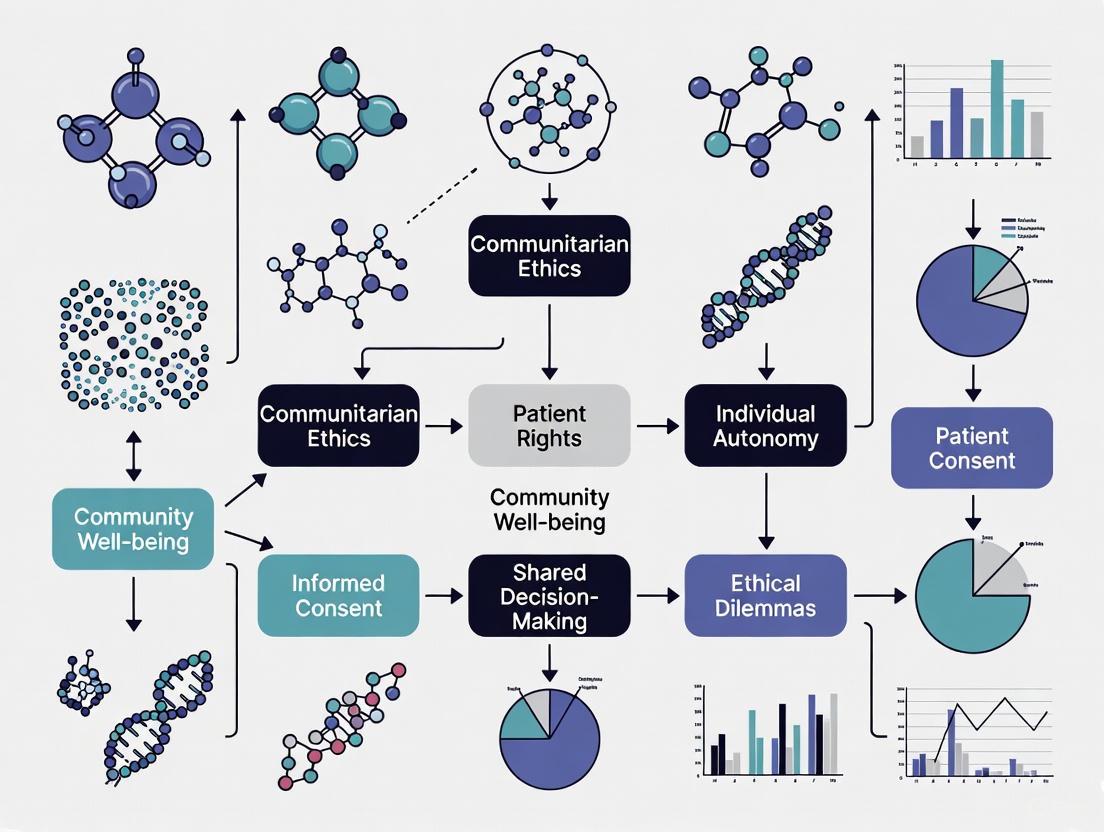
This article examines the critical tension between communitarian ethics, which prioritizes the common good and collective responsibility, and the principle of individual autonomy, a cornerstone of modern medical ethics.
Balancing Communitarian Ethics and Individual Autonomy in Healthcare: From Foundational Principles to Clinical Applications
Abstract
This article examines the critical tension between communitarian ethics, which prioritizes the common good and collective responsibility, and the principle of individual autonomy, a cornerstone of modern medical ethics. Aimed at researchers, scientists, and drug development professionals, it explores the philosophical foundations of this conflict, practical methodologies for its application in clinical and public health settings, common challenges in implementation, and a comparative analysis of ethical frameworks. By synthesizing insights from relational autonomy, responsive communitarianism, and global health ethics, this analysis provides a roadmap for navigating complex ethical dilemmas in population health management, clinical trials, and health policy design, ultimately advocating for a balanced approach that respects individual agency while fostering communal well-being.
The Philosophical Divide: Deconstructing Autonomy and the Common Good
This whitepaper provides a technical analysis of the core concepts of individual autonomy and communitarian ethics, framing their application and tension within modern healthcare research and drug development. The principle of individual autonomy, the capacity for self-governance, often conflicts with the communitarian emphasis on the common good and social responsibilities. By examining their philosophical foundations, operational frameworks, and practical implications in healthcare settings, this guide aims to equip researchers and professionals with the nuanced understanding required to navigate the associated ethical challenges. The analysis integrates findings from contemporary ethical reviews and emerging studies on value change in healthcare systems.
Healthcare research and delivery are fundamentally guided by ethical principles. Historically, individual autonomy—the capacity to be one's own person and live according to self-determined reasons and motives—has been a paramount value in Western medical ethics [1]. It forms the bedrock of practices like informed consent. However, the application of this principle in its starkly individualistic form often creates friction with the needs of the collective, particularly in contexts of public health, resource allocation, and population health management.
In response, communitarian ethics has emerged as a salient framework, positing that human identity and moral reasoning are deeply embedded within social contexts and communal relationships [2] [3]. It critiques the liberal individualist notion of the "unencumbered self," arguing that individuals are shaped by their communities and have concomitant responsibilities to the common good [2] [4]. This whitepaper delineates these core concepts, explores their philosophical underpinnings, and analyzes their operationalization and conflict within the specific context of healthcare research.
Philosophical Foundations and Definitions
Individual Autonomy
In moral and political philosophy, individual autonomy refers to the capacity to be one's own person, to live one's life according to reasons and motives that are taken as one's own and not the product of manipulative or distorting external forces [1]. It is a central value in the Kantian tradition of moral philosophy and John Stuart Mill’s version of utilitarian liberalism [1].
- Key Distinctions: A crucial distinction exists between moral autonomy (the capacity to impose the moral law on oneself) and personal autonomy (a trait individuals can exhibit relative to any aspects of their lives) [1]. Furthermore, basic autonomy (the minimal status of being a responsible, independent agent) must be separated from ideal autonomy (a maximal achievement of authenticity) [1].
- Core Components: Most conceptions of autonomy involve two families of conditions:
Communitarian Ethics
Communitarianism is a social and political philosophy that emphasizes the importance of community in the functioning of political life, in the analysis and evaluation of political institutions, and in understanding human identity and well-being [4]. It arose in the 1980s as a critique of the dominant liberal and libertarian philosophical schools [4].
- Ontological Priority of the Community: Communitarian thinkers argue that individuals are not first isolated individuals who then become socialized; rather, individuals are born into and their identities are constituted by their social relationships and communal affiliations [2]. As Michael Sandel and Charles Taylor argued, there are no generic individuals but only individuals embedded within particular social and historical contexts [4].
- The Common Good versus Individual Rights: Communitarianism argues that a healthy society requires a balance between individual rights and social responsibilities [5] [4]. It posits that unless there is a social formulation of the good, there can be no normative foundation upon which to settle conflicts of value between different individuals and groups [4].
- Responsive Communitarianism: A specific school, known as "responsive communitarianism," posits that people face two major sources of normativity—the common good and autonomy/rights—and that neither should in principle take precedence over the other [4].
Operationalizing the Concepts in Healthcare and Research
Individual Autonomy in Practice
In healthcare, autonomy is operationalized primarily through the doctrine of informed consent. This requires that patients or research participants receive comprehensive information about a procedure or trial, including risks and benefits, and make a voluntary decision free from coercion [6]. This view is based on a post-Kantian humanism that dominates patient rights legislation in Western Europe [6]. However, this model has been criticized for relying on a "rather simplistic Cartesian variant of principlism" that views the individual as an abstract, self-interested agent isolated from sociocultural contexts [6].
Communitarian Ethics in Practice
Communitarian ethics shifts the focus from the individual patient to the community or population. In practice, this can manifest in several ways:
- Population Health Management: In Accountable Care Organizations (ACOs), the ethical focus shifts from individual "covered lives" to "patient communities" [7]. This reconception aims to address the common good through community-level autonomy and engagement in setting health priorities, rather than constraining individual autonomy for distributive justice [7].
- Public Health Measures: Policies such as mandatory vaccination, social distancing, and quarantine during the COVID-19 pandemic exemplified the tension between individual autonomy and communitarian obligations. Such measures are justified on the grounds that individual choices, like vaccine refusal, can harm others directly through contagion or indirectly by straining healthcare resources [6].
- Balancing Rights and Responsibilities: A communitarian approach in public healthcare systems, such as Denmark's, emphasizes that autonomy includes a component of personal responsibility. The Danish system, for instance, provides equal access to care regardless of a patient's behavior (e.g., vaccination status or lifestyle choices), but the broader discourse acknowledges the societal costs of individual decisions [6].
Table 1: Core Conceptual Differences in Healthcare Application
| Feature | Individual Autonomy Framework | Communitarian Ethics Framework |
|---|---|---|
| Primary Focus | Individual patient's rights, values, and choices [1] | Community well-being, common good, and social ties [5] [7] |
| Key Operational Tool | Informed consent and patient self-determination [6] | Public health policies, community engagement, and priority-setting [6] [7] |
| View of the Self | Independent, self-governing agent [1] | Socially embedded, identity shaped by community [2] |
| Approach to Conflict | Prioritizes non-interference and individual choice | Emphasizes dialogue, shared values, and balancing rights with responsibilities [6] [4] |
Methodological Framework for Ethical Analysis
Analyzing ethical dilemmas arising from this tension requires a structured methodology. The following workflow outlines a multi-step process for researchers and ethicists, integrating insights from recent ethical analyses of value change in healthcare systems [8].
Workflow for Ethical Analysis in Healthcare Research
Diagram 1: This workflow illustrates a systematic methodology for analyzing ethical tensions between autonomy and the common good, integrating principlist and communitarian approaches.
The methodological process involves the following key stages, which can be applied to case studies such as vaccine policy or allocation of scarce resources:
- Problem Scoping: Clearly define the ethical dilemma and identify all relevant stakeholders, including individual patients, healthcare professionals, institutions, and the broader community [8] [7].
- Principlist Analysis: Evaluate the situation using the four principles of bioethics: autonomy, beneficence, non-maleficence, and justice [8] [9]. This top-down approach is foundational but may be insufficient for systemic issues [8].
- Communitarian Analysis: Critically assess the problem through a communitarian lens. This involves:
- Identify Value Dissonance: Analyze where the values of the individual (or a sub-group) conflict with the embedded values of the healthcare system or the broader community. This dissonance is a primary source of moral distress among professionals [8].
- Synthesis and Guidance: Weigh the findings from the previous steps to formulate ethical guidance or policy recommendations that strive for a balance, acknowledging that a perfect equilibrium is often a regulatory ideal rather than an achievable endpoint [6] [4].
The Researcher's Toolkit: Navigating Ethical Conflicts
For researchers and drug development professionals, navigating the autonomy-communitarian divide requires both conceptual understanding and practical tools. The following table outlines key conceptual "reagents" essential for conducting a robust ethical analysis.
Table 2: Essential Conceptual Tools for Ethical Analysis
| Conceptual Tool | Function/Definition | Relevance to Research |
|---|---|---|
| Moral Distress | A negative psychological reaction occurring when one knows the right course of action but is constrained from pursuing it [8]. | Highlights systemic constraints (e.g., protocol rigidity, resource limits) that prevent researchers and clinicians from acting in the perceived best interest of patients or the community. |
| Responsive Communitarianism | A school of thought that seeks a balance between the common good and individual autonomy/rights, where neither has a priori precedence [4]. | Provides a flexible framework for designing clinical trial recruitment, community engagement, and justifying public health measures that may limit individual choice. |
| Fusion of Horizons | A hermeneutic principle suggesting that understanding emerges from a dialogue where different perspectives (e.g., individual and community) engage and enrich each other [2]. | Encourages participatory research methods and community advisory boards to ensure research priorities and protocols reflect community values, not just scientific imperatives. |
| Co-Fiduciary Responsibility | The concept that in population health, patients and providers share responsibility for managing resources justly, moving beyond a pure consumer model [7]. | Frames participant adherence and researcher stewardship of data and resources as a shared ethical endeavor, crucial for sustainable and equitable research. |
| Harm Principle | The principle that individual autonomy can be justifiably limited to prevent harm to others [6]. | The foundational ethical justification for mandates (e.g., vaccination, data sharing) in research and public health that override individual preference for communal protection. |
Conceptual Mapping of the Autonomy-Communitarianism Dynamic
The relationship between individual autonomy and communitarian ethics is not merely oppositional but exists on a spectrum and involves dynamic interaction. The following diagram maps this complex conceptual relationship.
Dynamics of Ethical Tension
Diagram 2: This conceptual map illustrates the primary points of friction between autonomy and communitarian ethics, as well as the key concepts that mediate this relationship.
The dynamic interplay, as visualized, involves:
- Primary Tensions: Core conflicts arise in areas like informed consent versus public health mandates (e.g., during pandemics) [6] and the drive for personalized medicine versus the goal of equitable resource allocation across a population [7].
- Mediating Concepts and Outcomes:
- Moral Distress: The direct result for professionals caught in the ethical tension, forced to act in ways that contradict their values, leading to burnout and dropout [8].
- Moral Courage: The capacity to address ethical conflicts, which can be fostered through resilience training and structural support [8].
- Procedural Justice: Ensures that processes for resolving conflicts are fair, transparent, and inclusive of diverse voices, which is essential for legitimacy [10].
- Responsive Communitarianism: Serves as a mediating framework by explicitly seeking a balance between the two poles, rejecting the notion that one must always trump the other [4].
The tension between individual autonomy and communitarian ethics is a defining feature of contemporary healthcare research. A sophisticated understanding reveals that these concepts are not simply antagonistic but exist in a necessary and dynamic tension. Individual autonomy remains a crucial safeguard against paternalism and a protector of human dignity. Simultaneously, communitarian ethics provides an indispensable lens for addressing collective challenges, from pandemic response to the sustainable and equitable management of healthcare resources.
For researchers, scientists, and drug development professionals, navigating this landscape requires moving beyond a rigid application of principlism. It demands a commitment to procedural justice, community engagement, and ethical frameworks like responsive communitarianism that seek a context-sensitive balance. The future of ethical research lies not in choosing one principle over the other, but in fostering structures and dialogues that respect individual rights while actively nurturing our shared responsibilities to the common good.
The Historical Primacy of Autonomy in Western Medical Ethics
The principle of patient autonomy has emerged as a dominant force in Western medical ethics, shaping clinical practice, research protocols, and healthcare policy. This principle, rooted in the concept of self-determination, affirms the right of patients with decision-making capacity to make independent choices regarding their medical care, even when these decisions contradict clinical recommendations [11]. The historical ascent of autonomy represents a significant shift from paternalistic medical models toward patient-centered care that privileges individual choice and bodily integrity.
In contemporary healthcare ethics, autonomy encompasses two essential components: liberty (independence from controlling influences) and agency (the capacity for intentional action) [11]. This conceptual framework has become so fundamental to Western medical ethics that it is often considered the "highest priority" in American bioethics and the "ultimate moral foundation" of informed consent [11]. The primacy of this principle continues to evolve amidst ongoing tensions between individual rights and communal welfare, particularly in contexts such as public health emergencies and resource allocation.
Historical Foundations and Development
Historical Context and Emergence
The formal recognition of autonomy in Western medicine originated in the aftermath of World War II, largely in response to the egregious ethical violations revealed during the Nuremberg trials [11]. These revelations directly catalyzed the development of the "informed consent" ideal, which became a hallmark of Western medical ethics. The 1972 legal case of Canterbury v. Spence subsequently codified informed consent into American law, establishing a legal framework requiring physicians to respect patient autonomy through comprehensive disclosure of risks, benefits, and alternatives to proposed treatments [11].
This historical progression represents a radical departure from traditional paternalistic models where physicians made treatment decisions based solely on their assessment of the patient's best interests. The autonomy paradigm shift fundamentally reconfigured the doctor-patient relationship, recognizing patients as active participants in their healthcare decisions rather than passive recipients of medical expertise.
Philosophical Underpinnings
The philosophical conception of autonomy dominant in Western medical ethics centers on self-governance—the idea that individuals should be free to make decisions based on their personal values and life plans [12]. According to the procedural conception commonly accepted in medical ethics, personal autonomy represents "self-rule that is free from both controlling interference by others and from limitations, such as inadequate understanding, that prevent meaningful choice" [12].
This view contrasts with Kantian conceptions of autonomy, where autonomous actions are determined by impartial principles of reason rather than personal desires [12]. The procedural theory does not predetermine answers to complex ethical questions but instead provides criteria for assessing whether a person's choices are autonomous, thereby warranting respect even when they contradict medical recommendations or societal norms.
Table: Historical Milestones in the Development of Medical Autonomy
| Time Period | Key Development | Significance |
|---|---|---|
| Post-WWII Era | Nuremberg Trials & Code | Established informed consent as ethical imperative in response to human rights abuses |
| 1972 | Canterbury v. Spence | Codified informed consent into American law, mandating comprehensive disclosure |
| 1998 | Danish Patients' Rights Act | Exemplified European legislative recognition of self-determination as legal right |
| 2000s Present | Shared Decision-Making Models | Operationalized autonomy through collaborative clinician-patient decision processes |
The Architecture of Autonomous Decision-Making
Informed Consent: Operationalizing Autonomy
Informed consent serves as the primary mechanism for implementing autonomy in clinical practice and research settings. This process involves three essential components, transforming autonomy from abstract principle to practical reality [11]:
- Disclosure of information: Healthcare providers must present patients with all necessary details to make an informed decision, including risks, benefits, alternatives, and potential outcomes of treatment or research participation.
- Facilmentation of understanding: Providers must ensure patients comprehend the disclosed information, adapting communication to individual needs, health literacy levels, and cultural contexts.
- Promotion of voluntariness: The consent process must safeguard the patient's right to make decisions without coercion, manipulation, or undue influence from clinicians, family members, or institutional pressures.
The legal standards for informed consent vary, with some jurisdictions applying a "reasonable patient standard" (what an average patient would need to know), while others use a "reasonable physician standard" (what a typical physician would disclose) or a "subjective standard" (what the specific patient needs to know) [11]. These standards reflect ongoing negotiation between professional expertise and patient perspective in defining adequate disclosure.
Autonomy in Research and Drug Development
For researchers, scientists, and drug development professionals, autonomy manifests through rigorous protocols designed to protect research participants. The implementation of autonomy in research contexts faces distinctive challenges, including ensuring genuine comprehension of complex scientific information, managing power differentials between researchers and participants, and upholding voluntariness when recruiting vulnerable populations.
The contemporary landscape of research ethics has developed additional safeguards to protect autonomy, including institutional review boards (IRBs), data safety monitoring boards, and independent ethics committees. These structures collectively enforce autonomy protections while facilitating ethically sound scientific advancement.
Quantitative Perspectives on Autonomy in Healthcare Research
The application and study of autonomy principles in healthcare settings incorporates diverse methodological approaches, including quantitative, qualitative, and mixed-methods research. The table below summarizes key data types and sources relevant to autonomy research in healthcare contexts.
Table: Health Data Types in Autonomy and Ethics Research
| Data Type | Definition | Relevance to Autonomy Research | Common Sources |
|---|---|---|---|
| Quantitative Data | Measurable data used for comparisons, involving counting of people, behaviors, conditions, or other discrete events [13] | Determines prevalence of autonomous decision patterns; measures outcomes associated with autonomous choices | Clinical trials, surveys, administrative records |
| Qualitative Data | Non-numerical data that can be observed but not measured; describes particular health-related events [13] | Explores patient perceptions, decision-making processes, and experiential aspects of autonomy | Interviews, focus groups, open-ended survey responses |
| Research Data | Data collected during the research process specifically for the purpose of data analysis [13] | Primarily collected to answer specific research questions about autonomy and decision-making | Purpose-built studies, clinical trials with autonomy outcomes |
| Real World Data (RWD) | Data relating to patient health status and/or delivery of health care routinely collected from variety of sources for purposes other than research [13] | Provides insights into autonomy in actual practice settings outside controlled research environments | EHRs, claims data, patient-generated health data, disease registries |
Modern research increasingly employs mixed methods approaches that combine quantitative and qualitative data to provide comprehensive insights into autonomy in healthcare. This methodology recognizes that "public health problems are embedded within a range of social, political and economic contexts" requiring both epidemiological and social science methods [14]. When quantitative data shows limited impact of an autonomy-enhancing intervention while qualitative data suggests "wide-ranging impacts," investigating these discrepancies can yield deeper understanding of how autonomy functions in real-world contexts [14].
Methodological Framework: Analyzing Autonomy in Contemporary Contexts
Experimental Approach to Vaccine Hesitancy
The COVID-19 pandemic provided a natural experiment for examining tensions between individual autonomy and public health imperatives. A methodological study conducted at the Copenhagen Centre for Extracorporeal Membrane Oxygenation (ECMO) offers a template for investigating autonomy conflicts [6]:
Research Context: By 2021, most Danes had been vaccinated against COVID-19, with the mRNA vaccine (Comirnaty, Pfizer/BioNTech) proving highly effective and safe. However, 18 patients admitted for ECMO due to pulmonary SARS-CoV-2 infection during this period shared concerning characteristics: they were younger (mean age 46 years), had fewer comorbidities, and none had been vaccinated despite widespread availability and official recommendations [6].
Methodological Framework: Researchers employed a mixed-methods approach, combining:
- Quantitative analysis of patient demographics, clinical outcomes, and resource utilization
- Qualitative assessment of reasons for vaccine hesitancy or refusal
- Policy analysis examining different national approaches to vaccination mandates
Ethical Analysis Matrix: The study developed an analytical framework weighing:
- Individual autonomy rights against potential harm to others through contagion
- Opportunity costs created by resources allocated to treat unvaccinated patients
- Proportionality of coercive measures based on vaccine effectiveness, safety, and pandemic threat level
This methodological approach demonstrates how autonomy conflicts can be systematically investigated through integrated empirical and ethical analysis, providing evidence for policy development in public health emergencies.
Research Reagent Solutions for Autonomy Studies
Table: Essential Methodological Tools for Autonomy Research
| Research 'Reagent' | Function | Application in Autonomy Studies |
|---|---|---|
| Validated Decision Capacity Assessment Tools | Measures patient's cognitive and emotional ability to make specific healthcare decisions | Determines threshold requirements for autonomous decision-making in clinical and research contexts |
| Informed Consent Evaluation Metrics | Assesses quality, comprehension, and voluntariness of consent processes | Evaluates effectiveness of autonomy protections in research and clinical settings |
| Standardized Autonomy Attitude Scales | Quantifies patient preferences regarding participation in medical decision-making | Measures cultural, generational, and individual variations in autonomy preferences |
| Ethical Conflict Assessment Framework | Identifies and categorizes conflicts between autonomy and other ethical principles | Analyzes tensions in clinical cases and policy dilemmas |
The Autonomy Balancing Framework: Ethical Tensions and Integration
The primacy of autonomy in Western medical ethics inevitably generates tensions with other fundamental ethical principles. The conceptual diagram below illustrates the dynamic equilibrium between autonomy and competing ethical considerations in healthcare decision-making.
Diagram: Ethical Equilibrium Framework - Dynamic tensions between autonomy and core biomedical principles.
Balancing Autonomy with Beneficence
Beneficence—the obligation to act for the patient's benefit—represents perhaps the most frequent counterweight to autonomy in clinical practice [11]. This principle supports moral rules that protect rights, prevent harm, and promote welfare. When patients make decisions that clinicians perceive as contrary to their wellbeing, tension emerges between respecting autonomy and fulfilling professional beneficence obligations.
The beneficence-autonomy tension manifests when patients refuse medically recommended treatments, request interventions of unproven benefit, or make decisions based on values that diverge from clinical perspectives on wellbeing. Resolution requires nuanced assessment of decision-making capacity, exploration of patient values and concerns, and negotiation toward mutually acceptable care plans.
Balancing Autonomy with Non-Maleficence
Non-maleficence embodies medicine's fundamental directive to "first, do no harm" [11]. This principle prohibits causing pain, suffering, incapacitation, or deprivation of life's goods. While often aligned with autonomy (as patients generally wish to avoid harm), conflicts arise when autonomous decisions may lead to self-harm or unacceptable risk exposure.
In practice, applying non-maleficence involves careful benefit-burden analysis of interventions and avoidance of inappropriately burdensome treatments. The principle becomes particularly salient when patients request interventions with high risk-benefit ratios or when surrogates make decisions that may not serve the patient's best interests.
Balancing Autonomy with Justice
Justice in healthcare ethics concerns fair, equitable, and appropriate treatment of persons and distribution of resources [11]. In clinical ethics, distributive justice addresses fair allocation of limited healthcare resources according to justified norms structuring social cooperation.
The autonomy-justice tension intensifies when individual healthcare demands conflict with societal resource constraints or equitable access principles. This manifests when expensive treatments for individuals reduce resources available for population health needs, or when personal health behaviors (e.g., smoking, vaccine refusal) generate societal costs. Resolving these conflicts requires balancing respect for individual choice with stewardship of collective resources.
Comparative Cultural Frameworks: Challenging Western Autonomy Models
The Western emphasis on individual autonomy represents a distinct cultural perspective that contrasts with many non-Western ethical frameworks. A review of global medical practices reveals that in many parts of Asia, Central and South America, the Middle East, and Eastern Europe, physicians traditionally do not directly inform patients of serious diagnoses, instead communicating with family members [11]. These practices reflect culturally shaped views that prioritize family and community relationships over individual decision-making.
In many non-Western cultures, respecting autonomy may involve prioritizing ethical values such as fidelity and connection to family and community over independent choice [11]. This communitarian perspective challenges the Western individualistic autonomy model, suggesting that meaningful self-determination occurs within relational contexts rather than through isolated decision-making.
The following diagram illustrates how autonomy is conceptualized and operationalized differently across cultural frameworks, particularly between Western individualistic and communitarian perspectives.
Diagram: Cultural Frameworks of Autonomy - Contrasting Western individualistic and communitarian models.
The COVID-19 pandemic highlighted these cultural tensions, as some critics argued that the "individualistic concept of autonomy" was inappropriate given unprecedented political challenges requiring collective action [6]. Different nations adopted varying approaches to vaccination policies, with Denmark choosing strong recommendations while respecting freedom of refusal, while Germany and Austria implemented mandatory vaccination requirements [6]. These policy differences reflect divergent cultural weightings of individual autonomy versus communal welfare.
The historical primacy of autonomy in Western medical ethics represents both a revolutionary protection of individual rights and an ongoing source of ethical tension. From its post-war origins as a safeguard against medical coercion to its current position as a cornerstone of clinical ethics, autonomy has fundamentally reshaped healthcare relationships and practices. The Western model of individual decision-making continues to evolve through engagement with communitarian perspectives, public health challenges, and resource constraints.
For researchers, scientists, and drug development professionals, understanding this complex landscape is essential for designing ethical studies, developing culturally sensitive interventions, and navigating the inevitable tensions between individual rights and collective welfare. The future of autonomy in healthcare will likely involve more nuanced models that recognize both individual rights and relational dimensions of decision-making within diverse cultural contexts.
The contemporary healthcare landscape is defined by a fundamental tension: the need to balance respect for individual patient autonomy with the pursuit of broader communal health goals. This tension manifests in resource allocation dilemmas, public health priorities, and the structure of healthcare delivery systems. Responsive communitarianism emerges as a significant ethical framework to navigate this conflict, asserting that we face two core values—autonomy and the common good—with neither holding a priori privilege over the other [15]. This philosophical stance distinguishes itself from both libertarian individualism, which prioritizes individual rights, and authoritarian communitarianism, which subordinates individual interests to communal dictates [15]. In health research and policy, this approach seeks practical pathways to harmonize these competing values through moral dialogue, community engagement, and structural innovation.
The relevance of responsive communitarianism has intensified with the shift toward value-based care models, such as Accountable Care Organizations (ACOs), which manage population health for defined patient groups [7]. These models inherently generate ethical questions about whose health priorities are set and how resources are distributed, creating an urgent need for frameworks that can reconcile individual patient needs with population-level efficiency. This paper explores the theoretical foundations, practical applications, methodological protocols, and implementation challenges of responsive communitarianism within healthcare research and delivery.
Theoretical Foundations and Key Principles
Responsive communitarianism originates from a critique of both radical individualism and authoritarian collectivism. As articulated by philosopher Amitai Etzioni, the movement arose in the 1990s as a "next correction" aiming for a "middle ground of balance between individual and communal concerns, between rights and the common good" [16]. In bioethics, this translates to an approach that does not seek to eliminate the conflict between autonomy and the common good but rather to develop principles and procedures for working through such conflicts [15].
Core Ethical Tenets
The framework is built upon several foundational principles:
Balance Between Core Values: Responsive communitarianism treats autonomy and the common good as equally compelling moral imperatives that must be balanced contextually. This differs from mainstream bioethics, which often privileges patient autonomy, and from public health utilitarianism, which may overemphasize population outcomes [15].
Primacy of Social Processes: The approach prefers normative consensus-building through education, persuasion, and informal social controls over state enforcement or legal coercion. As Etzioni argues, "societal processes can change preferences and lead to truly voluntary compliance, while coercion leaves opposing preferences intact" [15].
Reconception of Community: The philosophy encourages reconceiving patient populations not as collections of "covered lives" but as "patient communities" capable of engaging in moral dialogue about health priorities [7]. This reframing acknowledges that individuals exist within social networks that shape health outcomes and values.
Distinguishing from Other Frameworks
Responsive communitarianism occupies a distinct position within the spectrum of ethical approaches:
Table 1: Comparative Ethical Frameworks in Healthcare
| Framework | Core Principle | View on Autonomy | View on Common Good | Typical Application |
|---|---|---|---|---|
| Libertarian Individualism | Individual rights paramount | Sovereign | Secondary to individual choice | Informed consent protocols |
| Utilitarianism | Maximize aggregate welfare | Instrumental | Primary focus | Cost-effectiveness analysis |
| Authoritarian Communitarianism | Community interests dominate | Subordinated | Absolute priority | Public health mandates |
| Egalitarianism | Fair distribution of resources | Constrained by equality | Important for fairness | Resource allocation schemes |
| Responsive Communitarianism | Balance through dialogue | Core value, but not absolute | Core value, but not absolute | Community priority-setting |
This balanced stance makes responsive communitarianism particularly relevant for addressing systemic challenges in modern healthcare, where neither purely individualistic nor collectivistic approaches have proven adequate for complex issues ranging from pandemic response to the ethics of emerging technologies.
Methodological Framework and Research Applications
Implementing responsive communitarianism in health services research requires specific methodological approaches that honor both individual voices and communal processes. The following sections outline key experimental protocols and visualization tools for incorporating this framework into research design.
Conceptual Framework and Implementation Pathway
The successful application of responsive communitarianism depends on a structured process that transforms theoretical principles into practical engagement. The following diagram illustrates the core conceptual transition and its operationalization in healthcare settings:
Experimental Protocol for Community Priority-Setting
Research into responsive communitarianism requires robust methodologies for engaging patient communities in health priority-setting. The following protocol outlines a systematic approach for ACOs or similar organizations:
Protocol Title: Participatory Health Priority-Setting for Accountable Care Organizations
Objective: To establish a structured process for engaging patient communities in determining population health priorities, moving beyond token consultation to genuine moral dialogue.
Materials and Reagents:
- Stakeholder Mapping Tools: Identification of diverse patient subgroups, clinicians, administrators, and community representatives.
- Deliberative Dialogue Guides: Structured discussion frameworks that present ethical dilemmas and trade-offs in accessible language.
- Decision-Prioritization Matrix: Tool for collaboratively ranking health priorities based on multiple criteria (impact, equity, feasibility).
- Consensus-Building Mechanisms: Formal processes for identifying areas of agreement and managing persistent disagreement.
Procedure:
- Community Identification and Mapping (Weeks 1-2):
- Define the patient community boundaries (geographic, organizational, or clinical).
- Conduct stakeholder analysis to ensure representation across demographic, clinical, and socioeconomic dimensions.
- Recruit participants through multiple channels (clinical encounters, community organizations, digital platforms).
Ethical Framework Orientation (Weeks 3-4):
- Conduct educational sessions explaining the tension between individual and community health needs.
- Present data on current health priorities and their outcomes.
- Facilitate discussions on community values and principles for resource allocation.
Deliberative Dialogue Sessions (Weeks 5-8):
- Convene structured dialogues with diverse stakeholders.
- Present evidence on health needs, intervention effectiveness, and resource constraints.
- Facilitate discussions focusing on both individual patient perspectives and community-wide benefits.
- Document value tensions and areas of consensus.
Priority-Setting and Recommendation Development (Weeks 9-10):
- Collaborative development of prioritized health initiatives using multi-criteria decision analysis.
- Draft specific recommendations with rationale transparently linked to community input.
- Establish mechanisms for ongoing feedback and priority adjustment.
Implementation and Evaluation (Ongoing):
- Integrate community-driven priorities into ACO strategic planning.
- Develop metrics to assess both health outcomes and process legitimacy.
- Create feedback loops for continuous community engagement.
Validation Metrics:
- Participant representativeness across relevant community dimensions
- Depth of deliberation measured by evidence of perspective-taking and value negotiation
- Implementation fidelity of community-generated priorities
- Longitudinal tracking of participant engagement and trust
Analytical Tools and Research Reagents
Implementing responsive communitarianism in research requires specific analytical frameworks and tools designed to capture both individual and communal dimensions of healthcare ethics.
Research Reagent Solutions for Communitarian Analysis
Table 2: Essential Research Tools for Communitarian Healthcare Analysis
| Research Tool | Primary Function | Application Context | Key Considerations |
|---|---|---|---|
| Stakeholder Mapping Matrix | Identifies and categorizes community stakeholders | Study design phase | Ensure representation of vulnerable, often unheard voices |
| Deliberative Dialogue Framework | Structures moral conversation about health priorities | Data collection | Balance structure with openness for emergent themes |
| Value Conflict Assessment Scale | Measures perceptions of autonomy-common good tensions | Evaluation | Validate across different cultural contexts |
| Community Autonomy Inventory | Assesses community-level self-determination capacity | Outcome measurement | Distinguish from aggregate individual autonomy |
| Ethical Decision-Making Audit | Evaluates alignment between community values and resource allocation | Process evaluation | Combine quantitative and qualitative methods |
Data Integration and Analysis Framework
The complex nature of communitarian research requires sophisticated approaches to data integration. The following workflow visualizes the process from data collection to implementation:
This analytical approach is particularly valuable when facing apparently contradictory findings, such as when quantitative data shows no intervention effect while qualitative data reveals strong perceived benefits [17]. Rather than dismissing either dataset, responsive communitarianism would seek to understand the contextual factors explaining these discrepancies and develop implementation strategies that honor both empirical evidence and community experience.
Empirical Evidence and Case Applications
Responsive communitarianism has been applied across multiple healthcare contexts, providing evidence for its utility and revealing implementation challenges.
Application in Accountable Care Organizations
ACOs represent a prime application domain for responsive communitarianism. These organizations are designed to create efficiencies by integrating provider networks for defined patient populations, typically based on geography and physician practice patterns [7]. However, ethical challenges emerge because patients are often unaware of their enrollment in ACOs through physician attribution models, making them passive subjects of population health management rather than active participants [7].
A communitarian approach would reconceive these patient populations as moral communities capable of engaging in dialogue about health priorities. This reconceptualization addresses the ethical problem of population health becoming "something that happens to them" [7]. Practical implementations might include:
- Structured community dialogues on balancing expensive innovative therapies with preventive services
- Participatory budgeting for community health initiatives
- Collaborative design of clinical pathways that respect both evidence-based practices and community values
Crisis Response and Pandemic Ethics
The COVID-19 pandemic created stark tensions between individual freedoms and public health needs, providing a compelling test case for responsive communitarianism. Research on cultural dimensions revealed significant correlations between societal values and pandemic outcomes [18]. Meanwhile, ethical frameworks for vaccine distribution struggled to reconcile multiple competing values, creating "compatibility problems" where different ethical principles suggested contradictory allocation approaches [19].
Table 3: Value Compatibility in Pandemic Resource Allocation
| Ethical Value | Core Principle | Implied Allocation Approach | Conflict With |
|---|---|---|---|
| Utilitarian Benefit | Maximize health outcomes | Prioritize by likelihood of survival | Equal worth of lives |
| Life-Years Maximized | Maximize long-term population health | Prioritize younger patients | Discrimination by age |
| Egalitarianism | Equal moral concern for all | Random allocation or equal access | Maximizing aggregate benefit |
| Reciprocity | Reward contribution to society | Prioritize essential workers | Equal concern principle |
| Prioritarianism | Prioritize the worst off | Address socioeconomic disadvantage | Immediate benefit maximization |
A responsive communitarian approach to these conflicts would employ multiple compatibility pathways: specifying values more precisely, incorporating rather than weighing values, reinforcing complementary values, and seeking scientific evidence to inform trade-offs [19]. This methodological approach acknowledges that while value conflicts cannot be entirely eliminated, their practical impacts can be mitigated through structured deliberation.
Digital Health and Telemedicine Implementation
Recent research on telemedicine in crisis settings (pandemics and armed conflicts) reveals how communitarian principles can guide digital health implementation. A 2025 study surveying 409 healthcare professionals used SWOT analysis to identify telemedicine's strengths in improving access and weaknesses in technical barriers and clinical error risks [20]. The findings highlighted opportunities for community-centered digital infrastructure while acknowledging threats from poor coordination and cultural barriers.
A responsive communitarian approach would address these challenges through:
- Co-design of telemedicine platforms with diverse user communities
- Digital literacy programs as a communal responsibility rather than individual burden
- Governance structures that balance innovation with equity considerations
- Adaptation to local cultural contexts rather than one-size-fits-all implementation
Implementation Challenges and Future Directions
Despite its theoretical promise, implementing responsive communitarianism faces significant practical challenges that require attention in both research and policy domains.
Critical Barriers
Structural and Power Imbalances: Existing healthcare structures often embody significant power differentials between providers, administrators, and patients. Genuine moral dialogue requires addressing these imbalances through intentional structural redesign [7].
Measurement Limitations: Current quality metrics in value-based care models focus predominantly on clinical outcomes and cost efficiency, with limited capacity to capture community engagement or ethical legitimacy [7] [21].
Temporal Mismatch: The slow, deliberative processes essential to responsive communitarianism often conflict with the rapid decision-making timelines common in healthcare management and crisis response.
Cultural Resistance: Both individualistic autonomy and utilitarian efficiency are deeply embedded in healthcare culture, creating resistance to approaches that prioritize process and relationship-building.
Promising Innovations and Future Research
Several emerging trends create opportunities for advancing responsive communitarianism:
Local Implementation and Data Integration: The growing emphasis on local implementation and multi-sector data partnerships aligns with communitarian principles [21]. Community Information Exchanges (CIEs) and Health Data Utilities (HDUs) create infrastructure for understanding community health needs and assets.
AI Governance Frameworks: The rapid development of health AI necessitates governance structures that balance innovation with ethical considerations. Responsive communitarianism can inform the development of "public-private-patient partnerships" for AI governance that reflect diverse community values [21].
Advanced Analytical Approaches: The integration of quantitative and qualitative data, as demonstrated in hybrid effectiveness-implementation trials [17], provides methodological models for capturing both individual outcomes and community processes.
Global Health Applications: The growing recognition of "moral determinants of health" in global health contexts creates opportunities for applying responsive communitarianism to transnational health challenges [22]. Indigenous philosophies such as Africa's Ubuntu concept, which emphasizes "I am because we are," offer valuable perspectives for developing community-centered global health initiatives [22].
Responsive communitarianism represents a promising framework for addressing the fundamental tension between individual autonomy and the common good in healthcare. By rejecting a priori privileging of either value and focusing instead on processes for working through conflicts, this approach offers both theoretical coherence and practical utility. The ongoing transformations in healthcare—toward value-based models, digital health integration, and greater emphasis on health equity—create timely opportunities for implementing communitarian principles.
For researchers and healthcare professionals, adopting this framework requires methodological sophistication, including robust community engagement protocols, mixed-methods research designs, and innovative governance structures. The ultimate promise of responsive communitarianism lies in its capacity to create healthcare systems that are not only clinically effective and efficient but also ethically legitimate and responsive to both individual and communal values.
The field of healthcare ethics has long been characterized by a fundamental tension between two competing perspectives: individual autonomy and communitarian ethics. Traditional bioethics, particularly as it developed in the late 20th century, heavily emphasized individual rights, self-determination, and protection from paternalistic interference [23]. This focus emerged as a corrective to historical physician paternalism but increasingly revealed limitations in addressing the complex social dimensions of health and healthcare. Simultaneously, communitarian ethics argues that our moral obligations extend beyond the individual to the common good—"those goods that serve shared assets of a given community" [7]. This perspective recognizes that human beings are fundamentally social animals whose nature is distorted if we think of ourselves merely as "co-existing social atoms" [23].
Relational autonomy emerges as a crucial theoretical bridge between these seemingly opposed frameworks. This concept challenges the traditional, hyper-individualistic understanding of autonomy by recognizing that individuals are inherently embedded within social relationships and communities that shape their values, preferences, and decisions [24]. In healthcare contexts, relational autonomy provides a more nuanced framework for understanding decision-making as an interdependent process rather than an isolated, individual event [25]. This whitepaper explores the theoretical foundations of relational autonomy, its practical applications in healthcare and research, and its potential to transform how we conceptualize the relationship between individual patients and their communities in the context of drug development and healthcare research.
Theoretical Foundations: From Individualism to Relationality
The Evolution of Autonomy in Bioethics
The concept of autonomy in healthcare has undergone significant evolution over recent decades. The traditional, legalistic approach to autonomy emphasized the patient's right to make decisions independent of external influence, focusing on rationality and self-determination [24]. This perspective positioned the physician-patient relationship as potentially adversarial, where the primary ethical obligation was to avoid unwanted interference. This framework increasingly proved inadequate for addressing the complex social realities of healthcare decision-making, particularly in contexts where family members play significant roles or where community values substantially influence individual preferences.
Communitarian Ethics in Healthcare
Communitarian ethics emerged as a direct challenge to the dominance of liberal individualism in bioethics. As articulated by Daniel Callahan, communitarianism focuses "more on the common good and the public interest than on autonomy" [23]. This approach recognizes that many bioethical issues—particularly in genetics, reproduction, and public health—cannot reasonably be reduced to questions of individualism and choice alone, as these decisions inevitably affect society as a whole, its values, and its social institutions [23]. In population health management, this tension becomes particularly acute in models like Accountable Care Organizations (ACOs), which must balance individual patient needs with the efficient distribution of resources across defined populations [7].
Relational Autonomy as a Synthesizing Framework
Relational autonomy represents a paradigm shift that synthesizes elements from both individualistic and communitarian perspectives. Drawing from feminist philosophy and ethics of care, relational autonomy conceptualizes individuals as fundamentally embedded within social relationships that shape their identities, values, and decision-making processes [24] [26]. This perspective maintains the ethical importance of respecting patient agency while recognizing that autonomy is often exercised through, rather than in opposition to, social relationships [24]. As one analysis describes, "In a relational model of autonomy, patient values, preferences, and identity are fundamentally dynamic, continually constructed, and reconstructed in dialogic processes with other people… Being autonomous is not perceived to be in conflict with valuing the input of others or engaging them in important decisions" [24].
Table 1: Comparing Ethical Frameworks in Healthcare
| Framework | Core Principle | View of Decision-Making | Primary Ethical Concern |
|---|---|---|---|
| Traditional Autonomy | Individual self-determination | Isolated, rational choice | Protection from interference |
| Communitarian Ethics | Common good | Community-oriented | Distribution of resources and social obligations |
| Relational Autonomy | Embedded agency | Socially contextual, interdependent | Quality of relationships and social support |
Relational Autonomy in Healthcare Practice and Research
Clinical Applications and Case Studies
Relational autonomy provides particularly valuable insights in clinical contexts involving chronic illness, cognitive impairment, and end-of-life care. A compelling case study published in 2024 illustrates how relational autonomy operates in complex decision-making scenarios [24]. The case involved J.R., a 70-year-old man with multiple medical complications who expressed different preferences depending on whether he was alone with clinical staff or with his family. When alone with nurses, he frequently expressed that he wanted to "be done" and was "ok with dying," even miming pulling out his ventilator tube. However, in the presence of his family, he agreed to continue aggressive treatment, citing hope for recovery [24].
This case exemplifies the clinical challenges that arise when patients make decisions that appear influenced by family relationships. Rather than automatically interpreting family influence as coercive, the healthcare team employed a relational autonomy framework to understand J.R.'s decisions. Through careful assessment, they determined that J.R. did not feel unduly pressured by his family and did not want assistance communicating with them or advocating on his behalf [24]. Ultimately, J.R. chose to continue life-sustaining treatment, explaining "that he had come this far and did not feel the burdens of continuing aggressive care outweighed the harm that would occur to his relationship with his wife" [24]. This case demonstrates how patients may fully endorse a "second best" choice because of the value they place on maintaining important relationships.
Relational Autonomy in Dementia and Chronic Illness Care
Research on dementia care further illuminates the importance of relational autonomy. A 2025 qualitative study with care partners of persons living with dementia used relational autonomy as a theoretical lens to explore future planning experiences [26]. The study found that care partners navigated complex decisions within networks of relationships, with autonomy being exercised through these relationships rather than in isolation from them. The relational autonomy framework emphasizes assessing "people's needs and rights within their social relationships, and how these relationships can foster or undermine their agency" [26]. This approach adopts a personhood lens, viewing people living with dementia as "whole persons, shaped by their unique histories, experiences, and relationships" rather than reducing them to their neurological deficits [26].
Methodological Approaches for Studying Relational Autonomy
Research into relational autonomy requires methodological approaches capable of capturing complex social dynamics and interpersonal relationships. Several studies employ qualitative designs that incorporate extended fieldwork and longitudinal data collection to understand how decision-making unfolds over time within relational contexts.
Table 2: Research Methodologies for Studying Relational Autonomy
| Methodology | Key Features | Data Collection Methods | Application Example |
|---|---|---|---|
| Focused Ethnography | In-depth study of specific cultural aspects within a defined context | Participant observation (90+ hours), semi-structured interviews (30+ participants) | Studying patient participation in decision-making during nursing care in a Chinese hospital [25] |
| Multi-Method Qualitative Design | Combines multiple qualitative approaches to capture different dimensions of experience | Semi-structured interviews (2-6 per participant), reflective diaries (5-20 entries), collected over extended periods (up to 2 years) | Exploring how care partners of persons living with dementia engage in future planning throughout the dementia journey [26] |
| Case Study Analysis with Ethical Framework | Detailed examination of individual cases using structured ethical assessment | Clinical ethics consultation, patient and family meetings, structured assessment of relational influence | Analyzing decision-making in complex clinical cases involving family influence [24] |
A study by Wang et al. (2024) exemplifies the focused ethnography approach, conducting 8 months of fieldwork in a Chinese hospital that included 90 hours of participant observation and 30 semi-structured interviews with patients, family members, and nurses [25]. This methodology allowed researchers to observe how patient participation in decision-making was facilitated through co-determination that respected patients' relational autonomy, while also identifying challenges such as unilateral determination that constrained autonomy [25]. The analysis revealed that interpersonal relationships among nurses, patients, and family members played a significant role in promoting or inhibiting patient participation in decision-making.
The dementia care partners study employed a multi-method approach, collecting data through semi-structured interviews conducted every four months and written diary reflections maintained monthly over a period of up to two years [26]. This longitudinal design enabled researchers to capture the dynamic nature of decision-making as it unfolded throughout the progression of dementia, revealing how care partners balanced hope with practical future planning within their relational contexts.
Relational Autonomy in Population Health and Drug Development
From "Covered Lives" to Patient Communities
Relational autonomy has important implications for population health management and drug development. Current approaches in accountable care organizations (ACOs) often conceptualize patient populations as "covered lives" rather than engaged communities [7]. This framing reduces patients to passive recipients of care rather than active participants in health decision-making. As noted in one analysis, "Population health becomes something that happens to them, instead of the patients taking a participatory role in their health" [7].
A relational autonomy perspective suggests reconceiving patient populations as moral communities capable of engaging in dialogue about health priorities [7]. This shift from individual "covered lives" to patient communities enables a focus on autonomy at the community level, potentially transforming how population health priorities are established and implemented. Rather than constraining individual autonomy to protect the common good—as required by frameworks based on individualistic autonomy—relational autonomy allows for community-level autonomy that can address collective health needs while respecting the social nature of decision-making.
Assessment Framework for Relational Autonomy in Research
For researchers and drug development professionals implementing relational autonomy principles, the following assessment framework provides practical guidance for evaluating whether decision-making reflects authentic relational autonomy or potentially problematic influence:
Essential Research Reagents for Studying Relational Autonomy
Research into relational autonomy requires specific methodological tools and approaches. The following table outlines key "research reagents"—conceptual and methodological tools—essential for investigating relational autonomy in healthcare contexts.
Table 3: Research Reagents for Studying Relational Autonomy
| Research Reagent | Function | Application Context |
|---|---|---|
| Semi-Structured Interview Guides | Elicit narratives about decision-making processes within relational contexts | Exploring how patients, care partners, and clinicians navigate complex medical decisions [25] [26] |
| Reflexive Thematic Analysis | Interpretive approach to identify patterns in qualitative data while acknowledging researcher perspective | Analyzing interview and diary data with attention to social and relational dynamics [25] [26] |
| Longitudinal Diary Methods | Capture spontaneous, emotional, and immediate aspects of decision-making over time | Documenting care partners' experiences with future planning throughout the dementia journey [26] |
| Participant Observation Protocols | Systematic documentation of interactions in clinical settings | Studying patient participation in decision-making during nursing care through extended fieldwork [25] |
| Relational Autonomy Assessment Framework | Structured approach to distinguish relational influence from coercion | Evaluating patient decision-making in contexts of family involvement [24] |
Implementing Relational Autonomy in Research and Clinical Practice
Practical Implementation Strategies
Implementing relational autonomy in research and clinical practice requires concrete strategies that acknowledge the embedded nature of decision-making. Based on the research findings, several approaches show promise:
First, healthcare systems should develop structured processes for identifying and respecting patients' relational contexts. This includes routinely mapping patients' important relationships and understanding how these relationships appropriately influence decision-making. As demonstrated in the case study with J.R., this involves creating opportunities for patients to speak both with and without family members present, while respecting their preferences about how decisions are made [24].
Second, researchers should incorporate relational measures and methodologies into study designs. This might include dyadic or family-level analysis in addition to individual-level data, longitudinal designs that track how decisions evolve within relationships over time, and qualitative approaches that capture the narrative aspects of decision-making within social contexts [26].
Third, drug development professionals should engage patient communities rather than just individual patients when designing clinical trials and evaluating treatments. This communitarian approach acknowledges that treatment decisions are often made within social networks and that treatment outcomes frequently affect entire families and communities, not just individuals [7].
Ethical Framework for Relational Autonomy
The following diagram illustrates the dynamic relationship between individual autonomy, communitarian ethics, and relational autonomy in healthcare decision-making:
Relational autonomy offers a powerful framework for bridging the historical divide between individual autonomy and communitarian ethics in healthcare research and practice. By recognizing the fundamentally social nature of human decision-making, relational autonomy provides a more nuanced and clinically realistic approach to understanding how patients make decisions within networks of relationships and social obligations. For researchers and drug development professionals, incorporating relational autonomy into study designs, ethical frameworks, and community engagement strategies can lead to more meaningful research outcomes and more ethically nuanced approaches to treatment evaluation and implementation. As healthcare continues to evolve toward more patient-centered and community-oriented models, relational autonomy provides essential conceptual tools for navigating the complex interplay between individual needs and community wellbeing.
The fundamental tension between individual patient autonomy and public health goals represents a core challenge in modern healthcare systems and research. This dialectic is increasingly framed as a conflict between two ethical paradigms: the principle of individual autonomy, which prioritizes self-determination and personal choice in health decisions, and communitarian ethics, which emphasizes the common good, social responsibilities, and community well-being [7]. US healthcare has long struggled with balancing individual autonomy against the fair distribution of resources, particularly when individual decisions may run counter to the common good—conceived of as "those goods that serve shared assets of a given community" [7].
This tension manifests acutely in population health management, where accountable care organizations (ACOs) and similar entities create efficiencies by integrating provider networks for defined patient populations. These structures often operate with health priorities established by administrators rather than through direct engagement with the patient communities they serve [7]. The ethical challenge lies in reconciling the historic focus on individual autonomy in clinical ethics with the growing recognition that health resources are finite and require stewardship for the benefit of entire populations. As this whitepaper will demonstrate, navigating this tension requires both robust ethical frameworks and practical decision-making tools that respect individual dignity while acknowledging our fundamental interconnectedness in matters of health.
Theoretical Foundations: From Individual Autonomy to Communitarian Ethics
The Evolution of Medical Autonomy
The principle of individual autonomy has undergone significant evolution in medical ethics. Barely a century ago, the paternalistic model dominated medical practice, with doctors routinely making decisions without patient consultation, sometimes with tragic consequences as evidenced by historical cases like the Tuskegee Syphilis Study [27]. The doctrine of informed consent emerged as a corrective to this paternalism, establishing itself as a cornerstone of the patient-doctor relationship by the late 20th century. This principle affirms the right of patients to accept or refuse medical treatment even at personal risk, representing a profound shift toward respecting individual agency in healthcare decisions [27].
The Communitarian Response
In contrast to the focus on individual choice, communitarian ethics challenges what some scholars have termed "hyper-individualism that does not take into account our moral obligation toward others to build communities and enhance the common good" [7]. Communitarian approaches recognize that individual health decisions inevitably occur within social contexts and have community-level implications. Rather than viewing patients merely as autonomous actors or "covered lives" in administrative systems, communitarian ethics reconceives patient populations as "patient communities" capable of engaging in moral dialogue about population health priorities [7].
A key conceptual foundation for this approach lies in philosopher John Broome's notion of "communitarian claims," which provides an ethical basis for allocating healthcare resources that incorporates community values and social choice rules [28]. This perspective acknowledges that meeting the unique health needs of specific groups is ethically important because these needs—distinct from simple individual preferences—enable human beings to flourish within community contexts [7].
Table 1: Comparative Ethical Frameworks in Healthcare
| Ethical Framework | Core Principle | View of Patient | Primary Objective |
|---|---|---|---|
| Individual Autonomy | Self-determination, informed consent | Autonomous decision-maker | Protect individual choice and bodily integrity |
| Paternalism | Professional knows best | Passive recipient of care | Provide beneficent care as defined by professional |
| Communitarian Ethics | Common good, social responsibility | Member of community with reciprocal obligations | Balance individual and community health interests |
| Co-fiduciary Model | Shared responsibility | Co-manager of resources | Just distribution of resources within constraints |
Critical Tension Points: Case Studies and Applications
Resource Allocation in Population Health Management
Accountable Care Organizations exemplify the autonomy-community tension in practice. ACOs are designed to advance the Triple Aim of decreased healthcare costs, better population health outcomes, and improved patient experience [7]. However, patients are typically enrolled in ACOs through physician attribution based on claims data, often unaware of their enrollment status [7]. This creates an ethical problem where "population health becomes something that happens to them, instead of the patients taking a participatory role in their health" [7].
Laurence McCullough's proposed ethical framework for ACOs attempts to address this through a concept of "co-fiduciary responsibility" among physicians, administrators, payers, and patients [7]. Under this model, patients are viewed as "co-managers of resources" rather than consumers, with obligations to consider the broader impact of their healthcare decisions. However, this approach still largely frames population health management as something that "happens to" patients rather than emerging from collaborative priority-setting [7].
Infectious Disease Control and Harm Reduction
In infectious disease management, the autonomy-community tension emerges starkly around issues like quarantine, vaccination, and harm reduction strategies. During public health emergencies such as the COVID-19 pandemic, decision-makers must balance individual liberties against community protection. Evidence-informed decision-making (EIDM) frameworks for infectious disease control must consider criteria beyond clinical effectiveness, including feasibility, equity, and community values [29].
Harm reduction presents a particularly nuanced case where communitarian and autonomy-based approaches intersect. Strategies like supervised injection sites and fentanyl test strip distribution face legal barriers in many jurisdictions, with critics arguing they enable risky behaviors while proponents emphasize their life-saving potential and role in preserving future autonomy [27]. The communitarian perspective might support such approaches as preserving community well-being by preventing deaths and reducing public health burdens, while the autonomy perspective emphasizes individuals' right to make informed choices about their behaviors.
Decision-Making for Patients with Complex Care Needs
Patients with complex care needs (characterized by multimorbidity, polypharmacy, mental health issues, and social vulnerability) face particularly difficult decisions that highlight the autonomy-community tension. A systematic review identified that these patients experience various types of decisional needs, including prioritization (26 cases), use of services (22 cases), prescription (12 cases), behavior change (4 cases), and institutionalization (5 cases) [30].
The review revealed that shared decision-making was associated with positive outcomes for these patients, while negative outcomes were associated with independent decision-making [30]. This suggests that for vulnerable populations, neither pure autonomy nor paternalism serves patient interests well—instead, a communitarian approach that embeds decision-making within supportive networks may yield better outcomes. The research identified four decision-making configurations: 'well-managed' (13 cases), 'asymmetric encounters' (21 cases), 'self-management by default' (8 cases), and 'chaotic' (27 cases) [30].
Decision-Making Frameworks and Analytical Tools
Evidence-Informed Decision-Making (EIDM) Frameworks
Structured approaches to navigating autonomy-community tensions have been developed through Evidence-Informed Decision-Making frameworks. A scoping review identified 15 EIDM frameworks for public health decision-making, with the most frequently assessed criteria being 'desirable effects', 'resources considerations', and 'feasibility' [29]. These frameworks provide systematic ways to incorporate multiple factors into health policy decisions, though their application to infectious diseases remains limited [29].
The GRADE Evidence-to-Decision (EtD) framework and WHO-INTEGRATE framework are among the most structured approaches, offering transparent processes for weighing evidence, values, resources, and feasibility [29]. Some frameworks place special emphasis on particular considerations—for instance, the Guidance for Priority Setting in Health Care (GPS-Health) emphasizes equity, while the 'decision-making triangle' foregrounds ethics [29].
Diagram 1: EIDM Framework for Autonomy-Community Tensions
Quantitative Decision-Making Models
For resource allocation decisions involving community-based health programs, quantitative models offer methods for optimizing impact given constraints. One study developed an integer programming (IP) model to select optimal mixes of community-based health programs while considering funding limitations, program duration, and participant retention [31]. The objective function maximizes the number of participants with improved health outcomes, expressed mathematically as:
Where r_ij represents the ratio (%) of participants with health condition j showing improved outcomes after program i, and x_ij represents the number of participants with health condition j in program i [31].
This model can be integrated with agent-based simulations that capture individual health progression and population-level outcomes, allowing decision-makers to compare programs targeting conditions like cardiovascular disease and diabetes based on their expected community health impact [31].
Table 2: Key Criteria in Evidence-Informed Public Health Decision-Making Frameworks
| Decision Criterion | Frequency in Frameworks | Relevance to Autonomy-Community Tensions |
|---|---|---|
| Desirable Effects | 15/15 (100%) | Balance between individual and community benefits |
| Resource Considerations | 15/15 (100%) | Stewardship of communal resources versus individual care |
| Feasibility | 15/15 (100%) | Practical implementation constraints |
| Equity | 12/15 (80%) | Fair distribution of benefits and burdens |
| Acceptability | 11/15 (73%) | Alignment with community values and preferences |
| Patient Values | 10/15 (67%) | Respect for individual preferences and autonomy |
Experimental and Interventional Approaches
Ethics Communication Groups (ECG) - Methodology and Outcomes
A prominent experimental approach to addressing ethical tensions in healthcare is Ethics Communication in Groups (ECG), based on Habermas's theory of communicative actions [32]. A prospective cluster randomized study evaluated organized ECG using the 'one to five method' for healthcare professionals concerning moral distress and ethical climate [32].
Experimental Protocol:
- Study Design: Prospective cluster randomized study with open, non-blinded design
- Participants: 9 wards with different medical specializations at one university hospital, purposefully and randomly allocated to intervention group (IG: n=5) or control group (CG: n=4)
- Intervention: Healthcare professionals working as "ethical representatives" underwent education on facilitating ECG using the 'one-to-five method,' then facilitated interprofessional ECG once monthly for six months
- Assessment: Prospective assessments at baseline, 3 months, and 6 months using:
- Measure of Moral Distress-Healthcare Professionals (MMD-HP)
- Moral Distress Thermometer (MDT)
- Swedish Ethical Climate Questionnaire (SwECQ)
- Sample Size: 80 completely filled out questionnaires from 105 distributed [32]
The 'One to Five Method':
- Tell the story - Participants express their experience freely
- Reflect on emotions - Explore emotional dimensions of the situation
- Formulate the problem/dilemma - Define value conflict and articulate ethical dimension
- Analysis - Share knowledge and perspectives for broader understanding
- Choice of possible actions - Identify approaches based on well-grounded arguments [32]
Findings: While between-group analyses showed no significant differences in moral distress over time, the intervention group scored lower on moral distress concerning clinical causes at the patient level at 3 months and rated the ethical climate significantly higher at both 3 and 6 months [32]. This suggests that structured ethics communication can foster shared values and enhanced ethical climate, potentially creating environments better equipped to navigate autonomy-community tensions.
AI CODE Framework for Ethical Decision-Making
In emerging technologies like artificial intelligence in healthcare, the AI Community-based Ethical Dialogue and Decision-making (CODE) framework represents another structured approach to balancing values. This framework outlines five steps to advance health equity:
- Contextual diversity and priority - Ensure inclusive datasets and that AI reflects community needs
- Sharing ethical propositions - Structured discussions on privacy, bias, and fairness
- Dialogic decision-making - Collaborative development of AI solutions with stakeholders
- Integrating ethical solutions - Applying solutions into AI design to enhance fairness
- Evaluating effectiveness - Continuous monitoring to address emerging biases [33]
This framework emphasizes community engagement throughout the AI development process, aiming to ensure that algorithmic systems reflect communitarian values while respecting individual rights [33].
Diagram 2: AI CODE Framework for Ethical Decision-Making
The Scientist's Toolkit: Research Reagent Solutions
Table 3: Essential Methodologies for Studying Autonomy-Community Tensions
| Research Tool | Function | Application Context |
|---|---|---|
| Measure of Moral Distress-Healthcare Professionals (MMD-HP) | Quantifies moral distress experienced by healthcare providers | Evaluating impact of ethics interventions on frontline staff [32] |
| Swedish Ethical Climate Questionnaire (SwECQ) | Assesses shared perceptions of organizational values and procedures | Measuring changes in ethical environment following interventions [32] |
| Agent-Based Modeling | Simulates individual health progression and emergent population outcomes | Forecasting community health impact of different intervention strategies [31] |
| Integer Programming Models | Mathematical optimization for resource allocation under constraints | Identifying optimal mix of community health programs within budget [31] |
| Evidence-to-Decision (EtD) Frameworks | Structured assessment of multiple decision criteria | Transparent priority-setting for health policies balancing individual and community interests [29] |
The tension between patient choices and public health goals represents not merely a practical challenge but a fundamental ethical dialogue between competing values systems. Neither pure autonomy nor uncompromising communitarianism offers a complete solution—instead, the most promising approaches recognize the necessary integration of both perspectives.
Experimental interventions like Ethics Communication Groups demonstrate that structured dialogue can improve ethical climate and potentially build moral resilience among healthcare professionals navigating these tensions [32]. Decision-making frameworks that systematically incorporate evidence, values, and practical constraints provide transparent methods for balancing individual and community interests [29]. Emerging models in artificial intelligence ethics emphasize the importance of embedding community engagement throughout technological development [33].
For researchers and drug development professionals, this integrated approach suggests several priorities: developing more sophisticated methods for incorporating community values into research priorities, creating transparent decision processes that acknowledge competing ethical claims, and designing interventions that respect individual autonomy while recognizing our fundamental interconnectedness in matters of health. The path forward lies not in choosing between autonomy and community, but in developing healthcare systems and research practices that honor both.
From Theory to Practice: Operationalizing Ethical Frameworks in Healthcare
Implementing Relational Autonomy in Clinical Decision-Making
The dominant paradigm in Western medical ethics has long prioritized an individualistic interpretation of autonomy, viewing patients as isolated decision-makers whose choices should be respected independent of social context [34]. This perspective, however, is increasingly challenged by the realities of clinical practice, where patients are embedded within complex networks of family, community, and cultural relationships that naturally influence their healthcare decisions. Relational autonomy emerges as a crucial alternative framework, reconceptualizing patient self-determination as fundamentally shaped by and exercised within these relational contexts [35]. This shift from isolated individualism to embedded relationality carries profound implications for clinical practice, research methodologies, and ethical frameworks in healthcare.
The tension between communitarian ethics and individual autonomy provides essential context for understanding relational autonomy's significance. Communitarian approaches to bioethics assert that we face two conflicting core values—autonomy and the common good—and that neither should be a priori privileged [15]. Responsive communitarianism, in particular, seeks to balance these values through moral dialogue and deliberation rather than allowing either to consistently trump the other. This philosophical stance directly challenges the hyper-individualism that can obscure our moral obligations toward others and the communities we share [7]. Within this broader thesis, relational autonomy represents a practical pathway for navigating this balance in clinical settings, acknowledging that patients define their value commitments not merely through personal desires but through their relationships and mutual dependencies [35].
Theoretical Foundations and Definitions
From Individualistic to Relational Autonomy
Individualistic autonomy is characterized by self-rule free from controlling interference by others, where the autonomous individual acts freely in accordance with a self-chosen plan [12]. This procedural conception focuses on independence and non-interference, often disregarding the social and relational dimensions that constitute personal identity and decision-making processes. In contrast, relational autonomy is an alternative concept recognizing that individuals are embedded into society and influenced by relational factors [36]. This perspective acknowledges that social context, including social location, political structure, and social forces, significantly influences an agent's development and exercise of autonomy skills [36].
Relational autonomy does not represent the complete abandonment of autonomy as a value but rather its reconceptualization within a more realistic framework of human existence. As noted in a systematic review of argument-based ethics literature, relational autonomy is often more a 'reaction against' an individualistic interpretation of autonomy rather than a fully developed positive concept itself [34]. This conceptual transition requires recognizing that humans are fundamentally social beings whose identities, values, and decision-making processes are formed through relationships with others.
Philosophical and Ethical Underpinnings
The theoretical foundations of relational autonomy draw from diverse philosophical traditions, including feminist ethics, communitarian philosophy, and virtue ethics. These traditions collectively challenge the myth of the atomistic individual and instead present persons as interconnected beings whose moral agency is realized through social relationships [34]. A systematic review of relational autonomy in end-of-life care found the concept formulated in complementary ways from different philosophical sources, suggesting the need for new dialogue among traditionally divergent standpoints to clarify its meaning [34].
From a communitarian perspective, bioethics must balance the health needs of individuals and communities, addressing the tension between individual autonomy and the common good [7]. Responsive communitarianism specifically starts by asserting that we face two conflicting core values—autonomy and the common good—and that neither should be a priori privileged [15]. This approach seeks to work out conflicts between these values through deliberation rather than allowing one to consistently override the other.
Table: Key Theoretical Concepts in Relational Autonomy
| Concept | Definition | Source Tradition |
|---|---|---|
| Relational Self | The understanding that personal identity is formed through relationships with others | Feminist Ethics, Communitarianism |
| Social Embeddedness | Recognition that individuals are situated within social, cultural, and political contexts that shape their agency | Critical Theory, Communitarianism |
| Procedural Relationality | The view that autonomy requires specific social conditions and relationships to develop | Capabilities Approach, Feminist Ethics |
| Responsive Communitarianism | Framework that balances autonomy and common good without a priori privileging either | Communitarian Philosophy |
Empirical Evidence and Quantitative Findings
Factors Impacting Relational Autonomy in Medical Decision-Making
A comprehensive meta-synthesis study examining factors impacting the demonstration of relational autonomy in medical decision-making provides robust empirical support for this approach [36]. The study, which reviewed 23 qualitative and mixed-methods studies, identified four central themes that characterize how relational factors influence patient autonomy in clinical settings.
The meta-synthesis revealed that supportive relationships facilitate an individual's relational autonomy, while obtaining comprehensive information from broader sources helps individuals exercise relational autonomy effectively [36]. Conversely, the study also identified impediments to relational autonomy, noting that undue family pressure impedes the exercising of patient relational autonomy, and healthcare providers' dominant voice hampers its demonstration [36]. These findings highlight the complex interplay of facilitating and constraining factors that clinicians must navigate when implementing relational autonomy in practice.
Table: Factors Impacting Relational Autonomy (Based on Meta-Synthesis of 23 Studies)
| Theme | Impact on Autonomy | Clinical Manifestations |
|---|---|---|
| Supportive Relationships | Facilitative | Collaborative decision-making; shared understanding of values and preferences |
| Comprehensive Information | Enabling | Access to diverse perspectives and expertise; broader context for decisions |
| Undue Family Pressure | Impeding | Coercion or manipulation that overrides patient's authentic values |
| Provider Dominance | Constraining | Healthcare professionals controlling decisions rather than facilitating patient agency |
Distinguishing Relational Autonomy from Undue Influence
A critical challenge in implementing relational autonomy lies in distinguishing it from undue influence. Where relational autonomy represents how seriously ill patients factor in the care preferences of loved ones in clinical decision-making, undue influence occurs when a family or community member intentionally or unintentionally influences a patient to choose a treatment plan the patient does not truly desire [35]. This distinction is crucial for ethical clinical practice.
Clinical clues suggesting undue influence rather than authentic relational autonomy include [35]:
- A sudden change in the patient's goals of care after a family visit
- Visible patient anxiety when discussing a specific family member or new treatment plan
- Family members who speak for a patient even though the patient has capacity
- Family members who attempt to override the patient's expressed care preferences
Risk factors for undue influence include social isolation, family conflict, dependency relationships, clinical conditions such as dementia or depression, and financial incentives misaligned with decision-making [35]. Understanding these distinctions allows clinicians to support authentic relational autonomy while protecting patients from coercive influences.
Practical Implementation Framework
Clinical Protocols and Assessment Methods
Implementing relational autonomy requires structured approaches to clinical decision-making. Experts advocate that clinicians consider themselves as part of a clinical decision-making triad involving the patient and their loved ones, where the clinician's role is to constructively reframe the balance toward the patient [35]. This triadic model represents a significant shift from traditional dyadic clinician-patient relationships.
Specific clinical protocols for implementing relational autonomy include [35]:
- Speaking with clinicians who know the patient well to assess consistency in care preferences and identify concerning family dynamics
- Utilizing an interdisciplinary team to explore multi-dimensional perspectives of the triad
- Conducting private patient interviews using open-ended questions to explore hopes, expectations, and care values without family pressure
- Facilitating serious illness discussions that provide context for open communication about prognosis and goals of care while offering opportunities for real-time negotiation
- Encouraging transparency among participants about their motives and concerns for the patient
- Exploring underlying emotions influencing care perspectives of both patient and family
For incapacitated patients, clinicians should ask family members to consider treatment options through the lens of substituted judgment, inquiring what the patient would choose if they were able to communicate [35]. Reviewing advance directives (when available) with the family provides an objective foundation for understanding patient preferences.
The Triadic Decision-Making Model
The triadic model reconceptualizes the clinical decision-making process from a two-party (clinician-patient) to a three-party (clinician-patient-family/community) relationship. This model acknowledges that most seriously ill patients naturally incorporate the perspectives of loved ones into their decision-making processes [35]. The clinician's role evolves from a director of care to a facilitator of collaborative decision-making that honors the patient's values within their relational context.
Diagram: Clinical Decision-Making Triadic Model. This model illustrates the dynamic interactions between patient, clinician, and family in relational autonomy-informed care.
Advance Care Planning as a Relational Process
Advance care planning (ACP) represents a critical methodology for operationalizing relational autonomy in clinical practice. A meta-synthesis on relational autonomy proposed ACP as an effective solution to obtain consensus between individuals and their families while respecting individual values and preferences [36]. When conceptualized through a relational autonomy framework, ACP transforms from a solitary document completion exercise into an ongoing process of dialogue and relationship-building.
Relational ACP involves [36]:
- Facilitated discussions that include both patients and their family members
- Exploration of values within the context of important relationships
- Identification of potential conflicts between patient values and family preferences
- Development of consensus around care goals that honor patient autonomy while recognizing familial relationships
- Documentation of care preferences that reflect this relational understanding
This approach acknowledges that patients' values and preferences are not developed in isolation but are shaped by and meaningful within their relational contexts. Effective ACP thus requires clinicians to appreciate an individual's values and incorporate their preferences into recommendations while recognizing how these are situated within broader family and community systems [36].
Research Implications and Methodologies
Study Designs for Investigating Relational Autonomy
Research on relational autonomy requires methodological approaches capable of capturing the complexity of relational dynamics in healthcare decision-making. Qualitative and mixed-methods designs are particularly well-suited to this investigation, as demonstrated by the meta-synthesis that reviewed 21 qualitative and two mixed-method studies [36]. These methodologies allow researchers to explore the nuanced interpersonal processes that quantitative methods alone might miss.
Recommended research approaches include:
- Ethnographic studies observing clinical decision-making interactions
- Longitudinal interviews with patients, families, and clinicians throughout the decision-making process
- Discourse analysis of clinical conversations to identify relational autonomy in practice
- Case study methodologies examining particularly complex or illustrative decision-making scenarios
- Participatory action research involving stakeholders in developing relational autonomy approaches
The systematic review on relational autonomy in end-of-life care utilized a methodology of systematic review of argument-based ethics literature, providing a model for investigating the philosophical and conceptual dimensions of this topic [34]. This approach presents up-to-date comprehensive overviews of ethical arguments and underpinning concepts related to specific topics in biomedical ethics.
Measurement Approaches and Outcomes
Developing valid and reliable measures of relational autonomy represents a critical challenge for researchers. Potential measurement approaches include:
- Observational coding schemes for triadic clinical interactions
- Relational autonomy scales assessing the degree to which decisions incorporate relational considerations
- Qualitative assessment tools for evaluating the presence of key relational autonomy elements in decision processes
- Process measures evaluating the quality of communication and inclusion in decision-making
Research should examine outcomes associated with relational autonomy approaches, including:
- Patient and family satisfaction with decision processes
- Psychological adjustment to medical decisions
- Concordance between patient values and treatment received
- Reduction in decisional conflict and regret
- Healthcare utilization patterns
Table: Essential Research Reagent Solutions for Studying Relational Autonomy
| Research Tool | Function | Application in Relational Autonomy Research |
|---|---|---|
| Qualitative Interview Guides | Elicit narratives about decision-making experiences | Explore how relationships influence health decisions |
| Interaction Coding Schemes | Systematically classify communication patterns | Identify relational autonomy in clinical conversations |
| Values Clarification Tools | Facilitate expression of care preferences and values | Understand how values are shaped relationally |
| Dyadic/Triadic Analysis Methods | Examine multi-party decision processes | Study family-clinician-patient decision dynamics |
Integration with Communitarian Ethics in Healthcare Systems
From "Covered Lives" to "Patient Communities"
A communitarian approach to healthcare delivery requires reconceiving patient populations not as "covered lives" but as "patient communities" capable of engaging in moral dialogue about population health priorities [7]. This conceptual shift has profound implications for how healthcare systems approach patient engagement and resource allocation decisions. Rather than viewing population health as something that happens to passive recipients, this framework recognizes communities as moral agents with collective wisdom about their health needs and values.
Accountable Care Organizations (ACOs) and other value-based care models present particularly important contexts for implementing this communitarian-relational approach. These organizations are designed to create efficiencies by integrating and coordinating provider networks for defined patient populations, typically based on geography and physician practice patterns [7]. However, a significant ethical challenge arises when ACOs establish health priorities without meaningful patient community input, effectively making population health "something that happens to them" rather than a participatory process [7].
Ethical Framework for Population Health Management
A communitarian bioethics framework adds core concern for the common good to a field often dominated by individual autonomy considerations [15]. Responsive communitarianism specifically seeks to balance autonomy with concern for the common good, without a priori privileging either value [15]. This balanced approach avoids both the hyper-individualism that disregards community wellbeing and the authoritarian communitarianism that sacrifices individual autonomy to collective interests.
In practical terms, this ethical framework suggests that population health management should [7]:
- Engage patient communities in identifying and selecting health priorities
- Create structures for moral dialogue about resource allocation decisions
- Recognize the relational nature of health and healthcare decision-making
- Balance individual treatment preferences with community health needs
- Develop transparent processes for prioritizing health interventions
This approach represents a significant departure from models that view patients primarily as consumers of healthcare services. Instead, it recognizes patients as co-managers of resources with social responsibilities alongside individual rights [7].
Diagram: Relational Autonomy in Communitarian Context. This conceptual map illustrates how relational autonomy integrates individual autonomy with concern for the common good, informing both clinical practice and healthcare policy.
Implementing relational autonomy in clinical decision-making requires a fundamental reorientation of healthcare ethics and practice from individualistic to relational paradigms. This approach recognizes patients as socially embedded beings whose autonomy is exercised through rather than despite their important relationships. The theoretical foundations of relational autonomy, supported by growing empirical evidence, provide a robust framework for navigating the complex interplay between individual patient preferences and relational influences.
Future implementation efforts should focus on:
- Developing structured protocols for triadic decision-making processes
- Creating assessment tools to distinguish relational autonomy from undue influence
- Training clinicians in relational communication and facilitation skills
- Designing healthcare systems that support rather than hinder relational approaches
- Establishing metrics to evaluate the quality of relational autonomy in practice
Furthermore, research should continue to clarify the philosophical foundations of relational autonomy and develop its practical applications across diverse clinical contexts and cultural settings. By bridging the theoretical gap between communitarian ethics and clinical practice, relational autonomy offers a promising path toward healthcare that truly honors patients as relational beings while protecting them from coercive influences. This approach ultimately supports both individual wellbeing and the common good through more ethical, effective, and compassionate healthcare decision-making.
Communitarian Approaches in Population Health and Accountable Care Organizations (ACOs)
The United States healthcare system has long struggled with a fundamental tension between the autonomy of individual patients and the fair distribution of healthcare resources toward the common good [7]. This tension becomes particularly acute in population health management, where decisions made for defined patient populations may inevitably constrain some individual choices. Communitarian ethics offers a framework for addressing this core challenge by reconceptualizing how we view patient populations and their role in determining health priorities. Rather than privileging either individual autonomy or collective welfare, responsive communitarianism seeks to balance these two core values without a priori privileging either [15]. This approach is especially relevant for Accountable Care Organizations (ACOs), which are clinically integrated networks of providers designed to create efficiencies aligned with the Quadruple Aim of decreased healthcare costs, better population health outcomes, improved patient experience, and clinician satisfaction [7].
The movement toward value-based care models including ACOs is accelerating, with the Centers for Medicare & Medicaid Services (CMS) calling for all Medicare beneficiaries to be enrolled in an ACO by 2030 [7]. As organizations focused on quality and efficiency, ACOs fundamentally operate to advance their goals through coordinated efforts to manage risk by compiling comprehensive information on individuals within defined populations. This technical guide explores how communitarian principles can be operationalized within ACOs and population health frameworks, providing researchers and healthcare professionals with both theoretical foundations and practical methodologies for implementation.
Theoretical Foundations of Communitarian Bioethics
Defining Communitarian Approaches in Healthcare
Communitarianism in bioethics adds a core value to a field that has often been predominantly concerned with considerations of individual autonomy [15]. Where some interpretations of liberalism place the needs of the patient over those of the community, and authoritarian communitarianism privileges the needs of society over those of the patient, responsive communitarianism starts by asserting that we face two conflicting core values—autonomy and the common good—and that neither should be a priori privileged [15]. The common good refers to "those goods that serve shared assets of a given community" [7], such as preserving public health, protecting the environment, and supporting scientific research that benefits society as a whole.
A key distinction in communitarian bioethics lies between different forms of communitarianism. Authoritarian communitarianism, championed by some East Asian nations, often seeks to preempt individual choices by relying on communal normative criteria and authorities [15]. In contrast, responsive communitarianism (also termed liberal communitarianism) recognizes the tense relationship between autonomy and the common good must be worked out rather than starting with the assumption that one core value trumps the other [15]. This approach expects that the balance will differ from one society to another and across historical periods, with societies often needing to move in opposite directions from one another to achieve the same end balance.
The Ethical Framework for Population Health
In population health management, the communitarian approach argues for the need to move beyond the individual to the collective as a base for public health [37]. This perspective allows not only the community's voice to have a say in setting values for public health but also more formally enables the development of a constitution on which public health might be built [37]. It sees public health as a social institution that can be valued in its own right, not merely as an aggregation of individual health outcomes.
Previous ethical frameworks have analyzed autonomy at the level of the individual, leading to ethically questionable conclusions around constraining patient autonomy to protect the common good [7]. An approach based on responsive communitarian ethics, in which autonomy is conceived at the community level, is better suited to address the common good while respecting the moral agency of patients [7]. This is particularly important in contexts where individual healthcare decisions in aggregate have substantial impacts on resource allocation and population outcomes.
Table: Comparing Ethical Frameworks in Healthcare
| Framework Aspect | Individual Autonomy Model | Authoritarian Communitarianism | Responsive Communitarianism |
|---|---|---|---|
| Core Value | Individual choice paramount | Common good paramount | Balance between autonomy and common good |
| Patient Role | Consumer | Subject | Co-fiduciary/Community member |
| Decision Making | Patient-directed | Community/state-directed | Moral dialogue between stakeholders |
| Primary Enforcement | Legal rights | State authority | Social norms, education, with state as last resort |
| View of Population | Aggregation of individuals | Collective with unified interests | Community of diverse members with shared ties |
Communitarian Ethics in Accountable Care Organizations
The Current State of ACOs and Their Ethical Challenges
Accountable Care Organizations represent one of the most significant implementations of population health management in the contemporary U.S. healthcare system. Since the passage of the Patient Protection and Affordable Care Act, ACOs have become the most noteworthy model for creating efficiencies through integrated provider networks [7]. The performance of these organizations has been increasingly impressive, with Medicare Shared Savings Program ACOs achieving more than $2.1 billion in net savings to Medicare in Performance Year 2023, the most successful year in the program's history [38].
However, ACOs face significant ethical challenges in their operational structure. Patients enrolled in an ACO are typically attributed through physician attribution based on claims data, and researchers have noted that attribution to an ACO is something that "happens to" patients who may be unaware of their enrollment [7]. Even when ACOs implement patient and family activation and engagement strategies, these typically occur downstream from fundamental decisions about health priorities and resource allocation [7]. This creates a situation where population health management becomes something done to patients rather than with them, raising ethical concerns about autonomy and representation.
Reimagining "Covered Lives" as Patient Communities
A communitarian approach to ACOs suggests reconceiving "covered lives" as "patient communities" capable of engaging in moral dialogue about population health priorities [7]. This reconceptualization has both practical and ethical implications for population health management. Rather than viewing patients as passive recipients of care or consumers making individual choices, the communitarian framework sees them as community members with both rights and responsibilities regarding health resource allocation.
According to this perspective, patients in ACOs could be viewed as co-fiduciaries who share responsibility for the stewardship of healthcare resources [7]. This stands in contrast to the view of patients as consumers, which "obscures the patient's social responsibility in health care" [7]. A communitarian approach emphasizes that those who receive care in population health models are better seen as co-managers of resources rather than simply consumers of services.
Empirical Performance of ACOs with Communitarian Elements
Recent research on ACO performance demonstrates the potential value of communitarian approaches. Premier's Population Health Management Collaborative members consistently outperform the national average in total cost of care models, achieving record Medicare Shared Savings Program savings in 2023 [38]. These ACOs earned more than $302 million in performance payments, with PHMC members earning shared savings at a higher rate than other hospital/health system ACOs—71 percent compared to 58 percent for non-PHMC members [38].
Table: ACO Performance Metrics (2023)
| Performance Measure | Overall MSSP ACOs | PHMC ACO Members | Non-PHMC ACOs |
|---|---|---|---|
| Total Medicare Savings | $2.1 billion | $620 million | Not specified |
| Shared Savings Payments | $3.1 billion | $302 million | Not specified |
| Savings Rate for Hospital/Health System ACOs | Not specified | 71% | 58% |
| Medicare Beneficiaries Served | 11.34 million | Not specified | Not specified |
Qualitative evidence from high-performing ACOs highlights the importance of community engagement and collaborative approaches. According to Chris Lewis, Executive Director of St. Luke's Care Network, which achieved $15.6 million in shared savings, "Participating in the Collaborative brings education, support and advocacy, all of which are important to success in value-based performance" [38]. Similarly, Keith Newnam, CEO of Southeastern Health Partners, which earned $5.46 million in shared savings, emphasized that "Premier offers numerous workgroups around quality submission, post-acute strategy, bundles, managed care contracting, to name a few – and we participate in national meetings, which have opened doors with other ACOs that are on this same journey, allowing us to build relationships and share best practices" [38].
Methodological Framework for Implementing Communitarian ACOs
Operationalizing Communitarian Principles in ACOs
Implementing a communitarian approach within ACOs requires specific methodologies and operational changes. The first step involves reconceiving the patient population from "covered lives" to an engaged community. This begins with transparent communication about ACO enrollment and participation, moving beyond the current model where patients may be unaware of their attribution to an ACO [7]. A robust form of engagement would include actively involving patients in the identification and selection of ACO health priorities—upstream from care delivery and related patient engagement activities [7].
A key methodology involves developing structures for community moral dialogue that enable genuine participation in setting health priorities. This requires creating representative bodies that include patient community members in ACO governance, particularly around resource allocation and quality metric determination. These structures should be designed to facilitate what political philosopher Iris Marion Young identified as access to decision-making power and procedures, not merely consultation [7]. The Pathways to Population Health framework developed by a multistakeholder group reflects this approach, with four portfolios of population health interventions oriented around two reinforcing poles: community well-being creation and population management [7].
Experimental Protocols for Community Engagement
Research on communitarian approaches in ACOs requires specific methodological frameworks for evaluating community engagement. The following protocols provide a basis for studying implementation effectiveness:
Community Priority-Setting Deliberation Protocol: This experimental protocol involves convening representative community panels to deliberate on health priorities alongside ACO administrators and clinicians. The methodology includes stratified random sampling of ACO-attributed patients to ensure diverse representation, facilitated deliberation sessions using structured decision-making tools, and pre-post surveys measuring changes in perceptions of legitimacy and fairness of priority-setting processes. Implementation should include collection of qualitative data on deliberation dynamics and quantitative metrics on decision outcomes.
ACO Governance Integration Protocol: This methodology tests different models for integrating community representatives into ACO governance structures. The experimental design compares outcomes across ACOs with different levels and types of community representation: (1) token representation (single patient representative), (2) proportional representation (15-30% of governing board), and (3) co-governance models (equal partnership). Metrics for evaluation include measures of patient engagement, quality performance on community-prioritized metrics, and resource allocation decisions compared to community-identified priorities.
Health Equity Intervention Protocol: Specifically designed for ACO REACH models, this protocol implements and tests targeted approaches to address health disparities through community-defined interventions. The methodology includes community health needs assessments conducted in partnership with community organizations, collaborative design of equity interventions, and rigorous evaluation using both quantitative metrics (reductions in disparity gaps) and qualitative assessment of community experience.
Community Engagement Experimental Framework
The Scientist's Toolkit: Research Reagent Solutions
Researchers studying communitarian approaches in ACOs require specific methodological tools and frameworks. The following table details essential "research reagents" for this field:
Table: Research Reagent Solutions for Communitarian ACO Studies
| Research Tool | Function | Application Context |
|---|---|---|
| Structured Deliberation Guides | Facilitate community priority-setting discussions | Community engagement experiments in ACO priority-setting |
| ACO Governance Integration Assessment Scale | Measure degree and quality of community representation | Comparative studies of ACO governance structures |
| Community Fiduciary Responsibility Instrument | Assess patient perceptions of resource stewardship role | Evaluating patient activation in communitarian framework |
| Health Equity Benchmarking Toolkit | Track disparity reductions in ACO outcomes | ACO REACH and equity-focused model evaluation |
| Social Network Analysis Framework | Map relationships and information flows within ACO communities | Implementation studies of community health interventions |
Data Analytics and Performance Measurement
Success in implementing communitarian approaches within ACOs depends heavily on robust data analytics and performance measurement capabilities. Premier's Population Health Management Collaborative highlights the importance of "actionable data" and "complete, accurate documentation and coding for reporting and reimbursement" [38]. Their members have leveraged clinical decision support solutions like Stanson Health HCC to improve the accuracy of disease burden documentation and offer a comprehensive suite of best practice alerts [38].
The methodological approach to data analytics in communitarian ACOs should include:
Community-Integrated Quality Metrics: Beyond standard quality measures, ACOs should develop and track metrics that reflect community-identified priorities, even when these are not required by CMS.
Equity Analytics Platform: Implementation of data systems that can track and analyze outcomes across different demographic groups and social risk factors to identify and address disparities.
Resource Allocation Transparency Tools: Development of accessible reporting that shows how resources are allocated across different community needs and priorities.
Community Health Impact Assessment: Methodologies for evaluating how ACO interventions affect overall community health, not just the health of attributed populations.
Challenges and Implementation Barriers
Structural and Regulatory Barriers
Despite the theoretical promise of communitarian approaches in ACOs, significant implementation barriers exist. Recent research on the ACO REACH model suggests that equity-focused payment models may not automatically attract organizations serving high-risk populations. A 2025 cross-sectional study found that REACH beneficiaries were at significantly lower social risk than the overall pool of Medicare beneficiaries, and REACH ACOs were located in less socially vulnerable areas [39]. Specifically, REACH beneficiaries were less likely to be Black (5.9% vs 8.2%) or Hispanic (5.8% vs 6.7%) compared to Medicare beneficiaries overall, and less likely to reside in highly vulnerable geographic areas based on the Social Vulnerability Index (27.7% vs 29.4%) [39].
These findings highlight a critical challenge: without broader participation from organizations serving marginalized communities, ACO models are unlikely to achieve their goal of reducing health inequities [39]. This represents a significant structural barrier to implementing truly communitarian approaches that serve the most vulnerable populations.
Ethical and Conceptual Tensions
The implementation of communitarian approaches in ACOs also faces conceptual tensions, particularly around the role of patient autonomy. Some bioethicists maintain that autonomy has intrinsic value beyond its instrumental role in promoting patient wellbeing [12]. This perspective argues that patients should be allowed to make their own choices about treatment even when others might make better decisions for their welfare [12]. A communitarian approach must balance this valuation of autonomy with concerns for the common good and just distribution of resources.
Additionally, there is an inherent tension in reconceiving patients as "co-fiduciaries" of healthcare resources [7]. This framework places responsibility on patients to consider the social implications of their healthcare decisions, which may conflict with traditional notions of the patient-physician relationship focused exclusively on individual wellbeing.
Future Directions and Research Agenda
The implementation of communitarian approaches in ACOs represents an evolving field with several promising research directions:
Development of refined implementation frameworks for community engagement that can be adapted across different ACO structures and patient populations.
Creation of advanced payment model adjustments that adequately compensate ACOs serving high-risk populations while encouraging community engagement approaches.
Design of technological solutions that facilitate ongoing community dialogue and participation in ACO governance without creating excessive administrative burden.
Longitudinal studies examining how communitarian approaches impact health outcomes, healthcare costs, and patient/clinician experience over extended timeframes.
Comparative effectiveness research across different communitarian implementation strategies to identify optimal approaches for different contexts.
As the healthcare system continues its transition toward value-based care, communitarian approaches offer a promising framework for ensuring that population health management respects both individual dignity and collective responsibility. By reconceiving "covered lives" as patient communities and creating structures for genuine moral dialogue, ACOs may better balance the sometimes competing demands of autonomy and the common good.
This technical guide provides an in-depth examination of structured ethics communication methodologies, focusing on the 'One to Five Method' as a systematic approach for navigating complex ethical dilemmas in healthcare research and drug development. Framed within the persistent tension between communitarian ethics and individual autonomy, this whitepaper outlines detailed protocols, theoretical foundations, and practical applications of this facilitation tool. Designed for researchers, scientists, and drug development professionals, the content addresses the growing need for interdisciplinary ethical dialogue in complex research environments, offering structured approaches for balancing individual rights with collective wellbeing in population health management and clinical practice.
Theoretical Framework: Communitarian Ethics vs. Individual Autonomy
The practice of modern healthcare and research operates within a fundamental ethical tension between two competing values: individual self-determination and the collective good. Structured ethics communication methods provide a crucial framework for navigating this tension through deliberate moral dialogue.
Defining the Conflict
Individual autonomy represents the principle of self-governance—the right of patients or research participants to make decisions about their own treatment or involvement free from controlling interference [12]. In medical ethics, this has traditionally been interpreted through a procedural lens where autonomous choices are those made without coercion, manipulation, or inadequate understanding [12]. This principle remains paramount in Western medical ethics, though some bioethicists question whether it possesses value beyond its instrumental role in promoting patient wellbeing [12].
Communitarian ethics, particularly the responsive communitarianism framework, challenges the primacy of individual autonomy by asserting that we face two conflicting core values—autonomy and the common good—with neither deserving a priori privilege [15]. This approach seeks to balance these values through moral dialogue rather than allowing either to consistently trump the other. In practical terms, while authoritarian communitarianism might privilege society's needs over the patient's, responsive communitarianism advocates working out conflicts through deliberation rather than assuming one value should automatically dominate [15].
Implications for Healthcare Research
In research settings, this tension manifests in fundamental questions about resource allocation, study design, and priority-setting. Accountable Care Organizations (ACOs), for instance, struggle with ethical population health management where individual patient choices may conflict with optimal resource distribution for defined patient populations [7]. The current system often treats patients as "covered lives" rather than engaging them as moral agents in community-oriented decision-making [7].
Table 1: Ethical Frameworks in Healthcare Decision-Making
| Framework | Core Principle | View of Patient Population | Primary Limitation |
|---|---|---|---|
| Individual Autonomy | Self-determination as paramount | Consumers making independent choices | Hyper-individualism that neglects communal obligations [7] |
| Authoritarian Communitarianism | Common good dominates individual choice | Passive recipients of population health management | Disregards patient self-determination and moral agency [15] |
| Responsive Communitarianism | Balances autonomy and common good through dialogue | Moral communities capable of engagement | Requires sophisticated facilitation and conflict resolution mechanisms [7] [15] |
| Co-fiduciary Model | Shared responsibility for resources | Co-managers of healthcare resources | Still frames population health as something that "happens to" patients [7] |
The 'One to Five Method' emerges as a practical tool for implementing responsive communitarianism in healthcare settings, creating structured spaces for working through these inherent value conflicts rather than suppressing or automatically resolving them.
The 'One to Five Method': Core Principles and Protocol
The 'One to Five Method' provides a systematic approach for facilitating ethical communication in groups among healthcare professionals. This structured methodology enables inter-professional dialogue about ethical difficulties encountered in clinical practice and research settings [40].
Theoretical Foundations
The method is theoretically inspired by Habermas's theory of communicative action, emphasizing dialogue free from coercion and power imbalances [40]. It aligns with responsive communitarianism by creating procedures for working out conflicts between autonomy and the common good rather than privileging one value over the other [15]. The methodology is based on previous studies that accord with the Helsinki Declaration (2013) and is designed specifically to address the need for easily accessible ethical facilitation in everyday clinical practice [40].
The Five-Step Protocol
The method structures ethical communication into five sequential steps:
Step 1: Narrative Exposition The process begins with telling the story about the ethical situation. This narrative approach allows participants to share the context, facts, and stakeholders involved without immediate judgment or analysis. The storytelling phase ensures that all relevant perspectives are surfaced before moving to interpretation.
Step 2: Emotional Reflection and Dialogue Participants engage in reflections and dialogue concerning the emotions involved in the situation. This step acknowledges the affective dimensions of ethical dilemmas and allows healthcare professionals to surface intuitive responses and moral distress that might otherwise remain unexpressed.
Step 3: Problem Formulation The group works to formulate the precise problem or dilemma, moving from broad narrative to specific ethical conflict. This formulation distinguishes between ethical problems (where values may be clear but application is difficult) and genuine dilemmas (where competing values conflict).
Step 4: Situational Analysis Participants conduct a systematic analysis of the situation and the dilemma, examining competing values, stakeholder perspectives, contextual factors, and potential consequences. This analytical phase applies ethical frameworks to the formulated problem.
Step 5: Action Deliberation The final step involves searching for a choice of action or approach, generating and evaluating potential responses to the ethical dilemma. This practical orientation ensures the dialogue culminates in actionable insights rather than remaining abstract.
Table 2: Detailed Experimental Protocol for Implementing the Five Steps
| Step | Primary Objective | Facilitator Actions | Participant Output | Time Allocation |
|---|---|---|---|---|
| 1. Storytelling | Establish shared factual foundation | Ensure inclusive narration; prevent premature judgment | Comprehensive situation narrative | 20-25% of total time |
| 2. Emotional Reflection | Surface affective dimensions | Create psychological safety; validate emotional responses | Identification of moral emotions and intuitions | 15-20% of total time |
| 3. Problem Formulation | Define precise ethical conflict | Guide distillation of core dilemma; differentiate problem types | Clearly articulated ethical question | 10-15% of total time |
| 4. Situational Analysis | Systematically analyze dilemma | Apply ethical frameworks; identify values in tension | Mapping of competing values and considerations | 25-30% of total time |
| 5. Action Deliberation | Generate responsive actions | Facilitate solution brainstorming; evaluate alternatives | Range of potential actions with ethical justification | 20-25% of total time |
The complete protocol for a standard session typically spans 90-120 minutes, with time allocations adjusted based on group size and complexity of the ethical situation. Groups of 5-8 participants are optimal for maintaining engagement while ensuring diverse perspectives.
Methodological Implementation in Research Settings
Implementing structured ethics communication in scientific and drug development environments requires adapting the methodology to research-specific ethical challenges while maintaining methodological rigor.
Integration with Mixed-Methods Research Approaches
The 'One to Five Method' aligns with mixed-methods research approaches that combine quantitative and qualitative evidence to understand complex interventions in specific contexts [41]. This methodological synergy is particularly valuable in healthcare research, where both empirical data (clinical outcomes, efficacy metrics) and experiential knowledge (patient perspectives, clinician observations) inform ethical analysis.
Mixed-method systematic reviews exemplify this integration, where quantitative evidence of intervention effects combines with qualitative understanding of implementation factors [41]. The 'One to Five Method' provides a structured approach for synthesizing these diverse forms of evidence during ethical deliberation, particularly in Step 4 (Situational Analysis).
Application to Specific Research Ethics Scenarios
In drug development and clinical research, the method applies to several critical ethics domains:
Informed Consent Process Design The methodology can facilitate dialogue among researchers, ethicists, and patient advocates to refine consent processes that balance comprehensive risk disclosure with participant comprehension, particularly in early-phase trials where uncertainty is high.
Data Sharing and Privacy Dilemmas Research teams can use the structured steps to navigate conflicts between open science principles and individual participant privacy, especially in genetic research or studies involving sensitive health information.
Resource Allocation in Clinical Trials The method provides a framework for addressing ethical questions about inclusion criteria, comparator arms, and post-trial access to experimental therapies when resources are limited.
Stakeholder Engagement in Research Priority-Setting The methodology supports the responsive communitarian goal of reconceiving "covered lives" as "patient communities capable of engaging in moral dialogue" about research priorities [7].
Research Reagent Solutions: Essential Materials for Implementation
Table 3: Key Research Reagent Solutions for Ethics Facilitation
| Item Category | Specific Tools | Function in Ethics Communication | Implementation Notes |
|---|---|---|---|
| Facilitation Framework | Five-step protocol; timed agenda; talking piece | Provides structured communication process; ensures equitable participation | Customize timing based on complexity; digital alternatives available for remote teams |
| Documentation Tools | Ethical case documentation template; decision log; confidentiality agreement | Creates record of deliberation; tracks ethical decision patterns | Maintain secure storage with appropriate confidentiality safeguards |
| Analysis Resources | Ethical frameworks chart; stakeholder mapping worksheet; values sorting cards | Supports systematic analysis in Step 4; visualizes competing considerations | Adapt frameworks to research context (e.g., CIOMS guidelines for international trials) |
| Communication Aids | Conversation guidelines; respectful disagreement protocols; anonymous input method | Establishes psychological safety; manages power differentials | Particularly important in hierarchical research environments |
| Evaluation Instruments | Session effectiveness scale; participant engagement measure; outcome tracking | Assesses methodology effectiveness; identifies improvement opportunities | Use validated instruments when available; tailor to organizational context |
Visualization of Methodological Framework and Workflows
The structured nature of the 'One to Five Method' and its theoretical foundations lends itself to visual representation of key relationships and processes.
Theoretical Framework of Ethical Tension
The following diagram maps the core theoretical tension between autonomy and the common good, and how the 'One to Five Method' creates a structured pathway for working through this conflict:
Five-Step Methodological Workflow
The sequential yet iterative workflow of the 'One to Five Method' visualization highlights both the structured progression and potential feedback loops within the process:
Discussion and Implementation Considerations
Methodological Strengths and Limitations
The 'One to Five Method' offers significant advantages for research ethics deliberation, including its structured yet flexible approach, theoretical grounding in communicative action, and explicit attention to emotional dimensions of ethical dilemmas. However, implementation challenges include the need for trained facilitators, time requirements in fast-paced research environments, and potential power differentials that may influence dialogue authenticity.
The method's alignment with mixed-methods approaches strengthens its utility for complex research ethics questions, as it provides "a more pluralist position [that] enables a diverse range of research options to the researcher depending on the research question being investigated" [41].
Future Directions for Research Ethics Application
Further development of the methodology should include adaptation for specific research contexts such as multi-site clinical trials, community-engaged research, and international studies with cross-cultural ethical dimensions. Empirical research is needed to evaluate the method's effectiveness in improving ethical decision-making outcomes, enhancing stakeholder engagement, and reducing moral distress among research team members.
Integration with existing research ethics infrastructure, including Institutional Review Boards and data safety monitoring boards, represents another promising direction. This could help bridge the gap between procedural ethics and ethics in practice, creating more responsive and effective ethical oversight throughout the research process.
Fostering Moral Dialogue in Patient Communities and Global Health Initiatives
In an increasingly complex global health landscape, the tension between individual autonomy and the common good presents a fundamental challenge for researchers, scientists, and drug development professionals. The dominant paradigm in Western bioethics has historically prioritized individual autonomy and rights, often neglecting communal considerations [23]. This paper argues for a structured approach to moral dialogue that incorporates responsive communitarian ethics—a framework that seeks to balance individual autonomy with concern for the common good without a priori privileging either value [15]. This balanced approach is particularly crucial in contexts ranging from accountable care organizations (ACOs) managing defined patient populations to global health initiatives addressing transnational health challenges [7] [22].
Moral dialogue represents a procedural mechanism through which stakeholders with diverse values can engage in collective deliberation about health priorities, resource allocation, and ethical boundaries in research. For drug development professionals and global health researchers, fostering such dialogue is not merely an ethical abstraction but a practical necessity for designing sustainable, equitable, and culturally resonant health interventions. This whitepaper provides a comprehensive technical framework for implementing structured moral dialogue across various healthcare and research contexts, supported by experimental protocols, analytical tools, and practical implementation strategies.
Theoretical Foundations: Communitarianism vs. Individual Autonomy
The Evolution of Bioethical Frameworks
The field of bioethics emerged in the late 1960s and early 1970s with initial focus areas including human research subject protections, patient rights, and reproductive issues [23]. During this formative period, liberal individualism emerged as the dominant ideology, emphasizing autonomy and individual rights above other considerations [23]. This individualistic orientation persists in many contemporary ethical frameworks, including the influential principlist approach that centers on autonomy, beneficence, non-maleficence, and justice [8] [42].
The limitation of predominantly individualistic frameworks becomes apparent when addressing health challenges that inherently involve communal dimensions, such as pandemic response, resource allocation in healthcare systems, and genetic research with societal implications [23]. These contexts reveal what responsive communitarianism identifies as the core tension between two legitimate values: individual self-determination and the welfare of communities [15].
Defining Responsive Communitarian Ethics
Responsive communitarianism starts from the premise that we face two conflicting core values—autonomy and the common good—and neither should be automatically privileged over the other [15]. This approach differs fundamentally from authoritarian communitarianism, which privileges societal needs over individual rights, and from radical individualism, which prioritizes personal choice above communal well-being [15].
- Key Principle: The common good refers to "those goods that serve shared assets of a given community" [7]. In healthcare, this includes public health infrastructure, equitable resource distribution, and shared ethical standards for research conduct.
- Procedural Focus: Responsive communitarianism emphasizes working out conflicts between values through deliberative processes rather than applying predetermined hierarchies of principles [15].
- Implementation Preference: This approach favors normative persuasion, public education, and informal social controls over legal coercion whenever possible [15].
Table 1: Comparative Analysis of Ethical Frameworks in Healthcare
| Ethical Framework | Core Emphasis | View of Patient Role | Strengths | Limitations |
|---|---|---|---|---|
| Liberal Individualism | Individual autonomy, rights | Autonomous decision-maker | Protects against paternalism | Neglects social dimensions of health |
| Authoritarian Communitarianism | Common good, social harmony | Member of collective | Promotes public health goals | Undermines individual dignity and choice |
| Principlism | Four core principles: autonomy, beneficence, non-maleficence, justice [8] | Object of ethical obligations | Comprehensive ethical analysis | Top-down application; system-level limitations [8] |
| Responsive Communitarianism | Balance between autonomy and common good [15] | Co-fiduciary and community member [7] | Contextually adaptable; promotes social solidarity | Requires ongoing negotiation; procedural complexity |
Cultural Variations in Ethical Frameworks
Global health initiatives must acknowledge that ethical frameworks vary across cultural contexts. For instance:
- Western frameworks typically emphasize individual autonomy and informed consent [43].
- East Asian frameworks may incorporate Confucian communitarian norms that prioritize societal welfare over individual gains [44].
- African philosophies like Ubuntu emphasize interconnectedness and shared responsibility through the ethic of "I am because we are" [22].
China's recent Human Organoid Research Ethical Guidelines exemplify how ethical frameworks can integrate Western bioethics with Eastern Confucian values, particularly through emphasizing beneficence that prioritizes societal welfare and fairness that explicitly combats technology-driven stigmatization [44].
Moral Dialogue in Patient Communities: From Theory to Practice
Reconceiving Patient Populations as Communities
A fundamental first step in fostering moral dialogue involves reconceptualizing patient populations from passive "covered lives" to active "patient communities" [7]. This shift in terminology reflects a deeper ethical commitment to recognizing patients as interdependent community members with collective interests and moral agency.
A community is formally defined as "a group of people with diverse characteristics who are linked by social ties, share common perspectives, and engage in joint action in geographical locations or settings" [7]. This definition highlights three essential community attributes relevant to healthcare settings:
- Social ties connecting members
- Shared perspectives on health and wellbeing
- Capacity for joint action regarding health priorities
In practice, this reconceptualization means that Accountable Care Organizations (ACOs) and other managed care entities should not view population health management as something that "happens to" passive patients but rather as a collaborative process with engaged community members [7]. This approach aligns with the co-fiduciary model of patient responsibility, which views patients as "co-managers of resources" rather than merely consumers of healthcare services [7].
Structured Approaches to Moral Dialogue
Implementing moral dialogue in patient communities requires systematic methodologies that create space for authentic deliberation among stakeholders. The following experimental protocol provides a structured approach for facilitating such dialogue in healthcare settings:
Table 2: Experimental Protocol for Facilitating Moral Dialogue in Patient Communities
| Protocol Phase | Key Activities | Stakeholders Involved | Outputs/Deliverables |
|---|---|---|---|
| Community Identification & Mapping | - Define community boundaries- Identify sub-groups and stakeholders- Map existing power structures and communication channels | Researchers, patient representatives, community leaders | Community stakeholder map with identified representation gaps |
| Agenda Formulation | - Identify priority health topics for discussion- Draft initial questions for deliberation- Establish decision-making procedures | All stakeholders through participatory workshops | Formal dialogue agenda with clear scope and procedures |
| Pre-Dialogue Education | - Provide balanced background materials- Facilitate values clarification exercises- Train facilitators in conflict mediation | Healthcare professionals, ethicists, community educators | Educational materials tailored to diverse literacy levels |
| Structured Dialogue Sessions | - Employ trained neutral facilitators- Use scenario-based discussion prompts- Ensure equitable participation across subgroups | Patients, family caregivers, clinicians, administrators, payers | Transcripts of deliberations; records of key arguments and concerns |
| Synthesis & Recommendation Development | - Thematic analysis of dialogue content- Identify areas of consensus and disagreement- Formulate policy recommendations | Researchers, patient representatives, ethicists | Formal report with ethical analysis and implementation guidance |
Case Example: ACO Priority-Setting
In Accountable Care Organizations, current practice typically establishes health priorities through administrative processes with minimal direct patient input, despite requirements for patient and family activation and engagement (PAE) [7]. A communitarian approach would instead implement structured moral dialogue for priority-setting through:
- Transparent Notification: Clearly informing patients of their ACO enrollment and its implications [7]
- Participatory Priority-Setting: Engaging patient communities in "upstream" identification and selection of ACO health priorities rather than limiting engagement to care delivery activities [7]
- Deliberative Forums: Establishing regular community dialogues where patients, clinicians, and administrators collectively deliberate about balancing individual treatments with population health investments
This approach operationalizes philosopher Iris Marion Young's insight that justice includes not only tangible goods and services but also access to decision-making power and procedures [7].
Global Health Initiatives: Implementing Moral Dialogue Across Cultures
The Challenge of Moral Diversity
Global health initiatives operate across culturally diverse contexts with varying moral frameworks, creating what some theorists describe as the continuum between moral absolutism and moral relativism [22]. Between these extremes lies moral objectivity, which acknowledges universal ethical principles while recognizing legitimate variation in their application across cultural contexts [22].
The table below summarizes key considerations for implementing moral dialogue across different cultural contexts in global health:
Table 3: Cross-Cultural Considerations for Moral Dialogue in Global Health
| Cultural Dimension | Individualistic Contexts | Communitarian Contexts | Dialogue Strategy |
|---|---|---|---|
| Decision-Making Locus | Individual autonomy prioritized | Family/community leadership involved | Hybrid approach respecting both individual and communal voices |
| Authority Patterns | Challenge to medical authority often accepted | Hierarchical respect for professional authority | Facilitated dialogue that acknowledges expertise while encouraging questioning |
| Information Flow | Full disclosure expected | Protective disclosure practices | Flexible information protocols with participant choice regarding detail level |
| Conflict Resolution | Direct confrontation of differences | Indirect mediation preserving harmony | Trained facilitation skilled in recognizing and managing different conflict styles |
| Temporal Orientation | Focus on immediate benefits and risks | Consideration of intergenerational impacts | Dialogue frames that incorporate both short-term and long-term perspectives |
Successful Models of Moral Dialogue in Global Health
Several global health initiatives demonstrate effective approaches to moral dialogue:
- The "3 by 5" HIV/AIDS Initiative: This WHO program successfully delivered antiretroviral therapy to millions by 2005 through partnerships that respected local contexts while maintaining ethical commitment to equity [22].
- Surgical Accredited Trained Healthcare Initiative: A US-India collaboration trained community health workers to educate slum residents about available surgical services, significantly improving conversion from unmet to met surgical needs through community-based moral dialogue [22].
- Ebola Response in West Africa: Successful interventions incorporated traditional healers and local leaders as dialogue partners, interpreting public health messages into locally relevant practices [22].
These cases illustrate how moral dialogue operationalizes what Berwick has described as "moral determinants of health"—the ethical choices, incentives, and systems of values that guide how decisions are made, priorities are set, and policies are enforced within structural environments [22].
Analytical Framework: Assessing Moral Dialogue Outcomes
Evaluating Dialogue Quality and Impact
Researchers and healthcare professionals require robust methods to assess the quality and impact of moral dialogue initiatives. The following framework identifies key evaluation domains and corresponding metrics:
Diagram: Moral Dialogue Assessment Framework
Quantitative Assessment Tools
Researchers can employ several validated instruments to measure key constructs relevant to moral dialogue:
- Moral Distress Scale: Quantifies psychological reaction to morally challenging situations where professionals know what is right but cannot act accordingly [8]
- Schwartz's Value Survey: Measures 19 basic personal values that influence desire for autonomy and decision-making preferences [43]
- Relational Autonomy Scale: Assesses preferences for individual versus family/community involvement in healthcare decisions [43]
These tools enable researchers to move beyond anecdotal evidence to systematic assessment of how moral dialogue influences stakeholder values, reduces moral distress, and fosters alignment between individual and community health goals.
Research Reagent Solutions for Ethical Analysis
Table 4: Essential Resources for Implementing Moral Dialogue Research
| Resource Category | Specific Tools/Protocols | Primary Function | Application Context |
|---|---|---|---|
| Stakeholder Mapping Tools | Power-Interest Grids, Social Network Analysis | Identify key stakeholders and relationship patterns | Initial community engagement phase |
| Dialogue Facilitation Resources | Structured discussion guides, trained neutral facilitators | Ensure equitable participation and productive dialogue | Moral dialogue sessions |
| Data Collection Instruments | Moral Distress Scale, Schwartz's Value Survey, semi-structured interview protocols | Quantitatively and qualitatively assess values and ethical perspectives | Pre-post dialogue assessment |
| Analysis Frameworks | Thematic analysis protocols, ethical deliberation transcripts coding schemes | Systematically analyze dialogue content and outcomes | Post-dialogue evaluation phase |
| Implementation Tools | Ethical integration checklists, community advisory board charters | Translate dialogue outcomes into practice | Research and intervention design |
Protocol for Context-Specific Ethical Analysis
Building on approaches validated in AI ethics research for healthcare, researchers can adapt the following protocol for context-specific ethical analysis [42]:
- Contextual Inquiry: Conduct scenario-based interviews with stakeholders focusing on situations involving moral decision-making
- Principle Specification: Analyze participants' conceptualizations of ethical principles (beneficence, respect for autonomy, justice) within specific contexts
- Expectation Mapping: Investigate stakeholders' expectations regarding how ethical principles should be actualized in practice
- Integration: Translate context-specific conceptualizations into design requirements for interventions or policies
This methodology addresses the limitation of highly abstract ethical principles that appear "too indeterminate to guide the design of technologies based on moral claims" [42] by grounding ethical analysis in the lived experiences of stakeholders.
Fostering moral dialogue in patient communities and global health initiatives requires systematic approaches that balance legitimate but often competing values of individual autonomy and the common good. The frameworks, protocols, and analytical tools presented in this whitepaper provide researchers, scientists, and drug development professionals with practical methodologies for implementing structured moral dialogue across diverse contexts.
Responsive communitarianism offers a valuable theoretical foundation for this work by recognizing that tensions between autonomy and the common good must be worked out through deliberative processes rather than predetermined ethical hierarchies [15]. By adopting the approaches outlined here, healthcare researchers and professionals can contribute to more equitable, culturally resonant, and ethically grounded health interventions that honor both individual dignity and communal wellbeing.
The ongoing challenge for global health ethics lies in developing what one analysis describes as "moral clarity"—the integration of internal ethical guidance, formal ethical directives, and organizational accountability even in the face of pressure or uncertainty [22]. Through structured moral dialogue, the healthcare and research communities can move closer to this ideal while addressing the complex ethical challenges at the intersection of individual and community health.
The support of personal autonomy for people living with dementia represents a critical challenge at the intersection of clinical practice, bioethics, and healthcare policy. With approximately 5.6 million people in the United States living with dementia and projected costs reaching $781 billion annually, the development of effective autonomy-supportive care models is both a clinical imperative and an ethical necessity [45]. Dementia involves progressive deterioration of cognitive functions necessary for exercising personal autonomy, including memory, thinking, judgment, and comprehension [46]. This progression has traditionally led to a focus on deficits rather than capacities, often resulting in what Kitwood described as "de-personalization"—the undermining of personhood when the disease is seen as paramount [47].
The conceptual tension between communitarian ethics and individual autonomy provides a critical framework for examining dementia care practices. This paper argues that a relational autonomy framework, informed by communitarian principles, offers the most promising approach for supporting autonomy in dementia care while acknowledging our fundamental interconnectedness. By examining current research, practical methodologies, and ethical considerations, this technical guide provides researchers and drug development professionals with evidence-based strategies for autonomy support that respect both individual agency and communal responsibility.
Theoretical Foundations of Autonomy in Dementia
Philosophical Conceptualizations
Personal autonomy in philosophical literature is standardly viewed as the capacity or ability to govern, direct, or determine one's own life [46]. The preliminary definition derived from philosophical literature states: "A person is autonomous if and only if they are able to do what they (truly) want to do" [46]. This conception centers on intentional action that accords with the way the person truly wishes to act, distinguishing autonomous actions from those performed under internal or external pressures.
Table: Components of Personal Autonomy in Philosophical Literature
| Component | Definition | Relevance to Dementia |
|---|---|---|
| Decisional Autonomy | Ability to decide for oneself what one wishes to do through deliberative processes | Requires support for cognitive functions like comparing options, weighing evidence, and forming intentions |
| Authenticity | Ability to recognize choices and actions as "one's own" through critical reflection and endorsement | Connects actions to stable preferences, values, and deeply held psychological states |
| Executional Autonomy | Capacity to implement decisions and bring about intended outcomes through action | Dependent on physical, environmental, and relational supports to realize intentions |
Relational Autonomy Framework
A relational autonomy framework recognizes that autonomy is developed and exercised within social relationships and is dependent on external supports [47]. This perspective counters the traditional hyper-individualistic concept of autonomy that predominates in Western bioethics [7]. The relational approach understands personhood as the result of a socially constructed process rather than being solely linked to existing cognitive abilities [47].
The Eastern principle of relational autonomy, observed in Hong Kong Chinese populations during COVID-19, demonstrates how autonomy can be conceptualized as embedded within social relationships [48]. In this framework, autonomy (zi-zhu, 自主) means self-determination of units of people, such as families and communities, rather than merely individuals [48]. This conception aligns with communitarian values that view human identities as largely shaped by constitutive communities, informing moral and political judgments [48].
Current Landscape of Dementia Care and Autonomy Support
The Care Gap and Workforce Challenges
Recent research reveals significant gaps in dementia care that directly impact autonomy support. A global study led by Yale School of Public Health found that one in five people living with dementia receive no care helping them with daily living, regardless of country wealth or development status [49]. This care deficit has persisted for years without improvement, representing what researchers term a "public health crisis" [49].
Table: Dementia Care Gap Analysis Across Settings
| Care Setting | Formal Care Deficiency | Informal Care Deficiency | Key Challenges |
|---|---|---|---|
| Community-Based Care | 86% in U.S. lack formal support [49] | Approximately 25% receive no informal care [49] | Late diagnosis, limited specialist access, variable clinician confidence |
| Nursing Homes | High turnover rates (102.9% for RNs) [50] | Limited family engagement in care planning | Staff training gaps, behavioral symptoms, regulatory constraints |
| Assisted Living | 70+% in Europe lack formal assistance [49] | Varies by family proximity and involvement | Balancing safety with autonomy, medication management |
| Home Care | 99% in China report no formal care [49] | Isolation for those living alone | Worker training, safety concerns, limited monitoring |
The National Dementia Workforce Study (NDWS), the first large-scale national survey of the dementia care workforce, aims to address critical knowledge gaps by examining workforce demographics, experiences, and challenges across care settings [51] [50]. Initial findings indicate the workforce faces issues including low wages, high turnover rates, workplace injuries, and grief [51]. Direct care workers—including personal care aides, nursing assistants, and home health aides—constitute the largest segment of the dementia workforce but receive minimal formal training and report lacking confidence in dementia-specific care [50].
Economic Impact and Policy Implications
The economic burden of dementia underscores the importance of developing effective autonomy-supportive care models. The total cost of dementia in the U.S. reached $781 billion in 2025, including $232 billion in medical and long-term care costs, $233 billion in unpaid family caregiving, and $302 billion in lost quality of life [45]. These figures highlight the substantial economic value of interventions that can better support autonomy and reduce care dependency.
Methodologies for Supporting Autonomy: Experimental Approaches and Interventions
Autonomy Support Interventions in Nursing Homes
A rapid realist review exploring autonomy support for people with dementia in nursing homes identified sixteen context-mechanism-outcome (CMO) configurations across four themes [52]. The findings indicate that intervention success depends not only on the characteristics and competencies of the people involved but also on how they interact [52].
Table: Effective Autonomy-Support Interventions in Dementia Care
| Intervention Category | Key Components | Outcome Measures | Evidence Strength |
|---|---|---|---|
| Preferences and Choice Support | Structured choice-making, preference assessments, customized care plans | Reduced responsive behaviors, increased engagement, improved mood | Strong - multiple RCTs |
| Person-Characteristic Approaches | Life history documentation, identity-preserving activities, habit accommodation | Maintenance of personal identity, reduced distress during care | Moderate - observational and qualitative studies |
| Staff Competency Development | Communication training, need-detection skills, relationship-building | Improved staff confidence, more positive care interactions | Moderate - pre-post evaluations |
| Interaction and Relationship Focus | Triadic engagement (resident-family-staff), shared decision-making | Enhanced care partnership, conflict reduction, care alignment | Emerging - qualitative evidence |
The review emphasized that autonomy support interventions appear to be successful when the right context factors are considered, including organizational culture, leadership support, and adequate resources [52]. This aligns with the philosophical understanding that outward autonomy (executional autonomy) requires adequate relational supports to be effective [46].
Assessment Tools and Methodologies
Experimental Protocol 1: Preference Assessment and Care Planning
- Objective: Identify and incorporate individual preferences into daily care routines
- Methodology: Structured preference interviews using open-ended questions and visual aids; staff training on preference detection; documentation in care plans
- Measures: Preference attainment scale, resident engagement metrics, behavioral symptom frequency
- Validation: Demonstrated through reduced resistance to care and improved quality of life indicators
Experimental Protocol 2: Communication Enhancement for Decision Support
- Objective: Support decisional autonomy through adapted communication approaches
- Methodology: Staff training in simplified language, yes/no questioning, visual supports, and adequate processing time; assessment of understanding through teach-back methods
- Measures: Decision-making confidence, concordance between expressed values and care received, family and staff satisfaction
- Validation: Measured through increased participation in care decisions and reduced decisional conflict
Conceptual Framework and Visual Models
Autonomy Support System Model
The following diagram illustrates the key components and relationships in a comprehensive autonomy support system for dementia care:
Relational Autonomy in Communitarian Context
The following diagram illustrates the concept of relational autonomy and its application in dementia care:
The Scientist's Toolkit: Research Reagent Solutions
Table: Essential Methodological Resources for Autonomy Research
| Research Tool Category | Specific Instruments | Application in Autonomy Research | Psychometric Properties |
|---|---|---|---|
| Preference Assessment Tools | Preference-Based Quality of Life Measures, Individualized Preference Assessment | Quantifies value placed on specific autonomy domains; identifies personal priorities | Established reliability and validity in dementia populations |
| Decision-Making Capacity Measures | MacArthur Competence Assessment Tool, Capacity to Consent to Treatment Instrument | Evaluates specific aspects of decisional autonomy and understanding | Validated against clinical standards and legal criteria |
| Autonomy Observation Protocols | Observed Autonomy Measure, Resident Choice Scale | Direct observation of autonomy expression in care interactions | High inter-rater reliability, ecological validity |
| Relational Support Inventories | Care Relationship Scale, Staff Empowerment Measure | Assesses quality of relationships and support structures | Correlates with autonomy outcomes and care quality |
| Environmental Assessment Tools | Therapeutic Environment Screening Scale, Home Environment Assessment | Evaluates physical and social environmental barriers/facilitators | Predictive of functional independence and choice expression |
Ethical Analysis: Communitarian Ethics versus Individual Autonomy
Theoretical Tension in Healthcare Ethics
The tension between individual autonomy and communitarian values represents a fundamental challenge in healthcare ethics. Traditional biomedical ethics has prioritized individual self-determination, often conceptualized as independent decision-making free from external interference [53] [48]. This perspective contrasts with communitarian ethics, which prioritizes the health of the community and, by extension, the individuals who constitute that community, with special attention to those at greater risk of harm [53].
In population health management models like Accountable Care Organizations (ACOs), this tension becomes practically manifest. ACOs operate to advance the Quadruple Aim through coordinated efforts to manage risk by compiling comprehensive dossiers on individuals within defined populations [7]. However, patient populations are typically framed as "covered lives" rather than engaged communities, and attribution to an ACO is something that often "happens to" patients who may be unaware of their enrollment [7]. This approach reflects what political philosopher Iris Marion Young identifies as a structural limitation in access to decision-making power [7].
Reconciling the Tension through Relational Autonomy
The relational autonomy framework offers a promising approach to reconciling the tension between individual and communitarian perspectives. This framework recognizes that autonomy is developed and exercised within social relationships [47] [48]. In the context of dementia care, this means acknowledging that supporting autonomy requires both respecting individual agency and providing necessary relational supports.
The Eastern principle of relational autonomy demonstrated during the COVID-19 pandemic provides a compelling model. In Hong Kong, mask mandate compliance was viewed as a representation of personal autonomy rather than a violation of it [48]. This perspective contrasts with more individualistic interpretations prevalent in Western contexts, where such mandates were often framed as infringements on personal freedom [53] [48]. The Hong Kong Chinese concept of autonomy (zi-zhu, 自主) encompasses self-determination of units of people, such as families and communities, rather than merely individuals [48].
Implementation Framework and Future Directions
Practical Implementation Strategies
Successful implementation of autonomy-supportive care requires attention to multiple system levels. Based on the evidence reviewed, the following implementation framework is recommended:
Organizational Level Strategies
- Develop autonomy-supportive policies that balance safety with choice
- Allocate resources for staff training and environmental modifications
- Implement systematic preference assessment and documentation processes
- Create feedback mechanisms for continuous quality improvement
Staff Level Interventions
- Provide communication skills training focused on supported decision-making
- Develop competencies in detecting and responding to autonomy needs
- Foster relationship-building skills for sustained care partnerships
- Address staff burnout and support professional fulfillment
Environmental Adaptations
- Modify physical environments to support functional abilities
- Create social environments that encourage participation and engagement
- Implement technologies that extend autonomy capabilities
- Design spaces that balance privacy and social connection
Research Priorities and Innovation Opportunities
Future research should address critical knowledge gaps in autonomy support for people with dementia:
Methodological Development
- Refine assessment tools for capturing autonomy in advanced dementia
- Develop standardized measures of relational autonomy
- Create implementation metrics for autonomy-supportive care models
- Establish economic evaluation methods for autonomy interventions
Intervention Research
- Test technology-enabled autonomy supports across care settings
- Evaluate staff training models for sustainability and scalability
- Develop family caregiver interventions that support shared autonomy
- Investigate cultural adaptations of autonomy support approaches
Policy-Relevant Studies
- Examine regulatory barriers to autonomy-supportive care
- Evaluate payment models that incentivize autonomy support
- Analyze cross-cultural variations in autonomy implementation
- Study legal frameworks for supported decision-making
Supporting autonomy for people living with dementia requires a sophisticated approach that transcends traditional individualistic autonomy paradigms. The evidence demonstrates that with adequate relational supports, personal autonomy remains an achievable goal even in contexts of moderate to severe dementia [46]. A relational autonomy framework, informed by communitarian values, offers a promising approach that acknowledges our fundamental interconnectedness while respecting individual agency.
For researchers and drug development professionals, this perspective suggests the need to consider autonomy not merely as an individual capacity but as a relational achievement. Assessment tools, intervention strategies, and outcome measures should reflect the complex interplay between individual capacities and relational supports. Future innovation in dementia care should focus on developing approaches that enhance both decisional and executional autonomy through thoughtful attention to the relational contexts in which autonomy is expressed and supported.
The lessons from dementia care have broader implications for supporting autonomy in other vulnerable populations. By reconceiving autonomy as a relational capacity rather than an individual property, we can develop more ethically grounded and practically effective approaches to care that honor human dignity across the spectrum of cognitive ability.
Navigating Ethical Challenges and Modern Complexities
Addressing the Paradox of Autonomy in the Age of Digital Disinformation
The ethical principle of patient autonomy has long been a cornerstone of medical ethics and healthcare research, affirming an individual's right to make informed choices about their care based on accurate, evidence-based information [54]. However, the digital information ecosystem has generated a fundamental paradox of autonomy: while access to health information has never been greater, the ability to make truly informed decisions has been profoundly compromised by an environment saturated with disinformation [54]. This paradox creates an urgent challenge for researchers, scientists, and drug development professionals who must navigate this landscape while upholding ethical standards.
Disinformation—defined as the deliberate creation and dissemination of falsehoods designed to manipulate public perception—poses a qualitatively distinct threat compared to mere misinformation [54]. It exploits cognitive biases, emotional triggers, and identity-based motivations to steer individuals toward predetermined conclusions while maintaining the illusion of independent choice [54]. This dynamic is particularly acute in healthcare research, where decisions about treatment adoption, clinical trial participation, and therapeutic trust can be covertly shaped by manipulated content that simulates the conditions of informed consent while systematically subverting them [54].
Framed within the broader context of communitarian ethics versus individual autonomy, this paradox reveals a critical tension: the predominant individualistic understanding of autonomy may be insufficient to address collective harms stemming from disinformation [7] [15]. This paper examines this paradox through theoretical, empirical, and methodological lenses, providing researchers with evidence-based frameworks for addressing these challenges in drug development and healthcare research.
Theoretical Framework: Communitarian Ethics Versus Individual Autonomy
The Limits of Individualistic Autonomy in Healthcare
The dominant, individualistic understanding of autonomy in Western medicine and bioethics conceptualizes persons as independent, self-determining decision-makers who exercise control through informed consent processes [55]. This framework operates primarily through negative freedom—protection from interference by others—and manifests in practice as respect for patient choice, confidentiality, and privacy [55]. While serving as a corrective to historical paternalism in doctor-patient relationships, this individualistic conception reveals significant limitations in addressing health disinformation [55].
The individual autonomy model assumes that providing factual information equips people to make rational decisions—an assumption severely challenged in environments where disinformation exploits human cognitive architecture [54] [55]. When patients make health decisions based on deliberately manipulated content rather than understanding, the ethical foundation of autonomy is compromised, as actions stem from deception rather than genuine self-determination [54].
Responsive Communitarianism as an Alternative Framework
Responsive communitarianism offers an alternative framework that seeks to balance autonomy with concern for the common good, without a priori privileging either value [15]. This approach recognizes that health decisions occur within social contexts and that relational factors significantly shape identity, needs, interests, and autonomy itself [15] [55].
Unlike authoritarian communitarianism, which privileges societal needs over individual rights, responsive communitarianism acknowledges the tense relationship between autonomy and the common good must be continually negotiated rather than resolved through predetermined hierarchies [15]. In societies where individualism is rampant, such as the United States, this framework advocates for greater attention to communal well-being while preserving respect for individual agency [15].
Relational autonomy represents another theoretical development that challenges individualistic conceptions. This perspective acknowledges that people are fundamentally relational beings whose capacity for self-determination develops and operates within social relationships and institutional contexts [55]. In healthcare research, this translates to recognizing how patients' health decisions are influenced by and impact their relational networks.
Table 1: Comparing Ethical Frameworks for Addressing Health Disinformation
| Framework | Core Principle | View of Disinformation Threat | Primary Response Strategy |
|---|---|---|---|
| Individualistic Autonomy | Protection of independent patient choice | Undermines informed consent through deception | Provide accurate information; correct false beliefs |
| Authoritarian Communitarianism | Priority of common good over individual interests | Threatens social cohesion and public health | Restrict spread of disinformation; potentially limit autonomy |
| Responsive Communitarianism | Balance between autonomy and common good | Corrodes both individual agency and community health | Multi-stakeholder engagement; community-informed solutions |
| Relational Autonomy | Self-determination occurs within social relationships | Distorts relational contexts of decision-making | Engage patient networks; recognize social embeddedness |
Empirical Evidence: The Scope and Impact of Digital Disinformation
Prevalence and Mechanisms of Health Disinformation
The digital landscape has facilitated a sophisticated industry that profits from propagating false health claims, including alternative health influencers promoting unproven remedies and politically motivated entities distorting medical facts for ideological purposes [54]. These actors thrive within a digital ecosystem whose business models are structurally aligned with engagement-based metrics, creating financial incentives for the spread of sensationalized and misleading health content [54].
Social media platforms significantly amplify disinformation risks. Analysis of companies in the Interactive Media and Online Communications industry reveals that only approximately 10% have comprehensive guidelines addressing disinformation, and merely 4% transparently disclose parameters used in content recommender systems [56]. This governance gap enables algorithmic amplification of misleading health content that exploits human cognitive biases.
Generative AI introduces additional complexity, making creation and dissemination of realistic false content dramatically easier [56]. However, empirical evidence suggests that willingness to believe false information is driven less by content realism than by factors like repetition, narrative appeal, perceived authority, and group identification [57]. This indicates that disinformation is fundamentally a psychosocial phenomenon rather than merely a technological challenge.
Quantifying the Disinformation Challenge in Healthcare
Table 2: Empirical Evidence on Digital Disinformation Prevalence and Impact
| Metric Category | Specific Finding | Data Source | Relevance to Healthcare Research |
|---|---|---|---|
| Industry Preparedness | Only 10% of interactive media companies have strong oversight of user-generated content | ISS ESG Corporate Rating [56] | Indicates structural limitations in platform self-governance for health content |
| Algorithmic Transparency | Only 4% of companies disclose key parameters for content recommender systems | ISS ESG Corporate Rating [56] | Suggests limited visibility into how health information is algorithmically curated |
| Government Response | 105 anti-disinformation laws implemented globally between 2011-2022, 91 since 2016 | Center for International Media Assistance [58] | Creates evolving regulatory landscape for health communication |
| Political Disinformation | 73% of state-controlled media in countries with anti-disinformation laws operate under authoritarian regimes | State Media Monitor [58] | Highlights geopolitical dimensions of health information environment |
| Cognitive Impact | Collective attention span for popular hashtags declined from 17.5 hours (2013) to 11.9 hours (2016) | Lorenz-Spreen et al. [59] | Suggests shrinking window for effective correction of health misinformation |
Methodological Approaches: Assessing and Addressing the Paradox
Experimental Protocols for Disinformation Research
Researchers investigating health disinformation employ various methodological approaches to understand its effects and test countermeasures:
Fact-Checking Efficacy Studies utilize randomized controlled trials to measure how corrective information affects belief accuracy. Participants are exposed to false claims followed by variations of corrective information (differing in source, format, or messaging). Outcome measures include immediate belief change, persistence of correction effects over time, and potential backfire effects among identity-invested individuals [57].
Algorithmic Intervention Testing employs A/B testing methodologies where platform users are randomly assigned to different interface conditions (e.g., presence/absence of warning labels, varying label designs). Researchers measure effects on content engagement, sharing behavior, and belief accuracy, while controlling for demographic and ideological variables that might moderate intervention effectiveness [57].
Media Literacy Intervention Studies implement pre-post designs with intervention and control groups to assess how educational programs affect ability to identify unreliable health information. Effective interventions typically combine skill-building (e.g., source verification techniques) with motivational components that encourage accuracy-seeking behavior [57].
The following diagram illustrates a comprehensive experimental workflow for studying health disinformation and evaluating interventions:
The Researcher's Toolkit: Methods and Measures
Table 3: Essential Methodological Approaches for Disinformation Research
| Method Category | Specific Techniques | Key Outcome Measures | Considerations for Healthcare Context |
|---|---|---|---|
| Experimental Studies | Randomized controlled trials, A/B testing platforms | Belief accuracy, content engagement, sharing behavior | Requires careful ethical review when exposing participants to health disinformation |
| Survey Methods | Representative sampling, longitudinal panel surveys | Belief prevalence, trust in institutions, information-seeking habits | Enables tracking of health belief trajectories over time |
| Computational Approaches | Natural language processing, network analysis | Disinformation diffusion patterns, coordinated influence campaigns | Can identify emerging health misinformation trends in real-time |
| Qualitative Methods | In-depth interviews, focus groups, ethnographic observation | Lived experience of information ecosystems, decision-making processes | Reveals how health beliefs are negotiated in social context |
| Intervention Testing | Media literacy programs, algorithmic adjustments, fact-checking | Resistance to persuasion, quality of information diet | Should assess both efficacy and potential unintended consequences |
Strategic Solutions: Navigating the Paradox in Healthcare Research
Evidence-Based Interventions and Their Efficacy
Research supports several intervention strategies with varying levels of effectiveness for addressing health disinformation:
Fact-checking, while well-studied, shows constrained effectiveness. A large body of research indicates it can correct false beliefs about specific claims, particularly for audiences not heavily invested in partisan elements [57]. However, influencing factual beliefs does not necessarily translate to attitudinal or behavioral changes, and fact-checkers face structural disadvantages as false claims can be created more cheaply and disseminated more rapidly than corrections [57].
Media literacy education demonstrates promise but faces implementation challenges. Evidence indicates training can help people identify false stories and unreliable news sources, though effectiveness varies significantly by pedagogical approach [57]. Successful variants empower motivated individuals to take control of their media consumption and seek high-quality information, instilling both confidence and sense of responsibility [57].
System-level approaches include supporting local journalism and responsible platform design. The decline of local news outlets has eroded civic engagement, knowledge, and trust—creating conditions where disinformation thrives [57]. Similarly, labeling false social media content with additional context can reduce belief and sharing, particularly when labels are large, assertive, and disruptive rather than cautious and generic [57].
Conceptual Framework for Addressing Autonomy Paradox
The following diagram illustrates the interconnected strategies needed to address the autonomy paradox in healthcare research, balancing individual and communitarian approaches:
Implementing Communitarian Approaches in Research Practice
For healthcare researchers and drug development professionals, applying communitarian principles involves concrete practice changes:
Reconceiving "covered lives" as patient communities represents a fundamental shift from viewing populations as aggregates of individuals to recognizing them as interconnected communities with shared perspectives and capacity for joint action [7]. This approach enables more meaningful engagement in health priority-setting and acknowledges how health decisions occur within social contexts.
Developing participatory research models that actively engage patient communities in identifying research priorities and designing studies [7]. This contrasts with traditional models where population health becomes something that happens to patients rather than with their participatory involvement [7].
Building trust through transparency and engagement acknowledges that trust is a prerequisite for effective health communication in disinformation-saturated environments [54]. This requires moving beyond mere factual corrections to emotionally resonant, community-informed strategies that address manipulation tactics explicitly [54].
The paradox of autonomy in the age of digital disinformation presents complex challenges for healthcare researchers and drug development professionals. The individualistic autonomy model that has dominated Western bioethics proves insufficient against systematically manipulated information environments that exploit human cognitive vulnerabilities.
A multifactorial approach that combines individual, community, and system-level interventions offers the most promising path forward. By integrating insights from responsive communitarianism and relational autonomy, researchers can develop more resilient frameworks for health communication that respect individual agency while recognizing our fundamental interconnectedness.
Future research should prioritize evaluating intervention effectiveness in real-world settings, developing more sophisticated models of how disinformation impacts health decision-making, and creating ethical frameworks for addressing autonomy challenges in increasingly digital health ecosystems. Through these efforts, the research community can help restore the conditions for genuine autonomy in health decision-making.
Resolving Conflicts between Cultural Norms and Individual Wishes
In contemporary healthcare, conflicts between cultural norms and individual wishes represent a critical challenge at the intersection of communitarian ethics and individual autonomy. These tensions arise when patients' personal values and preferences diverge from the collective values of their cultural, religious, or social groups, creating complex ethical dilemmas for healthcare providers and researchers. The philosophical tension between communitarian ethics, which emphasizes the importance of community values and social relationships, and individual autonomy, which prioritizes self-determination and personal choice, forms the central framework for understanding these conflicts [60] [61].
Healthcare professionals increasingly operate in multicultural environments where they must navigate divergent values systems while maintaining ethical practice standards. Research has demonstrated that effective resolution of these conflicts requires more than simple cultural awareness; it demands sophisticated ethical frameworks, structured communication methodologies, and a deep understanding of the philosophical underpinnings of both autonomy and communitarianism [60] [62]. This technical guide provides researchers and healthcare professionals with evidence-based approaches for addressing these challenging situations within the context of modern healthcare delivery and research.
Theoretical Foundations: Communitarian Ethics vs. Individual Autonomy
Philosophical Underpinnings and Ethical Principles
The conflict between cultural norms and individual wishes reflects a deeper philosophical tension between two ethical frameworks: communitarian ethics and individual autonomy. Communitarian ethics emphasizes that an individual's identity and values are fundamentally shaped by their community relationships and cultural contexts. From this perspective, what constitutes "good" is defined through communal values and traditions rather than individual preferences alone [60]. In contrast, the principle of individual autonomy, rooted in the works of philosophers like Immanuel Kant and John Stuart Mill, asserts that all persons have intrinsic worth and should have the power to make rational decisions and moral choices based on their personal values [61].
The four fundamental principles of biomedical ethics provide a framework for analyzing these conflicts:
- Autonomy: The right of individuals to make informed decisions about their own care
- Beneficence: The obligation to act in the patient's best interest
- Nonmaleficence: The duty to avoid harm
- Justice: The fair distribution of benefits and risks [61]
In practice, these principles often come into conflict, particularly when patients' autonomous decisions contradict the values of their cultural communities or when healthcare providers' views of beneficence clash with patient autonomy [61].
Cultural Frameworks and Value Systems
From a behavioral perspective, cultures can be understood as groups of individuals whose shared verbal learning histories differ from those of other groups [60]. This definition encompasses not only ethnic groups but also families, religious communities, socioeconomic groups, and other collectives that shape an individual's value system. Cultural awareness involves the ability to identify behavior patterns of different cultural groups and the contingencies that maintain those behaviors, including recognizing one's own behavior as a product of culturally arranged reinforcement and punishment contingencies [60].
Individuals typically belong to multiple, often overlapping cultures, and cultural membership is fluid and variable across the lifespan. This complexity means that an individual's behavioral repertoire is shaped by contingencies established by multiple cultures operating simultaneously, creating the potential for value conflicts when these cultural systems prescribe different courses of action [60]. Understanding this complex cultural landscape is essential for effectively navigating conflicts between cultural norms and individual wishes.
Table 1: Key Theoretical Concepts in Cultural and Ethical Decision-Making
| Concept | Definition | Relevance to Conflict Resolution |
|---|---|---|
| Communitarian Ethics | Ethical framework emphasizing community values and social relationships | Explains why cultural norms exert powerful influence on individual decision-making |
| Individual Autonomy | Principle that individuals have the right to self-determination | Provides foundation for respecting individual wishes even when they contradict cultural norms |
| Relational Autonomy | Concept that autonomy is shaped by social relationships and complex determinants | Offers middle ground between strict individualism and communitarianism |
| Cultural Awareness | Ability to tact behavior patterns of different cultural groups | Helps practitioners recognize cultural values as outcomes of particular learning histories |
| Cultural Humility | Ongoing self-reflection and critique of power imbalances in therapeutic relationships | Orients relationship away from unidirectionality and toward continued openness to learn from clients |
Methodological Approaches and Analytical Frameworks
Structured Communication and Decision-Making Models
Several structured approaches have been developed to facilitate ethical decision-making when cultural norms and individual wishes conflict. These methodologies provide systematic processes for exploring values, identifying conflicts, and negotiating mutually acceptable solutions.
The ESFT Model (Explanatory model of health and illness, Social and environmental factors, Fears and concerns, and Therapeutic contracting) provides a framework for physicians to elicit a patient's beliefs and preferences to identify and address their specific concepts, concerns, and expectations [63]. This approach moves beyond simple cultural checklists to facilitate genuine understanding between providers and patients from diverse backgrounds.
The 'One to Five Method' for Ethics Communication in Groups (ECG), based on Habermas's theory of communicative actions, supports interprofessional communications to achieve common and broadened understandings of ethically difficult situations [32]. This method employs a structured five-step process:
- Storytelling: Allowing participants to freely express their experience of the situation
- Emotional Reflection: Exploring the emotions involved in the situation
- Problem Formulation: Defining the value conflict and articulating the ethical dimension
- Analysis: Sharing knowledge and perspectives to develop broader understanding
- Action Planning: Identifying possible approaches based on well-grounded arguments [32]
This methodology creates space for all participants to be met as equals, express ideals and assumptions, and work toward common understanding through sincere, comprehensible, and truthful communication [32].
Evidence-Informed Decision-Making Frameworks
Evidence-informed decision-making (EIDM) frameworks enable systematic consideration of multiple factors in complex decision-making scenarios. Recent research has identified 15 EIDM frameworks applicable to public health decision-making, with the most comprehensive assessing up to 18 different criteria [29]. The most frequently considered criteria across these frameworks include:
Table 2: Key Criteria in Evidence-Informed Decision-Making Frameworks
| Decision-Making Criterion | Frequency in Frameworks | Application to Cultural-Individual Conflicts |
|---|---|---|
| Desirable Effects | Most frequent | Assess benefits for both individual and community |
| Resource Considerations | High frequency | Evaluate practical constraints and opportunities |
| Feasibility | High frequency | Determine implementability of proposed solutions |
| Equity | Variable | Consider fair distribution of benefits and burdens |
| Acceptability | Variable | Gauge acceptability to both individual and community |
| Ethics | Specifically addressed in some frameworks | Explicitly address ethical dimensions of decisions |
Notable frameworks include the WHO-INTEGRATE framework, the Ethics, Equity, Feasibility, and Acceptability (EEFA) framework, and the GRADE Evidence-to-Decision framework [29]. These structured approaches help ensure that decisions consider the best available evidence while explicitly addressing ethical dimensions and contextual factors.
Experimental Protocols and Research Methodologies
Ethnographic Research in Healthcare Settings
Ethnographic research provides valuable methodologies for understanding the complex dynamics of conflicts between cultural norms and individual wishes in healthcare settings. The following protocol, adapted from research in multi-ethnic intensive care units, offers a rigorous approach to studying these conflicts [62]:
Research Design:
- Methodology: Negotiated interactive observation combined with in-depth interviews, document analysis, and ethnographic logbooks
- Duration: Extended fieldwork (typically 6 months) to capture comprehensive data
- Setting: Naturalistic healthcare environments where cultural conflicts frequently occur
Participant Selection:
- Purposeful selection of patients and family members from diverse cultural backgrounds
- Inclusion of healthcare professionals representing various roles and cultural backgrounds
- Criteria typically include diversity in cultural backgrounds, language preferences, and medical conditions
Data Collection Procedures:
- Negotiated Interactive Observation: 360+ hours of observation with implicit or explicit negotiation with participants
- Informal Conversations: 400+ structured informal conversations with healthcare professionals and family members
- Formal In-depth Interviews: Recorded interviews using semi-structured protocols
- Document Analysis: Review of medical records and relevant institutional documents
- Ethnographic Logbook: Detailed field notes documenting observations, conversations, and researcher reflections
Data Analysis:
- Thick Description: Comprehensive description of social interactions
- Grounded Theory Analysis: Three-step coding process (open coding, axial coding, selective coding)
- Constant Comparative Method: Continuous comparison of new data with existing codes and categories
- Theoretical Saturation: Continued until no new themes emerge from data
This methodology enables researchers to identify factors contributing to conflicts and understand how structural organizational characteristics intersect with cultural differences to create challenging situations [62].
Intervention Studies and Outcome Assessment
Randomized controlled studies provide evidence for the effectiveness of various interventions aimed at addressing ethical conflicts. The following protocol outlines a robust approach to evaluating ethics communication interventions [32]:
Study Design:
- Approach: Prospective cluster randomized study with open, non-blinded design
- Timeline: 6-month intervention period with assessments at baseline, 3 months, and 6 months
- Participants: Healthcare professionals from multiple wards with round-the-clock care
Intervention Protocol:
- Facilitator Education: Ethical representatives participate in half-day education on the 'one to five method'
- Structured Sessions: Monthly ethics communication groups using the five-step method
- Case Selection: Discussion of actual ethically difficult situations from participants' clinical work
- Facilitation: Guided ethical dialogue supported by the structured methodology
- Duration: 60-minute sessions conducted in separate rooms
Outcome Measures:
- Moral Distress: Measured using the Measure of Moral Distress-Healthcare Professionals (MMD-HP) and Moral Distress Thermometer (MDT)
- Ethical Climate: Assessed using the Swedish Ethical Climate Questionnaire (SwECQ)
- Qualitative Data: Participant experiences and perceptions of the intervention
This experimental approach allows researchers to quantitatively and qualitatively assess the impact of structured ethics communication on both individual outcomes (moral distress) and organizational factors (ethical climate) [32].
Visualization of Decision-Making Processes and Workflows
Ethics Communication Group Workflow
The following diagram illustrates the structured process for conducting Ethics Communication Groups (ECG) using the 'one to five method', which has been shown to enhance ethical climate in healthcare settings [32]:
Cultural Conflict Resolution Framework
This diagram visualizes the comprehensive decision-making model for addressing conflicts between cultural values and individual preferences, integrating elements from multiple research-based frameworks [60] [29] [63]:
The Researcher's Toolkit: Instruments and Assessment Tools
Standardized Instruments for Conflict Assessment
Researchers and healthcare professionals can utilize several validated instruments to assess key factors in conflicts between cultural norms and individual wishes:
Table 3: Standardized Assessment Instruments for Ethical and Cultural Conflict Research
| Instrument | Construct Measured | Application | Key Domains |
|---|---|---|---|
| Measure of Moral Distress-Healthcare Professionals (MMD-HP) | Moral distress intensity and frequency | Quantify healthcare professionals' distress when constraints prevent ethically appropriate action | Patient-level, team-level, system-level causes |
| Moral Distress Thermometer (MDT) | Single-item measure of moral distress | Quick assessment of moral distress intensity | Analog scale from 0 (no distress) to 10 (worst possible distress) |
| Swedish Ethical Climate Questionnaire (SwECQ) | Perceived ethical climate in workplace | Assess organizational environment supporting ethical practice | Instrumental, caring, independence, rules, service |
| ESFT Assessment Tool | Cultural health beliefs and preferences | Elicit patient's explanatory model and concerns | Explanatory model, Social factors, Fears, Therapeutic contract |
Several practical resources and tools have been developed to support the implementation of culturally competent and ethically sound practices:
Language Assistance Tools:
- Qualified foreign language and American Sign Language interpreters
- Bilingual clinicians and staff
- Policies and training on accessing and working with interpreters [64]
Cultural Brokerage Resources:
- Community health workers
- Patient navigators
- Cultural mediators who bridge traditional health beliefs and healthcare systems [64]
Structured Communication Models:
- LEARN Model: Listen, Explain, Acknowledge, Recommend, Negotiate
- Ask Me 3: Simple tool identifying three key questions patients should understand
- Repeat-Back Process: Effective method for assessing patient understanding [63]
Training Programs:
- Cultural competence training focusing on awareness, knowledge, and skills
- TeamSTEPPS Limited English Proficiency module for teamwork skills with LEP patients
- AHRQ Health Literacy Universal Precautions Toolkit [63] [64]
Discussion: Integration and Application in Research Contexts
Implications for Research and Drug Development
The frameworks and methodologies discussed have significant implications for research and drug development professionals working with diverse populations. Understanding and addressing conflicts between cultural norms and individual wishes is essential for:
Ethical Research Conduct:
- Ensuring truly informed consent across cultural contexts
- Addressing therapeutic misconceptions in diverse populations
- Navigating family and community influences on individual participation decisions
Trial Design and Implementation:
- Developing culturally appropriate recruitment and retention strategies
- Creating inclusive eligibility criteria that respect cultural differences
- Designing patient-reported outcome measures that are culturally valid
Drug Development and Commercialization:
- Understanding cultural variations in medication beliefs and adherence behaviors
- Developing patient education materials that respect cultural health beliefs
- Creating commercialization strategies sensitive to cultural norms
Research indicates that effective navigation of these issues requires moving beyond simple cultural competence toward cultural humility, characterized by ongoing self-reflection and critique of power imbalances, and an orientation toward learning from clients rather than merely applying cultural knowledge [60].
Future Research Directions
Several promising avenues for future research emerge from current literature:
Methodological Development:
- Refinement of standardized assessment tools for measuring cultural-value conflicts
- Development of validated outcome measures for intervention studies
- Creation of practical screening tools for identifying high-risk conflict situations
Intervention Research:
- Larger-scale, multicenter studies of ethics communication interventions
- Qualitative research exploring experiences with different conflict resolution models
- Studies examining the long-term impact of various intervention approaches
Conceptual Advances:
- Further elaboration of relational autonomy in healthcare decision-making
- Exploration of intersectionality in cultural and value conflicts
- Development of integrated theoretical models bridging ethics and cultural competence
As healthcare and research continue to globalize, the ability to effectively navigate conflicts between cultural norms and individual wishes will become increasingly critical for both ethical practice and scientific advancement. The frameworks, methodologies, and tools presented in this technical guide provide a foundation for addressing these complex challenges in both clinical and research contexts.
The allocation of limited healthcare resources represents a critical challenge where the core ethical tension between individual autonomy and the common good becomes starkly evident. This dilemma moves from theoretical discourse to practical urgency in situations of scarcity, where the use of resources for one patient may directly mean their denial for others [65]. Responsive communitarianism offers a framework for navigating this tension by asserting that we face two conflicting core values—autonomy and the common good—and that neither should be a priori privileged [15]. This philosophical approach seeks balance without starting from the assumption that one value inherently trumps the other, creating an ethical middle path between radical individualism and authoritarian communitarianism.
In contemporary healthcare systems, this balance is further complicated by the emergence of population health management models, such as Accountable Care Organizations (ACOs), which inherently manage resources across defined patient populations [7]. These structures operationalize the communitarian dilemma daily, making abstract ethical principles concrete through resource allocation decisions that affect real communities. The COVID-19 pandemic provided a stark illustration of these tensions, forcing healthcare systems globally to implement crisis standards of care that explicitly balanced individual patient needs against the welfare of the broader community [65]. This paper explores how communitarian ethics, particularly the responsive communitarianism framework, provides principled guidance for navigating these difficult allocation decisions while maintaining ethical integrity in healthcare research and practice.
Theoretical Foundations: Core Ethical Principles and Concepts
The Four Fundamental Principles of Medical Ethics
Medical ethics traditionally rests on four fundamental principles that guide healthcare delivery: beneficence (acting in the best interest of others), justice (treating people fairly, impartially, and equitably), autonomy (self-determination), and non-maleficence (avoiding harm) [65]. Under normal circumstances, these principles operate in relative harmony, with healthcare professionals instinctively honoring them in daily practice. However, during pandemics and other disasters requiring resource allocation, the application of these principles necessarily changes [65]. Altered circumstances require alterations in clinical care, shifting focus from solely the well-being of individual patients to also considering the well-being of many patients and the larger affected society.
Defining Communitarian Bioethics
Communitarian bioethics adds a core value to a field that often prioritizes individual autonomy over the common good [15]. Unlike some interpretations of liberalism that place patient needs above community needs, or authoritarian communitarianism that privileges society over the individual, responsive communitarianism starts by acknowledging both autonomy and the common good as core values that must be balanced situationally [15]. This approach recognizes that different societies may need to move in opposite directions from one another to achieve the same end balance—for instance, individualistic societies may need to emphasize the common good, while collectivist societies may need to promote greater autonomy.
Table 1: Comparison of Ethical Approaches to Healthcare Allocation
| Ethical Approach | Core Principle | View on Scarce Resource Allocation | Primary Limitation |
|---|---|---|---|
| Liberal Individualism | Individual autonomy is paramount | Patients should make their own treatment choices based on provided information | Fails to address community impact of individual resource consumption |
| Authoritarian Communitarianism | Common good takes precedence | Central authorities should decide allocation based on societal benefit | Disregards individual rights and may lead to oppression |
| Utilitarianism | Maximize overall benefit | Allocate resources to save the most lives or life-years | May discriminate against vulnerable populations with poor prognoses |
| Responsive Communitarianism | Balance between autonomy and common good | Engage community in moral dialogue about allocation priorities | Requires sophisticated deliberation processes and community engagement |
The common good refers to "those goods that serve the shared assets of a given community," such as preserving public health, protecting the environment, and advancing national security [15]. Contributions to the common good often offer no immediate benefits to any one individual, and it may be impossible to predict who will gain from them long-term. This concept becomes operationally critical in resource allocation decisions, where individual claims to resources must be weighed against community needs.
Practical Frameworks for Allocation Decisions
Foundational Allocation Values and Their Trade-offs
When resources become scarce, several specific values help guide decision-making processes, though these values often compete and may be mutually exclusive [65]. Each approach has ethical attractions and significant limitations, suggesting that no single value should dominate allocation decisions exclusively.
Maximizing Benefits: This value typically manifests as saving either the most lives possible ("most lives saved") or the most life-years possible ("most life-years gained") [65]. The "most lives saved" strategy recognizes that each individual life is valuable but becomes complicated when comparing patients with different prognoses or life expectancies. The "most life-years gained" approach addresses some of these concerns but fails to adequately account for the distribution of those life-years or their quality.
Treating People Equally: This approach grants every person the same moral status, typically implemented through either a "lottery system" or "first-come, first-served" framework [65]. While treating people equally has moral appeal, pure equality fails to consider relevant clinical factors such as prognosis, potential treatment benefit, or instrumental value to the community during a crisis.
Rewarding Instrumental Value: This approach acknowledges that certain individuals, particularly healthcare professionals, first responders, and essential scientists directly involved in pandemic response, provide direct value to combating the health crisis [65]. Providing these personnel with medical care to return them to the workforce benefits everyone, creating a justification for limited prioritization based on instrumental value rather than social worth.
Giving Priority to the Worst Off: This approach aligns with normal clinical practice where the most critically ill patients receive immediate attention [65]. However, during resource scarcity, this approach may not maximize the benefits of available resources, particularly if early patients with poor prognoses consume resources that could benefit multiple subsequent patients with better outcomes.
Operationalizing Allocation Principles: A Proposed Hybrid Approach
No single allocation value proves sufficient by itself, suggesting the need for a hybrid approach that incorporates multiple ethical considerations. The following diagram illustrates a proposed decision-making framework for scarce resource allocation that balances communitarian principles with individual considerations:
Diagram 1: Scarce Resource Allocation Framework (76 characters)
This integrated approach recognizes that in a pandemic, "the benefit to the whole population takes precedence over the benefit to any one particular patient" [65]. The framework begins with clinical assessment but incorporates ethical balancing that includes community engagement, acknowledging that purely clinical criteria are insufficient for ethical allocation decisions.
Methodological Considerations: Implementing Communitarian Ethics
Implementing communitarian approaches to resource allocation requires both conceptual frameworks and practical methodologies. The table below outlines essential components for designing research on ethical allocation:
Table 2: Research Reagent Solutions for Ethical Allocation Studies
| Methodological Component | Function | Application Example |
|---|---|---|
| Responsive Communitarianism Framework | Balances autonomy and common good without a priori privileging either value | Designing allocation protocols that consider both individual rights and community impact |
| Public Deliberation Methods | Engages community members in moral dialogue about allocation priorities | Establishing community advisory boards for ACOs to input on population health priorities [7] |
| Triage Team Structure | Distributes allocation decisions from frontline clinicians to specialized teams | Creating multidisciplinary triage teams with ethical, clinical, and community expertise [65] |
| Procedural Justice Mechanisms | Ensures fair processes in allocation decisions, including appeals and transparency | Developing clear documentation standards and review processes for resource allocation decisions |
| Normative Consensus Building | Establishes shared values before implementing coercive measures | Public education campaigns preceding mandates, following the successful public smoking ban model [15] |
Experimental Protocols for Ethical Analysis
Research into ethical allocation requires rigorous methodological approaches that blend quantitative and qualitative techniques:
Protocol 1: Ethical Framework Analysis
- Purpose: To systematically compare and evaluate different ethical approaches to resource allocation
- Methodology: Conduct a structured analysis of historical and contemporary allocation frameworks using defined criteria including: (1) respect for individual autonomy, (2) promotion of common good, (3) procedural fairness, (4) transparency, and (5) practical implementability
- Data Collection: Extract key principles, decision algorithms, and implementation guidelines from existing ethical frameworks
- Analysis: Identify strengths, limitations, and contextual appropriateness of each framework for different resource scarcity scenarios
Protocol 2: Stakeholder Value Elicitation
- Purpose: To identify and prioritize values that different stakeholders consider important in allocation decisions
- Methodology: Implement a mixed-methods approach combining Q-sort methodology with deliberative democracy techniques
- Participant Selection: Stratified sampling to include patients, healthcare professionals, hospital administrators, ethicists, and community representatives
- Data Collection: Facilitated deliberation sessions followed by individual value ranking exercises using validated instruments
- Analysis: Factor analysis to identify shared value patterns across stakeholder groups and contexts
These methodological approaches acknowledge that "people are indeed influenced by incentives and disincentives, but also by moral considerations, which change their preferences" [15]. This understanding is crucial for designing allocation systems that resonate with both professional and community values.
Case Applications and Current Challenges
Population Health Management in Accountable Care Organizations
Accountable Care Organizations represent a practical arena where communitarian allocation principles are routinely operationalized. ACOs manage defined patient populations through clinically integrated networks of providers seeking to create efficiencies aligned with the Triple Aim of decreased costs, better population health, and improved patient experience [7]. The ethical challenge arises because ACOs typically establish health priorities through administrative processes with limited patient input, despite the requirement to collect and submit quality metrics annually [7].
A communitarian approach to ACOs would reconceive "covered lives" as "patient communities capable of engaging in moral dialogue about population health priorities" [7]. This conceptual shift enables a focus on autonomy at the community level rather than focusing exclusively on individual choice or distributive justice alone. Such an approach addresses the limitation of existing ethical frameworks for ACOs that "lead to sacrificing patient autonomy despite their exclusion from influence on the ACO's health priorities" [7].
Pandemic Response and Crisis Standards of Care
The COVID-19 pandemic provided a real-world stress test for ethical allocation frameworks. During this crisis, many healthcare systems implemented formal triage protocols that explicitly balanced individual and community claims to scarce resources such as ventilators, ICU beds, and medications [65]. These protocols typically incorporated multiple values, including maximizing benefits, rewarding instrumental value (prioritizing healthcare workers), and giving consideration to the worst off, while acknowledging that "altered circumstances may require alterations in clinical and surgical care, no longer focusing solely on the well-being of individual patients" [65].
The pandemic experience highlighted the importance of separating allocation decisions from bedside clinicians through dedicated triage teams. As noted in the ethical guidelines, "whenever possible, the burden of particularly difficult resource allocation and clinical decisions should be lifted from the front-line care providers and placed upon clinical triage teams comprised of those with a solid understanding of ethical principles" [65]. This separation preserves the therapeutic relationship between patients and clinicians while ensuring that allocation decisions are made consistently according to established principles.
Digital Transformation and Equity Considerations
The accelerating digital transformation of healthcare introduces new dimensions to the communitarian allocation dilemma. As health systems invest in technologies like generative AI and predictive analytics, questions arise about equitable access to these innovations [66]. While these technologies potentially improve efficiency and productivity, they risk creating a two-tiered system where digitally literate populations benefit disproportionately.
A communitarian approach would emphasize that "digital technologies have the potential to significantly improve efficiencies and productivity within health systems" but requires "modernizing data and core technology infrastructure" with attention to governance, privacy, and security [66]. This transformation must be guided by equity considerations to ensure that technological advances benefit the entire community rather than exacerbating existing disparities.
The ethical allocation of scarce resources represents a persistent challenge in healthcare that highlights the fundamental tension between individual autonomy and the common good. Responsive communitarianism offers a promising framework for navigating this tension by recognizing both values as core principles that must be balanced situationally rather than through a priori privileging of either extreme. This approach acknowledges that in resource allocation, "the use of resources for one patient may mean the denial of resources for other patients" [65], creating an inherent need for community-oriented decision making.
Implementing communitarian principles requires both structural mechanisms—such as triage teams and community engagement processes—and cultural shifts that reconceive patient populations as communities rather than collections of autonomous individuals. In ACOs, this means moving beyond the "covered lives" mentality to active moral dialogue with patient communities about health priorities [7]. In pandemic response, it means developing allocation protocols that balance multiple values through transparent processes that maintain public trust.
The ongoing digital transformation of healthcare creates both opportunities and challenges for communitarian allocation. Technology can potentially streamline administrative tasks and improve efficiency, but its benefits must be distributed equitably across communities [66]. As healthcare continues to evolve, the communitarian emphasis on balancing individual rights with communal responsibilities provides a durable ethical framework for navigating the inevitable resource allocation decisions that will arise in both routine practice and crisis situations.
Mitigating Moral Distress Among Healthcare Professionals
Moral distress represents a significant and pervasive challenge within healthcare systems, affecting professional well-being, staff retention, and ultimately, patient care quality. Moral distress occurs when healthcare professionals know the ethically appropriate action to take but encounter constraints that prevent them from pursuing it, resulting in psychological disequilibrium and negative emotional states [67] [68]. This phenomenon has gained increasing recognition, particularly during the COVID-19 pandemic, which exacerbated existing systemic pressures and ethical conflicts [69]. The experience of moral distress is not merely an individual psychological response but a symptom of broader structural and ethical tensions within healthcare systems, particularly the fundamental tension between individual patient autonomy and communitarian obligations to the common good [7].
Within the context of healthcare research and drug development, this tension manifests uniquely. Researchers and clinicians must balance their primary duty to individual patient welfare with responsibilities to research integrity, resource allocation, and population health outcomes. This balancing act creates fertile ground for moral distress when institutional policies, financial pressures, or regulatory constraints force professionals to act in ways they perceive as ethically compromised. Understanding moral distress through a communitarian ethics lens provides a framework for developing more effective, systemic approaches to mitigation—moving beyond individual coping strategies to address the structural roots of ethical conflict [7].
Theoretical Framework: Communitarian Ethics vs. Individual Autonomy
The Ethical Dichotomy in Healthcare
The dominant ethical framework in Western healthcare has historically prioritized individual autonomy, emphasizing patient self-determination, informed consent, and respect for personal values [6]. This perspective views patients as autonomous agents who should control their medical decisions, with healthcare professionals serving primarily as facilitators of this self-determination. While this approach protects important individual rights, it creates significant limitations when addressing population-level health challenges and resource constraints [7].
Communitarian ethics offers an alternative perspective, arguing that autonomy is realized through community relationships and shared moral dialogue rather than in isolation from them [7]. This framework recognizes that healthcare decisions occur within interconnected social systems where individual choices impact community resources and well-being. Communitarian ethics reframes the concept of the "common good" as those goods that serve as shared assets of a given community, emphasizing reciprocal responsibilities alongside individual rights [7]. Within this framework, patient populations are reconceived not as collections of autonomous individuals ("covered lives") but as moral communities capable of participatory engagement in setting health priorities [7].
Implications for Moral Distress in Research and Clinical Practice
The conflict between these ethical frameworks becomes acutely apparent in situations that trigger moral distress. For instance, clinical trial designs may create tension between rigorous research protocols (serving the communitarian good of generalizable knowledge) and individualized patient care (serving autonomous patient choice). Similarly, drug allocation policies or formulary decisions often pit individual patient needs against broader population health considerations. When healthcare researchers and professionals are caught in these ethical crosscurrents without adequate structural support, moral distress frequently results [7].
Laurence McCullough's concept of "co-fiduciary responsibility" attempts to bridge this divide by positioning patients, providers, and administrators as shared managers of healthcare resources with mutual obligations to both individual and collective well-being [7]. However, this approach still risks constraining patient autonomy without granting patients meaningful influence over health priority setting. A communitarian approach addresses this limitation by reconceiving autonomy at the community level, creating space for moral dialogue about shared health priorities while still respecting individual dignity [7].
Quantifying Moral Distress: Prevalence and Impact
The Epidemiology of Moral Distress
Recent meta-analytic evidence demonstrates that moral distress is strongly correlated with emotional exhaustion in healthcare professionals, with a pooled correlation coefficient of 0.33 (p < 0.001, 95%CI: 0.27, 0.39) based on 14 studies encompassing 2,425 healthcare professionals [67]. This relationship indicates that moral distress accounts for approximately 11% of the variance in emotional exhaustion—a substantial contribution given the multifactorial nature of burnout.
Table 1: Key Quantitative Findings on Moral Distress in Healthcare
| Metric | Value | Significance/Context | Source |
|---|---|---|---|
| Correlation with emotional exhaustion | r = 0.33 | p < 0.001, based on 14 studies with 2,425 professionals | [67] |
| Healthcare professionals experiencing moral distress | Up to 73.8% | Reported in study related to care provision capabilities | [67] |
| Staff considering leaving position | ~25% annually | Personal support workers in long-term care, with burnout as key factor | [69] |
Consequences for Professionals, Organizations, and Patients
The impacts of unaddressed moral distress extend throughout the healthcare ecosystem, creating a destructive feedback loop that diminishes both professional well-being and care quality. On an individual level, moral distress produces adverse psychological effects including anger, anxiety, shame, guilt, sadness, frustration, emotional numbness, cynicism, and self-criticism [70]. These emotional responses often manifest physically as burnout, compassion fatigue, headaches, gastrointestinal issues, sleep disturbances, weight changes, palpitations, and increased medical errors [70].
At the organizational level, moral distress contributes significantly to staff turnover and absenteeism. Approximately 25% of personal support workers leave the long-term care sector annually, with burnout related to working short-staffed identified as a key factor [69]. This turnover creates additional strain on remaining staff, potentially exacerbating the moral distress cycle. The COVID-19 pandemic intensified these dynamics, with some experts warning of a potential "second pandemic" of mental health crises within healthcare systems [69].
Most importantly, moral distress ultimately impacts patient care. Professionals experiencing moral distress may emotionally disengage from patients, become less effective communicators, and make more medical errors [70]. The quality of clinical care suffers when ethical considerations are compromised, particularly in complex areas like end-of-life decision-making, resource allocation, and patient advocacy [67].
Assessment Methodologies: Measuring Moral Distress in Research Contexts
Established Assessment Tools
Several validated instruments exist for measuring moral distress in healthcare contexts, each with distinct strengths and limitations for research applications:
- Moral Distress Scale-Revised (MDS-R): The most widely used tool, originally developed for nurses but subsequently adapted for various healthcare professions. The 21-item scale assesses both the frequency and intensity of morally distressing situations [67] [70].
- Measure of Moral Distress for Healthcare Professionals (MMD-HP): Developed by Epstein et al. (2019), this tool demonstrates robust validity and reliability across diverse healthcare professions [70].
- Moral Distress Thermometer (MDT): A visual analog scale developed by Wocial and Weaver (2013) that provides a rapid assessment but may lack the granularity of multi-item instruments [70].
Cultural and Contextual Adaptation in Instrumentation
Recent psychometric research emphasizes the importance of cultural and contextual adaptation in moral distress assessment. The development of the Moral Distress Scale for Healthcare Students and Providers (MDS-HSP) within Taiwanese healthcare contexts highlights how moral distress manifests differently across cultural environments [70]. This 42-item instrument across six factors addresses dimensions particularly relevant to collective decision-making cultures, including "acquiescence to patients' rights violations," "disrespect for patients' autonomy," and "organizational and social climate" [70].
For research applications, particularly in multinational clinical trials or global health initiatives, this cultural dimension is crucial. Direct translation of instruments developed in Western individualistic contexts may fail to capture morally distressing situations salient in more collectivist cultures where family authority and role-based power imbalances significantly influence clinical ethics [70].
Table 2: Experimental Protocols for Moral Distress Assessment in Research Populations
| Assessment Phase | Protocol Specifications | Methodological Considerations |
|---|---|---|
| Instrument Selection | Choose culturally adapted instruments; MDS-HSP for East Asian contexts, MMD-HP for diverse professional groups | Ensure linguistic equivalence extends beyond direct translation to conceptual equivalence of ethical constructs |
| Sampling Strategy | Stratified sampling across professional roles, clinical settings, and experience levels | Oversample minority groups to ensure adequate representation in statistical analysis |
| Data Collection | Anonymous self-administered questionnaires with paired organizational data | Control for social desirability bias and concerns about professional repercussions |
| Statistical Analysis | Exploratory and confirmatory factor analysis to validate factor structure; multivariate regression to identify predictors | Account for clustering effects within institutions; control for known covariates of burnout |
| Qualitative Components | Semi-structured interviews focusing on specific ethical dilemmas experienced | Use narrative analysis to identify recurrent themes in ethical conflicts |
Intervention Strategies: A Communitarian Approach to Mitigation
Structural and Organizational Interventions
A communitarian approach to mitigating moral distress emphasizes systemic and organizational changes rather than focusing exclusively on individual resilience. Effective interventions address the root causes of moral distress by creating ethical environments where professionals have both the resources and institutional support to act in accordance with their moral convictions [68] [69].
Ethical leadership represents a crucial component of this approach. Leaders in healthcare organizations and research institutions must create spaces for moral dialogue, visibly support ethical decision-making, and allocate resources to ethical support structures [69]. This includes establishing clear ethical guidelines for morally ambiguous situations commonly encountered in specific practice or research contexts, particularly those involving resource allocation or end-of-life decisions [70].
Staffing and resource adequacy is another critical structural factor. Moral distress frequently arises when professionals cannot provide what they consider minimally acceptable care due to insufficient staffing, equipment, or time [68] [69]. Addressing these fundamental resource constraints represents a prerequisite for effective moral distress mitigation rather than an optional enhancement.
Support Mechanisms and Cognitive Tools
Beyond structural changes, specific support mechanisms help professionals navigate morally complex situations:
- Ethics consultation services provide real-time guidance for ethical dilemmas, offering both expert perspective and institutional backing for difficult decisions [69].
- Moral distress debriefing sessions create structured opportunities for professionals to process ethically challenging experiences in supportive, multidisciplinary environments [68].
- Moral resilience building incorporates cognitive reframing techniques, ethical decision-making frameworks, and values clarification exercises that help professionals maintain moral integrity in constrained circumstances [69].
- Interprofessional ethics education fosters shared language and conceptual frameworks for discussing ethical challenges across disciplinary boundaries [70].
These support mechanisms align with communitarian ethics by recognizing moral decision-making as a collective endeavor rather than an individual burden. They create communities of moral dialogue within healthcare organizations, distributing the weight of ethical responsibility while building collective moral wisdom [7].
Visualizing the Communitarian Approach to Moral Distress Mitigation
The following diagram illustrates the systemic approach to moral distress mitigation grounded in communitarian ethics, showing how individual, organizational, and community interventions interact within this framework:
The diagram above visualizes the communitarian approach to moral distress, emphasizing the reciprocal relationships between individual healthcare professionals, their organizations, and the broader community in both creating and mitigating moral distress.
Research Reagents: Essential Tools for Moral Distress Investigation
Table 3: Research Reagent Solutions for Moral Distress Investigation
| Research Tool | Function/Application | Implementation Considerations |
|---|---|---|
| MDS-R (Moral Distress Scale-Revised) | Quantifies frequency and intensity of moral distress experiences | Requires contextual adaptation for different healthcare settings and professional groups |
| MDS-HSP (Moral Distress Scale for Healthcare Students and Providers) | Culturally sensitive assessment specifically validated for collectivist cultural contexts | Essential for multinational studies or research in East Asian healthcare environments |
| Semi-structured Interview Protocols | Elicits narrative data on specific moral dilemmas and organizational responses | Should include probes for ethical framing, constraint identification, and coping strategies |
| Organizational Ethics Climate Survey | Measures perceived support for ethical practice within institutions | Must be paired with individual assessments to connect climate to personal moral distress |
| Moral Resilience Scale | Assesses capacity to maintain moral integrity despite constraints | Useful as both outcome measure and potential moderator in intervention studies |
Mitigating moral distress among healthcare professionals requires fundamental shifts in how we conceptualize ethical responsibility in healthcare systems. The prevailing paradigm of individual autonomy, while protecting important patient rights, inadvertently contributes to moral distress by framing ethical conflicts as individual problems rather than collective challenges. A communitarian approach reconceives patient populations as moral communities and healthcare organizations as moral ecosystems, creating structures for shared ethical deliberation and responsibility [7].
For researchers and drug development professionals, this paradigm shift has profound implications. It suggests that addressing moral distress requires not just better coping tools for individuals, but structural reforms that create environments where ethical practice is genuinely possible. This includes reexamining research protocols, resource allocation mechanisms, and decision-making hierarchies through an ethical lens. The most effective interventions will be those that foster moral community—creating spaces for authentic dialogue about ethical challenges, distributing ethical responsibility across teams and organizations, and aligning institutional policies with professional values [7].
Future research should further develop and validate assessment tools specifically designed for research contexts, explore cross-cultural manifestations of moral distress, and rigorously evaluate systemic—not just individual—interventions. By addressing the structural roots of moral distress rather than just its symptoms, the healthcare community can create more ethical environments for both professionals and patients, ultimately advancing the Quadruple Aim of enhancing patient experience, improving population health, reducing costs, and improving the work life of healthcare providers [7].
In the landscape of healthcare ethics, the communitarian approach emphasizes the importance of the common good and shared social responsibilities [15]. However, this focus can sometimes lead to paternalistic practices where authorities override individual preferences Justified as acting in people's best interests or for the collective welfare [71]. This technical guide examines the specific safeguards necessary to prevent paternalistic overreach within communitarian-oriented healthcare policies, particularly relevant for researchers, scientists, and drug development professionals operating within collaborative and community-integrated frameworks.
The core challenge lies in balancing two fundamental values: the autonomy of the individual and the welfare of the community. A purely liberal perspective often prioritizes individual autonomy as supreme, whereas authoritarian communitarianism privileges community needs [15]. Responsive communitarianism, the framework advocated herein, does not a priori privilege either value but instead provides principles and procedures to work out conflicts as they arise [15]. This balance is critical in population health management and research settings, where decisions made for defined patient populations can often seem like something that "happens to" patients rather than with their participation [7].
Defining the Ethical Landscape
Paternalism and Its Manifestations in Healthcare
Paternalism is defined as the act of overriding an individual's preferences or decisions under the justification of promoting their welfare or protecting them from harm [71]. In medical contexts, this often arises from an inherently asymmetrical power dynamic where the medical team or researcher occupies a position of authority, while the patient or study participant is viewed as dependent or vulnerable [71].
Paternalism manifests in various forms, with two prominent types being particularly relevant to healthcare research:
Weak (Soft) Paternalism: Interventions are justified when a perceived defect exists in decision-making capacity, such as when patients or research participants experience significant cognitive impairments that compromise their ability to understand consequences of their choices [71]. This form is generally considered more ethically justifiable under the principle of beneficence.
Strong (Hard) Paternalism: Occurs when a provider or researcher overrides a decision made by someone with full decision-making capacity [71]. This approach raises serious ethical concerns as it constitutes a deliberate violation of individual autonomy based on the assumption that the person lacks sufficient competence to manage their health decisions.
The distinction between controlling disease agents (e.g., through quarantine for infectious diseases) and controlling host behaviors (e.g., lifestyle interventions for chronic disease prevention) represents a morally significant boundary in paternalistic justification [72]. The former finds broader ethical acceptance based on harm prevention principles, while the latter rests on more tenuous ethical grounds.
The Communitarian Framework in Healthcare
Communitarianism in bioethics adds a core value to a field often predominantly concerned with individual autonomy [15]. It recognizes that individuals are embedded within social and political networks, reliant on others for health and security [15]. In practice, this perspective manifests in approaches such as:
Reconceiving "covered lives" as "patient communities" in accountable care organizations and population health frameworks, emphasizing joint action and shared perspectives [7].
Balancing individual health goals with communal obligations, countering hyper-individualism that fails to account for moral obligations toward others [7].
Structural considerations that address not only tangible goods and services but also access to decision-making power and procedures across community levels [7].
Table: Key Ethical Positions in Healthcare Decision-Making
| Ethical Position | Core Principle | Primary Focus | Potential Pitfalls |
|---|---|---|---|
| Libertarianism | Individual sovereignty | Patient autonomy | Neglect of community health resources and public good |
| Authoritarian Communitarianism | Collective welfare | Community needs | Paternalism, dismissal of individual rights |
| Responsive Communitarianism | Balanced reconciliation | Working out conflicts between autonomy and common good | Requires ongoing negotiation and procedural safeguards |
Empirical Evidence on Paternalism in Healthcare Settings
Quantitative Findings on Paternalism Acceptability
Recent empirical research reveals significant disparities in how clinicians and laypeople view paternalistic interventions. A vignette-based survey examining attitudes toward paternalistic decision-making for a patient with intracerebral hemorrhage found that clinicians were significantly more likely than non-clinicians to find a doctor withholding surgery acceptable (30.2% vs. 11.4%, p ≤ 0.001) [73].
Among clinicians, paternalistic decision-making was more acceptable when prognosis was certain to be poor (odds ratio [OR] 2.04, 95% confidence interval [CI] 1.04, 4.01) [73]. This suggests that prognostic certainty may function as an enabling condition for paternalistic interventions in medical practice. Interestingly, surrogate distress levels did not significantly affect clinician ratings of paternalism acceptability, indicating that objective medical factors may weigh more heavily than emotional context in these decisions [73].
Table: Factors Influencing Paternalism Acceptability in Healthcare Decisions
| Factor | Effect on Clinicians | Effect on Non-Clinicians | Statistical Significance |
|---|---|---|---|
| Professional Role | 30.2% find paternalism acceptable | 11.4% find paternalism acceptable | p ≤ 0.001 |
| Prognostic Certainty | OR 2.04 (95% CI 1.04, 4.01) | More variable responses | Significant for clinicians |
| Surrogate Distress | No significant effect | More variable responses | Not significant for clinicians |
| Decision Urgency | Greater acceptance in urgent scenarios | Context-dependent variation | Not fully quantified |
Qualitative Insights into Paternalistic Cultures
Critical ethnographic research in emergency departments reveals how paternalistic cultures become entrenched in healthcare environments. A 22-month ethnographic study identified four key categories that reinforce paternalistic structures [71]:
- Domination of the superior - Hierarchical authority patterns that normalize physician control
- Facilitation of the domination of the superior - Systemic and interpersonal behaviors that reinforce power imbalances
- Destruction of the inferior - Processes that diminish patient autonomy and self-determination
- The echoes of paternalism - Residual effects that perpetuate cyclical disempowerment
This research highlights how paternalistic values become embedded not only through individual actions but through systemic structures, relationships, and norms that collectively form a "culture of paternalism" posing significant challenges to humane and ethically grounded patient care [71].
Procedural Safeguards Against Paternalism
Ethical Justification Framework
Building on established frameworks for public health ethics, the following conditions should be satisfied to justify potential paternalistic interventions in communitarian healthcare settings [72]:
- Effectiveness: The intervention must be likely to achieve the intended benefit.
- Proportionality: The probable benefits must outweigh the infringed autonomy and potential harms.
- Necessity: No less restrictive alternative should achieve the same benefit.
- Least Infringement: Among alternatives, the one that least limits autonomy must be selected.
- Public Justification: Decisions and their rationales must be transparent and subject to public scrutiny.
These criteria create a structured approach for evaluating potential interventions that might override individual choice for communal or individual benefit.
Structural Safeguards in Healthcare Systems
Community Integration in Accountable Care Organizations ACOs and similar population health management structures should reconceive patient populations not as "covered lives" but as patient communities capable of engaging in moral dialogue about health priorities [7]. This requires:
- Active patient engagement in identifying and selecting ACO health priorities, moving beyond mere notification of enrollment [7].
- Transparent priority-setting processes that extend beyond required quality metrics to incorporate community-defined values and concerns [7].
- Shared decision-making infrastructure that distributes accountability between providers and community representatives.
Co-Fiduciary Responsibility Models Laurence McCullough's framework of "co-fiduciary responsibility" among physicians, health system administrators, payers, and patients offers an alternative to traditional paternalistic models [7]. In this approach:
- Patients are viewed as "co-managers of resources" rather than passive recipients of care [7].
- All parties share responsibility for stewardship of communal health resources.
- This model explicitly recognizes the social dimensions of healthcare decisions while maintaining respect for individual agency.
Methodological Approaches for Research and Evaluation
Experimental Protocols for Studying Paternalism
Research on paternalism in healthcare settings requires methodologies capable of capturing both quantitative outcomes and qualitative experiences. The following protocol outlines a comprehensive approach:
Vignette-Based Survey Design
- Develop hypothetical clinical scenarios presenting ethical dilemmas involving potential paternalistic interventions. These should be presented from a third-party perspective to minimize distortions from relational enmeshment [73].
- Randomize key variables including prognostic certainty (certain vs. uncertain) and surrogate distress levels (low vs. high) while holding clinical facts constant [73].
- Measure acceptability of different decision-making models on a Likert scale, with options ranging from "completely unacceptable" to "completely acceptable" [73].
- Include demographic and professional background questions to enable analysis of factor influences on attitudes toward paternalism.
Critical Ethnographic Methodology For qualitative investigation of paternalistic cultures, Carspecken's method of critical ethnography provides a rigorous framework [71]:
- Preliminary Stages: Prepare guiding questions, determine required information, and conduct researcher value orientation tests through reflexive interviews with qualitative experts [71].
- Primary Record Compilation: Conduct extended fieldwork (e.g., 22 months) using participant observation, detailed field notes documenting contextual factors, and reflexive journaling to monitor researcher bias [71].
- Dialogical Data Generation: Combine informal conversations emerging naturally during observation with semi-structured interviews conducted privately and scheduled according to participant preference [71].
- Reconstructive Analysis: Analyze data inductively to reconstruct deeply embedded cultural elements into explicit representations, interpreting findings through relevant sociological theories [71].
Implementation Framework for Safeguards
The following workflow outlines a structured approach for implementing anti-paternalism safeguards in communitarian health policy:
Research Reagent Solutions for Ethical Analysis
Table: Essential Methodological Tools for Studying Paternalism in Healthcare
| Research Tool | Primary Function | Application Context | Key Features |
|---|---|---|---|
| Vignette-Based Surveys | Measure acceptability of paternalistic interventions | Quantitative assessment of attitudes across stakeholder groups | Enables randomization of key variables; controls for confounding factors |
| Critical Ethnography | Examine cultural constructions of paternalism | Qualitative investigation of healthcare settings | Reveals embedded power dynamics; identifies systemic reinforcement mechanisms |
| CAQDAS Software (Computer Assisted Qualitative Data Analysis) | Code and analyze qualitative data | Systematic analysis of interview and observational data | Facilitates theme identification; enables visualization of coded data patterns |
| Structured Ethical Frameworks | Evaluate potential interventions | Policy development and review processes | Provides consistent evaluation criteria; ensures multiple ethical considerations addressed |
Preventing paternalism in communitarian healthcare policy requires both structural safeguards and ongoing vigilance. The evidence suggests that a responsive communitarian approach—one that starts by acknowledging the tension between autonomy and the common good rather than privileging either value—offers the most ethical framework for navigating these complex issues [15]. This approach relies primarily on building normative consensus through public education, moral persuasion, and informal social controls, reserving state power or institutional coercion as a last resort [15].
For researchers and healthcare professionals, implementing the safeguards outlined in this guide requires commitment to genuine community engagement rather than tokenistic consultation. This means reconceiving patient populations as active moral communities capable of participating in health priority selection [7], establishing transparent decision-making processes that subject paternalistic interventions to rigorous justification [72], and creating accountability mechanisms that ensure community values inform healthcare and research practices at all levels.
The empirical evidence clearly demonstrates that clinicians and laypeople often diverge in their acceptance of paternalistic practices [73], highlighting the critical importance of including diverse stakeholder perspectives in policy development. By adopting these safeguards, healthcare researchers and organizations can develop communitarian approaches that genuinely balance individual autonomy with communal wellbeing without resorting to paternalistic overreach.
Assessing Impact and Comparing Ethical Models
This technical guide examines the mechanistic relationship between healthcare ethical frameworks—specifically the tension between communitarian ethics and individual autonomy—and their measurable outcomes on patient trust and health equity. For researchers and drug development professionals, understanding this relationship is critical for designing ethical clinical trials, public health interventions, and healthcare systems that optimize both trust and equity. We present quantitative findings from empirical studies, detailed experimental methodologies for evaluating ethical frameworks, and standardized visualization tools to map the pathways through which ethical commitments translate to measurable health outcomes. The analysis demonstrates that responsive communitarianism, which seeks to balance autonomy with the common good without a priori privileging either value, provides a promising framework for addressing healthcare's most pressing challenges.
The fundamental tension between individual autonomy and communitarian ethics represents a critical axis along which healthcare systems and research paradigms vary. Individual autonomy, defined as self-determination expressed through voluntary and informed decisions by competent persons, has served as the cornerstone of medical ethics since the latter half of the 20th century [43]. This framework prioritizes the patient's right to personal choice and forms the ethical foundation for practices like informed consent. In contrast, communitarian ethics argues that individuals are embedded within social and political networks, with each person reliant on others for health and security [15]. This perspective emphasizes the "common good"—those goods that serve the shared assets of a given community, such as public health infrastructure, environmental protections, and equitable resource distribution.
Responsive communitarianism has emerged as a framework that seeks to balance these two core values without a priori privileging either [15]. This approach does not seek to eliminate the inherent conflict between autonomy and the common good but provides principles and procedures for working through such conflicts. In societies where individualism is rampant, responsive communitarianism advocates for greater attention to the common good, while in authoritarian societies, it would promote greater autonomy. For drug development professionals and researchers, this balance has profound implications for clinical trial design, community engagement strategies, and the ultimate translation of research findings into equitable health benefits.
Theoretical Foundations: Autonomy Versus Communitarianism
The Evolution of Individual Autonomy in Healthcare
The principle of individual autonomy gained prominence through ethical codes including the Nuremberg Code (1947), Declaration of Helsinki (1964), and Belmont Report (1978), which collectively established informed consent as an essential condition for ethical research on human subjects [43]. This framework fundamentally altered the physician-patient relationship, elevating the importance of patient decision-making and establishing respect for patient autonomy as a core ethical duty of medical professionals according to the Declaration of Geneva [43].
Table: Key Historical Documents Establishing Autonomy in Healthcare Ethics
| Document | Year | Core Contribution to Autonomy |
|---|---|---|
| Nuremberg Code | 1947 | Established voluntary consent as absolutely essential for human experimentation |
| Declaration of Helsinki | 1964 | Extended informed consent principles to clinical research |
| Belmont Report | 1978 | Systematized respect for persons as a basic ethical principle |
| Declaration of Geneva | 2017 | Added respect for patient autonomy as physician's ethical duty |
However, autonomy manifests differently across cultural contexts. For example, Polish physicians demonstrate greater resistance to full disclosure of unfavorable diagnoses (24% would always tell the truth) compared to Norwegian physicians (81% would always tell the truth) [43]. This cultural variation highlights how the implementation of autonomy principles must account for contextual factors.
Communitarian Frameworks in Health Ethics
Communitarian approaches to bioethics add a core value to a field often dominated by individual autonomy considerations [15]. Authoritarian communitarianism privileges society's needs over the patient's, potentially justifying practices like incarcerating people with infectious diseases. In contrast, responsive communitarianism starts by acknowledging two conflicting core values—autonomy and the common good—and seeks to balance them through moral deliberation rather than predetermined hierarchy [15].
In healthcare practice, communitarianism reconceptualizes autonomy through concepts like:
- Social autonomy: Recognition that individual decision-making occurs within social contexts and relationships
- Community autonomy: The capacity of communities to collectively determine health priorities and resource allocation [74]
This framework is particularly relevant for population health management models like Accountable Care Organizations (ACOs), which struggle to balance individual patient needs with the efficient distribution of resources across defined populations [7].
Theoretical Synthesis: Responsive Communitarianism in Practice
Responsive communitarianism provides a procedural approach to resolving tensions between individual and community interests through:
- Moral dialogue that includes all stakeholders
- Preference for social norms over state enforcement where possible
- Context-specific balancing of autonomy and common good [15]
This framework operates on the principle that societal processes can change preferences and lead to voluntary compliance, while coercion often leaves opposing preferences intact and generates alienation [15]. The successful banning of public smoking through norm development, compared to the failed enforcement of Prohibition, illustrates this principle in action.
Quantitative Analysis: Measuring Ethical Framework Outcomes
Patient Desire for Autonomy: Empirical Findings
Recent empirical research reveals that the desire for autonomy in healthcare decision-making is not uniform across populations but varies according to values, age, and cultural context. A 2023 study examining the relationship between basic personal values and desire for autonomy found significant variations between age groups [43].
Table: Factors Influencing Desire for Healthcare Autonomy Across Age Groups
| Factor | Younger Adults | Older Adults |
|---|---|---|
| Associated Values | Need to be appreciated as a person; motivation to act independently; abandonment of traditional order and values | Independent thinking; lack of humility |
| Overall Desire for Autonomy | Higher | Lower |
| Key Influences | Education level; recent decision-making experience | Health status; trust in physicians |
| Communication Needs | Comprehensive information; active participation in decisions | Clear explanation; respect for experience |
The study confirmed that younger, educated, single, and healthy people generally show a greater desire for autonomy, with women and people recently involved in decision-making processes also demonstrating higher autonomy preferences [43]. These findings have profound implications for patient engagement strategies in clinical trials and healthcare delivery, suggesting that a one-size-fits-all approach to autonomy may inadvertently create disparities in care quality and patient satisfaction.
Health Equity Outcomes in Communitarian Systems
Research on communitarian approaches to health equity reveals several measurable outcomes. Studies of Australian Aboriginal communities demonstrate that recognizing and harnessing community bonds—rather than ignoring them—advances equity goals [74]. Specifically, concepts of social autonomy and community autonomy appear more respectful and nurturing of both the individual and the community, making them desirable for pursuing health care equity goals [74].
In Accountable Care Organizations, ethical analyses suggest that reconceiving "covered lives" as "patient communities" capable of engaging in moral dialogue about population health priorities leads to more equitable outcomes than approaches that view population health as something that happens to patients rather than with them [7]. This reorientation addresses the problematic tension in US healthcare between individual autonomy and fair distribution of resources, where individual decisions may run counter to the common good [7].
Methodological Approaches: Evaluating Ethical Frameworks
Objective: To determine the relationship between basic personal values and desire for autonomy in medical decision-making across different demographic groups.
Materials and Methods:
- Participant Recruitment: Stratified sampling across two age groups (younger adults: 18-45 years; older adults: 65+ years) with target n=200 per group
- Assessment Tools:
- Schwartz's Value Survey (SVS): Measures 19 basic personal values along a circular motivational continuum assessing conflicting and compatible values
- Desire for Autonomy (DA) Scale: Assesses preferences for information and decision-making involvement using 5-point Likert scales
- Demographic and Health Status Questionnaire: Collects data on education, health status, prior healthcare experiences
- Procedure:
- Obtain informed consent following institutional review board approval
- Administer assessment tools in counterbalanced order to control for order effects
- Conduct multiple regression analysis to determine value predictors of autonomy desire
- Perform mediation analysis to examine age as a moderator between values and autonomy preferences
- Statistical Analysis:
- Multiple regression with DA as dependent variable and 19 values as predictors
- Group comparison using independent samples t-tests
- Mediation analysis with age as moderator
This methodology enables researchers to identify how different value priorities predict autonomy preferences, allowing for more nuanced patient engagement approaches that respect diverse value systems while promoting equitable care.
Experimental Protocol: Evaluating Communitarian Interventions
Objective: To assess the impact of communitarian-oriented interventions on health equity outcomes in Accountable Care Organizations.
Materials and Methods:
- Setting: Large ACO serving diverse patient population
- Intervention Design:
- Community Health Priority Setting: Structured moral dialogue sessions with patient communities to establish health priorities
- Provider Training: Communitarian ethics education for clinical staff focusing on balancing individual and community needs
- Feedback Systems: Regular community accountability reporting on priority health outcomes
- Measures:
- Health Equity Metrics: Disparity indices for preventive service utilization, chronic disease outcomes, patient experience
- Trust Measures: Standardized trust in healthcare systems scales administered quarterly
- Cost and Utilization Data: Claims data analysis for efficiency measures
- Community Engagement Metrics: Participation rates in priority-setting activities
- Analysis:
- Interrupted time series analysis comparing pre- and post-intervention trends
- Difference-in-differences analysis with control ACOs
- Qualitative analysis of moral dialogue transcripts
This experimental approach provides a robust methodology for quantifying the impact of communitarian ethics on both individual health outcomes and population-level equity metrics.
Visualization: Ethical Framework Pathways and Outcomes
Conceptual Pathway of Ethical Framework Implementation
Experimental Workflow for Ethical Framework Evaluation
The Scientist's Toolkit: Research Reagents and Materials
Table: Essential Research Materials for Ethical Framework Evaluation
| Research Tool | Application | Key Characteristics | Implementation Considerations |
|---|---|---|---|
| Schwartz's Value Survey (SVS) | Measures 19 basic personal values predicting autonomy preferences | Circular motivational continuum showing value conflicts and compatibilities | Requires cultural validation; sensitive to administration context |
| Desire for Autonomy (DA) Scale | Assesses patient preferences for information and decision-making involvement | Multi-dimensional: information seeking and decision-making subscales | Must be adapted to health literacy levels and cultural context |
| Health Equity Metrics Suite | Quantifies disparities in outcomes, access, and experience | Includes disparity indices, concentration indexes, and stratified outcomes | Requires sufficient sample sizes for subgroup analyses |
| Trust in Healthcare Systems Scale | Measures patient trust at individual and system levels | Multi-dimensional: competence, honesty, fidelity assessments | Sensitive to recent healthcare experiences and community narratives |
| Moral Dialogue Framework | Structured approach to community priority setting | Facilitated discussion with representative stakeholders | Requires skilled facilitation; attention to power dynamics |
| Community Engagement Assessment | Evaluates depth and breadth of patient community involvement | Measures participation rates, decision-making influence, satisfaction | Must account for historical barriers to engagement |
Discussion: Integrating Ethical Frameworks in Healthcare Research
The empirical evidence and methodological approaches presented demonstrate that ethical frameworks are not merely philosophical abstractions but concrete determinants of healthcare outcomes. The tension between individual autonomy and communitarian ethics requires deliberate balancing in research and clinical practice. Responsive communitarianism offers a promising approach for drug development professionals and researchers seeking to advance both patient trust and health equity.
Future research should focus on developing more sophisticated metrics for evaluating the success of ethical frameworks, particularly those that can capture both individual-level and community-level outcomes. Additionally, intervention studies that test specific implementations of responsive communitarianism in different healthcare contexts (e.g., clinical trials, precision medicine initiatives, public health programs) will provide critical evidence for refining these approaches. As healthcare becomes increasingly data-driven and technologically advanced, the ethical frameworks guiding these innovations will determine whether they exacerbate or ameliorate health disparities.
For researchers and drug development professionals, the practical implication is that ethical considerations cannot be relegated to institutional review boards alone but must be integrated throughout the research process—from conceptualization through dissemination and implementation. This integration requires both the methodological tools outlined in this guide and a commitment to ongoing moral dialogue with the communities affected by research and healthcare interventions.
The principle of respect for autonomy represents a cornerstone of contemporary medical ethics and research practice. The dominant, individualistic understanding of autonomy that features in clinical practice and research is underpinned by the idea that people are, in their ideal form, independent, self-interested, and rational gain-maximising decision-makers [75] [55]. This paradigm traces its philosophical origins to post-Enlightenment Western thought, famously expressed by Isaiah Berlin as: "I wish my life and decisions to depend on myself, not on external forces of whatever kind. I wish to be the instrument of my own, not of other men's acts of will" [55].
In recent decades, this individualistic paradigm has been challenged from various disciplinary and intellectual directions. Proponents of 'relational autonomy' argue that people's identities, needs, interests—and indeed autonomy—are always shaped by their relations to others [75] [76] [55]. This critique has gained particular relevance within the context of a broader thesis on communitarian ethics versus individual autonomy in healthcare research, raising fundamental questions about how we conceptualize decision-making in medical practice and drug development.
This evidence-based comparison examines the theoretical foundations, practical applications, and empirical evidence for both autonomy frameworks, providing researchers and drug development professionals with a comprehensive analysis of their implications for healthcare research.
Theoretical Foundations and Conceptual Frameworks
Individualistic Autonomy: The Predominant Paradigm
In biomedical ethics, autonomy is traditionally defined as "self-rule that is free from both controlling interference by others and from limitations, such as inadequate understanding, that prevent meaningful choice" [12]. The autonomous individual is viewed as acting freely in accordance with a self-chosen plan, analogous to an independent government managing its territories [12].
This individualistic conception strongly influences legal standards and research ethics, particularly through the requirement for informed consent [55]. The Nuremberg Code established that "the voluntary consent of the human subject is absolutely essential," emphasizing "sufficient knowledge and comprehension of the elements of the subject matter involved" to make "an understanding and enlightened decision" [55]. In practice, this often manifests as what Onora O'Neill describes as a system where "the physician's obligations to the patient of disclosure, seeking consent, confidentiality, and privacy are established primarily (and perhaps exclusively) by the principle of respect for autonomy" [55].
Relational Autonomy: A Communitarian Alternative
Relational autonomy emerges as a counterpoint to individualistic models, with foundations in feminist ethics and communitarian thought [76] [77]. This framework operationalizes autonomy as a decisional approach wherein decisions are made with consideration of and in conjunction with one's relationships and within particular social, political, and economic conditions [77].
Rather than viewing patients as isolated decision-makers, relational autonomy recognizes that individuals are embedded within social, cultural, and familial contexts that inevitably shape their values, preferences, and decisions [75] [76]. The individual decision maker still exercises autonomy, but decision-making derives from embeddedness in family and society [77]. This perspective aligns with communitarian ethics, which emphasizes community values and shared decision-making rather than privileging individual choice alone [7].
Table 1: Core Conceptual Differences Between Autonomy Frameworks
| Dimension | Individualistic Autonomy | Relational Autonomy |
|---|---|---|
| Primary Unit | The individual | The individual-in-relationships |
| Decision-Making Process | Independent, self-determined | Consultative, collaborative |
| Foundational Philosophy | Liberal individualism | Feminist ethics, communitarianism |
| Informed Consent Focus | Legal protection, non-interference | Process of understanding within context |
| View of Relationships | Potential threat to autonomy | Constitutive of autonomy |
| Cultural Alignment | Western individualistic societies | Collectivist cultures, but universally applicable |
Empirical Evidence and Research Findings
Empirical studies reveal complex and nuanced preferences regarding autonomy in healthcare decisions. Research on desire for autonomy (DA) demonstrates that it correlates with basic personal values drawn from Schwartz's value theory, but these relationships differ significantly across age groups [43].
In younger adults, the desire for autonomy is associated with the need to be appreciated as a person, motivation to act independently, and abandonment of traditional order and values. Among older adults, autonomy desire correlates with independent thinking and a lack of humility [43]. These findings highlight that the desire for autonomy may result from slightly different reasons in people of particular age groups, complicating one-size-fits-all approaches to autonomy in research settings.
Table 2: Factors Influencing Desire for Autonomy Across Age Groups
| Factor Category | Specific Factors | Impact on Autonomy Preferences |
|---|---|---|
| Demographic | Younger age | Stronger desire for autonomy [43] |
| Higher education | Greater desire for information and decision-making participation [43] | |
| Cultural | Individualistic cultures | Preference for direct information and personal decision-making [77] |
| Collectivist cultures | Preference for family involvement, sometimes non-disclosure [77] | |
| Clinical | Serious illness | Variable impact; some desire more control, others prefer shared decision-making [76] |
| Cognitive fluctuations | Complicates capacity assessments; requires flexible approach [76] | |
| Personal Values | Self-direction | Associated with stronger desire for autonomy across age groups [43] |
| Security/conformity | Associated with preference for shared or delegated decisions [43] |
The cultural context of autonomy is particularly relevant in increasingly multicultural research environments. Studies with Asian American populations reveal situational use of autonomy frameworks depending on decision context [77]. When deciding about personal organ donor registration, 57.5% of Asian American participants employed individualistic autonomy, while 42.5% used a relational approach. However, when making surrogate decisions about family member donation, the vast majority (77.5%) described a relational approach to preserve familial harmony and honor cultural heritage [77].
Similar patterns emerge in cross-cultural medical practice. Research comparing oncological disclosure practices found that only 24% of Polish physicians would always disclose unfavorable diagnoses to patients, compared to 81% of Norwegian physicians [43]. These differences persist despite legal frameworks that emphasize individual autonomy, suggesting deeply embedded cultural preferences that resist simple regulatory solutions.
Practical Applications in Clinical and Research Settings
Relational Autonomy in End-of-Life Care
End-of-life care represents a particularly illuminating context for examining autonomy frameworks. Empirical studies show that decision-making exclusively focused on the individual exercise of autonomy fails to align well with patients' preferences at the end of life [76]. The case of Mr. Philip, a 45-year-old patient with terminal cirrhosis, illustrates the complexities of applying autonomy principles in practice [76].
Mr. Philip's fluctuating mental status, changing euthanasia requests influenced by discussions with a priest, and conflicted position between rational arguments and "unbreakable will to live" demonstrate how the classical interpretation of autonomy inadequately captures lived experiences in end-of-life scenarios [76]. As one patient expressed: "On the one hand, I definitely want to die. On the other hand, though, there is still simply too much physical, intuitive life force [remaining in me]. That's the dilemma I'm living with: You rationally want to die, but at the same time, there's that unbreakable will to live, which makes me feel like I'm being pulled in two directions [simultaneously]" [76].
Advance Care Planning and Life Story Work
Innovative approaches that operationalize relational autonomy are emerging in advance care planning (ACP). The Enhanced Advance Care Planning and Life Review Longitudinal Intervention (EARLI) project uses life story work to support relational autonomy among older adults [78]. This approach recognizes that ACP has evolved from a narrow focus on completing advance directives toward ongoing conversations and value clarification aligned with a relational perspective on autonomy in a social context [78].
Vignettes from the EARLI project demonstrate how life story work facilitates discussions about values and preferences, enhances relational autonomy, and influences engagement with ACP across different stages [78]. For example, Mrs. Dixon, a 90-year-old participant, used life story work exploring themes of motherhood and Catholic faith to inform an informal care plan shared with her children rather than a formal directive. This approach respected her relational context and discomfort with rigid advance decisions [78].
Neural Correlates of Autonomous Decision-Making
Neuroscientific research provides insights into the biological underpinnings of autonomous decision-making. Studies using functional magnetic resonance imaging (fMRI) reveal that autonomy experience recruits neural support for interest and learning through specific brain pathways [79].
An experience of autonomy is associated with anterior insular cortex (AIC) activations, which then recruit both striatum activations (reflecting autonomy satisfaction and interest) and dorsolateral prefrontal cortex (DLPFC) activations (reflecting cognitive engagement) [79]. These findings demonstrate the neural substrates through which autonomy energizes interest and learning, suggesting biological foundations for the observed benefits of autonomous decision-making in healthcare contexts.
Methodological Approaches and Research Tools
Experimental Protocols for Studying Autonomy
Research on autonomy employs diverse methodological approaches. Think-Aloud interviews represent one valuable method for examining decision-making processes in autonomy research [77]. This protocol involves:
- Participant Recruitment: Ensuring diverse representation across cultural backgrounds, age groups, and health status
- Scenario Presentation: Presenting participants with clinically relevant decision scenarios (e.g., organ donation registration, surrogate decision-making)
- Verbal Protocol: Asking participants to verbalize their thoughts, preferences, and decision-making processes
- Coding and Analysis: Systematically coding transcripts for autonomy approaches (individualistic vs. relational) and decision outcomes
Neuroscientific studies of autonomy employ different experimental protocols, typically involving neuroimaging during choice tasks [79] [80]. These protocols examine brain activity during:
- Choice Conditions: Participants make personal choices about tasks or learning activities
- No-Choice Conditions: Participants follow experimenter-determined paths
- Brain Imaging: fMRI or EEG recordings during task performance
- Self-Report Measures: Post-task ratings of autonomy, interest, and learning
Research Reagent Solutions for Autonomy Studies
Table 3: Essential Research Materials for Studying Autonomy
| Research Tool | Application | Function in Autonomy Research |
|---|---|---|
| Schwartz's Value Survey | Assessing personal values | Determines relationship between basic values and autonomy preferences [43] |
| Autonomy Desire Scale | Measuring desire for healthcare autonomy | Quantifies participants' preference for information and decision-making control [43] |
| fMRI Equipment | Neuroimaging during decision tasks | Identifies neural correlates of autonomous decision-making [79] |
| EEG Recording Systems | Electrophysiological monitoring during choice | Tracks temporal dynamics of decision processes under uncertainty [80] |
| Think-Aloud Protocol Guides | Qualitative data collection | Elicits spontaneous decision-making processes and rationales [77] |
| Contextual Bandit Tasks | Behavioral decision-making experiments | Studies exploration-exploitation trade-offs in dynamic environments [80] |
| Life Story Work Materials | Arts-based narrative methods | Facilitates expression of values and preferences in relational context [78] |
Implications for Drug Development and Healthcare Research
Informed Consent Processes
The tension between autonomy frameworks has significant implications for informed consent in clinical trials. Traditional consent processes often emphasize extensive information disclosure and individual decision-making, aligning with individualistic autonomy [55]. However, this approach may not adequately serve participants from collectivist cultures or those who prefer relational decision-making [77].
A relational approach to informed consent would recognize that potential participants often consult family members when considering research participation. Rather than viewing this as undermining autonomy, relational autonomy would acknowledge these consultations as legitimate components of the decision-making process [77]. This might involve offering to include family members in consent discussions or providing materials specifically designed to facilitate family conversations about research participation.
Patient Engagement in Accountable Care Organizations
The evolution toward value-based care models like Accountable Care Organizations (ACOs) highlights tensions between individual and community perspectives in healthcare [7]. Traditional ethical frameworks have analyzed autonomy at the level of the individual, leading to ethically questionable conclusions around constraining patient autonomy to protect the common good [7].
An approach based on responsive communitarian ethics, in which autonomy is conceived at the community level, may better address population health management [7]. This involves reconceiving of "covered lives" in ACOs as patient communities capable of engaging in moral dialogue about population health priorities, rather than passive recipients of population health management strategies designed by administrators [7].
The evidence-based comparison between relational and individualistic autonomy reveals the limitations of dichotomous thinking about these frameworks. Rather than representing mutually exclusive alternatives, these approaches often function as complementary perspectives on human decision-making [77]. Empirical research demonstrates that individuals may employ different autonomy frameworks depending on context, with situational factors including decision type, cultural background, and personal values influencing which approach predominates [43] [77].
For healthcare researchers and drug development professionals, this evidence suggests the need for flexible, context-sensitive approaches to autonomy that respect both individual self-determination and relational embeddedness. Practical implementation might include:
- Culturally Adaptive Consent Processes that accommodate both individualistic and relational decision-making preferences
- Family Engagement Strategies that recognize the legitimate role of family in medical decision-making without compromising patient self-direction
- Communication Training for researchers that addresses diverse autonomy preferences across cultural and demographic groups
- Community Advisory Boards that ensure population perspectives inform research design and implementation
The integration of relational perspectives does not require abandoning the crucial protections afforded by individual autonomy, particularly in research ethics. Rather, it invites a more nuanced understanding of how autonomy functions in real-world healthcare decisions, ultimately supporting more ethical and effective research practices across diverse populations.
The integration of indigenous philosophies into global health research represents a critical evolution in bioethical practice, moving beyond Western-centric models that prioritize individual autonomy toward more relational frameworks. Ubuntu, an African philosophical tradition captured by the maxim "Umuntu ngumuntu ngabantu" ("I am because we are"), offers a transformative approach to communitarian ethics in healthcare research and drug development [81]. This philosophy emphasizes communal interconnectedness, collective well-being, and relational personhood as foundational values that can reshape how research is conducted, particularly in global contexts where community interests often outweigh individual preferences [82].
The current landscape of global health research faces significant challenges with ethical frameworks that are frequently based on Western philosophies focusing on individualism, which may not fully address the unique challenges and cultural contexts of African and other non-Western communities [82]. This paper explores how Ubuntu philosophy can reconstruct the ethical foundation of global health research, creating a more inclusive, contextually relevant, and equitable paradigm that balances communitarian values with scientific rigor. For researchers, scientists, and drug development professionals, this integration offers both an ethical imperative and a practical framework for conducting more culturally responsive and effective global health research.
Theoretical Foundations: Ubuntu vs. Western Autonomy Models
Core Principles of Ubuntu Philosophy
Ubuntu philosophy represents a comprehensive worldview deeply rooted in sub-Saharan African cultural traditions, with specific implications for healthcare ethics and research practices. At its essence, Ubuntu conceptualizes personhood as relational and interdependent rather than individualistic, asserting that human identity is formed through connections with others [81]. This foundational perspective generates several core ethical principles relevant to health research:
Communal Responsibility: Ubuntu emphasizes that individuals bear responsibility for the well-being of their community, and conversely, the community shares responsibility for individual welfare [83]. This mutual accountability creates a framework for research ethics that extends beyond individual participant protection to encompass community-level benefits and harms.
Interconnectedness: The philosophy recognizes the fundamental interdependence of all community members, challenging the researcher-participant dichotomy and creating relational networks with ethical implications [82]. This interconnectedness manifests in health research through an emphasis on long-term relationships and sustainable benefits rather than transactional engagements.
Collective Well-being: Ubuntu prioritizes the common good alongside individual interests, requiring that health research demonstrate potential community benefit rather than merely avoiding individual harm [15]. This orientation aligns with but extends beyond the principle of justice in traditional bioethics.
Relational Autonomy: Contrary to Western models that emphasize individual decision-making, Ubuntu conceptualizes autonomy as exercised within and through community relationships [81]. This perspective transforms the informed consent process from an individual transaction to a community-engaged dialogue.
Comparative Ethical Frameworks: Ubuntu vs. Western Principles
Table: Comparison of Ethical Frameworks in Health Research
| Ethical Dimension | Western Individualist Model | Ubuntu Communitarian Model |
|---|---|---|
| Core Value | Individual autonomy | Communal harmony and interdependence |
| Decision-Making | Individual choice | Community consultation and consensus |
| Informed Consent | Primary emphasis on individual authorization | Individual consent within community permission |
| Benefit Framework | Individual benefit and risk assessment | Collective benefit with individual protection |
| Researcher Role | Neutral investigator | Relational partner with obligations |
| Knowledge Ownership | Individual and institutional property | Community shared resource |
The Western individualist model, dominant in contemporary research ethics, typically prioritizes personal autonomy as the supreme value, sometimes at the expense of community considerations [12]. This approach is characterized by its emphasis on individual rights, procedural independence, and transactional relationships between researchers and participants. The intrinsic value of autonomy in Western bioethics often positions individual choice as paramount, even when such choices may conflict with the individual's wellbeing or community values [12].
In contrast, Ubuntu ethics represents a form of responsive communitarianism that seeks to balance individual and community interests without a priori privileging either value [15]. This approach recognizes the mutual constitution of individuals and communities, acknowledging that personhood is realized through community relationships while still respecting individual dignity. Unlike authoritarian communitarianism that may subsume individual interests to community demands, Ubuntu maintains a delicate balance between these potentially competing values [15].
Methodological Applications: Implementing Ubuntu in Research Practice
Community-Engaged Research Framework
Implementing Ubuntu philosophy in health research requires structural methodologies that operationalize its core principles throughout the research lifecycle. The following framework provides a systematic approach to community-engaged research grounded in Ubuntu values:
Community Identification and Mapping: Prior to research design, investigators must identify and map the relevant communities affected by or interested in the research topic. This process extends beyond geographical boundaries to include cultural communities, patient communities, and other stakeholder groups with vested interests [7].
Relational Protocol Development: Research protocols should be developed through iterative community consultation rather than exclusively through institutional review processes. This involves establishing community advisory boards with genuine decision-making authority and creating mechanisms for continuous feedback throughout the research process [82].
Culturally Adapted Consent Processes: The informed consent process should be reconceptualized as a relational engagement rather than a procedural hurdle. This may include:
- Community consent preceding individual consent for community-based research
- Family involvement in decision-making where culturally appropriate
- Ongoing consent processes that continue throughout the research relationship
- Transparent benefit-sharing agreements co-developed with communities [84]
Participatory Data Governance: Ubuntu principles require community participation in data management and governance decisions. This is particularly crucial for genomic research and biobanking, where data may have implications for entire communities [84]. Models such as data stewardship rather than ownership and community review boards for data access requests operationalize this principle.
Reciprocal Benefit and Capacity Building: Research designs must include explicit plans for reciprocal community benefit and local capacity building. This moves beyond token compensation to create sustainable health infrastructure, skills transfer, and long-term partnerships that extend beyond specific research projects [82].
Ubuntu-Informed Experimental Protocols
The integration of Ubuntu philosophy extends to the design and implementation of specific experimental protocols in global health research. The following case examples demonstrate how core research methodologies can be adapted to align with communitarian principles:
Protocol 1: Community-Engaged Genomic Biobanking
Genomic biobanks play a pivotal role in advancing healthcare research, particularly through large-scale initiatives, but raise significant ethical challenges around data ownership and balancing individual autonomy with collective good [84]. An Ubuntu-informed approach to genomic biobanking incorporates:
Stewardship Model: Implementing a custodianship framework where researchers and institutions act as stewards rather than owners of genomic data, with governance shared with community representatives [84].
Dynamic Consent Processes: Utilizing adaptive consent mechanisms that allow participants and communities to maintain ongoing control over data use, including granular preferences for specific research types and regular re-engagement opportunities [84].
Community Ethics Working Groups: Establishing standing ethics committees with community membership to review data access requests and ensure alignment with community values and interests [84].
Protocol 2: Integrative Traditional Medicine Research
Research on traditional healing practices, such as traditional bone-setting in African contexts, requires careful ethical navigation between respect for indigenous knowledge systems and patient protection [81]. An Ubuntu-informed methodology includes:
Collaborative Practice Mapping: Documenting traditional practices through joint assessment with traditional healers, identifying both beneficial elements and potentially harmful aspects through respectful engagement [81].
Referral Pathway Development: Creating formalized referral systems between traditional practitioners and biomedical facilities, emphasizing complementary care rather than replacement of traditional practices [81].
Harmonized Training: Developing cross-training opportunities that allow traditional healers and biomedical researchers to share knowledge while addressing safety concerns through mutual education [81].
Table: Ubuntu-Informed Research Protocol Elements
| Research Phase | Conventional Approach | Ubuntu-Informed Adaptation |
|---|---|---|
| Study Conceptualization | Researcher-driven based on literature gaps | Community-identified priorities through consultation |
| Protocol Development | Internal team and IRA review | Community advisory board co-development |
| Participant Recruitment | Individual outreach and screening | Community gatekeeper engagement and group information sessions |
| Data Collection | Neutral researcher-participant interaction | Relational engagement with cultural protocols |
| Data Analysis | Researcher-controlled interpretation | Community validation and contextualization |
| Results Dissemination | Academic publications and conferences | Community feedback forums and accessible reporting |
| Benefit Implementation | Potential future population benefit | Direct community benefit and capacity building |
Signaling Pathways and Conceptual Relationships
The integration of Ubuntu philosophy within health research creates distinct conceptual pathways that differ significantly from conventional research approaches. The following diagrams visualize these relational structures and decision-making processes:
Relational Ethics Pathway
Community-Engaged Research Workflow
The Researcher's Toolkit: Implementing Ubuntu Principles
Essential Methodological Tools
Translating Ubuntu philosophy into practical research methodologies requires specific tools and approaches that enable researchers to operationalize communitarian principles while maintaining scientific rigor:
Table: Ubuntu Research Implementation Toolkit
| Tool Category | Specific Methods | Application Context | Ethical Foundation |
|---|---|---|---|
| Community Engagement | Community advisory boards, Town hall meetings, Stakeholder mapping | Research priority setting, Protocol development | Communal responsibility, Respect for persons |
| Relational Consent | Group consent sessions, Family-mediated consent, Dynamic consent platforms | Genomic research, Biobanking, Community-based trials | Relational autonomy, Ongoing partnership |
| Participatory Governance | Data stewardship committees, Community IRB members, Benefit-sharing agreements | Data ownership decisions, Research oversight, Results dissemination | Collective well-being, Shared decision-making |
| Capacity Building | Research skills training, Infrastructure development, Long-term partnerships | Trial implementation, Research center establishment | Mutual benefit, Sustainable development |
| Cultural Protocol Integration | Traditional leader engagement, Cultural ceremony respect, Indigenous knowledge documentation | Traditional medicine research, Community health interventions | Intercultural respect, Knowledge preservation |
Ubuntu-Informed Research Reagent Solutions
Beyond methodological approaches, Ubuntu principles inform the very materials and partnerships required for ethical global health research:
Table: Essential Research Reagents and Partnerships
| Resource Category | Specific Resource | Function in Ubuntu Framework |
|---|---|---|
| Community Partnerships | Community advisory structures, Traditional leadership engagement, Local organizational partnerships | Ensures research relevance, cultural safety, and community ownership of processes and outcomes |
| Cultural Adaptation Tools | Culturally validated instruments, Translated materials, Contextualized consent processes | Facilitates genuine understanding and participation while respecting linguistic and cultural contexts |
| Data Governance Systems | Community data agreements, Shared ownership models, Access control mechanisms | Implements stewardship approach to data management respecting community interests |
| Capacity Building Resources | Training materials, Technology transfer plans, Infrastructure development | Creates sustainable research benefits and reduces dependency on external researchers |
| Benefit Sharing Mechanisms | Fair benefit agreements, Access plans, Royalty sharing structures | Ensures equitable distribution of research benefits and outcomes |
Case Studies and Evidence Base
Ubuntu in AI Health Research Ethics
The application of Ubuntu principles to artificial intelligence (AI) health research demonstrates the philosophy's relevance to contemporary technological challenges. A proposed ethical framework for AI health research integrates four key Ubuntu-derived principles [82]:
Communalism and Openness: This principle emphasizes that AI health research should prioritize community benefit over individual or commercial interests, requiring open data sharing practices and transparent algorithms that can be validated by diverse stakeholders [82].
Harmony and Support: AI systems must be designed and implemented in ways that promote social cohesion and health equity rather than exacerbating existing disparities. This includes addressing algorithmic bias that might disadvantage specific communities and ensuring that AI applications support rather than replace human care relationships [82].
Research Prioritization and Community Empowerment: Research agendas should be set through participatory processes that empower communities to identify their own health priorities rather than having research questions imposed by external actors. This approach helps prevent ethics dumping - where research considered unethical in high-income countries is conducted in lower-income settings [82].
Community-Oriented Decision-Making: Governance structures for AI health research must include meaningful community representation in decisions about data use, algorithm development, and application deployment. This represents a shift from individual consent models toward community oversight mechanisms [82].
Ubuntu in Child Health Access and Under-Five Mortality
Research on healthcare access for children under five in sub-Saharan Africa demonstrates how Ubuntu principles can address practical health challenges. Studies have identified that integrating Ubuntu values into healthcare systems can overcome barriers to access by leveraging community networks and shared responsibility for child health [85].
Key applications include:
Community-Based Child Protection: Ubuntu philosophy provides the basis for childcare and child protection through immediate family, extended family, faith-based organizations, and the community, operationalizing the principle that "it takes a community to raise a child" [85].
Healthcare Provider Attitudes: Incorporating Ubuntu values of love, acceptance, respect, and sharing among healthcare providers can address poor staff attitudes that often deter care-seeking behavior [85].
Non-Discriminatory Practice: Ubuntu's fundamental commitment to human equality challenges discriminatory practices in healthcare access, particularly gender-based discrimination in care seeking [85].
Implementation Challenges and Ethical Tensions
Navigating Individual and Community Interests
The integration of Ubuntu philosophy into global health research inevitably creates tensions between individual and community interests that require careful navigation:
Consent Complexity: While Ubuntu emphasizes communal decision-making, ethical research still requires individual understanding and voluntary participation. The challenge lies in developing approaches that honor community protocols while protecting individual rights, particularly for vulnerable community members [81].
Confidentiality Management: Relational ethics may conflict with strict confidentiality standards when health information has implications for family or community members. Researchers must balance privacy protection with responsible disclosure when third parties are at risk [81].
Benefit Distribution: Determining what constitutes fair community benefit and ensuring equitable distribution without creating or reinforcing community power imbalances requires ongoing dialogue and transparent mechanisms [82].
Addressing Practical Implementation Barriers
Successful implementation of Ubuntu principles faces several practical challenges that researchers must anticipate and address:
Time and Resource Intensiveness: Community-engaged research processes require substantial time investments and flexible funding structures that conventional grant mechanisms may not accommodate [85].
Representation Questions: Determining who legitimately represents community interests and ensuring inclusive representation across gender, age, socioeconomic status, and other dimensions requires careful stakeholder analysis and deliberative processes [7].
Power Imbalance Management: Despite best intentions, significant power and knowledge imbalances between external researchers and communities persist, requiring conscious power-sharing mechanisms and critical self-reflection by researchers [82].
The integration of Ubuntu philosophy into global health research represents more than an ethical refinement—it constitutes a paradigm shift toward genuinely equitable and contextually responsive research practices. For researchers, scientists, and drug development professionals, this approach offers a framework that simultaneously addresses ethical limitations of hyper-individualist models and enhances the effectiveness and sustainability of research outcomes.
The essential transformation requires moving from viewing communities as research subjects to recognizing them as research partners, from extractive data collection to shared knowledge creation, and from transactional engagements to transformative relationships. This shift aligns with both ethical imperatives and practical effectiveness, as research grounded in community values and priorities is more likely to produce meaningful, implementable outcomes.
As global health research continues to evolve, the integration of indigenous philosophies like Ubuntu offers a path toward decolonized research practices that respect cultural diversity while advancing scientific knowledge. By embracing Ubuntu's core principles of communal responsibility, relational autonomy, and collective well-being, researchers can contribute to a more equitable global health ecosystem that truly serves the needs of all communities.
The management of scarce healthcare resources, particularly in pioneering fields like drug development, perpetually confronts a fundamental ethical tension: the reconciliation of individual autonomy with the common good. The co-fiduciary model emerges as a compelling framework to navigate this tension, proposing a structure of shared responsibility among stakeholders. This review critically examines the co-fiduciary model, framing it within the broader debate between communitarian ethics and individual rights. For medical researchers, scientists, and drug development professionals, this is not an abstract philosophical exercise. The choice of ethical framework directly influences priority-setting, clinical trial design, drug pricing, and the very definition of "value" in healthcare innovation.
The historical shift away from medical paternalism rightly established the primacy of patient autonomy [86]. However, an exclusively individualistic perspective can obscure our moral obligations to the community and make the sustainable allocation of finite resources challenging [7]. Responsive communitarian ethics seeks to correct this imbalance by conceiving autonomy at the community level, where patients are understood as members of communities capable of moral dialogue about shared health priorities [7]. The co-fiduciary model operationalizes this insight by formalizing a system of shared fiduciary obligations, making all parties—clinicians, administrators, and patients—co-managers of collective resources [7].
Theoretical Foundations: From Communitarian Claims to Co-Fiduciary Duty
The Limitations of "Need" and the Rise of Communitarian Claims
Traditional models for allocating healthcare resources often rely on the concept of "need." However, this approach faces significant problems, including the difficulty of precise definition and the fact that the community is seldom consulted on what constitutes a need or how to weight different health gains [87] [88]. This top-down process creates a democratic deficit in health governance.
As an alternative, the notion of "communitarian claims" provides a more robust ethical basis [87] [88]. Drawing on John Broome's work, this concept suggests that a community's shared perspectives and jointly held values can generate collective claims on resources. These claims are not merely the aggregation of individual preferences but reflect what the community, through deliberative processes, determines it wants from its health service [87]. This establishes a foundation for resource allocation that is both ethically grounded and democratically legitimate.
The Co-Fiduciary Model: Defining Shared Responsibility
The co-fiduciary model translates communitarian ethics into a practical governance structure. In this model, fiduciary responsibility is not borne by physicians alone but is shared across the health system.
- Physicians and Administrators: Traditionally, physicians have been viewed as fiduciaries for their patients, obligated to keep the patient's interests primary and their own systematically secondary [7]. In a co-fiduciary framework, both clinicians and health system administrators hold fiduciary obligations due to their decisions' impacts on the availability of resources for the entire patient population [7].
- Patients as Co-Fiduciaries: The model's most innovative aspect is its reconceptualization of patients. In population health systems like Accountable Care Organizations (ACOs), patients are not merely consumers but "co-managers of resources" [7]. This perspective acknowledges that patients' decisions can impact resource availability for others, thus generating a social responsibility. As co-fiduciaries, patients and their surrogates share in the responsibility for the stewardship of scarce healthcare resources [7].
Table 1: Key Ethical Frameworks in Healthcare Resource Management
| Framework | Core Principle | Primary Allocation Mechanism | Key Critiques |
|---|---|---|---|
| Individual Autonomy | The patient has ultimate authority over healthcare decisions. | Patient choice, informed consent. | Can lead to hyper-individualism that ignores obligations to the common good [7]. |
| Simple Need | Resources should be allocated based on capacity to benefit. | Clinical assessment of health needs. | Difficult to define precisely; community is not consulted on what constitutes need [87]. |
| Communitarian Claims | The community should determine the objectives of its health service. | Deliberative community processes to set priorities. | Requires robust mechanisms for community engagement, which can be complex to implement [87]. |
| Co-Fiduciary Model | All stakeholders share responsibility for stewarding resources. | Shared decision-making between providers, systems, and patients. | May be perceived as constraining individual autonomy if implemented paternalistically [7]. |
Model Implementation: From Theory to Practice
The Appointed Fiduciary in Clinical Care
A key manifestation of fiduciary principles in clinical practice is the "appointed fiduciary" model [86]. This model addresses the reality that some patients, while possessing decision-making capacity, find the burden of complex medical choices overwhelming, especially during times of vulnerability and illness [86]. It provides a formalized mechanism for these patients to voluntarily transfer decision-making authority to their doctor.
This model differs critically from traditional paternalism. The default assumption remains that the patient makes ultimate decisions; the doctor only acquires this power through a formal, voluntary transfer by the patient [86]. This process respects autonomy through the initial act of delegation, even as it temporarily cedes direct control. It avoids the confusions and risks of informal arrangements where a patient's comment like, "You decide, doctor," might be misinterpreted, ensuring clarity about who holds decision-making responsibility [86].
Operationalizing the Co-Fiduciary Model in ACOs and Research
In the context of ACOs and research organizations, the co-fiduciary model requires concrete operational structures. A major challenge is that patients are often passively enrolled in ACOs through physician attribution based on claims data, unaware of their enrollment or its ethical implications [7]. This "black box" approach to population health management is antithetical to the co-fiduciary ideal.
The following diagram illustrates the flow of responsibility and accountability in an idealized co-fiduciary structure for a healthcare organization, contrasting it with traditional and purely communitarian models.
To implement a genuine co-fiduciary model, organizations must move beyond viewing patients as "covered lives" and instead reconceive them as "patient communities" capable of engagement [7]. This requires:
- Formal Notification and Consent: Actively informing patients of their enrollment in an ACO or research network and explaining the shared ethical responsibilities this entails [7].
- Upstream Engagement: Involving patient communities in the identification and selection of health priorities and research questions, not just downstream care delivery [7]. This aligns with the concept of "communitarian claims," where the community helps set the objectives for the health service [87].
- Transparent Governance Structures: Creating seats for patient community representatives on key decision-making bodies overseeing resource allocation and research agendas.
Practical Application: A Protocol for Implementing Co-Fiduciary Principles
For researchers and drug development professionals seeking to apply these principles, the following protocol provides a actionable methodology. It integrates the "appointed fiduciary" concept for individual care within the broader "co-fiduciary" structure for resource management.
Experimental & Implementation Protocol
Objective: To integrate co-fiduciary principles into the governance of a research consortium or healthcare organization, ensuring alignment with communitarian ethics while respecting individual autonomy.
Phase 1: Deliberative Community Engagement (Months 1-3)
- Convene Community Panels: Assemble a diverse, representative group of patient and community stakeholders. The purpose is to articulate the "communitarian claims" and establish the social choice rules for resource governance [87].
- Facilitate Moral Dialogue: Use trained facilitators to guide discussions on health priorities, research questions, and ethical trade-offs. The goal is to determine what the community wants from its health service, moving beyond a simple "health maximization" paradigm to a broader social welfare function [87] [7].
- Output: A formally ratified "Charter of Communitarian Claims" that outlines the prioritized health goals and ethical principles for the organization.
Phase 2: Structural Integration (Months 4-6)
- Revise Governance Documents: Amend organizational bylaws and research protocols to establish patient communities as co-fiduciaries, with defined roles and responsibilities [7].
- Create a Co-Fiduciary Oversight Committee: This committee, with significant community membership, will have the authority to review and approve major resource allocation decisions and research portfolios against the Charter established in Phase 1.
- Develop Decision-Making Tools: Create frameworks and checklists that force explicit consideration of the co-fiduciary obligations in all major decisions.
Phase 3: Individual-Level Implementation (Months 7-9)
- Formalize the "Appointed Fiduciary" Option: Develop a clear process and standardized documentation by which an individual patient can formally delegate medical decision-making authority to a trusted clinician for a specified period [86]. This must include:
- Verification of the patient's capacity to delegate.
- A clear explanation that the default is self-determination.
- Documentation of the scope and limits of the delegated authority.
- Staff Training: Train clinicians and researchers on the ethical underpinnings of the model and the practicalities of the new processes.
Phase 4: Monitoring, Auditing, and Iteration (Ongoing)
- Track Metrics: Monitor key metrics, including resource allocation patterns, research portfolio alignment with community priorities, patient and provider satisfaction, and utilization of the appointed fiduciary mechanism.
- Annual Deliberative Forum: Reconvene community panels annually to review performance, reassess priorities, and refine the "Charter of Communitarian Claims," ensuring the model remains responsive [87].
The Researcher's Toolkit: Essential Components for Co-Fiduciary Implementation
Table 2: Essential Components for Implementing a Co-Fiduciary Model
| Component | Function & Purpose | Key Considerations |
|---|---|---|
| Community Charter of Claims | A document formally articulating the health and research priorities determined through community deliberation. | Serves as the foundational "social welfare function" guiding all subsequent resource decisions [87]. |
| Formal Delegation of Authority Document | A legal instrument allowing a patient with capacity to voluntarily transfer decision-making authority to a clinician. | Must be voluntary, revocable, and specify scope to avoid informal, confusing arrangements [86]. |
| Co-Fiduciary Oversight Committee | A governance body with significant patient community representation. | Provides accountability, reviews major allocations, and ensures adherence to the communitarian charter [7]. |
| Structured Deliberative Forums | Facilitated meetings designed for moral dialogue between professionals and community members. | Creates the space for determining "communitarian claims" and reconciling individual and community interests [87] [7]. |
| Ethics & Implementation Audit Framework | A tool for periodically evaluating whether practice aligns with co-fiduciary principles. | Assesses impact on patient autonomy, community benefit, and transparency of decision-making. |
Critical Analysis and Future Directions
The co-fiduciary model presents a sophisticated framework for managing the inherent tension between individual autonomy and the common good. Its primary strength lies in its potential to create a more legitimate, equitable, and sustainable system for allocating healthcare resources, including investments in drug development. By formally involving communities in priority-setting, it grounds decisions in a democratic, communitarian ethic rather than in technical or purely commercial logic.
However, the model faces significant challenges. There is a risk that "co-fiduciary responsibility" could be used to constrain individual patient autonomy in the name of the collective, particularly if patients are unaware of their designated role or lack genuine agency in the process [7]. The practical difficulties of constituting representative community panels and facilitating complex moral dialogues are also non-trivial. Furthermore, the model must be carefully integrated with legal and regulatory frameworks that currently prioritize individual autonomy and informed consent above communal claims.
Future implementation and research should focus on:
- Developing and validating best practices for community engagement to ensure it is representative and impactful, not merely symbolic.
- Crafting legally robust mechanisms for the formal delegation of decision-making authority in the "appointed fiduciary" context [86].
- Evaluating the outcomes of organizations that adopt co-fiduciary principles compared to those using traditional models, assessing metrics related to cost, population health, patient satisfaction, and clinician burnout.
For the research and drug development community, adopting a co-fiduciary lens could fundamentally reorient work. It pushes the field to ask not only "Can we develop this drug?" but also "Should we, in light of the communitarian claims on our shared resources?" Answering this question requires a deep, ongoing partnership with the patient communities ultimately served by the research—a partnership the co-fiduciary model provides the ethical and structural blueprint to achieve.
Conclusion
The tension between communitarian ethics and individual autonomy is not a problem to be solved, but a dynamic balance to be continuously negotiated in healthcare. A rigid adherence to extreme individualism risks undermining public health and equitable resource distribution, while an overemphasis on the common good can lead to paternalism and the erosion of personal freedoms. The path forward lies in embracing nuanced frameworks like responsive communitarianism and relational autonomy, which acknowledge our fundamental interconnectedness. For biomedical researchers and clinicians, this implies designing clinical trials, public health interventions, and care models that proactively create space for moral dialogue, support patients' relational contexts, and justify communal obligations without sacrificing respect for the individual. Future progress depends on developing robust, measurable outcomes for these ethical approaches and fostering interdisciplinary collaboration to build healthcare systems that are both morally coherent and effectively compassionate.
References
- 1. Autonomy in Moral and Political Philosophy [https://plato.stanford.edu/entries/autonomy-moral/]
- 2. Revisiting communitarianism: neither liberal nor authoritarian [https://www.nature.com/articles/s41599-025-05506-3]
- 3. Communitarian Ethics → Term [https://lifestyle.sustainability-directory.com/term/communitarian-ethics/]
- 4. Communitarianism | Political Philosophy, Social Ethics & ... [https://www.britannica.com/topic/communitarianism]
- 5. Communitarianism - (Ethics) - Vocab, Definition ... [https://fiveable.me/key-terms/ethics/communitarianism]
- 6. Free to err? Conceptualising personal autonomy in the ... [https://pmc.ncbi.nlm.nih.gov/articles/PMC12180335/]
- 7. Reimagining “Covered Lives” as Communities [https://www.ajmc.com/view/reimagining-covered-lives-as-communities-communitarian-ethics-for-acos]
- 8. Ethical analysis of the change of values in healthcare - PMC [https://pmc.ncbi.nlm.nih.gov/articles/PMC12391614/]
- 9. Ethical principles across countries: does 'ethical' mean the ... [https://www.frontiersin.org/journals/public-health/articles/10.3389/fpubh.2025.1579778/full]
- 10. Ethic of Community [https://leadershipethics.pressbooks.tru.ca/chapter/ethic-of-community/]
- 11. Exploring Autonomy in Healthcare: Ethical Principles and ... [https://aihcp.net/2024/08/29/exploring-autonomy-in-healthcare-ethical-principles-and-practice/]
- 12. The value of autonomy in medical ethics - PubMed Central - NIH [https://pmc.ncbi.nlm.nih.gov/articles/PMC2780686/]
- 13. Finding Data: Types of Health Data - Guides [https://guides.hshsl.umaryland.edu/finding-data/health-data-types]
- 14. Using quantitative and qualitative data in health services ... [https://pmc.ncbi.nlm.nih.gov/articles/PMC1434735/]
- 15. Communitarian Bioethics [https://link.springer.com/chapter/10.1007/978-3-319-69623-2_19]
- 16. Discovering The Healthcare Wisdom of Communitarianism In ... [http://strategyhealthcare.com/discovering-the-healthcare-wisdom-of-communitarianism-in-an-old-book/]
- 17. Transforming healthcare by prioritizing qualitative and ... [https://pmc.ncbi.nlm.nih.gov/articles/PMC12070794/]
- 18. The Correlation Between COVID-19 Data and National ... [https://www.sciencedirect.com/org/science/article/pii/S1947315X25000026]
- 19. On value compatibility: reflections on the ethical framework for ... [https://pmc.ncbi.nlm.nih.gov/articles/PMC12103310/]
- 20. Telemedicine in Times of Crisis—A SWOT Assessment Based ... [https://pmc.ncbi.nlm.nih.gov/articles/PMC12523996/]
- 21. Health and Health Care Trends 2025: What to Watch For [https://civitasforhealth.org/health-care-trends-2025/]
- 22. How should morality play a role in global health? - PMC [https://pmc.ncbi.nlm.nih.gov/articles/PMC12557741/]
- 23. a communitarian approach to bioethics [https://pubmed.ncbi.nlm.nih.gov/14593219/]
- 24. “The Patient Is Being Pressured!” Coercion Versus ... [https://pmc.ncbi.nlm.nih.gov/articles/PMC12136145/]
- 25. Patient Participation in Decision-Making During Nursing Care [https://pubmed.ncbi.nlm.nih.gov/40974071/]
- 26. Between hope and future planning: the dementia journey for ... [https://bmcmedethics.biomedcentral.com/articles/10.1186/s12910-025-01197-2]
- 27. Beyond Medical Paternalism: Restoring Control to the ... [https://www.cato.org/free-society/spring-2025/beyond-medical-paternalism-restoring-control-individual]
- 28. “Communitarian claims” as an ethical basis for allocating ... [https://www.sciencedirect.com/science/article/abs/pii/S0277953698001890]
- 29. Frameworks to support evidence-informed decision ... [https://pmc.ncbi.nlm.nih.gov/articles/PMC12083068/]
- 30. Decision-making and related outcomes of patients with ... [https://bmcprimcare.biomedcentral.com/articles/10.1186/s12875-022-01879-5]
- 31. A Decision-Making Model to Optimize the Impact of ... [https://pmc.ncbi.nlm.nih.gov/articles/PMC8207482/]
- 32. Effects of ethics communication in health care - PMC - NIH [https://pmc.ncbi.nlm.nih.gov/articles/PMC12297816/]
- 33. A community-based approach to ethical decision-making in ... [https://pubmed.ncbi.nlm.nih.gov/40799930/]
- 34. Relational autonomy: what does it mean and how is it used in ... [https://bmcmedethics.biomedcentral.com/articles/10.1186/s12910-019-0417-3]
- 35. Undue Influence VS Relational Autonomy in Clinical ... [https://www.mypcnow.org/fast-fact/undue-influence-vs-relational-autonomy-in-clinical-decision-making/]
- 36. Factors impacting the demonstration of relational autonomy ... [https://pubmed.ncbi.nlm.nih.gov/37818823/]
- 37. A communitarian approach to public health - PubMed [https://pubmed.ncbi.nlm.nih.gov/20354794/]
- 38. Premier's Population Health Management Collaborative ACOs ... [https://premierinc.com/newsroom/premiers-population-health-management-collaborative-acos-achieve-record-savings]
- 39. Year 1 of Medicare's Accountable Care Organization ... [https://pmc.ncbi.nlm.nih.gov/articles/PMC12032566/]
- 40. The 'one to five' method - A tool for ethical ... [https://www.sciencedirect.com/science/article/pii/S1471595321000342]
- 41. Synthesising quantitative and qualitative evidence to ... [https://pmc.ncbi.nlm.nih.gov/articles/PMC6350750/]
- 42. A context-specific analysis of ethical principles relevant for ... [https://link.springer.com/article/10.1007/s43681-023-00324-2]
- 43. Patients' Values and Desire for Autonomy: An Empirical Study ... [https://pmc.ncbi.nlm.nih.gov/articles/PMC10624733/]
- 44. Charting bioethical frontiers: China's human organoid ... [https://mmrjournal.biomedcentral.com/articles/10.1186/s40779-025-00651-x]
- 45. The Cost of Dementia in 2025 - April 23, 2025 - USC Schaeffer [https://schaeffer.usc.edu/research/the-cost-of-dementia-in-2025/]
- 46. An account of personal autonomy for people living with ... [https://pmc.ncbi.nlm.nih.gov/articles/PMC12578510/]
- 47. Autonomy and its relevance for the construction of ... [https://bmcgeriatr.biomedcentral.com/articles/10.1186/s12877-024-04808-6]
- 48. An Eastern Principle of Relational Autonomy Shaped Attitudes ... [https://journals.library.columbia.edu/index.php/bioethics/article/view/13943]
- 49. One in Five People with Dementia Receive No Care, Global ... [https://ysph.yale.edu/news-article/one-in-five-people-with-dementia-receive-no-care-global-study-finds/]
- 50. The National Dementia Workforce Study: Overview - PMC [https://pmc.ncbi.nlm.nih.gov/articles/PMC12404676/]
- 51. The National Dementia Workforce Study: Perspective From ... [https://pmc.ncbi.nlm.nih.gov/articles/PMC12645523/]
- 52. Supporting autonomy for people with dementia living in ... [https://www.sciencedirect.com/science/article/pii/S0020748922002115]
- 53. A public health ethic should inform policies on COVID-19 ... [https://pmc.ncbi.nlm.nih.gov/articles/PMC7836361/]
- 54. The paradox of autonomy: A discussion paper [https://www.sciencedirect.com/science/article/abs/pii/S0738399125005993]
- 55. Beyond individualism: Is there a place for relational autonomy ... [https://pmc.ncbi.nlm.nih.gov/articles/PMC5603969/]
- 56. Misinformation and Disinformation in the Digital Age [https://corpgov.law.harvard.edu/2025/05/12/misinformation-and-disinformation-in-the-digital-age-a-rising-risk-for-business-and-investors/]
- 57. Countering Disinformation Effectively: An Evidence-Based ... [https://carnegieendowment.org/research/2024/01/countering-disinformation-effectively-an-evidence-based-policy-guide?lang=en]
- 58. How Governments Fight and Feed Disinformation at Once [https://perryworldhouse.upenn.edu/news-and-insight/mastering-the-paradox-how-governments-fight-and-feed-disinformation-at-once/]
- 59. Technology and democracy: a paradox wrapped in ... [https://pmc.ncbi.nlm.nih.gov/articles/PMC7613775/]
- 60. When Cultural Awareness Reveals Conflicting ... [https://pmc.ncbi.nlm.nih.gov/articles/PMC10891033/]
- 61. Principles of Clinical Ethics and Their Application to Practice [https://pmc.ncbi.nlm.nih.gov/articles/PMC7923912/]
- 62. Conflicts between healthcare professionals and families of a ... [https://pmc.ncbi.nlm.nih.gov/articles/PMC4699338/]
- 63. Challenges of Cultural Diversity in Health care [https://www.msms.org/About-MSMS/News-Media/challenges-of-cultural-diversity-in-health-care-protect-your-patients-and-yourself]
- 64. Cultural Competence and Patient Safety | PSNet [https://psnet.ahrq.gov/perspective/cultural-competence-and-patient-safety]
- 65. Ethical considerations for allocation of scarce resources ... [https://pmc.ncbi.nlm.nih.gov/articles/PMC7216853/]
- 66. 2025 global health care outlook | Deloitte Insights [https://www.deloitte.com/us/en/insights/industry/health-care/life-sciences-and-health-care-industry-outlooks/2025-global-health-care-executive-outlook.html]
- 67. Moral Distress and Emotional Exhaustion in Healthcare ... [https://pmc.ncbi.nlm.nih.gov/articles/PMC11855070/]
- 68. Moral distress among healthcare professionals in long-term ... [https://pmc.ncbi.nlm.nih.gov/articles/PMC12160104/]
- 69. Interventions for Addressing Moral Distress and Moral Injury in ... [https://journal.ilpnetwork.org/articles/10.31389/jltc.278]
- 70. Psychometric development of a moral distress scale for ... [https://www.frontiersin.org/journals/psychology/articles/10.3389/fpsyg.2025.1661414/full]
- 71. Culture of paternalism in the emergency department [https://pmc.ncbi.nlm.nih.gov/articles/PMC12344830/]
- 72. Autonomy, Paternalism, and Justice: Ethical Priorities in Public ... [https://pmc.ncbi.nlm.nih.gov/articles/PMC2156058/]
- 73. How acceptable is paternalism? A survey-based study of ... [https://pmc.ncbi.nlm.nih.gov/articles/PMC5996773/]
- 74. in Equity from a health standpoint care communitarian [https://pubmed.ncbi.nlm.nih.gov/12216745/]
- 75. Beyond individualism: Is there a place for relational autonomy in clinical practice and research? - PubMed [https://pubmed.ncbi.nlm.nih.gov/28989327/]
- 76. Relational autonomy in end-of-life care ethics [https://pmc.ncbi.nlm.nih.gov/articles/PMC7325052/]
- 77. Reconsidering autonomy: Asian Americans’ use of relational autonomy in organ donation decisions | BMC Medical Ethics | Full Text [https://bmcmedethics.biomedcentral.com/articles/10.1186/s12910-025-01206-4]
- 78. Could life story work support relational autonomy in ... [https://pmc.ncbi.nlm.nih.gov/articles/PMC12048695/]
- 79. Autonomy recruits neural support for interest and learning [https://link.springer.com/article/10.1007/s11031-025-10119-z]
- 80. The neural correlates of novelty and variability in human ... [https://elifesciences.org/articles/92892]
- 81. Ubuntu ethics and moral problems in traditional bone-healing [https://www.joghr.org/article/21958-ubuntu-ethics-and-moral-problems-in-traditional-bone-healing]
- 82. The Ubuntu Way: Ensuring Ethical AI Integration in Health ... [https://pmc.ncbi.nlm.nih.gov/articles/PMC11599802/]
- 83. A meta-synthesis of studies on ubuntu philosophy in nursing [https://pmc.ncbi.nlm.nih.gov/articles/PMC12150244/]
- 84. Communitarian ethics perspective on UK biobanking [https://pubmed.ncbi.nlm.nih.gov/40350254/]
- 85. Ubuntu philosophy as a strategy to promote access to under ... [https://pmc.ncbi.nlm.nih.gov/articles/PMC12224017/]
- 86. Doctors as Appointed Fiduciaries: A Supplemental Model for ... [https://pmc.ncbi.nlm.nih.gov/articles/PMC9019555/]
- 87. “Communitarian claims” as an ethical basis for allocating ... [https://www.sciencedirect.com/science/article/pii/S0277953698001890]
- 88. "Communitarian claims" as an ethical basis for allocating ... [https://pubmed.ncbi.nlm.nih.gov/9783860/]